http://www.sciencepublishinggroup.com/j/ogce doi: 10.11648/j.ogce.20170506.14
ISSN: 2376-7669(Print); ISSN: 2376-7677(Online)
CO
2
Hydrogenation for Ethanol Production: A
Thermodynamic Analysis
Xinyi He
School of Chemical Engineering and Technology, Tianjin University, Tianjin, China
Email address:
[email protected], [email protected]
To cite this article:
Xinyi He. CO2 Hydrogenation for Ethanol Production: A Thermodynamic Analysis. International Journal of Oil, Gas and Coal Engineering. Vol. 5, No. 6, 2017, pp. 145-152. doi: 10.11648/j.ogce.20170506.14
Received: September 30, 2017; Accepted: October 8, 2017; Published: November 21, 2017
Abstract:
The thermodynamics of CO2 hydrogenation to ethanol synthesis was analyzed by using the principle of Gibbs free energy minimization. According to the reaction mechanism, the product components of the reaction system were determined. The effects of reaction temperature, pressure and the molar ratio of hydrogen to carbon on the equilibrium products were investigated. The results show that methane has a high selectivity in equilibrium products. In order to analyze the influence of reaction conditions on the target product of ethanol, the thermodynamics of CO2 hydrogenation was studied in methane free products. Since the process of CO2 hydrogenation is accompanied by the CO hydrogenation reaction (FT synthesis), the CO hydrogenation process was also analyzed and compared with CO2 hydrogenation. The results show that the CO hydrogenation has more advantages than the CO2 hydrogenation, and that low temperature and high pressure can improve CO2/CO conversion and the selectivity of ethanol. The suitable H2/CO2 molar ratio in the CO2 hydrogenation is 3.0-5.0, while the suitable H2/CO molar ratio in the CO hydrogenation is 0.5-2.0. The comparison of the simulation results with the related experimental results shows that the hydrogenation catalyst needs to be developed continuously to improve the conversion of raw materials and the selectivity to the target product.Keywords:
Thermodynamics, CO2 Hydrogenation, CO Hydrogenation, Ethanol, Methanol, Dimethyl Ether1. Introduction
The conversion of carbon dioxide into chemicals and fuels is an important way to reduce climate change and ocean acidification because CO2 is an important greenhouse gas. In the process of CO2 resource utilization, CO2 catalytic hydrogenation is an important field of current C1 chemistry [1, 2]. CO2 hydrogenation can produce a variety of products such as carbon monoxide, carboxylic acids, aldehydes, alcohols, and hydrocarbons [3-5]. The hydrogenation of CO2 to methane technology is more mature. CO2 hydrogenation to methanol, ethanol and dimethyl ether fuel is a promising technology. Methanol synthesis by CO2 hydrogenation is an effective way to transform CO2 in industry [6-10]. According to the reaction mechanism, the produced methanol can be further dehydrated to produce dimethyl ether, which can break the thermodynamic equilibrium of methanol synthesis and inhibit the side reaction through the produced water [11-14].
Ethanol is a kind of high quality power fuel, and the
development of fuel ethanol technology is one of the measures to reduce environmental pollution. At present, the methods of ethanol production are mainly crop fermentation and ethylene hydration method. The fermentation method uses corn and other grain crops as raw materials, which will be subject to food security and rising food prices. For the ethylene hydration method, a large amount of sulfuric acid is produced during ethylene hydration, which can corrode the equipment. Therefore, the development of CO2/CO hydrogenation to ethanol is of great significance.
reported [21]. Jia et al [22] carried out the thermodynamics analysis and experimental validation for complicated systems in CO2 hydrogenation process. The thermodynamic research on CO2 hydrogenation to low alcohols is based on some reactions of the same type products, considering methanol, ethanol, propanol and C4 alcohols in the products. However, the actual CO2 hydrogenation process is complex and produces various products simultaneously. To analyze the real CO2 hydrogenation process, the suitable hydrogenation process and reaction product components were selected based on the reaction mechanism. The thermodynamic analysis of the influence of reaction conditions on the equilibrium product system was carried out and compared with the experimental results.
2. Calculation Principles and Methods
2.1. Reaction Mechanism Analysis
CO2 hydrogenation to ethanol passes through the intermediate substance CO (CO2 + H2 ↔ CO + H2O) and then continues to be hydrogenated by CO to ethanol. Kusama et al [23] studied the reaction mechanism of CO2 hydrogenation to ethanol on Rh-Fe/SiO2 catalyst, as shown in Figure 1.
Figure 1. A possible reaction network of CO2 hydrogenation [23].
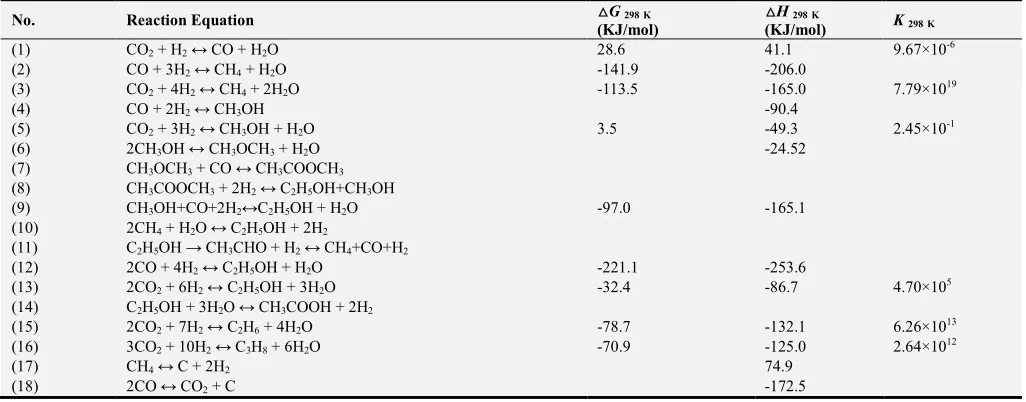
Figure 1 presents a schematic diagram of the reaction network of the formation of CH4, CO, and ethanol during the hydrogenation of CO2. In the first step, CO2 is adsorbed on the catalyst surface by the reverse water gas shift reaction. The adsorbed CO* undergoes successive insertions of H to form an adsorbed CH3* (methyl) and an adsorbed CH3CO* (acyl) groups. The hydrogenation of CH3* produces CH4 and the acyl group hydrogenation leads to ethanol [15]. The main reactions occurring in the CO2 hydrogenation system are shown in Table 1.
Table 1. The main reactions in the CO2 hydrogenation system.
No. Reaction Equation △G 298K
(KJ/mol)
△H 298K
(KJ/mol) K 298K
(1) CO2 + H2 ↔ CO + H2O 28.6 41.1 9.67×10⁻⁶
(2) CO + 3H2 ↔ CH4 + H2O -141.9 -206.0
(3) CO2 + 4H2 ↔ CH4 + 2H2O -113.5 -165.0 7.79×10¹⁹
(4) CO + 2H2 ↔ CH3OH -90.4
(5) CO2 + 3H2 ↔ CH3OH + H2O 3.5 -49.3 2.45×10⁻¹
(6) 2CH3OH ↔ CH3OCH3 + H2O -24.52
(7) CH3OCH3 + CO ↔ CH3COOCH3
(8) CH3COOCH3 + 2H2 ↔ C2H5OH+CH3OH
(9) CH3OH+CO+2H2↔C2H5OH + H2O -97.0 -165.1
(10) 2CH4 + H2O ↔ C2H5OH + 2H2
(11) C2H5OH → CH3CHO + H2 ↔ CH4+CO+H2
(12) 2CO + 4H2 ↔ C2H5OH + H2O -221.1 -253.6
(13) 2CO2 + 6H2 ↔ C2H5OH + 3H2O -32.4 -86.7 4.70×10⁵
(14) C2H5OH + 3H2O ↔ CH3COOH + 2H2
(15) 2CO2 + 7H2 ↔ C2H6 + 4H2O -78.7 -132.1 6.26×10¹³
(16) 3CO2 + 10H2 ↔ C3H8 + 6H2O -70.9 -125.0 2.64×10¹²
(17) CH4 ↔ C + 2H2 74.9
(18) 2CO ↔ CO2 + C -172.5
F-T synthesis yields alkanes (CnH2n+2), olefins (CnH2n), alcohols (CnH2n+1OH), aldehydes (CnH2n+1COH) and carbon deposits (equation 18, 19). In the process of CO2/CO hydrogenation, methanation is easy to occur. Too high methane is not conducive to the synthesis of ethanol. In order to discuss the influence of reaction conditions on the target product system, the synthesis processes of CO2 hydrogenation in the products containing methane and in the absence of methane were studied.
Since the process of CO2 hydrogenation to ethanol is usually accompanied by the processes of CO hydrogenation and the hydrogenation of CO and dimethyl ether (DME) to ethanol synthesis, the following calculations were determined.
(a) CO2/(CO+DME) hydrogenation to ethanol products containing methane; (b) CO2/CO hydrogenation to ethanol products in the absence of methane.
2.2. Calculation Methods and Parameters
system, the Peng-Robinson equation of state is chosen. In this simulation, the raw material conversion rate and the product selectivity were defined as follows, respectively.
X COx,in COx,out COx,in
(CO ) [ - ] 100%
X =(F F )/F × (1)
2 2 2
2 H ,in H ,out H n
(H ) [( - ) / i ] 100%
X = F F F , × (2)
i [ i,out/ ( C in C out)] 100%
S = λF F, −F , × (3)
2 2
HO [2 H O / ( H in, H out, )] 100%
S = F F −F × (4)
Among which, X(COx) and X(H2) are the conversion rates of CO2/CO and H2, respectively. Fi is the molar flow rate of
species i and the subscripts of in and out respectively indicate the state of being in and out. Si is the selectivity of
carbonaceous substances, in which λ is the number of carbon atoms in species i. SH2O is the selectivity of H2O calculated according to transformed H2.
The equilibrium product yield can be defined by the equation of Yi = X(COX)·Si, indicating that Yi can be
determined by the rate of raw material conversion and the selectivity of the product [24]. Therefore, the effects of reaction conditions on the conversion of raw materials and the selectivity of products were discussed.
3. Results and Discussion
3.1. CO2/(CO+DME) Hydrogenation to Ethanol Products
Containing Methane
For the processes of CO2 hydrogenation and CO+DME hydrogenation to synthesize ethanol, according to the reaction mechanism in Figure 1 and the equation (1-13) in Table 1, the determined components and their codes of the reaction system were respectively as follows: CO2, CO, H2, H2O, CH3OH (MeOH), CH3OCH3 (DME), C2H5OH (EtOH), CH3COOCH3 (MA), CH3CHO (AH) and CH4.
Figure 2 shows the effects of reaction conditions on CO2/(CO+DME) hydrogenated products containing methane. As can be seen from Figure 2, for CO2 hydrogenation and CO+DME hydrogenation, the amount of CH4 in the equilibrium composition is relatively large. Under the reaction conditions, the selectivity of CH4 is close to 100%, while the amount of other products is relatively low, which suggests that the reaction is largely thermodynamically beneficial to methanation [25]. For the reaction (3) of (CO2 + 4H2 ↔ CH4 + 2H2O), the reaction is exothermic and the equilibrium constant is in the order of 1019 in standard condition. At other temperatures, the equation (3) also has high reaction equilibrium constants.
Figure 2. Effects of reaction conditions on CO2/(CO+DME) hydrogenated products containing methane. (a, b, c) CO2 hydrogenation; (d) CO+DME
As shown in Figure 2(a), for CO2 hydrogenation, with the increase of the reaction temperature, the equilibrium conversion rate of carbon dioxide and hydrogen decreases, and the selectivity of CO increases. The amount of other oxygenated compounds is very low, but their selectivities increase with increasing reaction temperature, and the selectivity of methanol is slightly higher than that of ethanol. The amount of other oxygenated compounds is small, but their selectivity increases with reaction temperature.
As shown in Figure 2(b), increasing the reaction pressure can increase the conversion rate of raw materials and the selectivity of products. It is shown that the total reaction is a reaction of reduced pressure, which can also be seen from several major reactions (3, 5, 13) in Table 1. Increasing the pressure is beneficial to hydrogenation. However, the reaction pressure will affect the equipment investment, production cost and safety, so the working pressure should be properly chosen. As illustrated in Figure 2(c), feed composition influences its conversion rate and the product selectivity. In the CO2 hydrogenation process, the CO2 conversion rate increases with the increase of H2/CO2. After H2/CO2 to 4.0, the conversion rate of CO2 can reach 100%, and the H2 conversion rate and CO selectivity decrease obviously due to hydrogen excess. In H2/CO2 range of 0-10, the selectivity of methane is close to 100%, the selectivity of H2O is also high, and the selectivity of other products is very low. The appropriate H2/CO2 ratio is 3.0-5.0.
As shown in Figure 2(d), in the CO+DME hydrogenation process, the conversion rate of CO is close to 100%, but the conversion of DME and H2 decrease with the increase of temperature. Under the reaction conditions, the selectivities of methane, water and CO2 are high and the selectivity of other
substances is very low, but they also show a tendency to increase with the increase of the reaction temperature. The effects of pressure and the molar ratio of hydrogen to carbon on the equilibrium product of CO+DME hydrogenation are similar to that of CO2 hydrogenation (Figures omitted). The results of Figure 2(a, d) show that the hydrogenation of CO2 and CO+DME hydrogenation are exothermic reactions, and the water gas shift and its reverse reactions are dominant in the reaction. To improve the conversion rate of raw materials, the reaction should be carried out at low temperature.
3.2. CO2/CO Hydrogenated Products in the Absence of
Methane
In order to analyze the influence of reaction conditions on the target products of CO2 hydrogenation and CO hydrogenation in detail, the thermodynamic analysis of the processes of CO2 hydrogenation and CO hydrogenation to ethanol was carried out without considering methane in products. According to the reaction mechanism of Figure 1 and the reaction (4-9) and (12, 13) in Table 1, the material compositions of the reaction system were selected: CO2, CO, H2, H2O, CH3OH (MeOH), CH3OCH3 (DME), C2H5OH (EtOH) and CH3COOCH3 (MA). The calculated conditions are as follows: the reaction temperature is 293-873 K, the reaction pressure is 0.1-9.0 MPa, and the molar ratio of H/C is 0.5-10.
3.2.1. Effects of Temperature and Pressure
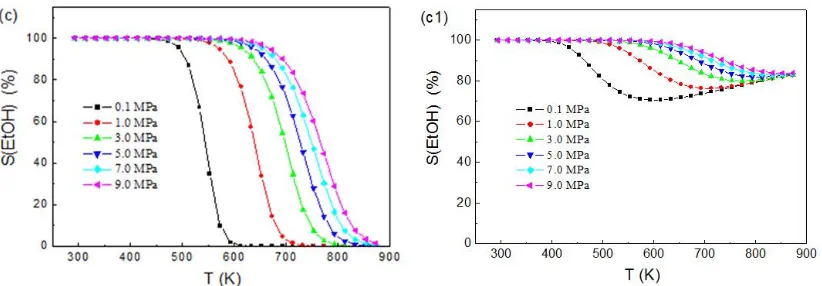
Figure 3. Effects of temperature and pressure on the synthesis equilibrium products in the absence of methane by CO2 hydrogenation (a, b, c) and CO
hydrogenation (a1, b1, c1). Reaction condition: (a) 3.0 MPa,H/CO2=4.0; (a1) 3.0 MPa,H/CO=4.0; (b, c) H2/CO2 =4.0; (b1, c1) H2/CO=4.0.
As shown in Figure 3(a, b, c), for CO2 hydrogenation, the equilibrium transformation of CO2 decreases first and then increases with the increase of the reaction temperature. At a certain temperature, increasing the pressure is beneficial to increase the conversion rate of CO2. In Figure 3(a), the conversion of hydrogen decreased from 75% to a minimum value of 15% at about 750 K, and then slightly increased. The selectivity of CO increases with the increase of temperature. As shown in Figure 3(a, c), the selectivity of ethanol is close to 100% at low temperature. The selectivity of ethanol decreases with the increase of temperature. Increasing the pressure is beneficial to the temperature range of high ethanol selectivity. The selectivity of ethanol is higher than that of methanol in thermodynamics [22], which can be explained by the equilibrium constant of ethanol synthesis from CO2 hydrogenation in Table 1 above the corresponding value of methanol synthesis. The selectivities of CH3OH, CH3OCH3 and CH3COOCH3 are low, and their selectivities increases first and then decreases with the increase of temperature.
The main reasons for the above trend is that the synthesis of methanol, ethanol and dimethyl ether are all exothermic reactions and the reverse water gas shift reaction (RWGS) is an endothermic reaction. The hydrogenation reaction is dominant at low temperature and the reverse water gas shift reaction is not dominant, showing the conversion rate of CO2 decrease with the increase of temperature. When the temperature rises to a certain extent, the reaction rate of
reverse water gas shift will be higher than that of hydrogenation reaction, the CO2 conversion rate is increased with the increase of temperature [22]. Therefore, according to this thermodynamic result, CO2 hydrogenation synthesis is not suitable for under high temperature conditions, and this requires that industrial hydrogenation catalyst must have good low temperature activity.
As shown in Figure 3(a1, b1, c1), the reaction rule of CO hydrogenation is slightly different from that of CO2 hydrogenation. In Figure 4(a1), the CO conversion rate is close to 100% at low temperature. When the temperature is above 650 K, the conversion rate of CO decreases rapidly with the increase of temperature, and the conversion rate of hydrogen shows a similar trend. The selectivities of ethanol and water decrease slightly with the increase of temperature. The reason for this phenomenon is that the main reaction is controlled by water vapor shift reaction at high temperature.
As illustrated in Figure 3(b1, c1), Increasing the pressure is beneficial to increase the conversion rate of CO and the selectivity of ethanol. However, when the pressure is higher than 5.0 MPa, the increase of the pressure can not significantly increase the conversion of CO and the selectivity of ethanol.
3.2.2. Effect of Raw Material Composition
Figure 4. Effect of raw material composition on the synthesis equilibrium products in the absence of methane by CO2 hydrogenation (a), CO hydrogenation (b)
and (CO2+CO) hydrogenation (c, d). Reaction condition: 5.0 MPa, 473 K, in addition, (c) H2/(CO+CO2)=2.0, (d) H2/(CO+CO2)=4.0.
As shown in Figure 4(a, b), the material composition has a great influence on the CO2/CO hydrogenation process. Under the reaction conditions of 5.0 MPa and 473 K, the conversion rate of CO2 increases with the change of H2/CO2 from 0 to 4.0, and when H2/CO2 is above 4.0, the conversion rate of CO2 almost reach 100% in thermodynamics. CO hydrogenation also showed a similar pattern.
As illustrated in Figure 4(c), under a certain condition of hydrogen to carbon ratio, both CO and H2 have high conversion rates with the increase of CO content in carbon source. However, the conversion rate of CO2 decreases with
the increase of CO content in the raw material, which shows that CO is easier to convert than CO2.
As shown in Figure 4(d), in the case of hydrogen to carbon ratio of 4.0, due to the relatively sufficient hydrogen content, CO and CO2 have high conversion rates with the increase of CO content, that is, they are basically transformed in thermodynamics. But the conversion rate of H2 is low, which is is mainly due to the occurrence of water gas shift reaction. The amount of CO2 is completely transformed, but the H2 conversion rate decreases due to the excess hydrogen.
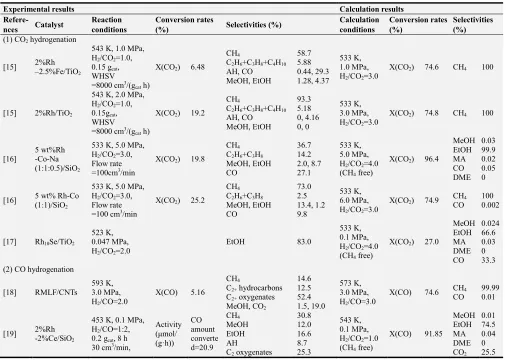
Table 2. Comparison of CO2/CO hydrogenation calculation results with experimental results.
Experimental results Calculation results
Refere-nces Catalyst
Reaction conditions
Conversion rates
(%) Selectivities (%)
Calculation conditions Conversion rates (%) Selectivities (%) (1) CO2 hydrogenation
[15] 2%Rh –2.5%Fe/TiO2
543 K, 1.0 MPa, H2/CO2=1.0,
0.15 gcat,
WHSV =8000 cm3/(g
cat h)
X(CO2) 6.48
CH4
C2H6+C3H8+C4H10
AH, CO MeOH, EtOH 58.7 5.88 0.44, 29.3 1.28, 4.37 533 K, 1.0 MPa, H2/CO2=3.0
X(CO2) 74.6 CH4 100
[15] 2%Rh/TiO2
543 K, 2.0 MPa, H2/CO2=1.0,
0.15gcat,
WHSV =8000 cm3/(g
cat h)
X(CO2) 19.2
CH4
C2H6+C3H8+C4H10
AH, CO MeOH, EtOH 93.3 5.18 0, 4.16 0, 0 533 K, 3.0 MPa, H2/CO2=3.0
X(CO2) 74.8 CH4 100
[16]
5 wt%Rh -Co-Na (1:1:0.5)/SiO2
533 K, 5.0 MPa, H2/CO2=3.0,
Flow rate =100cm3/min
X(CO2) 19.8
CH4
C2H6+C3H8
MeOH, EtOH CO 36.7 14.2 2.0, 8.7 27.1 533 K, 5.0 MPa, H2/CO2=4.0
(CH4 free)
X(CO2) 96.4
MeOH EtOH MA CO DME 0.03 99.9 0.02 0.05 0
[16] 5 wt% Rh-Co (1:1)/SiO2
533 K, 5.0 MPa, H2/CO2=3.0,
Flow rate =100 cm3/min
X(CO2) 25.2
CH4
C2H6+C3H8
MeOH, EtOH CO 73.0 2.5 13.4, 1.2 9.8 533 K, 6.0 MPa, H2/CO2=3.0
X(CO2) 74.9 CHCO4 100 0.002
[17] Rh10Se/TiO2
523 K, 0.047 MPa, H2/CO2=2.0
EtOH 83.0
533 K, 0.1 MPa, H2/CO2=4.0
(CH4 free)
X(CO2) 27.0
MeOH EtOH MA DME CO 0.024 66.6 0.03 0 33.3 (2) CO hydrogenation
[18] RMLF/CNTs
593 K, 3.0 MPa, H2/CO=2.0
X(CO) 5.16 CH4
C2+ hydrocarbons
C2+ oxygenates
MeOH, CO2
14.6 12.5 52.4 1.5, 19.0 573 K, 3.0 MPa, H2/CO=3.0
X(CO) 74.6 CH4
CO
99.99 0.01
[19] 2%Rh -2%Ce/SiO
2
453 K, 0.1 MPa, H2/CO=1:2,
0.2 gcat, 8 h
30 cm3/min,
Activity (µmol/ (g·h)) CO amount converte d=20.9 CH4 MeOH EtOH AH
C2 oxygenates
30.8 12.0 16.6 8.7 25.3 543 K, 0.1 MPa, H2/CO2=1.0
(CH4 free)
By comparing CO2 hydrogenation with CO hydrogenation, it can be concluded that CO hydrogenation has advantages over CO2 hydrogenation [24]. CO hydrogenation have high conversion rate and wider temperature range with higher ethanol selectivity. The thermodynamic optimization conditions are as follows. For the CO hydrogenation reaction, the temperature is below 650 K, the pressure is 1.0-5.0 MPa, and the H2/CO molar ratio is 0.5-2.0. For the CO2 hydrogenation, the temperature is below 500 K, the pressure is 1.0-5.0 MPa, and the H2/CO2 molar ratio is 3.0-5.0.
3.3. Results Comparison
Table 2 gives the comparison of the results of this calculation with the experimental results. As shown in Table 2, for the establishment of products in hydrogenation reaction system, the results obtained in this study are basically in agreement with the experimental results of catalytic hydrogenation [15-19]. It can be seen that CO2 and CO hydrogenation have a higher thermodynamic conversion than that of the catalytic experimental reaction under close reaction conditions. The selectivity of the product is closely related to the performance of the catalyst, and the actual hydrogenation reaction is more complicated. At the same time, it is concluded that the performance of CO2 hydrogenation catalyst needs further improvement to improve the conversion of CO2/CO and the selectivity of catalyst to the target product.
4. Conclusions
In this paper, according to the reaction mechanism, the thermodynamics of ethanol production by CO2 hydrogenation was simulated. Since the process of CO2 hydrogenation contain the processes of CO hydrogenation and CO+DME hydrogenation, different hydrogenation processes are discussed in this paper, in which CO2 hydrogenation synthesis processes in the products containing methane and in methane free products were emphatically analyzed.
The influences of reaction temperature, pressure and composition of raw material, such as H2/CO2 molar ratio, on reaction equilibrium system were analyzed. The change rules of material equilibrium conversion rate and product selectivity with reaction conditions were obtained. The main conclusions of this paper are as follows.
(1) For the CO2 hydrogenation to ethanol synthesis containing methane, with the increase of the reaction temperature, the equilibrium conversion rate of carbon dioxide and hydrogen decrease, and the selectivity of CO increase. Under the reaction conditions, the selectivity of CH4 is close to 100%, and water has higher selectivity, while other oxygenated hydrocarbons are little, suggesting that methanation is thermodynamically easy to occur.
(2) For the CO+DME hydrogenation to ethanol synthesis containing methane, the reaction law similar to that of CO2 hydrogenation was obtained. The conversions of H2 and dimethyl ether decrease with the increase of the reaction temperature. Under the reaction conditions, CO has a
conversion rate of 100%, methane has nearly 100% selectivity and the other substances are similar to that of CO2 hydrogenation.
(3) For the CO2 hydrogenation to ethanol products in the absence of methane, the equilibrium transformation of CO2 decreases first and then increases with the increase of the reaction temperature. The selectivity of ethanol is close to 100% at low temperature and then decreases with the increase of temperature. The selectivity of ethanol is higher than that of methanol and Increasing the pressure is beneficial to improve the temperature range with high ethanol selectivity.
(4) The comparison of CO hydrogenation with CO2 hydrogenation in methane free products, the results show that CO hydrogenation has advantages over CO2 hydrogenation. CO hydrogenation has a wide range of temperature with a high conversion rate and a high selectivity for ethanol. The thermodynamic optimization conditions are as follows. For the CO2 hydrogenation reaction, the temperature is below 500 K, the pressure is 1.0-5.0 MPa, and the H2/CO2 molar ratio is 3.0-5.0. For the CO hydrogenation reaction, the temperature is below 650 K, the pressure is 1.0-5.0 MPa, and the H2/CO molar ratio is 0.5-2.0.
(5) The thermodynamic results were compared with the experimental results, which indicating that the hydrogenation catalysts need to be improved to increase the conversion of the raw materials and the selectivity of the target product.
(6) The reaction system of CO2 hydrogenation is complex and produces many kinds of products. Carbon deposition is easy to occur at low temperature, which can lead to deactivation of catalyst. Based on the more accurate catalyst reaction mechanism and considering carbon deposition in the product system, the thermodynamic analysis and kinetic study should be further developed.
Nomenclature
MeOH methanol
DME dimethyl ether
EtOH ethanol
AH acetaldehyde
H2 /CO2 the molar ratio of H2/CO2 RWGS reverse water gas shift reaction
Fi,in molar flow rate of the ith species in feed (mol/s)
Fi,out
molar flow rate of the ith species in products (mol/s)
FC molar flow rate of carbon (mol/s)
∆G 298K standard Gibbs free energy change (kJ/mol) ∆H298 K standard enthalpy change (kJ/mol)
K 298K standard equilibrium constant
P pressure (MPa)
S selectivity of the product
T temperature (K)
X conversion rate
X (H2) H2 conversion rate
Yi equilibrium yield of product
References
[1] Omae, Iwao. “Recent developments in carbon dioxide utilization for the production of organic chemicals”. Coord. Chem. Rev., Vol. 256, No. 13–14, 2012, pp. 1384-1405. [2] Sternberg, A., C. Jens, and A. Bardow. “Life Cycle Assessment
of C1 Chemicals from Hydrogen and Carbon Dioxide”, Chemie Ingenieur Technik, Vol. 88, No. 9, 2016, pp. 1343-1344. [3] Wang S, Mao D S, Guo X M, & Lu G Z. “Dimethyl ether
synthesis from CO2 hydrogenation over CuO-TiO2- ZrO2/HZSM-5 catalysts”. Acta Physico-Chimica Sinica, Vol. 27, No. 11, 2011, pp. 2651-2658.
[4] Swapnesh, Anang, V. C. Srivastava, and I. D. Mall. "Comparative Study on Thermodynamic Analysis of CO2 Utilization Reactions”. Chem. Eng. Technol., Vol. 37, No. 10, 2015, pp. 1765-1777.
[5] G. Zahedi, A. Elkamel, and A. Lohi§. “Dynamic Optimization Strategies of a Heterogeneous Reactor for CO2 Conversion to Methanol”. Energy & Fuels, Vol. 21, No. 5, 2007, pp. 2977-2983.
[6] Jia C, Gao J, Dai Y, Zhang J, & Yang Y. “The thermodynamics analysis and experimental validation for complicated systems in CO2 hydrogenation process”. Journal of Energy Chemistry, Vol. 25, No. 6, 2016, pp. 1027-1037.
[7] Matej Huš, Venkata D B C. Dasireddy, Neja Strah Štefančič, & Blaž Likozar. “Mechanism, kinetics and thermodynamics of carbon dioxide hydrogenation to methanol on Cu/ZnAl2O4 spinel-type heterogeneous catalysts”. Applied Catalysis B: environmental, Vol. 207, 2017, pp. 267-278.
[8] Toyir J, Piscina P R D L, Fierro J L G, & Homs N. “Catalytic performance for CO2 conversion to methanol of gallium-promoted copper-based catalysts: influence of metallic precursors”. Applied Catalysis B Environmental, Vol. 34, No. 4, 2001, pp. 255-266.
[9] Wu J, Saito M, Takeuchi M, & Watanabe T. “The stability of Cu/ZnO-based catalysts in methanol synthesis from a CO2-rich feed and from a CO-rich feed”. Applied Catalysis A General, Vol. 218, No. 1, 2001, pp 235-240.
[10] Liu XM, Lu GQ, Yan ZF, Beltramini J. “Recent Advances in Catalysts for Methanol Synthesis via Hydrogenation of CO and CO2”. Ind. Eng. Chem. Res., Vol. 42, No. 25, 2003, pp. 6518-6530.
[11] Fu Y, Hong T, Chen J, Auroux A, & Shen J. “Surface acidity and the dehydration of methanol to dimethyl ether”.
Thermochimica Acta, Vol. 434, No. 1-2, 2005, pp. 22-26. [12] Zhang L, Zhang H, Ying W, & Fang D. “Dehydration of
methanol to dimethyl ether over γ-Al2O3 catalyst: intrinsic kinetics and effectiveness factor”. Can. J. Chem. Eng., Vol. 91, No. 91, 2013, pp. 1538–1546.
[13] Kochkin, Y. N., Vlasenko, N. V., Struzhko, V. L., Puziy, A. M., & Strizhak, P. E. “Methanol carboxylation over zirconium dioxide: effect of catalyst phase composition on its acid‐base spectrum and direction of catalytic transformations”. Can. J. Chem. Eng., Vol. 94, No. 4, 2016, pp. 745–751.
[14] Ghodhbene M, Bougie F, Fongarland P, & Iliuta M C. “Hydrophilic zeolite sorbents for in‐situ water removal in high temperature processes”. Can. J. Chem. Eng., Vol. 95, No. 10, pp 1842–1849, 2017.
[15] Makarand R. Gogate, Robert J. Davis. “Comparative study of CO and CO2 hydrogenation over supported Rh–Fe catalysts”.
Catal. Commun., Vol. 11, 2010, pp. 901–906.
[16] Kusama, Hitoshi, and H. Arakawa. "Hydrogenation of CO2 over SiO2 Supported Rh-Co-alkalimetal Catalysts." Nippon
Kagaku Kaishi, Vol. 2002, No. 1, 2002, pp. 107-110.
[17] Izumi Y. “Selective Ethanol Synthesis from Carbon Dioxide: Roles of Rhodium Catalytic Sites”. Platinum Metals Review, Vol. 41, No. 4, 1997, pp. 166-170.
[18] Fan Z, Chen W, Pan X, & Bao X. “Catalytic conversion of syngas into C2 oxygenates over Rh-based catalysts—Effect of carbon supports”. Catalysis Today, Vol. 147, No. 2, 2009, pp. 86-93.
[19] Wang Yaquan. Study on the synthesis of ethanol through CO hydrogenation catalyzed by Rh based catalysts [J]. Chinese Journal of Catalysis, Vol. 20, No. 1, 1999, pp. 7-11. (in chinese).
[20] Kurakata H, Izumi Y, Aika K. “Ethanol synthesis from carbon dioxide on TiO2-supported [Rh10Se] catalyst”, Chem.
Commun., Vol. 3, No. 3, 1996, pp. 389-390.
[21] Ahmad W, Al-Matar A, Shawabkeh R, & Rana A. “An experimental and thermodynamic study for conversion of CO2 to CO and methane over Cu-K/Al2O3”, J. Environ. Chem. Eng., Vol. 4, No. 3, 2016, pp. 2725-2735.
[22] Jia C, Gao J, Dai Y, Zhang J, & Yang Y. “The thermodynamics analysis and experimental validation for complicated systems in CO2 hydrogenation process”. Journal of Energy Chemistry, Vol. 25, No. 6, 2016, pp. 1027-1037.
[23] Kusama H, Okabe K, Sayama K, Arakawa H. “Ethanol synthesis by catalytic hydrogenation of CO2 over Rh–Fe/SiO2 catalysts”. Energy, Vol. 22, 1997, pp. 343–348.
[24] Guangxin Jia, Yisheng Tan, Yizhuo Han. “A comparative study on the Thermodynamics of dimethyl ether synthesis from CO Hydrogenation and CO2 Hydrogenation”. Ind. Eng. Chem. Res., Vol. 45, 2006, pp. 1152-1159.