COMMUNICABLE DISEASES IN SCHOOLS
A Reference Guide
Student Medical Services and District Nursing Services
Student Health and Human Services Division
Los Angeles Unified School District
3rd Edition
2005
Table of Contents
PART I: INTRODUCTION TO COMMUNICABLE DISEASES IN SCHOOLS………...1
Overview……… .2
General Inclusion and Exclusion Criteria………..3
Definition
of
Terms……….5
PART II: POLICIES ON THE CONTROL OF COMMUNICABLE DISEASE IN SCHOOLS……..7
PART III: COMMONLY ENCOUNTERED COMMUNICABLE DISEASES………..12
Chickenpox (Varicella-Zoster Infections)……….13
Chlamydia……….14
Common Cold (Upper Respiratory Infections)……….15
Conjunctivitis (“Pink Eye”)……….16
Cytomegalovirus (CMV)………..17
Diphtheria……….18
Fifth Disease (Human Parvovirus B19)………19
Foodborne Illness (Food Poisoning)……….……….20
Giardiasis………..21
Gonorrhea……….22
Hand, Foot, and Mouth Disease (Commonly Enterovirus)………..23
Head Lice (Pediculosis)………..24
Hepatitis A, B, and C……….……..25
Herpes (Oral and Genital)……….27
HIV/AIDS……….28
Impetigo (& MRSA)……….30
Influenza (Flu)………..31
Lyme Disease……….32
Measles (Rubeola)………..33
Meningitis……….…………34
Molluscum Contagiosum………35
Mononucleosis………..36
Mumps……….37
Pinworms………..38
Pertussis (Whooping Cough)………39
Ringworm (Tinea)………40
Rubella (German Measles)………41
Scabies……….42
Scarlet Fever………43
Strep Throat……….44
Tetanus………..………..45
Tuberculosis………..….…..46
Warts (Genital and Non-Genital)………..…….47
West Nile Virus (& Mosquito-borne Diseases)……….48
PART V: APPENDICES……….53
Appendix A: County of Los Angeles Reportable Diseases and Condition………….54
Appendix B: Guide to Immunizations Required for School Entry………..56
Appendix C: LAUSD Policies and Bulletins………59
Bulletin 1645: Infection Control Procedures for the Prevention
And Spread of Communicable Diseases……….60
Bulletin 1937: Reporting Communicable Diseases………..67
Bulletin 1660: Immunization Guidelines for School Admission……….77
Bulletin 1959: Tuberculosis Examination Requirements for
New Entering Students ……….83
Bulletin Z-70: Students with HIV/AIDS Infection………..87
Bulletin Z-69: Employees with HIV/AIDS Infection……….92
Bulletin Z-72: Bioterrorism Preparedness Response:
Health Perspective………96
Reference Guide 1304: West Nile Virus Precautions……….103
Part I
Overview
From a very young age through adolescence, students spend a great deal of time in
the school setting. Schools place a high priority on attendance which is necessary for
optimal student learning and achievement. Yet, the nature of schools (close,
confined contact among students and staff) make the transmission of infectious
disease possible. Determining the likelihood that an infection will spread from one
person to another requires an understanding of the ease and mechanism by which a
particular organism is transmitted, as well as some knowledge of the host immunity
(i.e., Has the student been vaccinated against the disease? Does the student have a
compromised immune system?). We must also recognize that many schools do not
have a full-time health professional on-site, and some students have limited access to
medical services. This makes it important to have some reference for administrators
and staff (including school nurses and physicians) to make informed decisions when
intervening in communicable disease cases.
This Reference Guide has been compiled using existing District publications along with
the most current available information from the American Academy of Pediatrics and
the Center for Disease Control and Prevention. In addition, current State, County and
Los Angeles Unified School District policies are reflected in this Reference Guide. The
changing nature and evolving understanding of communicable diseases, particularly
with the transmission of new disease entities between countries, makes it important
to stay abreast of local disease patterns and infection control policy. District
personnel are advised to contact Student Medical Services or District Nursing Services
(Communicable Disease Team) if there are any questions regarding the management
of communicable disease in schools.
The Reference Guide is designed to be a quick reference for LAUSD personnel. The
following sections describe general recommendations for inclusion/exclusion and
readmission to school due to illness. There is also a section defining the terms used in
this Reference Guide. Part II references the various policies that relate to the control
of communicable diseases in school. Part III catalogues common infectious diseases in
alphabetical order, offering general information as well as specific exclusion,
readmission and contact guidelines for school settings. Part IV gives a brief summary
of bioterrorism and includes a table describing early clinical signs of certain infectious
agents that could be used in a bioterrorist attack. The appendices found in Part V
give more specific information about communicable disease control, including District
bulletins and reference sheets and forms from other agencies. All of this is in an
effort to keep students, staff, and families healthy and able to participate fully in the
educational process.
General Inclusion and Exclusion Criteria
Determining when to include and exclude students from school is a difficult decision,
particularly as there are different factors that influence the decision. On the one
hand, schools are inclusive institutions that accommodate children with a variety of
medical issues. Student attendance is linked to academic achievement, therefore
avoiding unnecessary exclusion is important for student success. On the other hand,
children and adolescents who attend school with a communicable disease put others
at risk. Fortunately, most of the commonly encountered infections in school-age
children (e.g., respiratory viruses) are relatively harmless. In some cases, children
exposed to certain infection through contact with other children develop immunity
that protects the children as they grow older.
This Reference Guide is designed to help staff make an informed decision about when
to exclude students from the school setting. While guidance of this type is helpful,
there are multiple different presentations of infectious diseases in children. School
personnel are not expected (nor qualified, in some cases) to make a diagnosis of a
communicable disease in a student. Staff are encouraged to use what is presented in
this Guide and their best judgment to help ensure a safe and healthy school
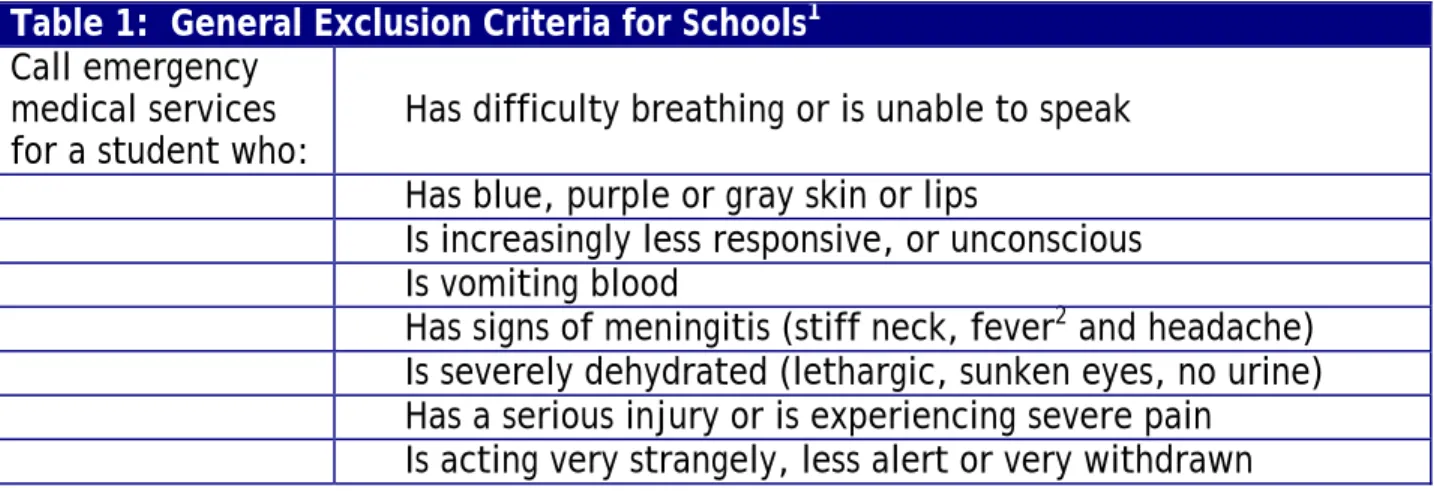
environment. Table 1 lists general conditions that need medical attention and are
referred to as “general exclusion criteria” in the Reference Guide. In addition,
California law requires exclusion if a student’s immunization status does not comply
with Health and Safety Code (Division 105) and Administrative Code (Title 17)
regulations. The laws address immunization against communicable diseases such as
polio, diphtheria, pertussis, tetanus, measles, mumps, rubella, Hepatitis B, and
varicella. The laws allow exemptions due to personal beliefs and certain medical
conditions. There are other situations where students can be admitted
“conditionally” (see Appendix B).
Remember, most illnesses do not require exclusion. Conditions and diseases not
listed in Table 1 generally do not require automatic exclusion.
Table 1: General Exclusion Criteria for Schools
1Call emergency
medical services
for a student who:
Has difficulty breathing or is unable to speak
Has blue, purple or gray skin or lips
Is increasingly less responsive, or unconscious
Is vomiting blood
Has signs of meningitis (stiff neck, fever
2and headache)
Is severely dehydrated (lethargic, sunken eyes, no urine)
Has a serious injury or is experiencing severe pain
Is acting very strangely, less alert or very withdrawn
1 Adapted from: American Academy of Pediatrics, Managing Infectious Diseases in Child Care and Schools. Aronson S and Shope T (Eds.) 2005
Get immediate
medical attention
(within one hour)
for a student who:
Has a fever
2and looks more than mildly ill
Has a quickly spreading purple or red rash
Has a large volume of blood in the stools
Has an injury that may require medical treatment, such as a
deep cut that may require stitches
Has an animal or human bite that breaks the skin
Has any medical condition that is outlined in the child’s care
plan as requiring medical attention
Temporarily
exclude a student
if there is:
An illness that prevents the student from participating
comfortably in school activities
An illness that results in a need for care that is greater than
the staff can provide without compromising the health and
safety of other students
An illness that poses a risk of spread of disease to others
Fever
1and behavior change or other signs and symptoms
(e.g., sore throat, rash, vomiting, diarrhea)
Diarrhea
3or blood in the stool not explained by dietary
change, medications or hard stool.
Vomiting more than 2 times in the previous 24 hours, unless
the vomiting is determined to be from a non-communicable
condition and the child is not in danger of dehydration
Abdominal pain that continues for more than 2 hours or
intermittent pain associated with fever or other signs and
symptoms
Mouth sores with excessive drooling (in young children)
Rash with fever or behavioral changes
Pink or red conjunctiva (whites of the eyes) with white or
yellow eye mucous drainage—until treatment has been
started
Impetigo—until 24 hours after treatment has been started
Strep throat (or other streptococcal infection)—until 24 hours
after treatment has been started
Head lice—until after the first treatment (note: exclusion is
not necessary before the end of the school day)
Scabies—until after treatment has been given
Chickenpox (varicella)—until all lesions have dried and
crusted
Whooping Cough (pertussis)—until 5 days after appropriate
treatment (antibiotic)
Any child determined by the local health department to be
contributing to the transmission of illness during an outbreak
Readmission to school after exclusion for a communicable disease generally falls to
the school principal or principal’s designee. There may be instances where certain
readmission criteria should be met and these are delineated in the listings of each
communicable disease (Part III). In more serious cases of infection, the attending
physician or the local health department should clear the student before readmission.
Definitions of Terms
Bacteria: Organisms that may be responsible for localized or generalized diseases
and can survive in and out of the body. They can be treated effectively with
antibiotics.
Body fluids: Urine, stool, saliva, blood, nasal discharge, eye discharge and tissue
discharge (i.e., seepage from wound). Not all body fluids transmit all types of
micro-organisms.
Communicable disease: A disease caused by a micro-organism (e.g., bacteria, virus,
fungus, parasite) that can be transmitted from person to person by an infected body
fluid or respiratory spray. This may occur with or without an intermediary agent
(e.g., mosquito) or object (e.g., table surface).
Dermatitis: An inflammation of the skin caused by irritation or infection.
Diarrhea: More frequent loose or watery stools compared to the student’s normal
pattern (not associated with change in diet or use of medications). Exclusion may be
needed if diarrhea can not be contained in toilet or there are other signs, such as
blood or color change (black).
Fever: An elevation of the body temperature. While there are several definitions of
fever, for the purpose of evaluating a student in school, fever is defined as
temperature:
>101°F (38.3°C) oral
>102°F (39°C) rectally
>100°F (37.8°C) axillary (armpit) or measurement by equivalent method
Fever is an indication of the body’s response to something, but is neither a disease
nor a serious problem by itself.
Fungi: Plantlike organisms such as yeasts, molds, mildews and mushrooms that get
their nutrition from other living organisms or dead organic matter.
Health care professional: Practices medicine by an established licensing body with
or without supervision. The most common types of health care professionals include
physician, nurses, nurse practitioners, and physician assistants.
Immunizations: Vaccines that are given to children and adults to help them develop
protection (antibodies) against specific infections. Vaccines may contain an
inactivated or killed agent or a weakened live organism.
Incubation period: Time between exposure to an infectious microorganism and
beginning of symptoms.
Mantoux intradermal skin test: Involves the injection of a standard amount to
tuberculin protein under the skin. The reaction to the protein on the skin can be
measured and the result is used to assess the likelihood of infection with tuberculosis.
Parasite: An organism that lives on or in another living organism (e.g., tick, louse)
Universal precautions: Apply to blood and other body fluids containing blood, semen
and vaginal secretions-- but not generally stool, nasal secretions, sputum, sweat,
tears, urine, saliva, or vomitus, unless they contain visible blood or are likely to
contain blood. Universal precautions include avoiding injuries caused by sharp
instruments or devices and the use of protective barriers such as gloves, gowns, masks
and protective eyewear, which can reduce the risk of exposure of a worker to
materials that may contain blood-borne pathogens while the worker is providing first
aid or care.
Virus: A microscopic organism that may cause disease. Viruses can grow or
Part II
Policies on the Control of Communicable Disease
in Schools
Policies Concerning Communicable Disease in Schools
The health and safety of the students is guided by several policies, some are
LAUSD-specific and others are part of California health, administrative and educational
codes. Listed below are some of the pertinent policies for communicable disease
identification, reporting, treatment and prevention. While these are provided for
reference, it should be noted that policies can not cover every possible individual
scenario. It is each staff member’s responsibility to use good judgment when dealing
with communicable diseases. Student
Medical Services and District Nursing
(Communicable Disease Team) are available
for consultation, and should be used as a
resource when there is any question regarding
communicable disease diagnosis, exclusion,
reporting, readmission and notification
criteria.
Student Medical Services
213-763-8342
District Nursing
(Communicable Disease Team)
213-763-8372
Exclusion of students with communicable disease
“A pupil while infected with any contagious or infectious disease may not remain
in any public school.” (California Code of Regulations, Title 5, Education, 202.)
“The governing body of any school district may exclude children of filthy or viscous
habits, or children suffering from contagious or infectious diseases.” (California
Education Code, 48211)
“Students showing signs and symptoms of communicable or infectious diseases
shall be excluded from attending school. The Student Health Services Division, in
cooperation with the County of Los Angeles, Department of Health Services, shall
prescribe such measures as shall be necessary for the control of communicable
diseases, including the exclusion and readmission of students. (For provisions
relating to employees, see Board Rule 1942.) Students whose continued presence
would constitute a clear and present danger to the life, safety, or health of other
students or school personnel shall be exempted or excluded.” (LAUSD Board Rule
2312)
“It shall be the duty of the principal or other person in charge of any public,
private or Sunday School to exclude therefrom any child or other person affected
with a disease presumably communicable, until the expiration of the prescribed
period of isolation for the particular communicable disease. If the attending
physician, school physician, or health officer finds upon examination that the
person is not suffering from a communicable disease, he may submit a certificate
to this effect to the school authority who shall readmit the person.” (California
Code of Regulations, Title 17, Public Health, 2526)
“A parent or guardian having control or charge of any child enrolled in the public
schools may file annually with the principal of the school in which he is enrolled a
statement in writing, signed by the parent or guardian, stating that he will not
consent to a physical examination of his child. Thereupon the child shall be
exempt from physical examination, but whenever there is a good reason to believe
that the child is suffering from a recognized contagious or infectious disease, he
shall be sent home and shall not be permitted to return until the school authorities
are satisfied that any contagious or infectious disease does not exist.” (California
Education Code, 49541)
Exclusion of school employees with communicable disease
“… [regarding communicable disease]… applicants and employees with any acute
or chronic (e.g., tuberculosis AIDS/HIV infection) communicable diseases which
may endanger health or safety of self and/or others, shall be evaluated on an
individual basis in relation to the successful performance of the core duties of the
class for which applying or in which serving…” (LAUSD Board Rule 1942)
Reporting communicable diseases
A list of reportable diseases for the County of Los Angeles is included in the
Appendix A of this Reference Guide.
All reporting of communicable disease
within LAUSD is coordinated by the District Nursing Communicable Disease
Unit and Student Medical Services.
Please use the phone numbers listed above
to receive information and assistance in the event of a communicable disease case
on a school campus.
“It shall be the duty of every health care provider, knowing of or in attendance on
a case or suspected case of any of the diseases or conditions listed in [Appendix
A], to report to the local health officer for the jurisdiction where the patient
resides... Where no health care provider is in attendance, any individual having
knowledge of a person who is suspected to be suffering from one of the diseases or
conditions listed in [Appendix A] may make such a report.” (California Code of
Regulations, Title 17, section 2500)
Please note: “Health care provider” includes physicians, surgeons, nurse
practitioners, physician assistants, registered nurses, school nurses, infection
control practitioners, dentists and others as specified in subsections (h) in Title 17
section 2500
“It shall be the duty of anyone in charge of a public or private school,
kindergarten, boarding school, or day nursery to report at once to the local health
officer the presence or suspected presence of any of the communicable diseases.”
(California Code of Regulations, Title 17, section 2508)
Notification of communicable disease
“The Director, Student Medical Services, and the Director, District Nursing
Services, must be consulted before any notification (written or oral) to
parent/guardian or school employees regarding possible exposure to any
communicable disease.” (LAUSD Bulletin No. 1937, Reporting Communicable
Diseases, September 2005)
Immunizations
Immunization is an important method of preventing certain communicable diseases,
especially in group settings such as schools and child care. The California School
Immunization Law requires children to have a series of immunizations before they
enter school (public and private elementary and secondary schools). See LAUSD
Bulletin No. 1660.2 “Immunization Guidelines for School Admission” and the
California Immunization Handbook (7
thEd. July 2003- most recent edition available
on the Los Angeles DHS website:
(http://www.dhs.ca.gov/ps/dcdc/izgroup/pdf/HandbookText.pdf).
A guide to the immunizations required for school entry is included in this Reference
Guide, Appendix B.
“… the governing board of any school district shall cooperate with the local health
officer in measures necessary for the prevention and control of communicable
diseases in school age children. For that purpose the board may use any funds,
property, and personnel of the district, and may permit any person licensed as a
physician and surgeon, or any person licensed as a registered nurse acting under
the direction of a supervising physician and surgeon … to administer an immunizing
agent to any pupil whose parents have consented in writing to the administration
of such immunizing agent.” (California Education Code 49403)
“A ‘Health Record’ card and health history must be maintained for each student.
Mandated health information such as immunization status, child health and
disability prevention screening, visual activity, color vision testing, audiometric
test results, scoliosis screening results, and tuberculosis test results must be
recorded. Reports of school physicians and school nurses are also recorded.”
(LAUSD Board Rule 2309)
“Physicians of the County of Los Angeles, Department of Health Services, or school
physicians or any school nurse under supervision of a school physician, may
immunize students on school premises. The school nurse will notify the school of
the date set for giving immunizations and will assist with the program. A parent or
guardian consent slip, provided by the County of Los Angeles, Department of
Health Services, shall be completely filled out and be on file at he school before
an immunization may be given.” (LAUSD Board Rule 2313)
Tuberculosis
“Students who have never attended a California school must present written
evidence of a Mantoux (PPD) skin test…
(1) All Kindergarten students. Tests must be given within 1 year prior to school
entry.
(2) All other students in grades 1-12 who have never attended any school in
California”
(County of Los Angeles DHS, TB Test Requirements. See Appendix C- LAUSD
Bulletin No. 1659)
“A parent or guardian consent slip, provided by the District, shall be completely
filled out and be on file at the school before a Mantoux Tuberculin Skin Test may
be given. If the test is positive, it shall be followed by an X-ray of the chest. The
skin test must be administered and read within 48 to 72 hours by a member of the
staff of District Tuberculosis Prevention Services. (For tuberculin skin testing of
employees, see Board Rule 1950.)” (LAUSD Board Rule 2313)
Exposure control plan and general sanitation
“Universal precautions shall be observed to prevent contact with blood or other
potentially infectious materials…” and “Each employee shall ensure that the
worksite is maintained in a clean and sanitary condition.” (LAUSD, Bloodborne
Pathogens—Exposure Control Plan, July 2005)
“Clean all contaminated areas and materials first with soap/detergent and water.
An LAUSD approved commercial product may be used for cleaning surfaces which
are not contaminated with blood…” (See approved chemical product list for use in
the District at
http://www.lausd-oehs.org/productreview_chemical.asp
) “For
washable surfaces always use freshly made 1:10 bleach solution (1 part bleach to 9
parts cold water) when cleaning up blood.” (LAUSD Bulletin No. 1645, Infection
Control Guidelines for Preventing the Spread of Communicable Diseases, July
2005)
Part III
Chickenpox (Varicella-Zoster Infections)
1. What is chickenpox?
Chickenpox is an infectious disease caused by the varicella-zoster virus that results in a rash, most often occurring in persons less than 15 years old.
2. What are the signs and symptoms of chickenpox?
The most obvious sign of chickenpox infection is the development of a blister-like rash. This rash begins with small, red spots that develop into blisters (vesicles) after a few hours. It first appears on the trunk and face, but can spread over the entire body. These blisters will become pus-filled after 3-4 days, and then develop into scabs. Fever, itching, cough, runny nose, and/or headache commonly accompany this rash.
3. Incubation period:
Usually 14 – 16 days.4. Contagious period:
From 1 – 2 days before the rash appears until after the last crop of vesicles. A person no longer spreads the virus when all blisters have scabs and no new blisters are forming.5. How does infection with chickenpox occur?
Chickenpox is a highly infectious virus; it spreads from person to person by direct contact with an infected person or by breathing in air containing germs that are released when the infected person coughs or sneezes.
6. How can infection with chickenpox be prevented?
Chickenpox can be prevented with a vaccination that is required by law for school admission. There are other methods to prevent chickenpox in immunocompromised children after exposure (such as varicella-zoster immune globulin, VZIG). VZIG must be given very early after exposure to be effective.
7. Is there a treatment for chickenpox?
Antiviral medication and treatment should be considered for individuals at increased risk for moderate to severe disease (e.g., >12 years old, chronic skin or lung infections, immunocompromised, etc.). Antivirals are most effective when administered early in the course of the disease. Children that have chickenpox should not be given aspirin, as it can lead to serious liver disease (Reye’s syndrome).
8. What are the circumstances in which chickenpox could be significant?
One in ten children has a complication that is serious enough to visit a health care provider.
Complications include: infected skin lesions, other infections (such as pneumonia), dehydration from vomiting or diarrhea, and exacerbation of asthma. Adults, infants, adolescents, and people with weak immune systems are more likely to have a serious illness with complications.
9. Can you get chickenpox more than once?
Yes, but it is very rare. Cases are generally mild with less fever and fewer blisters than the first time.
10. Exclusion:
Yes – routine exclusion of infected children from school is warranted until they arenot longer contagious.
11. Readmission:
When all blisters have scabs and there are no new blisters appearing (usually 6 days after the start of the rash in healthy individuals).12. Contacts and reporting:
Consider sending letters to parents and employees to protect immunocompromised or pregnant individuals exposed to chickenpox. Call Nursing Services Communicable Disease Unit before any notification to parents or staff.Chlamydia
1. What is chlamydia?
Chlamydia is a common sexually transmitted disease that is caused by the bacterium Chlamydia trachomatis. (C. trachomatis may also cause neonatal conjunctivitis, blindness and pneumonia in young infants). Most people with chlamydia have no symptoms and may not seek health care for their infection. When chlamydia is diagnosed, it can be easily treated and cured. Untreated chlamydia can cause serious health problems and infertility.
2. What are the signs and symptoms of chlamydia?
While 75% of infected women and 50% of infected men will show no symptoms, those men and women that do show symptoms experience pain and difficulty when urinating and abnormal discharge from the penis or vagina. Men may also have swelling in the testicles. Some women experience abdominal pain, lower back pain, nausea, fever, pain during intercourse, and bleeding between menstrual periods.
3. Incubation period:
Varies with the type of infection, the average is 5 – 7 days.4. Contagious period:
Communicable until the organism is eradicated by appropriate antibiotic.5. How does infection with chlamydia occur?
Chlamydia is passed from an infected person to a healthy person through anal, oral, or vaginal sexual contact. In addition, it can be passed from a mother to her baby during birth.
6. How can infection with chlamydia be prevented?
Frequent examination of sexually active individuals and safe sex practices, including the use of latex condoms during sexual contact are effective prevention measures.
7. Is there a treatment for chlamydia?
Chlamydia can be treated and cured with antibiotics.
8. What are the circumstances in which chlamydia could be significant?
If left untreated, chlamydia bacteria can spread into a woman’s uterus or fallopian tubes, and can lead to the development of pelvic-inflammatory disease, which can cause chronic pelvic pain and infertility. If chlamydia is passed to a baby during birth, an eye infection or pneumonia can result. In men,
untreated chlamydia typically causes a urinary infection and, potentially, infertility.
9. Exclusion:
None unless they meet other exclusion criteria (see “General Exclusion Criteria”)10. Readmission:
No restrictions.11. Contacts and reporting:
All sexual contacts of patients with Chlamydia infection should be evaluated and treated. Chlamydia is a reportable disease to the County. Call Nursing Services Communicable Disease Unit if there is a need to report a case of chlamydia.Common Cold (Upper Respiratory Infection)
1. What is the common cold?
The common cold is a highly contagious viral infection of the upper respiratory tract that increases in prevalence during the fall and winter.
2. What are the signs and symptoms of the common cold?
Symptoms of the common cold often include runny nose, sneezing, sore throat, cough, and headache. Fever is usually slight but can climb to 102 degrees Fahrenheit in infants and young children. While nasal discharge usually is watery and clear at the onset, it can become colored and thick after a few days. This has no correlation with bacterial infections, although occasionally the common cold can lead to ear or sinus infections that require treatment with antibiotics. High fever, significantly swollen glands, severe facial pain in the sinuses, and a cough that produces mucus may indicate a complication or more serious illness requiring a doctor’s attention.
3. Incubation period:
From 2 – 14 days4. Contagious period:
Usually few days before signs and symptoms appear and while clear runny nasal secretions are present. Viral shedding is most abundant in the first few days of infection and usually ceases within 7 – 10 days.5. How does infection with the common cold occur?
The common cold is passed person-to-person through direct or close contact with mouth and nose secretions, including inhalation of tiny droplets containing the virus. Transmission can also happen indirectly when a healthy person touches an object or surface that has been soiled by nasal or oral discharges from the infected person and then touches his or her eyes or nose.
6. How can infection with the common cold be prevented?
General hygiene measures, such as frequent hand washing, covering the mouth and nose with tissues when coughing or sneezing, and proper disposal of tissues are the best methods of prevention. If possible, one should avoid close, prolonged exposure to persons who have colds.
7. Is there a treatment for common cold?
Only the symptoms can be treated, there is no cure or vaccine for the common cold at this time. Children that have a viral infection should not be given aspirin, for they run the risk of developing a rare but serious illness called Reye’s syndrome.
8. Exclusion:
Generally none for children with the common cold, unless they meet other exclusion criteria (see “General Exclusion Criteria”)9. Readmission:
Upon recovery, by school principal or principal’s designee.Conjunctivitis (“Pink Eye”)
1. What is conjunctivitis?
Conjunctivitis is a condition in which the conjunctiva, the clear membrane that covers the eye, becomes inflamed. Conjunctivitis is caused by bacteria, viruses, chemicals, allergies, etc. Infectious conjunctivitis is commonly known as “pink-eye”.
2. What are the signs and symptoms of conjunctivitis?
Signs and symptoms vary according to the kind of conjunctivitis:
Bacterial Conjunctivitis is characterized by redness, itching and pain in the eyes, with
discharge containing mucus and or pus. It may affect one or both eyes.
Viral Conjunctivitis is characterized by redness, watery eyes, sensitivity to light and may
affect only one eye.
Allergic Conjunctivitis is characterized by itching, redness and excessive tearing usually of
both eyes.
Chemical Conjunctivitis is characterized by red, watery eyes especially after swimming in
chlorinated water.
3. Incubation period:
Depends on the type of conjunctivitis.4. Contagious period:
Allergic and chemical conjunctivitis are not contagious. Bacterial conjunctivitis contagious period ends when the course of medication is started. Viral conjunctivitis contagious period continues while the signs or symptoms are present.5. How does infection with conjunctivitis occur?
Conjunctivitis caused by bacteria or viruses can be passed from an infected person to a healthy person through direct contact, or through indirect contact with articles, such as those used for eye makeup, that are freshly soiled with infectious discharge. Conjunctivitis caused by an allergy is not contagious.
6. How can infection with conjunctivitis be prevented?
Strict personal hygiene, careful hand washing, use of separate towels, prompt treatment of bacterial infected eyes, and avoiding contagious individuals can help prevent the spread of conjunctivitis.
7. Is there a treatment for conjunctivitis?
Bacterial conjunctivitis can be treated with antibiotics that are usually given in the form of eye drops.
8. What are the circumstances in which conjunctivitis could be significant?
If left untreated, conjunctivitis can create serious complications, such as infection in the cornea, lids, and tear ducts. One type of conjunctivitis, caused by the bacterium Chlamydia trachomatis, can lead to blindness.
9. Exclusion:
Yes, for bacterial conjunctivitis; and no, for other forms except on recommendationof health department or the child’s health professional for epidemic viral conjunctivitis.
10. Readmission:
After exclusion for bacterial conjunctivitis, the child may return after treatment has begun with antibiotic eye drops or ointment.C
ytomegalovirus Infection (CMV)
1. What is CMV?
Cytomegalovirus (CMV) is a common virus that infects 50%-85% of adults in the United States by 40 years of age. CMV is the most common infection among those transmitted from a pregnant mother to her baby.
2. What are the signs and symptoms of CMV?
For most healthy persons who acquire CMV after birth, there are few symptoms and no long-term health consequences. Some adolescents and adults may have a mononucleosis-like infection with a prolonged fever and a mild hepatitis.
3. Incubation period:
Unknown4. Contagious period:
Unknown. Virus continues to be excreted and urine and saliva for many months and sometimes for several years.5. How does infection with CMV occur?
Transmission of CMV occurs through various modes: close contact with a person excreting the virus in saliva, breast milk, urine, blood, and tears; sexual contact; blood transfusions; organ transplants; and from a mother to her baby before, during and after birth. CMV has been shown to spread in households and day care centers.
6. How can infection with CMV be prevented?
To decrease the transmission of CMV, good personal hygiene is recommended. This includes care when handling children and items like soiled diapers, avoidance of contact with oral secretions, and simple hand washing with soap and water, which is effective in removing the virus from the hands. This is especially important for women of childbearing age working with young children.
7. Is there a treatment for CMV?
Treatment consists of an antiviral medication that is used for certain patients, depending on age, disease, and mode of transmission. Treatment decisions are reserved for experienced health care professionals.
8. Should children infected with CMV stay home from school to prevent spreading
the disease?
CMV infection without symptoms is common in infants and children. There is no need to either screen or exclude CMV-excreting children from schools or institutions because the virus is frequently found in many healthy children and adults. Absence from school should only occur if symptoms are severe enough to prevent attendance.
9. What are the circumstances in which CMV could be significant?
Infection can be significant in infants born to women whose first infection with CMV occurs during pregnancy. In addition, people with weak immune systems, such as organ transplant recipients and persons infected with HIV, may experience pneumonia, eye infections, gastrointestinal disease, or even death due to CMV. Hence, these groups should take extra hygienic precautions to prevent infection.
10. Exclusion:
Generally none for children with CMV, unless they meet other exclusion criteria (see“General Exclusion Criteria”)
Diphtheria
1. What is diphtheria?
Diphtheria is an acute disease caused by a toxin produced by the bacterium Corynebacterium diphtheriae. Diphtheria was once a major cause of death in children, but due to the development of an effective vaccine in the 1920s, cases of diphtheria in the United States are very rare today. However, diphtheria still occurs in other parts of the world, and most recently caused an epidemic in the former Soviet Union.
2. What are the signs and symptoms of diphtheria?
Diphtheria begins with symptoms such as sore throat, loss of appetite, and low-grade fever. It most commonly affects the throat and tonsils or skin.
Diphtheria of the throat and tonsils causes a bluish-white membrane to form at the back of the mouth (on the soft palate) within 2-3 days. This membrane sticks to the tissues and attempts to remove it cause bleeding. Its color can change to grayish green or black if bleeding occurs. The membrane may cause an airway obstruction and prevent the ability to breathe, which can lead to serious complications.
Diphtheria of the skin causes a scaling rash or ulcers with clearly marked edges.
Diagnosis of diphtheria is determined by taking a culture from these lesions or membranes.
3. Incubation period:
From 2 – 5 days.4. Contagious period:
Varies. The average is 2 - 6 weeks if untreated; less than 4 days if appropriately treated.5. How does infection with diphtheria occur?
Infected persons may shed the bacteria to others through their respiratory secretions by coughing or sneezing and from their infected wounds. Ill persons can remain contagious for 2-6 weeks without
antibiotic treatment. Individuals who are chronic carriers of diphtheria, i.e. those who carry the bacteria but do not manifest signs or symptoms of diphtheria, may remain contagious for up to 6 months.
6. How can infection with diphtheria be prevented?
The diphtheria vaccine can prevent this disease. It is usually combined with the tetanus vaccine (Td) or with both tetanus and pertussis vaccines (DTaP). Persons of all ages should be vaccinated against diphtheria, and it is required for school admission.
7. Is there a treatment for diphtheria?
Antitoxin and antibiotics are used in cases of throat and tonsil infection. Antibiotics are used for skin infections.
8. What are the circumstances in which diphtheria could be significant?
Most complications of diphtheria are due to the effects of the toxin. The toxin can spread through the blood to other parts of the body and can cause ear infections, pneumonia, heart failure, paralysis, respiratory failure, and death.
9. Exclusion:
Immediate isolation and exclusion in the case of the disease.10. Readmission:
Student and contacts are readmitted only by written permission of the County of the Los Angeles, Department of Health.11. Contacts and reporting:
Identification, surveillance and treatment of close contacts in congruence with County of the Los Angeles, Department of Public Health policy. Diphtheria is an immediately reportable disease, call Nursing Services Communicable Disease Unit.Fifth Disease (Human Parvovirus B19)
1. What is fifth disease?
Fifth disease is a mild rash illness caused by human parovirus B19 that occurs most commonly in children.
2. What are the signs and symptoms of fifth disease?
A child infected with fifth disease has a characteristic “slapped-cheek” rash on the face, followed by a lacy red rash on the trunk and limbs. Occasionally, the rash may itch. The illness usually starts 7 to 10 days before the appearance of the rash with a low-grade fever, muscle aches and headache, but some children may be asymptomatic. The rash usually resolves in 7-10 days, but can reappear after exposure to sunlight or heat.
3. Incubation period:
From 4 – 14 days but can be as long as 21 days.4. Contagious period:
Healthy individuals are contagious until the rash appears.5. How does infection with fifth disease occur?
During the early part of the illness, before the rash appears, the virus can be passed from an infected person to a healthy person through direct contact with saliva, sputum, or nasal mucus. The virus may also spread through blood products and from a mother to her unborn baby.
6. How can infection with fifth disease be prevented?
There is no vaccine or medicine that prevents fifth disease at this time. Frequent hand washing is recommended as a practical and effective method to decrease the chance of becoming infected.
7. Is there a treatment for fifth disease?
Treatment of symptoms such as fever, pain, or itching is usually all that is needed, unless a more serious condition develops.
8. Does keeping an infected child home from school help prevent the spread of
fifth disease?
Excluding persons with fifth disease from work, child care centers, or schools is not likely to prevent the spread of the virus, since people are contagious before they develop the rash and are no longer contagious once the rash appears.
9. What are the circumstances in which fifth disease could be significant?
Fifth disease is usually a mild illness that resolves on its own among children and adults who are otherwise healthy. However, fifth disease may cause a serious illness in persons with sickle-cell disease or similar types of chronic anemia. Persons with weak immune systems, due to leukemia, cancer, organ transplants, HIV, etc. are also risk for serious illness due to fifth disease infection and should seek medical care if exposed. Pregnant women who may be exposed to fifth disease should consult their health professional about their immune status and risk of infection.
10. Exclusion:
Generally none unless the child has sickle cell disease or compromised immunesystem or they meet other exclusion criteria (see “General Exclusion Criteria”)
11. Readmission:
Upon recovery, by school principal or principal’s designee.12. Contacts and reporting:
Non reportable, but consider sending letters to parents and employees to protect immunocompromised or pregnant individuals exposed to fifth disease. Call Nursing Services Communicable Disease Unit before any such notification to parents or staff.Foodborne Illness (Food Poisoning)
1. What is foodborne illness?
Foodborne illness, or food poisoning, is caused by consuming contaminated food or beverages. Many different microbes can contaminate foods. More than 250 different foodborne illnesses have been
described. Most of these diseases are infectious, caused by a variety of bacteria, viruses, and parasites. Harmful toxins and chemicals can also contaminate food, such as those found in poisonous mushrooms.
2. What are the symptoms of a foodborne illness?
Symptoms vary based on the cause of food poisoning; hence there is no one “syndrome” caused by foodborne illness. In all types of foodborne disease, the microbe or toxin enters the body through the gastrointestinal tract, and often causes nausea, vomiting, abdominal cramps, and diarrhea.
3. Incubation period:
May begin within hours to days of food ingestion, depending on the organism.4. Contagious period:
Varies according to the organism.5. What are the most common microbes that cause foodborne illness?
Bacteria causing foodborne illness include Salmonella, E. Coli, Shigella, Clostridium botulinum, and others. Viruses include hepatitis A and Calicivirus or Norwalk-like virus, while parasites like Giardia lamblia (see chapter on Giardiasis) and Cryptosporidia can also cause foodborne diseases. There is so much overlap that it is rarely possible to say which microbe is likely to be causing a given illness unless laboratory tests are done to identify the microbe, or the illness is part of a recognized outbreak.
6.
How can foodborne illness be prevented?
Thoroughly cook all foodstuff (i.e., meat, poultry, eggs). Avoid cross-contamination by washing hands, utensils and cutting boards after contact with raw meat or poultry. Refrigerate prepared foods and leftovers. Protect food against contamination by washing hands and rinsing vegetables.
7. Is there treatment for foodborne illnesses?
There are many different types of foodborne illnesses and they may require different treatments depending on the symptoms they cause. Fluids and electrolyte replacement are important. Medical attention may be necessary if symptoms are severe. Antibiotics are not always needed.
8. What are the circumstances in which foodborne illness could be significant?
While some foodborne illnesses are self-limited in nature, others are, or can become, serious illnesses. Certain strains of E. Coli can result in bleeding disorders and kidney failure. Botulism can result in paralysis and death, particularly in infants. Immunocompromised individuals may be at greater risk for severe disease in some cases. All persons suffering from foodborne illness may become dehydrated, and possibly septic.
9. Exclusion:
Yes, if person is symptomatic or meets other exclusion criteria (see “General Exclusion Criteria”). In cases of salmonella infections, symptomatic employees (including food handlers) should be referred to employee health for assessment, treatment and readmission10. Readmission:
By school nurse or physician, the County of Los Angeles, Department of Health Services or other licensed physician.11. Contacts and reporting:
Many foodborne illness pathogens, as well as commercial food products suspected of causing illness are reportable to the County. Call Nursing Services Communicable Disease Unit if there is a need to report a foodborne illness or outbreak.Giardiasis
1. What is Giardiasis?
Giardiasis is an intestinal infection caused by a parasite (Giardia lamblia). The organism is common in the stools of young children in child care programs and schools, and outbreaks in these settings can occur.
2. What are the signs and symptoms of Giardiasis?
Acute watery diarrhea Excessive gas
Abdominal pain and cramps Decreased appetite
Weight loss
Individual can be infected and infectious without signs and symptoms. The asymptomatic carrier state is more common in children than adults.
3. Incubation period:
One to 4 weeks after exposure.4. Contagious period:
Highly variable, but infected individuals can be contagious for months.5. How does infection with Giardia occur?
Ingestion of contaminated water or food, contamination of water supply by human or animal feces, and hand- to- mouth transfer of cysts from feces of infected individuals. Individuals may contract the organism while drinking from streams or lakes while camping. Outbreaks can occur with contamination of the public water supply. Asymptomatic carriers probably are more important to the spread of disease than persons with active disease.
6. How can infection with Giardia be prevented?
Practice careful and frequent hand-washing, especially after the use of the toilet or changing soiled clothing
Identify and treat family members, staff and children who have symptoms. Exclude people with diarrhea until they are symptom-free.
Note: Treatment and exclusions of asymptomatic carriers is not effective for outbreak control.
7. Is there a treatment for Giardiasis?
Treatment generally consists of an anti-parasitic drug and correction of any electrolyte imbalances or dehydration. Treatment for asymptomatic carriers is generally not recommended.
8. Exclusion:
Yes, if diarrhea is present or the child is unable to participate and staff determinesthat they cannot care for the child without compromising their ability to care for the health and safety of the other children in the group
Note: For caregivers/teachers and children without symptoms (i.e. recently recovered or exposed)
testing stool cultures, treatment and exclusions are not necessary.
9. Readmission:
Once exclusion criteria (diarrhea) has resolved.10. Contacts and reporting:
Giardiasis is a reportable disease to the County. Call Nursing Services Communicable Disease Unit if there is a need to report a case of Giardiasis.Gonorrhea
1. What is gonorrhea?
Gonorrhea is a common sexually transmitted disease caused by the bacterium Neisseria gonorrhoeae.
2. What are the signs and symptoms of gonorrhea?
In males, signs and symptoms include a burning sensation when urinating and a yellowish white discharge from the penis. Painful or swollen testicles may also occur. In females, gonorrhea may be asymptomatic or painful or burning sensation when urinating, and a yellowish or occasionally bloody vaginal discharge. Women with no or mild gonorrhea symptoms are still at risk for developing serious complications from the infection (PID, ectopic pregnancy, or infertility). Symptoms of rectal infection in both men and women include painful bowel movements, discharge, anal itching, soreness, and bleeding. Infections in the throat cause few symptoms.
3. Incubation period
: 1 – 30 days, usually 3 – 5 days following exposure.4. Contagious period
: Weeks or months if untreated, even if asymptomatic. Communicable period ends with appropriate antibiotic therapy.
5. How does infection with gonorrhea occur?
Gonorrhea is spread through sexual contact: vaginal, oral, or anal. It can also be spread from mother to child during birth. An infected person can spread gonorrhea even if they are not showing symptoms.
6. How can infection with gonorrhea be prevented?
Abstinence and safe sex practices such as the use of latex condoms are the most effective prevention measures.
7. Is there a treatment for gonorrhea?
Antibiotics can successfully cure gonorrhea in adolescents and adults.
8. What are the circumstances in which gonorrhea could be significant?
Untreated gonorrhea can cause permanent problems in both men and women. In women, gonorrhea is a common cause of pelvic inflammatory disease, which can cause severe abdominal pain and infertility. In men, gonorrhea can cause a painful condition of the testicles that can also result in infertility. Gonorrhea can in some instances cause a life-threatening infection. In addition, persons with
gonorrhea are more likely to contract and transmit HIV. Lastly, the infant of a pregnant woman with gonorrhea can contract the disease and develop a life-threatening infection, which may lead to blindness.
9. Exclusion:
None unless they meet other exclusion criteria (see “General Exclusion Criteria”)10. Readmission:
No restrictions.11. Contacts and reporting:
All sexual contacts of patients with gonorrhea infection should be evaluated and treated. Gonorrhea is a reportable disease to the County. Call Nursing Services Communicable Disease Unit if there is a need to report a case of gonorrhea.Hand, Foot, and Mouth Disease (Commonly Enterovirus)
1. What is hand, foot, and mouth disease?
Hand, foot, and mouth disease (HFMD) is a common illness caused by a virus (most commonly
Enterovirus 71 and Coxsackievirus A16) in infants and children. It is rarely serious. Although it mainly occurs in children under 10 years old, adults may also be at risk. HFMD is not to be confused with foot-and-mouth disease of cattle, sheep, and swine, which is unrelated.
2. What are the signs and symptoms of HFMD?
HFMD begins with a mild fever, poor appetite, a sore throat, and general signs of a “cold.” A few days after the fever begins, sores develop in the mouth. The sores appear as red spots that turn into blisters on the tongue, gums, and inside of the cheeks. A skin rash may also occur which develops over 1-2 days and is characterized by flat or red raised spots that may blister. The rash does not itch and usually occurs on the palms of the hands and soles of the feet. A person with HFMD may have only the rash on the body or the mouth ulcers. Nearly all patients recover without medical treatment in 7-10 days.
3. Incubation period:
3 – 6 days.4. Contagious period:
Virus may be shed for several weeks after the infection starts; respiratory shedding of the virus is usually limited to < 1 week.5. How does infection with HFMD occur?
HFMD is moderately contagious, and infection is spread from person to person by direct contact with nose and throat discharge or the stool of an infected person. HFMD is not transmitted to or from pets or other animals. A person is most contagious during the first week of the illness.
6. How can infection with HFMD be prevented?
A vaccine for the HFMD virus does not exist at this time; hygiene is the best prevention measure. This includes frequent hand washing, especially after diaper changes, and disinfection of contaminated surfaces with household cleaners. Children are often excluded from childcare programs, schools, or other group settings during the first few days of their illness, but these measures will not reduce disease transmission because some children shed the virus without symptoms, and other children may shed virus for weeks after recovery.
7. Is there a treatment for HFMD?
HFMD cannot be cured by medication, but treatment is available for symptoms such as fever or pain in the mouth from ulcers.
8. What are the circumstances in which HFMD could be significant?
Rarely, HFMD may be associated with serious infections such as: viral meningitis/encephalitis with fever, headache, stiff-neck; or a polio-like paralysis. The individual may need to be hospitalized.
9. Exclusion:
None for children with the HFMD, unless they meet other exclusion criteria (see “General Exclusion Criteria”)10. Readmission:
Upon recovery, by school principal or principal’s designee.11. Contacts and reporting:
Non reportable, but consider sending letters to parents when there is an outbreak of HFMD. Call Nursing Services Communicable Disease Unit before any such notification to parents or staff.Head Lice (Pediculosis)
1. What are head lice?
Head lice are parasitic insects called Pediculus humanus capitis that must feed on blood to live. Having head lice is very common; as many as 6-12 million people worldwide get head lice each year.
2. What are the signs and symptoms of head lice?
Signs that head lice are present include: a tickling feeling of something moving in the hair; itching caused by an allergic reaction to the bites; irritability; and, sores on the head from scratching that may become infected. Head lice lay eggs, called nits, that are hard to see and are often confused for dandruff or hair-spray droplets. Once hatched and full grown, a live louse is about the size of a sesame seed, and they are tan to grayish white.
3. Incubation period:
6 – 10 days from laying to hatching of eggs4. Contagious period:
Until treated with a chemical that kills lice and viable eggs have been killed or removed5. Who is at risk for getting head lice?
Anyone who comes in close contact with someone who already has head lice, or with contaminated clothing and other belongings, is at risk for getting head lice. Preschool and elementary-age children are most often infested.
6. How does infestation with head lice occur?
Infestation with head lice occurs by direct contact with an already infested person, which is common during play at school and at home. Infestation can also occur by the wearing of infested clothing such as hats, scarves, etc.; by using infested combs or brushes; or, by lying on a bed or a couch that has been in contact with an infested person. Presence of nits alone does not indicate active infestation.
7. How can infestation with head lice be prevented?
It is probably impossible to totally prevent head lice infestations. Avoiding contact with an infested person or objects as mentioned above is the best prevention measure. Inspection of children demonstrating symptoms, especially in areas where head lice are prevalent, is also helpful.
8. Is there a treatment for head lice?
Over the counter treatments and prescription drugs are available for treating head lice. Treatment often entails combing out the eggs and casings (nits) attached to the hair shaft with a specialized or fine-toothed comb. It is important to treat the infested person and any infested family members; wash or dry clean all clothing and bed linens; store stuffed animals and comforters in a plastic bag for 2 weeks; clean combs and brushes; and vacuum the floor and furniture.
9. What are the circumstances in which head lice could be significant?
Head lice rarely pose a serious problem. Sores that occur due to scratching can become infected, in which case a physician should be consulted.
10. Exclusion:
Yes, when a student has the signs and symptoms of infestation (the most specific being the presence of a live louse). The condition does not warrant immediate exclusion. Inform parents of suspected infestation and avoid any activity that involves the child in head-to-head contact with other children or sharing of any head gear until the end of the school day.11. Readmission:
After the child has received the proper treatment they may return to school. While the removal of nits is desirable to avoid diagnostic confusion, the presence of nits alone (after treatment) is not sufficient criteria to exclude children from school.Hepatitis A, B, and C
1. What are hepatitis A, B, and C?
Hepatitis A, B, and C are liver diseases caused by the hepatitis A, B, and C virus, respectively.
2. What are the signs and symptoms of hepatitis A, B and C?
All three viruses can cause asymptomatic infection, and adults are more likely to have symptoms than children. Symptoms common to the three viruses are as follows: fatigue, loss of appetite, nausea, vomiting, abdominal discomfort, jaundice (yellowing of the skin and eyes), and dark urine. In addition, hepatitis A is usually more abrupt in onset; hepatitis B may cause joint pains and rash.
3. Incubation period:
Hepatitis A: 15 – 50 days; average 25 – 30 days Hepatitis B: 45 – 160 days; average 90 days Hepatitis C: 14 – 180 days; average 45 days
4. Contagious period:
Hepatitis A: 2 weeks before onset of signs and symptoms, infectivity is minimal one week after
onset of jaundice
Hepatitis B: As long as the virus is present in the blood of the infected person Hepatitis C: Unknown
5. How does infection with hepatitis A, B, and C occur?
Hepatitis A is found in an infected person’s feces, thus it is usually spread from person to
person by putting something in the mouth that has been contaminated with the feces of a person with hepatitis A.
Hepatitis B is found in bodily fluids and blood, and it is spread from person to person through
unprotected sex, needle sharing, or blood transfusion. It can also be spread from mother to infant.
Hepatitis C is found in bodily fluids and blood, and is usually spread through needle sharing,
needlesticks or sharps exposure, and blood transfusions. It can also be passed from a pregnant mother to her baby during birth. Rarely spread through sexual contact.
6. How can infection with hepatitis A, B, or C be prevented?
Hepatitis A: A vaccine is available for persons 2 years of age and older. Major methods of
prevention include general sanitation and personal hygiene. There is an immune globulin for exposed individuals who meet specific criteria.
Hepatitis B: A vaccine is available for all ages. Other methods of prevention include
sanitation, universal precautions and the use of latex condoms.
Hepatitis C: There is no vaccine to prevent hepatitis C available at this time. Avoidance of
needle sharing by injection drug users or people receiving tattoos or body piercing is a helpful preventative measure, as is using latex condoms during sexual contact.
Note: Students with Hepatitis B, Hepatitis C or HIV are generally not required to be identified to
school personnel. Universal precautions should be taken when handling any blood or body fluids in school settings to acknowledge the risk of exposure to all types of unrecognized disease.
ContinuedÆ
7. Is there a treatment for hepatitis A, B, or C?
Treatment is generally supportive. No cure exists at this time for hepatitis A or B, but medication for chronic hepatitis B infection is available. For hepatitis C, a combination of drug therapy is available to treat chronic infection.
8. What are the circumstances in which hepatitis A, B, or C could be significant?
Hepatitis A: There is no long-term infection risk associated with hepatitis A, and one cannot
get the disease again after having it once, although upon initial infection prolonged or relapsing symptoms may occur for 6-9 months.
Hepatitis B has more serious implications for chronic infection in infants, children, and adults.
Persons who have hepatitis B are at risk for developing chronic hepatitis with its complications at advancing age, including liver cancer.
Hepatitis C: Persons who have hepatitis C are at risk for developing chronic hepatitis with its
complications at advancing age, including liver cancer.
9. Exclusion:
Hepatitis A: Yes,
o children should be excluded for 1 week after onset of illness; refer to health
professional
o staff with the illness, especially food handlers, should also be excluded for 1 week
after onset of illness
Hepatitis B: Yes, if the child with known Hepatitis B exhibits any of the following: o weeping sores that cannot be covered
o biting or scratching behavior o a bleeding problem
o generalized dermatitis that may produce wounds or weepy tissue fluid that can not be
covered
Hepatitis C: (Same as Hepatitis B)
10. Readmission:
Hepatitis A: One week after the onset of illness and upon recovery from symptoms
Hepatitis B: When skin lesions are dry or covered; when the child is clear to return by a health
professional
Hepatitis C: When skin lesions are dry or covered; when the child is clear to return by a health
professional
11. Contacts and reporting:
Reportable to the County (only acute cases are investigated); outbreaks of Hepatitis A may require immune globulin shots given by the health department. Call Nursing Services Communicable Disease Unit if there is a need to report a case of viral hepatitis.Herpes (Oral and Genital)
1. What is herpes?
Herpes is an infection caused by two different but closely related viruses– herpes simplex virus type 1 and herpes simplex virus type 2. Both can cause sores in the mouth (oral herpes), genitals (genital herpes), or skin that comes in contact with these areas. Genital herpes is considered to be a sexually transmitted disease. More serious complication of herpes infection can occur in the newborn and when there is involvement of the eyes.
2. What are the signs and symptoms of herpes?
Symptoms of oral herpes include “cold sores” or “fever blisters” that appear on the lips or inside of the mouth. They are common in young children, and harmless in children and adults. Symptoms of genital herpes include blistery sores that appear on the genitalia and buttocks that can be accompanied by pain in the infected area and flu-like symptoms. Sores can also be found on the skin, as in the case of wrestlers (herpes gladiatorum) or those with eczema (eczema herpeticum). After the primary infection, the virus persists for life and can result in occasional “flare-ups” or recurrence.
3. Incubation period:
2 days to 2 weeks4. Contagious period:
The primary infection is generally communicable for 1 to 2 weeks after signs or symptoms appear. In recurrent infections the largest amount of virus is shed for 3 to 4 days after signs or symptoms appear. There may be a low level of viral shedding when infected individuals have no signs or symptoms5. How does infection with herpes occur?
Herpes is spread by touching, kissing, and sexual contact. It can be passed from one person to another, or from one part of the body to another, even when sores are not present.
6. How can infection with herpes be prevented?
Sores in the mouth or genital area should not be touched, and if they are, prompt hand washing should follow. People with sores in the mouth should avoid kissing and sharing food or drink with other people, especially infants, children, and pregnant women. Covering open herpes skin lesions is
advisable. Wrestlers may need to have mats washed/disinfected between matches if there is suspicion or known herpes gladiatorum.
7. Is there a treatment for herpes?
Antiviral medications, such as acyclovir, can be prescribed to help speed up the healing of sores and weaken the virus. Individuals with more than six episodes a year may be advised to take daily antiviral medications to prevent episodes.
8. What are the circumstances in which herpes could be significant?
Herpes infections are much more serious in newborns. It is possible for a mother to pass herpes to her baby during birth, but the risk is much higher with primary infection of the mother.
9. Exclusion:
No, unless the child has mouth ulcers and blisters and does not have control of drooling, or the child meets other exclusion criteria (see “General Exclusion Criteria”).Note: Athletes with exposed herpes lesions participating in close contact sport (e.g., wrestling) may
need to be excluded from practice or competition until lesions heal or clearance from a physician declaring the condition noninfectious.
10. Readmission:
Upon recovery and exclusion criteria resolved (no drooling or exposed open sores).HIV/AIDS
1. What are HIV and AIDS?
Human immunodeficiency virus (HIV) is an infection that destroys the body’s immune system and can cause a broad spectrum of disease. Acquired immunodeficiency syndrome (AIDS) represents the most severe end of the clinical spectrum of HIV infection.
2. What are the signs and symptoms of HIV and AIDS?
HIV: While many HIV-infected people may not have any symptoms, they may experience rapid
weight loss, dry cough, recurring fever or profuse night sweats, profound and unexplained fatigue,