Efficient Public Sector
Fleet Operations
Acknowledgements
The Freight Best Practice programme would like to thank the following organisations for their contributions to the case studies in this guide:
Barnsley Metropolitan Borough Council
Cambridgeshire Fire Service
East Riding of Yorkshire Council
Flintshire County Council
Forestry Commission Wales
Freight Transport Association Public Authority Transport Network
HM Customs and Excise (now known as HM Revenue and Customs)
Hull and East Yorkshire Hospitals NHS Trust
Leeds City Council
London Borough of Lewisham
National Blood Service
North East England Police Fleet Managers’ Group
North Lincolnshire Council
Sheffield City Council
West Midlands Ambulance Service
The Freight Best Practice programme would also like to thank all the organisations that kindly supplied photographic images.
Foreword
Freight Best Practice is funded by the Department for Transport and managed by Faber Maunsell Ltd to promote operational efficiency within freight operations in England.
Freight Best Practice offers FREE essential information for the freight industry, covering topics such as saving fuel, developing skills, equipment and systems, operational efficiency and performance management.
All FREE materials are available to download from
www.freightbestpractice.org.ukor can be ordered through the Hotline on 0845 877 0 877.
The aim of this guide is to:
Summarise the main areas and issues relevant to public sector goods vehicle operations
Outline a structured approach to review your operations and implement changes
Signpost a range of sources for further information
Using case study examples, the guide also highlights improvements already made by public sector
organisations and the benefits they have achieved.
Disclaimer: While the Department for Transport (DfT) has made every effort to ensure the information in this document is accurate, DfT does not guarantee the accuracy, completeness or usefulness of that information; and it cannot accept liability for any loss or damages of any kind resulting from reliance on the information or guidance this document contains.
This publication has been reproduced by Freight Best Practice and the information contained within was accurate at the date of initial publication (2005).
Contents
1
About this Guide
11.1 What Is the Purpose of this Guide? 1
1.2 Who Should Read it? 1
1.3 How Can I Use this Guide? 2
1.4 What Do I Stand to Gain? 2
1.5 The Structure of the Guide 2
2
The Role of the Public Sector Fleet: A Note for Strategic Managers
32.1 The Importance of Accountability 3
3
Understanding Public Sector Fleet Operations
43.1 What are the Main Characteristics of Public Sector Vehicle Operations? 4
3.2 Essential Operational Stages 4
3.3 What are the Key Drivers for Operational Efficiency in the Public Sector? 4
3.4 The Operational Aims and Tools 5
3.5 A Checklist for Good Practice 6
4
Designing and Reviewing the Operation
74.1 Risk Management 7
4.2 Insurance 9
4.3 Managing Operations In-house or Outsourcing 9
4.4 Managing Outsourced Operations 10
4.5 Legal Considerations 10
4.6 Vehicle Financing 11
4.7 Vehicle Specification 12
4.8 Vehicle Procurement and Choice of Suppliers 13
4.9 Vehicle Disposal 14
5
Running the Operation
15Operational Tool 1: Reducing Fuel Consumption 15
5.1 Developing a Fuel Management Programme 15
5.2 Assigning a Fuel Champion 16
5.3 Fuel Selection 16
5.4 Fuel Purchase and Storage 18
5.5 Stock Control and Issue 18
5.6 Driver Training 19
5.7 Vehicle Maintenance 20
5.8 Aerodynamics 21
Contents (continued)
Operational Tool 2: Maximising Vehicle Use 22
5.10 Use of Information 22
5.11 Communications 22
5.12 Telematics 23
5.13 Computerised VehicleRouting and Scheduling 24
6
Improving the Operation
266.1 Keeping Your Operation Fit and Healthy 26
6.2 Measuring Performance 26
6.3 Networking and Signposting 29
7
Summary
307.1 How Can this Guide Help to Improve Operational Efficiency? 30
Appendix
31Case Studies
Case Study 1: Leading the Way in the Public Sector: Increasing Productivity at Forestry Commission Wales p.5
Case Study 2: HM Customs and Excise: Reducing Risks and Lowering Costs p.8
Case Study 3: How Risk Assessment Strategies Can Influence Fleet Premiums at Flintshire County Council p.9
Case Study 4: Compliance at Leeds City Council p.10
Case Study 5: Health and Safety Starts with Vehicle Specification p.11
Case Study 6: Freight Transport Association Public Authority Transport Network - Technical Officer Group p.11
Case Study 7: Involving Staff in Vehicle Specification: the National Blood Service p.13
Case Study 8: Streamlining Administration through Framework Agreements p.13
Case Study 9: Using European Procurement to Your Advantage p.14
Case Study 10: Exploring Alternatives at Hull and East Yorkshire Hospitals NHS Trust p.17
Case Study 11: Diesel Refuse Vehicles at East Riding of Yorkshire Council p.18
Case Study 12: Monitoring Fuel Use at the National Blood Service p.19
Case Study 13: Driver Training at Sheffield City Council p.20
Case Study 14: Increasing Vehicle Utilisation through Night Maintenance p.21
Case Study 15: A Commercial Approach to Resource Managment: the West Midlands Ambulance Service p.23
Case Study 16: Telematics at Barnsley Metropolitan Council p.24
Case Study 17: Use of Personal Data Assistants in the London Borough of Lewisham p.24
Case Study 18: Benchmarking at the North East England Police Fleet Managers’ Group p.27
1
About this Guide
1.1
What Is the Purpose of this
Guide?
This guide is to help you to better understand and implement good practice in public sector fleet operations. It can help fleet, operations and strategic managers in the public sector to improve the efficiency and reduce the environmental impact of their goods vehicle operations, while still meeting the service, social and policy obligations applicable to all public sector organisations.
With over 80% of UK carbon dioxide (CO2) emissions in the transport sector arising from road use, the
Government has signalled its intention that 10% of all its fleet vehicles - i.e. public sector vehicles - should be low carbon (under 100 grammes CO2emissions per vehicle kilometre) by 2012 (www.sustainable-development.gov.uk) The guide describes the key areas and issues of
relevance to public sector goods vehicle operations. It outlines a structured approach and provides case study examples to enable you to review your operations effectively and to implement changes. This guide also signposts sources of further information.
It is important to note that, although the guide focuses primarily on public sector fleet operations, many of the areas and ideas covered may also be applicable to other public sector services. The term ‘goods vehicle’ is used here in its widest sense and in line with the regulations for use to include vehicles and trailers for carrying goods and burden of any description, as well as other public sector vehicles and equipment e.g. a fire engine or a council repairs lorry. This definition is not affected by gross weights (i.e. 3.5 tonne threshold) or whether the vehicle is on Crown work (i.e. working solely for central
Government business) and not subject to taxation. Certain aspects within the guide, such as monitoring and targeting improvements, could be used for other public sector equipment such as cranes, forklift trucks, excavators, etc.
1.2
Who Should Read it?
This guide is for anyone who is directly responsible for operating goods vehicle fleets within the public sector (normally fleet managers or fleet engineers). Other public sector managers may also find it useful, including strategic and operations managers. This approach is to accommodate the way the public sector is organised and to acknowledge that fleet management
responsibilities may be spread across a number of people within different departments. For example, the fleet manager may have responsibility for the decisions concerning the structure of the fleet, vehicle
specifications and procurement but other department managers may have responsibility for the welfare and training of the drivers.
This guide refers to a ‘public sector manager’ as a broad term to cover all those involved with fleet operations including the strategic and operations managers, fleet managers, fleet engineers and driver training. However, section 2 of this guide has been developed specifically for public sector strategic managers to explicitly outline the role and importance of fleet operations in achieving successful service delivery.
To help you to see whether this guide may be of benefit to you, there is a list provided in the Appendix that shows some examples from the wide range of public sector organisations identified during the preparation of this guide but it is not an exhaustive list.
1.3
How Can I Use this Guide?
Some organisations may use this guide as a review and checklist to help ensure that all the opportunities for efficiency and sustainability within their operations have been identified and acted upon.
For other organisations, particularly those for whom vehicle operations have not previously been a primary focus, the guide may be an essential reference document, outlining the various steps towards operational efficiency and sustainability. It should also offer these organisations guidance on how they can develop their vehicle operations.
Signposts have been included at the beginning of each section to highlight who will find it useful and why. Section 3.5 also has a checklist of questions to help you determine which sections may be of particular relevance to you.
1.4
What Do I Stand to Gain?
If you are a public sector manager and have any responsibilities that concern fleet operations (see Section 1.2 on page 1), your organisation can benefit. By implementing best practice in fleet operations, you can reduce both operating costs and the environmental impact of your fleet. This, in turn, will help you to achieve the dual aims of ensuring best value for public money and promoting an environmentally sensitive transport policy.
The guide will also act as an effective signpost to further points of reference and additional opportunities to share information and good practice with comparable
organisations in the public sector.
1.5
The Structure of the Guide
The guide is split into five main sections:
Section 2- The Role of the Public Sector Fleet: a Note for Strategic Managers- this section outlines important issues that need to be considered by strategic managers to understand the role played by fleet operations in delivering quality public sector services
Section 3- Understanding Public Sector Fleet Operations- this section defines the
characteristics of public sector fleet operations, outlining an operational checklist and introducing the ‘tools’ for best practice
Section 4- Designing and Reviewing the Operation- this section covers the planning that needs to be done by strategic and fleet managers, such as reviewing operations, operational risk, financing, vehicle specification and more strategic considerations, such as outsourcing
Section 5- Running the Operation- this section describes the actual management of the fleet itself, including ways of improving efficiency through reducing fuel consumption and optimising vehicle utilisation
Section 6- Improving the Operation- this section suggests ways of keeping your operation ‘fit and healthy’ through the use of the
management tools of benchmarking and key performance indicators (KPIs)
As responsibility for fleet-related matters can be shared by a number of people within public sector
organisations, only parts of the guide may be relevant to you. Signposts have been included at the beginning of each section to help guide you to the most relevant parts. Table 1 outlines the range of roles and responsibilities that have been signposted within the guide and may help you to pick which apply to you.
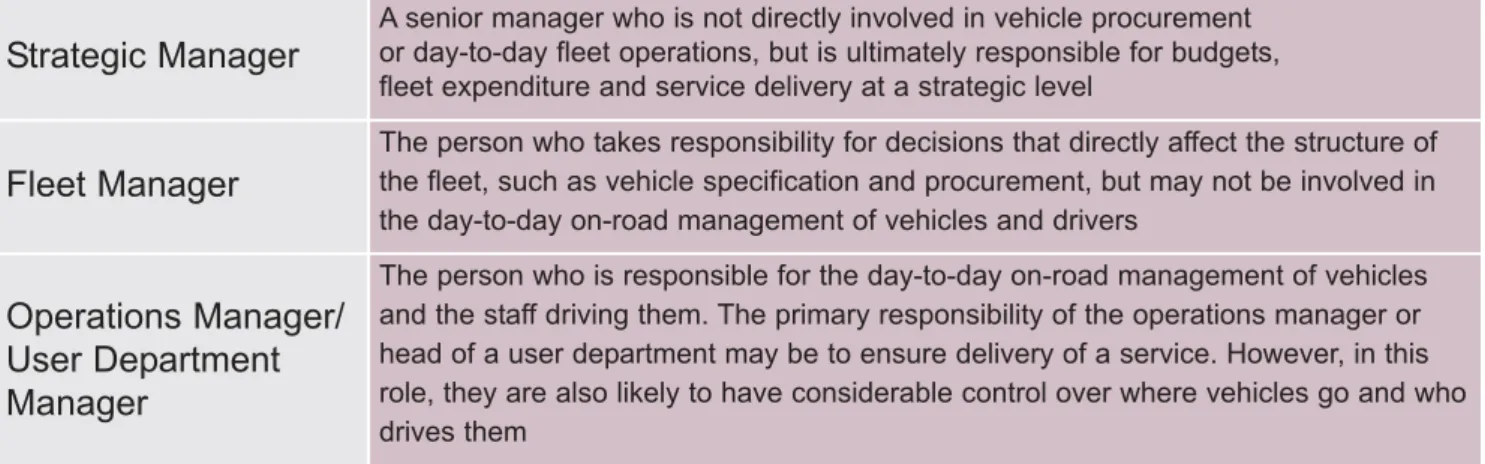
Table 1 The Range of Roles and Responsibilities of Public Sector Managers Identified within the Guide
Strategic Manager
A senior manager who is not directly involved in vehicle procurement or day-to-day fleet operations, but is ultimately responsible for budgets, fleet expenditure and service delivery at a strategic level
Fleet Manager
The person who takes responsibility for decisions that directly affect the structure of the fleet, such as vehicle specification and procurement, but may not be involved in the day-to-day on-road management of vehicles and drivers
Operations Manager/
User Department
Manager
The person who is responsible for the day-to-day on-road management of vehicles and the staff driving them. The primary responsibility of the operations manager or head of a user department may be to ensure delivery of a service. However, in this role, they are also likely to have considerable control over where vehicles go and who drives them
2.1
The Importance of Accountability
Public sector vehicle fleets are required to deliver essential services, for example, refuse collection vehicles for cleansing services or ambulances for emergency services. These vehicles underpin the provision of public services, and more efficient operations mean the delivery of better services at a reduced cost.
Different public sector organisations have different management structures, so it is important that as a strategic manager (for example, the head of a department or service), you understand the vital supporting role that your fleet plays and who is accountable for different parts of your fleet operations. For instance, do you know:
Who is in charge of your vehicles?
Who supervises the drivers of those vehicles? Who manages the fuel issued for use in the vehicles?
Who monitors actual fuel consumption?
Whether the same person manages all of this, or there is a different person in charge of each area?
It is important for you to know this information, because the person within your organisation who manages drivers on a day-to-day basis may be focusing on delivering the service and not be fully aware of the potential benefits of reducing operating costs. To make sustained improvements to your fleet operations (and therefore continually provide better value for public money), you need to have an understanding of exactly who is accountable for what within your fleet operations. Ultimately, it is up to the strategic manager to ask both the fleet and operations managers the right questions. For example, are your fleet managers providing vehicles fit for their intended use or purpose? Do your operations or user department managers really understand the financial and
environmental benefits of initiatives, such as driver training, and what exactly are they doing about it? Initiatives intended to improve operational efficiency are more successful when they have support from all levels within an organisation. Ultimately though, it is up to you, as a senior manager within the public sector, to provide the support and guidance from the top and lead the way forward for others in your organisation.
2
The Role of the Public Sector Fleet: A Note for
Strategic Managers
Who should read this section?
Which parts and why?
Strategic Manager
To make lasting improvements to fleet operations, support is needed from senior management. It is important that you, as a strategic manager, understand the vitally important role that fleet operations play in public sector service delivery, who is responsible for the different parts of your operations, and the type of operational efficiency changes that can be made
3.1
What are the Main
Characteristics of Public Sector
Vehicle Operations?
The range of goods vehicles operated by the public sector is extremely broad and includes activities as diverse as local authority housing services, HM Customs and Excise (now known as HM Revenue and Customs) road fuel testing, and the delivery of medical supplies to NHS hospitals, to name but a few.
While they may not apply to all organisations, some of the key characteristics of many public sector fleets are that:
Vehicles are often driven by staff not specifically employed as drivers
Vehicles are often employed on specialised operations with limited opportunities for use on other activities
Vehicles tend to have relatively low average annual mileages and are frequently confined to specific geographical areas
Due to the specialised nature of equipment, vehicles tend to be kept in service for a long time Additionally, public sector fleets are often operated under a broad range of internal and external constraints, including financial, environmental and social policies.
3.2
Essential Operational Stages
It is important to remember that the approach to
operating fleets in the public sector has many similarities with the management process of any operation that is in place to meet a specific service need.
The essential operational stages are:
Understanding the service level requirement Developing a strategic plan to meet that requirement
Understanding the external pressures that may affect the ability to deliver the service
Selecting, or reviewing, the assets, equipment, buildings and systems used to deliver the service, as well as the staff required to make the operation work
Actively managing the operation to ensure maximum day-to-day efficiency
Monitoring performance
Learning from other similar operations
Reviewing and amending the strategic plan in the light of measured performance, changes in service need, available resources and other factors
Instigating a process of continuous improvement A series of high-level strategic decisions needs to be taken at the outset, to set the overall framework for fleet efficiency improvements. These decisions include:
Firstly, does the organisation really need to run a fleet at all? If so, should the fleet be owned and managed within the public sector or should parts of the service provision be outsourced to a private sector company?
Is it possible that operational collaboration with other public sector organisations and joint use of resources could reduce the overall resources required?
3.3
What are the Key Drivers for
Operational Efficiency in the
Public Sector?
As previously stated, public sector fleets underpin the provision of numerous essential public services, from refuse collection and grounds maintenance to local policing and flood protection. As such, the key drivers can be considered to be somewhat different to those of many other sectors.
The fleet may play a supporting, rather than a leading role and great scope exists to optimise service delivery and minimise costs. By doing this, you can also minimise the environmental impact of your fleet
3
Understanding Public Sector Fleet Operations
Who should read this section?
Which parts and why?
Fleet Manager/
Fleet Engineer
It is important to understand strategic issues before you review your fleet operations and decide whether or not improvements are desirable and possible. The checklist in this section can give you ideas for areas that you can focus on
operations and so help to meet the wider social
obligations and policy objectives that are among the key drivers for the public sector.
At a practical level, a fleet operation in the public sector, however owned and managed, should be based on the operational ‘aims and tools’ of fleet efficiency outlined opposite in section 3.4. These are the areas where public sector managers (fleet managers, fleet engineers, strategic managers, operational managers, etc) can have the greatest day-to-day impact on fleet efficiency.
3.4
The Operational Aims and Tools
The key to delivering service in a way that provides maximum value for money is to minimise resources and maximise productivity.
This underlying principle is put into practice using the following:
Aims- to develop an integrated system of management to optimise service delivery and minimise costs
Tools- to reduce fuel consumption and maximise vehicle and staff productivity
Case Study 1: Leading the way in the
Public Sector: Increasing Productivity
at Forestry Commission Wales
Neil Stoddart is the Manager of Fleet Harvesting at Forestry Commission (FC) Wales. FC Wales harvests almost one million tonnes of timber each year and supports hundreds of jobs in rural communities throughout Wales. This harvesting activity is
dependent on a diverse fleet of goods vehicles, plant and machinery.
“A fall in timber prices on the world market a few years ago created a lot of pressure on the Commission to find ways of becoming more productive,” said Neil. “We’ve always used our own fleet, as well as private contractors. We had thrown down the gauntlet to the private operators to lower their costs, and it would have sent a bad message if we didn’t try to improve our own operations at the same time.”
Recruitment
In 2000, Neil set about making some major changes to FC Wales’s fleet operations. Recruitment was one area which had always been difficult and where a number of significant changes were made. A new apprentice scheme was developed to try to address the situation. From the beginning, it was decided that the scheme should do more than just teach people how to cut down trees. Now, trainees are taken out to
sawmills to give them a better understanding of customers’ real needs.
Productivity
The training also allowed FC Wales to address problems associated with breakdowns.
“It’s very difficult to get vehicles into forests to make repairs when harvesting equipment breaks down. Harvesters cost £1,000 a day to operate. When a harvester goes down, it literally costs us £1,000 in unproductive costs.” Neil said. As a result, all harvesting staff now receive engineering tuition on hydraulics and electrical systems, meaning they can make minor repairs themselves when problems occur.
“Vehicle use was also identified as an area where improvements could be made.” said Neil. “A new harvester costs us £225,000, which means we need to make the maximum use of the assets to justify the large capital costs.” As a result, a new system of double shifting was introduced so that harvesting machines can operate for 12 hours a day.
Benefits
Employees’ views on changes were considered from the outset. “After speaking to our staff, we decided to use a system of three hours on, three off and then three on. So, two shifts work a total of six hours each over a 12-hour vehicle day. Staff were quite happy with this because it gives them more flexibility and they get a better balance between home and work commitments. By starting work earlier, several of our guys can now finish in time to collect their kids from school, so it works very well.”
As a result of these changes, the FC Wales
harvesting team is now 40% more productive than it was five years ago. Neil concluded,“Because of the changes we’ve made, we are now actually more productive than many of our contractors. We’re leading the way.”
These operational aims and tools are integral to the information in the remainder of the guide.
One of the purposes of this guide is to highlight case studies and give strategic, fleet and operations managers ideas on how fleet operations can be improved.
Case study 1 at the Forestry Commission (FC) Wales, outlined on page 5, illustrates an innovative approach to increasing staff utilisation and reducing vehicle
downtime.
3.5
A Checklist for Good Practice
This guide aims to give not only practical information and tips, but also ideas about where to get more information. To determine its relevance, answer the questions in the checklist below.
If there are boxes within the checklist that you have not ticked, you can find useful information within the guide on the areas covered by those questions, along with signposts to further, more detailed information on specific topics.
Operational Checklist
Operational
Checklist
Tickbox
(
)
Have you ever undertaken a review of your fleet operations or a riskassessment to identify areas for potential improvement? 4
Do you have a fuel management programme in place? Does your organisation have a Fuel Champion?
Do you know the average MPG for vehicles in your fleet? Could you find out who your most fuel efficient drivers are?
5
Do you know if outsourcing some of your operations would save you money? 4.4
Do you purchase vehicles based on life-cycle running costs
(also known as whole life costing)? 4.8
Have you looked recently at whether new technology and telematics systems
could help to improve your operations? 5.10, 5.13
Do you use KPIs to measure vehicle operations or maintenance costs (e.g. pence per mile, direct maintenance cost per vehicle) to
assess the effectiveness of your operations?
6.2
Do you know how your costs compare with those of other organisations that
have similar operations? 6.2
Do you provide your drivers with training in safe and fuel efficient driving
As mentioned earlier in this guide, some of the defining characteristics of fleets in the public sector are that they are often complex, support the provision of a variety of different essential services and involve many different types of specialised vehicle. The drivers of the vehicles are often not employed specifically as drivers (and therefore do not see themselves as such) and
management responsibilities are sometimes fragmented. It is therefore essential to:
Break down your operations to their basic components
Understand the features that make your fleet different to others
Identify and understand your own specific fleet efficiency issues
Develop actions to support and improve the efficiency of your operations
How do you go about identifying efficiency issues in your operations and starting to make improvements? Often the best approach is the simplest one. Case study 2 (overleaf) featuring HM Customs and Excise (now known as HM Revenue and Customs) provides an example of a clear and systematic way to approach a fleet review.
4.1
Risk Management
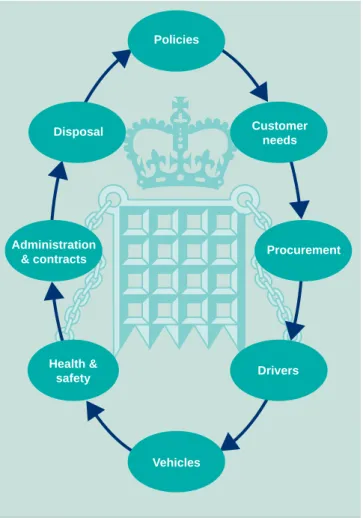
There are risks involved in all aspects of your fleet operations - everything from vehicle procurement to disposal. It is important that these risks are managed properly, not only because your employees have the right to work in the safest possible environment but also because minimising risk (including accidents and damage to vehicles) can reduce your costs considerably. Figure 1 illustrates the areas of risk considered by HM Customs and Excise as part of their fleet review, as discussed in case study 2 overleaf.
Make risk management an integral part of your fleet review, as HM Customs and Excise did. Start off by breaking down your operations into their key
components and identifying all the potential risks in your operations and how they could be managed. This includes the adoption of safe working practices and programmes of training for all staff covering both general health and safety and specific activities.
4
Designing and Reviewing the Operation
Policies Vehicles Customer needs Drivers Disposal Health & safety Procurement Administration & contracts
Figure 1 HM Customs and Excise Areas of Risk Covered in the Fleet Review
Who should read this section?
Which parts and why?
Strategic Manager
All parts: Reviewing your fleet operations will lead to better operational design, improved compliance and safety, and more cost-effective management of your organisation’s fleet
Fleet Manager
All parts: Better vehicle specification leads to improved service provision and lower operating costs. Improved compliance increases driver and vehicle safety and can help to reduce accident rates. It is your responsibility to ensure Operator Licensing requirements are met and that the fleet is run legally
Operations Manager/
User Department Manager
Risk assessment and legal compliance: Your personnel are the ultimate drivers and therefore the real ‘users’ of the vehicles and it is your responsibility to ensure they are aware of their obligations under road transport and health and safety legislation
It is important to monitor the effectiveness of risk management policies through KPIs. For example, monitoring the number of accidents, the cost of repairs and the number of days of lost service due to repairs. It is essential to act on current KPI performance levels, monitor progress towards targets and set new ones where necessary. KPIs for fuel management can be found in Section 5.9 and general KPIs and performance monitoring are outlined in Section 6.
Case Study 2: HM Customs and Excise:
Reducing Risks and Lowering Costs
John Webb was appointed National Fleet Manager of HM Customs and Excise (HMCE) in 2002. He had previously worked elsewhere within the HMCE organisation and used his experience in project management to take a structured approach to undertaking a fleet review and implementing a challenging change programme. NB: HM Customs and Excise merged with the Inland Revenue in April 2005.
The Process
At the outset, John took an overview of HMCE’s key fleet operations. Several aspects stood out:
The HMCE fleet was large and made up of a diverse range of vehicles. Operations involved a combination of those vehicles owned entirely by HMCE, hire cars and staff members’ own vehicles Many HMCE vehicles were equipped with
expensive, specialised ancillary equipment, such as surveillance devices and oils and drug testing equipment
The nature of HMCE activities meant that drivers were often subjected to high levels of risk in day-to-day operations
The Issues
By looking at HMCE fleet operations as a whole, the issues became very clear. Costs were escalating and a lack of central control in fleet operations meant that risks needed to be managed more effectively.
The Measures
Having established these issues, the next step was to break down the fleet operations into their key
components and identify areas where policies could be developed.
With further consideration, John Webb realised that risk was a common issue throughout the entire fleet management process. A number of policies were
therefore developed to address the key areas of concern, for example, in the areas of:
Procurement- Initially 42 different vehicle types were involved in operations, which was many more than necessary. ‘Up front discounts’ were dominating procurement decisions. Procedures were changed, so that procurement decisions were based on whole-life costing. Close
consultation was undertaken with staff to ensure that the users of the vehicles were satisfied with the vehicle selection and aware of the reasoning behind it
Contracts- On close inspection of the car hire, fleet and accident management contracts, it was clear that changes to each of them would result in better value for money. Staff involved in fleet management received training from external organisations including the Institute of Car Fleet Management, and specific best value measures were introduced into contracts. John consulted with fleet managers elsewhere within central Government operations and looked for
opportunities to ‘piggy back’ on other Government contracts to drive down his own costs further. For example, HMCE successfully joined the Inland Revenue’s vehicle disposal contract
The Outcomes
Operating costs have been reduced by £300,000 per year, with potential for further improvement Car hire costs were reduced by 30% in a year, solely through improved contract negotiation Fleet management personnel now have a much closer working relationship with the vehicles’ end-users, incorporating their views into the decision-making processes
4.2
Insurance
Although many larger public sector bodies may self-insure, smaller operations are likely to pay annual fleet insurance premiums, which can be a significant cost.
Applying risk assessment strategies in this area can help to offer significant savings. For example, training and activity-specific safety awareness campaigns can help to reduce accidents, which in turn can lower insurance premiums. When examining risk and insurance, it is worth asking the following questions:
Have you undertaken a risk assessment of your operations?
Which activities place employees at risk? Can you stop these activities (i.e. eliminate risk altogether)?
If not, can you reduce risk by implementing measures such as safe working practices and job-specific training?
This approach has helped Flintshire County Council to reduce its insurance costs, as shown in case study 3 below.
4.3
Managing Operations In-house
or Outsourcing
It is worth asking a very simple question before you start thinking about whether you should manage operations in-house or through a third party. That is:
Do we actually need to run a fleet at all? A number of public sector organisations have recently developed ‘demand reduction strategies’, to reduce the need for travel though measures such as
teleconferencing. Of course, this is suitable as a method of reducing inter-office meetings rather than a method of reducing fleet miles.
In many public sector organisations, the decision to operate a fleet in-house or to outsource to a third party may be influenced by external factors, such as
compulsory competitive tendering (CCT) or best value measures. Decisions about how services are delivered may therefore be beyond the control of fleet managers. Alternatively, decisions might have been made a long time ago and not been reviewed recently.
It is worth revisiting your policies and asking some questions that can dictate the structure of your operation:
Should we manage vehicles ourselves? Should we manage vehicle maintenance ourselves?
Are there individual parts of our operations that might be better managed by others?
As part of your fleet review, look at the pros and cons of outsourcing operations to a third party and keeping them in-house. There are a number of issues that need to be considered, including:
Service quality- How are service levels likely to be affected by outsourcing? Given the primary importance of service quality in the public sector, it is vital to consider the ultimate impact of any decision to change your operational structure
Competencies- Are there ‘non-core’ activities that could be outsourced to allow you to concentrate on your ‘key competencies’? For example, would contracting out tyre services to a tyre management company make your job easier?
Cost- In most operations, cost is likely to be a significant issue, second only to service level provision. Conduct a fleet review to assess the costs of your own operations and compare them to those offered by third parties
Case Study 3: How Risk Assessment
Strategies Can Influence Fleet
Premiums at Flintshire County
Council
In 2001, having identified rising insurance premiums through a risk assessment of Flintshire County Council’s fleet operations, Fleet and Communications Manager, Ian Jutson, designed a driver training course aimed at improving staff skills. He worked with the council’s own road safety unit to deliver the training course to his fleet drivers.
The course was successful and, through improved driver performance, led to a reduction in the number of claims made to the council’s fleet insurers.
This reduced claim activity was a major contributory factor in halting the rise in fleet insurance premiums, to the point where these had not increased between May 2002 and November 2004.
“In a market sector producing increasing
premiums, we’ve experienced a significant saving in real terms over what we would have paid had we not assessed the situation, identified a problem and implemented an appropriate solution,” said Ian.
There are many different options for outsourcing. You can contract out whole operations or services to a range of private sector companies (e.g. waste management services) or just a single element relating to vehicle maintenance (e.g. tyre management or repair and maintenance).
4.4
Managing Outsourced Operations
This guide is primarily intended to offer operational efficiency guidance to public sector managers running or using their own in-house fleets in support of in-house services, but the issues and concepts are just as relevant to managers who are responsible for outsourced services. For example, the cleansing services contract manager (who might manage a third-party service provider) should be aware of fleet-related efficiency measures to ensure that the contractor is providing real value for money. Is it using appropriate vehicles? Are its drivers and operators properly trained? Does it operate on the most appropriate routes?
It is important that the performance of contractors is monitored and reviewed in the same way as in-house activities. Contractors can become complacent if they think their performance is not under scrutiny. Benchmark contract costs and, as part of the review process, compare them to the cost of undertaking activities in-house to ensure that you are getting the best value. When it is time for renewing a contract, review alternative options and see what others have to offer. Communicate with other managers who might also oversee contractors, so they can better understand fleet costs and deal with them on a ‘level playing field.’
4.5
Legal Considerations
Normally, if operating vehicles over 3.5 tonnes gross vehicle weight (GVW), the fleet operator will be subject to the Operator Licensing (O Licence) system, which sets minimum standards and obligations in a range of areas, such as vehicle roadworthiness, avoiding overloading and drivers’ hours compliance.
Non-compliance can lead to a whole host of problems, including risks to the health and safety of your
employees, increasing the potential for litigation and possible revoking of your (or your contractor’s) O Licence itself.
If your organisation employs and manages staff to operate vehicles, then it will be deemed to be the operator of the vehicle and will have to comply with O Licensing regulations. In this instance, this responsibility cannot be outsourced. At a more practical level, non-compliance with stipulated safety inspections can ultimately result in inferior vehicle condition, costing money to repair and maintain.
Legal and health and safety issues need to be considered from the outset in operational design. For example, why specify a vehicle over 3.5 tonnes GVW, which will be subject to O Licensing and additional driver licensing requirements, if a slightly smaller vehicle could do the job just as well? As shown by the case studies below, education and enforcement are very useful tools for reducing the potential for non-compliance problems, such as overloading.
Case Study 4: Compliance at Leeds City
Council
Leeds City Council operates a fleet of more than 300 LGV vehicles, ranging from 7.5 tonne tippers to 44 tonne articulated vehicles and, as such, compliance issues in relation to drivers’ hours and vehicle loading have always been a major concern.
Education
The council decided to take a proactive approach to improving compliance and developed a number of ‘user groups’ to facilitate communication between different departments and educate drivers about overloading and how it can be avoided.
Enforcement
A Vehicle Safety Department was established within the council, which set up a mobile vehicle inspection scheme. The council’s own inspectors can stop council vehicles at any time to check compliance with drivers’
hours regulations and load legality (in terms of both security and weight). The department then provides overload reports and undertakes reviews
of the legality of operations and risk assessments. Issues and problems are discussed at user group meetings and are supported by subsequent training where necessary.
Although the measures have only been introduced relatively recently, the council has already seen some benefits from the programme. Employees now have a high level of awareness of the problems associated with overloading vehicles, and actively help
management to identify and modify work practices that can lead to
4.6
Vehicle Financing
If you decide to operate your own in-house fleet or are a local authority, for example, which is successful in tendering to provide a service, the next big decision is how to go about financing it. Although, in practice, many options exist, there are four main methods for vehicle financing:
Outright purchase (new, nearly new, used) Contract hire
Hire/purchase Operating leases
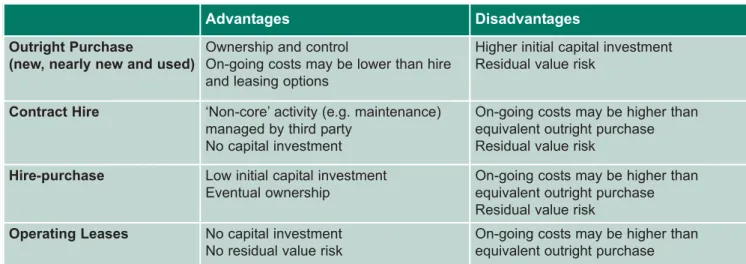
Table 2 below outlines some of the advantages and disadvantages associated with each option.
Table 2 The Advantages and Disadvantages of the Main Methods of Vehicle Financing
Case Study 5: Health and Safety
Starts with Vehicle Specification
At Cambridgeshire Fire & Rescue Service, health and safety has always been taken very seriously. In an emergency situation, the top priorities are that vehicles are reliable and employees operate in the safest possible environment.
Diversity and equality legislation has abolished height or weight restrictions for new recruits and so careful consideration needs to be given to vehicle design. This means that hoses and other important equipment must be fitted to the vehicle in a way that makes them easily accessible to all potential users.
Case Study 6: Freight Transport
Association Public Authority Transport
Network - Technical Officer Group
The Public Authority Transport Network (PATN) is an ‘e’ enabled networking group to which municipal vehicle operators who are in the public sector and members of the Freight Transport Association (FTA) subscribe to discuss and share best practice.
In 2003, this group formed a Refuse Vehicle Overload Technical Officer’s Group (TOG) with the declared aim: ‘To identify the scale of, and resolve, the overloading issues related to compaction refuse collection vehicles.’ To assist operators in identifying problems and
implementing good management procedures to ensure compliance with the relevant legislation, the TOG produced a Best Practice Guide in November 2004, entitled ‘Refuse Collection Vehicle (RCV) Procurement and Operation Procedures’.
Included in the guide is advice aimed at procurement and covering all aspects of design and build of trucks to ensure that the vehicle is tailored to the needs of the operation.
To find out more, please see ‘Public Authority Transport Network Refuse Collection Vehicle (RCV) Procurement and Operation Procedures’ - a best practice guide covering vehicle selection, load measuring and safe loading practices for refuse collection vehicles. Contact the FTA on 01892 526171 or visit its website
www.fta.co.ukfor more information.
Advantages Disadvantages
Outright Purchase
(new, nearly new and used)
Ownership and control
On-going costs may be lower than hire and leasing options
Higher initial capital investment Residual value risk
Contract Hire ‘Non-core’ activity (e.g. maintenance) managed by third party
No capital investment
On-going costs may be higher than equivalent outright purchase Residual value risk
Hire-purchase Low initial capital investment Eventual ownership
On-going costs may be higher than equivalent outright purchase Residual value risk
Operating Leases No capital investment No residual value risk
On-going costs may be higher than equivalent outright purchase
Operating leases are a favoured method of financing vehicles for many local authorities, but it is important to use whole-life costing principles when comparing leasing arrangements with outright purchasing options. The worked example outlined below, shows an example of how this concept works.
4.7
Vehicle Specification
Once you have decided that you do need to run a vehicle fleet and how you want to finance it, you then need to set about specifying exactly which types of vehicle you require.
Time spent developing the best specification for a vehicle is time very well spent. The appropriate specification will often mean little or no more cost and will save the operator money throughout the entire life of the vehicle. Whole-life costing decisions, as outlined below, are therefore essential.
In reality, calculations will probably be much more complicated than this simple worked example but there are fleet management software packages available that can help you.
It is also worth noting that if whole-life costs are similar between different vehicle types, you could make decisions based on non-cost related factors, such as
features requested by drivers. This is illustrated in Case Study 7 at the National Blood Service opposite. A cheaper but poorly specified vehicle, unfit for its intended purpose, could end up costing more over its service life than one which is initially more expensive but is more appropriate for its intended use. Vehicle
specification is particularly important for public sector fleet operators, such as local authorities, as their vehicles tend to perform highly specialised functions. This means that careful consideration needs to be given to each type of vehicle as ‘one size will certainly not fit all’.
Many public sector vehicles often incorporate specialised equipment (e.g. pumps, cranes) driven either by an independent power source or from the vehicle’s engine (known as power take-off). When the engine is the power source for additional equipment, this will impact on fuel consumption, which in turn will increase operating costs. To maximise fuel economy, it may be beneficial to specify a more powerful engine that can cope with the additional demands of power take-off equipment.
During specification, it is important to consult with the users that will actually put the vehicle to use. Some of the benefits of incorporating employee views in the vehicle specification process are shown in Case Study 7 at the National Blood Service.
Worked Example: Wholelife Costing
-Cheap Vehicles Can Be Expensive in the
Long Run
Whole-life, or life-cycle, costing is used by many different types of organisation to help with complex decisions but the underlying concept is simple and very useful. Whole-life costing involves making purchasing decisions based on all of the costs associated with all stages of purchasing, using and ultimately disposing of an asset, instead of just focusing on the initial purchase price.
There are a great number of direct and indirect costs associated with operating a vehicle - these include insurance, fuel, maintenance, driver training, fitting additional equipment, the environmental cost of the CO2produced by the engine and even the cost of disposal of used oil.
You can decide exactly what costs you should
incorporate into your decision-making process, but the more comprehensive the cost-model, the more informed the decision-making. The table opposite provides a simple example using four major cost components.
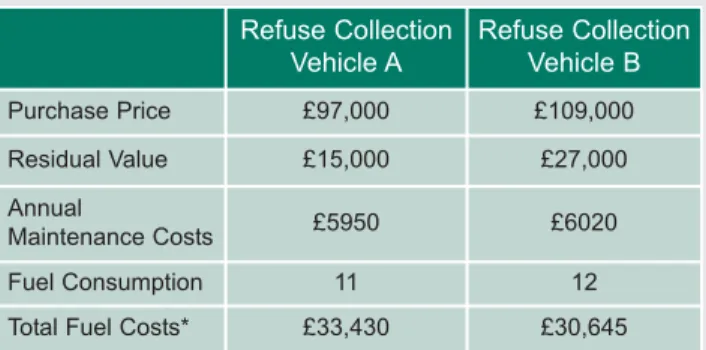
Vehicle B costs more to purchase initially than vehicle A, but both cost £82,000 over the total life of the vehicle, when residual value is taken into account. Maintenance costs are higher for vehicle B, but it has better fuel consumption. Taking these differences into account, vehicle B will be approximately £2,500 cheaper to operate than vehicle A over a three-year life-cycle.
*Based on a three-year vehicle life and assuming 36,000 miles per year @ £0.75 per litre Refuse Collection Vehicle A Refuse Collection Vehicle B Purchase Price £97,000 £109,000 Residual Value £15,000 £27,000 Annual Maintenance Costs £5950 £6020 Fuel Consumption 11 12
Total Fuel Costs* £33,430 £30,645 Table 3 Comparison of Major Costs for Two Refuse
Sources of Further Information
‘Truck Specification for Best Operational Efficiency’ - a step-by-step guide to vehicle specification, from chassis, engine and transmission specification through to choice of body aerodynamic features and ancillary equipment. ‘Buyers’ Guide to Refrigerated Transport Equipment’ -highlights the key considerations to take into account when purchasing refrigerated transport equipment. ‘Making the Swap to Demountables’ - introduces the basic concept of demountables and outlines how they can benefit your freight operation.
To obtain a free copy of these publications, contact the Freight Best Practice hotline on 0845 877 0 877or visit the website www.freightbestpractice.org.uk
4.8
Vehicle Procurement and Choice
of Suppliers
Once specification is complete, it is then time to start fleet procurement. Vehicle procurement can be a complicated and lengthy process, mainly because the public sector is subject to close scrutiny when it comes to large
purchases. Nevertheless, effective procurement and tendering processes help to choose fairly between suppliers and ensure the best value for public money. The procurement process is largely dictated by the value of the purchase you need to make. Low value purchases may only require a few quotes from local suppliers,
Case Study 7: Involving Staff in Vehicle
Specification: the National Blood Service
Using somewhat clinical whole-life costing principles in vehicle specification does not mean that you cannot consider the interests and requests of your staff at the same time.
When Larry Bannon was appointed National Fleet Manager to the National Blood Service (NBS) in 2001, he found that 15 different makes of vehicle were being used within the fleet, with many diverse models within each group. “We even had American vehicles from the likes of GMC and Dodge to Bluebird Buses! The diversity of the fleet made it impractical and uneconomical.” he said.
One of Larry’s first priorities was to rationalise the fleet but he was keen, from the outset, to involve staff as ‘partners’ in this process. Special vehicle user groups were set up to provide feedback after the fleet management team had developed the initial vehicle specifications.
According to Larry, staff were supportive because of the efforts made to encourage participation and incorporate their views, and their demands were normally pretty modest and quite reasonable. “People really understood what we were trying to do and hardly ever requested anything that wasn’t really fit for purpose. On the whole, people just asked for little things to make their driving more comfortable, like air-conditioning, air bags, cup holders, coat hooks and radios. These are really easy things to build into a specification and it keeps everyone happy - especially the people who use the vehicle all day, every day.”
Case Study 8: Streamlining
Administration through Framework
Agreements
A framework agreement is essentially a general contract that can be used for regular purchasing. Establishing framework agreements with suppliers can help you to avoid the administration involved with drawn-out, ad hoc tendering processes and, at the same time help you to benefit from lower costs. In 2004, North Lincolnshire Council established a framework agreement for the purchase of light vans. According to Fleet Manager, John Luty, “It took a little bit of time to set up with the supplier initially but, in the longer term, has saved so much time as van replacement makes up such a major part of our fleet activity. At the same time, we are still paying significantly less per vehicle than we could otherwise get at a dealership.”
whereas other higher value contracts need to be advertised through the EU in the Official Journal of the European Communities (OJEC) which is now the Official Journal of the European Union (OJEU). As an alternative to tendering, it is possible to develop a framework agreement. This is simply an arrangement with a supplier that ‘locks in’ a specific price for purchases made throughout a certain time period. As shown in Case Study 8 from North Lincolnshire Council, framework agreements are particularly useful for vehicles that your organisation buys frequently.
Procurement policy should, of course, be guided by your wider fleet policies. For instance, the tendering process can help to secure the lowest price for a vehicle, but it is important to remember that the lowest priced vehicle may not always be the most appropriate for the required purpose. Multiple random cheaper vehicle purchases could, in fact, lead to a more diverse mixed fleet, ultimately driving up maintenance costs in the longer term.
The public sector, as a whole, uses many thousands of vehicles, from motorbikes and small cars up to the heaviest goods vehicles, to perform its range of services to the required standard. This means there may be great opportunities to use combined purchasing power to reduce vehicle costs. It may be possible to ‘piggy back’ on other purchasing agreements or contracts with other similar public sector organisations or to use local purchasing collectives. As shown in Case Study 9 from East Riding of Yorkshire Council, procurement
processes can ultimately lead to more appropriate and less expensive vehicle purchases.
Sources of Further Information
The Association for Public Service Excellence (APSE) -a non-profit m-aking org-anis-ation owned by the loc-al government authorities, assisting members in the implementation and development of best value and modernisation initiatives. APSE promotes quality public services via networking, the sharing of information and best practice. Visit its website www.apse.org.ukfor more information.
Freight Transport Association Public Authority Transport Network. Contact the FTA on 01892 526171 or visit its website www.fta.co.ukfor more information.
4.9
Vehicle Disposal
Estimates of vehicle residual values need to be factored into whole-life costing calculations, so it is important that vehicle disposal is considered right from the beginning of operational planning, just like vehicle specification. There are a variety of options available for disposal,
including private sale, auction or the use of disposal agencies. The disposal process should be guided by two objectives:
Minimisation of administration costs Maximisation of vehicle residual values As with vehicle purchasing, it can be beneficial to join disposal contracts set up by other public sector organisations in an attempt to reduce costs.
Case Study 9: Using European
Procurement to Your Advantage
“European procurement can be a headache for administration but it can also lead to some very decent outcomes,” says Nigel Rowe, Fleet Manager at East Riding of Yorkshire Council. In late 2002, Nigel placed an advert in the Official Journal of the European Communities (OJEC) which is now the Official Journal of the European Union (OJEU), for six new body units for waste collection vehicles. According to Nigel, “We received a response back from an Italian company that we had never heard of, which was about £20,000 cheaper than its nearest rival.”
Nigel said he was initially hesitant to go ahead with the contract. “You have to be careful, as
sometimes if you go with the cheapest option, you can end up with a disparate fleet meaning you ultimately spend more on maintenance. But, in this case, it wasn’t an issue because the purchase price was just so much cheaper.”
After consulting the refuse collection staff who would ultimately be using the equipment, he decided to ask for a demonstration unit on trial. “We have since bought 22 more units from the same supplier and I reckon it’s one of the best purchasing decisions we’ve ever made.”
5.1
Developing a Fuel Management
Programme
It is important to remember that while service delivery and road safety are paramount to public sector fleet operations, fuel is a resource that needs to be well managed. Although fuel use varies considerably across different public sector fleets, it nevertheless represents a major cost in most settings. In certain operations, fuel can account for 30% or more of total operating expenses.
Consider a small local authority fleet, with an annual fleet fuel bill of approximately £400,000, equating to
approximately 535,000 litres of diesel used per year (assuming a purchase price of approximately 75 pence per litre). If vehicle fuel consumption were to be improved by only 3% - very achievable through a combination of the measures outlined in this section - then this would lead to a saving of 16,050 litres at a cost saving of approximately £12,000 - the equivalent of the purchase price of a new van for the fleet. This would also lead to a reduction of over 42 tonnes of CO2emissions throughout the year - a significant improvement in environmental performance.
Establishing a formal fuel management programme is an extremely effective method of making permanent and lasting reductions in the cost of your operations.
Considering the size of many public sector fleets, even a minor reduction in fuel use, as illustrated above, can save thousands of pounds each year and reduce CO2
emissions by several tonnes.
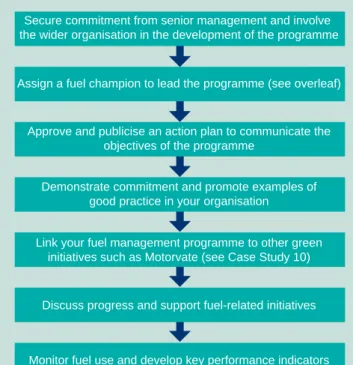
A comprehensive programme can have the greatest impact if it is developed in a logical and systematic way, rather than introducing various initiatives on a piecemeal basis. It is important to have support for the programme across all levels of your organisation, so that it is sustainable and not just seen as the ‘flavour of the month’. Figure 2 below shows the essential steps to developing a fuel management programme.
5
Running the Operation
This section discusses the two tools that can be used to improve operational efficiency - the minimisation of fuel consumption and the maximisation of vehicle utilisation - while still meeting required service levels.
Operational Tool 1:
Reducing Fuel Consumption
Secure commitment from senior management and involve the wider organisation in the development of the programme
Assign a fuel champion to lead the programme (see overleaf)
Approve and publicise an action plan to communicate the objectives of the programme
Demonstrate commitment and promote examples of good practice in your organisation
Link your fuel management programme to other green initiatives such as Motorvate (see Case Study 10)
Discuss progress and support fuel-related initiatives
Monitor fuel use and develop key performance indicators
Who should read this section?
Which parts and why?
Strategic Manager
All parts: Reducing fuel consumption will save your organisation money and allow you to deliver services more efficiently. A fuel management programme will reduce the environmental impact of your fleet and can improve the image of your organisation. Better vehicle utilisation can reduce the need to purchase new vehicles.
Fleet Manager
All parts: A fuel management programme can save money, which can be used in other areas to improve operations. Communications and telematics technology can improve vehicle utilisation, reduce the need for new vehicles and lower operating costs.
Operations Manager/
User Department Manager
Driver training: Driver skills development can reduce accidents and damage and allow you to deliver services more effectively. As the person with front-line responsibility for drivers, it is up to you to encourage safe and fuel-efficient driving techniques.
Figure 2 Steps to Developing a Fuel Management Programme
The fuel management programme addresses every important link in the life-cycle of fuel use within the organisation - from fuel acquisition through to storage, issue to the user and subsequent in-fleet use.
Sources of Further Information
‘Fuel Management Guide’ - a comprehensive guide covering many aspects of fuel efficiency including data collection and analysis, vehicle specification and driver training. To obtain a free copy of this publication, contact the Freight Best Practice hotline on
0845 877 0 877or visit the website
www.freightbestpractice.org.uk
5.2
Assigning a Fuel Champion
It is essential to have an advocate or ‘Champion’ for your fuel management programme to ensure that it is accepted throughout the organisation and continues to be effective. The Fuel Champion can monitor fuel performance and provide information to the organisation about the programme. Their role is to change the organisation’s attitudes towards the use of fuel and encourage staff to regard fuel as one of the public sector’s most valuable resources.
The key responsibilities of the Fuel Champion are to: Understand how to gather fuel consumption information, the potential that exists to improve performance and the various ways this can be achieved
Develop the strategies required and put them into an action plan
Investigate the factors that influence fuel consumption, such as driver performance, overloading, weather and seasonality
In general, it is best to offer this additional role of Fuel Champion to an existing member of staff who has an understanding of vehicles and fuel economy issues. Perhaps someone with some experience of driving a typical vehicle used within the fleet or division. Most importantly, the person must have sufficient authority to allow them to actively encourage change within the organisation. In order to achieve this (and for the whole issue of fuel management to be taken seriously), they must have direct access to senior management.
Sources of Further Information
‘Fuel Management Guide’ - covers the skills, knowledge, and experience required by fuel champions and provides an example of a fuel management programme action plan for developing a fuel management programme. ‘Save It! - The Road to Fuel Efficiency and Champions of Fuel’ - outlines the benefits of appointing a Fuel Champion.
‘Fuel Champion Saves Equivalent of 50 Trailer Loads of Carbon Dioxide a Year’ - a Case Study on a fuel management programme developed at BOC Ltd. To obtain free copies of these publications, contact the Freight Best Practice hotline on 0845 877 0 877or visit the website www.freightbestpractice.org.uk
5.3
Fuel Selection
Selection of fuel type is a key factor within the fuel management programme, but from the outset it is always worth remembering that alternative fuels should only be considered after steps have been taken to optimise fleet performance.
In recent years, a large number of public sector
organisations have introduced alternative fuels into their operations in preference to conventional petrol and diesel, in an attempt to reduce emissions and lower fuel costs. While there are many benefits associated with alternative fuel use, there can also be a number of disadvantages. For example, compared to conventional fuels such as diesel, many alternative fuels may require a greater volume of fuel to be used for the same energy output. The key to effective use of alternative fuel lies in understanding the comparative strengths and
weaknesses of different fuel types, some of which are shown in Table 4 opposite.
It is important to note that the identification and trial of alternative fuels should only ever be one single element of a much more comprehensive fuel management programme. When deciding on the most appropriate
type of fuel (conventional petrol and diesel, or alternative) for a specific situation, it is worth considering:
The benefits to your organisation
The outcome of any known evaluations and trials The operational, financial and environmental advantages and disadvantages of each fuel type Supply availability, distances/tank range, and location of refill points
Conversion costs Running costs
Availability of funding for conversion or infrastructure
Resale value
Case studies 10 and 11 highlight some of the advantages and disadvantages associated with alternative fuels.
Sources of Further Information
‘Fuel Management Guide’ - outlines the advantages and disadvantages associated with different types of
alternative fuels. To obtain a free copy of this publication, contact the Freight Best Practice hotline on
0845 877 0 877or visit the website
www.freightbestpractice.org.uk
Fuel type Advantages Disadvantages
Diesel Extensive infrastructure available for refuelling. Polluting in comparison to many alternatives Wide vehicle selection
Relatively high efficiency in terms of MPG, particularly when used in latest generation European specification engines
Petrol Extensive infrastructure available for refuelling. Polluting in comparison to many alternatives Wide vehicle selection Comparatively high duty rates
Compressed natural gas Cheaper than conventional fuel Vehicles require a modified tank, which can be expensive. (CNG), liquid natural gas Capital grants available for development. Tanks are larger than conventional fuel tanks which may (LNG) and liquid Generally less polluting than diesel and result in a reduction in payload capacity
petroleum gas (LPG) petrol vehicles May also cause problems with residual values For some (particularly CNG), refuelling time can be significant
Not widely available at petrol stations and usually require on-site storage facilities
Staff may be reluctant to use, due to misconception that it is more dangerous than conventional fuel
Biodiesel Less polluting than conventional diesel If mix exceeds 5% (or less in some cases), manufacturers’ warranties may become void
Electricity Little noise and no emissions Vehicles have less power and a limited range compared to Vehicles use much less energy than conventional conventional fuel vehicles
fuel vehicles Batteries can be expensive
Tax advantages Recharging can take many hours
Hybrid vehicles Hybrids combine the ‘best of both worlds’ of Goods vehicle hybrids are not widely used and can be electric and conventional fuels more expensive than conventionally powered vehicles Table 4 The Advantages and Disadvantages of Various Types of Fuel
Case Study 10: Exploring Alternatives
at Hull and East Yorkshire Hospitals
NHS Trust
A framework agreement is essentially a general contract that can be used for regular purchasing. Establishing framework agreements with suppliers can help you to avoid the administration involved with drawn-out, ad hoc tendering processes and, at the same time help you to benefit from lower costs. In 2004, North Lincolnshire Council established a framework agreement for the purchase of light vans. According to Fleet Manager, John Luty, “It took a little bit of time to set up with the supplier initially but, in the longer term, has saved so much time as van replacement makes up such a major part of our fleet activity. At the same time, we are still paying significantly less per vehicle than we could otherwise get at a dealership.”
5.4
Fuel Purchase and Storage
Given the size of many public sector fleets, there is scope to save money through improved fuel purchasing arrangements. There are a variety of different policies that can be used but the most common options include:
Buying on the ‘spot market’ - i.e. contacting numerous suppliers to get the best price Contract buying at index prices or fixed prices Using fuel cards at external refuelling facilities Direct account negotiations with a local service station
Joining a buying co-operative or sharing facilities with other public sector organisations
Although using fuel cards and purchasing through service stations tends to be more expensive than bulk purchasing, the latter may require significant investment in storage and refuelling facilities.
There is great potential to form purchasing partnerships and facility sharing arrangements in the public sector. These strategies may be particularly attractive for the acquisition and storage of alternative fuels, which tend to require more specialised or expensive on-site facilities. Policies should be guided by the nature of your
operations. For example, rapid response operators such as the National Blood Service and other emergency services may need higher fuel reserves than other groups, to ensure continuity of service.
Sources of Further Information
‘Fuel Management Guide’ - gives tips and outlines issues relating to on-site storage of fuel.
‘Fuel Champion Saves Equivalent of 50 Trailer Loads of Carbon Dioxide a Year’ - a on a fuel management programme developed at BOC Ltd.
To obtain free copies of these publications, contact the Freight Best Practice hotline on 0845 877 0 877or visit the website www.freightbestpractice.org.uk
5.5
Stock Control and Issue
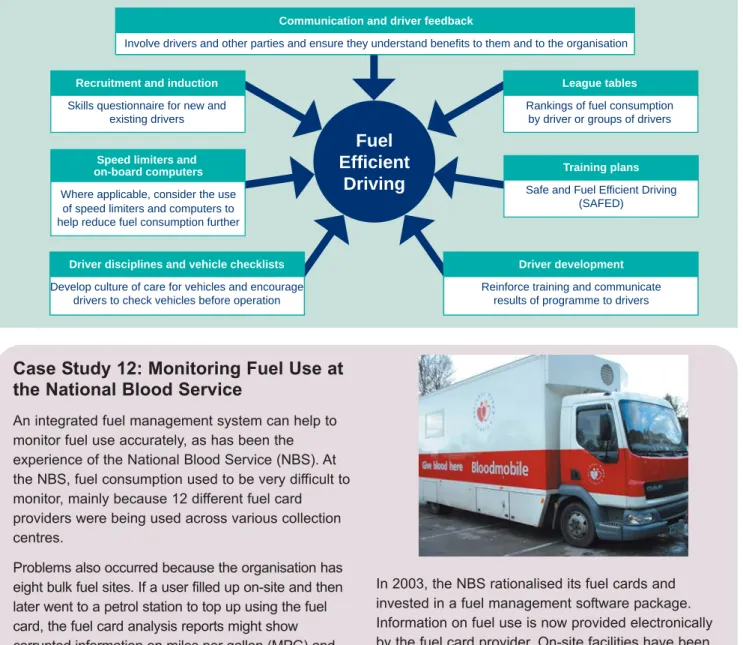
Accurate stock records are fundamental in a good fuel management programme, as Case Study 12 shows overleaf. Leakage, theft, short delivery and incorrect pump calibrations are some obvious problems that impact on stock management.
Where possible, formal written procedures should exist for fuel tanker deliveries. Delivery of fuel should always be overseen by a responsible person fully briefed on emergency procedures. Measurements of stock levels should always be taken before and after deliveries. It is important to be aware that measures of stock may not always be accurate because of cumulative
inaccuracies in measurement systems. Losses or gains of 0.5% can be considered normal in most situations, but it is important to understand some of the causes for stock inaccuracy.
Case Study 11: Diesel Refuse Vehicles at
East Riding of Yorkshire Council
East Riding of Yorkshire Council has 660 vehicles in its fleet which includes vans, minibuses, and grounds maintenance and refuse collection vehicles. In recent years, the council has undertaken extensive trials of LPG and CNG vehicles. Recently, it considered upgrading its fleet of 12 refuse collection vans from diesel to CNG to reduce fuel costs and lower CO2 emissions. After carrying out an evaluation, however, it was found that new CNG fuel tanks would reduce the vehicles’ payload capacity significantly. While loss of space and payload did not pose significant problems for the council’s LPG van fleet, it was a more
significant problem for the refuse collection fleet owing to the type of work in which they are involved.
Conversion of this fleet to CNG would have meant that the council would need to invest in an additional two vehicles to maintain existing service levels. It was therefore decided that the use of low-sulphur diesel would be a better long-term option for these particular vehicles.