Devolution of HR Responsibilities to Line Managers
-
Keys to Successful Implementation within the IPA
By Dualta Walsh
National College of Ireland, 30 July 2010
I hereby certify that the information contained in this (my
submission) is information pertaining to research
I
conducted
for this dissertation.
All
information other than my own
contribution will be fully referenced and listed in the relevant
bibliography section to the rear of the report.
Signed:
List of Tables
Page 24 ... Table 1 - Is it feasible to implement devolution of HR? Page 25
...
Table 2 - Are there enough HR staff in the IPA?Page 26
...
Table 3 -Would you consult with HR about devolved duties? Page 26...
Table 4 - Do HR have the expertise to advise line managers? Page 27...
Table 5 - Line managers should receive training before devolution Page 28...
Table 6 - Is it clear to you what devolution of HR responsibilities is? Page 28...
Table 7 - How high on a list of priorities would HR duties be placed? Page 29...
Table 8 - Will devolution of HR duties add to your workload? Page 30...
Table 9 - Would you welcome further training?Page 3 1 ... Table 10 - Have you received training in any HR related fields? Page 3 1
...
Table 11 - Areas managers would welcome more training in Page 32 ... Table 12 - Staffs main concerns regarding devolution of HR Page 33 ... Table 13 - Managers main concerns regarding devolution of HR Page 38...
Table 14 - How often do managers consult with HR?Page 40
...
Table 15 - Should HR be involved in the design of new policies? Page 41...
Table 16 - Should HR be involved in implementing new policies?List of Figures
Page 16
...
Figure 1 - Framework for HRM Devolution Page 42...
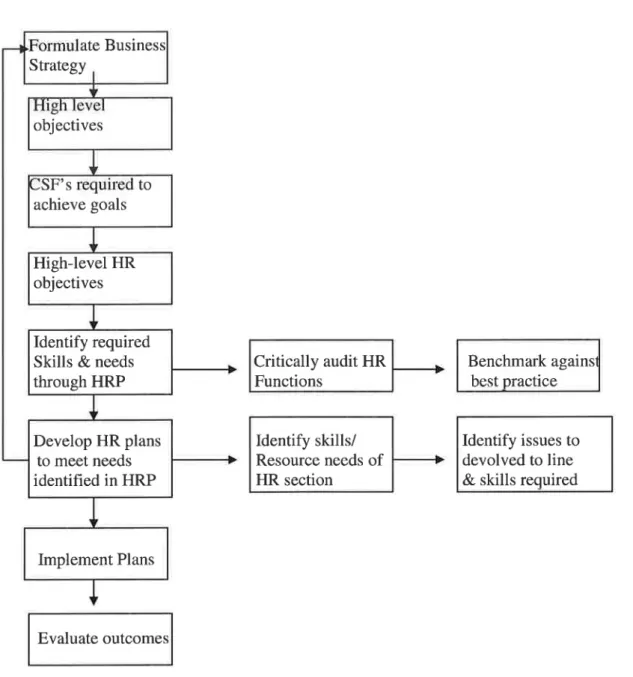
Figure 2 - Process of Developing a HR StrategyAcknowledgements
I would like to take this opportunity to thank all
of
my
class mates and tutors over the past four years of studying for the honours degree at the NCT, with special thanks to FabianArmendark for his structured approach to writing the f i n d year dissertation which gave us the discipline to be able to complete the dissertation and for all his assistance and advice during the process.
I would also
like
to thank the library staff at both the NCI andthe
P A for their invaluable assistance during the research for the dissertation.Most importantly I would like to express
my
appreciation tomy
work colleagues, my family and friends for all their help, support and patience during these challenging four years ofIntroduction
Devolvement is important for the development of strategic human resource management (HRM); in general terms it has been identified by many authors (such as Beer et a1 and Schuler) as one of two key elements, along with integration of HRM into the corporate framework, for developing strategic HRM within business circles. Since Albert Reynolds as then Taoiseach began the Strategic Management Initiative (SMI) in 1994 a strategic approach to HRM has also been high on the public service agenda. A major part of the move towards strategic HRM in the public sector is the devolution of some day-to-day HR activities to Line Managers, ideally in conjunction with the roll out of PMDS. Although reform of HRM has been progressing at a slower pace than some of the proposed reforms under the initiative visible reform has taken place.
As the Institute of Public Administration ( P A ) sees its role as a standard setter and training organisation within the public service arena it is vital that it attempts to take a leading role in all aspects of the modernisation agenda. This leading role has been taken on with great success in most areas of SMI and Delivering Better Government (DBG), however, it would be fair to say that one area in which the IPA has been slow to change is the modernisation of its HRM activities and especially devolving certain aspects of the HRM function to line managers/supervisors.
This dissertation will attempt to gauge opinion amongst IPA staff, Line Managers, Senior Managers, HR and Union representatives regarding devolving certain day to day HR duties to Line Managers and also look at the viability of devolving HRM within the IPA. It is proposed to use semi-structured interviews and questionnaires to gather primary research data. Any major concerns will be outlined and discussed within the dissertation and any suggestions will be considered for recommendation.
The results of research on how other organisations both nationally and internationally have tackled devolution of HR will be examined to determine the potential advantages and disadvantages devolution could hold for the IPA. The viability of devolution of HR duties to line managers and conclusions and recommendations for the keys to successful implementation of the devolution process within the IPA will also be put forward.
Chapter 1 -
Literature Review
The discussion and research into devolvement of HR to line managers came into prominence in the mid 1980's. Much of the discussion surrounded the direction that personnel management was taking with many theorists promoting a strategic HRM agenda whilst others were dismissive of HRM asking what the major difference was between personnel management and HRM, Legge for example asks "why the language of HRM has gained the currency it appears to have
...
after all there is little real diflerence between normative HRM and personnel management models" (Legge, 1989:40, cited in Human Resource Management in Europe, Brewster & Larsen 1992). One of the most influential models shaping the direction which personnel management or HRM would take going forward was the Harvard Model developed by Beer et a1 in 1984. This model was one of the first to promote integration of HR into the corporate framework and a devolvement of some HR duties to line managers as being key aspects of strategic HRM.An article that was referenced on a regular basis during research was Lengnick-Hall, Lengnick-Hall's article on Strategic Human Resources Management (1988). This article sought to "present a means for integrating human resource management into the overall eflort to match strategy and structure" Lengnick-Hall, Lengnick-Hall (1988:454). The article proposed that firms looking for a competitive advantage in the market should look to their human resources and the HR function needed to step up to the mark by providing a significant contribution to the strategic objectives of the firm. They set out the reasons why it was desirable to integrate HRM into the corporate framework but also explained that HR practitioners must not get caught up in their own little HR bubble, they need to formulate strategies and plans but also to convince senior management that there was value to be gained by implementing these initiatives "great care may be taken in designing a statistical model of manpower planning, whereas little thought is given to gaining managerial acceptance of the model's output" Lengnick-Hall, Lengnick-Hall (1988:457).
Another key element in the article is that attention should be drawn to the fact that, business strategy and HR strategy are "areas that have developed independent of one another (at least in the academic arena)" Lengnick-Hall, Lengnick-Hall (1988:467), therefore researchers and innovators in each field generally had a limited knowledge of the other so gaining integration
between the disciplines was made more difficult. This article highlighted the advantages and disadvantages of integrating HRM within the strategic management process and also sought to highlight that HR needed to become more pro-active within organisations.
Freedman (1990) examined the changing role of top human resource executives and the new business demands they were facing on top of their old responsibilities of administration, employee welfare etc. She theorised that "line managers might begin to assume some aspects of HR Functions as part of a complete management role..
. . .
the "old" finctional speciality (personnel management) is fading as management of HR becomes an aspect of general management" Freedman (1990: 13).Brewster et a1 set out the methodology behind the Price Waterhouse Cranfield Project (PWCP) on European trends in HRM. "The PWCP was set up in 1989 as a direct response to the absence of comparable European data
....
in light of the approaching single European market" Brewster et a1 (1991). One of its main objectives was to investigate if there had been a shift in personnel thniking towards strategic HRM within Europe. "The PWCP survey is seeking to establish the involvement of personnel departments in corporate strategy formation" Brewster et a1 (1991). They saw integration of HR with the corporate objectivesas a main indicator of a shift to strategic HRM.
Brewster and Larsen 1992 also examined European data on HRM and were seeking to find out how much each country surveyed had shifted from personnel management to strategic HRM by examining the extent of integration of HRM into business strategy and the degree of devolvement to line managers. "Devolvement is driven by both organizational and eflectiveness criteria. Organizationally, it is now widely believed that responsibilities should be located at appropriate places within the organization and that means increasingly, with line managers rather than specialist functions " Brewster ( 1 992:4 13). They came to the conclusion that Europe needed to develop their own models for strategic HRM as many of the American models do not fit in with European organisations culture.
Budhwar and Sparrow (1997) examined the new open market India to see whether integration of HRM into business objectives and devolution of HR duties to line management had begun to occur in much the same way it had in Europe around the time the EU was about to become a single open market. This was one of the first research projects on strategic HRM outside
westernised economies. They found that "issues of whether and when to integrate HRM into the corporate strategy and whether and by how much to devolve responsibility for HRM to line managers have become of central significance
...
an increase in the degree of responsibility for HRM being devolved to line managers is taking place. We fear that if a strategy of devolvement is not also associated with closer integration of HRM into the business planning process, this may create a situation of chaos in Indian organisation" Budhwar (1997).Budhwar examined how HRM had developed in Britain in recent years and also looked at five of the main strategic HRM models to see if they produced results in six British industries. This article did not shed much light on devolvement but did highlight importance of the Harvard Model (Beer et a1 1984) and the 5-P's Model (Schuler, 1992). The main finding of Budhwar's research was "that the sample firms are practicing a relatively low level of devolvement in comparison to the integration function. If the HRM function is to become more strategic, then the level of practice of both these concepts has to increase" Budhwar (2000)
Renwick and MacNeil looked at devolution from a line manager's perspective examining how it affected their career path and work loads as well as how well they were supported by HR professionals when carrying out devolved duties. They found that many line managers were reluctant to take on HR responsibilities as they saw it as restricting their careers but also that many HR professionals were reluctant to give up visible and measurable duties and often did not fully support line managers in cases where they were given HR responsibilities. "HR need to support and advise the line to do HR work, and this support and advice does not necessarily occur in all cases" Renwick (2002).
From a public service perspective, development of a new approach to HRM within the public service was part of a process of Strategic Management in Government Departments initiated by the Strategic Management Initiative (SMI) in 1994 and Delivering Better Government (DBG) in 1996 aimed at providing a better service to citizens and using available resources to best effect.
One of the key themes in DBG was that changes in the way services are delivered must be supported by a modernisation in the approach to human resource management (HRM) in the
public service. Personnel management in the public service at the time was mainly administrative in nature therefore DBG set out some key recommendations to achieve a more strategic approach to HRM and the management and development of people. These included; personnel units re-orienting their focus to take a more strategic/developmental approach to HRM, a process of devolution of day to day personnel duties to line managers and the development of a HRM strategy linked to overall departmental and organisational objectives.
Subsequently a central, cross-departmental HRM working group was established to develop proposals for overall reform of HRM in the public service. This working group developed proposals in relation to areas such as Performance Management and Development Systems (PMDS), recruitment and selection.
The HRM working group envisaged personnel units re-orienting their focus to take a more strategic/developmental approach to HRM, a process of devolution of day to day personnel duties to line managers and the development of a HRM strategy linked to overall departmental and organisational objectives as recommended by DBG within a process of devolution of personnel policy decision making from the centre to line departments. The implementation of PMDS was also seen as "a criticalfirst step in the strengthening of the line management process " (HRM Working Group discussion paper 1997).
The OECD strategic review and reform report (1999) highlighted a number of broad terms and concerns raised by member countries, which could be a useful barometer to measure the IPA against during the devolution process.
They found that devolution of HRM to managers is made problematic by the fact that many managers do not regard HRM as an important part of their work knowing as they do that frequently it is neither rewarded nor valued institutionally. As a consequence there is a need to provide the necessary supports for managers if they are to assume responsibility for HRM matters, including training, guidance, accountability and information. Moreover the need for devolution of other responsibilities including financial management is seen as critical to the successful devolution of HRM responsibilities.
Unlike previous attempts at reforming the public service, DBG was prepared by a senior group of Civil Servants, and implementation of its policies was also entrusted to various groups of Civil Servants such as the HRM working group mentioned above. As a
consequence, there was greater acceptance and a sense of ownership within the Public Service for its policies.
During the 2002 evaluation of SMUDBG by the Irish Government it was realised that fundamental human resource management changes had not been developed as speedily as other elements of the SMUDBG agenda.
The evaluation learned that there seemed to be a "perception amongst Senior Managers that they had insufficient direct control or influence over HR matters" (2002 Evaluation SMUDBG). It was also found that there was a "strong sense that the public sewice had been under-managed. The distinction between under and non-performance was unclear, manpower-planning systems were under developed at departmental levels and some inflexibility remained around grades, pay and incentives" (2002 Evaluation SMIIDBG). On the positive side it was found that there had been a "broad compliance with the request for departments to produce a HR strategy and PMDS was a significant move forward but expectations surrounding it were very high" (2002 Evaluation SMUDBG).
The evaluation concluded by saying that links between business planning and PMDS are essential for a more strategic HR unit and as will be seen throughout this dissertation quality of leadership and support at management level is also critical.
In response to these findings the Government moved modernisation forward by taking a whole of Government approach. Future directions for the HRM area were identified as:
1. Reform of legislative framework. 2. More flexible recruitment procedures 3. Embedding PMDS across the public sector 4. An integrated HRM strategy
It was recommended that organisations and departments must move to culture of managing for results with commitment and support of Senior Management; a change of staff values, attitudes and expectations; staff involvement through partnership; training and development aligned with strategic objectives and business plans. The 2008 OECD public management review states that "In terms of delegation of authority and responsibility, the implementation
and overall impact of the DBG strategy will depend on the capability and commitment of senior and line managers. Traditionally, as they have developed through generalist ranks, however, existing managers have lacked experience in active human resource management. One can safely assume that they were not prepared for the new dimension to their management roles proposed in DBG" (OECD, 2008).
HRM reforms have put in place two major tools to assist line managers to better direct staff performance. Firstly, the new management structure enables them (and expects them) to link the objectives and strategy of the organisation to the jobs and tasks done by the people in their organisation, whether as individuals or as part of a team. Secondly, it enables them (and expects them) to develop and implement PMDS which is adapted to the business needs of their organisation, and to use it for a structured dialogue about performance and development with each of their employees. In order to do this, they also need to link their human resource management activities to their business plans.
For most public servants PMDS was the first step for both Line Managers and staff in having serious dialogue about their roles and prospects. The public sector has been considered by many as being poor at managementlstaff feedback. PMDS can help address this but "it carries with it an implied assumption that managers possess the capacity and willingness to manage the consequences of such feedback" (Guidance document - DGBJSMI, 2001). The 2008 OECD public management review argues that PMDS reviews are supposed to have an impact on decisions in relation to probation, increments, higher scale posts and promotion. While the design of PMDS has not been delegated, PMDS reviews are a delegated process and thus imply a higher degree of managerial involvement in individual staff careers. In future it will be important that managers enjoy appropriate levels of devolved discretion to follow-up on actions agreed during performance reviews with staff.
While initially PMDS represents a system of performance management, ultimately policies on recruitment, induction, promotion, nature of work, training, career development and reward must be based on a consistent approach to HRM supported by PMDS.
It is highly appropriate that development of PMDS happens concurrently with the devolution of personnel issues to Line Managers and devising of HR strategies. Ultimately PMDS should act as a vehicle for the delivery of a wide range of personnel policies. Its central role should be reflected in HR strategies. "PMDS is a valuable tool in linking individuals and teams into delivering standards of performance, which help secure deliverables indicated in business plans" (Civil service Conference on SMI, April 2002).
A lot of emphasis has been placed on the role of PMDS in the devolution process within the public service throughout the research material for this dissertation, the 2002 report by the PA consulting group considers that "PMDS has been a significant achievement and clearly points to it as one of the most important achievements in HRM, which otherwise has been slower to reform than other components of government modernisation strategies" (Cited in OECD Public management review 2008). Whilst it is true that PMDS has a crucial role to play in the devolution of HR duties, its role is no more important than that of the staff, Line Managers, HR unit, unions or Senior Management. In fact PMDS should be seen as more of a lever for change; it can put the whole devolution process in perspective for all involved if implemented correctly. Armstrong (1998) argues that if authority involves the exercise of personal influence arising from the knowledge or position, then the devolution of expertise must be another dimension of devolution. The devolution of expertise entails devolving not only the tasks but the skills and knowledge to perform these tasks.
NationaVInternational Experiences
Before the IPA decides to devolve its HR duties to Line Managers it must examine how other organisations both nationally and internationally have handled the process, learning form their failures and successes. As no two organisations are the same it would be unwise to attempt to replicate another organisation or departments model of devolution to the letter but some elements of their models could be put into use or adapted to suit the IPA's organisational structure and culture. Due to time and word restrictions for the purposes of this dissertation one national organisation (the Irish Courts Service) and one international (the UK Civil Service) were researched. As they both have similar structures to the IPA the manner in which devolution of HR duties was implemented contained some valuable lessons.
Devolution in the Irish Courts Service
The Courts Service, being a relatively new entity (just over 9 years old at the time of this project) had the advantage of being able to start from a blank sheet in terms of developing its structure and policies in many areas, including HRM. This allowed for the establishment of a Human Resources structure that had a more strategic focus from the outset, as opposed to having to re-orient the function in this direction, which is the case in many public service departments and offices including the IPA. This aided them in implementing a number of initiatives, including the establishment of a regional Partnership structure. This structure has also proved useful in terms of introducing change management initiatives such as the devolution of HR functions to line divisions/regional offices.
The HR Directorate adopted a very methodical, transparent and comprehensive approach to the devolution project, which they divided into the following stages;
1. Team meetings: meetings were held involving Senior Management and staff to plan and organise the project, this ensured participation by staff and that discussions took place to agree the tasks to be devolved.
2. Work plan: The actions required to achieve devolution were agreed and scheduled with responsibilities for specific tasks assigned to individual officers on that schedule
3. Procedures Manual: This was a key tool to assist the devolution process. The procedures manual contains step-by-step instructions on task procedures and "trouble shooting".
4. Staff Handbook: This was prepared as a guide for all staff and covers much more than the devolved functions. It is regarded however as another tool to assist the devolution process. The handbook covers all areas from recruitment through to retirement. It was prepared by assigning responsibility for the preparation of information on individual areas to specific members of staff.
5. Regional Managers Presentation: This presentation was made to all regional managers in 2002, before devolution of HR functions commenced. Managers were introduced to the procedures manual and staff handbook. They were advised of the cultural impact of devolution and the responsibility that now rested with them in relation to specific HR functions. They were requested to advise staff in their region that devolution would commence with effect from November 2002.
6. Regional Office Training: Regional staff received one day's intensive training to introduce them to the HR practices being devolved and to give practical examples on the processing of it.
7. Records Management: Relevant files and an information pack were dispatched to regional offices. Spreadsheets were prepared to provide information on increment and probation (Key dates, etc) and a database was prepared for recording and maintaining sick leave records.
8. Helpdesk: The HR Directorate, with the support of the IT Unit, established a helpdesk, which was to be used as a source of information for staff using the staff handbook and for the regional staff when experiencing a difficulty with processing HR functions.
Outcome:
The devolution of functions is complete and has been very successful. Feedback was positive and the majority of enquiries to the helpdesk were seeking information and assistance rather than complaining about the fact that they now have to deal with an additional block of work. The Human Resource Directorate will evaluate the effectiveness of the new arrangements, with a view to identifying any deficiencies with the system and to introducing subsequently any further measures considered necessary to maintain or improve the system.
The Courts Service is also developing a Managers' Handbook to assist them in dealing with the wide range of responsibilities and duties they are expected to perform. The Handbook will include, but will not be confined to all the HR functions, which have been devolved to them.
No additional staffing resources were provided to regional managers to deal with the devolved functions. They were absorbed into the general management regime in those offices. The HR Directorate gave a high priority to the project however and assigned staff resources to the project to manage it, to deliver the necessary training and to provide the ongoing through the helpdesk.
Conclusions:
1 . The Courts Service strategy was to decide on what was to be devolved and then focus on putting in place the arrangements and supports to ensure that this was achieved as one package, rather than incrementally. Now that devolution of this substantial range of HR functions has been achieved, it will be possible to devolve further functions in the future.
2. The process was carefully planned in advance, with clear stages identified, tasks allocated and deadlines set.
3. All of the major stakeholders (HR section, Regional Management and Staff) were fully consulted throughout the process, thereby ensuring a greater likelihood of buy in by all involved.
4. The level of support that is provided during and after devolution is important, both as an indication of Senior Management's commitment to the process and to ensure that the transition occurs smoothly. The importance of providing comprehensive information/guidance as well as an easily accessible source backup/expertise/assistance (helpdesk) was also critical to its success.
5 . The relative ease with which the devolution was achieved in this new organisation is in contrast with the difficulties being experienced with trying to introduce devolution of HR into more established structures.
6. Additional staffing resources were not required in order for devolution to succeed. The essential requirements were that the process was properly planned, that comprehensive training and support was provided, that Senior Management were fully committed to it and that local management and staff were involved at all stages in the project. There was also an acceptance of the logic of managing these issues at a local rather than a central level.
Reform in the UK
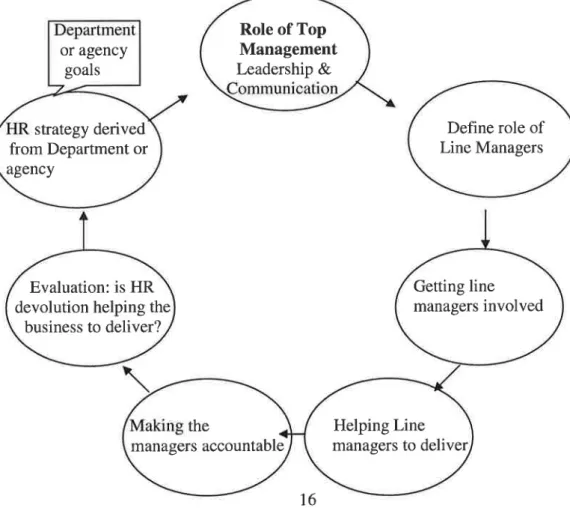
Reform of HRM in the UK public sector took place in the context of significantly wider developments in the UK administration. Nonetheless some useful frameworks (See figure 1) and approaches were developed in relation to specific issues that are relevant to this dissertation. A cabinet office consortium project, which focussed on the devolution of HR development to line managers, took place in 1993. That report and a subsequent evaluation which took place one year after the project highlight two lessons about the respective roles which top management, line managers and personnel sections should play in the devolution process.
1. Overall there is a need for an integrated approach; actions undertaken by line management must be linked both to an overall HR strategy and the business planning and implementation process.
2. There should be good communications and visible action by top management to emphasise the importance of delegating HR development responsibilities
Figure 1: Framework for HRM Devolution: (cabinet office '93 cited in CPMR 16)
Define role of from Department or
The personnel section in the UK Cabinet Office saw itself as providing two key services. The first service was that of developing a HR strategy, which is linked to the organisations goals and which set the boundaries within which line managers could act. Secondly there was a need to move to a new relationship with line managers in which the manager is a customer and the personnel section facilitates the process of delegation through the provision of support and professional advice, as opposed to determining the process.
The cabinet office continues to develop and encourage best practice at line department level for example they regularly hold and facilitate work shops for personnel officers and managers which are set up to consider HRM issues of common interest. Cabinet office also continues to play a role in monitoring and ensuring best practice in training and development for example through the setting of targets in relation to investors in people accreditation by departments and agencies. Pay and grading are dealt with by the treasury office through annual settlements with departments and agencies on running costs.
Some departments and agencies have achieved significantly more progress than others in developing a strategic approach to HRM. There is also acknowledgement in the white paper; Modernising Government (1999) that 'tfurther change is necessary to ensure that initiative is rewarded and inflexible practices in pay and conditions are dismantled while at the same time ensuring that the corporate identity of the civil service is strengthened". A number of mechanisms have been put in place to achieve such changes, for example the cabinet office has set out a range of corporate action plans on better cross-departmental mobility, performance management, development of staff and equality.
Another key element of the ongoing modernisation process is the setting up of a "nerve centre" of the reformed organisation - the centre for management and policy studies (CMPS) whose task will be "to create a new generation of civil servants who have the skills, training and values required to meet the changing requirements of the civil service" (Modernising Government 1999). This will be achieved through a number of mechanisms including the delivery of courses and initiatives on "mastering change" leadership and the roll out of 360- degree feedback and personal development plans to all civil servants.
The central DFP sees its role as one of providing guidance and specialist expertise to personnel sections in line departments. In turn, the line department's personnel sections
provide guidance to personnel sections in the Next Steps Agencies under their remit. Some areas of HRM have been decentralised to agency level. Training is primarily handled at agency level and agencies are actively encouraged to attain Investors in People (IIP) accreditations.
Relevance of NationaYInternational ex~erience to the IPA
Much of the criticisms levelled at the Irish reform programme centre on the limited degree of devolution that will take place in relation to key areas such as pay and grading, this could easily be the case in the IPA as well. But the UK experience suggests the decentralisation of Pay and Grading will not in itself result in a more strategic approach to HR at line department level. The new approach adopted at cabinet office level is to facilitate rather than prescribe best practice in relation to the "soft" or developmental aspects of HRM. This is achieved through a number of interventions such as action research projects. It is also interesting to observe that the ongoing process of modernising in the UK has been strengthened by the commitment of the resources to the centre for management and policy studies. The setting up of a nerve centre for training could also be useful within the IPA. The P A are at a distinct advantage in the training aspect of HRM as they are able to call on the expertise of their Research and HR Training units both of whom have a proven track record in all aspects of HR training. The HR Training unit currently run CIPD certified courses and The Research unit have written numerous CPMR research papers on the subject of HR.
There are practical arguments for the retention of centralised control over HRM activities such as recruitment. Centralised control ensures consistency of treatment for example in relation to equal opportunities, freedom of information and data protection matters but policies such as pay determination may require a degree of decentralisation to take account of local conditions.
It is also significant to note the extent of the success The Irish Courts Service seemed to have by being methodical and totally transparent in their approach to implementing the devolution process. The staff were involved in all areas of the process, what was to be done, how and when. Senior Management were fully supportive of the process providing the training, back- up and review mechanisms. This lead to a sense of ownership within the organisation, making the devolution of HR responsibilities to Line Managers as smooth a transition as possible.
Chapter
2
-
Research Methodology
Introduction
Analysis of research data can help to develop management methods relevant to the issues. "We can define research as something that people undertake in order to find out things in a systematic way, thereby increasing their knowledge" (Saunders et a1 2003:3). Once the data is collected it will be possible to define the problems and set up an effective management system.
The review of the literature has shown that the definition of devolution has almost exclusively been driven by HR specialists/theorists. In this dissertation we include the views of management, union, staff and HR to attempt to gain a more rounded view of the devolution process.
Past research into this subject has mainly been carried out based on quantitative methods such as the price waterhouse cranfield project on European trends (1989) whose main objectives included "establishing how far there has been a shift in personnel policies towards strategic human resource management" Brewster et a1 (1991:37) in ten European countries. The research was based on a postal questionnaire. "This concentrates on hard data: factual information about policies and practices rather than attitudes" Brewster et a1 (1991:37) Brewster and Larsen also conducted a survey on European HRM using quantitative methods i.e. surveying companies with over 200 employees in 10 European countries. Budhwar and Sparrow (1997) examined levels of integration and devolvement to line managers in India based on a questionnaire survey run in over one hundred and thirty organisations.
The quantitative method of researching the subject was used during the dissertation. The results of research on how other organisations both nationally and internationally have tackled devolution of HR was considered to reveal the potential advantages and disadvantages devolution could hold for the IPA as well as examining research conducted in journal articles by the authors mentioned previously in the dissertation. Questionnaires have been used to gauge internal feelings about HR in general and how staff think devolution of HR may impact
on the organisation as a whole and their day to day work i.e. do they think devolution of duties will increase their work load etc.
Primary research for this project was carried out in the following manner, semi-structured interviews were held with IPA management representatives and IPA union representatives. A questionnaire was also sent to 55 members IPA staff members of which 37 were returned completed (see appendix A and B for further details). Results of both the questionnaire and semi-structured interviews are used during the dissertation.
The aim of the primary research was to gain an insight into employees, union members and managers' perception on the work of the HR unit and the probable devolution of HR responsibilities to line managers. Any effective programme of devolution has to start by analysing the reasons for introducing it in order to develop the appropriate policies, and analysis of employee's views on the subject can help to develop a devolution policy which will receive co-operation, buy in and be trusted by staff members.
For the purposes of the primary research for this study, the quantitative method of issuing questionnaires was considered an appropriate data gathering instrument. "Research design provides the basic direction for carrying out a research project so as to obtain answers to research questions" (Cooper & Shclinder, 2003). According to Hair et a1 (2003) "the researcher should choose a design that will provide relevant information on the research questions and will do the job most eflciently". Questionnaires are perhaps the most widely used research tool in social sciences and management studies. They are attractive as they require minimal resources and do not cost much but can provide a large sample. It is possible to provide questionnaires to large numbers of people simultaneously, therefore, addressing a large number of issues and questions of concern in a relatively efficient way. Each respondent receives the identical set of questions, which can assist in interpreting information from large numbers of respondents.
Questionnaires are easy to administer confidentially. A guarantee of confidentiality was necessary to ensure P A participants responded honestly. They are a good means of collecting data as they permit respondents time to consider their responses carefully without any interference. The responses are gathered in a standardised way, so questionnaires are more objective, certainly more so than interviews. Generally it is relatively quick to collect
information from large groups of people by using a questionnaire. According to Weiers (1998) there are specific benefits to utilising questionnaires:
The cost per questionnaire is relatively low
Structured information in the questionnaire makes analysing the questionnaires relatively straightforward
Questionnaires give respondents ample time to formulate accurate responses.
Certain principles outlined in Business Research Methods (Bryman and Bell, 2003) were followed when creating the questionnaire to ensure that;
Questions are clear and unambiguous Questions are short
Questions avoid jargon or specialist language
Double-barrelled questions, in which the respondent is asked about two things in one question, are avoided
'Leading' questions and 'presuming' questions that suggest indirectly what the right answer might be are avoided
Personal questions are avoided unless essential to the research.
It is essential to pilot the draft questionnaire to check that respondents are able to understand all the questions and to ensure that they make sense (see appendix B for pilot Questionnaire). It is also vitally important to ensure that respondents are able to answer questions in the way it was intended and that their replies are meaningful.
Semi-structured interviews
As there are currently ongoing discussions between union and management representatives regarding restructuring the IPA both parties were reluctant to agree to formal taped interviews, however, representatives from both parties were agreeable to semi-structured interviews whereby they received a list of questions (see appendix C) in advance of the interviews and spoke to the researcher based on the questions. Although not the ideal method of research the interviews did provide a useful insight into the position of both sides in relation to the devolution of HR duties to line managers.
Ouestionnaires
Permission was obtained from the Head of HR to administer the questionnaires and all participants were ensured of their confidentiality. Information was required from employees to obtain an insight into how they view the HR Unit, how they perceive devolution of HR and whether they believe supervisors are capable of taking on devolved HR duties. Information was also needed from managers to get a view of how they perceive devolution of HR and how they think the HR Unit could be improved.
Once permission was granted from the Head of HR the researcher posted 55 questionnaires to employees and management (see appendix A and B for questionnaire information). A cover letter was also included, explaining the purpose of the research to employees and managers and ensuring confidentiality of the participants. The research was conducted over a fourteen day period. Reminders were issued on the eight day requesting participants to complete the questionnaire, if they had not already done so.
Limitations
The author anticipated that participants might not be committed to completing the questionnaires, as some people would feel it was just a paper exercise and a waste of time, leading to a lack of research data to analyse. Fifty five questionnaires were therefore issued. Some participants failed to return the questionnaires which made it difficult to analyse all the information. Twenty "staff surveys" and seventeen "management surveys" were completed. In order to differentiate between staff and management surveys two additional questions were added to the management questionnaire. The analysis of the findings were limited as all participants did not complete the questionnaires, however thirty-seven participants out of a total number of one hundred and twenty staff (30% of staff) across all grades, genders and ages should provide a fair reflection of IPA views.
The main disadvantage associated with questionnaires is the issue of non-response to certain items on the questionnaire. A pilot test was used to overcome this problem. Sample surveys were issued to two employees and two managers to gain feedback. This was very beneficial as the feedback enabled the author to review and change, where appropriate, some of the questions which were viewed as confusing or not to the point. A copy of the pilot
questionnaire (including some of the feedback which was given) and the questionnaire used to
collect the primary research can be found in appendix B at the end of the dissertation.
In relation to
the semi-structured interviews the main limitations were that the research wasrestricted to a set of questions which the union and management representatives saw in advance, therefore, they could prepare their answers in advance ruling out any spontaneity.
This, however, was also an advantage as the interviews were
a true
reflection of both union and managements stance regarding devolution of HR duties within the P A .N n n O ~ ~ ~
c o u ~ ~ ~
OF
I . R E h
Chapter 3
-
Analysis of Research
lJ
S A c r jThe P A has undergone some major organisational changes in recent years; the previous Director General implemented a new organisational structure including a major restructuring of the Human Resource unit in 2004. A new corporate plan was also developed, which set the direction the P A would take from 2005 to 2010. The Director General (DG) retired in September 2009 and the new DG was promoted from within the ranks of the P A . As with any new head of an organisation he has his own vision for the organisation and has held meetings with staff to outline his views as well as giving staff the opportunity to air their views on the direction the P A should take. Because of the current economic climate staff members were offered early retirement and voluntary redundancy schemes to reduce the P A ' s cost base. This led to overall staffing levels being reduced by 18% and there are plans afoot for some redeployment of staff and restructuring of departments which inevitably means more change.
With this level of re-shuffling taking place it could be the perfect opportunity to make a serious commitment to devolve day-to-day HR responsibilities to line managers although only 50% of staff questioned believed that it is feasible to implement devolution of HR duties at the moment (See table 1 and for full details of the staff questionnaire results see appendix A).
Table 1
The Irish Courts service model combined with elements of the UK Civil Service devolution process could be used as a template for this new beginning in the P A HR Unit. The P A could follow their lead by:
taking a methodical and comprehensive approach to devolution
planning the process in advance with clear stages identified, tasks allocated and deadlines set
planning and implementation involving all staff from the start creating a strategic culture where Senior Management lead the way managers taking ownership of the devolution process
committing the required support, training and resources to Line Managers to successfully take on their new roles
the HR Unit taking on a role of providing support and advice to Line Managers puting in place proper review and accountability mechanisms
Before any such commitment can take place however, the HR Unit needs to be in a strong position with qualified personnel in place who have the expertise to play an advisory and supporting role to line managers in their new roles. In the staff questionnaire 87% of the people questioned said there were not enough HR staff in the P A (see table 2), 73% of Line Managers said they would consult with HR regarding devolved HR duties (see table 3) but 71% of people questioned believe HR do not have the expertise to advise Line Managers at the moment (see table 4). This would lead you to believe that significant steps must be taken by the HR Unit to up-skill and gain the knowledge and trust of managers and staff alike.
Table 3
Would you consult uith HR aboutdevokedduties?
.Managers yes =Managers no
1
[ n ~ a n a ~ e r s maybe - Table 4 -Do HR have the expertise to advise linemanagers?
- -
Marchington and Wilkinson (1997) Identify 3 core skills required by a HR Unit to visibly demonstrate their contribution to the organisation:
1. They should be capable of formulating HRM policies and a procedural framework to ensure adherence to corporate policy at all levels of responsibility e.g. they must be familiar with a wide range of HRM techniques including HR planning, selection techniques, employee development and performance management systems.
2. They should provide expert advice and guidance on HRM matters (e.g. employment law, equal opportunities and appraisal) to line managers.
3. They should be able to undertake responsibility for the line managers in relation to their responsibilities for HRM.
The HR section must see itself as providing two key services to the organisation. The first service is that of developing a HR strategy which is linked to the organisations goals and which sets the boundaries within which Line Managers can act. Secondly there is a need to move to a new relationship with Line Managers in which the manager is a customer and the
HR section facilitates the process of delegation through the provision of support and professional advice, as opposed to determining the process.
Senior Management needs to raise the profile of the HR unit within the P A . They can achieve this by visibly demonstrating their belief and support in the HR unit, e.g. by committing additional resources to the development of HR strategy and the building up of HR skill levels. There is also a need for the head of HR to be afforded a genuine role in the formulation of key business decisions.
Ulrich 1998 suggests the most challenging task for Senior Managers in driving forward a "new mandate for H R is to improve the quality of the HR staff and unless the requisite expertise exists HR can't expand its role, nor can it earn what it too often lacks, respect. 88% of IPA staff questioned believed Line Managers should receive HR training before devolution takes place (see table 5).
Table 5
Line mgrs should receive training before devolution
.8% 00%
]
1
.Managers yes =Staff yes OManagers no mstaff no .Managers maybeProfessional associations such as the Chartered Institute of Personnel Development (CIPD) have an important role to play in setting and improving professional standards for personnel specialists. CIPD qualifications are increasingly becoming a compulsory requirement for HRM positions in the Irish public sector and their website and publications provide up to date information on best practice within the field of HRM, therefore, it is important that all members of the HR office have relevant CIPD qualifications and membership with CIPD.
As Line Managers will be taking on new responsibilities it is critical that they are involved in defining their new roles as well as having a major say in setting the agenda, in the questionnaire carried out for this project 58% of Staff surveyed were not clear about what
devolution of HR responsibilities was (see table 6). Hope-Hailey et a1 (1997), found that line managers role in HRM activities were rarely included in the objectives set out for them, or assessed as part of the performance appraisal process. In addition, this study found that short term priorities of the organisation to obtain tangible results, coupled with workload pressures, resulted in a tendency by managers to view HR activities as less of a priority. As a result, people management activities were often the first to be "squeezed out" of the line managers' day-to-day activities. 29% of P A staff surveyed said HR duties would be placed very high
on their list of priorities, 46% placed HR duties high, 17% placed HR duties low and 8% placed HR duties very low on their list of priorities (see table 7). This shows that P A staff do see the value that HR can bring to the organisation.
Table 6
k it clear to you what devolution of HR responsibilities is?
Table 7
-
How high on your list of priorities would HR duties be placed? rn 8% m 2 9 y 5 1 7 y 0 very High - - 46%
Similarly, Marchington and Wilkinson (1997) Suggest many line managers feel they are already suffering from work overload and thus will not place a high priority on HRM activities; 67% of IPA staff surveyed believe that devolution of HR duties will add to their workload (see table 8).
Table 8
There is a lack of willingness from managers to take on HR responsibilities as many managers see HR issues as a burden preventing them from getting on with the business plan rather than a strategic aid to get the best out of their staff and further the corporate aims of their organisations. A large part of this is because line managers and senior managers do not understand HR processes they are being asked to undertake or the value they will add to both their department and the overall business. This shows that not enough is being done by HR managers to develop training programmes and transfer knowledge to line managers. Training of managers is required in most organisations to aid the process of devolution of HR functions and show it in a more favourable light. There is a school of thought that believes that perhaps some HR professionals are as reluctant to give up the visible functions where results are easily measured such as monitoring attendance, sick leave, disciplinary matters etc as the line managers are reluctant to take on these duties "on the part of HR Managers, there appears to be a desire to keep hold of at least some of their operational responsibilities
....
successful execution of operational responsibilities is see as important for credibility needed to exercise influence at a strategic level (Currie and Proctor, 200154, cited in Renwick and MacNeil 20025). "A fear of reduced influence or even redundancy seems to be apparent in HR Manager's mindsif they devolve too much HR work to the line and the line complete it
successfilly " (Renwick and MacNeil, (20025).In the journal articles reviewed it was apparent that devolution and integration of HRM into the overall corporate function are key to developing strategic HRM. Even where the mission statement of the organisation places an emphasis on staff development and management (as is the case in the P A ) , line managers may pick up contrary signals from Senior Management about the ordering of priorities and will focus on the achievement of targets, which are more measurable and valued than HRM activities.
Another key issue, which must be considered in the devolution of HRM, is the development of the skills required by line managers. Boyle (1997) suggests that if devolution of responsibilities is to take place and operate effectively, line managers must be equipped to take on the people management aspect of their job. The development of such skills represents a particular challenge in the public sector, where managers see themselves as specialists, rather than as managers of people. 82% of Line Managers questioned said they would welcome further training in the HR area (see table 9). In addition to people management skills managers also require practical and professional support if they are to take on responsibility for HRM, for example lack of knowledge by Line Managers of procedures relating to disciplinary or equal opportunity matters may lead to legal or industrial relations problems. Only 45% of P A Managers surveyed said they had received training in HR related fields (see table 10). When asked what areas they would welcome further training in the results were as follows; 21% said HR management, 21% said IR, 21% said conflict management, 5% said all areas and surprisingly 32% said none (see table 11).
Table 9
Would you welcome furthertraining?
Table 10
M a n a g e r s yes
W Managers no
1
7
Table 1 I
Areas Managers would welcome more training In. A l l areas
r l
I7 Conflict Management m l RThe following analysis by Sile Flemming (2000) suggests that there are three key elements required for the devolution of HRM to line managers:
1. Training and development of managers to equip them with appropriate skills and knowledge to deal with HRM issues.
2. The provision of incentives for managers to take on responsibilities for HRM issues, for example through the incorporation and measurement of such activities into the performance appraisallperformance management and business planning process. 3. An ethos where Senior Management visibly values HRM activities. They must be
prepared both to reward and value line managers who place a priority on people management activities and to invest the necessary resources to ensure line managers are equipped and empowered to take on HRM responsibilities.
Research by Bevan & Hayday (cited in McGovern et al, 1997) indicate that managers might be reluctant to take on HRM responsibilities, which they do not perceive to be a legitimate part of their job, particularly if they are not adequately consulted about the devolution of such responsibilities.
There is also the need to build in review and accountability mechanisms, for example through the inclusion of relevant "hard" and "Soft" performance measures in the performance management process and evaluation tools. This might be achieved through the use of annual attitude surveys to track performance and measure employee and managements' perspectives and experience. PMDS will be a useful tool in achieving this within the IPA. In the questionnaire staff were asked for their main concerns regarding devolution of HR to Line Managers; 37% said lack of consistency, 18% said increased workload/time constraints, 18% had concerns about how seriously line managers would take the process and 7% each said lack of Line managers expertise, conflict of interests and a feeling HR could be biased in favour of management (See table 12). Managers asked the same question identified no clear HR strategy at 29% and training also at 29% as their main concerns, increased workload and a lack of clarity about what is going to be delegated both at 14% were the next concerns and finally both at 7% were Line Managers not being prepared for devolution and will staff buy in to the process (See Table 13).
Table 12
Staffs m a i n concerns regarding devolution of HR, I L a c k of consistency 1 C onflict of interests I Tim e constraints/workload increase I D O supervisors have the expertise
-
.137" o A feeling H R will b e b i a s e do
W ill m a n a g e r s take devolution seriouslyTable 13
In the UK one of the key elements of the modernisation process was the setting up of a nerve centre, the CMPS, who was set the task of creating a new generation of civil servants with the competencies required to meet the requirements of the new strategic public service. This should be easy to achieve in the P A given the expertise at its disposal both in HR training and in research and eventually the HR department.
Managers main concerns regarding devolution of
The 1996 OECD report highlighted a number of broad terms and concerns raised by member countries, which could be useful to the P A during the devolution process.
H R.
1. HRM reforms are more effective when they are mandatory rather than relying on departments and agencies to develop their own HRM initiatives.
2. A key concern centres on the need to strike a balance between devolution and consistency. Devolution is generally deemed to be necessary for the development of a strategic HRM. The majority of OECD countries surveyed retain a basic common core of conditions across their public sectors in order to preserve a "corporate civil service philosophy".
No clear strategy
Unclear about what islis not being devolved Supervisors not prepared for devolution
rn
Lack of time to deal with increased workload Training3. The devolution of HRM to public service managers is made problematic by the fact that many managers do not regard HRM as an important part of their work knowing as they do that frequently it is neither rewarded nor valued institutionally. As a consequence there is a need to provide the necessary supports for managers if they are to assume responsibility for HRM matters, including training, guidance, accountability and information. Moreover the need for devolution of other responsibilities including financial management is seen as critical to the successful devolution of HRM responsibilities.
4. A significant concern voiced by top management and central departments was the lack of clarity in re-thinking the role of the centre in a decentralised HRM environment. Typical concerns focussed on the degree of control, which should be exercised by the centre in a decentralised environment in the interests of ensuring appropriate performance and accountability by line departments.
Union Opinion
During semi-structured interviews with P A union representatives (see appendix c) as part of the research for this dissertation, P A union officials seemed quite supportive of the devolution process within the P A .
The union is aware of the proposed devolution process within the P A and has been consulted about it. The role they will play is mainly overseeing that all their members' needslconcerns are addressed. The Union believes that the devolution process will lead to line managers having more involvement in the IPA's recruitment policy, training & development policy, induction courses and disciplinary matters.
The Unions main concerns were that there would be lack of fairness and transparency. They see devolution as being beneficial if implemented correctly along with PMDS and management must take both seriously. They view the HR unit as a vital part of the P A but think Senior Management under values it. Union representatives interviewed believe that the HR Unit does need to be up-skilled to be able to provide advice and direction to staff as well as taking a more strategic approach to HR.
Union representatives believe the HR unit is involved in design and implementation of new policies/initiatives. The union officials interviewed stated that it has been agreed that all line managers will receive training relating to their new roles. The majority of union representatives do not think all managers will take their HR responsibilities seriously. They also do not think that Line Managers are happy to take on these devolved responsibilities or that they are aware or prepared for what is being devolved. The union feel that the majority of Managers did not take PMDS seriously enough first time around and must take the second roll out seriously if devolution of HR duties is to be a success.
The union representatives have expressed that the HR function should have the same status as the finance function to be taken seriously by the SMG and the Board of Directors.
Kevs to Successful Implementation
"A key theme through many HRM models is integration which lies at the heart of HRM" (Guest 1987). Guest identified 3 levels of integration.
1 . Integration of HRM policies with business strategy. 2. Integration of a set of complementary HRM policies. 3. Integration of HRM into Line Management function.
This is elaborated on further by Guest and Hoque (1994) who argue that "the key is strategic integration, what this means is that personnel strategy must fit the business strategy, the personnel policies must be fully integrated with each other and the values of line managers must be sufliciently integrated or aligned with the personnel philosophy to ensure that they will implement the personnel policy and practice". Where this can be achieved there is growing evidence that a distinctive set of HR practices results in superior performance.
Linking HRM with business strategy may be particularly problematic in the public sector in which "the strategy making process is complicated by a range of factors including conflicting objectives, multiple stakeholders, short term political pressures and existing structures and processes " (Mintzberg 1996).
In order to develop an integrated set of policies it is necessary to critically assess the structure and responsibilities for HRM at central level. "In this way it can be decided what policies should remain centralised and what can and should be decentralised to line departmental level. Furthermore if HRM strategies are to support business strategies different HRM
strategies may be required within different line departments where a centre line structure exists " (Tyson 1995).
Another Key to successful implementation of devolution of HR responsibilities to Line Management is embedding PMDS in the organisational structure of the IPA. As highlighted earlier in this study PMDS is a crucial lever in the devolution of H R duties, as Line Managers would be expected to take ownership of the PMDS process. This would allow a gentle introduction to HRM and people management issues overseen by the HR unit who would as in the devolution process play an advisory and supporting role. If embedded in the organisational structure PMDS would allow for a constant review of staff and management opinion regarding their role in the P A , their training needs and also their managers' performance if 360 degree feedback is introduced.
PMDS would aid the HR unit in their audit of the section and in the integration of a HRM plan linked to the overall organisational business plan. It would also be easier to identify and link the organisations personnel needs with individual personal development plans within the IPA.
The research for this dissertation highlighted the lack of support PMDS received in the P A on its first roll out, however, since then HR has reviewed the methods and training used first time around as well as seeking staff opinion on the first roll out of PMDS through a questionnaire sent to all staff.
There are plans afoot to attempt a second roll out of PMDS. For PMDS to be successful on this occasion it must be seen to be taken seriously at management level, Line Managers must have the power to follow up on issues brought to their attention in discussions with staff and must also give staff feedback on staff concerns, suggestions and requests.