Open Research Online
The Open University’s repository of research publications
and other research outputs
”Is that normal?” What the Experiences of Apprentices
Teach us about Practice and Policy
Thesis
How to cite:Lawes, Tanya (2020). ”Is that normal?” What the Experiences of Apprentices Teach us about Practice and Policy. EdD thesis. The Open University.
For guidance on citations see FAQs.
c
2019 The Author Version: Version of Record
Copyright and Moral Rights for the articles on this site are retained by the individual authors and/or other copyright owners. For more information on Open Research Online’s data policy on reuse of materials please consult the policies page.
“Is that normal?” What the experiences
of apprentices teach us about
practice and policy
Tanya Lawes
LLB, MBA, MEd
Thesis submitted for the award of Doctor of Education (EdD)
Centre for Research in Education and Educational
Technology (CREET)
The Open University
ABSTRACT
This study exposes the absence of apprentice voice in debates about quality, and explains the implications from a theoretical position of learning as a social construct. The early years of the 21st century witnessed a rapid growth in apprenticeships in England, with starts rising
from 167,700 in 2002/3 to 375,800 in 2017/18. Ownership of the definition of apprenticeships is a contested matter with successive governments claiming that
apprenticeships provide an alternative to university, and a cure for national skills shortages, social inequality and youth unemployment. Quality is conceived and measured using
narrow economic- and employment-centred metrics. How apprentices conceive quality and success is largely unknown or ignored. I make the case that it is only by understanding the experiences and views of apprentices that we can start to make any headway into improving the quality of delivery.
I interviewed 33 apprentices to determine what it is like to ‘do’ an apprenticeship and to ‘be’ an apprentice. The ethnographic methodology used champions the apprentices’ points-of-view, and allows me to discuss my findings in the context of theories about knowledge, identity, relationships, choice and power. The first apprentice that I interviewed wanted to know how her experiences compared with those of others, and the phrase, “Is that
normal?” became a leitmotif for the study, exposing the myth of a normal apprentice, upon which, much current policy is based.
The original contribution of this thesis is to fill a gap in current knowledge, and provide a new apprentice-centred model to make sense of the apprentice experience. The thesis concludes with a challenge to those who create apprenticeship policy and deliver training, to develop a new and broader set of quality measures. I contend that adopting a more apprentice-centred approach will enhance the value of apprenticeships, and this has significant implications for employment and training.
ACKNOWLEDGEMENTS
I have been fortunate to have had two incredible supervisors; Professor Peter Lavender and Dr Jonathan Hughes. Jonathan and Peter have believed in my research idea and supported me throughout my research journey. Their advice has never been less than wise, their criticism never less than constructive, and their enthusiasm never less than infectious.
To all my family, friends, colleagues, and in particular my husband, Paul, I apologise for the general neglect during my studies. I hope you think it has all been worth it.
Lastly, I want to thank all the apprentices and other participants who so generously gave up their time to talk to me. Your honesty and insightfulness have made the writing of this thesis a rather unexpected pleasure. I plan to use the findings to improve the experience for those apprentices who come after you.
CONTENTS ABSTRACT ... 2 ACKNOWLEDGEMENTS ... 4 Figures ... 8 Tables ... 8 Glossary of Terms ... 9 Acronyms ... 11 CHAPTER 1: INTRODUCTION ... 12
1.1 Impetus for the research ... 12
1.2 Difficulties of defining apprenticeships and their purpose ... 14
1.3 Flaws in understanding and measuring quality ... 17
1.4 Absence of apprentice voice ... 19
1.5 The research questions... 20
CHAPTER 2: LITERATURE REVIEW ... 22
2.1 Literature search ... 22
2.2 Reviewing the literature... 25
2.3 Defining apprenticeships ... 27
2.4 Absence of apprentice voice ... 74
2.5 Assumptions about apprentices and their voice ... 86
2.6 The research questions... 90
3.1 My research position and methodological approach ... 97
3.2 Research methods ... 101
3.3 Research design ... 111
3.4 Ethical considerations ... 115
3.5 The initial study ... 120
3.6 The main study ... 129
CHAPTER 4: FINDINGS ... 147
RQ1 - How do 16-24-year-old apprentices describe their experience of apprenticeship? ... 147
RQ2 - What factors do apprentices consider support or hinder the quality or success of an apprenticeship? ... 152
RQ3 - What significance does the relationship between the apprentice, employer and training provider have on the apprentices’ experience? ... 162
CHAPTER 5: DISCUSSION ... 166
5.1 Developing a new tool to make sense of the apprentices’ experiences ... 166
5.2 Significance and use of my matrix ... 187
5.3 Discussion of other findings ... 192
5.4 Addressing the research aims and questions ... 200
5.5 Limitations of the study ... 204
CHAPTER 6: CONCLUSIONS ... 206
6.1 Conclusions ... 206
6.3 Reflections ... 213
6.4 Dissemination ... 215
6.5 Possible future research ... 215
REFERENCES ... 218
Appendices ... 239
Appendix A: Richard Review Recommendations ... 239
Appendix B: Qualification Levels ... 241
Appendix C: Literature Search Terms ... 243
Appendix D: Example of Research Diary Entry ... 245
Appendix E: Information Sheet and Consent Form ... 246
Appendix F: Template for Interviewing Apprentices ... 248
Appendix G: Template for Interviewing Employers/Line Managers ... 250
Appendix H: Template for Interviewing Training Provider Staff ... 252
Appendix I: Summary of Apprentices’ Responses (initial study) ... 253
Appendix J: Apprentices’ Responses - Coded ... 256
Appendix K: Revised Template for Interviewing Apprentices ... 258
Appendix L: Question Sheet with field notes ‘Angel’ ... 259
Appendix M: Mind Map Linking Findings and Theory on Apprentice Identity ... 260
Appendix N: Analysis of Findings: Quality ... 261
Appendix O: Word cloud depiction of key words ... 262
Figures
Figure 1: My iterative process for research ... 99
Figure 2: Most Popular Apprenticeships ... 114
Figure 3: Characteristics of apprentices interviewed – by gender/level ... 134
Figure 4: Characteristics of apprentices interviewed – by age/level ... 135
Figure 5: Characteristics of apprentices interviewed – by sector/level ... 135
Figure 6: Characteristics of apprentices interviewed – by gender/sector ... 136
Figure 7: What the participants had been doing prior to starting the apprenticeship ... 148
Figure 8: Categorising apprentices by levels of knowledge and expectations at the start of the apprenticeship ... 168
Tables Table 1: Summary of the international comparison ... 31
Table 2: The four continua of critical choices for designing a national apprenticeship ... 35
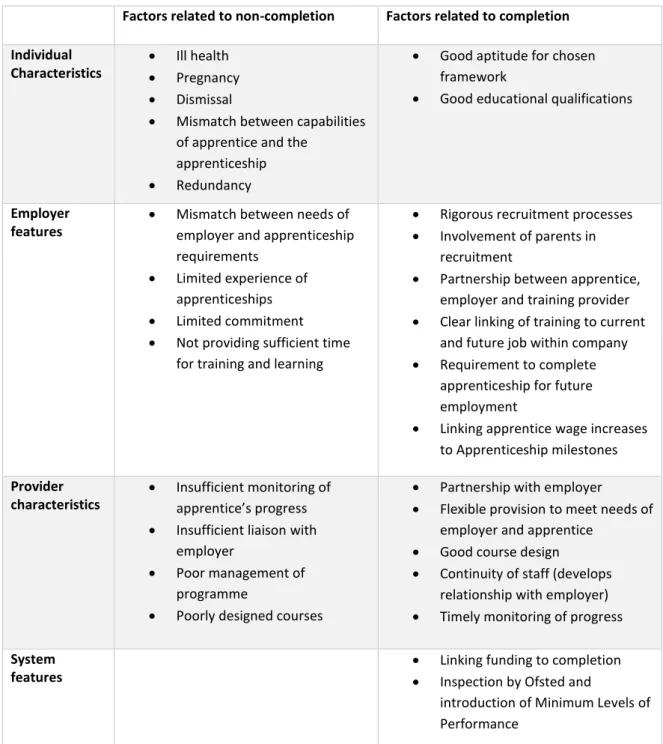
Table 3: Factors Associated with Drop-out and Completion ... 53
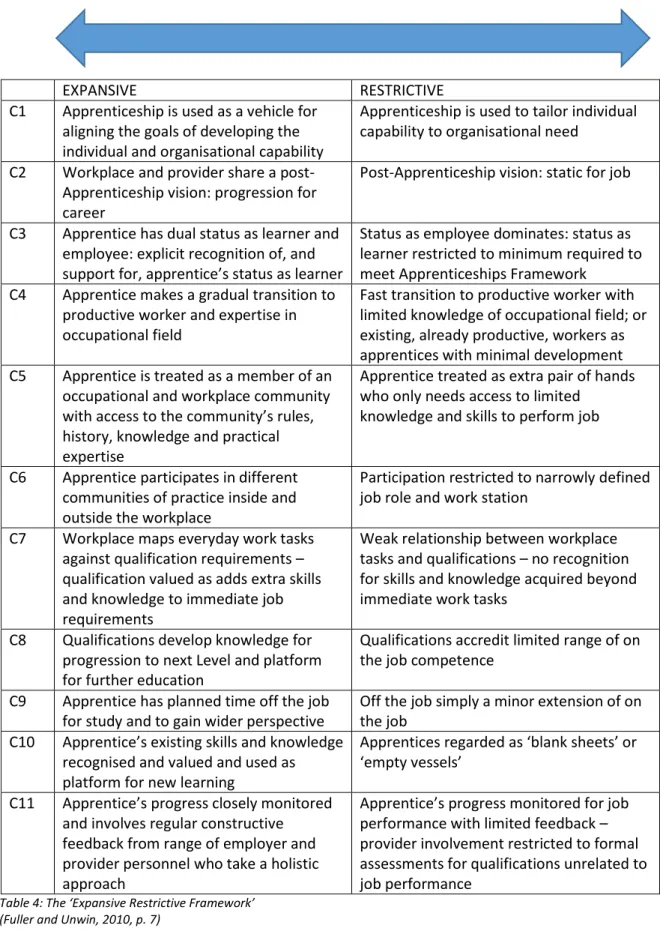
Table 4: The ‘Expansive Restrictive Framework’ ... 72
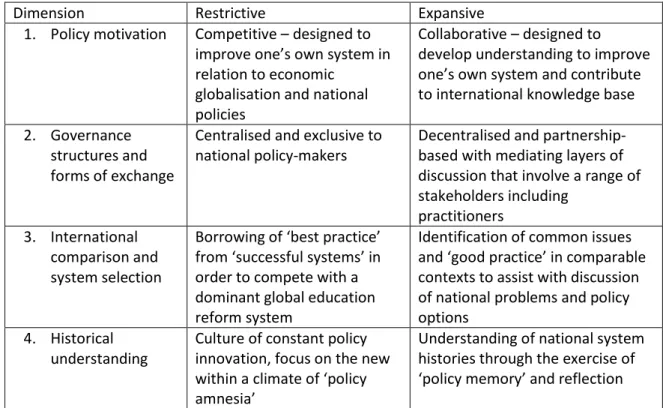
Table 5: Dimensions of restrictive and expansive policy learning in education ... 73
Table 6: Participant inclusion and exclusion criteria ... 113
Table 7: Initial Study – Interviews with Apprentices ... 122
Table 8: Initial Study – Interviews with Training Providers and Employers ... 122
Table 9: Summary of the stages of data collection and analysis ... 131
Table 10: Interview Schedule ... 133
Table 11: How Fuller and Unwin’s ‘Expansive Restrictive Framework’ could be adapted to take more account of the apprentices’ perspectives on quality ... 198
Glossary of Terms
Academic Associated with the study of knowledge, reasoning or theory. Assessment Plan A document that specifies how a particular apprenticeship
standard will be assessed to ensure that an apprentice has demonstrated the required knowledge and skills
Behaviours Personal attributes related to effective performance of a particular job such as teamwork, attention to detail or creativity.
Commitment statement
A mandatory document signed by the apprentice, employer and training provider at the start of an apprenticeship. It must include the planned content and schedule for training, what is expected and offered by each party, as well as how to resolve queries or complaints.
Competence The ability of an individual to do a job properly, which may include knowledge, skills and behaviours. Individual competencies may describe the requirements of particular work tasks.
Conversion Apprentices who are already employed when they start their apprenticeship and, therefore, convert from a normal employee to an apprentice. Often associated with ‘deadweight’.
Credentialisation or Credentialism
The acquisition of credentials such as qualifications in order to compete with others, rather than because the qualification itself, or the learning within it, is needed. The consequence is that more people are overqualified for the jobs that they are employed to do. Deadweight The funding of training that adds little or no value; for example,
where the government funds training that would be delivered anyway and paid for by employers, or funding training in an area where the individual is already competent.
Destination measures
Data on what happens to individuals following the completion of an apprenticeship
Framework (apprenticeship)
A document developed by a sector body that describes a particular apprenticeship; for example, Construction Engineering. It includes any requirements for that apprenticeship. All frameworks must comply with SASE. Frameworks are being replaced by
apprenticeship standards Off-the-job
Training
‘training which— (a) is received for the purposes of the skill, trade or occupation to which the framework relates, and (b) is not on-the-job training;’ (ASCL) 2009, Section 27 (4).
Off-the-job training includes time at college, although it can include training in the workplace; for example, watching demonstrations, undertaking simulations and making samples or test pieces. On-the-job
Training
‘training received in the course of carrying on the skill, trade or occupation to which the (apprenticeship) framework relates.’ (ASCL) 2009, Section 27 (4).
On-the-job training includes copying experienced colleagues and practising skills. It is often referred to as training at the
workbench.
Progression What a learner does after completing a particular course of study. Measured by destination data
Sector A group of industries engaged in similar work e.g. beauty or professional services. The sector may include related occupations or professions.
Skill The ability to carry out a task to a particular standard. Skills include craft skills such as woodturning or welding, professional skills such as accounting or legal, and softer skills such as
communicating with customers or prioritising workloads. Standard
(apprenticeship)
A document describing the outcomes of a particular apprenticeship in terms of knowledge, skills and behaviours. Standards are
gradually replacing apprenticeship frameworks. Also used to describe a required level of competency.
Technical See Vocational.
Trailblazers Groups of employers who develop apprenticeship standards Training The process of facilitating the development of skills and knowledge
that relate to specific competencies. Training often relates to improving capability, capacity, productivity and performance at work.
Training provider An organisation whose main role is to deliver training e.g. an FE college, university or private training provider. To deliver
apprenticeship training in England the organisation must be on the Register of Apprentice Training Providers (RoATP)
Vocational Courses, qualifications or institutions often associated with study related to a particular occupation.
Acronyms
ASCL Apprenticeship, Skills, Children and Learning Act, 2009.
Main primary legislation for English and Welsh apprenticeships. Introduced the Specification of Apprenticeship Standards for England. ASCL was amended by the Deregulation Act, 2015 to introduce new apprenticeship standards.
DBIS (BIS) Department for Business, Innovation and Skills DfE Department for Education
ESFA (formerly SFA) Education and Skills Funding Agency FE Further Education
HE Higher Education
IfATE (formerly IfA) Institute for Apprenticeships and Technical Education NSoA National Society of Apprentices
NUS National Union of Students NVQ National Vocational Qualification
RoATP Register of Apprentice Training Providers RoEPAO Register of End-Point Assessment Organisations SASE Specification of Apprenticeship Standards for England.
A document containing the rules for apprenticeship frameworks.
VE(T) Vocational Education (and Training) YAAN Young Apprentice Ambassadors Network
CHAPTER 1: INTRODUCTION
This chapter provides the context for a study investigating the experience of apprentices. The study was undertaken between 2015 and 2019, during a major reform of
apprenticeships in England. It was particularly important to demonstrate the relationship between theory, practice and policy, because this work was carried out as part of a
professional doctorate. Theorising and researching within a real-world context presented a number of challenges, in particular the challenge of balancing the roles of researcher and practitioner. I describe the current gap in knowledge about the experience of apprentices, and a possible mismatch between the rhetoric and reality of apprenticeships. I begin to explore key themes, including my realisation, firstly that apprenticeships are heterogeneous and difficult to define, and secondly that apprentice voice is largely absent within literature and policy. Finally, I set out the three research questions that underpin the research.
1.1 Impetus for the research
Following concerns about the quality, funding and relevance of apprenticeship training (BBC, 2012; Wolf, 2011), the Coalition Government (2010-15) commissioned Doug Richard to undertake an independent review of apprenticeships in England. My study took place in the context of a programme of reform, implementing recommendations from the review (Richard, 2012, see Appendix A: Richard Review Recommendations). The government was under pressure to increase the quality and size of the apprenticeship programme in order to address national and local skills gaps.
For the last 20 years, I have worked on skills policy within government departments and non-departmental public bodies. Since its launch in 2017, I have worked for the Institute for Apprenticeships and Technical Education (IfATE), where I manage the external quality assurance of apprenticeship assessment. I am particularly interested in the human side of apprenticeships. My ontological position is that the real value of the apprenticeship programme, the source of any learning, and the measure of quality, stems from the
effectiveness of the relationships between the apprentice, employer and training provider, and the extent to which the partners within the apprenticeship share a common vision. I regularly deliver careers talks through a volunteer scheme, bringing me into contact with young people considering apprenticeships as an alternative to full-time education. Working with schools and colleges, I have witnessed a lack of knowledge about apprenticeships, including some persistent myths about what apprenticeships are and who should take them. I have also noted a potential mismatch between the rhetoric of the government in
promoting apprenticeships as an alternative to university, some teachers who insist
wrongly, that apprenticeships are only for less-academic young people, and the apprentices themselves, who span a wide range of ages and abilities.
Originally, I set out to conduct a study into the transition from full-time education to apprenticeship, because, for many apprentices, this is a critical point in their journey. As I reviewed the literature; however, I noticed a significant gap in research involving the
experience of those undertaking an apprenticeship. I started to realise that the voice of the apprentice is seldom heard in debates about apprenticeships and when it is mentioned, it is rarely given much weight. I particularly felt the absence of the apprentice voice in policy
documents; for example, the Government’s response to the Richard Review of
Apprenticeships (DBIS, 2013), and in many of the metrics that are used by government to measure the quality of apprenticeships (Vivian et al., 2012). This discovery led me to change the focus of my research to the experience of apprentices, and how evidence about that experience could change the way that the quality of apprenticeships is considered,
measured and discussed. I wanted to understand what it was like to be an apprentice in the 2010s. I was also curious about why the views of these important stakeholders had been largely ignored. Potential explanations included a lack of time, or interest, and concerns that what we might hear would be difficult to explain or to implement. I hoped to show that, not only is it possible to capture the apprentice voice, but that using insights from apprentices could improve both policy and practice and ultimately, raise the quality of apprenticeships. The three main problems that I noted were the difficulties of defining apprenticeships and their purpose, flaws in understanding and measuring quality, and the absence of the apprentice voice.
1.2 Difficulties of defining apprenticeships and their purpose
Apprenticeships are one of the oldest forms of formal vocational learning, dating back to the crafts guilds of the medieval period. They have always involved a relationship between an experienced person and a novice for the purpose of learning a craft or trade. The
relationship between apprentice and ‘master’ is just as important today. However, today’s apprentice may work for multiple managers, and learning may come from interactions with managers, colleagues and trainers. The apprenticeship programme has expanded into new occupations that have no tradition of apprenticeships, and a third party, the training
provider, has been introduced into the relationship, affecting traditional roles and the balance of power (Raven, 2008). Changes to the way that work is organised may mean that the apprentice is the ‘expert’ within their organisation; for example, a digital marketing apprentice may be the only employee focusing on digital marketing and will need to think about, and negotiate the application of what she learns in college to her workplace, in order to support the business. A better understanding of apprentices is essential to developing a platform for improving those relationships, and subsequently the quality of apprenticeships. It is also important to ensure that concepts such as agency, power and identity are
adequately theorised, in order to explain the complexities of the relationships.
Apprenticeship is not a fixed concept, it operates in a global and dynamic real-world context. One of the difficulties in defining the term ‘apprenticeship’ is that the concept continues to evolve, as noted in a recent comparison of apprenticeships across Europe (Cedefop, 2018, p. 18). Frequent changes to rules, regulations, and practice since 2000, and changes to the way that policy makers describe apprenticeships have made it difficult to identify the main purpose of an apprenticeship (Hawkins, 2008). The result is that the requirements and purpose of an apprenticeship may not be well understood by everyone who funds, employs, manages, trains, or is, an apprentice (Richards, 2012). Although there is no official definition of an apprenticeship in England, the government has set statutory criteria that provide some help. Apprentices in England must be paid employees and must receive a substantial programme of vocational training (Great Britain, Apprenticeships, Skills,
Children and Learning Act 2009). The Enterprise Act introduced legislation to protect the
Government (DBIS, 2016b). In effect, the government has operationalised its power, because an apprenticeship is whatever the Government of the day says that it is.
Apprenticeships have provided opportunities for political point scoring and the three main political parties in England have each claimed responsibility for the growth in the number of apprentices since the start of the century (Conservative Party, 2015; Liberal Democrats, 2015; Husbands, 2014). Successive governments have wanted to make a mark, leading to numerous policy changes, impacting the content, delivery and growth of the programme. There is little doubt that State involvement in vocational education and training in England has increased over the years, as a result of shifts in political priorities and pedagogical beliefs. Apprenticeships, it seems, have multiple purposes from filling national skills gaps, meeting the needs of individual employers, providing an alternative to university and reducing youth unemployment. A clear trend has been a shift of power from bodies representing occupational sectors, which had devised apprenticeship content, based on National Occupational Standards, to certain employers and the government, which now regulate, prescribe, define and fund the programme (Fuller and Unwin, 2015; Wolf, 2011). Apprenticeship is increasingly positioned as an economic policy, and a new apprenticeship levy to fund the cost of apprenticeship training came into effect in April 2017 for all
employers that have an annual pay bill in excess of £3 million. The stated policy objectives for the levy are: boosting productivity, increasing the quantity and quality of
apprenticeships, putting ‘employers at the centre of the system’, and allowing employers to ‘get back more than they put in’ (HMRC, 2016). It is telling that there is no specific mention of improving opportunities for apprentices. The government has chosen to put employers
at the centre of the system, and the Richard Review demonstrates a sort of Foucauldian approach to the operation of power, prioritising dominant stakeholders, whilst normalising and constraining possibilities (Foucault, 1991, pp. 210–222).
Despite the government’s attempts to constrain the programme, pressure to solve multiple policy challenges such as youth unemployment, skills gaps, and the need for a vocational alternative to academic learning, means that the heterogeneity of apprenticeship continues. In England, an apprenticeship can be taken by anyone over 16 years of age in any of the 479 occupations currently available (IfA, 2019). The programme spans a wide range of
qualification ‘levels’ (Appendix B: Qualification Levels), and the training can be delivered in a range of institutional settings, including private training providers, colleges, universities, or wholly in the workplace. Of the 375,800 people who started an apprenticeship in the 2017/18 academic year; 28 per cent were aged 16-18, 30 per cent were 19-24 and 41 per cent were 25 or over (DfE, 2019).
1.3 Flaws in understanding and measuring quality
With no clear definition or single purpose, it is difficult to understand and measure the quality of apprenticeships. The current reform focuses on increasing employer engagement and quality from the employer’s perspective (DBIS, 2013). Employer engagement here means the proportion of employers who are aware of, and understand apprenticeships, and who employ apprentices (Richard, 2012, pp. 19, 124-5). By quality, Richard meant that apprenticeships should meet the needs and expectations of employers in terms of the programme content, in particular the relevance to the job, and the way that the apprentice
is assessed. Richard’s view was that the best way to achieve this is for employers to be involved in setting apprenticeship standards, defining content, and funding the training (Richard, 2012, p. 128). When the Government originally announced that it had
commissioned Doug Richard to carry out a review of apprenticeships, the stated aims of the review were to:
Look at how to build upon the record of success of recent years by:
Ensuring that apprenticeships meet the needs of the changing economy
Ensuring every apprenticeship delivers high quality training and the qualifications and skills that employers need
Maximising the impact of Government investment.
DBIS, 2012b It is apparent, therefore, that when Richard was asked to determine ‘what the core
components of a high quality apprenticeship should be’ (DBIS, 2012b), the focus was always to be on quality from the perspective of business and the economy, and the Secretary of State for Education at that time, Michael Gove, stated that Richard was chosen because he was a ‘proper entrepreneur’ (DBIS, 2012b). Richard makes few references to the views of apprentices within his report and pays little attention to other possible measures of quality, such as the satisfaction of participants, or independently observed activity.
The frequent use of the term ‘employer engagement’ within the Richard Review (Richard, 2012) compounds the message that, for government, the main ‘customers’ for
apprenticeships are employers and not the apprentices or society as a whole. The
introduction of the apprenticeship levy and employer funding contributions were intended to encourage or force employers to offer apprenticeships, using a market approach to raise the quality of apprenticeships. However, the focus on quantitative and economic measures
of success suggests that, to date, policy makers have largely seen apprentices in utilitarian terms, as units of labour productivity (Avis and Atkins, 2017, p. 175). Theorising this from a social perspective, the focus on employers and economic measures devalues individual apprentices, completely ignoring the apprentice as a stakeholder. Richard positions some changes that may benefit apprentices themselves, as secondary to the benefits to
businesses:
Government, through NAS [the National Apprenticeship Service] and other employer networks and engagement, should increase the levels of
mentoring, coaching and brokerage support that exist to help smaller employers with less capacity to take on an apprentice.
Richard, 2012, p. 130
Richard’s comments further emphasise a shift from the old master-apprentice relationship with the introduction of new networks and partners. It could be argued that a reliance on narrow quality metrics damages the quality of apprenticeships (Segal, 2014, p. 1), and the introduction of the levy and various regulatory frameworks, leaves employers experiencing a reduction in real power and choice. The narrow view of quality also has serious
implications for the identity and agency of apprentices, and the extent to which they feel that their needs are valued.
1.4 Absence of apprentice voice
Apprenticeship reforms have usually involved extensive consultation with employers, but limited attention to the views of apprentices (DBIS, 2013). The Richard Review proposed new, independent end-point assessments and a new system for funding apprenticeships (DfE, 2018a). The purposes of these measures are described in terms of their benefits for
employers; for example, ensuring ‘buy-in among employers’, being ‘respected by industry’ and giving employers ‘purchasing power’ (Richard, 2012, pp. 17-19).
A series of research reports, the Apprenticeship Evaluation Learner Surveys, was first published in 2012. This research was commissioned by the Government, but despite the title, and the fact that Employer Surveys are run in parallel, the Apprenticeship Learner Surveys have focused on the benefits of apprenticeships to business and to national
productivity targets (Colaghan and Johnson, 2014; Tu et al., 2013). The surveys also provide very little evidence about the experience of being an apprentice. Government marketing campaigns such as ‘Get in. Go far’ (DBIS, 2016a; 2014b), reference the quality experience and transformational effects of apprenticeships for the individual, but very little is known about the experiences of the apprentices themselves. This lack of evidence and absence of apprentice voice in debates about apprenticeship quality, together demonstrate the gap in research that I wanted to address. I wanted to explore any evidence that is available and to generate new data about the experiences, views and needs of apprentices.
1.5 The research questions
The study investigates what apprentices consider a successful apprenticeship, and specific factors that support or hinder success. The study also explores the relationships between the social partners involved in the apprenticeship, and the impact that this has on the experience, including the extent to which employers and training providers have the desire and capacity to have a greater role in supporting their apprentices. The research questions went through a number of iterations, and the final set were:
RQ1: How do 16-24-year-old apprentices describe their experience of apprenticeship?
RQ2: What factors do apprentices consider support or hinder the quality and success of an apprenticeship?
RQ3: What significance does the relationship between the apprentice, employer and training provider have on the apprentices’ experience?
This chapter set the scene for the research, explaining the context of the research and three key themes: the difficulties in defining apprenticeships; flaws in understanding quality; and the absence of apprentice voice. From an ontological position of learning as a social construct, I planned to collect evidence in order to determine whether considering the apprentices’ perspectives might lead to improvements in the quality of apprenticeships. In the next chapter I undertake a critical review of the relevant literature to capture what is already known and to help shape my own study.
CHAPTER 2: LITERATURE REVIEW
This chapter describes the systematic search of relevant literature that I undertook in order to discover relevant work and familiarise myself with key theories, texts and authors. The experience of apprentices is under-researched, so it was necessary to integrate literature from a number of previously unrelated areas within the fields of education, work-based training, employment, economics, politics, and sociology, in order to plan my research and develop my own theory. Using research from such a broad range of academic disciplines was challenging, but it exposed different perspectives and gaps in understanding. I was able to build on some of the literature, explaining its relevance to my study. Other literature is used to highlight shortcomings in theory, evidence and practice. The chapter begins with an explanation of how I organised my literature search, including new lines of inquiry resulting from the gaps and connections that were discovered. The remainder of the chapter is arranged thematically with each section exploring literature on a key theme of particular relevance to my research. Finally, I explain how a critical analysis of the literature helped to define the scope of my research and in particular the development of my research
questions.
2.1 Literature search
Initially I had planned to research the transition from school to apprenticeship. However, I quickly became aware of a lack of literature on the experiences of apprentices and in particular I felt the absence of the apprentice voice in any discussion of the quality of apprenticeships. This led to a shift in the focus of my research towards the experience of those undertaking an apprenticeship, support for apprentices more generally, and to
notions of success and quality within apprenticeships. As I investigated the apprentice voice as a theme, I began to see how it could influence my own thinking and research position, causing me to focus more on social justice and the importance of relationships. As a result, I sought additional literature on research methodology that would champion the voice of participants.
I devised a search strategy to define and limit the parameters of my literature search, in order to keep the project focused and manageable. Appendix C: Literature Search Terms contains a list of key terms used for my literature search and a list of the topics that I eventually excluded from my lines of inquiry. Several times I felt that my literature review began to get too large and unfocused as I pursued interesting theories. I frequently
revisited my list of terms, making small adjustments to admit relevant new lines of enquiry and close down any that were leading me off focus. Several of the topics that I excluded from the literature search are still mentioned where relevant within the literature review, but they were not a focus for the research. One such example is evidence of an under-representation of those with Asian and black ethnicities and of gender bias within apprenticeships. This lack of inclusivity relates to gender and racial stereotypes and identities (Newton and Williams, 2013, p. 11). Young people, their parents, teachers and employers may hold deep-seated beliefs about who should be an apprentice, and in which job (Bloomer and Hodkinson, 1997; Banks et al., 1992; Ashton and Field, 1976). Although links between social inequality and opportunity within apprenticeships are very important, I chose not to focus on them within my study. This is because of the need to limit the scope in order to keep the research manageable, and secondly, because authors including Newton
and Williams’ (2013) work on race and gender, and Fuller et al.’s (2015) work on older learners have made significant contributions to our understanding of social inequality within apprenticeships, leaving less of a gap within the literature. The fact that there is an interest in exploring how apprenticeships can better support minority or disadvantaged groups reinforces my claims about the complexity of apprenticeship policy and practice.
Although excluded from the focus of my study, a particularly interesting debate at the time of writing concerns the impact that the introduction of degree apprenticeships will have. This was excluded from my study, because it is too early to tell whether degree
apprenticeships will improve access to professions for under-represented groups such as those with disabilities or those from deprived backgrounds, or simply channel funds to learners who are already advantaged by the social structure and education system (Anderson, 2017; Crawford-Lee, 2017).
I decided to include the views of individual ministers within the literature review, because I felt that this was relevant to the relationship between theory, policy and practice, critical for a professional doctorate. The debate served to highlight the contested ground of defining apprenticeship, the politicisation of policy, assumptions about apprentices and the use of power and influence.
Throughout the study, undertaken between 2014 and 2019, I used my list of terms to run monthly searches for articles and other literature using the Open University’s on-line library. The library’s on-line search function provided access to multiple databases, including
Academic Search Complete, ABELL, British Education Index, CORE, Education Research Complete, Education Research Abstracts, Emerald, EThOS, Hansard, JSTOR, and the Wiley Online Library. University librarians also helped me to undertake systematic searches of journals, books and other materials. I identified a number of journals with a particular focus on vocational education, such as the Journal of Vocational Education & Training; Education +
Training; and the International Journal for Research in Education and Training. I
supplemented the Open University library with additional research databases such as
Google Scholar and ERIC. In addition, I registered with, or viewed a number of websites that allowed me to engage in academic discussion, follow particular authors and receive
notifications whenever new research was published, such as Researchgate, Academia and Oxford Academic. I also searched government document management systems and archives for any relevant ‘grey literature’ including unpublished and non-commercial materials such as speeches, reports, internal documents and correspondence. As my research progressed, I attended conferences and events with a focus on apprenticeships or vocational education, and engaged with a number of academics and practitioners, some of whom shared their ideas about my work and recommended particular lines of inquiry, authors or articles.
2.2 Reviewing the literature
I used a version of the Cornell technique to organise my notes on each text that I read, adapting a template slightly to suit my needs (Donohoo, 2010). This simple technique helped me to critically review literature, identifying the main topics and ideas and
gaps and connections in the diverse literature that I was working with. An example of my summary of one text is included as Appendix D: Example of Research Diary Entry. I then transferred my notes on any key texts that I identified to Mendeley. Mendeley is an electronic system that can be used to organise academic references and to store any notes about them, alongside the text itself, if it is available as HTML or pdf. The tool makes it easy to export the references for whole collections, following academic referencing conventions and styles. I exported the list that I created in Mendeley using a version of the Harvard style, to provide the basis for the reference section of this thesis.
I found that literature on the quality of apprenticeships is predicated on the way that the author, or body that commissioned the research, perceives the purpose of the
apprenticeship. As a result, I found that quality tends to be conceived, described and measured in terms of: international success, including comparisons between policy and practice in different countries; economic success, including addressing national skills shortages and targets; pedagogical success, including the quality of education and training; or social success, including social mobility and the ‘transformation’ of the apprentice (Newton et al., 2019, pp. 41-49). Understanding the behaviour and views of those involved in the policy and delivery of apprenticeships is important to this study, because it helps to provide the clearest explanation of where apprenticeships are situated within educational policy and practice. This provides a foundation upon which I can consider a more
theoretical literature, drawn from a range of academic disciplines to address the particular concerns of my study.
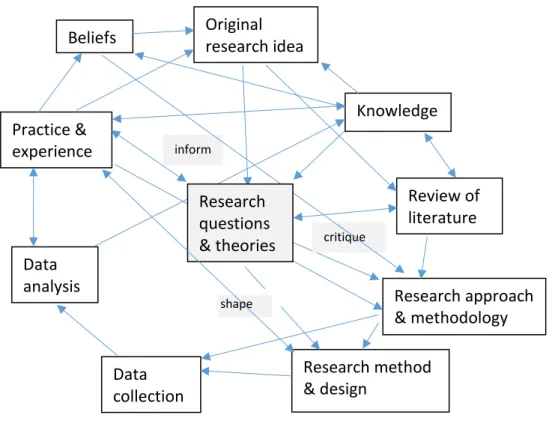
Current literature on learner identity and voice is then analysed in detail, demonstrating the impact of efforts to capture learner voice in higher and further education. I include criticism about the way that learner voice is used for certain purposes. I identify specific gaps in knowledge and understanding about the apprentice voice, and the significance of these gaps. In addition, the literature review was the starting point for my decisions about research methodology and was an important stage in developing my research framework. The final part of the chapter explains how the literature helped to define the scope of my research and in particular how it shaped the focus of the initial research questions.
2.3 Defining apprenticeships
One of the challenges when thinking about the quality of apprenticeships is that there is no single definition of the programme or its purpose. Understanding the literature helps to make sense of a programme that can be conceived of and judged in a number of ways. Exploring literature on the politicisation of apprenticeships can help to explain the impact of policy priorities on the way the programme is conceived and delivered. Much of the
literature here is from grey literature, rather than academic publications. I accessed speeches, announcements, transcripts from committee meetings, policy documents and papers from government departments and a number of other bodies, including charities and organisations representing employers and other stakeholders. Of particular interest, were the quite distinctive views expressed by successive skills ministers about apprentices and the purpose of apprenticeships in policy terms.
When she was appointed skills minister in June 2017, Anne Milton became the fifth person to hold the post in eight years. She focused on apprenticeships as the antidote to problems with workforce strategy, when she suggested that employers fall into either the category of those who have ‘drunk the magic elixir of apprenticeships’, or those who have not yet discovered the benefits of the programme (IfA, 2018d). The programme’s purpose has been described more prosaically, as a means of addressing national skills shortages by preparing people for specific occupations (Cedefop, 2018; Billett, 2016a). In contrast, Matthew
Hancock’s speeches from his time as minister for apprenticeships, between September 2012 and July 2014, are peppered with references to economic measures, including the value of apprenticeships in supporting future economic growth, return on investment, employer choice and global competition (Hancock, 2014).
Apprenticeships have also been described as a way to occupy and ‘better’ young people who would otherwise be at risk of being classified as NEET (not in employment, education or training), particularly in response to the youth riots during the Summer of 2011 (Morrell et al., 2011, p. 37 ;Woods, 2011). Nick Boles, in office between July 2014 and July 2016, emphasised the potential of the programme to improve diversity, social mobility and opportunity for individuals (HC Deb 10 March 2016, c. 452), and Robert Halfon, in post between July 2016 and June 2017, built on his predecessor’s idea of transformation and betterment. Halfon used the image of a ‘ladder of opportunity’ to emphasise the apprenticeship as a vehicle for social mobility and to highlight the need for good careers advice in helping young people to make sound choices in order to better themselves (Halfon, 2017). These views present a deficit model of apprentices, suggesting that young
people are problems that may be overcome with some minimal support (Avis and Atkins, 2017, p. 175).
John Hayes, who had responsibility for the programme between May 2010 and September 2012 focused on the intrinsic value of learning within apprenticeships. He described his vision for apprenticeships as a reinvention of the arts and crafts movement; a sentimental and nostalgic nod to the period from the late 19th to early 20th century when traditional
craftsmanship came back into fashion. Hayes also referenced even earlier apprenticeships, going back to the crafts guilds of the medieval era (Hayes, 2010). I could argue that these changes in emphasis and use of vivid imagery are simply reflections of the interests and priorities of individual ministers; however, when seen together, they illustrate how
apprenticeships can be conceptualised in a range of ways, for a range of purposes and that these purposes are not mutually exclusive. It is possible for an apprenticeship to benefit the employer, the nation and the individual apprentice at the same time, but the sum of those benefits is unlikely to be equally apportioned between the three, because of differences in power. Control of the narrative on apprenticeships is a form of legitimate and political power (Raven, 2008), and the way that apprenticeships are defined impacts the way that quality is conceived and measured.
i. Defining apprenticeship: An international policy perspective
Although my study was limited to England, it was necessary to include international comparisons, because politicians and policy makers use these comparisons to draw particular conclusions. Comparing the demography of English apprentices with global
counterparts also helps to put the differences in policy and practice into context. Literature critiquing the apprenticeship programme in England often does so through references to global competitiveness, and direct comparisons with apprenticeship schemes in other parts of the world. It is important to exercise caution, however, because international
comparisons inevitably lead to claims about the superiority of one system over another; for example, critics of the English system often point to the quality and success of the dual system in countries such as Germany and Switzerland (Select Committee on Social Mobility, April 2016, p. 50). Within the dual system apprenticeships are integrated within the
national education system and training is delivered jointly between specialist colleges and workplaces. However, it is never a simple matter of one system being better than another; for example, Dolphin (2014, p. 21) provides a critical appraisal of the dual system stating that young people in Germany who fail to secure an apprenticeship are worse off than those in other countries. Other literature suggests that German students are poorly informed and unprepared for apprenticeships, with nearly one quarter of German apprentices breaking their contracts and companies left struggling to fill vacancies (Damaschke, 2013).
Although international comparisons explain the relative strengths of different
apprenticeship systems, the unique circumstances in each country, such as the education system, dependence on the State, the involvement of trades unions or chambers of commerce, or the strength of local or social partnerships, may prevent the transfer of advantages of one system to another country (Dolphin, 2014, pp. 30-31). Hamilton asserts that the German model could solve the problem of adolescents ‘floundering’ in the USA (Hamilton, 1987, pp. 315, 340), but makes no attempt to explain how a German model could
be applied in the US given the very different education and governance systems operating in the two countries, in particular with the very different attitudes to state involvement. Similarly, it is unlikely that England could simply adopt a German apprenticeship model, because of differences in economic, structural and cultural systems (Wolf, 2011, pp. 25-29).
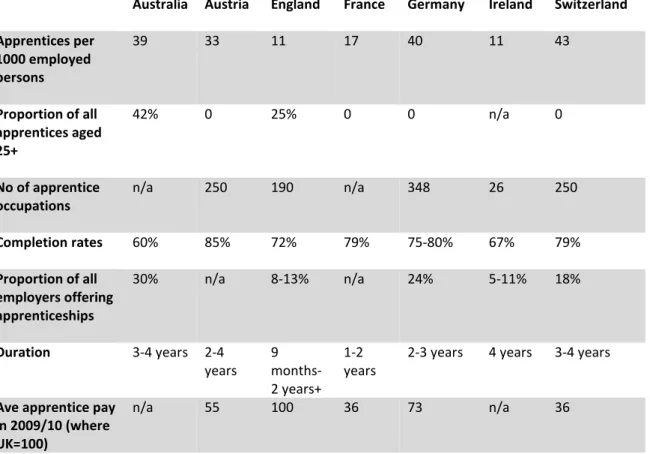
Although increasingly out of date, one of the most comprehensive international studies of apprenticeships is Hilary Steedman’s comparison of apprenticeships in seven countries, published in 2010. In this study, Steedman gathered similar data from each country and used it to describe each country’s approach to apprenticeships. I have collated key data from Steedman’s report to facilitate direct comparisons (Table 1).
Australia Austria England France Germany Ireland Switzerland Apprentices per 1000 employed persons 39 33 11 17 40 11 43 Proportion of all apprentices aged 25+ 42% 0 25% 0 0 n/a 0 No of apprentice occupations n/a 250 190 n/a 348 26 250 Completion rates 60% 85% 72% 79% 75-80% 67% 79% Proportion of all employers offering apprenticeships 30% n/a 8-13% n/a 24% 5-11% 18% Duration 3-4 years 2-4 years 9 months-2 years+ 1-2 years
2-3 years 4 years 3-4 years
Ave apprentice pay in 2009/10 (where UK=100)
n/a 55 100 36 73 n/a 36
Table 1: Summary of the international comparison
In most of the world apprenticeships are predominantly taken by young men, with young women tending to follow academic routes or leave formal education. In England; however, women account for approximately 50 per cent of apprentices (Steedman, 2010). More detailed data show the gendered nature of apprenticeships in England; for example, in 2012/13 three per cent of engineering apprenticeship starts and 92 per cent of childcare starts were female (DBIS, 2014a). Although these figures reflect those of the occupations in general, the difference in career choice for young men and young women is stark.
Many people also assume that apprenticeships are for young people and government marketing campaigns such as ‘Get in. Go far’ support this impression (DBIS, 2016a; and 2014b). In fact, just 22 per cent of new apprentices in England are 16-18 years old and 42 per cent are 25 or older (DBIS, 2014a). The number of older apprentices increased
significantly since Steedman’s report just four years earlier when the number of apprentices aged 25 or over was 25 per cent (Steedman, 2010). Funding for apprentices aged 25+ was trialled from 2005 to support businesses that typically employ older workers such as adult care and the school workforce. The main source of funding for other types of training for adults, Train to Gain, was withdrawn in 2009. This led to a rapid growth in older apprentices from 250 starts in 2006/7 to 210,000 in 2014/15. (DBIS, 2015b; Williams et al., 2013, p. 8). Although, on the surface this appears to create new employment opportunities for older learners, in reality up to two-thirds of apprentices are already employed when they start their apprenticeship (BEIS, 2017, p. 17; Fuller et al., 2017, p. 5). This is particularly evident in sectors that have introduced mandatory training requirements such as child care and adult care (Newton and Williams, 2013).
An apprenticeship can be beneficial to ‘conversions’, existing staff taking on a new role or additional responsibility at work, but often the apprenticeship is seen as ‘deadweight’ (Fuller et al., 2017, pp. 10; Richard, 2012, p. 53). Deadweight is the use of government funding to pay for training that is not needed or would otherwise be the responsibility of someone else, usually the individual learner or the employer. In the case of conversions, individuals may take qualifications simply to acquire certificates or credentials as evidence of what the learner already knows or can do, rather than new learning. The term is linked to the idea of credentialisation where the growing demand for credentials is also associated with the use of qualifications as a proxy for knowledge. Many jobs now list a degree as an entry requirement even though the job itself is classed as below degree-level (Ainley and Allen, 2010, p. 54; Eraut, 2002, pp. 66-68; Moore and Trenwith, 1997, p. 61). England is different to most other European countries where people tend to enter apprenticeships directly after school. From Table 1 we can see that Australia also has a high proportion of older apprentices, with 42 per cent being 25 or older. Existing literature can aid an understanding of the demography of apprentices and help to build a picture of who apprentices are and the range of experiences that they might have.
Steedman’s report is as interesting for what it does not say, as for what it does. Table 1 highlights many gaps in the data that Steedman was able to collect, suggesting that there are different interpretations within each country about what information is important and should be collected. The implication is that different countries have different ideas of what quality means in the context of apprenticeships, and subsequently measure quality in
different ways; for example, Steedman was unable to determine the proportion of
employers that offered apprenticeships in Austria or France, the average apprentice pay in Australia or Ireland, or the number of occupations for which an apprenticeship was available in Australia or France. Steedman’s review suggests, therefore, that we do not have any agreed way to measure the quality of apprenticeships internationally, or indeed any consensus about what constitutes quality. Steedman’s report highlights the problematic nature of ‘quality’ as far as apprenticeships are concerned.
The European Centre for the Development of Vocational Training reviewed apprenticeship schemes across Europe. The subsequent report recognised the growing strategic
importance of apprenticeships to fill national skills gaps, and recommended the
development of a framework of EU-wide principles and quality standards (Cedefop, 2018, pp. 4-5). The review identified apprenticeship schemes in 24 of the 30 countries included, but found inconsistency in how apprenticeships are described and their purposes are defined, between and even within countries. The report was able to distinguish between three main types of apprenticeship: where apprenticeships function as part of an education and training system, where apprenticeships operate as a type of VET delivery within the formal VET system, and hybrid systems. There was, however, huge variation within each group and the heterogeneity of apprenticeship schemes is a key theme throughout the report (Cedefop, 2018, p. 12). The report defined the main challenges faced by all countries in the design of apprenticeships and I have summarised them as a series of continua in Error! Reference source not found..
Table 2: The four continua of critical choices for designing a national apprenticeship (based on Cedefop, 2018, p. 18)
The table demonstrates some of the key choices that policy makers need to consider when designing or redesigning an apprenticeship system, but it does not recognise the reality that choice will usually be constrained by customs, expectations and existing structures. The English apprenticeship programme is closer to training than dual systems in countries such as Germany and Switzerland, and its status is seen as lower than academic programmes (Select Committee on Social Mobility, April 2016, p. 50). The English system is lightly regulated when compared to the German system, because the government has chosen to
1. Proximity to existing systems
Education System
Impacts on the status of apprenticeships and the potential to transition between apprenticeships and education or other programmes
Training System
2. Choice of governance
Highly Regulated
Impacts on the balance between government and employer control and the status of apprentices within the labour market
Non-Regulated
3. Control of training content and learning outcomes
Training practitioner-defined
Impacts relevance and quality of training and the potential to transition between apprenticeships and education or other programmes, or to employment
Employer-defined
4. Means of securing employer participation
Committed Employers
Dependent on motivation of employers and economic case for apprenticeships
Use of incentives
prioritise the economy and cede limited control to employers (Roberts, 2019, p. 24). Following the Richard Review, employers have been given increased control of training content and assessment, though not all employers have been able to influence the design of the programme with small businesses having particular difficulties (Newton et al., 2019, p. 15). Finally, the government has had to rely on incentives such as the levy to secure employer participation (HMRC, 2016).
Apprenticeships in the USA have traditionally developed in a piecemeal fashion and are often company-specific; however, in June 2017 President Trump announced an Executive Order calling for a major expansion of apprenticeships (Whitehouse, 2017). A new
Taskforce on Apprenticeship Expansion reported its recommendations the following year, but its report has been criticised for a lack of detail, particularly around implementation and ensuring quality (Gewertz, 2018). It is clear that the country’s appetite for regulation and employers’ and parents’ enthusiasm for a national scheme had been overestimated, leaving limited choice for the US in any of the four fields in Error! Reference source not found..
Constraints also affected the implementation of the recommendations from the Richard Review of apprenticeships in England (DBIS, 2013), resulting in a range of statutory
regulations, mandatory rules and detailed guidance. Having such rules could be interpreted as a rational approach by the bureaucratic state, to apply an element of discipline to the chaos of apprenticeships (Foucault, 1991; O’Neill, 1986, p. 42; Weber, 1978, p. 997). Despite the existence of rules and regulations, the structure of apprenticeships in England still varies considerably. This suggests that the balance between a desire for quality and the
promise of flexibility for customers has not yet been achieved, and the domain of
apprenticeships remains disorderly. Alison Wolf’s Review of Vocational Education provided a comprehensive critique of vocational education in England, including apprenticeships. Wolf highlighted a number of features of policy and institutional practice that suggest that the messiness of apprenticeships is enshrined:
…because a complex modern economy has a correspondingly complex occupational structure, central attempts to impose a neat, uniform and ‘logical’ structure on it always fail.
Wolf, 2011, p. 57
Wolf set out the problems associated with this complexity in terms of inappropriate delegation of policy decisions, unclear lines of responsibility, the cost of having multiple bodies within the system, a lack of transparency, and a lack of responsiveness to the various stakeholders (Wolf, 2011, p. 65). It is my contention, therefore, that the lack of a clear definition of apprenticeships or a shared understanding of their purpose continues to act as the main barrier to meaningful improvements to quality.
ii. Apprenticeship as an economic policy
Much of the literature on apprenticeships positions the programme as an economic policy by emphasising the purpose of the programme as addressing national skills shortages and the needs of employers. Defining apprenticeships in this way affects how quality is perceived and measured and emphasises the importance of employers above other stakeholders. In particular, contrasting discourses conceptualise apprentices as either resources using a utilitarian model, or problems using a deficit model. This affects how apprentices are seen by others and how they see themselves. Either discourse points to
issues with apprentices as individuals, rather than problems with the system in which they find themselves (Avis and Atkins, 2017, pp. 175-176). This has an impact on the
relationships and balance of power between State, employer, training provider and
apprentice. Over the last five decades a consistent theme in vocational education has been the need for greater employer engagement (Callaghan, 1976). Government’s most recent response to the issue was the review of apprenticeships led by Doug Richard. A summary of the recommendations from the Richard Review of Apprenticeships can be found at
Appendix A: Richard Review Recommendations. Underlying Richard’s recommendations was an assumption that employers want, and should have, more responsibility for the design and delivery of apprenticeships:
Individual employers, employer partnerships or other organisations with the relevant expertise should be invited to design and develop apprenticeship qualifications for their sectors.
Richard, 2012, p. 17
It is important for employers to define the knowledge and skills that apprentices need, in order to ensure that the programme content aligns to the jobs that the apprentices will do. It is less clear, however, that employers have the capacity, expertise or desire to take the lead on developing qualifications or assessments. Chankseliani and James Relly (2015, pp. 515-516) have questioned Richards’ recommendations about the role of employers, arguing that employers are not yet ready to lead the delivery of apprenticeships and that the system will continue to rely on private training providers. Many groups of employers (known as ‘Trailblazers’) commission other individuals or organisations to draft apprenticeship standards on their behalf; for example, an awarding body with expertise in education and
training within the occupational area, has supported the development of the apprenticeship standard for a butcher (IfA, 2017b).
The majority of employers have not been convinced to employ apprentices. Steedman’s data in Table 1: Summary of the international comparison show that with 11 apprentices per 1,000 employed people, England has fewer apprentices than any other country investigated except Ireland. This is at least in part the result of the shift away from
apprenticeships from the late 1970s to the 1990s when faster and cheaper alternatives such as the Youth Opportunity Programme, introduced in 1978, and its successor, the Youth Training Scheme, introduced in 1983, were sought to tackle the problem of youth
unemployment and unrest in England (Cantor, 1989, p. 125). Keep and James argue that, despite a lack of employer engagement, apprenticeships remain attractive as a policy and a means of filling skills gaps (Keep and James 2011, pp. 55-56). Although various details of the programme, such as changes to funding, have come under criticism, even the harshest critics see the overall value of the programme (Allen, 2016). The popularity of the
programme amongst politicians from all the main parties is evidenced by efforts to expand the number of apprentices in England since the early years of this century. The
Conservative Party manifesto (2015) included a commitment to 3 million apprenticeship starts/registrations during the current parliament, which ends in 2020. Some critics argue that the focus on numerical targets including the expansion of apprenticeship numbers has been at the expense of quality (Fuller et al., 2017, p.5). Amim Smith et al. (2017) and Segal (2014) both highlight the need to ensure that a number of different measures are used to
assess quality, arguing that expanding apprentice numbers may actually lead to a decrease in quality with more poor quality and poor value programmes on offer:
Both parties need to be careful about chasing targets…As we have seen in the past, such measures have put the quality of provision in jeopardy.
Segal, 2014, p. 1
There is a parallel here with political announcements about increases in levels of
employment, generally made without reference to the quality or stability of new jobs, which may be part of the precarious gig economy (Bracha and Burke, 2018, p. 159). Destination data are widely used to measure success based on Marxist theories of commodity; ‘good’ destinations are those that enhance the learner’s ‘labour power’ (Williams, 2011, p. 276). Vivian et al. found that the majority (85 per cent) of former apprentices they interviewed had remained in employment following the end of their apprenticeship, 64 per cent with the same employer. A further seven per cent had become self-employed or continued training. Eight per cent said they were unemployed (Vivian et al., 2012, pp. 95-96). Although destination data are usually promoted as evidence that apprenticeships are successful (Education, Skills and Funding Agency, 2017), if these findings were extrapolated to all apprentices, almost 70,000 former apprentices each year would be unemployed following their apprenticeship, evidence that there is scope to improve the quality of outcomes.
The Conservative, Labour and Liberal Democrat parties in Britain each announced support for the apprenticeship programme prior to the 2015 general election, positioning it as a
political priority (Conservative Party, 2015; The Labour Party, 2015; Liberal Democrats, 2015). While the overall adult skills budget for 2015-16 was reduced by more than £249 million, an 11 per cent cut on 2014-15, the budget for apprenticeships actually increased (Evans, 2015; Lauener, 2015). This suggests that the Government prioritised
apprenticeships at the expense of other education and training for adults. The shift in funding priorities, when combined with the introduction of a new tax (levy) and co-investment for employers, and the introduction of student fees within higher education, indicates an ideological and pragmatic desire to gradually shift the financial costs of education and training from the taxpayer onto employers or learners. Changes to funding could change the relationship between employer, training provider and apprentice and the quality of the apprentice experience (Newton et al., 2019, pp. 16-21; DBIS, 2015a, p. 22). As HE students fund more of their own education they become empowered as purchasers, albeit that they may feel unable to complain about the organisation that will be responsible for the award of their qualification. Apprentices do not pay for their apprenticeship training and have very little say about their choice of apprenticeship provider. It is too early to tell whether employers feel more empowered following the Richard reform of apprenticeships.
The latest apprenticeship funding reforms include a £1,000 payment for employers who take on a 16-18-year-old, care leavers, or those who have an Education, Health and Care plan (DfE, 2016), recognising persistent high rates of unemployment for young people and disadvantaged groups. At the time of writing in 2019, it is too early to judge the impact of this measure, but previous attempts to use apprenticeships to solve youth skills and employment problems have not worked (BMG Research and Institute for Employment
Studies, 2013, p.1 and p.12; Skills Funding Agency, 2015; 2014), and the proportion of apprentices aged 16-18 remains low at 22 per cent of all apprentices (DBIS, 2014), indicating that financial incentives alone have not been effective, and that other changes may be needed to increase the accessibility of the programme.
The Apprenticeship Evaluation Learner Surveys and Apprentice Pay Surveys commissioned by the Government, provide some insights into the experience of apprentices (BEIS, 2017; IFF, 2017; Higton et al., 2014; and 2013; Vivian et al., 2012). Considering these surveys helps to establish the context for my study. A critical review of the surveys highlights gaps in qualitative data about apprentices, and demonstrates the need to develop new ways to theorise the issues that they raise. Recommendations from these reports have tended to focus on improving value for money and effectiveness for employers and, therefore, most quality measures within the surveys are linked to business benefits rather than benefits from the apprentices’ perspective such as the ‘portability’ of the apprenticeship to other employers or the quality of the training; for example:
…seven in ten employers reported that the Apprenticeship had helped their business improve its product or service as well as productivity.
Higton et al., 2013, p. 77
Apprenticeships in most other countries cover a narrow array of jobs in the traditional craft skills and ‘blue collar’ trades such as carpentry, baking, welding and mechanical engineering. The word ‘apprenticeship’ is familiar, but for most people the term is also synonymous with these traditional ‘skilled trades’ (Keep and James, 2011, p. 55). In England, however, ‘white collar’ and service sector apprenticeships are also now available in administration,
management and higher-level professional roles such as a solicitor or actuary (IfA, 2019) and it is here that the policy ambition of achieving quality and parity of esteem with academic routes will be fought most fiercely.
In order for the apprenticeship programme in England to continue to expand, and to meet the needs of apprentices as the labour market changes, all apprenticeships need to be relevant and good quality (Newton et al., 2019, pp. 28-29). Policy on apprenticeships is often based on a market perspective that prioritises labour market needs and demand; for example, employers designing apprenticeship standards to meet their needs (DBIS, 2013, pp. 11-12). The literature confirms that this is the case, but it also demonstrates the impact that this can have on the way that apprentices are perceived, which may help to explain why their views have been largely ignored. Youth careers policy, for example, often takes a neo-liberal approach that reduces state involvement to simply providing access to
information, discharging the state from any responsibility for its citizens’ career planning (Asirvatham and Humphries-Kil, 2017, p. 129; Avis and Atkins, 2017, p. 170). This position assumes that if young people understand their own strengths, weaknesses and career aspirations and have access to local and global labour market information, as well as information on different education programmes, they will make rational decisions in order to optimise their own economic or social position (Asirvatham and Humphries-Kil, 2017, p. 131; Avis and Atkins, 2017, p. 168). Of course, this view assumes that everyone has the same view about what is rational, and that anyone whose main aim is anything other than earning more money, or advancing their social status is acting ‘irrationally’. Brown (2012) argues that this policy is immoral because it puts all the responsibility and risk onto young