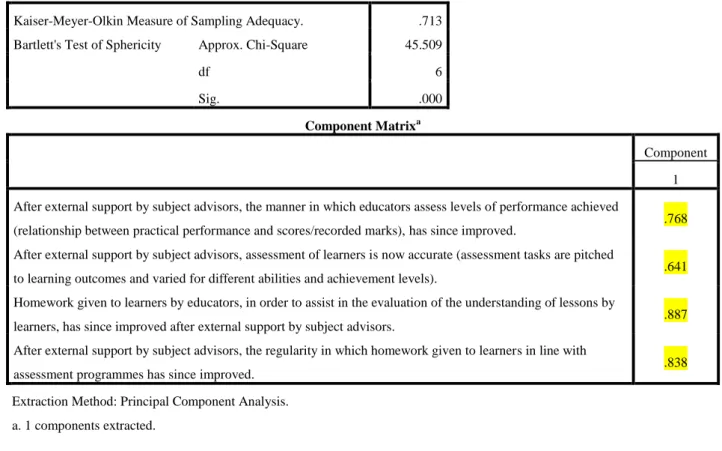
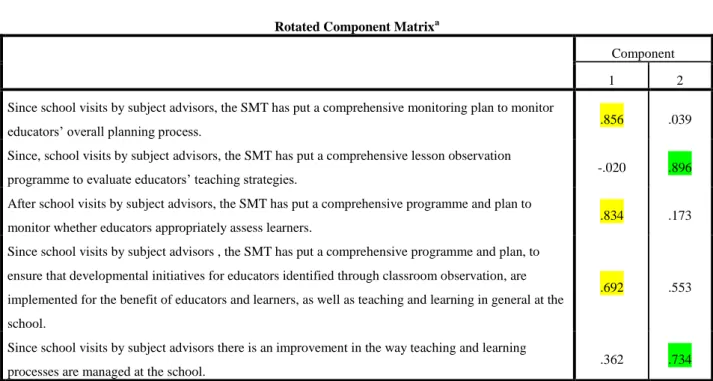
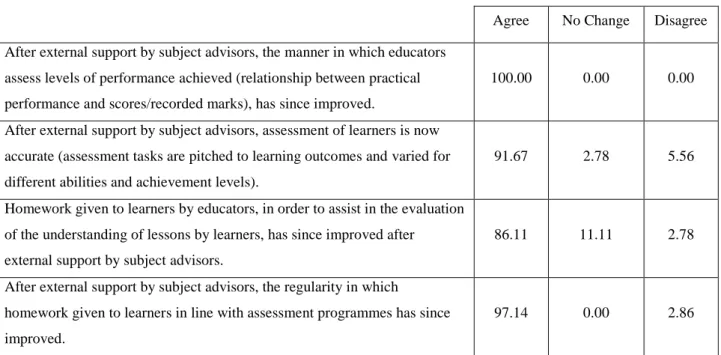
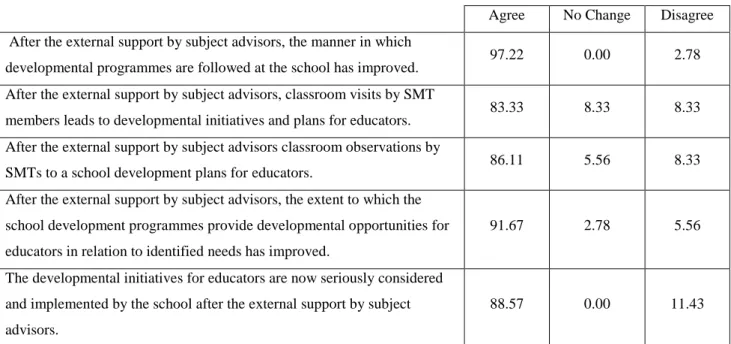
UNIVERSITY OF KWAZULU-NATAL
A systemic exploration of learners’ performance in primary schools: A practitioner research perspective
by
Stanley Radebe
A dissertation submitted in partial fulfilment of the requirements for the degree of Master of Commerce in Leadership Studies
College of Law and Management Studies Graduate School of Business & Leadership
Supervisor: Dr A Kader
ii
A systemic exploration of learner performance in primary schools: a practitioner research perspective
Stanley Radebe
(STUDENT NUMBER: 208514797)
Supervisor: Dr Abdul Kader
iii
Declaration
I, Stanley Radebe declare that:(i) The research reported in this dissertation /thesis, except where otherwise indicated, is my original research.
(ii) This dissertation has not been submitted for any degree or examination at any other University.
(iii) This dissertation does not contain other persons’ writing unless specifically acknowledged as being sourced from other researchers. Where other written sources have been quoted, then :
a) their words have been re-written but the general information attributed to them has been referenced.
b) where their extract words have been used, their writing has been placed inside quotation marks and referenced.
(iv) This dissertation does not contain text, graphs or tables copied and pasted from the Internet, unless specifically acknowledged and the source being detailed in the dissertation and in the References section.
Signed: ___________________________________
iv
Dedication
This dissertation is lovingly dedicated to my beautiful wife, Mary Radebe and my three beautiful girls; Zinhle, Thando and Sihlengiwe for the support and encouragement during my studies.
v
Acknowledgements
My wife, Mary Redebe and my three children namely; Thando, Zinhle and Sihlengiwe for their support and encouragement.
My colleagues at the Provincial Office and the District Offices of Mpumalanga Department of Education for helping me with the information toconduct the study.
School managers and teachers for sharing the information with me during the study.
For the encouragement and the support from my supervisor Dr. A Kader – a big thank you! Dr Fourten Khumalo, thank you for the motivation and assistance you have given me on this study.
vi
ABSTRACT
Learners in Nelspruit circuit in Mpumalanga Province performed poorly and below National average for since 200I. The researcher used a subjective interpretive paradigm, to understand the support given by subject advisors in primary schools in Nelspruit circuit. Social realities may have an influence on the behavioral patterns o f the schools in the Nelspruit circuit. Using the subjective interpretive paradigm in this study, it will give the researcher an opportunity to understand the point of view of teachers and School Management Teams (SMTs) in the social reality which may affect learner performance in primary schools. School Management Teams (SMTs) have a role to play in accelerating the delivery of quality education through sound management of curriculum. Subjective interpretive paradigm acknowledges a number of advantages as well as emphasis on relationship between basic elements. It points to the need to stu dy the organisations because there could be factors below the surface level which are less observant but may have more explanatory power than those at the surface regarding the performance of the organisation. This may include but not limited to the following factors: Socio economic factors, health factors climatic conditions and many more. Using subjective interpretive approach, the researcher will have to also look at other hidden factors which cause learners to perform so poorly.
A study was conducted in 5 primary schools in the Nelspruit circuit regarding the whole teaching and learning process focusing on the support they receive from the Department of Education through subject advisors in order to find the reasons for poor performance of learners. The questionnaires were used to gather data, enabled participants to comment on the support by subject advisors in order to improve learner’s performance and also commented about the factors affecting the operations of the school either negatively or positively.
vii
Table of Content
Item Page Title page Declaration Dedication Acknowledgements ii iii iv v Abstract Table of Content List of Tables vi vii xChapter One – Introduction
1.1 Introduction 1
1.2 Background 1
1.3 Introduction of new curriculum in SA 6
1.4 Systemic evaluation (SE) and annual national assessment (ANA) reports 7
1.4.1 Leadership and research 8
1.5 Approaches to systems methodology 9
1.6 Aim of the study 10
1.7 Research questions 10 1.8 Sub-research questions 10 1.9 Methodology 11 1.10 Data collection 11 1.11 Limitation of scope 11 1.12 Conclusion 11
Chapter Two – Literature Review
2.1 Introduction 12
2.2 Teacher empowerment 13
2.3 Parents’ involvement in education 13
viii
2.5 Learning and creativity 18
2.6 Resources in mathematics, science and English language classroom 20
2.7 Quality management and control 26
2.8 Cost of education 29
2.9 Schools as public properties 30
2.10 Equity issues 30
2.11 Conclusion 31
Chapter Three – Research Methodology
3.1 Introduction 32
3.2 Research design 33
3.3 Research methodology 33
3.4 Data collection techniques 34
3.5 Sampling strategy 35
3.5.1 The population 35
3.5.2 Sampling techniques 35
3.5.3 Probability sampling 35
3.6 Data collection instruments 36
3.6.1 Construction of the questionnaire 37
3.6.2 Administering the questionnaire 38
3.7 Data analysis 38 3.8 Reliability 38 3.9 Validity 39 3.10 Ethical considerations 40 3.11 Limitations 41 3.12 Conclusions 41
ix
Chapter Four – Statement of findings , Interpretations and Discussion
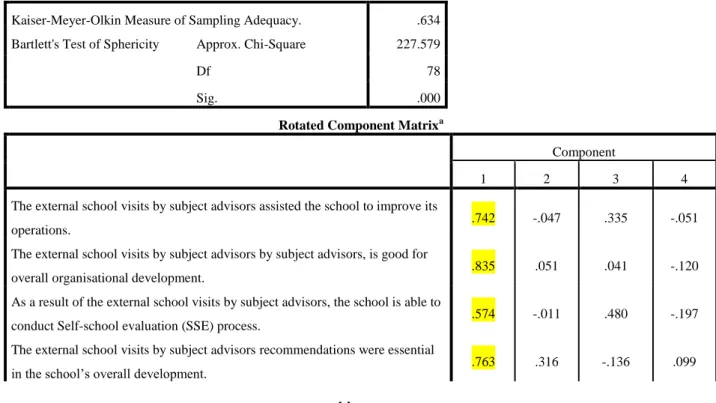
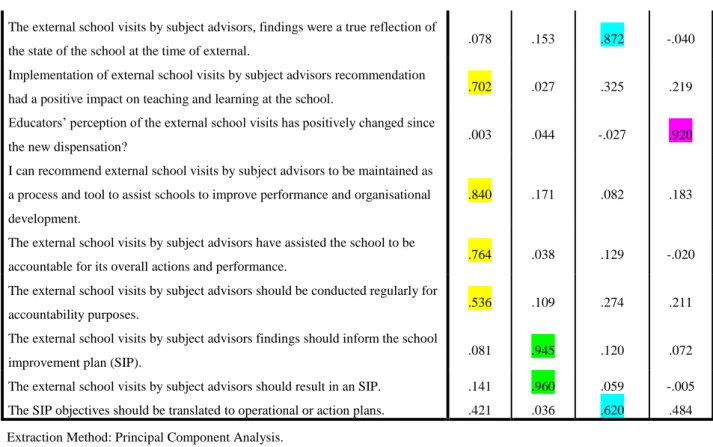
4.1 Introduction 42 4.2 The sample 42 4.3 Research instrument 42 4.4 Reliability statistics 43 4.5 Factor analysis 43 4.6 Section analysis 49
4.6.1 Section A: Assessment process 49
4.7 Correlations 58
4.9 Conclusion 77
Chapter Five – Conclusions and Recommendations
5.1 Introduction 78 5.2 Summary of findings 78 5.3 Recommendations 79 5.4 Conclusions 84 6. Bibliography 86 7. Appendices 92
x
List of Tables
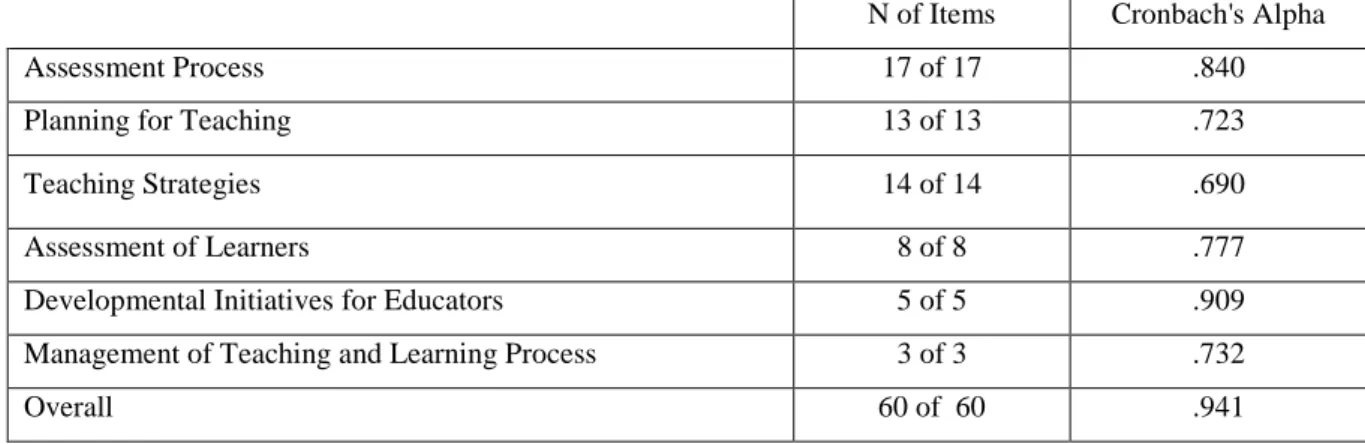
Table 4.4.1: Cronbach’s alpha score for all the items that constituted the questionnaire 43
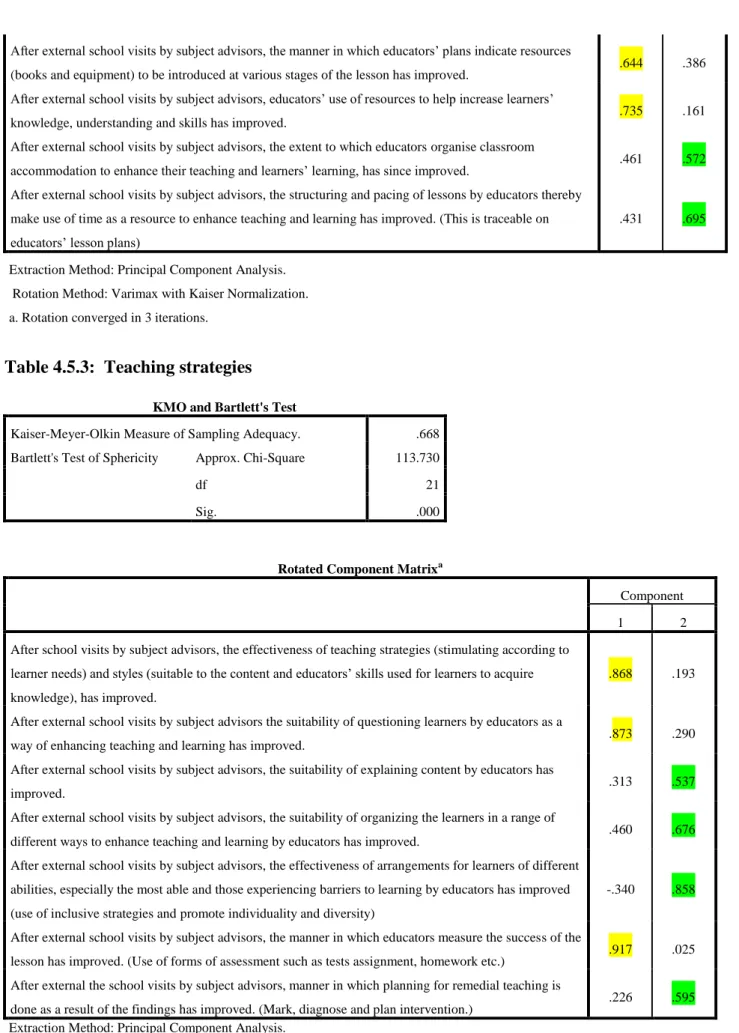
Table 4.5.1: Assessment process 45 Table 4.5.2: Planning for teaching 46 Table 4.5.3: Teaching strategies 47
Table 4.5.4: Assessment of learners 48 Table 4.5.5: Developmental initiatives for educators 48
Table 4.5.6: Management of teaching and learning process 49 Table 4.6.1.1: Summarised scoring patterns 50 Table 4.6.1.2: Differences in the scoring patterns 53 Table 4.6.2: Planning for teaching 54 Table 4.6.3: Teaching strategies 55
Table 4.6.4: Assessment of learners 57 Table 4.6.5: Developmental initiatives for educators 58 Table 4.6.6: Management of teaching and learning process 58 Table 4.6.7: Summary of the correlations using the average values for the various sections 60
Table 4.6.8: Responses for question 1 61
Table 4.6.9: Responses for question 1.1 62
Table 4.6.10: Responses for question 2 63
Table 4.6.11: Responses for question 3 64
Table 4.6.12: Responses for question 4 66
Table 4.6.13: Responses for question 5 67
Table 4.6.14: Responses for question 6 68
Table 4.6.15: Responses for question 7 69
Table 4.6.16: Responses for question 8 71
Table 4.6.17: Responses for question 8 72
Table 4.6.18: Responses for question 10 73
Table 4.6.19: Responses for question 11 74
Table 4.6.20: Responses for question 12 75
Table 4.6.21: Responses for question 13 76
1
CHAPTER ONE
INTRODUCTION
1.1 Introduction
The researcher is a Chief Education Specialist stationed at the Head Office of Mpumalanga Provincial Department of Education. He is the Curriculum Manager responsible for the General Education Curriculum with the special focus on the Intermediate and Senior Phases in the entire province of Mpumalanga. The researcher supervises 20 professional staff members who are also based at the Provincial Head Office. His section is located within General Education Directorate which is part of the main branch of Curriculum management.
The researcher’s responsibility is to develop, analyze, interpret curriculum policies, monitor curriculum implementation in schools and supervise all 20 staff members who are learning area/subject specialists in order to make sure that they(subject specialists) do things according to policies, implement all curriculum related policies to school through district structures, coordinate all curriculum related programmes for the entire province and advise Districts, Circuits and schools on the best ways to implement the curriculum. The provincial head office is functioning in consultation with the District Offices, the level where subject advisors are located.
The researcher’s dissertation is based on Action research because he has to conduct a systemic exploration of learners’ performance in primary schools in the Nelspruit circuit. The action research will focus on data collection from schools and teachers, analyze, interpret and draw conclusions. The findings and the recommendations from the study will be presented to the Senior Management of the Mpumalanga Department of Education for consideration in order to improve the learners’ performance.
1.2 Background
Prior 1994 the Mpumalanga Education Department implemented the old curriculum called Nated 550 report as expected by the then National Department of Education. It was noticed that such a curriculum did not equip learners with knowledge and skills which would enable them (learners) to respond to the demands and the socio economic issues of the country as demanded by the world future.
2
When the African National Congress came into power in 1994, it embarked on a mission to change the old South African Constitution and its related Legislations, Acts and Curriculum (Nated 550 reports) and introduced the new Constitution of Republic of South Africa, Act No.108 of 1996 and new Acts like South African Schools Act, Act No.84 of 1996, National Education Policy Act, Act No.27 of 1996 and many more. In the process of transformation they (politicians) made consultations with international communities and many local stakeholders in order to get their inputs. Finally the new curriculum was introduced in 1998. This curriculum was called Curriculum 2005. It was Outcomes driven hence, the concept of Outcomes Based Education (OBE). It was also driven by the theory of Lifelong Learning which is a continuous engagement in acquisition and application of knowledge and skills in a context of self–directed learning and should be grounded in descriptive and prescriptive goals, this theory begins to put an emphasis that Lifelong Learning is a necessity rather than a possibility or a luxury to be considered (Fischer and Sugimoto, 1998). According to the implementation schedule it was planned that by 2005 the implementation would be completed, hence Curriculum 2005. The implementation was phased in 3 grades in one year.
Mpumalanga province consists of 4 districts, namely Ehlanzeni District, Gert Sibande District, Bohlabela District and Nkangala District. Ehlanzeni District consists of 14 circuits and Nelspruit circuit is one of them. Nelspruit consists of 27 schools; this includes both primary and secondary schools. Nelspruit circuit includes schools in town and in rural areas and most parents from schools in town have completed matric and they have got tertiary qualifications whereas only a few of those in rural areas completed matric and have got tertiary qualifications, as a result of that they (parents) are un able to assist their children with home works (Department of Education, 2003). Most teachers from Nelspruit circuit especially those that are teaching in rural areas commute because they are not staying in places where the schools are located. In Nelspruit circuit, the learner teacher ratio for schools in town is 1:25 whereas in rural schools is 1:45 (Mpumalanga Department of Education, 2013).
Teachers from rural schools in Nelspruit circuit struggle to attend the training programmes that are arranged in the afternoons by the Mpumalanga Department of Education because of the common transports they are using to commute. In rural areas, most families are headed by children because their parents passed on, the attrition rate is high (Mpumalanga Department of Education, 2013). Mpumalanga is the neighbor of the two countries namely: Mozambique
3
and Swaziland. The community from the borders of these countries sends their children to attend schools in Mpumalanga, and this includes Nelspruit circuit. Learners from these countries struggle to learn in Siswati as the home language which is a prerequisite for learners to progress to the next grade in the primary schools in Nelspruit circuit (Mpumalanga Department of Education, 2011b).
The provincial analysis of learner performance in the General Education and Training band (GET), especially in Nelspruit Circuit has been disturbingly poor for the past five years since 2010. In principle, schools have management structures that should ensure the delivery of quality education. Over the past five years the provincial department enforced monitoring by putting in place strategic programmes that included coordinated school visit programmes by subject advisers, circuit managers, outreach programmes and regular meetings with SMT members. Despite all these programmes the desired outcomes remained elusive.
The recent Grade 4 and 5 PIRLS, which described the reading achievements of learners, indicated that South African learners’ performance lies below the expected standard (Howie and Zimmerman, 2011).The purpose of PIRLS was to investigate how well learners in Grade 4 and 5 are able to read in the language they have been taught since Grade 1. The PIRLS assessment instrument set four different levels of reading, namely low international benchmarks, where learners can respond to explicit stated information; intermediate international benchmarks, where learners can make straightforward inferences; high international benchmarks, where learners can interpret and integrate ideas and information; and advanced international benchmarks, where learners can examine and evaluate content, language and textual elements (Howie and Zimmerman, 2011).
Among other things, PIRLS reported that the majority of South African learners, particularly those tested in African languages including learners in Nelspruit circuit, struggle at all levels of comprehension. Only 6% of Grade 4 learners were able to read at an advanced level, while 71% of learners were only able to reach basic level. It also showed that South African Grade 5 learners tested in Afrikaans and English are performing below the international average score (Howie and Zimmerman, 2011).
Furthermore, the PIRLS study revealed that many South African teachers including Nelspruit Circuit have an under-developed knowledge of what comprehension entails. This relates to
4
statements that teachers are not trained well in teaching reading. Too often teachers know only one method of teaching reading, which may not suit the learning style of all learners and this affect their comprehension of the texts. The majority of teachers who participated in PIRLS had received less than six hours of in-service training that dealt with reading, specifically reading comprehension (Howie and Zimmerman, 2011).
SACMEQ III (Moloi and Chetty, 2010) also found low achievement levels in reading comprehension. In particular, Grade 6 learners scored very low in all levels of reading comprehension. SACMEQ III tested reading competency at eight levels: pre-reading, emergent reading, basic reading, reading for meaning, interpretive reading, inferential reading, analytical reading and critical reading. The SACMEQ III report indicated that in 2007 the majority of Grade 6 learners in Nelspruit Circuit in Mpumalanga were only competent in basic reading; 19% of learners were able to read for meaning and only 1% of learners were able to apply critical reading skills ((Moloi and Chetty, 2010).
The following graphs show the learners’ performance in all circuits at Ehlanzeni District (where Nelspruit circuit is located) covering: 2010, 2011 and 2013.
5
Graph 1.2.2
6
1.3 Introduction of the new curriculum in South Africa
When the new curriculum was introduced in 1998, South Africans were excited about it. The researcher was part of the managers who were responsible for the training of teachers. After the training programme, teachers were expected to go back and implement the new curriculum in their schools. As teachers implement, the researcher made visits to their schools and discuss with them, they (teachers) complained about the following issues: Teachers were trained for 4 days with an expectation that they will fully understand the new curriculum after that 4 day training. Facilitators who were training teachers were also not clear of what they were doing. There was too much terminology which confused teachers during training. Too many topics were covered within a short space of time during the training sessions (Jansen, 1999).
The government could not supply learner and teacher support material (LTSM) to all schools in the system (Jansen, 1998). There was a shortage in general, as a result of that most learners were expected to share resources. Professor Jansen (1998) also pointed out that the materials which were developed by publishers and eventually approved by the Department of Education were of a poor quality and some schools could not use it because it did not contain basic skills which are required for the learning process. Officials from the Department of Education expected parents to make extra financial resources available to supplement what the government provided schools whereas most parents were not working, even if they work they earn very little money do to that (Jansen, 1999).
A committee was appointed by the Minister of Education in 2009 to review the structure and design of Curriculum 2005, teacher orientation, training and development, learning support materials, provincial support to teachers in schools and implementation time-frames (Department of education, 2009). The review committee recommended that the curriculum needed to be strengthened by streamlining its design features, simplifying its language, aligning curriculum and assessment, and improving teacher orientation and training, learner support materials and provincial support. A Revised National Curriculum Statement (NCS) should deal with the curriculum requirements at various levels and phases and give a clear description of the kind of a learner expected at the end of the General Education and Training (GET) band in terms of knowledge, skills, values and attitudes (Department of education, 2009).
7
When this curriculum was introduced, it was introduced in grade 1, 2 and 3 in one year. The best approach would be to introduce it in one grade per year. The results of that arrangement overloaded a system. The 2001 Systemic Evaluation (SE) study conducted in Grade 3 indicated that learners in mainstream schools in Mpumalanga obtained a mean score of 38% for Literacy. This was comprised of a mean score of 44% for reading and 28% for writing. In special schools the performance was even lower (Frempong and Kanjee, 2008).
1.4 Systemic evaluation (SE) and annual national assessment (ANA) reports
The table below summarizes the grade 3 and 6 performance in Languages/Literacy and Mathematics/Numeracy from 2001 to 2009 as per the Systemic Evaluation (SE) and Annual national Assessment (ANA) reports (Department of Education, 2001).
There is enough literature in the University and public libraries to support the importance of systemic evaluation so that we can know whether the intended results are achievable or not however, we need to draw parallels between assessment and evaluation, Erwin (1991) defines assessment as the systematic basis for making inferences about the learning and development of students. Assessment is the process of defining, selecting, designing, collecting, analyzing, interpreting and using information to increase students’ learning and development. Evaluation helps to improve outputs or outcomes by means of the feedback loop. This is a clear indication that a planning by any organization before introducing a new approach is important. A question that can always be posed is whether there was a planning done before the introduction of Outcomes Based Education in South Africa. There were gatherings that
YEAR 2001 SE 2007 SE 2008 MP ANA 2009 MP ANA
Grade 3
Learning
programmes Numeracy Literacy Numeracy Literacy Numeracy Literacy Numeracy Literacy Mpumalang
a 29% 28% 30% 32% 40% 39%
33% 34%
National 30% 30% 35% 36% N/A N/A N/A N/A
Grade 6
YEAR 2004 SE 2005 MPSE 2008 MP ANA 2009 MP ANA
Learning
Areas Mathematics Language Mathematics Language Mathematics Language Mathematics Language Mpumalang
a 25% 36% 24% 34% 30% 31% 26% 27%
8
were organised by the Head of Mpumalanga Department of Education in order to analyze the results and various learner performance reports. These gatherings included amongst others, Niyabonwa Indaba, Planning and Review meeting GET and FET Curriculum. During the gatherings, school visit reports, analysis of ANA and grade 12 results were presented (Mpumalanga Department of Education, 2007).
1.4.1 Leadership and research
This study brings awareness to the researcher that his role has changed from that of being a primary professional, meaning that of a primary school teacher to the one who has a greater responsibilities and he is therefore, expected to display leadership role. The researcher has done some managerial training which exposed him to certain managerial problems; he has found management to be interesting but challenging also in a sense that he has to be an agent of change in case there is a need to introduce new policies in his organization, the researcher has to manage conditions of service by trying to find peace and harmony between staff members and senior management. As a manager he has been able to interact with various stakeholders and get inputs from them on how they can improve the situation in the organization. It presents an opportunity for him to develop in various aspects of management and leadership and working towards meeting the strategic objectives of the organization.
Leadership and management play a very important role in achieving the organizational goals. After studying and observing leadership in political organizations, corporate organizations and educational organizations, the researcher came to his own understanding of what leadership entails. According to Bass (2003) Leadership is the ability of one to use one’s acquired and inherent wisdom to hold a team or teams together, around a common purpose, while allowing team members to positively contribute towards service delivery within their own units and within the broader picture of the whole organization while one proceeds to provide a strategic direction. Whilst acknowledging the thin line between the Leadership and the Researcher, it is of utmost importance to put them in juxtaposition so that the thin line can be highlighted, particularly for senior management levels in public service. From the standard conceptualization of management, management entails planning, organizing, controlling and directing or leading (Van Deventer and Kruger, 2003).
From the above definition of management, the researcher agrees with the notion that managers are recognized by how well they do their work. Leaders can be recognized by how well the people they lead own the strategic plan and work to realize the strategic goal or
9
outcome of the entire organization. Managers need to have certain competencies to be successful. A combination of knowledge, skills, behaviour and attitudes that contribute to personal effectiveness becomes the best recipe for a successful manager.
There are different types of leadership, for an example Transactional Leadership –when a leader and his/her people enter into contract and do things according to the known rules which means he/she knows where the team is going whilst Transformational Leadership means a leader will know what he/she want to achieve when he/she get there, it is a journey of exploration (Jackson, 2000). For one to deal with learner improvement in our schools there is a need to be a leader with an open mind so that he/she can embrace change when need arises. Institutions tend to adopt a particular culture, so transformed leaders are necessary to champion changes (Stacey, 2007).
1.5 Approaches to systems methodology
The researcher’s lesson is also drawn from sociological paradigms. According to Levy (2000) Social realities may have an influence on the behavioral patterns of the organization which in turn produce certain results. Using the subjective interpretive paradigm in his research, it will give the researcher an opportunity to understand the point of view of people in the social reality which may affect the learner performance in the primary schools. Reviewing structuralisms as a methodology recognizes a number of advantages as well as emphasizing relationship between basic elements, it points us to the need to study structures, below the surface level which are less observant but may have more explanatory power than those at the surface. Learning from this approach, when looking at the learner performance, the researcher will have to also look at other hidden factors which may cause learners to perform so poorly (Jackson, 2000).
Having identified four systems approaches namely interpretive, postmodern, emancipation and functionalism, it became clear that this research will be best located in Emancipatory and Interpretive approach. Interpretive provides a home for soft systems thinking as opposed to hard functionalist systems approach. Soft systems approach serves well as a process for evaluation and problem solving or for improvement (Jackson, 2000). Interpretive is important in this study because it brings commitment to the quality of work. The researcher will be able to take into account the politics and culture of the institutions/schools because they may be some of these contributing factors to the underperformance. Noting that the researcher will be
10
dealing with human beings, a soft system approach becomes more relevant. Emancipation will also be used in this study because the researcher will be participating in the expanded opportunities, wanting to explore new knowledge.
The researcher has critiqued the practice and ideology of the institutions which may bring or suggest a reformation of social order. Some people are trapped in older practices that are not producing good results and that needs to change (Jackson, 2000).
1.6 Aim of the study
The aim of the study is to establish the reasons for underperformance in primary schools in Nelspruit circuit, focusing on the support given by the Department of Education through Subject advisors.
1.7 Research questions
Why are the primary schools learners in Nelspruit circuit failing to perform above the national average? What will the researcher do to improve the situation?
1.8 The following are some of the sub-research questions:
Do the visits by subject advisors assist the schools in the improvement of learner assessment, planning of the lessons, management of development initiatives for educators and improvement of teaching and learning?
Are subject advisors competent to make an impact in the schools?
Are schools resourced enough to implement the recommendations or advises from the subject advisors?
Are School Management Teams (SMTs) capable to manage curriculum and develop School Improvement Plans (SIP) and implement them?
1.9 Methodology
This study followed a quantitative approach, as it sought to explore learner performance through the support given to schools by subject advisors. According to Gall, Borg and Gall (2006), the quantitative approach is probably one of the best means of uncovering problems in education and enables researchers to understand better the total environment in which education takes place. The research approach is also interactive; in other words, the
11
researcher gathers information in person, by interacting with participants in their setting (MacMillan & Schumacher, 2010).
1.10 Data collection
A questionnaire and interviews with teachers and meetings with school management teams, reports and presentations will be used to gather data for this research.
1.11 Limitation of scope
Some schools may not be willing to give their opinions and reports freely and openly. Sometimes the information submitted through questionnaires may be invalid and unreliable. Some teachers and SMTs may not be available for interviews. Information and records may not be available in schools. Schools may feel threatened by the research process regardless of the fact that the purpose was clarified beforehand.
1.12 Conclusion
The findings of the study should be able to connect to some real life situation and the discussion should center around how it could help practitioners to better understand ways of dealing with that problem (De Vos, 2005).The approaches presented in this study will be able to assist the researcher in discovering the causes of poor performance and the necessary steps to be taken in addressing the problem. Without pre-empting the findings, the implementation of a turnaround strategy may call for a collective approach that will involve four parties namely parents, teachers, learners and the Department of Education because in an organisation like the Department of Education it is always important to draw a strength from the above mentioned parties for the solution on the issues of education delivery.
12
CHAPTER TWO
LITERATURE REVIEW
2.1 Introduction
Many countries are struggling with the improvement of learners’ performance starting from the primary level; this may be attributed to the fact that basic literacy and numeracy skills are not emphasised properly. This study focuses on the learners’ performance in Mpumalanga province in trying to establish the causes of underperformance. The problem mainly exists in the rural areas of the province. Schools of Mpumalanga province are located in 3 different areas namely towns, townships, semi-rural and deep rural areas (Mpumalanga Department of Education, 2009). This demarcation makes the Mpumalanga Department of Education to fund these schools according to their location; for an example schools in deep rural areas are funded better that the schools in town. Learners in rural areas lack learning resources whereas in urban areas, learners have resources because they (resources) are pumped by Non-governmental organizations (NGOs) and business community (Financial and Fiscal Commission, 2000). In trying to find out the problem areas, the emancipatory approach will be used. Although interpretive/constructivists qualitative evaluators recognises the importance that the values play in the inquiry process, this paradigm does not justify any particular set of values (Stacey, 2007).
Henning (2004) raises the question of what social justice and fairness means in program evaluation. An emerging movement within evaluation is beginning to focus on the meaning of social justice and fairness within evaluation, with the consequence opening of the door to the emancipatory paradigm of social inquiry for evaluators. As Green (1998) recognizes what importantly distinguishes one evaluation methodology from another is not methods, but rather whose questions are addressed and which values are promoted.
Christie (2008) argues that the discourse of teachers’ competence and the identity roles associated with it, have been developed in countries with a form of social integration very different to that inherited by the new South Africa. National Qualifications frame works have emerged primarily in countries with a tradition of democracy advanced economic system and social welfare (Department of Education, 2001).
13
South Africa, begun its journey away from apartheid, it has put in place a new legalistic framework that is created along the lines that exemplify Darkener’s contracts of organic solidarity. In stark contrast, the old South Africa exemplified mechanical solidarity and its covenants of clan and tribe (Dekker, 1993).
Bernstein’s theory would suggest that teachers’ identities were fashioned in a mechanical mode or form of social organization (Bernstein, 1996). While Bernstein’s theory can be applied to changes in many settings, the sheer scale and speed of change in South Africa make the theory of South Africa’s difficulties in implementing curriculum 2005 lies in the attempt to craft a legalistic social frame work and curriculum of organic solidarity on to a corps of teachers whose identities and roles were forged in the apartheid mill of mechanical solidarity (Carl, 2009).
2.2 Teacher empowerment
The process of teacher empowerment includes involvement in the syllabi development (which of course can take place in the classroom), schools’ curriculum development, fuller subject circulation and the development of the broad curriculum. This involvement will in some instances be of a more direct nature and in others of a more indirect nature. To be involved in such a process, it does require certain aptitude knowledge and skills that will also be manifested in deferent ways. According to Carl (1995), the debate on teacher empowerment is not a simple matter. The curriculum landscape suggests that in future teachers will have to play a major role as curriculum agents than was the case in the past. To be able to do this requires that they be empowered to do so with a view to enabling them to make a contribution to the development and transformation of their environment.
The performance of the learners should be looked at from a bigger picture of the organisational performance. Learners are found in schools which belong to a district within a particular province, it is worth noting that as we deal with learner performance we will simultaneously look at the organisational performance holistically.
2.3 Parent involvement in education
Christie (2008, p140) states that parent involvement helps learners to discover their strength, potentialities and talents to use them for different benefit of themselves, the family as a whole and the school. Parents’ involvement can take the form of:
14
Co-operation,
Participation and
Partnership
(a) Co-operation
It must be recognized that quality of education and teaching in schools improves with an improvement in the quality of cooperation between education authorities, schools and parents. This is a very important finding, especially if one takes into consideration the statement made by Hall (2002) during a congress of the South African Association for Advancement of Education (SAAAE), now called Educators’ Association of South Africa ( EASA) in 1986 regarding the relationship between home and school in South Africa at that time. He said “I think the relationship is awful and it is getting worse and it will still worse if you do not do something about it”(Hall, 2002).
For a situation of real cooperation to exist the following aspects have to be taken into account:
Parent and teachers need each other. They are in pursuit of a common goal, namely effective educative teaching, and to achieve it they have to co-operate with one another on all levels in school. Parents do not have to be well educated to help. Every parent is indispensable. They function like the organs of a body: each organ serves a different purpose, but together they perform as the body.
One of the basic requirements for cooperation between home and school arises from the recognition of how much they have in common and how they have to learn from one another.
They have no alternative but to keep the communication channels between them open for the sake of the child’ education. Co-operation implies active involvement which arises from the parent’s interest in the welfare of the child.
If the intention is to stimulate interest, the school must involve parents and children as quickly as possible, before a feeling of apathy takes root. Only when a determined effort is made by teachers and parents to get to know each other really well is it discovered that their aspirations for the children are very much in accord. But if parents and teachers are left in their separate spheres their attitudes harden throughout the school experience (Christie, 2008).
15
Cooperation will improve if education is regarded as a key avenue to economic advancement as well as having a value of its own. Lifelong co-operation and participation in the educational process must be viewed as providing inestimable benefits to self, family and community (Department of Education, 2001).
Parents who view education positively is also more aware of the multiple practical uses of education positive are also more aware of the multiple practical uses of schooling for everyday living. As school becomes meaningful and purposeful for the student, school issues become an integral part of the family consciousness.
For real co-operation parents and teachers have to share skills and information with each other and to do so in an open, honest way which includes a recognition of others limitations in knowledge and expertise (Christie, 2008).
(b) Participation
Through participation parent can restore his/her natural right in education participation does not mean that everyone participate in everything, but rather the parents are represented sufficiently on all levels. The time has come to view implementation of in education critically and analytically. Those concerned must constantly take stock of where participation needs to be reinforced (Hofmeyer and Lee, 2002).
Apart from their work in the classroom, teachers need training on effective communication with parents. If not, they are likely to develop a defensive attitude towards any form of parent involvement. It is important that every teacher should be convinced of the necessity of a sound partnership between these two parties. Parents should also be trained to work with teachers.
(c) Partnership
Rapid change has become a characteristic of our society, which places emphasis on action: active involvement and participation for maximum mutual benefit.
The dynamic provision of education in our country is a process which requires constant revisions and renewal. Dialogue among parents, teachers, the community at large and employers is most important in establishing priorities. Parents and teachers have to be partners because the demands made by society on the education of children necessitate co-operation between the partners in all fields. Nowhere in education is the principle of
16
partnership more important than at the level where the question of how to provide the most effective education for all children in South Africa is addressed. The principle of partnership management is of the utmost importance and is based on a fundamental relationship of trust and openness between partners (Christie, 2008).
In a partnership, people’s rights and particularly their privileges, cannot be adequately expressed by legal definitions alone. Mutual appreciation, understanding and respect surmount any limitations imposed by such definitions. The foundations of the structure of partnership should be such that, when a problem arises, the first resource is not to law, but rather to the mutual understanding which exists within the partnership (The South African Schools Act No.84, 1996).
There is no hierarchy of partners, but only the unwritten agreement that each partner will accept his responsibilities and pull his weight. If one partner neglects his obligations, he places a heavier burden on the other partners. The efforts of parents and teachers in defining their reciprocal responsibilities in education help to establish a sound foundation of trust. This relationship of trust must be developed in order to embark upon specific action to establish procedures and structures which will ensure sound communication.
Therefore, each party within the partnership has to be provided with all the necessary information and knowledge as to his specific part in the school’s activities, how he has to execute them and within which bounds has/she has to perform these tasks. An important requirement for co-operation in a close partnership is a positive attitude. Although the ways and means of reaching objectives employed by various partners might differ, partners should never become estranged and unity should never disintegrate (Fiske and Ladd, 2002). It is now clear that partnership also means joining forces, whilst retaining individuality. A successful partnership depends among other things on parents and teachers trusting one another, being aware of and understanding one another’s needs and aspirations communicating effectively and having a say in the education of the child with due considering of each partner’s field of expertise (Fiske and Ladd, 2002).
Partnership involves a two-way process of joining activities in which parents and professionals come together on a basis of equality right from the start. It can take various forms and may involve setting goals, finding solutions and implementing and evaluating
17
them. Hall (2002) conveys the idea of partnership as follows: As partners, not a dozen per school on the PTA running fete’s cake sale, walkathons and spelling competitions or selling raffle tickets, but as true partners, you and me and my child working jointly in concert to educate in the fullest sense of the work, building up his sense of self-worth, his social skills, his human understanding, his communication skills, his knowledge, his thinking capacity his reasoning, his self-discipline in a carefully and individually designed package. It hardly exists, but where you do find it, it is as rich and exciting a discovery as the first live coelacanth fish (Hall, 2002).
2.4 The implications for education - developing creative learning - notion of education and learning
In the knowledge age, education is about learning, creativity and thinking. Yet these topics are rarely on the curriculum and are not usually taught as subjects in their own right. Students are very infrequently provided with the tools with which to think or to be creative. Too often education, particularly the traditional examination curriculum, is based on students being able to replicate answers, rather than rewarded for coming up with creative solutions. Lead (1998) better argues that educational systems will need to move from the chronological model of education to one that is based on creativity, collaboration and learning how to learn. Education and learning continue to be seen as the province of the few, and education is still primarily institutionally-driven with success or failure as the end point of any learning experience (Lead, 1998).
Bernstein (1996) argues that while qualifications are important, it is vital to find ways to divorce the notion of learning from assessment. Notions of fixed intelligence, and what it means to be educated and clever, abound and culture still divides society into the educated and others learning has yet to develop a populist focus in the way that medical issues, for example, have been popularized by the health fitness and diet movement. Learning needs to be covered in a popular magazine in the same way that health and fitness are. While the lifelong learning revolution has moved the debate forward, too many people still associate education with social exclusivity and power (Bernstein, 1996).
Bass (2003) states that in the learning process, the issue of cultural change needs to be dealt with. Human talent and resources are being wasted or directed into uncreative areas; people are unable to discover the full range of their talents and are missing out the joys of learning (Bass, 2003). One key theme to emerge in recent years is the recognition that learning is not
18
an event that occurs only at the beginning of life. Instead it is a lifelong activity. Throughout the journey, learning may take many forms and be delivered in many different ways. While the late 19th and 20th century paradigm held that the state was responsible for education, the 21st – century notion is that individuals have responsibility for their own personal developments and their own learning (Dekker and Lemmer, 1993).
Education is still insufficiently flexible. In the industrial economy of the past, when only a small minority of the population went into occupations that required high levels of literacy, the traditional academics curriculum may have made sense as the educational route. In the modern society, knowledge and lifelong learning are the key issues, and the curriculum needs to be subjected to root-and-branch change, with the emphasis on the developing creativity. Education may have made people think, but it did not necessarily teach them how to think, or provide thinking skills. Education has often used too narrow a definition, based on restrictive model of intelligence, concerned largely with academic ability. Consideration also been given to the synergy between work, innovation and learning. This narrow model of learning filters out some of the most important intelligences and abilities. It ignores the relationship between work and learning; and change and creativity (Fiske and Ladd, 2002).
Education is a catalyst for change particularly in respect of developing new ways of earning a living. The workplace is rarely thought of as a place of learning- a laboratory where people can develop new skills and capabilities but is essential now to find new ways of linking the workplace into the mainstream of learning. The knowledge age requires a heterogeneous approach to developing the core competences that are required. Education policy-makers need to tackle a number of key issues. Education itself has to change and develop new models, concepts as frame works. Scenarios should be drawn up speculating about what the world will be like in the year 2020 and beyond. What will people need to know and what is the best way for them to learn it (Van der Klink, and Koper, 2009).If this mental shift is not made, education will be seriously out of step with the need for creativity in the workplace and will be filtering creativity out rather than building it in.
2.5 Learning and creativity
The knowledge age requires a broader definition of learning. Learning in practise needs to be favoured over abstract notions of learning. This approach allows learning to be fluid and motivational. It develops the interest for learning by making it relevant to individuals’
19
practice. It provides a link between work and learning and the link is the development of learning in communities, who use learning to build creativity. Such situational learning allows people to hold learning conversation where they solve problems, tells stories and share insights from hunches and feelings to analysis and well-researched ideas. (Van der Klink and Koper, 2009).
The motivation is also essential for creativity, hence it is harnessed coming from the fact that the learning has meaning for each individual because it becomes a part of his/her identity. The learners construct meaning through their interactions in a learning community. The employer has the responsibility to create the conditions in which learning communities can flourish. The employer needs to create the teams, put in the staff development and ensure that their staffs have the training to make the most of the opportunities. The responsibility of the education system is to recognise these trends and develop creativity as a major theme in the curriculum. Clearly, creativity will be a key theme for learning in the 21st century in the creative age: knowledge and skills for the new economy. Seltzer and Bentley (1980) discuss the implications for education of the creativity required for the new knowledge-based economy.
They categorize a number of characteristics that new creative learners need:
The ability to identify problems rather than depending on others to define them,
The ability to transfer knowledge gained in one context to solve problems in another,
The capacity to focus attention on the pursuit of a goal, or a set of goals and
The belief in learning as an incremental process with repeated attempts will eventually lead to success.
Educational processes will need to be designed to provide the opportunities for the development of these essential creativity skills. Drawing upon a range of international case studies from the United States, Canada and Sweden, Seltzer and Bentley (1980) identify a number of key characteristics of learning environments that encourage creativity (these apply to both educational and corporate environments);
Trust- secure, trusting relationships are essential if people are to take risks and learn from their failures;
20
Freedom of action- the creative application of knowledge is only possible where people are able to make real choices over what they do and how they are able to do it.
Variation of context- the experience that learners need when applying their skills in a range of contexts in order to make connections between them;
Interactive exchange of knowledge and ideas- creativity is fostered in environments where learners can draw on diverse sources of information and expertise
Real-world outcomes- creative ability and motivation are reinforced by the experience of making an impact, achieving outcomes and changing the way things are done.
In order to bring about greater creativity in educators at all levels, including administrators, teachers and principals, local and national policy-makers will need to reflect on the nature of the curriculum, learning processes, learning infrastructures, career patterns, financial rewards for rewards for educators and the links between the community and educational organisations. It will not be easy, but the price will be high if no attempt is made to learn from experience.
New technology will force educational institutions to engage in a deep reflection and analysis about the whole process of teaching and learning. It has the capacity to facilitate highly customised learning opportunities for individuals. At the same time, educational institutions will want to preserve the sense of community and belonging that is often at the core of a learning environment. The impact of technology and the power of the internet and e-learning will need to be modelled. In any scenario, education needs to help all individuals to maximise multiple intelligence. Corporate universities will have an important role to play and will introduce new and exciting concepts of learning; collaborative learning, learning portals and so called skill-snacks will develop alongside action learning approaches (Biggie and Shermis, 2004).
2.6 Resources in Mathematics, Science and English language classroom practice: need, availability and use
(a) Textbooks
Two problems are frequently raised about the form and function of textbooks in school mathematics, science and language teaching. The first problem is that dominant textbooks in use present a narrow approach to these subjects. For example, most mathematics
21
textbooks follow a well-oiled and familiar script. A concept or procedure is introduced, with some related worked examples; this is then followed by an exercise for pupils to practise, consolidate and possibly extend their understanding of the concept or procedure (Department of Education, 2001).
This teaching and learning approach is well known for its rather deadening effects on learner motivation and interest in mathematics on the one hand, and on possibilities for learner’s mathematical development on the other. A recent study of science textbooks found that many of them cover too many topics and fail to develop any of them well. The texts examined include more classroom activities that were irrelevant to learning of key science ideas and don’t help students to relate what they are doing to the underlying ideas (St. Clair Dean, 2001).
A second problem relates less to content and design and more to the ways in which textbooks that structure all teaching are likely to produce in teachers a reliance on single prescribed texts, and to result in the disempowerment and de-professionalization of teachers. Both problems are well documented and both have been identified as problems that are being addressed in a new educational dispensation in South Africa (Christie, 2008).
Between the first and second years of the Further Diploma in Education (FDE) research project, Outcomes Based Education (OBE) was launched for grade 1-9 and actually meant for teachers to be able to design (select and generate) learning resources to support a range of contextualisation teaching purposes. Throughout the three years of the research of the projects, textbooks remained changing resources for mathematics and science teachers, particularly at the senior secondary level, though less so for English teachers. For mathematics and science teachers, content remained the organiser and decider of curriculum, and key texts were indispensable for teacher’s planning on the one hand, and for providing a range of tasks for learners on the other. The situation changed when a new curriculum took root in senior secondary education in South Africa (Department of Education, 2009).
However, in the present context, and particularly at secondary level, the fact that the prescribed textbooks remain crucial for mathematics and science teachers is not surprising. Green (1998) argues the point quite clearly: in Maths and Science, because content is easily
22
defined, prescribed textbooks serve to legitimate and sequence school curricula in a number of countries, particularly at a secondary level. Teacher’s reliance on such textbooks is then more appropriately interpreted as responsibly meeting the needs of their learners to succeed in secondary school Mathematics and science (Green, 1998).
The report of the task team for the review of the implementation of the National Curriculum Statement pointed out that in contrast to secondary school mathematics and science teachers, the primary school teachers of these subjects and the primary and secondary teachers of English used textbooks for some lesson preparation. Despite consistent use for this purpose, these teachers did not use their textbooks to assist with sequential learning. There appeared instead to be a rather fragmented selection from textbooks for individual lessons (Department of Education, 2009).
As with the use of the chalkboard, this discussion on textbooks use by teachers raises the question as to whether in-service teacher development programmes should engage teachers in critical analysis of the forms and functions of a textbook. Because any textbook uses a selection and a particular reading of “subject knowledge” for a school, it contains an approach to knowledge on the one hand and a set of values attached to learning the subject in the other. A critical and reflexive use of the text entails being able to “see” this reading.
However, a reflexive stance also entails “seeing” the text’s attention to selection and grading of tasks, to progression and sequence and how these support (or undermine) possibilities for particular learning’s again, as with the chalkboard, optimal use of textbook as a teaching and learning resources is often taken for granted in in-service programmes. Barnette (1994, p.73) asserts that emphasis, particularly in reform programmes, is placed instead on new and additional resources. Optimising the use of existing textbooks is perhaps most important in impoverished areas in South Africa, where possibilities for state-provided additional resources beyond the chalkboard and textbook are unlikely in the short term, despite the government’s new differential funding formula to assist the poorest schools (Barnett, 1994). As Risco and Walker (2010) argue that text materials like textbooks are resources not the curriculum, but enabler to deliver curriculum. Curriculum is how a teacher interacts with text material like text books to achieve educational outcomes.
23
One of the rural secondary teachers in the research project, for example, explained how her experience in the programme had enabled her to understand the thinking behind the certain aspects of her textbook that she had not appreciated or even noticed before. There is a danger that is aspiring too rapidly to the ideal situation where teachers have and can select from range of texts to plan their curricula, the benefits and functionally of a good text that models appropriate tasks and their sequencing might well be undermined. Reddy (2004) outlines some benefits of effective textbook use. So far we have discussed two widely available resources, chalkboards and textbooks, in the teaching and learning of mathematics, science and English and the questions that arise for in-service professional development when these dominant and key functional resources are taken for granted (Reddy, 2004).
Our challenge then as educators is to open up possibilities for critical reflection on the forms and functions of chalkboards and textbooks in school practise, without undermining their use. The issue of resources distribution and use is raised when we look at what happens that teachers bring in use additional materials in the classroom.
(b)Additional materials
As stated in 2.6(a) material resources are used across contexts to support learning range from technologies such as chalkboards and calculators material such as textbooks, apparatus and everyday objects.
In the second and third year of the research project, a range of additional materials resources was brought into class by all primary and some of the secondary teachers that we observed. In mathematics classes these ranged from materials like hand- written or copied worksheets, tan grams, unfix cubes cuisenaire rods, tessellations, rulers for measuring and paper for paper folding and fractions. In science classes teachers brought in worksheet, and range of objects to use in observations and experiments, for example household chemicals, such as bleach, seeds, flowers and soil. English teachers made worksheets and brought in a rage of print materials including newspapers, magazine and advertising leaflets. In the mathematics, science and English courses for teachers, the materials listed above play in important role in the development of teacher.
In this section of the chapter, we use three illustrations from the research project to illuminate a relationship between the observed widespread use of additional material
24
resources in primary classrooms and the kind of tasks that accompanied the recruitment of these resources. We will start with an example from one of the primary teachers in the research project who works in a semi-urban, well-functioning and supportive school; over the three years of study, she provided her learners with the most task-based mathematics lessons. In one set of observed lessons on tessellation, she brought in spherical sweets, home-made tan grams and a worksheet with the intention of having a creative lesson in which learners could” see” some of the mathematics they were doing. Within the hour lesson, she organised the class into groups and presented a creative, hands on learning experience across three different tasks.
Learners were encouraged to think about whether rounds objects could cover a surface round, manipulating puzzle pieces to fit a square and how to draw tessellating shapes so that they did cover a surface. The learners’ enjoyment was evident because they did not even rush out of the class as soon as the lesson ended. In the class there were over 40 learners arranged in groups of at least six. The teacher had made the tan grams that were enough for one per group. She used her own time and materials to do so. But with only one tan gram per group and six learners in a group, there were a number of learners who at no stage in the activity touched or moved any of the pieces. At best they watched others, of greater importance were the number of potentially confusing interpretations of her tasks, which diminished the possibilities for optimal use of the resources she had brought in. Three- dimensional sweets were used to illustrate “gaps” in covering a surface. The tan grams activity was used to convey a meaning of “tessellation” as shapes that “fit together” and have “straight edges”. Moreover, the tan gram was home-made, and had numerous pieces that most learners did not manage to put together into a square. Finally, the tessellation worksheet only included shapes that did tessellate.
While there was a structure to the worksheet, the lesson, and the designed tasks, the independent and relational mathematical foci of the tasks and purpose were not clear. In discussion, the teacher shared her concern that some learners were not participating and her recognition that this was probably because they did not understand what was required of them. This teacher took a risk by teaching a new mathematical topic (tessellations) and doing this in a new way (through a resource-based, hands-on approach in which she had no direct pedagogical experience). The difficulties in this are widely recognised: Bentley’s (1980) study of teachers and change across countries points out that: changes generate
25
more complex tasks which require new classroom routines. It is often left to the teachers to invent these routines. To do this they are, effectively, being asked to accept the responsibility for re-defining both their roles and relationship with their students and to reformulate both the aims and image of their subject (Bentley, 1980). This particular teacher’s method of teaching and the use of resources need to be seen in the context of the above insight. She had indeed taken on a task that stretched her existing resources to the limit. To bring home the notion of resources use in context, we now turn to two examples from teachers who worked in more impoverished rural school settings.
One grade 3 mathematics teacher was teaching about measurements. She brought in some rulers for measurements task and had groups of learners who come up to measure the desk . These learners were provided with the practical experience of measuring. However, she only managed to have two groups accomplish the task at her desk during this lesson, and most of the class was left with nothing to do for most of the lesson.
By instructing learners to measure the desk, she meant measuring the perimeter, and assumed that learners could read their rulers, distinguish centimetres and millimetres, and that they could “see” that they only needed to measure two adjacent sides to measure the whole table. Later in the week, with the same class, the lesson purpose was the consolidation of the four operations. Again, with the desire for interaction and participation, the class was organised into groups and each group was given a small piece of paper (worksheets) with some calculations written on for the group to complete. Each group focused on a different operation.
The worksheets were taken in at the end of the lesson, leaving group members with no record of their tasks. While responses were shared in class, the teacher was restricted to a small section of the chalkboard (as other teachers shared the classroom space) and kept erasing each group’s work for the next group to write up their answers. As a result, each group had limited opportunities to consolidate all four operations.
The second teacher, working in grade 6 English class attempted to use dictionaries and crossword puzzles for vocabulary-building activities. In preparation for the dictionary-based lesson she borrowed six dictionaries from colleagues and from friends outside the school, as there were no dictionaries at the school. In her class of 34 learners an additional problem was that the dictionaries were from a range of publishers and at differing levels of
26
complexity. It seemed to the researcher that while the teacher assumed that learners would know how to use a dictionary, the majority had never worked with one before. Once the teacher realised this, she shifted the focus of her lesson from a particular vocabulary building activity to how to use dictionaries with the limited resources available, some learners had no opportunity to put a dictionary to use. In another lesson this teacher brought in a set of textbooks in order to use the “word puzzles” for the development of learners’ vocabulary. In this instance, the resources were available to each learner, but the teacher’s assumption that learners would be familiar with such puzzles proved incorrect.
As in the dictionary lesson, she needed to reach learners how to use the resources rather than to implement her original lesson plan.
The other primary teachers and some of the secondary teachers in the research project also recruited additional material resources into their teaching and experience similar new challenges. Collectively these teachers showed interesting improvisation. Some of them used resources readily available in the environment. However, particularly in areas where paper was a scarcity, teachers struggled. For example, in a number of classes there were not enough worksheets for all the learners. This confirms that material resources play an important role to achieve educational outcomes. Where material is not available, learners and teachers and learners may struggle to achieve the educational outcomes or perform above the nation average as required by the member of the executive council for education in Mpumalanga.
2.7 Quality management and control
Dekker and Lemmer (1993) argue that a crucial mechanism in assuring high standards in education is an effective system of quality assurance. The South African Qualification Authority Act has created a body; the South African Qualifications Authority (SAQA) which has the function of ensuring that education offered at various educational institutions meets the required criteria (Department of Education, 1996). The norms and standards for the teacher education, training and development Department of Education (1997) has set minimum norms and standards for teacher education and provides for mechanisms which will ensure quality in providers of teacher education, as well as quality in the teaching profession. The White paper on Higher Education Transformation and the Higher Education Act refer to quality assurance system for Higher Education in South Africa based on institutional self-evaluation and external audits. The latter has already commenced during 1997, with regard to