Review of Community-based Health Insurance
Initiatives in Nepal
Review of Community-based Health Insurance
Initiatives in Nepal
Headlin
Subheadlinene in 21
in 13pt Gravu1 pt Gra
ur Condensedavur Con
Regularndensedd Bold
Published by:
Deutsche Gesellschaft für
Internationale Zusammenarbeit (GIZ) GmbH Health Sector Support Programme
Department of Health Services Teku, Kathmandu Nepal T +977 1 4261404 F +977 1 4261079 E [email protected] I www.giz.de/nepal
Authors:
Lluis Vinyals i Torres Ghan Shyam Gautam Franziska Fuerst Chandra Mani Adhikari
Edited by:
Susan Sellars-Shrestha
Photographs:
GIZ ArchivesDesigned and Printed by:
Sigma General Offset Press Sanepa, lalitpur-2, Nepal T : 977 1 5554029Commissioned by:
Imprint
Published by:
Health Sector Support Programme Department of Health Services Teku, Kathmandu Nepal T +977 1 4261404 F +977 1 4261079 E [email protected] I www.giz.de/nepal
Commissioned by:
Additional technical and
nancial contribution by:
P4H is a global network for universal health coverage (UHC) and social health protection (SHP). http://www.who.int/providingforhealth/en
Authors:
Manfred Stoermer Franziska Fuerst Kailash Rijal Ram Bhandari Cyril NogierGhan Shyam Gautam Jennifer Hennig Junu Hada Shyam Sharma
Edited by:
Susan Sellars-ShresthaPhotographs:
GIZ ArchivesDesigned and Printed by:
Sigma General Offset PressAcronyms VIII
Executive Summary IX
Chapter 1: Introduction 1-4
Background and policy environment 2
Rationale of review 3
Structure of report 4
Chapter 2: Methodology 5-10
Desk study and fi eld study 6
Selection of schemes 6
Survey tools 8
Limitations 10
Chapter 3: Health Financing System in Nepal 11-26
Introduction 12
Who and what is covered? 13
Who is paying and what for? 19
Challenges in achieving universal health coverage 23
Availability and accessibility 21
Lack of clear entitlement and procedures 21
Insuffi cient fi nancial protection 22
Unregulated private sector 22
Community-based health insurance in Nepal 23
Community-based, but government operated 23
Private CBHI schemes 23
Government supported CBHI schemes 25
Chapter 4: Findings: Analysis of CBHI Schemes in Nepal 27-56
Do the schemes improve access to health services? 23
Benefi t package: What is covered? 23
How many people are covered? 33
Membership composition and poverty orientation: Who is benefi ting? 35
Negotiation power of CBHI schemes 44
Community voice 46
Are the schemes operationally, technically and fi nancially viable? 49
Legal status 49
Management 49
Human resources 51
Provider-health insurance relationship 52
Support from MoHP 53
Financial viability 53
Chapter 5: Conclusion 57-65
Lessons to be learned 58
Achieving high coverage of the population 59
Ensuring equitable protection for the poor 61
Building up an effi cient ‘voice’ mechanism 63
Ensuring fi nancial viability 63
Next steps 64
Bibliography 66-68
Annexes 69-97
Annex 1: Schedule of study activities 70
Annex 2: List of partners in preparation meetings 73
Annex 3: List of people met 75
Annex 4: Questionnaires and other survey tools 77 Annex 5: Inventory of CBHI schemes in Nepal (as of June 2012) 91
Population is also in the process of drafting a health insurance policy and a new health fi nancing strategy. Given these developments, the results of this review are pertinent and timely.
Th is report is the result of the joint eff orts of many individuals from Department of Health Services, GIZ, Swiss Tropical and Public Health Institute and MEH Consultants. I would like to take this opportunity to thank all who contributed to conceptualising this study, collecting and analysing data, and producing the report. I highly appreciate the committed eff orts of the study team. I would particularly like to thank Franziska Fuerst, Jennifer Hennig and Ghan Shyam Gautam from GIZ,, Manfred Stoermer and Cyril Nogier from Swiss Tropical and Public Health Institute, Kailash Rijal, Ram Bhandari, Junu Hada, Shyam Sharma and MEH consultants and Susan Sellars-Shrestha, editor who were the main people responsible for producing this report.
I would also like to thank the members of the health facility operation and management committees, representatives of the CBHI schemes, offi cials at the district health offi ces and participants in the focus group discussions for providing the information on which this study is based. I also appreciate the ideas and valuable suggestions provided by the offi cials of the Ministry of Health and Population and my own colleagues in Primary Health Care Revitalization Division.
Th anks are also due to Providing for Health (P4H) for sponsoring this review. My particular thanks goes to Jean-Olivier Schmidt, Vickoria Rabovskaja for technical support and Michaela Gondolph for administrative facilitation of the GIZ sector initiative Providing for Health. Finally, my deep gratitude goes to the whole team for handling the overall process and providing the necessary technical and practical support in accomplishing this review.
Table 3: Private CBHI schemes reviewed 7
Table 4: CBHI indicators used 9
Table 5: Government-fi nanced health programmes providing free of cost services 15 Table 6: Percentage of health consultations for acute illness by type of institution 20 Table 7: Benefi t packages and ceilings in public CBHI schemes 30 Table 8: Benefi t packages in private CBHI schemes 31
Table 9: Ceilings in private CBHI schemes 32
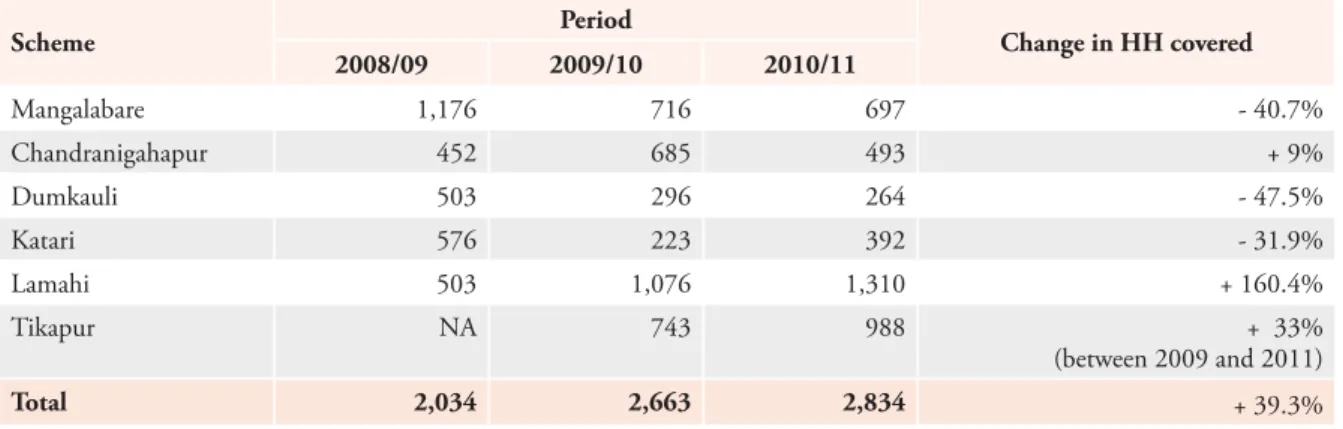
Table 10: Coverage of public CBHI schemes and number of households subsidised 33 Table 11: Change in number of households covered by public CBHI schemes (2008–2011) 34
Table 12: Coverage of private CBHI schemes 34
Table 13: Premiums and subsidies in public CBHI schemes (FY 2010/11) 37 Table 14: Subsidised households in public CBHI schemes 39
Table 15: Premiums in private CBHI schemes 41
Table 16: Comparative health service utilisation rate (excluding referral services) for public
CBHI schemes for members and non-members (FY 2010/11) 42 Table 17: Comparative health service utilisation rate (excluding referral services) for private
CBHI schemes for members and non-members (FY 2010/11) 43 Table 18: Share of providers’ services accounted for by public CBHI
schemes (FY 2010/11) 45
Table 19: Share of providers’ services accounted for by private CBHI schemes (FY 2010/11) 45 Table 20: Financial viability indicators for public CBHI schemes (FY 2010/11) 54 Table 21: Financial viability indicators for private CBHI schemes (FY 2010/11) 55
List of Figures
Figure 1: Nepal’s approximate position on the three axes of WHO’s universal coverage
framework 12 Figure 2: Health services provided free of cost 13 Figure 3: Membership composition by ethnicity in public and private CBHI schemes
(FY 2011/12) 35
Figure 4: Subsidised households in public CBHI schemes 40 Figure 5: Service utilisation rate of members and non-members in public and private
CBHI schemes 41
Figure 6: Share of providers’ income (%) accounted for by public (p) and private (P)
CBHIs (FY 2010/11) 44
Figure 7: Share of health services (%) accounted for by public (p) and private (P) CBHI
schemes (FY 2010/11) 45
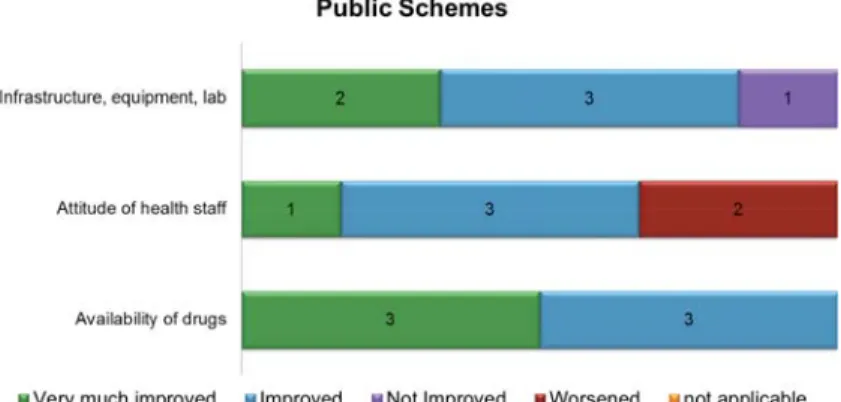
Figure 8: Perceived improvement in public health care facilities from the perspective of
CBHI management since implementation of the scheme 46 Figure 9: Perceived improvement in private health facilities from the perspective of the
CBHI management since implementation of the scheme 48 Figure 10: Claims ratio (%) in public schemes (assuming that all members pay full premium)
(FY 2010/11) 54
Figure 11: Average claim value (NPR) in public schemes (FY 2010/11) 55 Figure 12 Average claims ratio (%) in private schemes (FY 2010/11) 56 Figure 13: Average claim value (NPR) in private schemes (FY 2010/11) 56
ANC antenatal care
BPKIHS BP Koirala Institute of Health Sciences
CBHI community-based health insurance
CBS Central Bureau of Statistics
CHD Child Health Division
CT computed tomography
DDC district development committee
DEPROSC Development Project Service Center
FCHV female community health volunteer
FGD focus group discussion
FHD Family Health Division (of the Department of Health Services)
FY fi nancial/fi scal year
GEFONT General Federation of Nepalese Trade Unions
GIZ Deutsche Gesellschaft für Internationale Zusammenarbeit (formerly GTZ)
GTZ German Technical Cooperation (now GIZ)
HH household
HIMAL Health Insurance Models Activation and Levelling-up
HP health post
HSSP Health Sector Support Programme
ICU intensive care unit
INGO international non-governmental organisation
ILO International Labour Organization
KOICA Korea International Cooperation Agency
MBBS Bachelor of Medicine, Bachelor of Surgery (doctor)
MoF Ministry of Finance
MoHP Ministry of Health and Population
MRI magnetic resonance imaging
NGO non-governmental organisation
NICU Neonatal Intensive Care Unit
NPR Nepali rupee
PHC primary health care
PHCC primary health care centre
PHCRC Primary Health Care and Resource Center
PHCRD Primary Health Care Revitalization Division
PNC postnatal care
PHECT Public Health Concern Trust
RTI Research Triangle Institute
SCIH Swiss Centre for International Health
SHP sub health post
STEP Strategies and Tools against Social Exclusion and Poverty
TB tuberculosis
TPH Tropical and Public Health Institute
operated (public) and private. Provider-based health insurance was introduced in Nepal in 2003 as six pilot schemes. In parallel, some privately-operated CBHI schemes have been established and are supported by non-governmental organisations (NGOs) and cooperatives. CBHI schemes in Nepal complement a number of specialised programmes of the Government of Nepal for improving people’s access to health care services.
Renewed interest in a contributory insurance mechanism arose in January 2012 when a directive was sent by the Prime Minister’s Offi ce to the Ministry of Health and Population (MoHP) directing the Ministry to formulate and implement a “health insurance policy for all Nepalis”. However, the only experience the Ministry has in operating health insurance mechanisms is from the six pilot schemes it is running. Against this background, there is a great need to understand Nepal’s experience in implementing health insurance and to assess the role that government-supported CBHI schemes play in the current health fi nancing system in Nepal, as well as their possible future role.
In this study, existing CBHI schemes were analysed using a number of common standards and indicators (e.g., coverage, resource generation, pooling and purchasing, quality of delivered health services, patient satisfaction) and by looking at the contribution of CBHI schemes to health care fi nancing in the main areas of universal coverage (fi nancial protection, services covered, population covered). Specifi c attention was given to determining whether or not CBHI schemes improve their members’ access to health services and the quality of health care, and are technically and fi nancially viable.
Th e study revealed the following about private and public CBHI schemes:
Benefi t packages: In general, both private and public CBHI schemes provide members with access to health services beyond those covered by the government’s Free Health Care programme. Th ere is no clear diff erence between private and public schemes in terms of the content of their benefi t packages.
Coverage: CBHI schemes have achieved very limited coverage of the population. As all public schemes are facility-based, their geographical coverage is generally limited to the working area of that particular facility. However, even within their catchment area an average of only 3.4 per cent of the population are covered, which demonstrates the low range of infl uence of these schemes. Th e coverage rate of the six private schemes sampled is even lower at 2.7 per cent.
Membership composition and poverty orientation: Th e study found that disadvantaged groups (Dalits, disadvantaged janajatis, disadvantaged non-Dalit Terai caste groups) enrol more in public CHBI schemes (constituting 53 per cent of members) than in private ones (26 per cent of members). Th is refl ects the subsidy infl ow into public schemes linked to the number of poor families enrolled.
Enrolment: Enrolment in both public and private CBHI schemes is done through local motivators, female community health volunteers (FCHVs) and management committee members. Targets for enrolment are set in the public schemes, but hardly achieved.
of their running costs. Th e study found that there is no consistency in the proportion of members subsidised in the six public CBHI schemes. Th e mechanism for providing a lump-sum subsidy in public CBHI schemes does not provide any incentive to increase the number of poor families enrolled beyond the target of 30 per cent. To the contrary, with each additionally enrolled family the subsidy per family is reduced. Private schemes do not have provisions for subsidising premiums based on socioeconomic conditions. Some discounts are granted at the time of renewal of membership for clients who wish to re-enrol, but not for socioeconomic reasons.
Utilisation of health services: Th e survey found that the overall utilisation rate for health services among members of a CBHI scheme is higher than among non-members, regardless of whether it is a public or private scheme. Th ese fi ndings indicate that CBHI schemes do in fact off er fi nancial protection to their members, which enables them to use health services more often than non-members. How much this higher utilisation constitutes an ‘over-utilisation’ requires further investigation.
Quality of health care: Th e survey found that the quality of health care provided to CBHI members, mainly in the public health facilities, is in line with the capacity and infrastructure of the health facility. Th ere is no positive discrimination in facilities towards CBHI members. Th e same services are available to both insured and non-insured patients. Th e chances of improving the quality of health care through the negotiation power of health care purchasers is virtually nil as there is no purchaser-provider split in public CBHI schemes. In private schemes, the coverage of CBHI members among the population in the catchment area and their weight in terms of the total number of clients of the facility is low. Th erefore, the infl uence of private CBHI schemes on health care providers is very limited.
Technical effi ciency: Accounts and record keeping systems are manual in all public CBHI schemes. Public schemes do not have any fi nancial or administrative guidelines for properly implementing CBHI activities. Only two schemes (Mangalabare and Tikapur) had their accounts audited in the last fi scal year (2010/11). None of the public schemes have supervision and monitoring mechanisms in place, but CBHI management committees were found to be actively involved in CBHI activities. Public CBHI schemes have not sought any legal identity because they were initiated by the Government of Nepal. CBHI management committees have been formed in four out of the six public CBHI schemes. In Tikapur and Chandranigahapur, facility management committees look after the CBHI scheme. CBHI staff and committee management members have not undergone any specifi c health insurance or management training, and their capacity is variable and usually limited. In the best case, the CBHI staff had been exposed to other CBHI schemes during fi eld visits. None of the CBHI schemes have a human development plan. Human resources available in public CBHI schemes are limited, and most CBHI activities are undertaken by health facility staff .
In cooperative-initiated schemes, the executive board of the cooperative is responsible for insurance activity; there is no separate insurance management committee. In other private CBHI schemes, the health facility operation and management committee (HFOMC) is in charge of health insurance
Th e analysis reveals weaknesses in the management systems of both private and public schemes. All schemes would benefi t from rigorous technical support to develop into technically viable organisations.
Financial effi ciency: Most CBHI schemes do not have any data to monitor their fi nancial viability. Th ey are, for example, not aware of their operating expenses as expenses are not necessarily allocated to the operation of the scheme (i.e., in most cases expenses such as salaries and offi ce rent are provided by the host health facility and are not specifi cally allocated to the CBHI schemes). For the ones that know their operating expenses, the incurred expense ratio (incurred expenses/earned premium) is very high.
For public schemes, being by nature embedded within health care facilities, total operating expenses could not be assessed because a signifi cant part of the resources that they use are not disaggregated. Th erefore, the study used the claims ratio (claims/earned premium)1 as a proxy for fi nancial viability.
A claims ratio of 100 per cent would indicate that all of the premiums earned are paid out by the CBHI in the settlement of claims. Th e study found the claims ratio was generally above 100 per cent, ranging from 47 per cent to 386 per cent, with an average of 129 per cent. Th ese fi gures indicate that these schemes are not fi nancially viable in the mid- and long-term because claims paid exceed premiums earned.
As all public schemes are subsidising some of their members, the premium income used for the calculation of the claims ratio is distorted. Th erefore, the claims ratio for all public schemes was analysed ignoring subsidies and assuming that all the members paid the full premium. Even in this case, the claims ratios of three public CBHI schemes were signifi cantly higher than 100 per cent. Th ese schemes are clearly not fi nancially viable. Only Mangalabare and Katari are currently viable from a claims perspective, with claims ratios below 60 per cent. However, the capacity of these schemes to cover their other unallocated running costs is questionable.
Th e government grant premium ratio (the amount of the annual government grant per enrolled household divided by the annual premium paid by the household) rangesfrom 1.3 in Mangalabare to 5.2 in Dumkauli. As this ratio is always above one the data shows that CBHI schemes are receiving less from premiums paid by member households than what they receive from the government in annual grants.
For private CBHI schemes, claims ratios vary a lot depending on the scheme, ranging from 13 in Saubhagya to 363 in the Primary Health Care and Resource Center (PHCRC) at Chapagaun; this refl ects the diff erent levels of management capacity. Th e average claims ratio is 189.5 per cent. A
1 However, it must be noted that the study team was not able to use the actual ‘earned premium’ as the schemes have not set up the change in ‘unearned premium reserve’; hence, the written premium was used. Th e same applies to claims: actual ‘incurred claims’ could not be used because the schemes have not set up the change in ‘incurred but not reported claims’ (IBNR –the estimated change in claims that have happened during the accounting period but are not reported yet), nor the ‘claims in course of settlement’ (CICS – the estimated change in claims that are reported but still in process); hence, the study
In conclusion, the analysis of community-based health insurance schemes in Nepal shows that their scope and impact is very limited. In the view of the evaluation team, community-based health insurance, the way it is currently being implemented, does not look promising in terms of building a comprehensive, equitable, empowering and sustainable social health insurance system in Nepal, particularly as CBHI schemes do not have a strong support structure at a higher level (such as at the district level). Th is conclusion is based on the observations that the CBHI schemes in their present structure:
• have an extremely low coverage of the population
• are not able to provide equitable protection for the poor against health-related costs
• do not provide an effi cient ‘voice’ mechanism for articulating the interests of the insured population to health care providers
• are not fi nancially viable or their fi nancial viability is not known
Achieving high coverage of the population: Th e coverage achieved by the CBHI schemes assessed in this study is extremely low, with an enrolment of 3.4 per cent of their catchment area population for public schemes and 2.7 per cent for private schemes. Th e reasons for such a low enrolment rate must be sought in the limited capacity of schemes that are based on only one health facility (public schemes) or on a small group of motivated individuals (private schemes). Such isolated local CBHI schemes are unable to provide suffi cient management and human resource capacities to achieve a signifi cant impact on the population. A stronger organisational backbone is required to ensure the fulfi lment of the basic functions of health insurance, including suffi cient capacity for awareness creation, membership enrolment, membership administration and claims administration. A more promising approach than isolated local CBHI schemes would be to build up a scheme based on at least a whole district (and maybe even integrated at a provincial or national level) or to provide decisive central support functions to local CBHI schemes from the district level.
Ensuring equitable protection of the poor: Th e available data points to some success in enrolling members of disadvantaged groups in CBHI schemes, especially in public schemes. While in public schemes, 54 per cent of the members belong to marginalised groups, in private schemes this proportion is considerably less at 26 per cent of total members. However, existing CBHI schemes fail to provide solutions that would enable equitable access by the poor due to lack of a fair identifi cation mechanism for enrolling the poor into the scheme and lack of a fair funding mechanism for paying insurance premiums for those who cannot aff ord.
Public schemes do provide subsidies for enrolling poor families into the schemes, as opposed to private schemes. While this is certainly an advantage and an achievement to a limited degree, the identifi cation and enrolment of the poor is completely arbitrary and does not follow any established criteria. In addition, the present system provides no incentive for increasing the enrolment of poor
targeted premium subsidies for the poor, and to create incentives for increasing the enrolment of the poor by linking fund transfers to the number of poor households enrolled.
Building up an effi cient ‘voice’ mechanism: An advantage of a health insurance system is the creation of a ‘voice’ mechanism whereby the health insurance represents the interests of the insured towards the health care providers. In the schemes assessed, only the private CBHI schemes fulfi l the criterion of a purchaser-provider split. Th e public schemes do not have this split, as public health insurance schemes are hosted and operated by the health care provider. In such a constellation, an independent articulation of the interests of members of the scheme is hardly possible. However, to a limited extent, some ‘voice’ mechanisms have been established in these schemes. Membership assemblies may fulfi l such a role to a very limited degree. In order to build up an effi cient ‘voice’ mechanism in a future social health insurance system a purchase-provider split is recommended. Separate institutional entities should represent the interests of the clients (insured persons) and those of the providers of health care.
Ensuring fi nancial viability: Th e study found that the existing CBHI schemes are either not fi nancially viable or their fi nancial viability is not known, as there are no suitable monitoring instruments in place to measure fi nancial viability. An evaluation of the claims ratio shows that the medical-related expenses of the majority of both public and private schemes are much higher than the premium income collected by the schemes.
In public schemes, the use of government resources by the insurance schemes (personnel from other bodies fulfi lling insurance management functions, use of government premises, electricity, transport, etc.) is not clearly recorded and, therefore, does not allow a precise inclusion of such costs in the calculation of the incurred expense ratio. Th e data collected on the claims ratio indicate low fi nancial viability. Th e mere fact that the schemes have no overview of their incurred expenses and are not able to monitor their own performance is a problem in itself.
Any future social health insurance system would have to ensure fi nancial viability. As already mentioned above, a health insurance system does not have to rely on premium income alone. Government contributions (in eff ect premium income funded by government budgets) may complement members’ premium payments. Th is, however, needs a transparent and long-term orientation, ideally linked with the funding of membership for poor and needy population groups. To sum up, considering the weak results achieved by the CBHI schemes assessed for this study in terms of population coverage and fi nancial viability, the CBHI approach does not seem to be the most promising for realising equitable access to health services towards universal coverage. Isolated, localised CBHI schemes, as presently implemented in Nepal, do not constitute a model on which national health insurance could be successfully built in Nepal. In the view of the evaluation team, CBHI schemes should be considered a transitional solution while the government develops a stronger and more comprehensive national health insurance system.
provide strong support functions – and possibly a pooling mechanism – at the district level for local CBHI schemes.
Background and policy environment
In recent years, the Government of Nepal has prioritised improving people’s access to health care services. Th e government’s commitment to health is refl ected in the increased health sector budget. Th e expenditure of the Ministry of Health and Population (MoHP) has increased in relation to total government expenditure from 4.5 per cent (32.9 billion) in 2004/05 to 6.1 per cent (52.5 billion) in 2009/10 (MoHP 2011b; MoF 2012b). In additional, various programmes have been introduced that provide health services free of costs to all (e.g., the Safe Motherhood Programme, which was introduced in 2005, and the Free Health Care programme, which was introduced in 2007). Despite this, private sector spending on health remains high. According to the latest National Health Accounts estimate, private households bear more than half of the expenditure on health in the form of out-of-pocket payments (55 per cent in 2008/09) (MoHP 2012). Th is represents a worrisome gap in fi nancial protection as direct payments for health services can lead to impoverishment and be a barrier to access for those in need of medical attention.
Moreover, direct payments for health services in Nepal are unregulated and often high-priced or for unnecessary care. How to protect people from catastrophic health care spending and tap into the large amount of unregulated out-of-pocket payments being made by private individuals have been topics of intense discussion in Nepal in recent times. Th e Second Long Term Health Plan 1997– 2017 proposes alternative health sector fi nancing mechanisms including “community fi nancing schemes and income generation at public facilities” to complement funding from the public sector and assistance from development partners (MoHP 1997). Accordingly, in 2003/04, the MoHP introduced provider-based health insurance schemes in two districts (Nawalparasi and Morang) as a pilot programme for community-based health insurance (CBHI). Four more districts were added in 2005/06 (Udayapur, Rautahad, Dang, Kailali), bringing the total number of pilot districts to six. Th e benefi t packages of these schemes include consultation fees, diagnostics services, inpatient care and the cost of medicines available at the health care facilities involved.
However, only a few years later in 2007, the Government of Nepal introduced the Free Heath Care programme, making all services up to primary health care centre (PHCC)level and 35 medicines free for everybody, as well as covering the cost of services provided by district hospitals for six target groups (poor, ultra poor, female community health volunteers, senior citizens above 60 years old, helpless and disabled). Th e introduction of the Free Health Care Programme posed a serious challenge to some existing programmes such as the Community Drug programme (which aimed at ensuring the availability of essential drugs at government health facilities up to district hospital level)2 and government-supported CBHI schemes. Government-supported CBHI schemes adapted
by expanding their benefi t package beyond what is covered by the Free Health Care programme and by including referral services.
2 Th e Community Drug Programme, introduced in 1995, was mainly aimed at ensuring the availability of essential drugs at government health facilities up to the district hospital level (sub health posts, health posts, primary health care centres and district hospitals). Under this programme, government facilities maintained a pharmacy within the premises of the health facility for which the government provided an initial revolving fund. While charging a reduced price (compared to market price) to patients, facilities were able to generate revenue to restock the drug revolving fund and maintain a drug sales outlet within the facility.
Despite all the contextual changes, no thorough evaluation of these schemes ever took place. Th e possibility of scaling up these pilots to improve access to health services in Nepal came up frequently in policy debates, but very little information is available on how these schemes are running. In the end, the pilots were never scaled up or integrated into a broader system – nor were they abolished. Renewed interest in a contributory insurance mechanism has arisen since January 2012 when a new directive was sent from the Prime Minister’s Offi ce to the Ministry of Health and Population directing it to formulate and implement a “health insurance policy for all Nepalis” (MoF 2012a). However, the only experience the Ministry has in health insurance mechanisms is from implementing the six pilot schemes.
Rationale of review
Against this background, there is a need to understand Nepal’s experience in implementing health insurance and assess the role that government-supported CBHI schemes play in the current health fi nancing system, as well as what their future role could be. In order to complement the picture and to take into account the growing number of private schemes, for which the Ministry of Health and Population still has to develop a regulatory framework, the review also covers six private schemes. However, these six private schemes only off er a snapshot of the situation of private CBHI schemes in Nepal and are not representative as such.
Reviewing the CBHI schemes in Nepal has become even more relevant in recent years as the role of community-based health insurance (also known as micro-insurance) schemes has been critically reviewed in the international literature (ILO-STEP 2002; Jakob and Krishnan 2012). Overall, there has been a shift to assess CBHI schemes not only on their individual performance (equity, sustainability, effi ciency), but also on their role and contribution to the overall health fi nancing system and its objectives. Evidence suggests that the population coverage of these schemes has remained low and that the most vulnerable households are not usually covered. Th us, most CBHI schemes have small risk pools and limited cross-subsidies (McIntyre et al. 2005).
Th is review, therefore, aims to take a broader system perspective in order to:
• assess the contribution of CBHI schemes to health care fi nancing in the main areas of universal coverage (fi nancial protection, services covered, population covered)
• assess CBHI performance against the common standards (coverage, resource generation, pooling and purchasing, quality of delivered health services, patient satisfaction)
• provide recommendations for the improvement of CBHI schemes within the context of the current health care fi nancing landscape and policy developments
Structure of report
Chapters 1 and 2 of the report set out the objectives and methodology of the study, followed by an overview of the health fi nancing system in Nepal in Chapter 3. Chapter 3 presents the various programmes of the Government of Nepal that provide health services free of charge to target population groups. Th e background and history of CBHI schemes is then briefl y discussed. Th e fi ndings of the review of the 12 CBHI schemes (6 public and 6 private) are presented in Chapter 4. Th ree questions are asked:
• Do the schemes improve the access of the population to health services? • Is the quality of care is being improved through the schemes?
• Are the schemes operationally, technically and fi nancially viable and, therefore, sustainable? Access to health services (fi rst question) is analysed using a number of elements. Firstly, the benefi t packages off ered by the CBHI schemes are discussed to give an overview of the kind of services provided to members. Th e quantitative relevance of CBHI schemes is assessed by looking at the number of members and households covered by schemes as a proportion of the total population. Th e membership composition of public and private schemes is compared to determine the poverty orientation of the schemes. Th e premiums charged and the subsidisation provided by the government are also analysed to give an additional indication of whether or not members access to health care has been improved. Finally, the contribution of the schemes to increasing utilisation of health services is analysed.
Th e impact of CBHI schemes on the quality of health services (second question) is determined by looking at the negotiating power of the CBHI with the health care provider and any ‘voice’ mechanisms that have been built up for the insured population to express its interests to the provider. Th e technical and fi nancial viability of schemes (third question) is assessed by looking at the management set-up and various standard indicators. Due to the weak availability of fi nancial data, the claims ratio is used to assess fi nancial effi ciency.
Chapter 5 presents the conclusions and next steps. It discusses four aspects of building a national health insurance system: achieving high coverage, ensuring equitable protection of the poor, building up an effi cient voice mechanisms and ensuring fi nancial viability. Finally, some principal considerations are pointed out to guide the way forward.
Desk study and
fi
eld study
Th e review of CBHI schemes in Nepal was conducted mainly by way of a fi eld study, which was supported by a desk study. Th e desk study was conducted to analyse policy documents and implementation guidelines (such as the national Free Health Care programme operational guidelines, MoHP 2009, and the CBHI operational booklet, HEFU 2007),as well as project and programme reports and papers published in international reviews. In order to understand the role of government-supported and private CBHI schemes in the overall health fi nancing system in Nepal. Th e results of this desk study are set out in Chapter 3.
Th e fi eld study of the 12 CBHI schemes was conducted between 23 October 2011 and 19 January 2012. In preparation for the fi eld study, a list of schemes to be reviewed was made and data collection tools selected. Both were shared with the relevant partners – including the Primary Health Care Revitalization Division (PHCRD) of the MoHP, Health Sector Support Programme (HSSP) of MoHP-GIZ, World Bank, World Health Organization (WHO), and concerned NGOs such as the Health Insurance Models Activation and Levelling-up (HIMAL) project (a collaboration between the MoHP and the Korea International Cooperation Agency – KOICA), Public Health Concern Trust Nepal, Karuna Foundation Nepal and Save the Children – and agreed upon before commencement of fi eld work. A list of partners involved in the preparation meetings held in September and October is attached in Annex 2. Th e data collection tools were revised after the fi rst fi eld visit. Twelve schemes were then selected for review (six public and six private). Th e results of the fi eld study are set out in Chapter 4.
Selection of schemes
All of the existing six government-supported CBHI schemes were included in the review (Table 1).
Name
(in operation since)
Development region District
1 Lamahi Primary Health Care Centre (2006) Mid Western Dang (semi urban) 2 Tikapur Hospital (2006) Far Western Kailali (urban) 3 Mangalabare Primary Health Care Centre (2004) Eastern Morang (rural) 4 Dumkauli Primary HealthCareCentre (2004) Western Nawalparasi (rural) 5 Chandranigahapur Primary Health CareCentre (2006) Central Rautahat (rural)
6 Katari Hospital (2006) Eastern Udayapur (urban)
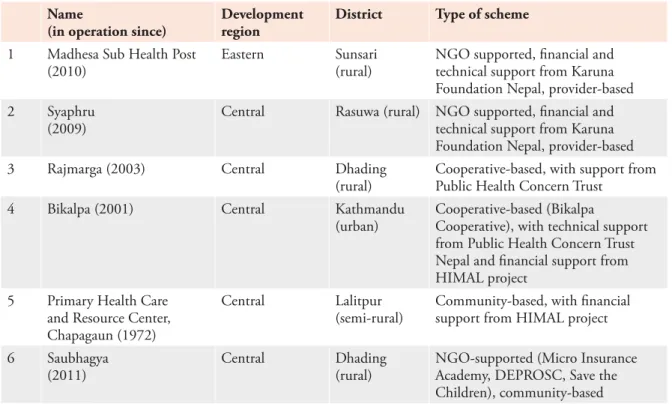
Th e selection of private schemes for review was done in a consultative way with MoHP offi cials and other agencies involved in the implementation of CBHI schemes, such as the Public Health Concern Trust and the Karuna Foundation Nepal (see Annex 2). After a preliminary stock take of existing and known CBHI initiatives, selection of private schemes was done using the criteria presented in Table 2.
Table 2: Selection criteria for private CBHI schemes
Criteria Specifi cation
Geographic location Representation from each of the ecological belts (Terai, hills, mountains), as well as from both urban and rural settings
Implementation modality Representation of independently running, cooperative-based schemes and schemes supported by external developmentpartners
Number of years of operation At least two-years operation (except Saubhagya, which has only been operat-ing for one year but was selected because the community involvement in overall design of the scheme was considerable higher than in any of the other schemes)
As a result, the following private schemes were selected:
Table 3: Private CBHI schemes reviewed
Name
(in operation since)
Development region
District Type of scheme
1 Madhesa Sub Health Post (2010)
Eastern Sunsari (rural)
NGO supported, fi nancial and technical support from Karuna Foundation Nepal, provider-based 2 Syaphru
(2009)
Central Rasuwa (rural) NGO supported, fi nancial and technical support from Karuna Foundation Nepal, provider-based 3 Rajmarga (2003) Central Dhading
(rural)
Cooperative-based, with support from Public Health Concern Trust
4 Bikalpa (2001) Central Kathmandu (urban)
Cooperative-based (Bikalpa
Cooperative), with technical support from Public Health Concern Trust Nepal and fi nancial support from HIMAL project
5 Primary Health Care and Resource Center, Chapagaun (1972)
Central Lalitpur (semi-rural)
Community-based, with fi nancial support from HIMAL project 6 Saubhagya
(2011)
Central Dhading (rural)
NGO-supported (Micro Insurance Academy, DEPROSC, Save the Children), community-based
Survey tools
Several tools were developed to collect qualitative and quantitative data to assess the role of CBHIs within the health system and their performance. Th ese tools were shared with the study partners before the fi rst fi eld visit and revised and adapted after initial fi eld testing in Morang district. Th e following tools were used in this review:
• questionnaire for health provider management • questionnaire for CBHI management committee
• interview guides for three focus group discussions (FGDs): CBHI members (2 sub-groups: subsidised members and non-subsidised members), CBHI drop-outs and non- members • the ‘factsheet’ developed by the Micro Insurance Network was used to collect fi nancial data Th ese tools aimed at capturing information in six main areas:
• institutional/legal arrangements of the schemes
• relationships between the schemes and health providers • management tools and control systems used by the CBHI • contents of benefi t package
• membership and premium mechanisms • fi nancial data (income/expenses) of the scheme
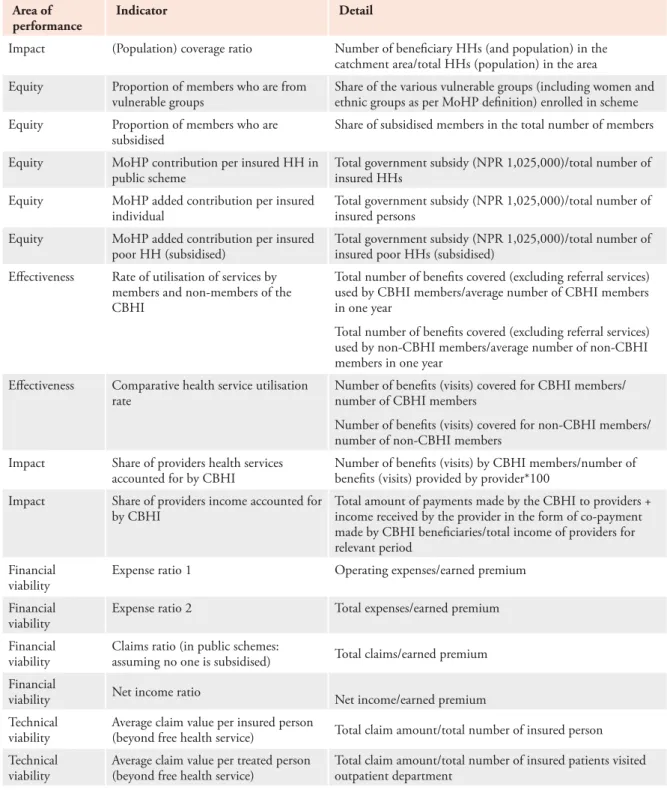
Participants of the FGDs were selected randomly using the CBHI schemes’ member registries. Based on the data collected, wherever data availability and quality allowed, performance indicators were calculated to compare the 12 schemes. Th e indicators applied are standard indicators for assessing the technical, fi nancial and administrative viability of CBHI schemes as defi ned by ILO Strategies and Tools against Social Exclusion and Poverty (STEP) (ILO 2007) and the Micro Insurance Network (Performance Working Group) (Garand and Wipf 2010).
Th e role of CBHI schemes in the health system was assessed using indicators covering the three dimensions of universal coverage: population covered, services covered and fi nancial protection ( Table 4).
Table 4: CBHI indicators used
Area of performance
Indicator Detail
Impact (Population) coverage ratio Number of benefi ciary HHs (and population) in the
catchment area/total HHs (population) in the area
Equity Proportion of members who are from
vulnerable groups
Share of the various vulnerable groups (including women and ethnic groups as per MoHP defi nition) enrolled in scheme
Equity Proportion of members who are
subsidised
Share of subsidised members in the total number of members
Equity MoHP contribution per insured HH in
public scheme
Total government subsidy (NPR 1,025,000)/total number of insured HHs
Equity MoHP added contribution per insured
individual
Total government subsidy (NPR 1,025,000)/total number of insured persons
Equity MoHP added contribution per insured
poor HH (subsidised)
Total government subsidy (NPR 1,025,000)/total number of insured poor HHs (subsidised)
Eff ectiveness Rate of utilisation of services by members and non-members of the CBHI
Total number of benefi ts covered (excluding referral services) used by CBHI members/average number of CBHI members in one year
Total number of benefi ts covered (excluding referral services) used by non-CBHI members/average number of non-CBHI members in one year
Eff ectiveness Comparative health service utilisation rate
Number of benefi ts (visits) covered for CBHI members/ number of CBHI members
Number of benefi ts (visits) covered for non-CBHI members/ number of non-CBHI members
Impact Share of providers health services accounted for by CBHI
Number of benefi ts (visits) by CBHI members/number of benefi ts (visits) provided by provider*100
Impact Share of providers income accounted for by CBHI
Total amount of payments made by the CBHI to providers + income received by the provider in the form of co-payment made by CBHI benefi ciaries/total income of providers for relevant period
Financial viability
Expense ratio 1 Operating expenses/earned premium
Financial viability
Expense ratio 2 Total expenses/earned premium
Financial viability
Claims ratio (in public schemes:
assuming no one is subsidised) Total claims/earned premium Financial
viability Net income ratio Net income/earned premium
Technical viability
Average claim value per insured person
(beyond free health service) Total claim amount/total number of insured person Technical
viability
Average claim value per treated person (beyond free health service)
Total claim amount/total number of insured patients visited outpatient department
Limitations
Th is review of the 12 CBHI schemes is based on observations and interviews with key informants at the district level in health facilities, CBHI schemes and supporting organisations in 11 districts in the Eastern, Western and Central development regions of Nepal (Sunsari, Rasuwa, Dhading, Kathmandu, Lalitpur, Dang, Kailali, Morang, Nawalparasi, Rautahat and Udayapur). While the study reviewed all existing government-supported CBHI schemes, only a small proportion of private schemes were included in this study and this sample does not necessarily refl ect the large variation of situations in Nepal.
Primary data collection at facilities and schemes or supporting NGOs was constrained by the availability and quality of information from their information systems. Th is in turn limited the number of indicators for which data could be collected and explains why the same indicators are not used for all schemes.
Government-operated schemes are, by nature, embedded within the health care facilities that host them. Total operating expenses for these schemes could not be assessed because a signifi cant part of their resources are provided by their host facility and are not recorded or disaggregated. Costs such as the salary and benefi ts of health care facility staff partly involved in the CBHI, offi ce expenses (the host health care facility makes one room available to the CBHI) and equipment costs (the use of vehicles, offi ce materials and furniture of the health care facility) are borne by the host facility and not allocated to the CBHI scheme. Other expenses of running the CBHI are paid directly by the health facility and consist of costs related to communication activities (social mobilisation, radio broadcasts), the enrolment of members, premium collection, annual auditing of CBHI accounts, and incentives paid to the facility in-charge and other facility health staff for the daily management of the schemes. Medicines and other items provided by the MoHP under the Free Health Care programme are also not accounted for. Th e calculation of the operating expense ratio was, therefore, not possible, and the study used the claims ratio (incurred claims/earned premium) as a proxy for the fi nancial viability of CBHI schemes.
Health Financing
System in Nepal
Introduction
In order to understand the role of government-supported and private CBHI schemes in the overall health fi nancing system in Nepal, this chapter briefl y assesses where Nepal stands in terms of universal coverage. WHO defi nes universal health coverage as:
…access to key promotive, preventive, curative and rehabilitative health interventions for all at an aff ordable cost, thereby achieving equity in access. Th e principle of fi nancial-risk protection ensures that the cost of care does not put people at risk of fi nancial catastrophe. (WHO 2005)
WHO’s conceptual framework defi nes universal coverage in terms of a three-dimensional cube (Figure 1) with the following three axes: i) percentage of population covered/entitled; ii) benefi ts that they may avail; iii) and share of costs that will be covered. While there is consensus on the concept of universal health coverage, it is not clear at what point universal coverage is fully achieved (or not achieved) as the outer lines of the cube are always changing (e.g., as a result of new medical services and technology). Every country fi lls the cube in a diff erent way. It is up to the individual country to set targets for these dimensions and to choose among the trade-off s between services provided, people reached and cost.
Th is chapter attempts to determine Nepal’s position according to these three dimensions in order to understand the gaps and shortcomings of the current health fi nancing system and the role that CBHI schemes play in fi lling these gaps.
Pooled Funds
Source: WHO 2010
Who and what is covered?
Apart from a few government and NGO-supported insurance schemes, a small number of cooperatives and 16 private insurance companies, no mechanism is in place at the national or sub-national level in Nepal to provide health insurance to the public. However, unlike in many other developing countries, numerous government-fi nanced health services are off ered free of charge to all in public facilities and, to a limited extent, in private facilities. For example, the Safe Motherhood Programme (Aama) is implemented in 54 private facilities, profi t and not-for profi t, including medical colleges. Th is is in line with the Interim Constitution 2007, which states that “Every citizen shall have the right to basic health services free of cost from the State as provided for in the law”. While over the past few years there has been increased interest in a contributory insurance scheme, there has also been a trend to introduce government-fi nanced programmes providing services free of cost to all citizens or to target groups, the main one being the Free Health Care programme.
Th e Free Health Care programme was adopted in 2006 and provides basic health care services (inpatient and outpatient) free of cost to everyone (poor or not) at primary health care centres (PHCCs), health posts (HPs) and sub health posts (SHPs) nationwide. Th is programme also provides 22 listed medicines in SHPs, 32 in HPs, and 40 in PHCCs as well as district hospitals free of cost to all. As an extension of the Free Health Care programme, at district hospitals all available services (outpatient, inpatient and emergency services) are provided free to target groups (poor, ultra poor, helpless, disabled, senior citizens above 60 years of age and female community health volunteers). Th ese services include consultations and treatment, minor surgery, emergency obstetric care (either comprehensive or basic), x-rays and laboratory services.
In addition to the Free Health Care programme, a number of treatment and disease specifi c programmes provide free services to the whole population. Some of these programmes strengthen the demand for health services by providing cash transfers to benefi ciaries and incentives to health care providers through specifi c payment methods. Th e following are some examples:
• Th e Safe Motherhood Programme, which has been implemented in its full form since 2009, provides delivery services free of cost from the public and 54 not-for-profi t facilities. In addition, cash incentives, ranging from NPR 500 in the Terai to NPR 1,500 in mountain areas, are provided to mothers who receive delivery services under the programme.
• Th e Antenatal Care Programme, which started in 2009, provides NPR 400 to women upon completion of four antenatal care (ANC) visits and one postnatal care (PNC) visit at a district or sub-district level health facility (district hospital, PHCC, HP, SHP).
• Since 2009, the Uterine Prolapses Treatment Programme has been providing universal free treatment services to women requiring surgery for uterine prolapse, as well as cash incentives, which range from between NPR 1,000 in the Terai to NPR 3,000 in mountain areas.
Besides these universally available programmes, there are a number of programmes targeting certain population groups.
• Th e Referral Support Programme provides cash incentives of up to NPR 8,000 for deprived, helpless, disabled, underprivileged, pregnant women, and patients with tuberculosis, AIDS and psychiatric illnesses.
• Underprivileged patients (to be defi ned by the district level committee) can also receive a once-off payment of NPR 50,000 for the treatment of cancer or for heart, kidney, Alzheimer’s and Parkinson’s diseases.
• People above 75 or below 15 years of age are also eligible for free health care services from specifi ed facilities (e.g., Manamohan Cardiovascular Centre and National Kidney Centre) for the treatment of heart and kidney diseases. Th e government provides conditional grants to these facilities for this purpose.
• Similarly, victims of the peoples’ movement and confl ict can obtain treatment from public facilities (mainly regional and central hospitals) free of cost, for which the MoHP reimburses the facility.
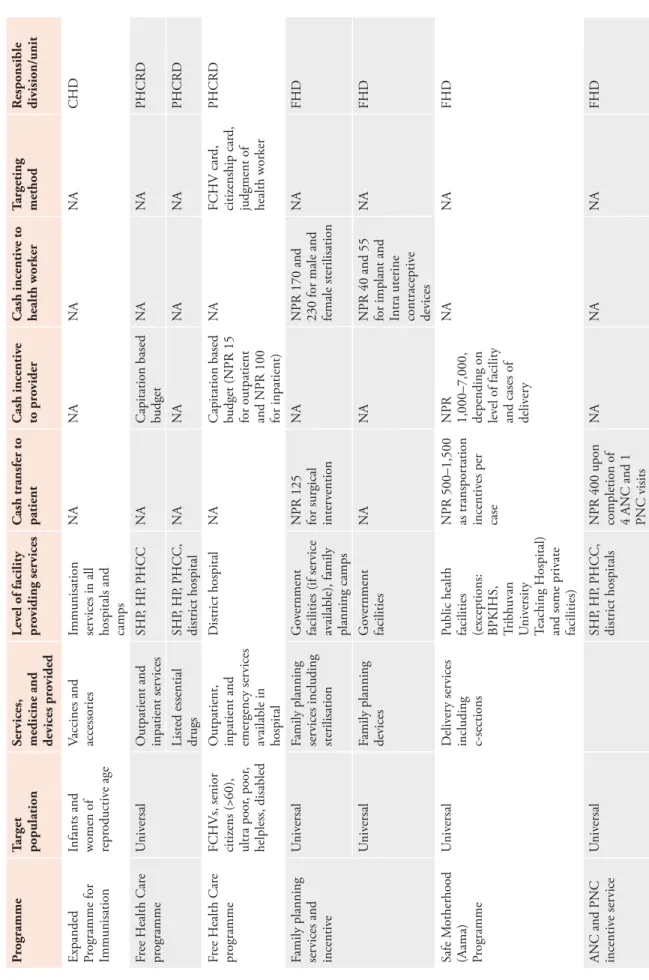
Th rough vertical programmes, a number of free services including medicines and devices are also provided free of cost for family planning, immunisation and selected diseases such as TB, HIV/ AIDS and leprosy. A list of all government-fi nanced programmes is set out in Ta b le 5.
T able 5: G o ve rnment-fi nanced health pr ogrammes pr o viding fr ee of cost ser vices P rogramme T arget population S er vices,
medicine and devices pr
o vided Lev el of facility pr o viding ser vices C ash transfer to patient C ash incentiv e to pr o vider C ash incentiv e to health wor ker T argeting method R esponsible division/unit E xpanded P
rogramme for Immunisation Infants and women of repr
oductiv e age V accines and accessories Immunisation ser vices in all
hospitals and camps
NA NA NA NA CHD F ree H ealth Car e pr ogramme U niv ersal O utpatient and inpatient ser vices SHP , HP , P HCC NA
Capitation based budget
NA
NA
P
HCRD
Listed essential drugs
SHP , HP , P HCC, district hospital NA NA NA NA P HCRD F ree H ealth Car e pr ogramme FCHVs, senior citiz ens (>60), ultra poor , poor , helpless, disabled O utpatient,
inpatient and emergency ser
vices av ailable in hospital D istrict hospital NA
Capitation based budget (NPR 15 for outpatient and NPR 100 for inpatient)
NA FCHV car d, citiz enship car d,
judgment of health wor
ker
P
HCRD
F
amily planning services and incentiv
e
U
niv
ersal
F
amily planning services including sterilisation
G
ov
ernment
facilities (if ser
vice
av
ailable), family
planning camps
NPR 125 for surgical inter
vention
NA
NPR 170 and 230 for male and female sterilisation
NA FHD U niv ersal F
amily planning devices
G ov ernment facilities NA NA
NPR 40 and 55 for implant and Intra uterine contraceptiv
e devices NA FHD Safe M otherhood (Aama) Programme U niv ersal D eliv er y ser vices including c-sections P
ublic health facilities (exceptions: BPKIHS, Tribhuv
an U niv ersity T eaching H ospital)
and some priv
ate facilities) NPR 500–1,500 as transpor tation incentiv es per case NPR 1,000–7,000, depending on lev el of facility
and cases of deliv
er
y
NA
NA
FHD
ANC and PNC incentiv
e ser vice U niv ersal SHP , HP , P HCC, district hospitals
NPR 400 upon completion of 4 ANC and 1 PNC visits
NA
NA
NA
P rogramme T arget population S er vices,
medicine and devices pr
o vided Lev el of facility pr o viding ser vices C ash transfer to patient C ash incentiv e to pr o vider C ash incentiv e to health wor ker T argeting method R esponsible division/unit Scr eening and operation of uterine pr olapse pr oblems Scr eening
and surgical inter
vention
P
ublicly contracted public/priv
ate facilities NPR 1,000– 3,000 as transpor tation allo wances for
those having a surgical inter
vention
NPR 15,000 per surgical case (additional NPR 3,000– 7,000 per case for ser
vices thr ough camps) NA NA FHD
Community- based neonatal programme
P ilot districts N eonatal car e and monitoring FCHV NA NA U p to NPR 400
per case based on per
formance
NA
CHD
R
elief for medical
tr eatment U nderprivileged Se rvices as needed H ospitals specifi ed b y M oHP NA R eimbursement to facilities NA D istrict lev el committee M oHP R eferral P rogramme D epriv ed,
helpless, disabled, underprivileged, pregnant, and patients with TB, HIV/AIDs or mental illness
R eferral ser vices within district G ov ernment referral hospitals U p to NPR
200–500 for referral within district
NA NA T o be defi ned b y r eferring health facilities P HCRD R eferral ser vices
outside district for emergency cases
U
p
to NPR
2,000–8,000 for r
eferral
outside the district
R
eferral for
complicated pregnancy/ deliv
er y P oor , D alits, depriv ed gr oups,
those having complicated cases in 14 remote districts
G ov ernment facilities P ublic r eferral hospitals D istrict lev el
committee to decide the amount
NA NA H ealth facility to defi ne FHD T reatment hear t, lungs and v alv e transplant P oor M anamohan Car dio vascular Centr e NA Conditional grant NA H ealth facility to defi ne M oHP
P rogramme T arget population S er vices,
medicine and devices pr
o vided Lev el of facility pr o viding ser vices C ash transfer to patient C ash incentiv e to pr o vider C ash incentiv e to health wor ker T argeting method R esponsible division/unit M edical tr eatment ser vices V ictims of confl ict and mar tyrs ’ families As necessar y G ov ernment facilities NA R eimbursement to facilities NA Identifi cation car d M oHP P
oor patients treatment
pr ogramme P oor F ree ey e car e ser vices N epal E ye H ospital NA Conditional grant NA H ealth facility to defi ne M oHP T
reatment for cardio
vascular pr oblems B elo w 15 and abo ve 75 y ears of age, disabled T reatment of hear t, lungs and transplant M anamohan Car dio vascular Centr e NA Conditional grant NA Citiz enship car d M oHP T
reatment for hear
t disease P oor P er cutaneous transv enous mitral commissur otomy ser vices G algalal H ear t Centr e Conditional grant H ealth facility to defi ne P
oor and vulnerable
V alv e distribution G algalal H ear t Centr e Conditional grant H ealth facility to defi ne B elo w 15 and abo ve 75 y ears of age T reatment of hear t disease G algalal H ear t Centr e Conditional grant Citiz enship car d H ear t patients D iagnostic ser vices G algalal H ear t Centr e Conditional grant T ranspor tation incentiv es for kala-azar patients Th ose using
specialised (referral) ser
vices H ealth ser vices as needed G ov ernment facilities NPR 1,500 per case NA NA NA E pidemiological
and disease contr
ol division T ranspor tation incentiv es for lepr osy patients Th ose using
specialised (referral) ser
vices H ealth ser vices as needed G ov ernment facilities NPR 1,000 per case NA NA NA Lepr osy contr ol division HIV pr ev ention and tr eatment pr ogramme N eedy people
living with HIV
HIV testing and counselling Anti-r
etr oviral therapy Anti-r etr oviral therapy sites N ational Centr e
for AIDs and S
exually
T
ransmitted Disease Contr
P rogramme T arget population S er vices,
medicine and devices pr
o vided Lev el of facility pr o viding ser vices C ash transfer to patient C ash incentiv e to pr o vider C ash incentiv e to health wor ker T argeting method R esponsible division/unit Childr en aff ected b y AIDs VDCs NPR 1,500/ month Conditional grant M edical tr eatment for specifi c diseases U nderprivileged citiz ens T
reatment for kidney
, cancer , hear t, Alzheimer ’s, P ar kinson ’s (up to NPR 50,000) Specifi ed public and priv ate hospitals NA Conditional grant NA NA M oHP F ree tr eatment
for poor and disabled patients
P
oor and disabled
T reatment of ey es N epal E ye H ospital Conditional grant M oHP Community ey e camps A b ov e 50 y ears of age P resb yopia scr eening and distribution of spectacles N etra J yoti Sangha NA Conditional grant NA NA M oHP Kidney dialysis A b ov e 75 y ears of age N ational Kidney Centr e NA
Conditional grant (reimbursement of NPR 2,500 per dialysis)
NA
NA
M
oHP
P
atients with hepatitis B or C, or HIV
Kidney dialysis N ational Kidney Centr e NA
Conditional grant (reimbursement of NPR 2,500 per dialysis)
NA NA M oHP Car e and suppor t for TB patients All TB patients H ealth ser vices as needed G ov ernment facilities NA NA NA TB Centr e M ultidr ug-resistant TB patients NPR 1,500/ month Conditional grant
While a comprehensive set of health services are provided free of cost under the current system, including cash incentives to health services users (Table 5), the programmes and activities under which these services are provided are administered by diff erent divisions and units of the MoHP and Department of Health Services, without any eff ective linkage between them. Th is fragmented approach is administratively cumbersome. It also leads to a low capacity to negotiate with providers on fees for health services and weak monitoring of health service quality.
Who is paying and what for?
Given that so many services are provided free by the government, it is astonishing that out-of-pocket expenditure is so high in Nepal. According to estimates by the National Health Accounts 2008/09, 55 per cent of total health expenditure is made directly by private individuals/households in the form of out-of-pocket payments (MoHP 2012). While little is known about the composition of these out-of-pocket payments (e.g., what it is exactly spent on, where and by whom), data from the recent National Health Accounts 2008/09 provides some indication. Th e largest proportion of out-of-pocket payments is spent on medical goods dispensed to outpatients (48.6 per cent) and curative care services (29.2 per cent). Most of this is spent in the private sector, with 47.6 per cent spent at retail sales outlets and other medical goods suppliers and 29.5 per cent in private hospitals, clinics and labs. In contrast, government facilities only received 4 per cent of total out-of-pocket payments. Th ese fi ndings are supported by the Nepal Living Standard Survey 2010/11 (CBS 2011) which states that about 63 per cent of people with an acute illness go to the private sector – regardless of their economic status. Poorer people tend to go to private pharmacies (32.5 per cent), and wealthier people seek medical care in private clinics (37.3 per cent). While in rural areas the utilisation rate of public facilities is higher than in urban areas (39.1 per cent and 26.8 per cent respectively), the majority of the rural (60.9 per cent) and urban population (73.2 per cent) opt for private health care providers. Until now, no comprehensive study on health seeking behaviour has been undertaken to understand the reasons for this trend. However, quality in the public sector is perceived as inferior to the private sector. Anecdotal evidence suggests that a high proportion of public doctors operate private practices and may be luring patients into private facilities. Th e higher utilisation rate of public facilities by populations in urban areas may be because more than 4,000 public facilities (SHPs, HPs and PHCCs) are located in rural settings where private providers are rarely available, except for pharmacies.
Interestingly, the mean expenditure for last consultation is higher in government facilities than in private ones (NPR 1,167 for public and NPR 1,010 for private facilities). Th e highest share of costs is spent on medicine (NPR 722 in public and NPR 748 in private facilities). Th e substantial diff erence lies in higher spending on diagnostic and other services (NPR 312 in public and NPR 191 in private facilities). Th ese numbers might suggest that people use public facilities when they have severe medical conditions that are costly to treat, but consult private clinics or pharmacists on a more frequent basis for needs that are associated with lower costs.
Th ere are also substantial diff erences in spending among diff erent income groups. Th e richest quintile spends more than double the poorest quintile, and the same holds true for the amount of health care spending by the urban population in comparison to people from rural areas (CBS 2011).
Table 6: Percentage of health consultations for acute illness by type of institution
Government institution Private institution
SHP HP PHCC Hospital Other Subtotal Pharmacy Clinic Priv
ate
hospital Other Subtotal
Urban 1.1 1.8 1.0 21.3 1.7 26.8 20.9 38.8 10.3 3.1 73.2 Rural 15.5 9.1 2.8 9.3 2.4 39.1 26.2 25.1 4.2 5.5 60.9 Consumption quintile Poorest 19.7 8.7 2.9 5.4 1.3 38.0 32.5 19.7 2.3 7.5 62.0 Second 16.6 9.1 2.7 10.1 2.3 40.9 28.8 21.9 2.6 5.8 59.1 Th ird 13.5 10.6 3.3 10.7 2.7 40.8 22.5 28.0 4.4 4.4 59.2 Fourth 10.9 7.0 1.7 13.8 2.2 35.6 24.7 30.0 6.0 3.7 64.4 Richest 4.8 3.4 2.1 16.0 2.7 29.0 18.6 37.3 11.3 3.9 71.0 Nepal (total) 13.0 7.9 2.5 11.3 2.3 37.0 25.3 27.5 5.3 5.0 63.0
Source: Nepal Living Standard Survey 2010/11 (CBS 2011)
Despite the provision of free services in government facilities, people tend to use private facilities more often than government facilities – leading to high out-of-pocket spending and low levels of fi nancial protection. In the private sector, people mostly visit clinics (43.7 per cent) followed by pharmacies (40.2 per cent), hospitals (8.4 per cent) and other facilities (7.9) for a consultation during acute illness (CBS 2011). Th e prevalence of large out-of-pocket payments in the private sector is particularly worrisome as there are no legal provisions regulating private health institutions, including pharmacies, which can lead to suboptimal or unnecessary care and unfair pricing. Th e MoHP is currently drafting a ‘Health Institution Operation Act’ to rectify this situation.
Challenges in achieving universal health coverage
Th ere are a number of factors contributing to incomplete universal coverage in Nepal, despite a rather comprehensive, but fragmented, mix of universal and targeted programmes. Other reports on the health system in Nepal have dealt in more depth with utilisation patterns, access barriers and the inadequacies of public services (e.g., RTI International 2010a and 2010b), ineffi ciencies in the way health services are fi nanced (Vinyals et al. 2011; World Bank 2011) and health expenditure by functions, sources and providers (MoHP 2012).
In order to reach universal coverage, services have to be accessible, available and of an acceptable quality; provisions for exemptions or benefi ts should have a clear entitlement criteria and procedures; and the benefi t package should off er suffi cient fi nancial protection and be sensible from a health care point of view. Th ese three factors (availability and accessibility; clear entitlement; and suffi cient fi nancial protection) are discussed briefl y here to fi nd out why the government’s attempts to ensure universal health coverage have fallen short of their objective. Th e unregulated nature of the private sector is also discussed as it contributes to high out-of-pocket expenditure.
Availability and accessibility
Nepal’s topography makes it diffi cult to achieve high levels of access to health services in some areas, such as in the Mid Western and Far Western development regions. Without improvements in transport and infrastructure, these diffi culties are unlikely to be overcome in the near future. In terms of access to health facilities, 61.8 per cent of households are located within 30 minutes of health posts or sub health posts (disaggregated as 85.9 per cent for urban households and 59 per cent for rural households). Similarly, the Nepal Living Standard Survey 2010/2011 (CBS 2011) states that only 43.2 per cent of rural households are within 30 minutes of a private clinic or private hospital, in contrast to urban households at 92 per cent. However, it must be noted that proximity to a health facility means nothing if there are no health workers to provide care or no drugs for them to dispense; around 24 per cent of health facilities in Nepal are reported to be understaff ed due to absenteeism. Location and terrain are not the only impediments to the accessibility and availability of health care. A household survey carried out by Research Triangle Institute found that 33.6 per cent of households faced barriers in accessing health services – despite the introduction of free health services at lower level facilities. Th e reasons vary, but the most commonly reported barriers were “high fee at facility” (42.8 per cent) and “facility too far” (41.2 per cent), followed by unavailability of drugs/equipment (25.5 per cent), high transportation cost (23.8) and long waiting time (19.9) (RTI International 2010a).
A rapid assessment of the Free Health Care programme conducted by RTI Internationalfound that up to 89.9 per cent of HPs and SHPs had stock-outs of drugs lasting more than a week. However, stock-outs of listed drugs varied by type of health facility and in diff erent trimesters. Regarding human resources, around 90 per cent of health worker positions were fi lled at SHPs and HPs and 80 per cent at PHCCs and district hospitals during the two-year survey period. Th ese fi ndings refl ect gaps in the implementation of the Free Health Care programme. However, there are signs that the introduction of the Free Health Care programme has led to increased service utilisation by the poor and other vulnerable groups, but numbers remain worryingly low (RTI 2010b).
Lack of clear entitlement and procedures
One of the main challenges facing the various programmes off ering free or subsidised health services is how to reach intended benefi ciaries. Many of the targeted programmes are diffi cult to access, and require patients and health workers to navigate complex bureaucratic procedures. Th is may deter poor people from utilising these services.
In the absence of a national targeting mechanism, there is no objective or eff ective tool for identifying the poor. For instance, the (extended) Free Health Care programme identifi es the poor and ultra-poor on the basis of their ‘economic condition’. Th e Guidelines for the programme defi ne ultra-poor as patients who are able to feed their family for less than six months in a year. While conceptually this approach might seem reasonable, verifi cation can be diffi cult and time consuming, o