Data Analytics
with SNOMED CT
J
ANUARY
2016
Date: 2016-01-04 Version: 1.01 Status: FINAL2
TABLE OF CONTENTS 1 Executive Summary ... 5 2 Introduction ... 7 2.1 Background ... 7 2.2 Purpose ... 7 2.3 Scope ... 7 2.4 Audience ... 7 2.5 Document Overview ... 8 3 Analytics Overview ... 9 3.1 Definition ... 93.2 Scope and Purpose ... 9
3.3 Substrates for Analytics ... 11
3.4 Examples of Approaches ... 12 4 SNOMED CT overview ... 13 4.1 Overview ... 13 4.2 Concepts ... 13 4.3 Descriptions ... 14 4.4 Relationships ... 14 4.5 Concept Model ... 14 4.6 Expressions... 15 4.7 Reference Sets ... 15
4.8 Description Logic Features ... 15
4.9 Benefits of Using SNOMED CT for Analytics ... 16
5 Preparing Data for Analytics ... 17
5.1 Overview ... 17
5.2 Natural Language Processing ... 17
5.3 Mapping Other Code Systems to SNOMED CT ... 20
6 SNOMED CT Analytic Techniques ... 23
6.1 Overview ... 23
6.2 Subsets ... 24
6.3 Subsumption ... 26
3
6.5 Description Logic over Terminology ... 33
6.6 Description Logic over Terminology and Structure ... 35
6.7 Using Statistical Classifications ... 37
7 Task-oriented Analytics ... 40
7.1 Overview ... 40
7.2 Point of Care Analytics ... 41
7.3 Population-based Analytics... 43
7.4 Clinical Research ... 46
8 Data Architectures ... 49
8.1 Overview ... 49
8.2 Patient Records for Analytics ... 49
8.3 Data Warehouse ... 50
8.4 Virtual Health Record ... 51
8.5 Distributed Storage and Processes ... 53
9 Database Queries ... 55
9.1 Overview ... 55
9.2 Terminology Queries ... 55
9.3 Patient Record Queries ... 57
10 User Interface Design ... 59
10.1 Overview ... 59
10.2 Query Interface ... 59
10.3 Results Visualization ... 63
11 Challenges ... 66
11.1 Overview ... 66
11.2 Reliability of Patient Data ... 66
11.3 Terminology / Information Model Boundary Issues ... 67
11.4 Concept Definition Issues ... 70
11.5 Versioning ... 71
12 References ... 73 13 Appendix A – Project Case Studies ………... http://snomed.org/analyticscasestudies.pdf
4
Version1.01 201601-04 includes a correction to the diagram at the top of page 22. No other changes.
Copyright and Acknowledgements
The document is a draft publication of the International Health Terminology Standards Development Organisation (IHTSDO), the association that owns and maintains SNOMED Clinical Terms. IHTSDO acknowledges the work undertaken by Malcolm Duncan in co-authoring this document during his participation in the SNOMED CT Implementation Advisor (SIA) scheme.
© Copyright 2015 International Health Terminology Standards Development Organisation (IHTSDO), all rights reserved. SNOMED, SNOMED CT and IHTSDO are registered trademarks of the International Health Terminology Standards Development Organisation. SNOMED CT licensing information is available at www.ihtsdo.org/licensing. For more information about IHTSDO and IHTSDO Membership, please refer to www.ihtsdo.org or contact us at
5
1 Executive Summary
SNOMED CT is a clinically validated, semantically rich, controlled terminology designed to enable effective representation of clinical information. SNOMED CT is widely recognized as the leading global clinical terminology for use in Electronic Health Records (EHRs). SNOMED CT enables the full benefits of EHRs to be achieved by supporting both clinical data capture, and the effective retrieval and reuse of clinical information.
The term ‘analytics’ is used to describe the discovery of meaningful information from healthcare data. Analytics may be used to describe, predict or improve clinical and business performance, and to recommend action or guide decision making [3].
Using SNOMED CT to support analytics services can enable a range of benefits, including: Enhancing the care of individual patients by supporting:
o Retrieval of appropriate information for clinical care
o Guideline and decision support integration
o Retrospective searches for patterns requiring follow-up Enhancing the care of populations by supporting:
o Epidemiology monitoring and reporting
o Research into the causes and management of diseases
o Identification of patient groups for clinical research or specialized healthcare programs Providing cost-effective delivery of care by supporting:
o Guidelines to minimize risk of costly errors
o Reducing duplication of investigations and interventions
o Auditing the delivery of clinical services
o Planning service delivery based on emerging health trends
SNOMED CT has a number of features, which makes it uniquely capable of supporting a range of powerful analytics functions. These features enable clinical records to be queried by:
Grouping detailed clinical concepts together into broader categories (at various levels of detail); Using the formal meaning of the clinical information recorded;
Testing for membership of predefined subsets of clinical concepts; and Using terms from the clinician’s local dialect.
SNOMED CT also enables:
Clinical queries over heterogeneous data (using SNOMED CT as a common reference terminology to which different code systems can be mapped);
Analysis of patient records containing no original SNOMED CT content (e.g. free text); Powerful logic-based inferencing using Description Logic reasoners;
Linking clinical concepts recorded in a health record to clinical guidelines and rules for clinical decision support; and
Mapping to classifications, such as ICD-9 or ICD-10, to utilize the additional features that these provide.
6
Analytics tasks, which may be enabled or enhanced by the use of SNOMED CT techniques, can be considered in three broad categories:
1. Point-of-care analytics, which benefits individual patients and clinicians. This includes historical summaries, decision support and reporting.
2. Population-based analytics, which benefits populations. This includes trend analysis, public health surveillance, pharmacovigilance, care delivery audits and healthcare service planning, and
3. Clinical research, which is used to improve clinical assessment and treatment guidelines. This includes identification of clinical trial candidates, predictive medicine and semantic searching of clinical knowledge.
While the use of SNOMED CT for analytics does not dictate a particular data architecture, there are a few key options to consider, including:
Analytics directly over patient records;
Analytics over data exported to a data warehouse; Analytics over a Virtual Health Record (VHR);
Analytics using distributed storage and processing; and A combination of the above approaches.
Practically all analytical processes are driven by database queries. To get the most benefit from using SNOMED CT in patient records, record-based queries and terminology-based queries must work together to perform integrated queries over SNOMED CT enabled data. To this end, IHTSDO is
developing a consistent family of languages to support a variety of ways in which SNOMED CT is used. Clinical user interfaces can also be designed to harness the capabilities of SNOMED CT, and to make powerful clinical querying more accessible. Innovative data visualization and analysis tools are becoming more widespread as the capabilities of SNOMED CT content are increasingly utilized.
A number of challenges exist when performing analytics over clinical data, irrespective of the code system used. These include the reliability of patient data, terminology/information model boundary issues, concept definition issues and versioning. Many of these challenges, however, are able to be mitigated using the unique features of SNOMED CT.
A number of software vendors are now realizing the competitive advantage that using SNOMED CT can provide to unlock the analytics potential of clinical data. Several commercial tools are now available that support analytics using SNOMED CT, while others are following a roadmap of increasing functionality driven by SNOMED CT.
As the SNOMED CT encoding of healthcare data increases, so too have the benefits being realized from analytics processes performed over this data.
7
2 Introduction
2.1 BACKGROUND
SNOMED CT is a clinically validated, semantically rich, controlled terminology. SNOMED CT is comprised of meaning-based concepts, human-readable descriptions and machine-readable definitions. SNOMED CT is used within electronic health records to support data capture, retrieval, and subsequent reuse for a wide range of purposes. SNOMED CT is also used to enable or enhance analysis of patient records and other clinical documents containing no original SNOMED CT content.
SNOMED CT hierarchies and formal concept definitions allow selective information retrieval to support analysis – from patient-based queries to operational reporting, public health reporting, strategic planning, predictive medicine and clinical research. As the SNOMED CT encoding of healthcare data increases, so too have the benefits being realized from analytics processes performed over this data.
2.2 PURPOSE
The purpose of this document is to review current approaches, tools and techniques for performing data analytics using SNOMED CT and to share developing practice in this area. It is anticipated that this report will benefit members, vendors and users of SNOMED CT by promoting a greater awareness of both what has been achieved, and what can be achieved by using SNOMED CT to enhance analytics services.
2.3 SCOPE
This document presents different data approaches, tools, terminology techniques, query languages, data architectures and user interfaces that may be used in performing analytics using SNOMED CT. Analytics services considered include patient-based queries, operational reporting, the application and audit of evidence-based medical practice, strategic planning, predictive medicine, public health
reporting and clinical research. The benefits and challenges of these approaches are also presented. The case study summaries describe a selection of SNOMED CT analytics projects and tools.
This document does not provide an exhaustive list of analytics projects and tools, and does not mandate a specific approach. The development of clinical case definitions [1] is also outside of the scope of this document.
2.4 AUDIENCE
The target audience of this document includes:
IHTSDO members who wish to learn about current analytics activities in other jurisdictions and inform future directions;
Clinicians, informatics specialists and technical staff involved in the planning, management, design or implementation of clinical record applications or healthcare analytics tools;
8
Software vendors, data analysts, epidemiologists and others designing SNOMED CT based solutions.
This document assumes a basic level of understanding of SNOMED CT. For background information it is recommended that the reader refers to the SNOMED CT Starter Guide [2].
2.5 DOCUMENT OVERVIEW
This document presents an introduction to analytics over data with SNOMED CT content. Section 1 (Executive Summary) provides a concise summary of the document.
Section 2 (Introduction) introduces the document by explaining the background, purpose, scope, audience and overview of the document.
Section 3 (Analytics Overview) introduces the topic by presenting a definition of analytics and describing the scope, purpose and substrates of analytics services which use SNOMED CT.
Section 4 (SNOMED CT Overview) describes the main features of SNOMED CT which may be used to support analytics over health data, and the specific benefits that using SNOMED CT enables.
Section 5 (Preparing Data for Analytics) describes some approaches used to prepare clinical data for analytics using SNOMED CT, including mapping and natural language processing.
Section 6 (SNOMED CT Analytics Techniques) presents a range of techniques for using SNOMED CT to perform data analytics, including using value sets, subsumption, defining relationships and description logic.
Section 7 (Task-Oriented Analytics) looks at how these SNOMED CT based techniques can be used to assist with specific analytics tasks for point of care analytics, population health monitoring and reporting, and clinical research.
Section 8 (Data Architectures) presents a number of approaches for architecting analytics services, including querying directly over patient data, using a data warehouse, querying a virtual medical record and using distributed storage and processes.
Section 9 (Database queries) considers the query languages that are needed to perform analytics over the combination of the patient record and terminology content.
Section 10 (User Interface Design) presents a selection of user interface styles that may be used with SNOMED CT to support querying and results visualization.
Section 11 (Challenges) discusses some of the challenges which are faced when performing analytics over SNOMED CT enabled data, including the reliability of patient data, information model/terminology boundary issues, concept definition issues, versioning and inactive content.
Section 12 (References) contains a list of documents that were referenced in the creation of this report. Two appendices to this report present a variety of project case studies and vendor tooling case studies respectively. These appendices, which are referenced extensively throughout this document, can be found at http://snomed.org/analyticscasestudies.pdf.
9
3 ANALYTICS OVERVIEW
3.1 DEFINITION
The term ‘analytics’ is used broadly in this document to describe the process of extracting useful information from healthcare data.
“Analytics is the discovery and communication of meaningful patterns in data… Analytics may be applied to business data to describe, predict and improve business performance. The insights from data are used to recommend action or to guide decision making.” [3]
Most analytical processes are driven by database queries. A ‘query’ is a means for retrieving information from a database consisting of a machine readable question presented to the database in a predefined format. Queries are used to inform or contribute to a human-readable report or produce a machine-actionable response. A human-readable report may be a list of patients, a graph, historical or projected resource utilization figures, or a summary dashboard display. Machine-actionable responses may include populating an order for a new laboratory test, based on the results of a previous test, or placing an order to restock medical devices on a hospital ward.
3.2 SCOPE AND PURPOSE
Full benefits of electronic health records only accrue with the implementation of effective retrieval and reuse of clinical information. The scope of analysis of health record data may cover:
An individual patient, across time and/or care providers; An individual healthcare worker;
Patient groups or cohorts, based on demographics, diagnoses, treatments or interventions; Enterprise groups, based on teams, wards, clinics, institutions or providers;
Geographical groups, based on a local area, town, region or country.
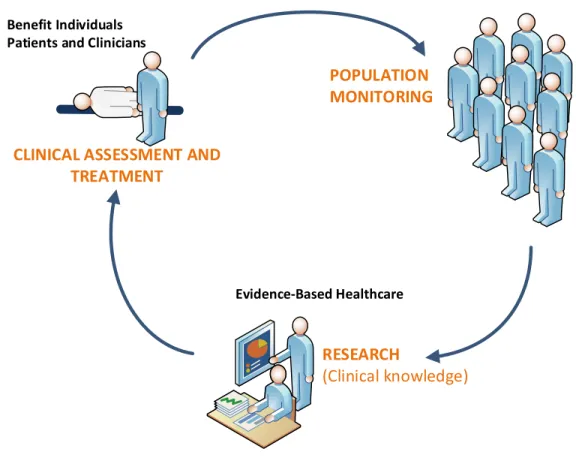
Figure 3-1 illustrates the three main purposes of analytics with SNOMED CT. These are: 1. Clinical assessment and treatment;
2. Population monitoring; and 3. Research.
10
Benefit Individuals Patients and Clinicians
Benefit Populations
Evidence-Based Healthcare
RESEARCH
(Clinical knowledge) CLINICAL ASSESSMENT AND
TREATMENT
POPULATION MONITORING
Figure 3-1: Purposes of analytics with SNOMED CT SNOMED CT may be used to support analytics that:
Improves the care of individual patients by enabling:
o Retrieval of relevant information that better supports clinicians in assessing the condition and needs of a patient
o Clinical records to be integrated with decision support tools to guide safe, appropriate and effective patient care – for example, allergy checking and potential drug
contraindications identified at the point of prescribing
o Reduction in the duplication of investigations and interventions through the effective retrieval of shared information about the patient
o Meaning-based sharing of clinical information that is collected by different members of the health care team at different times and places (and potentially in different
languages)
o Identification of patients requiring follow-up or changes to treatment based on updated guidelines
o Wellness management, for example, using genetic and behavioral risk profiles.
o Context-sensitive presentation of guidelines and care pathways within the user interface
11
o Adaptive pick lists in clinical user interfaces
o Professional logs and performance tracking for clinicians
o Work list generation, for example, patients requiring follow-up based on specific criteria
o Workload profiling and monitoring. Improves the care of populations by enabling:
o Epidemiological monitoring and reporting, for example, monitoring of epidemic outbreaks, or hypothesis generation for the causes of diseases
o Audit of clinical care and service delivery
o Systems that measure and maximize the delivery of cost-effective treatments and minimize the risk of costly errors
Supports evidence-based healthcare and clinical knowledge research by enabling:
o Identification of clinical trial candidates
o Research into the effectiveness of different approaches to disease management
o Clinical care delivery planning, for example, determining optimum discharge time
o Planning for future service delivery provision based on emerging health trends, perceived priorities and changes in clinical understanding.
3.3 SUBSTRATES FOR ANALYTICS
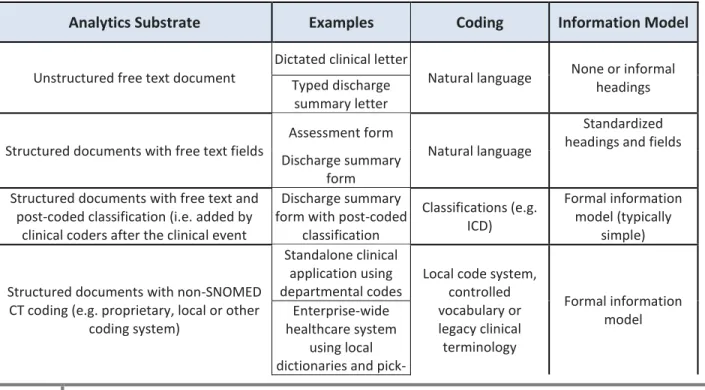
Analytics with SNOMED CT may be deployed on a wide range of data sources as summarized in the table below. These data sources are also known as the ‘substrate’ of the analytics. Please note that data which is not natively coded using SNOMED CT may be transformed using one of the techniques
described in Section 5. These techniques may be used to transform heterogeneous data recorded using free text or a variety of code systems into SNOMED CT, which can serve as a common reference
terminology for analysis.
Table 3-1: Direct and indirect substrates for SNOMED CT based analytics
Analytics Substrate Examples Coding Information Model
Unstructured free text document
Dictated clinical letter
Natural language None or informal headings Typed discharge
summary letter Structured documents with free text fields
Assessment form
Natural language
Standardized headings and fields Discharge summary
form Structured documents with free text and
post-coded classification (i.e. added by clinical coders after the clinical event
Discharge summary form with post-coded
classification Classifications (e.g. ICD) Formal information model (typically simple)
Structured documents with non-SNOMED CT coding (e.g. proprietary, local or other
coding system)
Standalone clinical application using departmental codes
Local code system, controlled vocabulary or legacy clinical terminology Formal information model Enterprise-wide healthcare system using local dictionaries and
pick-12
lists Electronic patient record using regional
coding system (such as UK Primary Care
systems) Structured documents with SNOMED CT
content
Cardiology report
SNOMED CT Formal information model GP event summary
‘Big data’ data store
Data warehouse Various coding systems Mixture of both structured and unstructured data Data store containing
a mixture of substrates
3.4 EXAMPLES OF APPROACHES
There are a number of ways in which SNOMED CT can be used in systems to support analytics, including: Analyzing free text with clinical Natural Language Processing (NLP) techniques, which use
SNOMED CT as a resource;
Mapping coded clinical data from SNOMED CT to a classification, to enable analysis using the features of the classification;
Querying clinical data using the machine-processable definitions of clinical concepts defined in SNOMED CT;
Mapping clinical data captured using a variety of code systems into SNOMED CT, to enable analysis over heterogeneous data using a common reference terminology.
13
4 SNOMED CT OVERVIEW
4.1 OVERVIEW
SNOMED CT is a clinical terminology containing concepts, with unique meanings and formal logic-based definitions, organized into hierarchies. The clinical content of SNOMED CT includes diagnoses and other clinical findings, clinical observations, drug products, organisms, specimen types, body structures, and surgical and non-surgical procedures.
SNOMED CT enables clinical information to be consistently represented at an appropriate level of detail within electronic health records. The relationships within SNOMED CT then facilitate meaning-based retrieval of this information at the preferred level of detail for the given query. This provides significant flexibility and facilitates the integration of data from divergent models of use, such as different user interfaces or databases, into convergent models of meaning, such as for the representation of data for reporting or statistical analysis purposes. Clinical systems can thereby query and analyze electronic health record data recorded in different settings, at varying levels of granularity and across multiple axes. This enables SNOMED CT to support a variety of clinical processes, which may require either detailed or high-level information - from investigation, to diagnosis and clinical research.
SNOMED CT content is represented using three main types of component: Concepts - unique clinical meanings
Descriptions - human readable terms used to refer to a concept
Relationships - links between concepts that help to define the meaning of each concept In addition to these three types of components, SNOMED CT also supports:
Expressions – a structured combination of one or more concept identifiers used to represent a new clinical meaning
Reference sets – a mechanism for representing references to SNOMED CT components for a variety of purposes, including subsets, aggregation hierarchies, maps and language preferences In this section we introduce these SNOMED CT features and explain how they may be used to support analytics over health data. For more detailed information about SNOMED CT features, please refer to the ‘SNOMED CT Starter Guide’ [2] and the ‘SNOMED CT Technical Implementation Guide’ [4].
We also discuss the specific benefits enabled by using SNOMED CT. For more details about the benefits of SNOMED CT please refer to ‘Building the Business Case for SNOMED CT’ [5].
4.2 CONCEPTS
SNOMED CT concepts represent clinical meanings. Each concept has a permanent concept identifier, which uniquely identifies the clinical meaning. For example:
22298006 |myocardial infarction| 160341008 |family history: epilepsy| 399208008 |plain chest X-ray| 319996000 |simvastatin 10mg tablet|
14
SNOMED CT’s concepts, and their logic-based definitions, allow analytics services to perform meaning-based queries, rather than purely lexical (or string-matching) searching.
4.3 DESCRIPTIONS
SNOMED CT descriptions link appropriate human readable terms to concepts. Each concept can have many descriptions, which represent different synonymous ways of referring to the same clinical meaning. Each description is written in a specific language, and new descriptions can be created to support a variety of languages. Like concepts, descriptions also have a permanent unique identifier. The richness of description content assists the process of searching and finding concepts using user interfaces or database queries. It may also be used to enhance string-matching in natural language processing applications, including analytics over multi-lingual data.
4.4 RELATIONSHIPS
SNOMED CT relationships represent an association between two concepts. Relationships are used to logically define the meaning of concept in a way that can be processed by a computer. A third concept, called a relationship type, is used to represent the meaning of the association between the source and destination concepts. There are different types of relationships available within SNOMED CT.
Subtype relationships, which use the |is a| relationship type, are the most widely used type of
relationship. The SNOMED CT concept hierarchy is constructed from |is a| relationships. For example, the concept 128276007 |cellulitis of foot| has an |is a| relationship to both the concept 118932009
|disorder of foot| and the concept 128045006 |cellulitis|. Subtype relationships are used in many analytics scenarios to aggregate groups of concepts together, or to perform queries using more abstract (less detailed) concepts that match more specific (or more detailed) concepts stored in health records. Attribute relationships contribute to the definition of the source concept by associating it with the value of a defining characteristic. For example, the concept |viral pneumonia| has a |causative agent|
relationship to the concept |Virus| and a |finding site| relationship to the concept |lung|. Attribute relationships are used in analytics scenarios in which the meaning of a concept is needed to determine whether a record matches the query criteria.
4.5 CONCEPT MODEL
The rules which define how SNOMED CT concepts may be defined are called the SNOMED CT concept model. The SNOMED CT concept model defines the permitted attributes and values that may be applied to each kind of concept. For example, concepts in the |clinical finding| hierarchy are permitted to have a |finding site| relationship, and the valid values of these relationships must belong to the |anatomical or acquired body structure| hierarchy. The SNOMED CT concept model provides the foundation for processing the clinical meanings recorded in clinical records and enables the appropriate use of clinical information for decision support and other analytics services.
15
4.6 EXPRESSIONS
An expression is a structured combination of one or more concept identifiers used to represent a clinical meaning. SNOMED CT expressions enable clinical meanings to be represented, which cannot be
represented using a single SNOMED CT concept. For example, the following expression represents ‘pain in the left thumb:
53057004 |hand pain| :
363698007 |finding site| = (76505004 |thumb structure| : 272741003 |laterality| = 7771000 |left| )
SNOMED CT expressions allow analytics services to perform meaning-based queries over a more extensive set of clinical meanings than just individual concepts.
4.7 REFERENCE SETS
A reference set (or ‘refset’) is a mechanism used to refer to a set of SNOMED CT components and to add customized information to these components. Reference sets can be used for many different purposes, including representing subsets of concepts, descriptions or relationships, language and dialect
preferences, maps to and from other code systems, ordered lists, navigation hierarchies and aggregation hierarchies. For more information about the different types of reference sets, please refer to section 5.6
of the Technical Implementation Guide [4].
Reference sets are used for a range of analytics purposes, including:
Representing subsets of SNOMED CT concepts with which query criteria are defined and clinical records are matched;
To represent non-standard aggregations of concepts for specific use cases;
To define maps from other code systems to SNOMED CT so that clinical data can be prepared for analytics to be performed using SNOMED CT;
To define language or dialect specific sets of descriptions over which lexical searches can be performed.
4.8 DESCRIPTION LOGIC FEATURES
SNOMED CT concepts are modelled in such a way that their meaning can be represented using a formal family of logics called Description Logic (DL). Description logic enables computers to make inferences about the concepts in SNOMED CT and their meanings, and to classify SNOMED CT using a DL reasoner. Description logic also allows the formal computation of:
Subsumption – Testing pairs of expressions to see whether one is a subtype of the other Equivalence – Testing pairs of expressions to see whether they have the same logic-based
meaning
Subsumption and equivalence are both extremely useful functions when retrieving or querying clinical information. For example, when retrieving all clinical records related to 73211009 |diabetes mellitus|, it
16
would usually be necessary to retrieve records referring to any subtype of this concept, such as 23045005 |insulin dependent diabetes mellitus type 1A|.
4.9 BENEFITS OF USING SNOMED CT FOR ANALYTICS
In addition to providing the features already described in this section, SNOMED CT also offers a number of additional benefits for the provision of analytics including:
SNOMED CT allows clinical data to be recorded at an appropriate level of detail, and then queried at either the same level or a less detailed level of detail;
SNOMED CT’s broad coverage can enable queries across data captured within different disciplines, specialties and domain areas;
SNOMED CT provides a robust versioning mechanism, which helps to manage queries over longitudinal health records;
SNOMED CT is international, which enables queries, decision support rules and code system maps to be shared and reused between countries;
SNOMED CT includes localization mechanisms, which allow the same query to be applied to data from different countries, dialects, regions and applications;
IHTSDO provides maps between SNOMED CT and other international coding systems and classifications, including LOINC (Logical Observation Identifiers Names and Codes) and ICD (International Classification of Diseases, both ICD-10 and ICD-9-CM). This enables the additional benefits of these other specialized standards to be integrated with the use of SNOMED CT. Using SNOMED CT to support analytics services can also enable the following benefits:
Enhancing the care of individual patients by supporting:
o Retrieval of appropriate information for clinical care – e.g. for a clinical dashboard
o Guideline and decision support integration
o Retrospective searches for patterns requiring follow-up Enhancing the care of populations by supporting:
o Epidemiology monitoring and reporting
o Research into the causes and management of diseases
o Identification of patient groups for clinical research or specialized healthcare programs Providing cost-effective delivery of care by supporting:
o Guidelines to minimize risk of costly errors
o Reducing duplication of investigations and interventions
o Auditing the delivery of clinical services
17
5 PREPARING DATA FOR ANALYTICS
5.1 OVERVIEW
As discussed in Section 3.3, not all electronic health records represent clinical data using SNOMED CT. However, even when health records use free text or other code systems, it is still possible to use SNOMED CT for analytics over this data if the data is prepared appropriately. For example, Natural Language Processing can be used to encode free text data in SNOMED CT, subsequently enabling more sophisticated analytics to be performed. Similarly, clinical data using other code systems can be mapped into SNOMED CT to provide similar benefits.
In this section we discuss these alternative ways of preparing clinical data for analytics using SNOMED CT.
5.2 NATURAL LANGUAGE PROCESSING
5.2.1 OVERVIEW
While there is a strong trend towards the direct coding of clinical data, the capture and retention of free text remains essential to record broader narratives about clinical history, physical examinations, clinical procedures and investigation results. Wider deployment of medical transcription technologies featuring speech recognition also add to the volume of free text in electronic format. Medical literature, clinical guidelines and published clinical research also remains largely in free text.
Natural Language Processing (NLP) is a linguistic technique that enables a computer program to analyze and extract meaning from human language. Clinical NLP, using SNOMED CT’s concepts, descriptions and relationships, may be applied to repositories of clinical information to search, index, selectively retrieve and analyze free text. These techniques can be used to extract SNOMED CT encoded data from free-text patient records, and also support the retrieval of clinical knowledge documents.
It should be noted that while clinical NLP techniques have increased in sophistication over recent years, it is not possible to guarantee full accuracy or completeness using a computer-based algorithm. Spelling errors, grammatical errors, abbreviations, unexpected synonyms, unusual vernacular (i.e. local) phrases, and hidden contextual information continue to provide challenges that human intelligence is uniquely equipped to handle.
5.2.2 EXAMPLE
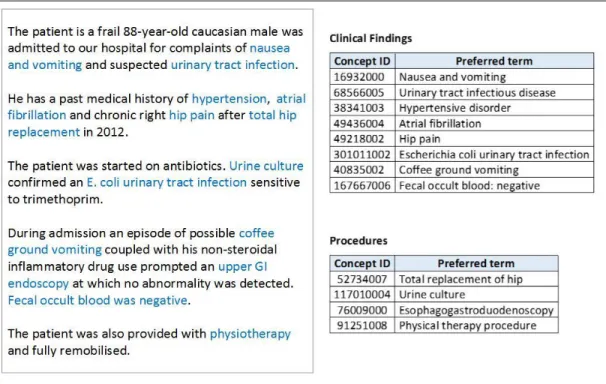
The example shown below in Figure 5-1 shows a free text section of a discharge summary that has been processed with clinical NLP to extract a set of potential SNOMED CT clinical findings and procedures. In order to ensure the correctness of this automatic encoding, the application should present this list of extracted codes to the user for confirmation, giving them the opportunity to refine, delete or append codes.
18
Figure 5-1: Natural Language Processing encoding SNOMED CT
To improve the accuracy of clinical NLP and the value for analytics processes, it is important that the context of each statement expressed in natural language is clearly identified – for example, past history, suspected and negation/absence. Figure 5-2 shows the same discharge summary narrative as in Figure 5-1, but this time processed with clinical NLP that also extracts the explicit context of each clinical finding and procedure.
Figure 5-2: Natural Language Processing encoding SNOMED CT with context
When SNOMED CT codes with explicit context are extracted from free text narrative, the resulting clinical meanings may be captured using SNOMED CT postcoordinated expressions. For example, the following clinical statement:
Endoscopy revealed an acute gastric ulcer but no evidence of gastric bleeding or perforation of the stomach.
19
can be encoded using the following SNOMED CT expressions with explicit context (case study 2.9): ▪ 243796009 |situation with explicit context| :
{408731000|temporal context| = 410512000 |current or specified time|, 246090004|associated finding| = 95529005 |acute gastric ulcer|,
408732007 |subject relationship context| = 410604004 |subject of record|, 408729009 |finding context| = 410515003 |known present|
▪ 243796009 |situation with explicit context| :
{408729009 |finding context| = 410516002 |known absent|, 246090004 |associated finding| = 61401005 |gastric bleeding|, 408731000 |temporal context| = 410512000 |current or specified|,
408732007 |subject relationship context| = 410604004 |subject of record|} ▪ 243796009 |situation with explicit context| :
{408729009 |finding context| = 410516002 |known absent|,
246090004 |associated finding| = 235674005 |perforation of stomach|, 408731000 |temporal context| = 410512000 |current or specified|,
408732007 |subject relationship context| = 410604004 |subject of record|} 5.2.3 IMPLEMENTATION
5.2.3.1 NLP TECHNIQUES USING SNOMED CT
A clinical NLP engine can use SNOMED CT to encode free text narrative in patient records in a number of ways. Firstly, it can use SNOMED CT descriptions together with techniques such as:
Stemming: The process of reducing a word to its stem, base or root form – for example “cardiology”, “cardiac” and “cardiologist” may be reduced to the stem “cardi”.
Reordering: The process of reordering the words in a phrase – for example, reordering “hip fracture” to “fracture hip”.
Word substitution: The process of substituting a word or word phrase with an equivalent word or word phrase. The SNOMED CT Lexical Resources zip file [7], available from the SNOMED CT Document Library, includes an English Word Equivalents table that groups together equivalent words and phrases – for example, “Renal stone”, “Kidney stone”, “kidney calculus”, “renal calculus” and “nephrolith” are grouped into the same word block group. This table can be modified or extended with additional word equivalent groups if required.
Stop word removal: The process of removing words with limited semantic specificity – for example ‘a’, ‘an’, ‘and’, ‘as’, ‘at’, ‘be’, ‘by’, ‘for’, ‘of’, ‘the’. The SNOMED CT Lexical Resources zip file [7], available from the SNOMED CT Document Library, includes an Excluded Words table, which suggests some common English stop words that may be used with SNOMED CT. The SNOMED CT concept model can also be used to identify potential connections between related concepts – for example, the words “left”, “hip” and “fracture” used in close proximity may indicate a
|fracture| with finding site |hip| and a laterality of |left|. Similarly, the SNOMED CT concept model may help to identify context that is expressed within the text – for example, past history, certainty and absence.
Another commonly adopted NLP strategy is to use the location of the free text within the structure of a document to restrict the possible SNOMED CT code matches. For example, free text entered into a
20
‘Diagnosis’ field may restrict its SNOMED CT encoding to the |disorder| hierarchy, together with other concepts that may be linked to |clinical findings| via the SNOMED CT concept model.
When NLP techniques are applied to non-English (or dialect-specific) text, translations of relevant SNOMED CT descriptions may be required. The NLP methods themselves may also need to be adapted to reflect the structure and style of the language in which the text is written.
5.2.3.2 INDEXING
Another major application for Natural Language Processing technologies is indexing collections of free text transcripts or documents such that topic specific searches may be run on them, or relevant clinical knowledge sources may be identified and linked to a given patient’s clinical data. The challenge is to return ranked matches which permit selection of texts with high sensitivity and high specificity (i.e. that relevant documents are rarely overlooked and that irrelevant documents are rarely returned).
SNOMED CT can be used to support these applications by enabling more powerful searching of free text data stores than using a purely lexical keyword-based approach. For example, the clinician may request “all documents which refer to cardiac rhythm disorders”. Rather than relying purely on text matching, the search term may be matched with the concept 698247007 |cardiac arrhythmia (disorder)|, based on its synonym |disorder of heart rhythm|. The descendants of this concept (e.g. 276796006 |atrial tachycardia|, 49260003 |idioventricular rhythm|, 233917008 |atrioventricular block|) may then be used to search for any code which is a kind of cardiac arrhythmia. Non-|is a| attribute relationships may also be used in the retrieval process to find associations between the search term and the indexed concepts, and to calculate the relevance of each free text artefact to determine the order in which they should be presented to the user.
5.2.3.3 CASE STUDIES
Clinical NLP has been implemented for encoding free text narrative in health records by a number of vendors, including Caradigm (case study 2.7), Cerner (case study 2.8), Clinithink (case study 2.9) and Intelligent Medical Objects (case study 2.13).
NLP techniques for indexing and searching have also been implemented by Cerner (case study 2.8) and Dr Bevan Koopman (case study 1.5). Allscript’s Sunrise InfoButton™ feature (case study 2.3) uses encoded patient problem lists and medication data elements, together with SNOMED CT-based indexes provided by third-party medical content providers, to present on-topic information to the clinician without manual searching.
5.3 MAPPING OTHER CODE SYSTEMS TO SNOMED CT
5.3.1 OVERVIEW
Mapping data from clinical records encoded using non-SNOMED CT code systems to SNOMED CT for analysis may be considered when there is a requirement to produce:
• Management information for care service audit or delivery planning • Statistical information for epidemiology
• Links from clinical records to clinical knowledge resources • Links between clinical records and decision support tools
21
• An integrated data warehouse for querying from multiple heterogeneous sources • Other types of research, reports or surveillance that requires SNOMED CT
Two important characteristics of a map, which affect its ability to be used for a particular purpose, are the direction of the map, and the correlation between the source and target codes. Where the analytics use case requires SNOMED CT to be used, the direction of the map must be from the non-SNOMED CT codes to SNOMED CT codes. A map designed to move data from code system A to code system B will serve poorly (if at all) ‘in reverse’ if it is used to map from B to A, unless all the links are exact semantic matches.
For analytics purposes where patient safety or data accuracy is important (e.g. point of care clinical decision support or data integration), it is important that the correlation of the map is an ‘exact match’ (or equivalence). For other purposes (e.g. epidemiology or care service delivery planning) it may be acceptable for the SNOMED CT code to be broader than (or a supertype of) the non-SNOMED CT code. However, broad-to-narrow and narrow-to-broad maps need to be used with care.
When a non-SNOMED CT code is being mapped into SNOMED CT, and an equivalent precoordinated SNOMED CT concept does not exist, a number of options are possible, including:
1. Map the code to a broader (supertype) SNOMED CT concept
a. For example, map “DX0162: arthritis of left knee” to “371081002 |arthritis of knee|” with correlation ‘broad to narrow’
2. Map the code to a SNOMED CT postcoordinated expression
a. For example, map “DX0162: arthritis of left knee” to “371081002 |arthritis of knee| : 272741003 |laterality| = 7771000|left|” with correlation ‘exact match’
3. Create a new precoordinated SNOMED CT concept with the same meaning as the code, and map the code to this new concept
a. For example, map “DX0162: suspected gastric ulcer” to a new extension concept 1111000000105 |arthritis of left knee|1
Designing and authoring maps requires expertise and appropriate resources. Large maps (e.g. tens of thousands of codes) are typically created and maintained by the IHTSDO, National Release Centers, large healthcare organizations, specialist data suppliers and large system vendors. However, smaller maps may be created and maintained by smaller system suppliers, hospitals or clinics. Maps must be
maintained to ensure that both the SNOMED CT content and non-SNOMED CT content remains current whenever either code system is updated.
5.3.2 EXAMPLE
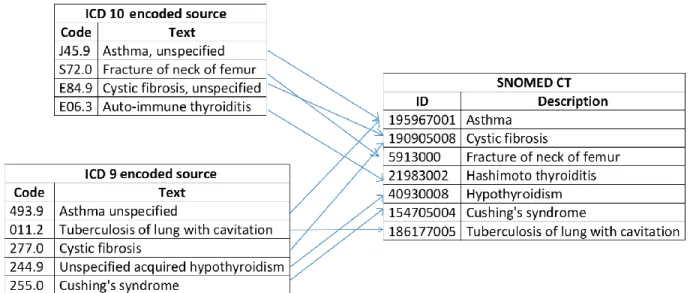
A typical scenario requiring mapping to SNOMED CT is shown below in Figure 5-3. In this example, two source systems (using ICD-9 and ICD-10 respectively) are being integrated into a data warehouse using SNOMED CT as the common ‘reference terminology’ for analysis. Once this mapping is done, the same analytic techniques as used on native SNOMED CT records may be applied (See Section 6).
1 Please note that this concept does not exist in the international edition of SNOMED CT, but is shown here as a hypothetical example of a concept added in a SNOMED CT extension.
22
Figure 5-3: Mapping from ICD classifications to SNOMED CT 5.3.3 IMPLEMENTATION
5.3.3.1 MAPPING USING SNOMED CT
Maps are represented in SNOMED CT’s RF2 using a Simple map reference set, a Complex map reference set, or an Extended map reference set (depending on what additional information is required to support the implementation of the map). Code mappings are then performed by matching each non-SNOMED CT code in a patient’s record with the ‘mapTarget’ field of the corresponding row of the map reference set, and using the SNOMED CT code found in the ‘referencedComponentId’.
5.3.3.2 CASE STUDIES
The UK Terminology Centre’s Data Migration Workbench demonstrates some advanced uses of data migration and mapping products published by the UKTC, including Read Code Version 2 and CTV3 maps to SNOMED CT (case study 1.2). A number of vendor products also map non-SNOMED CT codes to SNOMED CT for use in analytics, including Allscript’s terminology service (case study 2.3), Apelon’s Distributed Terminology System (case study 2.4), the Cerner Millennium Terminology (CMT) package (case study 2.8), and Epic’s electronic patient record systems (case study 2.11).
23
6 SNOMED CT ANALYTIC TECHNIQUES
6.1 OVERVIEW
SNOMED CT offers a number of analytics techniques, which are not possible using other coding systems. SNOMED CT’s hierarchical design improves upon the purely lexical query capabilities of free text lists or ‘flat’ controlled vocabularies. For example, a purely text based query for ‘kidney disease’ will not return the kidney disease ‘glomerulonephritis’. Purely mono-hierarchies, however, limit querying to a single grouping of each code. For example, using a mono-hierarchy ‘tuberculosis of the lung’ must be assigned a code which makes it either a kind of ‘lung disease’ or a kind of ‘tuberculosis’ – however it cannot be both. Using SNOMED CT’s polyhierarchy ‘tuberculosis of the lung’ can be represented as both a kind of ‘lung disease’ and a kind of ‘tuberculosis’. The inclusion of other attribute-based defining relationships and the ability to represent SNOMED CT using OWL 2 EL enables additional Description Logic techniques for classifying and querying SNOMED CT. Extending these capabilities even further, it is possible to use Description Logic techniques across both the terminology and the structure of the patient records in which the codes are stored. Finally, in some specific use cases such as billing, reimbursement and statistics where double counting must be avoided, clinically recorded SNOMED CT codes can be used to map into more general statistical classifications, such as ICD (International Classification of Diseases). In this section, we describe how the following analytics techniques can be used to support analytics over SNOMED CT enabled data. The techniques described include:
Subsets – for example, find the patients with a diagnosis in the set of ‘kidney disease codes’ Subsumption – for example, find the patients with a diagnosis that is a subtype (or self) of
‘kidney disease’
Using defining relationships – for example, find the patients whose diagnosis has a finding site of ‘kidney structure’ (or a subtype of ‘kidney structure’)
Description logic over terminology – for example, find the patients whose diagnosis is associated (directly or indirectly) with the ‘Streptococcus pyogenes organism’
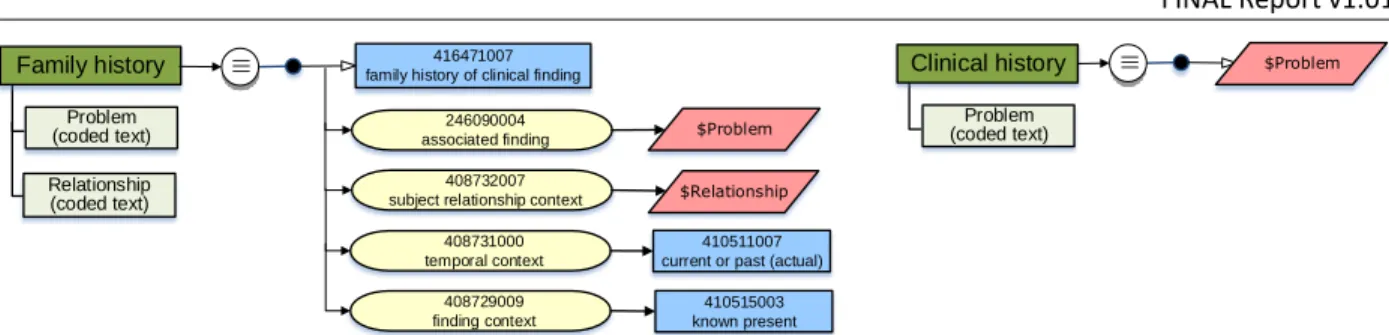
Description logic over terminology and structure – for example, find the patients with a family history of heart disease (where this may either be recorded as 275120007 |family history: cardiac disorder| or recorded in a ‘Family History’ section on a form as 56265001 |heart disease|)
Using statistical classifications – for example, to meet national reporting guidelines using ICD (International Classification of Diseases)
In practice, a query language may combine a number of these techniques in the same syntax. With the possible exception of the last two approaches, these SNOMED CT query techniques should then be embedded within an EHR query to ensure that the semantic context of the surrounding patient record is taken into account.
24
6.2 SUBSETS
6.2.1 OVERVIEW
One approach to analytics using SNOMED CT is to construct subsets of SNOMED CT identifiers, which are applicable to a specific clinical purpose, and to test the codes recorded in patient records to check for membership in the appropriate subset. Subsets of SNOMED CT identifiers may either be defined extensionally or intensionally.
Extensionally defined subsets are those in which each concept is individually enumerated. They are usually manually constructed and maintained, and can therefore be labor intensive and error prone. For example, one might construct a subset of kidney disease codes including 36171008
|glomerulonephritis|, 71110009 |hydrocalycosis| and 42399005 |renal failure|.
Intensionally defined subsets are those which are automatically populated (or expanded) based on a machine processable query. For example, one might construct a subset of kidney disease codes using the results of the query “<< 90708001 |kidney disease|” (i.e. descendants or self of 90708001 |kidney disease|). The query used to define an intensional subset may utilize SNOMED CT’s hierarchical relationships, attribute values, descriptions, and membership in other intensionally or extensionally defined subsets. For more information about SNOMED CT query languages, which may be used to define intensional subsets, please refer to Section 9.
6.2.2 EXAMPLE
A subset containing types of 58437007 |tuberculosis of meninges| may be defined extensionally as follows:
Concept ID Description
58437007 tuberculosis of meninges (disorder) 35786001 tuberculoma of meninges (disorder)
90302003 tuberculosis of cerebral meninges (disorder) 38115001 tuberculosis of spinal meninges (disorder) 447332005 tuberculous abscess of epidural space (disorder) 11676005 tuberculous leptomeningitis (disorder)
447253004 tuberculous arachnoiditis (disorder)
31112008 tuberculous meningoencephalitis (disorder)
With the help of the SNOMED CT hierarchy (as shown in Figure 6-1), this same subset can be defined intensionally as:
<< 58437007 |tuberculosis of meninges|
The expansion of an intensional subset defined using this query is the same as the extensionally defined subset shown above.
25
Figure 6-1: Tuberculosis of meninges concept sub-hierarchy
Using a lexical query, it is also possible to intensionally define a subset of ‘tuberculosis of meninges’ findings. However, the results of purely lexical queries are not as reliable. For example, using the query:
<< 404684003 |clinical finding| {{ term = “.*tuberculosis.*meninges.*” }} the following expansion can be calculated:
Concept ID Description
58437007 tuberculosis of meninges (disorder)
90302003 tuberculosis of cerebral meninges (disorder) 38115001 tuberculosis of spinal meninges (disorder)
As can be seen, the results of this lexical query only includes 3 of the possible 8 values from the previous subset. In other cases, lexical queries may incorrectly find concepts which are not appropriate to the subset. It is therefore recommended that lexical queries are avoided in the definition of intentional subsets. However, they do serve a useful purpose in identifying candidates for an otherwise manually crafted subset.
6.2.3 IMPLEMENTATION
6.2.3.1 DEFINING SUBSETS IN SNOMED CT
Subsets of SNOMED CT may be defined locally as a flat list of concept identifiers, or as an independent query specification. However, where wider distribution and/or version control is required over these subsets, SNOMED CT reference sets offer the ideal solution.
Extensional subsets are commonly defined in SNOMED CT using a Simple reference set - however an Ordered reference set or Annotation reference set can be used if additional information needs to be recorded for each member of the subset. Intensional subsets are defined in SNOMED CT using a Query specification reference set. A Query specification reference set allows a serialized query to define the membership of a subset of SNOMED CT components. It also specifies the extensional reference set into which the results of executing the query are generated. Intensional reference sets are preferred in many circumstances as they enable their membership to be automatically recomputed over new versions of SNOMED CT. Version management of subsets is discussed further in Section 11.5.
26
Subsets can be created using the following methods, either alone or in any combination: Manual inclusion, using search and browse methods
Existing subset, used as a starting point for further manual inclusion and update
Lexical queries, to identify candidate members, followed by manual verification and update Hierarchical queries, to identify descendants of a given concept (e.g. descendants of <73211009
|diabetes mellitus|)
Attribute queries, to identify concepts with a specific attribute value (e.g. disorders with a finding site of 80891009 |heart structure|)
SNOMED CT queries, using the SNOMED CT Expression Constraint or Query languages, which offer additional query functionality. Please refer to Section 9 for more details.
6.2.3.2 CASE STUDIES
A number of vendor products, such as Apelon (case study 2.4) and B2i Healthcare (case study 2.5) allow users to create customized extensional and intensional subsets of SNOMED CT. Other vendor products, such as the Cambio COSMIC® Electronic Patient Record system (case study 2.6), Caradigm’s population health solutions (case study 2.7), Cerner’s data warehousing solution (case study 2.8) and Epic’s decision support and reporting tools (case study 2.11) use subsets of SNOMED CT to support their analytics services.
6.3 SUBSUMPTION
6.3.1 OVERVIEW
Determining whether one concept (or expression) is a kind of another concept (or expression) is the fundamental capability enabled by SNOMED CT. For example, answering the question ‘Which patients have an infectious disease?’ involves finding all the patients with any kind of infectious disease (e.g. viral pneumonia, tuberculosis).
Subsumption occurs when one clinical meaning is a subtype of another clinical meaning, and testing for this is called ‘subsumption testing’. If clinical meaning X is a subtype of clinical meaning Y, then Y is said to ‘subsume’ X and X is ‘subsumed by’ Y.
Subsumption testing between concepts is represented using a stated or implied |is a| relationship. For example, 75570004 |viral pneumonia| is a 40733004|infectious disease| and therefore 40733004
|infectious disease| subsumes 75570004 |viral pneumonia|, and 75570004 |viral pneumonia| is subsumed by 40733004|infectious disease|.
Subsumption testing between expressions tests to see if the candidate expression (often recorded in a patient record) is subsumed by a predicate expression (typically part of the query being run across the patient record). For example:
Candidate expression: 75570004 |viral pneumonia| Predicate expression: 40733004|infectious disease|:
363698007 |finding site| = 39607008 |lung structure|
27
Subsumption testing can be represented using the SNOMED CT Expression Constraint Language using the ‘<’ (descendantOf) or ‘<<’ (descendantOrSelfOf) operators. For example, the expression constraint:
<< 40733004|infectious disease|
is satisfied by any expression that is subsumed by 40733004|infectious disease|.
There are a variety of ways to implement subsumption testing. These are summarized in Section 0. 6.3.2 EXAMPLE
A typical example using subsumption would be an audit within a hospital, reviewing all patients with an infectious disease. In this scenario, the following simple query could be executed to find all the patients whose health record contains a diagnosis that is subsumed by the concept 40733004|infectious disease|:
SELECT distinct patientID FROM health_records
WHERE diagnosis = (<< 40733004|infectious disease|) If the health records contained the following data:
patientID date diagnosis
634711 16th January 2015 71620000 |fracture of femur| 634711 25th January 2015 415353009 |rotavirus food poisoning| 634711 3rd February 2015 66308002 |fracture of humerus| 158775 7th January 2015 40468003 |hepatitis A| 889125 7th January 2015 75570004 |viral pneumonia| 456872 15th January 2015 22298006 |myocardial infarction| 456872 15th January 2015 195967001 |asthma| Then this query would return the following list of patients:
634711 (because 415353009|rotavirus food poisoning| is a subtype of 40733004|infectious disease|)
158775 (because 40468003 |hepatitis A| is a subtype of 40733004|infectious disease|) 889125 (because 75570004 |viral pneumonia| is a subtype of 40733004|infectious disease|) Note that patient 456872 would not be returned by this query as neither 22298006 |myocardial infarction| or 195967001 |asthma| are subtypes of 40733004 |infectious disease|.
28
6.3.3 IMPLEMENTATION
6.3.3.1 TESTING SUBSUMPTION BETWEEN CONCEPTS
Rapid and efficient computation of whether a concept |is a| subtype descendant of another concept is essential for testing subsumption between expressions. A variety of approaches exist for testing subsumption. When the candidate and predicate expressions are both precoordinated concepts, subsumption testing can use the published relationships from the SNOMED CT release files. Approaches for testing subsumption between precoordinated concepts include:
Exhaustive testing of subtype relationships
In this approach, every possible sequence of |is a| relationships are recursively tested from the candidate concept until the predicate concept is reached or until all possible paths have been exhausted.
Semantic type identifiers and hierarchy flags
In this approach, flags are added to each concept to indicate the set of high-level concept nodes of which that concept is a subtype. A concept can only subsume concepts that include the same set of high-level concept flags. This reduces the number of tests that need to be performed to recursively test the subtype relationships.
Use of proprietary database features
In this approach, a database is used which supports the recursive testing of a chain of hierarchical relationships.
Branch numbering
In this approach, a depth first tree walk is performed that applies an incremental number to each concept. A second tree walk then allocates one or more branch number ranges to each concept, which contains the number of all of their descendants.
Precomputed transitive closure table
In this approach, a comprehensive list of all supertypes of each concept is created by recursively traversing all |is a| relationships and adding each stated and inferred subtype relationship to a table.
Using a Description Logic Reasoner
In this approach, a description logic reasoner (e.g. Snorocket, ELK, Fact++) is used to determine whether one concept is subsumed by another.
In most environments, the recommended approach is to either use a precomputed transitive closure table or a description logic reasoner. However, where disk capacity or distribution bandwidth are limiting factors, branch numbering provides an efficient alternative approach. For more information on these approaches, please refer to section 7.7.4 of the SNOMED CT Technical Implementation Guide [4]. 6.3.3.2 TESTING SUBSUMPTION BETWEEN EXPRESSIONS
When either the candidate expression (in the patient data) or the predicate expression in the query are postcoordinated (or both), techniques based on description logic are needed to perform subsumption testing. Approaches for testing subsumption between postcoordinated expressions include:
Comparing normal form expressions
In this approach, the predicate expression is transformed to short normal form and the candidate expression is transformed to long normal form. The two normal form expressions are then tested for subsumption by checking that each focus concept in the predicate
29
expression subsumes at least one focus concept in the candidate expression, each attribute group in the predicate expression subsumes at least one attribute group in the candidate expression and each ungrouped attribute in the predicate expression subsumes at least one attribute in the candidate expression.
Using a Description Logic Reasoner
In this approach, a description logic reasoner (e.g. Snorocket, ELK, Fact++) is used to determine whether one expression is subsumed by another.
Where available, the recommended approach is to use a description logic reasoner to calculate subsumption between expressions. However, comparing normal form expressions provides an alternative approach when a reasoner is not available. For more information on these approaches, please refer to section 7.8.2.4 of the SNOMED CT Technical Implementation Guide [4].
6.3.3.3 CASE STUDIES
A number of vendor products use the SNOMED CT hierarchy to support subsumption testing in their analytics services, including the Cerner Millennium Terminology (CMT) package (case study 2.8) and Epic’s decision support and reporting tools (case study 2.11). Terminology servers that provide the ability to perform subsumption testing include B2i Healthcare’s Snow Owl® terminology server (case study 2.5). The UK Terminology Centre’s Data Migration Workbench also uses subsumption testing in its query tool, and its case mix and caseload trends analysis tools (case study 1.2).
6.4 USING DEFINING RELATIONSHIPS
6.4.1 OVERVIEW
SNOMED CT attributes are used to represent a characteristic of the meaning of a concept. There are more than 50 attributes in SNOMED CT, which can each be used as the ‘type’ of a defining relationship, including:
363698007 |finding site|
116676008 |associated morphology|
246075003 |causative agent|
363704007 |procedure site|
260686004 |method|
272741003 |laterality|
127489000 |has active ingredient|The SNOMED CT Concept Model provides rules about how these attributes can be used. Some database queries use the rules from the SNOMED CT Concept Model to match concepts based on the value of their defining relationships.
6.4.2 EXAMPLE
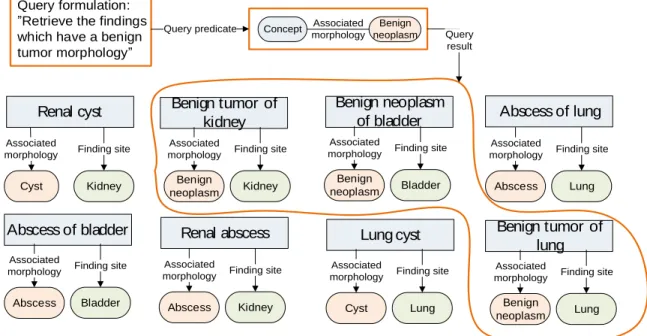
Figure 6-2 illustrates the execution of a query to retrieve a set of findings which have a benign tumor morphology. The query is executed by finding those concepts with an ‘associated morphology’
30
relationship with the value ‘benign neoplasm’. In this example, the concepts ‘benign tumor of kidney’, ‘benign neoplasm of bladder’ and ‘benign tumor of lung’ are found to have the required defining relationship value.
Abscess of bladder Lung cyst
Benign neoplasm of bladder
Renal cyst Abscess of lung
Benign tumor of lung Cyst Associated morphology Kidney Finding site Abscess Associated morphology Kidney Finding site Abscess Associated morphology Lung Finding site Benign neoplasm Associated morphology Lung Finding site Abscess Associated morphology Bladder Finding site Cyst Associated morphology Lung Finding site Benign neoplasm Associated morphology Bladder Finding site Renal abscess Query formulation: Retrieve the findings which have a benign tumor morphology
Query predicate Concept Benign neoplasm Associated morphology Benign tumor of kidney Benign neoplasm Associated morphology Kidney Finding site Query result
Figure 6-2: Query to retrieve benign neoplasm findings
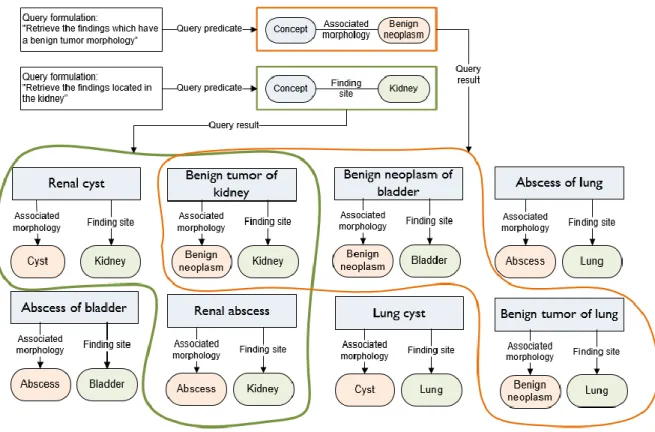
In Figure 6-3 the same set of concepts are shown analyzed with the intention to identify those which have a finding site of kidney. In this example, the concepts ‘renal cyst’, ‘benign tumor of kidney’ and ‘renal abscess’ are found to have the required defining relationship value.
Abscess of bladder Lung cyst
Benign neoplasm of bladder
Renal cyst Abscess of lung
Benign tumor of lung Cyst Associated morphology Kidney Finding site Abscess Associated morphology Kidney Finding site Abscess Associated morphology Lung Finding site Benign neoplasm Associated morphology Lung Finding site Abscess Associated morphology Bladder Finding site Cyst Associated morphology Lung Finding site Benign neoplasm Associated morphology Bladder Finding site Renal abscess Benign tumor of kidney Benign neoplasm Associated morphology Kidney Finding site Query formulation:
Retrieve the findings located in the kidney
Query predicate Concept Finding Kidney site
Query result
31
If the queries from Figure 6-2 and Figure 6-3 are combined, then the query will return those concepts which are benign tumors of the kidney (see Figure 6-4). In this case, the concept ‘benign tumor of kidney’ is the only concept found to have the required defining relationship values.
Figure 6-4: Query to retrieve benign neoplasms of the kidney
In most cases, these queries would be designed to return concepts with an associated morphology of ‘benign neoplasm’ or any subtype of ‘benign neoplasm (e.g. ‘angiomyolipoma’), and a finding site of ‘kidney’ or any subtype of ‘kidney’ (e.g. ‘papillary duct of kidney’, or ‘upper pole, left kidney’). This query could be expressed using the SNOMED CT Expression Constraint Language (see Section 9) as:
< 404684003|clinical finding|:
116676008 |associated morphology| = << 3898006 |benign neoplasm| AND
363698007 |finding site| = << 64033007 |kidney structure|
When executed against the January 31st 2015 international edition of SNOMED CT, this query would return the following 12 concepts:
Concept ID Preferred Term 254925008 Benign tumor of renal calyx 254919009 Cortical adenoma of kidney 269489006 Benign tumor of renal parenchyma 254920003 Cystadenoma of kidney
32
Concept ID Preferred Term 254922006 Oncocytoma of kidney 276866009 Benign tumor of pelviureteric junction 254927000 Benign papilloma of renal pelvis
92319008 Benign neoplasm of renal pelvis 307618001 Juxtaglomerular tumor 254923001 Hemangiopericytoma of kidney 254921004 Angiomyolipoma of kidney
92165001 Benign neoplasm of kidney 6.4.3 IMPLEMENTATION
6.4.3.1 QUERIES OVER DEFINING RELATIONSHIPS
A query, which constrains the defining relationships of matching clinical meanings to specific values can either be represented informally using a set of attribute value pairs, or represented more formally using a machine processable language (e.g. the SNOMED CT Expression Constraint Language). Please see Section 9 for more information.
Approaches to implement such a query include: Using the distributed relationships
In this approach, the distributed Relationship file is used directly to compare the target value of each defining relationship with the required attribute value in the query. This approach may be combined with a subsumption testing approach (e.g. transitive closure table) to enable subtypes of the required attribute value to also be matched.
Comparing normal form expressions
In this approach, the query is represented as a predicate expression containing the constrained attribute values, and the short normal form of this predicate expression is tested for subsumption against each candidate expression (as per the normal form subsumption test in section 6.3.3.2).
Using a Description Logic Reasoner
In this approach, a description logic reasoner (e.g. Snorocket, ELK, Fact++) is used to determine whether each candidate expression is subsumed by the query (represented by a predicate expression).
6.4.3.2 CASE STUDIES
Many organization-wide implementations of SNOMED CT, such as Kaiser Permanente’s HealthConnect EHR (case study 1.3) and the Danish National Medication Decision Support System (case study 1.4), are taking advantage of SNOMED CT’s definitional attributes to support advanced analytics.
A number of vendor products are also supporting analytics over SNOMED CT’s defining relationships, including Apelon’s Distributed Terminology System (case study 2.4), B2i Healthcare’s SnowOwl terminology server (case study 2.5), and Cerner’s Semantic Search tool (case study 2.8).
33
6.5 DESCRIPTION LOGIC OVER TERMINOLOGY
6.5.1 OVERVIEW
SNOMED CT’s semantics are based on Description Logic (DL). This enables the automation of reasoning across SNOMED CT, and subsequently the implementation of more powerful analytics operations than is possible using most other approaches. In addition to the subsumption and defining relationship testing described in the previous approaches, DL reasoners and query engines are able to utilize a number of additional logic-based techniques including:
Property chaining
A property chain is a rule that allows you to infer the existence of a property from a chain of properties. For example, “x has parent y” and “y has parent z” implies “x has grandparent z” (which may be written as “|has parent|o|has parent||has grandparent|). The current release of SNOMED CT includes the property chain:
363701004 |direct substance| o 127489000 |has active ingredient| 363701004 |direct substance|
However, more property chains may be added in local implementations if required. Reasoning over concrete values
Some concepts in SNOMED CT (e.g. 374646004 |amoxicillin 500mg tablet|) require
numbers or strings to fully define their meaning. By generating an OWL 2 representation of these concept definitions, Description Logic can be used to reason over their complete definition (including the concrete values)
Testing equivalence and subsumption of postcoordinated expressions (without calculating normal forms)
Description Logic enables equivalence and subsumption testing to be performed efficiently, without the need to manually calculate the normal form of each expression.
Reasoning over minimum sufficient sets
SNOMED CT definitions include the set of necessary and sufficient conditions that define the given concept. However, SNOMED CT does not currently distinguish the minimum sets which are sufficient to define these concepts. For example, the defining relationships of 154283005 |pulmonary tuberculosis| are:
116680003 |is a| = 64572001 |disease|
246075003 |causative agent| = 113858008 |mycobacterium tuberculosis complex|
116676008 |associated morphology| = 6266001 |granulomatous inflammation|
363698007 |finding site| = 39607008 |lung structure|
However, while the associated morphology of ‘granulomatous inflammation’ is necessarily present, the following set of defining relationships are sufficient to infer
154283005 |pulmonary tuberculosis|: 116680003 |is a| = 64572001 |disease|
246075003 |causative agent| = 113858008 |mycobacterium tuberculosis complex|
363698007 |finding site| = 39607008 |lung structure|
Using Description Logic, it is possible to reason using multiple minimum sufficient sets for each concept.
34
6.5.2 EXAMPLE
For example, if we want to find all disorders that are associated with the organism 80166006
|streptococcus pyogenes|, we may discover (using th