www.excelitas.com Page 1 of 9 C30927E-Rev.1.1-2017.08.11
DATASHEET
Photon Detection
Table 1 ̶ Mechanical and Optical Characteristics
Parameter Symbol Unit
Shape Circular Configuration Quadrant Photosensitive Surface: Useful area Useful diameter A d 1.77 1.55 mm2 mm
C30927EH-01, -02 and -03
Quadrant Silicon Avalanche Photodiode for Tracking
Applications
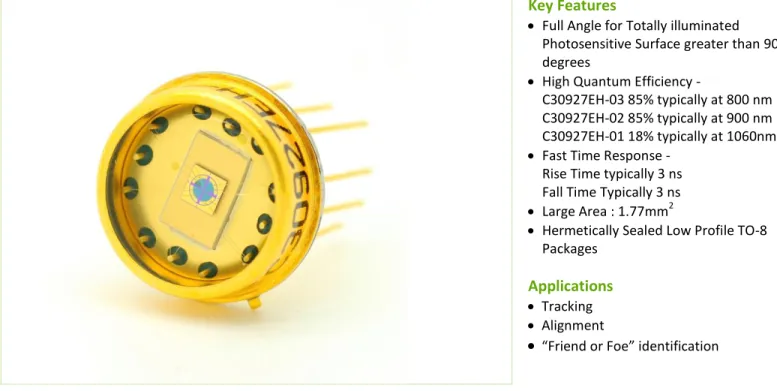
The C30927EH-01, C30927EH-02 and C30927EH-03 types are quadrant silicon photodiodes made using a double diffused “reach-through” structure. The quadrant structure has a common avalanche junction, with separation of the quadrants achieved by segmentation of the light-entry p+ surface opposite the junction. With this design, there is no dead space between the elements and therefore no loss of response at boresight.
They are optimized for use at wavelengths of 1060, 900 and 800 nm respectively. Each device type will provide high responsivity and excellent performance when operated within about 50 nm of the specified wavelength.
The quadrant avalanche photodiodes are useful in a variety of tracking and alignment applications. Key Features
Full Angle for Totally illuminated Photosensitive Surface greater than 90 degrees
High Quantum Efficiency -
C30927EH-03 85% typically at 800 nm C30927EH-02 85% typically at 900 nm C30927EH-01 18% typically at 1060nm
Fast Time Response - Rise Time typically 3 ns Fall Time Typically 3 ns
Large Area : 1.77mm2
Hermetically Sealed Low Profile TO-8 Packages
Applications
Tracking
Alignment
C30927EH
Quadrant Silicon Avalanche Photodiode for Tracking Applications
T
able 2 ̶ Electro-Optical Characteristics
Case Temperature T
A= 22 °C; at the DC reverse operating voltage, V
op, and light spot diameter of 1.0 mm
(0.04 inches) centered at boresight, unless otherwise specified
1.
Parameter Symbol Minimum Typical Maximum Units
Breakdown Voltage Vbr 350 425 485 V
Temperature Coefficient of Vop for Constant M Vop 2.4 V/°C
Gain M 100 Responsivity at 800 nm at 900 nm at 1060 nm R 45 50 12 55 62 15 A/W Quantum Efficiency at 800 nm at 900 nm at 1060 nm Q.E. 85 85 18 %
Total Dark Current Id 100 200 nA
Noise Current
(f=10kHz, Δf=1.0Hz, See Figure 5) in 1.0 1.5 pA/√Hz
Capacitance
total all quadrants
between quadrants Cd 3 0.5 5 pF
Resistance Between Paralleled Quadrant Pairs
(See Figure 6) 8 50 kΩ
Crossover at Boresight
(25µm spot, 10% to 90%, See Figure 8) 75 µm
Series Resistance Rs 15 Ω Rise/Fall Time, RL = 50Ω, λ=900nm: 10% to 90% points 90% to 10% points ttrf 3 3 4 4 ns 1
A specific value of Vop is supplied with each device when the photodiode is operated at this voltage, the device will meet the
C30927EH
Quadrant Silicon Avalanche Photodiode for Tracking Applications
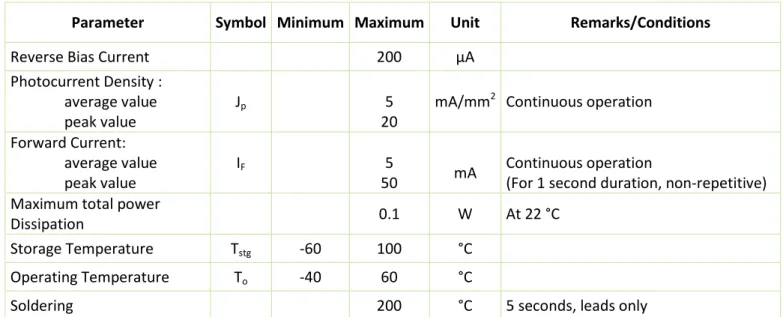
Table 3 ̶ Absolute – Maximum Ratings, Limiting Values
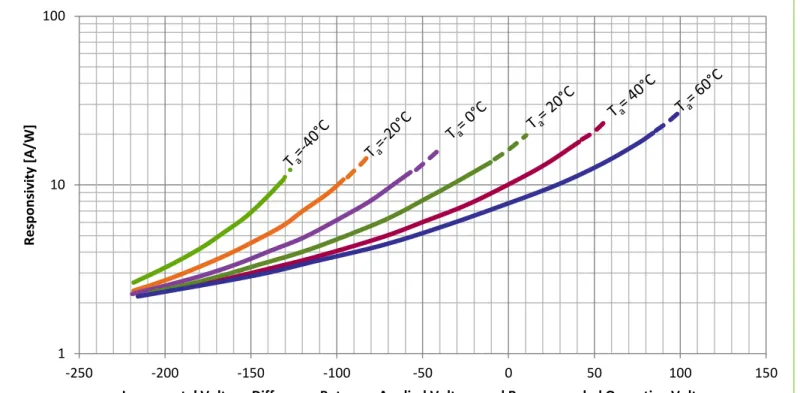
Figure 1 ̶ Typical Variation of Responsivity at 800 nm for type C30927E-03 as a function of Temperature
and Voltage Difference from the Designated Voltage, V
op(See Footnote 1)
1 10 100 -250 -200 -150 -100 -50 0 50 100 150 R e sp o n si vi ty [A /W]
Incremental Voltage Difference Between Applied Voltage and Recommended Operating Voltage, ∆Vop [V]
Parameter Symbol Minimum Maximum Unit Remarks/Conditions
Reverse Bias Current 200 μA
Photocurrent Density : average value peak value
Jp 5
20
mA/mm2 Continuous operation Forward Current: average value peak value IF 5 50 mA Continuous operation
(For 1 second duration, non-repetitive) Maximum total power
Dissipation 0.1 W At 22 °C
Storage Temperature Tstg -60 100 °C
Operating Temperature To -40 60 °C
C30927EH
Quadrant Silicon Avalanche Photodiode for Tracking Applications
Figure 2 ̶ Typical Variation of Responsivity at 900 nm for type C30927E-02 as a function of Temperature
and Voltage Difference from the Designated Voltage, V
op(See Footnote 1)
Figure 3 ̶ Typical Variation of Responsivity at 1060 nm for type C30927E-01 as a function of Temperature
and Voltage Difference from the Designated Voltage, V
op(See Footnote 1)
1 10 100 -250 -200 -150 -100 -50 0 50 100 150 R e sp o n si vi ty [A /W]
Incremental Voltage Difference Between Applied Voltage and Recommended Operating Voltage, ∆Vop [V] 1 10 100 -250 -200 -150 -100 -50 0 50 100 150 R e sp o n si vi ty [A /W]
Incremental Voltage Difference Between Applied Voltage and Recommended Operating Voltage, ∆Vop [V]
C30927EH
Quadrant Silicon Avalanche Photodiode for Tracking Applications
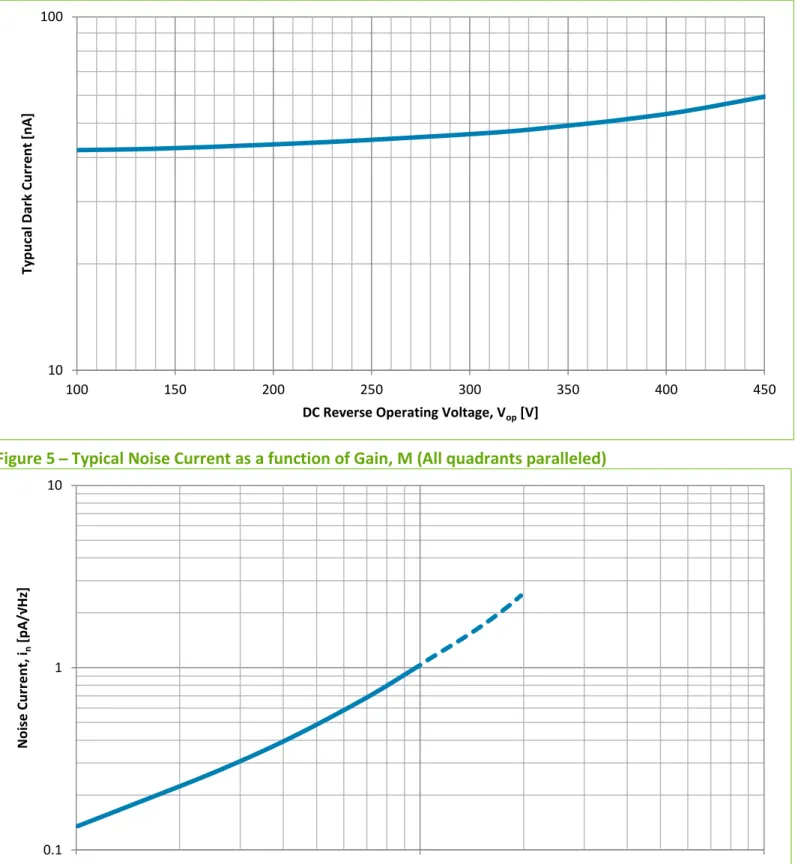
Figure 4 ̶ Typical Total Dark Current as a function of Operating Voltage, V
opFigure 5 ̶ Typical Noise Current as a function of Gain, M (All quadrants paralleled)
10 100 100 150 200 250 300 350 400 450 Ty p u cal Dar k Cu rr e n t [n A ]
DC Reverse Operating Voltage, Vop [V]
0.1 1 10 10 100 1000 N o ise Cu rr e n t, in [ p A /√ H z]
C30927EH
Quadrant Silicon Avalanche Photodiode for Tracking Applications
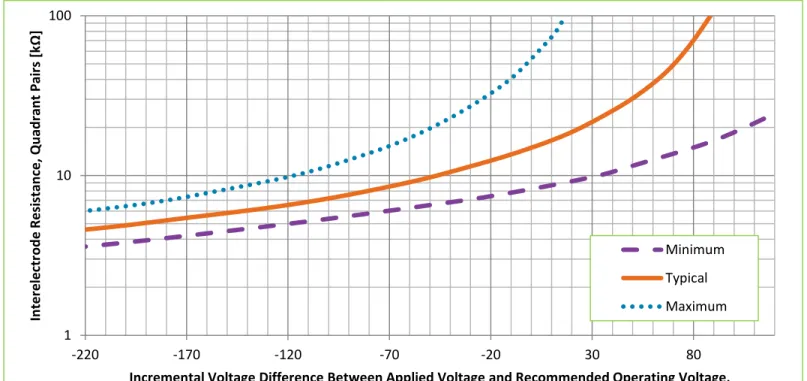
Figure 6 ̶ Typical Inter-electrode Resistance as a function of Voltage Difference from the Designated
Voltage, V
op 2Figure 7 ̶ Quadrant Geometry
2
There is a resistance between the quadrant elements which varies as a function of the applied voltage In Figure 6, the typical measured resistance between paralleled quadrant pairs is shown. For equivalent circuit considerations, the resistive element between any two adjacent quadrants is twice this value.
1 10 100 -220 -170 -120 -70 -20 30 80 In te re le ctr o d e R e si stan ce , Qu ad ran t Pai rs [k Ω ]
Incremental Voltage Difference Between Applied Voltage and Recommended Operating Voltage, ∆Vop [V]
Minimum Typical Maximum
C30927EH
Quadrant Silicon Avalanche Photodiode for Tracking Applications
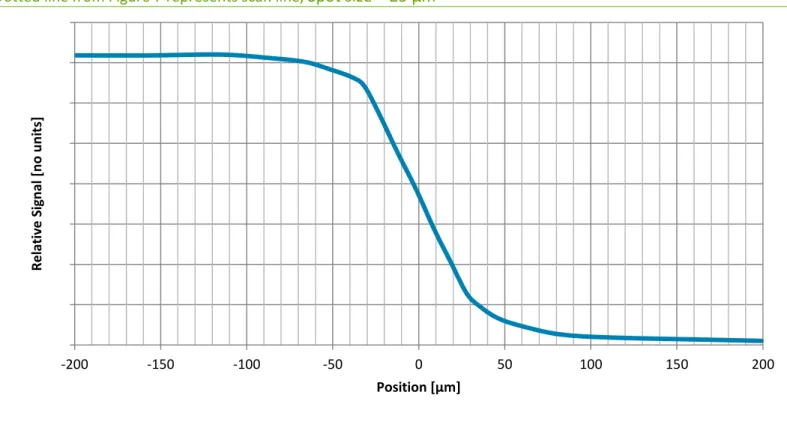
Figure 8 ̶ Scan Showing Typical Crossover Characteristic at Boresight, Quadrant B & C Grounded
Dotted line from Figure 7 represents scan line, Spot size = 25 µm
Figure 9 ̶ Typical Response as a function of Light Spot Position Scanned Diagonally Through Boresight – All
Quadrants Connected
3.
3
The response dips at boresight (approx.. 10%) observed in the scans of Figure 9 are caused by a slight difference in antireflection coating in the crosshair region as compared to the rest of the active area.
-200 -150 -100 -50 0 50 100 150 200 R e lativ e S ig n al [n o u n its] Position [µm] 0 10 20 30 40 50 60 70 80 90 100 Ty p ical Gain Position - mm 0.4 0.8 -0.8 -0.4 0
C30927EH
Quadrant Silicon Avalanche Photodiode for Tracking Applications
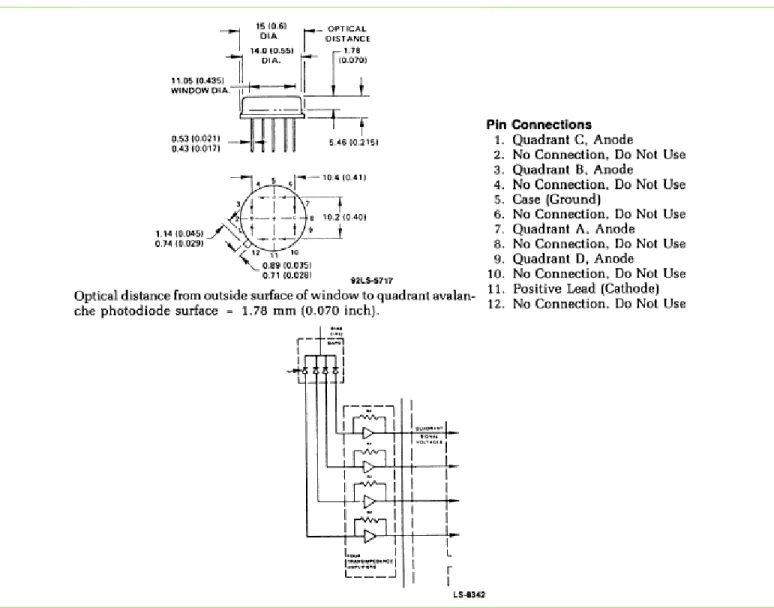
Figure 10 ̶ Dimensional Outline and Pin Connections
C30927EH
Quadrant Silicon Avalanche Photodiode for Tracking Applications
RoHS Compliance
The C30927EH Quadrant Silicon Avalanche photodiode series is designed and built to be fully compliant with the European Union Directive 2011/65/EU – Restriction of the use of certain Hazardous Substances (RoHS) in Electrical and Electronic equipment.
Warranty
A standard 12-month warranty following shipment applies. Any warranty is null and void if the photodiode window has been opened.
Excelitas Technologies 22001 Dumberry Road Vaudreuil-Dorion, Quebec Canada J7V 8P7 Telephone: (+1) 450 424 3300 Toll-free: (+1) 800 775 6786 Fax: (+1) 450 424 3345 [email protected] Excelitas Technologies GmbH & Co. KG Wenzel-Jaksch-Str. 31 D-65199 Wiesbaden Germany Telephone: (+49) 611 492 430 Fax: (+49) 611 492 165 [email protected]
Excelitas Technologies Singapore, Pte. Ltd.
8 Tractor Road Singapore 627969
Telephone: (+65) 6775 2022 (Main number) Telephone: (+65) 6770 4366 (Customer Service) Fax: (+65) 6778-1752
For a complete listing of our global offices, visit www.excelitas.com/locations
© 2012 Excelitas Technologies Corp. All rights reserved. The Excelitas logo and design are registered trademarks of Excelitas Technologies Corp. All other trademarks not owned by Excelitas Technologies or its subsidiaries that are depicted herein are the property of their respective owners. Excelitas reserves the right to change this document at any time without notice and disclaims liability for editorial, pictorial or typographical errors.
About Excelitas Technologies
Excelitas Technologies is a global technology leader focused on delivering innovative, customized solutions to meet the lighting, detection and other high-performance technology needs of OEM customers.
Excelitas has a long and rich history of serving our OEM customer base with optoelectronic sensors and modules for more than 45 years beginning with PerkinElmer, EG&G, and RCA. The constant throughout has been our innovation and commitment to delivering the highest quality solutions to our customers worldwide.
From analytical instrumentation to clinical diagnostics, medical, industrial, safety and security, and aerospace and defense applications, Excelitas Technologies is committed to enabling our customers' success in their specialty end-markets. Excelitas Technologies has approximately 3,000 employees in North America, Europe and Asia, serving customers across the world.