CCE Theses and Dissertations College of Computing and Engineering
2019
The Impact of Cross-References on the Readability of the U.S.
The Impact of Cross-References on the Readability of the U.S.
Internal Revenue Code
Internal Revenue Code
Jeffrey A. LaskyNova Southeastern University, [email protected]
Follow this and additional works at: https://nsuworks.nova.edu/gscis_etd
Part of the Computer Sciences Commons
Share Feedback About This Item
NSUWorks CitationNSUWorks Citation
Jeffrey A. Lasky. 2019. The Impact of Cross-References on the Readability of the U.S. Internal Revenue Code. Doctoral dissertation. Nova Southeastern University. Retrieved from NSUWorks, College of Computing and Engineering. (1101)
https://nsuworks.nova.edu/gscis_etd/1101.
This Dissertation is brought to you by the College of Computing and Engineering at NSUWorks. It has been accepted for inclusion in CCE Theses and Dissertations by an authorized administrator of NSUWorks. For more information, please contact [email protected].
The Impact of Cross-References on the Readability
of the U.S. Internal Revenue Code
by
Jeffrey A. Lasky
A dissertation submitted in partial fulfillment of the requirements for the degree of Doctor of Philosophy
in
Information Science
College of Computing and Engineering Nova Southeastern University
An Abstract of a Dissertation Submitted to Nova Southeastern University in Partial Fulfillment of the Requirements for the Degree of Doctor of Philosophy
The Impact of Cross-References on the Readability of the
U.S. Internal Revenue Code
by
Jeffrey A. Lasky December 2019
Scholars and practitioners have long argued that U.S. income tax law (“the Tax Code”) is excessively complex and difficult to understand, and hence imposes non-trivial adjudication, administration, planning, and compliance costs across the spectrum of income tax stakeholders: the courts, the Internal Revenue Service, tax practitioners, business managers, and individual taxpayers. Hence, there is considerable interest in reducing the effort needed to accurately understand and apply the provisions of income tax law. Prior scholarly work has strongly argued that exceptions to Tax Code provisions as expressed by cross-references embedded in the Tax Code text constitute a major source of reading complexity.
The goal of the study was to gain a first empirical understanding about the readability impacts on users who encounter cross-references while reading Tax Code provisions. The study included a human subjects task performance experiment with 75 undergraduate and graduate accounting student participants who were completing or had completed an introductory level course in federal income taxation. Participants were presented with integrated tax scenarios and accompanying sets of scenario questions. Copies of several Tax Code sections were the only reference materials available to the study participants. The study was based on a within-subjects experimental design.
To investigate the prior work argument, cross-references embedded in the Tax Code reference materials provided to study participants that expressed exceptions were all assigned to one cross-reference category, and all other cross-references that served different purposes were assigned to a second category. As responses to scenario questions were binary (correct/incorrect), logistic regression was used to test study hypotheses.
The study’s major finding was that reading cross-references assigned to the exceptions category had a very strong negative effect on task performance, while reading cross-references assigned to the second category had a modest positive effect on task performance. The finding thus supports decades of analysis and argument that cross-references related to expressing exceptions are a major source of Tax Code reading complexity. This outcome warrants further research into statutory exception language, that subset of statutory language used to express exceptions. Such a subset will include cross-references as one of many language elements that are available for the purpose of expressing exceptions.
Acknowledgements
I wish to extend a most sincere thank you to the members of my dissertation committee, Dr. Amon Seagull (Advisor), Dr. Michael Laszlo, and Dr. Steven Terrell, each of whom provided guidance and wisdom in their own unique manner. For those who know me best, all would be quick to agree that Dr. Seagull, with unwavering and sustained commitment to my success, pulled off a mission impossible.
I am grateful to my colleagues and friends who provided needed encouragement during the inevitable dark times.
The heroes of the story are my family, Sandi, Barley, and Violet, who endured with grace, over a prolonged period of time.
v
Table of Contents
Abstract iii
Acknowledgements iv Table of Contents v List of Tables vii List of Figures viii Chapters 1. Introduction 1 Background 1 Problem Statement 24 Dissertation Goal 25 Research Question 25
Relevance and Significance 25 Barriers and Issues 27
Assumptions, Limitations, and Delimitations 27 Definitions of Terms 29
List of Acronyms 29 Summary 29
2. Review of the Literature 31 Overview 31
The Nature of Legislative Expression for Income Tax Law 33 Information Structures for Legislative Provisions 38
Linguistic Analysis of Legislative Language 42 Linguistic Analysis of Legislation 44
Network Analysis of Legislation 52
Related Human Subjects Experimentation 57 Summary and Conclusions 64
3. Methodology 67 Motivation 67
Overview of the Approach 67
Development of the Experimental Scenario 68 Experimental Design 71
Experimental Variables 73 Hypotheses 81
Data Collection and Data Preparation 82 Data Analysis 83
vi 4. Results 89
Conduct of the Experiment 89 Study Dataset Development 91 Experimental Results 93 Hypothesis Testing 97
Post-test participant experience survey 110 Summary and Conclusion 114
5. Conclusions, Implications, Recommends and Summary 116 Introduction 116
Study hypotheses and conclusions 117 Implications 124
Recommendations for future work 128 Summary 133
Appendices
A. Participant Scenario Materials 135 B. Scenario Tax Code Sections 154
C. Provisions per Question and Data Tuples 168 D. IRB Approvals 175
E. Scenario Solutions 179 F. Tax Expert Reviewers 188
G. Distributions of Independent Variables 189 H. Participant Survey 192
vii List of Tables
Tables
1. Sample of Flesch Reading Ease Scores 5 2. Section 32 External Cross-References 12
3. Comparative Complexity Ranking of Title 42 and Title 26 55 4. Top Five U.S.C. Titles with Largest Cores 56
5. Composition of the Study Dataset 93
6. Undergraduate Participant Question Responses 94 7. Graduate Participant Question Responses 95 8. H1 model results 101 9. H2 model results 102 10. H3 model results 102 11. H4 model results 104 12. H5 model results 106 13. H6 model results 109 F1. Provisions per Question 169 F2. Question Data Tuples 173
viii
List of Figures
Figures
1. Section 32, Earned Income Tax Credit, network view 12 2. IRS Commissioner scenario network view 13
3. Visualization of U.S.C. Titles with largest cores 56 4. Ranked percent correct answers 96
5. Distribution of Scope.Tokens values 99 6. Distribution of Tot_CR.Nodes values 99
7. Study experience survey – undergraduate students 111 8. Study experience survey – graduate students 112
Chapter 1
Introduction
Background
Communities of practice shape written language to meet their communication needs and communication customs. Such shaping typically includes, for example, the development and use of specialized or technical vocabularies, the use of unusual syntactical constructions, the use of certain words and phrases as connectives and conjunctions to add cohesion to the text, and the physical organization and presentation of the text. The result of this shaping creates new language varieties, or synonymously sublanguages (Kittredge & Lehrberger, 1982). Examples of sublanguages include legal (Charrow, Crandall, & Charrow, 1982), medical and scientific, religious, and newspaper reporting (Crystal & Davy, 1969), and military (Kittredge, 1982).
In some cases, a sublanguage will be naturally subdivided into a set of more specialized sublanguages. The legal sublanguage, for example, includes a legal document language for drafting legislation (hereafter “the statutory language” or “the legislative language”) and one for drafting contracts (Trosberg, 1997). Characteristics of the
statutory language include common and uncommon terms with meanings specific to legal use, long sentences, syntactic complexity, complex conditionals, chain-like structures of conditions and of exceptions to rules, and high incidences of complex prepositional phrases (Charrow, Crandall, & Charrow, 1982; Danet, 1985; Williams, 2007). Such statutory language characteristics are due, in part, to the presence of frequently occurring, complex, detailed contingencies in statutes (Bhatia, 1987, p. 9), and the requirement for
statutes to be expressed in a way that avoids ambiguity. As Trosberg (1997) remarked “A statute is a highly serious social document of ultimate authority which needs careful expression” (p. 30).
Codification
During the period 1795-1926, the U.S. government wrestled with the question of how best to organize, maintain, and publish federal statutes (Tress, 2010). In 1874, the first codification of federal statutes was published as the Revised Statutes of the United States. Thereafter and over time, the statutes were re-codified and published as the United States Code (U.S.C), the present-day codification of the permanent laws of the United States. In the context of legislation, codification is the formal process whereby statutes are placed in a topically organized collection. Each statute is expressed in a hierarchical structure, where the nodes of the hierarchy contain the statute’s sections, provisions, and sub-provisions. The nodes are identified using a consistent numeric or alphanumeric labeling scheme.
Referential constructions
Stevenson (2014) notes that once numeric identifiers became available, referencing among and between statutes was greatly facilitated. In this context, a cross-reference is a unique linguistic component of the statutory language that establishes a legal relationship between two or more statutory provisions. Cross-references are embedded in the provisions themselves, identify another labeled provision, and are integral to expression of the provisions. Cross-reference examples include as defined in, under the provisions of, and except as provided in. Such referential constructions are
essential since “legal provisions take effect in the context of a number of other provisions and subprovisions” (Bhatia, 1983, p. 212).
The movement to codify statutes and regulations created, as an unintended consequence, a substantial increase in the use of cross-references, and arguably a
corresponding increase in complexity. According to Bhatia (1983), the complex forms of syntactic constructions and referential structures found in legislative text reflect how the draftsperson has uniquely used the statutory language to meet the expectations of
precision and absence of ambiguity. Bhatia goes on to say that such careful and detailed expression is not without the cost “of producing a [statutory] document which may be regarded by the reader as pompous, tedious, and unnecessarily complex, and hence unreadable” (p. 24).
Although Stevenson (2014) did not explicitly say so, the decision to codify was an information design decision. The study is centrally concerned with examining claims about unintended consequences of this information design decision on statutory readability and usability, with particular focus on cross-references as one element of statutory expression and presentation.
In the following section, the matters of readability and usability of complex statutory text are examined with specific reference to the Internal Revenue Code, the statute that expresses U.S. income tax law. The Internal Revenue Code is widely considered to be the leading example of statutory complexity, and has, for decades, received scholarly attention, and less rigorous attention as well, from stakeholders in the public and private sectors.
Captivation with the complexity of income tax law
Considerations of income tax law are often central in the planning and decision-making activities of individuals, families, and organized entities of all types. Hence, income tax law affects large numbers of people and organizations. Yet, income tax law in the United States, as well as in other English-speaking countries such as Australia,
Canada, New Zealand, and the United Kingdom, has long been, and continues to be, assailed as being numbingly complex. For the purposes of this study, complex means challenging and difficult to read, to understand, and to apply. Consideration of other forms of income tax complexity, including income tax policy, compliance complexity, and administrative complexity, are outside the scope of the study.
Legal writings, as typically expressed in legalese, are considered to be among the more complex types of documents (Benson, 1985). Some supporting evidence for this assertion is found in Flesch (1979a). Flesch, the developer of the nearly ubiquitous Flesch Reading Ease score, randomly sampled writings from a variety of sources, and then calculated the Reading Ease score for each. The results are shown in Table 1 below (some omitted, bold emphasis added to denote legal discourse) (p.26). The score is calibrated to a scale of 1 to 100, where a value of 100 categorizes text that is easy to read, and a value of zero identifies text that is practically unreadable. The Internal Revenue Code is ranked essential unreadable.
Table 1.
Sample of Flesch Reading Ease Scores
Sample publication Average Reading Ease Score
Comics 92
Consumer ads in magazines 82
Movie Screen 75
Readers Digest 65
Time 52
Harvard Business Review Wall Street Journal
43
The New York Review of Books 35
Harvard Law Review 32
Standard auto insurance policy 10
Internal Revenue Code -6
Commentaries on income tax legislation frequently invoke a sense of despair and frustration related to difficulties in understanding income tax law as expressed in the form of statutory writings. The following comment, attributed to a judge’s remarks written in 1990 about two subsections of the Australian Income Tax Assessment Act of 1936, is a representative example:
While both subsections present difficulties of construction, the former is drafted [written] with such obscurity that even those used to interpreting the utterances of the Delphic oracle might falter in seeking to elicit a sensible meaning from its terms (cited in Williams, 2007, p.14)
Other types of comments sometimes provide indications as to possible sources of such understanding and application difficulties. The now classic remarks of Learned Hand (1947), a well-respected judge and judicial philosopher, delivered in the context of a eulogy for a colleague, provide reflective insights into the burdens associated with reading and understanding even what was then a much smaller-scale, 137-page tax law (Revenue Act of 1938) compared to the present day, approximately 4,000-page U.S. Internal Revenue Code (emphases and line spacing added).
In my own case the words of such an act as the Income Tax, for example, merely dance before my eyes in a meaningless procession: cross reference to cross-reference, exception upon exception - couched in abstract terms that offer no handle to seize hold of - leave in my mind only a confused sense of some vitally important, but successfully concealed, purport, which it is my duty to extract, but which is within my power, if at all, only after the most inordinate expenditure of time. …
Much of the law is now as difficult to fathom, and more and more of it is likely to be so; for there is little doubt that we are entering a period of increasingly detailed regulation, and it will be the duty of judges to thread the path - for path there is - through these fantastic labyrinths. … (p. 169).
In the view of Miller (1993) and others (Potter, 2004), Hand’s labyrinths would also be characterized as a Serbonian Bog, where escape from entangling circumstances is problematical at best. Reference to this mythical swamp in ancient northern Egypt has a substantial history of use in legal documents (Potter, 2004).
Similar to Judge Hand’s mention of cross-references and exceptions as contributors to [his] income tax law readability difficulties, Rook (1993) selected exceptions, cross-references, (and verbal descriptions of arithmetic expressions), as a framework for organizing his drafting suggestions to improve the readability of complex legislation in general, and of the Internal Revenue Code in particular. He noted that nested exceptions and chains of cross-references were especially problematical. Rook ends his introductory remarks with tongue-in-check expression of cautious optimism:
Thus, I assume that even though the statute is unartfully drafted, and therefore more complex than it need be, a reader can divine the legislation’s meaning after some analysis and perhaps some aspirin (p. 666).
Less colorful complexity analysis can be found in the recent trend to apply network analysis to statutes. In the case of U.S. statutes, while the analysis is typically conducted on groups of statutes, the Internal Revenue Code is considered as a group of one. Katz and Bommarito (2014), in apparently the first work to develop a statutory
complexity measure based on network analysis, ranked the Internal Revenue Code as the second most complex federal statute. A review of their work presented in Chapter II arguably ranks the Internal Revenue Code as the most complex statute. The results of another network analysis also point to an Internal Revenue Code ranking of most complex (Li, Faz, Larochelle, Hill & Lo, 2015).
The complex technical structure of the Internal Revenue Code
Given the nearly continual captivation among many about income tax complexity, McCaffery (1990) asks “But what then explains our [U.S.] tax system’s persisting
complexity?” (p. 1267, Abstract). Stanley Surrey, the U.S. Assistant Secretary of the Treasury for Tax Policy from 1961-1969, and a professor at Harvard Law School, offers characterizations of U.S. income tax law that can serve as an organizing framework for the explanations that McCaffery seeks.
… a complex technical structure … [comprised of] complex substantive tax rules with complex interrelationships, characterized by complex variations in the tax treatment of transactions often not differing greatly in substance or form, all of which are expressed in a complex statutory terminology and arrangement (Surrey, 1969, p.673).
Surrey continues with describing the relationships between a reader and the complex technical structure:
The sheer complexity of the income tax, with its countless artificial rules and definitions, involves so many possible combinations of rules that efforts to study and evaluate the possible solutions to any single problem become enormously difficult. As a problem emerges, it appears to have a certain contour. … Soon further study begins to disclose that the problem does not stand in isolation. It is connected by many strands with other difficulties. It is but a surface manifestation of deeper troubles. Its conceptual significance then becomes clouded as the links with other concepts begin to emerge (p. 687).
Taken together, Surrey’s two descriptions reveal two high-level, interrelated properties of the complex technical structure, a static dimension and a dynamic
dimension. In the context of reading and understanding, McCaffery (1990) defines the term technical complexity as “the pure intellectual difficulty of ascertaining the meaning of tax law … a relatively static matter concerning the understandability of a particular Tax Code section in abstract isolation from other sections” (p. 1271). The term Tax Code section identifies the entire collection of income tax statutory text that is physically assembled, presented, and identified with a section number and title.
The dynamic dimension is associated with applying the information encapsulated in the complex technical structure to tax problem solving or to tax planning. For these purposes, many sections of the Tax Code likely will be consulted, and perhaps sections of other statutes as well. Arguably, these tasks present higher levels of intellectual difficulty compared to the static case. McCaffery continues, “In contrast, structural complexity is dynamic in nature in that it involves the transactional effects of a tax rule in the context of the Code as a whole” (p. 1271).
A parse of Surrey’s characterizations serves to identify properties of the static and dynamic dimensions. Static properties include arrangement, rules and expression of rule interrelatedness, and language. Dynamic properties include problem definition and dimensionality, scale of the rules space, concept and solution emergence, discovery of related concepts, and solution elaboration. The following sections examine several of the properties that are associated with the static and dynamic dimensions of the complex technical structure, and their potential contributions to Tax Code complexity.
There are two discernable information structures, one hierarchical and the other network, that form the foundation of the complex technical infrastructure. The
provisions. The network information structure is comprised of a (large) set of cross-references that express relationships between the statutory provisions.
Hierarchical structure
The text of the general and permanent U.S. federal statutes is compiled and codified in the United States Code (U.S.C.). The U.S.C. is hierarchically structured, where the top level organizes federal statutes into Titles that represent broad areas of law. In some cases, such as Title 42 - The Public Health and Welfare, numerous, disparate statutes are organized under one Title. In other cases, such as Title 26 - Internal Revenue Code (the “Tax Code”), the Title contains only one statute. Presently (as of 2018) 53 Titles comprise the U.S.C.
Each statute is hierarchically organized as a topic hierarchy followed by a content hierarchy. The topic hierarchy is comprised of varying numbers of subtitles, chapters, subchapters, parts and subparts. For example, Title 26 includes Subtitle A (Income Tax), Subtitle B (Estate and Gift Taxes), and nine additional subtitles. Subtitle A includes Chapter 1, Normal Taxes and Surtaxes, Chapter 2, Tax on Self-Employment Income, and five other Chapters. Chapter 1 includes Subchapter A (Determination of Tax Liability), Subchapter B, (Computation of Taxable Income), and 23 additional Chapters. Each chapter may in turn be subdivided into subchapters, parts, and subparts. Hence, the Title 26 topic hierarchy is a collection of hierarchies, each beginning at Title 26 and ending at a subtitle, chapter, subchapter, part, or subpart node.
The terminal node of each topic hierarchy is followed by an associated content hierarchy. The content hierarchy contains the actual statutory text organized into varying numbers of sections, subsections, paragraphs, subparagraphs, clauses, and subclauses.
Each subdivision of the content hierarchy is labeled with a standardized U.S.C. string of upper and lower case alphanumeric characters that encodes the hierarchical structure used to organize the legislative text. The complete path to a statutory provision begins at a section encoded as a unique integer, followed as needed by a lowercase alpha character (subsection), an integer (paragraph), an uppercase alpha character (subparagraph), a lower case Roman numeral (clause), and an upper case Roman numeral (subclause), each enclosed in parentheses. For example, the complete path to section 401, subsection (a), paragraph (5), subparagraph (D), clause (i), subclause (I) will be in the form section 401(a)(5)(D)(i)(I).
Network structure
Statutes in the U.S.C. contain referential structures, or cross-references, whose purpose is to explicitly specify relationships between the statutory provisions. These cross-references are motivated by the presence of topic relatedness, or overlap, in the statute. The cross-references are expressed using the alphanumeric path format described above. The aggregate of these cross-references creates a graph, or network information organization, that is integrated into and superimposed on and across the hierarchical information organization. In graph terminology, each element of the content hierarchy (section, subsection, paragraph, subparagraph, clause, subclause) is a node, and each cross-reference is an edge that connects two nodes.
The degree of overlap, even for seemingly ordinary tax matters, can be
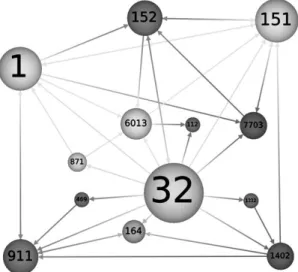
surprisingly considerable. For example, Luttman, Monarchi, and Nagy (2015) conducted a network analysis of Tax Code section 32, the earned income credit. Section 32 contains cross-references to 12 other Tax Code sections. Figure 1 displays the network created by
the cross-references (Luttman et al., 2015, p. 23). Shown are the edges connecting section 32 to the 12 other sections, as well as additional edges that signify relationships among the 12 other sections themselves. The arrowheads in Figure 1 show the from-to direction of the cross-references from section to section. More generally, both the from-provision and the to-provision locations can be at any position in the provision hierarchy {section, subsection, paragraph, subparagraph, clause, subclause}.
Table 2 identifies the topic name of each section included in the Figure 1 graph. The topics represent a wide range of tax matters. For any practical set of circumstances that bear on the section 32 tax credit, only a subset(s) of the graph and the associated topics will need to be consulted. There are, however, many sets of potential
circumstances that will lead to consideration of other graph subsets and their associated topics. The graph depicts only the inter-section, or external cross-references, those that formally define relationships between the provisions of two or more different sections. Not displayed are the intra-section, or internal cross-references, those that formally define relationships among the provisions of one section.
There may also be extra-statute cross-references, those that formally define relationships between different statutes. From the network perspective, one of the distinguishing properties of the Internal Revenue Code is that 97 percent of cross-references are internal cross-cross-references (Katz & Bommarito, 2014). Thus, the Internal Revenue Code is highly self-referential, the complexity implications of which are discussed in Chapter 2.
Figure 1. Section 32, Earned Income Tax Credit, network view. The relative size of circles is proportional to the number of incoming and outgoing cross-references. (Luttman, et al., 2005, p.23).
Table 2.
Section 32, External Cross-References
A more robust view into the network component of the complex technical structure, and one that illustrates the potential scale of the technical structure’s
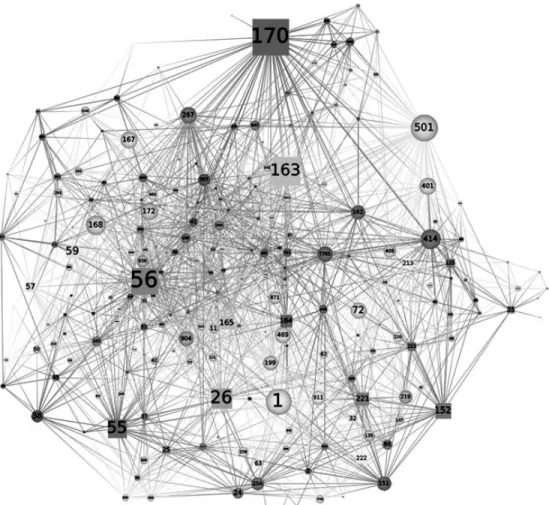
complexity, is provided by a network analysis of a tax scenario presented by a former IRS Commissioner while delivering a speech about the complexity of the Tax Code (Luttman, et al., 2015). On the surface, the scenario environment was simple: a married couple, both working, with children. The Commissioner’s modest scenario elaborations were directed mostly to common family tax matters, with some special emphasis on tax
Section Topic Section Topic
1 Taxes imposed 871 Non-resident alien individuals 112 Combat zone
compensation
911 U.S. citizens or residents living abroad
151 Personal exemptions 1222 Capital gains and losses (definitions)
152 Dependent defined 1402 Self-employment income 164 Itemized deductions
(taxes)
6013 Joint returns 469 Limitations on passive
losses
benefits related to children. The researchers mapped the Commissioner’s example scenario to relevant sections of the Tax Code. This activity identified 27 sections. The analysis was then extended to 229 other sections that referred to one or more of the 27 sections. The resulting graph is shown in Figure 2. Again, only the external cross-references are depicted in the graph.
Figure 2. The initial 27 sections are depicted as squares, and the additional 229 sections as circles. There is a total of 1,858 incoming and outgoing cross-references between the 256 sections. The total number of cross-references is conservative, since multiple references between two sections were counted as one intersection reference, and all intra-section references were ignored. (Luttman et al., 2015, p. 28). Shadings are the grey scale renditions of the color figure as published.
Structure interaction
Topic interrelatedness, and the cross-references that formally create the
interrelationships, are thought to be a source of reading and comprehension impairment (Burton and Karlinsky, 2016, p. 248). As a reader naturally traverses the statutory text hierarchy in linear and downward direction, the reader can expect that the next node will provide detail related to the information in the immediately above node, as this is a fundamental property of an information hierarchy. In other words, there will be no information surprises that could disrupt a reader’s train of thought. (This is not to say, however, that hierarchical information structures will necessarily spare a reader from comprehension challenges. A reader’s train of thought can also be disrupted by exposure to successive nodes of increasing detail, absence of surprise notwithstanding).
In a pure hierarchy, there are no linkages that connect the discrete hierarchical paths. However, the cross-references embedded in the statutory text do serve as connections between discrete hierarchical paths. Hence, statutes codified in the U.S.C are not organized as pure hierarchies, but rather are organized as composite structures, part hierarchical and part network.
The composite information structure does not have the information topic predictability of a pure hierarchy, and so may contribute to comprehension difficulties. This is the case because traversing the path formed by an external cross-reference(s) will move the reader’s attention to another discrete branch(s) in the hierarchy, and hence to another topic or concept. If the path is formed by an internal cross-reference, the reader’s attention will also be impacted. These attention events may cause the reader to experience a coherence disruption that will impact the reader’s thought processes and thus degrade
understanding (Miller & Kintsch, 1980). In addition, and importantly, different from the serial, uninterrupted reading mode associated with reading a hierarchical structure, a reader of the composite structure will experience an interruption each time a cross-reference is encountered in the text. Interrupted reading has been shown to cause comprehension difficulties (Foroughi, Werner, Barragan, & Bohm-Davis, 2015).
Expression of rules and rule interrelationships
Statutes express the law in terms of primary rules and related secondary rules. The primary rules express a provision of law in relatively general terms. The secondary rules specify the conditions under which the general rule will and will not be operative, and if operative, whether the terms of the general rule will be adjusted due to circumstances. Hence, the expression of a specific point of law is a union of primary and secondary rules (Hart, 1994), or using Bhatia’s terminology (1983), the union of main provisions and qualification provisions.
The secondary rules, or qualification provisions, provide definitions, and also set forth exceptions, limitations, special rules, and ordering instructions for the application of provisions. The qualification provisions are expressed in one of two ways. In the first, the qualifications are inserted into the statutory text as self-contained provisions; i.e., the text does not include a cross-reference(s). In the second, the qualification provisions do include a reference(s). The referred to provision(s) may also include a cross-reference(s), thereby creating a chain(s) of cross-references.
The legislative draftsperson is responsible for transforming the intent of the legislature into written statutory law. The draftsperson relies on cross-references to accomplish two major goals:
1. To reduce the volume of the legislative text by referencing an already existing definition rather than repeating the definition in each provision where the defined term is mentioned.
2. To explicitly and formally record legal relationships among and between provisions, not only at the time the statute is initially drafted, but as well over time as the statutory text is amended thereby potentially requiring cross-reference additions,
modifications, and deletions. McCaffery (1990) notes one primary motivation for changes to tax legislation is “taxpayer exploitation of gaps, ambiguities, and
inconsistencies in the rules” (p. 1277) as taxpayers seek to minimize their tax liability. Flesch (1979b) provides a detailed mini-history of how cross-reference use in the Tax Code evolved in reaction to taxpayer attempts to minimize investment tax liability by taking advantage of how the Tax Code defined family members.
The cross-references that explicitly create and signal interrelationships between the statute’s provisions are expressed in a unique syntactical style. A cross-reference is a composite syntactical unit comprised of a natural language cue word or phrase together with a pointer to a location the statutory text. The cue portion of the cross-reference, italicized in the following examples, gives a reader a context or a processing instruction for the information in the referenced text.For example, as defined in section 63, and
determined without regard to section 152(e), where in the former, the reader is provided with the location of a definition, and in the latter, the reader is being instructed to disregard the rule(s) contained in section 152(e).The legislative draftsperson in effect types the graph edge by supplying semantic information in the form of cue phrases.
Edge, or cross-reference, typing is fundamental to the expression of statutory text, since the conditions under which a particular provision will apply, or will not apply, are variable and sometimes nuanced. The draftsperson captures this state of affairs, for example, by authoring cue phrases such as does not apply by reason of; shall be applied as if; shall apply in lieu of the rules of; and shall apply only as provided by.
Complex statutory terminology
Here, the interpretation of complex statutory terminology as a component of Surrey’s description of the Internal Revenue Code as a complex technical structure, is twofold. The first component, mentioned previously, is the presence of unusual syntactic constructions present in the statutory text. Benson (1985) presents an illustrated list of such constructions labeled as syntactic features (p. 524). Bhatia (1983) includes an extended discussion of what he termed syntactic discontinuity, a problematic consequence of a particular and common drafting style that attempts to place
qualification clauses immediately following the word or phrase that is the qualification target. The normal processing of the sentence is then disrupted (p. 229).
The second component is the often-encountered complexity of how certain terms are defined. Morrison (2014) notes that the inclusion of defined terms, as well as cross-references, are essentially inevitable in a rules-driven, complex statute such as the Internal Revenue Code. The need to include defined terms is a direct result of using specialized terminology to express the rules that comprise legislative provisions. For certain terms, the volume of detail a reader must absorb can be overwhelming, as the recursive-like processing of nested terms and nested cross-references will likely prove burdensome to a reader. In Chapter 2, Morrison’s central example is presented and
extended to illustrate the degree of complexity that is attached to how a term such as
qualified retirement plan is defined.
The nature of reading the Tax Code
Tax Code §117, Qualified Scholarships, serves to illustrate the nature of reading the tax code. Here are presented, in tutorial form, the principal attributes of the statutory writing style. The following reproduced section 117 is based on a file prepared by the Office of Law Revision Council, U.S. House of Representatives. This office is
responsible for maintaining the United States Code. The discussion approach is to review each section 117 provision in the context of the material presented up to this point.
§117. Qualified scholarships
(a) General rule
Gross income does not include any amount received as a qualified scholarship by an individual who is a candidate for a degree at an educational organization described in section 170(b)(1)(A)(ii).
(b) Qualified scholarship For purposes of this section- (1) In general
The term "qualified scholarship" means any amount received by an individual as a scholarship or fellowship grant to the extent the individual establishes that, in
accordance with the conditions of the grant, such amount was used for qualified tuition and related expenses.
(2) Qualified tuition and related expenses
For purposes of paragraph (1), the term "qualified tuition and related expenses" means-
(A) tuition and fees required for the enrollment or attendance of a student at an educational organization described in section 170(b)(1)(A)(ii), and
(B) fees, books, supplies, and equipment required for courses of instruction at such an educational organization.
(c) Limitation (1) In general
Except as provided in paragraph (2), subsections (a) and (d) shall not apply to that portion of any amount received which represents payment for teaching, research, or other services by the student required as a condition for receiving the qualified scholarship or qualified tuition reduction.
(2) Exceptions
Paragraph (1) shall not apply to any amount received by an individual under- (A) the National Health Service Corps Scholarship Program under section 338A(g)(1)(A) of the Public Health Service Act,
(B) the Armed Forces Health Professions Scholarship and Financial Assistance program under subchapter I of chapter 105 of title 10, United States Code, or
(C) a comprehensive student work-learning-service program (as defined in section 448(e) of the Higher Education Act of 1965) operated by a work college (as defined in such section).
(d) Qualified tuition reduction (1) In general
Gross income shall not include any qualified tuition reduction. (2) Qualified tuition reduction
For purposes of this subsection, the term "qualified tuition reduction" means the amount of any reduction in tuition provided to an employee of an organization
described in section 170(b)(1)(A)(ii) for the education (below the graduate level) at such organization (or another organization described in section 170(b)(1)(A)(ii)) of-
(A) such employee, or
(B) any person treated as an employee (or whose use is treated as an employee use) under the rules of section 132(h).
(3) Reduction must not discriminate in favor of highly compensated, etc.
Paragraph (1) shall apply with respect to any qualified tuition reduction provided with respect to any highly compensated employee only if such reduction is available on substantially the same terms to each member of a group of employees which is defined under a reasonable classification set up by the employer which does not discriminate in favor of highly compensated employees (within the meaning of section 414(q)). For purposes of this paragraph, the term "highly compensated employee" has the meaning given such term by section 414(q).
[(4) Repealed. Pub. L. 101–140, title II, §203(a)(1), (2), Nov. 8, 1989, 103 Stat. 830 ] (5) Special rules for teaching and research assistants
In the case of the education of an individual who is a graduate student at an educational organization described in section 170(b)(1)(A)(ii) and who is engaged in teaching or research activities for such organization, paragraph (2) shall be applied as if it did not contain the phrase "(below the graduate level)"
§117 Narrative and Commentary
Typically, a Tax Code section will begin with a general rule. Subsection (a) is the general rule and authority that excludes from gross income amounts received from a qualified scholarship by a degree candidate at an educational organization that meets the criteria in section 170(b)(1)(A)(ii). Qualified scholarship and educational institution are examples of the large number of defined terms in the Tax Code. The definition of a term
will generally be available in the same section where the term occurs, or in a different section in the Tax Code. In some cases, the definition will be available in a different statute or law, or in another legal writing external to the Tax Code. Here, qualified scholarship is defined in subsection (b), while the definition of educational institution is obtained from the cross-reference to section 170(b)(1)(A)(ii). The section
170(b)(1)(A)(ii) cross-reference is an example of an external cross-reference.
Subsection (b)(1) contains the definition of qualified scholarship and introduces the defined term qualified tuition and related expenses. Subsection (b)(1) also imposes the requirement that for income exclusion, the scholarship amounts must actually be used for qualified tuition and related expenses. (To the extent that the requirement is not satisfied, such amounts are included in gross income).
Subsection (b)(2) contains the definition of qualified tuition and related expenses. Note the phrase For purposes of paragraph (1) at the beginning of subsection (b)(2). The phrase For purposes of serves to limit the scope of the definition of qualified tuition and related expenses to the context of subsection (b)(1). The definition presents two
categories of qualified expenses found in subparagraph (A) and subparagraph (B). Note a second identical use of a cross-reference to section 170(b)(1)(A)(ii). The repeated use of a cross-reference within a section is a common element of the legislative writing style, although not a principal element.
Subsection (c)(1) imposes a limitation on the general scholarship gross income exclusion rule. Scholarship amounts that represent compensation for required teaching, research, or other services are not excludable from gross income. Note the writing approach used to express the limitation. First, the excludable scholarship amount is
identified by the phrase Except as provided in paragraph (2). The reader will need to resolve the internal cross-reference to paragraph (2); the paragraph (2) in (b)(1)(2) or in (c)(2)? The resolution rule is that in the absence of additional path information, resolution takes place in the most immediate context, in this case, subsection (c).
Subsection (c)(2), Exceptions, again identifies excludable amounts by referencing that paragraph (1) will not apply to any amounts, including payments for services,
included in certain scholarship and other educations programs listed in subsection (c)(2)(A), (B), or (C). Second, the provisions that authorize the general scholarship exclusions, subsections (a) and (d), will not be applicable to any amount that represents compensation for services (except compensation for services included in subsection (c)(2)(A), (B), or (C) scholarships.
Subsection (d) introduces the defined term qualified tuition reduction, another form of excludable educational support under section 117. Subsection (d)(1) is the general rule and authority for excluding qualified tuition reduction amounts from gross income. Subsection (d)(1)(2) defines the term qualified tuition reduction. This benefit is available to an employee of a section 170(b)(1)(A)(ii) organization only for education below the graduate level (but see subsection (d)(5)). By virtue of the cross-reference to section 132(h), Certain Fringe Benefits, that is embedded in subsection (d)(2)(B), the definition of employee is expanded to include retired and disabled employees of the organization, a surviving spouse of the employee, the employee’s current spouse, and the employee’s dependent child or children. Section 132(h)(2)(B) contains a cross-reference to section 152(f)(1), Child defined. According to section 152(f)(1), the term child
Subsection (d)(3) is a non-discrimination rule that denies the exclusion benefit if the tuition reduction plan is only available to highly compensated employees. The method to impose the denial is a condition placed on the applicability of paragraph (1), the general exclusion from gross income rule for qualified tuition reduction. The defined term highly compensated employee is defined in cross-referenced section 414(q), Highly Compensated Employee. Section 414(q) includes nine paragraphs, five external cross-references, and 13 internal cross-references.
Subsection (d)(4) is repealed.
Subsection (d)(5) is a special rule for teaching and research assistants that modifies the language of paragraph (2) that includes the phrase “(below the graduate level)”. For a graduate student who is a teaching or research assistant, the rules for gross income exclusion of qualified tuition reduction will apply. The method to enact the special rule is the subsection (d)(5) language: paragraph (2) shall be applied as if it did not contain the phrase “(below the graduate level)”.
§117 Narrative and Commentary Revisited
The purpose of this section was to provide a commented experience of reading a (brief) Tax Code section, and to illustrate the principal attributes of the statutory writing style. A reading of section 117(d) provides a glimpse into the complexity of the Tax Code. Section 117(d) includes an external cross-reference (to section 132(h)) that
expands the common meaning of employee, an external cross-reference to section 414(q) that in turn has external cross-references to five other sections, and an example in
subsection by use of a backward internal cross-reference from paragraph (d)(5) to paragraph (d)(2).
In addition, it is seen that cross-references will serve different purposes. Bhatia (1983) developed a four-category classification of cross-references purposes. Here, each category is identified and illustrated with examples from the section 117 text.
Providing textual authority. Subsections (a) and (d) provide the authority to exclude from gross income amounts received as a qualified scholarship, and qualified tuition reductions, respectively.
Referring to terminological explanation. The subsection (a) cross-reference to section 170(b)(1)(A)(ii) references the definition of educational organization; the paragraph (d)(3) cross-reference to subsection 414(g) references the definition of highly compensated employee.
Providing textual mapping. Textual mapping cross-references establish a text-cohering relationship for reducing information processing load at specific points in provisions. Typically, instances of textual mapping cross-reference are seen in paired cross-references. Paragraph (c)(1) contains a forward reference to paragraph (c)(2), while paragraph (c)(2) contains a backward reference to paragraph (c)(1). In this example, a reader can review the rule in paragraph (c)(1) while deferring a review of the specific exceptions contained in paragraph (c)(2); also, the backward pointer in paragraph (c)(2) serves as a contextual reminder of the general rule of paragraph (c)(1).
Defining legal scope. Legal scope is a determination of how one provision can or will affect the operation of another provision. For example, paragraph (d)(2) constrains the application of the paragraph (d)(1) general rule to undergraduate students. However,
the paragraph (d)(5) special rule serves to rescind the constraint for graduate students who serve as teaching or research assistants.
It is an open question whether the four different types of cross-references will have the same or different impacts on Tax Code readability.
Conclusion
The issue of the degree of complexity present in the U.S. Tax Code, considered in the context of reading, comprehension, and application challenges, is long standing. Surrey’s conceptualization of the U.S. Tax Code as a complex technical structure is supported to certain extents by prior work, albeit sometimes accompanied by emotional outbursts. The properties of legal languages in general, and the statutory language in specific, continue to receive academic attention. On the other hand, there has been less academic attention, from the behavioral perspective, focused on whether and to what extent the use of cross-references to express statutory provisions contributes to long-standing Tax Code complexity concerns.
Problem Statement
Notwithstanding commentary from income tax scholars and practitioners about the adverse and potentially severe readability effects associated with the presence of cross-references in the U.S. Tax Code, only minimal prior scholarly work has been directed toward increasing understanding about the extents to which the presence of cross-references in income tax legislation impair reading and comprehension, and impair capabilities to apply specific Tax Code provisions to income tax problems.
More recently, however, as will be discussed in Chapter II, increasing research attention is being directed to the identification and classification of cross-references in
legislative text, to the relationship between cross-references and the complex technical infrastructure, and more generally, to readability complexity. The preponderance of this work is in the form of computer-based linguistic and network analysis applied to
statutory text corpora. Parallel research efforts in the form of human-subjects
experimentation for investigating the potential relationships between cross-references embedded in statutory text, and statutory text readability, can serve as a useful, complementary avenue of research.
Dissertation Goal
The goal of the study was to gain a first human-subject based understanding about the extent to which the presence of cross-references in the Tax Code impairs reading, comprehension, and applications of Tax Code provisions.
Research Question
To what extent do cross-references contribute to a reader’s intellectual difficulty of collecting and synthesizing information within and across sections of income tax law text?
Relevance and Significance
The complexity of U.S. income tax law imposes extremely large adjudication, administration, planning, and compliance costs across the spectrum of income tax stakeholders: the courts, the Internal Revenue Service, tax practitioners, business managers, corporations, non-profit organizations, and individual taxpayers. The most recent National Taxpayers Union Foundation’s estimate of annual Title 26 compliance costs for individuals and corporations is $364 billion, the majority of which, $273 billion, is the time value of the approximately eight billion hours invested in tax related activities
(Brady, 2019). The remaining $91 billion is out-of- pocket costs for professional services and software.
As noted earlier, the Tax Code is continually evolving. Each addition or revision to a section of the Tax Code carries the potential for new cross-reference use, and hence potential for additional technical complexity and costs. This research will develop new knowledge about the impacts of cross-references on reading and comprehending legal text. There is high potential for generalization of the results to other statutes included in the U.S.C., and perhaps to other codified collections of statutes and regulations.
However, this generalization potential needs to be tempered as already completed network studies of the U.S.C. Titles show considerable variations in structural properties and topic breadth (Katz & Bommarito, 2014; Li et al. 2015). Studies similar to the study, for example, that focus on other U.S.C. statues will need to be conducted before claims about generalization can be considered. There also is high potential for original work, since apparently there are only a few extant human subjects experimental studies that address the relationship between the presence of cross-references and their impact on statutory readability.
The long-range goal of this work is to eventually develop sufficient experimental results to support the design of a legal drafting tool. The envisioned tool would simulate and visualize the complexity effect of a proposed statutory change to inform the
draftsperson of the consequences of the change. Along these lines, it may be possible to develop a complexity index that would rank provisions by complexity, thereby
Barriers and Issues
The dissertation problem is directed toward a corpus of income tax statutory text that is generally viewed as complex, difficult to read, and difficult to understand. Only minimal prior work has been conducted on designing a human subjects experiment to determine the impact of cross-references on readability. Hence, development of the study took place largely without access to directly related prior work.
Assumptions, limitations, and delimitations
Assumptions
• Student participants will be able to successfully apply their taxation knowledge and taxation problem-solving approaches they have acquired from coursework, and in some cases from work experience as well, to the experimental task. Included in this assumption is that student participants are will abandon reading the immediate provision as soon as a determination, or decision, can be made.
• Student participants will respond in a thoughtful manner when responding to the post-test questionnaire regarding their experience with the experimental task.
Limitations
• All study participants were accounting students enrolled in required courses. Educational experiences in the introductory federal taxation course that all undergraduate student participants were in the process of completing, or in the case of graduate students had completed, may differ across different colleges/universities.
• Students had the opportunity to withhold permission for inclusion of their work on the experimental task in the study dataset. Four of the 83 course enrollees withheld permission.
• Student participants may silently have abandoned the experimental task due to frustration with the difficulty of the questions, or due to fatigue.
• Student participants may have engaged in variable amounts of undetectable Tax Code provision rereading, thereby introducing uncontrolled variation in reading volumes per participant.
• Student participants may have ignored the provided reference materials when responding to experimental task questions.
• Student participants may have engaged in guessing behavior for the Y / N type experimental task questions.
Delimitations
• The experimental task was based on an arbitrary selection of Tax Code sections, and on an associated set of arbitrarily drafted tax scenario questions. Experimental results may have differed with different selections of Tax Code sections and/or with different questions.
• The experimental task was based on the federal income tax statute as codified in the United States Code. Experimental results may have differed if the experimental task had been based on other federal statutes also codified in the United States Code.
• Experimental results may have differed if the experimental task was based on the income tax statutes of other English-speaking countries.
• Introductory undergraduate courses in federal taxation typically do not expose students to the Tax Code statutory language. Students enrolled in M.S. in Taxation programs and students enrolled in law school will have substantial exposure to statutory language. Experimental results may have differed with different student populations.
• Individuals with professional taxation domain expertise, such as Certified Public Accountants and Tax Attorneys, would likely had exhibited different task performance levels.
Definition of terms
Title 26 – Internal Revenue Code, is the formal identifier of the U.S. statute that includes, among other topics, income taxes, estate and gift taxes, employment taxes, alcohol, tobacco, and other excise taxes, and the financing of presidential election campaigns.
United States Code “is a consolidation and codification by subject matter of the general and permanent laws of the United States. It is prepared [and maintained] by the Office of the Law Revision Counsel of the United States House of Representatives”
(uscode.house.gov).
List of acronyms and symbols IRC Internal Revenue Code IRS Internal Revenue Service NLP Natural Language Processing NSU Nova Southeastern University U.S.C. United States Code
§ Section
Summary
This chapter provided background material that showed widespread and longitudinal concerns, sometimes expressed with emotional intensity, about the readability of statutory writings in general, and of Title 26, the U.S. Tax Code in particular. The requirements to express statutory provisions with precision and with
absence of ambiguity have motivated draftspersons to adopt unique writing practices that apparently do not consider readability objectives. One of these practices, the use of cross-references to express legal relationships among and between statutory provisions, is considered by many to be a source of statutory and readability complexity. These cross-references interact with hierarchical organizations of provisions that result in the creation of graph structures. Recent studies of these graph structures reveal a wide range of structural and linguistic complexities. An analysis of one U.S. Tax Code section, §117, was presented to illustrate, albeit at small scale, how cross-references are used to express statutory provisions. Two graph visualizations illustrated how structural complexity created by cross-references scales rapidly from an example with several Tax Code sections to a larger example with 256 Tax Code sections. The question that the study investigated was to determine the impact of these linguistic and structural complexities on Tax Code readability. The next chapter reviews a broad range of prior work that is related to this question.
Chapter 2
Review of the Literature
Overview
Chapter 1 presented rhetoric and more reasoned concern about the complexities associated with reading, understanding, and applying income tax law. Three categories of potential sources of complexity were identified: the structural organization of legislative writings, attributes of the legislative language, and the pervasive use of embedded cross-references to express relationships between legislative provisions. Surrey (1969) used the term “complex technical structure” to describe the resultant Tax Code as a function of language, structure, and interconnectedness.
The objective of this chapter is to review prior work related to the composition of the complex technical structure. Emphasis is placed on the roles of cross-references in the formation of the Tax Code, and the reading and comprehension challenges faced by users who need to consult the Tax Code. It will be seen that there is a continuing and
expanding interest in cross-references as an object of study, both within the context of legislative writing in general, and within the context of the Tax Code in particular. Throughout the chapter, claims are presented that the use of cross-references to enact elements of the legislative writing style and elements of the complex technical structure, represents a principal source of the complexity as the term was used in Chapter 1; i.e., challenging and difficult to read, to understand, and to apply. The chapter is organized around four main themes:
The Nature of Legislation Expression for Income Tax Law identifies four principal attributes of the legislative writing style and discusses the hybrid hierarchical-network information structure that serves as the foundation for the complex technical structure.
Linguistic Studies includes the topics of linguistic analysis of the legislative language and linguistic analysis of enacted legislation. The former topic is focused on the identification of multi-word patterns in legal writing synonymously identified as bundles, or n-grams. These word patterns, or cue phrases, are a core element of legal grammar in general, and of cross-reference grammar in particular. The latter topic includes what remains as the most detailed linguistic and structural analysis of enacted legislation, as well as an expanding body of computational work aimed at automatically detecting cross-references and developing semantic cross-reference classifications.
Network Centric Analysis of Legislation describes two recent projects aimed at determining, on a relative basis, the complexity of the laws contained in the United States Code (U.S.C). Results are included for the Tax Code. In both cases, the data can be interpreted as ranking the Tax Code as the most complex of all federal laws included in the U.S.C.
Related Human Subject Experimentation is a review of diverse experiments where each addresses an area of interest within the context of the present research. Included is a recent and important study in the context of the psychology of text comprehension. The results provide support for a claim that the reading of cross-references embedded in the text of income tax law will generate reading interruptions,
and that these interruptions in turn are a principal factor for observed reading and comprehension difficulties.
The following four sections explore and examine these four organizing themes. Thereafter, a Chapter summary and conclusion provides context for the research approach developed in Chapter 3.
The Nature of Legislative Expression for Income Tax Law
This section identifies and discusses four principal attributes of the legislative writing style as used in drafting income tax law. A source of reading and comprehension difficulty is ascribed to each attribute.
Pervasive use of cross-references
The pervasive use of cross-references in drafting legislation is perhaps the most unique characteristic of the legislative writing style. Draftspersons employ
cross-references for two purposes. One purpose is to achieve writing efficiency and consistency by referencing provisions in lieu of replicating the legislative text. Referencing
definitions is the most common example of avoiding replication and ensuring
consistency. A second purpose is for the draftspersons to make explicit and convey to readers their deep knowledge about the dependencies and interrelationships that exist among provisions within a given statute, and in some cases across related statutes. Collectively, the cross-references create, especially in the case of Tax Code, a vast network of interconnected statutory provisions. This network is a principal component of the Complex Technical Structure. Hence, as will be discussed throughout this chapter, the presence of cross-references in the Tax Code may negatively influence comprehension of the Tax Code in several ways.
Elaboration
The legislative draftsperson is responsible for transforming the intent of the legislature into written statutory law. In the case of income tax legislation, the
draftsperson is faced with the daunting task of crafting rules sufficient in numbers and scope to capture the totality of potential financial transactions conducted by individuals and by economic entities. In doing so, attempts are made “to consider every possible eventuality, every possible instance of the proscribed behaviour that can conceivably occur” (Maley, 1987, p. 35). An income tax statute then will attempt to address this totality of transactions by the inclusion of numerous, detailed rules to capture the
discerning shades of facts and circumstances. Miller (1993) characterizes this attempt to achieve complete legislative expression as the elaboration approach to rule making, where the rules themselves are intended to be a closed system, sufficient to determine proper rule selection and application in all circumstances. The result is not only lengthy rules, but also rules that are intricately interdependent (p.17). As illustrated in Chapter 1, this interdependence generally is formalized by the draftspersons’ use of
cross-references. The characteristics and numbers of related rules can impose a considerable information processing burden on a reader (p.12).
The elaboration approach is due in large measure because statutes themselves generally cannot incorporate explanatory, illustrative, or interpretive elaborations. While such elaborations could well serve as useful comprehension aids, their inclusion would violate the long-standing principle that statutes present rules and nothing else (Lötscher, 2008, pp.133-135). This information processing burden referred to by Miller (1993) is rendered more problematical as over time, the number of rules and their degree of
interconnection tend to increase, as income tax legislation is adjusted to respond to economic and social concerns, and to remove opportunities for abuse. Flesch (1979b) describes how, over a period of several years, draftspersons used cross-references in an attempt to adroitly address taxpayer abusive behavior related to reducing tax liability by shifting assets to family members as Congress from time to time changed the definition of family member.
While draftspersons pursue the goal of constructing a set of complete rules, they also seek to use language in the most precise manner possible, so that the statutory text is free of ambiguity. Precision and absence of ambiguity are critically important because “a statute is a highly serious social document of ultimate authority which needs careful expression” (Trosborg, 1997, p. 30). According to Bhatia (1983), the complex forms of syntactic constructions and referential structures found in legislative text reflect how the draftsperson has uniquely used the legislative language to meet the expectations of precision and absence of ambiguity. Bhatia goes on to say that such careful and detailed expression is not without the cost “of producing a [statutory] document which may be regarded by the reader as … and unnecessarily complex, and hence unreadable” (Bhatia, 1983, p. 24). It is an interesting result that the customary legislative writing style,
designed to meet the lofty objectives of completeness, precision, and absence of ambiguity, is one principal source of complexity associated with the complex technical structure.
Defined terms
Morrison (2014) notes that the inclusion of defined terms, as well as cross-references, are essentially inevitable in a rules-driven, complex regulatory or statutory
scheme such as income tax law. The need to include defined terms is a direct result of using specialized terminology to express the rules that comprise legislative provisions. For certain terms, the volume of detail a reader must absorb can be considerable, and recursive-like processing of related nested terms and nested cross-references is thought to add to the reader’s burden.
Morrison describes the definition of a qualified retirement plan to illustrate the overwhelming amount of information that comprises the definition (pp. 7-9). (The presence of the term qualified typically means tax favored). Tax Code section 401, Qualified Pension, Profit-Sharing, and Stock Bonus Plans, presents the definition of
qualified in subsection (401)(a), Requirements for Qualification. Recall the provision hierarchy is section, subsection, paragraph, subparagraph, clause, and subclause. Subsection (401)(a) is subdivided into 37 paragraphs. Morrison’s review of just
paragraphs 1 through 8 identified 12 cross-references, and several defined terms. The 12 cross-references referred to provisions in six different Tax Code sections. Depending on the goal and prior knowledge of a reader, some number of the six sections would be accessed and read, and the reader would likely encounter yet more cross-references. For unfamiliar terms, a reader would follow a cross-reference to the provision containing the definition, or if no cross-reference were provided, would search for the definition. A full review of section 401(a) finds 93 cross-references to 26 different Tax Code sections.
Qualification
Provisions are the principal legislative organizing unit. Two types of rules are contained in provisions, primary and secondary. Primary rules are expressed in relatively general terms, and secondary rules add details to address specific applications of the