Scholarship@Western
Scholarship@Western
Electronic Thesis and Dissertation Repository
12-13-2012 12:00 AM
Because I am Not Here, Selected Second Life-Based Art Case
Because I am Not Here, Selected Second Life-Based Art Case
Studies. Subjectivity, Autoempathy and Virtual World Aesthetics
Studies. Subjectivity, Autoempathy and Virtual World Aesthetics
Francisco Gerardo Toledo Ramírez
The University of Western Ontario
Supervisor Dr. Carole Farber
The University of Western Ontario Graduate Program in Media Studies
A thesis submitted in partial fulfillment of the requirements for the degree in Doctor of Philosophy
© Francisco Gerardo Toledo Ramírez 2012
Follow this and additional works at: https://ir.lib.uwo.ca/etd
Part of the Communication Technology and New Media Commons, Interactive Arts Commons,
Interdisciplinary Arts and Media Commons, and the Visual Studies Commons
Recommended Citation Recommended Citation
Toledo Ramírez, Francisco Gerardo, "Because I am Not Here, Selected Second Life-Based Art Case Studies. Subjectivity, Autoempathy and Virtual World Aesthetics" (2012). Electronic Thesis and Dissertation Repository. 1031.
https://ir.lib.uwo.ca/etd/1031
This Dissertation/Thesis is brought to you for free and open access by Scholarship@Western. It has been accepted for inclusion in Electronic Thesis and Dissertation Repository by an authorized administrator of
AESTHETICS
(Spine title: Because I Am Not Here. Selected Second Life-Based Art Case Studies)
Thesis format: Monograph
by
Francisco Gerardo Toledo Ramírez
Graduate Program in Media Studies
A thesis submitted in partial fulfillment of the requirements for the degree of
Doctor of Arts
The School of Graduate and Postdoctoral Studies The University of Western Ontario
London, Ontario, Canada
ii
THE UNIVERSITY OF WESTERN ONTARIO School of Graduate and Postdoctoral Studies
CERTIFICATE OF EXAMINATION
Supervisor
______________________________ Dr. Carole Farber
Supervisory Committee
______________________________ Dr. Anabel Quan-Haase
______________________________ Dr. Sharon Sliwinski
Examiners
______________________________ Dr. Caitlin Fisher
______________________________ Dr. Mark McDayter
______________________________ Dr. Anabel Quan-Haase
______________________________ Dr. Lynne McKechnie
The thesis by
Francisco Gerardo Toledo Ramírez
entitled:
Because I Am Not Here, Selected Second Life-Based Art Case
Studies: Subjectivity, Autoempathy and Virtual World Aesthetics
is accepted in partial fulfillment of the requirements for the degree of
Doctor of Arts
______________________ _______________________________
iii
Abstract
Second Life is a virtual world accessible through the Internet in which users create objects and spaces, and interact socially through 3D avatars. Certain artists use the platform as a medium for art creation, using the aesthetic, spatial, temporal and technological features of SL as raw material. Code and scripts applied to animate and manipulate objects, avatars and spaces are important in this sense. These artists, their avatars and artwork in SL are at the centre of my research questions: what does virtual existence mean and what is its purpose when stemming from aesthetic exchange in SL?
Through a qualitative research method mixing distributed aesthetics, digital art and media theories, the goal is to examine aesthetic exchange in the virtual: subjectivity and identity and their possible shifting patterns as reflected in avatar-artists. A theoretical and
methodological emphasis from a media studies perspective is applied to digital media and networks, contributing to the reshaping of our epistemologies of these media, in contrast to the traditional emphasis on communicational aspects. Four case studies, discourse and text analysis, as well as interviews in-world and via email, plus observation while
immersed in SL, are used in the collection of data, experiences, objects and narratives from avatars Eva and Franco Mattes, Gazira Babeli, Bryn Oh and China Tracy.
The findings confirm the role that aesthetic exchange in virtual worlds has in the rearrangement of ideas and epistemologies on the virtual and networked self. This is reflected by the fact that the artists examined—whether in SL or AL—create and embody avatars from a liminal (ambiguous) modality of identity, subjectivity and interaction.
Mythopoeia (narrative creation) and experiencing oneself as ‘another’ through multiplied
iv
Keywords
v
Acknowledgments
This is a drawing by my five-year-old daughter, Maebh, for my supervisor Dr. Carole Farber. It also served to cheer me up by providing my mind and eyes the chance to wander around the exquisite forms and textures during the long process of finishing this thesis.
First and foremost, my gratitude goes to Dianne, my wife. Without her diligent, accurate and resourceful support, this thesis would not have been possible. Second, thanks to
Maebh, who provided incessant moments of joy, adrenaline and motivation over the course of this long journey.
vi
and Victor, and sister Claudia, were always there for me, and are present in the lines Maebh drew for Carole.
This thesis would not be possible without the careful revision and insightful revelations of my supervisor, Dr. Carole Farber. I also extend my warmest thanks to Drs. Anabel Quan-Hasse and Sharon Sliwinski for their valuable suggestions. I am honoured to have had them all as my professors and friends.
I want to express my gratitude to the four artists who participated in this study—Eva and Franco Mattes, Gazira Babeli, Bryn Oh, and China Tracy (Cao Fei)—for their generous time and valuable insight into their work and Second Life.
I want to also recognise my fellow students and colleagues at the Faculty of Information and Media Studies, and the academic and administrative staff—thanks for your support during this endeavour.
vii
Table of Contents
CERTIFICATE OF EXAMINATION... ii
Abstract ... iii
Acknowledgments... v
Table of Contents... vii
List of Figures ... xi
List of Appendices ... xiii
Preface – Does the Virtual Exist?: Research Design ... xiv
Chapter 1... 1
1 Second Life-Based Art, Virtual Worlds and Distributed Aesthetics – Overview... 1
1.1 The Return of Mythic Spaces ... 2
1.2 Second Life: Not a Computer Game But a Social Environment ... 9
1.3 Immersion, Image and Interaction ... 12
1.3.1 Suspension of Disbelief and A Sense of Community... 15
1.4 A Media Studies Perspective? ... 18
1.4.1 A Distributed Aesthetics Perspective... 19
1.4.2 A Space of Reciprocity ... 25
1.4.3 Media Studies and the Essential Dichotomy Between Vision and Image... 29
1.4.4 Media and Telematic Culture Involved in the Idea of the Virtual... 33
1.5 Computers are Social Actors. A Combined Perspective from Aesthetics Might Explain Why ... 36
1.6 Links and SLURLs ... 41
Chapter 2... 42
viii
2.1 Section 1: A Web of Flies... 43
2.1.1 Hoaxes and Pranks May Sometimes Elicit Sincere Reactions: Media and Medium... 45
2.2 Section 2: Synthetic Performances ... 58
2.2.1 I Am Pretty Sure this is Happing to My Other Body... 58
2.2.2 Synthetic Performances Multiply Collective Interaction: Art as Life Through Code ... 66
2.2.3 I Know that Steak Does Not Exist: Life and Its Double... 70
2.2.4 SL-Based Artwork at the time of Digital Networked Reproduction ... 77
2.3 Concluding Remarks... 80
2.4 Links and SLURLs ... 81
Chapter 3... 83
3 Gazira Babeli – Overview... 83
3.1 Section 1: Gazira Babeli ... 84
3.1.1 You Love Pop Art—Pop Art Hates You: Gazira Babeli’s Code-Performances in Second Life ... 84
3.1.2 A Timeline of Gazira’s Work in SL: The Second Front and Odyssey Periods... 88
3.1.3 Self-Awareness and Art Praxis in Gazira Babeli ... 94
3.2 Section 2: Acting as Aliens... 99
3.2.1 Acting as Aliens... 99
3.2.2 Triple Anticipation of Code: From Scripted Narratives to Performance 106 3.3 Concluding Remarks... 111
3.4 Links and SLURLs ... 116
Chapter 4... 117
4 Bryn Oh – Overview ... 117
ix
4.1.1 Remembrance of Visibility, Imagination and Narrative... 117
4.1.2 From the Daughter of Gears to Immersiva, Bryn Oh’s Persona and Her SL Artwork ... 121
4.1.3 “Subjectivity Is the Outcome of Anonymity” (Bryn Oh) ... 124
4.2 Section 2: An Analogical Examination of Immersiva... 129
4.2.1 Immersiva Fulfilled its Ephemeral Fate... 129
4.2.2 Seeing the Sayable, Saying the Visible, Hiding One and the Other ... 136
4.2.3 Calvino’s Desire Computer: Immersiva as Invisible City ... 137
4.2.4 Antonioni’s Imaginary Visit to Immersiva: A Place to Reconstruct Meaning by Visuals and Vice Versa... 141
4.3 Concluding Remarks... 144
4.4 Links and SLURLs ... 146
Chapter 5... 148
5 China Tracy – Overview ... 148
5.1 Section 1: China Tracy... 149
5.1.1 A Young Artist from Guangzhou Goes to SL: i.Mirror... 149
5.1.2 Memory, Space, Mirrors and a Talktative Virtual Baby ... 151
5.1.3 On Sacred Buildings that You Can Carry in Your Pocket... 154
5.1.4 The Social, Political and Cultural Construction of a Virtual Hub: On Cultural Symbiosis, Synthetic Realities, Mysticism and Virtual Architecture... 156
5.2 Section 2: An Analogical Examination of RMB City ... 161
5.2.1 A Four-Point Manifesto ... 162
5.2.2 From Cosplayers and i.Mirror in RMB City, to Calvino’s Invisible Cities... 169
x
5.2.4 The Unbearable Lightness of Artificiality: Gulliver Hovers Over Laputa, the Khan Visits Invisible Cities, and China Tracy Orbits RMB
City... 175
5.3 Concluding Remarks... 177
5.4 Links and SLURLs ... 179
Chapter 6... 180
6 Conclusions – Overview ... 180
6.1 Without Stones There Is No Arch: Lack of Human Breath, The Ister and the Essence of Technology ... 181
6.2 Dual Subjectivities and the Technological Hyper-Subject ... 185
6.3 Findings, Remarks and Highlights... 186
6.3.1 Eva and Franco Mattes’ Narrative Vector: The Politics of Non-Linear Permutation and Identity Hacking. Why be ourselves when we can be someone else?... 187
6.3.2 Gazira Babeli’s Code Performances and Narrative Vector: Illusion and Representation Are the True Bearers of Continuity Between Real and Virtual Worlds. I can walk barefoot but my avatar needs Prada shoes.189 6.3.3 Bryn Oh’s Machinima and Unfolding Narrative Vector: An Artist Only Exists on the Internet. When someone falls in love in SL, they fall in love with another mind, not with a cartoon character.... 191
6.3.4 China Tracy’s Visible and Invisible Narrative Vector: RMB Is a Virtual City that Models Chinese Cities of the Future. To go virtual is the only way to forget the real darkness. ... 194
6.4 Is SL Just a High-Yield Investment Program or a Ponzi Scheme? Linden Scripting Language, Odyssey and Immersiva... 197
References... 199
Appendices... 206
xi
List of Figures
Figure 1: Lacan Galicia’s Living Room ... 11
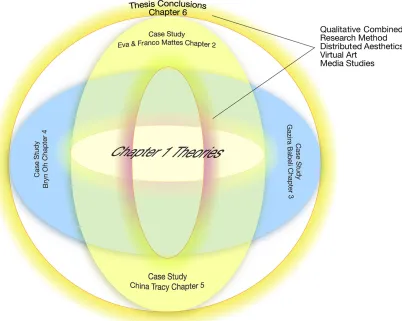
Figure 2: Flux Diagram for Thesis Chapters ... 29
Figure 3: Lacan Galicia in Odyssey... 32
Figure 4: Articulation Diagram for Thesis Chapters ... 40
Figure 5: Rot, Eva and Franco Mattes, 2011. Fake Dieter Roth Sculpture. White Flag Projects (Gallery), Saint Louis, Missouri. ... 44
Figure 6: Reenactment of Marina Abramovic and Ulay’s Imponderabilia in Synthetic Performances, Eva and Franco Mattes, 2007. ... 62
Figure 7: Gazira Babeli attending Synthetic Performances by Eva and Franco Mattes, 2007... 63
Figure 8: Medication Valse. Synthetic Performances, Eva and Franco Mattes, 2009... 68
Figure 9: Acting As Aliens, Gazira Babeli with Man Michinaga performing Acting as Aliens live in Second Life and live at the Kapelica Gallery, in collaboration with Aksioma–Institute for Contemporary Art Ljubljana, Slovenia, November 3, 2009... 101
Figure 10: Scenes from Berardo Carboni’s Vola Vola as seen in Gazira Babeli’s Gallery ... 104
Figure 11: Scenes from Berardo Carboni’s Vola Vola seen in Gazira Babeli’s Gallery 110 Figure 12: Bryn Oh, Immersed with Bryn (Second Life Machinima), 2009... 118
Figure 13: Bryn Oh, The Rabbicorn Revisited ... 128
xii
Figure 16: Cao Fei, Multimedia-Künstlerin zwischen den Welten - Part 1... 151
Figure 17: Cao Fei, China Tracy Pavilion, 52nd Venice Biennial, 2007... 154
xiii
List of Appendices
Appendix A: Eva and Franco Mattes... 206
Appendix B: Gazira Babeli... 208
Appendix C: Bryn Oh ... 209
xiv
Preface – Does the Virtual Exist?: Research Design
A substantial part of my decision to switch from being a designer to a visual artist in the early eighties is indebted to the pleasures of reading and writing. Those pleasures were instilled in me as soon as I learned to read (at four years of age) from my mother, who taught with the tenacity, (im)patience and severity of an obsessive clock-maker (she taught history and literature in primary and secondary school levels for over thirty-five years). Years later, as a young adult devoted to mastering the teaching of Italian, I rediscovered, in awe, the pleasure of reading one of my favourite writers (again): Italo Calvino, but this time in his native tongue.
Near the end of the twentieth century, Calvino imagined and reflected with remarkable insight on the contours and details of the aesthetic subjects to be present in an inescapable and fundamental dialogue for the next century. Throughout the ideas and, particularly, the images of Six Memos for The Next Millennium, Calvino displays master analytical skills, penetrating aesthetic arguments and encyclopaedic knowledge applied to the mission of imagining human creativity for the future, from an aesthetic perspective common to writers and visual artists. A world that he himself would not have the
opportunity to attest to in person: Calvino died the morning of September 19, 1985, at the same time that my natal country (Calvino’s dearest Mexico) was shaken by the strongest earthquake ever registered in the country’s history. In Six Memos, Calvino shares a thoughtful reflection on the nature and the issues common to art practice through the image of a reversible metaphor: human behaviour as creativity, and creativity as human behaviour. Throughout the six essays—more exactly proposals, of which only five were finished before his sudden death—Calvino explored and displayed a variety of aesthetic diagnosis of human kind’s soul in postmodern culture and time. Six Memos is a
sophisticated and informed recommendation to the reader to welcome the task of deciphering the next millennium in the most lucid, humane and creative way possible.
xv
relevant modes of cultural creation in a society interpenetrated by technology, mass media and information. These modes are: lightness, quickness, exactitude, visibility and
multiplicity.1 From these (especially lightness, visibility and multiplicity), I have taken
intellectual and visual inspiration relevant to my work over the past twenty years, for my master’s thesis in new media art and, now, for the enrichment of definitions in my
doctoral thesis around the virtual as a fundamental component of digital aesthetics. In this regard, what I am proposing in this dissertation is to study virtual world aesthetics from a Media Studies and a Distributed Aesthetics approach.
To illustrate the above, I cite two relevant examples. In “Lightness”, Calvino interrogates himself on the aesthetic and intellectual virtues of levity over and above weight. He mentions the current tendency for science (in the mid eighties of the twentieth century) to demonstrate how the world “is supported by the most minute entities” (1988 8) such as DNA, and atomic and subatomic particles. One interesting case—he says—is how something so immaterial and weightless as software, controls such bulky hardware or heavy machinery. Secondly, in “Quickness”, Calvino reflects on various writers and their style, underlining the crucial importance that the relationship between the material and
virtual has on their respective creation; specifically, how quickness (both physical and
mental) is key to lightness and brevity, which he so admires aesthetically (43). Pages ahead, one finds a pleasing yet accurate metaphor of the virtual: Calvino reminds us of the Argentinean writer Jorge Luis Borges and his ingenious idea of multiplying and reinventing himself as several mysterious writers. At the beginning of the 1940s, Borges imagined a series of books he wanted to write (The Approach to Al’Mutásim being the first) as if they had already been written by other (fictitious) authors in diverse languages and times. Borges goes even further by referring to and quoting very rare and specialised treatises (of his invention), all devoted to the study of those books: “[Borges’] task—says Calvino—was to describe and review this invented book” (50). Each of the texts
1 “Of these [six conferences] only the first five have been written. They have, as an argument, the notions
xvi
duplicates or multiplies conceptual spaces by referring to another text, and yet to other ones pertain to an imaginary (virtual) or real library.
As one can deduce here, Calvino declares himself in favour of lightness—“enraptured” with this property, as signalled in Borges—as nothing else than virtual selfhood, which, he thinks, is a necessary premise to articulate the aesthetic discourse on lightness. Possibly borrowing the idea from Borges, Calvino’s Six Memos unveils various versions of himself sustaining interesting dialogues with his self as another self and, through these, with characters from the past, present and future for the purpose of discussing diverse intellectual and creative perspectives on art, creation, literature and their respective functions. In this fashion, Calvino uses writing and the history of literature as a virtual
sandbox—or perhaps a Chinese shadow theatre—to keep us in awe through
representations of worlds discovered, or to be discovered, by those various selves,
always—as he confesses in “Visibility”—departing from a visual image. In this sense and with all proportion withstanding, Calvino proceeds as a virtual world player enmeshed in the possibilities of self-representation and narrative or plot-potentiality within a virtual environment like that of Second Life (SL).
To me, the nature of this comparison is a gateway to space-time, working in the (his) imagination, in which Borges’ method is reflected and re-enacted as a mythical space composed of different worlds, times and actors who speak and respond regardless of chronological time. Proceeding this way, Calvino traces an analogical map that synthesises the main characteristics of the virtual as the following:
1. It is a place not situated in any real (geographic) site, but it allows for (and actually depends on) the unfolding between the real being and ‘something’, someone ‘else’ with whom we experience space in first person (or in a sort of first-third person);
2. It is a persistent place in which parallelisms and symmetries take place (or not, leaving evidence of this dis-encounter); and
xvii
What Calvino ultimately elaborated in Six Memos is a series of strategic questions about intimate relations with art, the elaboration of the idea of it, and how, founded ever since, the natural place of imagination is in the initial myth of the artist as his/her own
invention: How does the ‘virtual’ become embedded in modern and contemporary art? How can the advance of media and technology in contemporary art be described? What is virtual art today (Calvino’s future)? How does the participation of media, science and technology currently fit and feed into the all-time human pursuit of illusion and
immersion? How does one enter or get there? Although different and, in rigour, less
specific, these questions have prefigured the research questions in my dissertation. The four main questions of my thesis express the quintessence of my object of study and the issues I wish to investigate, which consist of non conventional SL artists, their artwork, the features of these and the societal implications (and influences) that such aesthetic practices are producing as modifiers of SL ethos. In this sense my questions are centred around, but not exclusively limited to, the hows and whys of the subject:
RQ01 How are SL-based art and meaning-making related, and why does this matter narratively? What is the contribution of SL-based artists to the advancement of new epistemologies of SL and virtual worlds and its theoretical renewal toward ‘reinventing’ the ethos of SL?
RQ02 How do SL-based artists understand, perform, enhance and diffuse subjectivity (and multiple identity) in their own ontologies around embodying avatars who ‘play’ at being artists? What are the key aspects of this agency process, if any?
RQ03 How is the aesthetic experience created and manifested in each of the selected SL based artists? What are the common and the specific characteristics of SL-based art forms? Their idiosyncrasy and cultural dynamic, their aesthetic elements? How might objects and experiences created by virtual artists in SL lead to the transformation of the concept of inhabiting this virtual world?
xviii
The above outlined about Calvino intersects but also runs in parallel with a core concept with regards to the articulation of aesthetics and technology, pointed out by Oliver Grau—although from a different perspective—in Virtual Art: From Illusion to
Immersion:
The evolution of media of illusion has a long history, and now a new technological variety has appeared; however, it cannot be fully understood without its history. With the advent of new techniques for generating,
distributing and presenting images, the computer has transformed the image and now suggests it is possible to “enter” it. (8)
Hence, the purpose of this initial detour revisiting Calvino and Grau is, besides affirming the existence of the virtual, to emphasise a position already takenin Art History and Aesthetic Studies that demonstrates how the virtual has always fit in the dominion of the history of human creativity, and how this happens usually through the metamorphosis of illusion and immersion. The study of SL aesthetic experiences is still scarce and limited, often deferred, despite the expansion and growth of “synthetic worlds” (Castronova 2005). To me, the relationship between contemporary art, virtual worlds and online interactive technologies constitutes a key subject within the general theory of virtuality, online techno-culture and electronic interactive art forms. In his 2003 book, Grau stresses a grounding point relevant to this: contemporary art history is incomplete without the inclusion of the impact of new media art on the theory of art and the image. For Grau, the art history of illusion and immersion constitutes an ‘embryonic’ function of art history, providing the analytical continuum and the material bases to study these ideas. It is precisely this continuum that deals with today’s understanding of a theory of image and art as capable of hosting current developments with computers, meaning that virtuality did not “make its first appearance with the technical invention of computer-aided virtual realities”:
xix
The SL-based artwork and the artist-avatars examined in this thesis might demonstrate the existence of a dense and dynamic metamorphosis of the aesthetic concepts,
experiences, and images related to this kind of art, which in turn contributes to reshaping and dominating contemporary theories of art.
Throughout this thesis I entertain ideas that give ground to my theoretical frame approaching SL-based Art (Chapter 1). One of these is that virtual, bio, code, artificial intelligence and telepresence art exhibit a steady convergence between aesthetics, science, communication media and technology. Following a definition by Oliver Grau and, to some extent, by code and bio-artist Eduardo Kac, virtual belongs to the broader field of digital interactive electronic arts. In his book Telepresence & Bio Art, Kac sees virtual art as directly related to telepresence art, both belonging “to a larger entity known as electronic interactive art: an art based on the integration of telecommunications, robotics, human-machine interfaces, and computers. The ‘telepresence art’ of which I write here can be understood within the wider frame of electronic interactive art” (136). In my examination of artistic practices in SL, I relate this perspective with that of
Campanelli around the term ‘blob’ “as introduced by American architect Greg Lynn in an article entitled: ‘Blobs (or Why Tectonics is Square and Topology is Groovy)’”
(Campanelli 221). This is a suitable metaphor for virtual spaces, or the other way around: the SL virtual environment would illustrate quite well the temporal, transitional and adaptive ‘shape-less’ universe postulated by ‘blob’ theory and populated by ephemeral (but iterative) beings and objects shaped by informational patterns of data flow. In these worlds, objects and people display a latent and recurrent shapelessness, and then are immediately reconfigured by the aesthetic expression of users who trigger them by the ‘magic’ of code programming and scripting (Cramer).
An additional aspect of these phenomena involving space, time, perception and
telepresence (which obviously involve identity, subjectivity and technological mediation) is that, as the case studies demonstrate, presence and absence become meaningful and technically operable from within liminal processes. Simply put, the aesthetic exchange in virtual interactive art is at the core of both projected (tele)presence and a sense of
xx
and the affective. The four artists in the case studies follow these paths: they constitute their raw matter in the virtual, stemming from the symbolic fusion of virtual physis and
tekhne. Under these conditions, and similar to what happens with dreams and literature,
one is ‘thrown’ into a contextual field of forces to interact with others (via avatars) in such a way that telepresence becomes a vector of subjectivity—a teleological, affective and narrative component stemming from liminality (in-between worlds).
This directly affected the selection of the four artists (among a larger number of other interesting ones reviewed during the time of my thesis proposal). On the one hand, all four of them—although from varying angles and aesthetic goals—create art involved with liminality, telepresence and identity play. On the other hand, they effectuate these operations with a remarkable critical sense of both virtual life and SL. In other words, the four artists selected for my case studies challenge the ethical and ontological bases of Linden Lab’s SL and artistically create remarkable artwork in and with the platform. For this very reason, I claim these artists are producing a shift in the ethos of SL. They are not the only ones, of course, but they are key representatives of the aesthetic shift mentioned above. Their innovative artwork in SL and their prestige and influence in virtual and real art scenes confirm this idea.
The four case studies here within demonstrate how the aesthetic character of these exchanges in the metaverse provide extended paths to understanding the state of current collaborative creativity aided by digital online networks and virtual interaction
technologies. The first claim in this thesis is that this represents a paradoxical condition represented by the virtual world artist in symbiotic co-authorship with the (virtual) public, a formula that I have termed the individually social:people who produce and work in a technically enhanced and psychologically (and affectively) shared ‘mode’ of the self, are working with the collective, thereby transforming representation of that self and its subjectivity into fluid and mutable features, thanks to the conflation of distributed aesthetics and online networks.
xxi
combined media studies and digital (or virtual) aesthetics perspective. I have recently written about these phenomena in a chapter for a book entitled The Immersive Internet.2 A good example of a combined perspective might be Kac himself who, in his artwork, discusses, theorises, documents, archives and proposes aesthetic cues, assuming these tasks to be integral to contemporary art praxis in virtuality. Reciprocally, it is almost impossible to fully appreciate Kac’s artwork without due attention to (new) media modalities that his work assumes in his blog(s), website, flickr, YouTube and social networks. This method reflects the state to which online collaboration and technology in general are embedded in contemporary creativity. In contemporary theory of information aesthetics, this is called a space of reciprocity (which Munster—and others—claim to be absent from commercial mass media). This is amply examined in the context of my four case studies, and was indeed taken into account in the research methods and design for this study.
The method employed is a combination of qualitative research techniques and in world observation. The mixed perspective of distributed aesthetics and media studies is an epistemological platform for that space of reciprocity. From a methodological
perspective, the case studies (devoted to exploring activities, processes and events) are one of the most effective modalities in qualitative research. They are designed to correlate collected information, virtual objects, artwork, other materials and content. Then, using the material from the interviews as a guideline for identity-play and
liminality, I examine and reflect on how and why each artist assumes their virtual
persona, and the way they do so. The four case studies are finally compared, interrogated or interrelated to consolidate further critical and theoretical elements to sustain the claim that SL-based art constitutes and propitiates a different version of what SL is.
In this fashion, the research questions were developed as a way of approaching virtual existence in SL and interpreting the dynamic aesthetic exchange in artwork created in the platform. This allows for a profound study of how the media-immersed characteristic of SL becomes decisive to grasping liminality, the space of reciprocity, and its features and
xxii
potentialities to shape the SL cultural landscape. Thus, my research method might be called a qualitative inquiry among artists in virtuality, employing different strategies of inquiry.
For the purpose of mixed media studies and distributed aesthetics perspectives, I have borrowed two theoretical framings: Munster’s “transversal technological studies” (2006 24), which gives epistemic grounding to my method; and Lichty’s four-facets
classification of virtual artwork.
With evident echoes of Bolter & Grusin’s “remediation approach” (1999), Munster sustains the idea that new media are not simply “substituting-by-changing” other media forms; rather, they are rearranging the conceptual taxonomies and paradigms for thinking about them, including the “reorganization of our epistemologies of media” (2006 24).
What is more, Vito Campanelli writes in Web Aesthetics that “the most convincing concepts” around the rearranging of our notions of the media are “Roger Fidler’s
mediamorphosis and Jay Bolter and Richard Grusin’s remediation” (136). According to
the latter, new media includes and transforms “features of previous media” (136) which means, essentially, a new mediation: what they call (re)mediation of older media through new one.
In my research method design, this translated into the emphasis that a perspective from media studies (on digital aesthetics) should not exclusively be focused on the
communicational dimension of the discipline (the pure delineation of form through medium specificity analysis). An aesthetic approach to the artists and artwork like this would run the risk of being insufficient or not insightful; rather, it is the “mutability of media forms” (Munster 24) and their ‘remediation’ that should be its focus:
xxiii
In other words, through my method, I approach the study of these artists and their work from a multifaceted perspective, while being aware of the transitional and multi-mediated forces at play in the configuration of the technologically visible and the aesthetically expressible in their art.
Lichty’s four interrelated facets of “artistic praxis in virtual worlds” (Lichty Translation 1) are key when developing an informed discussion and examination of the effects of art in SL: “that, as Grau states, an analysis can be made in terms of comparison to history, but in relation to it as well as contemporary practice in terms of phenomenology,
aesthetics and origination” (Grau cited in Lichty Translation 1). In short, these facets are modality, audience, context and formalism:
Modality refers to the location and vector direction of the work’s relation between worlds, such as importing physical work into Second Life, or the realization of SL-based works in the physical… Audiences for virtual work are often small, as servers can only manage limited numbers of avatars (usually 50-75 per region) and presuppose certain educational and technical resources… From this, it can be said that context is as cultural as technical, as virtual worlds often have their own specific cultures, and art created for one milieu may not translate well to another. And lastly, … in context with the formalism of virtual worlds … there is only a simulation of formalism. However, one could say that there is formalism in code … The methods of modeling, texturing of objects and virtual projection define a formalism for virtual worlds. (Lichty Translation 1-3)
SL-based artworks, like the ones examined in this dissertation, constitute forms of art that emphasise less form and composition in favour of configuration, behaviour and
xxiv
corporeality (the real) and the virtual (the intangible representation) manifests at the core of the digital aesthetic experience in this kind of art. In the process of sharing and
exchanging meaning between artists and residents of SL, input originated in the ‘physical world’ also affects the ‘virtual space’ and vice versa, which is a particularity of
immersive virtual reality:
This means that several people from different countries could meet on-line and interact through their graphic projections using telecommunication systems, which could be coupled to telerobots. ... One could say that the fusion of the medium and the real is specially true in telepresence, since one can actually perform and change things in the real world from far away. (Kac 139-141)
I have used this onthology of virtual art in the examination of SL-based art, emphasising the important functions of performative and participative meaning-making, and the affective exchange from the individual to the social, which creates, enhances and weaves narratives forming the space of reciprocity. Munster has crafted a conception of
embodiment as an alternate arrangement of lines of expression for interpreting the effects of coding and scripting on the homogenisation occasioned by the body’s components when translated to the digital order. I propose this might be assumed as a multi-sensory aesthetic, a multimodal one functioning to create a complex spatialisation. In the same sense, and as revealed through the artists’ exemplary work examined in each case study, the position of the body in the face of digital aesthesia remains insoluble. Munster is correct when saying:
The aesthetics of information culture is concerned with modes of sensory engagement in which distributed spaces and temporal variations play crucial roles. In engaging with and visualizing bodies and in responding to material parameters, new media simultaneously change our understanding of and
relationship with or own bodies. No longer can we consider the body an antinomy of code; its incorporeal capacities are simultaneously amplified and divided from its physicality as we come to think of digital embodiment as a process of living in information culture: the labor of folding corporeality and code across its many differentiated instantiations. (Munster 184, my emphasis)
xxv
raising conclusions in the form of specialised narratives for research on virtual worlds in general. This is a sort of concurrent methodological strategy (Creswell 2003), the malleability of which permits an amalgamation of case studies, unstructured interviews and direct personal observation conducted by Lacan Galicia (my avatar), combined with the two theoretical framings, strategies of collection and sorting of documents, texts and other meaningful data by me in AL.
My research was centred on knowing and interpreting artistic personalities virtually represented in an interactive environment: examining the fluctuations of identity, embodiment, subjectivity and their exchange (or transference) between AL and SL. Approaching the ‘identity and subjective variability’, artist by artist, was the goal of interviews. An archive of my conversations with each of the four artists is presented in the Appendix of this thesis.
Lacan Galicia (my avatar) spent in excess of 500 hours in SL from November 2009 to January 2012, most of the time visiting Immersive, Odyssey and a few places operated by Western University and the Faculty of Information and Media Studies. Between October and December of 2008, Lacan gained experience in SL, moving from novice to seasoned avatar. With my background in graphic design, visual art and computer imaging, Lacan began creating moveable sculptures and structures, which led to his awareness of existent art scenes in SL.
xxvi
The overall contribution of a mixed methodological design that is subject to scrutiny by
academics and virtual world researchers3 is of value for a specialised audience in the fields of contemporary and digital art, virtual worlds research and media studies. In other words, such forms of SL-based art imply the connection and reconfiguration of older and newer media. They reshape, in the process, our own epistemologies about virtuality, art and media, and this constitutes a powerful resource for the conceptualisation and shaping of the cultural landscape of virtual worlds at large. Thus, to reiterate, a strategic inquiry process that seems appropriate for these artists and their artwork is precisely developing an exploratory case study of them. I believe it is possible to link the elements from which one can develop the consolidation of information structured around the construction of “social explanations to intellectual puzzles [...] The elements which a researcher chooses to see as relevant for a description or exploration will be based, implicitly or explicitly, on a way of seeing the social world, and on a particular form of explanatory logic” (Mason 6).
In this context, the SL-based art case studies in this thesis can be seen as a challenging and creative way of experimenting the performative nature of digital information, while at the same time taking advantage of the massive dissemination and collaboration of online networking and hyper textual structures of communication that permeate SL. This makes possible the convocation, by the same medium, of gazes, narratives, intellectual analyses and direct and indirect collaboration. In fact the ‘feedback’ gained (or built) by the artists, as one will see in the next chapters, is in great deal subsumed as an integral component of the whole aesthesia at play. This is due to the instantaneity of the work as well as the systemic narrative character (as part of the ‘performativity’ taking place), not to mention the fact that the conventional cult to the genius of the artist has been
disassembled and proliferated and—particularly in the radical case of Gazira Babeli, which follows as Chapter 4—obliterated entirely.
3 For more on this subject see Volume 3, Number 1 (2010) of the Journal of Virtual Worlds Research at
xxvii
In the context of the theory of distributed cognition, this group of processes belongs to
representational media. In “Individually Social,”4 a chapter I authored for a collective
project on the Web of the future, I have referred to this latter term as a preferable analytical component for a much needed multimodal approach to the merging of views. Lately, representational media, distributed aesthetics, semantic and social networks, and virtual worlds are often envisioned as the future 3D web in which VWs and SNs, having been successfully merged, would potentiate the property of digital media to not only transliterate other media, but to redistribute them as well. This study of SL art has taken into consideration the factors intervening in the highly charged experiences of cognitive processing and aesthetic experimentation related to the expression of subjectivity that is reinforced hyper-mediatically in SL. This enables the artists examined to produce content, knowledge and culture in a virtual social environment, while simultaneously allowing them to experiment with their own identity through a group of artifacts, tools and other powerful channels of communication at hand. As such, the design of an avatar’s appearance and the effects on its identity ends up being revalued in that it has more influence on the reconfiguration of the expression of selfhood than it initially appears. How the behaviour, self esteem, and even the mythologised narratives one creates through an avatar, modify the attitude and idea of oneself. Having mentioned these ideas, it is clear to me that the field of research on the use of avatars to interact in a 3D space as a form of art, web browsing and/or social networking device is feasible, and would be benefited by—besides the default digital technology and computer sciences approaches—the new epistemological understandings stemming from media studies and, most importantly, from digital aesthetics.
It is my belief that the merging of semantic and interactive virtual ‘tools’ is a question that can be advantageously discussed from a multidimensional perspective like the one applied in my research method for this thesis. Finally, the work of Eva and Franco Mattes, Gazira Babeli, Bryn Oh and China Tracy demonstrates that an avatar-artist is a
4 Individually Social: From Distribute Aesthetics to New Media Literacy. Approaching the Merging of
xxviii
good model to study if one pursues the objective of preserving and defending the
powerful and amplified properties of the digital body and subjectivity in the virtual. The artists reviewed in this thesis stand firmly for preserving the affective liberating
capabilities of materialising and (re)embodying digital aesthetics through mutable and flickering identities and three-dimensionally represented ‘selves’. In different and
creative ways, they ‘fight’ against the disturbing mainstream tendency that seeks to unify virtual worlds and social and commercial online networks, riskily flattening identity, representation and personality of mature avatars, into one forcefully predictable
humanoid projection—a stable, traceable ubiquitous 24/7 travatar that represents one, but always linearly and in the same way. Or better said, that represents the reductive
abstraction of the self as consumer, defined by statistical data on the side of political and corporative power around techno utopian views towards a mystified Web 3.0 of the future.
An overview of this thesis can be seen at:
Chapter 1
1
Second Life-Based Art, Virtual Worlds and Distributed
Aesthetics – Overview
In the introduction, a simple question is posed: Does the virtual exist? An essay on art, narrative and creation follows, which connects with a brief presentation of the nature of my research problem and my thesis’ questions.
Chapter 1 begins with a definition of the term Second Life-Based Art within the context of electronic virtual art. My purpose is to present the definition as the outcome of the intersection of three axiological components:
1. The concept of the virtual: from its main features to its functions in the process of artistic work and aesthetic experiences in virtual art. SL base art is inscribed in the larger context of electronic interactive virtual art, outlining why this matters.
2. The aesthetic perspective applied in this thesis, which is in reality a blend of the ideas of Distributed Aesthetics, Electronic Interactive Virtual Art and Diffuse Aesthetics: SL based art may provide relevant new elements for approaching virtual world theory from the field of aesthetics.
3. The interaction between SL-based art, technology and communication, a task to be accomplished from a perspective anchored in Media Studies. What is essentially
characteristic of each of the SL-based artwork studied in this thesis, is that each of them approaches tests and ratifies the flux of data reshaping and modifying our
epistemologies on the virtual, telepresence and the digital.
The next section in the chapter presents the basic ontologies in this thesis. Thus, as a general proposition, artists and artwork are mapped to a theoretical framing borrowed from a number of authors studied during the writing process of my specialised
The last section of the chapter moves briefly in the adjacent territories of distributed cognition design, visibility, representation and the always-pertinent discussion around the work of art at the time of digital reproduction. The final remarks of the chapter call to attention the epistemic and heuristic nature subjacent to both, my thesis goals and research questions, and the methodological design with which I will approach each case study in their respective chapter. The purpose is to ‘locate’ Lacan Galicia, my own SL avatar, into the theoretical framing, so ‘he’ becomes presented in the role of a preferred in-world witness, in charge of ‘virtually’ performing research within SL.
1.1 The Return of Mythic Spaces
La fantasia è un posto dove ci piove dentro. (Fantasy is a place where it rains) (Perniola, < http://www.marioperniola.it/site/dettagliotext.asp?idtexts=22>)
Important guidelines for my research stem from the analysis of two crucial aspects, produced by a triadic dynamic between virtuality, art and technology. The study of these two aspects contributes to the understanding of the particular forms of virtual art that I am researching. First, one can speak about an ontological aspect: my work that focuses on art that has been planned, created (also inspired by) and distributed entirely in SL. Precision is needed, though: I will be using the term Second Life-based art (or the shorter SL-based art) to refer to a fragment of the spectrum of art-related issues and practices within this particular virtual world. In this sense, I will necessarily disregard some categories (and the imagery accompanying them) conventionally accepted as art,
electronic and/or non-virtualdigitalart. I am interested in analysing anomalies or—to
some extent—singularities (in aesthetic terms) represented by artists who utilise the set of tools for designing, building, representing in 3D and manipulating space, objects and avatars. Also of interest are those who use code and scripting tools, and the
environmental features and conditions provided by Linden Lab’s SL interface. These operate and affect the sensorial, the subjective and the perceptual spheres in both worlds (AL and SL). So one is talking about art forms often based on script, or code-controlled physical motion, presence, appearance, identity, and character inside, outside, and in between the environment of both worlds. The case studies for this thesis focus on
certain terms I use in this dissertation need to be clarified, a prominent one being what I refer to as auto-empathy. This is interpersonal interacting patterns that occur between avatars and their actual (real) users, as well as with other avatars, and is assumed as an idiosyncrasy of the virtual persona. That is to say, a process of behavioural, epistemic and aesthetic nature that, after all, begins with the formulation, acknowledgement, reinvention and acceptance of a ‘virtual self’ as an entity capable of emotionally and psychologically embodying his/her ‘author’ and ends with interaction, playing and aesthetic contribution in the form of collective experiences, subjective behaviour and reactions, and the
advancement of aesthetic statements that only, or at least preferably, can be created in
and because of SL’s particular environment.
Second, one could speak about a quasihermeneutic aspect: for instance, when you look up places specifically devoted, tagged or named as ‘art’ or ‘artistic’ within the online “SL destination guide”5 in the virtual environment’s interface, around ninety to a hundred appear in the search window. Ranging from galleries, to virtual museums and
experimental sites devoted to some kind of artistic production. This might not be that impressive for a population estimated, lately, at around fourteen million residents (by April 2009: http://xdfusion.wordpress.com/2009/04/30/know-your-customers-second-life-demographics/). Keep in mind, however, there are countless residents who
participate, create and display other artwork and forms of interaction with the tools and materials provided by SL, who, classified by the nature of their content contribution would fall within the category of electronic digital virtual art/artists, the number grows significantly. It is worth noting that, in my thesis, I do not focus on digitalised forms of (more) conventionally defined ‘real’ objects of art (paintings, design, home decoration, graphics, sculptures, etc.) transplanted to the digital realm via scanner, digitalisation and up-loading, which can be exhibited, used and traded within SL. Yes, these are art forms, the validity of which is indeed not questioned here, but their scope and aesthetic nature falls outside the purposes of this investigation.
What I am indeed interested in are art practices and manifestations of artistic spirit dealing with illusion, immersion, spatial/temporal intervention, performance, meaning making and code experimenting. I am also interested in critical and intellectual stances around the conditions of virtuality, avatar selfhood, identity, behaviour and ethos in SL. I am interested in residents whose avatars perform a parallel artist’s identity and existence virtually, with the belief that having a ‘second life’ is worth it and all the more interesting when the enslaving obsession to mimic actual life ceases to be the (only) golden rule. I am interested in the kind of ‘personality’, behaviour and attitude that wholly justifies— creatively, intellectually, existentially and emotionally—projecting yourself into an avatar that comes to virtual life as ‘you-there’ in another self, a specific virtual ‘personae’ capable of endorsing paths for self-critical views, not just of SL or residence itself, but of virtuality at large.
Another important component of my thesis is the analysis of liminal forms of existence between virtual and actual worlds, which are enacted as (personal) narratives around the creation and development of a mythical character: that of one’s designed avatar
performing a role (displaying a personality) within the finite/infinite permutation of random—but subjective—goal-oriented activities in SL, what I have termed personal
plots. This tendency, to a greater or lesser degree, is notorious in each of the artists in my
case studies, and constitutes a central framing in the articulation of distributed (digital)
aesthetics: 1. With the role of media and technology in the creative action of the virtual,
what I call in this document the ‘media studies perspective’; and 2. With the ethos regarding the interaction among avatars, actual players and the shared or collective production of aesthetic experiences, what I refer to as a space of reciprocity.
On this point, I return to Calvino’s Six Memos for the Next Millennium: in “Visibility” there is a short passage that explains, I estimate, the origins of my aesthetic/epistemic position toward SL-based art. In it, Calvino is paraphrasing Dantes’ Divine Comedy (see the quote on this Chapter’s head):
us in time (with the exception of those few cases of prophetic vocation) establish their contacts through earthly transmitters, such as the individual or the collective unconscious; the time regained in the feelings that reemerges from time lost; or “epiphanies,” concentrations of being in a single spot or point of time. In short, it is a question of processes that, even if they do not originate in the heavens, certainly go beyond our intentions and our control, acquiring— with respect to the individual—a kind of transcendence. (87)
That being said, I would like to point to the surprising affective outcome of virtual residence in SL, an attitude or widespread condition acknowledged equally by
conventional residents and famous artist-avatars such as Eva and Franco Mattes, Gazira Babeli, Bryn Oh and China Tracy.6 That is the sensation that the avatar develops his/her ‘own’ personality, and as a consequence what s/he does and accomplishes (or fails to) matters. Not only is this inspiring but it also fuels obsessive/compulsive psychological pathologies. So everyone embodied in his/her avatar(s), intentionally or not, is
‘performing’ within a certain personal plot. Living and embodying a narrative that pervades a great deal of what a virtual being does inside the environment. Indeed these aspects connect with a much larger conceptual landscape around the return of the mythical via the digital. In this regard, Beatrice Bittarello, an independent
interdisciplinary researcher with a focus on the relationship between virtual worlds, art and literary history, has also acknowledged the existence of virtual worlds before the introduction of the Internet and computational technologies. Bittarello goes back to the history of visual art and literature as socio-cultural antecedents in which, even from a very long time ago, virtual spaces and worlds were created that frequently represented alternative spaces of religious or mythical scope. This takes on importance by locating the proto-religious dimension as a common element in historic, artistic and literary imagination. By locating current virtual worlds (at least among a certain kind of public reception) in the same mythical-religious tone, Bittarello centres the discussion around the important notion of access and presence in the virtual. With this position she carries out a re-conceptualisation of current virtual worlds with those of the past.
6 These are the avatar names of the artists selected for this research, all of them renowned and recognised in
Bittarello conceptualises the aspect of creating myths and fantasies coupled with aesthetic proximity (as experience between access and exit via gateways) as a constant
characteristic in the idea of the virtual. In general terms, it is the same idea already
commented by Grau and Florian Cramer (as one will note below). Bittarello’s perspective around the visual—explained as the use of imagination in the search and attainment of finding the door that accesses virtual worlds through techniques, devices (both mythical and real) and technologies—is of importance to my research in the dimensions of subjectivity, identity, design and exchange between AL and SL. In my view, Bittarello underscores something fundamental: that visual representation, the technique of moving images, the language of cinema and literary fiction principally, are the motors of distinct
technologies of vision in the historical search for the sublime image, one that allows for
immersion and ‘access’ to imaginary realms of mythological and religious dimensions. For her, the invention of cinema is a crucial development because it allows for the construction of a socially shared ‘grammar’ and a vocabulary with which one constructs imaginary representations of these worlds that have become fixed in social
unconsciousness. It is my belief that the idea of a ‘shared grammar’ of cinematic nature seems to operate naturally between SL residents.
Cinema is in itself an alternative and parallel world, and in this sense a key point is the consideration that today SL residents experiment with, more or less, the integration between life online and off in the same manner that, historically, cinematograph
identification worked in the audience. Consequently, the important idea is the possibility of an alternate or parallel plane of existence: the virtual is not necessarily an escape from the real, nor does it question or exclude it; rather, it complements it. As Doel & Clark affirm in Bittarello’s article, “reality is the interplay of virtuality and actuality” (2008 14).
Cramer, in a similar view, although from a different point of access, talks about the return of a mythological space from the virtual, stressing epistemology and techne as two
Code, Culture, Imagination is to demonstrate just how different hermeneutic and
semantic processes—referred throughout history as magic—are updated and embedded in the phenomena of the virtual. For Cramer, that means the capacity of digital code, when executed, for transforming the embodiment or ‘materiality’ of messages and information through the intangible lightness of code programming:
The technical principle of magic, controlling matter through manipulation of symbols, is the technical principle of computer software as well. It isn’t surprising that magic lives on in software, at least nominally. References to magic abound in computer software branding ... A Google search on “magic” and “software” today yields more than fifteen million results. (15)
Several concepts coinciding and overlapping among Calvino’s, Bittarello’s, Cramer’s and, to some extent, Grau’s ideas are worth examining. For example, the common idea that virtual worlds are not inherently the product of technology, that technology dialogues constantly with, and in, human imagination and culture. This implies that they represent immaterial spaces in which it is possible to outline, design and structure social
interactions between human beings represented by a virtual entity.
From another perspective, Nick Yee & Jeremy Bailenson’s work, for instance, focuses on specific behavioural and attitudinal fundaments found in virtual worlds interaction. In their study of self-representation in virtual environments, Yee & Bailenson turn to the Greek God Proteus as the origin of the adjective ‘protean’, which means the “ability to make different self-representations” (271). Given the increasing number and hours dedicated to virtual environments in the world today, in which millions play with self-altered representations to such a degree that the threshold of “behavioural confirmation” can be overcome (272), the Proteus effect as they call it, can play an important role as a theoretical frame for analysing liminal behaviour, identity, appearance and hybrid forms of SL-based art through embodiment and manipulation of the representation (design) of avatars.
in certain kinds of negotiations when, for example, a taller or more ‘impressive’ avatar is given to them. Notably, these affective and behavioural modifications revealed in
conduct are extended, at least for some time, to the actual (real) world. Thus, executable code and embodiment, and avatar agency are threaded in a familiar pattern of
modification, transformation and mutability of presence, and representation.
Yee & Bailenson call the avatar the “primary identity cue” in virtual worlds, as the effect her behaviour produces is of capital importance for people’s online behaviour (274). In other words, users of online environments pass through a process of ‘de-individuation’, in which their behaviour is adjusted to that of the avatar representing them. The identity, appearance and behaviour of this avatar adjusts, via self-perception theory, to the behaviour that others might expect from its appearance. In SL, for example, certain standards of self perception are emphasised because residents perceive (and relate to) their avatars from the perspectives allowed by SL interface design, particularly that of the third person, and although the first person modality also exists—mimicking the
movement of the camera—it does it to a much lesser extent comparatively speaking. Yee & Bailenson, as well as David Velleman, have worked on the manipulation of the
appearance and identity of avatars, and they think this is a two-way process that produces effects in both virtual and actual life. This opens important possibilities for SL
applicability, from persons with disabilities—who can now have access to unedited experiences through a virtual ability—to a wide range of simulations using SL, to the more unsettling practices of control and influence on conduct through a virtual self.
of avatar-action (and the residents they represent in the real world) seems feasible under this view. Creating art in virtual worlds through imagination, subjectivity and control over technology needed to live truly aesthetic experiences seems to be opening and connecting the field of virtual worlds research to deeper and wider understandings of how psychological immersion and illusion, mediated by digital technologies, reshape virtual worlds at large—and with that, our own ideas with respect to the real containing the virtual that exists around a powerful ontology of the actual.
One purpose of my study is to understand how these worlds and their technologies influence virtual-self representation, identity processes, aesthetic experimentation and subjectivity, responses to which, in turn, display the faculty to access the actual world, the social and the production of online content with the achievements and risks of their added virtual aesthetic experience (which I understand as the auto-empathy factor or outcome). These aspects are threaded in a particular dynamic that looms on the horizon of future Web, just when the merging of the semantic networks, 3D virtual interactivity and social networking—today so often emphasised in current virtual world research— ceases to be a possibility and crosses over to reality.
1.2 Second Life: Not a Computer Game But a Social
Environment
Linden Lab launched Second Life (SL) in 2003, and today the number of residents registered (players in SL) is around 14 million worldwide, with an average of 60,000
logged in at any given time.7 It is worth noting that residents might have more than one account, so concurrent users represent a fraction of accounts on the basis that one avatar
7 Data actualised to Dec 2012 shows a more or less constant average around 60,000 concurrent users, in 24
hours, 48 hours and 14 days. http://dwellonit.taterunino.net/sl-statistical-charts/. Another site displaying SL total use of hours (breakdown by top 20 countries, language, age and gender group) reads: “Linden Lab’s last publicly released monthly metrics which contained this information. While this information is a bit old, it appears relatively accurate.” Meta Linden’s Last Public Monthly Stats. 2008.
means one login and only one account. SL is not a conventional online computer game; it is more a social environment, an experiment, in which its members, known as residents, are provided the tools and basic knowledge to create content. Since the beginning, in SL, the understanding of identity playing and appearance of avatars, the way they create objects and spaces, and how they develop the capability to relate to others and create narratives is crucial. This dynamic, now four years old, weaves structure, actions, identity quests (and experimenting), social, economic, and emotional exchange, both in actual and virtual life among participants (Boellstorff 2008).
In this ‘world’, the development and maintenance of social bonds and the involvement of residents in the creation and reinvention of their virtual lives occurs through the
mediation of 3D avatars that are digital representations of ‘players’ interacting in a virtual space. Unlike other virtual environments and computer games, SL virtual
Figure 1: Lacan Galicia’s Living Room
(Personal Screenshot from Second Life)
An avatar’s identity relies on a particular sense of ‘selfhood’ developed through digital manipulation, and filtered by an amplified and mutable subjectivity, a concept referred to by Adriano D’Aloia as Auto-empathy. In SL, the identity is negotiated and shaped
through the exchange between avatars and people in both the ‘actual’ and the virtual worlds, to form a functional ‘personality,’ to the extent that it may have impact in actual reality (Velleman). Interacting with others catapults number of aspects to the surface, related to the way one represents herself on the screen: first to oneself, and then to others, a global set of attitudes, behaviours, emotions and skills that fall under the field of
impression management (Goffman). With all of these aspects at play, a dense dynamic involving in the exchange of symbols, meaning, expressions and behaviour, emerges from the interaction in the virtual environment. Accordingly, in this thesis, a focal ontology of SL’s discourse deals with presence and identity under conditions of
These aspects become amplified because their representation and the social interaction they contribute to threading, are heavily manifested across media because the
environment in which avatars ‘live’ is interpenetrated by powerful digital communicative tools that, ultimately, contribute to (re)shaping presence, interaction and identity within SL. Of course I am not suggesting that just because an arsenal of hypermedia tools is at hand for communicating within the virtual world and outside with the actual world, that bigger or better communicational patterns necessarily produced. I certainly think that, due to liminality, communication becomes an aesthetic component ready for
experimentation, a pattern playing a role in the overall quest of being immersed and acting as another ‘self’.
In that sense the relevant aspect is that, in fact, the potential to communicate through digital hyper media contributes to the sense and the shaping of the ‘self’ in virtual environments because it favours and enhances practices of psychological/affective agency and transference through affective embodiment of personalities and narratives for both the avatar and the actual person, right in the transitional state of liminality. Dwelling in world and out may or may not be interesting depending on the feasibility of creating and using psychological/affective temporal markers such as ‘today’, ‘last month’, ‘next week’. Under these conditions, planning and performing your virtual existence as another self becomes effectively and affectively stimulated by the persistence of a virtual world like SL. Interactivity, persistence, hyper communication and the capacity to share with others in a common virtual space while AL personae may be located in opposite ends of the earth contributes to the feeling of ‘oneself’ being immersed in a three dimensional space.
1.3 Immersion, Image and Interaction
It might be a bit surprising that, despite the relatively low resolution or ‘draft’ representation of spaces and the ‘bulky’ geometry of avatars and objects in SL, the sensation of being immersed is nevertheless powerful, psychologically enticing, and semiotically meaningful. Edward Castronova has explained this phenomenon as a
to the extent that a defining line among them may become blurred. This is a common experience among computer and video gamers, the borderline sensation that ‘we’ are in fact not ‘physically’ present (contained) inside the virtual ‘world’ becomes fuzzy. Although it sounds logical that better resolution display capacity and more realistic representation of things and beings would result in deeper and better immersion in virtual worlds, the actual ‘feeling’ (of immersion) is definitively more dependent on affective and psychological factors than in—say—cutting-edge rendering technology. Neither expensive and sophisticated sensorial gear, nor higher levels of naturalistic iconographic resemblance are, so to speak, a sine quan non condition for a vivid feeling of immersion. This aspect is of importance because, ultimately, it represents two sides of the same coin. On the one hand, the many contradictory referents in terms of aesthetics come from a tendency—frequently manifested in computer science and engineering spheres and their obsession with Pythagorean aesthetics—towards a vision of trimmed, polished forms of beautiful mathematical and geometrical ‘purity’. A ‘taste’ that, to some extent, is present by default in the (corporative) ethos of SL. On the other hand, one can nevertheless consider this as ‘one more’ possible aesthetic ‘flavour’ among many, avoiding to situate it, uncritically, as the highest ranking just because of a biased aesthetic judgement says that it might be ‘intrinsically superior’ due to pretensions of superior visual, formal, geometric and mathematical purity.
The analysis of issues like these revealed to me important considerations for my research, hence I have highlighted different perspectives on digital and virtual aesthetics, like those from Cramer, Grau, Boris Groys, and Anna Munster. The idea is to get a sense of