VOLUME 5
May 1952
Number 3
In this Issue
Where Do We Go from Here? (Presidential Address)
Dan Fulton
109
Breeds of Beef Cattle for the Southwest... J.H. Knox
115
Range Improvement Experiments on the Arthur E. Brown
Ranch, California... ... ...R. Merton Love
120
The Soil Profile as an Aid to Range Management
O.C. Olson
124
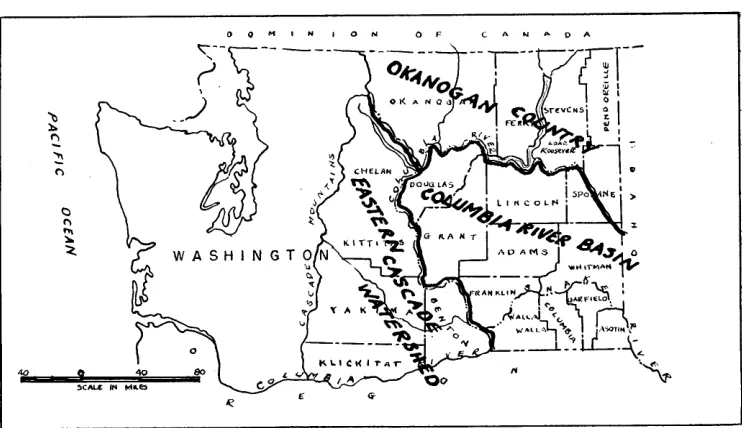
Range Condition in Eastern Washington Fifty Years Ago
and Now... ... ... .. G. John Chohlis
129
Better Management on Longleaf Pine Forest Ranges
Robert E. Williams
135
A Relic Area on the Wyoming Shortgrass Plains
Alan E. Beetle
141
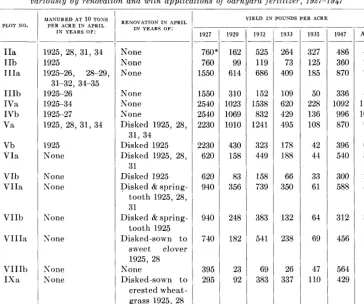
Reseeding, Fertilizing, and Renovating in an Ungrazed
Mixed Paririe... ... ..Harold F. Heady
144
Pine Needle Abortion in Range Beef Cattle
M.A. MacDonald
150
Sheep Ranching Roadblock in 1949... James R. Gray
156
Book Reviews:
Historic Sketches of the Cattle Trade of the West and
Southwest (McCoy) ... ... A.P. Atkins
160
The Jawbone Deer Herd (Leopold et al.)
Hudson G. Reynolds
161
Principles of Weed Control (Ahlgren et al.)
Harry M. Elwell
162
Grass Beyond the Mountains (Hobson)
J.C. Dykes
163
American Wildlife and Plants (Martin et al.)
Odell Julander
164
Current Literature... ... Robert R. Humphrey
166
News and Notes . ... ... ... ... 170
With the Sections... ... ... ... 176
Articles of Incorporation .. ... ... ... 182
Fifth Annual Meeting... ... ... ... 184
Published Quarterly by
1.
MESQUITE
For best results, spray from the air with low-volatile Du Pont 2,4,5-T Ester Brush Killer when foliage is growing and when soil moisture and temperature are high. Use 1 M to 1% pints in 1 gallon light diesel oil plus 3 gallons of water per acre. In- crease dosage for heavy growth.
4. LOTE or BLUE BRUSH
A thorough, drenching spray on the foliage is highly effective, using 1 gallon Du Pont 2,4,5-T Ester Brush Killer in 96 gallons diesel oil or kerosene. For best results, spray from the ground when the plants are growing fast, and when the soil moisture is high.
7. SCRUB
OAK
For thick growth, spray the green oak leaves in the late summer or fall with Du Pont “Ammate” Weed Killer, 1 pound per gallon of wa- ter. For scattered trees growing in clumps, cut the trees and spray the fresh stumps with 4 pounds of “Ammate” per gallon of water.
2. SAND
SAGE
Spray by air with 2 g pints Du Pont 2,4-D Ester Weed Killer in 3 or 4 -
gallons of water plus 1 gallon diesel fuel or kerosene per acre. For best
’ results, apply in May or early in June when the soil moisture is high and plants are growing rapidly.
5. HUISACHE
Spray from the ground in the grow- ing season for best control. Spray the bottom 2 or 3 feet of trunks from the ground up with 1 gallon Du Pont 2,4,5-T Ester Brush Killer in 48 gallons of kerosene. For best results, be sure to wet the entire circumference of the stems.
3. PRICKLY
PEAR
Spray from the ground in summer with 1 gallon Du Pont 2,4,5-T Es- ter Weed Killer in 20 gallons kero- sene or diesel oil and 20 gallons of water, wetting all the foliage thor- oughly. Tests show that this same treatment also controls Tasajillo and Cholla cacti.
6. MCCARTNEY’S
ROSE
Spray from the ground in the grow- ing season with 1 to 1% quarts Du Pont Ester Brush Killer or 3 to 4 quarts Du Pont 2,4-D Ester Weed Killer in 2 gallons of light diesel oil and 100 gallons of water. Use high- pressure spray to penetrate the thick clumps of brush so as to wet all foliage.
For help in control of mixed stands of brush, see your local agricultural experi- ment station, and write to Du Pont for full information. Du Pont has cooperated in extensive tests in the range areas. Address Du Pont, Grasselli Chemicals Dept., 5031 Du Pont Bldg., Wilmington, Del., or 513 Esperson Bldg., Houston 2, Texas DU PONT CHEMICALS FOR THE FARM INCLUDES Fungicides: PARZATE* (liquid and Dry), FERMATE*, ZER- LATE*, Copper-A (Fixed Copper), SULFORON* and SUL- FORON*-X Wettable Sulfurs... Insecticides: DEENATE* DDT, MARLATE* Methoxychlor, LEXONE* Benzene Hexachlo- ride, KRENITE* Dinitro Spray, EPN 300 Insecticide, Calcium Arsenate, Lead Arsenate . . . Weed and Brush Killers: AMMATE*, 2,4-D, TCA and 2,4,5-T. . . Also: Du Pont Cotton Dusts, Du Pont Spreader-Sticker, PARMONE* Fruit Drop Inhibitor, and many others. *REG. U. S. PAT. OFF.
MCCOY’S “CATTLE TRADE”
Historical Sketches of the Cattle Trade of the West and Southwest
By JOSEPH G. MCCOY
Large &JO. Cloth. 427 Pages fats. of all the illustrations,
and the 86 pages of ads.
Originally published in Kansas City, MO., in 1874? this book has always remained the grand-daddy of all range histories written by the founder of the cattle market at Abilene, Kansas.
No one could have told the story better or with more authority than McCoy, who lived through it all. It tells of the early cattle kings, their ranches, the early trail drives from Texas to Kansas, when Indian troubles, raids, massacres, rustlers and border bandits were vitally realistic. The original edition is very rare and brings
$100.00 or more, when a copy can be found.
Price $6.50 Limited Edition
Write for List of our Basic Western Classics-14. Titles
Long’s
COLLEGE BOOK CO.Dept.
R
Columbus 1, OhioI
Effective Low.
Cost Method
OFUGMATOR OF THE MODERN ROTARY FLAILING MAtZ?fINE
RANGE MA’NAGEMENT
Principles and Practices
the most comprehensive book of its kind. . .
By
A. W. SAMPSONProfessor of Forestry University of California
This book is written by a research pioneer whose primary findings in range research are now common practice in ad- ministrative range work throughout the western range area.
FEATURES. . . the approach is thor- ough yet easy to grasp 1: . world range
nroblems are esneciallv considered . . . a b’bl’ 1 10
cf
raphy at’the end of each chapter provi es collateral reading matter . . .
120 illustrations plus 24 color plates sup- port the subject matter.
FOUR DIVISIONS.. . RangeManage-
ment in Perspective. Native Range Forage Plants . Im
Range an J rovement and Management of Stock. Protection of Range Resources and Range Lives tack.
JOHN WILEY
& SONS, Inc.
Read this comment. . .
“This is a real contribution . . .
Through proper management of our na- tive grasslands and forests, we will be able to maintain our civilization at a high level. Dr. Sampson’s book takes us step by step through the fundamental proc- esses, pointing out the technicalities and details, as well as the applied phases along the way. We shall use this book freely in our work here.” VERNON A. YOUNG, Head, Department of Range and Forestry, A ~9 M College of Texas.
1952 570 pages $7.50
Send for approval copy
FOR WEED AND BRUSH CONTROL
Kolker
Quality
Chemicals
2,4-D
WEED KllLERS
l l l. . .
Esters and Amine salts.Selected weed killers proved effective against annual and perennial weeds, many types of thistle and cress -and nettle.
2,4,
Oml’ BRUSH KlLLERS.
l l. 9 .
Isopropyl and B&yl esters.Low volatile, high kill esters of 2, 4, 5-T recom- mended and approved for mesquite and other brush control on range and grassland, along railroads, pipelines and other right-of-ways.
TO meet increasing demands, Kolker-one of the nation’s
major producers of weed and brush control chemicals-has expanded production facilities at its Newark plant. Expert technical assistance supplied. Call on Kolker-and be sure of delivery at the right time, at the right price.
DIAMOND ALKALI COMPANY
Products of DIAMOND ALKALI’S subsidiary,
KOLKER CHEMICAL WORKS, specializing in organic chemicals for agriculture and industry.
Order from
KOLKER CHEMICAL WORKS, INC.
80 LISTER AVENUE, NEWARK 5, NEW JERSEY
Journal of
RANGE
MANAGEMENT
Volume 5, Number 3, . May, 1952
WHERE DO WE GO FROM HERE?
Presidential
Address-Fifth
Annual Meeting
The American Society of Range Management
Boise, Idaho, January 30, 31 and February 1, 1952
I
nfw FULTOX
Ranehcr, Ismay, Monlana
ELLOW members of The America”
F
society of Range n4a”ageme”--and friends: Our fifth annual meeting is under- way. We hope that it will be a RUCC~SS- ful one. Each of our previous annual meetirlgs has bee” more surcrssful than the one before. If this meeting is swccss- ful it will be due entirely to the individual efforts of Committee Chairmen, Com- mittee Members, and a host of individual Societ,y members all impelled by a love and a feeling of d”ty toward a common interest and objective.d ifferent viewpoints. Many individual n wmbws of our Soriety have told me of il wident8 illustrating the case where the fi unctioning of the Soriety has provided t hr “wperienre” itself, as ~vell as the a venue for exchanging it with other II .orkers in our field.
0
.”
My greatest rxpcrirrlce to date is the pportunity you have given me to serve o” as you President during the past
When our Society was orgnnized, one of the functions to he frdfilled was to pro- vide a” a\~nue for exchange of ideas and euperiencrs among range workers. Onr Society has gone very far toward fnl- filling this function. Ow an”unl mert,i”gs contribute a large share toward it; our excellent Journnl of Rsr~ge hlanagement does likewise, a”d the large number of meetings and field trips put o” by ou Loral Sections contribute a” ere” larger share to this particular fu”rt,io”.
Rut, in addition to proridi”g an ex- change of experiences, it also provides many of us rith some of the “experiences” themselves. Our meeti”gs bring many of us to scenrs and experienres with which we wre previously wfamiliar. We all mekc acquaintances and are exposed to
110 D.4N FULTON
year. I wish to express my gratitude to you for giving me that opportunit,y and that experience.
I will not attempt at this time to cover all of our Society activities during the past year. A large part of our work is done by our Treasurer, our Secretary, and by Committees. Most of their re- ports will be available to you.
I do want to express my appreciation to the other officers and directors and committeemen who have labored so diligently on our behalf during the past year.
I especially want to commend our Editor, Bob Campbell, for the fine job he is doing with our Journal. That it, is interesting, attractive, and scientific, without being too t,echnicadly boring, is due largely to his efforts. One of the big chores of the new Board of Directors will be to find a man to succeed Bob at the end of the present year.
I must also commend the National Advertising Committee, whose Chairman is A. L. White of Berkeley, California. Mr. White reports that a gross of $1200 worth of advertising is already under contract for the 1952 Journal of Range Management.
It might be helpful at this time t’o re- view briefly the addresses of our past- Presidents, Joe Pechanec at Denver in 1949, Fred Renner at San Antonio in 1950, and Dave Savage at Billings in 1951. In a sense, these addresses are history and it is debatable if history re- peats itself or if it is a valid guide to the future. Regardless of that, it seems ob- vious that history does give us a better understanding of where we are and how we got there, and that should be useful information to have before we decide where to go and what route to follow to get there.
Dave Savage, last year, pointed out to you the demand and the need for
greater production of livestock products, and that our Society filled a critical need not provided by any other organization to which range officials and stockmen belong. He stated that the high ideals, practical aims, and feasible accomplish- ments of our organization demand ex- tensive expansion, and that our objec- tives cannot be accomplished without the wholehearted cooperation, support, and concerted action of all stockmen and officials. Local Sections were pointed out -
as “the backbone of our organization”, and the most effective means by which our objectives could be translated into posi- tive realistic action.
Another very important angle stressed by Dave was the desirability of more com- prehensive research to make possible even greater production, and that the im- portance of the range livestock industry demands a complete program of research, demonstration, and extension on range and grassland problems comparable with that now applied to cultivated crops.
Fred Renner in 1950 reported to you on the important! developments during the preceding year and called your at- tention to some of the problems then confronting the Society. Very material progress had been made during the year. The Society had attained increased recog- nition in national affairs. The Society membership had nearly doubled during the year, and the largest percentage of increase had been among students and ranchers.
WHERE DO WE GO FROM HERE? 111
organizations do have marked advan- tages. Divergent views provoke thought and discussion, and thereby lead to prog- ress. A larger membership would cer- tainly ease the financial problems, allow more and better Journals, and sponsor- ship of more and better projects in gen- eral. Fred did not answer the question for us; he stated, “The decision is up to us.” He then said that the thing of even greater importance was the need to plan how best to maintain the interest of members and to increase their participa- tion in Society affairs.
At Denver in 1949, Joe Pechanec spoke on the subject of “What’s Ahead For the Range Society?” He pointed out two alternatives. We could ride on our laurels, be paper-readers, technique-per- fetters, forever doomed to mediocrity, or we could accept the challenge presented by our objectives and become a con- structive force in our field of range man- agement. As Joe said, the first course would require little effort, but the second course would require personal effort, imagination, leadership, and participa- tion of all members.
To me, it seems that this plea of Joe’s for personal effort, imagination, leader- ship, and participation of all members is of vital importance. The same idea is expressed or implied in all of our presi- dential addresses to date. The success we have in getting individual member participation and individual effort and responsibility will pretty well gauge our success in moving in the direction of our objectives.
We must always remember that our Society is a “scientific”. or “technical” society. We are interested in the practiFa1 application of the science just as much as we are in the science itself, but we want our application to be technically sound. We know that if it isn’t practical, it isn’t truly “scientific.” We are developing au-
thors to write in understandable and popular language, but we insist that they be scientifically, logically and quite pre- cisely correct in their writing. We are attempting to discover and make avail- able scientific facts which may be logi- cally used to improve our “practical” performance. All this we are trying to keep as independent as possible of human emotion and folklore.
James Michener, in his book, “Return to Paradise,” speculates that, considering all the people in the world, perhaps the only universal dramatic form ever con- ceived is the Western movie. If this be true, then there is probably more misin- formation in the world about the range than there is about any other one sub- ject.
I have heard that excavations in old lake beds in the Southwest indicate that groups of people have settled the area from time to time during prehistoric days. The remains of plants found in- dicate that no great change of climate has occurred. Apparently the people have just failed to adapt themselves to the environment in which they tried to live.
I have an 1885 map of the area in which I live, giving the location and names of the ranches in the area. Not one of the names on the map is known in my com- munity today. Of the names which came into the community after the winter of ‘86 and ‘87, only two are still operating, and of the names which came into the community during the homestead days, only a comparative few are left, and their places are gradually being sold to new names. In my opinion, that is not con- ducive to good living, love of the soil, good range management or anything else good.
112 DAN FULTON
group activities that have provided the biggest barriers.
For examples of this, I will use some with which I am personally familiar. The lines of the county in which I live are so drawn that I can’t truck stock to my own shipping point without a brand inspection. It is easier to get an extension man from our state agricultural college to talk about horticulture than to get him to talk about grass, and then easier to get him to talk about introduced grasses than about native grasses. What the Federal Reserve System did to our Montana Banks is too long a story to go into here, but Joe Kinsey Howard has a chapter on the subject in his book, “Mon- tana, High, Wide and Handsome.” The Federal Land Bank made the most in- flationary land loans ever made in my community during the World War I land boom. During the depression of the Thirties, it wouldn’t lend a penny in the community, nor would it compromise a penny on loans it had made during the boom, while making such compromises compulsory on private lenders in areas where it was making loans.
The marginal land buyers purchased the best crop land within our present ranch boundaries and the A A A put the wheat acreages on poorer land. The community contained about 3 percent Federal Range, so the Grazing Service put it into a Federal Grazing District.
Several years ago, I read a book by a broken down cowman who traveled all over the world looking for another open range. He lamented the fact that even the Indians had been left a few reserva- tions t,o exist on, but no reservation had been set up for the cowboys. Now that he has been taken care of, too, because Louise Peffer, in her book, “The Closing of the Public Domain,” treats of the Federal Grazing Districts as “Reservations”, so now I am on a reservation just like the
Indians, except that we pay taxes on most of the land in the reservation. Inci- dentally, this book of Louise Peffer’s has a lot of good history in it. I commend it to you.
As an illustration of how insult may be added to injury, the marginal land buyers bought a tract of land in our ranch, in- cluding the fence all around it. We owned half the fence before the land was bought by the government, then the government owned it all. To straighten that out, we bought back all the fence from the govern- ment, including our own fence. Now, as a condition to the use of that land, we must keep up the fence which we built at our own expense and then bought back from the government to avoid the chance of its being rolled up by the W P A.
I cannot give examples, with which I am personally familiar, involving the Bureau of Reclamation, the Indian Serv- ice, or the Forest Service because those agencies do not operate in the area in which I live.
The examples I have given are not in- tended as criticisms of anything or any- body, but they are an indication that we (and I include myself in that “we”) are still a bunch of Honyockers, stumbling around in an environment that we know practically nothing about.
During the first year of our Society’s existence, the membership voted to keep it predominantly an organization of range men. This gives us a common interest, and that common interest is tied pretty close to that sub-humid area in which so many of us live and work. Our greatest effort is in the field of developing facts about that type of an area. Ours is prob- ably the only organization, with broad membership requirements, which is spe- cifically directing its major effort toward study of problems of this environment.
WHERE DO WE GO FROM HERE? 113
the broad general problems. In consid- erable part, this stems from the fact that we don’t know the answers to the simple little scientific facts. We all know that we should use salt to get better livestock distribution in pastures. I know it, but I don’t do it. How do I know it? Just because everybody knows it. I tried it a little while one summer, but I didn’t notice much result. I have seen pictures of a salt box close to water, and the grass closely grazed in the vicinity of the salt box. It was only a few days ago that I stopped to think that I had seen closely grazed range around a water hole where there was no salt box. Does salt aid in getting distribution under various spe- cific conditions throughout our area? n-0 sound experimental evidence of a posi- tive nature on this question has been brought to my attention.
We all recommend feeding of bone meal wherever we have any reason to suspect a phosphorus deficiency. A num- ber of ranchers in eastern Montana have been feeding various phosphorus sup- plements and their results do not seem to indicate that bone meal is the proper thing to use. Have we any clear experi- mental evidence to provide the answer to this little problem? Apparently not.
In my opinion, Dave Savage was more than justified in stressing the need of a re- search program on range problems. I be- lieve it is a subject on which we can get a considerable degree of agreement of opinion among all segments of our membership. Dave Savage called attention to another extremely import’ant point, the demand and the need for greater pro- duction of livestock products. This need of livestock products for human nutri- tion has been stressed in several Journal articles during the past year. It is es- pecially important to range management because the need creates a demand that makes it economically possible to de-
velop more range lands for greater pro- duction. This is t,he main reason that range management will progress at a much greater rate of acceleration than it has in the past.
The rate of progress of recent years has not been slow. The amount of fence that has been constructed on privately owned rangeland in the past few years must be tremendous. The demand for all kinds of fence posts has been so great that we can seldom find any in stock in local yards. Thousands and thousands of posts have been trucked from Texas to Montana and other points in the range area. Even under the comparative insecurity of tenure on the Federal Range, much live- stock money has gone into fences. On this land, which a few years ago we all knew couldn’t be fenced at all, there is now enough sheep tight fence that the effect of this fence on the movements of game animals is a hotly debated issue.
To me, it seems an absolute cinch that if this need of animal products continues, we will, in a very short time, be practic- ing fine management practices undreamed of today.
So far as our organization itself is con- cerned, it was Fred Renner who asked the $64 question. How many members should we have in our Society? Fred didn’t answer the question, and I won’t either.
114 DAN FULTON
to provoke the thought and discussion that Fred Renner rightly considered es- sential to progress.
I don’t think that any of us want our Society and our Journal to go into the field already so ably and fully occupied by the farm journals. Neither do I think we can go into the broad fields of the so- called conservation associations without weakening our effectivenes in our own primary field which is set forth in our Articles of Incorporation.
If this be the case, then the occupa- tional group from which further large membership increase must come is the rancher group, and there is a limit to the rate at which that increase can occur.
That limit is broadly fixed by the rate at which we can enlist the ranchers interest and give sound answers to his questions resulting from that interest.
The Society of Range Management will not solve our problems for us. It is an ex- tremely useful tool which we can use in solving our problems. The solution of those problems is a “blood, sweat and tears” sort of job, even with the aid of that tool, which we call our Society of Range Management.
The Society of Range Management has a job to do, and a membership willing and able to work on that job. These are the facts that assure the successful future of our Society.
CALL FOR NOMINATIONS
The Nominating Committee calls for nominations for 1953. To be elected are President, Vice- President, and two members of the Board of Directors. Petitions must be signed by at least ten members of the Society in good standing. Consult Articles II and III of the Bylaws for eligibility, conditions, and procedures (See March 1951 Journal, Vol. 4: 131-132).
Petitions should be accompanied by a letter from the petitioners stating that their nominee or nominees will accept the office if elected, and a brief biographical sketch of each person nom- inated. So that the list of nominees can be completed in time for the ballot to be sent by the Executive Secretary to the members before October 1, it is essential that petitions be in the hands of the nominating committee by August I.-Fred H. Kennedy Chairman, Nominating Com- mittee. U. S. Forest Service, Denver Federal Center, Building 85, Denver, Colorado.
CALL FOR PAPERS FOR 1953 ANNUAL MEETING
Members who wish to present papers at the annual meeting in Albuquerque, New Mexico in January 1953 are invited to offer them now. This is in accordance with Article V, Section 6 of the Bylaws (See March 1951 Journal, Vol. 4:. 134).
Breeds of Beef Cattle for the Southwest
J. H. KNOX
Department of Animal Husbandry, New Mexico College of A. and M. A., State College
(Paper presented at annual meeting of Texas Section, American Society of Range Management, at San Antonio, Texas, on December IO, 1951.)
P
ERHAPS if we will start with two obvious facts, we can discuss this subject frankly without too much danger of bodily injury to the speaker. These facts are that each breed must possess advantages or it would not exist, and, secondly no breed has them all or it would be the only breed.
TJsually when this subject is discussed a statement is made that runs something like this: “There are good animals in all breeds, therefore the selection of a breed is simply a matter of personal preference.” If this were true, there would be no more need to discuss the selection of a breed than the selection of a necktie which is purely a matter of preference. When such statements are made they clearly apply to our European breeds only, which are of the same species and have a similar background and are therefore adapted to roughly (but only roughly) similar en- vironmental conditions. Such statements could not apply to comparisons of the Brahman and the Hereford which belong t.o different species and possess numerous physical, physiological, and shall we say, psychological differences? They, also ap- ply best when the animals are produced under nearly ideal conditions. You find such conditions in states like Missouri where you see most of the major breeds in a few miles drive. Here in the South- west we deal with extremes: extremely wet, extremely dry, extremely hot, and even extremely cold in some of the high elevations in Arizona and New Mexico.
The conditions to which a breed must adapt itself may be classified as: natural environment, management practices, and market outlet. The first and the last of these are largely regional, while the second varies from farm to ranch and from ranch to ranch. We will try to bring these into our discussion as we go along, but we should illustrate what we have in mind by each of them. Natural environment covers such things as temperature, rain- fall, topography, and presence of trouble- some insect pests. Management includes farm as compared to ranch production, size of pastures, distribution of water, use of supplemental feeds, as well as equip- ment for handling the cattle and skill and experience of men doing the work.
Our market outlets in order of impor- tance are:
1.
2.
3.
4.
Slaughter calves in east and south Texas, southern Arizona, and south- ern California.
Feeder cattle in west Texas, New Mexico, and Arizona.
Grass cattle from south Texas, southern California, and the irri- gated pastures of Arizona.
Fat yearlings produced on the farms of central Texas.
116 J. H.
breeds assigned are Angus, Brahman, and Hereford. We shall discuss them in that order.
ANGUS
The Angus have numerous advantages. 1. The first important one is that it is the only breed pure for the polled char- acteristic. This means that not only all Angus are polled but all polled calves may be expected when Angus bulls are used on other breeds. This is an advantage under most conditions and may be im- portant in parts of the Southwest where screw worm trouble is serious. It not only removes the need for dehorning the steer calves but reduces injuries in the breeding herd which may lead to worm trouble and in part account for the popularity of the breed in the South.
2. They possess proven carcass excel- lence. In matters of yield, development0 of high priced cuts, and percentage of meat to bone they probably have no superiors. In texture of lean and ability to put on high finish evenly without waste in cutting, t,hey excel. These quali- ties make them sought after by the packer and in turn by the feeder. I think it is safe to say that it is easier to produce feeders that will sell for a premium price per pound with Angus than with other breeds.
3. The cows are uniformily good suck- lers. They have neat, well sharped udders, and small teats which reduce the trouble from milking and spoiled udders. This is fortunate for frequently the job of milk- ing an Angus range cow is hard on man and beast. This good milking character- istic is important and when combined with the carcass excellence mentioned above, explains the growing popularity of the breed on farms that produce high quality baby beeves.
4. Angus are highly resistant to cancer and are generally believed to have less
pink eye than other breeds. This is prob- ably a leading cause for their increased popularity in some parts of the South- west.
5. The cows are supposed to have less trouble calving than our other European breeds. This may be due to a slightly shorter gestation period and smaller calves at birth. This has made Angus bulls popular in our state for use on yearling heifers. It is believed that their lighter weight reduces injury at service and the smaller calves give less trouble in calving.
6. It is claimed that Angus live longer. In the case of cows, at least, this claim seems well supported under farm condi- tions. I shall have to admit that I have not been able to observe this fact under semidesert conditions, although it is true that Angus cows are plagued less by some of the unsoundness that shortens the lives of cows of some other breeds.
These are in my opinion the more im- portant advantages of the breed, which brings us to the less pleasant task of con- sidering their disadvantages.
1. An obvious disadvantage is small average size. Although it is true that types have been produced in other breeds that are smaller than the Angus, I think there can be little doubt that on the average Angus are smaller. I know of no convincing proof that Angus do not pro- duce as much as other breeds for the amount of feed consumed but there are still clear advantages for animals of good size. It is ironic that breeders of some other breeds decided that this smaller size was a point they should copy. Small size is not the secret of Angus carcass superiority. It lies deeper than that.
BREEDS OF BEEF CATTLE 117
ranges are less suitable for breeds that are nervous than open ranges. Extra care needs to be taken in working cows to prevent doggying young calves. In gen- eral it may be said that on open ranges with well constructed working corrals and men with patience and cattle sense the temperament of the breed need be no serious handicap. Nervous cattle and nervous men never make a good team.
3. Under range conditions injuries to bulls are frequent, This is probably due to the pendulus type of sheath which is frequently found in Angus bulls. It has been my observation that this is likely to occur in from 3 to 5 percent of the bulls in our country which by the way is not far different than the occurrence of cancer among Hereford bulls. It is said that the trouble becomes worse on ranges with many thorns and cacti.
4. The question of calf crop on the
range is one of the most difficult to dis- cuss, partly because of its importance and partly because of lack of definite in- formation. My observation of. the breed on farms has caused me to think that it is excellent in this respect. But we find a common opinion among ranchers that they produce smaller calf crops on the range. I have been forced to conclude that this is true on our dry ranges with big pastures and several miles between waters. I doubt if it need be true on ranches in much of Texas. I have thought much about why this is true, if it is. It may be merely an indication of lack of adaptability to our conditions. I am not sure that this is the case, however, for in other respects Angus do not appear to lack in adaptability. I am inclined to place most of the fault with the bulls. .It seems to me that keeping bulls distributed and at their work is more of a job with Angus than some of the other breeds. They seem to enjoy each other’s company and late in the season you too often find
them on the range in groups. At any rate, if I were running Angus, I would try to have breeding pastures of not more than two or three sections or spend time in riding the pastures to keep the bulls dis- tributed.
I might summarize on Angus by giving you the statement of a good friend who has run them in our part of the country for many years. He said, “I don’t have the trouble and loss of weight from de- horning. I never have cancer and I think I would have very little pink eye if I didn’t have some cattle of other breeds. I get at least one cent more for my steers.” (Th is was in the days of eleven and twelve cent cattle). He hesitated a moment and added, “Perhaps they get a little better calf crop with their Here- fords, however.”
BRAHMAN
118 J. H. KNOX
neutral in color, neither absorbs the heat as do the darker colors nor reflects the sun as does the white color. The hair lies over a dark skin resistant to blistering. They possess sweat glands and have a large skin surface which aid in heat elim- ination. Unfortunately some of these make the breed poorly suited to resist low temperatures, although it is true that Brahmans have ability to adapt them- selves to some extent to cold climates. However this ability is limited. I see no reason to deny this. I know of neither animals nor plants which are adapted to both low and high temperatures.
The cattle reach large mature size and the cows under reasonably favorable con- ditions raise heavy fat calves. This is said to be due to the composition of their milk rather than an unusual amount. The characteristics mentioned make the breed and its crosses unusually well suited for producing slaughter calves so popular in the South and in southern California. It is a happy coincidence that this breed is so well suited to the areas which provide the best market for these slaughter calves. Crossbred Brahman steers make excellent gains on the pastures of these regions.
Brahmans differ from other cattle in their life span. They mature more slowly than other breeds and they live longer. Their grazing habits are different. They graze more continuously throughout the day. It is not surprising that associated with this habit we find a smaller paunch, which helps explain the high dressing per- centage they usually yield and may also explain why their friends are sometimes disappointed in feed lot comparisons with other breeds. Another factor about their grazing habits is their capacity to travel long distances with ease. This is important in relation to range management in the dry country where pastures are large and distances between waters are great.
Some of their more commonly recog-
nized faults have been mentioned. These include the fact that they do not stand cold weather well. The bulls are not ready for use as early as other breeds and they are hard to handle in rough country. Another handicap where feeder cattle are produced is the fact that they don’t sell for top prices on the big feeder markets. To what extent this is due to prejudice and how much to actual feeder experience is hard to tell. The answer to this question may determine largely the future of the breed in west Texas and southern New Mexico. Here we have a breed which is clearly adapted to an important part of our region, probably not adapted to the colder more mountainous parts and whose place is yet to be proved in the vast semi- desert country west of the Pecos.
HEREFORD
Now we come to the Hereford, which is the dominant breed in the Southwest. This in itself speaks well for its useful- ness. In fairness to the other breeds it should be mentioned that they were not present in numbers when the Hereford gained its position in this part of the country. The good characteristics of the Hereford have been well publicized by their many friends and an active associ- ation.
1. Their ability to adapt themselves to
BREEDS OF BEEF CATTLE 119
coat and a good pair of boots. In this connection a person can see some reason why breeders in Montana pay a lot of attention to heavy hair coats but it is not easy to see the advantage for much of Texas. Probably the animal which has a long winter coat but a sleek summer coat’ is suited to warm country. The curly summer coat may be good for showing but for nothing else in this part of the world.
2. The temperament of the Hereford is hard to improve upon. In my experi- ence it is the best of any of our breeds for handling in big herds. This has contrib- uted to their popularity on the range and in the feed lot.
3. Calf crops in properly managed herds are good. Hereford bulls are unusu- ally well suited for range service. With Angus we find more to admire in the cow than in the bull; with Herefords the re- verse is true.
4. Herefords appear to be more resist- ant to infections and some diseases than some of our breeds but perhaps not all of them.
5. The steers grow well and put on flesh on grass. The Hereford is a good grazing breed.
6. Some other breeds may make as much or more gain in the feed lot, some may produce a carcass of more quality, but there is no breed of my experience which, on the average, will show as much finish on a medium or short feed as a Hereford ,
The Hereford has obtained its present position because it found general favor with ranchmen, feeders, and packers but the breed is not without serious faults. 1. A fault is the development of im-
practical types. Herefords are not alone in this but they have probably suffered more from it than the other breeds.
2. Hereford cows have been known for fifty years as poor sucklers yet no con- certed effort has been made to correct the fault. Individual breeders have shown that it can be corrected but many still prefer to breed for a particular shade of color.
3. Cancer occurs altogether too often in this breed. There is strong evidence to show that the breed lacks resistance to this trouble and that it is aggravated by the effect of the sun on the white faces and unpigmented eyelids.
4. Many cows especially in purebred herds have their usefulness shortened by prolapse of the vagina. Some are going to take strong exception to this state- ment. It is true that this condition is not limited to the Hereford but it is my per- sonal opinion that it occurs more often in this breed.
SUMMARY
Range Improvement
Experiments on the
Arthur E. Brown Ranch, California
R. MERTON LOVE
Professor of Agronomy, University of California, Davis
I
N THE passing of Arthur E. Brown, July 16, 1951, the range improvement project of the Division of Agronomy lost a wonderful cooperator and true friend.In 1944 Art asked what grasses could be seeded on 45 acres of non-irrigated hardpan land he had recently purchased near Wilton, Sacramento County. Native purple stipa (Stipa pulchra) would grow, but forage production was extremely low. The land had been farmed to cereals for 40 years. It was producing from one- half to one ton of cereal hay every other year with a negligible amount of volunteer pasture in alternate years. In summer the fields were green, but this was due to vinegar weed (Trichostema lanceolatum)
and tarweed (Hemizonia spp.), both un- palatable and odoriferous.
We agreed to work together to dis- cover what could be done to improve the forage. Our results would apply to many thousands of acres of red land on the east side of the Sacramento Valley, where the annual rainfall approximates 16 to 20 inches.
METHOD AND PROCEDURE In 1944 we seeded 11 acres to a “duke’s mixture” which reads like a seed cata- logue: one pound each of annual ryegrass
(Lolium multijlorum), perennial ryegrass
(L. perenne), orchardgrass (Dactylis glo- merata), Hardinggrass (Phalaris tuberosa),
tall fescue (Festuca arundinacea), btirnet
(Sanguisorba minor), burclover (Medicago hispida), yellow sweetclover (Melilotus oficinalis), birdsfoot trefoil (Lotus corni- culatus), and California common alfalfa
(Medicago sat&). Plots for single varie- ties were reserved in the middle of the field. These included 40 strains of nodding stipa (Stipa cernua), 30 strains of purple stipa, and 22 other grasses and legumes. The results were not very encouraging. But Art, Bill Coup6 (his ranch superin- tendent) and I decided to have a Field Day in early June, 1945. “We should take the ranchers along with us,” said Art. “They have a right to see the failures as well as the successes” (Fig. 1). Thirty persons attended that first range field day.
In 1945 we seeded another five acres to seven varieties. Our plots included a total of 35 varieties of grasses and legumes. About 70 persons attended the field day in May, 1946. At that time three species appeared likely to be successful: rose clover (Trifolium hirtum), Hardinggrass, and alfalfa. The stipas did well, but we now had other more productive plants.
For the 1947 field day we had an addi- tional five-acre planting. More Harding- grass and alfalfa were showing up in Field I, and rose clover was spreading from its one-hundredth acre plot to other parts of the field. In Field III, rose clover was the only success.
Field II was the “eye-opener.” In the upper part of the field there had been an old corral bed where the seeding rate of one pound per acre each of Hardinggrass and alfalfa produced not only a good &and but also healthy, productive plants. As soil ferti1it.y decreased down the hill, so did the stand and vigor of the plants.
Thus, a new concept entered our think- ing. It had been taken for granted that
moisture was the limiting factor in Cali- fornia range production. Here obviously, fertility--or lack of it-was more limiting
than the rainfall, for the same amount of rain fell on the good and poor soil alike. Dr. John P. Conrad, of the Agron- “my Division, put out the first fertilizer
trials in 1945. For several years the results were discouraging for everything except rnamre.
By 1948 it was realized that little SUCCESS was likely in seeding Harding and alfalfa on worn-out land. The new- comer, rose clover, would grow where burclover or subclover (Trifolium sub-
terraneum) would not. It prepared the vay for desirable grasses. Even ryegrass, which had done poorly in initial plant- ings, was volunteering in area where rose clover had been growing for several years.
So in 1949 Field II was replanted, this time with a mixture of rose clover, sub- clover, and crimson clover (Trifolium
incamalum) at the t,otal rate of 10 pounds per acre. Treble superphosphate was applied at 200 pounds per acre. It wits disked dry, seeded, and cultipacked before the fall rains began (Fig. 2). A new field, V, was similarly treated.
At t,he 1950 field day, Dr. Conrad reported that, there were worthwhile responses from fertilizers applied 1.5 and 2.5 years before and up to 1949 little used by range plants. Rose clover espe- cially was responding apparently to the residual phosphates applied more than two years before. Two examples of Dr. Conrad’s results as of April 1 I, 1951, serve to point up the possibilities of in-
creasing forage yield through fertilization of nnnual legumes.
2. Check plot ,738
218 Ib. TSP applied 1018 5625
122 R. MERTON LOVE
herbaceous range plants of California Perennials
can be grouped into three main types: Examples are Hardinggrass and alfalfa. undesirable annuals, desirable annuals In general this group is characterized by
and short-lived perennials, and long- lived perennials.
Examples of winter growers are fescues
(Festuca mpms, etr.) and ripgut (Rromus rig&s). They have strong seedling vigor, mature early, are heavy seed producers, and are obnoxious when ripe because of rough awns on the panicles that fail to shatter readily. Many are good feed when green, but their season of use is short.
Examples of summer growers are vine- gar weed and tarweed. These are unpal- atable.
Examples are soft chess (Rromus mol- lis), burclover, rose clover and mountain brome (Rromus marginatas), respectively. Seedling vigor is not quite so strong and they are not quite as competitive as the undesirable annuals. They mature later than t,he first group and provide good feed even when mat,ure. They have no obnoxious seed characteristics.
poor seedling vigor and low competitive value the first year. They remain green later than the annuals in the spring, and provide range-readiness earlier in the fall. They are particularly susceptible to continuous summer grazing if practised year after year.
RANGE EXPERIMENTS, BROWN RANCH 123
The improved fields at the Brown ranch now carry three times the livestock pos- sible in the unimproved fields. This veri- fies the yield results obtained by Dr. Conrad.
CONCLUSIONS
Six fundamental points have emerged from the work at the ranch and verified in other parts of the State:
1. Soil fertilit,y must be improved before good stands and high produc- tion of annuals or perennials can be ex- pected.
2. Soil fertility can be improved by a combination of winter annual legumes and phosphate fertilizer (or soil amend- ments that encourage legume growth). 3. Even 18 inches of rainfall is sufficient for profitable dryland pastures of alfalfa, Hardinggrass, rose clover, and soft chess once soil fertility is sufficient to support their growth.
4. Protection is not the answer to California’s annual-type range problem. Protection only increases the undesirable annuals.
5. Seasonal use, involving if necessary a heavy stocking rate before the weedy annuals mature, with removal of stock to irrigated pastures or the mountains be- fore the last spring rains, will increase the desirable annuals and perennials (both grasses and legumes).
6. Rose clover is an ideal plant for
infertile lands and should be included in most range seeding mixtures in Cali- fornia. It should be retested in other areas where the climate is such that burclovers and crimson clovers would survive.
Truly, the Arthur Brown Hereford Ranch has been an outlying experiment station for the range improvement proj- ect. Besides the cooperation throughout the years, Art’s generosity as host at the field days has been outstanding. The attendance has grown from 30 in 1945 to about 300 in 1951. Visitors have come from all over the state and from Nevada. Perhaps even more important is the fact that many ranchers in the upper Sacra- mento Valley and even in other parts of the state (notably Santa Clara County) are now applying these new techniques to improving their own ranches.
The Arthur Brown Hereford Ranch has achieved international recognition because of distinguished visitors from many foreign countries, including Britain, Canada, France, Italy, Greece, Israel, South Africa, Morocco, Argentina, Brazil, Uruguay, Chile, Mexico, New Zealand, Australia, India, China, and Japan. All who have seen the experiments and en- joyed meeting Art will join with us in mourning his passing, but in a prayer of thankfulness that it was our privilege to have known him.
LITERATURE CITED
JONES, B. J. AND R. M. LOVE. 1945. Improv- ing California Ranges. Calif. Agr. Ext. Serv. Cir. 129, 48 pp.
LOVE, R. M. 1944. Preliminary trials on the effect of management on the establishment of perennial grasses and legumes at Davis, California. Jour. Amer. Sot. Agron. 36: 699-703.
The Soil Profile as an Aid to Range Management
0. C. OLSON
Soil Scientist, Intermountain Forest and Range Experiment Station,
U. S. Forest Service, Ogden, Utah
T
00 OFTEN our consideration of range maintenance or improvement stops short at the surface of the soil. We are concerned with what grows on the surface but not with the material in which it grows. For successful range management we need to know more about the character, composition, and present status of soils on our range lands. Infor- mation of this kind on agricultural lands has already become the basis for land classification, treatment, and use. Knowl- edge of the soil as it exists-of the soil profile-is no less important in classi- fying, treating, and using our western range lands.Soil may be defined broadly as the natural medium for the growth of plants. To understand this natural medium fully, it is necessary to understand not only that soils differ from place to place, but how they differ. The more outstand- ing differences in soils may be easily ob- served when the soil layers are exposed in cross section, as in a freshly cut road ditch, a trench, or a pit. These exposed layers, which may be distinct or merely gradual blendings, are called horizons. The whole arrangement of the horizons, from top downward and extending into the parent material, is known as a soil profile.
The character and arrangement of these layers are determined by climate, vegetation, parent rock, relief, and time. The same set of these factors anywhere produces the same set of soil layers-the same soil. Thus soils occur in orderly, discoverable, and entirely reasonable
patterns. The various layers may differ from each other in texture, structure, consistency, thickness, color, drainage, degree of acidity or alkalinity, and in- herent fertility. It is, of course, the total effect that these layers have on soil mois- ture, plant food, and aeration that determines the relative inherent produc- tive capacity of any soil.
Other things being equal, two soil profiles alike in all details will produce, or will be capable of supporting, the same kind and density of plants. It is also true that two soils having different profiles only rarely have the same productiveness for native or crop plants. This does not mean that the reason for this difference in plant growth can quickly be found in every instance. In some cases it remains obscure even under rather careful study. But the fact that differences in pro- ductivity are associated with distinct profile combinations is in itself important. enough to be of great practical use.
SOIL PROFILE 125
and other small sites to the larger areas to which they apply, if soil differences are carefully considered.
Some of the range and watershed study enclosures have wide application. They have been well placed on soil-cover com- plexes that represent relatively large areas. Others, which may also be well placed, have a more limited direct ap- plication because of their having been located on less extensive complexes. Obviously it is highly important to the range manager that he have a clear idea of just what areas are represented by each enclosure.
Occasionally sites for enclosures may be selected that tend to make the ob- server draw the wrong conclusions. For instance, an enclosure may be placed in an area having generally shallow soils and supporting one broad general range t!ype throughout, but on a pocket of soil much deeper than the surrounding aver- age (Fig. 1). If this happened, an ob-
improved management and that the en- tire area could be expected to give the same response under similar management. In reality, the response or growth made within the enclosure would be typical of only a small portion of the range type. Unsound interpretations of this sort can be held to a minimum if the soils are in- telligently examined to insure proper placement of enclosures or other study areas.
CHARACTERISTICS OF THE SOIL PROFILE Review of several hundred soil de- scriptions made in the Intermountain region on a wide variety of range lands has shown that three soil variables stand out over the rest as being particularly valuable for soil profile comparisons under any one broad range type. These are color, texture, and the thickness or depth of soil, which should be deter- mined for each of the layers concerned. Although adequate for many valley soils,
FIGURE 1. Sketch of an enclosure (center) located on a site where productive capacity is above average for the surrounding range because of deeper soil. Knowledge of the depth of soil profile, as well as other characteristics, is important in determining differences in productivity within a general range type.
server could easily draw erroneous con- clusions. It might appear that the vegetative difference inside and outside the enclosure was due entirely to the
these three variables have their widest application in the evaluation of plateau and mountain soils.
126 0. C. OLSON
though of great importance in most soils as far as productivity is concerned, as- sumes a secondary role in the kind of soil comparisons that we are concerned with here. Consistency, another important characteristic in many soils, seems to be more dependent on texture than on soil development. The sandy soils are loose or open, the medium textures are usually friable or mellow, and the heavier tex- tures tend toward the dense or tight side. One reason for this close correlatjion is that .many of our range soils have been formed under conditions where parent materials and relief have overpowered the other soil factors. This has resulted in the formation of soil profiles in which the subsoils have not fully developed and which profiles are therefore relatively un- complicated. This is in contrast to the more complicated soil profiles in which subsoil development has often compacted, cemented, or in other ways significantly affected the air, water, and root relation- ships of the subsoil material. However, it is important in field observations to note any such variation that may occur.
Color
The principal soil colors are black, gray, brown, red, and yellow. There may be combinations of these colors which may be further modified by the terms of light and dark. Soil color is one of the more important characteristics of the profile because of its indicator qualities. The darker colors generally indicate high quantities of organic matter but may also indicate certain minerals in the parent materials. Red colors may indicate either good drainage and aeration but more likely in the Intermountain region will be due to the color of the parent mate- rials. Imperfectly drained soils are frequently mottled with gray, yellow, and brown at some depth below the surface. Variegated coloration, on the
other hand, often occurs in parent mate- rials which are not completely weathered. Regardless of the reason for the color patterns, it is obvious that in order for two soils to be comparable, the colors of the various soil layers should be similar.
The second important soil character- istic to observe is texture which refers to the relative size of the individual soil grains. In the laboratory, texture is the distribution of the gravel, sand, silt, and clay particles in a soil sample as deter- mined by a mechanical analysis. In the field, texture is determined by feeling the moistened soil. Five broad textural classes commonly used are sands, sandy loams, loams, clay loams, and clays, each of which may be modified further by the terms gravelly or stony. In making a soil comparison, it is sufficient as far as tex- tural determinations are concerned to decide merely whether the soil of the respective layers feels alike. If the ex- amination is more thorough and a written profile description is desired, familiarity with the above textural classes is necessary.
The following descriptions are offered for those desiring more detail. These have been adapted from California Agri- cultural Experiment Station Bulletin 556 (Storie, 1933).
Sands.-Sands are loose and granular. The individual grains can readily be seen and felt. Squeezed in the hand when dry the material will fall apart when the pressure is,released. Squeezed when moist, it will crumble when touched, although fine sand and very fine sand have a certain amount of cohesion when moist.
SOIL PROFILE 127
squeezed when moist a cast can be formed that will bear careful handling without breaking.
Loams.-Even mixtures of different grades of sand, silt, and clay. Mellow, of somewhat gritty feel yet fairly smooth and rather plastic. Squeezed when dry they will form casts that will bear careful handling, while those formed by squeezing the moist) soil can be handled rather freely without breaking.
CZay loams.-A clay loam in the field
breaks into clods or lumps, which when dry are hard to break. When the moist soil is pinched between the thumb and finger it will form a thin “ribbon” that will break readily, barely sustaining its own weight. Moist soil is plastic and will form a cast that will bear much handling. When kneaded in the hand it does not crumble readily, but tends to work into a heavy compact mass.
Clays.Dense and compact, forming very hard lumps or clods when dry. Com- posed of very fine particles which when wet stick together to make a very putty- like and plastic mass. When the moist soil is pinched out between the thumb and fingers it will form a long flexible “ribbon.”
Most of the textures with which we are concerned relate directly to the parent material. If these parent materials are high in clay, heavy-textured soils are produced, perhaps clay loams or clays. If the rocks are coarse grained the re- sulting soils are similarly coarse or sandy. For this reason soil classifications based solely on parent materials are in common use. Granitic soils, limestone soils, sand- stone soils, and similar groups of soils often express textural grades as well ‘as certain other soil characteristics, such as inherent fertility. They do not usually give any clues as to soil depth or drainage, for example. However, where the parent material can readily be determined it is
advantageous to consider it whether the soil examinat,ion is merely a hasty field check or one of a more thorough nature. There is hardly one best texture. Most heavy soils-those high in clay content- are capable of holding large amounts of water but much of it is unavailable to the plant because it is held too tightly. Sandy soils on the other hand allow too much water to drain away. In humid regions the very sandy soils are the most
droughty ; but under arid conditions these
soils may be the least droughty. They allow the water that falls, to infiltrate at a faster rate and then readily give water back to the plants. Under average con- ditions the medium-textured soils are usually the most efficient in releasing the moisture that they receive.
Depth
The third factor to be considered, and often one of the most important in com- paring profiles, is depth. Of all the common characteristics that we use in evaluating mountain soils, this one per- haps means more by itself than any of the others. This is especially true when the term is qualified and used to mean depth of permeable soil and soil material. Shallow soils, regardless of how good the other characteristics may be, lack abundant capacity for water retention and root growth. This deficiency is vitally important from the point-of-view of adequate productive capacity and re- sponse to management.
A study made in the Wasatch Moun- tains of Utah disclosed interesting rela- tions between soil depth and accelerated erosion (Olson, 1949). The deep soils (generally 4 to more than 6 feet of readily permeable soil and soil material over bedrock) were found covering 71 percent