Scholarship@Western
Scholarship@Western
Electronic Thesis and Dissertation Repository
9-12-2018 3:00 PM
Numerical Simulation of Three-Phase Flows in the Inverse
Numerical Simulation of Three-Phase Flows in the Inverse
Fluidized bed
Fluidized bed
Yunfeng Liu
The University of Western Ontario
Supervisor Zhang, Chao
The University of Western Ontario Co-Supervisor Zhu, JingXu
The University of Western Ontario
Graduate Program in Mechanical and Materials Engineering
A thesis submitted in partial fulfillment of the requirements for the degree in Master of Engineering Science
© Yunfeng Liu 2018
Follow this and additional works at: https://ir.lib.uwo.ca/etd
Part of the Mechanical Engineering Commons
Recommended Citation Recommended Citation
Liu, Yunfeng, "Numerical Simulation of Three-Phase Flows in the Inverse Fluidized bed" (2018). Electronic Thesis and Dissertation Repository. 5730.
https://ir.lib.uwo.ca/etd/5730
This Dissertation/Thesis is brought to you for free and open access by Scholarship@Western. It has been accepted for inclusion in Electronic Thesis and Dissertation Repository by an authorized administrator of
i
The inverse three-phase fluidized bed has excellent potentials to be used in chemical,
biochemical, petrochemical and food industries because of its high contact efficiency
among each phase which leads to a good mass and heat transfer. The understanding of the
hydrodynamics and flow structures in inverse three-phase fluidized beds is important for
the design and scale up purposes.
A CFD model based on the Eulerian-Eulerian (E-E) approach coupled with the kinetic
theory of the granular flow is successfully developed to simulate an inverse three-phase
fluidization system. The proposed CFD model for the inverse three-phase fluidization
system is validated by comparing the numerical results with the experimental data.
Investigations on the hydrodynamics and flow structures in the inverse three-phase
fluidized bed under a batch liquid mode are conducted by numerical studies. The
development of the fluidization processes and the general gas-liquid-solids flow structures
under different operating conditions are further studied by the proposed three-phase E-E
CFD model. Parametric studies including different inlet superficial gas velocities, particle
densities, and solids loadings are investigated numerically. The numerical results show a
general non-uniform radial flow structure in the inverse three-phase fluidized bed. It is also
found that the particle distribution profiles in the axial direction relate to the solids loading,
particle density and inlet superficial gas velocity. The existences of the liquid and solids
recirculation inside the inverse three-phase fluidized bed are also noticed under the batch
liquid mode.
Moreover, the proposed CFD model for the inverse three-phase fluidized bed is further
modified by adjusting the bubble size. The modified CFD model takes the bubble size
effects into account and performs better on estimating the average gas holdup. In addition,
a correlation between the bubble size and the superficial gas velocity, gas holdup and
physical properties of the liquid and solid phases is proposed based on the numerical
results. The predicted bubble size and the gas holdup in the inverse three-phase fluidized
beds under a batch mode using the proposed correlation agree well with the experimental
ii
size adjustment can be used to predict the performance of the inverse three-phase
fluidization system more accurately.
Keywords: computational fluid dynamic (CFD), inverse fluidized bed, three-phase flow,
iii
Co-Authorship Statement
Chapter 3 and Chapter 4 of this thesis will be submitted for publications.
All papers are drafted by Yunfeng Liu and modified under the supervision of Prof. Chao
Zhang and Prof. Jesse Zhu and in consultation with Miss Zeneng Sun in Prof. Chao Zhang’s
iv
Acknowledgement
I would like to take this opportunity to express the gratitude and appreciation to those who
have always been helping and supporting me throughout my master’s study.
First, I would like to express my sincerest thank to my Supervisor Prof. Zhu and Prof.
Zhang, for believing my potential, providing me advice, support and encouragement
through my entire research work. I attribute the thesis to their guidance and efforts, which
ensured the work to be successfully completed.
Then I would like to thank all members of our Computational Fluid Dynamics Research
Laboratory, especially Zeneng Sun, Huirui Han, Hao Luo for their help and friendship in
both academic and daily life.
Finally, I would like to thank my parents for their encouragement and support during the
v
Table of Contents
Abstract ... i
Co-Authorship Statement... iii
Acknowledgement ... iv
Table of Contents ... v
Nomenclature ... ix
List of Tables ... xi
List of Figures ... xii
Chapter 1 ... 1
1 Introduction ... 1
1.1 Background ... 1
1.2 Literature review ... 4
1.2.1 Experimental studies of the hydrodynamic characteristics of the inverse three-phase fluidized beds ... 4
1.2.1.1 Modes of operation and flow regimes ... 5
1.2.1.2 Particle movements ... 7
1.2.1.3 Phase holdups ... 8
1.2.1.4 Remarks ... 9
1.2.2 CFD modelling of multiphase flows in fluidized beds ... 9
vi
1.4 Thesis structure ... 18
Reference ... 19
Chapter 2 ... 24
2 A CFD Model for the Simulation of the Inverse Gas-Liquid-Solid Fluidized Bed .. 24
2.1 Introduction ... 24
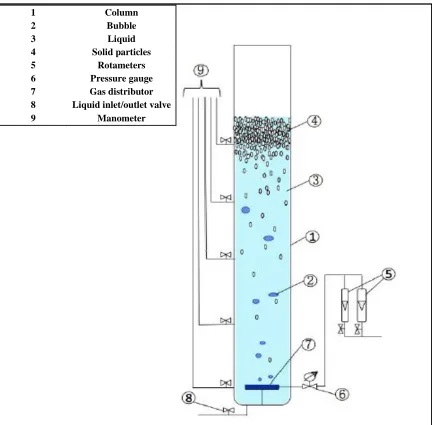
2.2 Experimental setup of the inverse three-phase fluidized bed ... 27
2.3 Numerical models ... 30
2.3.1 Governing equations ... 30
2.3.2 Interphase forces ... 31
2.3.3 Turbulence model ... 32
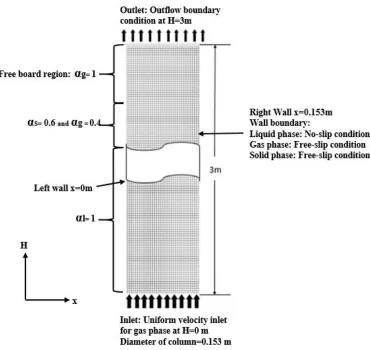
2.4 Numerical methodology ... 37
2.5 Results and discussion ... 38
2.5.1 Grid independence test and CFD model validation ... 38
2.5.2 Flow development and flow structure in an inverse three-phase fluidized bed 40 2.5.2.1 Initial fluidization stage ... 41
2.5.2.2 Developing stage ... 46
2.5.2.3 Fully developed stage ... 49
2.5.3 Effects of the solids loading ... 54
vii
2.5.5 Recirculation ... 69
2.6 Conclusions ... 73
Reference ... 75
Chapter 3 ... 78
3 Modification of the CFD Model Based on the Bubble Size Adjustment for the Inverse Three-phase Fluidized Bed ... 78
3.1 Introduction ... 78
3.2 Experimental setup of the inverse three-phase fluidized bed ... 82
3.3 Numerical models ... 85
3.3.1 Governing equations ... 85
3.3.2 Interphase forces ... 86
3.3.3 Turbulence model ... 87
3.4 Numerical methodology ... 91
3.5 Grid Independence test ... 93
3.6 Results and discussion ... 94
3.6.1 Bubble size adjustment under different Ug ... 94
3.6.2 Mean bubble size correlation ... 101
3.7 Conclusions ... 102
Reference ... 103
viii
4 Conclusions and Recommendations ... 106
4.1 Conclusions ... 106
4.2 Recommendations ... 107
ix
Nomenclature
Notation
𝐶1𝜀 Turbulence constants, dimensionless
𝐶2𝜀 Turbulence constants, dimensionless
𝐶3𝜀 Turbulence constants, dimensionless
𝐶𝐷 Drag coefficient, dimensionless
𝑑𝑝 Mean particles diameter, m
𝑑𝑏 Mean bubble size, m
D Column diameter, m
𝑒 Restitution coefficient for particle-particle collision, dimensionless
ɡ Acceleration due to gravity, m/s2
𝑔0 Radial distribution function, dimensionless
𝐺𝑏 Generation of turbulence kinetic energy due to buoyancy, m2/s2
𝐺𝑘 Generation of turbulence kinetic energy due to the mean velocity gradients, m2/s2
H Column height from bottom to top, m
𝑘 Turbulent kinetic energy, m2/s2
𝐾 Interphase momentum exchange coefficient, kg/m3s
𝑝 Pressure, Pa
𝑅𝑒 Reynolds number, dimensionless
x Ug Superficial gas velocity, m/s
𝑣 Velocity, m/s
x Radial position from left wall to right wall, m
Greek letters
𝛼 Local volume fraction, dimensionless
𝜀 Turbulent energy dissipation rate, m2/s2
𝜀𝑔 Gas holdup, dimensionless
𝛾 Collision dissipation rate of energy, kg/ms3
𝑘Θ𝑠 Granular conductivity, kg/m3s
Θ Granular temperature, m2/s2
𝜆 Bulk viscosity, kg m/s
𝜇 Dynamic viscosity, kg/m-s
𝜌 Density kg/m3
𝜏 Stress sensor, Pa
Subscripts
𝑙 Liquid phase
𝑔 Gas phase
xi
List of Tables
Table2.1 Operating conditions and physical properties of the liquid, gas and solid phases
... 29
Table 2.2 Parameters of the RNG k-ɛ models ... 35
Table 2.3 Mesh information for the grid independent test... 39
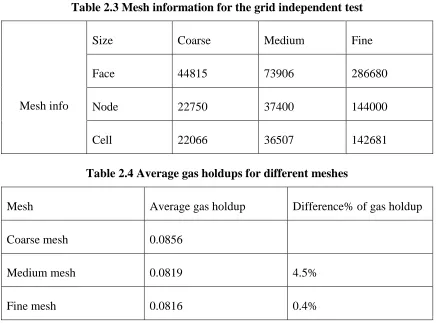
Table 2.4 Average gas holdups for different meshes ... 39
Table 3.1 Operating conditions and physical properties of each phase ... 84
Table 3.2 Parameters of the dispersed RNG k-ɛ models ... 89
Table 3.3 Constitutive equations of the solid phases ... 90
Table 3.4 Mesh information for the grid independent test... 94
Table 3.5 Average gas holdups from different meshes... 94
xii
List of Figures
Figure 1.1 Schematic diagram of the gas-liquid-solid three-phase fluidization (Muroyama
& Fan, 1985) ... 4
Figure 1.2 Flow regimes in the three-phase inverse fluidized bed. (Fan et al., 1982) ... 6
Figure 1.3 Flow regime map of the three-phase bubble column under the batch mode (Sun,
2017) ... 7
Figure 2.1 Configuration of the experimental setup of the inverse three-phase fluidized bed
(Sun, 2017) ... 28
Figure 2.2 Computational domain of the inverse three-phase fluidized bed ... 38
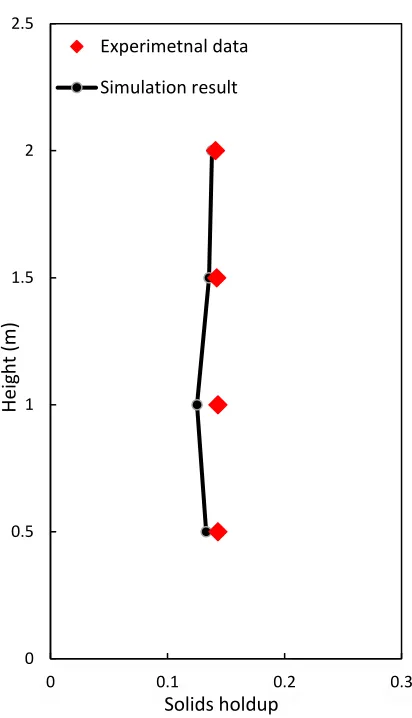
Figure 2.3 Comparison of the axial profiles of the solids volume fraction between the
numerical results and experimental data at Ug=15 mm/s, 15% loading and ρs=930 kg/m3
... 40
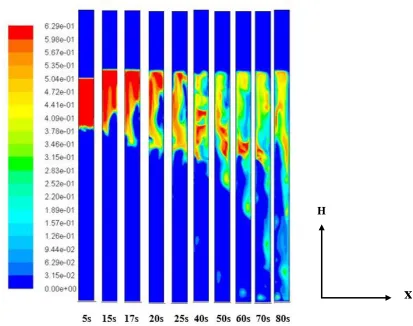
Figure 2.4 Contours of the solids volume fraction at different time of the initial fluidization
stage for Ug=15mm/s, 15% solids loading and ρs= 930 kg/m3 ... 41
Figure 2.5 Axial profiles of the solids volume fraction at different time at the initial
fluidization stage ... 42
Figure 2.6 Radial profiles of the solids volume fraction at different axial locations at the
initial fluidization stage (t=30s). ... 43
Figure 2.7 Radial profiles of the gas volume fraction at different axial locations at the initial
fluidization stage (t=30s) ... 44
Figure 2.8 Radial profiles of the solids axial velocity at different axial locations at the initial
fluidization stage (t=30s) ... 45
xiii
Figure 2.10 Contours of the solids volume fraction at different time at the developing stage
... 46
Figure 2.11 Axial profiles of the solids volume fraction at different time at the developing
stage (t=150s) ... 47
Figure 2.12 Radial profiles of the gas volume fraction at different axial locations at the
developing stage (t=150s) ... 48
Figure 2.13 Radial profiles of the solids volume fraction at different axial locations at the
developing stage (t=150s) ... 48
Figure 2.14 Radial profiles of the solids axial velocity component at different axial
locations at the developing stage (t=150s) ... 49
Figure 2.15 Contours of the solid phase volume fraction at the fully developed stage with
time ... 50
Figure 2.16 Time-averaged axial profile of the solids volume fraction at the fully developed
stage ... 51
Figure 2.17 Time-averaged axial profile of the gas volume fraction at the fully developed
stage ... 51
Figure 2.18 Time-averaged radial profiles of the solids axial velocity at different axial
locations ... 53
Figure 2.19 Time-averaged radial profiles of the solids volume fraction at different axial
locations ... 53
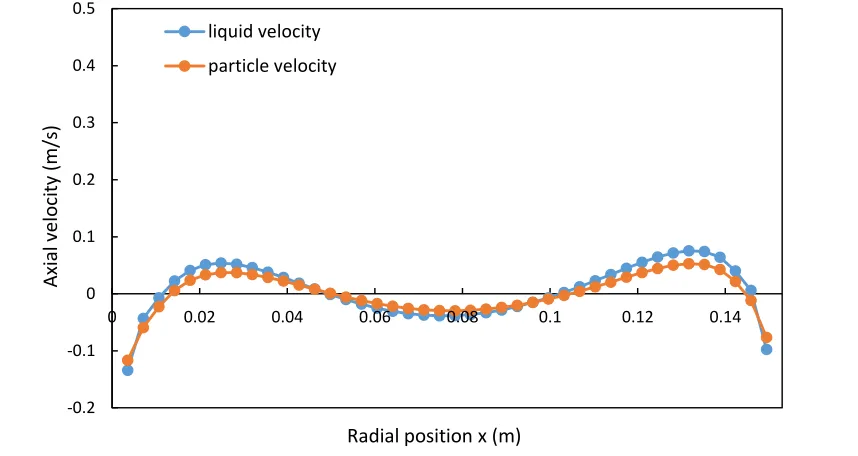
Figure 2.20 Time-averaged radial profiles of the solid and liquid axial velocities at H=1m
... 54
xiv
Figure 2.22 Axial profiles of the solids volume fraction under different solids loadings at
Ug=15mm/s and ρs=930kg/m3... 56
Figure 2.23 Radial profiles of the solids axial velocity under different solids loadings at
Ug=15mm/s and ρs=930kg/m3... 57
Figure 2.24 Radial profiles of the solids volume fraction under different solids loadings at
Ug=15mm/s and ρs=930kg/m3 ... 58
Figure 2.25 Radial profiles of the gas hold up at Ug=15mm/s and ρs=930kg/m3 ... 59
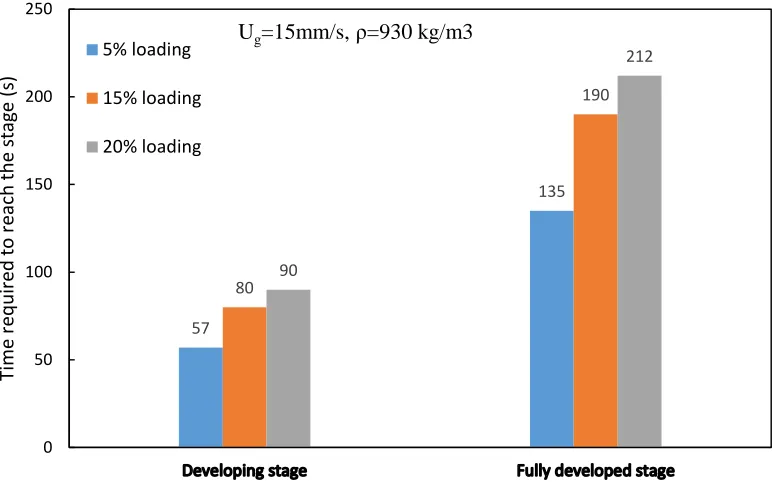
Figure 2.26 Time required to reach to the developing and fully developed stages under
differet inlet superficial gas velocities ... 60
Figure 2.27 Contours of the solids volume fraction under different inlet superficial
velocities at 15% solids loading and ρs=930 kg/m3 ... 63
Figure 2.28 Radial profiles of the solids volume fraction under different inlet superficial
gas velocities ... 64
Figure 2.29 Average gas holdup under different particle densities at Ug=15mm/s, and 15%
solids loading ... 65
Figure 2.30 Contours of the solids volume fraction with different particle densities at 15%
solids loading and Ug=15mm/s ... 66
Figure 2.31 Radial profiles of solids holdup with different particle densities at 15% solids
loading and Ug=15mm/s ... 68
Figure 2.32 Radial profiles of the solids axial velocity under different inlet superficial gas
velocities ... 70
Figure 2.33 Instantaneous volume fraction contour (left) and particle velocity vector
xv
Figure 3.1 Configuration of the experimental setup of the inverse three-phase fluidized bed
(Sun, 2017) ... 83
Figure 3.2 Computational domain of the inverse three-phase fluidized bed under the batch
liquid mode ... 93
Figure 3.3 Comparison of the average gas holdup between the numerical results and
experimental data under the different inlet superfical gas velocities at 15% solids loading
and ρs=930 kg/m3 ... 96
Figure 3.4 Comparison of the axial gas holdups from the origin CFD model and modified
CFD model with the experiment data at ρs=930 kg/m3 and 15% solids loading ... 98
Figure 3.5 Time-averaged radial gas holdups under different superficial gas velocities from
the modified CFD model ... 99
Figure 3.6 Comparison of the radial profiles of the gas holdup between the origin CFD
Chapter 1
1 Introduction
1.1 Background
Fluidization is a process that makes the solid particles behave like fluid by introducing
liquid or gas flow. The concept of the fluidized bed was first proposed for the gasification
of coal in the 1920s, and the fluidization was used for fluid catalytic processes (FCC) in
1940s (Werther, Hartge, & Heinrich, 2014). Today, fluidized beds are widely used in
chemical, biochemical, petrochemical and food industries because of the good heat and
mass transfer.
Usually, fluidized beds can be categorized by the fluidizing agent, so that there are
liquid-solid two-phase fluidization, gas-liquid-solid two-phase fluidization and gas-liquid-liquid-solid (GLS)
three-phase fluidization. Gas-solid fluidized beds were the first to be applied in industries,
then the application extended to the liquid-solid and gas-liquid-solid fluidized beds.
With the development of fluidization technology, fluidized beds can also be characterized
by the flow directions after the concept of the inverse fluidized bed was proposed. Fluidized
beds can be further divided into upward fluidized beds and inverse fluidized beds.
For the traditional upward two-phase fluidization process, the liquid or gas is injected into
the reactor from the bottom and flows through the space between particles. Under a low
fluid velocity, the drag force acting on the particles cannot overcome the gravity of particles,
causing them to remain packed. The fluidization begins as the fluid velocity reaches to the
minimum fluidization velocity where the drag force acting on the particles can balance the
gravity of the particles. Minimum fluidization velocity Umf is an important parameter for
designing the fluidized bed (Zhu, Na, & Lu, 2007). By further increasing the fluid velocity,
the drag force acting on particles will increase and particles will entrain out of the fluidized
bed reactor, and the fluidized bed becomes a circulating fluidized bed if the entrained
For gas-solid upward fluidization, the fluidized bed usually goes through the bubbling
regime, turbulent regime, fast fluidization regime, to the pneumatic transport regime with
the increase in the superficial gas velocity (Grace, 1986). For the gas-liquid-solid
fluidization, the gas phase is usually introduced into the reactor as bubbles. The flow
regime can be divided into dispersed bubble flow, discrete bubble flow, coalesced bubble
flow, slug flow, churn flow, bridging flow and annular flow at different gas and liquid
velocities (Zhang, Grace, Epstein, & Lim, 1997).
As mentioned before, the three-phase GLS fluidized bed has been studied since 1970s with
the development of fluidization technology (Ostergaard, 1971). Due to the close contact
among solid, liquid and gas phases in GLS three-phase fluidized beds (TPFBs), it is used
in chemical and biochemical processing (Muroyama & Fan, 1985). Three-phase
fluidization can be divided into upward flow phase fluidization and inverse
three-phase fluidization depending on the flow direction of the gas and liquid three-phases. The
different modes of three-phase fluidization is shown in Figure 1.1. Modes 1a and 1b are
co-current flows where the air and liquid are injected from the bottom of the reactor and
particles are moving upward. Modes 2a and 2b are countercurrent flows where the gas is
introduced to the reactor from the bottom and the liquid is injected from the top of the
reactor. The density of the particles used for modes 2a and 2b are usually less than the
density of the liquid medium, allowing particles to overcome the buoyancy force and
expand downward during the fluidization process. Besides modes 2a and 2b, the inverse
fluidization can be also operated under the batch liquid mode (Comte, Bastoul, Hebrard,
Roustan, & Lazarova, 1997; Sun, 2017), in which the liquid initially fills the reactor and
the particles are floated at the top surface of the liquid before the operation starts. In the
inverse fluidized bed under the batch mode operating condition, the fluidization state of
the particles can be achieved with the zero liquid velocity when the superficial gas velocity
is high enough resulting in the drag force and gravity acting on particles balanced with the
buoyancy force. Compared to the upward flow phase fluidization, the inverse
three-phase fluidization can reduce energy cost and minimum solids attrition as the solid three-phase
can be fluidized under low liquid and gas velocities, and the particle entrainment problem
can be eliminated without using any external equipment (Ibrahim, Briens, Margaritis, &
wastewater treatment industries. Compared with the traditional methods of the wastewater
treatment such as activated sludge process which requires longer retention time and large
space, the retention time can be reduced in fluidized bed reactor due to high biomass
concentration, and another problem of excessive growth of biomass on particles can be
fixed by using light particles in inverse fluidized beds as well (Sokół & Korpal, 2006).
Understanding the hydrodynamics of inverse three-phase fluidized beds is important when
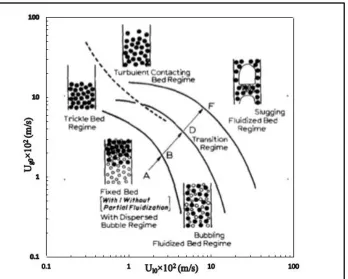
designing the reactors for industrial applications. Fan, Muroyama and Chern (1982) first
defined the flow regime for the inverse three-phase fluidized bed, which are the fixed bed
with dispersed bubble regime, bubbling fluidized bed regime, transition regime and
slugging flow regime based on the liquid and gas velocities. Other flow characteristics in
the inverse three-phase fluidized bed including the phase holdup, minimum fluidization
velocity, pressure drop, bubble behavior, bed expansion has been studied by many
researchers (Briens, Ibrahim, Margaritis, & Bergougnou, 1999; Renganathan & Krishnaiah,
2008; Son, Kang, Kim, Kang, & Kim, 2007). However, few researchers have reported the
flow structure in the radial direction of the inverse three-phase fluidized bed.
1a 1b 2a 2b
Continuous phase Diagram of
GLS fluidized
bed
Liquid Gas Liquid Gas
Flow
Figure 1.1 Schematic diagram of the gas-liquid-solid three-phase fluidization
(Muroyama & Fan, 1985)
Although a few experimental studies on the hydrodynamics in GLS three-phase flows have
been conducted, it is hard to fully understand the underlying phenomena of the GLS
three-phase fluidization due to the complex interactions between each three-phase. There is even less
studies focused on predicting the flow characteristics of the inverse three-phase fluidized
bed due to the restrictions of the experiments. Therefore, with the rapid development of
computer technology, CFD has become a powerful tool to simulate the multiphase flow
and provide more details on the three-phase fluidization process. In addition, CFD is
considered to be more time and economic efficient to simulate complex flows compared
with the experimental method. However, few CFD models has been developed to predict
the hydrodynamics and flow structure in inverse three-phase fluidized beds (TPFBs).
1.2 Literature review
The literature review will focus on two parts, which are the experiment studies on the
hydrodynamics of the GLS three-phase inverse fluidized bed and the CFD simulations of
the GLS three-phase fluidized bed.
1.2.1 Experimental
studies
of
the
hydrodynamic
characteristics of the inverse three-phase fluidized beds
Minimum fluidization velocity is an important parameter to consider when designing an
inverse three-phase fluidized bed. Minimum fluidization velocity is defined as the velocity
when the pressure gradient across the bed is minimum in the inverse three-phase fluidized
bed (Ibrahim et al., 1996). Ibrahim et al.(1996) found that the minimum liquid fluidization
velocity will decrease when increasing the gas velocity. Many researchers also reported the
same trend in which the minimum liquid fluidization velocity decreases with the increase
in gas flowrate (Bandaru, Murthy, & Krishnaiah, 2007; Cho, Park, Kim, Kang, & Kim,
2002; D. H. Lee, Epstein, & Grace, 2000; Renganathan & Krishnaiah, 2008). Renganathan
and Krishnaiah (2008) also found the same results and developed the correlation for the
minimum gas fluidization velocity in inverse three-phase fluidized beds under the batch
1.2.1.1 Modes of operation and flow regimes
Inverse three-phase fluidized beds can operate under the batch liquid mode or continuous
mode. Under the batch liquid mode, the liquid velocity is zero, and the fluidization state of
particles can be achieved by injecting gas only. The main method to determine the flow
regime for inverse three-phase fluidized beds is by visual observation of the flow
phenomena (particle movement or bubble behavior) in the experiment.
Fan et al. (1982) conducted the first experimental study to investigate the hydrodynamics
in the three-phase inverse fluidized bed. Both the gas and liquid phase can be considered
as the continuous phase in an inverse three-phase fluidized bed. Fan et al. (1982) defined
four flow regimes shown in Figure 1.2 based on the gas and liquid velocities in an inverse
three-phase fluidized bed, which are: (a) the fixed bed with the dispersed bubble regime,
(b) the bubbling fluidized bed regime, (c) the transition regime and (d) the slugging
fluidized bed regime. In the fixed bed with dispersed bubble regime, the gas and liquid
velocities are low, and the drag force and gravity acting on the particle cannot overcome
the buoyancy force. In this regime, the particles remain packed. With the increase in gas
and liquid velocities, the bubbling fluidized bed regime can be reached. The gravity and
drag force exerted on particles can balance the buoyancy force, so, particles start to fluidize
from the bottom of packed bed, ultimately distributing uniformly along the reactor. The
bubble size is uniform within the bubbling fluidized bed regime. At the transition regime,
bubbles starts to coalescence and their sizes will change. At the slugging fluidized bed
regime, particles will move upward with slug bubbles, and then settle down quickly, and
Figure 1.2 Flow regimes in the three-phase inverse fluidized bed. (Fan et al., 1982)
Only a few researchers studied the batch mode of the inverse three-phase fluidized bed
compared to the continuous mode. Comte et al. (1997) conducted experiments in an inverse
TPFB under the batch mode operating condition. The particles used in the experiment have
a mean density of 934 kg/m3, and gas bubbles are introduced into the fluidized bed by using
a perforate plate and membrane distributor. Three significant transition velocities have
been defined based on different distributions of the solid phase to distinguish the flow
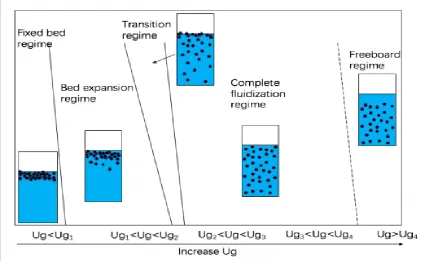
regimes and study the flow behavior: (1) the minimum gas fluidization velocity Ug1 that
can break the fixed bed; (2) velocity Ug2 is the velocity at which some particle can reach
the bottom of the reactor; (3) velocity Ug3, at this velocity, the particle distribution is
uniform along the reactor. It was found that Ug2 and Ug3 will decrease when increasing the
solids loading or particle density. A mathematical model to predict velocity Ug3 was
developed based on the assumption that the particle movement is mainly due to the density
difference between particles and mixture of gas and liquid. Sun (2017) also proposed
similar specific transition velocities, which are the initial fluidization velocity, expansion
shown in Figure 1.3. In addition, when the superficial gas velocity is above Ug4, a free board
region can be observed. It was also confirmed that Ug1, Ug2 and Ug3 will decrease with the
increase in the particle density. Han et al. (2003) used particles with a density of 934 kg/m3
but the gas distributor used in their experiment is different from the distributor used in the
experimental study by Comte et al. (1997), so a different Ug3 value was derived. Thus, the
gas distributor is one of the factors that can influence the Ug3 (Han et al., 2003). Sun (2017)
further confirmed this fact by using particles with a density of 930 kg/m3 and the porous
quartz gas distributor, which can generate small bubbles, obtained the smallest Ug3 value
among the three studies.
Figure 1.3 Flow regime map of the three-phase bubble column under the batch
mode (Sun, 2017)
1.2.1.2 Particle movements
Buffière and Moletta (1999) investigated the influence of the particle size and density on
the flow regimes of the inverse fluidized bed under the batch liquid mode. Two types of
particles are used in the experiment: one has a mean diameter of 4 mm with density of 920
For larger particles with a constant superficial liquid velocity, particles start to settle down
and accumulate at the bottom of the reactor when the superficial gas velocity increases
which results in a semi-fluidization phenomenon. For smaller particles, it was found that
they will distribute uniformly in the reactor when the gas velocity is above a certain value,
though the particle density is still smaller than the density of the surrounding liquid-gas
mixture. In addition, smaller particles will flow upward with the liquid motion at a high
gas velocity, so there is no semi-fluidization for smaller particles at a high gas velocity. In
that case, two possible particle expansion mechanisms were proposed: (1) the density
difference between particles and liquid-gas mixture and (2) the liquid circulation effect
caused by rising bubbles. Later, Renganathan and Krishnaiah (2008) reported the particle
expansion mechanism as a combination of the density difference effect and liquid
circulation effect. It was indicated that the liquid circulation is not enough to cause the
particle movement if the density difference between particles and the liquid-gas mixture is
very large for large size particles.
1.2.1.3 Phase holdups
Cho et al. (2002) conducted an experiment to find out the average phase holdup of an
inverse TPFB under the continuous operating condition. The results showed the gas and
liquid holdups will increase with an increase in the gas and liquid velocities. Later, Bandaru
et al. (2007) also reported the same trend for the liquid average holdup. Only a few studies
reported the axial distributions of flow parameters for each phase in inverse TPFBs.
Ibrahim et al. (1996) and Bandaru et al. (2007) studied the distribution of the axial volume
fraction of each phase in an inverse TPFB. It was found that the bed remains fixed at a
lower gas and liquid velocity. With the increase in the inlet liquid or gas velocity, the
packed bed starts to fluidize, and the particles begin to move downward. The gas phase
holdup was eventually found to be uniform along the reactor.
Buffière and Moletta (1999) proposed a correlation to predict the liquid holdup and bed
porosity under the batch liquid mode in the inverse TPFB, and it can be used in the
dispersed bubble regime and the transition regime. The gas holdup was found to be
independent of the liquid velocity, and the gas holdup for large particles is higher than that
not be able to break up the bubble. Sun (2017) reported that the gas holdup increases, and
the liquid holdup decreases with a constant solids loading when increasing the superficial
gas velocity. In addition, it was also reported that the local solids volume fraction in the
axial direction decreases at the top and increases at the bottom of the column gradually
with an increase in the superficial gas velocity.
1.2.1.4 Remarks
Only a few researchers studied the fluidization process in inverse TPFBs. Most particles
remain packed at the minimum fluidization velocity, and the hysteresis effect between the
fluidization and defluidization was also found in inverse TPFBs (D. H. Lee et al., 2000).
Renganathan and Krishnaiah (2008) observed that particles expanded layer by layer from
the bottom of the packed bed instead of expanding suddenly at the minimum fluidization
velocity under the batch liquid operating condition. The bed expansion was found to be
heterogeneous first before reaching to the homogeneous expansion state (K. Il Lee et al.,
2007). It was also found that the bed expands faster when using heavier particles or
increasing gas and liquid velocities in inverse TPFBs.
In an inverse TPFB, the gas is always introduced to the reactor as bubbles, which it is one
of the key factors that can influence the heat and mass transfer. Therefore, it is important
to study the bubble behavior and properties in order to better understand the flow
characteristics of inverse TPFBs. Son et al. (2007) studied bubble properties in an inverse
TPFB, and the results showed that the bubble size increases with an increase in the liquid
or gas velocity. It was also found that the bubble size and the bubble rising velocity is
higher when using the particles with smaller density. The correlation of bubble size, bubble
rising velocity, and frequency was proposed based on the gas drift flux. Cho et al. (2002)
also reported that the bubble size increases with an increase in the gas velocity.
1.2.2 CFD modelling of multiphase flows in fluidized beds
In past decades, with the rapid development of the computer technology, computational
fluid dynamics (CFD) has becomes a powerful tool to simulate multiphase flows as it is
to simulate multiphase flows: (1) Eulerian-Eulerian approach and (2) Eulerian-Lagrangian
approach.
The Eulerian-Lagrangian approach treats the liquid and gas as a continuous phase by
solving the Navier-Stokes equations, and the solid phase is treated as a discrete phase which
can be solved by tracking the trajectories of each particle based on the Lagrangian force
balance equation (ANSYS, 2014). Compared to the Eulerian-Eulerian approach, the
advantages of the Eulerian-Lagrangian approach are that fewer empirical constitutive
relations need to be used and the detailed information of the discrete phase can be obtained.
Therefore, many researchers used the Eulerian-Lagrangian approach to investigate the flow
characteristics of the discrete phase in micro-scales. Li, Zhang and Fan (1999) studied the
single bubble wake behavior and particle entrainment phenomena in a GLS three-phase
bubble column by using the VOF-DPM (volume of fluid-discrete phase model) which
described the flows of gas bubbles and solid particles in the Lagrangian coordinates and
the liquid phase in the Eulerian coordinates. Later, Zhang and Ahmadi (2005) developed a
CFD model for the GLS slurry fluidized bed based on the Eulerian-Lagrangian method,
and the effect of the bubble size on the flow structure and transient characteristics of the
three-phase flows was studied. Wen, Lei and Huang (2005) treated the liquid and gas
phases as continuous, and solid phase as the discrete phase to study the hydrodynamics in
a TPFB and got a good agreement between the numerical results and experiment data.
Since the Eulerian-Lagrangian approach tracks the trajectory of each individual particle,
one of the fundamental assumptions made for the Eulerian-Lagrangian model is that the
volume fraction of the discrete phase is low (ANSYS, 2014). The computational resource
needed for simulating multiphase flows will be high if the discrete phase volume fraction
is high (Pan, Chen, Liang, Zhu, & Luo, 2016). Although the Eulerian-Lagrangian method
can predict the hydrodynamics of TPFBs accurately and provide more micro-scale
information on the discrete phase, the Eulerian-Eulerian method will be used in the present
work because the solids volume fraction in an inverse TPFB is high.
The Eulerian-Eulerian approach treats all phases as the interpenetrating continuum, and all
phases are solved using governing equations which are closed by additional closure laws
governing equations for both the gas and liquid phases. Turbulence models used to close
the Reynold-averaged Naiver Stokes can be divided into four categories: (1) zero-equation
turbulence model; (2) one-equation turbulence model; (2) two-equation turbulence model
and (4) RSM (Reynold Stress) turbulence model.
The zero-equation turbulence model is the simplest eddy viscosity model that uses only
one algebraic equation to calculate the turbulence viscosity. So, there are no other partial
differential equations needed to calculate the turbulent stress. The Prandtl’s mixing length
theory was the first zero-equation turbulence model developed in 1920s (Prandtl, 1925)
based on the Bounsinesq hypothesis (Boussinesq, 1877). But it only considered the mean
velocity in a single direction. Later, Cebeci and Smith (1974) and Baldwin and Lomax
(1978) extended the model to describe multi-dimensional turbulent flows. The drawbacks
of the zero-equation turbulence model are the underestimation of the transport effects, and
having difficulties in deriving the turbulence length scale for different types of flows from
the empirical data.
The one-equation turbulence model calculates the turbulent eddy viscosity by solving one
more transport equation for the turbulent kinetic energy. Spallart and Allmaras (1992)
developed a one-equation model, which can predict the free shear and boundary layer flows
correctly. The advantage of the one-equation turbulence model is that less computation
time is required. However, it also has the same drawback as the zero equation turbulence
model in which the accuracy strongly depends on the specified turbulent length scale and
time scale of the flow.
Two-equation turbulence models such as the k model turbulence models are more
popular than the zero and one-equation turbulence models because they overcome the
drawbacks of the zero and one-equation models. The turbulent viscosity can be calculated
by solving two additional transport equations for the turbulence kinetic energy and
turbulence dissipation rate. Launder, Reece, and Rodi (1975) first developed the standard
k turbulence model but it is only valid for high Reynolds number turbulent flows. To be
and Orszag (1986) developed the RNG k model by adding addition terms and functions
in the transport equation based on the renormalization group theory. Shih et al. (1995)
developed the Realizable k model in order to improve the performance of the standard k model on predicting flows with a high shear rate and massive separation. The model has
a new transport equation of dissipation rate related to the vorticity fluctuation at a high
Reynolds number and a new formation for the turbulence viscosity based on realizability
constraints. Laborde-Boutet et al. (2009) compared the performance of each turbulence
models by predicting the turbulent flow characteristics in bubble columns. The results
showed that the RNG k has a better performance than the standard and realizable k
models. The study also investigated the influence of using different turbulence models, the dispersed k model, dispersed k model with bubble induce effect and per phase k
model to account for the effect of the gas phase turbulence on the liquid phase turbulence.
The results showed there is no influence on the predicted velocity filed, but the turbulent
quantities are higher when accounting for the bubble induced turbulence. Masood and Delgado (2014) reported that both the dispersed RNG k model and dispersed RNG k
model with bubble induced turbulence can predict the average velocity and turbulent
accurately in a 3D square bubble column. Hamidipour, Chen, and Larachi (2012) extended
the study to a three-phase bubble column and found the dispersed RNG k has a better performance on predicting the flow field in TPFBs bed than the per-phase RNG k model, realizable standard k model and standard k model.
The RSM model is a second closure model, which closes governing equations by solving
the transport equation of Reynold stresses instead of calculating the eddy viscosity. The
RSM model has better performance on predicting the anisotropic flows than all other
turbulence models mentioned above. The drawback of the RSM is the computation expense
is high. Therefore, two equation turbulence models are used in the simulation of the
multiphase fluidization in present work.
For the solid phase, the kinetic theory of granular flow (KTGP) proposed by Chapman and
Cowling (1970) is used to model the solid phase pressure, viscosity and stress in order to
particle-particle collision can be analogous to the random motion of gas molecules in a
thermodynamic system. The granular temperature is defined analogous to the temperature
in a thermodynamic system, which is related the particle velocity fluctuation. The solids
phase viscosity and stress are the functions of the granular temperature. Ding and
Gidaspow (1990) modelled the gas-solid fluidization by using the KTGP. Later, some
researchers also used the KTGP for the solid phase when modeling three-phase fluidization
(Hamidipour et al., 2012; W. Li & Zhong, 2015; Wu & Gidaspow, 2000). Johnson and
Jackson boundary condition (Johnson & Jackson, 1987) was often used for the solid phase
to account for the collisions between the wall and particle, and the specularity coefficient
is an empirical parameter to define the wall condition. The specularity coefficient can vary
from zero to one where one represents the no-slip wall condition which means significant
amount of lateral momentum transfer existed at wall, and zero represents the free-slip wall
condition which means there is no shear at the wall.
For the three-phase fluidization modelling, the Eulerian-Eulerian approach can be
categorized into two types which are the pseudo two-fluid model and three-fluid
Eulerian-Eulerian approach. The pseudo two-fluid model can be used for modeling the three-phase
fluidization only when the gas bubble is smaller than the particle size and uniformly
distributed along the column because the gas phase and fluid phase can be considered as a
single mixed fluid phase (Felice, 2000). In addition, the two-fluid model is also applied to
the three-phase fluidization when the particle size is small enough, the loading is low and
the slip velocity between the solid and liquid phases is small. In that case, the liquid and
solid suspension can be simplified to one-phase, and it is often used in the three-phase
slurry bubble column simulation (Grevskott, Sannaes, Dudukovic, Hjarbo, & Svendsen,
1996; Hillmer & Weismantel, 1994; Wen & Xu, 1998). In addition, Feng et al. (2005)
employed a pseudo two fluid model to the gas–liquid-nanoparticles three-phase
fluidization process, and the results was validated with the experimental data and the
agreement was strong. By applying the pseudo two-fluid model for the three-phase
simulation, the complicated three-phase flows can be simplified to a two-phase flow, which
reduces the computation expanse as well. However, the drawback of the pseudo two-fluid
model is that the application is limited by the particle size and particle loading, and it also
Eulerian-Eulerian approach will be used because of the large particle size used in the present study.
Only a few literatures presented the CFD modelling based on the three-fluid
Eulerian-Eulerian model as the interactions among each phase is complicated in TPFBs.
Panneerselvam, Savithri, and Surender (2009) developed a CFD model for TPFBs based
on the three-fluid Eulerian approach. Two different reactors were used to validate the
model, and the particle densities are 2475 kg/m3 and 2500 kg/m3. The dispersed standard
k turbulence model combined with the bubble and gas induced turbulence model on
liquid was applied to the liquid phase. The constant viscosity model (Gidaspow, 1994)
instead of the KTGP was used to describe the solid pressure and stress. Only the drag force
was considered as the interaction force among each phase to calculate the momentum
exchange coefficient. The drag model used between the liquid and solid phases is the
Gidaspow drag model (Gidaspow, 1994). For the liquid and gas phases, the Tomiyama
drag model (Tomiyama, 1998) and Grace drag models (Grace, 1973) were used, and the
Tomiyama drag model gives a better performance by comparing the experimental results.
The drag model used for the gas and particle phases in this study was the Schiller-Naumann
drag model (Schiller & Naumann, 1935). The no-slip wall boundary condition for the liquid
phase and free slip condition for the gas and solid phases were selected. The velocity inlet
and pressure outlet were selected as boundary conditions. The mean bubble size is used
without considering the bubble size distribution in their study (Panneerselvam et al., 2009),
and it was determined by comparing the gas holdup derived from the CFD results using
different bubble sizes with the average gas holdup from the experiment data. The
simulation results showed a good agreement on the axial gas hold, axial solids velocity,
and turbulence quantities such as turbulent velocity and shear stress with the experimental
data. However, the model cannot predict the near wall region correctly.
Hamidipour et al. (2012) presented a CFD model based on a three-fluid model combined
with the KTGP in the same TPFBs as Panneerselvam et al. (2009) to investigate the
performance of different turbulence models and solid wall conditions. A single bubble size distribution assumption was made in this study. The results showed the dispersed RNG k
three-dimension and two-three-dimensional models are capable of predicting the flow field, but the
three-dimensional model is slightly accurate than the two-dimensional model. However,
the computational cost of the three- dimensional simulation is also high. The no-slip wall
condition for the liquid phase, free-slip for the gas and solids phases were recommended.
The bubble size input for the second phase was found to have an influence on the gas
holdup, and the smaller bubble size resulted in a higher gas holdup. Also, the interphase
force between the continuous and dispersed phases has been studied widely in literatures,
but the interaction between two dispersed phases has not been well understand and modeled.
Hamidipour et al. (2012) used the same method to model the drag force between the two
dispersed phases to model the drag force between the continuous and dispersed phases
because two dispersed phases were also treated as continuums in the Eulerian-Eulerian
approach. The drag model used between the gas and solid phases was the
Schiller-Naumann drag model (Schiller & Schiller-Naumann, 1935), between the solid and liquid phase was
the Gidaspow drag model (Gidaspow, 1994), between the liquid and gas phase was also
the Schiller-Naumann model (Schiller & Naumann, 1935).
Li and Zhong (2015) did the CFD modeling using the three-fluid Eulerian-Eulerian
approach with the KTGP to investigate the hydrodynamics of the three-phase phase bubble
columns. The dispersed RNG model was used for the liquid phase. A mean bubble size
was applied even under different superficial gas velocities. The sensitivity of the interphase
force, which includes the drag force, was studied. It was found the best drag model for the
liquid and gas phases is the Zhang-Vanderheyden model (Zhang & Vanderheyden, 2002),
between liquid and solid phases is the Schiller-Naumann drag model (Schiller & Naumann,
1935), and the drag force between the gas and solid phases were not considered. The effect
of the superficial gas velocity, particle density, solids loading and particle size on the
hydrodynamics of the three-phase bubble column is investigated based on the CFD results.
According to literatures, very few works were focused on developing CFD model based on
three-fluid Eulerian-Eulerian approach for the three-phase fluidization process, and most
of the CFD models are for upward TPFBs. No CFD model for the inverse three-phase
fluidization process with light particle has been reported in the literature. Only very few
fluidized bed has been reported. The following literature review is about liquid-solid
inverse fluidized beds.
A numerical simulation based on the Eulerian-Eulerian approach has been carried out to
study the flow behavior of particles in the inverse liquid-solid fluidization process by Wang
et al. (2014). The dispersed standard k turbulence model for the liquid phase and KTGP
for the solid phase were applied. The Gidaspow drag model is used to determine the
interphase momentum exchange coefficient. The no-slip wall condition was used for both
the liquid and solid phases. The particle density was 897 kg/m3 which is lower than the
surrounding liquid phase density. The predicted bed expansion was slightly higher than the
experimental value. The effects of the liquid velocity on the bed height, solid phase
distribution and flow patterns of particles were investigated. Further improvement of the
drag model is needed to enhance the performance of CFD model in inverse liquid-solid
fluidized beds.
Wang et al. (2018) developed a CFD model for inverse liquid-solid fluidized beds based
on the Eulerian-Larganrain approach. The effects of the particle velocity, jet velocity and
liquid viscosity on the particle flow behavior was studied. The results indicated that the
solid distribution was denser at the bottom of the column for heavily particles than light
particles in an inverse liquid-solid fluidized bed. It was also found that a higher particles
1.3 Objectives
According to the literature review presented in the previous section, it is noticed that the
hydrodynamics of the inverse fluidized bed has been studied experimentally by many
researchers, but most studies were focused on the flow characteristics, such as the average
phase holdup, axial phase holdup, and minimum fluidization velocity. However, few of
them reported the details of the flow patterns and local flow characteristics such as local
radial phase holdup, radial solid phase velocity and etc. In addition, few researchers
investigated the development process of the inverse three-phase fluidization process.
For CFD models, only a few models were developed and validated for the three-phase
fluidization process based on the three-fluid Eulerian-Eulerian approach. The complicated
interactions between each phase are still not well understood, and there is no clear guideline
to follow when setting up a CFD model for the simulation of the three-phase fluidization
process. In addition, there is no CFD model developed for inverse TPFBs from literatures.
The mean bubble size is assumed to be constant even under different superficial gas or
liquid velocities operating condition from literatures. However, in reality, the mean bubble
size varies with the superficial gas velocity.
The first objective of the present work is to develop a CFD model for the simulation of the
inverse TPFB based on the three-fluid Eulerian-Eulerian approach in order to study the
flow details and fluidization development process in the inverse TPFB, which have not
been reported by experimental studies. The second objective is to further modify the
proposed CFD model by using different mean bubble sizes under different inlet superficial
gas velocities. In addition, a correlation between the bubble size and inlet superficial gas
1.4 Thesis structure
The thesis is in the “Integrated-Article Format”.
Chapter1: General background and literature review on CFD modelling and experiment
study of the three-phase fluidization process is presented.
Chapter2: A CFD model is developed for the simulation of the inverse TPFB. The
development of the fluidization process and the effect of the operating condition on the
hydrodynamics and flow structure are investigated.
Chapter3: The CFD model proposed in chapter 2 is modified based on the mean bubble
size adjustment and the correlation for the bubble size.
Reference
Ansys. Inc. (2014). Fluent 16.0 User’s Guide.
Baldwin, B., & Lomax, H. (1978). Thin-layer approximation and algebraic model for separated turbulentflows. In 16th Aerospace Sciences Meeting. American Institute of Aeronautics and Astronautics. https://doi.org/10.2514/6.1978-257
Bandaru, K. S. V. S. R., Murthy, D. V. S., & Krishnaiah, K. (2007). Some hydrodynamic aspects of 3-phase inverse fluidized bed. China Particuology, 5(5), 351–356. https://doi.org/https://doi.org/10.1016/j.cpart.2007.06.002
Boussinesq, J. (1877). Essai sur la theorie des eaux courantes. Mémoires Présentés Par Divers Savants à l’Acad. Des Sci. Inst. Nat. France, 23(1), 1–680.
Briens, C. L., Ibrahim, Y. A. A., Margaritis, A., & Bergougnou, M. A. (1999). Effect of coalescence inhibitors on the performance of three-phase inverse fluidized-bed columns. Chemical Engineering Science, 54(21), 4975–4980. https://doi.org/10.1016/S0009-2509(99)00220-1
Buffière, P., & Moletta, R. (1999). Some hydrodynamic characteristics of inverse three phase fluidized-bed reactors. Chemical Engineering Science, 54(9), 1233–1242. https://doi.org/10.1016/S0009-2509(98)00436-9
Cebeci, T., & Smith, A. M. O. (1974). Analysis of turbulent boundary layers. (A. M. O. Smith, Ed.). New York: Academic Press.
Chapman, S., & Cowling, F. (1991). The Mathematical Theory of Non-uniform Gases An Account of the Kinetic Theory of Viscosity , Thermal Conduction and Diffusion in Gases. Cambridge University Press. https://doi.org/10.1039/c3cp54368d
Cho, Y. J., Park, H. Y., Kim, S. W., Kang, Y., & Kim, S. D. (2002). Heat transfer and hydrodynamics in two- and three-phase inverse fluidized beds. Industrial and
Engineering Chemistry Research, 41(8), 2058–2063.
https://doi.org/10.1021/ie0108393
Comte, M. P., Bastoul, D., Hebrard, G., Roustan, M., & Lazarova, V. (1997). Hydrodynamics of a three-phase fluidized bed - The inverse turbulent bed. Chemical Engineering Science, 52(21–22), 3971–3977. https://doi.org/10.1016/S0009-2509(97)00240-6
Ding, J., & Gidaspow, D. (1990). A bubbling fluidization model using kinetic theory of
granular flow. AIChE Journal, 36(4), 523–538.
https://doi.org/10.1002/aic.690360404
Felice, R. Di. (2000). The pseudo-fluid model applied to three-phase fluidisation. Chemical
Engineering Science, 55(18), 3899–3906.
https://doi.org/https://doi.org/10.1016/S0009-2509(00)00027-0
Feng, W., Wen, J., Fan, J., Yuan, Q., Jia, X., & Sun, Y. (2005). Local hydrodynamics of gas–liquid-nanoparticles three-phase fluidization. Chemical Engineering Science, 60(24), 6887–6898. https://doi.org/https://doi.org/10.1016/j.ces.2005.06.006
Gidaspow, D. (1994). Multiphase Flow and Fluidization: Continuu and Kinetic Theory Descriptions. Boston: Acad. Press.
Grace, J. R. (1973). Shapes and velocities of bubbles rising in infinite liquids. Transactions of the Institution of Chemical Engineers, 51, 116–120. Retrieved from http://ci.nii.ac.jp/naid/10021836141/en/
Grace, J. R. (1986). Contacting modes and behaviour classification of gas—solid and other two‐ phase suspensions. The Canadian Journal of Chemical Engineering, 64(3), 353–363. https://doi.org/10.1002/cjce.5450640301
Grevskott, S., Sannaes, B. H., Dudukovic, M. P., Hjarbo, K. W., & Svendsen, H. F. (1996). Liquid circulation, bubble size distributions, and solid movement in two- and three-phase bubble columns. Chemical Engineering Science, 51(10), 1703. https://doi.org/https://doi.org/10.1016/0009-2509(96)00029-2
Hamidipour, M., Chen, J., & Larachi, F. (2012). CFD study on hydrodynamics in three-phase fluidized beds — Application of turbulence models and experimental validation.
Chemical Engineering Science, 78, 167–180.
https://doi.org/10.1016/j.ces.2012.05.016
Han, H., Lee, W., Kim, Y., Kwon, J., Choi, H., Kang, Y., & Kim, S. (2003). Phase Hold-up and Critical Fluidization Velocity in a Three-Phase Inverse Fluidized Bed. Korean J. Chem. Eng., 20(1), 163–168. https://doi.org/10.1007/BF02697203
Hillmer, G., & Weismantel, L. (1994). Investigations and Modelling Columns of Slurry Bubble. Science, 49(6), 837–843. https://doi.org/https://doi.org/10.1016/0009-2509(94)80020-0
Ibrahim, Y. A. A., Briens, C. L., Margaritis, A., & Bergongnou, M. A. (1996). Hydrodynamic Characteristics of a Three-Phase Inverse Fluidized-Bed Column. AIChE Journal, 42(7), 1889–1900. https://doi.org/10.1002/aic.690420710
Il Lee, K., Mo Son, S., Yeong Kim, U., Kang, Y., Hwan Kang, S., Done Kim, S., … Hyun Kim, W. (2007). Particle dispersion in viscous three-phase inverse fluidized beds.
Chemical Engineering Science, 62(24), 7060–7067.
https://doi.org/10.1016/j.ces.2007.08.024
176, 67–93. https://doi.org/10.1017/S0022112087000570
Laborde-Boutet, C., Larachi, F., Dromard, N., Delsart, O., & Schweich, D. (2009). CFD simulation of bubble column flows: Investigations on turbulence models in RANS approach. Chemical Engineering Science, 64(21), 4399–4413. https://doi.org/10.1016/j.ces.2009.07.009
Launder, B. E., Reece, G. J., & Rodi, W. (1975). Progress in the development of a Reynolds-stress turbulence closure. Journal of Fluid Mechanics, 68(3), 537–566. https://doi.org/10.1017/S0022112075001814
Lee, D. H., Epstein, N., & Grace, J. R. (2000). Hydrodynamic Transition from Fixed to Fully Fluidized Beds for Three-Phase Inverse Fluidization. Korean Journal of Chemical Engineering, 17(6), 684–690. https://doi.org/10.1007/BF02699118
Li, W., & Zhong, W. (2015). CFD simulation of hydrodynamics of gas-liquid-solid
three-phase bubble column. Powder Technology, 286, 766–788.
https://doi.org/10.1016/j.powtec.2015.09.028
Li, Y., Zhang, J., & Fan, L.-S. (1999). Numerical simulation of gas–liquid–solid fluidization systems using a combined CFD-VOF-DPM method: bubble wake behavior. Chemical Engineering Science, 54(21), 5101–5107. https://doi.org/https://doi.org/10.1016/S0009-2509(99)00263-8
Masood, R. M. A., & Delgado, A. (2014). Numerical investigation of the interphase forces and turbulence closure in 3D square bubble columns. Chemical Engineering Science, 108, 154–168. https://doi.org/10.1016/j.ces.2014.01.004
Muroyama, K., & Fan, L. ‐ S. (1985). Fundamentals of gas‐ liquid‐ solid fluidization. AIChE Journal, 31(1), 1–34. https://doi.org/10.1002/aic.690310102
Ostergaard, K. (1971). Three-phase fluidization. In J. F. Davidson & D. Harrison (Eds.), Fluidization (pp. 751–780). Academic Press London.
Pan, H., Chen, X., Liang, X., Zhu, L., & Luo, Z. (2016). CFD simulations of gas – liquid – solid flow in fluidized bed reactors — A review. Powder Technology, 299, 235–258. https://doi.org/https://doi.org/10.1016/j.powtec.2016.05.024
Panneerselvam, R., Savithri, S., & Surender, G. D. (2009). CFD simulation of hydrodynamics of gas–liquid–solid fluidised bed reactor. Chemical Engineering Science, 64(6), 1119–1135. https://doi.org/https://doi.org/10.1016/j.ces.2008.10.052
Prandtl, L. (1925). Uber die ausgebildete Turbulenz. Zamm, Vol. 5(5), 136–139. https://doi.org/10.1007/978-3-662-11836-8_60
Renganathan, T., & Krishnaiah, K. (2008). Prediction of Minimum Fluidization Velocity in Two and Three Phase Inverse Fluidized Beds. The Canadian Journal of Chemical
https://doi.org/https://doi.org/10.1002/cjce.5450810369.
Schiller, L., & Naumann, A. (1935). A drag coefficient correlation. Z. Ver. Deutsch. Ing, 77, 318–320.
Shih, T.-H., Liou, W. W., Shabbir, A., Yang, Z., & Zhu, J. (1995). A new eddy viscosity model for high Reynolds number turbulent flows. Computers and Fluids, 24(3), 227– 238. https://doi.org/10.1016/0045-7930(94)00032-T
Sokół, W., & Korpal, W. (2006). Aerobic treatment of wastewaters in the inverse fluidised bed biofilm reactor. Chemical Engineering Journal, 118(3), 199–205. https://doi.org/10.1016/j.cej.2005.11.013
Son, S. M., Kang, S. H., Kim, U. Y., Kang, Y., & Kim, S. D. (2007). Bubble properties in three-phase inverse fluidized beds with viscous liquid medium. Chemical Engineering and Processing: Process Intensification, 46(8), 736–741. https://doi.org/10.1016/j.cep.2006.10.002
SPALART, P., & ALLMARAS, S. (1992). A one-equation turbulence model for aerodynamic flows. In 30th Aerospace Sciences Meeting and Exhibit. American Institute of Aeronautics and Astronautics. https://doi.org/10.2514/6.1992-439
Sun, X. (2017). Bubble induced Inverse Gas-liquid-solid Fluidized bed. University of Western Ontario.
Tomiyama, A. (1998). Struggle with computational bubble dynamics. Multiphase Science and Technology. https://doi.org/10.1615/MultScienTechn.v10.i4.40
Wang, S., Li, H., Wang, R., Tian, R., Sun, Q., & Ma, Y. (2018). Numerical simulation of flow behavior of particles in a porous media based on CFD-DEM. Journal of
Petroleum Science and Engineering, 171, 140–152.
https://doi.org/10.1016/j.petrol.2018.07.039
Wang, S., Sun, J., Yang, Q., Zhao, Y., Gao, J., & Liu, Y. (2014). Numerical simulation of flow behavior of particles in an inverse liquid–solid fluidized bed. Powder
Technology, 261, 14–21.
https://doi.org/https://doi.org/10.1016/j.powtec.2014.04.017
Wen, J., Lei, P., & Huang, L. (2005). Modeling and simulation of gas-liquid-solid three-phase fluidization. Chemical Engineering Communications, 192(7–9), 941–955. https://doi.org/10.1080/009864490511175
Wen, J., & Xu, S. (1998). Local hydrodynamics in a gas-liquid-solid bubble column reactor. Science, 70(97), 81–84. https://doi.org/https://doi.org/10.1016/S1385-8947(97)00120-4
https://doi.org/doi:10.1002/cite.201400117
Wu, Y., & Gidaspow, D. (2000). Hydrodynamic simulation of methanol synthesis in gas-liquid slurry bubble column reactors. Chemical Engineering Science, 55(3), 573–587. https://doi.org/https://doi.org/10.1016/S0009-2509(99)00313-9
Yakhot, V., & Orszag, S. A. (1986). Renormalization group analysis of turbulence. I. Basic
theory. Journal of Scientific Computing, 1(1), 3–51.
https://doi.org/10.1007/BF01061452
Zhang, D. Z., & Vanderheyden, W. B. (2002). The effects of mesoscale structures on the disperse two-phase flows and their closures for dilute suspensions . Int. J. Multiphase Flows, 28(5), 805–822. https://doi.org/https://doi.org/10.1016/S0301-9322(02)00005-8
Zhang, J. P., Grace, J. R., Epstein, N., & Lim, K. S. (1997). Flow regime identification in gas-liquid flow and three-phase fluidized beds. In Chemical Engineering Science (Vol. 52, pp. 3979–3992). Pergamon. https://doi.org/10.1016/S0009-2509(97)00241-8
Zhang, X., & Ahmadi, G. (2005). Eulerian–Lagrangian simulations of liquid–gas–solid flows in three-phase slurry reactors. Chemical Engineering Science, 60(18), 5089– 5104. https://doi.org/https://doi.org/10.1016/j.ces.2005.04.033
Chapter 2
2 A
CFD Model for the Simulation of the Inverse
Gas-Liquid-Solid Fluidized Bed
2.1 Introduction
Fluidization is a process that can convert particle behavior from the solid state to a fluid
state by introducing liquid or gas flow into the system. Fluidized beds can be categorized
as the liquid-solid fluidization, gas-solid fluidization and gas-liquid-solid three-phase
fluidization using different fluidizing agents. Due to the higher contact efficiency among
each phase and good mass and heat transfer features, gas-liquid-solid three-phase fluidized
beds (TPFBs) have the potential to be used in chemical, biochemical, and petrochemical
industries since past decades (Muroyama & Fan, 1985). In addition, fluidized beds can be
further divided into upward fluidized beds and inverse fluidized beds based on the flow
direction of the fluidizing agent. The inverse gas-liquid-solid TPFBs can be operated under
the continuous mode or batch mode. Under the batch mode, the liquid velocity is zero, and
the fluidization state of the system can be achieved by increasing the gas velocity. In
inverse TPFBs, the particle density is usually smaller than the liquid density, so fluidization
will begin when the drag force and gravity of particles can balance with the buoyancy force
when increasing the liquid or gas velocity. Comparing to the traditional upward three-phase
fluidization, inverse three-phase fluidization possesses some advantages such as lower
energy cost and minimum solids attrition.
The hydrodynamics and flow patterns in inverse fluidized beds have been studied by a few
researchers. The flow regimes in inverse fluidized beds are defined as the fixed bed with
dispersed bubble regime, bubbling fluidized bed regime, transition regime and slugging
fluidized bed regime with an increase in the liquid velocity or gas velocity (Fan et al., 1982).
Three significant transition superficial gas velocities have been defined based on the solid
phase distribution in the inverse fluidized bed under the batch liquid mode to distinguish
the flow regimes, being (1) the minimum gas fluidization velocity (Ug1) that can break the
fixed bed, (2) the velocity (Ug2) that can let some particles reach the bottom of the reactor,
et al., 1997; Sun, 2017). It was found that Ug2 and Ug3 will decrease when increasing the
solids loading or particle density.
A few researchers experimentally investigated the hydrodynamics, such as the minimum
fluidization velocity and phase holdup in inverse TPFBs. The minimum liquid fluidization
velocity decreased with an increase in the gas flowrate, and the gas and liquid holdup was
found to increase with the increase in the gas and liquid velocities (Bandaru et al., 2007;
Cho et al., 2002; D. H. Lee et al., 2000). Renganathan & Krishnaiah (2008) developed a
correlation, which can predict the minimum fluidization velocity in the inverse TPFB under
both the batch mode and continuous mode. The solids holdup was found to become denser
at the lower part of the column and dilute at the upper part of the column when increasing
the liquid or gas velocity, and the gas holdup is distributed uniformly along the axial
direction of the column (Bandaru et al., 2007; Ibrahim et al., 1996; Sun, 2017). The solid
phase expansion in the inverse TPFB is due to the combination of the density difference
and liquid circulation, and it was also found particles are easier to be fluidized when their
density is close to the gas-liquid mixture density (Buffière & Moletta, 1999).
Despite a few experimental studies on the hydrodynamics and flow structure conducted,
the understanding of the hydrodynamics of inverse TPFBs is still limited. For instance, no
studies were found in the literatures that reported the hydrodynamics of an inverse TPFB
in the radial direction. CFD has become a powerful tool to study the multi-phase flows in
fluidized beds due to the rapid development of computer technology in past decades.
Therefore, a numerical study on the hydrodynamics of an inverse fluidized bed will be
conducted in the present study in order to better understand the flow patterns and
hydrodynamics in the inverse TPFB under the batch mode.
Two main methods are usually used to simulate flows in fluidized beds, which are the
Lagrangian approach and Eulerian approach. In the
Eulerian-Lagrangian approach, the liquid phase is treated as the continuous phase and the solid phase
is treated as the discrete phase in which each individual particle is tracked by solving the
Lagrangian force balance equation. The Eulerian-Lagrangian approach is typically used