FORMS, PATTERNS AND PREDICATORS OF ELDER ABUSE IN MACHAKOS COUNTY, KENYA
RUTH MUENI MULI C82/23448/2013
A THESIS SUBMITTED IN FULFILMENT OF THE REQUIREMENTS FOR THE AWARD OF THE DEGREE OF DOCTOR OF PHILOSOPHY IN THE SCHOOL OF HUMANITIES
AND SOCIAL SCIENCES, KENYATTA UNIVERSITY
DECLARATION
This thesis is my original work and has not been presented for a degree in any other university or any other award. No part of this thesis should be reproduced without authority of the author or/and Kenyatta University.
Signature_____________________ Date ____________________ Ruth Mueni Muli
C82/23448/13
We confirm this thesis has been submitted with our approval as university supervisors:
Signature_____________________ Date:____________________ Dr. Samuel Mwangi
Department of Sociology Kenyatta University
Signature______________________ Date ____________________ Dr. Parvin Moloo
DEDICATION
ACKNOWLEDGEMENTS
I thank God for giving me strength, good health, resources and lifting my countenance when I felt discouraged.
I am grateful to my very able supervisors, Dr. Samuel Mwangi and Dr. Parvin Moloo who diligently worked with me through all stages of this study from the beginning to its completion. I will remain indebted to them for their guidance, insight and patience throughout the writing of this thesis. Their supervision and well thought out criticism helped in shaping the writing of this thesis.
I would like to acknowledge the support I received from the following colleagues: Dr Dennis Muriithi, Prof. Colomba Muriungi and Anne Michura.
I most sincerely want to thank Father Mwololo, Mr J. Kathuli, Mrs Mary Joseph, Mr J.Kivuva, Mr Ben Mwangangi and Jane Mahui for their invaluable support in the course of this work.
I am truly indebted to my son Paul Mwendwa , my daughter Mercy Lewa for their support, the extentended family and friends for their unwavering support.
TABLE OF CONTENTS
DECLARATION ... i
DEDICATION ... ii
ACKNOWLEDGEMENTS ... iii
TABLE OF CONTENTS ... iv
LIST OF TABLES ... xii
LIST OF FIGURES ... xv
ABBREVIATIONS AND ACRONYMS ... xvi
OPERATIONAL DEFINITION OF TERMS ... xvii
ABSTRACT ... xix
CHAPTER ONE: 1.0 INTRODUCTION ... 1
1.1 Background of the Study ... 1
1.2 Statement of the problem ... 11
1.3 Objectives of the Study ... 13
1.4 Specific Objectives of the study ... 14
1.5 Research questions ... 14
1.6 Justification of the study ... 14
1.7 Significance of the study ... 15
1.8 Scope of the study ... 16
1.9 Limitations of the study ... 17
1.10 Delimitations ... 18
1.11 Assumptions of the study ... 18
CHAPTER TWO: 2.0 LITERATURE REVIEW ... 20
2.1 Introduction ... 20
2.1.2 Classification of older persons ... 21
2.1.3 Context of Abuse ... 23
2.1.4 Overview of population Ageing ... 23
2.2 Forms of Ageing ... 25
2.2.1 Chronological Ageing ... 25
2.2.2 Biological Ageing/ physical Ageing ... 27
2.2.3 Cognitive Ageing ... 28
2.2.4 Psychological Ageing ... 28
2.2.5 Social Ageing ... 29
2.2.6 Ageism and Elder Abuse ... 30
2.3. Patterns of ageing ... 30
2.3.1. Disease ... 30
2.3.2 Disability ... 31
2.3.3 Leaving the workforce ... 31
2.3.4 Older persons and changing family roles ... 31
2.4 Trends in Aging ... 32
2.4.1 Increasing number of elderly persons ... 32
2.4.2 Sex Ratio ... 32
2.5 Types of Elder Abuse ... 33
2.5.1 Physical Abuse ... 33
2.5.2 Psychological Abuse/ Emotional Abuse ... 34
2.5.3 Financial /Material Exploitation ... 34
2.5.4 Sexual Abuse: ... 35
2.5.5 Neglect ... 35
2.6 Risk Factors associated with elder abuse ... 36
2.6.1 Gender and Socioeconomic Status ... 37
2.6.2 Cognitive problems ... 38
2.6.3 Caregiver burnout ... 40
2.6.4 Dependency ... 40
2.7 Characteristics of Abusers of older persons ... 41
2.7.1 Sex ... 41
2.7.2 Financial Dependency ... 42
2.7.3 Relationship with the victim ... 42
2.8 Victim’s characteristics that are correlated with elder abuse ... 43
2.8.1 Social Isolation ... 43
2.8.2 Behaviour problems of the victim of elder abuse ... 44
2.9 Cultural Risk Factors in Elder Abuse ... 44
2.9.1 The existence of culture of violence ... 45
2.9. 2 Intergenerational competition in the family ... 45
2.10 Intervention measures in protecting older persons from abuse ... 46
2.10.1 The Vienna International Plan of Action on Ageing (VIPAA) ... 46
2.10.2 The Madrid International Plan of Action on Aging ... 46
2.10.3 The African Union Policy Framework and Plan of Action on Ageing ... 47
2.10.4 The Kenya Constitution (2010) ... 47
2.10.5 National Policy on Older Persons and Ageing ... 48
2.10.6 Laws of Kenya, The Penal Code Chapter 63 ... 49
2.11 Gaps in Literature ... 49
2.12 Theoretical Framework ... 49
2.12.2 Power and Control Theory ... 54
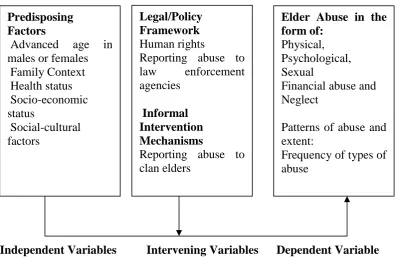
2.12.3 Conceptual Framework ... 57
2.12.4 Independent Variables... 57
2.12.5 Dependent Variables ... 58
2.12.6 Intervening Variables ... 59
2.13 Summary ... 59
CHAPTER THREE : 3.0 RESEARCH METHODOLOGY ... 60
3.1 Introduction ... 60
3.2 Study Design ... 60
3.3 Site of the Study ... 61
3.4 Study Population ... 62
3.5 Sampling Design ... 63
3.6 Sampling Technique ... 63
3.7 Sample Size Determination ... 64
3.8 Response Rate ... 65
3.9 Data Collection Methods/Procedure ... 67
3.9.1 Participant selection ... 67
3.10 Data collection Tools ... 70
3.10.1 Semi- structured interview schedule ... 70
3.10.2 Focus Group Discussions ... 70
3.10.3 Key Informants ... 72
3.11 Data Management and Analysis ... 73
3.11.1 Quantitative analysis ... 73
3.11.3 Data Entry Process ... 73
3.12 Ethical Considerations ... 76
CHAPTER FOUR: 4.0 DATA PRESENTATION, ANALYSIS AND INTERPRETATION ... 79
4.0 Introduction ... 79
4.1 Socio-Demographic Characteristics of the Respondents ... 79
4.1.1 Respondent’s marital status ... 83
4.1.2 Number of children of respondents ... 87
4.1.3 Respondents Religious Affiliation ... 88
4.1.4 Respondent’ social group belonging across gender ... 90
4.1.5 Living Arrangements ... 94
4.1.6 Respondents’ Employment status across gender ... 109
4.1.7 Respondent’s source of income across gender ... 112
4.1.8 Respondents’ Income ... 114
4.1.9 Ownership of Land ... 116
4.2 Forms, Patterns and Trends of Elder Abuse ... 120
4.2.1 Physical Abuse ... 121
4.2.2. Prevalence of Physical Abuse by Intensity ... 122
4.2.3 Psychological Abuse ... 128
4.2.4 Financial Abuse ... 130
4.2.5 Sexual Abuse ... 144
4.2.6 Pattern of Sexual Abuse amongst the Elderly ... 148
4.3 Reasons For Elder Abuse ... 156
4.3.1 Family Strife ... 157
4.3.2 Land ... 169
4.4 Factors Predisposing the Elderly Persons to Elder Abuse ... 172
4.4.2 Gender and abuse of the elderly ... 179
4.4.3 Gender and psychological abuse of the elderly ... 180
4.4.4 Level of Education and Physical abuse the elderly... 181
4.4.5 Level of Education of respondent and Psychological abuse toward elderly people ... 183
4.4.6 Living Arrangements as a predisposing Factor to Elder Abuse... 185
4.4.7 Polygamous Marriages as a predisposing Factor to Elder Abuse .... 188
4.4.8 Health Status as predisposing factor in Elder Abuse ... 190
4.5 Intervention in experience of Elder Abuse ... 208
4.5.1 Reporting experience in Physical abuse... 209
4.5.2 Hierarchical Nature of Reporting Physical Abuse ... 211
4.5.3 Reporting Experience of Pychological Abuse ... 212
4.6 Elderly abuse and social economic factors ... 219
4.7 Focus Group Discussions on Elder Abuse ... 222
Theme 1: How important are elderly people in the community? ... 225
Theme 2: The most common types of Elder Abuse ... 227
Theme 3: Which elderly people are most likely to suffer Elder Abuse? ... 230
Theme 4: Who are the people most likely to abuse the elderly people? ... 230
Theme 5: Consequences of Elder Abuse: On the elders themselves, families and the community. ... 231
Theme 6: Why is Elder Abuse not reported? ... 233
Theme 7: Intervention Measures for the Elderly Abused ... 237
Counselling ... 238
The Role of Customary Law and Cultural Practices versus the law of the land in elder abuse intervention ... 238
Homes for the Aged ... 240
CHAPTER FIVE: 5.0 SUMMARY OF FINDINGS, CONCLUSIONS AND RECOMMEDATIONS ... 243
5.0 Introduction ... 243
5.1 Socio demographic characteristics and abuse toward the elderly people 243 5.2 Age and abuse of the elderly ... 245
5.3. Gender and Abuse of the elderly ... 246
5.4 Marital Status and Experience of Elder abuse ... 246
5.5. Level of Education and Elder Abuse ... 247
5.6 Occupation and Experience of Elder Abuse ... 248
5.7 Level of Income and experience of elder abuse ... 249
5.8 Religious Affiliation and Elder Abuse ... 250
5.9 Number of Children and elder abuse experience ... 251
5.10 Living Arrangements and Experience of Elder Abuse ... 251
5.11 Forms of Elder abuse Experienced by the Elderly ... 252
5.12 Conclusion ... 258
5.13 Recommendations of the study ... 259
5.14 Implications for further research and policy ... 260
REFERENCES ... 262
APPENDICES ... 271
A1 Appendix 1: Informed Consent ... 271
A2 Appendix II: Interview guide for elder abuse ... 273
A3 Appendix III: Interview Schedule for Key informants ... 284
A5 Appendix V: Elderly Person Living Alone ... 288
LIST OF TABLES
Table 2. 1 Percentage of population aged 60+ in the world, 1950-2050 .... 24
Table 2. 2 Percentage population aged 60+ in Eastern Africa, 1950-2050 .. 24
Table 2. 3 Percentage of dependency ratio of the population aged 60+ for Eastern Africa 1950-2050 ... 25
Table 2. 4 Distribution of elderly persons by gender in Kenya ... 33
Table 3.1 Disaggregated Population of people aged 60 years+ in Machakos County ... 62
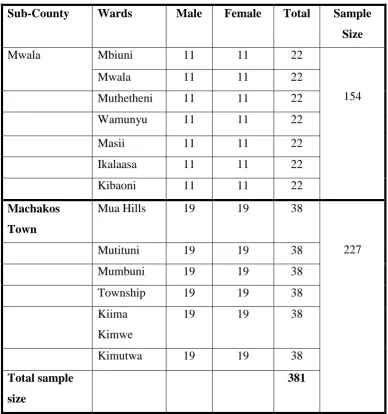
Table 3.2 Sample size, Mwala and Machakos Town sub-counties ... 66
Table 3.3 Number of cases assigned of persons aged 60+ per location disaggregated by gender in Machakos Town and Mwala sub-counties ... 67
Table 3.4 Operationalization of Variables ... 74
Table 4.1 Gender of the respondents ... 80
Table 4.2 Age of the respondents ... 81
Table 4.3 Marital status of Respondents ... 83
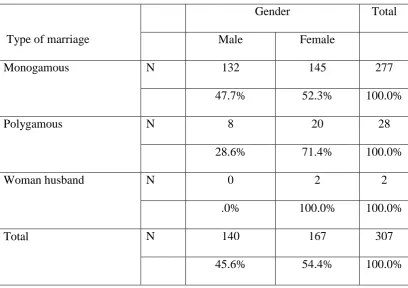
Table 4.4 Respondent’s type of marriage across gender ... 85
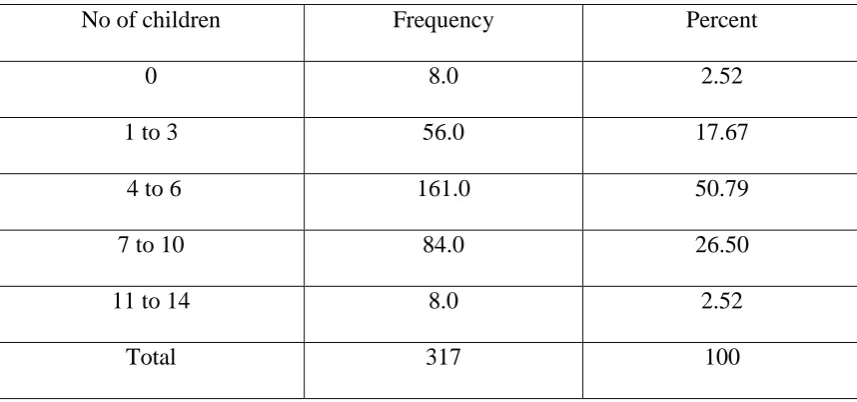
Table 4.5 Number of children of respondents ... 87
Table 4.6 Respondents Religious Affiliation ... 89
Table 4.7 Membership to Social Group ... 90
Table 4.8 Respondents Social Group Types of Activities Involved In ... 92
Table 4. 9 Housing/Living Arrangements ... 94
Table 4.10 The number of people living with older people in the homestead ... 99
Table 4.11 House Tenure ... 101
Table 4.12 Perception physical condition of the home lived in by the elderly ... 103
Table 4.13 Respondent’s level of education across gender ... 105
Table 4.14 Respondents’ Employment Status ... 109
Table 4.16 Respondent’s Level of income across gender ... 114
Table 4.17 Ownership of land across gender ... 116
Table 4.18 Form of land ownership ... 118
Table 4.19 Custodian of the Title Deed ... 119
Table 4.20 Physical Abuse ... 121
Table 4.21 Multiple Abuse ... 123
Table 4.22 Perpetrators of Physical Abuse ... 124
Table 4.23 Forms of Psychological Abuse experienced by older people .. 128
Table 4. 24 People responsible for Psychological Abuse towards older people ... 129
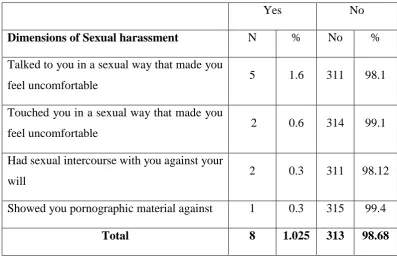
Table 4.25 Dimensions of Financial Abuse experienced by older people . 130 Table 4.26 Dimensions of Sexual Abuse experienced by older people ... 144
Table 4.27 Dimensions of Neglect experienced by older people ... 150
Table 4.28 People responsible for Neglect towards older people ... 155
Table 4.29 Reasons for Elder Abuse across all forms ... 157
Table 4.30 Gender of respondent and Physical abuse toward elderly people ... 162
Table 4.31 Age of respondent and Physical abuse toward elderly people 163 Table 4.32 Land ownership and Physical abuse toward elderly people ... 173
Table 4.33 Land ownership and Psychological abuse toward elderly people ... 174
Table 4.34 Land ownership and financial abuse of the elderly ... 175
Table 4. 35 Physical abuse and Gender ... 179
Table 4.36 Gender of respondent and Psychological abuse toward elderly people ... 180
Table 4.37 Level of Education and experience of physical abuse ... 181
Table 4.38 Level of Education and Psychological Abuse ... 183
Table 4.39 Level of income and abuse of the elderly ... 184
Table 4.40 Housing/Living Arrangements ... 186
Table 4.43 Activities of Daily Living (ADL) ... 193
Table 4.44 Perception of Memory Status of the elderly respondents ... 196
Table 4.45 Form of help needed by older people ... 198
Table 4.46 Medical Check up ... 199
Table 4.47 Person/s responsible medical care of the elderly. ... 200
Table 4.48 Frequency of Diet eaten by older people ... 202
Table 4.49 Do you have trouble buying foods that you like? ... 206
Table 4.50 Status of the Activities of Daily Living ... 207
Table 4.51 Reporting of Physical Abuse ... 209
Table 4.52 Reporting of Psychological Abuse ... 212
Table 4. 53 Reporting Financial Abuse ... 215
Table 4. 54 Reporting of Sexual Abuse ... 216
Table 4. 55 Reporting of Neglect ... 218
Table 4. 56 Association of risk factors and Physical abuse of elderly people ... 219
LIST OF FIGURES
ABBREVIATIONS AND ACRONYMS
ADLs : Activities of Daily Living
AU : African Union
AUFAA : African Union Framework Plan of Action on Aging HAI : Help Age International
HAK : Help Age Kenya
IPNEA : International Network on Prevention of Elder Abuse ILO : International Labour Organization
KDHS : Kenya Demographic Health Survey
MIPAA : Madrid International Plan of Action on Aging NGEC : National Gender and Equality Commission VIPAA : Vienna International Plan of Action on Aging WHO : World Health Organization
UN : United Nations
UNFPA : United Nations Fund for Population Activities
UNDESA : United Nations Department of Social and Economic Affairs
OPERATIONAL DEFINITION OF TERMS
Elderly person: A person who is aged 60 years and above
Elder Abuse: A single or repeated act or lack of appropriate action occurring within a relationship where there is an expectation of trust which causes harm or distress to the elder person (World Health Organization, 2002).
Financial Abuse: It is also known as material or property abuse involves an unauthorized and improper use of money or property or any other resources of an older person. This may include misusing or using property without knowledge of the elderly person,, stealing of money or possessions, forging a signature on pension cheques or legal documents, coercion, or fraud to obtain or to gain control of property, or tricking an older person into selling or giving away his or her money, possessions or property.
elderly person and not visiting and help in day to day activities of daily living.
Physical Abuse: It involves inflicting physical pain on the elderly person. It involves behaviours such as hitting, punching, slapping, kicking, grabbing, bashing against an object like a wall, threatening with a weapon or any other violence meted to an older person by a family member, close friend or non - family member.
Psychological abuse: Psychological or emotional abuse erodes the self-worth and diminishes the elderly person’s identity. This is manifested in verbal attacks like name calling, yelling at the elderly person, threats, insults, deprivation of rights, swearing at, or belittling acts that cause mental anguish, pain or distress to an older person. In some instances, psychological abuse might escalate to physical abuse.
ABSTRACT
CHAPTER ONE: 1.0 INTRODUCTION 1.1 Background of the Study
Elder abuse is a pervasive phenomenon that is increasingly acknowledged as a social problem globally in both developing and developed countries. It has devastating effects on the victims in particular, a decreased quality of life. Although there is not one accepted definition of elder abuse, most definitions take into account existence of a relationship between the abuser and the abused. A widely recognized definition of elder abuse is given by the World Health Organization (W.H.O. 2002) that defines elder abuse as “…a single or repeated act or lack of appropriate action occurring within a relationship where there is an expectation of trust which causes harm or distress to the older person”.
This definition contains three aspects: behaviour, relationship and impact. According to the United Nations Population Division (2002) the elderly are people aged sixty and older and it is estimated that by the year 2050, the global population of people aged sixty and older is projected to rise by more than 2 billion up from 760 million in 2010 (United Nations, 2009).
Africa, Britain and European countries reported research on elder abuse to the U.N in the 1990s (W.H.O/IPNEA, 2002). It is noteworthy at this point already that the phenomenon of ‘elder abuse’ in Africa either has been unreported , unresearched or unknown since the elderly were revered and it was unthinkable to think of abusing the elderly.
Elder abuse commonly goes unnoticed and unreported with only the most severe cases receiving attention. It is a hidden problem that is not discussed much because it occurs within the family structure. There may be discomfort with denial of the problem as well as a culture of secrecy that may be orchestrated by family members, relatives, and professional staff, paid care workers, neighbours, friends and associated people who deliberately abuse vulnerable older people (Kioli, 2013).
independently. Even though old traditions are being transformed, they have not completely changed.
In the advent of new technology and economic systems children have moved to urban areas in pursuit of education and employment and therefore, this assurance of the care of the elderly is not guaranteed any more. Advent of technology in particular mobile money transfer avail new forms of financial abuse of the elderly.
Elder abuse would be a departure from the tradition of respect and reverence elderly people enjoyed in most Africa societies. The traditional social support system has been eroded by the process of modernization which has broken down the value system and morals leading to neglect, loss of respect, exclusion and abuse of the elderly (Knodel & Ofstedol, 2005).
Researchers have looked at the risk factors for victims of elder abuse and different forms of abuse. Some risk factors include socio-economic status, health, care giver and spouse burn-out. Bigala and Ayinga (2014) noted that the gender factor in elder abuse is important, whereby women are considered to be at a greater risk of suffering elder abuse than older men.
perpetrator, care giver stress; cognitive or physical deficits of the elderly person and those with limited social network support are also susceptible to elder abuse.
Though Sub Saharan African countries have the lowest rate of population ageing, the overall population of older people is on the rise. The absolute numbers of older people are expected to rise from 36 million to 141 million by the year 2050 which is a major shift in population structure in this region. In Kenya, the population aged 60 and above will rise from the current 1.9 million to 3 million by the year 2030. With an ageing population, there is awareness that many older adults are facing abuse (Mba, 2007).
The United Nations declared 1999 as the International Year of the Elder Persons. Issues of physical and emotional abuse against the elderly began to be discussed and addressed as a concern to the world both in developed and developing countries (WHO/IPNEA, 2002). Various forms of elder abuse have been identified by scholars over time. They include physical, psychological, financial, sexual abuse and neglect.
lacerations, cringing or acting fearful, weight loss, or agitation. These signs could be reflected in bruises, burns, blisters, confusions, drowsiness, broken or healing bones, and noticeable change in physical well - being. (Aged Rights Advocacy Services, 2017)
Psychological abuse is yet another form of elder abuse. Eckroth-Bucher (2008) refers to psychological abuse as “any knowing, intentional, or negligent act by a care-giver or any other person that causes harm or serious risk of harm to a vulnerable adult over the age of sixty”. Psychological or emotional abuse erodes the self- worth and diminishes the elderly person’s identity. This is manifested in verbal attacks like name calling, yelling at the elderly person, threats, insults, depriving of rights, swearing, or belittling acts that cause mental anguish, pain or distress to an older person perpetrated by someone where the relationship would involve trust like a family member, close friend or a non - family member (Hooyman & Kiyak, 1996).
vulnerable persons are persuaded to enter into financial transactions in which they have not consented to, for example title deed ownership changes, then this can also be referred to as financial abuse (Kioli, 2013).
Evidence of financial abuse is on the rise in Kenya. For instance, the media reported that a man and his wife stole Sh. 639,000, money raised through mobilizing friends and family, which was meant to pay a medical bill for a Mr. George Kilonzo, their 82 year old ailing father. The money had been entrusted to the son Mr. Nicholas Mithuka, a father of 12, by the fund raising committee. The man and his wife denied the charge and were released on cash bail of 100 000 or a Sh.500 000 bond with sureties (Daily Nation, January 23, 2014 p.2).
Another aspect of financial abuse is also emerging related to the cash transfer programme for the elderly. The financial abuse is perpetrated by care givers whom the elderly person has appointed to be taking the money on their behalf and in the institution that is mandated to give the money to the elderly. The care givers might not give the elderly person the money once they get it; and the staff in the institution would collude with others to take the money that has not been collected by using forgery (Ministry of Labour, Security and Social Services, Social Development Division, Machakos County, 2015).
or makes the victim feel uncomfortable or afraid. Other forms of sexual abuse include touching the genital parts, forced sexual intercourse, fondling or kissing and suggestive sexual language (SECASA, 2009).
The last form of elder abuse the researcher explored was neglect. Neglect is “a disregard of duty resulting from carelessness, indifference, or wilfulness. It is a failure to provide a person under one’s care with proper food, clothing, shelter, supervision, medical care, or emotional stability (Merriam Webster online dictionary, 2017).
Neglect is a situation where there is the failure of a care giver not to offer or meet the needs of an older who person is unable to meet those needs alone. Neglect behaviour is manifested in actions like denial of food , water, clothing, medication like giving the correct dose of medicine the and timing of medication, medical treatment, provision of health aids and help in day to day activities of daily living (Kurst-Swange & Petcosky, 2003).
almost a spiritual connection to the possession of land. Depriving the elderly of their land amounts to elder abuse.
Changing family set up, and how family life affects individual elderly person would be an area of interest for future research. The question would be whether family life may be dysfunctional to some family members or the fact that some families have a “darker side” such as in the abuse of the elderly members. Would family be the best to have in terms of fulfilling the range of needs for elderly abused persons.
In the African cultural system, the care of the elderly was primarily the responsibility of their children and other relatives under a life-long co-existence with strong filial obligations. Anderson (1989) argues that families provide support networks that confer psychological benefits thay may not be provided by other social institutions. When the support is impacted upon by new values, elder abuse is the result.
Becker (1991) suggested that that families generate ‘ psychic income’ for their members- the psychological pleasures people gain from a relationship with those who share a sense of personal commitment, love and affection. African societies including Kenya revered its old and relied on them as repositories of knowledge, wisdom, and regarded them as custodians of culture which accorded them respect and reverence.
(1985 : 261) observes: “The matter of the ageing parents was traditionally taken very seriously. Usually while this custom continues to remain predominantly unchanged, yet in the last 20 years we have begun to see children who after they grow and establish their own families have begun to ignore their traditional responsibilities of caring and honouring parents…”
Mbiti (1966) further emphasizes this point when he pointed out that even when children are grown and have established their own families, they still must show great respect to their parents and older members of the society. Apt (1992) emphasizes that prestige of the elderly is preserved through ownership of land, continued productivity and norms that reinforce reciprocity.
The elderly have been the supporters and guide for the young. However, there has been an economic and social shift, which has resulted, in part, from rapid urbanization and modernization, with the young moving to the urban areas in search of work and leaving the elderly in the rural areas with diminished family support.
Whereas the proportion of the elderly is currently low in Kenya, pegged at 4 per cent, it is projected that by the year 2050, the Kenya population will increase to 61.2 million persons and the older population will constitute 11.8 per cent. The increase in the proportion of the elderly means that Kenya is going to have a double dependency problem: that is the total dependency ratio of population aged 0-19 and older persons aged 65+ per 100 working persons. The total dependency ratio for Kenya stands at 1:120 (U.N Department of Economic and Social Affairs Division, 2013). As noted earlier dependency of the older person can render them vulnerable to elder abuse.
The National Policy on Older Persons and Ageing in Kenya recognizes the vulnerability of older persons and notes, in particular, forms of elder abuse, and acknowledges the personal and financial security that families provide for the ageing members. Article 57 of the Kenya Constitution legislates support for the elderly. The Cash Transfer Programme targets the most vulnerable elderly persons over 65 years of age where the targeted and enrolled beneficiaries receive 2000 shillings per month, where at the household level, they can meet their basic needs. In this year’s (2015) national budget, 74 billion shillings was allocated for the benefit of the older persons. However, these measures do not focus on the elderly persons who are abused.
However, from the five forms of elder abuse mentioned above, the researcher sought to explore the situation of elder abuse amongst the Akamba people of Machakos County.
1.2 Statement of the problem
Even though family members are the main providers of informal care, elderly people who are cared for by family members are at risk of elder abuse. Nhongo (2006) observes that there is an increased tension in relation to whether young people will be able to continue to care for older family members because of the decline of the extended family system and increase in nuclear families that leave many elderly people alone as well as the increase in physical distance as young people move to the urban areas.
Since abuse impacts negatively on the elderly person, it calls for scholarly and policy attention in order to address it. There has been an increase in the awareness of the seriousness of elder abuse as a communal and societal problem. The reason why reliable statistics of the elderly abused persons does not exist could be that either it is not reported or is under reported or the abused elders have nowhere to report, as well as the non- availability of research data because the problem of elder abuse is not widely studied in Kenya. Elderly abused persons may feel embarrassed, ashamed and traumatized such that they may not want to reveal abuse by their relatives, may fear withdrawal of support or may fear further abuse or reprisals.
The problem is compounded by the fact that what happens within the home is considered to be a private matter excluded from scrutiny by the public such that the matter remains a hidden problem and difficult to assess. This secrecy is an important observation as a reason surrounding these abuses. The most frequently abused are those who are over 65 years old and the victims are both male and female with a greater proportion of women suffering abuse.
Given that the aged population in Kenya will increase by 11.8 per cent by the year 2050 (KNBS 2010), it is of fundamental importance to define, describe, classify and explain elder abuse from interrelated perspectives. These perspectives will be demographic, social, economic, and biological. This study therefore, aims to address this knowledge gap.
Few studies have focused on abuse of older persons in rural settings. Rural settings have been identified as having unique economic and social factors among them social and community cohesion, management and inheritance of farm assets, farming and family arrangements and lack of communication. These factors have been identified as factors that place older people at risk of abuse. The intimacy amongst people in rural communities could be a factor with potential for elder abuse. Furthermore, due to local social cohesion, there may be reluctance on the part of older people to report abuse.
Issues pertaining to inheritance and succession, importance of family name and family property are pertinent in the study of elder abuse in the context of rural communities. The study explored the interplay of these factors in seeking to determine to what extent they contributed to elder abuse, the forms, patterns and predictors of elder abuse experienced by the elderly people.
1.3 Objectives of the Study
1.4 Specific Objectives of the study
The following objectives will guide the study:
1. To analyse forms, patterns and trends of elder abuse in Machakos County.
2. To examine reasons that drive elder abuse in Machakos County.
3. To investigate the factors that predispose the elder to abuse in Machakos County.
1.5 Research questions
The study was guided by the following research questions that helped in documenting and understanding the following:
1. What are the various forms, patterns and trends of elder abuse in Machakos County?
2. What are the reasons for elder abuse in Machakos County?
3. What are the predisposing factors that influence elder abuse in Machakos County?
1.6 Justification of the study
The United Nations Principles of Older Persons, the principles of independence, participation, care, self - fulfilment, respect and dignity are espoused. Elder abuse would be an antithesis to the spirit of these principles. Elder abuse is a violation of older people’s rights. For this reason the elderly must be cared for so that they can have security, dignity and self –esteem (United Nations Human Rights, 1991)
Under the Constitution of Kenya (2010), the Bill of rights points to the entitlement of older persons to enjoy all rights and fundamental freedoms hence the need to protect the elderly from abuse is enshrined. The study has the potential of contributing to the implementation of the Constitution of 2010 and therefore the need to formulate policies that protect elderly persons who experience elder abuse.
The study investigated drivers of elder abuse that bring trauma to the elderly person, physically and psychologically. The study findings and recommendations enhanced policy interventions to address the issues of elder abuse and to bring a hidden phenomenon into the limelight. Based on the above reasons, the study is therefore justified due to its ability to contribute to knowledge and an understanding of the emerging phenomenon of elder abuse.
1.7 Significance of the study
Saharan Africa. It will also help the government and the communities to find solutions to deter, minimize or eliminate elder abuse. The study findings inform on government policies on older persons and bolster its commitment toward addressing the well-being of this vulnerable group of society through comprehensive and coherent institutional, legislative and administrative frameworks that address their plight. The research study findings are useful in providing a base on which other research studies may base future research to further explore elder abuse.
1.8 Scope of the study
The study was carried out in the Machakos County, Kenya, and specifically, in the sub counties of Mwala and Machakos Town. Other sub counties found in Machakos County are Masinga, Yatta, Kangundo, Matungulu, Kathiani and Mavoko.
The study limited itself to elder persons aged 60 years and older. The criteria that informed on the choice of these two counties is that Mwala sub county is purely a rural area while Machakos Town sub county is a mix of an urban and rural area. Any differences in forms, patterns and trends of elder abuse owing to their rural-urban difference would be noted in the study.
1.9 Limitations of the study
The study was limited to a representative sample of elderly people aged 60 years and older, both men and women, within Machakos County. The study respondents were interviewed face-to face and assured of confidentiality with a view to increasing confidence amongst the respondents.
There may be recall bias as the elderly person may forget the details of their past experience of abuse. The respondents were asked whether they experienced abuse in the past one year. The participants were allowed enough time to reflect and think through the sequence of events pertaining to the experience of elder abuse.
Hostility from the caregivers may occur as they may want to block access to the elderly persons. The researcher requested to interview the respondent alone and out of earshot from others. Triangulation, the use of several different research methods, was used. For example, apart from the interview schedules, focus group discussions and Key Informant interviews were carried out.
aspects pertaining to how the elderly are addressed among the Akamba such as when you enter the homestead, for example, you greet them, make small talk tell them where your family is from, your clan and that of your mother and father and their origin.That way, a feeling develops that you ‘belong’. Trust is established that way before one can state their purpose of the visit. One cannot directly state the purpose of the visit before that happens.
1.10 Delimitations
The study is delimited to the study of elder abuse among the elderly people aged 60 and older. This is a deliberate effort to address the gap existing on the absence of data on elder abuse in Machakos County. It is an in-depth focus on the predisposing factors and the social contexts in which abuse may occur; the patterns of elder abuse and the extent of elder abuse with a view of suggesting intervention models to address issues of elder abuse.
1.11 Assumptions of the study The study assumed that:
Elder abuse is a hidden phenomenon in Machakos County and needs to be unravelled and be understood in its entirety, how it is manifested, the impact it has on the elderly and the possible interventions.
CHAPTER TWO: 2.0 LITERATURE REVIEW
2.1 Introduction
This chapter discusses the literature related to elder abuse. It examines the aging process and how advanced age creates vulnerability to old age abuse. The researcher presents the predisposing factors that lead to vulnerability to elder abuse; the patterns and risk factors contributing to elder abuse; the characteristics of the perpetrators of abuse as well as the international, regional and national instruments that protect the rights of older persons. The source of literature review included book reviews, e-journals, research theses, dissertations, periodicals and encyclopaedia. The theoretical and conceptual frameworks for this study were discussed in this chapter.
2.1.1 Conceptualization of Old Age
Ageing refers to the process of growing older based on chronological age. It can also refer to and individual’s life span from birth. In conceptualizing ageing, in many people’s minds it is the image of advancement in age or life after retirement, to others, old age is seen as a time when the body undergoes major physical and psychological changes.
member of older adulthood and defined in terms of personal experience and meaning.
2.1.2 Classification of older persons
The aged have been classified in the following sub-populations: the young old, 65-74; the old-old; 74-84; the oldest old, aged 85 and above. Lindsey and Beach (2000) contented that the young old (age 65 – 74) had more resources than the old-old (age 74 – 84) and the oldest old (age 85 and above). This decline is associated with changes in sources of income and with marital status. The elderly are also likely to be widows and widowers who experience severe economic consequences after the loss of their spouses. Women aged 85 and above, who are living alone and are functionally impaired, have reduced financial resources. The study demonstrated that age and gender were predictors of elder abuse.
An alternative understanding of ageing is that advanced age is a basis for power in some East African cultures where the most powerful positions are assigned to men upon attaining a certain age bestows power. Among the Akamba, increase in age bestowed social power to the elderly men referred to as atumia. The highest rank of atumia were those who administer justice of the country, watch over court, were the judging authority and oversaw matters of religion. They were referred to as atumia ma nzama (Linblom, 1963).
infirm (Lindsey & Beach, 2000). This may predispose them to elder abuse as the young may want to own the property the elderly hold.
Elder abuse cuts across socioeconomic status from the poorest to the very rich. Some high profile cases of elder abuse have been reported in the media related to property (Ministry of Labour, Security and Social Development, 2015). The majority of elder abuse cases reported at the Machakos Divisional Police involved mostly elderly women aged 60-85.
By extension then, when the aged continue to hold property which the young desire to have, this may result in elder abuse. The study endeavoured to check whether there was elder abuse amongst the elderly persons who had little property or who had already divided their property and whether other forms of abuse could be detected among such cases.
scrutiny of this is needed but it gives a strong impression of the violence that is elder abuse. It is also a pointer to the fact that elder abuse is a hidden phenomenon.
2.1.3 Context of Abuse
An assessment of abuse against the elderly notes that it occurs in their own homes with the main perpetrators being family members and others close to the older persons at community level and institutional settings (National Gender and Equality Commission, 2014).
This assessment further noted that the forms of violence toward the elderly included psychological harm manifested directly or indirectly, hindrance from use and disposal of property, pressure in connection with will and inheritance, social stigma, neglect and abandonment occasioned by rural-urban migration. The assessment also noted the drivers of elderly abuse were: land with regard to inheritance, poverty and related pressure towards care of the elderly and the disintegration of the social fabric.
2.1.4 Overview of population Ageing
Table 2. 1 Percentage of population aged 60+ in the world, 1950-2050
Region 1950 2000 2050
World 8 11 22
More Developed Countries 12 21 33 Less Developed Countries 6 8 20 Source: United Nations. Population Division, Department of Economic and Affairs, 2015
The table demonstrates an increase in the population of the elderly globally. The table shows that the number of the elderly doubles every fifty years.
Table 2. 2 Percentage population aged 60+ in Eastern Africa, 1950-2050
Region 1950 2000 2050
Eastern Africa 4.8 5.1 8.1
Source: United Nations, Population Division, Department of Economic and Social Affairs, 2015
Table 2.2 demonstrate that in Eastern Africa, and by extension Kenya, the population of the elderly will have increased considerably by the year 2050.
Table 2. 3 Percentage of dependency ratio of the population aged 60+ for Eastern Africa 1950-2050
Years 1950 2000 2050
Dependency Ratio 5.5 5.5 8.2 Source: United Nations, Population Division, Division of Economic and Social Affairs, 2015
The predicted level of dependency in Eastern Africa by the year 2050 is demonstrated in Table 2.3.
The dependency ratio will increase with the increase of the elderly persons aged 60 and above by the year 2050. Dependency has been shown to be a risk factor in elder abuse, hence the need to conduct research to understand the phenomenon of elder abuse.
2.2 Forms of Ageing
Ageing is a lifelong process, a biological sequence of events that begin at conception and ends at death. It also refers to a process of changes that take place in the organism throughout the life span (Hooyman & Kiyak, 2008). Gerontologists view aging in terms of four distinct processes that have a significant social bearing. The particular characteristics of the processes may give rise to elder abuse.
2.2.1 Chronological Ageing
can be used as basis for determining various roles like the age of retirement where an individual acquires the role of a retiree. Chronological age is important in understanding elder abuse. Increase in chronological age correlates with increase in incidence of elder abuse. Positive or negative assumptions about someone may be made simply on the basis of chronological age. Further, it has social implications because many depictions of old age present as a negative experience, something to be avoided and possibly the reason for elder abuse.
Thus rise in chronological age raises the risk of elder abuse. For example, the media in Kenya reported the case of an 82 year old woman who was raped. Clearly, the increase in chronological age and, probably, increased frailty of the older person may increase vulnerability to elder abuse. The serious forms of elder abuse like rape are suffered by elderly women of very advanced age. The study examined whether the risk of sexual abuse increased with advance in chronological age.
2.2.2 Biological Ageing/ physical Ageing
Ageing in general refers to changes that take place in the organism throughout the life span. Young stages are referred to as development or maturation, because the individual develops and matures, both socially and physically, from birth throughout adolescence. After age 30, additional changes occur that reflect normal decline in all organ system a process referred to as senescence (Hooyman & Kiyak, 2011).
Social definition of ageing used by most people focuses on the visible features of biological aging such as: greying, balding, sagging and wrinkled skin, stooped shoulders and slower walking and shuffling gait as well as declining health and physical ability. Whereas biological aspects of aging may not have much to do with elder abuse, it is the social aspects of aging that lead to differential treatment of the elderly and possibly lead to elder abuse.
2.2.3 Cognitive Ageing
One of the most important aspects of aging is that of intelligence, learning and memory (Hooyman & Kiyak, 2011). The operational aspects of intelligence involve judging well, to comprehend well and to reason well, problem solving and social competence. Loss of memory, reasoning, speech and other cognitive functions increases with age and doubles every five years of age after age 65. (National Institute on Ageing; WHO 2010). Dong (2011) posited that there was an association between cognitive functioning and elder abuse. He showed that lower levels of cognitive function, episodic memory and perceptual speed are associated with increased risk of elder abuse. For example, an older person may experience financial abuse because they have lost the concept of the value of money. They may also be forced to sign documents whose implication they may not know.
2.2.4 Psychological Ageing
impulsive or make detrimental decisions. For example in spending their money, they may have to rely on someone else which makes them vulnerable to financial abuse.
2.2.5 Social Ageing
A social role is a set of expected activities and responsibilities about how people who occupy a particular position will behave and what they will do, what they should do, what they should not do. Some roles are a reciprocal role, that is, each role is complemented e.g. mother/child. An argument can be advanced that there is a role reversal as a person gets older, it is expected the child takes care of the aged parent. In the contexts of Akamba, social ageing is important because it bestows the elderly person prestige because of the wisdom that is associated with age. Important social roles are performed only by persons of advanced age ; roles as marriage negotiations, settling of land disputes and priestly roles.
2.2.6 Ageism and Elder Abuse
Ageism refers to negative attitudes towards individuals based on the age which may lead to discrimination. Podnieks (2006) observed that ageism plays a critical role in underreporting of elder mistreatment. For example in Kenya the common mode of public transport is in a form of taxi called “matatu”. Stickers portraying negative attitudes towards the elderly are sometimes displayed in the matatu's: e.g. one saying ‘we don’t give credit to the over 80 years old unless accompanied by their parents; ‘if the music is too loud, you are old’. Thus the aged may be ignored, patronized, deferred to or ridiculed, all of which are negative attitudes. This study can be expected to examine possible links between ageist attitudes and elder abuse. Ageist attitudes can be perceived to lead for example the perpetrator envisions that the elderly person has lived for too long and is not dying. They could plot how to deprive them of their property thus abusing them.
2.3. Patterns of ageing 2.3.1. Disease
2.3.2 Disability
Disability from disease may result from ageing process. This disability could be physical, visual, or hearing problems. Such disability may limit the older person’s ability to perform activities of daily living, robbing them of their independence due to physical limitations. If the older person then has to depend on someone else due to such physical limitations such as mobility or being frail, this can render them vulnerable to elder abuse. If the elderly person needs long term care, the burden for care may fall on the family. The research explored the way the elderly cope with disability without being dependent on someone else or limiting the dependency
2.3.3 Leaving the workforce
Leaving workforce is more often associated with older people. There is a perception that this is disengaging from society. But the import of this is that the elderly person has lost regular income and the sense of belonging. This diminished income may render the elderly person depended on adult children thereby being rendered vulnerable to elder abuse such as physical and psychological abuse. This study explored whether older people continue to create jobs for themselves and continue to contribute to society or became isolated and depended, situations that render the elderly vulnerable to elder abuse.
2.3.4 Older persons and changing family roles
elderly. The study looked into the dynamics that emanate from this bidirectional relationship. The relationship could be symbiotic, but it could as well set a context in which the elderly person experiences abuse.
2.4 Trends in Aging
2.4.1 Increasing number of elderly persons
Globally, the population of the elderly persons aged 60 and above is increasing. The trend is reflected in the Kenyan population of the elderly which doubled in the last 40 years. In 1969 the population aged 60 and above was 587,983 while in 2009, it was 1,926,051. Machakos County ranks fourth in absolute number of the aged standing at 75,649. (National Council for Population Development 2016; Kenya Population and Housing Census 2009). The study investigated the phenomenon of elder abuse among this elderly population in Machakos County.
2.4.2 Sex Ratio
Table 2. 4 Distribution of elderly persons by gender in Kenya
Age Group Males Females
60-63 295,197 298,581
65-69 183,151 207,612
70-74 160,301 179,000
75-79 99,833 118,675
80+ 159,125 224,576
Total 898,607 1,028,444
Source: Kenya Population and Housing Census (2009) 2.5 Types of Elder Abuse
The preceding section depicted the various ways ageing is defined and the risk factors for ageing under each. This section describes the several categories of elder abuse have been identified in elder abuse literature. The categories are discussed as follows:
2.5.1 Physical Abuse
2.5.2 Psychological Abuse/ Emotional Abuse
There are acts or attitudes that may cause psychological harm. They includes infliction of pain, cases of being called a witch, not being visited by adult children or even denying the elderly a chance to see the grandchildren. It may include intimidating the older person, isolation from friends and family and infantilizing the elderly person or even patronizing them or even discriminating negative attitudes.
2.5.3 Financial /Material Exploitation
This is the illegal or unauthorized use of an elderly person’s financial resources or property. Financial and material abuse includes anytime someone illegally or improperly uses an older person’s funds, assets or signs property transfers falsely. This type of elder abuse may include forging signatures, stealing an elder person’s money or coercing the older person into signing cheques or other legal documents or being conned out of pensions.
Both the elderly person and the care giver told no one about this transaction. Of course they both lost the money they had ‘invested’ and only then did they share with family members what had transpired. The care giver demanded to be paid her money by the elderly person as she had used her salary for that month in this con game. This was fraud and financial abuse of the elderly by people who take advantage of the vulnerability of the elderly.
2.5.4 Sexual Abuse:
Sexual contact that is forced, tricked, threatened, or otherwise coerced upon another person including anyone who is unable to give consent. Gutman (2004) pointed out that sexual abuse is mainly experienced by women and perpetrated by a family member with whom they share an abode. The research explored the nature of living arrangements as a predisposing factor in sexual abuse of the elderly person. The abuse is perpetrated by a person known, in some way, to the victim and is rarely a stranger. Sexual abuse tends to be experienced by females. The study inquired on sexual abuse amongst the elderly males.
2.5.5 Neglect
when sons had moved away, they had an obligation to care for the elderly. In the event that this does not happen, it is viewed as elder abuse.
2.5.6 Abandonment
Joosten, Dow, Blakey (2015) observe of the abandonment of a frail or a vulnerable elderly person by anyone with care giving duty. The elder is simply deserted or isolated. Since most elderly persons in Machakos County live in homesteads with others, the study explored the nature of abandonment in such a context.
2.6 Risk Factors associated with elder abuse
The word risk refers to the probability that an event will take place. In the study, it will mean the probability that certain factors that exist may make an elderly person vulnerable to elder abuse. Schimberg (2011) point out that there are a number of risk factors that may increase the likelihood of elder physical abuse.
He pointed out history and patterns of violent interactions within the family, an on-going discord in the family created by the presence of the older adult. In other instances, the abuse is related to an older adult’s cognitive, psychological and financial situation and his/her dependence on family member’s or relatives for meeting basic needs.
Leitsch and Waite (2008) point to the individual victim characteristics that correlated with abuse, as the use of assistive devices (e.g. a wheelchair, walking cane) an older person’s limited mobility, limited functional ability, especially in self-care, social isolation, cognitive impairment e.g. dementia, chronic health problems, older adults with multiple physical impairments which may lead to diminished ability to protect themselves and their dependence on care givers. The risk factors were discussed below.
2.6.1 Gender and Socioeconomic Status
The W.H.O (2002) study found that two key factors emerged underpinning all contexts of abuse: gender and socio-economic status. The study emphasized the fact that women, particularly poor women, the childless and the widowed were most affected. Sever (2009) suggested that women are the main victims of elder abuse because they live longer than men.
In the Kenyan context older women have a generational understanding that their role is to keep peace and order in the household (Omoke, 2008). Once married, a woman would not go back to her parents. She belongs and would be buried in her married home.
Further, older women may suffer abuse and be unwilling to report their abuse for fear of others not believing them or fear of losing social support if the perpetrator is a relative as well as the fear of being subjected to retaliation. Furthermore, victims of elder abuse and neglect may tend to minimize or deny mistreatment that they are suffering out of fear of rejection and disruption of their lives. For some, it could be out of embarrassment or shame and they believe , whatever the case might be, they cannot abandon their homes. So they might stay put in a context where they experience abuse.
Kioli et al (2013) in their study of elder abuse in Emuhaya, Western Kenya touched on the issue of gender and socioeconomic status of the older abused persons. The study pointed out that displacing men as heads of households and depriving them of their autonomy disengaged the older men from their families. This meant that sometimes, when the elderly man felt discriminated, alienated, isolated and neglected, he would sell some family property secretly and spend the money without the knowledge of the family, thereby turning the whole family against him and leading to elder abuse.
2.6.2 Cognitive problems
person relied, the context in which they were as well as the nature of the relationship.
They further suggested older adults in different stages of cognitive impairment may suffer elder abuse differently. According to them, older adults with mild cognitive impairment suffer more financial and psychological abuse; the ones suffering from moderate cognitive impairment suffer more physical and psychological abuse whilst those suffering from advanced cognitive impairment suffer neglect and psychological abuse.
Anecdotal evidence of a case narrated to the researcher was one of financial abuse. This was a case of a 75 year old widowed retired lady teacher who was suffering from memory loss, and whose oldest son had no job and was a drunkard. Every day he would tell his mother to give him money so he could buy her a soft drink or medicine from the local shopping centre.
He knew that his elderly mother would not remember the details of the purchase at all. He would take the money and, of course, not buy what he said he would, but instead use it for his personal gain. Her daughter intervened when she hired her jobless sister to look after their mother and to make sure she does not handle any monies.
sought to find out who abused the elderly the most, the type of abuse and the reasons for this abuse.
2.6.3 Caregiver burnout
Non-spouse caregivers who have numerous tasks to carry out may feel overwhelmed or become resentful. For example, in many homes in the rural areas of Kenya, a paid caregiver, normally referred to as house help, may, in addition to taking care of the elderly person, look after the cattle, work in the family farm, cook, fetch water, clean up, buy groceries and so on. These overriding tasks may cause fatigue and the caregiver may end up resenting the elderly person, potentially leading to elder abuse.
2.6.4 Dependency
Dependency has been viewed as factor in elder abuse. Because of the aging process there may be an increased need for assistance for the older person which can foster dependence on others for care (Gibson, 2013). Increased dependency can provide the offender with an opportunity to control and abuse the elderly person. Gibson further noted that there were six different types of dependency: household dependency; personal grooming/health dependency; financial dependency; mobility dependency, mental health dependency and socio-emotional dependency.
provision of food, clothing, shelter and financial support. It may also involve medical care and help with activities of daily living where necessary.
Dependency may also involve protection of the elderly person from others who may harm them and even issues involving legal matters for example involving land matters. The thrust of dependency is the belief that stress leads to abuse which arises from the notion that the elderly persons dependency on the caregiver leads to increased stress on the care giver.
Dependency is seen as a bidirectional, dependency of abuser on the victim and vice versa a dynamic that could lead to elder abuse (Burnight & Mosquenda, 2011).The study sought to establish whether there was dependency for both the victim of abuse and the abuser and the type of dependency that existed.
Kioli et al (2013) pointed out that the older person with no independent means of support and depend on others were likely to suffer elder abuse. The study investigated older persons involvement economic activities, their level of income, the type of assets they had and the level of dependence on family members for sustenance thus at risk of elder abuse. The study looked into the aspect of competent and independent older people and whether they were abused in any way by their adult children.
2.7 Characteristics of Abusers of older persons 2.7.1 Sex
elderly. O’Keefe et al (2007) observed that 80% of interpersonal abuse (physical, psychological) was perpetrated by men and 20% by women while financial abuse was split, 53 % by men and 47% by women. They further observed that the age profile of perpetrators of financial abuse tended to be younger persons. In terms of living arrangements, they reported that 53% of the perpetrators were living in the respondent’s household including 25% of financial abuse. The research investigated the persons who were most likely to abuse the elderly person, the circumstances for the abuse and the reason for the abuse.
2.7.2 Financial Dependency
(Kosberg & Nahmias, 1996; Wolf & Pillemer, 1989) established that in many instances the perpetrators of financial abuse were financially dependent on the victim for housing, maintenance, transport and other expenditures or other financial needs. The researcher sought to establish whether or not this was true of potential elder abusers were depended on the victims of abuse in Machakos County.
2.7.3 Relationship with the victim
The researcher examined the quality of previous relationship between an abuser and the abused older person and if this relationship did have a bearing on elder abuse. A case that needs exploration can be made here that it is important for Kenyan courtrooms to have sociologists and psychologists to study and document cases like this.
2.8 Victim’s characteristics that are correlated with elder abuse 2.8.1 Social Isolation
On isolation of older persons, Kenyatta (1965) anthropological work “Facing Mount Kenya” made the following observation, reflecting the African moral and political thinking “Nobody is an isolated person. First and foremost, he is several peoples’ relative and several peoples’ contemporaries”.
This observation points to the fact that an older person in the African context belongs to a wide network embedded in the social fabric of the community and that he/she is never alone. Kenyatta envisioned the living arrangements among the Kikuyu community of which his anthropological study was based on. The statement reveals the web of relationships the person had so that they never would be alone. The study examined the nature of living arrangements and their bearing on elder abuse.
committee, a group of clan leaders or a burial welfare group may not be isolated. He or she must attend group members’ functions. It can be inferred to that if the elderly person is being abused, this can be shared in the safety of the group.
Conversely in the event this elder does not belong to any social welfare group, they would be isolated. Social isolation in the context of this research meant not only living alone in a one person household, but lacking a web of social networks or groups which the individual belongs to. The stronger the web of social networks, the less the likelihood of an elderly person being isolated. The aspect of belonging to social networks was examined in this study. Belonging to a social network means the elderly person has interaction with others, hence is not isolated. Isolation is a risk factor in elder abuse.
2.8.2 Behaviour problems of the victim of elder abuse
Tatara (1998) observed that half of the victims who were victims of psychological, physical, financial abuse and abandonment were aged 80 years and above. Psychological and emotional problems may be both a cause and effect of elder abuse when elders behave in disturbing ways. Due to this, it may become more difficult to provide care for them. The study examined if older persons who are difficult, verbally abuse others including members of the family or caregivers could be at risk of elder abuse.
2.9 Cultural Risk Factors in Elder Abuse
2.9.1 The existence of culture of violence
Society’s general tolerance of violence manifests itself in such diverse forms such as T.V programmes and films or photographs. This acceptance of violence causes it to pervade everyday activities contributing to possible acceptance of elder abuse. Beard (2005) observed that elderly adults using social media receive photos showing genitals . This could also show the advent of information technology opens new avenues for elder abuse. Such kind of behaviour is a form of sexual abuse of the elderly since in most cases this is unwanted or embarrassing. The research examined such a behaviour as a form of sexual abuse.
2.9. 2 Intergenerational competition in the family
The Social Learning Theory (Bandura, 1973), may explain violent behaviour associated with elder abuse. Social Learning Theory combines learning principles with cognitive processes perception, thinking, anticipation; plus the effects of observational learning to explain behaviour. Its major thrust is that behaviour is learned hence in applying it to violence, that violence is a learned behaviour passed on through the generations.
it could lead to family strife. Family strife in this research , was taken as a reason for elder abuse.
2.10 Intervention measures in protecting older persons from abuse
Two major international policy frameworks have guided states in formulating policies to respond to the issues of the elderly. Kenya being a signatory to the instruments discussed below, of putting in place intervention measures in recognizing the rights of the elderly and subsumed they would address the phenomenon of elder abuse though not explicitly stated in these instruments.
2.10.1 The Vienna International Plan of Action on Ageing (VIPAA)
The Vienna International Plan of Action on Ageing (VIPAA) was the first international plan adopted to guide policy formulation and programmatic interventions on ageing, formulated within the contexts of the rights contained in the International Bill of Rights. The VIPAA includes 62 recommendations for action addressing research, data collection and analysis, training and education in relation to older persons. These include: health and nutrition; protection of elderly consumers; housing and environment; family protection; social welfare; income security and employment and education.
2.10.2 The Madrid International Plan of Action on Aging