Available Online atwww.ijcsmc.com
International Journal of Computer Science and Mobile Computing
A Monthly Journal of Computer Science and Information Technology
ISSN 2320–088X
IJCSMC, Vol. 4, Issue. 7, July 2015, pg.550 – 556
RESEARCH ARTICLE
Cloud Computing: A New Era of IT Data Centers
Ahad Abdullah
Abstract— It doesn't take long to get a good feel for the prospective of cloud computing and how it can offer ready retrieval to entirely new business capabilities, cheaper IT resources, and unequaledlitheness for
businesses of every size. Meanwhile becoming a hot topic early last year as major dealers, including top firms
such as Amazon, Google, and Microsoft, jumped on the bandwagon with a wide-range of offerings, cloud
computing has unfailingly stayed on the industry's radar. Though leading companies still joining the
movement, including HP, IBM, Salesforce, cloud computing has moved from a cottage industry to one of the
bigger evolutionary areas in the computing business, just as the industry as a whole begins to take thoughtful
lumps from the recession. We propose to develop a dot net based tool to view the racks in a network of clouds
using the cloud computing concepts and trying to make an effort towards Green IT ,which we were able to
successfully build and test.
1. INTRODUCTION
IT must find new ways to improve both power and density to build an IT infrastructure that can meet the
efficiency and agility requirements of today's businesses. Not being able to monitor and manage the
interdependencies of data center equipment can lead to unexpected problems and failures of both the
power and cooling infrastructure and the servers. Issues can include overheating , overloads, and loss of
redundancy. This is why it is essential to measure and predict power use and temperature at the rack
enclosure level. The computer is a tool that humankind has been using for only a short time, and the way
we use it is constantly and rapidly changing. The functioning of the computers performing these tasks is hidden to the general public.
1. Power and cooling
2. Capacity and inventory
3. IT management and business services
It captures power and cooling information in real-time, helps manage and inventory physical assets for operational management, and helps manage the logical layer of applications and services to help you better deliver IT management and business services that are business-relevant.
Business climate changes, business models change, Information Technology certainly changes, and data centers change. Wait - data centers change? Yes, the view that the data center is just a room or facility that is a large capital investment and built every 10 to 15 years, has changed. This doesn‟t mean throw more money into it with greater frequency, it means approaching it in new ways and making intelligent decisions about the data center. The data center strategy is just as important as the IT strategy it protects and provides for and the business strategy that both empower. A data center strategy is anything but a panacea. It must address the exclusive requirements of the business and take special consideration for the growing complexity of choices available. Strategic planning is not an attempt to eliminate risk or to forecast what the data center will look like in fifteen years, it is taking action to understand what risks to take and what paths will align with the business.
This paper explores three actions to take in order to formulate a pragmatic data center strategy: • Leverage the knowledge of data center trends and technologies to apply to your business. • Engage all stakeholders and apply appropriate cost modeling.
• Evaluate capacity, cost and capabilities to build an optimized data center strategy.
2. THE DATA CENTER INDUSTRY
The description of a data center almost always been preceded with „mission critical‟, because that is service it provides – the mission critical data center is a fortress, dedicated to achieving mkey factor, the data center has evolved of innovation.
The definition of a data center:
Pre-1990: Large computer rooms where computer bugs were actually bugs inside of large computers.
1990 - 2000: The advent of client-server computing and the Internet began the definition for what a data center was. Large data center companies such as Exodus thrived in the dot-com era when Internet companies faced rapid growth. The data center focused on reliability.
2008 - 2011: In recent years there have been many innovations in power and cooling technologies and management of facilities. Efficiencies have been integrated into every aspect of the data center and building design, covering everything from bunkers to chicken coop design and mobile datacenters to using the building as an air handler. Green technologies and environmental awareness have also been a large part of the industry in the past 3 years. No longer just a choice between build or lease, the data center can be owned, placed in colocation, wholesale, put in a public or private cloud, or a hybrid strategy of options.
Data Center Landscape Looking at the data center landscape, technological advancements may have shaped how data centers were built and optimized, but the economics behind them define the strategies taken. Big Internet companies built big data centers. Enterprises and federal agencies with numerous legacy data centers embarked on massive consolidation projects, and many more took advantage of colocation or wholesale data center agreements to further their data center strategy.
The changes that have come about have even altered the meaning of what constitutes a data center. To Google, Microsoft, or Yahoo it is a hyper-scale facility with tremendous innovation engineered into it. For the consolidation projects it means taking what they once considered to be data centers and bringing them into a small number of new, large-scale facilities. To others, their definition of a data center was transformed by the advances in IT equipment that required more power, more cooling and a more advanced facility to support it.
Many facets of site selection for data centers were shaped by the proliferation of fiber network sand the need to both avoid natural disasters and achieve extreme power and cooling efficiencies. In the U.S. several regions became data center hubs, where Internet companies and enterprises selected to build new data centers. Silicon Valley continued to prosper and grow and regional hubs developed in Quincy, Washington, Chicago, Dallas/Fort Worth, North Carolina and the New York/New Jersey region.
Consolidation of One of the most visible consolidation plans in past years has been the Federal Government.
In 2010Federal CIO Vivek Kundra began an ambitious plan to dramatically reduce IT operations distributed among more than 1,100 data centers. As a part of the initial inventory phase it was discovered there were actually over 2,000 data centers in existence. Several other cloud projects were initiated at government branches, such as the FCC utilizing a Terremark (later acquired by Verizon) Infrastructure as a Service (IaaS) offering that would give them on-demand access to computing resources. Other projects from government organizations or large technology companies like HP and Intel have demonstrated the benefits of using innovative data center design to consolidate data centers. Virtualization
While many technologies have had a profound impact on the data center, it can be argued that no other IT factor has contributed more than virtualization. Virtualization became a component of the larger cloud computing concept, which encompasses many technology and business facets.
With these technology innovations came an increased requirement of the data center facilities that were to support them. Data center operations faced a similarly complex environment as it adapted to not only ensuring reliability, but responding to increasing power and cooling demands. Many assumptions about traditional IT environments that had followed the data center for years were now being challenged and data center technology saw innovation like no other time in history.
3. DATA CENTER TAXONOMY
Innovations in both technology and business have compounded the definition of what a data center is. The following types and use cases of data centers exist:
Warehouse-scale: In 2009 Google engineers Urs Hozle and Luiz Andre Barroso coined this term in their book The Data center as a Computer: An Introduction to the Design of Warehouse-Scale Machines. It refers to the unique business case a large scale Internet company like Google has when faced with providing software to millions of users, and managing massive amounts of servers and storage. Google and Microsoft have spent billions of dollars on data centers in the past five years to keep up with these large scale dynamics. If your IT is adding or retiring thousands of servers every week, this model might be the right fit for your strategy. These facilities draw a large amount of power and will have special consideration and planning taken for site selection and energy sources.
2.) Single-owner dedicated data center: Owned, operated and controlled by the business. This category accounts for the majority of data centers in the market and can range from a small server room to large facilities with megawatts of capacity. Faced with the burden of maintaining data center technology in their own facility, many are seeking colocation or wholesale arrangements.
3.) Public or private cloud: While not physically a data center it can be referred to as a virtual data center in such forms as Platform-Service (PaaS), Infrastructure-Service (IaaS), or Software as-a-Service. These are used in hybrid strategies where certain applications or business functions are a good fit for cloud computing. A private cloud has the option of being hosted at a company data center or through colocation or wholesale data center space.
4.) Retail Colocation: This ranges from the initial outsourcing needs to provide for a small IT footprint all the way up to numerous racks of IT equipment as customer need grows.
5.) Wholesale lease: Wholesale agreements with data center providers allow companies to lease floor space in a facility that is designed and operated to support their needs. Similar to a commerce all building lease, the tenant is able to take liberties with use of their own electrical, mechanical and security solutions. The economies of scale in wholesale arrangements bypass customer requirements seen in colocation terms and conditions. Power requirements within a leased space for wholesale are typically greater than 300-500 kilowatts.
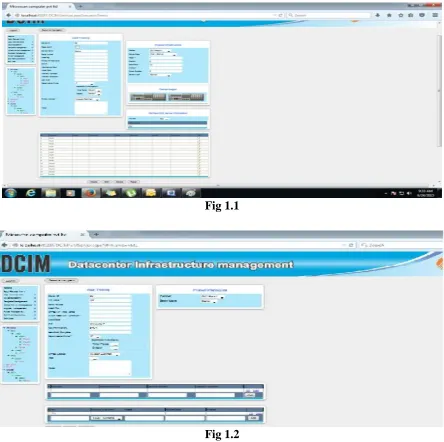
Fig 1.1
4.
The New Data Center
Industry surveys place the age of an average U.S. data center around ten years old. Much of this can be attributed to a late 90‟s focus on preparing for Y2K and a build-out in response to the dot-com era. The data center landscape has been radically transformed since the days when those facilities were constructed, both from the technology within and the technology in data center infrastructure and operating philosophies. Since 2000 there have been a number of innovations in the data center that expanded business models, altered its very appearance and delivered benefits in operations and efficiency. In 2008 Microsoft engineers Christian Belady and Sean James took on ingrained principles of the data center environment and asked why a cooling infrastructure was even necessary. In an experiment they took a rack of HP servers and placed it in a tent inside the company‟s fuel yard at one of their data centers. The result was that for the better part of a year the servers ran with zero failures. Additional data center innovations from economizers to evaporative cooling and modular data centers to management and automation tools evolved the data center further. To continue its role as a vital supporting asset for IT the data center had to become more agile and empower the operations team to make it a strategic advantage.
Although Microsoft and Google have made tremendous contributions to data center efficiency design and modernizing the data center, the most recent case is of the hyper-growth data center needs of Facebook. As IT requirements skyrocketed they approached the challenge with the goal of scaling computing infrastructure in the most efficient and economical way possible. Facebook released details of its new technology infrastructure, which features custom-built servers, racks and UPS units that will fill its new data center in Prineville, Oregon. Making use of the Open Web Foundation license they have made all server, data center and mechanical drawings available as a part of the Open Compute Project. The ability of Facebook engineers to design an end-to-end solution in their Prineville data center meant that they
could use to reinvent every aspect
.
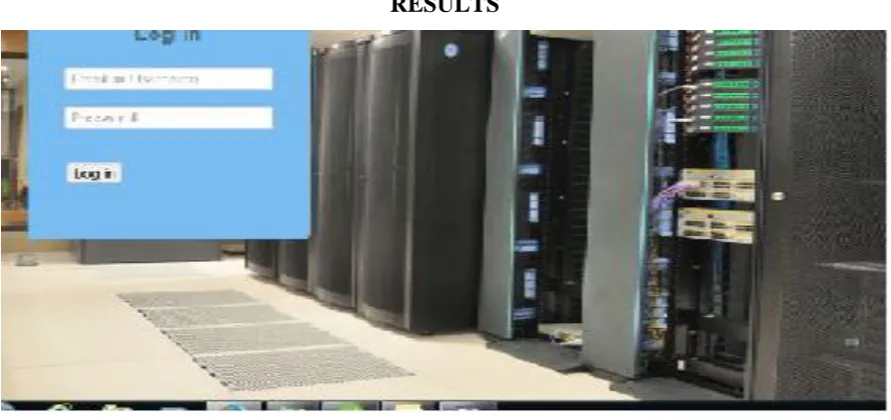
RESULTS
Fig 1.4
Fig 1.5
5. CONCLUSIONS
As business and IT strategies data center strategy was stuck and unable to align its objectives an IT strategy brings combined with the technologies and business planning for proactive planning is paramount and will yield a pragmatic data the foundation of a sound data center strategy .It has the
While reliability is still there and advancements in the past five years have accelerated it either runs and was relative
.
REFERENCES