AUTOMORPHISM GROUPS CONTAIN THE PERMUTATION GROUPS AND
By
Fredrick Odondo Olum (M. Sc.)
Reg. No: I84/24453/2013
A thesis submitted in partial fulfillment of the requirements for award of the Degree of Doctor of Philosophy (Pure Mathematics) in the School of Pure and Applied Sciences of
Kenyatta University
DECLARATION
This thesis is my original work and has not been presented for a degree in any other university or
any other award.
Fredrick Odondo Olum (M. Sc.)
I84/ 24453/ 2013
Sign:………....Date:…..………
Supervisors
We confirm that the work reported in this thesis was carried out by the candidate under our
supervision.
Prof. Ireri Kamuti
Sign:………....Date:…..………
Department of Mathematics
Kenyatta University
Dr. Mutie Kavila
Sign:………....Date:…..………
Department of Mathematics
DEDICATION
ACKNOWLEDGEMENTS
I register a special note of thanks to Professor Ireri Kamuti, who introduced me to the field of
Group Theory and Combinatorics. With him we have had fruitful discussions to achieve the
results here in. His advice and insights were timely and helpful throughout this work.
I am also indebted to Dr. Mutie Kavila and all my colleagues in the department of Mathematics,
Kenyatta University, who provided a conducive academic environment in the entire period. Their
advice and assistance in various areas of my research really played a key role.
Many thanks to my wife; Mercey and my children, you have been the corner stone of my
TABLE OF CONTENTS
DECLARATION………...……….…...ii
DEDICATION………...………..……….………iii
ACKNOWLEDGEMENTS…………...……….………..iv
TABLE OF CONTENTS……….………..v
LIST OF FIGURES………viii
LIST OF NOTATIONS………..………...xiv
ABSTRACT………...………..……...xvi
CHAPTER ONE………...……….………1
INTRODUCTION………...……….……….1
1.1 Background information………...…………...……….………1
1.2 Problem statement and justification………...………...……..10
1.3 Objectives………..………..………10
1.4 Significance of the study………...……….…….11
CHAPTER TWO……….……...……….………13
LITERATURE REVIEW………...……….………13
2.1 Properties of group actions………...……….………….13
CHAPTER THREE………..………..………..………19
ACTION OF THE CYCLIC GROUP ON THE DIAGONALS OF A REGULAR n – GON………...19
3.1 Transitivity and primitivity of G on X……….………...………19
3.2 Suborbits, subdegrees and ranks of the action of G on X……….………...23
3.3 Suborbital graphs of on ………...……….…………28
CHAPTER FOUR………...……….…………41
ACTIONS OF THE DIHEDRAL GROUP ON THE DIAGONALS OF A REGULAR n – GON…...41
4.1 Transitivity and primitivity of on ……….………...……….41
4.2 Suborbits, subdegrees and ranks of the action of G on X………...45
4.3 Suborbital graphs of on ………...……….50
CHAPTER FIVE………...………..……….61
ACTION OF MULTIPLICATIVE GROUP OF UNITS ON THE SET ………61
5.1 Transitivity and primitivity of on ………...……….…….61
5.2 Suborbits, subdegrees and ranks of the action of on ………...………….63
5.3 Suborbital graphs of on ………...……….65
CHAPTER SIX………...……….77
6.1 Graphs whose groups of automorphism contain the dihedral group of degree n………...77
6.2 Graphs whose groups of automorphisms contain the cyclic group of degree ……...………..98
6.3 Number of graphs whose automorphism groups contain a given permutation group……...109
CHAPTER SEVEN…………...……….110
CONCLUSIONS AND RECOMMENDATIONS…………...………...…..110
7.1 Conclusion………...……….110
7.2 Recommendations……….111
REFERENCES………..………...112
LIST OF FIGURES
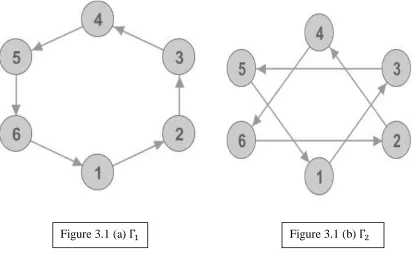
Figure 3.1(a): The suborbital graph corresponding to the action of on ………...………31
Figure 3.1(b): The suborbital graph corresponding to the action of on ………..…31
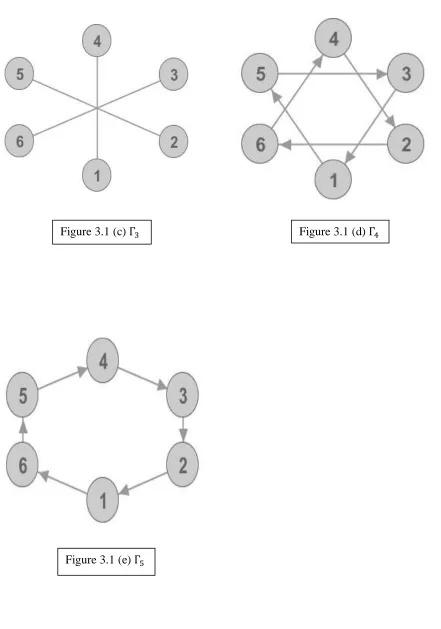
Figure 3.1(c): The suborbital graph corresponding to the action of on ………..…32
Figure 3.1(d): The suborbital graph corresponding to the action of on ………..…32
Figure 3.1(e): The suborbital graph corresponding to the action of on …………..……32
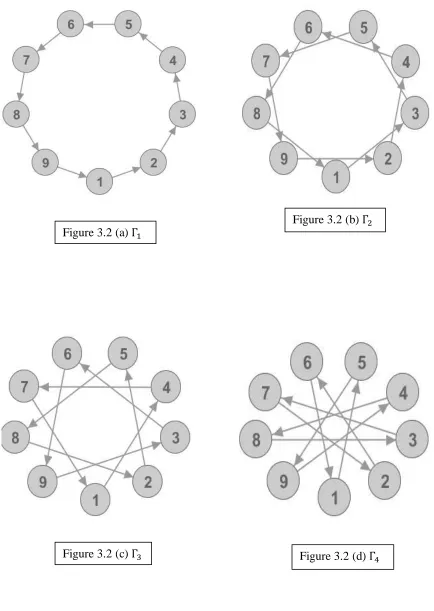
Figure 3.2(a): The suborbital graph corresponding to the action of on …………...……35
Figure 3.2(b): The suborbital graph corresponding to the action of on ………..…35
Figure 3.2(c): The suborbital graph corresponding to the action of on ………..…35
Figure 3.2(d): The suborbital graph corresponding to the action of on …………..……35
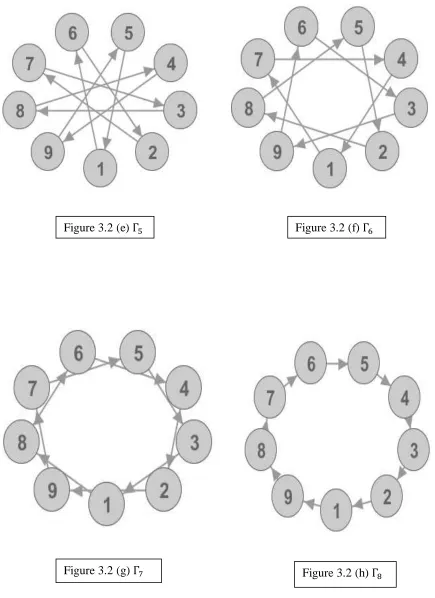
Figure 3.2(e): The suborbital graph corresponding to the action of on ………..36
Figure 3.2(f): The suborbital graph corresponding to the action of on ………...36
Figure 3.2(g): The suborbital graph corresponding to the action of on ………..36
Figure 3.2(h): The suborbital graph corresponding to the action of on ………..36
Figure 4.1(a): The suborbital graph corresponding to the action of on ………..…52
Figure 4.1(b): The suborbital graph corresponding to the action of on ………..…52
Figure 4.2(a): The suborbital graph corresponding to the action of on ………..…54
Figure 4.2(b): The suborbital graph corresponding to the action of on ………..…54
Figure 4.2(c): The suborbital graph corresponding to the action of on ………..…55
Figure 4.3(a): The suborbital graph corresponding to the action of on ………..…57
Figure 4.3(b): The suborbital graph corresponding to the action of on ………..…57
Figure 4.3(c): The suborbital graph corresponding to the action of on …………..……57
Figure 4.3(d): The suborbital graph corresponding to the action of on ………..…57
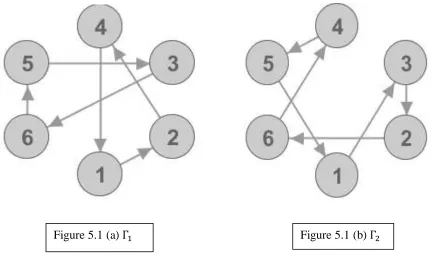
Figure 5.1(a): The suborbital graph corresponding to the action of on ………65
Figure 5.1(b): The suborbital graph corresponding to the action of on ………65
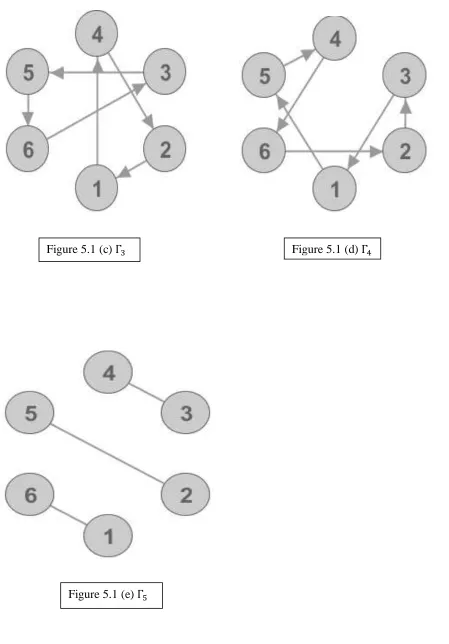
Figure 5.1(c): The suborbital graph corresponding to the action of on ………66
Figure 5.1(d): The suborbital graph corresponding to the action of on ………66
Figure 5.1(e): The suborbital graph corresponding to the action of on ………66
Figure 5.2(a): The suborbital graph corresponding to the action of on ………..…68
Figure 5.2(b): The suborbital graph corresponding to the action of on ………..…68
Figure 5.2(c): The suborbital graph corresponding to the action of on …………..……68
Figure 5.2(d): The suborbital graph corresponding to the action of on …………..……68
Figure 5.2(f): The suborbital graph corresponding to the action of on ………...…69
Figure 5.2(g): The suborbital graph corresponding to the action of on ………..…69
Figure 5.2(h): The suborbital graph corresponding to the action of on ………..…69
Figure 5.2(i): The suborbital graph corresponding to the action of on ………...…70
Figure 5.3(a): The suborbital graph corresponding to the action of on ………..…71
Figure 5.3(b): The suborbital graph corresponding to the action of on …………..……71
Figure 5.3(c): The suborbital graph corresponding to the action of on ………..…72
Figure 5.3(d): The suborbital graph corresponding to the action of on ………..…72
Figure 5.3(e): The suborbital graph corresponding to the action of on ………..…72
Figure 5.3(f): The suborbital graph corresponding to the action of on …...………72
Figure 5.3(g): The suborbital graph corresponding to the action of on ………..…73
Figure 5.3(h): The suborbital graph corresponding to the action of on ………..…73
Figure 5.3(i): The suborbital graph corresponding to the action of on ………...…73
Figure 5.3(j): The suborbital graph corresponding to the action of on ……….…73
Figure 5.3(k): The suborbital graph corresponding to the action of on ………74
Figure 6.1(a): The graph whose group of automorphism contains ………77
Figure 6.1(c): The graph whose group of automorphism contains ………76
Figure 6.1(d): The graph whose group of automorphism contains ………76
Figure 6.2(a): The graph whose group of automorphism contains ………82
Figure 6.2(b): The graph whose group of automorphism contains ………82
Figure 6.2(c): The graph whose group of automorphism contains ………83
Figure 6.2(d): The graph whose group of automorphism contains ………83
Figure 6.2(e): The graph whose group of automorphism contains ………83
Figure 6.2(f): The graph whose group of automorphism contains ……….……83
Figure 6.2(g): The graph whose group of automorphism contains ………84
Figure 6.2(h): The graph whose group of automorphism contains ………84
Figure 6.2(i): The graph whose group of automorphism contains ……….…84
Figure 6.2(j): The graph whose group of automorphism contains ………...……84
Figure 6.2(k): The graph whose group of automorphism contains ………...…85
Figure 6.2(l): The graph whose group of automorphism contains ………...…85
Figure 6.2(m): The graph whose group of automorphism contains ……….……85
Figure 6.2(n): The graph whose group of automorphism contains ………...…85
Figure 6.2(p): The graph whose group of automorphism contains ………...…86
Figure 6.3(a): The graph whose group of automorphism contains ………91
Figure 6.3(b): The graph whose group of automorphism contains ………91
Figure 6.3(c): The graph whose group of automorphism contains ………91
Figure 6.3(d): The graph whose group of automorphism contains ………91
Figure 6.3(e): The graph whose group of automorphism contains ………92
Figure 6.3(f): The graph whose group of automorphism contains ……….……92
Figure 6.3(g): The graph whose group of automorphism contains ………92
Figure 6.3(h): The graph whose group of automorphism contains ………92
Figure 6.3(i): The graph whose group of automorphism contains ……….…93
Figure 6.3(j): The graph whose group of automorphism contains ………...………93
Figure 6.3(k): The graph whose group of automorphism contains ………...……93
Figure 6.3(l): The graph whose group of automorphism contains ………...……93
Figure 6.3(m): The graph whose group of automorphism contains ……….………94
Figure 6.3(n): The graph whose group of automorphism contains ……...………94
Figure 6.3(o): The graph whose group of automorphism contains ………...………94
Figure 6.4(a): The graph whose group of automorphism contains ……….……99
Figure 6.4(b): The graph whose group of automorphism contains ………99
Figure 6.4(c): The graph whose group of automorphism contains ………...……100
Figure 6.4(d): The graph whose group of automorphism contains ………..…100
Figure 6.4(e): The graph whose group of automorphism contains ………...…100
Figure 6.4(f): The graph whose group of automorphism contains ………...…100
Figure 6.4(g): The graph whose group of automorphism contains ………..…101
Figure 6.4(h): The graph whose group of automorphism contains ………..…101
Figure 6.5(a): The graph whose group of automorphism contains ………...…103
Figure 6.5(b): The graph whose group of automorphism contains ………..…103
Figure 6.5(c): The graph whose group of automorphism contains ………...……104
Figure 6.5(d): The graph whose group of automorphism contains ………..…104
Figure 6.5(e): The graph whose group of automorphism contains ………...…104
Figure 6.5(f): The graph whose group of automorphism contains ………...…104
Figure 6.5(g): The graph whose group of automorphism contains ………..…105
LIST OF NOTATIONS - Cardinality of the set X
X × X - Cartesian product of X and X
- Euler’s phi function
GF (q) - Galois field of q elements
H ≤ G - H is a subgroup of G
- Index of a subgroup H in a group G
- Number of points fixed by g
- Multiplicative group of units in the ring of integers
(x, y) - Ordered pair of x and y
PGL (2, q) - Projective general linear group
PSL (2, q) - Projective special linear group
- Ring of integers modulo without zero element
- Sum over I
- The cyclic group of degree n
- The dihedral group of degree n and order 2n
- The ith suborbital corresponding to the ith suborbit
- The ith suborbital graph corresponding to the ith suborbital
OrbG (x) - The orbit of x in G
- The order of a group G
- The permutation matrix of
- The rational projective line
StabG (x) or Gx - The stabilizer of x in G
- The suborbit paired with
ABSTRACT
Many authors have studied the suborbital graphs of various group actions and their corresponding properties. This thesis investigates the actions of the cyclic group and the dihedral group on the diagonals of a regular -gon and the properties of their corresponding suborbital graphs. In addition, it focuses on the action of the multiplicative group of units
on , the set of non zero elements in . The properties of the corresponding suborbital graphs to this action are also investigated. Lastly, graphs whose autormorphism groups contain the cyclic group and the dihedral group are constructed. Transitivity of the actions is established using the Cauchy- Frobenius Lemma or the Orbit-Stabilizer Theorem. Schur’s algorithm is employed to construct all graphs whose groups of automorphism contain the cyclic group and the dihedral group . It has been shown that, and acts transitively on the set of diagonals of a regular - gon and the action is imprimitive when is not a prime. The cyclic group, , has two self-paired suborbits when and only one self-paired suborbit when , while the dihedral group has all its suborbits self-paired. For the two groups it has been shown that the number, , of the connected
components of the suborbital graph is and its girth is when , otherwise it is zero. The action of on is shown to be transitive if and only if is a prime. This action is imprimitive on when and it has suborbits with two of them being self-paired. The number of connected components of the suborbital graph , corresponding to the suborbital , is . Its girth is , where is the order of the element in . Finally, it has been shown that if is a permutation group acting transitively on a set of cardinality and the action is of rank , then the number of regular graphs on vertices whose
groups of automorphism contain is;
, where is the number of
CHAPTER ONE
INTRODUCTION
This chapter defines and explains important definitions, concepts and theorems on group actions
and suborbital graphs. The objectives and significance of this study have also been outlined. The
chapter is divided into four sections.
In Section 1.1; background information, definition of terms and theorems related to group
actions are discussed. Section 1.2 and Section 1.3 outline the problem statement and the
objectives of the study respectively. Lastly, Section 1.4, gives the importance of this study to the
field of group theory and other disciplines.
1.1 Background information
This section is divided into four subsections. Subsection 1.1.1 highlights the concepts and
theorems related to group actions. Subsections 1.1.2, 1.1.3 and 1.1.4 explain background
information and concepts on graphs, suborbits and suborbital graphs and Schur’s algorithm
respectively.
1.1.1 Group Actions Definition 1.1.1.1
Let G be a group and X a non empty set. We say that G acts on the set X on the left if for each g G and each x , there is a unique element gx such that the following axioms hold;
That is, the identity element of G is the identity permutation on X and the combined effect of applying h then g is the same as that of applying gh. We can also define the action of G on X
from the right in a similar way.
Definition 1.1.1.2
Let a group G act on a set X. Then X is partitioned into disjoint equivalence classes called orbits or transitivity classes of the action. For each x , the orbit containing x is denoted by . And it is defined as follows;
= {y }.
Definition 1.1.1.3
Let a group G act on a set X with x . The stabilizer of x in G, denoted as StabG (x) or , is
the set;
= {g x = x}. It is important to note that StabG (x) is a subgroup of G. Theorem 1.1.1.1 (Rose, 1978)
Let a group G act on a finite set X with x . Then;
= Definition 1.1.1.4
Let G act on a set X. The set of elements of X fixed by g G is called the fixed point set of g, denoted by Fix (g). Thus;
Fix (g) = {x }.
Lemma 1.1.1.1 (Cameron, 1974)
Let a group G act on a set X. Then the number of orbits of G on X is given by;
This Theorem is at times erroneously attributed to Burnside (1911).
Definition 1.1.1.5
A group G acting on a set X is said to be transitive on X if it has only one orbit, and so
= X, x X. Equivalently G is transitive on X if for every pair of points x, y X there exists g G such that gx = y. A group which is not transitive is called intransitive.
Definition 1.1.1.6
Let a group G act on a set X. G is said to act doubly transitively on X if for every two ordered pairs ( ) and ( ) of distinct elements of X, there exists a g G such that and . If a group G is transitive but not doubly transitive, we say that G is simply transitive.
Lemma 1.1.1.2 (Kangogo, 2016)
Let be the vertices of a regular -gon and be the dihedral group of degree , then acts transitively on the set .
Lemma 1.1.1.3 (Kangogo, 2016)
The cyclic group of degree , , acts transitively on, , the set of vertices of a regular -gon.
Definition 1.1.1.7
If G acts on a set X transitively and B X, then B is called a block of the action if
gB = B or gB = for all g G. We note that the empty set , the singleton subsets of
X and the set X itself are always blocks, referred to as the trivial blocks.
Definition 1.1.1.8
Theorem 1.1.1.2 (Wielandt, 1964)
Let X be a set and with x X. A transitive group G on X is primitive if and only if is a maximal subgroup of G.
Definition 1.1.1.9
Let G act transitively on a set X and be the stabilizer of x . Then the orbits of on ; = {x}, , , . . . , are called the suborbits of . The rank of G in this case is r. The sizes ni = , i = 0, 1, ..., r-1, often called the lengths of the surborbits , are known as the
subdegrees of G. The values of the ranks and subdegrees are independent of the choices of x X
due to the transitivity of the action of the group.
Definition 1.1.1.10
Let Δ be an orbit of on X and define, Δ*
= {gx | g G, x gΔ}.
Then Δ*
is also an orbit of and is called the – orbit or the G- suborbit paired with Δ. Clearly |Δ| = |Δ*|. If Δ*
= Δ, then Δ is called a self- paired orbit of .
Theorem 1.1.1.3 (Cameron, 1974)
Let G act on the set X, and let g G, then the number of self-paired suborbits of G is given by;
. Definition 1.1.1.11
Let G be a group and X a non-empty set. Given x , if the StabG (x) = , then G is said to be
semi-regular on X.
1.1.2 Graphs and digraphs
In this subsection, we give background information and results on the general concept of graphs
Definition 1.1.2.1
A graph is a diagram consisting of a set V, whose elements are called vertices, nodes or points and a set E of unordered pairs of the vertices called edges or lines. Usually such a graph is denoted by G (V, E) or simply G. A graph is said to be finite if its vertex set is finite. A labeled graph is one in which its n vertices are distinguished from each other by names such as .
Definition 1.1.2.2
A graph that has only one vertex and no edges is referred to as a trivial graph.
Definition 1.1.2.3
A null graph is one whose edge set is empty, that is, this graph has no edges.
Definition 1.1.2.4
A graph H (V, E’) is a subgraph of G (V, E) if V’ V and E’ E. H is a spanning subgraph if it is a subgraph of G and V’ V.
Definition 1.1.2.5
If p and q are two vertices of a graph G, they are said to be adjacent if there is an edge joining them. This is denoted by {p, q} or simply by pq.
Definition 1.1.2.6
A vertex p is said to be incident to an edge a = {p, q} if p is an end vertex of a, whereas two edges will be incident if they have a common end vertex. The case where edges are not incident
we say they are non-incident or independent.
Definition 1.1.2.7
A multigraph is a graph that has more than one edge joining two distinct vertices but with no
A pseudograph is one that has both loops and multiple edges. We note that a graph will be
referred to as a simple graph if it has neither loops nor multiple edges.
Definition 1.1.2.8
The degree or valency of a vertex p of a graph G refers to the number of edges incident to
p or the number of vertices of G adjacent to p. This way, any vertex of degree zero will be called an isolated vertex. The degree sequence of a graph G with vertices p1, p2, , pn is the sequence;
which is usually ordered such that
. A graph in which every vertex has the same degree is known as a regular graph.
Definition 1.1.2.9
A walk of length k joining two vertices p and q in a graph G is the sequence of vertices and edges of G of the nature , where = p, = q and
= {qi-1, qi} for i = 1, 2, …, k. A walk joining p and q is closed if p = q. A trail will refer to a
walk where all the edges are distinct. A path is a walk in which no two vertices of the walk
(except possibly p and q) are equal. A closed path will be referred to as either a circuit or a cycle and if it is of length k we simply call it a k-cycle. The girth of a graph G will mean the length of the shortest cycle if any in G.
Definition 1.1.2.10
Definition 1.1.2.11
Let G be a connected graph and u a vertex of G, then G – {u} is the graph G whose vertex set is
V(G) – {u} and edge set E(G) – E(u), where E(u) is the set of edges of G incident to u. A vertex
u is called a cut vertex of G if G – {u} is disconnected, if the graph G has no cut vertex it will be referred to as a 2-connected graph. A maximal 2-connected subgraph of G is known as a block of graph G.
Definition 1.1.2.12
The compliment of a graph G is a graph whose vertex set is the same as that of G and any of its two vertices are adjacent if and only if they are not adjacent in G. In this case we say that and G are complimentary graphs.
Definition 1.1.2.13
A forest or acyclic will refer to a graph with no non-trivial circuits (a trivial circuit is one of the
form u or u,v,u.). In the case the forest is connected it is called a tree. A bipartite graph is a graph with no circuits of odd length.
Definition 1.1.2.14
A digraph or a directed graph is one with a finite non-empty vertex set and a set of ordered pairs
of distinct vertices which are directed edges or arcs for the graph.
Definition 1.1.2.15
1.1.3 Suborbits and suborbital graphs
In this subsection, we discuss suborbits and suborbital graphs and give definitions and results
which are useful in the construction of these graphs.
Definition 1.1.3.1
Let G act transitively on a non-empty set X, then G acts on X by; g (x, y) = (gx, gy) where
g G and x, y X. The orbits of this action are called suborbitals of G and the suborbital containing (x, y) is denoted by O(x, y).
Definition 1.1.3.2
Letting X × X, i = 0, 1, . . .,r-1 be a suborbital of G, then we form a graph by taking X as
the set of vertices of and including a directed line from x to y , (x, y X), if and only if (x, y) . Now = { (x, y) (y, x) } is a G-orbit and the suborbital graph corresponding to it is the suborbital graph with arrows reversed. Let be transitive on . If
is a suborbital of , then for each , is a - orbit and conversely if is a – orbit, then is a - orbit on . We say that corresponds to , thus;
Theorem 1.1.3.1 [Sims, 1967]
Let be transitive on . If , then there is 1-1 correspondence between - orbits on and - orbits on and the suborbital graph corresponding to is undirected if and only if is self- paired.
Theorem 1.1.3.2 [Wielandt, 1964]
Theorem 1.1.3.3 [Sims, 1967]
Let G act transitively on a set X. This action is primitive if and only if each suborbital graph ,
i = 1, 2, …, r-1 is connected.
Theorem 1.1.3.3 [Wielandt, 1964]
Let G act transitively on a set X, be the stabilizer of the point x in X and
= {x}, , , . . . , be the suborbits of .Letting = , where i = 0, 1, . . ., r-1, be the number of elements in , we can form a sequence of these numbers so that;
If there exists an index i > 0 such that , then G is imprimitive.
1.1.4 Review of Schur`s algorithm
A permutation matrix is an n x n matrix obtained from the n x n identity matrix by permuting
its columns. If X is a graph with n vertices labeled 1 to n, a matrix A(X) = (aij), i, j = 1, 2… n
determined by;
aij =
is called the adjacency matrix of X.
The following steps constitute Schur’s algorithm. Letting G be a transitive permutation group
acting on n elements say {1, 2, …, n} and be the stabilizer of 1. Then the orbits of are; = {1} … . To each associate it with an n x n matrix;
B ( ) = (bij), i, j = 1, 2, …, n with;
bij =
.
i = 2, 3, …, k, if it is a symmetric matrix then a graph can be constructed whose adjacency matrix is given by A ( ) = B ( ). If B ( ) is not symmetric we ignore it for a while. Next we
consider B ( ) + B ( ), i ≠ j, i, j = 2, 3, …, k. If the sum is a symmetric matrix, its graph is
constructed, again if the sum is not symmetric ignore it temporarily. Repeat the process of
summing, for all the possible sums of 3, 4, …, k-1 different B ( ) matrices. If the resultant matrices are symmetric, we use them as adjacency matrices and construct their corresponding
graphs. Lastly, we include the null graph of n vertices. This process will give all the graphs whose groups of automorphism contain the transitive group G.
1.2 Problem statement and justification
The concept of construction of suborbital graphs of various group actions and the study of their
properties has been studied by many authors since its inception by Sims. Lately, Kangogo (2016)
has worked on the suborbital graphs of the cyclic and dihedral groups acting on the vertices of a
regular -gon. In this study, the suborbital graphs of the actions of the cyclic and dihedral groups
on the diagonals of a regular -gon and those of the multiplicative group of units acting on
the set are constructed. Their properties like; connectivity, ranks, subdegrees, self-pairing, girth-sizes among others are also investigated. The graphs whose groups of
automorphism contain the cyclic group or the dihedral group are constructed and a
formula for finding the number of such graphs is formulated. It is important to note that the
above mentioned areas have received little if not no attention in the past studies.
1.3 Objectives
1.3.1 General objective
To investigate the actions of the cyclic group , the dihedral group and the multiplicative
and find all graphs whose groups of automorphism contain the cyclic group or the dihedral
group .
1.3.2 Specific objectives
i. To study the properties of the actions of the cyclic groups, the dihedral groups and the
multiplicative group of units.
ii. To construct the suborbital graphs corresponding to actions of cyclic groups, the
dihedral groups and the multiplicative group of units.
iii. To study the theoretic properties of the suborbital graphs constructed in (ii) above.
iv. To construct graphs whose automorphism groups contain the cyclic group or the
dihedral group and formulate a general formula for finding the number of such
graphs.
1.4 Significance of the study
Through this study we have developed new results and concepts on graph theory which are of
valuable information to graph theorists. Generally graphs have got several practical applications
both in real life situations and other fields of study. For instance, concepts like paths, walks and
circuits in graph theory have been applied to salesman problem, database design concepts among
others. Graph theoretical concepts like a tree has been employed in the calculation of currents in
electrical networks or circuits. In chemistry and physics the knowledge of graphs is used to study
the structure of molecules and to illustrate chemical bonds. To be precise, a graph makes a
natural model for molecules where vertices represent atoms and the edges represent bonds.
Graph theory has also been greatly applied to computer science where it is used in the
development of graph algorithms used to solve problems modeled in the form of graphs. The
be solved using the concepts of a bipartite graph. Graph theory can also be employed to wildlife
conservation efforts where a vertex can be used to represent a region where a certain species
exists and the edges the migration patterns between regions. This information is vital in
monitoring the breeding patterns and the spread of diseases or parasites hence providing
necessary information in the conservation efforts of the animals in question. It is therefore
CHAPTER TWO LITERATURE REVIEW
This chapter gives literature on past studies with content related to this work. It is divided into
two sections. In Section 2.1 literature regarding properties of group actions is outlined, while
Section 2.2 gives information related to suborbits and suborbital graphs.
2.1 Properties of group actions
Group actions and their properties like transitivity, primitivity, ranks among others have been
studied by many group theorists. Higman (1964) introduced the rank of a group while working
on finite permutation groups of rank 3. Further Higman (1970) calculated the rank and
subdegrees of the symmetric group acting on 2- element subsets from the set
X = {1, 2, . . ., n}. It was shown that the rank is 3 and the subdegrees are 1, 2(n-2), .
Numata (1981) studied primitive permutation groups of rank 5. The author was able to prove that
if and are G-orbits on X X, then is doubly transitive on and but not doubly transitive on (x) and (x).
Faradzev and Ivanov (1990) calculated the subdegrees of primitive permutation representations
of PSL (2, q). They showed that if G = PSL (2, q) acts on the cosets of its maximal subgroup H, then the rank is at least |G|/|H|2 and if q>100, the rank is more than five. Jones et al. (1991) investigated the action of the modular group defined as PSL (2, ) = SL(2, ) on the rational projective line = { }. This group is usually represented as a group of Mobius
z with a, b. c, d and ad – bc = 1. They established that the action of this group on
is transitive and imprimitive. They also constructed the suborbital graphs corresponding to this
action and showed that the graphs were closely related to the Farey graph.
Evans (2001) formulated a method for the construction of a primitive permutation group that has
a finite suborbit that is paired with a suborbit of size k. It is worth mentioning that the existence of these groups considered by Evans gave a solution to the questions raised by Neumann and
helped to complete the taxonomy of infinite, primitive permutation groups.
Hamma and Audu (2010) investigated transitivity and primitivity of p-subgroups of the dihedral groups of degree at most and they showed that if G is the dihedral group of degree p with
p 3 and N is a Sylow p-subgroup of G, then G is transitive and primitive. And that N is transitive, primitive, regular and normal in G. Further they proved that if G is of degree , then
G is transitive and imprimitive whereas N is transitive, imprimitive, regular and a normal subgroup of G.
Hamma and Aliyu (2010) also studied transitivity and primitivity of the dihedral groups of
degree (r ). They established that these groups were transitive and imprimitive. Most recently Gachimu et. al. (2016) have studied the properties of the action of the alternating group on unordered subsets. They have shown that this action is transitive and imprimitive if and only
2.2 Suborbits and suborbital graphs
Kagno (1946), looked at linear graphs of degree 6 and their group of automorphisms. In
particular, the author showed that a graph of degree 6 has a non-identity group.
Schur in a paper by Chao (1965) developed an algorithm called the Schur’s algorithm which is
used to find the graphs whose groups of automorphism contain a transitive group G.
The construction of suborbital graphs of a permutation group G acting on set X was first introduced by Sims in 1967; these graphs have X as the vertex set and on which G induces an automorphism. Since then many authors have done research in these areas notable among them
being the following:
Neumann (1977) extended the work of Higman and Sim’s (1967) to finite permutation groups,
edge colored graphs and matrices. In this paper the author constructed the famous Petersen graph
as a suborbital graph corresponding to one of the non-trivial suborbits of acting on the
unordered pairs from the set X = {1, 2, . . ., 5}. Neumann also proved that given a set X on which
G acts transitively; then there is a one-one correspondence between orbits , , , . . . , of G acting X X and orbits , , . . . , of the stabilizer in X and the numeration can be chosen such that .
Kamuti (1992) formulated a method for the construction of the suborbital graphs of the
projective special linear group, PSL (2, q), and the projective general linear group, PGL (2, q), acting on the cosets of their maximal dihedral subgroups of orders q-1 and 2(q-1) respectively.
This gave an alternative method of constructing the Coxeter graph which was first constructed by
the normalizer N of (N) in PSL (2, ). They proved that if together with the set of orbit representatives are symbolized by B and respectively, then the permutation group (B, ) is regular and m-regular, where m is an odd natural number.
Akbas (2001) investigated the suborbital graphs for the modular group. The author proved the
conjecture by Jones, Singerman and Wicks (1991) that a suborbital graph for a modular group is
a forest if and only if it contains no triangles.
Kamuti (2006) calculated the subdegrees of primitive permutation representations of PGL (2, q). It was also shown that when PGL (2, q) acts on the cosets of its maximal subgroup of order
2(q-1), then its rank is if q is odd and if q is even.
Most recent studies on suborbital graphs have been done by the following; Nyaga et al. (2011) investigated the ranks and subdegrees of the symmetric group Sn acting on unordered r-element
subsets, X(r), of a set X. They proved that the rank of this action is r + 1 if n 2r and the suborbits of the action are self-paired. It is also proved that the subdegrees of Sn acting on
unordered r-element subsets, X(r), are;
1, r ; where n 2r.
Kamuti et al. (2012) working on the action of (the stabilizer of in = PSL (2, ), the modular group) on and the corresponding suborbital graphs established a number of results.
stabilizer of 0 in is the identity in among other results and constructed suborbital graphs corresponding to this action.
Rimberia et al. (2012) studied the properties of suborbits and suborbital graphs of the symmetric group Sn acting on ordered r-element subsets, X[r,]of a set X. In this paper they showed that G
acts transitively on and if n 2r, the rank of on is equal to
R(G)=r . They also showed if = [ ] is an orbit of on X[r] of length 1, where
{1, 2, …, n}, i = 1, 2, …, r, then is self-paired if and only if the permutation
= is such that = 1. They also proved that the action of on is
imprimitive if n > r +1. On the suborbital graphs of this action they gave a Theorem used in the enumeration of connected components in the suborbital graphs. They proved that the number of
connected components in the suborbital graph corresponding to the orbit on
with exactly r elements from A = is;
. Further they showed that if G
is a suborbital graph of this action corresponding to the orbit of on X[r] with no element from A = , then G has a girth of 3 provided that n 3r.
Kangogo (2016) worked on the suborbital graphs of the dihedral group Dn and the cyclic group Cn acting on the vertices of a regular n-gon. He showed that the number of connected
cycles of the suborbital graph . It was shown that for the action of the dihedral group on the vertices of a regular -gon, all the suborbital graphs are undirected and the number of connected
components of suborbital graph is and its girth is when , otherwise the girth is zero. The action was found to have connected non-trivial suborbital graphs if the
group is of a prime degree. The actions of some finite permutation groups and their suborbital
graphs have not been investigated in the past and through this work we hope to yield some useful
CHAPTER THREE
ACTION OF THE CYCLIC GROUP ON THE DIAGONALS OF A REGULAR n – GON
In this chapter we investigate the actions of G, the cyclic group of order , on the set of diagonals of a regular n – gon. We find the suborbits and construct the suborbital graphs corresponding to this action and study their properties in detail. We note that
, where is the rotation through the angle radians. This chapter is presented in
three sections. Section 3.1 discusses transitivity and primitivity of the action of on . In
Sections 3.2 and 3.3 we determine the suborbits, subdegrees and ranks of this group action and
construct the corresponding suborbital graphs respectively.
3.1 Transitivity and primitivity of G on X
For any , has elements of the form;
X = .
And its cardinality is , that is, .
Lemma 3.1.1
Proof
W. L. O. G, we let to be the diagonal joining the vertices 1 and , that is,
The elements of that fixes the point are; , the identity element of
G, and , a rotation through the angle radians. We note that the rotation takes the form;
.
Thus the stabilizer of the point consists of only two elements. That is,
Example 3.1.1.1
Letting G = , then X = , with .
Taking then;
And
Example 3.1.1.2
Let G = , the set X which is of order 5 is constituted as follows;
Letting , then .
Thus
Lemma 3.1.2
G acts transitively on the set X.
Proof
Given any , by Theorem 1.1.1.1 we establish that;
since , and . This shows that , that is, the action of on has got only one orbit. Therefore by Definition 1.1.1.5, the action of on is transitive.
Alternatively, there are only two elements of that fix points of . These elements are 1, the
identity element, and , the rotation through the angle radians. In fact, each of them fixes the
elements of . By Lemma 1.1.1.1, the number of – orbits on is given by;
This shows that the action of G on X has got only one orbit; hence the action is transitive.
Theorem 3.1.1
The group acts on imprimitively if and only if is not a prime.
Proof
Letting , from Lemma 1.1.1; . Assuming that
acts on imprimitively, then is not a maximal subgroup of . This implies that there exists an integer such that . That is, we can find an integer say,
, such
that 1 and it divides , concluding that is not a prime.
Conversely, suppose is not a prime, then there exists an integer
dividing Clearly is
a proper subgroup of and is of order . In fact;
Thus, is not a maximal subgroup of G, hence the action of G on X is imprimitive as required.
Example 3.1.1.1
Consider , then
Taking , then,
It’s clear that;
Hence is not a maximal subgroup of , therefore this action of on is imprimitive.
3.2 Suborbits, subdegrees and ranks of the action of G on X
Theorem 3.2.1
The action of on is of rank , with subdegrees ; ones.
Proof
Taking , from Lemma 3.1.1,
.
Recall, X = . The suborbits of G on X are as follows;
Therefore the rank is as required and the subdegrees are 1, 1, …, 1; ones.
Example 3.2.1.1
Let , then . The stabilizer of the first diagonal is;
.
The suborbits of G on X are as below;
Rank of this action is and the subdegrees are;
; , .
Corollary 3.2.1.1
,
Theorem 3.2.2
The action of on has two self – paired suborbits when and only one self-paired suborbit when .
Proof
When , has two elements of order 4 and one element of order 2. Letting be any of these elements, we have that fixes all the points in . In addition to these elements, the
identity element in also fixes all points of when squared. Thus by Theorem 1.1.1.3, the
number of self-paired suborbits is given by;
For the case when , only two elements of fix the points of when squared. These are; the identity element and the element of order 2. In fact, they fix all the points of . Again by
Theorem 1.1.1.3, the number of self-paired suborbits of on is given by;
Example 3.2.2.1
Considering the case when , then and;
X =
, , , , , .
From Definition 1.1.1.10 we have;
, , , .
The two self-paired suborbits of this action are; and .
Example 3.2.2.2
Let , then . Taking , The stabilizer of is given by;
The orbits of are as follows;
, , , , .
From Definition 1.1.1.10, we have;
, , .
This establishes that, only the trivial suborbit of is self –paired.
Corollary 3.2.2.1
Let act on , then the suborbit of is paired with the suborbit , .
Proof
By Definition 1.1.1.10, to find the suborbit paired with we find a , such that;
.
To obtain the value of we solve , that is . This gives
, implying that; . To find the suborbit paired with
we evaluate,
Hence .
Example 3.2.2.1.1
The case when , we take = and . The stabilizer of is; . The suborbits of this action are;
, , .
And;
,
Corollary 3.2.2.2
If , the action of on has two self-paired suborbits. These are the trivial suborbit, , and the suborbit . If , the action has got only one self-paired suborbit, which is the trivial suborbit .
Proof
Whether or , clearly . For the case when , using Corollary 3.2.2.1 we have that;
Hence and are self-paired.
3.3 Suborbital graphs of on
Let act on the set of the diagonals of a regular gon. To each suborbit
, , there corresponds a suborbital
. This will be referred to as the ith suborbital with
as the representative.
Theorem 3.3.1
Let act on . Given any ordered pair , then
Proof
Suppose , , then we can get
a such that . From this we deduce
that, . Now taking or
, we get that;
or
Considering the case when or , clearly or , therefore;
or . Hence,
or
Conversely, assume that;
We aim to show that . To do this, we find a
such that . Considering the case
when or , implying that . Similarly gives .
Letting we have that;
The case when or , we have that or . Thus;
.
We now use the above construction to get all the suborbitals corresponding to the action of
particular cyclic groups on and further construct their suborbital graphs. We note that the
labels for the vertices of the constructed graphs are a representation as indicated in the appendix.
Example 3.3.1.1
Let act on . Using Theorem 3.3.1, the non-trivial suborbitals corresponding to this action as follows;
,
}.
,
}.
,
}.
,
,
}.
The corresponding suborbital graphs of on are as below;
Figure 3.1 (d) Figure 3.1 (c)
Figure 3.1 (e)
Example 3.3.1.2
Let act on the diagonals of a regular . The non-trivial suborbitals are as follows;
{ , , ,
, , , , ,
, , , , ,
, , }
{ , , ,
, , , , ,
, , , , ,
, , }
{ , , ,
, , , , ,
, , , , ,
, , }
{ , , ,
, , , , ,
, , , , ,
{ , , ,
, , , , ,
, , , , ,
, , }
{ , , ,
, , , , ,
, , , , ,
, , }
{ , , ,
, , , , ,
, , , , ,
, , }
{ , , ,
, , , , ,
, , , , ,
, , }
Figure 3.2 (b) Figure 3.2 (a)
Figure 3.2 (f) Figure 3.2 (e)
Theorem 3.3.2
The elements of , can be found by pairing each point in to the point it is mapped to by .
Proof
Given {
, ,
} and , the set
X =
is permuted by the rotation as below ;
Pairing each element of to its image under we get all the elements of the suborbital
as required.
Theorem 3.3.3
Proof
The action of on has got only one non-trivial self-paired suborbit when and no non-trivial self-paired suborbit when . The graphs corresponding to these self-paired suborbits are undirected by Theorem 1.1.3.1. Therefore we conclude that when
only one non-trivial suborbital graph is undirected, while when all the non-trivial suborbital graphs will be directed.
Theorem 3.3.4
Let act on . All the non-trivial suborbital graphs of this action are connected if and only if
is a prime.
Proof
Suppose is such that is a prime, by Theorem 3.1.1 the action of on is primitive hence by
Theorem 1.1.3.2 all the non-trivial suborbital graphs of are connected. Conversely, if all the
non-trivial suborbital graphs of are connected then it implies the action of on is primitive
and so must be a prime by Theorem 3.1.1.
Theorem 3.3.5
The number, , of connected components of the suborbital graph , is the greatest common
divisor of and and its girth is
Proof
If , then has disjoint cycles each of length . Hence has a cycle of length ,
when . Similarly, if and ; we have that is of order with cycles of length . Hence is of girth and has connected components provided . We note
that if , will have trees each of one edge and thus such graphs will be of girth zero.
Theorem 3.3.6
The number of connected suborbital graphs of is .
Proof
If , then has one cycle of length , hence has a cycle of length . That is, has one connected component, implying that every pair of vertices is joined by some path. This
establishes that for all relatively prime to , is a connected graph. Hence the number of
CHAPTER FOUR
ACTIONS OF THE DIHEDRAL GROUP ON THE DIAGONALS OF A REGULAR
n – GON
In this chapter we investigate the action of the dihedral group G = on
, the set of diagonals of a regular -gon.
We begin by discussing transitivity and primitivity of this group action in Section 4.1. Suborbits,
subdegrees and rank of the action are studied in Section 4.2. Finally, in Section 4.3, the
suborbital graphs corresponding to the action of the group are constructed and their properties
investigated.
4.1 Transitivity and primitivity of on
Lemma 4.1.1
The stabilizer of in G is of order 4.
Proof
Let G act on X and be the first diagonal, that is, . The elements of G that fix the point are; two rotations and two reflections. In particular, the rotations are the identity rotation
1 and the rotation through radians which is of the form;
One of the reflections that fixes is the reflection through the first diagonal itself. This reflection
The other reflection that will fix is the reflection along the line orthogonal to the first diagonal.
This reflection takes the form;
when or,
when .
We therefore have that;
},
or
}
This concludes that for any , the stabilizer of is of order 4, i. e.
Example 4.1.1.1
The case when , we take n = 10.
= { (1, 6), (2, 7), (3, 8), (4, 9), (5, 10)}.
The stabilizer of = (1, 6) is;
Hence
Lemma 4.1.2
The action of the group G on the set X is transitive.
Proof
Let , by Theorem 4.1.1, the stabilizer of is of order 4. By Theorem 1.1.1.1, the cardinality of is , since and .
Example 4.1.2.1
Consider when n = 4, then = {(1, 3), (2, 4)}.
Now, by Definition 1.1.1.2;
Clearly, , hence the action of on is transitive as required.
Theorem 4.1.1
The group G acts on the set of diagonals, X, imprimitively if and only if is not a prime.
Proof
G being a dihedral group, can be represented as; , where a is a rotation through radians and f is a reflection through the line connecting the vertices 1 and . The stabilizer of a diagonal is composed of two elements. Taking to be the first diagonal, its stabilizer is the form;
If G acts imprimitively on the set X, then is not a maximal subgroup of G. Therefore we can find an integer k such that;
.
Conversely, if is not a prime, then there exists an integer, say dividing it. Without doubt
is a proper subgroup of . In fact;
This shows that the , is not a maximal subgroup of G and hence this action of G on X is imprimitive.
Example 4.1.1.1
Consider when , then G = .
=
Since is not a prime, we take to be 2 and form the group .
Now; or
=
.
Clearly, showing that is not a maximal subgroup of G, hence this action of G on X is imprimitive.
4.2 Suborbits, subdegrees and ranks of the action of G on X
The suborbits, subdegrees and rank of this group action are discussed in this section.
Similarly for , the orbits are;
Theorem 4.2.1
A non-trivial suborbit of is the union of two paired suborbits of acting on .
Proof
Using Corollary 3.2.1.1, Lemma 4.2.1 and denoting the suborbits in by , for we have that;
And when
Hence we conclude that every non-trivial suborbit of is the union of two paired suborbits of
acting on .
Corollary 4.2.1.1
Let act on . Then for , the subdegrees are of the form ; with
twos, establishing that the rank is .
For the case when , the subdegrees are with twos, hence the rank is
.
Proof
When , the action of on has suborbits of length 2 and 2 of length 1. Hence
the rank . For the case when , has suborbits of length 2 and one suborbit of length 1. We thus compute the total number of suborbits, that is the rank of
to be; .
Theorem 4.2.2
Proof
We do this in two parts, first we consider the case when . The elements of that fix the points of when squared include; the identity element, the two rotations of order 4, the
rotation of order 2 and lastly all the reflections. In fact, these elements fix all the points of
when squared. We therefore compute the number of self-paired suborbits of using Theorem
1.1.1.3 as follows;
where is the rank of on . Thus all the suborbits of are self-paired.
Similarly the case when , the identity element, the rotation of order 2 and all the reflections are the only elements of that fix the points of the set . It is worth noting that they
indeed fix all the elements of . Again, by Theorem 1.1.1.3, we compute the number of
self-paired suborbits as below;
This establishes that all the suborbits of on are self-paired since is the rank of . Hence we
conclude that for any such that all the suborbits of are self-paired.
Example 4.2.2.1
Let , then . The suborbits of are as follows;
, , , .
Computing the self-paired suborbits using Definition 1.1.1.10, we have that;
The number of self-paired suborbits is 4, hence all the suborbits are self-paired as required.
4.3 Suborbital graphs of on
Let act on , to each suborbit of , of , we find the corresponding suborbital .
That is the ith suborbital with as a representative and use it in the
Theorem 4.3.1
Let act on , then for any element , we have that;
if either is a member of
or , where and are the and suborbitals of .
Proof
By Theorem 4.2.1, a suborbit of on is a union of two paired suborbits of , that is, . Therefore if we let , and to be the suborbitals
corresponding to the suborbits , and respectively, then without no doubt
as required.
As earlier noted, the labels for the vertices of the constructed graphs are a representation as
indicated in the appendix.
Example 4.3.1.1
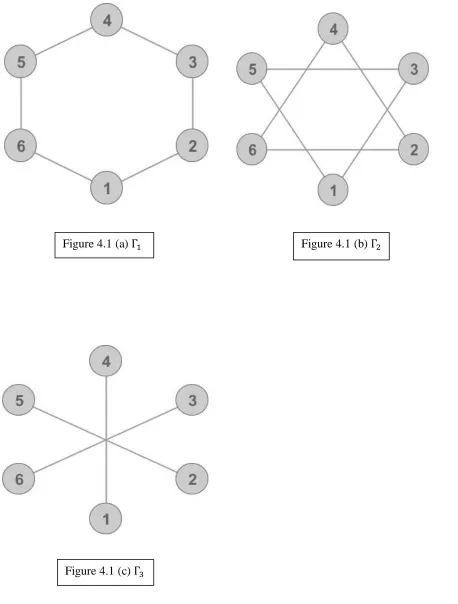
Let act on the diagonals of a regular . The non-trivial suborbitals are as
follows;
{ , , ,
, , , , , ,
, , , , ,
}
{ , , ,
, , , , , ,
, , , , , ,
, , , , , ,
}
{ , , ,
, , , , , ,
, , , , , ,
, , , , , ,
}
Figure 4.1 (b) Figure 4.1 (a)
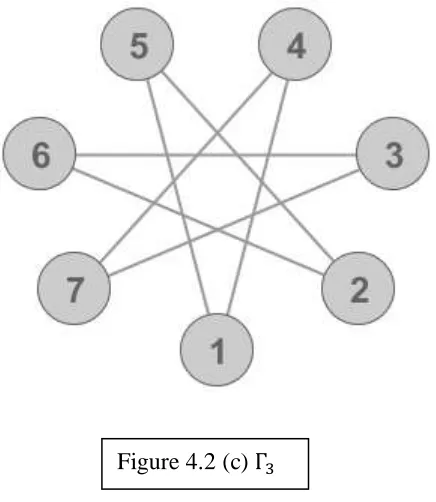
Example 4.3.1.2
Let act on the diagonals of a regular . The non-trivial suborbitals are as follows;
{ , , ,
, , , , ,
, , , , ,
, , , , ,
, , , , ,
, , }
{ , , ,
, , , ,
, , , , ,
, , , , ,
, , , , ,
, , , }
{ , , ,
, , , , ,
, , , , ,
, , , , ,
, , }
The corresponding suborbital graphs to the above suborbitals are as follows;
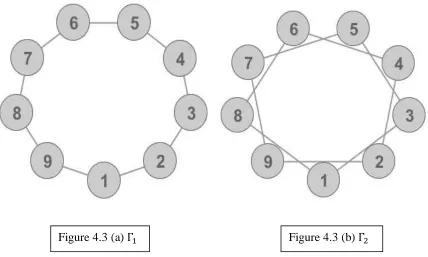
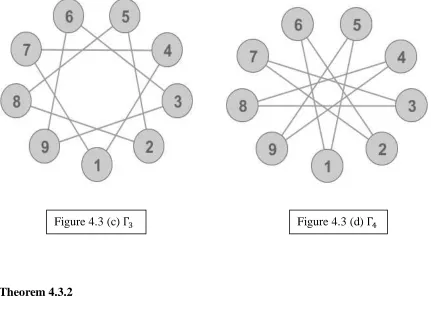
Example 4.3.1.3
Let act on the diagonals of a regular . The non-trivial suborbitals are as follows;
{ , , ,
, , , ,
, , , , ,
, , , , ,
, , , , ,
, , , , ,
, , , , ,