Activity-Based Costing
Yousef Aldukhil
School of Accounting and Finance
Faculty of Business and Law
Victoria University
Submitted in fulfilment of the requirements of
Doctor of Philosophy
Abstract
This study aims to develop and test a model for successful adoption of activity-based costing (ABC). The model has been constructed to explore the relationship between organisational and technological factors and management evaluation of overall ABC success and suggest a pathway. Another objective of this study is the examination of the relationship between ABC and business unit performance. The study also aims to investigate why some business units have not adopted ABC and why some business units have discontinued their use of ABC.
Data for the study were collected from both adopters and non-adopters of ABC through the survey method. The data are pertinent to all types of businesses. The business unit is the unit of analysis.
Declaration
Acknowledgements
I thank the almighty Allah for helping me overcome the many challenges that I have encountered in the course of completing this thesis. This process has taught me many valuable lessons: how to interact and discuss matters with others, how to be patient with others and how to learn from others. It has given me the opportunity to experience both intense moments of agony and wonderful moments of public appreciation.
Special thanks are due to all those who supported me during this journey. First, I appreciate and thank all those who participated in this study. Without their input, it would have been impossible to complete this research. In addition, I thank Dr Albie Brook, my supervisor in the initial stages, for his support in drafting the research proposal and his comments on the survey. I am also grateful to Professor Bob Clift, my supervisor during the middle stages, for his efforts and patience, especially during the data collection process. My principal supervisor Professor Alan Farley deserves a very special mention for guiding me and offering his valuable analytical insights. I also thank my co-supervisor Dr Rafael Paguio who undertook the challenge with me in order to complete this task in the best possible way.
I am also grateful to the faculty staff and practitioners who offered their views on the survey: Professor Peter Booth and Dr Jayce Naidoo for their invaluable comments, Dr Denny Meyer for her analytical views. I also thank Dr Lisa Lines for editing this thesis.
Contents
Abstract ... ii
Declaration ... iii
Acknowledgements ... iv
Contents ... v
List of Tables... viii
List of Figures ... xi
List of Abbreviations ... xii
Chapter 1: Introduction ... 1
1.1 Background ... 1
1.2 Research Objectives ... 2
1.3 Contribution to Knowledge ... 3
1.4 Context of the Project ... 5
1.5 Conceptual Framework ... 6
1.6 Proposed Methodology ... 9
1.7 Sample Selection ... 9
1.8 Data Analysis ... 10
1.9 Overview of the Thesis ... 11
Chapter 2: Literature Review ... 12
2.1 Introduction ... 12
2.2 The Definition of Activity-based Costing ... 12
2.3 The Evolution of Activity-based Costing ... 14
2.4 Deficiencies of Conventional Cost Systems ... 16
2.5 ABC Systems as an Alternative for Conventional Costing Systems ... 20
2.6 Adoption Rate of Activity-based Costing ... 21
2.7 Activity-Based Costing in Service Organisations ... 25
2.8 Activity-based Costing Implementation ... 27
2.8.1 Introduction ... 27
2.8.2 General Implementation Problems ... 28
2.8.3 Implementation Stages ... 30
2.9 Contingency Theory ... 41
2.10 The General Model of this Study... 50
2.11 Defining ABC Success... 58
2.12 Organisational and Technological Factors Influencing ABC Success ... 62
2.13 The Relationship between Organisational and Technological Factors and ABC Use ... 66
2.13.1 ABC Applications... 67
2.13.2 ABC Functions ... 76
2.13.3 Top Management Support and ABC Use ... 77
2.13.4 Training and ABC Use ... 78
2.13.5 Differentiation Strategy and ABC Use ... 79
2.13.6 Information Technology and ABC Use ... 81
2.13.7 Clarity of Objectives and ABC Use ... 82
2.14 ABC Use and ABC-based Actions ... 84
2.15 ABC-based Actions and Operational Performance ... 89
2.16 Operational Performance and ABC Benefits ... 91
2.17 ABC Benefits and ABC Success ... 95
2.18 Summary ... 96
Chapter 3: Research Methodology ... 99
3.1 Introduction ... 99
3.2 Research Methodology ... 100
3.2.1 Survey Methods ... 100
3.2.2 Questionnaire Structure ... 104
3.2.3 Variables Measurement ... 106
3.3 Population ... 118
3.4 Questionnaire Administration ... 120
3.5 Data Analysis ... 120
3.6 Response Rate ... 121
3.7 Profile of Business Units ... 122
3.7.1 Status of ABC Adoption ... 123
3.7.2 Types of Business Units ... 124
3.7.3 Country Distribution ... 125
3.7.4 Industry Classification ... 125
3.7.5 Size of the Business Unit ... 127
3.8 Respondents’ Characteristics ... 128
3.9 ABC Users... 129
3.9.1 Type of Business Unit ... 129
3.9.2 Location of ABC Users... 130
3.9.3 Industry of ABC Users ... 130
3.9.4 Size of ABC Users ... 131
3.9.5 Time since Introduction of ABC ... 132
3.10 Summary ... 133
Chapter 4: Data Analysis and Results ... 134
4.1 Introduction ... 134
4.2 Business Units that Have Not Adopted ABC ... 134
4.2.1 The Significance of the Reasons to Not Adopt ABC ... 136
4.3 Business Units Who Adopted ABC but Have Discontinued It ... 137
4.3.1 Industry Categories ... 137
4.3.2 Reasons for Business Units to Discontinue ABC ... 138
4.4 Activity Management Other Than ABC ... 138
4.5 Future Intention Regarding ABC ... 140
4.6 Business Units Who Are Using ABC ... 141
4.6.1 Business Unit Characteristics ... 141
4.6.2 Descriptive Statistics ... 151
4.6.3 Hypotheses Testing... 160
4.7 Summary ... 180
Chapter 5: Discussion and Conclusion ... 183
5.1 Introduction ... 183
5.2 Reasons Why Business Units Have Not Implemented ABC ... 183
5.3 Reasons Why Business Units Have Discontinued ABC ... 184
5.4 ABC Adoption ... 186
5.5.1 Organisational Factors... 187
5.5.2 ABC Applications ... 188
5.5.3 ABC-based Actions ... 189
5.5.4 Activity Efficiency ... 189
5.5.5 Process Cost Improvement... 190
5.6 ABC Success ... 191
5.7 Path Significance of ABC Success ... 192
5.8 Knowledge Contribution...192
5.9 Study's Implications ... 193
5.10 Conclusion ... 195
5.11 Limitations and Further Studies ... 196
References ... 198
Appendix A – Introduction to Survey ... 210
List of Tables
Table 2.1: ABC implementation model ... 31
Table 2.2 : Definition of ABC Success ... 60
Table 3.1: Sources of Survey Questions ... 109
Table 3.2 Cronbach's Alpha for Differentiation Strategy... ... 110
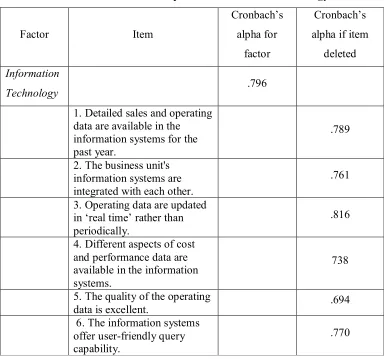
Table 3.3 Cronbach’s Alpha for Information Technology ... 111
Table 3.4 Cronbach’s Alpha for Top Management Support ... 112
Table 3.5 Cronbach’s Alpha for Training ... 113
Table 3.6 Cronbach’s Alpha for Non-accounting Ownership ... 113
Table 3.7 Cronbach’s Alpha for Clarity of Objectives ... 114
Table 3.8 Cronbach’s Alpha for Applications ... 115
Table 3.9 Cronbach’s Alpha for Functions ... 115
Table 3.10 Cronbach’s Alpha for ABC-based actions ... 116
Table 3.11 Cronbach’s Alpha for Cost Improvement ... 117
Table 3.12: Response rate ... 122
Table 3.13: Status of ABC adoption ... 123
Table 3.14: Types of business units ... 124
Table 3.15: Distribution by country ... 125
Table 3.16: Industry classification ... 126
Table 3.17: Business unit size ... 127
Table 3.18: Respondents’ Characteristics ... 128
Table 3.19: Types of ABC users ... 129
Table 3.20: Countries of ABC users ... 130
Table 3.22: Industries of ABC users ... 131
Table 3.23: Size of ABC users ... 132
Table 3.24: Years since introduction of ABC ... 132
Table 4.1: Reasons for non-adoption of ABC by business units ... 135
Table 4.2: Industry categories ... 137
Table 4.3: Reasons for business units to discontinue ABC ... 138
Table 4.4: Status of activity management ... 139
Table 4.5: Activity analysis * size (cross-tabulation) ... 139
Table 4.6: Activity cost analysis* size (cross-tabulation) ... 140
Table 4.7: Future of ABC ... 140
Table 4.8: Mann-Whitney U test for business unit size ... 143
Table 4.10: Mann-Whitney U test for time since introduction of ABC ... 145
Table 4.11: Descriptive statistics for time since introduction of ABC ... 146
Table 4.12: Mann-Whitney U test for manufacturing ... 147
Table 4.13: Descriptive statistics for manufacturing ... 148
Table 4.14: Mann-Whitney U test for government ... 149
Table 4.15: Descriptive statistics for government ... 150
Table 4.16: Descriptive statistics of differentiation strategy ... 152
Table 5.17: Descriptive statistics of information technology ... 152
Table 4.18: Descriptive statistics of top management support ... 153
Table 4.19: Descriptive statistics of training ... 154
Table 4.20: Descriptive statistics of non-accounting ownership ... 154
Table 4.21: Descriptive statistics of clarity of objectives ... 155
Table 4.22: Descriptive statistics of ABC applications ... 156
Table 4.23: Descriptive statistics of ABC functions ... 156
Table 4.24: Descriptive statistics of ABC-based actions ... 157
Table 4.25: Descriptive statistics of operational performance ... 158
Table 4.26: Descriptive statistics of non-process cost improvement ... 158
Table 4.27: Descriptive statistics of revenue improvement ... 159
Table 4.28: Descriptive statistics of process cost improvement ... 159
Table 4.29: Descriptive statistics of customer satisfaction ... 159
Table 4.30: Descriptive statistics of ABC success ... 159
Table 4.31: Univariate analysis of organisational factors with ABC applications and ABC functions ... 162
Table 4.32: Multivariate analysis of organisational factors with ABC applications and functions ... 162
Table 4.33: Univariate analysis of ABC applications and functions with ABC-based actions ... 167
Table 4.34: Multivariate analysis of ABC applications and ABC functions with ABC-based actions ... 167
Table 4.35: Univariate analysis of ABC-based actions with operational performance dimensions ... 169
Table 4.36: Multivariate Analysis of ABC-based actions with operational performance dimensions ... 169
Table 4.37: Univariate analysis of operational performance dimensions with process cost improvement ... 171
List of Figures
Figure 1.1 Contingency theory framework ... 8
Figure 1. 2 Contingency-based model of ABC success ... 8
Figure 1. 3 General model of ABC success ... 8
Figure 2.1 Adopter Categorisation on the Basic of Innovativeness... 22
Figure 2.2 Academic department model ... 27
Figure 2.3 Stages of ABC implementation ... 33
Figure 2.4 An Overview of Contingency Analysis of MCS... 41
Figure 2.5 Theoretical framework of the contingency approach ... 50
Figure 2.6 An early ABC system ... 52
Figure 2.7 Two-dimensional ABC model ... 53
Figure 2.8 Cost assignment view of ABC ... 54
Figure 2.9 The Model of Maiga and Jacobs (2007) ... 65
Figure 2.10 An ABC income statement... 76
Figure 2.11 The Model of Banker et al. (2008)... 86
Figure 2.12 Integrated model of ABC success... 98
Figure 3.1 Status of ABC adoption ... 124
Figure 4.1 the relationships between organisational and technological factors and ABC use ... 161
Figure 4. 2 The relationships between ABC use and ABC-based actions... 166
Figure 4.3 The relationships between ABC-based actions and operational performance dimensions ... 168
Figure 4.4 The relationships between operational performance dimensions and ABC benefits ... 170
Figure 4.5 The relationships between ABC benefits and ABC success ... 177
List of Abbreviations
AA Activity analysis
ABB Activity-based budgeting
ABC Activity-based costing
ABCM Activity-based cost management
ABM Activity-based management
ACA Activity cost analysis
AMP Advanced manufacturing practices
CAM-I Consortium for Advanced Management—International
CIMA Chartered Institute of Management Accountants
CPAA Certified Practising Accountants Australia
ERP Enterprise resource planning
GAAP Generally accepted accounting principles
IAS2 International Accounting Standard on Inventories
IFAC International Federation of Accountants
IMA Institute of Management Accountants
ISO International Organisation for Standardisation
IT Information technology
JIT Just-in-time
MCS Management control systems
MRP Materials requirements planning
MRPII Manufacturing resource planning
PACIA Plastics and Chemicals Industries Association
PLS Partial Least Squares
PCB Printed circuit board
R&D Research and development
ROI Return on investment
SAP Systems, Applications, and Products in Data Processing
SEM Structural Equation Modelling
SPSS Statistical Package for the Social Sciences
TQM Total quality management
UK United Kingdom
US United States
Chapter 1: Introduction
1.1 Background
Cost information is necessary for decision making. Managers use relevant cost information for operational and strategic decisions. For example, cost information is used in determining the selling price, for measuring product profitability and in determining product mix. As managerial decisions are concerned with future events, cost information plays an important role in planning and control functions.
Conventional cost systems have been severely criticised by experts since the late 1980s. One of the major drawbacks of these systems is that they employ inappropriate measures for assigning indirect or overhead costs, leading to distorted product costs. Critics have therefore argued for better cost systems that reflect cost information more accurately. Activity-based costing systems (hereafter called ABC) were developed to overcome the deficiencies found in conventional cost systems, which include the following:
Failure to provide visibility of resource consumption (Miller & Vollman 1985);
Lack of accurate measures for assessing the costs of products (Cooper 1987);
Failure to unitise non-production overheads (Cooper & Kaplan 1988); Inability to modify cost behaviour patterns and provide relevant long-term
variable costs for strategic decisions (Johnson & Kaplan 1987b); Inability to supply cost information in the pre-production stages of the
product life cycle (Berliner & Brimson 1989)
explore the use of cost information generated by ABC in strategic and operational decision making—a concept known as activity-based management (ABM). The terms ABM and ABC have been used interchangeably in this study. Thus the use of the term ABC refers to not only the costing methodology, but the use of this methodology to conceptually enable better business decisions, and therefore achieve better outcomes.
1.2 Research Objectives
ABC systems have been developed to address organisational concerns about product costing and the need for continuous improvement. Studies on ABC have typically focused on the implementation aspects of ABC and on factors that may impact the success of ABC implementation (for example, Krumwiede 1998; Shields 1995). This study investigates the relationships between success factors and success measures of ABC taking into account alternative success measures. This study aims to contribute to existing knowledge on ABC by answering the following questions:
1. Does ABC lead to improvements in operational performance? 2. What factors influence management’s assessment of ABC success? 3. How do organisational and technological factors influence ABC success?
The objectives of this thesis can be summarised as follows:
To propose and evaluate an integrated model that suggests pathways between organisational and technological factors and an evaluation of overall ABC success
To investigate the impact of ABC use on perceived business performance To investigate the reasons for the reluctance to adopt ABC as well as the
1.3 Contribution to Knowledge
Empirical studies on ABC have examined the implementation of ABC, describing organisational and technical factors that influence its success (Brown, Booth & Giacobbe 2004; Anderson &Young 1999). Other studies investigated the association between these success factors and the measures of ABC success (Foster & Swenson 1997; Shields 1995). Firms that have not adopted ABC have questioned the practical benefits of ABC (Innes & Mitchell 1998). This study will investigate these concerns and develop a model that charts a path for successful adoption and implementation of ABC systems. While the model will be based on existing literature, it will be refined and tested in this study.
Swenson and Foster (1997) mentioned that literature offers a problematic definition of the success of ABC. ABC studies have tackled the concept of ABC success from different perspectives. Shields (1995) and Foster and Swenson (1997) argued that organisational factors determine ABC success. These studies used alternative measures of ABC success and investigated the correlations between these measures and organisational factors. The problem here there is no explanation of how these determinants lead to successful implementation of ABC.
environment (e.g., complexity and diversity of business and competition) rather than organisational factors that have been linked with ABC success in earlier studies. Second, most of these studies did not refer to explicit measures of ABC success, although organisational performance could be assumed as a measure of success. However, this is not applicable to all cases, Cagwin and Bouwman (2002), for example, examined the association between extensive ABC use and improvements in financial performance and then ABC use was replaced with an aggregate measure of ABC success. In general, these studies focus on organisational performance rather than measures of ABC success.
Earlier studies described various measures of ABC success. Swenson (1995) measured ABC success based on management satisfaction with ABC. Foster & Swenson (1997) classified ABCM success measures into four types: (1) the use of ABCM information, (2) decision actions taken with ABCM, (3) financial improvement from ABCM, (4) Management evaluation as to the overall success of ABCM. Later studies (Banker, Bardhan & Chen 2008; Ittner, Lanen & Larcker 2002) measured ABC success as extensively using ABC and improvements in organisational performance. These alternative measures of ABC success have been linked to either organisational factors or organisational performance. In this study, these alternative measures of ABC success will be considered together and investigated how they lead to overall ABC success.
This study attempts to contribute to the existing body of literature by accomplishing the following:
Investigating the linkage of factors that influence overall ABC success Exploring the role of ABC-based actions as an intermediary between ABC
use and operational performance
Coordinating the relationships between alternative measures of ABC success to lead to the overall success
1.4 Context of the Project
The project has primary and secondary issues. The primary issues pertain to ABC users. The targeted topics are factors affect the success of ABC and measures of that success. The secondary issues pertain to non-ABC users. The targeted topics are problems and reasons for rejecting ABC.
Hicks (1999, p. 17) describes ABC as ‘a powerful management concept that can be adopted and used by any organisation to gain a competitive advantage through greater understanding of product or service costs, process costs, and the organisation’s overall cost behaviour’. He suggests that managers use ABC to gain competitive benefits by understanding cost drivers. Swenson (1995, p.167) describes ABC as ‘an information system that assists with decision making, essentially a decision-support system’. Although the essential aim of ABC is to capture product costs more accurately, managers are currently using ABC as a means of improving processes and enhancing profitability (Plowman 2001).
The ABC system evolved to address the shortcomings that plagued conventional cost systems (Brown , Myring & Gard 1999; Gunasekaran 1999; Gupta & Galloway 2003; Hughes 2005). Conventional cost systems first emerged in manufacturing firms that produced typical products consumed similar amounts of resources and engaged in limited non-volume activities such as set-up and inspection (Johnson & Kaplan 1987a). Contemporary environments consist of a diverse array of products and numerous non-volume activities, causing conventional systems to provide distorted product costs. Although earlier references to activity costing were cited by some authors, ABC attracted widespread attention in 1990 when Harvard Business School promoted and developed ABC systems (Innes 1998).
implement ABC because it is part of a mandate issued by their corporate headquarters. However, the ABC system is not applicable to all companies. It is important to consider a firm’s characteristics before implementing ABC.
Information accuracy assumes priority over all other ABC objectives (Cohen, Venieris & Kaimenaki 2005; Shields 1995). However, Anderson and Young (1999) argue that accuracy of ABC information is not a sufficient condition to ensure cost reduction. Moreover, Cooper and Kaplan (1991) demonstrate that reducing resource consumption does not improve the bottom line automatically and that further actions are needed. This study aims to enhance managers’ awareness of how ABC improves business processes and profitability.
Firms that have adopted ABC have had different experiences with ABC implementation. Some firms have had more success with ABC than others do (Shields 1995). Researchers have explored factors that influence ABC implementation such as top management support, linkage to competitive strategy, training and consensus and clarity regarding ABC objectives (Shields 1995). The literature on determination of successful ABC systems is still limited. Further, there have been few studies that include a comprehensive view of investigated factors. For this reason, this study will develop an integrated model to evaluate ABC success.
1.5 Conceptual Framework
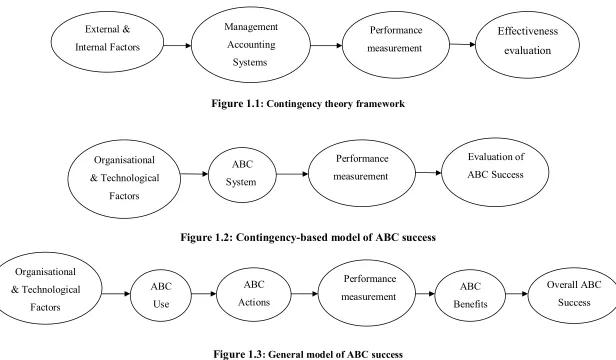
The theory that forms the basis of this study is contingency theory. This theory explains how management accounting systems (MAS) impact the organisational performance, based on internal and external environmental factors (see Figure 1.1).
evaluation of ABC success can be broken into sub-components. ABC system can be separated into ABC use and ABC actions while evaluation of ABC success can be broken into ABC benefits and overall ABC success. This gives Figure 1.3. This model has been broken into a group of relationships among factors. The nature of these relationships was hypothesised and empirically tested.
Diagram 1.3 represents a sequential process that culminates in recognition of the overall success of adoption of ABC. Where it differs from the existing contingency based model of ABC success is through incorporating features of the literature that recognise
i. That the concept of the ABC System actually has two sequential components, these being the extent of use of the ABC System and then the actions that result from that use, and
ii.That overall perception of success is a broader concept than benefits that accrue in specific dimensions, e.g., financial benefits or customer satisfaction.
There are some motivations in the literature that justify this research. The first motivation is the existing of various measures of ABC success in the literature. Accordingly, it was problematic for managers defining the success of ABC system. This motivation provides the basis for the researcher to investigate the various measures of ABC success in the literature and design a structural model (Figure 1.3). This model links the measures of ABC success to each other (i.e., ABC use, ABC actions, business performance, ABC benefits and management evaluation) and provides a general guideline for managers in respect to defining the success of ABC and exploring factors which have impact on that success. The second one is the lack of continuous and systematic link between organisational and technological factors (the first point in the model) and ABC success (the end point in the model).The third motivation is the relationship between ABC and business performance is not conclusive in the literature.
8 Figure 1.1: Contingency theory framework
Figure 1.2: Contingency-based model of ABC success
Figure 1.3: General model of ABC success
Management
Accounting
Systems External &
Internal Factors
Performance
measurement
Effectiveness evaluation
ABC
System Organisational
& Technological
Factors
Performance
measurement
Evaluation of
ABC Success
Organisational
& Technological
Factors
ABC
Use
ABC
Actions
Performance
measurement
ABC
Benefits
Overall ABC
1.6 Proposed Methodology
Empirical studies on ABC often employ a cross-sectional survey method (for example, Krumwiede 1998; Banker, Bardhan and Chen 2008) whereas some use a combination of survey and interviews (Malmi 1999). Generally, the cross-sectional studies cover a wide range of firms with different or similar ABC experiences. This is an important factor to enhance the validity or the generalisability of the findings. Case studies such as the one by Anderson (1995) on General Motors have generally focused on ABC implementation rather than measuring the success of ABC. In contrast, field studies seem to cover relevant aspects of ABC success measures (McGowan & Klammer 1997).
The survey method was used in this study; the method was recommended by Young and Selto (1991) to develop and test theories related to changes in management accounting information. As the factors in this study have already been identified in literature, the use of survey research is appropriate for estimation purposes (Van der Stede, Young & Chen 2005). Survey method is the commonly adopted in business studies (Ghauri & Gronhaug 2005) and is consistent with previous ABC related studies (e.g., Foster and Swenson 1997; Ittner, Lanen and Larcker 2002). Further, the approach is cost effective and allows generalisability of the findings.
1.7 Sample Selection
ABC observations in the first sample required a supplementary global online survey. The second set of data was collected globally through consulting firms and targeted various sectors and industries. Mail survey was used initially in the first sample then Web-survey was used to facilitate widespread distribution of the questionnaire in the second sample.
Pre-testing was conducted by consulting academics from the relevant fields. The revised survey was then mailed to a financial controller assumed to have knowledge about firm characteristics and the ABC system.
A business unit was chosen as the unit of analysis. This is because ABC systems are usually implemented within specific business units. A firm may have multiple costing systems.
The questionnaire was based on Dillman’s guidelines in the book Mail and Internet Surveys: The Tailored Design Method (2007). As for the distribution of the questionnaire in the first sample, the following procedures were followed:
1.An initial mail was sent out with numbers on the survey booklets in order to facilitate the identification of non-respondents for follow-up.
2.A reminder letter was sent three weeks later.
3.A reminder call was made six weeks after the initial mailing.
It was impossible to follow the above steps with the online survey as there was no direct contact between the researcher and the respondents.
1.8 Data Analysis
1.9 Overview of the Thesis
Chapter 2 reviews the relevant existing literature on ABC. It includes a discussion on the organisational and technological factors that may influence ABC success as well as the various measures of ABC success. These topics influence the construction of the ABC model developed in this study. Contingency theory is also reviewed in the context of the proposed model and hypotheses building.
Chapter 3 discusses the research methodology, including the steps followed during data collection. This chapter also includes information on the sample frame, the structure of the survey and the measurement of variables. This chapter also discusses the characteristics of the sample business units. It explains the demographic details of the business units including the size, industry, country and type of business unit. This chapter consists of two parts: (1) total sample including ABC adopters and (2) ABC adopters. In this study, ABC adopters are analysed in greater detail.
The first part of chapter 4 presents the analysis of data on non-ABC adopters. It investigates the reasons for non-adoption of ABC and those for discontinuation of ABC (after adoption) among business units. It also includes information on activity management other than ABC, such as activity analysis (AA) and activity cost analysis (ACA). The chapter also reviews the future potential of ABC. The second part of this chapter presets the analysis of data on ABC adopters. The proposed model of ABC serves as the framework for the analysis. The model consists of variables that are linked to each other through the hypotheses. Therefore, testing of the hypotheses forms a major section of this chapter.
Chapter 2: Literature Review
2.1 Introduction
This chapter first discusses how ABC systems have succeeded in overcoming the deficiencies of conventional cost systems. The different aspects of the ABC system are explained including its design, implementation and use. This chapter also sheds light on the issues relevant to the research objectives in this thesis by discussing the factors and measures of ABC success, and then ABC implementation hurdles. These considerations contribute to the development of the hypotheses and the model in this thesis.
2.2The Definition of Activity-based Costing
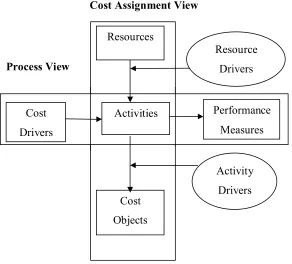
Turney (1996) defined ABC as a method of measuring the cost and performance of activities and cost objects. It assigns cost to activities based on their use of resources and assigns cost-to-cost objects based on their use of activities. Based on this definition, ABC is more than product costing; it provides a means to measure activity performance in order to determine how well work is done in that activity.
He also defined ABM as a discipline that focuses on the management of activities as the means to continuously improve the value received by customers and the profit earned by providing this value. This discipline includes cost driver analysis, activity analysis and performance analysis. ABM draws on ABC as a major source of information. Thus, the goal of ABM is to improve customer value, which eventually improves the profit.
reputation and brand name. Customer sacrifice includes the cost of purchasing the product, the time and effort spent acquiring and learning to use the product and the costs of using, maintaining and disposing of the product (Hansen , Mowen & Shank 2006).
Swenson (1995) defined ABC as an information system that assists with decision making—essentially a decision-support system. While he defined ABC broadly to include ABM, he claimed that some researchers prefer to use the term ABM when ABC information is used to support operating decisions.
Roberts and Silvester (1996) point out that ABC and ABM are sometimes used interchangeably by researchers. They referred to ABC as the actual technique for determining the costs of activities and the outputs that those activities produce. They referred to ABM as the fundamental management philosophy that focuses on the planning, execution and measurement of activities as the key to competitive advantage. In turn, Hicks (1999) described ABC as a powerful management concept that can be adopted and used by any organisation to gain a competitive advantage through greater understanding of product or service costs, process costs and the organisation's overall cost behaviour. These definitions commonly describe ABC/ABM as a method that can be used to gain competitive advantage. Competitive advantage is creating better customer value for the same or lower cost than the best offer of the competitors or creating equivalent value for lower cost than that offered by competitors (Hansen , Mowen & Shank 2006).
Plowman (2001) described ABC as a means of establishing product costs more accurately. He described ABM as a means of enhancing profitability by focusing on a process view of the business and a deeper understanding of product, channel and customer profitability.
management information system that can be used by managers to support strategic and operational decisions.
The goal of ABC is to improve the accuracy of product costs and provide a means for the improved management of process and support activities. It is part of a process of continuous improvement aimed at improving the value received by the customer and enhancing profitability by providing this value. It is worth noting that manufacturing a product or serving a customer is constrained by the desirable level of profits. A firm would discontinue manufacturing unprofitable products or serving unprofitable customers. In this regard, management should focus on the manufacturing costs in making their product decisions. Customer service costs can burden product costs, causing the product to be unprofitable. ABC systems separate product-driven costs from customer-driven costs. Product-driven costs are the costs required to manufacture a product. These costs include design, procurement, quality control and engineering; in contrast, customer-driven costs are the costs of delivering, serving and supporting customers and markets. These costs include distribution, research and development (R&D) and customer orders. Thus, ABC helps managers to determine the loading between product-driven and customer-driven costs. This analysis will allow management to discontinue supporting unprofitable products, customers or markets (O'Guin 1991).
2.3 The Evolution of Activity-based Costing
The core component of ABC approach is activities. Brimson (1991) define an activity as “a combination of people, technology, raw materials, methods and environment that produces a given product or service”. He describes activity analysis (AA) as a process to analyse resources used and time consumed to determine activities’ cost and evaluate performance.
The notion of AA is interdisciplinary. It is a common methodology in the fields of economics, management and accounting. As early as 1955, Peter Drucker described the advantage of AA over the traditional theory (1999, p. 190):
To find out what activities are needed to attain the objectives of the business is such an obvious thing to do that it would hardly seem to deserve special mention. But analysing the activities is as good as unknown to traditional theory. Most traditional authorities assume that a business has a set of typical functions which can be applied everywhere and to everything without prior analysis.
In 1972, Staubus proposed an ABM system. However, this endeavour did not receive enough attention from businesses because there was no motivation to change their existing cost systems and the proposal lacked adequate software to support the ABC model. In 1983, Kaplan issued a challenge to ‘devise new internal accounting systems that will be supportive of the firm's new manufacturing strategy’ (Innes & Mitchell 1998, p. 1). In 1984, Kaplan and Johnson exposed the shortcomings of conventional accounting systems. Concurrently, Cooper developed an activity-based cost system for Schrader Bellows. Shortly thereafter, Kaplan reported on an activity-based cost system developed by John Deere Component Works. These works led to the spread and adoption of ABC systems. US firms at that time began to run ABC as stand-alone systems, and a few firms (for example, Hewlett-Packard) developed online integrated ABC systems (O'Guin 1991).
2.4 Deficiencies of Conventional Cost Systems
Activity-based cost systems emerged as a result of the deficiencies in conventional cost systems (Cooper 1988). Turney (1996) and Gunasekaran (1999) highlight the following limitations of conventional cost systems:
Focus on financial information Inaccurate costing
Failure to encourage improvement
Conventional Cost Systems Focus on Financial Information
The conventional cost systems provide financial information that governs performance evaluation. Financially orientated information such as return on investment (ROI) and divisional profit is important for internal managers as well as external constituencies. There is limited non-financial information that can be derived by conventional systems at macroeconomic levels of the organisation, for example, through-put time and number of production runs for specific products in the production function and inventory turnover in the inventory control function (Cokins , Stratton & Helbling 1993).
The cost level in the conventional systems is too aggregated to permit value analysis of any activity because product costs are not broken down by activities. Thus, the objectives of conventional cost systems are inventory valuation and financial reporting (Kaplan 1988).
Financial information is prepared on a monthly basis because it measures the actual use of resources. However, out-of-date information hinders the ability of managers to carry out improvement actions. Further, conventional cost systems determine product costs considering only manufacturing costs and not taking into account the corporate costs (for example, selling, marketing, distribution and general administration).This reinforces the traditional assumption that a product consumes resources (costs). Accordingly, product costs do not enable managers to have a picture of the real profitability of a customer or a market channel (Hansen , Mowen & Shank 2006).
Inaccurate Costing
The new cost structure causes distorted product costs. Conventional cost systems allocate overhead to products equally, regardless of the batch size or the complexity of the products. This method contributes to over-costing large batches and less complex products and under-costing small batches and more complex products. It is not necessarily true that high-volume products consume more overhead resources than low-volume products. For example, set-up costs do not change in proportion to the batch size (Albright & Lam 2006).
The problem here is that conventional systems do not recognise the fact that activities are performed on different levels. Cooper (1990) and Kaplan and Cooper (1998) classified activities into four general categories:
1.Unit-level 2.Batch-level
3.Product and customer-level 4.Facility-level
Unit-level activities are those that are performed each time a unit is produced such as machining and assembly. Batch-level activities refer to those that are performed each time a batch is produced such as set-up and inspection. Product-level activities are performed to enable a product to be produced such as engineering change and introduction of new products. Customer-level activities are those that are performed to serve a customer such as delivery and complaint management. Facility-level activities sustain general manufacturing processes and include plant security and utilities. This description implies that a volume-related allocation base (for example, direct labour) produces distorted product costs because it does not reflect the resources consumed by non-volume-related activities.
mix can be affected dramatically. In contrast, ABC uses practical capacity or the actual resources supplied to calculate activity cost drivers. This leads to consistency in such drivers and product costing as well as improvement in decision making (Cooper & Kaplan 1992, 1998).
Failure of Conventional Cost Systems to Encourage Improvement
Conventional cost systems do not provide managers with insights on how to improve business processes. Direct labour and machine hours represent significant cost drivers in the traditional environment. Managers focus their attention on cutting down these resources. Although using multiple cost drivers (direct labour and machine hours) may improve the accuracy of product costs, these drivers lag on capturing the work of non-unit based activities. The common characteristic among these drivers is that they are volume-related bases (Turney 1990).
The conventional organisational structure along hierarchical lines impedes effective communication between departments and other areas of the organisation. This structure encourages departmental managers to take actions at the department level. One department may take action at the expense of other departments. For example, the production department may reduce direct labour or machine hours by redesigning a product but, in turn, cause quality problems in the quality control department or even increase overhead costs in the production department (Roberts & Silvester 1996).
2.5 ABC Systems as an Alternative for Conventional Costing
Systems
When ABC was introduced, it was viewed as a methodology that could serve as a substitute for conventional cost systems (Gupta & Galloway 2003). Viewing ABC as an accounting system has helped managers upgrade their existing systems. However, this view ignores the true value of ABC as a cost planning system that focuses on activities to provide timely and relevant information for managers (O'Guin 1991). First, ABC records forecasted information about activity levels and cost drivers. On completion of this stage, ABC updates this information to reflect the actual costs. This is consistent with the goal of ABC, which is to support the process of continuous improvement.
A survey of United Kingdom (Chongruksut & Brooks) firms found that 55 per cent of the respondents indicated that ABC was introduced to replace the conventional costing system (Cobb, Innes & Mitchell 1992). Innes, Mitchell and Sinclair (2000) surveyed the UK’s largest companies in 1999 and found that 43 per cent of ABC adopters use ABC as their sole costing system, 33 per cent of them use ABC in parallel with their previous costing system and 23 per cent of them use ABC in pilot testing only. Cohen, Venieris and Kaimenaki (2005) found that 73.3 per cent of Greek companies have fully replaced their former costing systems with ABC. In contrast, the majority of Canadian firms (76 per cent) have implemented ABC to complement their current costing systems (Armitage & Nicholson 1993). Booth and Giacobbe (1997a) found that 32 per cent of Australian manufacturing firms introduced the ABC system as a replacement for the conventional costing system and 24 per cent of firms use ABC in parallel with their current system. This indicates that many firms run ABC in parallel with conventional costing systems.
the information provided by the conventional costing system. A study of eight sites in the United States indicated that not one of these sites considered the ABC system to be a replacement for the financial system. They dealt with ABC as a management information system, but not as a component of the accounting system (Cooper et al. 1992). Seventy-three per cent of respondents to the UK survey indicated that ABC was implemented as a stand-alone system (Cobb, Innes & Mitchell 1992). Similarity, 61 per cent of Canadian respondents indicated that ABC was implemented as a stand-alone system (Armitage & Nicholson 1993). Cagwin and Bouwman (2002) found that 61.7 per cent of the US companies use ABC as non-routine (authors called off-line) analytical tool. Booth and Giacobbe (1997a) found that the non-routine (authors called one-off) ABC system was used as necessary by 20 per cent of Australian manufacturing firms and that this system was used to evaluate costs by twelve per cent of these firms. In corporate India, Anand, Sahay and Saha (2005) found that 20.75 per cent of respondents using ABC as a supplementary system and 28.3 per cent of all respondents have fully integrated the ABC and financial reporting systems with the enterprise resource planning (ERP) system.
The previous discussion points out the different forms of implementing ABC. Considering ABC as an information management system, most of the firms continue using their conventional accounting systems and implement ABC as a separate system. Considering ABC as an accounting system, firms would replace their existing systems with ABC. The other point is how frequently managers use ABC information. In practice, it is difficult to use ABC system on routine basis without integration with other information systems in the organisation.
2.6 Adoption Rate of Activity-based Costing
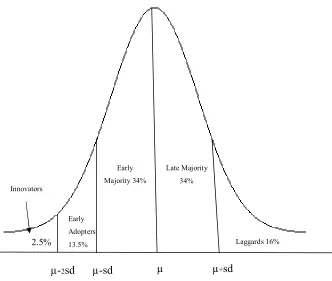
categories lying to the left and right of the average adopter. This classification is characterised as exhaustive, mutually exclusive, and derived from one classification principle (innovativeness). Innovators require the shortest innovation-decision period, while laggards require the longest innovation-decision period. Status motivations consider more important for innovators, early adopters, and early majority and less important for late majority and laggards.
Figure 2.1: Adopter Categorisation on the Basic of Innovativeness
Source: Adapted from (Rogers 2003, p. 281)
Regarding the adoption rate of ABC in Australia, Nguyen and Brooks (1997) studied 120 manufacturing companies located in the State of Victoria with more than 50 employees and they found that 12.5 per cent (15 out of 120) had adopted and used ABC in some form. Zaman (1997) found that twelve per cent of the top 500 manufacturing firms adopted ABC. Booth and Giacobbe (1999) surveyed 213 manufacturing firms and reported a twelve per cent rate of ABC adoption. Brown (2000) received responses from 160 manufacturing and non-manufacturing
Laggards 16% Late Majority
34% Early
Majority 34%
Early
Adopters
13.5% Innovators
+sd
µ µ
-sd µ
2.5%
-2sd
companies. Those who adopted ABC accounted for 20 per cent. Askarany and Smith (2008) conducted a longitudinal survey administered to 200 manufacturing firms registered with the Plastics and Chemicals Industries Association (PACIA). They found that only fourteen per cent of firms adopted ABC by the time of the first survey (1997) and 22 per cent by the time of the second survey (2001). Chenhall and Langfield-Smith (1998a) selected 140 of the largest manufacturing firms from the Business Review Weekly and reported that 56 per cent adopted ABC. Baird, Harrison and Reeve (2004, 2007) surveyed 246 Australian business units with a minimum of 50 employees and found that 78.1 per cent use ABC.
Regarding the global adoption rate of ABC, studies show varied results between as well as within countries. In the UK, Innes, Mitchell and Sinclair (2000) reported that 17.5 per cent of firms actually implemented ABC, while Tayles and Drury (2001) reported a 23 per cent diffusion rate. In the US, Shim and Sudit (1995) reported a 25 per cent adoption rate, while Hrisak (1996) found that 53 per cent of respondents were using ABC. In 2003, Kiani and Sangeladji surveyed the largest 500 US industrial companies and found that 52 per cent of respondents were implementing ABC. Researchers in South Africa (Sartorius, Eitzen & Kamala 2007) and India (Joshi 2001) reported adoption rates of twelve per cent and 20 per cent, respectively. Other research found that ABC diffusion in mainland Europe is less than 20 per cent. Bhimani et al. (2007) conducted a cross-national survey in seven countries and found that the proportion of respondents using ABC across business units is as follows: Canada (39.1 per cent); France (21.6 per cent); Germany (50 per cent); Italy (26.3 per cent); UK (55.8 per cent); US (54.4 per cent); Japan (6.1 per cent). Nassar et al. (2009) report 55.7 per cent of Jordanian industrial companies adopt ABC (16.4 per cent are using ABC, while 39.3 per cent are in the process of implementing ABC).
ABM (Swenson 1995) while others do (Askarany, Smith & Yazdifar 2007). Some participants may have thought they were using ABC because of the misunderstanding of the concept or because of the lack of definition of ABC (Drury & Tayles 2005). Problems with previous studies lay in their lack of ABC definition or use of weak definitions. Dugdale and Jones (1997) criticised Innes and Mitchell’s (1995) study because some of the companies classified as ABC users traced costs from conventional cost centres to products based on traditional volume bases rather than using activity cost pools or activity cost drivers. Dugdale and Jones called this a weak form of ABC because these companies use AA to trace overhead costs to manufacturing cost centres.
2.7 Activity-based Costing in Service Organisations
When the initial study in manufacturing industry just generated very low responses from ABC adopters, it was the decision to extend the study to include service organisations. Non-manufacturing clients represent the large customers for consulting firms who distributed the on-line survey in the second stage.
ABC systems can be developed in different types of organisations. ‘Initially, most cases were based on private sector manufacturing companies and later this was extended to services and the public sector’ (Bjørnenak & Mitchell 2002, p. 499). In an interview, Kaplan and Copper announced that service firms can benefit from ABC as they have the same problems as manufacturing (King 1991). Drury (2008) pointed out that overhead costs are the major element of expenditure in service organisations and these costs are non-volume related. He suggested that ABC is an appropriate system to trace such costs to different business segments. A survey in the UK reported that 51 per cent of financial and service organisations have adopted ABC compared with fifteen per cent of manufacturing organisations (Drury & Tayles 2005).
Service firms are different from manufacturing in the context of fixed costs. These costs are more common in service organisations than in manufacturing organisations (Bert & Kock 1995). Brignall et al. (1991) highlight five key differences between manufacturing and service sectors:
1.The common attendance of a customer in the time of service rendering 2.Intangibility of many service products
3.Inconsistency of either employees’ performance or customers’ expectations 4.Simultaneity of service production and service consumption
5.Perishability of many service products
The above characteristics have implications for products and cost behaviour and performance. Dearden (1988) outlines the factors that limit the application of conventional costing:
1.No finished goods or inventory
2.No product costs—costs are mostly period costs
3.Inappropriate assessment of output-financial measure (for example, service fee) owing to the lag between deterioration of service quality and reflection on profit
4.Few variable costs—service firms are labour-intensive and most labour costs are fixed. When sales change, contribution changes in almost equal measures, causing extreme profit volatility
Resource costs Activities Outputs Academic staff
Research assistants Technicians
Administrative staff Supplies and services Equipment
Teaching Research
Scholarly activity Consultancy
Faculty administration Statutory compliance
Courses or modules Publications
Projects Reports Other
Figure 2.2: Academic department model
Source: Adapted from (Cropper & Cook 2000, p. 63)
2. 8
Activity-based Costing Implementation and Problems for Notimplementing or discontinuing ABC
2.8.1 Introduction
This study is focused on using ABC information for decision making. In the context of ABC implementation stages, using ABC for decision making usually starts at routinisation and infusion stages (Cooper & Zmud 1990). Krumwiede (1998) titled these stages as “routine” and “integrated system”, while Brown, Booth and Giacobbe (2004) titled them as “used somewhat” and “used extensively”. This section has three objectives: first, describing the different stages of ABC implementation that a system should pass to reach the infusion stage. Within each stage, problems or issues are raised and solutions are suggested so firms can make progress towards the higher level of implementation. Second, explaining some success factors (e.g., organisational and technological factors) that affect the different stages of implementation. Third, shedding light on the reasons or problems for not implementing or discontinuing ABC, and those reasons may be attributed to the success factors such as lack of management support.
of ABC is associated with behavioural and organisational factors. These factors are top management support, linkage to competitive strategies, linkage to performance evaluation and compensation, training in implementing ABC, non-accounting ownership and adequate resources. Anderson and Young (1999) found that ABC success is influenced by a wider array of contextual and process variables, including top management and union support of the ABC project, adequacy of resources, individual commitment to the organisation, the likelihood of lay-offs and the degree to which good performance is expected to be rewarded.
Anderson (1995) used Cooper and Zmud’s model of information technology (IT) implementation to describe the implementation process at General Motors. This model consists of six stages. Anderson points out that some factors including individual, organisational, technology, task and environmental factors have different impacts among the various stages. For example, it was found that task uncertainty and worker autonomy reduce the probability of adoption while task responsibility and autonomy are important factors in promoting adaptation. Based on these findings, Krumwiede (1998) expanded the implementation model to ten stages (as detailed in section 2.18.3) and studied the association and importance between contextual and organisational factors (for example, potential for cost distortions, decision usefulness of cost information and TQM) and various implementation stages. He claimed that prior studies that combined firms at different stages may distort the level of factor significance or reject other factors that are only important for certain stages.
2.8.2 General Implementation Problems
In contrast, non-ABC adopters appear satisfied with their existing systems (Alsaeed 2005; Cohen, Venieris & Kaimenaki 2005).
In 1990, a survey of UK firms conducted by the Chartered Institute of Management Accountants (CIMA) pointed out problems facing firms considering ABC implementation and firms undertaking ABC implementation. For those who were considering ABC, the perceived problems were the amount of work involved in applying the new system, other urgent priorities such as the survival of the firm and changing manufacturing systems, lack of staff time, scarce computer resources and difficulty in identifying cost drivers. For those that were actually implementing ABC, the experienced problems were the lack of staff time; scarce computer resources and educating the managers in how to use ABC information (Innes & Mitchell 1998).
A survey report for the year 1999–2000 discussed the major problems faced by ABC firms in corporate India: developing an activity dictionary (i.e., definition of activities) (34.6 per cent), inability of conventional cost systems to capture the information required for ABC (42.3 per cent) and lack of review (guide) of ABC implementation (30.8 per cent). Surprisingly, lack of adequate resources (management time and funds) was a minor problem (7.7 per cent) (Anand , Sahay & Saha 2005).
Cohen, Venieris and Kaimenaki (2005) found that Greek companies encountered ABC implementation difficulties in certain areas, namely software selection, data collection, adequacy of resources and resistance of staff to ABC. The study also determined that the adequacy of resources is positively correlated with other variables such as personnel resistance, prolongation of ABC timetable and lack of top management support. In other words, lack of adequate resources may cause other problems.
about ABC (for example, ABC believed to be suited to manufacturing only),
a lack of adequate IT systems, reliance on financial data and, finally, a preoccupation with other innovations like TQM or JIT initiatives.
The next section will include details of ABC implementation stages; factors influencing the various stages; potential problems within each stage and suggested solutions.
2.8.3 Implementation Stages
Table 2.1: ABC implementation model
A. Not considered: ABC has not been seriously considered. We use either single or departmental/multiple plant-wide allocation methods only. B. Considering: ABC is being considered and implementation is possible, but
implementation has not yet been approved.
C. Considered then Rejected: ABC has been considered (not implemented) and was later rejected as a cost assignment method.
D. Approved for Implementation: Approval has been granted to implement ABC and devote/spend the necessary resources, but analysis has not yet begun.
E. Analysis: ABC implementation team is in the process of determining project scope and objectives, collecting data and/or analysing activities and cost drivers.
F. Getting Acceptance: Analysis is complete and ABC model has project/implementation team support, but ABC information is not yet used outside accounting department for decision making.
G. Implemented then Abandoned: ABC was implemented and analysis performed but it is not being pursued at this time.
H. Acceptance: Occasionally used by non-accounting upper management or departments for decision making. General consensus among non-accounting departments is that the model provides more realistic costs. However, it is still considered a project or model only with infrequent updates.
I. Routine System: Commonly used by non-accounting upper management or departments for decision making and considered a normal part of information system.
J. Integrated System: ABC is used extensively and has been integrated with the primary financial system. Clear benefits can be identified, such as: non-value adding activities identified, process performance improved, products priced better and strategic/operating decisions improved.
Source: (Krumwiede 1998)
Subsequently, Brown, Booth and Giacobbe (2004) used Krumwiede's stages with different wording. They first tested initiation of interest in ABC (stage A to B and beyond), not having considered ABC (stage A) and having interest in ABC initiatives (stages B, C, D). They then tested the adoption decision stages (D and beyond), by comparing those who have adopted the innovation (stage D) with those that have rejected the innovation (stage C).
Adaptation, Acceptance, Routinisation and Infusion. The boundaries between these stages are not distinct, but there may be some characteristics that differentiate each stage.
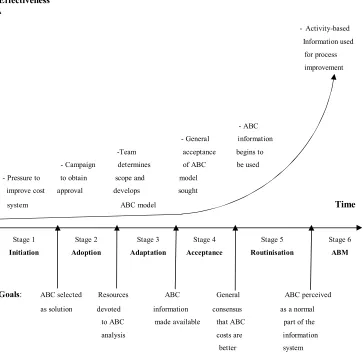
Figure 2.3 includes a brief description of the various implementation stages and the goals that should be achieved by the end of each stage. It shows how a firm makes progress towards the highest level of implementation (ABM).The following sections provide detailed information regarding the various stages of ABC implementation.
Initiation
This stage concerns a general interest in ABC innovation. This interest is usually associated with evaluating the new system. Management would not install ABC unless there was a rational need for changing the current system. Indeed, the motivation for undertaking ABC may be influenced by fads—imitating other firms—or fashions promoted by consulting firms; the effect of these motivations has, however, diminished since 1993 (Malmi 1999).
Effectiveness
-Activity-based
Information used for process
improvement
- ABC
- General information
-Team acceptance begins to - Campaign determines of ABC be used
- Pressure to to obtain scope and model
improve cost approval develops sought
system ABC model Time
Goals: ABC selected Resources ABC General ABC perceived
as solution devoted information consensus as a normal
to ABC made available that ABC part of the
analysis costs are information
better system
Figure 2.3: Stages of ABC implementation
Source: Adapted from (Krumwiede & Roth 1997, p. 6)
Brown, Booth and Giacobbe (2004) investigated organisational and technological factors that may be related to an interest in ABC. They found that higher levels of top management support, internal champion support and larger organisational size were associated with interest in ABC initiatives. In contrast, they found that product complexity and diversity, level of overhead and relative advantage were not significant factors at this stage.
A study of UK firms indicates that firms considering ABC implementation took more than one year before reaching a decision about ABC adoption (Innes & Mitchell 1998). Common reasons for this were as follows: accounting staff resources not yet available; other priorities before ABC; managers not yet
Stage 2
Adoption
Stage 3
Adaptation
Stage 4
Acceptance
Stage 5
Routinisation
Stage 6
ABM Stage 1
convinced of the benefits of ABC; and parent company had not yet reached a decision about ABC.
Krumwiede (1997) stated that firms with no significant cost distortion or no significant decision use for ABC information would not make progress towards the next stage, which is the adoption stage. He suggested that firms evaluate the current costing methodology and determine whether other methods would provide better information for decision making.
Adoption
The adoption stage is one of the most important stages because management has to embark on a decision regarding ABC implementation. In this stage, management approves the decision to adopt the ABC initiative and provides adequate resources (for example, funds, time, training and staff) for implementing it.
Several studies (for example, Krumwiede 1998; Bjørnenak 1997; Innes, Mitchell & Sinclair 2000; Nguyen & Brooks 1997; Al-Mulhem 2002; Alsaeed 2005; Askarany & Smith 2008; Askarany, Yazdifar & Askary 2010) found that larger firms are more likely to adopt ABC. Chenhall and Langfield-Smith (1998a) and Joshi (2001) found that the adoption of advanced management accounting practices (for example, ABC) is positively related to the size of firms in Australia and India. Bjørnenak (1997) argues that larger firms have the required resources and are then more capable of adopting ABC. Clarke, Hill and Stevens (1997) claim that large firms have specific characteristics that motivate the adoption of ABC, such as complex operations, various products and large overheads. Chenhall and Langfield-Smith (1998a) justify the effect of size reflected in task complexity. Task complexity leads to differentiation of tasks and difficulties in integrating and coordinating activities. Such difficulties encourage the development of more sophisticated integrative information systems. Further, Pierce and O'Dea (1998) argue that large organisations are more exposed to the criticism of conventional accounting systems and to the awareness of benefits associated with new ideas and techniques.
One major potential barrier at the adoption stage is the complexity of the ABC model as seen by key managers outside the accounting department (Krumwiede & Roth 1997). This may happen when the team designs a comprehensive model for the entire organisation. A suggested solution is to focus on a specific site of the organisation that has most in common with other sites (Turney 1996). This is also helpful in the case of scarce resources because minimal resources are required to implement the project. Following that, the design team should focus on a key decision for a certain product line at the pilot site. By comparing the results of ABC to traditional cost information, advocates can show the impact of ABC information on certain decisions and stimulate higher levels of management commitment and resources. It is worth noting that the existence of a powerful ABC champion is critical at the adoption stage (Krumwiede & Roth 1997).
Adaptation
Adaptation is the stage during which data is collected and analysed. The project team starts collecting data on activities, activity drivers and cost objects and then enters these data into the model. The team should limit the number of activities and their drivers by using the existing data. This would reduce data collection requirements and enhance the grasp and commitment of potential users.