University of South Carolina
Scholar Commons
Theses and Dissertations
2018
Education’s Role In A System Of Care For Children
And Youth With Emotional/Behavioral
Challenges: A Mixed Methods Evaluation
Lauryn Young
University of South Carolina
Follow this and additional works at:https://scholarcommons.sc.edu/etd
Part of theSchool Psychology Commons
This Open Access Dissertation is brought to you by Scholar Commons. It has been accepted for inclusion in Theses and Dissertations by an authorized administrator of Scholar Commons. For more information, please [email protected].
Recommended Citation
E
DUCATION’
S ROLE IN A SYSTEM OF CARE FOR CHILDREN AND YOUTH WITHEMOTIONAL
/
BEHAVIORAL CHALLENGES:
A
MIXED METHODS EVALUATIONby
Lauryn Young
Bachelor of Science
Florida International University, 2012
Master of Arts
University of South Carolina, 2016
Submitted in Partial Fulfillment of the Requirements
For the Degree of Doctor of Philosophy in
School Psychology
College of Arts and Sciences
University of South Carolina
2018
Accepted by:
Mark Weist, Major Professor
Kimberly Hills, Committee Member
Cheri Shapiro, Committee Member
Joni Splett, Committee Member
ACKNOWLEDGEMENTS
I would like to first thank my mentor Dr. Mark Weist and my committee members
for their continued guidance throughout my graduate training and this manuscript. In
addition, I would like to extend my gratitude to my colleagues Kendall Moore and ZiJia
Ng for their words of encouragement, friendship, and guidance that largely contributed to
the success of this project. Lastly, I want to thank my husband, Javonne Young and my
father Matthew Morrison for their love and endless support, which was instrumental to
the success of earning my doctoral degree. Without their support this project would not
ABSTRACT
Students with more severe emotional/behavioral (EB) challenges have many
problems in the school environment and subsequently have significant difficulty making
adjustments later in adulthood. Coordinated care systems, such as local system of care
(SOC) initiatives, were established in response to a call for reform in youth mental health
services as research began highlighting the need for improved access and quality of
mental and behavioral services for youth. However, even in communities where SOC
initiatives are operating well, school involvement is usually marginal. Therefore, the
current study aimed to evaluate education’s role in one SOC for children and youth with
EB challenges in order to systematically evaluate stakeholder perspectives on a SOC
collaboration, specifically the Children’s Behavioral Health Collaborative (CBHC) in
Palm Beach, FL. A mixed methods exploratory sequential design was used to investigate
study aims, which included a focus group, key stakeholder interviews, and a survey.
Results suggest that collaboration efforts have been evolving, but the quality and quantity
of communication and level of partnership varies by stakeholder and between
education/schools and community agencies. Stakeholder perspectives on the CBHC were
positive, yet stakeholders identified systematic and interpersonal barriers that could be
targeted for quality improvement. provided by stakeholders, with results indicating the
top two recommendations as follows: secure additional funding to support existing staff,
TABLE OF CONTENTS
Acknowledgements ... iii
Abstract ... iv
List of Tables ... vi
List of Abbreviations ... vii
Chapter I: Introduction ...1
Chapter II: Methods ...22
Chapter III: Results ...34
Chapter IV: Discussion ...60
LIST OF TABLES
Table 2.1 Focus Group Protocol Questions ...32
Table 2.2 Stakeholder Interview Protocol Questions ...33
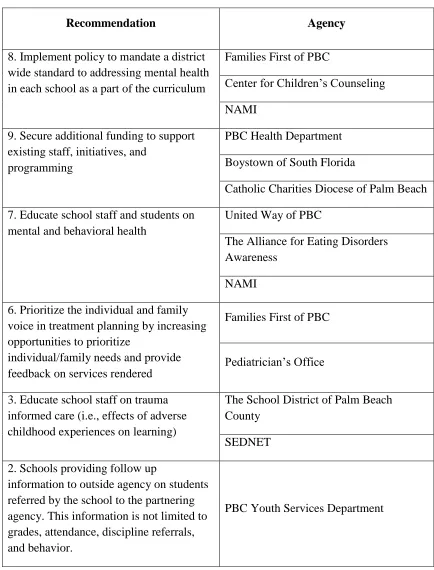
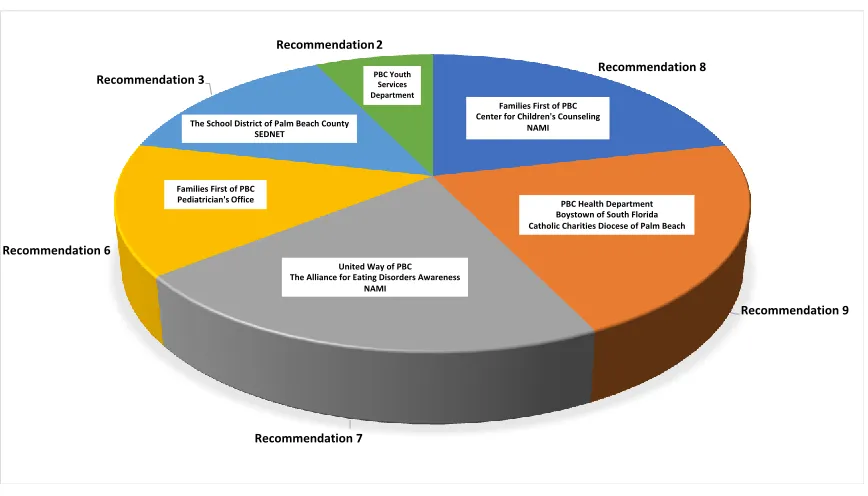
Table 3.1 Agency Provided Recommendations for Improving Collaboration Between the Department of Education/Schools
and the CBHC. ...55
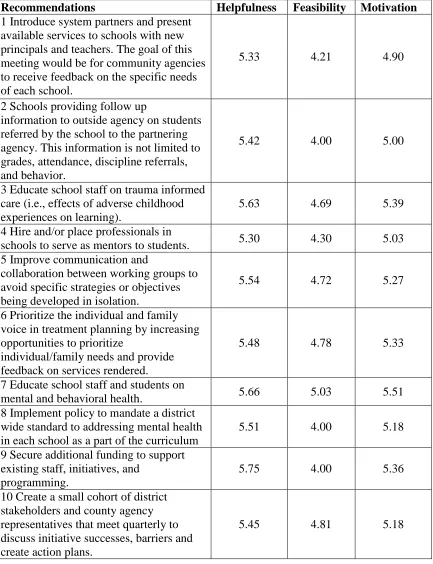
Table 3.2 Top Ranked Most Helpful Recommendations for Improving Collaboration Between the Department of
Education/Schools and the CBHC. ...57
LIST OF ABBREVIATIONS
ACE... Adverse Childhood Experiences Study
ADHD ... Attention Hyperactivity Disorder
CBHC ... The Children’s Behavioral Health Collaborative
CD ... Conduct Disorder
CDC ... Centers for Disease Control and Prevention
DOE ... Department of Education
DOJ ... Department of Justice
DSM ... Diagnostic and Statistical Manual of Mental Disorders
EB ... Emotional/Behavioral
ED ... Emotional Disturbance/Disorder
GTO ... Getting to Outcomes
IEP... Individual Education Plan
ISF ... The Interactive Systems Framework
LEA ... Local Educational Agencies
MST ... Multisystemic Therapy
NCMHJJ ... The National Center for Mental Health and Juvenile Justice
ODD ... Oppositional Defiant Disorder
SOC ... System of Care
CHAPTER
I
INTRODUCTION
Youth with Emotional and Behavioral Problems
How youth with serious EB problems are defined and identified in the research
literature varies from study to study. The literature documents three primary definitions
of youth with EB problems. Youth can receive an educational special education (SPED)
classification of an Emotional Disturbance/Disorder (ED), a clinical diagnosis of an
emotional or behavioral disorder by a clinician using the Diagnostic and Statistical
Manual of Mental Disorders (5th ed.; DSM-5) (American Psychiatric Association, 2013),
and/or be identified as a student with severe emotional/behavioral problems as rated by
teacher, parent, and/or self-report by a valid and reliable psychological measurement
instrument for research study purposes.
Within the educational system, in general, youth with more serious EB problems
may qualify as a student with an emotional disorder under SPED. The U.S Department of
Education: Individuals with Disabilities Education Act (IDEA) (2004) defines ED as a
disorder that negatively interferes with educational achievement due to one or more of
the following criteria: “(A) An inability to learn that cannot be explained by intellectual,
sensory, or health factors, (B) An inability to build or maintain satisfactory interpersonal
relationships with peers and teachers, (C) Inappropriate types of behavior or feelings
depression, or (E) a tendency to develop physical symptoms or fears associated with
personal or school problems” (U.S Department of Education, 2016).
DSM-5 clinical diagnoses may also be considered when students present with EB
problems (American Psychiatric Association, 2013). These youth may receive the
following clinical diagnoses: attention hyperactivity disorder (ADHD), conduct disorder
(CD), oppositional defiant disorder (ODD), anxiety, depression, or bipolar disorder.
Characteristics of EB problems include antisocial behavior, aggressiveness,
impulsiveness, lack of appropriate social skills, inability to manage emotions/behaviors
during daily tasks or transitions, obsessive behaviors, attention seeking behavior,
depressed mood, withdrawal, anxiety, and mood swings (Special Education Support
Services, 2016). Despite receiving a clinical diagnosis as noted here, a student may not
qualify under IDEA- ED.
Risk factors for the development of EB problems.
Epidemiological studies aim to elucidate the determinants, development,
progression, and treatment of childhood disorders (Cicchetti & Toth, 1995).Research has
documented that experiencing risk factors increases the likelihood of negative outcomes,
such as developing a psychiatric disorder (Patterson, Reid, & Dishion, 1992). The
number of risk factors, length of exposure, and the presence of compound risk factors
(i.e., physical impairment while experiencing neglect) contribute to increased risk of
negative outcomes (Cicchetti & Toth, 1995).
The Adverse Childhood Experiences Study (ACE) was initiated by collaborative
efforts between Kaiser Permanente (San Diego, CA) and the Centers for Disease Control
from the ACE study indicated that an emotionally abusive family environment has a
significant impact on a child’s mental health. Their investigation revealed that lower
mental health scores were related to a higher number of exposures to sexual abuse,
physical abuse, and witnessing maternal battering (CDC, 2016; Edwards, Holden, Felitti
& Anda, 2003). Additionally, Dube, Felitti, Dong, Giles, and Anda (2003), examined the
relationship between ACE scores and the risk of health problems. Results suggest that
experiencing ACEs increased the risk of developing multiple health problems beyond the
influence of social or secular changes across time. Individual, familial, and environmental
risk factors are discussed below.
Risk factors for developing EB problems operate at multiple levels of the social
ecology. These levels include individual, family, school, and community-level risk
factors.Being male, exhibiting externalizing behaviors, demonstrating poor
problem-solving skills, experiencing high frequency of physical illness, using substances, and
having internal feelings of stigmatization have all been identified as significant individual
level risk factors for developing EB problems (Morgan & Farkas, 2016).Additionally,
being raised in a single-family home, having infrequent contact with parents or relatives,
being admitted into institutional care due to suspected neglect and abuse, moving
between two or more institutions, lacking regular contact with teachers and institutional
staff, and low academic achievement were all found to be significantly associated with an
increased probability of developing EB problems (Morgan & Farkas, 2016). Nelson,
Stage, Dupping-Hurley, Synhorst, and Epstein, (2007) found that a child’s temperament,
the parent’s behavior management skills, and the interaction between the two were
of parenting skills and the home environment as factors that influence the onset of these
problems. Socioeconomic factors such as poverty, neighborhood crime, ecologic factors
(i.e.., lack of community/school support), and cultural factors have also been identified as
potential risk factors (Lyons, Baerger, Quigley, Erlich, & Griffin, 2001).
Prevalence rates of EB problems
According to the National Mental Health Association (2007) 3-6% of school-aged
students (i.e., 4-6 million students) have a severe emotional/behavioral disorder that
impact successful functioning in daily living within the home, school, and community
settings (Quinn, 2004). Garland et al. (2001) investigated prevalence rates of mental
disorders within youth aged 6-17 in the US. Results suggested that within five public
youth-serving sectors, 42% of youth from families in the Child Welfare system had
mental disorders, however this prevalence rate was relatively smaller in comparison to
the rates found in other public youth-serving sectors. A prevalence rate of 60% was found
among alcohol and drug service centers, 52% in the juvenile justice facilities, 61% within
the mental health system, and 70% in public school services for youth with severe
emotional disturbances (Garland et al., 2001). Caucasian youth have a greater likelihood
of being identified as having an emotional or behavioral disability as compared to youth
of other ethnicities as noted by teacher or parent report (Morgan & Farkas, 2016).
Morgan, Farkas, Hillemeier, and Maczuga (in press) found that racial, ethnic, and
language minority youth were less likely to receive special education services for an
emotional/behavioral disorder compared to white youth when academic achievement,
Challenges for schools
Youth with severe EB problems present with significant academic needs, have
high rates of absenteeism, and may engage in aggressive and disruptive behavior. The
presentations of such behaviors can detract from quality instruction within the classroom
(Herron & Martin, 2015). Classroom and school disruptions occur frequently when
educating a student with EB problems (Bradley, Doolittle, & Bartolotta, 2008). Students
with more serious EB problems are more likely to receive detentions, suspensions, and
expulsions due to behaviors that are not conducive to the educational environment. This
is especially true when students are being served in the general education classroom
(Bradley et al., 2008). Not surprisingly, the Special Education Elementary Longitudinal
Study data revealed that ED youth have a suspension and expulsion rate approximately
three times higher than students in any other special education eligibility category
(Bradley et al., 2008).
Educational settings
Special education definitions and classifications can differ between the federal
and state level, such that additional inclusivity can be instituted by the state (Becker et
al., 2011). Becker et al. (2011) found that the majority of states adhered to the federal
definition of ED, however 20% of states employed a broader definition for inclusivity
purposes. Interestingly, states that used more inclusive definitions did not differ in their
rates of placements (e.g., restrictive and general education) when compared to states
adhering to the stricter federal guidelines for ED classification (Becker et al., 2011).
According to the U.S Department of Education (2016) in 2012-2013 there were
Youth with ED will typically be placed in special education and be served either in
the general, resource, or self-contained classroom setting (Mattison, 2015). Students can
also be served in alternative settings, which can include public or private schools,
hospitals, home, or residential facilities (U.S Department of Education, 2001). In 2012,
20.4% of students with ED were in the general education classroom less than 40% of the
time, 13% were placed in an alternative school, 1.8% in a residential center, 1.1% in a
hospital setting, and 1.7% in a correctional facility (U.S. Department of Education, 2016).
An alternative education setting is a common placement for youth with EB
problems who do not appear to benefit academically or behaviorally in the general or
special education setting within their school of origin. Raywind (1994) categorized three
types of alternative education settings and/or programs, each serving either a specific
population or offering programs in a private school setting. Type 1 schools are considered
schools of choice (i.e., magnet school). Innovative programs/tracks are offered, which are
particularly attractive to gifted students. Type 2 youth typically present with severe EB
problems and frequently incur serious discipline infractions. These youth commonly are
court-mandated to attend school in a building designed to serve such students on a
short-term basis to improve student behavior. This effort is framed as a preventative or “last
chance” attempt to alter severe behavior that will more than likely result in dropout,
juvenile justice placement, or imprisonment (Raywind, 1994). Type 3 settings have been
designed as a therapeutic setting in which to specifically target youth with severe EB
problems and assist with rehabilitation. Therefore, academic and behavior remediation
programs are implemented simultaneously. Enrollment is typically voluntary at a type 3
A total of 563,449 students were enrolled in public school districts and attended an
alternative school and/or program during the 2010-2011 school year (U.S Department of
Education, 2012). According to recent statistics, 35 states report that their target
population for their alternative programs are students with behavioral problems who
accrued severe discipline referrals and who were removed from their school of origin
(Porowski, O’Conner, Luo, 2014).
Outcomes for youth with serious EB problems
Without prevention or intervention, a myriad of possible negative outcomes such as
academic failure, poor employment opportunities, substance use, and poverty in
adulthood are just a few outcomes associated with children with mental health disorders
(President’s New Freedom Commission on Mental Health. 2003; Substance Abuse and
Mental Health Services Administration, 2002). These negative outcomes, such as dropout
rates for the US educational system, have continued to evoke significant societal concern.
The National Center for Educational Statistics (2015) released data from 2013, which
indicated that 7% of youth and young adults (16-24 years of age) were not enrolled in a
school and did not earn a high school diploma or a General Educational Development
certificate at the time of survey. Minority males (except Asian Americans) who belong to
a family with household earnings in the lowest quartile have stable and high rates of
dropout in the US (National Center for Educational Statistics, 2015).
Other outcomes include large proportions of youth entering the juvenile justice
system. In general, a large percentage of youth in the juvenile justice system have mental
health needs (Steiner & Cauffman, 1998), with recent estimates ranging from 65% to
concerns (Wasserman et al., 2002; Teplin, Abran, McClelland, Dulcan, Mericle, 2002).
The percentage of youth with mental health disorders are only slightly lower
(approximately 50%) in non-residential juvenile populations (i.e., determined at
probation intake) (Wasserman et al., 2005). A recent prevalence study by the National
Center for Mental Health and Juvenile Justice (NCMHJJ) documented 70.4% of youth in
the juvenile justice system as having at least one mental disorder (NCMHJJ, 2006).
Additionally, youth with EB disorders have high rates of placement in out of
home settings, including psychiatric hospitals, residential centers, foster care placements,
and juvenile justice corrections centers (Cohen et al., 1990). Overlap between populations
served (i.e., youth with severe EB problems) in the public mental health and juvenile
correction centers has been documented, suggesting ED youth are being detained due to
their high levels of mental health needs (Lyons et al., 2001). Behaviors and risk factors
associated with ED (e.g., truancy, use or possession of a firearm, peer dysfunction, poor
adjustment to trauma, prior outpatient treatment, and multisystem needs) were predictive
of a placement at an institutional setting (Lyons et al., 2001). A study evaluating
predictors of community, institutional, and correction placements found that youth
presenting with higher levels of aggression, antisocial tendencies, and a lack of parental
supervision and monitoring had a greater probability of placement in a correctional
institution (Lyons et al., 2001). The same study found that two groups emerged (i.e.,
behaviorally disordered and emotionally disordered) and that institutional placement was
closely related to their clinical presentations. Specifically, those categorized as
considered “emotionally disordered” were more likely to be admitted to a state mental
health facility (Lyons et al., 2001).
History of Coordination Care Services
As mentioned, in the US, serious EB problems in youth signify one of the most
substantial unmet healthcare needs, with 1 in 5 youth exhibiting challenging problems
and services reaching less than half of these youth (Burns et al., 1999; President’s New
Freedom Commission, 2003). A coordinated network of care can greatly assist in
addressing unmet needs. Unfortunately, clinicians, researchers, and community-based
service agencies have operated individually and missed possible collaborative
opportunities to provide more coordinated and comprehensive intervention and research
efforts (Eber & Nelson, 1997; Joint Commission on the Mental Health of Children,
1969). Effective systems navigation between community-based service agencies may aid
in individualized support that is organized to meet the unique challenges of youth and
their families with serious mental health needs (Eber & Nelson, 1997).
Coordinated care systems were established in response to a call for reform in
youth mental health services in the 1960’s. Reports documented and advocated for
improved access and quality of mental and behavioral services for youth and families.
This call to action was largely due to the alarming number of youth either not receiving
services, youth being served exclusively in restrictive settings, and/or the discovery that
community child-serving organizations were rarely collaborating (Joint Commission on
the Mental Health of Children, 1969; President’s Commission on Mental Health, 1978;
Since the 1980’s much work has been done to develop, streamline, and improve
coordinated care models, such as the SOC model. Three existing models within
coordinated care include wraparound services, care management entities, and SOC (De
Voursney & Huang, 2016). The wraparound approach emphasizes the creation of a
family-focused team approach to selecting and coordinating services (Walker, Bruns, &
The National Wraparound Initiative Advisory Group, 2008). Care management entities
consist of administrative organizations that support broader coordinated care systems
(Pires, 2013), while SOC’s offer a comprehensive spectrum of community-based
supports for children and youth with mental health challenges (Stroul, 2002).
Systems of Care Services
The original SOC conceptual framework was first published in 1986 by Stroul
and Friedman (1986), who defined it as: “A comprehensive spectrum of mental health
and other necessary services, which are organized into a coordinated network to meet the
multiple and changing needs of children and their families” (p. 3). This care model must
serve as a holistic approach that provides a comprehensive, individualized, and
coordinated effort in the least restrictive environment, while including families as active
partners, with an emphasis on early identification and intervention (Stroul & Friedman,
1986). Clinical interventions and “traditional” services are utilized such as residential
treatment, multisystemic therapy (MST), therapeutic foster care, and others, with
emphasis on programs that are evidence-based (Burns, Hoagwood, & Mrazek, 1999;
Burns & Hoagwood, 2002). Together, the framework consists of eight overlapping
dimensions of service, which include mental health, social, educational, health, substance
System of Care initiatives develop interagency communication and collaboration
to achieve common goals (i.e., improved academic achievement) (Anderson, 2011). A
wraparound team appears to be the most common SOC delivery model when serving
youth with EB problems (Wright, Russell, Anderson, Kooreman, & Wright, 2006). This
team commonly includes the youth, one or more family members, guardians, friends of
the family, a care coordinator, and representatives from service agencies or organizations
(Anderson & Matthew, 2001). The wraparound team serves as a problem-solving
instrument by creating the space to share information, develop multisystem plans, create
goals, assess progress, troubleshoot barriers, and integrate supports in schools from
community plans (e.g., truancy contracts) (Anderson, 2011). The literature has provided
some examples of how the wraparound approach within a SOC initiative can be practical
and solution focused. For instance, the SOC team can assist youth with learning how to
appropriately communicate with adults or peers by implementing and monitoring social
communication interventions “simultaneously” across settings (e.g. home and school)
(Anderson & Matthew, 2001). The team can also develop homework planning systems
that would be monitored across settings in order to increase the likelihood of success in
the academic domain (Walker & Schutte, 2004).
School based resources are often designed to meet a youth’s academic needs and
behavior within the educational environment. However, as previously stated, youth with
EB problems may need additional supports, higher dosages of intervention, or
intervention in multiple life domains to be successful in the academic domain.
Unfortunately, schools often do not have the resources to accommodate such complex
teams is high as they can reach unmet needs that school teams such as a SPED IEP team
cannot address. Wraparound teams historically meet more frequently (e.g., monthly), are
constructed to be malleable to changing needs, and can react to time sensitive problems
quicker than unilateral teams that are designed for a specific domain, such as an IEP team
whom are only convened for school related matters (Anderson, 2011). By adopting this
approach within education, school effectiveness in serving students with EB problems
increases and the flexibility to serve such youth in community-based programs is
strengthened (Eber & Nelson, 1997). Examples of flexible supports include youth
mentorship programs that are linked to community, sporting, or extracurricular hobbies
(Eber & Nelson, 1997). Although the literature documents that the coordination of mental
and behavioral services are related to positive outcomes in children, evaluations of such
coordination of care efforts appears sparse (Puddy, Roberts, Vernberg, & Hambrick,
2012; Painter, 2012; Strompolis et al, 2012; Vishnevsky, Strompolis, Reeve, Kilmer, &
Cook, 2012).Within its design, SOC’s are designed to provide coordinated,
comprehensive, and individualized care plans that meet the specific needs of the youth
and families. However, the components and their implementation are variable from
within a given site or even differ between communities. The SOC is a service delivery
philosophy and does not require particular practices (Cook & Kilmer, 2004; Stephens,
Holden, & Hernandez, 2004; Stroul & Friedman, 1986; Stroul & Friedman, 1986; Walker
& Schutte, 2005). Taken together, the necessity of collaboration between school-based
problem-solving teams and community youth serving agencies to promote optimal
outcomes for youth with more serious EB problems emerges as a resounding theme from
The Role of Education with Students with EB Problems
Youth with more serious EB problems often require a significant amount of
educational support, which can strain educational resources, commonly resulting in a
schools’ failure to even provide minimally supportive environments for these youth
(Borgmeier & Horner, 2006). Youth presenting with severe EB problems that receive
support only in the educational setting are likely to receive inappropriate or inadequate
support (Knitzer, Steinberg, & Fleisch, 1990) and often are not connected with broader
mental health services (Knitzer, 1996). In 2005, a national survey revealed that the
majority of school-based mental health programs serve mental health needs by screening
and counseling through the traditional “pull-out” service model, which removes the
referred student from direct instruction (Foster et al., 2005). In an attempt to better meet
student needs, some schools have adapted the “clinic within schools” model, which
enables more intensive services but creates barriers with interdisciplinary collaboration
between outside youth-serving agencies (Baker, Kamphus, Horne, & Winsor, 2006). Due
to the need for intensive services, not all students in need of mental health services can be
accommodated (Baker et al., 2006). Complications with identifying students with mental
or behavioral needs can also occur. Historically, if behavioral concerns (i.e., arrests) did
not directly influence educational variables such as attendance rates, a youth’s mental
health needs may go unnoticed by educators (Epstein & Walker, 2002). Further, students
considered as having such challenges typically engage in negative behaviors that are not
remedied with traditional school discipline procedures (Special Education Support
Service, 2016). The needs for alternative behavioral strategies/supports for students with
behaviors result in suspensions or expulsions. Even though schools often use these
punitive disciplinary methods (i.e., suspension; expulsions), the literature suggests these
measures may increase the frequency of challenging behaviors (Safran & Oswald, 2003).
Research supports that when student’s psychological needs are adequately considered,
the likelihood of school engagement and success increases (Adelman & Taylor, 2006;
Vander Stoep et al., 2000; Zins, Bloodworth, Weissberg, & Walberg, 2004), with student
engagement being just one variable associated with positive psychological and
educational outcomes (Finn & Owings, 2006). As previously stated, youth with EB
problems exhibit behaviors that require significant educational support, however, services
unilaterally delivered in the educational system are not meeting the complex needs of
these students (Borgmeier & Horner, 2006; Knitzer, Steinberg, & Fleisch, 1990). In an
attempt to target such needs, SOC teams were uniquely designed to respond to the
psychological and educational needs of the student by addressing challenges and
supporting existing systems to provide a holistic approach to supporting students
(Anderson & Matthews, 2001).
The Role of Education in a System of Care
Over the past two decades there has been a call for increasing the DOE/school’s
role in SOC to supplement school mental health services (Stroul & Friedman, 1996).
Although SOC initiatives may adhere to the core philosophy and guiding principles of the
SOC framework, the presence or level of involvement of local agencies working with
each family and/or community can vary. Subsequently, this may render it difficult to
A small number of studies have addressed education’s role in SOC for students
with emotional and behavioral difficulties. In one qualitative study, Stein, Conners,
Chambers, Thomas, and Stephan (2016), caregivers of youth with EB problems attended
a focus group after participating in the Healthy Transitions Initiative as part of the
program evaluation. Themes identified included a need for more information on the IEP
process and a need for subsequent school meetings to address family needs and/or
concerns. Further, communication regarding additional educational resources and
direction when navigating between community systems and agencies were scarcely
discussed with caregivers. Focus group participants also advocated for improved
collaboration across agencies (e.g., mental health, educational system, and social
services, etc.) (Stein, et al., 2016). Green, Xuan, Kwong, Anderson, and Leaf (2016)
investigated more than 170 ongoing federally supported SOC communities in order to
examine educational outcomes associated with the SOC referral process and existing
collaboration model between school and SOC programs. Findings indicated that students
referred to the SOC by schools showed a decrease in internalizing and externalizing
symptomology, fewer absences, and reduced school failure rate. Overall, students
referred from schools versus community mental health providers exhibited significant
improvements in rates of absences (Green et al., 2016). These results suggest that
involvement of school-based teams in collaboration with SOC may be linked to positive
educational outcomes, further suggesting the integral role education plays in a SOC.
Taken together, research has communicated that shared participation and
collaboration between agencies is necessary for effective treatment for youth with EB
these youth has been rising, the level and degree of collaboration between education and
SOC initiatives appears limited (Atkins, Hoagwood, Kutash, & Seidman, 2010). The
federal and state government has responded to this call and has begun to allocate funding
to create and strengthen partnerships between youth-serving systems. Specifically, grant
support has promoted national and statewide initiatives calling for education as key
partners in improving mental health services for youth.
Funding support
In 2013, President Barack Obama combined executive orders and calls for
legislative actions to develop the plan “Now is the Time” as a means of promoting,
creating, and increasing accessibility to mental health services (Now is the Time, 2013;
SAMSHA, 2015b). The Now is the Time plan was largely in response to gun violence
and multiple mass shootings in 2011 and 2012, including the mass school shooting at
Sandy Hook Elementary School in Newtown Connecticut, where 20 children and 6 staff
members were fatally shot by a 20-year-old male assailant (Horwitz & Fahrenthold,
2012; Now is the Time, 2013; SAMSHA, 2015b). Subsequently, President Obama
targeted improving the quality and access to mental health services as a form of
prevention of gun violence in America (Now is the Time, 2013). This project was
consequential in launching system wide partnerships across youth-services systems.
The Now is the Time plan was designed with particular focus on overall EB
wellness and has established resilience education through Project AWARE (Advancing
Wellness and Resilience in Education), a grant program that supports state and local
mental health capacity building strategies, increasing mental health awareness, providing
systems, families, and the community, all under the umbrella of a multi-tiered behavioral
framework (SAMHSA, 2015b). Another grant was released as part of the Now is the
Time plan, identified as Project Prevent, which provides funding to school districts to
address capacity limitations to more effectively meet the needs of students who have
either indirectly or directly been impacted by violence (U.S Department of Education,
2014). In addition, Project Prevent offers local educational agencies (LEA) funding to
increase projects directly related to providing access to school-based counseling or
connecting students to community-based services (SAMHSA, 2015a). In 2014, Project
AWARE awarded 100 two-year grants to LEA’s to train school personnel and students in
Metal Health First Aid (MHFA) and Youth Mental Health First Aid (YMHFA)
(SAMHSA, 2015b). Both initiatives, Project Prevent and Project AWARE, were created
to link educational and community mental health services for youth at the local levels.
The Department of Education (DOE) has prioritized funding for LEA’s targeting school
climate and other mental health initiatives, such as the School Climate Transformation
Grant which offer opportunities to implement projects that provide training and technical
assistance to schools in support of multi-tiered behavioral supports (SAMHSA, 2015b).
Safe School/Healthy Students Program in collaboration with the federal DOE,
Department of Justice (DOJ), and Health and Human Services has resulted in more than
13 million youth receiving mental health services, which has spanned $2 billion in
funding reaching 49 states in the US (SAMSHA, 2015a). Results from a five-year study
evaluating the Safe School/Healthy Students program revealed significant decreases in
both violence and substance abuse and increases in the number of students receiving
Recent funding initiatives supporting Florida school districts have occurred within
the 2017-2018 year. Following the aftermath of the Marjory Stoneman Douglas High
School mass shooting in Parkland, Fl, Governor Rick Scott signed a bill as part of the
Securing Florida’s Future budget to invest more than 400 million in funding to increase
safety, security, and mental health in schools (Securing Florida’s Future Budget, 2018).
Taken together, despite funding initiatives being formulated in response to crisis, the
importance of mental health and positive school climate continues to be highlighted
throughout the literature and legislation.
The Interactive Systems Framework and Getting to Outcomes Approach
As previously noted, a well-established finding is that shared participation and
collaboration between agencies is imperative for positive outcomes for youth with EB
problems (Stroul & Friedman 1986; Stroul, 2002; Atkins et al., 2010). In order to orient
this study, a framework is presented that accounts for the common research to practice
gap, which frequently renders initiatives and collaborations unsuccessful. The Interactive
Systems Framework (ISF; Wandersman et. al 2008) highlights the importance of
collaboration and communication amongst stakeholders. This framework depicts integral
elements involved in the process of linking evidence-based research into practice while
taking the difficulties with dissemination and implementation of interventions and/or
initiatives into consideration (Wandersman et al., 2008). The ISF acts as a working needs
assessment that identifies the who, what, where, and when components to increase
collaboration and overall success (Wandersman et. al 2008). Based within a
community-centered model, the ISF presents a lens in which to interpret varying capacity and
“begin with the community and ask what it needs in terms of scientific information and
capacity building to produce effective interventions” (p. 230). This framework will serve
as a basis of interpretation throughout the qualitative study and orient interpretation of
collaboration, barriers, and recommendations for forging stronger partnerships within a
local system of care.
The Getting to Outcomes approach (GTO; Wandersman, 2000) will also be used
to inform the current study. GTO serves as results-based method of successful
implementation of programs by organizations and has been adapted for various settings,
including behavioral health services (Levison, Johnson, Dewey, & Wandersman, 2009).
This method is specifically designed to assist organizations in achieving their desired
outcomes by incorporating a 10-step accountability approach. The following steps
include: 1) Needs/Resources; 2) Goals; 3) Best Practices; 4) Fit; 5) Capacity; 6) Plan; 7)
Implementation/Program Evaluation; 8) Outcome Evaluation; 9) Continuous Quality
Improvement; 10) Sustainability (Wandersman et al., 2016). The GTO approach will
serve as the “how to” method that will orient results and inform future studies and
implications for on-going quality improvement for SOC’s at broad. Taken together, the
ISF framework will serve as the basis of interpretation of the level of collaboration
between agencies, while the GTO method will be used to inform specific areas of
improvement and next steps required for improved implementation and collaboration.
Project Description
The CBHC initiative was established in Palm Beach County (PBC), FL. This
geographic location includes a diverse population of 1,422,789; 19.4% are under 18 years
large percent of individuals (23.4%) residing in PBC are foreign born. The median
household income is $53,363 (United States Census Bureau, 2015). The School District
of Palm Beach County is the 11th largest school district in the US and 5th largest in FL.
The district is comprised of 187 schools that serve over 188,000 students, where an
estimated 152 languages and dialects are represented from 198 different countries and
territories of birth. The PBC Department of Exceptional Student Education currently
serves 39,404 students, with an estimated 9,964 in gifted programs (The School District
of Palm Beach County, 2017). With many students to serve and youth-serving agencies
operating independently, the county created a proposal requesting care coordination
services for youth. Five core partners including Boys Town South Florida, Center for
Child Counseling, Families First of Palm Beach County, National Alliance on Mental
Illness of Palm Beach County, and the Florida Atlantic University- Community Health
Center applied for funding to develop a local SOC. Beginning in October 2014, the
agencies received funds to support the development of a new effort- the CBHC.
The goals of the CBHC are to: 1) provide a comprehensive system of care
meeting the behavioral health needs of children, increasing the functionality and stability
of PBC children and families; 2) assist children and families in accessing an array of
services to meet their needs; and 3) effectively utilize resources by reducing duplication,
maximizing resources, and collaboration. Through funds from the Quantum Foundation,
an evaluation of the CBHC is occurring. The evaluation occurred over a two-year period,
from May 1, 2015 – April 30, 2017, with findings informing the potential for and form of
additional support for the initiative for a three-year period beginning October 1, 2017.
CBHC, which is viewed as an exemplary initiative to improve children’s services in Palm
Beach County.
Research Questions
Considering the social importance of and paucity of research within this area, we
aimed to advance the SOC literature by evaluating responses from focus group
participants and key stakeholders participating directly in the CBHC through interview
and survey format. This example of a local SOC has informed on-going quality
improvement by capturing unique strengths, barriers, and suggested improvements for
this initiative. Specific research questions for each phase of the current study are as
follows:
Focus group
1. What are stakeholder and client’s perceptions of the CBHC?; 2. What are the
strengths and limitations of the CBHC?
Key stakeholder interviews
1. What is education’s current role in the CBHC?; 2. What existing barriers hinder
collaboration between CBHC agencies and the education/school system?; 3. How can
stakeholder-generated recommendations forge collaboration between CBHC agencies
and the education/school system?
Survey
1. Which stakeholder-generated recommendation is most helpful for each
community agency?; 2. What is the feasibility of implementing the stakeholder provided
recommendations?; 3. How motivated are the stakeholders to implement the
CHAPTER II
METHOD
Design and Conceptual Framework
This study was designed to systematically evaluate stakeholder perspectives on a
SOC collaboration in PBC Florida. A mixed methods sequential exploratory design,
which consists of two distinct phases: qualitative followed by quantitative (Creswell,
Plano Clark, Gutmann, & Hanson, 2003) was employed. Research suggests an
exploratory design be utilized when studying a phenomenon (Creswell et al., 2003).
Additionally, this design is commonly used when the qualitative strand has greater
weight within the design (Creswell & Plano Clark, 2011) and when findings from the
first qualitative study inform quantitative data collection to best capture and explain the
data (i.e., follow up) from the qualitative study (Onwuegbuzie, Bustamante, and Nelson,
2010).
Rationale for Mixed Methods Design
Greene, Caracelli, and Graham (1989) and Bryman (2006) present two typologies
for using mixed methods, both including various rationales for combining qualitative and
quantitative methodology to answer research questions. Taking the current study’s
research aims, three rationale typologies emerged from the literature to best support the
use of mixed methods. First, the initiation typology presented by Green et al., (1989)
from the other method. This typology captures both the exploratory and sequential phases
that are built within this study. The current study aimed to identify perspectives, which
would then directly inform secondary research questions (Stakeholder interviews and
survey).
Secondly, Bryman’s (2006) context typology guides the current framework in that
the combining of both methods serves to provide contextual understanding and identify
broad relationships. This is particularly useful given the nature of exploring perceptions
amongst participants in both focus group and interview formats. Thirdly, the
enhancement or building upon quantitative and qualitative findings typology (Bryman,
2006) emphasizes the “building on or making more of” the data, where multiple levels
(design; methodology; results) inform each phase. To better understand the scope of the
themes captured in Phase I, a second quantitative phase is designed to reach a larger
sample in order to gain a broad consensus. The sequential exploratory design is most
appropriate since this study aimed to connect (explain/build) upon data from Phase I by
conducting a sequential quantitative follow up to capture a broader consensus and
generalize to greater CBHC community and constituents.
Braun and Clarke (2006) describe a theme within qualitative analyses as, “A
theme captures something important about the data in relation to the research question
and represents some level of patterned response or meaning within the data set”. The
thematic coding methodology consists of rigorous review of transcribed data, which
include sorting and categorizing data within identified themes. As described by Coffee
and Atkinson (1996) the thematic process of coding and categorizing is not designed to
analysis” (p. 30). Specifically, noting themes by assigning data codes can inform
subsequent phases of the project that require further interpretation. This is particularly
useful for the current study’s design since the purpose of Phase II is to further explore
identified themes from Phase I in greater depth.
Analysis can occur at a single point or concurrently, which is again dependent on
the phasic structure. In the exploratory design, the researcher has three time points of
analyses: after the qualitative data collection, after the follow-up quantitative data
collection, and during the interpretation time point (Creswell & Plano Clark, 2011).
During the interpretation time point, the researcher will “connect” the follow-up
quantitative findings to the first phase to expand the Phase I exploratory qualitative
results. The current study used this mixed methods interpretation method by making
thematic observations across both the qualitative and quantitative results (Creswell &
Plano Clark, 2011). Since Phase II only measures and addresses research aims specific to
motivation, feasibility, and rankings of stakeholder suggested recommendations,
inferences were only applied to overlapping themes derived from questions presented in
Phase I. For example, phase II was an extension of one theme/research aim of Phase I,
therefore merging of data and integration were only implemented for part of Phase I (i.e.,
recommendations discussed in the focus group and interviews). Therefore, inferences or
“meta-inferences” (Teddlie & Tashakkori, 2009) were presented as general
interpretations drawn from the separate strands, where applicable, and across strands
where appropriate (Creswell & Plano Clark, 2011). Data analysis decisions typically used
qualitative findings. Quantitative results will be discussed in how the larger sample’s
ratings and perceptions build and expand upon the first qualitative study.
Integration at the study design level
The level of integration is “interactive”, such that mixing the qualitative and
quantitative phases occurred at the design level before interpretation, where the content
of Phase II was dependent on the results from Phase I. A mix of “independent” and
“interactive” levels of interaction was implemented at the final interpretation, such that
data sets were merged together but with Phase II being analyzed and interpreted within
the framework of the first phase. Therefore, the sequential exploratory method by design
incorporated mixed methods integration at the most basic level.
Integration at the methods level
The current study’s methods were informed by two approaches; the connection
and building approaches (Fetters, Curry, and Creswell, 2013). The connection approach
of integration serves to link one database to the other through selective sampling. Second,
the building approach informs the data collection method of Phase II. In the current
study, Phase I consisted of exploring stakeholder perceptions of the CBHC, which
connected to a pool of interview participants that were selectively sampled for both the
interviews and the online survey in Phase II. The building approach informed the
development of Phase II research questions, such that their design recursively informed
the results and themes built in the first phase.
Participants and Procedures
The current study was submitted to the Health Sciences South Carolina
November 28th, 2016. Participant consent was implied through participation for each
phase. No formal consent form was distributed. In the first phase, qualitative data were
collected in the form of a focus group and key stakeholder interviews. Results of the
interviews included stakeholder-generated recommendations for improving education’s
role as an active stakeholder and driver in the local system of care. In the second phase,
quantitative data were collected by an online survey.
Focus group
A maximum variation strategy (Lincoln & Guba, 1985) was used to acquire
insights into unique experiences of different groups of stakeholders, but also to examine
if common patterns or themes emerge across stakeholders. This strategy was used to
recruit diverse viewpoints from a range of stakeholders, as opposed to only gathering
perspectives from one subset of stakeholders. Specifically, when identifying participants
to participate in the focus group, invitations were sent to multiple subsets of participating
agencies/groups, such as youth (18 and older), parents, mental health advocates, and
system partners of the CBHC. Inclusion criteria required potential participants to have
interacted with the CBHC as either a direct provider, care coordinator, administrator, or a
family who has received mental/behavioral health services for their child through the
CBHC. The care coordination agency for the CBHC, Boys Town South Florida,
identified and recruited ten participants from partnering agencies and families.
Participants were identified by Boys Town South Florida and were recruited by email and
phone describing the purpose, procedure, and anticipated outcome of the study. The focus
group occurred over a lunch hour (total duration of 90 minutes including introductions,
numbered nametags for identification purposes. Two evaluators and a research assistant
recorded comments verbatim. The focus group protocol (see Table 2.1) included nine
open-ended questions. Discussion lasted for less than 60 minutes and were audiotaped
and coded in preparation of qualitative analysis.
Key stakeholder interviews
Participants for the key stakeholder interviews included agency leaders recruited
from the following participating agencies: Southeast Florida Behavioral Health Network
(SEFBHN), Service Network for Severely Emotionally Disturbed Children and Youth
(SEDNET) in Palm Beach County (PBC) school district, PBC Youth Services
Department/Juvenile Justice, National Alliance on Mental Illness of PBC, Boys Town of
south Florida, PBC Community Services Department, Families First of PBC, Quantum
Foundation, John Fitzgerald Kennedy (JFK) Medical Center North, Center for Children’s
Counseling, PBC Sheriff’s Department, and families. Participants included 13
stakeholders recruited from multiple subgroups to contribute additional diversity of
participants than represented in the focus group. Specifically, attempts were made to
oversample education stakeholders to further explore the unique perceptions, barriers and
supports that impact the educational system and their collaboration with the CBHC.
These participants granted deeper insight into the notable themes of educational support,
process, and participation in SOC initiatives in PBC, Florida. Participating staff within
Boys Town South Florida assisted with the identification of participants and were
recruited by email and phone describing the purpose, procedure, and anticipated outcome
Seven questions using the Question Behind the Question method by John G.
Miller (2001) were presented. This method was used to elicit the participant’s own role in
the collaboration effort with the educational system by structuring questions to target
one’s personal roles (i.e., what can you do to implement this recommendation?).
Questions inquired on past and present experiences with the DOE, The School District of
Palm Beach County, and/or other school personnel. Additionally, questions pertaining to
barriers and recommendations on how to effectively and efficiently involve education
stakeholders were presented. Please see Table 2.2 for the interview protocol. Interviews
were conducted via telephone conference; therefore, no travel reimbursement was
provided. Confidentiality and consent was discussed before the start of the interview.
Stakeholders provided basic demographic information including gender, race/ethnicity,
discipline, agency and years of experience. The evaluator assigned each participant a
number for confidentiality purposes. The interview’s total duration did not exceed 30
minutes and sessions were audiotaped in preparation for formal qualitative analysis.
As part of the interview protocol, participants were asked to provide
recommendations on how to improve collaboration between DOE personnel and
community system partners in the CBHC. Following the interviews, participants were
asked to disseminate a survey consisting of a consolidated list of the top ten
recommendations to their constituents. Results from the survey were used to in gain
additional knowledge on the helpfulness, feasibility, and motivation of the
Survey
As previously stated, following the key informant interviews, all
recommendations for improving education’s involvement and collaboration in the CBHC
were identified and organized into a survey. The survey was disseminated to potential
participants through the network of existing stakeholders already connected to the CBHC.
Participants provided basic demographic information including gender, race/ethnicity,
discipline, agency, and years of experience, and rated each of the recommendations on a
six-point Likert scale with 1 reflecting “poor” and 6 reflecting an “excellent”
recommendation. Two follow up questions were presented after each recommendation,
asking the participant to rate the feasibility of implementing the recommendation and rate
their level of motivation to take action to implementing the recommendation. A six-point
Likert scale with 1 reflecting “poor” and 6 reflecting “excellent” was used to capture the
feasibility and motivation component of the survey. Following the ranking of each
recommendation, respondents were prompted to identify one recommendation that would
be the most helpful for their particular agency. Google Survey, a free online survey
engine was used for efficient digital dissemination and convenient participant response.
The survey was designed to take no longer than ten minutes to complete.
Data Analysis
Both the focus group and key informant interviews were transcribed in Microsoft
Word and then uploaded to the NVivo 10.0 software platform. Formal qualitative
analyses were conducted to systematically identify themes in both the focus group and
key informant interviews. A systematic evaluation consistent with content analysis
Comments were marked with independent codes using a thematic methodology approach
(Braun & Clarke, 2006). Transcripts were assessed line by line and assigned codes that
captured the content of each participant response. First, data were coded by creating
nodes, which consolidate and store information that represent themes, topics, concepts, or
ideas. Case nodes were then created to represent units of observations that classify
attributes, such as, person, organization, or gender. Case coding was created to detect
themes across organizational variables, which granted insight into agency level trends. As
codes were added, a naturally forming hierarchy of subcategories formed under existing
codes. These hierarchies are an important part of the analytical process of investigation
since they assist in refining themes and forming connections between themes. The
examiner then collapsed codes to create larger themes. After coding was applied, Nvivo
10.0 was used to scan the data for code patterns, which produced code matrices that
enabled the examiner to identify hierarchical codes (categories that describe major
themes). Thematic coding methodology was applied per focus group and interview
question to organize the material to reference the context of the question. An analytical
coding strategy was then implemented to evaluate broad themes across all questions.
After applying the coding structure in Nvivo 10.0, the software scanned the data for
patterns and produced word frequencies. Major thematic categories formed from the
notable themes will be discussed. Subsequently, the coding structure and representative
quotes by rater and by questions will be presented.
Quantitative data from the online survey were descriptively analyzed. Descriptive
data, including gender, race/ethnicity, discipline, agency and years of experience were
Percentages and frequencies for the top-ranking recommendations and the
recommendation with the highest percentage of “excellent” helpfulness ratings for each
agency will be discussed. In addition, feasibility and motivation was explored both within
and across agencies. These descriptive statistics served as an exploratory investigation
that informed on-going quality improvement and evaluated perceptions of
Table 2.1 Focus Group Protocol Questions
1. What words come to mind when you think about the Children’s Behavioral Health
Collaborative?
2. Have you or someone you know well interacted closely with the Collaborative?
What was the experience like?
3. How would you describe the quality of services provided by the Collaborative?
4. What are your perceptions of how the agencies are working together?
5. How could the agencies work better together?
6. What are other strengths of the Collaborative?
7. How could your experience with the Collaborative be improved?
8. What other recommendations do you have for improving the Collaborative?
9. Would you recommend services through the Collaborative to friends and family?
Table 2.2 Stakeholder Interview Protocol Questions
1. What are your perceptions of SOC?
2. What is your role in the SOC initiative (i.e., the CBHC)?
3. How would you describe the current role of the educational system in the CBHC?
4. What unique resources can education stakeholders contribute to the CBHC?
5. From an outside perspective, what perceptions do you think education stakeholders
have of collaborating with the CBHC?
6a. What are the existing barriers that limit education’s involvement in the CBHC?
6b. What barriers within your agency may be contributing to a lack of collaboration with
the education system?
7a. What recommendations do you have for improving education’s involvement in the
CBHC?
7b. How feasible/practical would it be to implement this recommendation?
CHAPTER III
RESULTS
Focus Group
Participants included (n=10) stakeholders, most of whom were female (66%) and
between 19-57 years of age with an average age of 35.5 years. The majority of
participants were Latino or Hispanic (60%), with the remainder being African
American/Black (10%), Asian/Pacific Islander (10%), Caucasian (non-Hispanic) (10%),
and “other” (10%). Professions listed included: a licensed mental health counselor, two
consultants for youth serving community agencies, a social worker, a client of the CBHC,
an educator/teacher, a government funder agency representative, a certified peer
specialist, and two parents. Focus group results are organized into three broad categories
that include impact of services, collaboration, and recommendations for enhancement. A
total of 32 codes were assigned and then organized into an overall thematic hierarchy.
Codes were collapsed into 9 subcategories, which were then analyzed, rendering 3 major
thematic categories: schools/education, strengths, and suggested improvements.
Impact of services
Eight participants provided responses when asked how to describe the CBHC. A
total of 12 codes were assigned. Two themes emerged, with 25% of participants
describing the CBHC as “connecting” and 25% as “organizing”. Participants also noted
and utilizes “a team approach”. Notably, no participants mentioned a negative descriptor
when asked to provide words to describe the CBHC. When asked about general
perceptions of the collaborative, participants discussed the struggle of locating
appropriate services prior to accessing the CBHC. Specifically, participants discussed
that the CBHC “put everything together”, which resulted in a “life changing” service.
Parents shared that dramatic improvements were observed and that they were pleased
with the level of communication between the partnering agencies and their families.
Families shared their gratitude for the level of support and expressed that their child “is a
different person now”. These trends of appreciation and transformation were mentioned
frequently throughout the focus group. Strength-based support was documented by
families and by community providers as “coming along side” the family. This approach
was noted as making interventions meaningful to each individual family. Community
stakeholders described the impact of services as highly communicative and collaborative
across partnering agencies and within their own organization. Themes of advocating on
the behalf of families and fast responses to familial needs were also shared by community
providers. One participant characterized the CBHC as providing “a foot in the door”
service where families can receive an array of services without a diagnosis, which is not
possible when linked to services through a system such as Medicaid or managed care.
This strength assists families by connecting them to providers that have the capability of
helping families secure longer term services through different funding providers for
Collaboration
School involvement emerged as one of the most prevalent themes throughout the
focus group responses. This occurred both when participants discussed their experiences
with the CBHC and their perceptions of collaboration between agencies. Particularly, the
discussion of school collaboration with community service providers were communicated
by the majority of participants. According to participants, collaboration efforts varied
largely on a “school by school” basis.
Results revealed disagreement between participants on the quality and level of
involvement of the school system in the CBHC. One parent reported, “I still think the
school system needs to do more. There has to be a connection there, which is
non-existent right now”. Differing perspectives regarding the level of school and community
collaboration occurred not only between parent and staff providers, but varying opinions
emerged between community stakeholders. Individual schools as “gate keepers” of
services were mentioned as a concern by both parent and community stakeholders. One
community stakeholder stated:
I think really each school has its own policy. They’re the gatekeepers. Some are
more open and even when you have a school like that it’s hard to see the child
because they have a lot of issues and challenges they face, so some are pulled out
of school by the parents.
However, positive feedback regarding school level collaboration was also
discussed. A different community participant commented:
When I do my follow ups or after I speak to a case manager and give the feedback
communicating and everybody seems to be pleased with the outcomes that are
actually happening.
Community stakeholders noted difficulties entering schools to provide direct
services. Due to this barrier, the CBHC provides a unique opportunity for providers to
serve families in additional capacities, such as linking students to a peer mentors or care
coordination staff that have more flexibility to maneuver the school environment. This
team approach reinforces the collaborative nature of cross agency or cross setting care.
Despite community providers partnering with school-based staff, parents continued to
share frustrations with the disconnect and lack of communication when attempting to
align community service goals with their child’s IEP. In response, a stakeholder from the
DOE discussed legal limitations. The participant shared:
We have to take into consideration the school district is there to educate, so there
are certain rules and parameters they have to follow as well. . . making sure the
agencies know who in the school district to contact to make those things happen
while still following the law and the spirit of the law, which is that we must
intervene and put certain things in place while still understanding the situation.
Suggestions were provided to improve the collaboration between agencies. Parent
participants stated concerns regarding a lack of follow up plans and shared a desire to
review service plans before the dismissal of services. A few staff participants agreed that
continued efforts towards building partnerships between service providers would aid in
establishing “good transitions”. Wrap around services were described as beneficial by
enabling teams to answer difficult questions referring to transitions, such as, “what do we
between agencies aided in establishing new relationships with new family serving
organizations. Two out of four participants who contributed to this question noted that
organizing team meetings to discuss client progress, dismissal, and transition plans would
improve collaboration between families and community providers.
Recommendations for enhancement
Two participants, one out of the two parents and one staff stakeholder whom
participated in the focus group, provided feedback on how to improve experiences with
the CBHC. Suggestions included establishing additional support groups at varying
geographical locations. One participant provided a recommendation that would impact
both families and community service providers. Specifically, holding therapeutic
appointments more regularly to discuss progress and communicate clear discharge plans
with the family. Parents acknowledged the positive outcomes that led to their child being
discharged of mental and behavioral health services, however, wished to be given more
time to process the change with their child. One parent shared that for her child, the
therapist was the first positive adult relationship her child had developed.
Understandably, she expressed concern that ending services abruptly could have long
term negative effects and possibly reverse progress. A community service provider
participant shared:
Give lots of notice about discharge. Whether that is for the family, the care
coordinator, or the therapist. If we were able to meet more regularly, I think that
would be one of the solutions for that because the families need that time. If we
have more communication about spacing, then it might not be a surprise for some