University of South Carolina
Scholar Commons
Theses and Dissertations
2017
Patterns Of Participation And Performance In
Youth Baseball Players
Amanda Arnold University of South Carolina
Follow this and additional works at:https://scholarcommons.sc.edu/etd Part of theExercise Science Commons
This Open Access Dissertation is brought to you by Scholar Commons. It has been accepted for inclusion in Theses and Dissertations by an authorized administrator of Scholar Commons. For more information, please [email protected].
Recommended Citation
P
ATTERNS OFP
ARTICIPATION ANDP
ERFORMANCE INY
OUTHB
ASEBALLP
LAYERSby Amanda Arnold
Bachelor of Science Texas Woman’s University, 2006
Doctor of Physical Therapy Texas Woman’s University, 2010
Submitted in Partial Fulfillment of the Requirements
For the Degree of Doctor of Philosophy in Exercise Science
The Norman J. Arnold School of Public Health University of South Carolina
2017
Accepted by:
Paul F. Beattie, Major Professor
Ellen Shanley, Committee Member Charles A. Thigpen, Committee Member
Stacy L. Fritz, Committee Member
John M. Brooks, Committee Member
DEDICATION
For Jeff.
ACKNOWLEDGEMENTS
There is an old proverb that states ‘It takes a village to raise a child.’ While this statement is undoubtedly true, I feel that the concept also applies to learning and teaching
with students. Throughout my academic and professional careers, I have been fortunate to be consistently surrounded by supportive, intelligent and giving people who continue to mentor me along my path. This dissertation is an homage to them.
To my family and friends: Thank you. Thank you for your love, support and belief in me and for constantly reminding me of who I am especially on the days I was
unable to see it.
To my wife: We did it! I am fairly certain you had no idea what you were signing up for when we left Texas and began this adventure but we made it! Thank you for your
love, patience and positive outlook on life and for being the best research assistant a PhD student could ask for. Here’s to starting the next chapter in our lives together!
To my dissertation committee: Thank you to Dr. Ellen Shanley and Dr. Chuck Thigpen for challenging me to think critically at every level both as a researcher and as a clinician. Your incalculable time, efforts and dedication to me, our profession and our
communities are greatly appreciated and have set the standard for excellence in clinical research and education. Thank you to Dr. Paul Beattie, Dr. Stacy Fritz and Dr. John
To Dr. Richard Hawkins, Dr. Michael Kissenberth and Dr. JT Tokish: Thank you. Thank you for your curiosity and never ending desire to learn and teach with those
around you. Each of you lead by example and for that I am grateful. Your intelligence,
compassion and approachability have profoundly impacted my life as well as the lives of your patients and colleagues.
To the baseball community in the Upstate of South Carolina: Thank you. This research is for you and would not be possible without you. Your continued participation and support allow researchers like me to pursue the ultimate goal of keeping kids healthy
ABSTRACT
Baseball is a popular sport to play in the United States, with approximately 13-17
million athletes participating across all levels of competition. Youth (9-12 years) and adolescent (13-18 years) players comprise the majority of this population playing at the
club and high school levels, yet less than 10% of research studies include athletes <18 years old. Despite increased awareness of the risks surrounding sports participation, youth and adolescent baseball players continue to report overuse injuries at alarming
rates.
The lack of high-quality research describing athletic performance and injury risk
factors, such as sport specialization, in young athlete populations poses a significant knowledge gap in the literature. The current investigation sought to establish the incidence of upper extremity (UE) injuries while examining population-specific risk
factors in a cohort of youth baseball players (Aim 1). The current study also examined the measurement properties of normalized isometric shoulder strength, by 5 separate
methods, for use as a multi-faceted clinical assessment tool that was responsive to changes in physical growth and development over time (Aim 2).
Youth baseball players were examined for baseline participation and isometric
shoulder strength data and then prospectively followed via coach and parent surveys. Athletic exposures (AE) and the presence of UE injuries were tracked for each player.
ratios as well as absolute and absolute risk differences with 95% confidence intervals (CI) were calculated between groups for Aim 1. A subset of athletes (n = 58) was physically re-examined during the follow-up period to establish the test-retest
reliability of each of the normalized isometric shoulder strength measures. Repeated measures analyses of variance (ANOVA) were conducted to compare changes in
isometric shoulder strength at 2 time points after normalizing to 5 separate measures of body size. Linear regression models were used to examine the relationships between normalized isometric shoulder torque measures and ball velocity in youth baseball
players for Aim 2.
Results showed that youth baseball players demonstrated an UE injury incidence
rate of 16.3/1000 AEs. Specialized athletes, who comprised 83.0% of this cohort, demonstrated a 15.9% increase in absolute risk for developing an UE injury when compared to multi-sport counterparts. Following comparisons across 5 methods of
normalization, only torque, defined as the measure of shoulder strength divided by the corresponding ulnar length, demonstrated excellent reliability and detected significant
changes between shoulder strength in each of the 4 measures tested. Torque was the most stable and reliable normalization method evaluated in this study. Modest but significant correlations were observed between shoulder scaption torque, shoulder external rotation
(ER) torque at 0°and ball velocity suggesting that these measures were the most useful
TABLE OF CONTENTS
DEDICATION ... iii
ACKNOWLEDGEMENTS ... iv
ABSTRACT ... vi
LIST OF TABLES ... xi
LIST OF FIGURES ... xii
LIST OF ABBREVIATIONS ... xiii
CHAPTER 1:INTRODUCTION ...1
1.1UPPER EXTREMITY INJURIES IN YOUTH BASEBALL PLAYERS ...1
1.2NORMALIZATION METHODS FOR ISOMETRIC SHOULDER STRENGTH IN YOUTH BASEBALL PLAYERS ...3
CHAPTER 2:REVIEW OF THE LITERATURE ...6
2.1ABSTRACT ...6
2.2INTRODUCTION ...7
2.3METHODS ...8
2.4RESULTS ...9
2.5DISCUSSION ...14
2.6CONCLUSION ...17
2.7CLINICAL RECOMMENDATIONS ...18
CHAPTER 3:METHODS ...28
3.2STUDY SETTING ...28
3.3STUDY SUBJECTS ...28
3.4PROCEDURES ...29
3.5STATISTICAL ANALYSES ...34
CHAPTER 4:SPORT SPECIALIZATION INCREASES UPPER EXTREMITY INJURY RISK IN YOUTH BASEBALL PLAYERS:APROSPECTIVE COHORT STUDY ...42
4.1ABSTRACT ...42
4.2INTRODUCTION ...44
4.3METHODS ...45
4.4RESULTS ...48
4.5DISCUSSION ...50
4.6CONCLUSION ...56
CHAPTER 5:NORMALIZATION METHODS IN ISOMETRIC SHOULDER STRENGTH IN YOUTH BASEBALL PLAYERS:ACOMPARISON ACROSS 5METHODS ...59
5.1ABSTRACT ...59
5.2INTRODUCTION ...61
5.3METHODS ...63
5.4RESULTS ...66
5.5DISCUSSION ...68
5.6CONCLUSION ...72
CHAPTER 6:DISCUSSION ...79
6.1UPPER EXTREMITY INJURIES IN YOUTH BASEBALL PLAYERS ...80
6.2NORMALIZATION METHODS FOR ISOMETRIC SHOULDER STRENGTH IN YOUTH BASEBALL PLAYERS ...82
6.4CLINICAL IMPLICATIONS ...86
6.5FUTURE STUDIES ...87
REFERENCES ...89
APPENDIX A–SAGEPUBLISHING PERMISSION TO REPRINT POLICY ...105
APPENDIX B–REDCAP ONLINE SURVEY SAMPLE:YOUTH BASEBALL QUESTIONNAIRE ..106
LIST OF TABLES
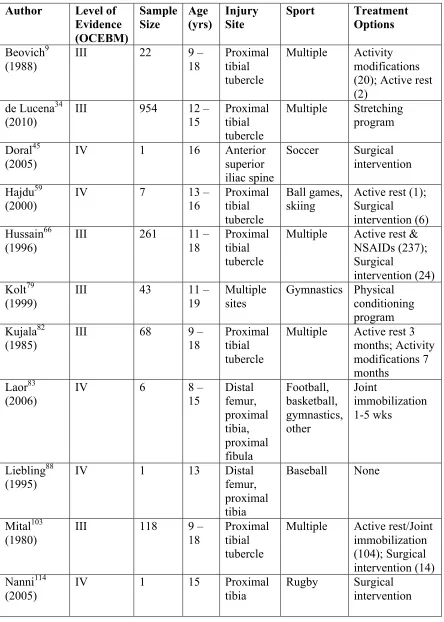
Table 2.1 Studies that Report Lower Extremity Physeal Injuries ...25
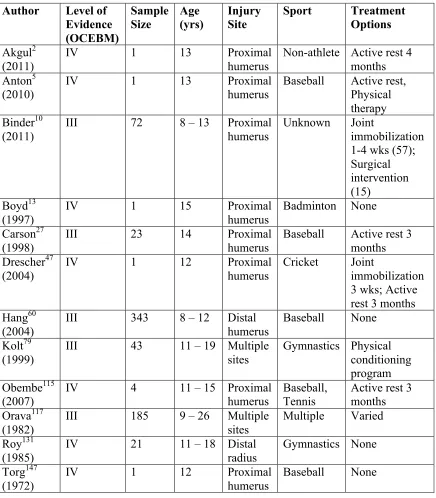
Table 2.2 Studies that Report Upper Extremity Physeal Injuries ...27
Table 3.1 Data Collection Measures ...38
Table 3.2 Normalization Methods for Isometric Shoulder Strength ...40
Table 3.3 Power Analyses Based on Expected Injury Rates ...41
Table 3.4 Power Analyses Based on Risk Factor Comparisons ...41
Table 4.1 Analysis of Risk Factors for Upper Extremity Injuries ...58
Table 5.1 Baseline Characteristics of Youth Baseball Players ...72
Table 5.2 Overview of Anthropometric & Isometric Shoulder Strength Measures ...73
Table 5.3 Normalization Methods for Isometric Shoulder Strength Measures ...74
Table 5.4 Reliability of Normalized Dominant Isometric Shoulder Strength Measures using Torque Method ...75
LIST OF FIGURES
Figure 2.1 Preferred Reporting Items for Systematic Review & Meta-Analysis (PRISMA) Flow Diagram ...20 Figure 2.2 Strength-of-Recommendation Taxonomy (SORT) Diagram ...21 Figure 2.3 Radiograph of 13-year-old Male Football Player with Osgood-Schlatter Disease ...22 Figure 2.4 Radiograph of 14-year-old Male Baseball Player with Little
League Shoulder ...23
Figure 2.5 Radiograph of 13-year-old Male Baseball Player with Little League Elbow ..24 Figure 3.1 Prospective Cohort Study Design Flowchart ...37 Figure 4.1 Sport Specialization – Perception versus Reality ...57
Figure 5.1 Examination of Isometric Shoulder Scaption & Shoulder External Rotation at 0° Strength in Seated Position ...76
Figure 5.2 Examination of Isometric Shoulder External Rotation at 90° and Shoulder Internal Rotation at 90° Strength in Prone Position ...76
Figure 5.3 Changes in Normalized Dominant Shoulder Strength by Method over 6-month Period ...77
LIST OF ABBREVIATIONS
CHAPTER
1
INTRODUCTION
1.1Upper Extremity Injuries in Youth Baseball Players
Baseball is a popular sport to play in the United States, with approximately 13-17
million athletes participating across all levels of competition.31,51,143 Youth (9-12 years) and adolescent (13-18 years) players comprise the majority of this population playing nearly year-round with minimal rest at the club and high school levels.4,31,51,143 Despite
increased awareness surrounding the risks associated with overtraining, youth and adolescent baseball players continue to report overuse injuries at alarming
rates.12,19,90,91,136,140,148,154,155 The incidence of baseball-related overuse injuries in adolescent players was reported to be 1.3 – 4.0 injuries per 1,000 athletic exposures however this data is unknown in youth players.31,137 The research does indicate that the
majority of baseball-related overuse injuries are reported in the upper extremity (UE), specifically at the shoulder and elbow, however little is known about the etiology and
development of these injuries in youth athletes.6,31,137
Despite evidence suggesting that sport specialization may be related to the
development of overuse injuries in youth and adolescent athletes, its prevalence continues to increase in the U.S.72,107 Research studies have previously defined sport specialization
using a battery of criteria including year-round training in a single sport (>8
months/year), identification of a primary sport over additional sports and the cessation of
literature, however less is understood about the public perception of sports specialization with parents and coaches.71,72,84,107,108 The effects of sport specialization on UE injury risk has not been previously examined in the baseball literature. Other risk factors, such as
excessive pitch counts, varied pitch types and faulty throwing mechanics, have been linked to the development of shoulder and elbow pain in youth throwers using self-report
and survey data.12,71,72,90,91,116,162 The USA Baseball Medical & Safety Advisory
Committee has used this research to establish age-appropriate guidelines for pitch counts, pitch types and throwing mechanics.12,19,90,91,136,140,148,154,155 The effectiveness of these
recommendations on the reduction of baseball-related overuse injuries is unknown, as the extent of the problem has not been previously established in the literature. The absence of
epidemiologic studies describing overuse injury rates in youth athletes combined with the lack of population-specific risk factor data pose significant knowledge gaps in the
evaluation and treatment of this population. To address these gaps in the literature, the
first aim of the current project was:
Aim 1: Examine the effects of population-specific risk factors on UE injury risk in a cohort of 9-12 year old male baseball players.
1. The primary objective of this study was to determine the specific incidence of baseball-related UE injuries using athletic exposures (number of team-recorded
practices and games) as the denominator.
2. The secondary objective of this study was to examine the effects of player
1.2 Normalization Methods for Isometric Shoulder Strength in Youth Baseball Players
Upper extremity muscle strength is an important component in the assessment of throwing performance and injury prevention in baseball
players.17,28,44,50,52,61,97,105,148,156,160 Strength is defined as the amount of force a muscle can maximally produce during a single repetition.67,68,70 Clinicians and researchers routinely use batteries of strength measures in performance assessments, injury diagnostics and
return to sport decisions following injury.17,33,61,148
A variety of methods, including isokinetic, isometric and functional testing, have
been used to assess upper extremity strength in athletic populations.17,28,44,61,97,148,160 While isokinetic testing is considered the gold standard in strength assessment; the high equipment costs and lack of portability make it impractical for use outside of laboratory
settings.33,52,142 Isometric testing using hand held dynamometry (HHD) has proven to be a reliable, low cost and portable alternative to isokinetics in assessing strength, particularly
in the throwing shoulder.17,33,142,148
While the majority of upper extremity strength testing has been conducted at the collegiate and professional levels, few studies have sought to assess strength measures in
younger athletes.17,44,61,97,105,148 One potential reason for this gap in the literature may be related to the inherent variability of strength measures, especially when assessed in
physically developing populations.67,68,70Studies have shown that anthropometric measures, such as height and weight, influence the body’s ability to produce force, suggesting that changes during growth and development may impact a youth athlete’s
adequately reflect how athletic performance and injury risk develop in youth populations.67,68,70 Normalization is one option for assessing strength changes in physically developing populations however these methods have been inconsistently
reported in the literature.68,70
Evaluating isometric shoulder strength in youth athletes is inherently different
from collegiate and professional athletes.67,68,92 Height, weight and neuromuscular control can fluctuate frequently in physically developing populations with the potential to rapidly change over short periods of time. Performance assessments that rely on absolute
measures, without anthropometric normalization, may lack the ability to discern changes in muscle strength from changes in body size in youth populations.67,68,70 Prior research
studies suggest that normalization methods, which include body mass, body mass index (BMI), height, torque and percent of non-dominant shoulder strength described by
Trakis148 may be potential ways to assess muscle strength and changes in muscle strength
over time in this population.63,67,68 Accounting for these alterations in growth and development through normalization is critical to accurately assessing muscle function,
throwing performance and injury risk in youth athletes.67,68,92 Establishing an objective and reliable method for evaluating strength is an important step in understanding shoulder function in youth baseball players.33,148 Once a reliable method has been established, the
next steps are to examine the relationships between shoulder strength and ball velocity, a performance variable of interest in this population, and shoulder strength and UE injury
Aim 2: Compare the measurement properties of normalized isometric shoulder strength, using 5 separate methods, for use as a multi-faceted clinical assessment tool that was responsive to changes in physical growth and development over time in a cohort of 9-12
year old male baseball players.
1. The primary objective of this aim was to assess the test-retest reliability of 4
isometric shoulder strength measures.
2. The secondary objective of this aim was to assess changes in normalized isometric shoulder strength over time using baseline and follow-up evaluation
measures.
3. The tertiary objective of this aim was to examine the relationship between
CHAPTER 2
REVIEW OF THE LITERATURE
2.1 Abstract
Introduction:Despite rising awareness of the risks associated with sports participation, overuse injuries continue to increase in youth athlete populations. Physeal injuries are one type of overuse injury exclusive to pediatric populations that are often sustained
during athletic practice or competition. Overuse physeal injuries are, in theory, preventable, however little consensus has been reached surrounding the risk factors,
prevention and treatment strategies reported in the literature.
Objective: The purpose of this systematic review was to summarize the best available evidence concerning overuse physeal injuries in youth and adolescent athletes. The
information can then be used to guide the development of prevention and treatment programs specific to this population as well as identify any knowledge gaps for future
research.
Methods: PubMed and Academic Search Complete (EBSCOhost) were explored using physeal injuries from January 1950 through May 2015.Original research studies
performed in athletic populations with mechanisms of injury related to sport were chosen.
A total of 24 studies were included in this systematic review.1
Results:Risk factors for injury include periods of accelerated growth, chronological age, body size, training volume and history of previous injury.Injury prevention strategies currently emphasize participation limitations and sport-specific training
programs in skeletally immature athletes. The most effective treatment following an overuse physeal injury was an extended period of active rest and joint immobilization
when necessary.
Overall Strength-of-Recommendations Taxonomy (SORT): C.
Conclusion:Overuse physeal injuries are multi-factorial in nature. Muscular imbalances
following accelerated growth periods are thought to predispose young athletes to overuse injuries. Modifiable risk factors such as flexibility, strength and training volume should
be regularly monitored in an effort to prevent these injuries when possible. Keywords: physis; physeal injury; overuse; sports injuries; pediatric injuries 2.2 Introduction
An estimated 30 million children in the U.S. are involved annually in organized sport.1,20 Despite rising awareness of the risks associated with sports participation,
overuse injuries continue to increase in youth athlete populations.1,19-22,24,59 Physeal injuries are one type of overuse injury exclusive to pediatric populations that are most often sustained during athletic practice or competition.
14,15,18-20,22-24,26,34,41,48,55,56,76,81,87,93,102,119,141,144,145,152 While specific mechanisms of injury are
heterogeneous and differ by sport, the physis, as the weakest part of the bone, is a site
highly prone to injury in youth athletes.18,19,21,38
changes combined with repetitive sport-related tasks such as running and overhead throwing are frequently associated with the development of physeal injuries in youth athletes.19,21,26 The gradual nature of this injury progression provides clinicians with
multiple opportunities for effective intervention. Overuse physeal injuries are, in theory, preventable. Prevention and treatment strategies should be population-specific, taking
into account previously established risk factors and clinical impairments observed in youth athletes.21 The purpose of this work was to review and aggregate the best available evidence concerning recommended prevention and treatment strategies for overuse
physeal injuries for application to clinical practice. 2.3 Methods
2.3.a Literature Review Methods and Article Identification
An electronic literature search was performed accessing papers publishedfrom January 1950 to May 2015 in the PubMed and all EBSCOhost databases. Search terms
included epiphyseal injury, epiphyseal plate injury, pediatric sports injury and physeal sports injury. Additional searches in the aforementioned databases were performed using the terms little league shoulder, gymnast wrist, little league elbow, lower extremity physeal injury, osgood schlatter disease, sever’s disease and sinding-larsen-johansson disease as they were the most commonly reported mechanisms of injury during the primary search. Only English language articles published in peer-reviewed journals with an emphasis on human participants were initially included. Articles were also required to
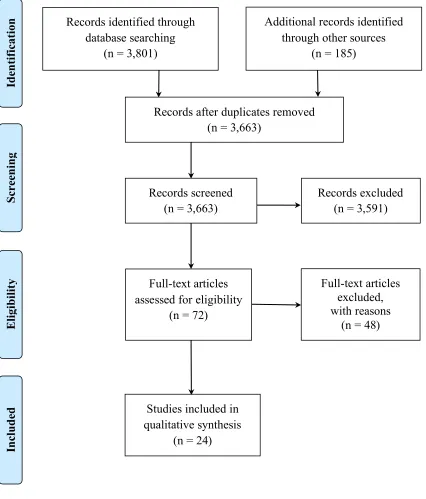
Reporting Items for Systematic Reviews and Meta-Analyses (PRISMA) guidelines, studies were selected based on appropriateness of topic and full text options.104 All clinical commentaries and review articles were omitted. A total of 24 original research
studies were included in this systematic review (Figure 2.1). 2.3.b Eligibility Criteria
Article selection was based on repetitive stress as a mechanism of injury in young athletes. Case reports, case series and cohort studies that described non-sport related mechanisms of injury, such as falls, were not included in this review. Acute sport-related
injuries were also excluded. The scope of this systematic review was limited to overuse physeal injuries sustained during athletic competition.
2.4 Results
Twenty-four studies were included in this systematic review (Tables 2.1 and 2.2).2,5,9,10,13,27,34,45,47,59,60,66,79,82,83,88,103,114,115,117,130,131,147 Thirty-three percent of studies
included descriptions of known physeal injury risk factors while only 8% percent of studies used those factors to outline effective prevention strategies.10,27,34,45,79,117,130,147
Eighty-eight percent of studies included data describing treatment strategies following an overuse physeal injury.2,9,10,13,27,34,45,47,59,66,82,83,88,103,114,115,117,131,147,150 Review of current evidence suggests that more emphasis has been placed on the treatment of overuse
physeal injuries and that further research is needed to establish effective prevention strategies for these diagnoses.
strategies in this population, studies did emphasize that youth athletes should engage in minimum periods of active rest following their competition cycles.19,38 Adequate physical training and variation in sport-specific tasks were also encouraged.19,39 Treatment
strategies following an overuse physeal injury included varying periods of active rest and when necessary, immobilization of the affected joint.2,5,9,10,27,47,59,66,82,83,103,115,150 Gradual
return to physical training and conditioning tasks was recommended prior to full return to sport.5,9,79,82
2.4.a Lower Extremity Injuries
Overuse physeal injuries in the LE typically occur when excess stress is placed across areas with major tendons insertions.11,19 Osgood-Schlatter Disease, Sever’s
Disease and Sinding-Larsen-Johansson Syndrome are 3 of the most common overuse physeal injuries sustained during childhood.15,93,96 The first two syndromes account for a staggering 18% of all pediatric overuse injuries reported in the literature.93
Osgood-Schlatter Disease is described as chronic apophysitis of the patellar tendon where it inserts on the tibial tuberosity apophysis. It is typically observed in girls ages 8-13
years and boys ages 10-15 years (Figure 2.3).34 The same inflammatory process occurs with Sever’s Disease but at the Achilles tendon insertion into the vertical calcaneal apophysis.117 This condition appears to present more often in young boys between the
ages of 8 and 12 years old.74 Sinding-Larsen-Johansson Syndrome has a similar etiology but develops at the junction of the inferior pole of the patella and the proximal portion of
between the ages 10-15 years, limiting their function and participation levels (Table 2.1).150
Prevention strategies in the literature emphasize the correction of modifiable risk
factors such as deficits in trunk and LE flexibility, which is often attributed to rapid changes in physical growth common during childhood and adolescence.19,21,26,39,150
Programs designed to enhance cardiovascular endurance and correct physical training errors are also recommended to prevent these types of injuries.34,38,79 Following an overuse physeal injury in the LE, 50% of studies recommend a 3-5 month period of
active rest with complete cessation of sport-specific activities.9,59,66,82,103,117,150 Twenty-one percent of studies suggest activity modifications may be appropriate based on the
symptom presentation of the athlete, thereby limiting their total time away from
sport.9,82,117 Lower extremity stretching and conditioning programs were also used in 21% of the studies as either a stand alone treatment or in conjunction with additional
strategies.34,79,117 Several studies reported joint immobilization and surgical intervention for long standing physeal injuries related to overuse, however these strategies were only
employed in severe cases.59,66,83,103,114,117 Irrespective of the treatment strategy used, an athlete should not fully return to sport until symptom resolution has occurred. No studies to date have examined or compared the effectiveness of these treatments in youth athlete
populations.134
2.4.b Upper Extremity Injuries
frequently in the pediatric sports literature.2,5,10,13,27,47,60,79,115,117,131,147 Seventy nine percent of youth gymnasts report wrist pain during practice or competition while 32% of youth baseball pitchers report arm pain while throwing.41,90,91
Gymnast wrist occurs in response to the premature closure of the distal radial physis following excessive compression loads during UE weight bearing.24,88 Gymnastics
is one of the few sports that repeatedly performs closed chain weight bearing activities on both their upper and lower extremities.3,16,20,22,23,35,41,42 This injury is typically seen in athletes between the ages of 10 and 14 years old (Table 2.2).41 Little League Shoulder has
been described in the literature as a widening of the proximal humeral epiphysis or epiphysiolysis (Figure 2.4). It is most often seen in the dominant shoulder and is thought
to occur secondary to the repetitive rotational and traction stresses associated with overhead throwing.2,5,10,14,27,47,115,147 Little League Elbow is a term often used to describe a variety of physeal and cartilaginous injuries at the pediatric elbow.18,19,21,55,60,77 By
definition, Little League Elbow is a repetitive traction injury to the medial epicondylar apophysis (Figure 2.5).55 Diagnoses of Little League Shoulder and Little League Elbow
are most often made following reports of persistent arm pain and loss of function in youth baseball pitchers between the ages of 11 and 15 years old (Table 2.2).27,77,115
Risk factors associated with the development of Gymnast Wrist include consistent
UE loading and timing of growth spurts.40 Studies suggest that participation in repetitive UE weight bearing tasks, especially during periods of rapid physical growth, is directly
factors that have been associated with shoulder and elbow dysfunction in youth baseball players.90,91 Pitch type and selection are also important for the health of this population. Youth baseball players who reported throwing breaking pitches such as curveballs or
sliders over the course of the season were more at risk to develop shoulder and elbow pain when compared to those who did not.90 Anthropometric measures such as increased
height and weight also impacted injury risk but were more significant to the development of elbow pathology than shoulder pathology.91
Despite the lack of epidemiological data concerning Gymnast Wrist, multiple
prevention strategies have been suggested in the literature.37,38,40 The gradual progression and variation of training loads is imperative to limit the volume of compressive forces
sustained through the distal radial physis.37,39,40 Studies suggest that coaches and parents should be cognizant of rapid changes in growth, as the athlete is most at risk for overuse physeal injuries during this period.37,39 In an effort to prevent Little League Shoulder and
Little League Elbow, USA Baseball implemented yearly, seasonal and game pitch count limitations based on an athlete’s age at the time of competition.90,91,116 These
recommendations were designed to decrease an athlete’s risk for injury by limiting excessive stress and fatigue during sports participation.89-91
Treatment strategies for all three overuse physeal injuries center around an
extended period of active rest. Following an injury, 50% of studies recommend active rest from sport-specific training to ensure adequate healing and symptom
and/or surgical intervention have been employed to ensure optimal functional
outcomes.78,119,125 However, an extended period of active rest remains the main treatment of choice for overuse physeal injuries in the UE.
2.5 Discussion
The main purposes of this systematic review were to identify known risk factors
associated with overuse physeal injuries and to determine which prevention and treatment strategies were most effective and supported by the evidence. Physeal injuries represent approximately 15% of all pediatric sports injuries currently reported in the literature.19
The physis, as the weakest physiologic structure in a young athlete, is particularly susceptible to overuse injuries.14,15,18-26,34,40,48,55,56,76,81,87,93,102,119,141,144,145,152 As
participation in youth sports continues to increase, clinicians should become cognizant of the risk factors, prevention strategies and treatment options associated with overuse physeal injuries.14,15,19,21,22,55,144,145
2.5.a Risk Factors
Risk factors associated with participation in youth sports have been reported
throughout the literature, however no research studies have examined injury risk with respect to physeal injuries.21 Physeal injuries are exclusive to skeletally immature
individuals suggesting that modifiable and non-modifiable risk factors are specific to this
population.21,26,34,35,56,79,100,134
Non-modifiable risk factors for overuse injuries can include timing of accelerated growth
literature.21,26,126,149 Studies show that athletes who reported a prior injury were at a much higher risk to sustain an injury when compared to a previously healthy cohort.149
Modifiable risk factors such as flexibility, strength, training volume and coaching styles
also impact overall injury risk in youth and adolescent athletes. Multiple studies suggest that excessive training loads often lead to physical fatigue in youth athletes. Continued
participation in sport once fatigued can damage an athlete’s physical development thereby illustrating the importance of responsible coaching, especially during the early years of sport.21,38,40,76
2.5.b Prevention and Treatment Strategies
Injury prevention strategies for youth and adolescent athletes focus on limiting
time spent participating in sport as well as encouraging 2-3 months of scheduled rest away from training and competition.38,121 This is designed to mediate the effects of repetitive risk-prone activities on physically maturing bodies. Pitch count regulations,
which are enforced by the governing bodies in youth baseball, is one notable attempt at preventing upper extremity overuse injuries at the policy level.90,91,135,139 Multiple studies
have also recommended that clinicians monitor known risk factors such as
anthropometric (i.e. height and weight) and physical characteristics (i.e. range of motion and strength) as youth athletes mature over time.34,37,38,136,148 Multiple programs designed
to improve flexibility, strength and balance deficits have been shown to have protective effects against injuries in this population.21,25,94,95,120,138
symptoms.26,27,77 During this time, strategies can include changes in field position to limit throwing in the cases of Little League Shoulder and Little League Elbow or the
recommendation of no running for a specified period of time in athletes with
Osgood-Schlatter, Sinding-Larsen-Johansson’s or Sever’s Disease. In most cases, non-symptomatic activities such as hitting a baseball or footwork drills in soccer can be
continued. This allows young athletes to continue training without prolonging their recovery by re-aggravating the affected joint.
During a period of active rest, conservative measures such as physical therapy can
prove beneficial. Once the pain has subsided, clinicians can begin to restore the necessary flexibility, strength and neuromuscular control required to participate safely in
sport.2,3,5,13,20,22-25,27,29,35,40,42,47,78,79,115,132,140 Progressive strength training programs, lasting approximately 6-8 weeks, can be augmented with return to throwing or running programs when appropriate.77 The rehabilitation programs reported in the literature were
vague and lacked return to sport criteria. Future research should focus on the
development of age- and injury-specific return to sport progressions designed to provide
clinicians with evidence-based guidelines to return their athletes safely back to sport. 2.5.c Limitations
The main limitation of this systematic review was the lack of experimental and
epidemiological data concerning overuse injuries in youth sports. Review studies typically described pediatric sports injuries in general terms with little respect to injury
criteria appeared to impact the study selection process. A variety of search terms were used however a disproportionate number of studies featured Little League Shoulder as a diagnosis of interest. This selection bias towards overuse physeal injuries in the UE may
have influenced the generalizability of the clinical recommendations made in this systematic review.
2.5.d Knowledge Gaps
The lack of high quality, patient-oriented research in younger athlete populations and the absence of research describing physeal injuries pose notable gaps in the literature.
These gaps include minimal data establishing the incidence, prevalence and severity of overuse injuries in youth athletes, especially with respect to physeal involvement.91,116 No
original research studies have clearly defined physeal injuries at this time. Also, little is known about the effects of population-specific risk factors, like growth-related changes and training volume, on the development of injuries in skeletally immature individuals.
Future studies should 1) seek to establish a clear definition of physeal injuries in sport, and 2) understand the mechanisms and risk factors associated with their development.
This will provide the foundation for more effective prevention and treatment strategies at the policy level, including the paradigm-shifting concept of scheduled periods of rest from sport. Scheduled rest provides youth athletes the time they need to physically and
mentally recover from the rigors of competitive sport. 2.6 Conclusion
strength and training volume should be regularly monitored in an effort to limit risk-prone activities and prevent injuries when possible.21,26,34,35,56,79,134,149
The most effective treatment strategy following overuse physeal injuries is an
extended period of active rest. Following symptom resolution, clinicians can begin to restore function through improvements in flexibility, strength and neuromuscular
control.2,3,5,13,20,22-24,26,27,29,35,41,42,47,78,79,132,140 Progressive strength training programs should include gradual return to throwing or running programs when appropriate.77 Return to sport timelines typically range from 4-6 weeks in most cases, but can extend to
3-5 months when symptoms persist.27,77,83 2.7 Clinical Recommendations
The most widely accepted treatment option following any physeal injury is an extended period of active rest and when necessary joint immobilization. Once the pain has subsided, emphasis on the restoration of flexibility, strength and sport-specific
endurance is appropriate.3,10,19,27,30,74,76,114,115,134 Strength-of-Recommendation Taxonomy: C
1) Modifications such as implementing sport-specific flexibility and strength
programs as well as limiting training and competition volumes (i.e. pitch counts) are 2 strategies to avoid overuse and fatigue-related injuries. This is especially
important during periods of rapid growth.21,25,26,77,90,91,95,116,120,127,135,138,140,148 Strength-of-Recommendation Taxonomy: B
preventative as deficits have been linked to both UE and LE injuries in multiple sporting events.30,77,116,148,152
Records identified through database searching
(n = 3,801)
Sc re eni ng In cl u d ed E li gi b il it y Id en ti fi cat
ion Additional records identified
through other sources (n = 185)
Records after duplicates removed (n = 3,663)
Records screened (n = 3,663)
Records excluded (n = 3,591)
Full-text articles assessed for eligibility
(n = 72)
Full-text articles excluded, with reasons
(n = 48)
Studies included in qualitative synthesis
(n = 24)
Strength of Recommendations
Definition
A Recommendation based on consistent, good quality patient-oriented evidence* (morbidity, mortality, exercise and cognitive performance, physiologic responses).
B Recommendation based on inconsistent or limited quality patient-oriented* evidence.
C Recommendation based on consensus, usual practice, opinion, disease-oriented evidence* case series or studies of diagnosis, treatment, prevention, screening, or extrapolations from quasi-experimental research.
*Patient-oriented evidence measures outcomes that matter to patients: morbidity, mortality, symptom improvement, cost reduction, and quality of life. Disease-oriented evidence measures intermediate, physiologic, or surrogate end points that may or may not reflect improvements in patient outcomes (e.g.: blood pressure, blood chemistry,
physiologic function, pathologic findings).
Table 2.1. Studies that Report Lower Extremity Physeal Injuries Author Level of
Evidence (OCEBM) Sample Size Age (yrs) Injury Site
Sport Treatment Options Beovich9
(1988)
III 22 9 –
18
Proximal tibial tubercle
Multiple Activity modifications (20); Active rest (2)
de Lucena34
(2010) III 954 12 – 15 Proximal tibial tubercle
Multiple Stretching program
Doral45 (2005)
IV 1 16 Anterior
superior iliac spine
Soccer Surgical intervention
Hajdu59 (2000)
IV 7 13 –
16 Proximal tibial tubercle Ball games, skiing
Active rest (1); Surgical
intervention (6) Hussain66
(1996)
III 261 11 –
18
Proximal tibial tubercle
Multiple Active rest & NSAIDs (237); Surgical
intervention (24) Kolt79
(1999)
III 43 11 –
19
Multiple sites
Gymnastics Physical conditioning program Kujala82
(1985)
III 68 9 –
18
Proximal tibial tubercle
Multiple Active rest 3 months; Activity modifications 7 months
Laor83
(2006) IV 6 8 – 15 Distal femur, proximal tibia, proximal fibula Football, basketball, gymnastics, other Joint immobilization 1-5 wks Liebling88
(1995) IV 1 13 Distal femur, proximal tibia
Baseball None
Mital103 (1980)
III 118 9 –
18
Proximal tibial tubercle
Multiple Active rest/Joint immobilization (104); Surgical intervention (14) Nanni114
(2005)
IV 1 15 Proximal
tibia
Orava117 (1982)
III 185 9 –
26
Multiple sites
Multiple Varied
Rossi130 (2001)
III 203 11 –
18
Pelvic apophyses
Soccer, gymnastics, fencing, tennis
None
Valentino150 (2012)
IV 1 13 Inferior
patellar pole
Table 2.2. Studies that Report Upper Extremity Physeal Injuries Author Level of
Evidence (OCEBM) Sample Size Age (yrs) Injury Site
Sport Treatment Options Akgul2
(2011)
IV 1 13 Proximal
humerus
Non-athlete Active rest 4 months Anton5
(2010)
IV 1 13 Proximal
humerus
Baseball Active rest, Physical therapy Binder10
(2011)
III 72 8 – 13 Proximal humerus
Unknown Joint
immobilization 1-4 wks (57); Surgical intervention (15)
Boyd13 (1997)
IV 1 15 Proximal
humerus
Badminton None
Carson27 (1998)
III 23 14 Proximal
humerus
Baseball Active rest 3 months Drescher47
(2004)
IV 1 12 Proximal
humerus
Cricket Joint
immobilization 3 wks; Active rest 3 months Hang60
(2004) III 343 8 – 12 Distal humerus Baseball None Kolt79
(1999)
III 43 11 – 19 Multiple sites
Gymnastics Physical conditioning program Obembe115
(2007) IV 4 11 – 15 Proximal humerus Baseball, Tennis Active rest 3 months Orava117
(1982)
III 185 9 – 26 Multiple sites
Multiple Varied
Roy131 (1985)
IV 21 11 – 18 Distal
radius
Gymnastics None
Torg147 (1972)
IV 1 12 Proximal
humerus
CHAPTER 3
METHODS
3.1 Research Design
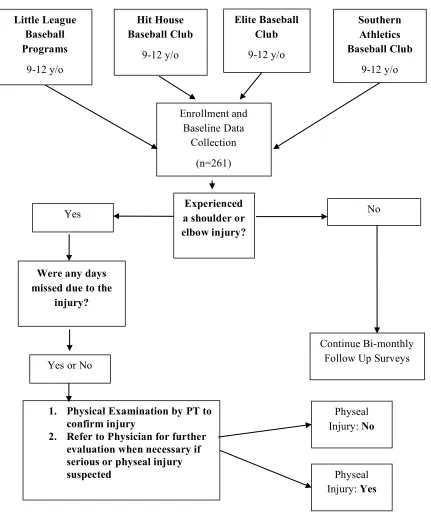
This study prospectively followed a cohort of competitive youth baseball players over the course of a 6-month season (Figure 3.1). Approval for this study was received from the University of South Carolina’s Institutional Review Board (IRB). The research
team complied with all rules, regulations and training requirements put forth by the IRB. 3.2 Study Setting
This study was conducted at local baseball clubs (Hit House, Elite Baseball and Southern Athletics), as well as the Greenville and Northwood Little Leagues. ATI
Physical Therapy and Steadman-Hawkins Clinic of the Carolinas facilities were also used
during this study. 3.3 Study Subjects
Two hundred and sixty-one competitive baseball players were recruited for this study based on sample size calculations with 80% power and an alpha level of 0.05. Inclusion criteria required that all participants be male, between 9 and 12 years of age and uninjured at the time of baseline data collection. Players were excluded from the study if
they reported any current injuries that restricted their ability to participate in baseball activities or if they reported a shoulder or elbow injury that required medical attention
baseball clubs as well as the Greenville and Northwood Little League Baseball programs. To increase retention and response rates over the course of a 6-month follow up period, the primary investigator emphasized the importance of both team coaches’ and parents’
participation in the bi-monthly online surveys. The primary investigator also acted as the established point of entry into the medical community, for coaches and parents, when a
baseball player suffered a baseball-related upper extremity injury. 3.4 Procedures
An online survey (see Appendix A), in conjunction with a baseline physical
examination (see Appendix B), was completed during the course of the competitive baseball season to identify potential risk factors for injury in this population (Table 3.1).
Players’ training and playing histories, as well as any injuries sustained, was be tracked every 2 weeks over the course of a 6-month period (Table 3.1). Team coaches and participants’ parents were contacted every 2 weeks via online surveys, phone
conversations and in person visits in an effort to improve response rates as well as corroborate data reported for each player. All baseball players who reported
baseball-related upper extremity impairments underwent a subsequent physical examination performed by the primary investigator to confirm the presence of an injury. A second exam was also performed in a subset of youth players to assess any changes from the
baseline physical data recorded earlier in the season. The subsequent examination included height, weight, shoulder and elbow range of motion (ROM) and isometric
shoulder strength.
shoulder and elbow ROM, isometric shoulder strength and ulnar length were assessed in both the dominant and non-dominant arms of each participant. Two values of each measure were recorded per arm.
Humeral torsion was measured using a Sonosite-Edge (Sonosite Inc, Bothell, WA, USA) ultrasonography unit with a 6 cm linear array transducer (6-15 MHz).
Examiners used a previously validated indirect ultrasonography method to assess the differences in bony development between the dominant and non-dominant arms. 57,110-112,118,153-155 All measurements were taken in the supine position with the arm at 90° of
abduction and the elbow at 90° of flexion. One examiner passively rotated the arm until
the apices of the greater and lesser tuberosities were parallel in the coronal plane. A second examiner placed a digital inclinometer (Fabrication Enterprises Inc, White Plains, NY, USA) along the ulnar border and recorded the corresponding angle of the forearm. In
this method, the larger angle indicated less humeral retrotorsion.7,111,153,161 Acceptable intra-rater reliability for measurement of HT was established prior to the data collection
(ICC2,1 = 0.92-0.99; SEM = 1.7°-3.8°).
Shoulder external rotation (ER) and internal rotation (IR) ROM was assessed
bilaterally in supine using a digital inclinometer and methods previously reported in the
literature.7,136,158 The scapula was stabilized at the corocoid process with the arm at 90° of
abduction and elbow flexion. A towel roll was placed under the distal humerus to maintain the scapular plane. The arm was then passively rotated to end range for measurement. No overpressure was applied. Horizontal adduction ROM was assessed
maintaining neutral humeral rotation until resistance was felt. A digital inclinometer was used to assess the angle between the humerus and the horizontal plane of the body.7,136 Elbow extension ROM was assessed with the athlete in the supine position with the arm
in 90° of abduction and neutral rotation. A towel roll was placed under the distal humerus
to maintain the scapular plane. A digital inclinometer was placed along the anterior surface of the forearm in the plane of the acromion using the radial styloid process as the primary landmark. The angle of the radial styloid process relative to the parallel line of
the acromion was recorded. Positive values indicated elbow hyperextension. Acceptable intra-rater reliability was established for all ROM measurements prior to data collection
(ICC2,1 = 0.92-0.99; SEM = 1.3°-3.8°). An average of 2 trials was used for each measure
in data analysis. Total arc of motion was calculated by adding mean ER ROM with IR ROM for the dominant and non-dominant shoulders, respectively.Side-to-side
differences were calculated for each ROM variable by subtracting dominant values from the non-dominant values.
Isometric shoulder strength was assessed bilaterally using a Lafayette Manual Muscle Tester hand-held dynamometer (Lafayette Instrument Company, Lafayette, IN, USA) and previously reported methods.17 Isometric shoulder strength measures included
scaption at 90°, ER at 0°, ER at 90° and IR at 90° for the dominant and non-dominant
arms. Make tests were used for each isometric strength measure based on higher
reliability when compared to break tests in hand-held dynamometers.146 Scaption strength
was measured in the seated position. The arm was abducted to 90° and then horizontally
adducted to 45° with neutral shoulder rotation. The hand-held dynamometer was placed 5
using maximum effort.17 External rotation at 0° was assessed with the arm in 0° of
shoulder abduction with a towel roll placed under the axilla. The elbow was positioned in
90° of flexion with neutral forearm rotation. The hand-held dynamometer was placed on
the dorsal aspect of the forearm, 2 cm proximal to ulnar styloid process. The participant
then externally rotated the arm with maximum effort.17 External rotation at 90° was
measured with the shoulder in 90° of abduction, 90° of ER and 90° of elbow flexion. A
towel roll was placed under the distal humerus to maintain the arm in the plane of the body. The dynamometer was placed on the dorsal aspect of the forearm, 2 cm proximal to
ulnar styloid process. The participant then externally rotated the arm with maximum
effort.17,46 Internal rotation at 90° was assessed in a similar fashion to ER at 90°, however
the shoulder was in a state of neutral rotation and the dynamometer was placed on the volar aspect of the forearm. The participant was asked to maximally internally rotate his
arm.17 Acceptable intra-rater reliability for all isometric shoulder strength measures was established prior to the data collection (ICC2,1 = 0.94-0.99; SEM = 1.3-3.6 lbs). To ensure that minimal detectable change (MDC) exceeded the standard error of measure
(SEM), intra-rate reliability was re-calculated using the first 10 participants’ data. Ulnar length measurements were recorded for the dominant (D) and non-dominant (ND) arms
and used to calculate both ER and IR torque values for each participant.68 Isometric shoulder strength was then normalized prior to data analysis using 5 separate methods: body mass, body mass index (BMI), height, torque and the Trakis Method (Table 3.2).148
Throwing performance was assessed using ball velocity during an overhead throw. This measure was assessed within 10 days of baseline data collection in a subset
asked to throw 3 balls from a distance of 46 feet on flat ground to a specified target. A Stalker radar gun was used to record the velocity of each throw in miles per hour (mph). Only accurate ball velocities were recorded and then used in data analyses to determine if
isometric shoulder strength and throwing performance were related.
Baseball-related upper extremity injuries will be defined as any shoulder or elbow
impairment that resulted in either: 1) an athlete missing >1 practice(s) or game(s), or 2) an athlete experiencing a reduction in their performance (i.e. decreased ball control or velocity) or change in position (i.e. moving from pitcher to 1st base) related to the UE
complaint.43,75,113,137 Injuries were originally identified via self-report from the team coaches and the participant’s parents using the RedCap online survey system, phone
conversations and in person interviews. Players, parents and coaches were also
encouraged to contact the research team if any concerns arose throughout the study. Once identified, all baseball-related upper extremity injuries were examined by the primary
investigator, a licensed physical therapist and when necessary, referred to a board certified, fellowship-trained, sports medicine physician at the Steadman Hawkins Clinic
of the Carolinas for further evaluation. All injured baseball players who were examined by a physician may have received x-rays as part of their evaluation per typical standard of care. Any damage to the physis or ‘growth plate’ at the shoulder or elbow was confirmed
through physician evaluation and diagnosis. All costs related to physician visits,
including diagnostic imaging, was billed to the players’ insurance companies. This study
3.5 Statistical Analyses 3.5.a Specific Aim 1
Determine the incidence of baseball-related upper extremity injuries in a cohort of
9-12 year old male baseball players.
Specific incidence was defined as the number of baseball-related upper extremity
injuries recorded per 1,000 athletic exposures. As stated previously, an athletic exposure was defined as 1 organized team practice or game that an athlete participated in. Means and standard deviations were calculated for each variable based on injury status.
Injury status was the main outcome of interest used in the power calculations for Specific Aim 1. The number of baseball-related upper extremity injuries necessary to
statistically compare injured and uninjured groups was approximately 50 baseball players. Based on previous research, a baseball-related injury rate of 0.18 was expected, which indicated that a sample size of 275 baseball players would have be adequate to
capture the target population of youth players who sustain baseball-related injuries.31,137 Those calculations assumed a 2-sided alpha level of 0.05. Based on that analysis, the
current study had sufficient power (100%) to assess upper extremity injury risk in a cohort of 9-12 year old male baseball players.
3.5.b Specific Aim 2
Compare the measurement properties of normalized isometric shoulder strength, by 5 separate methods, for use as a multi-faceted clinical assessment tool that was
The main outcomes of interest were the measurement properties of each of the 5 normalization methods (body mass, BMI, height, torque and the Trakis method148) which included test-retest reliability of each strength measure, the ability to detect changes in
shoulder strength over time and the strength of the relationship between shoulder strength and ball velocity as a measure of throwing performance. Means and standard deviations
were calculated for each normalized isometric shoulder strength measures by method. Humeral torsion and shoulder ROM measures were also assessed as they were thought to potentially influence isometric shoulder strength in youth baseball players. When
analyzed, no significant relationships were observed between isometric shoulder strength and humeral torsion or isometric shoulder strength and shoulder ROM in this population.
Reliability was assessed for all baseline and follow-up strength measures using intraclass correlation coefficients (ICC) with corresponding 95% confidence intervals (CI).122 Standard errors of measurement (SEM) were also calculated to determine the
absolute reliability of each strength measure using the largest SD in the formula
SD x 1 − ICC.122 Individual SEMs were then used to calculate corresponding minimal detectable change (MDC95) values for each of the normalized strength measures using the
formula SEM x 1.96 x 2.122 Repeated measures analyses of variance (ANOVA) were
conducted to compare changes in isometric shoulder strength at 2 time points (baseline
and follow-up) after co-varying for physical growth and body size. Effect sizes were calculated to identify the magnitude of change detected between the 2 time points for each of the normalized strength measures. Linear regression models were used to
measurement properties for normalizing isometric shoulder strength in youth baseball players was determined based on each measure’s test-retest reliability, ability to detect changes over time and strength of association with ball velocity. Statistical significance
was set a priori at α=0.05. All statistical analyses were performed using SPSS Statistics 21.0 (SPSS Inc., Chicago, IL, USA) software.
The study team demonstrated good reliability for all the variables of interest including isometric shoulder strength with a standard error of measurement of less than 5% for each measure. Only isometric shoulder strength data was presented, as they were
the main variables of interest and represented the most variable data in the analyses. The small to moderate effect sizes used in the power calculations below were estimated using
data from previous studies. These calculations assumed a 2-sided alpha level of 0.05 and showed that the current study was sufficiently powered (>91% for the isometric force production variables of interest).
Figure 3.1. Prospective Cohort Study Design Flowchart Were any days
missed due to the injury?
Yes or No
1. Physical Examination by PT to confirm injury
2. Refer to Physician for further evaluation when necessary if serious or physeal injury suspected Little League Baseball Programs 9-12 y/o Elite Baseball Club 9-12 y/o Southern Athletics Baseball Club 9-12 y/o Enrollment and Baseline Data Collection (n=261) Experienced a shoulder or elbow injury? Yes
Physeal Injury: No
Physeal Injury: Yes
Continue Bi-monthly Follow Up Surveys
No Hit House
Baseball Club
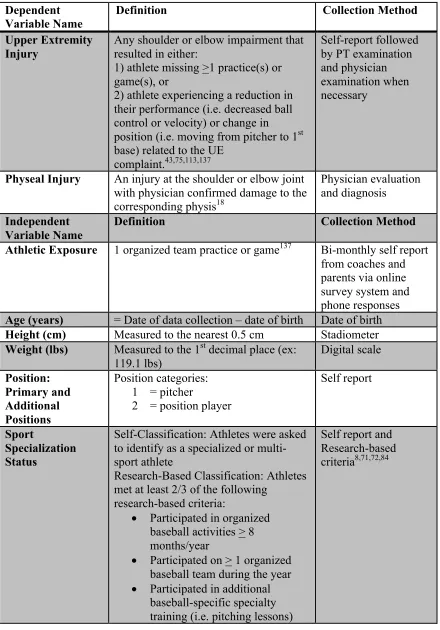
Table 3.1. Data Collection Measures Dependent
Variable Name Definition Collection Method Upper Extremity
Injury
Any shoulder or elbow impairment that resulted in either:
1) athlete missing >1 practice(s) or game(s), or
2) athlete experiencing a reduction in their performance (i.e. decreased ball control or velocity) or change in position (i.e. moving from pitcher to 1st base) related to the UE
complaint.43,75,113,137
Self-report followed by PT examination and physician examination when necessary
Physeal Injury An injury at the shoulder or elbow joint with physician confirmed damage to the corresponding physis18
Physician evaluation and diagnosis
Independent Variable Name
Definition Collection Method Athletic Exposure 1 organized team practice or game137 Bi-monthly self report
from coaches and parents via online survey system and phone responses Age (years) = Date of data collection – date of birth Date of birth Height (cm) Measured to the nearest 0.5 cm Stadiometer Weight (lbs) Measured to the 1st decimal place (ex:
119.1 lbs) Digital scale Position: Primary and Additional Positions Position categories: 1 = pitcher
2 = position player
Self report
Sport
Specialization Status
Self-Classification: Athletes were asked to identify as a specialized or multi-sport athlete
Research-Based Classification: Athletes met at least 2/3 of the following
research-based criteria:
• Participated in organized baseball activities > 8 months/year
• Participated on > 1 organized baseball team during the year
• Participated in additional baseball-specific specialty
Participation in Additional
Specialty Training
Training type categories: 1 = hitting lessons 2 = pitching lessons
3 = hitting or pitching lessons (baseball-specific)
4 = strength and agility training
Self report
Pain Level 0-10 with 10 being the highest level of
pain Pediatric Visual Analog Scale (VAS) score159
Humeral Torsion The orientation of the humeral head relative to the transverse plan of the body57,110-112,118,153-155
Indirect method using diagnostic
ultrasonography110,153 ROM: ER at 90° Maximal shoulder ER with scapula
stabilized and no
overpressure64,65,73,101,118,129,139,148,149,163
Supine with digital inclinometer64,65,139
ROM: IR at 90° Maximal shoulder IR with scapula stabilized and no
overpressure64,65,73,101,118,129,139,148,149,163
ROM: Elbow Extension
Maximal elbow extension with shoulder at 90° of abduction and no overpressure ROM: Horizontal
Adduction
Maximal shoulder HA with scapula laterally stabilized and no
overpressure64,65,73,101,118,129,139,148,149,163 Isometric
Strength: Scaption at 90°
Maximal force produced against manual resistance with upright posture and no trunk support1,17,44,73,97,105,128,129,148,149
Seated make test with HHD17
Isometric Strength: ER at 0°
Maximal force produced against manual resistance with upright posture and no trunk support1,17,44,73,97,105,128,129,148,149 Isometric
Strength: ER at 90°
Maximal force produced against manual resistance with shoulder at 90°
abduction/90°
ER1,17,44,73,97,105,128,129,148,149
Prone make test with HHD17
Isometric Strength: IR at 90°
Maximal force produced against manual resistance with shoulder at neutral rotation1,17,44,46,73,97,105,128,129,148,149 Isometric
Strength: ER:IR Ratio
= ER strength at 90°
IR strength at 90°
Ulnar Length Measurement between tip of olecranon process to most distal portion of ulnar styloid process67,68
Table 3.2. Normalized Isometric Shoulder Strength Calculations by Method Method Calculation
Body Mass (kg) = Shoulder Strength Measure Body Mass
BMI (kg/m2) = Shoulder Strength Measure BMI
Height (cm) = Shoulder Strength Measure Height
Torque (Nm) = Shoulder Strength Measure (N) x Ulnar Length (m)
ND Strength (%)148 = (Dominant Shoulder Strength – Non-Dominant Shoulder Strength) (Non-Dominant Shoulder Strength)
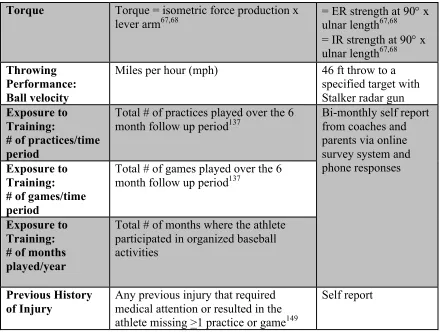
Torque Torque = isometric force production x
lever arm67,68 = ER strength at 90ulnar length67,68 ° x = IR strength at 90° x ulnar length67,68
Throwing Performance: Ball velocity
Miles per hour (mph) 46 ft throw to a specified target with Stalker radar gun Exposure to
Training:
# of practices/time period
Total # of practices played over the 6 month follow up period137
Bi-monthly self report from coaches and parents via online survey system and phone responses Exposure to
Training: # of games/time period
Total # of games played over the 6 month follow up period137
Exposure to Training: # of months played/year
Total # of months where the athlete participated in organized baseball activities
Previous History of Injury
Any previous injury that required medical attention or resulted in the athlete missing >1 practice or game149
Table 3.3. Aim 1 – A Priori Power Analyses Based on Expected Injury Ratesa Sample Size Total Injury
Rate
Estimated # of Injuries
Estimated Power Pilot Study 275 0.16 44 100% Based on Previous
Research31,137
275 0.18 50 100%
a Total injury rates determined using data from a pilot study and two previous research studies conducted in adolescent baseball players (13-18 years old).
Table 3.4. Aim 2 – A Priori Power Analyses Based on Isometric Shoulder Strength Measuresa
Independent Measure Effect Sizeb Alpha Level Estimated Power Dominant Shoulder
ER Strength 0.41 0.05 99%
Dominant Shoulder
ER:IR Strength Ratio 0.20 0.05 91% Normalized Dominant
Shoulder ER Strength using %ND Strength Method148
0.22 0.05 95%
a The power analyses for Aim 2 were conducted using isometric shoulder strength data from a pilot study.
CHAPTER 4
SPORT SPECIALIZATION INCREASES UPPER EXTREMITY INJURY
RISK IN YOUTH BASEBALL PLAYERS: A PROSPECTIVE COHORT
STUDY
4.1 Abstract
Introduction: Despite rising awareness of the risks associated with year-round sports
specialization, athletes continue to specialize at increasing rates across the U.S. The effects of sport specialization on the development of upper extremity (UE) injuries in
baseball players have not been previously studied in youth populations.
Objective: The purposes of this study were to 1) establish UE injury incidence, and 2) examine the association of sport specialization and specialty training as a pitcher on UE
injury rates in a cohort of youth athletes.
Methods: Youth baseball players (9-12 years old) were examined and then followed for
approximately 6 months via coach/parent surveys. Athletic exposure (AE) and presence of UE injury was tracked per player. All athletes who reported injuries were re-examined by a licensed physical therapist. Athletes were classified as specialized or multi-sport
using 2 methods: self-classification and based classification, however research-based results were used for data analysis. Chi square analyses were used to compare the
absolute, and absolute risk differences with 95% confidence intervals (CI) were calculated between groups.
Results: Uninjured male baseball players (n=159) were prospectively followed for an
average of 6.7±1.5 months in this study. The UE injury incidence rate was 16.3/1000 AEs
(95% CI=9.3, 23.3). The majority of athletes (83.0%) were classified as specialized in this cohort. Specialized athletes demonstrated a 15.9% increase in absolute risk for developing an UE injury when compared to multi-sport counterparts (P=0.03). Conclusion: Sport specialization impacts an athlete’s UE injury risk during youth baseball. USA Baseball’s pitch count limitations were designed to decrease overuse
injuries at the shoulder and elbow by requiring more athletes to pitch. This may have inadvertently had the opposite effect by increasing the rate of specialty training outside of competition.
Clinical Relevance: Participation in specialty training as a pitcher may influence the development of UE injuries in youth populations. Youth pitchers who took pitching
lessons demonstrated a significant increase in absolute injury risk, which may be related to increased athletic exposure.
Keywords: youth baseball; risk factors; early sports specialization; early position
4.2 Introduction
Baseball is a popular sport to play in the United States, with approximately 13-17 million athletes under the age of 18 participating at the club and high school
levels.4,31,51,143 The incidence of baseball-related overuse injuries is comparatively low in adolescent players (13-18 years old) with 1.3 – 4.0 injuries per 1,000 athletic exposures
recorded.31,137 It is unknown in youth baseball players (9-12 years old) as there is a significant lack of epidemiologic data in this population. The majority of baseball-related overuse injuries are reported in the upper extremity (UE), specifically at the shoulder and
elbow, however little is known about the etiology and development of these injuries at the youth level.31,137
One potential explanation for the lack of epidemiologic data may be related to difficulties in injury surveillance, particularly in the younger age groups.43,75 Unlike the collegiate and professional ranks, who employ athletic trainers to record and treat their
injuries, youth and adolescent injuries are inconsistently reported, and often treated, by the athletes’ parents and coaches.43,113 The burden of identifying and recording injuries is
much greater at this level as the majority of youth players participate on multiple teams, and in some cases multiple sports, throughout the year.75
Despite evidence suggesting that sport specialization may be related to the
development of overuse injuries in youth and adolescent athletes, its prevalence continues to increase in the U.S.72,107 Prior research has defined sport specialization based on a