2333
A Prototyping Method For Tourism Mobile
Commerce Applications Development And
Evaluation
SALEH ALQATAN, MOHAMMAD H. ALSHIRAH
Abstract: In tourism environment, M-commerce has become a new important topic of research in the domain of information systems and it has also become the backbone of majority of Small and Medium-sized Enterprises (SMEs). The paper aimed to develop a tentative design of Tourism M-commerce prototype (TMCP) based on the information quality, system quality, service quality and trust perceived, and to employ SUS and expert review in evaluating the TMCP for determining the factors influencing Mobile commerce by small and medium-sized tourism enterprises (SMTEs). the questionnaire was distributed to the target sample and the obtained data from questionnaires was analyzed through the SPSS statistical software. The results indicates the importance of information quality, system quality, service quality, and perceived security as core factors which influence on the trust to accept M-commerce application in SMTEs. This study opens future work for using the identified quality factors as guidelines for researchers and designers to design and develop M-commerce applications in such enterprises.
Keywords: Mobile commerce prototype, Small and Medium-sized Tourism Enterprises, evaluation, Trust Perceived, Information Quality, System Quality, Service Quality.
—————————— ——————————
1.
INTRODUCTION
Mobile commerce (M-commerce) allows for distance trading, whereby activities like marketing, advertising, buying, and selling can take place via wireless hand-held gadgets, like Smartphone's[1]. Mobile technologies, like M-commerce, can always be complemented and synergised with other technological tools like the internet. This feature has enabled it to transform into an outstanding Interactive Marketing tool that assists companies, like Small and Medium-sized Tourism Enterprises (SMTEs), in using various technological media for communication and sales activities [2]. The tourism M-Commerce application is advantageous for payment application software on mobile devices because it provides a convenient transaction process between tourism service customers and suppliers [3]. It also offers personal, continual service and assistance from the beginning to the end of travelling in comparison to traditional e-commerce that restricts its service to the preparation phase prior to travelling and excludes any service and assistance during and after travelling[3, 4]. Furthermore, for the development of this application, mature mobile information and communication technologies, like M-commerce, becomes a necessity since it is considered to be the main core for development[3, 5]. M-commerce is expected to surpass Electronic M-commerce for digital transactions due to its faster, more secure, and scalable service (Michael and Salter, 2006). Furthermore, M-commerce technology offers numerous advantages and benefits to SMTEs, which makes them widely used in various fields[6]. The sectors that commonly use M-commerce applications will be described as follows: Financial sectors: The financial sector has taken advantage of M-commerce applications for financial and banking services. Through mobile applications, customers are able to transfer money, pay bills, and get stock updates
directly through their mobile device. Services: Many service-based companies use M-commerce applications. Companies often post deals on M-commerce sites, and allow customers to book or rent services from the applications. The development of M-commerce and its expansion into different fields was evidenced by Niranjanamurthy and Kavyashree [7] and it is due to mobile application development. M-commerce is more suitable for developing countries, as desktops are immobile, pricey and has weak fixed-line infrastructure [8]. According to Chetan [9], the development of M-commerce in developing countries, which is slow. This prompts further studies to determine the slow growth of M-commerce in developing countries.
According toLi [10] and Li and Yeh [11], M-commerce development in tourism is very much influenced by trust in the M-commerce platform. In other words, trust is still a major hindering factor in the development and growth of tourism mobile commerce[3]. However, studies on trust in consumer marketing are still lacking. In addition, evidence indicates that trust is the main de-motivating factor in accepting and adopting M-commerce applications[12-14]. Despite studies that examined factors influencing users‘ trust in M-commerce[15-17], there is still a need to propose a theory and a model addressing consumer trust in adopting M-commerce[10, 18]. Therefore, this study is expected to fill this gap in the literature. It is of paramount importance to understand consumer trust, as evidenced by past researches. Turner [19]andHa and Stoel [20] reported that website quality significantly influenced perceived trust. Website quality is comprised of many dimensions, namely information, system, and service quality[21]. He proposed a scale of a three-dimensional website quality model, where both information and system quality are described from a technical point of view and service quality is described from the customers‘ point of view. According to Zhou [22], all these factors are important for understanding continued use of various information systems including M-commerce. However, little work has investigated the impact of all three quality factors on trust in any context[23]. Furthermore, from a quality perspective, the development of trust among users on M-commerce usage is still scarce[18, 24]. Therefore, this study seeks to investigate IS determinant factors of users‘ trust in M-commerce ————————————————
Saleh Alqatan, Al-Mafraq, Jordan [email protected]
Mohammad H. Alshira'h, Department of Information Systems, Prince Hussein bin Abdullah Faculty of Information Technology, Al al-bayt University, Al-Mafraq, Jordan
acceptance, particularly through information quality, system quality and service quality.
2 TRUST IN MOBILE COMMERCE
In M-commerce, trust is viewed to be complex variable characterized by different dimensions, and is influenced by internal and external dynamic factors. In other words, the trust value is a dynamic one that poses a significant challenge and although several authors have researched the effect of different factors on consumers‘ trust, literature differentiating factors that comprise consumer‘s trust is still lacking, and in turn, the multidimensional character of trust is still unclear[25, 26]. Thus, trust may be described as a complex variable in terms of M-commerce acceptance among SMTEs and this is compounded by its relative newness to literature. In this regard, a scale of a three-dimensional website quality model was proposed byGitau and Nzuki [21], wherein information as well as system quality is viewed from a technical viewpoint and service quality from a customer viewpoint. The dimensions are discussed in detail in the next sections.
2.1 Information Quality
In literature, information quality has been revealed to be a significant factor of building trust[27, 28]. In a relationship based on trust, reliability, relevance and information exchange personalization provide significant contributions[29, 30]. In M-commerce, the challenge also lies in the way users are enabled to efficiently retrieve information needed at any time and at any place[31]. In other words, the quality information provided by the company directly influences the customer‘s perception of it and its products. Similarly, the information quality provided to the mobile technology devices of customers influence their trust on the company. A major issue that contributes to whether or not the users decide to purchase a new product also lies in their trust in technology, indicating the importance of high quality information provided in the mobile commerce sites[30, 32]. It is important to ensure that trust among consumers is high at the onset as this will reinforce their perception of M-commerce website information quality.
2.2 System Quality
System quality attributes are significant to the concept of trust as extant literature reveals that the technical aspects of IS impact the user‘s inclination to trust[33]. In this respect, Oug [34] viewed system quality from the technological aspect and some functional aspects based on the system and user and he revealed it to comprise of significance factors focusing on hardware and software of the system based on mutual trust. In other words, it is impossible for users to trust a system that they find no satisfaction in using, one that slowly responds to their requests, and that provides them with an ineffective
navigation system. Such system may lead the users to be critical of the trustworthiness of the system, its competency in providing high quality services and eventually, this results in lower satisfaction of users[33, 35, 36].
2.3 Service Quality
2335
Fig. 1. The Trust Model for the Tourism M-Commerce
3 PROTOTYPING METHODOLOGY
The prototypes generally go through four processes and they are designing, implementing, testing and operating. In the initial phase, the prototype is drawn and provided with shape, size colour as well as other features. This is followed by the second phase, where the prototype is developed from the required materials based on its design, and the third phase
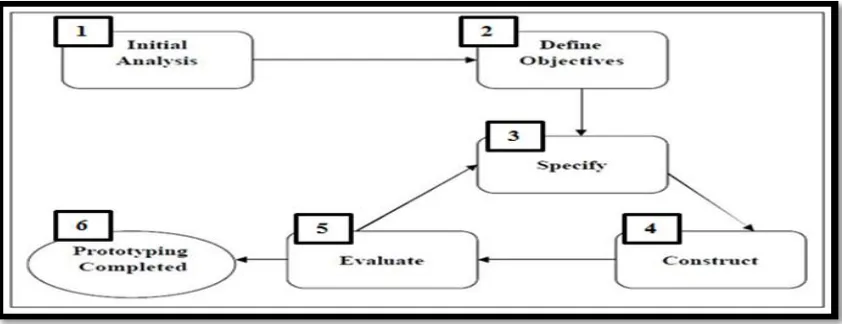
entails prototype testing to guarantee that it is ready and effective for use. In the final phase, the prototype is operated to determine its proper and effective operation. In regards to this, Bennett, et al. [44]proposed a conceptual framework called the system life cycle of prototyping, where the cycle goes through six phases as depicted in Figure 2.
Fig. 2. A Prototyping Life Cycle
3.1 Initial Analysis
In this step, the prototype requirements are determined for its development and the designers concentrate on the objective behind such a prototype. To answer such a need for more research, the present study used an explorative method to determine and highlight the factors contributing to the successful creation of a prototype application on M-commerce for SMTEs and these include, perceived trust and trust antecedents (i.e. information quality, system quality and service quality).
3.2 Defining Prototype Objectives
The first phase is followed by the software development phase known as the requirement analysis. This phase is a resource-consuming activity, where the needs and requirements of users are determined. Building prototypes without clear objectives will mislead the designers or make evaluation process impossible and difficult [45]. In this study, the prototype presented is an attempt to highlight the trust model‘s elements (variables or factors) in its initial design and to act as
a guide towards developing an integrated system of M-commerce tourism for employment by the SMTEs.
3.3 Specifying Prototype
Although the use of prototype is meant to be temporary, it is still crucial to include all the features and to leave the system open for modifications that will be easily made once the final product is developed. After the initial analysis involving the establishment of objectives and the specification of the prototype, the prototype is further evaluated for further modifications.
3.4 Constructing Prototype
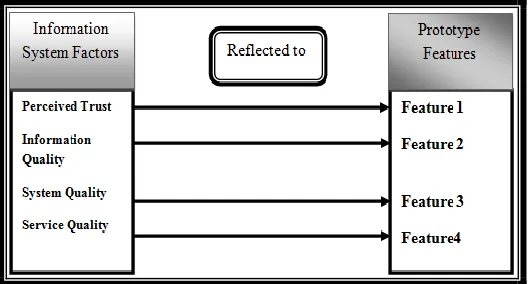
study due to its low cost and capability of evaluating several other alternative ideas. The design of the prototype was developed according to the proposed trust model. This shows a positive influence of independent factors on the dependent one in the acceptance of M-commerce application among SMTEs. In other words, the factors are displayed by the recommended prototype, where it is deemed as another examination of research model through the validation of prototype for user acceptance. Added to this, the prototype is deemed to serve as a guideline for Jordanian SMTEs to create a fully integrated M-commerce applications in the future. According to prior studies, significant relationships exist between the factors of user‘s acceptance and prototype features. Added to this, prior studies also validated the important role of prototype features in their prediction of the perceptions and acceptance of users in different contexts[47-51]. In this stage, the user‘s requirements in the form of user‘s acceptance factors are changed into prototype features and designed in a way that is depicted in Figure 3.
Fig. 3. User Acceptance Factors Reflected on Features in the
Application Design
The process of reflection is based on the premise that the user‘s acceptance tests functions optimally in analysing factors influencing user acceptance, and in paving the way for design and development of a certain application. The primary aim of technology acceptance models or theories aside from determining and confirming user acceptance factors as user behaviour determinants and intent to use, is to provide an insight on the way user acceptance is guaranteed via the design application [52]. In this study, the results indicated that user acceptance factors (perceived trust, perceived information quality, perceived system quality, perceived service quality) positively affect behavioural intention to use M-commerce in SMTEs. These factors were reflected in the recommended prototype as explained in Table 1. Nevertheless, as the prototype is an incomplete system, only some of the features of IS factors were presented.
TABLE 1KEY INDICATORS FOR THE USER ACCEPTANCE IN THE DEVELOPMENT OF PRELIMINARY PROTOTYPE OF TOURISM M-COMMERCE
Author(s) & Year IS Factor Measurement Item
Hasan, 2014; Hussin et al., 2007; Ishaya and Macaulay, 2000; Kim et al., 2001
Perceived Trust (PT) -Necessary Information Such As Company Address, Contact Person
-Navigation Design Strong et al., 1997; Delone and
McLean, 2003; Ayyash, 2013
Information Quality (Inf_Q)
-Relevancy Information -Usefulness Information
Kwak, 2014 System Quality (Sys_Q) Aesthetics
Zeithaml et al., 2002; Al-Shamayleh et al., 2015; Tidwell, 2010
Service Quality (Ser_Q) - Graphic Style
This phase has a twofold emphasis, with first on designing architecture and the second on rapid development. Thus, a preliminary application development necessitates the inclusion of rapid development tools as follows: Program Design: The preliminary system would involve internet-based prototyping solutions based on World Wide Web browsers that employ PHP and Android software. Proposed User Interface: would use a combination of Macromedia Dreamweaver MX, Adobe Photoshop, Genymotion, flash etc. Database: would include online MySQL editor for the database, using MyAdmin. It is worth keeping into consideration that the actual evaluation of the interactive system can be carried out empirically only when it involves the development and testing of system design. In such evaluations known, the application design is examined in comparison to requirements of user acceptance that are.
3.5 Evaluate prototype and recommended changes
The actual evaluation of prototypes can only be conducted in an empirical manner [53] and the prototype testing with actual
users is important to assess the usability and acceptability of it [54]. Hence, actual users‘ evaluations are crucial in the assessment of actual user acceptance and new application adoption. As a consequence, in this stage, the working of the initial M-commerce tourism application is reviewed according to the users or the workers employed in SMTEs. The prototype aims to investigate the proposed aspects of the system and as such, it has to be evaluated on the basis of the system‘s objectives. If the objectives are not met, then modifications have to be conducted. In regards to this, the final three stages are repeated over and over until the objectives are satisfied.
4 TOURISM MOBILE COMMERCE PROTOTYPE
DESIGN
2337
4.1 Conceptual design
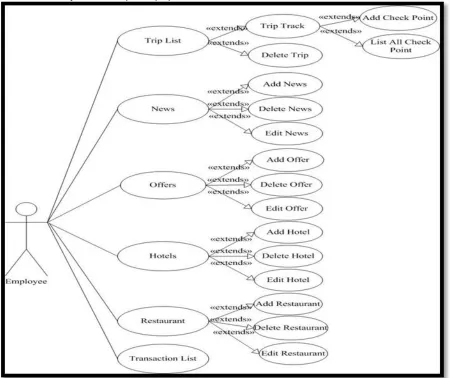
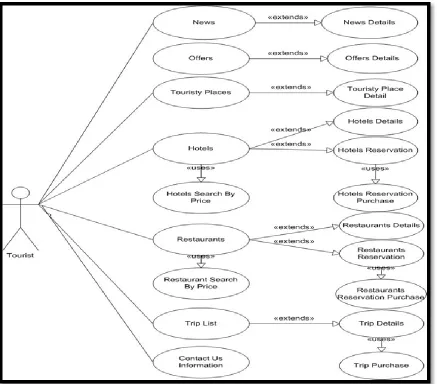
The first step is to create a conceptual design for the prototype. In this stage, a conceptual model is produced, which is a description of the product, how it performs, and its appearance [55]. A good conceptual model is one that is understandable and appropriate for the user [56]. In the conceptual design, the Use-Case Diagram can be produced to illustrate and comprehend the developed software [57]. From the perspective of the user, Use Case Diagrams show the application functions that are offered to the user [58]. The definition of the use case is the set of interactions between the user and the system for a specific purpose, where
the user specifies the role of each. Use cases was initially used in the development of object-oriented software, and then later used for the innovative design of new products by focusing on the user experience design [59]. In this study, the uses case diagram is used to explain the interactions between the employees who are working in SMTEs and tourists as users. This will form the tourism M-commerce prototype. The uses case diagrams of the prototype for SMTE employees and tourists are shown in Figure 4 and Figure 5, respectively.
Fig. 5. Use Case Diagram of the Prototype for Tourist
4.2 Physical design
According to Olander [56], the physical design is different from the conceptual design because it covers specific features of the product in more depth. Features that are described in the physical design include the appearance and colours, auditory characteristics, images, icons, and the design of the menu [55]. In this stage of prototype development, the architecture of the system and design of the interface will provide specific information that is required to create a good system [57].
4.2.1 Tourism m-commerce architecture for SMTEs
The architecture of the system refers to the structure of the system. It consists of various components of the software, external physical properties of the components, and how they interact with one another [60]. In the M-commerce implementation, the organizational architecture in the context of the tourism industry is crucial to ensure effective integration and implementation of the requirements [61]. Such architecture is depicted by a model in an effective manner to determine and explain the relationship between the important
2339
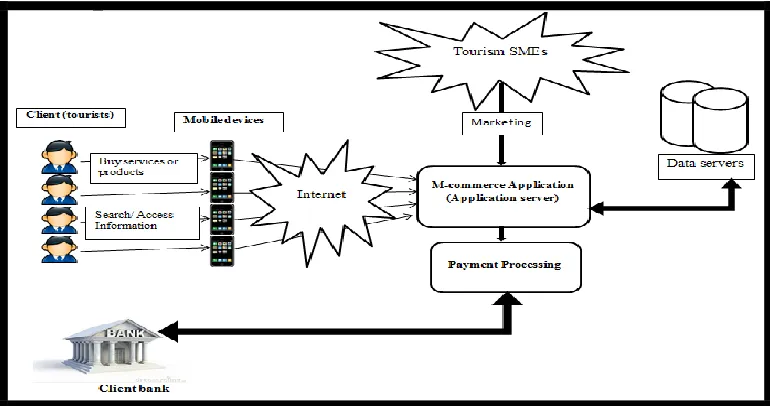
Fig. 6. Tourism M-commerce Architecture (TMA)
In the present study, the researcher is developed the tourism M-commerce architecture in order to help the development and successful use of M-commerce application in SMTEs. The prototype‘s architecture is explained in detail as follow: The Client or Tourist – is the one who uses his or her phone device to access information regarding tourism, and to purchase products or services provided by the tourism SMTEs suppliers and application. The M-commerce Application – is made up of a network of tourism information that links the tourist with the tourism businesses and it has a major role in the life-cycle of M-commerce prototype architecture. Tourism SMEs (service or product provider) – is the one who provides and advertises services or products that aligns with the needs and desires of tourists with the assistance of M-commerce application. Process of Payment – is a process that is rife with complication as it involves several parties and several communication interactions to take place between the parties involved. Generally, a payment process starts with the user‘s decision to pay for the service or product online through the mobile device of the M-commerce application. The first step is to enter the application and the user connects to the online service via an account. The user then accesses the systems financial transaction capabilities in the architecture and the process of payment sends the transaction to the bank (financial institution). The Data Server (DS) – this consists of a database group that has tourist providers‘ information on their products and services for the tourists. Prior attempts have been made to create a standardized architecture that integrated M-commerce applications in SMTEs. There is still a need for more studies to identify an effective M-commerce architecture [65] This study answers the call for this need by bringing forward a new architecture that allows M-commerce applications to be more easy and convenient to use in the context of tourism through the use of mobile devices. Moreover, the architecture integrates the M-commerce application with SMTEs for the tourists to effectively and efficiently search for services, products and the required information.
4.2.2 Interface design of the prototype
In this study, the important requirements for successful Tourism
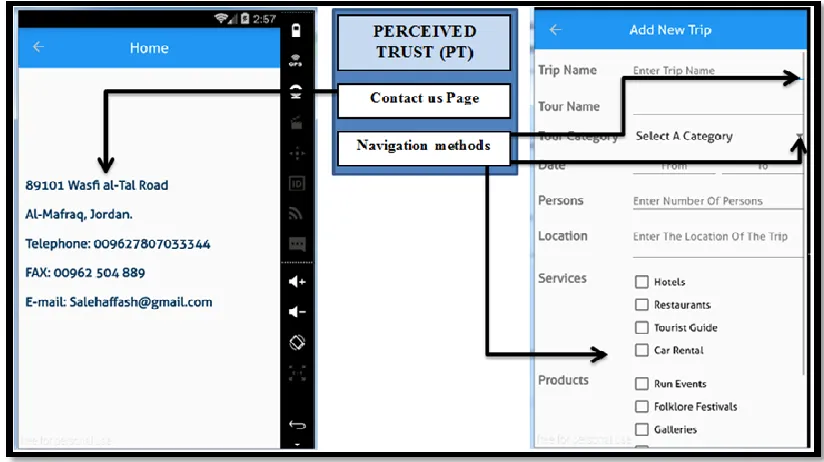
Fig. 7. Perceived Trust in the Tourism M-commerce Prototype
The second IS factor reflected in the system is perceived information quality. Information quality was defined by Petter, et al. [73] as positive characteristics of the outputs produced by the information system. This is the reason why users often conduct an assessment on the value of information based on the required characteristics of advanced, meaningfulness, completeness, relevancy, usefulness and timeliness [50]. In the study prototype, as suggested by Delone and McLean [74] and Strong, et al. [75],
perceived information quality is represented by two factors, namely relevant information and usefulness of information, as these characteristics develop trust in users in the tourism M-commerce application. By using the tourism M-M-commerce prototype, tourists can get useful information about trips, hotels and restaurants provided by SMTEs before the reservation or booking process, as shown in Figure 8. In addition, they can get relevant information about tourism places, news, and offers.
Fig. 8. The information Quality in the Tourism M-commerce Prototype
The third IS factor reflected in the prototype is perceived system quality. System quality (Sys_Q) refers to an application, whereby the user‘s perception of the application meets his desired characteristics[49, 74]. Visual aesthetics are considered as the important feature that refers to the system quality [76]. According to Mendoza-González, et al. [77], aesthetics refers to the attributes of the mobile interfaces design, such as the use of
2341
colours and, thus, these colours can establish a cultural connection. Furthermore, in our prototype, we used different font sizes for screen titles and items within those screens, while two
fonts differing in weight form a significant and robust visual contrast. Aesthetically, this adds to the dramatic look and attraction. All these features are presented in Figure 9.
Fig. 9. The system Quality in the Tourism M-commerce Prototype
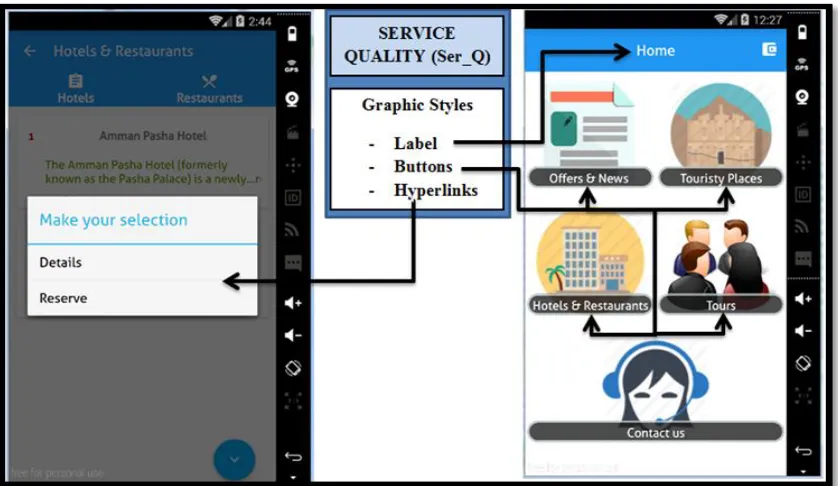
The fourth IS factor that is reflected in the prototype are perceived service quality. Literature on the subject has highlighted graphic style as an important feature that users take into consideration when they evaluate IS applications via service quality[78, 79]. In the present study, perceived service quality is represented by a graphic style and is deemed to be a feature that develops the trust of users in the tourism M-commerce application. According to Ghane and Shokrizade [80], and Kozelko [81], graphics are meaningful and necessary where it is imperative to display products and services. Graphic style refers to the attributes of a website, such as labels, icons or hyperlinks, button graphics, and
logos (symbols). In the proposed prototype, simple and direct hyperlinks and navigation buttons are included to lessen the number of required clicks to make hotel or restaurant reservations and to create efficient paths throughout the prototype. Furthermore, labels are used in the tourism M-commerce prototype to make the site easy to understand and avoid technical jargon. Additionally, the prototype also provides an aesthetic background or pleasant pictures to indicate the icon tasks that tourist can do (refer to Figure 10).
5 PROTOTYPE EVALUATION
Following the completion of the development phase to ensure that the mobile application achieves the study objectives and to confirm that the prototype is effective in increasing the acceptance level of mobile commerce application among SMTEs, the evaluation phase is initiated. Preece, et al. [82] enumerated four reasons to comprehend the evaluation of design usability. According to them, the reasons behind the evaluation are to understand the way users employ technology in reality, to make comparisons among prototypes and to make sure that the product is up to standard. Verification and validation steps are also included during the development of software. Verification involves ensuring that the product is built correctly, consistently, accurately, and completely to the appropriate specification. On the other hand, validation involves ensuring that the right product is being built that meets the requirements of the user. Validations are typically conducted towards the end of the development process to check that it meets the requirements of the software[83]. The process of verification and validation (V&V) testing is conducted by a system tester instead of the developers. It involves a sequence of technical and managerial tasks that help to make improvements to the system quality and system reliability [84]. V&V is also performed to ensure that the system will meet the needs of the user and is particularly important for case based systems. Without appropriate system verification, there is the potential for critical errors in the case representations. Similarly, without appropriate system validation, the system may not make decisions according to the user‘s needs [85]. In this study, validation inspects if the functionalities required by SMTEs are available in the tourism M-commerce prototype, whereas verification investigates the conformity of the tourism M-commerce prototype to its requirements, which were identified earlier in the initial phase.
5.1 Verification
During the development of software, manual checking of documents and files is conducted to as verification of the design code [85]. Verification can be defined as a set of procedures that are performed to ensure that the software in any given stage of development meets the requirements that were set forth in the previous stage [86]. One typical method of verification includes software review, which will compare the specifications of the product against the requirements and determine if any gaps exist. The general purpose of verification is to identify and resolve any potential errors before it results in a failure [86]. The expert review is a common and reliable method for verification of new research and development programs [87, 88]. Expert reviews involve a group of professionals who have a particular expertise in interface design. The objective of expert review is to review and examine system and identify any potential issues or problems [89]. Discussion among the panel of experts also helps to alleviate any potential problems between the key stakeholders, as well as to recognise potential issues that the user may have [90]. For the best results, it is recommended that a minimum of three experts be involved and all participants should ideally be in similar fields [91]. For the purposes of this study, an expert review was performed as a verification step to ensure that the initial phase of the tourism M-commerce prototype met the requirements that were identified in the initial phase. The experts that involved in this study are two experts from Department of Software
Engineering, Kuala Lumpur Infrastructure University College (KLIUC), Malaysia and one expert is from Al al-Bayt University, Jordan.
5.2 Validation
2343
usefulness, ease of use, and the client‘s attitude, the researcher chose to add a twelve-item scale to gauge the representation of trust and IS success factors in the prototype. The items in the evaluation questionnaire were developed and adapted to form the main questionnaire and was used to
measure the impact of the factors influencing the acceptance of M-commerce among SMTEs. This technique is supported with studies conducted by ayyash [50] and Alafeef [49]. The second part of the questionnaire is presented in Table 2.
TABLE 2 THE SECOND PART OF EVALUATION QUESTIONNAIRE
Construct Item Perceived trust (PT)
PT1 This prototype will use my personal information reasonably. PT2 I feel that this prototype is trustworthy.
Information Quality (Inf_Q)
Inf_Q1 This prototype provides me with accurate information. Inf_Q2 This prototype provides relevant information. Service Quality (Ser_Q)
Ser_Q1 Pages of this prototype could be opened quickly.
Ser_Q2 Services of this prototype could be provided to users in a proper and timely way.
System Quality (Sys_Q)
Sys_Q1 This prototype helps me to reduce the errors in my job.
Sys_Q2 This prototype allows for integration with other information systems. Behavioural Intention (BI)
BI1 I will use this prototype on regular basis in the future. BI2 I will strongly recommend others to use this prototype.
6 PROTOTYPE EVALUATION RESULTS
This section shows the results of the tourism M-commerce prototype evaluation. In this study, the evaluation results of the prototype are divided into two parts, namely (1) verification results and (2) validation results.
6.1 Analysis of Verification Results
The data was analysed by calculating the number of ‗YES‘ and ‗NO‘ answers of the criteria for each factor. The ‗YES‘ answer
indicates the factors that reflected into the prototype through its features are correct, while ‗NO‘ answer indicates the factors are not reflected into the prototype through its features correctly. This technique was used to identify the usability level of the mobile commerce models that were being evaluated by the three experts in the software engineering. Table 3 shows the results of verification for the tourism M-commerce model that was evaluated. The results are divided into four sections based on the dimensions of usability that were identified in the expert review form.
TABLE 3 VERIFICATION RESULTS
Factors Features Expert 1 Expert 2 Expert 3
Answer Answer Answer No Yes No Yes No Yes Perceived
Trust
Contact Us Information, such as Address, Telephone Number, Fax Number, and Email Details
√ √ √
Ease Of Navigation (Navigation Design)
√ √ √
Information Quality
Relevant Information √ √ √
Usefulness Information √ √ √
System Quality
Aesthetics Attributes, such as Use of contrasting colors, Make headers look different from regular text, Use of a maximum of two different font faces per screen, Limit table size and Provide suitable size for images.
√ √ √
Service Quality
Graphics Styles, such as label, icons or hyperlinks, button graphics, and logo (symbols).
√ √ √
Table 3 shows the results of the verification test for the tourism M-commerce model, in terms of trust, information quality, system quality and service quality. The results show that all experts believed that the presence of ‗Contact Us‘ information
graphic styles and service quality by providing aesthetic attributes. However, expert recommendations after the testing called for future improvements in the tourism M-commerce prototype application, with the following comments: It is difficult to distinguish the difference between ease of navigation as a trust feature and ease of use.
6.2 Analysis of Validation Results
The researcher distributed the questionnaires to 22 employees who are working in SMTEs to obtain their feedback. The sample units were chosen from the main sample selected from for the actual survey. The evaluation assisted in examining the attitude of users towards the tourism mobile commerce prototype.
6.2.1 Demographic Profile
Respondents of SMTEs employees from different age, gender, education background, and level of mobile skills were selected to evaluate the tourism M-commerce prototype. The demographic profile of the respondents is presented in Table 4.
TABLE 4 DEMOGRAPHIC PROFILE
Variable Frequency Percentage
Gender Male
Female
14 8
63% 36%
Age < 24
25-29
5 5
22.7% 22.7%
30-34 35-39
8 4
36.4% 18.2% Education Diploma
Bachelor
11 11
50% 50% Level of mobile
skills
Much Very much
12 10
54.5% 45.5%
From Table 4, it can be seen that 63% of the respondents are male, whereas 36% of them are female. As for their degree, 50% of the respondents are Bachelor students, and 50% are Diploma students. Majority of the respondents have high level of skills on mobile (54.5%) and 45.5% are very much. This study‘s research instrument consists of 11 questionnaire parts that was adapted from various sources in order to gather information regarding SUS, PT, Inf_Q, Ser_Q, Sys_Q and BI. In this section, the descriptive analysis for each variable is discussed, and it shows that respondents are generally optimistic about the prototype.
6.2.2 System Usability Scale (SUS)
SUS concerns on how the respondents use prototype. In this study, the scale used is 1 = strongly agree, 2 = agree, 3 = neutral, 4 = disagree and 5 = strongly disagree. Thus, the factors with mean value below 3 are considered important [101], as well as, it measures how the system can assist respondents in obtaining required information. Table5 presents the SUS results.
TABLE 5 MEAN FOR SUS QUESTIONS
Item Mean Standard
Deviation I think that I would like to use this prototype frequently. 1.8182 .795 I found the prototype unnecessarily complex. 3.4091 1.259 I thought the prototype was be easy to use. 1.5000 .511 I think that I would need the support of a technical person to
enable me to use this prototype. 1.5455
.670 I found the various functions in this prototype were well
integrated. 1.4545
.509 I thought there was too much inconsistency in this prototype. 3.7273 1.120 I would imagine that most people would learn to use this
prototype very quickly. 1.4091
.590 I found the prototype very cumbersome to use. 3.7273 1.241 I felt very confident using the prototype. 1.5455 .509 I needed to learn a lot of things before I could go with this
prototype. 3.8182
1.139
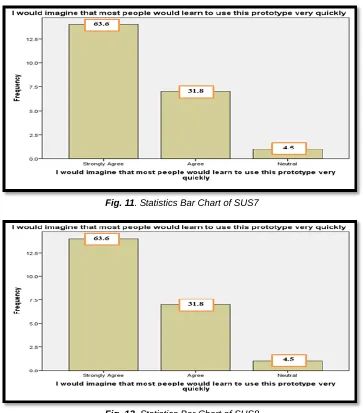
Based on Table 5, the researcher noticed that mean ranges from 1.4091 to 3.7273, while standard Deviation ranges from .509 to 1.259. Based on these findings, the researcher concluded that respondent‘s consideration can also be used. The questions, ―I would imagine that most people would learn to use this prototype very quickly‖ has the highest mean of
2345 Fig. 11. Statistics Bar Chart of SUS7
Fig. 12. Statistics Bar Chart of SUS8
I. Perceived trust (PT)
Table 6 presents the PT results on the concern of user‘s reaction on the system. From Table 6, we can notice that
mean ranges from 1.7273 to 1.5455 and standard deviation ranges from .455 to .509. Based on these findings, we can conclude that users are satisfied with the prototype.
TABLE 6 MEAN FOR PT QUESTIONS
Item Mean Standard
Deviation This prototype will use my personal information reasonably. 1.7273 .455 I feel that this prototype is trustworthy. 1.5455 .509
Fig. 13. Statistics Bar Chart of PT2.
II. Information Quality (Inf_Q)
Table 7 presents the Inf_Q results with the concern of user‘s reaction on the system. Based on Table 7, we can notice that
mean ranges from 1.8182 to 1.6818 and standard deviation ranges from .779 to .795. Based on these findings, we can conclude that users are satisfied with the prototype.
TABLE 7 MEAN FOR INF_Q QUESTIONS
Item Mean Standard
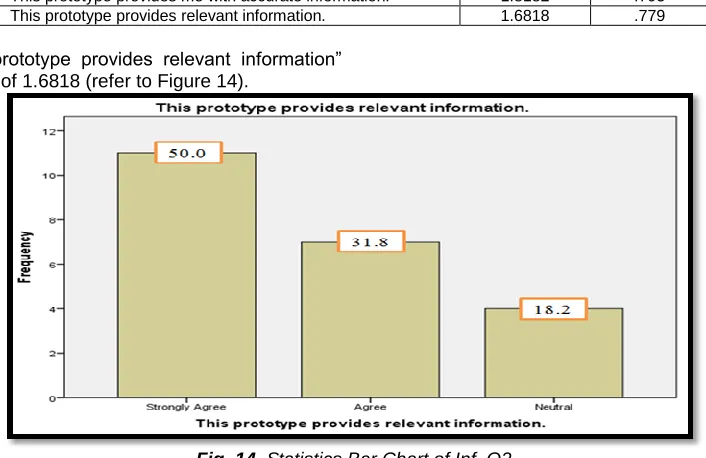
Deviation This prototype provides me with accurate information. 1.8182 .795 This prototype provides relevant information. 1.6818 .779
The question ―This prototype provides relevant information‖ has the highest mean of 1.6818 (refer to Figure 14).
Fig. 14. Statistics Bar Chart of Inf_Q2
III.System Quality (Sys_Q)
Table 8 presents the Sys_Q results with the concern of system quality. Based on Table 8, we can notice that mean ranges
from 1.4545 to 1.7273 and standard deviation ranges from .509 to .550. Based on these findings, we can conclude that prototype has high quality.
TABLE 8 MEAN OF SYS_Q QUESTIONS
Item Mean Standard
Deviation This prototype helps me to reduce the errors in my job. 1.4545 .509 This prototype allows for integration with other information
systems.
1.7273 .550
The question ―This prototype helps me to reduce the errors
2347 Fig. 15. Statistics Bar Chart of Sys_Q1
IV.Service Quality (Ser_Q)
Table 9 presents the Ser_Q results with the concern of service quality provided by the system. Based on Table 9, we can notice that mean ranges from 1.091 to 1.5455 and standard
deviation ranges from .426 to .670. Based on these findings, we can conclude that prototype has high quality of service.
TABLE 9 MEAN OF SER_Q QUESTIONS
Item Mean Standard
Deviation Pages of this application could be opened quickly. 1.9091 .426 Services of this application could be provided to users in a proper
and timely way.
1.5455 .670
The question ―Services of this prototype could be provided to users in a proper and timely way‖ has the highest mean of
1.5455 (refer to Figure 16).
Fig. 16. Statistics bar chart of Ser_Q2
V. Behavioural intention (BI)
BI concerns the behavioural intention to use the system in future as well as how the system can be recommended and intended in terms of behaviour. Table 10 presents the BI
results. From Table 10, we can notice that mean ranges from 1.7727 to 1.3636 and standard deviation ranges from .726 to .869. Based on these findings, we can conclude that user intends to use this prototype.
TABLE 10 MEAN OF BI QUESTIONS
Item Mean Standard
The question ―I will strongly recommend others to use this prototype‖ has the highest mean of 1.3636 (refer to Figure 17).
Fig. 17. Statistics Bar Chart of BI2.
7. CONCLUSION
In this paper, the tourism M-commerce prototype (TMCP) has been developed based on the updated DeLone and McLean information system success model which theoretically showed that the factors positively affect the user trust to accept M-commerce application among SMTEs. Therefore, these factors are reflected to recommended prototype. This is considered as another test for the proposed tourism M-commerce model through prototype validation for user acceptance.
In the evaluation, SUS has proven to be a significant tool used for evaluation whose robustness and reliability have been evidenced time and again. Furthermore, The expert review is a common and reliable method for verification of new research and development programs. Therefore, the SUS and expert review are used to evaluate TMCP. The results matched those from the hypotheses results obtained based on the model. Perceived trust, information quality, system quality and service quality have positively impact on the user trust in the acceptance of tourism M-commerce prototype (TMCP). These results supported the effectiveness of the proposed trust model.
The perceived trust (necessary information and ease of navigation), information quality (relevancy, up-to-date and usefulness), system quality (Aesthetic background or pleasant pictures and forms) and service quality (graphic style) contribute to the successful implementation of mobile commerce applications for SMTEs. In addition, these factors contribute to increase the acceptance level of TMCP in SMTEs. This study opens future work for using the identified quality factors as guidelines for researchers and designers to improve the user trust in designing and developing mobile M-commerce applications.
Finally, this study recommends suggestions for future research. Firstly, the models used include TAM, TTF, Delone and Maclean‘s IS Success Model, and perceived trust, so the researcher suggests that future studies adopt other theories like UTAUT and integrate other factors such as, culture and satisfaction. Secondly, we used the testing method only in the SUS questionnaire to evaluate the tourism M-commerce prototype (TMCP). Therefore, it is recommended that future studies evaluate TMCP by using another method (e.g., Interview).
8. REFERENCES
[1] H.-M. Wang, "Consumers Intention to use M-commerce in Tourism Industry," International Journal of Information Technology and Business Management, vol. 37 pp. 35 - 49, 2015.
[2] E. Bigné, C. Ruiz, and S. Sanz, "key drivers of mobile commerce adoption. an exploratory study of spanish mobile users," Journal of Theoretical and Applied Electronic Commerce Research vol. 2, pp. 48 - 60, 2007.
[3] J. Hu and X. Liu, "An influence study on adopting will of tourism mobile E-commerce by the perceived risk and trust," iBusiness, vol. 5, p. 39, 2013.
[4] M. Hyun, S. Lee, C. Hu, and S.-I. Han, Mobile value proposition development for M-tourism vol. 18, 2009. [5] E. Christou, "Investigating attitudes towards mobile
commerce for travel products," Tourism: An International Interdisciplinary Journal, vol. 58, pp. 7-18, 2010.
[6] S. Grewal, "M-commerce and its growth: an analysis," International Journal of Technical Research, vol. 1, pp. 32-35, 2012.
[7] M. Niranjanamurthy and N. Kavyashree, "Analysis of E-Commerce and M-Commerce: Advantages, Limitations and Security issues," Analysis, vol. 2, 2013.
[8] Euromonitor. (2011). Special Report: Global M-Commerce Set for Strong Growth Potential. Available: https://blog.euromonitor.com/special-report-global-m-commerce-set-for-strong-growth-potential/
[9] Chetan, "2013 Mobile Industry Predictions Survey " Sept 2013.
[10] W. Li, "Dimensions of trust in tourism m-commerce: a conceptual model'," Information Technology Journal, vol. 12, pp. 3279-3283, 2013.
[11] Y. M. Li and Y. S. Yeh, "Increasing trust in mobile commerce through design aesthetics," Computers in Human Behavior, vol. 26, pp. 673-684, 2010.
2349
2008, pp. 263-267.
[13] M. Ullah and S. U. Khan, "Challenges and Success Factors in Mobile Commerce Customer Relationships Management: A Systematic Literature Review Protocol," IOSR Journal of Computer Engineering (IOSRJCE), vol. 2, pp. 25-34, 2012.
[14] MEF, "MEF Report Warns Against Complacency on Consumer Trust," LondonFebruary 20th 2014.
[15] Q. Min, S. Ji, and G. Qu, "Mobile commerce user acceptance study in China: a revised UTAUT model," Tsinghua Science & Technology, vol. 13, pp. 257-264, 2008.
[16] W. S. Hamed, H. S. Hamza, and I. A. Saroit, "Towards a Unified Trust Model for M-commerce Systems," in Information Technology: New Generations (ITNG), 2011 Eighth International Conference on, 2011, pp. 992-997.
[17] C. Piao, S. Wang, J. Wen, and Y. Luo, "Mobile Commerce Trust Model and its Application for Third Party Trust Service Platform," in Commerce and Enterprise Computing (CEC), 2012 IEEE 14th International Conference on, 2012, pp. 120-125. [18] Y. Shao Yeh and Y.-M. Li, "Building trust in
m-commerce: contributions from quality and satisfaction," Online Information Review, vol. 33, pp. 1066-1086, 2009.
[19] Turner. (2015). Travel & Tourism - Economic Impact 2015 Malaysia. Available: https://www.wttc.org/media/files/reports/economic%20 impact%20research/coun
tries%202015/malaysia2015.pdf
[20] S. Ha and L. Stoel, "Consumer e-shopping acceptance: Antecedents in a technology acceptance model," Journal of Business Research, vol. 62, pp. 565-571, 2009.
[21] L. Gitau and D. Nzuki, "Analysis of determinants of m-commerce adoption by online consumers," International Journal of Business, Humanities and Technology, vol. 4, pp. 88-94, 2014.
[22] T. Zhou, "Examining the critical success factors of mobile website adoption," Online Information Review, vol. 35, pp. 636-652, 2011.
[23] D. H. McKnight, N. K. Lankton, A. Nicolaou, and J. Price, "Distinguishing the effects of B2B information quality, system quality, and service outcome quality on trust and distrust," The Journal of strategic information systems, vol. 26, pp. 118-141, 2017.
[24] H.-M. Lee and T. Chen, "Perceived quality as a key antecedent in continuance intention on mobile commerce," " International Journal of Electronic Commerce Studies", vol. 5, pp. 123-142, 2014. [25] F. a.-A. Aghdaie and S. Fahti, "Factors Affecting the
Attitude of Trust in Internet Purchasing from the Perspective of Consumers," Interdisciplinary Journal of Contemporary Research in Business, vol. 3, pp. 208-221, 2011.
[26] R. M. AL-Dwairi and M. A. Kamala, "Determination of the Factors that Influence Consumers' Trust in B2C e-commerce: An Empirical Approach," presented at the International Conference on CyberWorlds, Bradford, 2009.
[27] P. Keen, G. Ballance, S. Chan, and S. Schrump, Electronic commerce relationships: trust by design:
Prentice Hall PTR, 1999.
[28] J. Wei, Mobile Electronic Commerce: Foundations, Development, and Applications: CRC Press, 2015. [29] Y. Salaün and K. Flores, "Information quality:: meeting
the needs of the consumer," International Journal of Information Management, vol. 21, pp. 21-37, 2001. [30] K. Siau and Z. Shen, "Building customer trust in
mobile commerce," Communications of the ACM, vol. 46, pp. 91-94, 2003.
[31] E. Baharudin, "A framework implementation for information accuracy in mobile commerce," Degree thesis, Faculty of Computer and Mathematical Sciences, Universiti Teknologi MARA, Malaysia, 2007. [32] E. A. Thornberg, "Users' perception of risk and trust in mobile payments," Bachelor of Arts Systems Science, Department of Computer Science, Electrical and Space Engineering, Luleå University of Technology, Sweden, 2015.
[33] A. Vance, C. Elie-Dit-Cosaque, and D. W. Straub, "Examining trust in information technology artifacts: the effects of system quality and culture," Journal of management information systems, vol. 24, pp. 73-100, 2008.
[34] G. Oug, "Selection of the success factors of mobile commerce and evaluation using AHP," IJCSNS International Journal of Computer Science and Network Security, vol. 6, pp. 127-134, 2006.
[35] M. Khosrow-Pour, Contemporary Advancements in Information Technology Development in Dynamic Environments: IGI Global, 2014.
[36] D. Gefen, P. Pavlou, I. Benbasat, H. McKnight, K. Stewart, and D. Straub, "ICIS Panel Summary: Should Institutional Trust Matter in Information Systems Research?," Communications of the Association for Information Systems, vol. 17, p. 9, 2006.
[37] J.-S. Chiou and C. Droge, "Service quality, trust, specific asset investment, and expertise: Direct and indirect effects in a satisfaction-loyalty framework," Journal of the Academy of Marketing Science, vol. 34, pp. 613-627, 2006.
[38] C.-h. Lien, J.-J. Wu, Y.-H. Chen, and C.-J. Wang, "Trust transfer and the effect of service quality on trust in the healthcare industry," Managing Service Quality, vol. 24, pp. 399-416, 2014.
[39] K. C. Lee and N. Chung, "Understanding factors affecting trust in and satisfaction with mobile banking in Korea: A modified DeLone and McLean‘s model perspective," Interacting with computers, vol. 21, pp. 385-392, 2009.
[40] T. Zhou, "An empirical examination of continuance intention of mobile payment services," Decision Support Systems, vol. 54, pp. 1085-1091, 2013. [41] D. Gefen, "Customer loyalty in e-commerce," Journal
of the Association for Information Systems, vol. 3, p. 2, 2002.
[42] N. Dlodlo, "The Relationships among Service Quality, Trust, User Satisfaction and Post-adoption Intentions in M-payment Services," Mediterranean Journal of Social Sciences, vol. 5, pp. 165-175, 2014.
of the 2015 Postgraduate Colloquium on Informatics and Mathematics, Kuala Terengganu, Malaysia, 2015. [44] S. Bennett, S. McRobb, R. Farmer, and K. Mosman, Object-oriented systems analysis and design using UML. ed: London, England: McGraw Hill, 2006. [45] S. Bennett, S. McRobb, and R. Farmer,
Object-oriented systems analysis and design using UML vol. 2: McGraw-Hill Berkshire,, UK, 2006.
[46] J. Preece, H. Sharp, and Y. Rogers, Interaction design: beyond human-computer interaction, 2nd Edition ed.: John Wiley & Sons, 2007.
[47] B. H. Wixom and P. A. Todd, "A theoretical integration of user satisfaction and technology acceptance," Information Systems Research, vol. 16, pp. 85-102, 2005.
[48] Y. Fan, "User Acceptance Model Driven Design," Ph.d, Faculty of Information Technology, Monash University Australia, 2008.
[49] M. Alafeef, "a demographical interface design model for the adoption of mobile banking applications in developing countries: case study in jordan," PH.D, faculty of information science and technology, universiti kebangsaan malaysia, bangi, 2013.
[50] m. m. ayyash, "an information system model for trust in e-government initiative adoption in Palestinian public sector," PH.D, faculty of information science and technology, Universiti Kebangsaan Malaysia, Bangi, 2013.
[51] K. A. Pituch and Y.-k. Lee, "The influence of system characteristics on e-learning use," Computers & Education, vol. 47, pp. 222-244, 2006.
[52] V. Venkatesh, M. G. Morris, G. B. Davis, and F. D. Davis, "User acceptance of information technology: Toward a unified view," MIS Quarterly, pp. 425-478, 2003.
[53] W. M. Newman, M. G. Lamming, and M. Lamming, Interactive system design: Addison-Wesley Reading, 1995.
[54] J. Nielsen, Usability engineering. Cambridge, Massachusetts, USA: AP Professional, 1993.
[55] J. Preece, Y. Rogers, and H. Sharp, Interaction design: beyond human-computer interaction, 1 edition ed.: John Wiley & Sons, 2002.
[56] C. Olander, "Design and implementation of a portal application for mobile handsets," Master, Department of Computing Science, Umea University, Sweden, 2010.
[57] A. H. Rashid, Collaborative timesheet management system: Legacy, 2006.
[58] A. R. M. Alkhazali, "Application of Mobile Tourism for Kedah," Master, College of Arts and Sciences Universiti Utara Malaysia, Kedah, Malaysia, 2012. [59] R. Gong, S. Luo, and J. He, "Use case based
innovative design of E-commerce website," in IEEE 10th International Conference on Computer-Aided Industrial Design & Conceptual Design (CAID & CD 2009), Wenzhou, China, 2009, pp. 2021-2025. [60] B. Van Schewick, Internet architecture and innovation:
Mit Press, 2012.
[61] K. Hameed, H. Shah, K. Ahsan, and W. Yang, "An Enterprise Architecture Framework for Mobile Commerce," IJCSI, p. 11, 2010.
[62] C. Christer, C. Joanna, and W. Pirkko, "Mobile
Services For The Hospitality Industry," presented at the Thirteenth European Conference on Information Systems, Regensburg, Germany, 2005.
[63] S. Duffy, "Factors influencing technology adoption amongst tourism SMEs," in Tourism and Hospitality Research in Ireland Conference, Ireland. Shannon College of Hotel Management, 2010.
[64] T. P. Liang, C. W. Huang, Y. H. Yeh, and B. Lin, "Adoption of mobile technology in business: a fit-viability model," Industrial Management & Data Systems, vol. 107, pp. 1154-1169, 2007.
[65] A. A. Shaikh and G. K. Gupta, "M-Commerce Recommendation With Mobile Cloud Architecture," International Journal of Application or Innovation in Engineering & Management (IJAIEM), vol. 3, pp. 347 - 351, 2014.
[66] H. Dai and P. C. Palvi, "Mobile commerce adoption in China and the United States: a cross-cultural study," ACM SIGMIS Database, vol. 40, pp. 43-61, 2009. [67] N. Al Hosni, S. Ali, and R. Ashrafi, "The key success
factors to mobile commerce for Arab countries in Middle East," in Proceedings of the 12th International Conference on Information Integration and Web-based Applications & Services, 2010, pp. 787-790. [68] J. Doherty, K. Keeling, and T. Newholme, "HiSPEC:
Human Issues of Security and Privacy in ECommerce," Technical Report, Deliverable 4.3 Rules of Trust, UMIST2000.
[69] D. Kim, Y. Song, S. Braynov, and R. Rao, "A B-to-C trust model for on-line exchange," AMCIS 2001 Proceedings, p. 153, 2001.
[70] T. Ishaya and L. Macaulay, "Towards Establishing Customer-Supplier Trust," in Electronic Commerce: 13th Bled Electronic Commerce Conference, Slovenia, 2000.
[71] A. R. C. Hussin, L. Macaulay, and K. Keeling, "The importance ranking of trust attributes in e-commerce Website," PACIS 2007 Proceedings, p. 99, 2007. [72] L. Hasan, "Evaluating the usability of educational
websites based on students' preferences of design characteristics," International Arab Journal of e-Technology, vol. 3, pp. 179-193, 2014.
[73] S. Petter, W. DeLone, and E. McLean, "Measuring information systems success: models, dimensions, measures, and interrelationships," European Journal of Information Systems, vol. 17, pp. 236-263, 2008. [74] W. H. Delone and E. R. McLean, "The DeLone and
McLean model of information systems success: a ten-year update," Journal of management information systems, vol. 19, pp. 9-30, 2003.
[75] D. M. Strong, Y. W. Lee, and R. Y. Wang, "Data quality in context," Communications of the ACM, vol. 40, pp. 103-110, 1997.
[76] D.-H. A. Kwak, "Three Research Essays on the Effects of Charity Website Design on Online Donations," Doctor of Philosophy, Management Science, The University of Wisconsin-Milwaukee, the United States, 2014.
2351
IGI Global, 2013, pp. 533-552.
[78] V. A. Zeithaml, A. Parasuraman, and A. Malhotra, "Service quality delivery through web sites: a critical review of extant knowledge," Journal of the Academy of Marketing Science, vol. 30, pp. 362-375, 2002. [79] H. Al-Shamayleh, R. Aljaafreh, A. Aljaafreh, D.
Albadayneh, M. Al-Ali, N. Bazin, S. M. Shamsuddin, A. Bamatraf, M. Latiff, and Y. Coulibaly, "Measuring the quality of E-services and its impact on students satisfaction at Jordanian universities," Journal of Theoretical and Applied Information Technology, vol. 74, pp. 274-285, 2015.
[80] N. Ghane and H. R. Shokrizade, "Investigating the Effective Factor in the Successfulness of Websites Design," European Journal of Business and management, vol. 6, pp. 162-167, 2014.
[81] M. Kozelko, "Designing of graphic user interface based on abstract elements," Pomiary Automatyka Kontrola, vol. 59, pp. 1183-1185, 2013.
[82] J. Preece, Y. Rogers, H. Sharp, D. Benyon, S. Holland, and T. Carey, Human-Computer Interaction 1 edition ed.: Addison Wesley, 1994.
[83] P. Kubde and D. sable, "The roles of Verification and Validation in System Development Life Cycle," International Journal of Research in Advent Technology, vol. 2, p. 3, 2014.
[84] A. Al-Neaimi, S. Qatawneh, and N. A. Saiyd, "Conducting verification and validation of multi-agent systems," International Journal of Software Engineering & Applications (IJSEA), vol. 3, pp. 115-124, 2012.
[85] P. Kubde and D. sable, "The roles of Verification and Validation in System Development Life Cycle," International Journal of Research in Advent Technology, vol. 2, pp. 1-3, 2014.
[86] O. Deshmukh and K. Mandakini, "A overview of software verification & validation and selection process," International Journal of Computer Trends and Technology, vol. 4, 2013.
[87] OECD, "Enhancing Research Performance through Evaluation, Impact Assessment and Priority Setting," Organisation for Economic Co-operation and Development2015.
[88] A. Scott, "Peer review and the relevance of science," Futures, vol. 39, pp. 827-845, 2007.
[89] P. Herrnson and B. Bederson, "A Study of Vote Verification Technology Conducted for the Maryland State Board of Elections," The Center for American Politics and Citizenship University of Maryland Maryland, 2006.
[90] N. Verdezoto, "Home-based Self-care: Understanding and Designing Pervasive Technology to Support Care Management Work at Home," PhD, Department of Computer Science, Aarhus University, Denmark, 2013.
[91] L. Williams, A (partial) introduction to software engineering practices and methods, Seventh Edition ed.: Laurie, 2008.
[92] E. Kaivosoja, "The Role of Usability in Software Validation-Case: Medical Device Manufacturing," Master, Department of Computer Science, Aalto University, Finland, 2015.
[93] A. Seffah, J. Gulliksen, and M. C. Desmarais. (2005).
Human-Centered Software Engineering-Integrating Usability in the Software Development Lifecycle. 8. Available: http://wireframe.vn/books/Human-
Centered_Software_Engineering_-_Integrating_Usability_in_the_Software_Development _Cycle_(Springer-2005).pdf
[94] C. Bratati, S. Roy, and P. Pattnaik, "User satisfaction metrics for cloud computing environment," European Journal of Academic Essays vol. 1, pp. 63-69, 2014. [95] A. Bangor, P. Kortum, and J. Miller, "Determining
What Individual SUS Scores Mean: Adding an Adjective Rating Scale," Journal of Usability Studies, vol. 4, pp. 114-123, 2009.
[96] V. Peppa, S. Lysikatos, and G. Metaxas, "Human-computer interaction and usability testing: application adoption on B2C web sites," Global Journal of Engineering Education, vol. 14, pp. 112-118, 2012. [97] T. S. Tullis and J. N. Stetson, "A comparison of
questionnaires for assessing website usability," presented at the Usability Professional Association Conference, Minneapolis, MN, 2004.
[98] T. S. Tullis and J. N. Stetson, "A comparison of questionnaires for assessing website usability," in Usability professional association conference, 2004. [99] J. Brooke, "SUS-A quick and dirty usability scale,"
Usability evaluation in industry, vol. 189, pp. 4-7, 1996.
[100] M. D. Byrne, K. K. Greene, and S. P. Everett, "Usability of Voting Systems: Baseline Data for Paper, Punch Cards, and Lever Machines," presented at the the SIGCHI Conference on Human Factors in Computing Systems, San Jose, California, USA, 2007.