doi:10.1155/2008/876936
Research Article
On the Difference Equation
x
n
1
αx
n
βx
n
−
1
e
−
x
nXiaohua Ding1 and Rongyan Zhang2
1Department of Mathematics, Harbin Institute of Technology in Weihai, Weihai,
Shandong 264209, China
2Department of Mathematics, Huang He Science and Technology College, Zhengzhou,
Henan 264209, China
Correspondence should be addressed to Xiaohua Ding,[email protected]
Received 22 September 2007; Accepted 14 December 2007
Recommended by Istv´an Gyori
We study a discrete delayMosquito population equation. Firstly, we study the stability of the equilibria of the system and the existence of period-two bifurcation by analyzing the characteristic equation. Secondly, the direction and stability of the bifurcation are determined by using the normal form theory. Finally, some computer simulations are performed to illustrate the analytical results found.
Copyrightq2008 X. Ding and R. Zhang. This is an open access article distributed under the Creative Commons Attribution License, which permits unrestricted use, distribution, and reproduction in any medium, provided the original work is properly cited.
1. Introduction and preliminaries
Recently, there has been a great interest in studying nonlinear difference equations and sys-tems. One of the reasons for this is a necessity for some techniques which can be used in inves-tigating equations arising in mathematical models describing real-life situations in population biology, economy, psychology, sociology, and so forth. Such equations also appear naturally as discrete analogues of differential equations which model various biological and economical systems1–4. In this paper, we study the following discrete delayMosquito population equation
1:
xn1
αxnβxn−1
e−xn, x
0, x1>0, n1,2,3, . . . , 1.1
where
α∈0,1, β∈0,∞. 1.2 The equilibrium points of1.1are solutions of the following equation
It is easy to see thatx∗ 0 is always a equilibrium to1.1, and1.1has an unique positive equilibriumx∗lnαβ, whenαβ >1.
By the well-known linear stability theorem, it is easy to know that the zero equilibrium of1.1is asymptotically stable whenαβ <1see1–3, and unstable whenαβ >1, and a fold bifurcation takes place whenαβ1.
But “a question ” of mathematics and biology is whether stable and sustained oscillation possible for1.1, whenαβ >1, increases. In the present paper, we provide a detailed analysis of these questions. Regardingβas a parameter, by analyzing the characteristic equation and applying the local Hopf theory see, e.g., Kuznetsov 5 or Wiggins 6, we investigate the stability of the equilibria and existence of period-two bifurcation. More specifically, we give a bifurcation set in α, β-plane, from which one can see how the parameters α andβ affect the dynamics of 1.1. Furthermore, using the normal form theory, we drive a formula for determining the direction of the period-two bifurcation and the stability of the period-two solution bifurcation from the positive equilibriumE∗.
2. Stability and existence of bifurcation
Setunxn, vnxn−1,then1.1becomes
un1
αunβvn
e−un,
vn1un,
2.1
which, in turn, defines the two-dimensional discrete-time dynamical system,
u v
−→
αuβve−u
u
GU, α, β, 2.2
whereU u, vT. The map always has the fixed pointE0 x0, x0T 0,0T. Forαβ > 1, a unique nontrivial positive fixed pointE∗ x∗, x∗T appears, with the coordinates
x∗lnαβ. 2.3
The Jacobian matrix of the map2.2evaluated at the nontrivial fixed point is given by
dGE∗, α, β
⎛
⎝ααβ −x∗ αββ
1 0
⎞
⎠ 2.4
with the characteristic equation
λ2−
α αβ−x
∗λ− β
αβ 0. 2.5
Regardingβas a parameter, it is easy to know that the equation
lnαβ 2α
αβ 2.6
Theorem 2.1. Suppose thatαβ >1.
1Ifβ < β0α,thenE∗is asymptotically stable.
2Ifβ > β0α,thenE∗is unstable.
3The bifurcation of a period-two solution occurs atβ β0α, that is, system2.1has a unique period-two solution bifurcating from the equilibriumE∗.
Proof. By the linear stability theorem, we know that the necessary and sufficient condition for both roots of2.5to have absolute value less than one is lnαβ<2α/αβ, that is,β < β0α, so the stability statements are true.
The next proof shows the existence of a period-two solution. Letununx∗, vnvnx∗,
A straightforward calculation shows that
RangeIA span
By the period-doubling bifurcation theoremStuart and Humphries,7, page 41, Theo-rem 1.4.5, the bifurcation of a period-two solution occurs.
3. Direction of bifurcation of the period-two cycle
We can write system2.2as
LetWsudenote a linear eigenspace ofAcorresponding to all eigenvalues other than−1,
we know thaty∈Wsuif and only if p, y0.
Using Taylor expansion, we can write3.7in the form as following:
wherez∈R,y∈R2,σ, δ ∈R,α, β∈R2.σ, δ, andβare given as following:
σ p, Bq, q, δp, Cq, q, q, βBq, q−p, Bq, qq, 3.9 and the scalar product α, ycan be expressed as
α, yp, Bq, y. 3.10 The center manifold of3.8has the representation
yVz 1 2ω2z
2Oz3. 3.11
Substituting this expansion into the second equation of3.8, using the first equation and the invariance of the center manifold, we get the following linear equation forω2:
A−Eω2β0. 3.12
The matrixA−Eis invertible becauseλ1 is not an eigenvalue ofA. Thus,3.12can be solved directly giving
ω2−A−E−1β, 3.13
and the restriction of3.8to the center manifold takes the form
z−z1 2σz
2 1
6
δ−3p, Bq,A−E−1βz3Oz4. 3.14
Using3.9, we can write the restricted map as
z−za0z2b0z3Oz4, 3.15 with
a0 1 2
p, Bq, q,
b0 1 6
p, Cq, q, q−1 4
p, Bq, q2− 1 2
p, Bq,A−E−1Bq, q.
3.16
The map3.15can be transformed to the normal form
ξ−ξc0ξ3Oξ4, 3.17
where
c0 a20 b0. 3.18 Thus, the critical normal form coefficientc0, that determines the nondegeneracy of the flip bifurcation and allows us to predict the direction of bifurcation of the period-two cycle, is given by the following invariant formula:
c0 1 6
p, Cq, q, q−1 2
p, Bq,A−E−1Bq, q. 3.19
From3.2,3.4, and3.5, we get
c0 α−3β0
6α2β0. 3.20
0 0.01 0.02 0.03 0.04 0.05 0.06 0.07 0.08 0.09 0.1
xn
n
0 50 100 150
a
0.1 0.15 0.2 0.25 0.3
xn
n
0 50 100 150
b
Figure 1:x00.1, x10.1.aα0.5, β0.3. αβ <1;bα0.5, β0.8. αβ >1 andβ < β0.
0.1 0.2 0.3 0.4 0.5 0.6 0.7 0.8
xn
n
0 200 400 600 800 1000 a
0.1 0.2 0.3 0.4 0.5 0.6 0.7 0.8
xn
1
xn
0.2 0.4 0.6 0.8 b
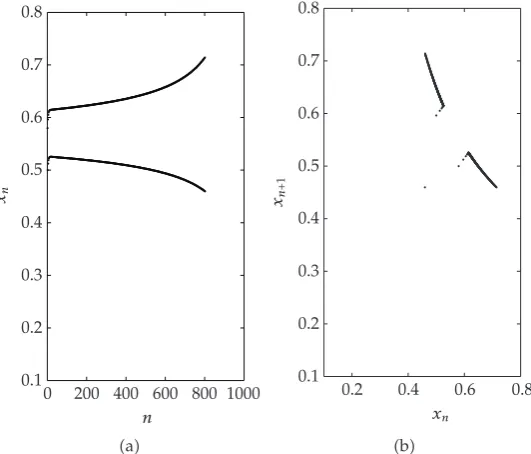
Figure 2:α0.5, β1.264, β > β0.x00.1, x10.1.
A general result for the direction and stability of period-two bifurcation; see for example, Wiggins6, Chapter 3, Section 3.2, Theorem 3.2.3. In fact, we have the following result.
4. Numerical test
To illustrate the analytical results found, let us consider the following particular case of sys-tem2.1. We have carried out numerical simulations on system2.1using Matlab with these parameter values, and for differentβ.
For instance, if the parameter values are chosen asα0.5 andβ0.3, we haveαβ <1, then the zero solution is asymptotically stable seeFigure 1a. If the parameter values are chosen as α 0.5 and β 0.8, we have αβ > 1, then the zero solution is unstable and a new equilibrium appears. ByTheorem 2.1we know that if the parameter values are chosen as β < β0, the positive equilibrium is asymptotically stableseeFigure 1b.
ByTheorem 2.1we know that if the parameter values are chosen asβ > β0, the positive equilibrium is asymptotically stable. If the parameter values are chosen such that β > β0, the positive equilibrium is unstable, and the bifurcation takes place whenβcrossesβ0lnαβ0 2α/αβ0to the right. ByTheorem 3.1, the bifurcating period-two solution is unstablesee
Figure 2.
References
1 E. A. Grove, C. M. Kent, G. Ladas, S. Valicenti, and R. Levins, “Global stability in some population models,” in Communications in Difference Equations (Poznan, 1998), pp. 149–176, Gordon and Breach, Amsterdam, The Netherlands, 2000.
2 S. Stevi´c, “Asymptotic behavior of a nonlinear difference equation,”Indian Journal of Pure and Applied Mathematics, vol. 34, no. 12, pp. 1681–1687, 2003.
3 E. A. Grove, C. M. Kent, G. Ladas, R. Levins, and S. Valicenti, “Global stability in some population models,” inProceedings of the 4th International Conference on Difference Equations and Applications, Gordon and Breach, Poznan, Poland, August 1998.
4 H. EI-Metwally, E. A. Grove, G. Ladas, R. Levins, and M. Radin, “On the difference equationxn1
αβxn−1e−xn,”Nonlinear Analysis: Theory, Methods & Applications, vol. 47, no. 7, pp. 4623–4634, 2003. 5 Y. A. Kuznetsov,Elements of Applied Bifurcation Theory, vol. 112 ofApplied Mathematical Sciences, Springer,
New York, NY, USA, 2nd edition, 1998.
6 S. Wiggins,Introduction to Applied Nonlinear Dynamical Systems and Chaos, vol. 2 ofTexts in Applied Math-ematics, Springer, New York, NY, USA, 1990.