experiences, well-being, and mindfulness
by Robert Kaczan
A thesis submitted in fulfilment of the requirements for the degree of Doctor of Philosophy
College of Arts
Victoria University
Melbourne, Australia
Acknowledgements
I would not have been able to complete this thesis without the ongoing support and guidance of many people. First, I would like to thank my supervisors, Professor Adrian Fisher and Dr Liz Short, for their invaluable support. I am deeply grateful for their encouragement, feedback, and ongoing patience as I grappled with this large and complex task—one I often thought would never be finished. I am amazed by your minds, knowledge, and kindness, and am privileged to have learnt from you both. I am also indebted to the PhD students who took part in the study. It was because of their generosity and candour that this study was made possible. Sometimes the interviews we shared took several hours, and for those who participated in the intervention, the interviews were conducted on multiple occasions. Their willingness to make time to discuss their experiences, both good and bad, is testament to the courage and openness of the PhD students at Victoria University.
My deepest thanks also goes to my friends and colleagues: Jess Ford, Simone Eichler, Gavin Batchelor, Libby Cimino, Michelle Morris, Linda Faye, Jimmy Burton, Karen Mauri, Lutfiye Ali, Kate Hunter, Laura Stanley, Hugh Mason, Emma Tordsson, Franki Crljen, Sarah Kenny, Catherine Sikand, and Monika Pietrowski, who often asked about how the research and I were going and injected so much fun and friendship into this long journey. I’d also like to thank many of the staff at the university, especially Grace Schirripa and Nicole Drage, for always being helpful in supporting my efforts to recruit students for this study, and Mark Armstrong-Roper for helping me to locate and get copies of difficult to find books and journals. There were also several inspiring and brilliant academics who held trainings and deserve a great deal of respect and thanks such as James Sillitoe, Delwyn Goodrick, Ron Adams, and Darko Hajzler, you all helped clarify what was involved and needed to complete a thesis. I am also grateful to Victoria University itself for providing me with the opportunity and resources to undertake the study and journey of a lifetime. Financial support through a scholarship and part-time work through tutoring classes, and the resources of a desk (surrounded by wonderful students) and printing facilities meant that I didn’t need to face many of the challenges that can be a part of PhD work.
Finally, I would like to offer my deepest, heartfelt, and most sincere thanks to my family. My parents Maria and John, my brothers Paul and Gregory, and all those who are my family in-law (Laird, Patti, Lori, and Raymond), you all offered more
encouragement and support over these long years than I thought could be possible. The meals and scotch we shared, and the advice and guidance you always provided, have made me feel incredibly blessed and lucky, and always helped me to keep moving forward. Lastly, I would like to thank my brilliant and incredible wife, Emily. Completing this PhD has been the greatest challenge of my life, and I know it’s been a big challenge for both of us. But you never suggested I give up, and you never failed to support and be there for me at any stage of this degree. Thank you. I’ll spend my life repaying you.
Declaration
“I, Robert Kaczan, declare that the PhD thesis entitled ‘It’s (not) all in the mind’: PhD students’
experiences, well-being and mindfulness, is no more than 100,000 words in length including quotes and exclusive of tables, figures, appendices, bibliography, references and footnotes. This thesis contains no material that has been submitted previously, in whole or in part, for the award of any other academic degree or diploma. Except where otherwise indicated, this thesis is my own work”.
Table of Contents
Acknowledgements ...iii
Declaration ... iv
List of Figures ... xi
List of Tables ... xi
Abstract ... xii
Chapter 1 ... 1
Introduction and Overview ... 1
1.1 Background ... 1
1.2 The Doctor of Philosophy degree ... 4
1.3 Well-being ... 8
1.4 Ecological perspectives ... 10
1.5 Mindfulness and mindfulness-based stress reduction ... 13
1.6 Aims of the study ... 14
1.7 Structure and overview of the thesis ... 15
Chapter 2 ... 16
Key Conceptual Factors Introduction ... 16
2.1 Conceptualisations of well-being ... 17
2.1.1 Ryff and Keyes’ model of well-being ... 19
2.1.2 Seligman’s model of well-being ... 21
2.1.3 Self-determination theory ... 22
2.2 The well-being of PhD students ... 23
2.3 Mindfulness and mindfulness-based stress reduction ... 27
2.3.1 What is mindfulness? ... 27
2.3.2 The attitudes of mindfulness ... 31
2.3.3 Mindfulness-based stress reduction (MBSR) ... 35
2.3.4 Mechanisms of action ... 37
2.4 Conclusion ... 42
Chapter 3 ... 43
PhD Student Well-being, Experiences, and Progress ... 43
3.1 Introduction ... 43
3.2 Individual Level ... 44
3.2.1 Personal benefits of completing a PhD ... 44
3.2.2 Motivations and persistence ... 46
3.2.3 The challenge of finding balance and managing multiple areas of life ... 49
3.3 Interpersonal Level ... 51
3.3.1 Marriage and relationships during a PhD ... 51
3.3.2 Socialization and integration ... 52
3.3.3 Social isolation ... 56
3.3.4 Intellectual isolation ... 57
3.4.1 Supervision ... 59
3.4.2 Feedback and recognition ... 63
3.4.3 Academic discipline/departmental differences ... 65
3.4.3.1 Epistemological influences ... 68
3.4.4 Clarity of expectations ... 72
3.5 Social, Structural, and Material Level ... 73
3.5.1 Socioeconomic backgrounds of students ... 74
3.5.2 Income, funding, and progress ... 76
3.5.1 Mode of study: full-time versus part-time study ... 78
3.5.1 International students ... 80
3.5.2 Gender ... 83
3.6 Conclusion ... 87
Consequences of Longer Completion Times and Attrition ... 88
3.7 Introduction ... 88
3.8 Consequences of longer time-to-degree ... 88
3.9 Financial losses from attrition ... 89
3.10 Psychosocial effects of attrition ... 90
3.11 Positive reasons for departure ... 91
3.12 Conclusion ... 92
Chapter 4 ... 93
Supporting PhD Students: Current Programs, Resources, and the Potential of Mindfulness ... 93
4.1 Introduction ... 93
4.2 Supporting intellectual and social integration ... 93
4.2.1 Writing groups, writing Support, and communities of practice ... 93
4.2.2 Associations, clubs, and teams ... 98
4.3 Supporting psychological well-being and self-management ... 101
4.3.1 Addressing procrastination and self-handicapping ... 101
4.3.2 Relaxation training ... 105
4.4 Could mindfulness and MBSR support PhD students? ... 107
4.4.1 Efficacy, outcomes, and adaptations of MBSR ... 108
4.4.2 MBSR and mindfulness within universities ... 112
4.5 Conclusion ... 116
Chapter 5 ... 117
Research Methods and Procedures ... 117
5.1 Introduction ... 117
5.2 Methodology ... 118
5.2.1 Epistemological commitments ... 118
5.2.2 Constructivist Grounded Theory as the strategy of inquiry ... 119
5.3 Design and procedure ... 120
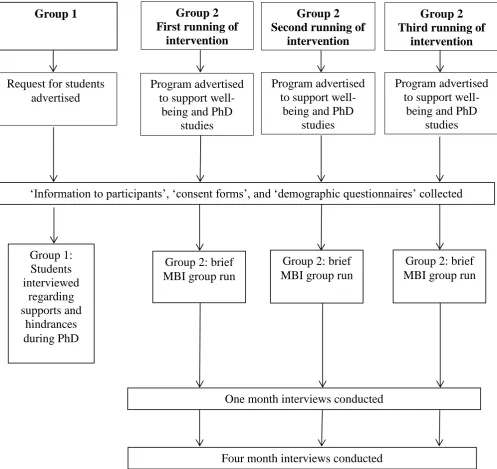
5.3.1 Research design ... 120
5.3.2 Recruitment ... 123
5.3.3 Provision of information and the gaining of consent ... 123
5.3.4 The brief MBI ... 124
5.3.5 The interview process ... 129
5.3.6 Ethical considerations ... 132
5.1.1 Victoria University – a description ... 135
5.2 Analysis ... 136
5.2.1 Initial coding ... 136
5.2.2 Focused coding ... 138
5.2.3 Constant comparative analysis ... 139
5.2.4 Memo-writing ... 140
5.2.5 Theoretical sampling ... 141
5.2.6 Theoretical saturation or sufficiency ... 143
5.2.7 Theoretical sorting ... 144
5.2.8 Constructing theory ... 144
5.3 Researcher statement ... 147
Chapter 6 ... 150
Results and Discussion ... 150
6.1 Structure and overview ... 150
Study 1: Experiences and factors which support well-being and academic functioning ... 151
6.2 Introduction ... 151
6.3 Individual Level ... 154
6.3.1 Reasons for doing a PhD ... 155
6.3.1.1 The enjoyment and challenge of learning ... 155
6.3.1.2 A lack of alternatives ... 156
6.3.2 Satisfaction and positive experiences during the PhD ... 157
6.3.2.1 Finding challenge and engagement ... 157
6.3.2.2 Feeling lucky to be doing a PhD ... 159
6.3.2.3 Receiving positive feedback and feeling part of a community ... 160
6.3.3 Supports to motivation ... 161
6.3.3.1 Feeling determined and bolstered by achievement ... 161
6.3.3.2 Feeling lucky ... 164
6.3.3.3 Feelings of connection and support ... 164
6.3.3.4 Challenges and peer comparisons ... 167
6.3.3.5 Not wanting to waste past effort and wanting a better future ... 168
6.3.4 Supports to clarity and focus ... 170
6.3.4.1 Reducing distractions ... 170
6.3.4.2 Switching between tasks and types of activities ... 171
6.3.4.3 Externalizing and visualizing ... 172
6.3.4.4 Managing stress ... 173
6.3.5 Supports to physical and mental health ... 174
6.3.5.1 Increasing confidence and reducing doubt ... 174
6.3.5.2 (Re)connecting with and (re)prioritizing valued areas ... 177
6.3.5.2.1 Sport, social connections, and fun ... 178
6.3.5.2.2 Meditation, relaxation, and prayer ... 181
6.4 Interpersonal Level ... 183
6.4.1 Social support ... 184
6.4.1.1 Types of interpersonal support ... 184
6.4.1.1.1 Intellectual support ... 184
6.4.1.1.2 Emotional support ... 186
6.4.1.1.3 Therapeutic support ... 188
6.5 Institutional Level ... 190
6.5.1 Connections and resources ... 191
6.5.1.1 Sense of community and belonging to the university ... 191
6.5.1.2 Supervision ... 192
6.5.1.2.1.1 Accessibility of supervisor and frequency of meetings .... 192
6.5.1.2.1.2 Importance of feedback and intellectual input ... 193
6.5.1.2.1.3 Provision of non-academic support ... 194
6.5.1.3 University staff and resources ... 196
6.5.1.4 Supports within one’s centre or school ... 196
6.6 Social, Structural, and Material Level ... 197
6.6.1 History, identity, and location ... 198
6.6.1.1 Benefits of coming from a non-academic or blue-collar background 198 6.6.1.2 Financial supports ... 199
6.6.1.3 Gender ... 200
6.6.1.4 Housing and workspace ... 201
Chapter 7 ... 203
Study 1: Experiences and factors which compromise well-being and academic functioning ... 203
7.1 Introduction ... 203
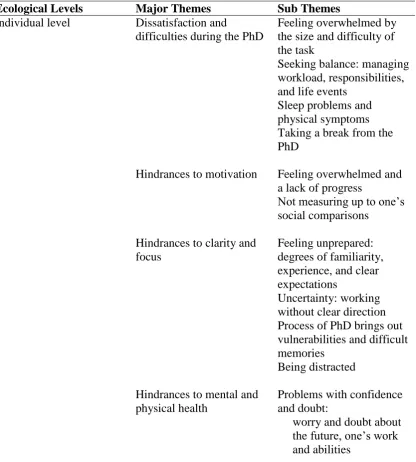
7.2 Individual Level ... 206
7.2.1 Dissatisfaction and difficulties during the PhD ... 206
7.2.1.1 Feeling overwhelmed by the size and difficulty of the task ... 207
7.2.1.2 Seeking balance: managing workload, responsibilities, and life events 209 7.2.1.3 Sleep problems and physical symptoms ... 212
7.2.1.4 Taking a break from the PhD ... 213
7.2.2 Hindrances to motivation ... 214
7.2.2.1 Feeling overwhelmed and a lack of progress ... 214
7.2.2.2 Not measuring up to one's social comparisons ... 216
7.2.3 Hindrances to clarity and focus ... 217
7.2.3.1 Feeling unprepared: degrees of familiarity, experience and clear expectations ... 217
7.2.3.2 Uncertainty: working without clear direction ... 220
7.2.3.3 Process of PhD brings out vulnerabilities and difficult memories 221 7.2.3.4 Being distracted ... 222
7.2.4 Hindrances to mental and physical health ... 223
7.2.4.1 Problems with confidence and doubt ... 223
7.2.4.1.1 Worry and doubt about the future, one’s work and abilities .... 223
7.2.4.1.2 Difficulty gauging one’s progress ... 225
7.3 Interpersonal Level ... 227
7.3.1 Isolation ... 227
7.3.1.1 Social and intellectual isolation ... 228
7.3.1.2 Others not understanding how hard it is to do a PhD, or what the topic is about ... 232
7.3.2 Relationship loss and strain ... 233
7.3.2.1 Death and illness of loved ones ... 233
7.3.2.2 Relationship problems and abuse ... 234
7.4.1 Connections and resources ... 236
7.4.1.1 Sense of disconnection from the university and its people ... 236
7.4.1.2 Supervision ... 238
7.4.1.2.1 Importance of informed and open feedback and guidance ... 238
7.4.1.2.2 Provision of non-academic support ... 241
7.4.1.2.3 Jade’s difficulties in supervision: ... 242
7.4.1.2.3.1 Receiving unhelpful and unpalatable feedback ... 242
7.4.1.2.3.2 Ineffective problem resolution ... 244
7.5 Social, Structural, and Material Level ... 245
7.5.1 History, identity, and location ... 245
7.5.1.1 The challenge of coming from non-academic or working class backgrounds ... 246
7.5.1.2 Financial difficulties ... 248
7.5.1.2.1 Living on very little ... 248
7.5.1.2.2 The financial pressures associated with being an international student 250 7.5.1.3 Gender ... 251
7.5.1.3.1 Sexual and physical abuse ... 251
7.5.1.3.2 Gender underlying problems with a supervisor ... 253
7.5.1.3.3 The role of gender in influencing partner support ... 253
7.5.1.3.4 Uneven division of caring and labour ... 255
7.5.1.4 Housing and workspace ... 256
7.6 Study 1 Conclusion: PhD student well-being ... 258
Chapter 8 ... 267
Study 2: Experiences of Participation in the Brief MBI ... 267
8.1 Introduction ... 267
8.2 Class attendance and adherence to homework during brief MBI ... 268
8.3 Maintaining a mindfulness practice after brief MBI ... 269
8.3.1 Frequency of practice ... 269
8.3.2 Difficulties and reasons for not maintaining a mindfulness practice ... 271
8.4 Supporting well-being ... 276
8.4.1 Experiencing positive affect with increased mindfulness ... 276
8.4.2 Feeling refreshed, alert, and focused ... 279
8.4.3 Managing difficulties ... 282
8.4.3.1 Increased ability to cope ... 282
8.4.3.2 Reductions in thinking, distractions and worries ... 284
8.4.3.3 Changed relationship to expectations, doubts, and uncertainties .. 285
8.4.3.4 Reductions in fear and anxiety ... 288
8.4.3.5 Managing stress and other difficult emotions ... 289
8.4.3.6 Support in getting to sleep ... 293
8.5 Impacts on academic functioning ... 294
8.5.1 Improvements in ability to work on thesis ... 294
8.5.2 Changes in perception of the university ... 297
8.6 Interpersonal benefits ... 298
8.7 Appraisal of the program and its parts ... 299
8.7.1 General appraisals of the program ... 299
8.7.2 Valued features of the program ... 300
8.7.2.1 Valued social and group features ... 300
8.7.2.1.2 Small group size ... 303
8.7.2.1.3 The facilitator ... 303
8.7.2.2 Valued features of the brief MBI format ... 304
8.7.2.2.1 Learning a variety of techniques ... 304
8.7.2.2.2 Acceptance, compassion, and mindfulness ... 306
8.1 Mechanisms of action ... 308
8.2 Criticisms and suggestions to improve the brief MBI ... 313
8.2.1 The program was too short ... 313
8.2.2 Preferences in course content ... 315
8.3 Negative experiences and difficulties during the brief MBI ... 316
8.4 Summary of changes between the one and four month follow up interviews 318 8.5 Study 2 Conclusion: Impacts of the brief Mindfulness-Based Intervention 319 Chapter 9 Conclusions ... 325
9.1 Aims of the study ... 325
9.2 Limitations ... 326
9.3 Recommendations ... 327
9.3.1 Address well-being and academic needs across ecological levels ... 327
9.3.2 Support greater balance and needs of students through groups ... 328
9.3.3 Support the needs for growth and competence ... 329
9.3.4 Support the needs for rest and rejuvenation ... 330
9.3.5 Support the needs for social and intellectual integration ... 330
9.3.6 Encourage professional support and improve supervisory practices ... 331
9.3.7 Support cohort specific needs ... 332
9.3.8 Improve the brief MBI format ... 332
9.4 Areas for future research ... 333
9.5 Conclusion ... 334
References ... 339
Appendices ... 367
9.6 Appendix A: Consent and Information to Participants forms Group 1 ... 367
9.7 Appendix B: Consent and Information to Participants forms for Group 2 (MBSR) ... 371
9.8 Appendix C: Outline of MBSR Sessions in the traditional format ... 377
9.9 Appendix D: Brief MBI Student Manual ... 380
List of Figures
Figure 1. Gender differences in completion across fields of study ... 84
Figure 2. Research design of the current project ... 122
List of Tables Table 1. Keye's model of well-being ... 20
Table 2. Definitions and descriptions of mindfulness ... 30
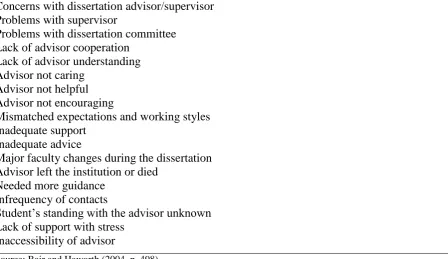
Table 3. Characteristics of student/advisor relationship related to attrition ... 62
Table 4. Descriptors of student/advisor and student/faculty relationships positively related to degree completion ... 63
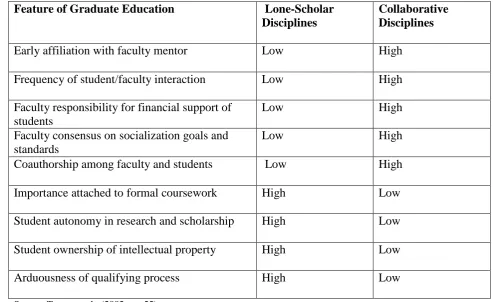
Table 5. Features of lone-scholar and collaborative disciplinary cultures ... 71
Table 6. Brief MBI course format ... 125
Table 7. Research participant information ... 134
Table 8. Experiences and the factors which support well-being and academic functioning: Organisation of major themes and subthemes by ecological levels ... 153
Table 9. Experiences and the factors which compromise well-being and academic functioning: Organisation of major themes and subthemes by ecological levels ... 205
Abstract
Although undertaking a PhD provides great opportunities for intellectual challenges and benefits, students also experience high levels of stress and attrition within the degree. It is therefore important to better understand the needs of students and how to support them in order to improve their experience, increase well-being, and support better academic outcomes. This research conducted two studies: the first explores what supports and hinders the well-being and academic functioning of PhD students at one Victorian university; and the second—because stress is a large feature of PhD students’ lives—examines the potential of a brief mindfulness-based intervention (brief MBI) to provide benefits to students. This intervention is a modified and substantially shorter version of the mindfulness-based stress reduction (MBSR) program which was shortened from 8 weeks (27 hours) to 4 weeks (6 hours). This research used constructivist grounded theory as the strategy of inquiry and in-depth semi-structured interviews to achieve the aim of exploring subjective experiences, with participants interviewed at both one and four months post-intervention. Overall, Study 1 found that the needs of PhD students are best understood through an
ecological perspective, that is, that the areas important to their well-being and academic functioning fall within and across individual, interpersonal, institutional, and structural, material, and social levels. Included in these areas are the needs for personal and academic growth, personal and academic competence, rest and rejuvenation, social and intellectual integration, and material and cohort specific supports. Further, achieving a balance across these areas of well-being and academic functioning represents an ideal student experience which promotes higher levels of satisfaction. Study 2 found that the brief MBI provided some benefits to these
functioning at the one month interview. However, at four months, many of these benefits were not sustained and only a few participants continued to practise
Introduction and Overview
1.1Background
In discussing the task of undertaking a PhD, many authors refer to the process as a journey, a term which captures both the vicissitudes and substantial length which often characterises the degree (Appel & Dahlgren, 2003; McAlpine & Amundsen, 2009). This journey represents a significant path of personal and professional
development whilst focusing on what may become the single largest piece of research in students’ lives. For some, the experience of completing this degree is a
“challenging but enriching journey” (Keyes, Myers, & Kendler, 2013, p. 60) which
offers unparalleled freedom of inquiry, a sense of community, and strong support (Devenish et al., 2009); it is a time to be ‘stretched’ intellectually and develop an academic identity through engagement with a research culture at both local and international levels.
impacting, for instance, students’ inclination to complete their PhD or to continue with careers in academia (Harman, 2002; Lovitts, 2001).
Rates of attrition both in Australia and internationally reveal that only 40-60% of those who begin the journey actually complete (Council of Graduate Schools, 2008a; Elgar, 2003; Martin, Maclachlan, & Karmel, 2001; Wright & Cochrane, 2000). These high attrition rates have been found to have significant consequences including deep feelings of failure for students, lost contributions to society and knowledge, and significant financial costs — to students themselves, institutions, industry, and Government (Gardner, 2009b; Herman, 2011; Lovitts, 2001; Smallwood, 2004). In all, a substantial literature illustrates that the task of undertaking a PhD as one of great difficulty for many students and has led to calls for research in both understanding (e.g., Golde, 2000; McAlpine & Norton, 2006) and supporting this cohort (e.g., Kearns, Gardiner & Marshall, 2008).
conceptualisations, however, the term academic functioning is used broadly in this research to capture any experience of students which relates to their academic work and progress. For instance, academic functioning includes work practices, student motivation and persistence during the PhD; productivity in terms of achieving work tasks (outcome goals) and expending time and effort to engage in these tasks (process goals); and progress in the PhD as gauged by students themselves as well as through elapsed time.
Addressing this gap in research requires an approach which gives consideration to the complex and relational areas of students’ lives, including contextual factors which influence both well-being and academic functioning, from the perspectives of students themselves. Such an approach is important as the extant literature highlights that an incredibly diverse range of factors are implicated in these areas, from social bonds with peers and department to the challenge of balancing important areas in one’s life outside of the PhD. Therefore, a qualitative analysis of PhD students’ experiences, which is underpinned by principles of ecological theory (Prilleltensky & Prilleltensky, 2006), will be used to gain insights of sufficient depth and breadth in this area, namely, that complex factors from a range of levels
(individual; interpersonal; institutional; social, structural, and material) are interrelated in impacting and shaping a person’s experience (ecological theory is described in section 1.4).
training in a range of skills such as time-management, effective writing habits, or how to overcome procrastination and self-sabotaging behaviours (Kearns, Gardiner, & Marshall, 2008; Maher, Fallucca, & Halasz, 2013), and it is at this level which the current study also aims to contribute in supporting PhD students.
The following sections will continue to give background on important areas within this thesis. First, an overview of what the Doctor of Philosophy degree is and how it operates within Australia will be described before an overview of well-being and ecological perspectives is presented. A specific intervention which was adapted for use in this research, mindfulness-based stress reduction, is given attention next. Lastly, the aims and structure of the thesis conclude this chapter.
1.2The Doctor of Philosophy degree
In Australia, two broad categories of doctoral degrees are offered, the PhD and the professional doctorate. Although both types entail research, PhD degrees must have research comprising two thirds or more of the program of study while
professional doctorates place greater emphasis on professional practice and often include professional training and placements (Australian Qualifications Framework Council, 2013). In this way, the professional doctorate often requires that entrants have professional experience in the field that they wish to study, or a willingness to gain this experience during the Doctorate. In addition to research scope, there are also differences in the required research focus of the two degrees, for example
The research Doctoral Degree (typically referred to as a Doctor of
As the above quote indicates, the fact that a PhD can make an original and significant contribution to knowledge in most fields, not only those where some form of professional practice is possible, means the PhD is a more widely available degree. Students undertaking PhDs account for the vast majority of enrolments in doctoral degrees in Australia (97.5%) while professional doctorates represent a small but also growing trend in higher education (Evans, Evans, & Marsh, 2008; Kot & Hendel, 2012). Given the large number of PhD students and the difficulties they face, it is the experiences of these students in particular which this research aims to understand and support through a mindfulness intervention, and so will be the focus of the remainder of this thesis.
examinations before being admitted into candidacy to begin their independent
research (U.S Department of Education, 2008). In Australia, students must complete, instead, a formal confirmation of their candidature approximately 12 months into their studies through submission of written work and an oral presentation to an academic panel to achieve approval for their planned studies. To complete the PhD, students’ research must culminate in a thesis (termed dissertation in the USA) of 60,000 to 100,000 words (Evans et al., 2008).
Despite a large research component being common across PhD models internationally, differences exist between countries in how PhD students receive ongoing support from more experienced faculty members and how this relates to their final examinations. In Australia and the UK, for example, PhD students are paired with a supervisor or – as is increasingly common in Australia – a principal and associate supervisor, who help students in the development and execution of their research and provide support throughout their program (Manathunga, 2012). Towards the end of the degree, the supervisor/s select at least two external examiners to
evaluate the student’s written work (Evans, 2007).
however, their role is more of an observer (Remenyi & Money, 2012). Unlike the United Kingdom and United States, Australian students are very rarely required to defend their theses orally.
In terms of structure, the Australian PhD shares more in common with the British model where greater emphasis is placed on the research thesis, and although coursework sometimes features as part of the program, it does not generally constitute a formal part of the degree as is often the case in the United States (Group of Eight, 2013; Park, 2007). The common thread through PhD courses internationally is the requirement of completing original research culminating in a thesis which is achieved over a minimum of three years (Nerad & Trzyna, 2008) during which time students develop many skills and attributes. For instance, students have been found to develop practical and technical knowledge of the research process; research skills and personal resourcefulness; deep theoretical perspectives and knowledge, critical thinking, creativity, and flexibility (Mowbray & Halse, 2010). However, although this degree is incredibly rewarding for students (see section 3.2.1 for further benefits), there are also commonalities in the difficulties and challenges many students face.
Two major challenges students commonly encounter internationally during a PhD are completing the degree and managing their well-being. In terms of
described in Chapter 3) (Ferrer de Valero, 1996; Lamm, 2004b). Further, the challenges inherent in the task itself, the time required to complete it, and the sacrifices students must make during the degree means that the experience of stress and reduced well-being can also be common (Juniper et al., 2012; Offstein et al., 2004). It is for these reasons that the current research aims to develop further
understanding of what supports and hinders the well-being and academic functioning of PhD students, and how a modified version of a psychologically oriented
intervention called mindfulness-based stress reduction might be of help. Although this program and the skill it teaches, mindfulness, does not aim to support students at all levels of the PhD experience (e.g., institutional or structural levels), it may hold promise in helping students to manage the difficulties of the PhD.
1.3Well-being
Well-being is conceptualised in this research as a combination of positive
evaluations of important life domains (e.g., relationships, health, PhD work), greater levels of pleasure and positive affect in one’s life (e.g., relaxation, happiness,
not as predetermined categories with which to interpret the data of this research (Charmaz, 2014).
The construct of well-being is a central focus of this research because of its
importance in the PhD student experience itself and for its relationship with a range of academic and social outcomes. First, it is important that students feel a degree of enjoyment, satisfaction, and positive functioning during their degree as this state of being in and of itself contributes to a positive and well-lived life and is associated with higher levels of mental and physical health (Diener, 2013; Diener & Chan, 2011; Keyes, 2005). Further, aspects of well-being have been found to be related to higher levels of persistence (Stubb, Pyhältö, & Lonka, 2011) and, when lacking, to influence decisions to leave the PhD (Bair & Haworth, 2004; Gardner, 2009a; Lovitts, 2001). Finally, in terms of the social implications, there is some research to suggest that the likelihood of students continuing to pursue academic careers decreases if students experience low levels of satisfaction during their studies (Harman, 2002).
As mentioned, in Chapter 2 I will introduce the conceptualizations of well-being as well as the small amount of research which has directly focused on the well-being of PhD students. Chapter 3 takes a broader focus and reviews studies on the PhD student experience and progress (the most studied aspect of academic functioning) and therefore illustrates aspects of student’s well-being through this more indirect research. Well-being will also be attempted to be understood not only in terms of intrapsychic factors (e.g., self-acceptance, growth, meaning) but also through
1.4Ecological perspectives
When attempting to understand a particular aspect of a person's experience, a promising avenue is that which includes an analysis or appreciation of multiple levels, contexts, or sites, that is, an ecological perspective. Originally formulated by Urie Bronfenbrenner (1981), a developmental psychologist, the ecological approach was applied to understand human development as a process where a person is in
interaction with and is shaped by, as well as shapes, his or her context. For example, commenting on the limitations of not taking a contextual view of human experience and development, Bronfenbrenner (1981) stated that:
A theoretical conception of the environment extending beyond the behaviour of individuals to encompass functional systems both with and between settings, systems that can also be modified and expanded, contrasts sharply with
prevailing research models. These established models typically employ a scientific lens that restricts, darkens, and even blinds the researcher's vision of environmental obstacles and opportunities and of the remarkable potential of human beings to respond constructively to an ecologically compatible milieu once it is made available. As a result, human capacities and strengths tend to be underestimated. (p. 7)
In this way, an ecological approach makes explicit those areas which can impact and interact with individuals to affect their development and experiences, a perspective very relevant to the study of PhD students. In his analysis of human development Bronfenbrenner originally demarcated four levels he considered important for both understanding and as areas for intervention in supporting human development. These levels included the microsystem (a person’s immediate
child's learning environment); and the macrosystem (those similarities between the micro-, meso-, and exo- systems that are attributable to a subculture, culture, belief system, or ideology, which may pervade all sub-systems). As Bronfenbrenner
illustrated, a macrosystem is evident where any one crèche, playground, or post office in France can appear and function in very similar ways, although when compared to those in other countries, such as the United States, can appear quite distinct and different. An underlying "blueprint" appears to be present in each country which influences the appearance and function of these places (Bronfenbrenner, 1981, p. 26). In later work Bronfenbrenner also added a fifth system, the chronosystem, to highlight changes over time in environmental factors, life transitions, and human development (e.g., Bronfenbrenner, 1986). It is important to note that this framework has been adapted across multiple areas to provide more comprehensive perspectives on
phenomena (e.g., Banyard, 2011; Costello, Donnellan, & Curley, 2013; Stolzer, 2005) The influences of this perspective are evident in Bronfenbrenner’s work ranging from the study of how the context of upbringing (family versus collective) across cultures (Israeli and Soviet children) impacts pre-adolescents (Shouval, Venaki, Bronfenbrenner, Devereux, & Kiely, 1975), through to the theoretical framework used to organise and engage a diverse and “dispersed” literature (Bronfenbrenner, 1986). For example, in reviewing literature on the external
influences of childhood development, Bronfenbrenner (1986) employed his categories of mesosystem, exosystem, and chronosystem, to unite several strands of
Prilleltensky and Prilleltensky (2006, p. 33) argue that "a contextual approach to well-being must account for the role of temporal and ecological variables". Indeed,
definitions of well-being which are overly individualistic fail to recognise the material, organisational, political, and social factors, amongst others, which both act to support and hinder personal and collective well-being. Prilleltensky and
Prilleltensky (2006, p. 12) argue that there are three primary levels or "sites" where well-being is situated: within "individual persons, organisations, and communities or collectives", and that a failure to secure well-being at any of these levels will affect all others.
This perspective, developed by Bronfenbrenner and then extended by
Prilleltensky to the area of well-being is highly relevant to the study of PhD students and the factors which affect their experience and well-being. Gardner (2012), for instance, similarly argued that doctoral students’ satisfaction stems from the interplay between personal and a wide range of environmental factors — factors which will be reviewed and discussed in Chapters 2 and 3 — and that a contextual perspective should guide research and interventions for this cohort. The importance of taking a contextual or ecological perspective of the PhD student experience is highlighted here to preface both the analytical approach taken towards the subject matter of this thesis and also as a means to organise the information contained within. Specifically, information within this thesis is organised within: personal; interpersonal;
and frameworks used as a conceptual resource and ‘sensitising concept’ (Charmaz, 2014).
1.5Mindfulness and mindfulness-based stress reduction
In addition to generating knowledge about the experiences of PhD students in terms of their well-being and academic functioning, this research investigates PhD students’ experiences and the potential benefits to them (in the areas of well-being and
academic functioning) of an adapted version of mindfulness-based stress reduction (MBSR)—the name brief mindfulness-based intervention (brief MBI) is used to distinguish between the original MBSR program and the modified format used in this research. MBSR, initially developed by Jon Kabat-Zinn at the Massachusetts Medical Centre in 1979 is a psychoeducational program originally designed to support medical patients for whom available treatments had little more to offer in the way of pain management, health enhancement or stress reduction (Kabat-Zinn, 2011).
Practicing informally might involve bringing complete attention to the preparation and eating of a meal or washing of dishes.
The original format of MBSR consists of an eight week course, with each weekly session lasting 2.5 hours, and a one day retreat (27 hours total) — a detailed description of the original format is provided in Appendix C. In addition, participants are required to practice formal techniques for 45 minutes a day, six days a week, all of which would represent a large commitment from many time poor PhD students. To address this, the adapted version used in this study, brief MBI, was held over four weeks and involved six contact hours in total — section 5.3.4 (p. 124) describes how MBSR was shortened for this context. Given the high rates of stress and difficult emotions PhD students reportedly experience (Juniper et al., 2012; Walsh, 2009), it was proposed that a brief MBI may be more manageable for students to attend. PhD students have not been the exclusive focus in MBSR research to date, and so this intervention represents a novel avenue for their support.
In Chapter 2 a detailed description of mindfulness, the MBSR program, and the mechanisms of action which are proposed to explain outcomes will also be described. To justify trialling a brief MBI with PhD students, information about the ways in which MBSR has been adapted and used with different groups (including students), its efficacy and outcomes is presented in Chapter 4.
1.6Aims of the study
- Investigate and develop knowledge about the subjective experiences of PhD students in regards to what they have found to be supportive or a hindrance to their well-being and academic functioning during their PhD. - Administer and investigate the impacts of a brief Mindfulness-Based
Intervention (brief MBI) program on PhD students’ well-being and academic functioning.
- Investigate which parts of the brief MBI students found helpful and beneficial, allowing further revision to the format to increase satisfaction and effectiveness for future groups.
- Develop recommendations and contribute knowledge that might be useful for future research and program developments aimed at assisting PhD students to experience higher levels of well-being, academic functioning, and potentially higher completion rates.
1.7Structure and overview of the thesis
supportive during their studies while Chapter 7 presents findings about what was experienced as negative or as a hindrance (to well-being and academic functioning). Chapter 8 presents findings regarding participation in a brief MBI and its’ impacts on the student experience. The final chapter provides a summary of results, highlights the strengths and limitations of the research, makes recommendations and suggests areas for future study.
Chapter 2
Key Conceptual Factors Introduction
2.1Conceptualisations of well-being
The study of well-being involves investigations into the cognitions, emotions, functioning, and contexts connected to individuals who experience life in a positive manner (Diener, 2006). This section will review the literature on well-being and by doing so provide some of the sensitizing concepts (Charmaz, 2014, p. 30) that shaped the research and analysis. ‘Sensitizing concepts’ provide guidance to how empirical phenomena may be interpreted, as opposed to definitive concepts which provide a more prescriptive framework. In this way, various conceptualisations of well-being with relevance for PhD students and research which directly investigates their well-being are described below. Other areas, including indirect research on PhD student well-being, that is, research which illustrates aspects of students’ well-being through focussing on other areas such as academic progress, will be organised across
ecological levels in Chapter 3 to provide a wider perspective on students’ experience. Well-being can broadly be divided into two interrelated areas: objective well-being and subjective well-well-being (Diener, 2009). Objective well-well-being refers to those features of individuals or groups which are observable and measurable directly from an external perspective. For example, objective well-being can be assessed by characteristics such as income, longevity or health status (Keyes, 2006). Subjective well-being, in contrast, is a complex construct theorised to consist of multiple factors and dimensions and is deduced from the reports of individuals themselves (Keyes, 2006). Although broad and general definitions of subjective well-being share similarity in essence, there is no definitive consensus on the constellation of factors which constitute well-being.
definitions often point to a human experience which is characterised by evaluations of satisfaction in areas that are of importance to an individual and experiencing a high degree of pleasure, enjoyment, comfort, with fewer experiences of pain, discomfort, and negative affect (Diener & Ryan, 2009). Eudaimonic well-being, in contrast, refers to the “extent to which a person is fully functioning, living a life of meaning and self-realisation.” (Crum & Salovey, 2013, p. 81), and involves living congruently with one’s values (Ryan & Deci, 2001). As Huta (2013) states, these two types of well-being represent the long held distinction between a life of pleasure and a life of virtue, although there are degrees of overlap (Kashdan, Biswas-Diener, & King, 2008).
Different terms for well-being are used to further differentiate those models more closely aligned with the hedonic or eudaimonic traditions, that is, Subjective Well-being (SWB) and Psychological Well-being (PWB), respectively (Diener & Ryan, 2009; Ryff & Singer, 1996). In terms of SWB, the affective component is often measured using the Positive and Negative Affect Schedule (PANAS) however several authors also recommend using the Affect Valuation Index to capture emotions of lower arousal (Miao, Koo, & Oishi, 2013; Tsai, Knutson, & Fung, 2006). The factors comprising the cognitive component of SWB, satisfaction with life domains and life as a whole, vary depending on the individuals studied and areas of focus1. Those areas of satisfaction which have bearing on PhD students and their studies are explored through the various ecological levels of Chapter 3. Those models which capture
important aspects of human functioning, Psychological Well-being, are presented next.
2.1.1 Ryff and Keyes’ model of well-being
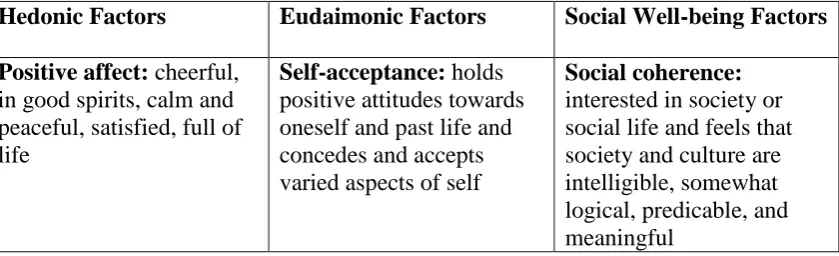
Corey Keyes added to the work of Ryff by extending well-being to include areas of social importance to individuals at the level of groups, institutions and communities, reflecting a greater ecological perspective (Keyes, 1998, 2013). These areas of social well-being are made up of “the appraisal of one’s circumstance and functioning in society” (Keyes, 1998, p. 122) and include: social integration, social acceptance, social contribution, social actualization, and social coherence. In addition to psychological functioning in the personal and social domains (eudaimonic well-being), Keyes also includes dimensions of emotional (hedonic) well-being in his overall model, making an important integration between the different streams of research. This model, summarised in Table 1, has been validated in terms of its three major dimensions (emotional, psychological, social) as distinct but correlated
predictors of mental health and well-being (Keyes, 2005) with measures derived from this conceptualisation similarly being confirmed across cohorts of adults (Gallagher, 2009), adolescents (Keyes, 2009), and college students (Robitschek & Keyes, 2009). As such, this model of well-being provides a powerful framework to aid in the understanding of PhD student experiences, their well-being, and how this may relate to their academic functioning.
Table 1. Keye's model of well-being
Hedonic Factors Eudaimonic Factors Social Well-being Factors Positive affect: cheerful,
in good spirits, calm and peaceful, satisfied, full of life
Self-acceptance: holds positive attitudes towards oneself and past life and concedes and accepts varied aspects of self
Avowed personal quality of life: happiness or life-satisfaction
Positive relations with others: has warm, satisfying relationships
Social contribution: feels that one’s life is useful to society and output of ones activities is valued by or valuable to others Personal Growth: shows
insight into own potential, sense of development, and open to new and
challenging experiences
Social actualization: believes that people, social groups, and society have potential and can grow and evolve positively
Purpose in life: holds goals and beliefs that affirm sense of direction in life and feels that life has a purpose and meaning
Social acceptance: has positive attitude towards others while
acknowledging and accepting people’s differences and complexities Autonomy: exhibits
self-direction that is often guided by own, socially accepted and conventional internal standards, and resists unsavoury social pressures
Social integration: has a sense of belonging to a community and derives comfort and support from community
Environmental Mastery: exhibits to manage
complex environment and can choose or manage and mold environment to suit needs
Source: Keyes et al. (2011, p. 101)
2.1.2 Seligman’s model of well-being
is, losing self-consciousness as one is absorbed and deeply engaged in a task that is challenging and requiring the application of a person’s strengths and competencies (Csikszentmihalyi, 1991; Csikszentmihalyi & LeFevre, 1989; Seligman, 2011). The factor of accomplishment speaks to the importance of achieving goals that a person finds rewarding and fulfilling for their own sake, in other words, those that are intrinsically motivating. In terms of PhD students, it is clear that working on tasks with high levels of engagement would represent an ideal work state whilst also
benefiting well-being. Through this engaged work the accomplishment of tasks would also be made more likely and more rewarding, particularly if they reflect intrinsic goals, which would further contribute to well-being.
2.1.3 Self-determination theory
The importance of intrinsic motivation and its connection to a person’s well-being is described as important in each of the preceding models. For this reason, it is not surprising that self-determination theory (SDT), a theory of human motivation which emphasises the importance of intrinsic motivation, has such strong empirical support for its contribution to well-being (e.g., Church et al., 2013; Ryan & Deci, 2000, 2001; Ryan, Huta, & Deci, 2008). In SDT, three “universal psychological needs” are argued to be fundamental to well-being: autonomy, competence, and relatedness (Ryan & Deci, 2008b, p. 189).
(high self-attribution of volition). Competence refers to a person’s sense of efficacy in a given area and is connected to autonomy because where a person feels competent and high in autonomy, again, there is often an association with higher intrinsic
motivation and well-being (Ryan & Deci, 2000). Lastly, relatedness refers to the need for humans to feel connected, cared about, and secure with others; and emphasises as well the role of the social environment in supporting or hindering one’s autonomy and competence (Ryan & Deci, 2008a).
These psychological needs can be seen as important for PhD students in multiple ways. In the case of supervision, for example, autonomy can be influenced by the intellectual freedom given to students to explore and choose research
directions; feelings of competence could be affected by the manner and methods in which feedback is provided; and the need for relatedness may be supported through the degree to which social integration is encouraged and supported. However, despite the relevance of SDT and the other general models of well-being to PhD students, the question must be asked: what do we know of PhD students’ well-being?
2.2The well-being of PhD students
there are clear themes which have emerged from the small amount of direct research conducted thus far.
These themes from direct research cluster around the needs for community and support, confidence and the development of a set of research skills and identity, feeling like one is progressing, maintaining psychological and physical health, and attempting to keep balance in valued areas of life. For example, a survey study by Stubb et al. (2011), which focused particularly on psychosocial well-being, found that more than half (56%) their sample of 669 PhD students in Finland reported feeling unsupported and disconnected from their research communities while the remainder found greater levels of connection and support. A sense of belonging, contribution, and worthiness, in this social context, were highly related to empowerment,
persistence, academic engagement, and negatively related to stress, anxiety, and exhaustion — that is, aspects of well-being. Moreover, those students who
experienced little sense of belonging, contribution, or worthiness were also found to have been significantly more likely to consider dropping out of the degree—however, prospective research is needed to assess whether these experiences, such as feelings of worthiness, change throughout the degree and influence risk of dropping out. At least one other direct study of students’ well-being supports these findings in terms of the importance of feeling connected to and being supported by peers, as well as working in a non-competitive environment (Schmidt & Umans, 2014).
Psychosocial well-being could also be extended to include the supervisory relationship; however, unlike the literature on student satisfaction and progress — which is described in the following sections — supervision has not so far been given much emphasis in direct studies of well-being. That said, the development of
and social integration, are central to the findings of several studies here. For instance, the largest study of PhD student well-being (N= 1,202) found that feeling
disappointed in one’s skills and lacking confidence in one’s ability to conduct research to a necessary standard were amongst the most common and detrimental issues to well-being — this data was collected through questionnaires which themselves were constructed around themes which were identified through semi-structured interviews and focus groups with 57 PhD students (Juniper et al., 2012; Walsh, 2009). Similarly, a study of 669 students also found that development of research expertise was a priority of students across all faculties (Kirsi, Auli, Jenni, & Kirsti, 2012) while others have found that personal and professional growth during the PhD are also highly desirable to students (Schmidt & Umans, 2014). Feeling skilled and confident plays an important role in the development of an identity as a researcher and students well-being, and supporting these needs may be an important area for intervention.
The need for students to feel that they are progressing in their research, which shares some overlap with the desire for growth, has also been found to be central to well-being (Schmidt & Umans, 2014; Walsh, 2009). The belief that students are progressing well is also influenced by their expectations of the research process and time required to complete the PhD. In this way, realistic expectations and knowledge of the nature of research as being nonlinear with uncertain time requirements could also influence these expectations, reduce stress and increase well-being (Juniper et al., 2012).
Most studies have also found that the notion of balance is a central,
various roles, responsibilities, and tasks of the PhD, in addition to finding time for the areas which students derive enjoyment or meaning (e.g., friends, spirituality, hobbies) (Smith, Maroney, Nelson, Abel, & Abel, 2006; Spaulding & Rockinson-Szapkiw, 2012; Wasburn-Moses, 2008). Haynes et al. (2012) found that some students who were able to find greater balance in their lives also experienced higher efficiency and productivity while other studies highlight that a lack of balance is frequently
experienced as detrimental to well-being (Juniper et al., 2012; Schmidt & Umans, 2014). In keeping with this, Haynes et al., conclude that when considering how students cope with internal and external pressures, “It is the balancing act they
perform that appears to define this interaction and to thus epitomize their well-being” (2012, p. 9).
empirical support for its ability to reduce stress and increase well-being, is potentially well placed to be modified and employed in supporting this group of students.
2.3Mindfulness and mindfulness-based stress reduction 2.3.1 What is mindfulness?
Whereas the section Mindfulness and mindfulness-based stress reduction on page 13 gave a brief introduction to mindfulness and MBSR, this section will provide far greater detail on how mindfulness is conceptualised and why a brief MBI may be helpful for PhD students. It will also end by reviewing the proposed mechanisms which attempt to explain the positive outcomes of mindfulness practice and MBSR participation.
Interest in mindfulness within Western academia has grown substantially over the last two decades (Didonna, 2009) although the concept itself is stated to have originated in Buddhism in approximately 500 BC (Siegel, Germer, & Olendzki, 2009). Indeed, it is considered by some to be the heart of Buddhist psychology (Bodhi, 2011; Germer, 2005). Within Buddhism, mindfulness — or sati, in Sanskrit — has many connotations. Scholars agree that mindfulness was at times rendered by
the Buddha as something very close to remembering, memory, reflection, or contemplation, in terms of one’s previous actions, the consequences they have on one’s life, as well as remembering to stay aware of experience and the object of focus during meditation (Bodhi, 2011; Gethin, 2011; Sujato, 2005; Thanissaro, 2008). Sharing some overlap with remembering, there is also a connotation in the context of meditation where mindfulness refers to a lucid present moment awareness of
mindfulness is also viewed as a central skill or ability to aid the moral and ethical development of individuals (Gunaratana, 2001).
However, just as there is no strict consensus within the Buddhist tradition regarding a precise definition of mindfulness, so it is within contemporary research in psychology. A definition proposed by Kabat-Zinn, the developer of MBSR, is,
however, the most frequently used within research and underpins much of the debate and theorizing about what mindfulness actually is. Defined in terms of its process, Kabat-Zinn (1994, p. 4) states that “Mindfulness means paying attention in a particular way: on purpose, in the present moment, and non-judgmentally.”
Elaborating on attitudes implicit in this definition, he later added that mindfulness also “includes an affectionate, compassionate quality within the attending, a sense of openhearted, friendly presence and interest” (Kabat-Zinn, 2003, p. 145). Mindfulness therefore could be a skill which students might apply to their work, emotions, and cognitions during their degree.
focus of attention, rather, a person becomes receptive to whatever stimuli enters awareness without attempts to control or direct attention (Kabat-Zinn, 1990).
Shapiro, Carlson, Astin, and Freedman (2006) highlighted the importance of intention as a major factor in addition to the two of attention and attitudes which are evident in Bishop et al.’s definition (the attitudes associated with mindfulness are outlined in section 2.3.2 below). They contend that the intention people bring to their mindfulness practice is important and will invariably influence the experience and outcome, and despite being a feature of Kabat-Zinn’s original definition, it is rarely mentioned as a factor within contemporary constructions of mindfulness. Intention within mindfulness practice refers to the motivation and sense of purpose that
underpins why one practices — it is needed to motivate the ongoing self-regulation of attention and attitudes during mindfulness practice. For example, Kabat-Zinn (2005, p. 45) wrote that “your meditation practice will only be as powerful as your
motivation to dispel the fog of your own lack of awareness. When you are in this fog, it is hard to remember the importance of practicing mindfulness, and it is hard to locate your attitudinal bearings.”
Taken together, these important works potentially provide an excellent framework to understand differences in proposed definitions to date. Some
researchers, for example, emphasise the attentional qualities in their definitions where mindfulness is argued to primarily involve a receptive awareness of experience
in this research and therefore his definition of mindfulness will be the conceptualisation employed for the remainder of this thesis.
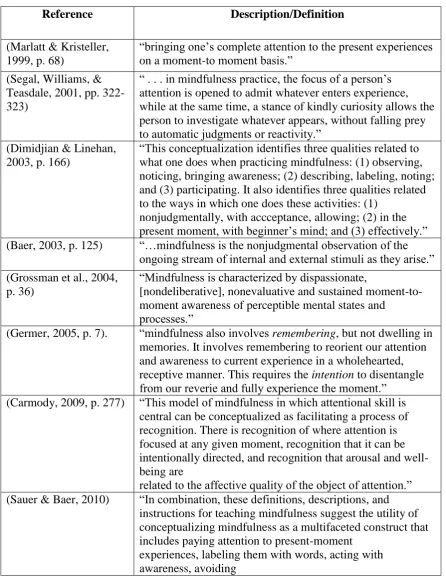
Table 2. Definitions and descriptions of mindfulness
Reference Description/Definition
(Marlatt & Kristeller, 1999, p. 68)
“bringing one’s complete attention to the present experiences on a moment-to moment basis.”
(Segal, Williams, & Teasdale, 2001, pp. 322-323)
“ . . . in mindfulness practice, the focus of a person’s attention is opened to admit whatever enters experience, while at the same time, a stance of kindly curiosity allows the person to investigate whatever appears, without falling prey to automatic judgments or reactivity.”
(Dimidjian & Linehan, 2003, p. 166)
“This conceptualization identifies three qualities related to what one does when practicing mindfulness: (1) observing, noticing, bringing awareness; (2) describing, labeling, noting; and (3) participating. It also identifies three qualities related to the ways in which one does these activities: (1)
nonjudgmentally, with accceptance, allowing; (2) in the present moment, with beginner’s mind; and (3) effectively.” (Baer, 2003, p. 125) “…mindfulness is the nonjudgmental observation of the
ongoing stream of internal and external stimuli as they arise.” (Grossman et al., 2004,
p. 36)
“Mindfulness is characterized by dispassionate,
[nondeliberative], nonevaluative and sustained moment-to-moment awareness of perceptible mental states and
processes.”
(Germer, 2005, p. 7). “mindfulness also involves remembering, but not dwelling in memories. It involves remembering to reorient our attention and awareness to current experience in a wholehearted, receptive manner. This requires the intention to disentangle from our reverie and fully experience the moment.”
(Carmody, 2009, p. 277) “This model of mindfulness in which attentional skill is central can be conceptualized as facilitating a process of recognition. There is recognition of where attention is focused at any given moment, recognition that it can be intentionally directed, and recognition that arousal and well-being are
related to the affective quality of the object of attention.” (Sauer & Baer, 2010) “In combination, these definitions, descriptions, and
instructions for teaching mindfulness suggest the utility of conceptualizing mindfulness as a multifaceted construct that includes paying attention to present-moment
automatic pilot, and bringing an attitude of openness, acceptance, willingness, allowing, nonjudging, kindness, friendliness, and curiosity to all observed experiences.”
2.3.2 The attitudes of mindfulness
As previously stated, Kabat-Zinn’s definition of mindfulness involves intentionally paying attention to the present moment with particular attitudes. Many of the
attentional factors discussed above, such as sustained attention, attention switching, or choiceless awareness (Bishop et al., 2004; Kabat-Zinn, 1990), could not be executed without certain attitudes being present (Shapiro et al., 2006). For example, the inhibition of secondary processes (elaborative thinking) relies on qualities such as acceptance to create an atmosphere of non-reactivity. It would be difficult to inhibit streams of thought and maintain sustained attention on the breath if something arises during meditation that contradicts a person’s desires or expectations (Rosenberg & Guy, 2000). A person’s intentions, as will become clearer below, are also influenced by the attitudes brought to mindfulness practice and so having adaptive attitudes is viewed as fundamental to mindfulness practice (Kabat-Zinn, 1990).
mindfulness may therefore support their regulation of emotions and attention, helping them focus on work or everyday tasks, reduce difficult emotions, and increase
positive affect. The following section will describe those seven attitudes taught within the MBSR program as the foundations of mindfulness: non-judging, patience, beginners mind, trust, non-striving, acceptance, and letting go.
A person cultivating the attitude of non-judging intentionally takes a stance of impartiality towards anything they experience (Kabat-Zinn, 1990). It involves being aware of the mind’s tendency to evaluate, compare, and react with automatic
judgements of approval or disapproval, especially in reference to one’s goals and desires, and then just observe this process without getting involved. Of course, there can also be a tendency for the mind to then judge the judgements a person becomes aware of, however, this reaction is again simply noticed and not engaged with.
At its core, patience refers to an expectation one has regarding how long phenomena should take to run their course. Patience, therefore, involves as Kabat-Zinn (2005, p. 34) calls it, a type of wisdom which understands that “sometimes things must unfold in their own time”. For example, if a person is meditating and a disturbing thought comes to mind, there would be less chance of remaining calm or free of tension if there was not a willingness to allow that thought and any
corresponding feeling to be present. This attitude is therefore closely linked to others such as acceptance, and is even considered by some to be a key quality to mindfulness (Gunaratana, 2011).
everything as if for the first time” (Kabat-Zinn, 2005, p. 35), rather than through automatic modes of perception where a person’s expectations, thoughts, and beliefs act as filters for experience. It also aims to diminish that aspect of mind which fits phenomena within the framework of existing cognitive schema, thereby losing some of the experiences’ novelty and uniqueness.
The attitude of trust is unique to mindfulness in the context of MBSR as no other researcher, as far as this review has seen, has made it an explicit feature of the definition or instructions to practise. This may be a result of yoga being a part of the MBSR program, and so listening to one’s body and trusting its signals regarding limitations can have serious implications. As Kabat-Zinn (2005) describes it, trust involves an orientation of respect towards one’s feelings, intuition, and physical sensations, so that a practitioner develops a greater understanding and acceptance of who they are, whilst also taking greater personal responsibility for the direction of their practice and life.
accommodating whatever they experience by developing a capacity to not
compulsively seek pleasurable experiences or avoid the unpleasant (Shapiro et al., 2006).
The attitude of acceptance is functionally intertwined with other attitudes (e.g., patience, non-striving, non-judging) in cultivating a calm, clear, and alert mind. Acceptance is described as the complete willingness to allow each moment to arise exactly as it is — with receptivity being the key to this process (Kabat-Zinn, 2005). Fostering a willingness to ‘be with’ experiences as they are and remaining receptive to them means that this attitude also requires a suspension of one’s preferences, desires
and biases, allowing contact with a greater variety of information and stimuli than would otherwise be possible.
just temporary, do not reflect who I am, and do not need to be thought about or dealt with”. A person lets go of preferences and ideas of outcomes and accommodates themselves to whatever arises.
2.3.3 Mindfulness-based stress reduction (MBSR)
The mindfulness-based stress reduction (MBSR) program runs for eight weeks and a total of 27 hours, with participants required to attend weekly sessions of 2.5 hours and a full day retreat (7 hours). Participants are also required to practice at home for 45 minutes a day, six days a week (a detailed description of the eight session MBSR protocol is available in Appendix C). In MBSR, participants learn how to apply mindfulness through both formal techniques (sitting meditation, yoga, body-scan) and through informal practice, that is, bringing mindfulness to day-to-day activities in efforts to relate to thoughts, emotions and physical sensations more adaptively, reduce stress and reactivity, and enhance the experience of everyday moments (Brantley, 2007; McCown, Reibel, & Micozzi, 2010).
research aims to continue this line of work by adapting MBSR to better suit the needs PhD students by reducing the intervention’s length.
Two strong reasons position MBSR as a promising intervention for this cohort. Firstly, findings indicate stress is a large feature of many PhD students’ lives (e.g., Offstein et al., 2004) and is one of the most detrimental elements to their well-being (Juniper et al., 2012) which makes an effective stress reduction program likely to be beneficial. MBSR has shown a high efficacy in reducing stress, increasing positive affect, and reducing rumination for a wide variety of populations (Chiesa & Serretti, 2009) and within university settings, for example, with undergraduates (e.g., Bergen-Cico, Possemato, & Cheon, 2013; Oman, Shapiro, Thoresen, Plante, & Flinders, 2008) and postgraduate medical students (e.g., Rosenzweig et al., 2003; Shapiro, Schwartz & Bonner, 1998).
Secondly, research by Carmody and Baer (2009) which investigated the relationship between the length of the MBSR program and outcomes found a non-significant relationship between the variables. This finding suggests a short program — such as the four week (6 hour) version proposed in this research — might provide many of the same benefits as the full 8 weeks (27 hours). This has important
implications for PhD students as their commonly time-poor schedule may restrict participation in lengthy interventions such as the traditional format of MBSR.
terms of supporting students given the highly stressed and time-poor nature of PhD study, a brief MBI is positioned as a strong candidate to address difficulties this group faces.
2.3.4 Mechanisms of action
As evidence for the utility of MBSR has become more established, the line of questioning within research has shifted more from whether mindfulness is effective to how it actually brings about those results (Baer, 2011, p. 242). As Baer (2003, p. 140) stated, “The empirical evaluation of any intervention requires clear operational
definitions of concepts and procedures, and the identification of conceptually sound mechanisms that may account for changes produced by the intervention.” At this time, an understanding of the mechanisms through which both mindfulness and the MBSR program support individuals is regarded to be in its early stages. The following section will firstly review those mechanisms of mindfulness considered to be important followed by other factors which may also provide MBSR participants benefits, namely, group factors.
At the broadest level, mindfulness can viewed as an act or state of
area at the expense of the larger field (Perls, Hefferline, & Goodman, 1951). Awareness and attention are interrelated and the manner in which they are intentionally employed is a central feature of mindfulness (Shapiro et al., 2006). Indeed, attention regulation is seen to be a central feature of many descriptions of mindfulness and its mechanisms of action (Brown, Ryan, & Creswell, 2007a; Carmody, 2009).
The intentional application of attention and awareness with ‘mindful’ attitudes allows individuals, according to Shapiro et al. (2006), to develop a perspective on their thoughts, emotions and experiences which they argue is a central overarching mechanism by which mindfulness elicits positive outcomes. This change in