University of South Carolina
Scholar Commons
Theses and Dissertations
2018
Collaborating With Teachers To Create Peer
Observations As A Means Of Effective Professional
Development
Angela K. Vincent University of South Carolina
Follow this and additional works at:https://scholarcommons.sc.edu/etd Part of theCurriculum and Instruction Commons
This Open Access Dissertation is brought to you by Scholar Commons. It has been accepted for inclusion in Theses and Dissertations by an authorized administrator of Scholar Commons. For more information, please [email protected].
Recommended Citation
Vincent, A. K.(2018).Collaborating With Teachers To Create Peer Observations As A Means Of Effective Professional Development.
C
OLLABORATING WITH TEACHERS TO CREATE PEER OBSERVATIONS AS A MEANS OF EFFECTIVE PROFESSIONAL DEVELOPMENTby
Angela K. Vincent
Bachelor of Science
Charleston Southern University, 2004
Master of Education Winthrop University, 2008
Submitted in Partial Fulfillment of the Requirements
For the Degree of Doctor of Education in
Curriculum and Instruction
College of Education
University of South Carolina
2018
Accepted by:
Christopher Bogiages, Major Professor
Donald Clerico, Committee Member
Leigh D’Amico, Committee Member
Nathaniel Bryan, Committee Member
DEDICATION
This dissertation is dedicated to my family and friends who constantly encouraged
me to pursue my dreams. Their love and support throughout this process meant the world
to me. This dissertation is also dedicated to the memory of my father who inspired,
ACKNOWLEDGEMENTS
I would like to thank and acknowledge the following people who provided
support and assistance throughout this dissertation journey. First, I would like to express
my sincere gratitude to my doctoral committee chair and advisor, Dr. Christopher
Bogiages, who was a continuous source of guidance and wisdom. I would also like to
thank the members of my committee, Dr. Donald Clerico, Dr. Leigh D’Amico, and Dr.
Nathaniel Bryan. A special thank you to Dr. Clerico as he has been a constant inspiration
to me professionally and personally for eighteen years.
Many thanks to the educators who shared their thoughts and experiences with me
and participated in this study. Your willingness and insight made this research possible.
Finally, to my family who make all things possible, my husband, Nick, my daughter,
Ava, my parents, Tim and Marie Killian, and my in-laws who all offered much
encouragement. A special thank you to my father, who is now resting peacefully, for
ABSTRACT
This phenomenological, action research study engaged a sample of teachers from
a large middle school in northern South Carolina in developing a protocol and
recommendations for the use of peer observations that would provide meaningful
professional development for teachers at this school. Data collection methods consisted
of interviews, focus groups and trial observations. The study addressed two key research
questions, what factors do the teachers see as important when completing a peer
observation, and do they perceive the peer observation method as meaningful
professional development that promotes teacher growth. The findings confirmed that,
among this sample of teachers, peer observation is seen as an effective form of
professional development which can be beneficial to both the observer and the observed
teacher. The participants stressed, however, that this is only likely to be the case if peer
observation is implemented as a professional development tool and not as a teacher
evaluation method, and with adequate time made available for participation in the
observations and follow up work. Recommendations and a proposed plan of action for
the development and implementation of a peer observation tool at this school are set out.
The study also contributes to the wider educational literature by demonstrating the
effectiveness of this methodological approach for conducting research into peer
TABLE OF CONTENTS
Dedication ... iii
Acknowledgements ... iv
Abstract ...v
List of Tables ... vii
Chapter 1 Introduction ...1
Chapter 2 Review of Literature ...16
Chapter 3 Methodology ...51
Chapter 4 Findings ...67
Chapter 5 Discussion and Recommendations ...92
References ...116
Appendix A: Preliminary Interview Questions...132
Appendix B: Post/Follow-up Interview Questions ...133
Appendix C: Action Research Timeline ...134
Appendix D: Observation Form 1...135
Appendix E: Peer Observation Criteria 1 ...136
Appendix F: Peer Observation Form Final ...137
Appendix G: Peer Observation Criteria 2 ...138
LIST OF TABLES
Table 4.1 Themes and subthemes ...69
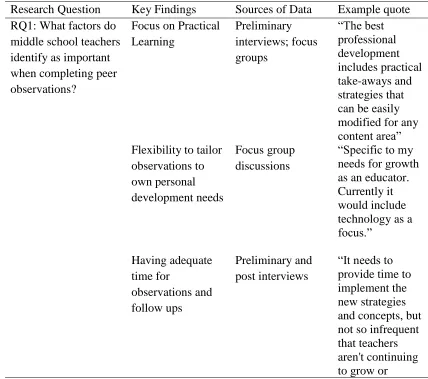
Table 5.1 Summary of Findings Pertaining to RQs 1 and 2 ...94
CHAPTER1
INTRODUCTION
The professional development of teachers has been shown to be positively
associated with teacher performance (e.g. Darling-Hammond, 1999; Wood & Bennett,
2000) and student achievement (Borko and Putnam, 1995; Darling-Hammond, 1999).
Peer observations have become a progressively common method of professional
development and, when completed effectively, they allow for the self-growth of teachers,
which can ultimately promote better student learning and academic achievement
(Darling-Hammond, 2010). However, within many academic settings, peer observation
has often been used mainly for evaluation and performance management purposes (Peel,
2005) and its potential for facilitating the professional development of teachers is not
being realized.
For example, at Eden Middle School (a pseudonym) in northern South Carolina,
observations are used purely for the purpose of top-down teacher evaluation. On the rare
days that administrators go into a classroom to observe, they open a form on their iPad,
check off the boxes on the checklist, make a comment or two at the bottom, and then
email the evaluation to the teacher, all within a ten-minute window. The checklist has
been used by the current school for teacher evaluation purposes for several years and
consists of a checklist of approximately twenty items and a small box for comments. In
using the checklist and emailing it to teachers after the observation is completed, few or
feedback to help the teachers is seldom offered, and teachers hardly ever respond to the
evaluation. Administrators observe and send the evaluation to the teachers, the teachers
receive and interpret the feedback, and may or may not attempt to alter their instruction.
These isolated observations involve no collaboration and opportunities are therefore lost
to capitalize on effective professional development through the use of observation.
In Eden Middle School, like many other K-12 schools across the U.S., teachers
struggle to cope with the pressures of their day to day workloads, and little time is
available for the professional development activities that are ultimately important for
improving teacher performance and student outcomes. Peer observation potentially
provides opportunities for improved collaboration and sharing of knowledge and best
practices among teachers within the school, in ways that can enhance their professional
development without a major impact on time or school resources. Indeed, according to
adult learning theory, adults generally learn most effectively when engaged in meaningful
activities that reflect the types of challenges they face in their everyday work (Lochmiller
& Chesnut, 2017). Authentic learning takes place within this context; as John Dewey
(1907) stated, the need for teachers to observe each other in context is an ordinary
experience that places a “…sense of reality acquired through first-hand contact with
actualities” (p. 8). When teachers learn within their classrooms, effective collaboration
and enhanced instruction can be expected to take place. The scenario described at Eden
Middle School is therefore emblematic of what Fullan refers to as a lack of opportunity
for teachers to learn within the setting in which they teach daily (Fullan, 2008).
effective professional development through peer observations and thus to contribute to
more effective collaboration and improved teacher instruction within the school.
Background
In the modern American education system, teachers face continuous demands to
raise academic achievement among all students. The quality of the teacher is one of the
most important factors relating to students’ educational outcomes (Steinberg & Sartain,
2015). Teachers are responsible for and held accountable for student learning and
academic achievement in the classroom. Student learning and academic achievement are
at the forefront of education; therefore, it is imperative that all aspects of education have
a positive impact on learning and achievement. Effective professional development to
improve skills, attitudes, understandings, and performance is essential in order to enable
teachers to provide effective instruction to all students (Fullan, 1990). Valuable
professional development offers teachers opportunities to continue their own education
by enhancing and developing their range of teaching skills to meet the rapidly changing
demands of education. To help advance the professional practice of teachers and increase
student achievement, collaborative professional development centered on improving
proficiency is crucial (Odden, 1995).
One practical approach that can help support and refine instructional practice is to
complete classroom observations (Colvin et al., 2008). While teacher evaluation through
observations often has the twofold purpose of both assessing and improving teacher
performance, administration observations are mostly completed as an evaluation and not
always perceived as an aid to support and refine teacher performance. Conservative
learning (Marshall, 1996). While classroom observations provide administrators with a
sense of teachers’ everyday proficiency and effectiveness, teachers can perceive these
observations only as an evaluation and not as professional development intended to
improve their practice. A newer approach to observing, peer observations, is being used
to facilitate teacher growth and improve teacher quality through professional
development and collaboration (Lam, 2001). Meaningful forms of professional
development have been shown to enhance standards of classroom instruction (Burk,
2013), and researchers have shown that peer observations as a form of professional
development can enhance teacher communication, collaboration, self-confidence,
reflection, and result in overall improvements in professional practice
(Hammersley-Fletcher & Orsmond, 2004; Kohut et. al., 2007).
Theoretical Framework
The study uses a theoretical framework based on a combination of Senge’s (1990)
Theory of the Learning Organization; Lindeman’s (1926) Adult Learning Theory, and
Bandura’s (1971) Social Cognitive/Observational Learning Theory, which together
highlight the importance of learning which relates to the learner’s real-world experiences
and in which they learn from observing others, and the role of their employing
organization in providing a supportive environment for this to take place.
Senge’s (1990) theory identified the key characteristics of an organization which
are important for learning to take place in this setting, including a collaborative culture
and a focus on continual learning and development. According to Eduard Lindeman’s
world experiences are regarded as particularly important in adult learning within this
theoretical perspective. As Lindeman stated, “The resource of highest value in adult
education is the learner’s experience. If education is life, then life is also education”
(Lindeman, 1926, p. 6). Lindeman’s protégé Malcolm Knowles’ developed the theory of
andragogy (1980), which was also grounded in the idea of experience and recognized
adult learners as self-directed and autonomous. From this theoretical perspective, the
professional development of teachers should coincide with the practice of teaching
(Lindeman, 1944; Trotter, 2006). Adults desire to share in the design of their professional
development in order to ensure it relates to their teaching practice. Knowles (1980) saw
teachers as facilitators rather than presenters and recognized the power of experience in
this role. Effective professional development provides teachers with opportunities to
enhance and develop their range of teaching skills and improve proficiency within their
own classroom.
Albert Bandura’s Social Cognitive Theory and related Observational Learning
Theory proposed that learning transpires through the observation of peers (Bandura,
1971; Bandura & Huston, 1961). These theories suggest that people are the
representatives of transformation in both themselves and their environment through their
interaction with that environment (Bandura, 1977). From this perspective, teachers learn
by observing their peers and then replicate the observed skills and procedures within their
own classrooms. According to Mackeracher (2004), transferable knowledge happens in
context where new information is applied to practical situations. Professional
learning that allows teachers to learn new skills and strategies and immediately apply
them to their own practice in a direct and highly contextualized manner (Fullan, 2008).
Observational Learning Theory and Adult Learning Theory provide important
insights into the ways in which peer observation can be an effective professional
development tool, and the Theory of the Learning Organization demonstrates the
importance of having the right conditions in place to facilitate this. These theories of
learning are also clearly related to the criteria for high quality professional development
among teachers as cited in the literature. For example, Archibald, Coggshall, Croft &
Goe (2011) synthesized the findings of a range of leading educational researchers and
concluded that high quality forms of professional development have five key
characteristics: 1) Alignment with school goals, state and district standards and
assessments, and other professional learning activities including formative teacher
evaluation; 2) Focus on core content and modeling of teaching strategies for the content;
3) Inclusion of opportunities for active learning of new teaching strategies; 4) Provision
of opportunities for collaboration among teachers, and 5) Inclusion of embedded
follow-up and continuous feedback. Being aligned with school, district and state goals suggests
that the professional development will be clearly linked with the day to day reality in
which teachers work, and therefore congruent with the way that adults learn best, as
explained by Lindeman (1926) and Knowles (1980). The collaborative nature of peer
observation, its focus on modelling best practice teaching strategies and its inclusion of
feedback mechanisms are in line with Bandura’s arguments that adults learn from
the other listed criteria for high quality professional development: modelling of strategies,
active learning, providing collaborative opportunities and including feedback.
The existing literature on the use of peer observation for teacher professional
development indicates that it provides opportunities for teachers to become more
self-aware, improve their practices, generate knowledge about teaching, and build community
through collaboration. As teachers engage in observations amongst colleagues, dialogue,
and inquiry about teaching and learning, professional development is taking place as
teachers are encouraged to inquire about what effective teaching and learning is and what
it looks like and sounds like (Argyris & Schon, 1996). Collaboration with colleagues
leads to discussions about instructional design and delivery that encourages teachers to
engage in a cycle of constant learning and improvement. When completed effectively,
peer observations also allow teachers to develop in ways that ultimately allow for better
student learning and improved levels of academic achievement. An iterative process of
observation and conferencing focused on improving lesson planning, the classroom
environment, and instructional strategies should bring about positive changes in teacher
practice. As teachers improve their skills and learn how to best respond to their students’
learning needs, student performance is likely to improve (Steinberg and Sartain, 2015).
Research Questions
The purpose of this study was to collaborate with teachers to develop a peer
observation protocol that would lead to meaningful professional development that
promotes teacher growth and collaboration. In fulfilling this purpose, the researcher
protocol, and also examined their perceptions of the ways in which peer observations are
perceived to provide effective professional development opportunities for teachers.
The following research questions guided this study:
1. What factors do middle school teachers identify as important when completing
peer observations?
2. To what extent is the peer observation method perceived by teachers as
meaningful professional development that promotes teacher growth?
Overview of Methods
Action research in the form of Riel’s iterative cycle of inquiry was used in this
study for the purpose of improving teacher instruction through professional development
and collaboration. Action research is a systematic process where the results are
real-world, pertinent, and can enlighten theory. The goals of action research include the
improvement of practice through continual learning and problem solving; a thorough
understanding of practice and development; and an improvement in the community in
which one’s practice is embedded through participatory research (Riel, 2007). The use of
action research methods permitted the research to be conducted in the school setting and
allowed teachers to work collaboratively to develop a professional development tool that
enhanced their instruction and collaboration.
Riel’s progressive problem-solving action research model was used to conduct the
study. This model consists of four steps within of a number of subsequent cycles of
research, with the steps consisting of planning, taking action, collecting evidence, and
further action, with improved understanding from each cycle leading the way to
improved practice.
In this action research project, qualitative instruments and data were used to study
the experiences and perspectives of the teachers in order to address the research
questions. Qualitative research typically uses observations, interviews, document
analysis, journals, and focus groups (Mertler, 2014). It has been defined “as an emergent,
inductive, interpretive and naturalistic approach to the study of people, cases,
phenomena, social situations and processes in their natural settings in order to reveal in
descriptive terms the meanings that people attach to their experiences of the world,”
(Yilmaz, 2013, p. 312). In particular, phenomenology, a qualitative method of research,
was used to describe experiences as they were lived by the teachers in this study.
Moustakas (1994), the founder of phenomenological research, suggested that research
should focus on the entirety of experience and a search for cores of experiences.
According to Moustakas, experience and behavior are an integrated and inseparable
relationship of a phenomenon with the person experiencing the phenomenon. Qualitative
phenomenological studies are used to explain the meaning, structure, and the core of the
lived experiences of an individual or group of people around a detailed phenomenon
(Christensen, Johnson, & Turner, 2010), in this case the experience of participating in
peer observation as a professional development activity and developing an observation
protocol.
Phenomenological studies generally use in-depth interviews to gather
participants’ detailed description of their experiences. In this action research study,
order to collect a broad range of data that could be used for triangulation purposes.
Triangulation, member checking, prolonged engagement and persistent observations are
ways to help ensure the accuracy of qualitative data, and to present a complete picture of
the solution. The interviews and focus groups were recorded and transcribed, and the
transcripts were analyzed inductively in a process of open coding in which key themes
were identified from the data itself rather than being identified in advance. The data was
in this way reduced to a small set of categories or themes relevant to the phenomenon and
the research questions being addressed, and which were used to structure the presentation
of findings (Mertler, 2014).
The concept of validity in research addresses the question of whether the data that
have been collected accurately capture the phenomena that they are intended to capture
(Mertler, 2014). In qualitative research, people are the primary source of data collection
and analysis. When the subjects’ authenticity is accessed through observation and
interviews, validity is ensured mainly through the use of a rigorous and transparent
qualitative research process (Maxwell, 2005). In this study, participants were assured that
their responses would remain confidential and that they would remain anonymous in the
presentation of findings, and it is assumed that participants provided honest and complete
responses within the interviews and focus groups. By describing the research context,
detailed methods and assumptions of the study, it is expected that other schools will be
able to utilize the same action research process in order to enhance their professional
development and collaboration through peer observations in a similar way to the research
Participants
The participants for this action research project were consenting teachers chosen
using a purposeful sampling method. Participants included seven cross-discipline
teachers in grades 6-8, drawn from a middle to upper class, suburban large middle school
in the southeastern United States. Overall, the sample consisted of one math, two social
studies, and four science teachers. Their length of experience of teaching ranges between
five and twenty-one years. Four of the teachers held master’s degrees. The sample
comprised of these seven teachers contained members of the Curriculum and Instruction
Focus Team already formed by the principal and the instructional coach at Eden Middle
School.
Significance and Limitations
This study contributes to the use of peer observations as a professional
development tool that promotes teacher growth and collaboration at the middle school
level. Previous research on the use of peer observations for professional development
purposes at middle school level is minimal, and this study is therefore expected to make a
significant contribution to understanding of how to implement peer observations as a
means for the professional development of teachers in similar middle schools, both in
northern South Carolina and in other parts of the United States.
The specific findings of this study may have limited generalizability as the sample
population was limited to one middle school and a small group of teachers teaching sixth
through eighth grades. This is not a weakness, but an inherent feature of the action
research nature of this study, which is focused on addressing a particular organizational
approach may also be of interest and relevance to other K12 schools interested in
developing a similar peer observation initiative for the purpose of professional
development.
The study focused on developing a protocol for peer observations, the teachers’
perceptions of the observations being used as a professional development tool, and their
perceptions of the observations helping to develop collaborative relationships. There was
no attempt to link peer observations and feedback to increased student achievement,
which is the ultimate educator goal.
Positionality
As an educator for thirteen years, I have taught several different grade levels as
well as being an instructional coach and an Assistant Principal. While in the Assistant
Principal role for two years, I believe that I failed as an instructional leader because I
allowed prevailing, almost inevitable forces to consume my days. Going into the position,
I felt excited about meeting and working with the teachers on unit planning, giving
suggestions and then observing classes and providing feedback to the teachers to help
them to be more successful. However, that was not to be the case. On the rare days that I
could go into a classroom to observe, I would open a form on my iPad, check off the
boxes of the items I observed on the checklist, make a comment or two in the small box
at the bottom, and then email it to the teacher. This was all completed within a ten-minute
window. The checklist used has been in use by this school for several years and provides
approximately twenty boxes to check if the item is observed and a small box to insert a
observation, much less offer any usable feedback to help the teachers, and teachers never
responded to my sent checklist. I felt a failure as an instructional leader, a role which is
my passion as an educator. I was never able to offer collegial conversations that
eventually led to improvements in teacher instruction and performance.
According to Mertler (2014), real school improvement begins from within the
familiar ‘four walls of the classroom’ (p. 12). Because the administration team had
focused their observations on evaluation purposes, it became the school’s desire to
implement peer observations as a tool for professional development. The desire was to
not only implement a protocol for observing peers, but to also encourage collegial,
collaborative conversations that would lead to the enhancement of teacher instruction and
performance which will increase student learning and academic achievement. As I am no
longer employed at this school, my role is now that of a researcher and a facilitator of this
action research.
Organization of the Dissertation
This study is organized in five chapters. This first chapter has outlined the
purpose of the study and provided an overview of the research. Chapter 2 presents the
findings of a review of literature covering previous research relevant to the problem. This
included published research relating to professional development, teacher collaboration,
and peer observations. The literature provides both a theoretical and empirical
perspective for the study and established the framework guiding my research. Chapter 3
presents the methodology used in the study, including the overall research design,
participant information, the peer observation process, and the data collection and analysis
themes and sub-themes arising from the analysis. Chapter 5 discusses these findings and
their significance and sets out recommendations and a proposed plan of action for a peer
observation initiative in the school.
Definition of Key Terms
Action Research:A research process focused on identifying new methods or
approaches with which to improve a certain practice, while generating new knowledge
(McNiff and Whitehead 2006).
Adult Learning Theory: Lindeman’s (1926) theory and later variations of this,
which propose that adults learn most effectively when engaging in learning activities that
have direct application to their real-life context.
Teacher collaboration: What occurs when “teachers work together regularly,
share their knowledge, contribute ideas, and develop plans for achieving educational
goals” (Ketterlin-Geller, Baumer, & Lichon, 2015).
Observational Learning Theory: A theory which contends that people learn from
observing the behavior of others and the ways in which this is rewarded or penalized
(Bandura, 1977).
Observer teacher: The teacher who observes another teacher’s classroom
practices or methods during a peer observation.
Observed teacher: The teacher whose classroom practices or methods are
observed during a peer observation.
Peer observations: The formative process by which teachers observe each other
Peer observation protocol: The questionnaire which the observer teacher
completes during or after a classroom observation with notes and/or feedback on what
they have observed
Phenomenology: A qualitative research method which seems to understand social
phenomena from the real-life perspectives of those that have direct experience of them
(Whitehead, 2002)
Professional development: Any activity that promotes teacher learning with an
emphasis on instructional practices
Professional learning communities: an approach to the professional development
of teachers in which they are encouraged to support one another and share practices
within a school (Servage, 2008).
Teacher leadership: Practice in which teachers take on roles and responsibilities
outside their formal teaching duties, which contribute to improving overall school
performance (Palmer, 2018).
Theory of the Learning Organization: Senge’s (1990) theory identifying the
structures or processes through which organizations facilitate learning and adapt over
CHAPTER 2
REVIEW OF LITERATURE
The purpose of this study was to collaborate with teachers to develop a peer
observation protocol and recommendations for a peer observation initiative that can lead
to meaningful professional development that promotes teacher growth and collaboration.
The problem of practice is that classroom observations are currently being used in this
school only in a limited way by administrators for teacher evaluation purposes, and are
not being used in a way that is effective in promoting professional development. The
specific research questions used to guide the study were:
1. What factors do middle school teachers identify as important when
completing peer observations?
2. To what extent is the peer observation method perceived by teachers as
meaningful professional development that promotes teacher growth?
In this chapter, literature relevant to the research problem and the theoretical and
methodological approach of the study is examined. First research-based literature is
identified that provides a historical context for the topics of peer observations, teacher
professional development, collaboration and professional learning communities, and
teacher leadership.
methodological approach for the research. The review of literature thus provides both a
theoretical and empirical perspective for the study and establishes the framework used to
guide the research.
Peer observations have become a progressively common method of professional
development and have been demonstrated to be a powerful tool for improving
pedagogical practice (Darling-Hammond, 2010). Peer observations are a training
technique grounded in the observational learning theory (Bandura 1971). Peer
observations often involve a beginner practitioner observing a veteran in a particular field
with the intent of developing or enhancing the skills of the beginner practitioner. In this
study, peer observations will refer to a formative process by which teachers observe each
other in order to provide opportunities for teachers to learn about teaching practices and
to share evidence-based methods to promote professional growth.
Professional development through peer observation gives teachers insights on
how to improve their instructional strategies in order to allow students to make gains and
achieve their highest potential. When completed effectively, peer observations allow for
the self-growth of teachers, which can ultimately promote better student learning and
academic achievement. An iterative professional development process of peer
observation and conferencing, focused on improving lesson planning, the classroom
environment, and instructional strategies, should bring about positive changes in teacher
practice. As teachers improve their skills and learn how to best respond to their students’
learning needs, student performance is likely to improve (Steinberg and Sartain, 2015).
According to Gosling (2005), the objectives of peer observations are: 1) to facilitate
development needs; 2) to improve the quality of learning and teaching; 3) to foster
discussion and dissemination of good practice, and 4) to increase participant awareness of
the student experience of learning (p. 16)
Peer observations have been practiced and documented in the medical field for
decades (Hill, 2013; Siddiqui et al., 2007) and more recently in higher education
institutions (Palmer, 1998; Pressick-Kilborn & Te Riele, 2008). Within academic
settings, peer observation has been used for two main reasons: teacher development and
performance management (Peel, 2005). According to Bell (2005), peer observations for
the purpose of development in teaching consist of “collaborative, developmental activity
in which professionals offer mutual support by observing each other teach; explaining
and discussing what was observed; sharing ideas about teaching; gathering student
feedback on teaching effectiveness; reflecting on understandings, feelings, actions and
feedback and trying out new ideas” (p.3). Activities such as those mentioned by Bell
(2005) have been used by teachers in a variety of contexts and grade levels to improve
professional practice and to support professional growth as well as student achievement
(DuFour & Eaker, 1998).
The use of peer observations in the K-12 setting first began to receive some
acknowledgement in the literature around the 1970s (Lortie, 1975; Strother, 1989) and
has slowly gained attention over time, though the available literature in this area remains
limited. Strother (1989) reports on a case in which a Massachusetts superintendent
deferred all teacher evaluations for one year in order to focus on peer observations,
observation studies, one in a K-2 setting and one in a high school setting. These used a
pre-conference, observation, and a post-conference format designed to establish trust and
collaboration between the teachers and enable their professional growth. During the
pre-conference, the teachers discussed the lesson objectives, anticipated student behaviors,
and determined the data to be collected. The observer scheduled the peer observation,
observed for a specific amount of time, and collected the pre-determined data. During
the post conferences, the observer conveyed the data and the observed teacher analyzed
and reflected with the observer (Munson, 1998). The teachers in this study reported
professional growth through this process, but also reported that it had been challenging to
find adequate time to meet and observe their peers. Based on the findings, Munson
suggested that the inclusion of a coordinator would be beneficial to the process and also
recommended continuing the pre- and post-conference discussions.
Early studies (Lortie, 1975; Cosh, 1999) argued that peer observations have a
greater impact on educational practice than any other form of professional development.
However, Cosh (2002) claimed that it is the observer rather than the observed teacher that
is the main beneficiary of the peer observation process, as he found no real indication that
people grow and improve through the assessments or comments of others. Evidence from
other studies is building, however, to show that both the observing and the observed
teacher receive benefits from peer observation. In a higher education setting, for example,
Kohut, Burnap & Yon (2007) found that both observers and observees in a peer
observation initiative believed that their peer observation instruments were effective
measures of teaching effectiveness, and that the peer observation reports were both valid
Indeed, peer observation has been shown to be associated with a range of benefits
for individual teachers, schools and students, according to a review of existing literature
conducted by Peel (2005). These include, for example, improvements in teaching
practice, improved teacher confidence, the development of a collegial working
environment and the adoption of new educational perspectives (Bell, 2005; Quinlan &
Akerlind, 2000). Other studies have also documented the benefits of peer observation;
Lam (2001) observed for example that peer observations are being used to facilitate
teacher growth and improve teacher quality through professional development and
collaboration, and Krummel Reinking (2015) noted that they provide teachers with an
opportunity to reflect on and expand their practice in ways that increase student
achievement.
However, the available research evidence indicates that peer observations are only
effective in generating benefits if accompanied by adequate and useful forms of
follow-up discussion. Lipton and Wellman (as cited in Roussin and Zimmerman, 2014)
emphasize that discussions from observations is the foundation for exploring and
improving practice. When observations and collegial conversations are implemented
effectively, a school begins to value and engage in data-driven, inquiry-based discussions
between colleagues about improving practice. Researchers also note that peer
observation involves challenges such as the ability to critically reflect and to provide and
accept feedback on both successful and unsuccessful teaching practices (Bell, 2005). For
this reason, it is essential that peer observation is implemented in the context of a wider
participate effectively in the process. The following sub-section therefore examines
relevant literature relating to professional development.
Historical Context
Peer Observations
Peer observations have become a progressively common method of professional
development and have been demonstrated to be a powerful tool for improving
pedagogical practice (Darling-Hammond, 2010). Peer observations are a training
technique grounded in the observational learning theory (Bandura 1971). Peer
observations often involve a beginner practitioner observing a veteran in a particular field
with the intent of developing or enhancing the skills of the beginner practitioner. In this
study, peer observations will refer to a formative process by which teachers observe each
other in order to provide opportunities for teachers to learn about teaching practices and
to share evidence-based methods to promote professional growth.
Professional development through peer observation gives teachers insights on
how to improve their instructional strategies in order to allow students to make gains and
achieve their highest potential. When completed effectively, peer observations allow for
the self-growth of teachers, which can ultimately promote better student learning and
academic achievement. An iterative professional development process of peer
observation and conferencing, focused on improving lesson planning, the classroom
environment, and instructional strategies, should bring about positive changes in teacher
practice. As teachers improve their skills and learn how to best respond to their students’
learning needs, student performance is likely to improve (Steinberg and Sartain, 2015).
reflection on the effectiveness of the participant’s own teaching and identify their
development needs; 2) to improve the quality of learning and teaching; 3) to foster
discussion and dissemination of good practice, and 4) to increase participant awareness of
the student experience of learning (p. 16)
Peer observations have been practiced and documented in the medical field for
decades (Hill, 2013; Siddiqui et al., 2007) and more recently in higher education
institutions (Palmer, 1998; Pressick-Kilborn & Te Riele, 2008). Within academic
settings, peer observation has been used for two main reasons: teacher development and
performance management (Peel, 2005). According to Bell (2005), peer observations for
the purpose of development in teaching consist of “collaborative, developmental activity
in which professionals offer mutual support by observing each other teach; explaining
and discussing what was observed; sharing ideas about teaching; gathering student
feedback on teaching effectiveness; reflecting on understandings, feelings, actions and
feedback and trying out new ideas” (p.3). Activities such as those mentioned by Bell
(2005) have been used by teachers in a variety of contexts and grade levels to improve
professional practice and to support professional growth as well as student achievement
(DuFour & Eaker, 1998).
The use of peer observations in the K-12 setting first began to receive some
acknowledgement in the literature around the 1970s (Lortie, 1975; Strother, 1989) and
has slowly gained attention over time, though the available literature in this area remains
limited. Strother (1989) reports on a case in which a Massachusetts superintendent
improve teaching. A decade later, Munson (1998) conducted two comparable peer
observation studies, one in a K-2 setting and one in a high school setting. These used a
pre-conference, observation, and a post-conference format designed to establish trust and
collaboration between the teachers and enable their professional growth. During the
pre-conference, the teachers discussed the lesson objectives, anticipated student behaviors,
and determined the data to be collected. The observer scheduled the peer observation,
observed for a specific amount of time, and collected the pre-determined data. During
the post conferences, the observer conveyed the data and the observed teacher analyzed
and reflected with the observer (Munson, 1998). The teachers in this study reported
professional growth through this process, but also reported that it had been challenging to
find adequate time to meet and observe their peers. Based on the findings, Munson
suggested that the inclusion of a coordinator would be beneficial to the process and also
recommended continuing the pre- and post-conference discussions.
Early studies (Lortie, 1975; Cosh, 1999) argued that peer observations have a
greater impact on educational practice than any other form of professional development.
However, Cosh (2002) claimed that it is the observer rather than the observed teacher that
is the main beneficiary of the peer observation process, as he found no real indication that
people grow and improve through the assessments or comments of others. Evidence from
other studies is building, however, to show that both the observing and the observed
teacher receive benefits from peer observation. In a higher education setting, for example,
Kohut, Burnap & Yon (2007) found that both observers and observees in a peer
measures of teaching effectiveness, and that the peer observation reports were both valid
and valuable to them.
Indeed, peer observation has been shown to be associated with a range of benefits
for individual teachers, schools and students, according to a review of existing literature
conducted by Peel (2005). These include, for example, improvements in teaching
practice, improved teacher confidence, the development of a collegial working
environment and the adoption of new educational perspectives (Bell, 2005; Quinlan &
Akerlind, 2000). Other studies have also documented the benefits of peer observation;
Lam (2001) observed for example that peer observations are being used to facilitate
teacher growth and improve teacher quality through professional development and
collaboration, and Krummel Reinking (2015) noted that they provide teachers with an
opportunity to reflect on and expand their practice in ways that increase student
achievement.
However, the available research evidence indicates that peer observations are only
effective in generating benefits if accompanied by adequate and useful forms of
follow-up discussion. Lipton and Wellman (as cited in Roussin and Zimmerman, 2014)
emphasize that discussions from observations is the foundation for exploring and
improving practice. When observations and collegial conversations are implemented
effectively, a school begins to value and engage in data-driven, inquiry-based discussions
between colleagues about improving practice. Researchers also note that peer
observation involves challenges such as the ability to critically reflect and to provide and
approach to the professional development of teachers which ensures that they are able to
participate effectively in the process. The following sub-section therefore examines
relevant literature relating to professional development.
Professional Development for Teachers
Professional development of teachers has been shown to be positively associated
with teacher performance (e.g. Darling-Hammond, 1999; Wood & Bennett, 2000) and
student achievement (Borko and Putnam, 1995; Darling-Hammond, 1999). Professional
development for teachers has been defined not only as skills training but also of building
a suitable culture (Cochran-Smith & Lytle, 2001), in which the school is seen as a
community of learners and inquiry (McLauglin & Zarrow, 2001) and in which the
professional development of teachers is a collaborative process. Many schools in the
United States are establishing Professional Learning Communities (PLCs) in which
teachers are encouraged to support one another and to share and build on best practices
over time. As described by Servage (2008), “the professional learning community brings
teachers together on a regular basis to engage in collaborative planning, curriculum study,
and learning assessment” (p. 64).
According to DuFour et al. (2008), the overall objective when establishing a
Professional Learning Community is not learning new strategies but “creating conditions
for perpetual learning” (p. 17). They argue that the most effective way to improve student
outcomes is to adopt an approach to professional development in which teachers are
continually learning through their everyday job-related activities. Specifically, DuFour et
al. (2008) identify the main characteristics of a PLC as follows: 1) a focus on learning
best practices in learning and teaching; 4) action-oriented; 5) having a continuous
improvement focus; 6) focused on results, and 7) involving the development,
implementation and evaluation of specific interventional strategies for improving student
response (cited in Beddoes, Prusak, & Hall, 2014).
While professional development for teachers is known to be associated with
improved student outcomes and overall school performance, this can only be achieved
when the right conditions are in place. In practice, it has been reported in the literature
that professional development sometimes becomes a process of credit counting rather
than actual learning and can create resentment on the part of teachers particularly if
development activities are not perceived to be well-aligned with their learning styles or
development needs (Beaver, 2009). Researchers have identified certain conditions to be
important facilitators of professional development for teachers, including the provision of
opportunities for improving teaching skills; an open, trust-based and collegial culture;
administrative support, and allocation of resources (cited in Chow, 2016). Similarly,
important conditions for the success of professional learning communities in schools, as
identified from previous studies, include shared and supportive leadership; a common
purpose and values; a culture of collaboration and problem-solving, and a shared focus on
continuous improvement (Carpenter, 2015).
A qualitative study by Thessin (2010) highlighted the importance of having
supportive school leaders in order to ensure the effectiveness of the PLC. King (2004)
highlights that at individual teacher level, there must be a willingness to participate
teachers to share their knowledge and experience, it is also important to ensure that the
learning generated from these processes can be converted into practical, relevant concepts
for use by the wider community (Riley & Roach, 2006). The following sub-section
discusses literature relating to the role of a collaborative culture in supporting
professional development in general and peer observation initiatives in particular.
Collaborative Culture
In recognition of the importance of collaborative approaches in improving school
performance and student accounts, school reform efforts in recent decades in the U.S.
have largely been focused on the transformation of school cultures and on teacher
network development (Carpenter, 2015). For example, Gajda and Koliba (2008) noted
changes in the traditionally hierarchical structure school management in the US and the
replacement of this with collaborative cultures. These developments have largely been a
response to national educational policy initiatives: for example, the National Board for
Professional Teaching Standards (NBPTS, 2004, cited in Gajda & Kaliba, 2008) and the
National Commission on Teaching and America's Future (NCTAF, 2003, cited in Gajda
& Kaliba, 2008) both highlighted the ways in which standards of teaching and overall
school effectiveness depend largely on the existence of collaboration between teachers.
The American Federation of Teachers (AFT, 2004, cited in Gajda & Kaliba, 2008) also
emphasized that collaborative inquiry by teachers with the purpose of improving practice
is essential for achieving desired academic outcomes, and the National Middle School
Association (2008, cited in Gajda & Kaliba, 2008) has argued for the importance of
dreams for transforming schools depend on highly functioning groups of educators
working together”.
In broad terms, collaboration has been defined as persons coming together to
share the responsibility and authority for decision making (Hord, 1986). Individuals alone
are not able to transform schools into places where all children learn daily; groups of
teachers bring together more skill, knowledge, and experience than any single individual
is able to provide to schools (Aguilar, 2016). Leonard and Leonard (2003) describe
professional collaboration in the school setting as what occurs when “teachers work
together regularly, share their knowledge, contribute ideas, and develop plans for
achieving educational goals” (p. 3). Collaboration within a school can occur between
teachers, within a grade level, content area, or across support services, and can help build
the trust and collegial relationships that are known to be essential for improving school
and student performance (Ketterlin-Geller, Baumer, & Lichon, 2015).
A range of literature indicates that teacher collaboration is one of the most
important factors contributing to improved school and student-level performance. Strong
connections have been made between collaborative cultures, student achievement, and
the structure and content of relationships amongst teachers (Reilly, 2017). Researchers
have provided evidence that collaboration is associated with benefits for teachers
(Ketterlin-Geller et al, 2015; Mangin, 2016); the school environment (Hausman &
Goldring, 2001; Kelchtermans, 2006; Shachar & Shmuelevitz, 1997) and student
achievement (Goddard et al., 2007; Louis and Marks, 1998; Moolenaar et al., 2012;
Teacher collaboration leads to enhanced awareness of instructional practices, and
thus improves instructional practice, leading to greater student learning. Collaboration
among school professionals plays an important role in helping their professional growth
and improving the quality of instruction in a school (Bryk and Schneider, 2003). For
individual teachers, collaboration allows for more effective planning time, collective
resources, and sharing of effective practices which can increase productivity
(Ketterlin-Geller et al., 2015). Teachers who work collaboratively to develop common standards,
share their practice, participate in reflective dialog, and focus on student learning are
more likely to experience sustained learning (Mangin, 2016). Effective teacher
collaboration supports student learning and is being shown to have positive impacts on
student achievement (Ketterlin-Geller et al., 2015).
Administrators are responsible for creating a school culture that values and
cultivates collaboration among teachers. Effective school leadership is essential to
support a collaborative culture and ensure that the right conditions are in place to promote
and sustain this (e.g. Hallinger, 2003; Bryk and Schneider, 2003). This involves, for
example, the provision of time and processes for activities such as developing and
articulating a shared vision and goals, effective planning and coaching or mentoring
(Coburn and Russell, 2008; Moolenaar et al., 2012). Increasingly, the adoption of peer
observation initiatives is becoming an important aspect of a collaborative culture, along
with other practices such as peer coaching, reviewing grading practices, and formative
assessments of teacher practice (Min, Modeste, Salisbury & Goff, 2016). The research
evidence shows that collaborative approaches are most successful when teachers feel
the risks necessary for effective change (Harris & Jones, 2010; Vescio et al., 2008). One
of the main roles of school leadership, therefore, is to promote a trust-based culture which
is supportive of collaboration (Hallam et al., 2015). However, this is not down to the
school principal alone: shared leadership is another important feature of a collaborative
school culture. Peer observation along with other collaborative practices also provides
opportunities for outstanding teacher leaders to emerge who can have a significant impact
on overall school performance. The following sub-section therefore discusses literature
relating to teacher leadership.
Teacher Leadership
Since the 1980s the concept of teacher leadership has been progressively used as
an approach for instructional improvement in schools. In broad terms, the term refers to
teachers taking on roles and responsibilities outside their formal teaching duties, which
contribute to improving overall school performance (Palmer, 2018). Teacher leadership
has also been discussed as a means by which teachers impact school-wide instruction or
policy (Stein, Macaluso, & Stanulis, 2016). The growing emphasis on teacher leadership
reflects official policy initiatives supporting this approach: in 2014, for example, the
National Board for Professional Teaching Standards and the National Education
Association collaborated in the development of specific teacher leader competencies
within the categories of instructional leadership, policy leadership, and association
leadership (Palmer, 2018). This was also intended to attract talented educators to
America’s public school system: “If we expect ambitious, intellectually engaged people
that is exciting and varied over the long term, and which includes opportunities to lead
among adults, not just children” (Goldstein, 2014, p. 269).
Teacher leadership thus generates new roles and responsibilities that are important
for enriching the profession and advancing educational improvement (Bae, Hayes,
O’Connor, Seitz, Distefano, 2016). These leadership opportunities officially recognize
the talents of outstanding teachers who contribute to student learning, collaboration
amongst colleagues, and overall school improvement. Through developing the
knowledge and skills needed to inform and lead school improvement efforts, teachers are
becoming instructional coaches, participating in decision-making, and leading new types
of training initiatives.
Using teacher leaders as a source of learning support to aid in school
improvement through professional learning improves teacher instruction and increases
student achievement (Mangin, 2016). Many schools are now therefore implementing or
supporting formal and informal teacher leadership initiatives in order to build shared
capacity and offer support for improvement efforts. The intended ultimate outcome of
teacher leadership is improved teaching and learning (Mangin, 2016; Stein, et al., 2016).
However, teacher leaders must have the right attributes to be able to contribute
effectively to these outcomes: in particularly, those who have high levels of teaching
efficacy, or the belief that he or she has the capacity to affect student performance, are
likely to generate more change and contribute to enhanced instructional and student
outcomes (Stein, Macaluso, & Stanulis, 2016). Other attributes found to be important in
experiment with new instructional approaches and a willingness to share experiences
with other teachers (Palmer, 2018).
The advancement of teacher leadership reflects a growing body of research
evidence of the importance of teacher learning for constant instructional improvement
and the ways in which teacher leadership can enable professional learning. Research
demonstrates that instructional improvement is dependent upon teachers’ continuing
access to quality learning opportunities (Mangin, 2016). Teacher leaders provide support
to colleagues such as planning, lesson modelling, observing teaching and giving
feedback, collecting and analyzing data, facilitating discourse, collaborating, and
promoting common practices among teachers. They engage in varied leadership roles
with the goal of improving instruction and shaping school culture. For teachers to be
valued as leaders, they must be respected, learning-oriented, and have leadership abilities.
Leadership work within the schools must be valued, evident, negotiated and shared.
Structural conditions must include a supportive culture, supportive administration and
colleagues, sufficient time and resources for teacher leadership, and professional
development opportunities for teacher leaders (York-Barr & Duke, 2004).
Peer observation provides an ideal opportunity for the emergence of teacher
leaders, as discussed by Palmer (2018). Observed teachers are able to receive
constructive feedback which facilitates their self-growth, while observers are exposed to
a wider range of instructional practices and must develop the reflective and critical
Theoretical Framework
The theoretical framework for the study builds on three theoretical models, as
well as the empirical literature discussed in the previous section. Specifically, the three
models used in the theoretical framework are: 1) Theory of the Learning Organization
(Senge, 1990); 2) Adult Learning Theory (Lindemann, 1926; Knowles, 1989), and 3)
Social/Observational Learning Theory. All three theoretical models are relevant to the
issue of peer observation by teachers and are useful in guiding the design and
implementation of the research and the analysis and interpretation of the research data.
Theory of the Learning Organization
Senge’s (1990) theoretical framework for learning organizations was intended to
identify the structures or processes through which organizations facilitate learning and
adapt over time to changing conditions (Evans, Thornton & Usinger, 2012). Senge (1990)
defined the learning organization as a place “where people continually expand their
capacity to create results they truly desire, where new and expansive patterns of thinking
are nurtured, where collective aspiration is set free and where people are continually
learning how to learn together” (p. 3). Other researchers have defined a learning
organization as one which “learns continuously and transforms itself” (Watkins &
Marsick, 1993, p.8) and one in which learning processes are “analyzed, monitored,
developed, managed, and aligned with improvement and innovation goals” (Gephart,
Marsick, Van Buren, & Spiro, 1996, p. 36). These are all apt descriptions of a school
environment with a collaborative culture and professional learning community approach,
in which practices such as peer observation may be adopted as key tools for continuous
More specifically, Senge’s (1990) model identified five inter-related dimensions
of a learning organization, all of which must be in place for true learning and
performance improvement to take place. These were defined as:
Personal mastery: which represents the process by which individuals address the
gap between their current level of skills and expertise and those which they aspire to
attain. For personal mastery to be possible, individuals must hold a clear future vision for
themselves, which is aligned with the shared organizational vision and provides a
roadmap for development and growth. A learning organization will encourage the
development of vision and strategies for personal mastery. In a school setting, personal
mastery can be facilitated through teacher evaluation processes as well as collaborative
inquiry methods (Evans et al., 2012).
Mental models: A learning organization provides its members with opportunities
for collaboration and discussion, whereby different mental models can be identified and
explored. In the school setting, for example, these models may consist of different
pedagogical approaches, which are discussed openly in order to identify effective practice
for possible classroom use. By encouraging open discussion, school leaders can help
ensure that any mental models which are held by teachers but are not conducive to the
achievement of the shared organizational vision can be identified and addressed, while
those that are best aligned to the vision can be shared and reinforced (Evans et al., 2012).
Shared vision: Senge (2006) defined this as the “collective caring” in the
organization, or the shared understanding of what the school intends to achieve in terms
commitment to the vision and promote collaborative discussion of strategies for
achieving it (Evans et al., 2012).
Team learning: Senge (1990) emphasized that most organizational learning takes
place at team level rather than individual level and consists of deep inquiry to identify the
most effective ways of achieving organizational goals. In his later work, Senge (2006)
defined three specific conditions that promote this: the ability to think deeply about
complex issues; effective co-ordination between team members and integration between
teams across the organization. Within schools, team learning can be promoted through
the use of collaborative inquiry projects and regular staff meetings to discuss key issues
(Evans et al., 2012) as well as specific collaborative initiatives such as peer observation.
Systems thinking: When members of an organization adopt systems thinking, they
are conscious of the impact of their actions and decisions on all other members and parts
of the organization. Interdisciplinary or cross-grade initiatives within schools are
examples of the ways in which systems thinking can be implemented for maximum
impacts on school performance (Evans et al., 2012). Peer observation initiatives
involving teachers from different grade levels or subject areas acknowledge that learning
is often transferable across these areas and make best use of the knowledge and expertise
of teachers for the overall benefit of the school and its students.
From the 1990s onwards, the learning organization model was extensively
adopted into educational research and has been utilized both as a recommended approach
to school reform (e.g. Duffy, 1997; Weller & Weller, 1997) and as a professional
development tool for teachers (e.g. Dilworth & Imig, 1995; Redding & Kamm, 1999).
organizational learning in both elementary and secondary schools. For example,
Leithwood, Leonard, and Sharrat (1998) found that these include a collaborative and
collegial school culture; structures to facilitate teacher participation in decision-making,
and policies and resources for the purpose of supporting the professional development of
teachers. Evans et al. (2012) also used Senge’s (1990) framework to identify the ways in
which schools can become learning organizations, as highlighted in relation to the
dimensions of the model listed above.
Adult Learning Theory
It is essential that professional development initiatives for teachers build on what
is known about how adults typically learn. Lindeman’s (1926) adult learning theory and
the later iteration by Knowles (1989), which has been widely adopted in the teacher
professional development literature, therefore comprise the second component of the
theoretical framework for this study.
Adult learning theories are based on the understanding that adults generally learn
most effectively when engaged in meaningful activities that reflect the types of
challenges they face in their everyday work (Lochmiller & Chesnut, 2017). The father of
adult learning theory, Eduard Lindeman, emphasized that learning should be coterminous
with life and adult learners must participate in learning activities that have direct
application to the adults’ real-life context (Lindeman, 1926). Lindeman believed that
“experience is the adult learner’s living textbook” (1926, p. 7). Adult learning should
promote critical reflection and prompt an awareness of the culturally constructed nature
learning and help them progress towards achieving their personal career aspirations. The
teachers themselves should also be directly involved in the development of these
initiatives (Scott & Webber, 2008).
Many professional educators who participate in PLCs have adopted the adult
learning theory first developed by Malcolm Knowles in the 1960s. Knowles (1989) felt
there was a need to study the ways in which adults learn and created a new name for adult
learning theory: andragogy (p. 79). Knowles developed the andragogical model of
learning using four original principles, later adding two additional principles. These are
summarized by Merriam, Caffarella, and Baumgartner (2007) as follows: 1) As a person
matures, his or her self-concept moves from that of a dependent personality toward one
of a self-directed human being; 2) An adult accumulates a growing reservoir of
experience, which is a rich resource for learning; 3) The readiness of an adult to learn is
closely related to the developmental tasks of his or her social role; 4) There is a change in
time perspective as people mature—from future application of knowledge to immediacy
of application. Thus, an adult is more problem centered than subject centered in learning;
5) The most potent motivations are internal rather than external; Adults need to know
why they need to learn something (Knowles, 1980; Knowles, 1984; Knowles &
Associates, 1984).
According to Knowles, Holton, and Swanson (1998), adults desire to learn based
on their personal goals which allow for knowledge gains. Learning outcomes are greater
when adults learn what they need to know based on their needs. Knowles therefore
challenged the idea that adults are inert receivers of knowledge and are driven by external