Scholarship@Western
Scholarship@Western
Electronic Thesis and Dissertation Repository
8-9-2017 12:00 AM
Enhanced Oxidation of Organic Contaminants by Ferrate:
Enhanced Oxidation of Organic Contaminants by Ferrate:
Acid-activated and Silica gel-enhanced Ferrate(VI) Oxidation Processes
activated and Silica gel-enhanced Ferrate(VI) Oxidation Processes
Kyriakos Manoli
The University of Western Ontario
Supervisor Dr. Ajay K. Ray
The University of Western Ontario Joint Supervisor Dr. George Nakhla
The University of Western Ontario Joint Supervisor Dr. Virender K. Sharma
The University of Western Ontario
Graduate Program in Chemical and Biochemical Engineering
A thesis submitted in partial fulfillment of the requirements for the degree in Doctor of Philosophy
© Kyriakos Manoli 2017
Follow this and additional works at: https://ir.lib.uwo.ca/etd
Part of the Chemical Engineering Commons
Recommended Citation Recommended Citation
Manoli, Kyriakos, "Enhanced Oxidation of Organic Contaminants by Ferrate: Acid-activated and Silica gel-enhanced Ferrate(VI) Oxidation Processes" (2017). Electronic Thesis and Dissertation Repository. 4704.
https://ir.lib.uwo.ca/etd/4704
This Dissertation/Thesis is brought to you for free and open access by Scholarship@Western. It has been accepted for inclusion in Electronic Thesis and Dissertation Repository by an authorized administrator of
i
Recently, the tetraoxy high-valent iron(VI), known as ferrate(VI) (Fe(VI); FeVIO
42), received a great attention as a water-treatment chemical, because of its unique oxidation, disinfection, and coagulation properties. Though Fe(VI) has shown remarkable efficiency in oxidizing several pollutants in water, it has sluggish reactivity with some emerging organic contaminants, especially at basic pH conditions. Thus, the main objective of this PhD thesis was to activate or catalyze Fe(VI) oxidation reactions, at mild alkaline pH conditions, to enhance the oxidative transformation of organic pollutants and reduce the required dosage of Fe(VI) and contact time.
The activation of Fe(VI) by adding simple acids (HCl, HNO3, and CH3COOH) to the Fe(VI)-contaminant mixed solution in deionized water under slightly alkaline pH conditions was demonstrated for the first time. Acid activation of Fe(VI) resulted in increased oxidative transformation of caffeine (psychostimulant, CAF), acesulfame potassium (artificial sweetener), and atenolol (β-blocker) by ~30% within seconds to minutes (versus minutes to hours with non-activated Fe(VI)). A possible reason for the augmentation of the oxidative transformation of organics may be the increasing formation of reactive intermediate species, FeV/FeIV, in the Fe(VI)-contaminant-acid mixture.
Further experiments demonstrated that acid-activated Fe(VI) oxidizes CAF in water at three times lower molar ratio of Fe(VI) to CAF than oxidative transformation observed by non-activated Fe(VI) (8.0 versus 25.0). CAF oxidation by acid-non-activated Fe(VI) was not negatively affected by anions such as Cl-, HCO
ii
Moreover, the employment of simple solid silica gel (SiO2) to remarkably enhance the oxidative transformation of CAF by Fe(VI) in water at mild alkaline pH conditions has also been demonstrated for the first time. Complete removal of CAF was achieved at Fe(VI) to CAF molar ratio of 6.0 in the presence of 4 g SiO2/L. In the presence of SiO2 gel, Na+, Mg2+, Ca2+, Cl-, HCO
3-, and SO42- ions had no significant effect on the removal of CAF by Fe(VI). NOM decreased the removal of CAF by Fe(VI) in the presence of SiO2 gel. However, the influence of NOM on removal efficiency of CAF by Fe(VI) diminished by increasing the amount of SiO2 gel in water. Identification of three products of CAF by Fe(VI)-SiO2 system suggests a reaction pathway initiated by the attack on the C4=C5 double bond of CAF, which is supported by the frontier molecular orbitals calculations of CAF.
The findings of this work may spur further research on the impact of different activation methods and solid materials on the oxidation of a range of pollutants by Fe(VI).
Keywords
iii
Co-Authorship Statement
This PhD thesis contains materials that are published or “under review” for publication in peer reviewed journals as listed below.
Chapter 2
Title of the Book Chapter: A Review on Ferrate(VI) and Photocatalysis as Oxidation Processes for the Removal of Organic Pollutants in Water and Wastewater
Authors: Kyriakos Manoli, Malini Ghosh, George Nakhla, Ajay K. Ray
Status: Accepted for publication - John Wiley Scrivener USA (Expected Pub Date: August, 2017)
Title of the Book: Advanced Materials for Wastewater Treatment (Advanced Materials Series)
Individual Contributions: A part of the book chapter has been used in Chapter 2 of this PhD thesis. The used part was written by Manoli under the supervision of Drs. Ray and Nakhla.
Chapter 3
Title of the Paper: Enhanced Oxidative Transformation of Organic Contaminants by Activation of Ferrate(VI): Possible Involvement of FeV/FeIV species.
Authors: Kyriakos Manoli, George Nakhla, Ajay K. Ray, Virender K. Sharma
Status: Published
Journal: Chemical Engineering Journal
Individual Contributions: The experimental plan was developed by Manoli in collaboration with Drs. Ray, Nakhla, and Sharma while the execution of the plan, data analysis, and writing of the manuscript predominantly completed by Manoli under the supervision of Drs. Ray, Nakhla, and Sharma.
Reference: K. Manoli, G. Nakhla, A.K. Ray, V.K. Sharma, Enhanced oxidative transformation of organic contaminants by activation of ferrate(VI): Possible involvement of FeV/FeIV species, Chem.
iv Chapter 4
Title of the Paper: Oxidation of Caffeine by Acid-activated Ferrate(VI): Effect of Ions and Natural Organic Matter
Authors: Kyriakos Manoli, George Nakhla, Ajay K. Ray, Virender K. Sharma
Status: Published online
Journal: AIChE Journal
Individual Contributions: The experimental plan was developed by Manoli in collaboration with Drs. Ray, Nakhla, and Sharma while the execution of the plan, data analysis, and writing of the manuscript predominantly completed by Manoli under the supervision of Drs. Ray, Nakhla, and Sharma.
Reference: K. Manoli, G. Nakhla, A.K. Ray, V.K. Sharma, Oxidation of Caffeine by Acid-activated Ferrate(VI): Effect of Ions and Natural Organic Matter, AIChE J. (2017). doi:10.1002/aic.15878.
Chapter 5
Title of the Paper: Silica gel-enhanced Oxidation of Caffeine by Ferrate(VI)
Authors:Kyriakos Manoli,George Nakhla,Mingbao Feng, Virender K. Sharma, Ajay K. Ray
Status:Published online
Journal: Chemical Engineering Journal
Individual Contributions: The experimental plan was developed by Manoli in collaboration with Drs. Ray, Nakhla, and Sharma while the execution of the plan, data analysis, and writing of the manuscript predominantly completed by Manoli under the supervision of Drs. Ray, Nakhla, and Sharma. Frontier electron densities (FEDs) calculations were carried out by Dr. Feng.
v
Acknowledgments
First, I would like to express my sincere gratitude to my supervisors Dr. Ajay K. Ray (Professor and Chair, Chemical and Biochemical Engineering, University of Western Ontario), Dr. George Nakhla (Professor and Salamander Chair in Environmental Engineering, Chemical and Biochemical Engineering, University of Western Ontario), and Dr. Virender K. Sharma (Professor, Environmental and Occupational Health, Texas A&M University). I feel extremely lucky that I had the opportunity to work with three excellent, experienced, and passionate researchers, which significantly improved my research abilities, and enhanced my problem-solving skills, analytical thinking, and management skills. Importantly, I had the chance to approach a research problem from different points of view such as reaction engineering and oxidation processes (Dr. Ajay K. Ray), wastewater treatment processes (Dr. George Nakhla), and ferrate(VI) chemistry (Dr. Virender K. Sharma). I believe that the experience obtained through my interaction with my supervisors during my PhD studies is what makes me unique as a researcher and engineer. I would like to thank the three of them for sharing their knowledge with me, and for their support, trust, and encouragements during my PhD studies.
I like to thank Dr. Mark Sumarah and Dr. Justin Renaud (Agriculture and Agri-Food Canada, London Research and Development Centre) for the LC-HRMS analysis. I also thank Dr. Mingbao Feng (Environmental and Occupational Health, Texas A&M University) for the frontier electron densities (FEDs) calculations.
I would also like to thank Dr. Mita Ray for allowing me to use some of the equipment in her laboratory and for useful discussions and encouragements. I would also like to express my appreciation to Dr. Hugo de Lasa and Dr. Dimitre Karamanev for their useful comments and suggestions. I also thank Fate Hashemi, Souheil Afara, Pastor Solano-Flores, Ying Zhang, and Mamdouh Abou-Zaid for their technical assistance and help with analytical equipment.
vi
I would like to thank current and former colleagues from both Dr. A.K. Ray’s and Dr. G. Nakhla’s research groups: Rohan Gandhi, Dr. Ghodsieh Malekshoar, Dr. Ferdinando Crapulli, Gloria Kumordzi, Dr. Pegah Saremirad, Dr. Noshin Hashim, Dr. Stanislav Ivanov, Daria Popugaeva, Malini Ghosh, Mrinmoyee Mondal, Medhavi Gupta, Maritza Gomez-Flores, Basem Haroun, Joseph Donohue, August Wang, Dr. Nael Yasri, Dr. Mingu Kim and Eric Liu. Thank you for being such great colleagues. Gratitude and appreciation is extended to my friends: Reyna Gomez-Flores, Andreas Chintiros, Fabricio Guayaquil-Sosa, Isabela Reiniati, Petros Stylianou, Giorgos Teoulidis, Elladios Tsilidis, Achilleas Savva, Michalis Solomontos, andNeofytos Mavridis, for their continuous support and encouragements.
I would also like to thank my diploma thesis supervisor during my undergraduate studies at Aristotle University of Thessaloniki, Professor Dimosthenis Sarigiannis, for believing in me.
vii
“
The roots of education are bitter, but the fruit is sweet.
”
viii
Table of Contents
Abstract ... i
Co-Authorship Statement... iii
Acknowledgments... v
Table of Contents ... viii
List of Tables ... xii
List of Figures ... xiv
List of Appendices ... xvii
List of Acronyms ... xviii
Chapter 1 ... 1
1 Introduction ... 1
1.1 Motivation & Background ... 1
1.2 Thesis Objectives ... 4
1.3 Thesis Structure ... 5
1.4 References ... 6
Chapter 2 ... 11
2 Literature Review ... 11
2.1 Introduction ... 11
2.2 Synthesis ... 13
2.2.1 Electrochemical Synthesis ... 13
2.2.2 Wet Chemical Method ... 15
2.2.3 Dry Thermal Method ... 16
2.3 Characterization ... 16
2.4 Oxidation... 18
ix
2.4.2 Stoichiometry ... 26
2.5 Discussion of Application of Fe(VI) ... 34
2.6 Effect of Ions on Oxidation of EOCs by Fe(VI) ... 37
2.7 Activation of Ferrate(VI) in Aqueous Solution ... 38
2.8 Caffeine as a Model Emerging Organic Contaminant ... 39
2.9 Synopsis of Literature Reviewed ... 43
2.10References ... 44
Chapter 3 ... 56
3 Enhanced Oxidative Transformation of Organic Contaminants by Activation of Ferrate(VI): Possible Involvement of FeV/FeIV Species ... 56
3.1 Introduction ... 56
3.2 Experimental ... 57
3.3 Results and Discussion ... 58
3.4 Summary and Conclusions ... 63
3.5 References ... 65
Chapter 4 ... 70
4 Oxidation of Caffeine by Acid-activated Ferrate(VI): Effect of Ions and Natural Organic Matter ... 70
4.1 Introduction ... 70
4.2 Materials and Methods ... 72
4.2.1 Chemicals ... 72
4.2.2 Experimental Procedures ... 73
4.2.3 Analytical Methods ... 74
4.3 Results and Discussion ... 75
4.3.1 Oxidation of CAF by Fe(VI) and activated Fe(VI) ... 75
4.3.2 Activation Mechanism ... 77
x
4.3.4 Effect of Ions on Oxidation of CAF by Fe(VI) and Activated Fe(VI) ... 80
4.3.5 Effect of NOM and SE on Oxidation of CAF by Fe(VI) and Activated Fe(VI) ... 82
4.3.6 Proposed Reaction Pathways of Oxidation of CAF by Acid-activated Fe(VI) ... 84
4.4 Summary and Conclusions ... 87
4.5 References ... 88
Chapter 5 ... 96
5 Silica gel-enhanced Oxidation of Caffeine by Ferrate(VI) ... 96
5.1 Introduction ... 96
5.2 Materials and Methods ... 98
5.2.1 Chemicals ... 98
5.2.2 Oxidation of CAF by Fe(VI) in the Presence of SiO2 gel... 99
5.2.3 Analytical Methods ... 100
5.2.4 Calculation of Frontier Electron Densities (FEDs) of CAF Molecule ... 102
5.3 Results and Discussion ... 103
5.3.1 Effect of Concentration of SiO2 gel ... 103
5.3.2 Effect of Particle Size and Pore Volume of SiO2 gel... 106
5.3.3 Effect of Ions and NOM ... 109
5.3.4 Oxidized Products of CAF ... 112
5.4 Summary and Conclusions ... 114
5.5 References ... 115
Chapter 6 ... 124
6 Conclusions and Recommendations ... 124
6.1 Major Conclusions ... 124
6.2 Scientific Contribution ... 125
xi
6.4 Recommendations ... 127
Appendices ... 128
xii
List of Tables
Table 2.1: Redox potentials for oxidants/disinfectants used in water and wastewater treatment
[8–11]. ... 12
Table 2.2: Efficiency and operational conditions of electrochemical production of ferrate(VI). ... 15
Table 2.3: Spectrophotometric methods for ferrate(VI) determination in water [11,22,27]. . 18
Table 2.4: Apparent second-order rate constants (kapp) of the oxidation of PPCPs and EDCs by Fe(VI) at room temperature. ... 19
Table 2.5: Stoichiometry of oxidation of organic compounds by Fe(VI) at room temperature. ... 27
Table 2.6: Typical disinfection performance of Fe(VI) ... 35
Table 2.7: Removal of PPCPs and EDCs spiked in real wastewater by Fe(VI). ... 36
Table 2.8: Effect of ions on oxidation of EOCs by Fe(VI). ... 38
Table 2.9: Activation of ferrate(VI) by different methods ... 39
Table 2.10: Kinetic rate constants of the oxidation of caffeine by different oxidation processes, at room temperature. ... 41
Table 2.11: OPs of CAF by hypochlorite and ozone. ... 42
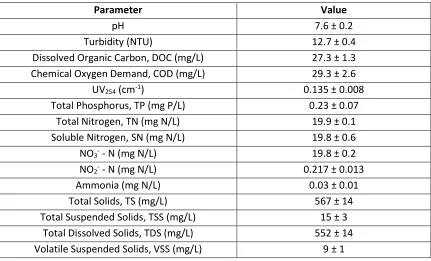
Table 4.1: Basic water quality parameters of the secondary effluent wastewater (SE) used in the study. ... 73
Table 4.2: Variation of pH and oxidative transformation of CAF with and without acid for typical experiments. ... 77
xiii
xiv
List of Figures
Figure 2.1: Spectra of ferrate(VI) in Milli-Q water. ... 17
Figure 2.2: Speciation of ferrate(VI). ... 26
Figure 3.1: Oxidative transformation of CAF by Fe(VI) at different molar ratios of Fe(VI) to CAF at final pH 7.5 (Experimental conditions: [Fe(VI)]=88.5-634.5 µM; [CAF]=78.7-95.3 µM). Inset: Decay of Fe(VI) with and without CAF in solution at pH 8.5 ([CAF]=89.1 µM). ... 58
Figure 3.2: Effect of acids added to Fe(VI)-CAF mixed solution (a) HCl, (b) HNO3 and (c) acetic acids (Experimental conditions: Fe(VI)]=177.5-634.5 µM; [CAF]=70.3-96.4 µM; final pH=7.5). ... 60
Figure 3.3: Oxidation of CAF by Fe(VI) under oxygenated and deoxygenated conditions using different acids. (Experimental conditions: [Fe(VI)]:[CAF]=3.9; [Acid]=393-431 µM; final pH(O2)=7.5; final pH(N2)=10.0). ... 61
Figure 3.4: Effect of concentration of HCl on the transformation of acesulfame potassium (ACE) and atenolol (ATL) by Fe(VI). (Experimental conditions: [ACE]=49.0-81.4 µM; [ATL]=41.6-56.9 µM; [Fe(VI)]=161.9-569.2 µM; final pH=6.5-7.5). ... 63
Figure 4.1: Effect of Fe(VI) to CAF molar ratio on the oxidation of CAF by Fe(VI) and acid-activated Fe(VI). (Experimental conditions: [Fe(VI)] = 41.7-1314.8 µM; [CAF] = 51.4-95.3 µM; [HCl] = 225-882 µM; final pH (acid-activated Fe(VI)) = 7.5; final pH (Fe(VI)) = 7.3-8.6). ... 76
xv
Figure 4.3: (a) Effect of bicarbonate (HCO3; NaHCO3), chloride (Cl; NaCl), sodium (Na ; NaCl), sulfate (SO42-; Na2SO4), magnesium (Mg2+; MgCl2.6H2O) and calcium (Ca2+; CaCl2), on CAF oxidation by Fe(VI) and acid-activated Fe(VI). (Experimental conditions: [Fe(VI)]/[CAF] = 2 mol/mol; [HCO3-] = 1.2 mM; [Cl-] = [Na+] = 4 mM; [Mg2+] = 1 mM; [Ca2+] = [SO
42-] = 2 mM; [HCl] = 211-225 µM). (b) Effect of calcium at [Fe(VI)]/[CAF] = 3.9 mol/mol; [Ca2+] = 2 mM; [HCl] = 401-410 µM. Initial pH = 8.0-9.0 and final pH = 7.0-8.3.82
Figure 4.4: Effect of Suwannee River Natural Organic Matter (NOM) and secondary effluent (SE) wastewater on CAF oxidation by Fe(VI) and acid-activated Fe(VI): (a) CAF removal; (b) DOC removal. (Experimental conditions: [Fe(VI)]/[CAF] = 2 mol/mol; [NOM] = 5.1 mg/L; [HCl] = 216-228 µM; initial pH = 8.6; DOC(NOM) = 5 mg/L; DOC(SE) = 27 mg/L; final pH(NOM)=6.8-7.3; final pH(SE)=8.2-8.3). ... 83
Figure 4.5: Proposed reaction pathways of degradation of CAF by acid-activated Fe(VI). (Experimental conditions: [Fe(VI)] = 662.7 µM; [Fe(VI)]/[CAF] = 8.0 mol/mol; [HCl]/[Fe(VI)] = 1.74; immediate pH after the addition of acid = 8.8; final pH = 7.2). ... 86
Figure 5.1: Effect of SiO2 gel concentration on the oxidation of CAF by Fe(VI) at different molar ratios of Fe(VI) to CAF. (Experimental conditions for [Fe(VI)]:[CAF]=2:1: [Fe(VI)]=45.5-162.4 µM; [CAF]=23.0-80.0 µM; initial pH=7.7-8.3; final pH=7.3-7.7; and [Fe(VI)]:[CAF]=6:1: [Fe(VI)]=513.4-535.4 µM; [CAF]=85.6-89.1 µM; initial pH=8.2-9.3; final pH=7.9-8.0). ... 104
Figure 5.2: Effect of Fe(VI) to CAF molar ratio on the oxidation of CAF by Fe(VI) in the presence and absence of SiO2 gel. (Experimental conditions in the presence of SiO2 gel: [Fe(VI)]=146.8-662.5 µM; [CAF]=73.8-90.1 µM; [SiO2(1)]=8 g/L; initial pH=7.7-8.4; final pH=7.5-8.0 and in the absence of SiO2 gel: [Fe(VI)]=45.5-634.5 µM; [CAF]=23.0-89.1 µM; initial pH=8.0-9.6; final pH=7.3-8.0). ... 105
xvi
Figure 5.4: Effect of bicarbonate (HCO3; NaHCO3), chloride (Cl; CaCl2), sodium (Na ; Na2SO4), sulfate (SO42-; Na2SO4), magnesium (Mg2+; MgCl2•6H2O) and calcium (Ca2+; CaCl2), on CAF oxidation by Fe(VI) in the presence of SiO2 gel (Experimental conditions: [Fe(VI)]:[CAF]=6.0; [Fe(VI)]=513.2-530.2 µM; [CAF]=85.7-88.2 µM; [SiO2(1)]=4 g/L; [HCO3-]=[Mg2+]=1 mM; [Ca2+]=[SO42-]=2 mM; [Cl-]=[Na+]=4 mM; initial pH=8.0-8.4; final pH=7.8-8.3). ... 110
Figure 5.5: Effect of Suwannee River natural organic matter (NOM) on the oxidation of CAF by Fe(VI) in the presence of SiO2 gel (Experimental conditions: [Fe(VI)]:[CAF]=6.0; [Fe(VI)]=503.6-559.6 µM; [CAF]=83.7-93.4 µM; initial pH=8.0-8.4; final pH=7.6-8.1); DOC(mg C/L)=0.80 NOM(mg NOM/L)). ... 111
xvii
List of Appendices
Appendix A: Supplementary material of Chapter 3 ... 128
Appendix B: Supplementary material of Chapter 4 ... 134
Appendix C: Supplementary material of Chapter 5 ... 148
Appendix D: Graphical abstract of Chapter 3. ... 156
Appendix E: Graphical abstract of Chapter 5. ... 157
Appendix F: Experimental setup ... 158
Appendix G: Effect of Fe(VI) to caffeine molar ratio on the transformation of CAF, when the pH was manually maintained during the experiments using HCl... 159
Appendix H: Correlation between DOC and NOM. ... 160
xviii
List of Acronyms
AAP acetaminophen
ABTS 2,2́-azino-bis(3-ethylbenzothiazoline-6-sulfonate)
ACE acesulfame potassium
ATL atenolol
CAF caffeine
CBPs chlorinated by-products
CSO combined sewer overflows
DBPs disinfection by-products
DCF diclofenac
DOC dissolved organic carbon
ENR enrofloxacin
EDCs endocrine disrupting compounds
EOCs emerging organic contaminants
Fe(VI) ferrate(VI)
FEDs frontier electron densities
FLU flumequine
HOMO highest occupied molecular orbital
MAR marbofloxacin
xix NOM natural organic matter
OFL ofloxacin
OP oxidized product
OTC oxytetracycline
PMS peroxymonosulfate
PPCPs pharmaceuticals and personal care products
RMSE root of the mean square error
SE secondary effluent
USEPA United States environmental protection agency
Chapter 1
1
Introduction
Leonardo da Vinci (1452-1519), one of the brightest minds in human history with unparalleled artistic, philosophical, and scientific talents, defined water in one sentence:
“Water is the driving force of all nature”. Water is invaluable. Without it, there is no life.
Ideally, all human beings should have easy access to clean water. Thus, there is a “diachronically urgent” need for the development of sustainable water and wastewater treatment technologies to meet the needs of current and future generations.
1.1
Motivation & Background
Access to clean water is a global challenge. Around 1.2 billion people do not have access to safe drinking water and 2.6 billion people have unacceptable water or no sanitation [1]. More than 2 million people die annually due to diseases related to unsafe water [1,2]. Among them, more than 1.5 million children die each year because of diarrheal disease [3]. Many more people are sickened by waterborne bacteria and enteric viruses [1]. In developing countries, the surface waters such as lakes and rivers, drastically increase the risk of waterborne diseases, which millions of people are infected by [3].
Most of the EOCs, also called organic micropollutants, persist in the environment and may accumulate in food web, with unanswered short- and long-term effects on human health, aquatic life and wildlife [5–7]. For example, pharmaceuticals are designed to biologically interact with human’s and animal’s organisms. These molecules are produced to target different mechanisms of an organism such as enzymatic and cell-signaling, at low doses [8]. Higher concentrations have immediate and/or chronic negative effects on human’s and animal’s organism. Considering that toxicity is a matter of both quality and quantity, the much smaller organisms present in aquatic systems are possibly affected by EOCs at much lower concentrations than humans. Many EOCs are not easily removed by conventional wastewater treatment plants that are based on biological treatment, due to their physicochemical properties (e.g. high solubility and negligible volatility), as indicated by their presence in drinking water [8]. Thus, different technologies such as filtration, adsorption, and oxidation processes are investigated as alternatives or additions to the existing treatment processes to remove EOCs.
Among the various treatment technologies that are being studied, oxidation processes are receiving a great attention because of their ability to degrade organics in water. In the last three decades, selective oxidants such as chlorine, chlorine dioxide, ozone etc., and non-selective hydroxyl radical which is a primary oxidant in advanced oxidation processes (AOPs) such as photocatalysis, UV/H2O2, UV/O3, UV/H2O2/O3, H2O2/Fe3+, H2O2/Fe2+, UV/H2O2/Fe3+, UV/H2O2/Fe2+ etc., have been investigated for the degradation of EOCs in water [9–21]. Hydroxyl radical has higher reactivity than selective oxidants. However, the combination of chemicals and energy in the form of light (e.g. ultraviolet (UV)) are required for the generation of hydroxyl radicals. The design of reactors to enhance the light distribution as well as materials that utilize visible light, thus enabling the use of solar light, are under investigation. Moreover, hydroxyl radicals may be easily consumed by other water matrix components [22], rather than the target EOCs, due to their high reactivity.
the oxidant applied for wastewater treatment [14]. Ozone, which also reacts with the same moieties (electron-rich) as other selective oxidants, has been also used to oxidize contaminants in water [17]. Ozone reacts with bromide (Br-) to form carcinogenic bromate ion [14,22]. Chlorine also reacts with Br- to form HOBr, which can generate toxic halogenated byproducts [22].
There has been an increasing interest in the activation of oxidants to enhance the oxidative transformation of contaminants. For example, manganese oxidants can be activated by bisulfite to enhance the oxidation of organics [23]. It is well known that Fe(III) and Fe(II) activate hydrogen peroxide in the Fenton process [24]. Moreover, the enhanced transformation of sulfamethoxazole by benzoquinone-activated peroxymonosulfate was also reported [25]. UV light has been also used to activate chlorine and hydrogen peroxide [11,12,26]. Furthermore, solid materials were employed to enhance the oxidation of contaminants by oxidants. For example, the heterogeneous catalytic effect of iron-based materials, metal oxides, minerals and activated carbon on the degradation of various organic contaminants by ozone has been thoroughly studied [27–31]. The catalytic effect of solids such as manganese dioxide and ruthenium nanoparticles supported on ceria or titanium dioxide has been also demonstrated for enhanced oxidation of organics by permanganate [32–34].
Thus, activating or catalyzing Fe(VI) oxidation reactions at slightly basic pH conditions is becoming a necessity to enhance the oxidative transformation of pollutants by Fe(VI).
1.2
Thesis Objectives
The main objective of this research is to find simple methods for activating or catalyzing the Fe(VI) oxidation reactions, at slightly basic pH conditions, to enhance the oxidative transformation of organic contaminants, and decrease the Fe(VI) to organic molar ratio and reaction time required. The demonstration of the activation and catalysis of Fe(VI) reaction has been carried out using caffeine, an organic molecule with high environmental relevance, as a model pharmaceutical. The specific research objectives are to:
i) demonstrate the enhanced oxidation of caffeine, acesulfame K, and atenolol, by activating Fe(VI) using simple acid
ii) explore the possible reactive species responsible for the observed enhancement
iii) demonstrate the enhanced oxidation of caffeine by Fe(VI) in the presence of a simple solid silica gel (SiO2)
iv) investigate the effect of inorganic ions and natural organic matter usually present in wastewater, on the oxidation of caffeine by Fe(VI), acid-activated Fe(VI) and silica gel-enhanced Fe(VI)
v) identify the oxidized products of caffeine by Fe(VI), acid-activated Fe(VI) and silica gel-enhanced Fe(VI)
1.3
Thesis Structure
This PhD thesis is written in the article-integrated format specified by the School of Graduate and Postdoctoral Studies of The University of Western Ontario. The contents of the six chapters included in this thesis are presented below.
Chapter 1 provides a brief introduction related to the background and motivation for developing oxidation technologies to oxidize emerging organic pollutants in water and wastewater. The research objectives of the thesis are also included in Chapter 1.
Chapter 2 is a part of a book chapter that provides a literature review on ferrate(VI). The research progress related to the oxidation of organics by ferrate(VI) (FeO42-, Fe(VI)) is presented, including synthesis and characterization of Fe(VI), stoichiometry of the reactions (Fe(VI) to organic molar ratios), kinetic studies (second-order reaction rate constants) and pH dependency. The effects of ions on Fe(VI) oxidation of organic contaminants and the activation of Fe(VI) by different methods are also discussed. A brief review on caffeine as a model emerging organic contaminant including oxidation of caffeine by different oxidation processes is also presented.
Chapter 3 is a research article entitled “Enhanced Oxidative Transformation of Organic Contaminants by Activation of Ferrate(VI): Possible Involvement of FeV/FeIV species”. In this study, the activation of ferrate(VI) by acid (i.e. HCl, HNO3 and acetic) was demonstrated for the first time. Acid-activation of ferrate(VI) resulted in a significant enhancement of the oxidative transformation of organics (i.e. caffeine, acesulfame potassium and atenolol) at slightly basic pH conditions, probably because of the increased formation of Fe(V)/Fe(IV) species.
Chapter 4 is a research article entitled “Oxidation of Caffeine by Acid-activated Ferrate(VI): Effect of Ions and Natural Organic Matter”. In this study, the effect of inorganic ions (Cl-, SO
article also includes the identification of the oxidized products of caffeine and proposed reaction pathways of the oxidation of caffeine by acid-activated ferrate(VI).
Chapter 5 is a research article entitled “Silica gel-enhanced Oxidation of Caffeine by Ferrate(VI)”. In this study, the enhanced oxidation of a model pharmaceutical (caffeine) by ferrate(VI) in the presence of simple solid silica gel (SiO2), in aqueous solution under mild alkaline conditions, has been demonstrated for the first time. The effect of SiO2 gel properties (i.e. particle size and pore volume/surface area), inorganic ions (Cl-, SO
42-, HCO3-, Na+, Mg2+ and Ca2+), and natural organic matter (5-30 mg/L) on the oxidation of caffeine by ferrate(VI) in the presence of SiO2 gel was investigated. Moreover, the reaction pathway of the oxidation of caffeine by ferrate(VI) in the presence and absence of SiO2 gel was proposed. Theoretical calculations of frontier electron densities (FEDs) of caffeine molecule support the initial reaction step of oxidation of caffeine by Fe(VI).
Chapter 6 includes the main conclusions of the thesis along with scientific contribution, study limitations, and recommendations for future work.
1.4
References
[1] M.A. Shannon, P.W. Bohn, M. Elimelech, J.G. Georgiadis, B.J. Marinas, A.M. Mayes, Science and technology for water purification in the coming decades, Nature. 452 (2008) 301–310.
[2] R.P. Schwarzenbach, B.I. Escher, K. Fenner, T.B. Hofstetter, C.A. Johnson, U. von Gunten, B. Wehrli, The Challenge of Micropollutants in Aquatic Systems, Science. 313 (2006) 1072–1077.
[3] A. Fenwick, Waterborne infectious diseases-Could they be consigned to history?, Science. 313 (2006) 1077–1081.
[5] P.D. Jepson, R.J. Law, Persistent pollutants, persistent threats, Science. 352 (2016) 1388–1389.
[6] A. Alsbaiee, B.J. Smith, L. Xiao, Y. Ling, D.E. Helbling, W.R. Dichtel, Rapid removal of organic micropollutants from water by a porous β-cyclodextrin polymer, Nature. 529 (2016) 190–194.
[7] T.S. Oliveira, M. Murphy, N. Mendola, V. Wong, D. Carlson, L. Waring, Characterization of pharmaceuticals and personal care products in hospital effluent and waste water influent/effluent by direct-injection LC-MS-MS, Sci. Total Environ. 518–519 (2015) 459–478.
[8] A.J. Ebele, M. Abou-Elwafa Abdallah, S. Harrad, Pharmaceuticals and personal care products (PPCPs) in the freshwater aquatic environment, Emerg. Contam. 3 (2017) 1–16.
[9] Y. Lee, U. von Gunten, Oxidative transformation of micropollutants during municipal wastewater treatment: Comparison of kinetic aspects of selective (chlorine, chlorine dioxide, ferrateVI, and ozone) and non-selective oxidants (hydroxyl radical), Water Res. 44 (2010) 555–566.
[10] S. Klementova, D. Kahoun, L. Doubkova, K. Frejlachova, M. Dusakova, M. Zlamal, Catalytic photodegradation of pharmaceuticals - homogeneous and heterogeneous photocatalysis, Photochem. Photobiol. Sci. 16 (2017) 67–71.
[11] W. Li, T. Jain, K. Ishida, H. Liu, A mechanistic understanding of the degradation of trace organic contaminants by UV/hydrogen peroxide, UV/persulfate and UV/free chlorine for water reuse, Environ. Sci. Water Res. Technol. 3 (2017) 128–138.
[12] M. Li, Z. Qiang, P. Hou, J.R. Bolton, J. Qu, P. Li, C. Wang, VUV/UV/Chlorine as an Enhanced Advanced Oxidation Process for Organic Pollutant Removal from Water: Assessment with a Novel Mini-Fluidic VUV/UV Photoreaction System (MVPS), Environ. Sci. Technol. 50 (2016) 5849–5856.
[14] X. Guan, D. He, J. Ma, G. Chen, Application of permanganate in the oxidation of micropollutants: a mini review, Front. Environ. Sci. Eng. China. 4 (2010) 405–413.
[15] N. Wang, T. Zheng, G. Zhang, P. Wang, A review on Fenton-like processes for organic wastewater treatment, J. Environ. Chem. Eng. 4 (2016) 762–787.
[16] V.K. Sharma, L. Chen, R. Zboril, Review on high valent FeVI (ferrate): A sustainable green oxidant in organic chemistry and transformation of pharmaceuticals, ACS Sustain. Chem. Eng. 4 (2016) 18–34.
[17] B. Ning, N. Graham, Y. Zhang, M. Nakonechny, M. Gamal El-Din, Degradation of Endocrine Disrupting Chemicals by Ozone/AOPs, Ozone Sci. Eng. 29 (2007) 153–176.
[18] A.K. Ray, Photocatalytic Reactor Configurations for Water Purification. Experimentation and Modeling, Adv. Chem. Eng. 36 (2009) 145–184.
[19] P. Xie, Y. Guo, Y. Chen, Z. Wang, R. Shang, S. Wang, J. Ding, Y. Wan, W. Jiang, J. Ma, Application of a novel advanced oxidation process using sulfite and zero-valent iron in treatment of organic pollutants, Chem. Eng. J. 314 (2017) 240–248.
[20] S. Kalidhasan, M. Ben-Sasson, I. Dror, R. Carmieli, E.M. Schuster, B. Berkowitz, Oxidation of aqueous organic pollutants using a stable copper nanoparticle suspension, Can. J. Chem. Eng. 95 (2017) 343–352.
[21] X. Jin, S. Peldszus, P.M. Huck, Reaction kinetics of selected micropollutants in ozonation and advanced oxidation processes, Water Res. 46 (2012) 6519–6530.
[22] E.M. Casbeer, V.K. Sharma, Z. Zajickova, D.D. Dionysiou, Kinetics and mechanism of oxidation of tryptophan by ferrate(VI)., Environ. Sci. Technol. 47 (2013) 4572–4580.
[24] G.P. Anipsitakis, D.D. Dionysiou, Radical Generation by the Interaction of Transition Metals with Common Oxidants, Environ. Sci. Technol. 38 (2004) 3705–3712.
[25] Y. Zhou, J. Jiang, Y. Gao, J. Ma, S.Y. Pang, J. Li, X.T. Lu, L.P. Yuan, Activation of Peroxymonosulfate by Benzoquinone: A Novel Nonradical Oxidation Process, Environ. Sci. Technol. 49 (2015) 12941–12950.
[26] D. Wang, J.R. Bolton, R. Hofmann, Medium pressure UV combined with chlorine advanced oxidation for trichloroethylene destruction in a model water, Water Res. 46 (2012) 4677–4686.
[27] Z. Bai, Q. Yang, J. Wang, Catalytic ozonation of sulfamethazine using Ce0.1Fe0.9OOH as catalyst: Mineralization and catalytic mechanisms, Chem. Eng. J. 300 (2016) 169–176.
[28] D. Gümüş, F. Akbal, A comparative study of ozonation, iron coated zeolite catalyzed ozonation and granular activated carbon catalyzed ozonation of humic acid, Chemosphere. 174 (2017) 218–231.
[29] A. Mashayekh-Salehi, G. Moussavi, K. Yaghmaeian, Preparation, characterization and catalytic activity of a novel mesoporous nanocrystalline MgO nanoparticle for ozonation of acetaminophen as an emerging water contaminant, Chem. Eng. J. 310 (2017) 157–169.
[30] J. Nawrocki, Catalytic ozonation in water: Controversies and questions. Discussion paper, Appl. Catal. B Environ. 142–143 (2013) 465–471.
[31] J. Wang, Z. Bai, Fe-based catalysts for heterogeneous catalytic ozonation of emerging contaminants in water and wastewater, Chem. Eng. J. 312 (2017) 79–98.
[33] J. Zhang, B. Sun, X. Xiong, N. Gao, W. Song, E. Du, X. Guan, G. Zhou, Removal of emerging pollutants by Ru/TiO2-catalyzed permanganate oxidation, Water Res. 63 (2014) 262–270.
[34] J. Zhang, B. Sun, X. Guan, H. Wang, H. Bao, Y. Huang, J. Qiao, G. Zhou, Ruthenium nanoparticles supported on CeO2 for catalytic permanganate oxidation of butylparaben, Environ. Sci. Technol. 47 (2013) 13011–13019.
[35] V.K. Sharma, R. Zboril, R.S. Varma, Ferrates: greener oxidants with multimodal action in water treatment technologies., Acc. Chem. Res. 48 (2015) 182–191.
[36] Y. Lee, S.G. Zimmermann, A.T. Kieu, U. von Gunten, Ferrate (Fe(VI)) application for municipal wastewater treatment: A novel process for simultaneous micropollutant oxidation and phosphate removal, Environ. Sci. Technol. 43 (2009) 3831–3838.
Chapter 2
2
Literature Review
Chapter 2 provides a literature review of ferrate(VI) (Fe(VI)) including the methods used to synthesize Fe(VI) salts as well as analytical techniques used to characterize solid and liquid Fe(VI). Also, the methodology usually used for the kinetic investigation of oxidation of organics by Fe(VI) is discussed. Moreover, a comprehensive literature review of the kinetics of oxidation of PPCPs and EDCs by Fe(VI) and stoichiometry of the Fe(VI)-organic reactions (Fe(VI) to Fe(VI)-organic molar ratio) as a function of pH is presented. The effect of ions on Fe(VI) oxidation of organic contaminants and the activation of Fe(VI) by different methods are also discussed. A brief review on caffeine as a model emerging organic contaminant including oxidation of caffeine by different oxidation processes is also presented.
2.1
Introduction
Table 2.1: Redox potentials for oxidants/disinfectants used in water and wastewater treatment [8–11].
Oxidant/Disinfectant Reaction E⁰, V (vs NHE)
Chlorine Cl2(g)+2e-↔2Cl- 1.36
Hypochlorite HClO+H++2e-↔Cl-+H
2O 1.48
ClO-+H
2O+2e-↔Cl-+2OH- 0.84
Chlorine dioxide ClO2(aq)+e-↔ClO2- 0.95
Perchlorate ClO4-+8H++8e-↔Cl-+4H2O 1.39
Ozone O3+2H++2e-↔O2+H2O 2.08
O3+H2O+2e-↔O2+2OH- 1.24
Hydrogen peroxide H2O2+2H++2e-↔2H2O 1.78
H2O2+2e-↔2OH- 0.88
Dissolved oxygen O2+4H++4e-↔2H2O 1.23
O2+2H2O+4e-↔4OH- 0.40
Permanganate MnO4-+4H++3e-↔MnO2+2H2O 1.68
MnO4-+8H++5e-↔Mn2++4H2O 1.51 Ferrate(VI) FeO42-+8H++3e-↔Fe3++4H2O 2.20
FeO42-+4H2O+3e-↔Fe(OH)3+5OH- 0.72
2FeVIO
42- + 5H2O → 2FeIII + 1.5O2 + 10OH- (2.1)
Several reactions may occur during the oxidation of an organic compound (X) by Fe(VI) [5,13]:
i) 1-e-/2-e- transfer to form FeV/FeIV and ultimately FeIII/FeII as final products (e.g. FeVI → FeV → FeIII and FeVI → FeIV → FeII).
ii) Further reaction of Fe(V) and/or Fe(IV) with X.
iii) Fe(VI), Fe(V) and Fe(IV) self-decompositions.
iv) Reactions between iron species FeII/FeIII/FeIV/FeV/FeVI and/or oxygen species (i.e. H2O2) formed from self-decompositions (e.g. FeVI + FeII → FeV + FeIII and FeII/FeIII + O
2/H2O2 → FeIV/FeV).
It is known that Fe(V) is 2-4 orders of magnitude more reactive than Fe(VI) probably because of its partial free radical character [9].
2.2
Synthesis
Different approaches were investigated to produce Fe(VI) salts (e.g. Na2FeVIO4 and K2FeVIO4). The main methods used for the synthesis of sodium and potassium Fe(VI) i.e. the electrochemical, wet chemical, and dry thermal methods are discussed below.
2.2.1
Electrochemical Synthesis
is oxidized to form K2FeO4 [8].The reactions that take place are presented below (Eqs. 2.2-2.5) [8,11,14].
Anode reaction:
Fe + 8OH- → FeO
42- + 4H2O + 6e- (2.2)
Cathode reaction:
2H2O → H2 + 2OH- - 2e- (2.3)
Overall reactions:
Fe + 2OH- + 2H
2O → FeO42- + 3H2 (2.4) FeO42- + 2K+ → K2FeO4 (2.5)
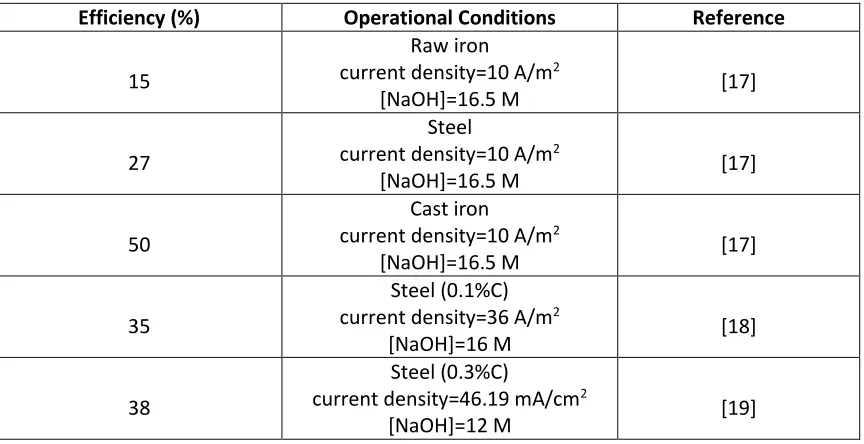
Table 2.2:Efficiency and operational conditions of electrochemical production of ferrate(VI).
Efficiency (%) Operational Conditions Reference
15
Raw iron current density=10 A/m2
[NaOH]=16.5 M [17] 27
Steel
current density=10 A/m2
[NaOH]=16.5 M [17] 50
Cast iron current density=10 A/m2
[NaOH]=16.5 M [17] 35
Steel (0.1%C) current density=36 A/m2
[NaOH]=16 M [18]
38
Steel (0.3%C)
current density=46.19 mA/cm2
[NaOH]=12 M [19]
2.2.2
Wet Chemical Method
In the presence of sodium hydroxide, Fe(III) salt (e.g. FeCl3) reacts with sodium hypochlorite producing sodium Fe(VI) (Na2FeO4) [19]. Because of the high solubility of Na2FeO4 in NaOH solutions, it is difficult to obtain solid Na2FeO4 [11]. A much less soluble potassium Fe(VI) (K2FeO4) is precipitated by adding KOH to the Na2FeO4 solution [1,5]. The reactions that take place are presented below (Eqs. 2.6 and 2.7) [9]:
2FeCl3+ 3NaOCl + 10NaOH → 2Na2FeO4 + 9NaCl + 5H2O (2.6)
Na2FeO4 + 2KOH → K2FeO4 + 2NaOH (2.7)
2.2.3
Dry Thermal Method
Potassium Fe(VI) can be produced by calcination of ferric oxide-potassium peroxide mixture at 350-370 °C or by oxidizing the iron oxide using sodium peroxide at 370 °C, under dry oxygen conditions [8,9,11]. Moreover, galvanizing wastes were used to produce sodium Fe(VI), by mixing them with ferric oxide at 800°C. Then, the mixture was cooled down, stirred with solid sodium peroxide, and heated gradually for few minutes [8,11]. The yield of the dry thermal method is usually less than 50% [9]. The dry synthesis is considered as an old and expensive method due to the required high temperatures [11]. Solid sodium Fe(VI) was produced using caustic soda (instead of potassium hydroxide) and sodium hypochlorite (instead of calcium hypochlorite), which are cheaper [22].
2.3
Characterization
Different analytical techniques were investigated to characterize solid and liquid Fe(VI). Fourier transform infrared (FTIR) spectroscopy, X-ray diffraction, X-ray absorption near edge structure (XANES) and Mössbauer spectroscopy are used to characterized solids salts of Fe(VI) [5,13]. The reactions of Fe(VI) with chromium(III) and arsenic(III) to form chromate(VI) and arsenate respectively, can be used to quantify Na2FeVIO4 and K2FeVIO4 in solutions (volumetric methods) [21]. The formed chromate is titrated with ferrous salt solution using sodium diphenylamine sulphonate as an indicator (in acidic medium) [8]. In the case of arsenic(III) method, the unreacted arsenite (after the addition of a weighted ferrate sample to the arsenite alkaline solution) is titrated with bromate or cerate solution [8]. Furthermore, electrochemical techniques including cyclic voltammetry and potentiometry are also available methods for Fe(VI) quantification in solutions [23,24]. In addition, a fluorescence method by means of Fe(VI) reaction with scopoletin (fluorescence agent) is also used to determine Fe(VI) in acidic solutions [25].
method is widely used for quantification of Fe(VI) in alkaline solutions where Fe(VI) is more stable, to investigate the kinetics of the reaction of Fe(VI) with organic molecules. A typical spectra of potassium Fe(VI) in Milli-Q water is shown in Figure 2.1. The interference with water constituents and the dependency on the pH and Fe(VI) stability are the main limitations of the direct colorimetric method [21].
Figure 2.1: Spectra of ferrate(VI) in Milli-Q water.
The ABTS colorimetric method is based on the reaction of Fe(VI) with the 2,2́-azino-bis(3-ethylbenzothiazoline-6-sulfonate) (ABTS). A stable radical cation (ABTS•+) is formed
for determining Fe(VI) in tap water [21]. A comparison of the three commonly used colorimetric methods is given in Table 2.3.
Table 2.3: Spectrophotometric methods for ferrate(VI) determination in water [11,22,27].
Method Reaction Wavelength, λ
(nm)
Molar absorptivity, ε (M-1 cm-1)
pH
Direct - 510 1150 9.1
ABTS Fe(VI) + 2ABTS → Fe(III) + ABTS•+ + ABTS
oxidized
415 34000 4.3
Iodide Fe(VI) + 3I-→ Fe(III) + I
3- 351 29700 5.5-9.3
2.4
Oxidation
2.4.1
Kinetics of the Oxidation of Organics by Ferrate(VI)
Kinetic studies on the oxidation of a broad range of inorganic and organic compounds have been carried out to understand different reactions and the Fe(VI)-related chemistry [13,27– 30]. Nowadays, there is an increasing interest in oxidation of emerging organic pollutants such as PPCPs and EDCs by Fe(VI), because of the increasing concerns related to their negative effects on the aquatic environment [1,11,31].
Most of the kinetic studies of oxidation of organic compounds (X) by Fe(VI) have been carried out using a stopped-flow spectrometry technique. The reactions of Fe(VI) with X follow overall second order kinetics i.e. first order with respect to each reactant, Fe(VI) and X (Eq. 2.8) [13]:
−𝑑[𝐹𝑒(𝑉𝐼)]
Where 𝑑[𝐹𝑒(𝑉𝐼)]
𝑑𝑡 is the rate of the loss of Fe(VI), [Fe(VI)] and [X] are the concentrations of
Fe(VI) and X respectively, and kapp is the apparent reaction rate constant. The reactivity of Fe(VI) with X is mostly investigated under pseudo first-order conditions, with X in excess ([Fe(VI)]<<[X]), by following the Fe(VI) concentration with time [5]. The rate constants are mostly calculated as a function of pH.
Apparent second-order reaction rate constants (kapp) of the reaction of Fe(VI) with selected PPCPs and EDCs at room temperature (23±2 ̊C) are presented in Table 2.4. Kinetic studies were mostly carried out at neutral to slightly basic pH range of 7.0-9.0 which is relevant to water treatment processes and regulatory criteria. In addition, the instability of Fe(VI) in acidic conditions prevents kinetic investigations at low pH levels.
Table 2.4: Apparent second-order rate constants (kapp) of the oxidation of PPCPs
and EDCs by Fe(VI) at room temperature.
PPCP/EDC Structure pH kapp
(M-1 s-1)
Reference
Triclosan 7.0 1.1×10³ [31]
7.5×10² [32]
Bisphenol A 7.0 6.4×10² [31,33]
8.0 4.1×10² [31]
Sulfamethoxazole 7.0 1.8×10³ [31]
1.3×10³ [34]
8.0 7.7×101 [31]
Diclofenac 7.0 1.3×10² [31]
1.2 ×101 [36]
8.0 3.2×101 [31]
11.0 2.5×100 [36]
Ibuprofen 8.0 0.1×100 [37]
<0.1×100 [35]
1.2×10⁻¹ [38]
9.0 1.5×10⁻² [38]
Ciprofloxacin 7.0 4.7×10² [31]
8.0 1.7×10² [31]
1.1×10² [38]
9.0 6.4×101 [38]
Enrofloxacin 7.0 4.6×101 [31]
8.0 2.4×101
Carbamazepine 7.0 6.7×101 [31]
8.0 1.6×101
Octylphenol 7.0 1.2×10³ [39]
Nonylphenol 7.0 1.1×10³ [40]
8.0 2.7×10²
9.0 1.0×10² Tetrabromobisphenol
A
7.0 7.9×10³ [41]
10.0 3.3×101
17α-Ethinylestradiol 7.0 7.3×10² [31,33]
8.1×10² [1,42]
8.0 4.5×10² [31]
Estrone 7.0 1.0×10³ [1,42]
17β-estradiol 7.0 7.6×10² [31]
1.1×10³ [1,42]
8.0 4.6×10² [31]
Sulphisoxazole 7.0 1.5×10³ [1,34]
Sulfamethazine 7.0 1.0×10³ [1,34]
Sulphamethizole 7.0 4.1×10² [1,34]
Sulfadimethoxine 7.0 0.8×10² [27,34]
Tetracycline 7.0 3.0×10² [1]
Amoxicillin 7.0 2.8×10³ [43]
7.7×10² [44]
Ampicillin 7.0 1.1×10³ [43]
4.2×10² [44]
8.5 5.0×101 [44]
Cloxacillin 7.0 1.2×10² [44]
8.5 2.4×101
Penicillin G 7.0 1.1×10² [44]
8.5 1.8×101
Cephalexin 7.0 6.9×10² [44]
8.5 7.4×101
2-amino-2-phenylacetamide
7.0 2.9×10² [44]
8.5 3.4×101
3-methylcrotonic acid 7.0 2.3×100 [44]
3,5-dimethylisoxazole 8.0 1.7×10⁻¹ [44]
Trimethoprim 7.0 4.0×101 [1,45]
Propranolol 8.0 2.0×101 [46]
Tramadol 7.0 1.4×101 [47]
8.0 7.4×100
Diatrizoic acid 7.0 5.5×100 [48]
Benzophenone-3 8.0 8.2×101 [49]
4-Methylphenol 7.0 6.9×10² [31]
Buten-3-ol 7.0 1.2×101 [31]
8.0 3.0×100
Phenol 7.0 7.7×101 [33]
Generally, the rate constants of Fe(VI) oxidation reactions increase with decreasing pH (Table 2.4). This pH dependency of kapp can be explained by the acid dissociation constants (Ka) expressed as pKa (Eqs. 2.9-2.11) [13,50]:
H3FeO4+ ↔ H+ + H2FeO4 pKa1=1.6 (2.9)
H2FeO4 ↔ H+ + HFeO4- pKa2=3.5 (2.10)
HFeO4- ↔ H+ + FeO42- pKa3=7.3 (2.11)
Fe(VI) has triprotonated (H3FeVIO4+), diprotonated (H2FeVIO4), monoprotonated (HFeVIO
Figure 2.2: Speciation of ferrate(VI).
The second-order reaction rate constants show that Fe(VI) (selective oxidant) reacts preferably with electron-rich organic moieties such as phenolic, organosulfur and polycyclic aromatic compounds [35]. The kapp of the oxidation of PPCPs and EDCs range from 0.1×100 (ibuprofen) to 7.9×10³ (tetrabromobisphenol A) M-1 s-1 at a pH relevant to wastewater treatment process and room temperature (Table 2.4).
2.4.2
Stoichiometry
For example, the hydroxyl radical, a powerful non-selective oxidant, generally reacts much faster with organics than Fe(VI) (kOH• > kFe(VI)). However, the aforementioned competition is more obvious for hydroxyl radicals and this competition remains unchanged during the oxidation process because hydroxyl radicals react non-selectively with other water constituents [35]. Thus, the experimental investigation of the stoichiometry of the Fe(VI)-organic reactions is critical to optimize the required oxidant dose and to evaluate the ability of Fe(VI) to remove organics in water. Table 2.5 shows the required Fe(VI) to organic (X) molar ratios for complete removal of an organic in water, at a relevant to water treatment pH range and room temperature.
Table 2.5: Stoichiometry of oxidation of organic compounds by Fe(VI) at room temperature.
Compound (X) Structure pH [Fe(VI)]/[X]
(mol/mol)
Reference
Flumequine 7.0 >50 [51]
Enrofloxacin 7.0 15 [51]
7.0 17 [52]
Ofloxacin 7.0 15 [51]
Marbofloxacin 7.0 20 [51]
Ciprofloxacin 7.0 13 [52]
Acetaminophen 6.0 –
9.0
25 [53]
Sulfamethoxazole 7.0 –
9.0
4 [54]
9.0 4 [34]
Bisphenol A 7.0 8 [55]
7.0 15 [41] 8.0 10
Tetrabromobisphenol
A
7.0 6.3 [41]
8.0 3.8
Tryptophan 7.0
and 9.0
4 [57]
Benzophenone-3 8.0 25 [49]
Amoxicillin 7.0 4.5 [58]
Ampicillin 7.0 3.5 [58]
Propranolol 9.0 6 [46]
1H-benzotriazole 8.0 30 [59]
5-methyl-1H-benzotriazole
8.0 30 [59]
5,6-dimethyl-1H-benzotriazole hydrate
8.0 30 [59]
5-chloro-1H-benzotriazole
8.0 30 [59]
1-hydroxybenzotriazole
8.0 30 [59]
Triclosan 7.0 10 [32]
Cetylpyridinium
chloride
9.2 1 [60]
Glycine 9.0 1 [61]
Thiosemicarbazide 9.0 2 [62]
Thiourea 9.0 2.7 [63]
Thioacetamide 9.0 2.7 [9,64]
4-Chlorophenol 9.2 5 [65]
N-methylhydroxylamine
8.0-11.0
0.5 [66]
N-phenylhydroxylamine
8.0-11.0
0.5 [66]
3-Mercapto-l-propane
sulfonic acid
8.4-10.2
1 [67]
2-Mercaptonicotinic
acid
8.4-10.2
Benzenesulfinate 9.0 0.7 [68]
Methionine 9.0 0.7 [68]
Dimethyl sulfoxide 9.0 0.7 [68]
Methyl cysteine
9.2-10.4
0.7 [69]
Cystine 8.4-9.9 1.3 [69]
Cysteine
8.9-10.2
1 [69]
Aniline
9.0-10.0
0.5 [70]
3-Mercaptopropionic
acid
9.0-11.0
2-Mercaptoethanesulfo
nic acid
8.7-10.0
2 [71]
2-Mercaptobenzoic
acid
9.6-10.4
0.7 [71]
1,4-Thioxane 9.0-9.8 1 [72]
Amitriptyline 9.0 20 [73]
Nortriptyline 9.0 15 [73]
self-decomposition is diminished leading to higher Fe(VI) concentration, (ii) when the removal is high at low pH (e.g. 7.0), this is due to the fact that Fe(VI) is a stronger oxidant upon protonation and this is consistent with the effect of the pH on the rate constants, and (iii) when the effect of the pH on the removal of the contaminant is not significant, this is probably due to the high reactivity of Fe(VI) with the contaminant [38], that makes the effect of the pH, usually at the pH range 7.0-9.0, negligible. The effect of the pH on the removal of contaminants by Fe(VI) can be seen in recently reported studies that show different or negligible effect of the pH on the oxidative transformation of organics by Fe(VI). Yang et al. [41] studied the oxidation of tetrabromobisphenol A and bisphenol A by Fe(VI). In both cases, around 10% higher removal had been obtained at pH 8 compared to pH 7, and that was explained with the higher stability of Fe(VI) at pH 8 resulting in higher Fe(VI) concentration [41]. Casbeer et al. [57] investigated the oxidation of tryptophan by Fe(VI) at pH 7 and 9 and around 10% higher removal was observed at pH 9 compared to pH 7. The oxidation of bisphenol A by Fe(VI) has been also investigated by Han et al. [74] at various pHs and around 10% higher removal was reported at pH 7 compared to pH 9, which is in contrary to the aforementioned study of Yang et al. [41] on bisphenol A. The authors stated that this is due to the fact that Fe(VI) is a stronger oxidant upon protonation [74]. The aforementioned differences in oxidative transformation of organics at the pH range of 7.0-9.0 are very small (<10%) and within experimental and analytical errors. On the other hand, in all the cases mentioned above, the determined rate constants were higher at lower pH [41,57,74], as was expected. Zhou and Jiang [38] have recently investigated the degradation of ciprofloxacin by Fe(VI) at the pH range 6-9, and reported that the effect of the pH on the removal of ciprofloxacin is not significant due to the high reactivity of Fe(VI) with ciprofloxacin.
2.5
Discussion of Application of Fe(VI)
treatment, etc. [8,75]. Recently, the application of Fe(VI) to disinfect secondary effluent wastewater (SE) has received great attention, due to the increased concentration of EOCs in SE. Chlorination, the most common disinfection technology worldwide, results in the formation of toxic disinfection by-products (DBPs) such as chlorinated by-products (CBPs) with potential negative health effects, because of the reaction of chlorine with organics present in SE [8,75]. Alternative disinfectants such chlorine dioxide and ozone also form DBPs such as brominated by-products (ozone), and chlorite and chlorate (chlorine dioxide) which are also considered to be toxic to aquatic environment. Importantly, Fe(VI) can be an alternative disinfectant without the formation of chlorinated and brominated by-products. Table 2.6 shows the disinfection performance of Fe(VI).
Table 2.6: Typical disinfection performance of Fe(VI)
Contaminant Experimental Conditions %Removal Reference
E.coli Dose: 6 mg Fe(VI)/L
contact time = 7 min pH = 8.2
~100 [8]
Virus (f2 Coliphage) Dose: 1 mg Fe(VI)/L contact time = 6 min
pH = 6.9
99 [4]
Interestingly, Fe(VI) could inactivate aerobic spore-formers and sulfite-reducing clostridia
both of which are chlorine resistant bacteria [5]. Fe(VI) at 2 mg/L reduced aerobic spore-formers count by 3-log units compared to 1-log unit by chlorine (3.5 mg/L) during the disinfection of river water [5]. Complete inactivation of sulfite-reducing clostridia has been achieved by Fe(VI) while these species were resistant to chlorination [5].
Table 2.7: Removal of PPCPs and EDCs spiked in real wastewater by Fe(VI).
Contaminant (X) Experimental Conditions %Removal Reference
17α-ethinylestradiol,
β-estradiol and bisphenol-A in Lake
Zurich water
(DOC=1.6 mg/L)
Dose: 0.5 mg Fe(VI)/L contact time = 30 min
pH = 8 [X]0 = 0.15 µM
99 [33]
17α-ethinylestradiol,
β-estradiol and bisphenol-A in Kloten
wastewater
(DOC=5.3 mg/L)
Dose: 2 mg Fe(VI)/L contact time = 30 min
pH = 8 [X]0 = 0.15 µM
99 [33]
naproxen, paracetamol, diclofenac, carbamazepine and triclosan in wastewater (DOC=5 mg/L)
Dose: 10 mg Fe(VI)/L contact time = 1 - 5 min
pH = 7 [X]0 = 100 µg/L
~100 [76] sulfamethoxazole, diclofenac, and carbamazepine in wastewater (DOC=5.1 mg/L)
Dose: 5 mgFe(VI)/L contact time = 3-5 h
pH = 7 [X]0 = 0.2-1 µM
>85 [31]
oxidation, disinfection, and coagulation of SE wastewater to inactivate viruses and bacteria, oxidize EOCs, and remove particulate contaminants using Fe(VI) as a multipurpose water treatment chemical. The treatment of SE wastewater is probably the most promising application for Fe(VI), and more studies are needed to assess the performance of Fe(VI).
2.6
Effect of Ions on Oxidation of EOCs by Fe(VI)
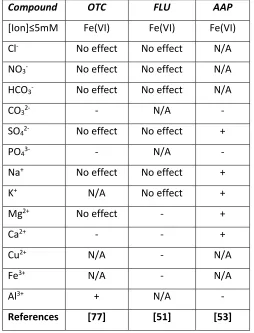
The effect of water constituents on the removal of target pollutants is critical for the development of any water treatment technology. Zeng et al. [77] studied the effect of ions on the oxidation of oxytetracycline (OTC) by Fe(VI). The removal of OTC decreased from 95% to 79%, 29%, and 29% in the presence of 5 mM of calcium (Ca2+), carbonate (CO
32-),
and phosphate (PO43-) ions respectively [77]. No obvious effect on the removal of OTC was observed in the presence of 5 mM of magnesium (Mg2+), sodium (Na+), chloride (Cl-),
nitrate (NO3-), sulfate (SO42-), and bicarbonate (HCO3-) ions [77]. Similarly, no apparent effect of Cl-, SO
42-, NO3-, HCO3-, Na+, and K+ on the oxidation of flumequine (FLU) by Fe(VI), at similar concentration of 5 mM has been observed [51]. The removal efficiency of FLU decreased from 51% to 40%, 35%, 42%, and 33% in the presence of 5 mM of Mg2+, Ca2+, Cu2+, and Fe3+ respectively [51]. On the other hand, enhancement of the oxidation of acetaminophen (AAP) by Fe(VI) in the presence of Na+, K+, Mg2+, Ca2+, and SO42-, at a concentration range of 0.2-5 mM has been reported [53]. However, the removal of AAP was negatively affected by Al3+, CO
Table 2.8: Effect of ions on oxidation of EOCs by Fe(VI).
Compound OTC FLU AAP
[Ion]≤5mM Fe(VI) Fe(VI) Fe(VI) Cl- No effect No effect N/A
NO3- No effect No effect N/A
HCO3- No effect No effect N/A
CO32- - N/A -
SO42- No effect No effect +
PO43- - N/A -
Na+ No effect No effect +
K+ N/A No effect +
Mg2+ No effect - +
Ca2+ - - +
Cu2+ N/A - N/A
Fe3+ N/A - N/A
Al3+ + N/A -
References [77] [51] [53]
2.7
Activation of Ferrate(VI) in Aqueous Solution
Limited work has been done so far on the activation of Fe(VI) to enhance the oxidative transformation of contaminants. Feng et al. [78] demonstrated the activation of Fe(VI) by ammonia to enhance the oxidative transformation of flumequine (FLU) by ~25% at pH 8. It was postulated that the observed enhancement is due to the formation of ammonia complexes of FeV and/or FeIV [78]. The activation of Fe(VI) by ABTS (2,2́-azino-bis(3-ethylbenzothiazoline-6-sulfonate) resulted in enhanced oxidative transformation of diclofenac (DCF) by ~65% at pH 8 and 9 [79]. It was reported that the observed enhancement is probably due to the oxidation of diclofenac by the ABTS•+ (stable radical
marbofloxacin (MAR), ofloxacin (OFL), and FLU was enhanced by 15%, 24%, 28% and 42% respectively due to the synergistic effect of PMS and Fe(VI) [81]. It was proposed that the possible formation of reactive sulfur species (e.g., SO4-•), reactive oxygen species (e.g., O2-• and •OH), and high-valent iron species (e.g., FeV and FeIV) caused the observed enhancement [81]. The enhancement and experimental conditions of studies related to the activation of Fe(VI) are summarized in Table 2.9.
Table 2.9: Activation of ferrate(VI) by different methods
System [Fe(VI)], µM
[X]*, µM
Concentration of activator
pH Enhancement, %X removal
Reference
Fe(VI)-ammonia
600 30 (FLU) 10 mM 8.0 25 (FLU) [78]
Fe(VI)-ABTS 150 30 (DCF) 5 µM 8.0 and
9.0
65 (DCF) [79]
Fe(VI)-PMS 30 (ENR)
30 (MAR) 30 (OFL) 150 (FLU) 30 (ENR) 30 (MAR) 30 (OFL) 30 (FLU)
30 µM (ENR)
30 µM (MAR)
30 µM (OFL)
6 mM (FLU)
7.0 15 (ENR)
24 (MAR)
28 (OFL)
42 (FLU)
[81]
*X: model organic contaminant
2.8
Caffeine as a Model Emerging Organic Contaminant
large quantities of CAF are produced to meet the beverage, food, and medicinal needs and as a result CAF is included in the U.S. EPA list of High Production Volume Chemicals [82]. Thus, CAF is probably the most widely consumed legal drug [82,87–89], and one of the two most widely used psychostimulants worldwide [85,90], with a global average consumption of 70 mg/person/day [82,84].
CAF is among the compounds that are most frequently detected at the highest concentrations in the influents and effluents of wastewater treatment plants (WWTP) as well as in surface waters and groundwater worldwide, despite the appreciable CAF removal efficiencies (75%–99%) achieved in conventional WWTP [82,84,86,90–96], and the fact that it is almost completely metabolized (≥94%) in the human liver [86,97]. Moreover, many reported studies has proposed CAF as an anthropogenic marker for wastewater and combined sewer overflows (CSO) contamination of surface waters [82,84,93]. CAF concentrations in many surface streams and WWTP effluents can be as high as 230 µg/L [95].
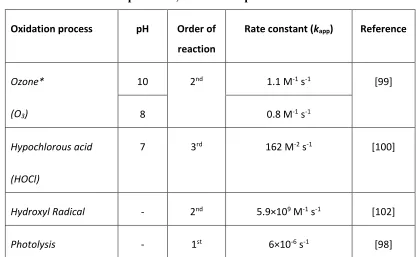
Table 2.10: Kinetic rate constants of the oxidation of caffeine by different oxidation processes, at room temperature.
Oxidation process pH Order of
reaction
Rate constant (kapp) Reference
Ozone*
(O3)
10 2nd 1.1 M-1 s-1 [99]
8 0.8 M-1 s-1
Hypochlorous acid
(HOCl)
7 3rd 162 M-2 s-1 [100]
Hydroxyl Radical - 2nd 5.9×10⁹ M-1 s-1 [102]
Photolysis - 1st 6×10⁻⁶ s-1 [98]
*rate constants obtained during the first 15 s of reaction time
Interestingly, insignificant reaction of peroxymonosulfate (PMS) with CAF at PMS to CAF molar ratio of 4 has been reported, and activation of PMS with catalyst was required to degrade CAF in water [103]. Lin and Chen [104] also reported low reactivity of oxone (peroxymonosulfate salt) with CAF (i.e. less than 40% CAF removal after 2 hours of reaction time), and catalyst required to enhance the CAF oxidation. Permanganate also exhibited low reactivity with CAF compared to other pharmaceuticals [105].
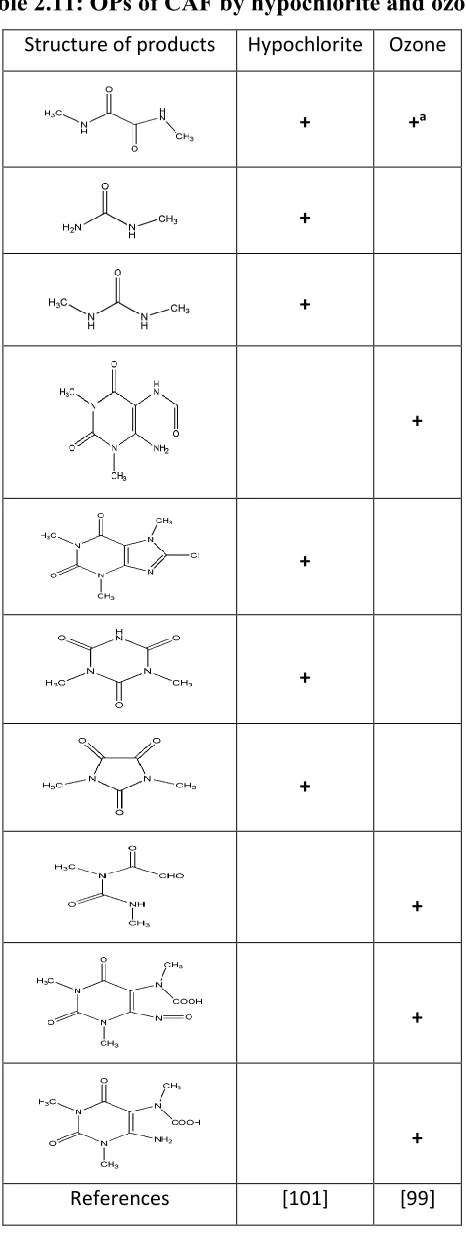
Table 2.11: OPs of CAF by hypochlorite and ozone.
Structure of products Hypochlorite Ozone
+ +a
+
+
+
+
+
+
+
+
+
References [101] [99]