Geographical Routing Algorithms
In
Asynchronous Wireless Sensor Network
Vaishali.S.K , N.G.Palan
Electronics and telecommunication, Cummins College of engineering for women
Karvenagar, Pune, India
Abstract- In wireless sensor network, the network lifetime depends upon the battery of the sensor nodes. As the Sensor nodes are small in physical size the battery power is also limited .To conserve the energy, sensor nodes operate in sleep wake mode, when a sensor node is in idle state it is in sleep mode, due to this we can save the battery power. We are considering asynchronous network in which the sensor nodes are waking at different time. Routing to such network is difficult, delay occur in the network because each node has to wait for the next node to wake up , one of the routing algorithm is Any casting (AC) , data is delivered to the node which wake up first ,the disadvantage of AC algorithm is that the route can be long adding more delay to network. Second algorithm is maximum forward (MF), data is delivered to the node which is nearer to the sink and farther from source node, the disadvantage of MF is the source node have to wait and check each node distance which falls in its vicinity, due to this additional delay has been introduced in the network, next algorithm is based on thresholding, thresholding in terms of distance of the communication range, source node will forward the data to the node which is greater than threshold and nearer to sink due to this the source node does not have to wait each node to wake up and data is forwarded with shorter routes.
Keywords: Asynchronous Wireless Sensors Network (WSN), Node, Transferring nodes, threshold distance algorithm (TC), any casting algorithm (AC), maximum forward algorithm (MF).
I. INTRODUCTION
Wireless sensor network has been considered as
one of the most important technology. Tiny, cheap,
and smart sensors are deployed in a physical area
and networked through wireless links to perform
some operation, like environmental monitoring,
battlefield surveillance and industry process
control. In the past few years, Wireless sensor
network has received attention from industry as
well as from academic.
In a WSN sensor nodes are deployed in an
interested area, due to short transmission ranges
large number of nodes are deployed, these nodes
are equipped with sensors ,microprocessor and
radio transceivers thus these nodes not only has
sensing capability but also has data processing and
communication capability, these nodes will collect
the data and route the data to sink. In WSN, sensor
nodes has dual functionality ie data originator and
data router. [7]There are some issues that have to
be considered in a WSN, Sensor nodes are powered
by battery and in most situations it is very difficult
to change or recharge the batteries so power
conservation is important in WSN. Sensor nodes
have limited processing and storage capacities and
therefore nodes performed with limited
computation functionalities.
[6]Routing play an important role in power
conservation, the main task of wireless sensor
domain, process the data, and transmit the
information back to specific sites where the
underlying application resides. To achieve this task
efficiently, it is required to develop an
energy-efficient routing protocol to set up paths between
sensor nodes and the sink. [1]One specific, ad hog
routing appears to be more accessible to
algorithmic analysis is geographical routing.
Geographical routing also called as location based
or position based routing. In this there are two
assumption, first, it is assumed that every node
know its own and its neighbor location. Second, the
source node knows the destination position where
the message has to deliver. This has an advantage
that topology can be changes independently and
whenever node want to transmit the data it will
simply addresses the message with the position of
destination. The algorithm which we are using is
based on thresholding; known as threshold distance
algorithm (TD), by transmission power we will get
the communication range, and as we know the
position of the nodes we can calculate the distance
of nodes from the source node. We will transfer the
data to a node which is greater than threshold and
nearer to the sink.
II. RELATEDWORK:
Joohwan Kim, Xiaojun Lin, and Ness B.Shroff has
introduced “An optimal anycast technique for delay
sensitive energy constrained asynchronous sensor
network”, the scheme anycast means that each
sensor node forward the packet to the first node
that wakes up among its neighbor. This pattern will
have smallest delay.[2]
K.P.Naveen and Anurag Kumar has considered a
WSN in “Tunable Locally-Optical Geographical
Forwarding in WSN with sleep wake cycle”, in
which geographical forwarding and asynchronous
nodes are used. If the nodes know their locations
and that of sink then it is possible to select the node
which is nearer to the sink .A node needs to
forward a packet to the sink. There is set of
neighbors of the node that are nearer to the sink
than the node, the forwarding set. The relay node is
selected such that the delay should be minimized.
Each node has at least one neighbor that is strictly
closer to the sink than itself so that greedy
forwarding will always find a path to sink. This
will eliminate the one hop delay.[3]
Martin Mauve and Jorg Widmer in “A survey on
Position based routing in Mobile Ad Hog
Networks” has presented an overview of different
routing protocols that makes routing decision based
on destination position. According to this paper ad
hog network is divided into static and mobile
network. In static network, position of the nodes
are fixed ie once it is deployed it does not change.
Whereas in mobile network the position of the
nodes changes frequently. Routing is difficult in
such situation they had distinguish two different
approaches topology based and position based
routing. Position based is more advantageous than
the topology based because position based routing
does not require establishing or maintaining the
routes and the nodes do not have to maintain the
routing table.[5]
III.NETWORK: 1. Node Deployment:
The nodes n are deployed in a square region (0.m),
as it is Geographical routing, the node location is
very important because the main objective of
geographical routing is to use location information
to find an efficient route towards the destination.[3]
Let xi be the location of the nodes where i= 1 to
n-1. The source and sink has the fixed location ie x0
(0, 0) and
Xn (m, m). Rc will be communication range the
nodes will call neighbor only when the will be in
nodes will be less than Rc, and the distance between
from any node to the sink will be
Li= xn-xi.
2. MAC protocol:
The wireless channel has a broadcast nature where
the transmission of a sensor node can be received
by multiple sensor nodes surrounding it. Each
sensor node share the wireless channel with all the
nodes in its transmission range, so designing of
medium access control (MAC) protocol is very
important. The MAC protocol ensure that the
communication links between the nodes are
established and connectivity is provided throughout
the network and the collision which occurs due to
the nodes which transmit at the same time and
located closely should be eliminated.
MAC protocols are classified as contention based,
reservation based, and hybrid and so on. Most of
the MAC protocols proposed for WSN rely on
convention medium access scheme, the scheme is
carrier sense multiple access (CSMA) mechanism.
In contention based protocol CSMA is used for
basic data communication. CSMA relies on carrier
sense. Carrier sense refers to nodes listening to the
channel for a specific amount of time to assess the
activity on the particular channel. CSMA is listen
before transmit method. If the channel is ideal the
node may transmit immediately or if the channel is
busy the node defers the transmission and monitors
the channel until the transmission get over. For
Example if node A is sending some data to node B
and node C which is nearer to node A want to
transmit some data to node A, then C will hear the
A’s transmission and differ it’s transmission ,this
will avoid collision. [6]
3. Scheduling:
By using sleep wake cycle, the energy consumption
in the WSN can be reduced significantly. There are
two types of network depending on sleep wake
pattern, synchronous sensor network and
asynchronous sensor network. In synchronous all
the nodes in the network wake up and sleep at the
same time, while in asynchronous all the nodes in
the network has different sleep wake pattern. In
asynchronous network, the clock synchronization
which is used in sleep wake scheduling can be
avoided due to this considerably amount of energy
consumption can be reduced
Q
t2 t3 t1
t2 t3 t1
Ta R
. Figure 1.1 Scheduling
B-Beacon
I-Sender ID
CTS-clear to send
t1- listen for acknowledgment CTS
t2- duration of beacon
t3- duration of ID signal
s- Sensing the channel
Refer Fig 3.2, node Q sense an event and want to
transmit the packet, as it is asynchronous network
node Q has to wait for node R to wake up. It sends
beacon signal of duration t2 and the Id signal of
duration t3 and listens for the duration of t1 for
acknowledgement; it will repeat the sequence till R
wakes up and sense the beacon, it will stay awake
to decode the Id signal contains the identity of
sending node. R wants that packet it will send CTS
then Q will transmit the packet to R. if R does not
want the data it will go back to sleep. [2]
Since we want the delay occurred in routing due to
sleep wake cycle we will neglect propagation
delay, transmission delay and other delays.
Let Ti be any random number which is uniform on
(0, T), i=1,2……n.
T is period of the sleep wake cycle.
The node i wake up at the periodic instances,
kT+Ti, k>0.
The waiting time for a node to wake up at time t
will be,
Wi (t) =inf {kT+Ti >t, k>0}-t [1]
4. Routing:
In this network node can take decision by
observing the neighborhood activities, some
assumption are made ie only single packet is
transmitted at a time, events are separated with
respect to time so that two events will not intersect.
Each node knows its location and location of sink
Forwarding set is the set of nodes which are
neighbors to sender node but nearer to sink. Each
node knows their forwarding set nodes by the
routing table.
Suppose a node i want to transmit the packet, at
some instant, let pi be the set of nodes which are in
communication range of node i and closer to sink ie
xp-xi< Rc and xn-xp< Li
Lj
Li
Sink
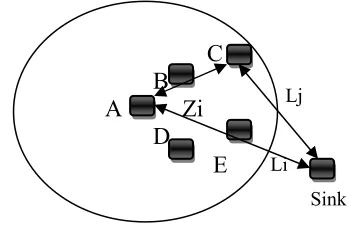
Figure 1.2 Transmission within forwarding
set
Refer to fig 1.2 with respect to node A the
forwarding set are B, C, D, and E. A want to send
the packet it will wait till any node in the
forwarding set wake ups, until then A will send
continuously the beacon signal with its ID and Li.
First node C wakes up listen to the channel it will
check Lj < Li. Lj=the distance of nodes from sink
individually. If yes then it will respond to A
otherwise go to sleep.
Here the L1 (Distance from sink) is smaller than Li
so the progress made will be Z1=Li-Lj.
Now we will consider 3 algorithms:
A. Maximum forward Algorithm:
In this the node A will forward the packet to
that node which is closer to sink ie, it will wait all
the nodes which are in forwarding set to wake up
and then transmit to the node which make the
maximum progress. Refer to fig 1.2 node E will
make maximum progress so A will transmit to E.
This will give maximum delay and maximum
progress.
B. Any cast Algorithm:
In this policy node A will transmit to any node
whichever wake up first, refer to fig 1.2; if node C
wakes up first then A will transmit C immediately.
This will give minimum delay and minimum
progress.
C. Threshold distance Algorithm:
Transferring set is the set of nodes which are
neighbors to sender node but nearer to sink. Each
node knows their transferring set nodes by the
routing table. Thresholding distance can be decided
by,
T = (1/6) X C
T = Thresholding
C = Communication Range
Sink
I
Fig 1.3 TC Routing
A
B
C
I= Interested area.
Refer to Fig no.1.3, the nodes which falls in I area
is our transferring nodes; among them the node
which responded first, is the node to which the data
will get transferred. As in figure the source node A
will transmit the data to node B as the node B has
responded first. This process will go on until sink
get the data.
IV.IMPLEMENTATION:
We had implemented the network in OMNeT++
,
for designing wireless sensor network a new
software MiXiM should be imported in OMNeT++,
The result is an event log file which contains
detailed information of the simulation, and later
can be used for various purposes, such as
visualizing message exchanges among modules on
a sequence chart. Two network is simulated in this
simulator, the network consist nodes deployed
randomly in 300 m sq feet playground area. Its
network type is base network layer using CSMA
MAC protocol. The header length is 24 bits, bit rate
is 15360 bps, and maximum transmission power is
100mW.First network is designed with no sleep
wake cycle the first event take place at 389 msec.
Referred to Fig no.1.4.
Fig no. 1.4 simulation of first network
Second network is designed by putting sleep wake
pattern as 0.5 ms the first event take place at 394
msec. that means delay has been introduced in the
network. Referred to Fig no.1.5. For the second
network we had designed the TC algorithm.
Fig no.1.5 simulation of second network
V. CONCLUSION:
The results which we had derived from OMNeT ++
shows that delay has been introduced in the
network and to reduce the delay we can apply all
stated algorithm, MF will give maximum delay and
maximum progress, AC will give minimum delay
and minimum progress, TC will give us minimum
delay and maximum progress.
References:
[1] F. Kuhn, R. Wattenhofer, and A. Zollinger, “An Algorithmic
Approach to Geographic Routing in Ad Hoc and Sensor
Networks,” IEEE/ACM Trans. Netw., vol. 16, no. 1, pp. 51–62,
2008.
[2] J. Kim, X. Lin, and N. Shroff, “Optimal Anycast Technique
for Delay-Sensitive Energy Constrained Asynchronous Sensor
Networks,” in INFOCOM 2009. The 28th Conference on
[3] K. P. Naveen and Anurag Kumar, “Tunable Locally-Optimal
Geographical Forwarding in Wireless Sensor Networks with
Sleep-Wake Cycling Nodes” IEEE INFOCOM 2010.
[4] K. Akkaya and M. Younis, “A Survey on Routing Protocols
for Wireless Sensor Networks,” Ad Hoc Networks, vol. 3, pp.
325–349, 2005.
[5] M. Mauve, J. Widmer, and H. Hartenstein, “A Survey on
Position-Based Routing in Mobile Ad-Hoc Networks,” IEEE
Network, vol. 15, pp. 30–39, 2001.
[6] Ian F.Akyildiz and Mehmet Can Vuran “Wireless Sensor
Network”, 2010 john wiley &sons.ltd.
[7] Jun Zheng and Abbas Jamalipour,”Wireless sensor network: