1
Health and Well-Being of Cisgender, Transgender and Non-Binary Young People
Aparicio-García, Marta Evelia; Díaz Ramiro, Eva Mª; Rubio-Valdehita, Susana; López Núñez, Mª Inmaculada*; García-Nieto, Isidro**
*Universidad Complutense de Madrid, Spain
** Servicio LGTBI de la Comunidad de Madrid
Correspondence address:
Marta Evelia Aparicio García
Facultad de Psicología
Universidad Complutense de Madrid
Campus de Somosaguas, s/n
28223. Madrid. España
2
Health and well-being of cisgender, transgender and non-binary young people
Abstract
Purpose:
Young transgender and non-binary are exposed to situations of discrimination and have
a greater risk of violence. The purpose of this study is to analyze which protective,
violence and health and well-being factors have more influence on transgender and
non-binary people compared to cisgender people.
Method:
The sample comprised 856 people between 14 and 25 years old. A survey including
questions about sociodemographic information and protective, violence and health and
well-being factors was designed ad hoc for this study.
Results:
The results show non-binary group received the least support from family and friends,
higher risk of suffering cyberbullying and a higher feel isolated and unhappy. Non-binary
and transgender have suffered more verbal attacks both inside and outside their school
and physical attacks at school than cisgender young.
Conclusions:
These results are important and may contribute to promote public policies and clinical
interventions to favor the integration of non-binary and transgender people in our society.
Key words: Transgender, non-binary gender identity, adolescence, health, well-being,
3
Introduction
The legal situation of transgender people in Spain has improved over the last few decades,
but it is still complex today. The Law 3/2007 on the rectification of the mention of the
sex of the people (Law 3/2007, of 15 March, Regulatory Registration Rectification of the
Mention Relative to the Sex of the People, BOE nº65) stablished the public regulation of
the Legal Gender Recognition (LGR). This law represented an important step in the legal
framework in Spain since it established the necessary requirements for civil registration
of the LGR based on the principle of the right to privacy and guaranteed to trans people
the possibility of exercising all the rights inherent in their new legal condition, allowing,
therefore, the change of the name and in the mention to the gender, without the mandatory
existence of genital surgery nor the forced sterilization (previously required). However,
a psychiatric diagnosis is still mandatory and the law forces trans people to certify two
years of medical treatment although not all trans people need it or want it, which can be
cause of pathologies development in these people.
Even with the existence of some legislation recognising transgender people rights and
advocating for more social tolerance, there is also abundant evidence that Spanish society
still exhibits prejudice and discrimination. For example, in a study published by the
Federation of Lesbians, Gays, Transsexuals and Bisexuals (State Federation of Lesbians,
Gays, Transsexuals and Bisexuals; 1, it was found that 30% of young LGBT people had
suffered bullying due to their sexual orientation frequently, and among them, 43% had
thought about suicide, 35% had planned it and 17% had attempted it on various occasions.
In addition, between 11% and 18% of young Spanish people consider it right to treat
people with contempt because of their gender identity 1.
Social support has been considered a moderating variable of the negative effects of
4
of an emotional, material, informational or company type that people perceives or
receives from different members of his or her social network 2. Feeling of being
appreciated by other people and belonging to a social network can influence on
well-being and health, either directly or through other psychological processes. Social support
is especially important in a moment of stress generated by situations of discrimination,
influencing in a positive way for the well-being and for coping with stressful situations 3.
Studies with adolescents find a relationship between perceived social support and
adjustment 4,5, as well as between social support and informed health problems, although
in this case relationships are usually low 6,7. Specifically in transgender people, studies
indicate that social support and acceptance are positively related to mental health 8,9.
Among transgender population, family rejection has been related to a number of risk
factors, as homelessness, sex work and suicidality 8,10.
Social support for the transgender collective is a particularly relevant factor to speak out
about political concerns and use social networks 11. Studies indicate that transgender
individuals show lower scores in social support than cisgender 12. Transgender perceived
less social support from their family members than cisgender siblings 13. Despite these
results that indicate that social support is a variable that reduces distress, in transgender
people it is not clear what kind of social support (e.g., family, friends, romantic) is related
to decreases in suffering 14. In a recent meta-analysis of the relationships between multiple
forms of perceived discrimination and both mental and physical health outcomes in
discriminated groups, results showed that protective effects depend on several variables,
such as level of perceived discrimination, type of well-being evaluated and the kind of
5
Transgender people are particularly vulnerable to mental health concerns and
psychological distress 16-19, elevated risk of depression 20,21, high rates of prevalence in
anxiety 22,23, and less self-esteem 24. The experiences of discrimination and transphobia
have been closely linked to attempted suicide and non-suicidal self-harm 25,26. So, the
rates of victimization and intimidation experienced by these people increase the risk of
depression, anxiety and other risk factors for suicidal ideation 27.
Some studies showed that transgender people were less likely to be engaged in regular
physical activity and reported significantly poorer physical health than cisgender people
28. Health behaviours that are likely to affect transgender health include higher rates of
smoking 29, alcohol 30,31 and drugs 32.
Research in transgender adults analysing relationships between social support and
physical and psychological health, had indicate that transgender people show lower levels
of social support than cisgender adults, although their network social is greater. Regarding
transgender group, social support is associated with better physical health, less likelihood
of discomfort and lower scores of depressive symptoms and stress 28.
Adolescents and transgender youth population is especially exposed to situations with
risk of violence 33. Despite this, few studies have focused specifically on this population.
In most studies that combine LGB adolescents with transgender youth samples,
differences between social support and risk of violence between both groups have been
found. Results indicate that transgender adolescents show an increased risk of
mistreatment, self-harm, depression 34 and suicide 35. Social support of parents operates
as protector against depressive symptoms; the perceived burden of being transgender is
6
Other study analysed a sample of New Zealanders transgender and cisgender adolescents
in relation to protective factors, health and psychological well-being 37, most of the
transgender adolescents surveyed report that they had at least one parent who cared for
them, that they felt safe in their school and neighbourhood, and that they were not suicidal
and did not have significant depressive symptoms.
Young transgender people are exposed to situations of discrimination and have a greater
risk of violence, despite this, there are very few studies that analyse the health and
well-being of transgender youth. The purpose of this study is to analyse which protective,
violence and health and well-being factors have more influence on transgender and
non-binary people compared to cisgender people. Since previous studies indicate that the
transition to young adulthood produces important changes in people's lives, it is important
to consider the age variable when carrying out data analysis, since previous studies have
identified that parental support may be important in contributing to increase the risk of
depression, suicide, and substance abuse during this critical developmental transition 38.
Method
Participants
Participation in the study was offered to 856 young people between 14 and 25 years old
and 782 respond the survey (91.35% response rate). The mean age of participants was
20.36 years (SD=3.12). Of the total sample 532 were identified as cisgender (68%), 180
as transgender (23%) and 70 as non-binaries (9%). 73% of the sample (n = 574) indicated
to be atheist, 15% (n = 120) Catholic, 6% (n = 46) agnostic and 5% (n = 42) reported
7
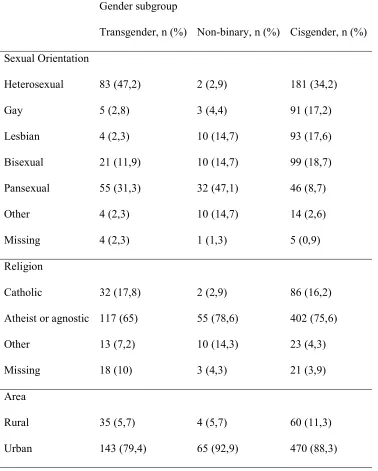
Table 1. Demographic characteristics of students by gender group
Gender subgroup
Transgender, n (%) Non-binary, n (%) Cisgender, n (%)
Sexual Orientation Heterosexual Gay Lesbian Bisexual Pansexual Other Missing 83 (47,2) 5 (2,8) 4 (2,3) 21 (11,9) 55 (31,3) 4 (2,3) 4 (2,3) 2 (2,9) 3 (4,4) 10 (14,7) 10 (14,7) 32 (47,1) 10 (14,7) 1 (1,3) 181 (34,2) 91 (17,2) 93 (17,6) 99 (18,7) 46 (8,7) 14 (2,6) 5 (0,9) Religion Catholic
Atheist or agnostic
Other Missing 32 (17,8) 117 (65) 13 (7,2) 18 (10) 2 (2,9) 55 (78,6) 10 (14,3) 3 (4,3) 86 (16,2) 402 (75,6) 23 (4,3) 21 (3,9) Area Rural Urban 35 (5,7) 143 (79,4) 4 (5,7) 65 (92,9) 60 (11,3) 470 (88,3) Procedure
Participants were recruited through websites, twitter and different associations (Daniela
Foundation, FELGTB and COGAM) in Spain. First, we contacted the organization and
8
online survey (GoogleDocs). The organization then provided the link through its own
website, twitter or Facebook, so that any person who accessed the site could complete the
questionnaire, regardless of if they were members of these associations. Participants read
a brief instruction describing the research and agreed to participate before answering the
questionnaire. Participation in the research was anonymous and voluntary and we asked
about “consent to participate”.
Instrument
A survey including questions about sociodemographic information and protective,
violence and health and well-being factors was designed ad hoc for this study.
The first part of the survey included questions about gender, age, residence and religion.
Whether a participant was transgender was measured by the question, “Do you consider
yourself?” (with response options of “male”, “female”, “transman”, “transwoman” or
“non-binary”). Participants were categorized into one of three gender groups: cisgender
(male and female), transgender (transman and transwoman) or non-binary. The type of
residence area of the participant where people living were measured with the question
“Would you describe the area in which you live?” (with response options of “rural” or
“urban”). The religion with which they identified was measured as the question "What is
your religion?" (with the response options "Catholic", "Jewish", "Muslim", "Evangelist",
"Other", "Atheist", "Agnostic" or "I prefer not to answer").
To assess social integration and participation, harassment and /or exclusion, social
support, self-esteem and general health, a questionnaire of 24 dichotomous response
items (SI / NO) was designed with three indicators: Protective factors with 9 items (e.g.,
"I have support from my family"), Violence or Personal safety with 7 items (e.g., "I have
9
I have thought about suicide”). To obtain an additional mental health indicator the
GHQ-12 questionnaire was included at the end of the survey. The GHQ-12-Item General Health
Questionnaire (GHQ-12) (Goldberg & Williams, 1988) has demonstrated adequate
reliability and validity to detect mental health problems and assess psychological distress
in Spanish population (Sánchez-López & Dresch, 2008).
Data Analysis
Associations between gender and protective, violence and health and well-being factors
were analysed by logistic regression using SPSS 22.0 version. Participant’s age, residence
and religion were included as covariates in the logistic regression models to control a
possible moderating effect. Cisgender was included in all analysis as the reference group.
Results
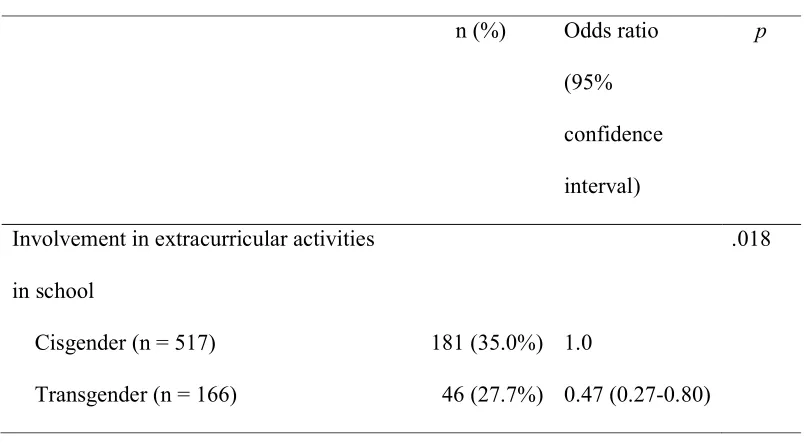
All protective factor considered in the study result significant. Non-binary group
received the least support from family and friends and was the one that least participated
in the different activities that take place in their social environment (Table 2).
Table 2. Associations between gender group and protective factors.
n (%) Odds ratio
(95%
confidence
interval)
p
Involvement in extracurricular activities
in school
.018
Cisgender (n = 517) 181 (35.0%) 1.0
10
Non-binary (n= 67) 16 (23.9%) 0.52 (0.23-1.19)
Practice of a sport in school or outside it .000
Cisgender (n = 532) 248 (46.6%) 1.0
Transgender (n = 180) 89 (49.4%) 0.12 (0.03-0.52)
Non-binary (n = 70) 19 (27.1%) 0.07 (0.01-0.47)
Go out with friends .000
Cisgender (n = 532) 456 (85.7%) 1.0
Transgender (n = 180) 133 (73.9%) 0.19 (0.02-2.30)
Non-binary (n = 70) 44 (62.9%) 0.09 (0.01-1.50)
Take part in LGBT associations .000
Cisgender (n = 344) 84 (24.4%) 1.0
Transgender (n = 175) 75 (42.9%) 1.58 (0.83-3.00)
Non-binary (n = 66) 19 (28.8%) 0.57 (0.26-1.28)
Take part in online LGTB groups .000
Cisgender (n = 341) 102 (29.9%) 1.0
Transgender (n = 174) 78 (44.8%) 0.32 (0.08-1.30)
Non-binary (n = 66) 43 (65.2%) 0.55 (0.10-3.04)
Family support .000
Cisgender (n = 317) 186 (58.7%) 1.0
Transgender (n = 168) 86 (51.2%) 0.84 (0.56-1.27)
Non-binary(n = 53) 14 (26.4%) 0.26 (0.13-0.51)
Adult support outside the family .015
Cisgender (n = 292) 169 (57.9%) 1.0
Transgender (n = 168) 98 (58.3%) 1.23 (0.80-1.88)
11
Friends support .000
Cisgender (n = 325) 312 (96.0%) 1.0
Transgender (n = 174) 153 (87.9%) 0.31 (0.14-0.70)
Non-binary (n = 64) 54 (84.4%) 0.22 (0.08-0.57)
Have a remunerated job .000
Cisgender (n = 532) 126 (23.7%) 1.0
Transgender (n = 180) 23 (12.8%) 0.87 (0.50-1.51)
Non-binary (n = 70) 6 (8.6%) 0.31 (0.11-0.90)
Transgender and non-binary people were at increased risk of violence and employment
discrimination. For example, between 40 and 50 % approximately of transgender and
non-binary people have suffered verbal attacks both inside and outside their school and
physical attacks at school are significantly more frequent for these groups than for
cisgender people. Non-binary group shows higher risk of suffering cyberbullying (Table
3).
Table 3. Associations between gender group and violence or personal safety.
n (%) Odds ratio (95%
confidence
interval)
p
Excluded by your peer group at some time .167
Cisgender (n = 526) 128 (24.3%) 1.00
Transgender (n = 120) 22 (18.3%) 0.63 (0.37-1.08)
Non-binary (n = 41) 8 (19.5%) 0.67 (0.28-1.58)
12
Cisgender (n = 524) 132 (25.2%) 1.0
Transgender (n = 165) 71 (43.0%) 1.74 (1.16-2.61)
Non-binary (n = 68) 29 (42.6%) 1.99 (1.14-3.45)
Verbal attacks out of school .000
Cisgender (n = 527) 155 (29.4%) 1.0
Transgender (n = 173) 76 (43.9%) 1.87 (1.28-2.76)
Non-binary (n = 68) 38 (55.9%) 3.17 (1.84-5.45)
Physical attacks at school .000
Cisgender (n = 527) 43 (8.2%) 1.0
Transgender (n = 170) 38 (22.4%) 2.72 (1.59-4.63)
Non-binary (n = 66) 9 (13.6%) 1.94 (0.88-4.29)
Physical attacks out of school .018
Cisgender (n = 340) 82 (24.1%) 1.0
Transgender (n = 173) 27 (15.6%) 0.60 (0.37-0.99)
Non-binary (n = 65) 8 (12.3%) 0.46 (0.21-1.02)
Cyberbullying .000
Cisgender (n = 479) 144 (30.1%) 1.0
Transgender (n = 177) 37 (20.9%) 0.46 (0.29-0.73)
Non-binary (n = 70) 29 (41.4%) 1.49 (0.87-2.57)
Discrimination when looking for a job .000
Cisgender (n = 462) 95 (20.6%) 1.0
Transgender (n = 133) 71 (53.4%) 6.81 (4.18-11.09)
13
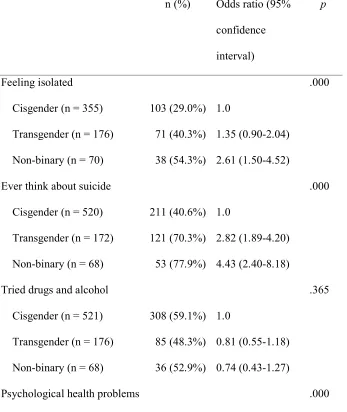
In terms of health indicators, no differences were found between the groups in drug use
or in smoking, and transgender and non-binary people consume less alcohol than
cisgender. However, in comparison with cisgender group, people in the other groups
had increased psychological health and well-being needs. Transgender and non-binary
show a higher percentage of people who feel isolated and unhappy, have more
psychological health problems according to the GHQ-12 questionnaire, and seven in ten
have ever thought about suicide (Table 4).
Table 4. Associations between gender group and health or well-being indicators.
n (%) Odds ratio (95%
confidence
interval)
p
Feeling isolated .000
Cisgender (n = 355) 103 (29.0%) 1.0
Transgender (n = 176) 71 (40.3%) 1.35 (0.90-2.04)
Non-binary (n = 70) 38 (54.3%) 2.61 (1.50-4.52)
Ever think about suicide .000
Cisgender (n = 520) 211 (40.6%) 1.0
Transgender (n = 172) 121 (70.3%) 2.82 (1.89-4.20)
Non-binary (n = 68) 53 (77.9%) 4.43 (2.40-8.18)
Tried drugs and alcohol .365
Cisgender (n = 521) 308 (59.1%) 1.0
Transgender (n = 176) 85 (48.3%) 0.81 (0.55-1.18)
Non-binary (n = 68) 36 (52.9%) 0.74 (0.43-1.27)
14
Cisgender (n = 529) 203 (38.4%) 1.00
Transgender (n = 176) 92 (52.3%) 1.56 (1.07-2.26)
Non-binary (n = 70) 39 (55.7%) 1.76 (1.04-2.99)
Smoke 0.655
Cisgender (n = 531) 133 (25.0%) 1.0
Transgender (n = 180) 45 (25.0%) 1.04 (0.68-1.59)
Non-binary (n = 70) 15 (21.4%) 0.76 (0.40-1.45)
Drank alcohol .009
Cisgender (n = 532) 342 (64.3%) 1.0
Transgender (n = 179) 76 (42.5%) 0.55 (0.38-0.81)
Non-binary (n = 70) 40 (57.1%) 0.75 (0.44-1.29)
Drug use .992
Cisgender (n = 531) 146 (27.5%) 1.0
Transgender (n = 179) 43 (24.0%) 1.02 (0.67-1.55)
Non-binary (n = 70) 20 (28.6%) 1.03 (0.57-1.85)
Happy or very happy .000
Cisgender (n =492) 411 (83.5%) 1.0
Transgender (n = 165) 109 (66.1%) 0.49 (0.32-0.76)
Non-binary (n= 57) 35 (61.4%) 0.38 (0.21-0.70)
Discussion
In this research, we analysed gender groups and associations with protective factors,
violence or personal safety variables, and health and well-being indicators in three
15
In terms of protective factors, non-binary people received the least support from family
and friends. This is in line with previous research showing that gender nonconforming
young people feel less support than other sexual minorities 37,39 and report experiences
with family rejection 10,40,41. Non-binary people was the one that least participated in the
different activities in their social environment. This result has found previously in
Australian, non-binary people participated less than cisgender people in the LGBT
community 42.
Regarding the factors of violence or personal safety, transgender and non-binary people
were at increased risk of violence 21,22 and non-binary group shows higher risk of
suffering cyberbullying, it is consistent with previous studies with LGBT population 43.
Like previous research 44, transgender and non-binary people have felt discriminated
when looking for a job.
In terms of health and well-being indicators, transgender and non-binary people consume
less alcohol than cisgender. That is a positive result of our research that it is different than
the obtained in other countries. Studies across North America suggest that drug (including
nicotine) and alcohol use is common among transgender individuals 20,30,31, but these
research has not been done with young people. Also, our young transgender and
non-binary people show more psychological health problems and have ever thought about
suicide more frequently than cisgender people. Estimates of suicidal ideation and suicide
attempts in transgender people vary widely; in fact, since 2000 there have been rates
ranging from 11% to 43% in suicidal attempts and from 7% to 89% for suicidal ideation
45. From some studies it arises that the most vulnerable groups to attempted suicide where
the young people between 16 and 24 years (19%), especially those who experienced
transphobic, physical or sexual violence (28.8%), and those who have only just begun a
16
have resulted in isolation, loneliness, and feelings of hopelessness; the fear of disclosing
this secret to partners, family, friends, and co-workers –risking rejection and employment
discrimination- can provoke a great deal of anxiety 16. Our transgender and non-binary
groups show a higher percentage of people who feel isolated and unhappy.
Our study has some limitations that should be overcome in future studies. First, despite
number of participants, the sample should be expanded to improve the generalizability
of the results. We must not forget that the information was obtained through the
collaboration of LGTB association (although not alone) and this could bias the results,
leaving out of the study people that have no Internet access or who are not involved in
the associative sector. Second, as the survey contained many sensitive topics, young
people could choose not to answer a question. This could be the reason of there was a
small percentage of missing data. Finally, due to our study is quantitative, some
questions have not been resolved, for example, why non-binary people are the least
involved in social activities. It would be interesting to analyse in future studies the
reasons why they do not participate as much as the other groups through a qualitative
study.
The present study is one of the first studies in Spain to analyse the health and well-being
of transgender, and especially non-binary young people. Our results are consistent with
previous studies when pointing out the positive effects of social support in sexual
minorities 46. These results justify the need to promote public policies to favour the
integration of transgender people in our society. It is therefore necessary that, as soon as
possible, a new law should be passed (modifying the current LGR pathologizing state
law) establishing a fair and equitable process for all transgender people in Spain. A single
framework that regulates rights and obligations for transgender people is needed. Finally,
17
transgender communities may help to reduce the occurrence of transphobic events, as
indicated by previous studies 47.
1. FELGTB/COGAM. Acoso escolar y riesgo de suicidio por orientación sexual e
identidad de género: Fracaso del sistema educativo [bullying and suicide risk because of
sexual orientation and gender identity: The failure of the educational system]. . 2012.
2. Gracia E, Herrero J, Musitu G. Análisis e intervención social. evaluación de recursos
y estresores psicosociales en la comunidad. Madrid: Síntesis; 2002.
3. Barra Almagia E. Apoyo social, estres y salud. Psicologia y Salud.
2004;14(2):237-243.
4. Malecki CK, Demaray MK. What type of support do they need? investigating student
adjustment as related to emotional, informational, appraisal, and instrumental support.
School Psychology Quarterly. 2003;18(3):231-252.
https://search.proquest.com/docview/195490388. doi: 10.1521/scpq.18.3.231.22576.
5. Musitu G, Cava MJ. El rol del apoyo social en el ajuste de los adolescentes.
Intervención Psicosocial. 2002;12:179-192.
6. Geckova A, van Dijk JP, Stewart R, Groothoff JW, Post D. Influence of social
support on health among gender and socio-economic groups of adolescents. European
Journal of Public Health. 2003;13(1):44-50.
18
7. Torsheim T, Wold B. School-related stress, school support, and somatic complaints.
Journal of Adolescent Research. 2001;16(3):293-303.
http://journals.sagepub.com/doi/full/10.1177/0743558401163003. doi: 10.1177/0743558401163003.
8. Ryan C, Russell ST, Huebner D, Diaz R, Sanchez J. Family acceptance in
adolescence and the health of LGBT young adults. Journal of Child and Adolescent
Psychiatric Nursing. 2010;23(4):205-213.
http://onlinelibrary.wiley.com/doi/10.1111/j.1744-6171.2010.00246.x/abstract. doi: 10.1111/j.1744-6171.2010.00246.x.
9. Murdock TB, Bolch MB. Risk and protective factors for poor school adjustment in
lesbian, gay, and bisexual (LGB) high school youth: Variable and person‐centered
analyses. Psychology in the Schools. 2005;42(2):159-172.
http://onlinelibrary.wiley.com/doi/10.1002/pits.20054/abstract. doi: 10.1002/pits.20054.
10. Grant JM, Mottet LA, Tanis J, Harrison J, Herman JL, Keisling M. Transgender
students; "injustice at every turn: A report of the national transgender discrimination
survey". Education Week. 2011;30(20):5.
https://search.proquest.com/docview/852927096.
11. Pinto RM, Melendez RM, Spector AY. Male-to-female transgender individuals
building social support and capital from within a gender-focused network. Journal of
Gay & Lesbian Social Services. 2008;20(3):203-220.
19
12. Budge SL, Katz-Wise SL, Tebbe EN, Howard KAS, Schneider CL, Rodriguez A.
Transgender emotional and coping processes. The Counseling Psychologist.
2013;41(4):601-647. http://journals.sagepub.com/doi/full/10.1177/0011000011432753. doi: 10.1177/0011000011432753.
13. Factor RJ, Rothblum ED. A study of transgender adults and their non-transgender
siblings on demographic characteristics, social support, and experiences of violence.
Journal of LGBT Health Research. 2008;3(3):11-30.
http://www.tandfonline.com/doi/abs/10.1080/15574090802092879. doi: 10.1080/15574090802092879.
14. Budge SL, Adelson JL, Howard KAS. Anxiety and depression in transgender
individuals: The roles of transition status, loss, social support, and coping. Journal of
consulting and clinical psychology. 2013;81(3):545-557.
http://www.ncbi.nlm.nih.gov/pubmed/23398495. doi: 10.1037/a0031774.
15. Pascoe EA, Richman LS. Perceived discrimination and health. Psychological
Bulletin. 2009;135(4):531-554. http://www.ncbi.nlm.nih.gov/pubmed/19586161. doi: 10.1037/a0016059.
16. Bockting W, Knudson G, Goldberg JM. Counseling and mental health care for
transgender adults and loved ones. International Journal of Transgenderism.
2006;9(3-4):35-82. http://www.tandfonline.com/doi/abs/10.1300/J485v09n03_03. doi: 10.1300/J485v09n03_03.
17. Nuttbrock L, Hwahng S, Bockting W, et al. Psychiatric impact of gender-related
abuse across the life course of male-to-female transgender persons. Journal of Sex
20
http://www.tandfonline.com/doi/abs/10.1080/00224490903062258. doi: 10.1080/00224490903062258.
18. Gómez-Gil E, Trilla A, Salamero M, Godás T, Valdés M. Sociodemographic,
clinical, and psychiatric characteristics of transsexuals from spain. Arch Sex Behav.
2009;38(3):378-392. http://www.ncbi.nlm.nih.gov/pubmed/18288600. doi: 10.1007/s10508-007-9307-8.
19. Murad MH, Elamin MB, Garcia MZ, et al. Hormonal therapy and sex reassignment:
A systematic review and meta-analysis of quality of life and psychosocial outcomes.
Clinical Endocrinology. 2010;72(2):214-231.
http://www.ingentaconnect.com/content/bsc/cend/2010/00000072/00000002/art00012. doi: 10.1111/j.1365-2265.2009.03625.x.
20. Clements-Nolle K, Marx R, Guzman R, Katz M. HIV prevalence, risk behaviors,
health care use, and mental health status of transgender persons: Implications for public
health intervention. American Journal of Public Health. 2001;91(6):915-921.
http://ajph.aphapublications.org/cgi/content/abstract/91/6/915. doi: 10.2105/AJPH.91.6.915.
21. Toomey RB, Ryan C, Diaz RM, Card NA, Russell ST. Gender-nonconforming
lesbian, gay, bisexual, and transgender youth: School victimization and young adult
psychosocial adjustment. Dev Psychol. 2010;46(6):1580-1589.
22. Carver P, Yunger J, Perry D. Gender identity and adjustment in middle childhood.
21
23. Landolt M, Bartholomew K, Saffrey C, Oram D, Perlman D. Gender
nonconformity, childhood rejection, and adult attachment: A study of gay men. Arch
Sex Behav. 2004;33(2):117-128. http://www.ncbi.nlm.nih.gov/pubmed/15146144. doi: ASEB.0000014326.64934.50.
24. Beard AJ, Bakeman R. Boyhood gender nonconformity: Reported parental behavior
and the development of narcissistic issues. J Gay Lesbian Psychother. 2000;4(2):81-97.
25. Bauer GR, Scheim AI, Pyne J, Travers R, Hammond R. Intervenable factors
associated with suicide risk in transgender persons: A respondent driven sampling study
in ontario, canada. BMC public health. 2015;15(1):525.
http://www.ncbi.nlm.nih.gov/pubmed/26032733. doi: 10.1186/s12889-015-1867-2.
26. Liu RT, Mustanski B. Suicidal ideation and self-harm in lesbian, gay, bisexual, and
transgender youth. Am J Prev Med. 2012;42(3):221-228.
27. Oost KM, Livingston NA, Gleason HA, Cochran BN. Gender performance stress
and risk for psychopathology: Looking beyond sexual orientation. Journal of LGBT
Youth. 2016;13(3):231-248.
28. Fredriksen-Goldsen KI, Cook-Daniels L, Kim H, et al. Physical and mental health
of transgender older adults: An at-risk and underserved population. GERONT.
2014;54(3):488-500. http://www.ncbi.nlm.nih.gov/pubmed/23535500. doi: 10.1093/geront/gnt021.
29. Conron KJ, Scott G, Stowell GS, Landers SJ. Transgender health in massachusetts:
22
health. 2012;102(1):118-122. http://www.ncbi.nlm.nih.gov/pubmed/22095354. doi: 10.2105/AJPH.2011.300315.
30. Bockting W, Huang C, Ding H, Robinson B, Rosser BRS. Are transgender persons
at higher risk for HIV than other sexual minorities? A comparison of HIV prevalence
and risks. International Journal of Transgenderism. 2005;8(2-3):123-131.
http://www.tandfonline.com/doi/abs/10.1300/J485v08n02_11. doi: 10.1300/J485v08n02_11.
31. Operario D, Nemoto T, Iwamoto M, Moore T. Risk for HIV and unprotected sexual
behavior in male primary partners of transgender women. Arch Sex Behav.
2011;40(6):1255-1261. http://www.ncbi.nlm.nih.gov/pubmed/21604064. doi: 10.1007/s10508-011-9781-x.
32. Horvath KJ, Iantaffi A, Swinburne-Romine R, Bockting W. A comparison of mental
health, substance use, and sexual risk behaviors between rural and non-rural transgender
persons. Journal of homosexuality. 2014;61(8):1117-1130.
http://www.ncbi.nlm.nih.gov/pubmed/24380580. doi: 10.1080/00918369.2014.872502.
33. Ryan C, Rivers I. Lesbian, gay, bisexual and transgender youth: Victimization and
its correlates in the USA and UK. Culture, Health & Sexuality. 2003;5(2):103-119.
http://www.tandfonline.com/doi/abs/10.1080/1369105011000012883. doi: 10.1080/1369105011000012883.
34. Almeida J, Johnson RM, Corliss HL, Molnar BE, Azrael D. Emotional distress
among LGBT youth: The influence of perceived discrimination based on sexual
orientation. Journal of youth and adolescence. 2009;38(7):1001-1014.
23
35. Grossman AH, D'Augelli AR. Transgender youth and life-threatening behaviors.
Suicide and Life-Threatening Behavior. 2007;37(5):527-537.
http://www.ncbi.nlm.nih.gov/pubmed/17967119. doi: 10.1521/suli.2007.37.5.527.
36. Simons L, Schrager SM, Clark LF, Belzer M, Olson J. Parental support and mental
health among transgender adolescents. The Journal of adolescent health : official
publication of the Society for Adolescent Medicine. 2013;53(6):791.
http://www.ncbi.nlm.nih.gov/pubmed/24012067. doi: 10.1016/j.jadohealth.2013.07.019.
37. Clark TC, Lucassen MFG, Bullen P, et al. The health and well-being of transgender
high school students: Results from the new zealand adolescent health survey (youth'12).
The Journal of adolescent health : official publication of the Society for Adolescent
Medicine. 2014;55(1):93-99. http://www.ncbi.nlm.nih.gov/pubmed/24438852. doi: 10.1016/j.jadohealth.2013.11.008.
38. Needham BL, Austin EL. Sexual orientation, parental support, and health during the
transition to young adulthood. Journal of youth and adolescence.
2010;39(10):1189-1198. http://www.ncbi.nlm.nih.gov/pubmed/20383570. doi: 10.1007/s10964-010-9533-6.
39. D’Augelli AR, Grossman AH, Starks MT. Childhood gender atypicality,
victimization, and PTSD among lesbian, gay, and bisexual youth. Journal of
Interpersonal Violence. 2006;21(11):1462-1482.
http://journals.sagepub.com/doi/full/10.1177/0886260506293482. doi: 10.1177/0886260506293482.
40. Motmans J, De Biolley I, Debunne S. Being transgender in belgium: Mapping
24
41. Van Schuylenbergh J, Motmans J, Coene G. Transgender and non-binary persons
and sexual risk: A critical review of 10 years of research from a feminist intersectional
perspective. Critical Social Policy. 2018;38(1):121-142.
http://journals.sagepub.com/doi/full/10.1177/0261018317732478. doi: 10.1177/0261018317732478.
42. Demant D, Hides L, White KM, Kavanagh DJ. Effects of participation in and
connectedness to the lgbt community on substance use involvement of sexual minority
young people. Addict Behav. 2018:No Pagination Specified.
http://0-search.proquest.com.cisne.sim.ucm.es/docview/1994019541?accountid=14514. doi: //dx.doi.org/10.1016/j.addbeh.2018.01.028.
43. Wiederhold BK. Cyberbullying and LGBTQ youth: A deadly combination.
Cyberpsychology, Behavior, and Social Networking. 2014;17(9):569-570. http://0-search.proquest.com.cisne.sim.ucm.es/docview/1636811966?accountid=14514. doi: //dx.doi.org/10.1089/cyber.2014.1521.
44. Motmans J, Ponnet K, De Cuypere G. Sociodemographic characteristics of trans
persons in belgium: A secondary data analysis of medical, state, and social data. Arch
Sex Behav. 2015;44(5):1289-1299. http://www.ncbi.nlm.nih.gov/pubmed/25300904. doi: 10.1007/s10508-014-0411-2.
45. Adams N. Accounting for variations in estimates of transgender suicidality over the
past 12 years. World Professional Association for Transgender Health (WPATH)
25
46. Molero F, Silván-Ferrero P, Fuster-Ruiz MJ, Nouvilas-Pallejá E, Pérez-Garín D.
Subtle and blatant perceived discrimination and well-being in lesbians and gay men in
spain: The role of social support. Psicothema. 2017;29:475-481.
47. Rotondi NK, Bauer GR, Travers R, Travers A, Scanlon K, Kaay M. Depression in
male-to-female transgender ontarians: Results from the trans PULSE project. Canadian
Journal of Community Mental Health. 2011;30(2):113-133.
https://search.proquest.com/docview/963345089. doi: 10.7870/cjcmh-2011-0020.