Efficacy. (Under the direction of Kenneth H. Brinson, Jnr.)
This study focused on small and large class sizes and the impact these classes had on four teachers’ self-efficacy during the 2011-2012 school year, and was conducted in a
suburban elementary school. The study was qualitative and used triangulation of data sources to determine whether teachers had high or low efficacy levels, depending on their small or large class sizes. Two of the teacher participants were kindergarten teachers teaching small class sizes (nineteen to twenty students each), and two of the teacher participants were first grade teachers teaching large class sizes (twenty-four students each). All four teacher participants were female with experience teaching both small and large class sizes in their past years of classroom teaching.
This study used data collected from interviews, observations, and journal entries of each of the four teacher participants. Common to all four teacher participants, twelve
important trends emerged from the data collected. The participants’ data were compared and categorized according to positive or negative thoughts, feelings, attitudes, and actions in each trend.
by
Cara Constantine Sullivan
A dissertation submitted to the Graduate Faculty of North Carolina State University
in partial fulfillment of the requirements for the degree of
Doctor of Education
Educational Administration and Supervision
Raleigh, NC 2012
APPROVED BY:
_______________________________ _________________________________ Kenneth N. Brinson, Jnr. Lance D. Fusarelli
Committee Chairman Committee Member
______________________________ _________________________________
Kevin P. Brady Ellen McIntyre
DEDICATION
This dissertation is the culmination of unknown hours of research, interviews, sleepless nights, frustration, and excitement. Many people, in addition to myself, have endured these sleepless nights and frustration, and to all of them I’m truly thankful. None of this would have been possible without the support and help of my mother, Dr. Rosalie Constantine, who has been the driving factor behind my work at North Carolina State
University. It is through her modeling, perseverance, and success that I have had the courage to write this dissertation. My mother is the most influential person in my life and I’m proud to share this dissertation with her.
I also dedicate this dissertation to my husband, Kevin, who has felt every bump in the road of my program. He is the most motivated person I know (working towards his
Physician’s Assistant Master’s degree) and he (and our wonderful dog Winston) has been my rock during these past years of work at NCSU.
My father Francis and my brother Chris have been my cheerleaders during my program at North Carolina State University. They both encouraged me and gave me confidence to finish, even when I felt like throwing in the towel.
BIOGRAPHY
The author of this study, Cara Constantine Sullivan, was born and raised in Erie, Pennsylvania. Her parents, Francis J. and Rosalie P. Constantine, instilled upon her the importance of education from an early age. Cara graduated from Edinboro University of Pennsylvania with Bachelor of Science degree in Elementary Education in 1999. In 2001, Cara graduated from Edinboro University of Pennsylvania with Master’s of Education degree in School Leadership and Supervision.
After graduate school, Cara moved to North Carolina to teach elementary school. She taught in the Raleigh area, and then moved into school administration. She has thoroughly enjoyed the field of school administration.
During her time as an elementary school teacher, Cara met and married her husband, Kevin Sullivan. Kevin is a medically-retired US Air Force C-130 navigator who attends the East Carolina University Physician’s Assistant program and will graduate in 2012.
ACKNOWLEDGMENTS
The completion of this doctoral study has been influenced by many intelligent, motivated, and encouraging individuals. First I would like to thank Dr. Kenneth Brinson, Jnr., the chairperson of my committee. Dr. Brinson took the time to first help me through my courses at North Carolina State University, and then to serve as chair of my committee throughout my entire dissertation process. Dr. Brinson has guided me tremendously in every way imaginable as my dissertation chair, helping me through every bump in the road. He has encouraged me and has had faith in me when I lost faith in myself. He is truly an inspiration and I am thankful for his unending faith in me.
TABLE OF CONTENTS
LIST OF TABLES ... vii
CHAPTER ONE: INTRODUCTION ... 1
Problem Statement ... 1
Research Question ... 3
History/Background/Rationale ... 3
Significance of the Study ... 5
Contribution to Theory and Practice ... 5
Summary of Chapter One ... 6
CHAPTER TWO: LITERATURE REVIEW ... 8
Introduction ... 8
North Carolina Studies ... 9
Tennessee Project STAR ... 12
Additional Studies ... 14
History of State Sponsored Programs ... 16
Cost ... 17
Teacher Benefits ... 20
The Non-Impact of Small Class Sizes ... 21
Teacher Efficacy ... 23
Cognitive Perceptual Theory ... 31
Summary of Chapter Two ... 32
CHAPTER THREE: METHODOLOGY ... 34
Introduction ... 34
Population Sample ... 35
Study Criteria ... 37
Explanation of Criteria ... 38
Data Gathering ... 40
Analysis of Data ... 44
Reliability of the Research ... 46
Validity of the Research ... 46
Human Subjects ... 47
Subjectivity ... 48
Limitations of the Study ... 49
Summary of Chapter Three ... 51
CHAPTER FOUR: DATA ANALYSIS ... 52
Introduction ... 52
Description of Ms. Adams ... 54
Summary of Ms. Adams ... 84
Description of Ms. Bender ... 85
Ms. Bender: Trends from Interviews, Observations, and Journals ... 87
Summary of Ms. Bender ... 120
Description of Ms. Cook ... 120
Ms. Cook: Trends from Interviews, Observations, and Journals ... 122
Summary of Ms. Cook ... 159
Description of Ms. Decker ... 160
Ms. Decker: Trends from Interviews, Observations, and Journals ... 162
Summary of Ms. Decker ... 198
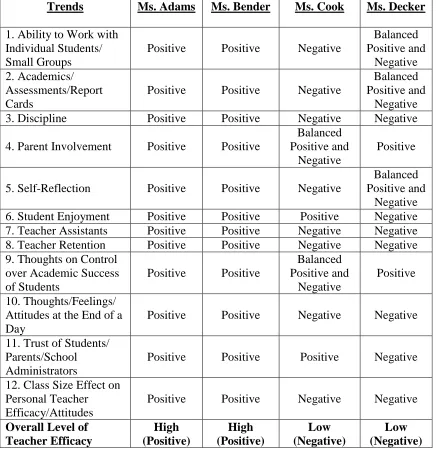
Description of Participant Comparison Table 4.1 ... 199
Summary of Chapter Four ... 202
CHAPTER FIVE: DISCUSSION AND CONCLUSIONS ... 203
Introduction ... 203
Participant Conclusions ... 204
Comparison of Participants ... 215
Outside Variables ... 221
Researcher Insight ... 223
Relevant Studies and Class Size Numbers ... 224
Discussion of Relevant Studies and Table ... 226
Implications for Practice ... 232
Recommendations for Further Research ... 233
Summary of Chapter Five ... 235
REFERENCES ... 238
APPENDIX ... 248
Appendix A. Initial Guiding Interview Questions ... 249
Appendix B. Bandura’s Self-Efficacy Scale ... 251
Appendix C. Tschannen-Moran’s Teacher Self-Efficacy Scale ... 256
Appendix D. Second and Third Interview Follow-up Questions ... 259
Appendix E. IRB Approval and Proposal ... 262
LIST OF TABLES
Table 2.1 Bandura’s Teacher Self Efficacy Scale (Hoy, 2000) ... 27
Table 2.2 Dimensions of Teacher Efficacy (Huitt, 2000) ... 29
Table 2.3 A School Based Model for Teacher Expectations (Huitt, 2000) ... 30
CHAPTER ONE: INTRODUCTION
Problem Statement
The issue of class size is an important one in many elementary schools. Teachers must find ways to teach students to the best of their abilities, regardless of the number of students in the class. Teaching large or small classes places differing demands on teachers, as these educators strive to reach each individual student so that students can reach academic and personal success.
There is no exact number of a large or small class size. The studies (including Prichard’s 1999 “Reducing Class Size, What Do We Know?” and “Smaller Classes Benefit Burke County” in 2004) that have been conducted regarding class size include classes ranging from thirteen to twenty-three students. In this study, the researcher will define a “large class size” as one classroom of twenty-four or more students in one grade with one full-time teacher, and a “small class size” as one classroom of twenty or fewer students in one grade with one full-time teacher. A class size of one, two, or twenty-three students will be defined as a “mid-sized class” of students.
Each teacher possesses his/her own personal teacher satisfaction level when teaching in either large or small classes. According to Linda B. Koutoufas, an elementary school teacher in Virginia Beach, Virginia, “Too many teachers leave education because of low pay, overwhelming workloads, and a lack of respect for the profession. I have had as many as 36 first graders in my class, and as few as 22. Believe me, no new study is needed to tell you that 22 is better” (Sack, 1999, p. 22).
This quotation about teacher satisfaction aligns with the issue of personal teacher efficacy. Personal teacher efficacy can be defined as how a teacher feels about his/her teaching (Tschannen-Moran, Woolfolk Hoy, & Hoy, 1998).
Teachers are more inclined to stay in the profession if they are compensated appropriately, and if they feel they are well-respected. Teachers’ perceptions of their own worth may decrease when teachers decide that they are being taken advantage of, possibly resulting in a decrease in performance.
A continuing effort to improve teacher quality by raising standards, developing successful recruitment strategies, helping to prepare new teachers, and providing opportunities for professional development to current teachers is being made by
relationship between class size and personal teacher efficacy, and address how they relate to teacher quality and retention.
Research Question
The central question for guiding this research is: Does class size impact a teacher’s sense of personal teacher efficacy, and, if so, what kind of impact does class size have on that teacher’s personal teacher efficacy?
The purpose of this case study is to determine whether small class size impacts personal teacher efficacy. According to Pritchard in 1999, class size reduction improves student achievement. However, the researcher will intensely study the effect that class size may have on personal teacher efficacy. Teacher efficacy is defined as how a teacher feels about his or her teaching (Tschannon-Moran, Woolfolk Hoy, & Hoy, 1998). Determining if there is a relationship between class size and how teachers feel about their teaching could help to increase teacher awareness of how their feelings about teaching are demonstrated to their students while teachers instruct. This could make teachers more aware of how their attitudes affect their students when learning. This study could also increase school administrators’ awareness of teacher satisfaction and help administrators implement strategies to improve their schools.
History/Background/Rationale
important for administrators to support positive morale in schools, which may include teachers having positive classroom experiences in order for them to believe in themselves. Administrators may be able to maintain higher school morale with a positive climate and culture with teachers who are happy with their performances in the classroom.
It may be especially important, in the early elementary grades, for teachers to be satisfied with the way they teach. Children in grades kindergarten, first, and second thrive on positive reinforcement and have a thirst for teachers to believe in their successes. If children are motivated by their teachers’ attitudes, they may begin to feel important, causing them to even then become more successful.
With class size initiatives on the rise in school systems across America, there are two sides to the class size debate. However, the Tennessee Project STAR study (Pritchard, 1999) focused on student achievement and suggested that smaller classes improve student
achievement. The STAR (Student Teacher Achievement Ratio) study involved 7,000 students in Tennessee, randomly placing students and teachers in different class sizes. This student focused on student achievement and found that students in smaller sized classes significantly outperformed their peers (Agron, 1999).
Significance of the Study
Educators should have the best interest of each child in mind. Examining how class size affects personal teacher efficacy is imperative. Class size has an impact on all students and teachers, thus affecting how teachers must best meet the needs of each individual child. The elementary students of today will be the productive citizens of tomorrow, and this affects our entire society. Providing students with the best education possible should be the top priority.
Researchers (Achilles 1997; Pritchard 1999; Sack 1999) have been studying class size and how it affects student achievement in the classroom. However, in this study, the
researcher will delve deeper into the possible link between class size and personal teacher efficacy. The researcher will study whether or not small classes impact teacher satisfaction and the way teachers feel about their teaching, including positive aspects as well as negative aspects.
Contribution to Theory and Practice
A deeper awareness and appreciation may be recognized in teachers’ recognition of their own attitudes and feelings about class size and teacher efficacy in this study. From this information, teacher in-service and professional development can focus on the teacher needs. This study on personal teacher efficacy may serve to inform educators about teachers’
personal satisfaction in their positions, and reasons why these levels of satisfaction exist. Administrators need to keep the morale of their schools positive in order to keep a climate in which the teachers, parents, and students like being there. A positive climate includes teachers being satisfied in their career choices, thus trickling down into the classroom. Hence, in the classroom, teachers who are happy are likely to transfer their positive energy to their students who in turn transfer their positive energy to their parents. This provides a positive learning environment for all involved in the classroom, and may help the teachers to have positive teacher efficacy and remain in the teaching profession. This is an administrator’s goal—to keep all in the classroom satisfied and content to keep class and school morale at a positive level, and to keep harmony in the school.
Summary of Chapter One
Teachers must find ways to teach their students to the best of their abilities, no matter their class sizes. Teachers are expected that their students grow both in academics and
teacher’s classroom for whom the teacher is responsible. A small class size is determined by the researcher to be twenty or fewer students with one full-time teacher, and a large class size is determined by the researcher to be twenty-four or more students with one full-time teacher.
Personal teacher efficacy is defined in this study as how a teacher feels about his/her teaching (Tschannen-Moran, Woolfolk Hoy, & Hoy, 1998). In this qualitative case study, the researcher will investigate the relationship between class size and teacher efficacy by
exploring the research question “Does class size impact a teacher’s sense of personal teacher efficacy, and, if so, what kind of impact does class size have on that teacher’s personal teacher efficacy?”
This study may help teachers to recognize a deeper awareness and appreciation of their own attitudes and feelings about class size and teacher efficacy. Administrators may implement teacher in-service workshops and professional development activities to help teachers to focus on classroom needs.
CHAPTER TWO: LITERATURE REVIEW
Introduction
Much research (Achilles 1997; Pritchard 1999) has been conducted on class size and its relation to student achievement. Some research shows that teachers who teach smaller class sizes have increased student test scores (Pritchard, 1999). Other issues that have surfaced in the research of smaller classes is that smaller classes promote more parental involvement, better teacher organization, and fewer discipline disruptions than in larger classes.
In the 1970s, Gene Glass and Mary Lee Smith researched class size and concluded that learning improved in smaller classes in “Smaller is Better” (Viadero, 2001). However, they deduced that the benefits are not noticed unless the classes are reduced to fifteen or fewer students. Herbert Walberg, a professor at the University of Illinois at Chicago, believes the study’s findings were controversial because it included both mixed grade levels and classes with too many mixed variables (Viadero, 2001).
North Carolina Studies
Two important studies were conducted in North Carolina in 1991. In Burke County, the school board, citizens, and educators began a study to reduce class sizes to fifteen in first grade, followed by second and third grades in subsequent years (Finn, 1998). The goal of this study was to increase reading and math achievement. Approximately $1.2 million dollars was allocated to this study annually (Class Size Reduction Policy Brief #23).
According to “Smaller Classes Benefit Burke County (NC) Students” in The Center for Public Education in 2004, the superintendent of Burke County NC schools, David Burleson, stated that the teacher/student ratios in first through third grades averaged twenty-four students per teacher. Burleson and the school district formed a committee to study the issue of class size in the district, which had several tasks: to examine the research on class size and student achievement, to evaluate classroom space within the district itself, and to determine the needs of the faculty and staff. Upon review, the committee recommended that a pilot program be implemented for first graders in the 1991-1992 school year, and the success of the pilot program prompted the district to continue pilot programs in the second and third grade levels as well.
During this Burke County study, the demographics of the district changed drastically. The English as a second language population went from almost non-existent to fifteen
percent of the school. The percentage of students on free and reduced lunch also increased fifty percent to make a total free and reduced lunch rate of fifty-eight percent in the
The test scores in this district have increased, despite the change in demographics, however. The district is making Adequate Yearly Progress in meeting the No Child Left Behind requirements, and the study has shown that teachers with fewer students spend six percent more time on instruction in the classroom than do teachers in larger size classrooms. Along with the smaller classes came the support of administrators, teachers, students, and parents. Parents have more opportunity to be involved in the classrooms and they have increased the attendance rate for parent-teacher conferences to ninety-nine percent (“Smaller Classes Benefit Burke County,” 2004).
Burke County faced an obstacle of limited space and funding for more space while studying the smaller classes. Burke County used mobile units, a state bond, and a local one-cent sales tax for school expansion to overcome their obstacle of space and funding for more space. The junior high school was also reconfigured and turned into a middle school, freeing up more space for the elementary school (“Smaller Classes Benefit Burke County,” 2004).
This class size reduction program was funded by state, national, and local funds. Originally, the funding came from the district’s operating budget contingency funds. The district also eliminated teacher assistant positions in grades first through third and used those funds for the class size reduction program. Federal class size reduction funds and low-wealth district funds were also used to fund the program. The Burke County school board was also active in funding and supporting this class size reduction program (“Smaller Classes Benefit Burke County,” 2004).
funds. According to Burleson, “The best thing to come out of this is that students are treated as individuals. Teachers get to really know their students, have the time to individualize lessons, and are better able to meet individual students’ needs. Students most at risk have benefited the most from reduced class size” (“Smaller Classes Benefit Burke County,” 2004).
A second North Carolina study of importance took place in Oak Hill Elementary School in Guilford County. The purpose of the study was to reduce class sizes to improve student achievement. In this study, another school in the county was visited by Oak Hill Elementary School teachers to observe already-established small classes. Researchers and/or consultants also met with first grade teachers to provide individualized suggestions and instruction to better help them to determine ways to teach in small classes (“Class Size Reduction: A Review of the Literature,” 2001).
In this Oak Hill study, classes in kindergarten through third grades were reduced to fifteen students per class. At Oak Hill Elementary School, seventy-eight percent of the students were in the subsidized lunch program. Matched comparison groups were used (Finn, 1998). This initiative was termed “Success Starts Small” (U.S. Department of Education, 1998).
Tennessee Project STAR
According to Pritchard’s (1999) findings in “Reducing Class Size,” the state of Tennessee conducted the first major study of class size in 1985. Named Project STAR (Student/Teacher Achievement Ratio), the study contributed largely to later research on class size reduction. In this study, seventy-nine schools were chosen to participate in a four-year longitudinal observational study of kindergarten, first, second, and third grades. Included in these seventy-nine schools were three hundred classrooms and seven thousand students. There were three different kinds of classrooms to which students and teachers were randomly assigned: classes of thirteen to seventeen students with one teacher, classes of twenty-two to twenty-five students with one teacher, and classes of twenty-two to twenty-five students with one teacher and one full-time instructional aide.
According to the “Class Size Effects in the Primary Grades: Research in Tennessee,” published by Colorado Department of Education in 1996, Project STAR included a “within-school” design. Each of the seventy-nine participating schools was required to include at least fifty-seven students at the appropriate grade levels, containing at least one of the three different types of classes. This design “reduced major sources of possible variation in student achievement attributable to school effects (i.e., community demographics, principal leadership, instructional materials, etc.)” (1996).
grades), STAR’s Basic Skills Criterion Test (for first and second grades), and, for third grade, Tennessee’s Basic Skills Criterion Test (“Class Size Effects,” 1999).
The results of the Tennessee study in 1989 were clear. Students in the classes with thirteen to seventeen students significantly outperformed their peers in the larger classes on the standardized and curriculum-based reading and math tests (Agron, 1999). In addition, according to Pritchard (1999), a smaller proportion of students in the thirteen to seventeen student classes were retained, and there was earlier identification of special educational needs of students. Also according to Pritchard (1999), there were no significant academic
achievement differences in the larger classes of students with or without an instructional aide. Black (1999) reported that this study also showed similar results for males and females, significantly greater academic benefits for minority students and students attending inner-city schools, and lasting benefits into the high school years.
The STAR study additionally showed that teachers in small classes have more time to spend on individualized instruction and less time on organizational tasks and managing the classroom. This study found that child behavior is directly affected by class size, and children in smaller classes are more likely to be engaged in work and less likely to be disruptive in class. Children in small classes were found to participate in class as well (Barnett, Schulman, and Shore, 2004).
Additional Studies
Shortly after the Tennessee Project STAR study was completed, Tennessee launched the Lasting Benefits Study (LBS), which determined if the results of STAR affected students in their later years of schooling. All of the students who participated in Project STAR resumed regular class sizes beginning in the fourth grade, and the LBS tracked these students’ gains and assessed their performance, as measured by standardized achievement tests, in later school grades. The LBS used the Tennessee Comprehensive Achievement Program (TCAP) to measure the students’ academic achievement, an instrument that the state of Tennessee requires to be administered from second grade through eighth grade and at tenth grade. Results of the analyses of STAR students in their fifth and sixth grade years showed that the classes with fewer students in the earlier grades consistently did better academically than their counterparts in the larger classes (“Class Size Effects,” 1996).
Tennessee’s Project STAR and Lasting Benefits Study proved to be beneficial. Researchers who organized Project STAR made it the longest-lasting experimental study that has ever been conducted on the effects of small class sizes in regard to student achievement. In the October 1995 issue of Teacher Magazine, Debra Viadero quotes Frederick Mosteller, a Harvard University statistics professor, regarding the STAR study: “This is one of the great experiments in education in United States history. It definitely answers the question of whether reduction from this size to that size does make a difference, and it clearly does” (Viadero, http://www.edweek.org/tm/articles/1995/10/01/02small.h07.html?r=1048375963).
Chicago was conducted of first grade students in 1992 which reduced class sizes to fourteen to twenty-five students, assessed these students using standardized reading assessments, and compared results to those in large class sizes of twenty-five students or more. Leahy reported that researchers discovered that children in smaller classes received more individual attention from teachers, and students paid more attention to work. The depth of the curriculum was greater and discipline issues decreased (2006).
In addition to Leahy’s report on class sizes and discipline, according to Zahorik in “Reducing Class Size Leads to Individualized Instruction” in 1999, smaller class sizes have fewer discipline problems and there is less difficult behavior. Zahorik reports that
misbehavior is more noticeable in smaller class sizes when it does occur, and teachers are able to deal with it immediately before it becomes a larger problem. Discipline issues are reduced (if not totally eliminated) in small class sizes, and this leads to more time available for instruction (1999).
In 2009, Mathews’ article, “Better Teachers, Not Tinier Classes, Should Be Goal,” reported that the Center for Public Education investigated nineteen class size studies. Two interesting conclusions were found. The first conclusion was that most of the studies
conducted focused on kindergarten, first, second, and third grades, and most of the beneficial effects of the smaller class sizes seemed to happen in those early elementary years as
History of State Sponsored Programs
According to the U.S. Department of Education (1999), there are at least twenty states that have implemented class size reduction programs to benefit students.1 More recently, four additional states have added programs to reduce class sizes. Iowa has created the Class Size/Early Intervention Program to reduce class sizes in kindergarten through third grade. This program reduces classes to seventeen students for basic skills instruction (U.S. Department of Education, 1999). Maryland established the Maryland Learning Success Program, which is an initiative to reduce class sizes in first and second grades (1999). The state of Minnesota expanded its class size reduction program in 1999 significantly, and added more than one hundred million dollars over two years to annual funding levels of ninety million dollars (1999). In addition, the state of Washington has allocated one million dollars for its class size reduction initiative, labeled “Great Start,” to help improve reading
achievement and instruction in the early grades. This state has reduced first grade class sizes to fifteen or sixteen students in one-third of its elementary schools. Therefore, eight hundred fifty students in fifty-seven first-grade classrooms are being taught in small classes. The teachers in these schools receive training on how to teach reading, and they meet regularly with each other to help improve their teaching approaches, and also to discuss teaching strategies that work most effectively with their students (1999).
1
Cost
There are many ongoing costs and factors in the implementation and upkeep of a class size reduction program. The cost for initial average class size varies greatly among school districts. Those districts with initially lower class sizes will more than likely need less money for the implementation of a class size reduction program than those districts that contain larger class sizes (“Class Size Reduction,” 1997).
Class size reduction programs may be implemented with state funding, and funds may be allotted (in some districts) if the school’s classes stay at or below twenty students. Keeping within these parameters assuring that classes are actually at or below twenty students per class, may cause an increase in the cost of the reduction program, due to the addition of more classrooms and teachers (“Class Size Reduction,” 1997).
Districts that pay higher teacher salaries will also have higher class size reduction costs. The salary schedule of each district and the experience level of the teachers
determines the cost of teachers hired for class size reduction programs. Over time, teacher costs will also increase as the newly hired teachers move up the salary scale in the district (“Class Size Reduction,” 1997). The largest portion of increased spending on education has been used to hire more teachers (Monk, Nakib, Odden, & Picus, 1995).
In March 1999, the United States Department of Education proposed a federal initiative of $1.2 billion for class size reduction. If schools in a local education agency (LEA) remain within the parameters of below the eighteen student-per-classroom rule, states would receive money and would be required to allocate one hundred percent of the federal funding they receive directly to local education agencies who would be eligible for the funding. Eighty percent of the eligibility would be based on poverty and twenty percent on school enrollment. Recruiting, hiring, and training of certified teachers would take eighty-two percent of the money, while professional development and teacher testing would utilize fifteen percent. The remaining three percent would be used for local administration
(Robelen, 1999).
According to a U.S. News & World Report news poll conducted in 1997, “Poll Says Public Would Pay for Smaller Classes,” the majority of Americans think that reducing class sizes is important. The Americans polled would support and vote for a political candidate who advocates raising taxes to help pay for implementation of class size reduction programs in kindergarten through third grades.
long-run per-pupil cost of about $1,020 or a statewide annual total of at least $1.3 billion (Class Size Reduction Policy Brief #23).
The state of California allocated $200 million for the first year of program
implementation. Actual expenditures were about $500 million. The average first-year cost of $28,000 per new classroom jumped to an estimated $73,000 for completing grades kindergarten through third reductions, since districts needed to purchase portables or build additions (Class Size Reduction Policy Brief #23).
Under California's legislation, districts must use existing funds to provide staff development (“staff development” encompasses not only in-service but also pre-service development for teachers hired on emergency permits) specific to smaller classes. With so many inexperienced and/or uncredentialed teachers, the need for support is great (Class Size Reduction Policy Brief #23).
There are ways to contain the costs of reducing class size. Reducing class sizes for students achieving below grade level and combining individual tutoring with classes reduced to fifteen students for language arts/reading instruction is one way. Policies can set class size reduction goals as a means of improving achievement, and then can encourage local
creativity in reaching those goals. Schools can combine new funding with a reallocation of existing funds and can make new schedules, devising an array of small-class arrangements (Class Size Reduction Policy Brief #23).
Title I funds can also be used to help reduce class size. This redistribution of
sizes for a portion of the school day. For example, with parallel block scheduling, half the class is taught reading and math and the rest of the class is taught specialty classes (art, music, computer lab) in larger groups (Class Size Reduction Policy Brief #23).
Teacher Benefits
According to Pritchard (1999), teachers benefit from smaller class sizes.
Management problems are reduced in smaller class settings, and teachers are able to focus on academics rather than on classroom management. Also, a small class setting makes it
difficult for the teacher to overlook the needs of an individual student, whereas meeting the needs of individual students may cause problems in a classroom full of twenty-four or more students.
(Riley, 1998). Teachers could provide individual attention to each student, and could effectively cover more material in the classroom.
According to “Small Class Size Still Matters as Deficits and Tougher Standards Loom” in 2002, some school leaders are paying more attention to lowering class size as a result of President George W. Bush’s No Child Left Behind plan, which grades schools on student performance. Improved student behavior, more efficient classrooms, and higher test scores in Indiana have been reported after reducing class sizes, as has less teacher
absenteeism in Nevada.
The Non-Impact of Small Class Sizes
Although there were studies conducted on the benefits of small class sizes, Eric Hanushek argues that there is no systematic relationship between resources and student outcomes. In 1989, Hanushek reexamined 152 studies that used the student-teacher ratio in order to estimate what impact (if any) spending money and resources had on the outcome of the students. Hanushek found that only 27 of the studies he reexamined were statistically significant, and of these 27, only 14 had a positive affect on student outcomes, and 13 found a negative affect on student outcomes (Picus, 2000).
Roger Shouse and Lawrence J. Mussoline researched school restructuring in
disadvantaged schools. Restructuring is defined by Shouse and Mussoline as organizational practices such as cooperative learning, cross-disciplinary team-teaching, and heterogeneous grouping (Mussoline & Shouse, 2001). These restructured schools have changed their patterns of roles, rules, and relationships within schools. In these restructured schools, there is a structural shift away from rigid, bureaucratic, and centralized administration. There is also a professional shift to teachers assuming more responsibility for student learning, professionalism, and caring attitudes towards students and colleagues. Finally, the third shift in restructured schools is the shift in instructional individual change to cooperative activities and to developing “thinking skills,” (Shouse & Mussoline, 2000). With these new criteria in place, Shouse and Mussoline found that students in socio-economically disadvantaged schools benefit academically with traditional practices, or “non-restructuring” of the schools. It was concluded that, in these non-restructured schools, for three years, there was no
significant difference in math achievement scores than in those restructured schools. Furthermore, schools that had been restructured for fewer than three years had significantly lower math achievement scores. Shouse and Mussoline concluded that restructuring of schools poses issues and risks for economically disadvantaged schools (Shouse & Mussoline, 2000).
public schools, restructuring takes the technical approach, relaying the idea that schools should replace their “traditional” practices in curriculum and instruction with more integrated, constructivist, and cooperative methods (2001).
Teacher Efficacy
Background. Albert Bandura introduced his concept of self-efficacy in 1977 at Stanford University (Schwarzer & Fuchs, 1995). He found that a strong sense of personal efficacy is related to more social integration, better health, and higher achievement. If people believe that they can solve problems by taking action themselves, they become more likely to do so and are more committed to the decisions they make. The way people feel, think, and act is determined by their efficacy, and a low sense of efficacy can result in low self-esteem, depression, anxiety, helplessness, and the feelings of pessimistic thoughts about accomplishments and personal development. However, a high sense of self-efficacy can result in choosing to perform more challenging activities, setting higher goals and achieving these goals. When problems occur with individuals with high senses of self-efficacy, they tend to recover more quickly and return to achieving their goals (Schwarzer & Fuchs, 1995).
Secondary Education Act, and they determined to be Rand Analysis’ most powerful teacher attribute (Constantine, 2005).
According to Berman and McLaughlin (1977), in the 1976/1977 studies, two questions were asked to determine if control of teachers’ behavior is determined by outside factors, or whether it comes from within: Question 1: “When it comes right down to it, a teacher really can’t do much because most of a student’s motivation and performance depends on his or her home environment.” Question 2: “If I really try hard, I can get
through to even the most difficult or unmotivated students” (Constantine, 2005). The second question presented was labeled “self-efficacy” by Bandura (1986).
Since these conducted studies, teacher efficacy has been linked to many significant variables such as student motivation, teachers’ classroom management strategies, teachers’ referrals of students to special education services, time spent teaching specific subjects, and teachers’ adoption of new practices. Mastery experiences during the teachers’ student teaching placements and their induction year of teaching also contribute to the teachers’ self-efficacy. Bandura’s theory of self-efficacy states that efficacy must be influenced early in the learning stages (such as in the first years of teaching) and this may be significant in the long-term teacher efficacy development (Hoy, 2000).
also tend to be more experimental with new teaching methods, better meeting the needs of the students in their classes. Teachers with stronger senses of teacher efficacy also tend to exhibit persistence in the classroom when faced with obstacles, and they tend to be less critical of students when they make mistakes while working. They are more capable to work with struggling students and to be less inclined to refer students to receive special education services. Teachers with a greater sense of teacher efficacy demonstrate a greater
commitment to teaching and greater enthusiasm for teaching, and are more inclined to be retained as teachers (Tschannen-Moran, 2001).
In “A Reliability Generalization Study of the Teacher Efficacy Scale and Related Instruments,” Robin K. Henson (2001) described teacher efficacy as an important variable in the effectiveness of teachers, related consistently to positive teaching behaviors and student outcomes.
Teachers are being forced to cope with, and attempt to educate, an increasing number of students who have discipline problems and are uninterested in school. In some areas, schools have difficulty attracting and retaining teachers primarily for this reason and teachers in all areas are finding their jobs more and more difficult and stressful (Buckingham, 2003).
Buckingham (2003) believes that fewer students in a class could make teaching much easier. Reducing class sizes might be justifiable if it can be shown that the increased cost of reducing class size is offset by the decreased cost of teacher attrition, stress and sick leave. Classroom teachers find small classes to be overwhelmingly popular.
Teacher efficacy encompasses the confidence teachers have to successfully achieve their goals related to classroom instruction. Teacher efficacy also looks at management of the classroom, reflective teaching, engaging other stakeholders in the educational process as well as students, and also observes other related areas that contribute to the growing
understanding of what makes teachers successful (“Teacher Efficacy,” 2003).
According to Allen (2002) in “Teaching Makes a Difference,” an effective teacher has a solid knowledge of the subject matter being taught, strong math and verbal skills, and the ability to respond to the individual learning needs and special circumstances of students in the classroom. He states also that there are many factors that influence student
Bandura developed his own Teacher Self-Efficacy Scale (Appendix B) that
determined that teachers’ sense of self-efficacy is not always the same across the many types of jobs these teachers are asked to do (Hoy, 2000). Bandura’s instrument’s intent is to show an array of teachers’ efficacy beliefs without being too narrowed or too specific. This scale has thirty questions and seven subcategories: Efficacy to Influence Decision Making, Efficacy to Influence School Resources, Instructional Efficacy, Disciplinary Self-Efficacy, Efficacy to Enlist Parental Involvement, Efficacy to Enlist Community Involvement, and Efficacy to Create a Positive School Climate. Each of the questions included in the subcategories are measured by a scale with nine numeric and five nominal choices:
Table 2.1 Bandura’s Teacher Self Efficacy Scale (Hoy, 2000)
1 2 3 4 5 6 7 8 9
Nothing Nothing Very
little Very little Some influence Quite a bit Quite a bit A great deal A great deal
On this scale, a higher numeric number indicates a greater teacher efficacy score (Hoy, 2000).
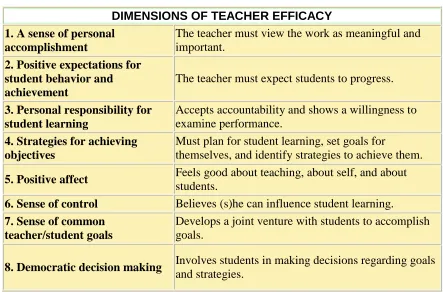
Table 2.2 Dimensions of Teacher Efficacy (Huitt, 2000)
DIMENSIONS OF TEACHER EFFICACY 1. A sense of personal
accomplishment
The teacher must view the work as meaningful and important.
2. Positive expectations for student behavior and achievement
The teacher must expect students to progress.
3. Personal responsibility for student learning
Accepts accountability and shows a willingness to examine performance.
4. Strategies for achieving objectives
Must plan for student learning, set goals for
themselves, and identify strategies to achieve them. 5. Positive affect Feels good about teaching, about self, and about
students.
6. Sense of control Believes (s)he can influence student learning. 7. Sense of common
teacher/student goals
Develops a joint venture with students to accomplish goals.
8. Democratic decision making Involves students in making decisions regarding goals and strategies.
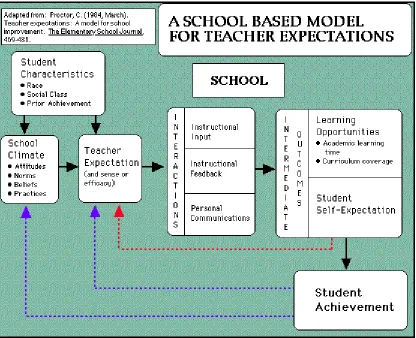
Table 2.3 A School Based Model for Teacher Expectations (Huitt, 2000)
There are variables which may influence an individual’s behavior (Rawlinson, 2005). “According to Bandura, cognitive/personal variables, environmental variables and the
demonstration of behavior work in interaction with one and other and each operate together to produce change.” (p. 63). Class size is one of the environmental variables that is within students’ environment which can influence behavior. According to Rawlinson,
powerful catalyst in producing change in an individual’s self concept, which could produce change in the behavior an individual demonstrates (p. 64).
A teacher’s training and professional development may be linked to teacher efficacy. A teacher may feel in control of his/her professional life if the teacher training received is deemed successful and worthwhile. The quality of a teacher’s work is directly linked to the control of that teacher’s professional life (Constantine).
A 1975 poll cited by Hallinan in 1985 found that teachers favored lowering class size in order to create better teacher morale and job satisfaction. Teachers believe that lower class sizes reduce their class work load, result in fewer discipline issues, and allow for more
individualized student instruction (p. 72). Poll results further indicate that students’ attitudes toward learning become positive in smaller classes resulting in higher student academic achievement (p. 72).
Cognitive Perceptual Theory
“Cognitive perceptual theory is designed to help us understand the sense that we have made of our life experiences. Cognitive perceptual theory (CP) is a theory of personality designed to explore the interrelationship between autobiographical memory and personality” (Bruhn, http://www.athealth.com/consumer/farticles/Bruhn.html, 1990).
people to perceive things in life differently. This is a personality difference among people (Bruhn, 1990).
Adults’ perceptions of life can be altered depending on what kinds of conditions they were exposed to as children. Adults who have grown up with attention deficit disorder, allergies, and/or unfair treatment as children have feelings about life that may be different than adults (even their siblings) who grew up in the same areas/houses due to different body conditions. People’s memories of their lives reveal what is expected of key events that happen in their lives. These expectations influence people’s perceptions in the present (Bruhn, 1990).
Summary of Chapter Two
In the 1980s, much research was conducted to discover whether class size played a role in student achievement. One major study was conducted in Tennessee, Project STAR (Student/Teacher Achievement Ratio), which found that students in smaller classes (with thirteen to seventeen students) significantly performed better than their peers who were in larger class sizes, as shown by results of standardized reading and math assessments (Agron, 1999).
However, there are several ways to reduce costs and still have small class sizes for students achieving below grade level. The use of tutoring in small classes for instruction is one way. To reduce cost, Title I funds can also be used to reduce class sizes, as can creative scheduling (Class Size Reduction Policy Brief #23).
Teacher efficacy is referred to as how a teacher feels about his/her teaching
(Tschannen-Moran, Woolfolk Hoy, & Hoy, 1998). Teachers with a greater sense of efficacy show an increased commitment to and enthusiasm for teaching, and are more likely to stay in the teaching profession (Tschannen-Moran, 2001).
CHAPTER THREE: METHODOLOGY
Introduction
Studies have been conducted on class sizes that have lowered class sizes to various numbers. There is not an exact and consistent definition including a set number of students included in large or small classes. Studies have been conducted on small classes, which have included twenty-three to thirteen students in one classroom (Pritchard, 1999). In this study, the researcher will define a “large class size” as one classroom of twenty-four or more students in one grade with one full-time teacher, and a “small class size” as one classroom of twenty or fewer students in one grade with one full-time teacher.
According to Pritchard’s (1999) findings in “Reducing Class Size,” when classes are reduced to fewer than twenty students, student academics improve. Regardless of the size of their classes, teachers face the issue of educating each student on an individual level. These teachers have demands placed upon them as they strive to reach each child in order to achieve student academic achievement and personal teacher success.
teachers was then cross-analyzed according to trends that emerged. A qualitative research methodology was chosen for this study in order to best collect and understand the teachers’ thoughts and feelings about their personal teacher efficacy.
This qualitative case study focused on the following central research question: Does class size impact a teacher’s sense of personal teacher efficacy, and, if so, what kind of impact does class size have on that teacher’s personal teacher efficacy?
Population Sample
The four participating teachers in this study were selected from the same school, a single-track year round suburban elementary neighborhood school in a school district in a southeastern state. Selection was based upon grade level and years of teaching experience. The four participants were teaching in the same school to keep the demographics of the study aligned. The participating elementary school (hereafter referred to as “Elementary School,” or “ES”) is located in a growing city, and currently has an approximate enrollment of 800 students in the 2011-2012 school year. ES currently includes grades kindergarten through fifth, with twenty-four students or fewer in each classroom in grades kindergarten, first, second, and third. There are approximately 120 students in kindergarten, approximately 144 students in grade one, approximately 144 students in grade two, and approximately 120 students in grade three. There are thirty-two full-time classroom teachers in grades kindergarten through fifth at ES.
classroom teachers are teaching with 24 students in each class. In second grade, six full-time classroom teachers are teaching with 23-24 students in each class. In third grade, five full-time classroom teachers are teaching with 24 students in each class. In fourth and fifth grades, four full-time classroom teachers are teaching with 27-32 students in each class.
In each kindergarten class, a full-time teacher assistant is utilized for approximately four hours per day as well. The teacher assistant is not with students during lunch (thirty minutes per day), recess (thirty minutes per day), and during their special area classes (such as art, music, and physical education, forty-five minutes per day). The teacher assistant is also not in the classroom for about twenty additional minutes per day due to serving lunch duty in the cafeteria. The full-time teacher assistants in kindergarten begin and end the day with the students.
In each first and second grade class, a part-time (half-day) teacher assistant is included in each of these class sizes for approximately two hours per day. The first grade teacher assistants are shared among first grade teachers, and the second grade teacher assistants are shared among second grade teachers. Each teacher assistant shares her time between two or three classrooms. First and second grade teacher assistants are not with students during lunch, recess, and during their special area class times.
In 2012, the state Teacher Working Conditions Initiative results were publicized, and ES was among these results. The Teaching Working Conditions Initiative is a series of questions sent out to all teachers in the state, and results are tabulated and compared against individual schools, counties, and state. At ES, 81% of teachers responded to the survey, in the school district almost 86% of teachers responded to the survey, and in the state just over 86% of teachers responded to this survey. In this survey, teachers at ES were asked certain questions regarding their satisfaction in their school in the following areas: time, facilities and resources, decision-making, leadership, and professional development. In most of those areas, ES scored at or above both the county and state average in teacher satisfaction. At times, teachers responded “strongly disagree” which raises their teacher non-satisfaction rate (NC’s Teacher Working Conditions Initiative, 2012).
Study Criteria
The researcher conducted an in-depth case study to determine if class size affects teacher efficacy. This case study served to examine whether or not a small or large class size has an impact on the way four particular teachers feel they teach, and the effects upon their personal teacher satisfaction.
The four teachers in this study (“Ms. Adams”- small class, “Ms. Bender”- small class “Ms. Cook”- large class and “Ms. Decker”- large class) were chosen according to the
following criteria:
teach in kindergarten, first, or second grade.
teach in a traditional school (“traditional” is a school that is not year round or charter school, and students attend 180 days a year) or single-track year round school
(“single-track year round” is a school that follows only one track of the year round calendar, and that has nine weeks of instruction followed by three week breaks).
teach with a either a half-day or full-day teacher assistant.
teach full time (arrives prior to students’ arrival and leaves after students depart at the end of the regular school day).
do not include a special education cluster (“cluster” refers to a group of special education students placed in a teacher’s classroom to be included in daily activities).
have taught in both a large (24 or more students) and a small (20 or fewer students) class size, both for an entire year, previously.
The difference in criteria between Ms. Adams/Ms. Bender and Ms. Cook/Ms. Decker was that Ms. Adams/Ms. Bender taught in small class sizes (20 or fewer students) and Ms. Cook/Ms. Decker taught in large class sizes (24 or more students). All other variables remained the same.
Explanation of Criteria
Grade and tenure. As most class size literature suggests, reducing class size is most effective when implemented in early grades (kindergarten, first, and second). Therefore, the teachers were chosen from these grades. It is important to this study that the teachers have had experiences teaching for four or more years and/or have received tenure in North
district, and implies that they are aware of methods of teaching, curriculum, and classroom management skills, which will add to the reliability of study.
Traditional/Single-track year round school. The teachers chosen for this case study were teaching in a traditional or single-track year round school setting. As this study’s aim is to represent the “norm” this eliminated multi-track year-round and charter schools as case study sites. The school site chosen had a full time principal and assistant principal, and followed what most adequately represents elementary schools.
Teacher assistants. The teachers selected to participate in this study each had either full-time or part-time teacher assistants. Teacher assistants are becoming more prevalent in schools across this southeastern state, and monies are allotted to hire these assistants in grades kindergarten, first, and second. Therefore, as this study took place in such a state, the teachers selected had full-time or part-time teacher assistants.
Full-time teachers. The teachers were full-time teachers, meaning that they were the primary teachers of all-day classrooms from the time the students arrived in the morning until they left in the afternoon. This demonstrated teacher familiarity of the classroom climate, academics, and discipline.
Special education clusters. The classrooms selected did not include special
special education students’ needs. Many times, there is only one classroom per grade level with a special education cluster of students. In this study, two classrooms on the same grade level are needed for comparison; therefore, the researcher chose a classroom without a special education cluster to keep the study standard. However, although there are no special education clusters within this study, each small and large classroom did include one, two, or three identified special education students who received special education services outside of the regular classroom on a daily basis.
Teacher class sizes. Ms. Adams and Ms. Bender were teaching in small class sizes (20 or fewer students) at the time of the study but have previously taught in a large (24 or more students) and a small class for at least an entire school year at one time in her teaching career. Ms. Cook and Ms. Decker were teaching in large class sizes (24 or more students) at the time of the study but have also previously taught in a small (20 or fewer students) and a large class size for at least an entire school year at one time in her teaching career. The teachers have had experience teaching in both class sizes so they have an understanding of how teaching in each class type is different and similar. All teacher participants have similar education status: none have completed the National Board Certification, nor have they completed a Master’s degree in education for this study.
Data Gathering
teachers’ small or large class size had an effect on their personal teacher efficacy. The participants in this study kept a journal for reflection which the researcher collected on a weekly basis.
Interviews. The researcher met with the participating teachers, separately, at the school directly after school had concluded for the day or in the hour directly prior to school beginning. The researcher interviewed each participant to determine if the teachers show a correlation between their small or large class size with their own personal teacher efficacy. At least two semi-structured interviews were conducted between the researcher and each teacher, with questions focusing on each teacher’s class size and how they feel about their teaching (Appendix A). Semi-structured interviews were created in order to direct the teachers. Questions were open-ended in order to provide for exploration opportunity. After the initial analysis of data, other issues to explore arose and the researcher focused the next interviews on these issues, using adapted questions from Bandura’s instrument (Appendix B) and from Tschannen-Moran’s instrument (Appendix C).
The first and second interview questions, “What is your background?” and “What events led you into education?” allowed the researcher to gather background information from the participant, helping to create a comfortable atmosphere. The third interview question, “How academically successful do you feel your students are and why?” directly related to teacher efficacy. The participant was asked this question to consider how she felt about the level of success of the students. The fourth question, “To what do you attribute this success or lack of success?” asked the participant to examine why she feels her students were or were not successful. The fifth question, “How much control do you feel you have over your students’ academic success?” delved directly into efficacy. This question asked the participant if she felt that she had any control over the students’ successes. The sixth question, “Considering the number of students in your class, explain why you feel you are able or unable to give each student individual attention” investigated if teachers felt they had appropriate skills to teach each individual student. This question opened the participant to discuss topics regarding attitudes and feelings of effectiveness during teaching.
After the first interview, the interview questions following were created according to where the last interview concluded (Appendix D). The interviews were scheduled
periodically between the conducted observations. Each interview concluded after the information provided by the participants reached the point of saturation. This design optimally had the researcher visiting the teachers on a weekly schedule for at least ninety school days.
from the interviews. Directly after the conclusion of each hour-long interview, the researcher had the interviews transcribed verbatim on a personal computer. The interviews were
analyzed according to common trends that emerged. With these trends, the researcher analyzed and coded each transcribed interview, and determined whether the information received was compelling enough to suggest a relationship between small or large class size and personal teacher efficacy exhibited by the teachers.
The researcher completed a contact summary form for each interview that was conducted. Using this form helped the researcher to keep track of each interview and aided in the retaining of details in each interview session (Miles & Huberman, 1994).
Observations. The researcher conducted this qualitative study over the course of
half the school year (approximately ninety school days). During this time frame, the researcher met with and observed all classroom teacher participants while they were
view the climate of the classroom, the teachers’ attitudes and dispositions, and how the teachers reacted to events in their classrooms.
Journals. The researcher distributed one journal to each participant to be kept for documentation two to three times per week (days selected were determined by participants). The provided journal was a soft-cover spiral-bound notebook with at least one hundred pages of lined paper. Each participant dated and recorded in the journal her classroom experiences and how she felt about the classroom activities that had occurred during the days. Each entry was dated and collected (by hand) by the researcher at the end of each school week. The purpose of these journal entries was to accurately describe the participants’ thoughts and feelings about their classes that they were teaching on a regular basis.
Analysis of Data
Analysis of the data collected was an ongoing process. The data were analyzed directly after it was gathered to ensure familiarity in the mind of the researcher. The researcher examined all of the data as a whole to determine whether or not it suggested a relationship between small class size and personal teacher efficacy. As suggested in Chapter Two, small classes have a positive impact on student achievement. Therefore, the findings from the data collected from Ms. Adams and Ms. Bender were constantly compared to the findings of Ms. Cook and Ms. Decker regarding small class size and teacher efficacy relating to small class size.
transcribed, she looked for general positive and negative phrases and/or words (examples of positive: happy about, comfortable with, excited about; examples of negative: frustrated with, angry about, anxious about, overwhelmed with) in the data. The researcher then highlighted the positive and negative phrases and/or words (positive phrases/words were highlighted in green and negative phrases/words were highlighted in yellow). This helped to identify key words relating to class size and teacher efficacy. As this coding was taking place, trends began to emerge that were common in the participants’ data. The researcher looked at these trends and documented them in tables. The researcher created four different tables, one for each participant, which were separated into the trends that emerged in their data, and then reviewed the positive and negative phrases/words in each participant’s table.
If there were more positive than negative phrases and/or words in the trends that arose regarding the class size’s impact on teacher efficacy, the researcher determined that the teacher had a high (positive) sense of teacher efficacy in her classroom. If there were more negative than positive phrases and/or words in the trends that arose regarding the class size’s impact on teacher efficacy, then the researcher determined that the teacher had a low
(negative) sense of teacher efficacy in her classroom. Occasionally, participant data showed an equal number of positive and negative phrases and/or words in a trend, which the
researcher referred to as a “balance” of positive and negative efficacy for the trend, and did not categorize the trend as solely positive or solely negative.
this study is completed, all data including transcripts, field notes, and taped interviews, will be destroyed.
Reliability of the Research
According to Golafshani’s Understanding the Reliability and Validity in Qualitative Research (2003), qualitative research is philosophical in nature and focuses on detailed interviewing which results in a different type of knowledge [than quantitative research]. Qualitative research uses methods such as interviews and observations that embrace the researchers’ involvement and role within the research. The researcher is directly involved and immersed in the research. According to Golafshani, the underlying focus of qualitative research is that change happens in the real world and therefore, a qualitative researcher should be present during these changes in order to record the events before and after the changes may occur. Golafshani also suggests that the qualitative researcher’s credibility depends on the efforts and ability of the researcher (2003).
Validity of the Research
The narrative presented in this study gives insight into the professional lives of four teachers in their small or large class sizes in a clear and detailed manner. The researcher shows clearly the thoughts and feelings of the teacher participants to connect class size with teacher efficacy. Others reading this study, who may be in similar situations regarding class size and teacher efficacy, may gain insight from the data and results discovered from this research. The convergence of multiple data sources, or triangulation, will be used extensively in this study.
Human Subjects
The researcher sought approval from the Institutional Review Board (IRB) in order to protect the teacher participants in this study (Appendix E). The researcher provided the university with an Informed Consent form (Appendix F) from the IRB to show full consent for this study.
Subjectivity
The researcher works with students on a daily basis. The benefits and drawbacks of both a small and large class size have been experienced by the researcher. The researcher has seen the academic benefits of a small class size on students, and has experienced
frustration with behavior and academics while involved in both a small and large class size in the researcher’s career in education.
The researcher believes that all students can learn, despite the size of the classroom in which curriculum is taught. The researcher upholds the belief that teachers should keep a positive classroom atmosphere, no matter the class size, in order to promote positive attitudes within each student, and in order to anticipate the successfulness of students who believe they can achieve success.
The participants in this study were informed that the focus of this study was on class size and teacher efficacy. On the Institutional Review Board Informed Consent Form given to each participant prior to conducting the study, the participants were notified that the researcher would be determining if there is a relationship between class size and teacher efficacy, and that they may become more aware of their own attitudes and feelings through their introspection of the collection of their data sources.
The researcher standardized the conditions of the study. First, the researcher was the sole observer and interviewer. Each piece of data was collected solely by the researcher conducting the study. Second, the instrumentation used for each interview was the same for all participants, including the same questions, to keep the study matched. Third, the location of the study remained the same for all participants, and each observation and interview took place in the participant’s respective classrooms. Finally, as it is noted that the researcher does possess biases in this study, the researcher established a professional yet comfortable rapport in the first interview (Fraenkel & Wallen, 2000).
Building a rapport during the first interview with each participant helped the
researcher to obtain as much information as possible from all participants in the study. The researcher also obtained as much information as possible to anticipate any extraneous events that may have possibly affected the study (example: school strikes). The researcher’s design of this study was an appropriate and proper design to control these threats to validity
(Fraenkel & Wallen, 2000).
Limitations of the Study