
ABSTRACT
WILSON, ANTHONY FRANK. Body Shape Classifications of Males 26 to 35 Using Size USA Three-Dimensional Scan Data (Under the direction of Dr. Cynthia Istook.)
Literature reviewed showed that consumers are frustrated with the lack of consistency of fit in regards to apparel. More than half of male consumers have difficulty finding good fit in apparel. Among the factors contributing to the fit and sizing issues found in the apparel industry are the lack of consistency in sizing across brands and a currently outdated
Inverted Trapezoid. There were subjects that could not be easily identified by the four shape categories. There were subjects whose body measurements did not fit within the broad shape categories, in addition to subjects that fell into more than one category.
Body Shape Classifications of Males 26 to 35 Using Size USA Three-Dimensional Scan Data
by
Anthony Frank Wilson
A dissertation submitted to the Graduate Faculty of North Carolina State University
In partial fulfillment of the Requirements for the degree of
Doctor of Philosophy
Textile Technology Management
Raleigh, NC 2016
APPROVED BY:
_____________________________________ __________________________________ Dr. Katherine Annett-Hitchcock Dr. Marguerite Moore
_____________________________________ __________________________________ Dr. Andre West Dr. Cynthia Istook
ii
DEDICATION
To my parents,
Columbus and Mamie Wilson: through the sacrifices you’ve made, support and encouragement you’ve given,
iii
BIOGRAPHY
Anthony Frank Wilson, son of Columbus Frank and Mamie (Rowe) Wilson, was born on September 22, 1973, in Taylorsville, North Carolina. He graduated from Alexander Central High School in Taylorsville, North Carolina in 1991. He then attended and
graduated from Appalachian State University with a Bachelor of Science degree in Clothing and Textiles with a minor in Marketing in 1997. After obtaining his undergraduate degree, he worked for several years in the apparel industry with Sag Harbor Dresses (New York, NY) as a production pattern assistant, Liancarlo (Miami, FL) as a creative design assistant/ fabric purchaser, Andasimo (New York) as a technical designer, and Taylor Togs (Micaville, NC) as a sample coordinator. He has created a variety of commissioned design works for various occasions and has collaborated with companies as a freelance designer. Through his freelance work with Heatherette, Anthony was provided the opportunity to create designs that have been in magazines and worn by singing artists such as Pink, Brittany Spears, and Shirley Manson. Through his freelance work with Golden Age Motorcycles, he had the opportunity to create a motorcycle jacket for singer Billy Joel.
In 2006, after returning to Appalachian State University and graduating with a Master of Science degree in Graphics and Imaging Technology, he opened a custom clothing design business called Anthony Wilson Designs, Inc. In 2009, in addition to his responsibilities with his design business, Anthony was offered the opportunity, via a nine month appointment position,to teach Textile and Apparel Merchandising courses at Appalachian State
iv
advisor, Dr. Cynthia Istook, who encouraged him to become an active member of the
International Textile and Apparel Association (ITAA) and to submit creative design works to various competitions for which he has received awards. Before graduating, Anthony began teaching full time at Appalachian State University in the Apparel Design and Merchandising program. In addition to his teaching responsibilities, Anthony continues to attend
v
ACKNOWLEDGEMENTS
It is with great pleasure that I acknowledge and thank those who have helped me throughout this research process both professionally and personally.
I would like to thank my advisory committee for the guidance and valuable feedback they’ve provided throughout the research and writing process:
o Dr. Cynthia Istook (Chair of my advisory committee): I do not have the words to adequately express how grateful I am to have you as my advisor and mentor. I could not have completed this research without your support, encouragement, and belief in me and my abilities. You have contributed greatly to my efforts toward achieving my goals. I could not have asked for a better advisor or mentor. You are the kind of mentor I hope to be in the future.
o Dr. Katherine Annett-Hitchcock: Thank you for your encouragement, feedback and your willingness to share resources that were helpful during the research process for my A1 paper as well as my dissertation.
o Dr. Marguerite Moore: The knowledge I gained in the Market Research in Textiles course I took with you proved to be valuable in this research process. Thank you for always providing supportive and encouraging feedback.
o Dr. Andre West: Thank you for your willingness to participate on my advisory committee. The insight and feedback you have provided has been extremely valuable.
vi Dr. Su-Jeong Hwang Shin: Thank you for sharing your research methodology and your
willingness to provide guidance through this process.
Shawn Bergman, Director of Research consultation at Appalachian State: Thank you for your invaluable assistance with statistical analysis. My research was greatly enhanced by your help.
Alexandria Albers, Research Consultant at Appalachian State: Thank you for your willingness to assist with statistical analysis.
Dr. David Bruner, Chief Technology Officer at Size Stream: Thank you for guidance in past research regarding shape classifications and 3D scanning technology.
Dr. Nancy Oliver, Associate Professor at Appalachian State: Thank you for your friendship, advice, constant support and encouragement over the years, and for your willingness to come to my defense or rescue if/when needed. I feel so very fortunate to have you in my corner.
Mary Ray: Thank you for your support, and encouragement. Your creativity and talent are inspiring. I’m so fortunate to have you as a colleague and friend.
Faculty in the Department of Applied Design and Family and Consumer Sciences at Appalachian State: Thank you for your encouragement, advice, and support.
Dr. Linda Secor: Thank you for being the impetus for me to start a career in higher education. I am also grateful for the skills I acquired under your instruction will completing my undergraduate studies at Appalachian State. You always pushed me to excel and helped to bring out the best in me.
vii
have poured into me. I am so proud and feel blessed beyond measure to be able to say you are my parents. I love you to the moon and back!
My family: It has been said that it takes a village to raise a child. I want to sincerely thank the members of my village for the love and encouragement you’ve given me throughout my life! Each of you have had a hand in helping me to become the man I am today (Grandparents: Charlie Rowe, Sr. and Ruth Wilson) (Extended family: Ola Sharpe, Mazo Linney, Myrtle Rowe, Helen Blanche Newland, Jim and Martha Richardson, Jean Flowers, Danny Rowe, Clifford Rowe, Hugh Rowe, Virginia McClain, Gina McClain, Sallie Carlton, Lynn Jones, and Carrie Stevenson).
o A special thank you to my aunt, the late Mary Alice Rowe, who always showed me unconditional love and encouraged me to be my best self.
o A special thank you to my cousin, the late Renee Flowers, who advised me on the necessary college prep coursework I needed to take in middle school and high school so that I would be prepared for college. Her guidance helped to lay the foundation for my future. I am forever grateful!
o My nephews Ellis, Nymir and godson Jacob: You’ve brought great joy to my life. I love you so much!
o Adam Shields: Thank you for your ever-present love, support, encouragement, and prayers.
viii
TABLE OF CONTENTS
LIST OF TABLES ... xi
LIST OF FIGURES ... xii
CHAPTER 1: INTRODUCTION ... 1
Rationale... 2
Research Objectives ... 3
Study Limitations ... 4
Assumptions ... 4
Definition of Terms ... 5
CHAPTER 2: REVIEW OF LITERATURE ... 7
Fit and Sizing Issues ... 7
Figure Classification for Males ... 15
Somatotyping ...15
Male Shape Descriptions ...18
Big, Tall, and Short...21
Body Shape Evaluation Software ... 22
Body Shape, Age, and Fit Preference ... 23
Three Dimensional Scanning ... 24
History ...24
ix
Data Analysis Techniques Used in Previous Research ... 29
Summary ... 30
CHAPTER 3: METHODOLOGY ... 32
SizeUSA Data Collection ... 32
Data Description ...33
Data Analysis ... 38
Research Question 1 ...39
Research Question 2 ...42
Research Question 3 ...43
CHAPTER 4: RESULTS ... 43
Subject Information ... 43
Identifying Male Body Shape Categories ... 45
Cluster Analysis ...45
Shape Descriptions ... 54
ASTM Sizing Standard Comparison ... 57
Summary of Results ... 62
CHAPTER 5: DISCUSSION, CONCLUSIONS AND FUTURE RESEARCH ... 65
Discussion of Results ... 67
Identification of Body Shape for Males 26 - 35 ...67
x
Comparison to ASTM D6240 Sizing Standard ...73
Response to research questions: ...74
Conclusions ... 76
Future Research ... 76
REFERENCES ... 78
xi
LIST OF TABLES
Table 1. Examples of Garment Fit and Style Descriptions ...8
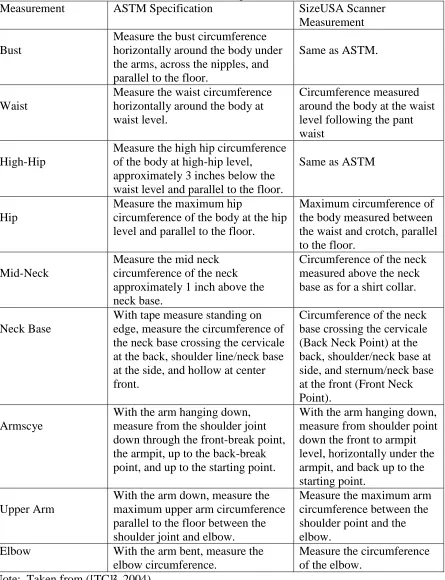
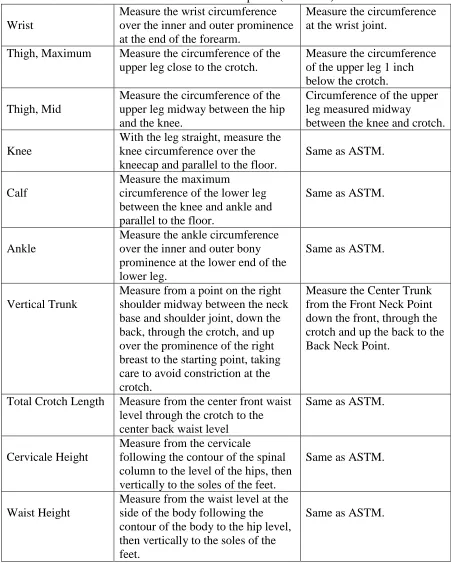
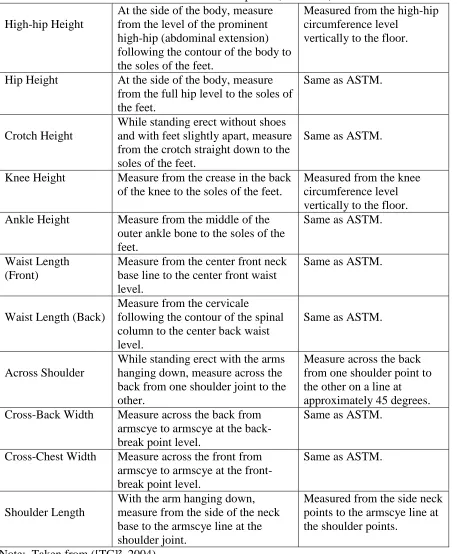
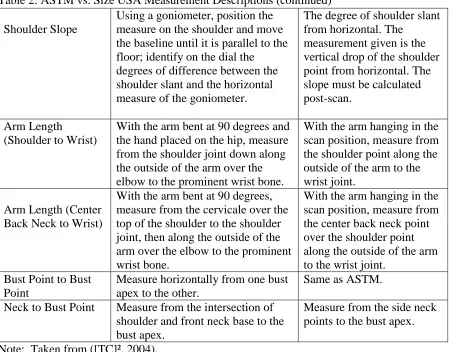
Table 2. ASTM vs. Size USA Measurement Descriptions ...12
Table 3. Somatotype Category Characteristics ...18
Table 4. Characteristics of Different Figure Type Terminology ...19
Table 5. Summary of Computer Programs in PROSOMAN for Somatotype Analysis ...22
Table 6. Drop Values ...40
Table 7. Cluster Means - Training Set ...46
Table 8. Cluster Means Comparison – Cluster 1 ...53
Table 9. Cluster Means Comparison – Cluster 2 ...53
Table 10. Cluster Means Comparison – Cluster 3 ...53
xii
LIST OF FIGURES
Figure 1: Size USA Demographics. ... 11
Figure 2: Photograph of a subject with Ectomorph somatotype. ... 16
Figure 3: Photograph of a subject with Mesomorph somatotype. ... 17
Figure 4: Photograph of a subject with Endomorph somatotype. ... 17
Figure 5:Photograph of a subject with Endomorph somatotype. ... 26
Figure 6: Photograph of a subject with Endomorph somatotype. ... 27
Figure 7: Example of virtual try-on solution. ... 28
Figure 8: SizeUSA Demographics for male subjects ages 26 to 35– Current Employment.. 34
Figure 9: SizeUSA Demographics for male subjects ages 26 to 35 – Education Level. ... 34
Figure 10: SizeUSA Demographics for male subjects ages 26 to 35 – Ethnicity. ... 35
Figure 11: SizeUSA Demographics for male subjects ages 26 to 35 – Income. ... 36
Figure 12: SizeUSA Demogarphics for male subjects ages 26 to 35 – Lifestyle. ... 36
Figure 13: SizeUSA Demographics for male subjects ages 26 to 35 – Scan Location.. ... 37
Figure 14: SizeUSA Demographics for male subjects ages 26 to 35 – Marital Status. . ... 37
Figure 15: SizeUSA Demographics for male subjects ages 26 to 35 – Size Perception.. ... 38
Figure 16: SizeUSA Demographics for male subjects ages 26 to 35 – Weight Perception. .. 38
Figure 17: Body measurement locations... 41
Figure 18: Ethnicity frequencies for the 788 male subjects ages 26 to 35. ... 44
Figure 19: Weight frequencies for the 788 male subjects ages 26 to 35. ... 44
Figure 20: Height frequencies for the 788 male subjects ages 26 to 35. ... 45
Figure 21: Grouping structure of clusters identified with the Training Set. ... 47
xiii
Figure 23: Point Cloud Images - Cluster 2 ... 48
Figure 24: Point Cloud Images - Cluster 3 ... 49
Figure 25: Subjects Incorrectly Identified as Cluster 1 ... 50
Figure 26: Subjects Incorrectly Identified as Cluster 2 ... 50
Figure 27: Subjects Incorrectly Identified as Cluster 3 ... 51
Figure 28: Grouping structure of clusters identified with the Validation Set. ... 52
Figure 29: Point Cloud Images of Clusters Identified by MSIT for Apparel ... 54
Figure 30: Body Shape Categories generated from Cluster Analysis... 56
Figure 31: Body Shape Categories generated from MSIT for Apparel. ... 56
Figure 32: Shape category frequencies for the 788 male subjects ages 26 to 35... 57
Figure 33: ASTM D6240 Proficiency – Cluster 1 (Oval)... 59
Figure 34: ASTM D6240 Proficiency – Cluster 2 (Rectangle). ... 60
Figure 35: ASTM D6240 Proficiency – Cluster 3 (Trapezoid). ... 61
1
CHAPTER 1: INTRODUCTION
In the production of apparel products, it is commonplace that designers, tailors, sample makers, and manufacturers obtain information about the proportions, size, and shape of the human body. Regardless of the apparel items being produced, even the simplest garment can require the need to obtain multiple measurements. Knowledge of the
dimensions of the bust/chest, waist, and hip are common for most garment production but in many cases additional information such as arm length, upper arm circumference, thigh circumference, waist to knee length, high hip circumference, or low hip circumference are required to achieve proper fit. Obtaining this information is an initial step in producing garments that fit properly.
2
The United Kingdom, The United States, Mexico, Korea, Thailand, and various other countries have conducted sizing surveys utilizing 3D scanning technology in addition to manual anthropometric measurements in an attempt to provide industry professionals with more accurate information regarding the size and shape of consumers (Deschamps, 2011; Lee, Istook, Nam, & Park, 2007; Shin, & Istook, 2007). Three dimensional scanning and the information it provides has been utilized and referenced in a wealth of studies conducted regarding body analysis and apparel fit for womenswear, however, there has been little to no significant research regarding body analysis and apparel fit for menswear (Chattaraman, Simmons, & Ulrich, 2013).
Rationale
Research has shown that consumers are frustrated with the lack of consistency of fit across apparel brands (Staples, 1995). More than half of male consumers have difficulty finding good fit in apparel (DesMarteau, 2000; Chattaraman, Simmons, & Ulrich, 2013). Among the factors contributing to the fit and sizing issues found in the apparel industry are the lack of consistency in sizing across brands and a currently outdated standardized sizing system. Current standardized sizing systems are based on averages and percentages that don’t fully capture every size and shape in the population and do not take into consideration that two consumers that are the same height and weight can have very different body shapes due to factors such as age, ethnicity, heredity, or health and fitness.
3
This market segment contributed to the $125.6 billion of revenue generated in the US menswear market in 2014 and is predicted to increase to $147.9 billion by 2019
(http://www.marketresearch.com/MarketLine-v3883/Menswear-United-States-9043151/). The current ASTM sizing table is for mature men 35 years of age or older
(https://www.astm.org/Standards/D6240.htm). At present, there is no ASTM sizing table available for men younger than 35 demonstrating the void for a sizing standard that addresses the body size and shape needs for men 26 to 35 years of age. Comparing the information generated in this study to current sizing standards will result in providing information to assist in meeting the needs of male consumers ages 26 to 35 more proficiently.
Research Objectives
The objective of this research was to determine male body shape classifications for men ages 26 to 35 utilizing 3D scan data. While there is research regarding female body shape classifications, research regarding men’s body shape classifications are lacking. This research will assist in establishing a baseline for further studies in this area.
Specific research questions include:
1. Can SizeUSA data collected for men be used to identify the predominant shapes of male bodies in the US for men ages 26 to 35?
4
3. Does the ASTM D6240 sizing system developed for males meet the measurement needs of the male subjects age 26 to 35 from the SizeUSA sizing survey?
Study Limitations This study will be limited by the following factors:
1. Measurement data used in this study was from the SizeUSA 3D scanning survey completed in 2003. However, it is the most current and largest sizing survey conducted in the United States to date.
2. Without expert human intervention, measurements extracted from 3D body scans may not be obtained at the exact location on the body, as would be necessary for accurate comparisons. This is an issue because the computer software does not have the tacit knowledge or the physical ability to determine specific body landmarks that might be hidden or indeterminate by muscle, fat, or other inhibitors.
3. SizeUSA 3D data does not include stomach and abdomen measurements for male subjects.
Assumptions The following assumptions will be made:
1. The SizeUSA data obtained from [TC]² scanners has an accuracy within an 1/8” when the measurements have been obtained at the correct location on the body.
5
Definition of Terms
Anthropometry: Refers to the measurement and proportions of the human body.
ASTM, formerly the American Society of Testing and Materials International: A not-for-profit organization that provides a forum for the development and publication of international voluntary consensus standards for materials, products, systems, and services (ASTM.org, 2015).
Civilian American and European Surface Anthropometry Resource Project (CAESAR): A sizing study conducted to generate 3-D data to update current anthropometric databases of civilian males and females age 18-65 of a variety of shapes and sizes
(http://www.sae.org/technicalcommittees/caesarhome.htm).
Mass Customization: A business strategy to produce a good or service that meets a specific customer’s need while maintaining the efficiency associated with mass production (Christy, 1993; Duray, Ward, Milligan, & Berry, 2000; Jiao &Tseng, 2001; Pine, B., Davis, & Pine II, B., 1999; Pine II, B., Victor, & Boynton, 1993).
Somatotype: The category of a person’s body structure or build in relation to how fat, muscular, or lean they are (Sheldon, 1954).
Ectomorph – Characterized as linear, thin, flat chested, and having lean muscles.
Endomorph – Characterized as round and soft, having a large abdominal region, stocky, and muscles are not well defined.
6
7
CHAPTER 2: REVIEW OF LITERATURE
While there is a wealth of information and research surrounding body size and shape classifications for women, research in these areas for men is lacking. Literature was
reviewed in the following areas:
Fit and Sizing Issues
Figure classification for males
Body evaluation techniques
Body shape and age
Three dimensional body scanning technology
Data analysis techniques
Fit and Sizing Issues
Apparel fit is an area of major concern for apparel industry professionals and consumers alike. One industry study reported that 62% of male consumers have difficulty finding good fit in apparel (LaBat, & Delong, 1990; DesMarteau, 2000; Chattaraman, Simmons, & Ulrich, 2013). This dissatisfaction contributes to loss revenue in retail sales of
apparel and apparel products (LaBat, 2007). There are a variety of factors that contribute to the fit and sizing issues found in the apparel industry. Among these factors are the lack of consistency in sizing across brands and a currently outdated standardized sizing system.
Research has shown that consumers are frustrated with the lack of consistency of fit across apparel brands (Staples, 1995; Sindicich, & Black, 2011). It is common for
8
not all adopted one standard method of sizing apparel, instead many attempt to appeal to consumer’s egos opting to attach a smaller size label to a larger garment as a strategy used to boost sales by helping consumers feel better about themselves when they’re able to wear a smaller size (Goldsberry, 1994; DesMarteau, 2000).
Brands such as Gap and Levi Strauss have attempted to address sizing issues in the sale of their jeans. Many of the style category names used by both brands give consumers an indication of how a particular jean style is going to fit in a fashion sense. In addition to providing descriptive style category names such as Skinny, Slim, Bootcut, Straight, Relaxed, and Standard, these brands also provide consumers with additional general information regarding the fit of each style category (see Table 1) (http://www.gap.com/;
http://www.levi.com/US/en_US/). While the fit of each style category is described relative to the body (size and shape) that the garment has been designed for, it does not identify what the perfect measurements would be to achieve that fit.
Table 1. Examples of Garment Style and Fit Descriptions
Jean Style Gap Fit Description Levi Fit Description Bootcut A classic fit with a flared leg
Mid rise
Slim through the thigh with a classic boot-cut
Relaxed Ample room throughout
Mid rise
For guys who like their jeans with a little more room
Skinny Fashion-forward and fitted
Low rise
Slimmest from hip to ankle
Slim Not too tight, not too baggy
Low rise
Cut close, but not too skinny, for a modern look
Standard Straightforward fit with a little more room
Mid rise
N/A
Straight The happy medium of all fits
Mid rise
9
Another contributing factor to issues in fit and sizing is the outdated standardized sizing system currently used as the basis for sizing apparel. A study by Ruth O’Brien and William Shelton in 1941 was used as a basis for a commercial standard which led to the development of the American Society of Testing and Materials International (ASTM) apparel sizing system currently used for women in the US today (O’Brien & Shelton, 1941;
Devarajan, 2003). This sizing system was developed to assist in grouping the most
commonly occurring human body sizes into categories. Because this system was based on a study comprised primarily of young Caucasian women in the 1940s, it is not a true
representation of every body size, shape, and proportion that was present in the entire population in regards to demographic factors such as age and race in the 1940s and likewise does not represent the differences present in body size, shape, and proportion in the current population due to the demographic changes that have occurred within the past 74 years (Ashdown, & Dunne, 2006; Devarajan, 2003; Giovis, 2007; Simmons, 2002; Simmons, & Ulrich, 2013). In addition, the grade rules for the current standards are based on averages
and percentages that don’t fully capture every size and shape in the population and does not take into consideration that two consumers that are the same height and weight can have very different body shapes.
The limited literature regarding the fit and sizing in men’s apparel indicates that standardized sizing for men evolved from measurements taken of soldiers during the American Civil War for the mass production of military uniforms
10
1941, these male sizing standards are comprised primarily of young Caucasian male soldiers resulting in body size, shape, and proportion information that did not represent the entirety of the population of its time nor does it represent the differences present in body size, shape, and proportion in the current population due to the demographic changes that have occurred since the 1800s.
In an attempt to gain more current anthropometric data there have been a variety of sizing surveys conducted in the United Kingdom, the United States, Mexico, Korea, and Thailand utilizing 3D scanning technology in addition to manual anthropometric
measurements(Deschamps, 2011; Lee, Istook, Nam, & Park, 2007; Shin, & Istook, 2007). The CAESAR study, a sizing study organized and conducted by the Society of Automotive Engineers and the U.S. Air Force from 1998 to early 2000, utilized 3D scanning technology to collect anthropometric data from a diverse sample of men and women, ages 18 to 65 of various sizes and shapes. The sample consisted of 2,500 subjects from the United States and 2,500 subjects from Europe. Data collection methods were standardized to ensure the database could be consistently updated and expanded
(http://www.sae.org/technicalcommittees/caesarhome.htm, 2015; [TC]², 2004).
11
time and cost associated with taking on such a task manually. A sample was selected consisting of over 10,000 adults of which approximately 37% were men and 63% were women from 13 U.S. cities. The sampling strategy used modelled approximate height and weight distribution of a previously valid study by the National Health and Nutrition Examination Survey III. Prior to being scanned, subjects completed a questionnaire that identified their age, sex, ethnicity, zip code, annual household income, marital status, body structure, lifestyle, education, employment, preferred clothing sizes, preferred stores, and types of clothing worn ([TC]², 2004; Zernike, 2004). Demographic data obtained from the questionnaire is shown in Figure 1. A description of the primary measurements obtained from subjects 3D scans in comparison the ASTM measurement descriptions are shown in Table 2.
12
Table 2. ASTM vs. Size USA Measurement Descriptions
Measurement ASTM Specification SizeUSA Scanner
Measurement Bust
Measure the bust circumference horizontally around the body under the arms, across the nipples, and parallel to the floor.
Same as ASTM.
Waist
Measure the waist circumference horizontally around the body at waist level.
Circumference measured around the body at the waist level following the pant waist
High-Hip
Measure the high hip circumference of the body at high-hip level,
approximately 3 inches below the waist level and parallel to the floor.
Same as ASTM
Hip
Measure the maximum hip
circumference of the body at the hip level and parallel to the floor.
Maximum circumference of the body measured between the waist and crotch, parallel to the floor.
Mid-Neck
Measure the mid neck circumference of the neck approximately 1 inch above the neck base.
Circumference of the neck measured above the neck base as for a shirt collar.
Neck Base
With tape measure standing on edge, measure the circumference of the neck base crossing the cervicale at the back, shoulder line/neck base at the side, and hollow at center front.
Circumference of the neck base crossing the cervicale (Back Neck Point) at the back, shoulder/neck base at side, and sternum/neck base at the front (Front Neck Point).
Armscye
With the arm hanging down, measure from the shoulder joint down through the front-break point, the armpit, up to the back-break point, and up to the starting point.
With the arm hanging down, measure from shoulder point down the front to armpit level, horizontally under the armpit, and back up to the starting point.
Upper Arm
With the arm down, measure the maximum upper arm circumference parallel to the floor between the shoulder joint and elbow.
Measure the maximum arm circumference between the shoulder point and the elbow.
Elbow With the arm bent, measure the elbow circumference.
Measure the circumference of the elbow.
13
Table 2: ASTM vs. Size USA Measurement Descriptions (continued) Wrist
Measure the wrist circumference over the inner and outer prominence at the end of the forearm.
Measure the circumference at the wrist joint.
Thigh, Maximum Measure the circumference of the upper leg close to the crotch.
Measure the circumference of the upper leg 1 inch below the crotch. Thigh, Mid
Measure the circumference of the upper leg midway between the hip and the knee.
Circumference of the upper leg measured midway
between the knee and crotch. Knee
With the leg straight, measure the knee circumference over the kneecap and parallel to the floor.
Same as ASTM.
Calf
Measure the maximum
circumference of the lower leg between the knee and ankle and parallel to the floor.
Same as ASTM.
Ankle
Measure the ankle circumference over the inner and outer bony prominence at the lower end of the lower leg.
Same as ASTM.
Vertical Trunk
Measure from a point on the right shoulder midway between the neck base and shoulder joint, down the back, through the crotch, and up over the prominence of the right breast to the starting point, taking care to avoid constriction at the crotch.
Measure the Center Trunk from the Front Neck Point down the front, through the crotch and up the back to the Back Neck Point.
Total Crotch Length Measure from the center front waist level through the crotch to the center back waist level
Same as ASTM.
Cervicale Height
Measure from the cervicale
following the contour of the spinal column to the level of the hips, then vertically to the soles of the feet.
Same as ASTM.
Waist Height
Measure from the waist level at the side of the body following the contour of the body to the hip level, then vertically to the soles of the feet.
Same as ASTM.
14
Table 2: ASTM vs. Size USA Measurement Descriptions (continued) High-hip Height
At the side of the body, measure from the level of the prominent high-hip (abdominal extension) following the contour of the body to the soles of the feet.
Measured from the high-hip circumference level
vertically to the floor.
Hip Height At the side of the body, measure from the full hip level to the soles of the feet.
Same as ASTM.
Crotch Height
While standing erect without shoes and with feet slightly apart, measure from the crotch straight down to the soles of the feet.
Same as ASTM.
Knee Height Measure from the crease in the back of the knee to the soles of the feet.
Measured from the knee circumference level vertically to the floor. Ankle Height Measure from the middle of the
outer ankle bone to the soles of the feet.
Same as ASTM.
Waist Length (Front)
Measure from the center front neck base line to the center front waist level.
Same as ASTM.
Waist Length (Back)
Measure from the cervicale
following the contour of the spinal column to the center back waist level.
Same as ASTM.
Across Shoulder
While standing erect with the arms hanging down, measure across the back from one shoulder joint to the other.
Measure across the back from one shoulder point to the other on a line at approximately 45 degrees. Cross-Back Width Measure across the back from
armscye to armscye at the back-break point level.
Same as ASTM.
Cross-Chest Width Measure across the front from armscye to armscye at the front-break point level.
Same as ASTM.
Shoulder Length
With the arm hanging down, measure from the side of the neck base to the armscye line at the shoulder joint.
Measured from the side neck points to the armscye line at the shoulder points.
15
Table 2: ASTM vs. Size USA Measurement Descriptions (continued) Shoulder Slope
Using a goniometer, position the measure on the shoulder and move the baseline until it is parallel to the floor; identify on the dial the degrees of difference between the shoulder slant and the horizontal measure of the goniometer.
The degree of shoulder slant from horizontal. The
measurement given is the vertical drop of the shoulder point from horizontal. The slope must be calculated post-scan.
Arm Length
(Shoulder to Wrist)
With the arm bent at 90 degrees and the hand placed on the hip, measure from the shoulder joint down along the outside of the arm over the elbow to the prominent wrist bone.
With the arm hanging in the scan position, measure from the shoulder point along the outside of the arm to the wrist joint.
Arm Length (Center Back Neck to Wrist)
With the arm bent at 90 degrees, measure from the cervicale over the top of the shoulder to the shoulder joint, then along the outside of the arm over the elbow to the prominent wrist bone.
With the arm hanging in the scan position, measure from the center back neck point over the shoulder point along the outside of the arm to the wrist joint.
Bust Point to Bust Point
Measure horizontally from one bust apex to the other.
Same as ASTM. Neck to Bust Point Measure from the intersection of
shoulder and front neck base to the bust apex.
Measure from the side neck points to the bust apex. Note: Taken from ([TC]², 2004).
Figure Classification for Males Somatotyping
The earliest method for classifying the human body was developed by Hippocrates in an attempt to predict which body types were most likely to develop certain diseases.
(Simmons, 2002; Wells, 1983). These predictions were concerned with the relationship between an individual’s body shape and their health or lack thereof. Today, in addition to health concerns associated with body shape, there is also an interest in classifying body shape to assist in achieving proper fit for the apparel industry.
16
a person’s body structure or build in relation to how fat, muscular, or lean they are can assist in identifying which somatotype category they will fall into (Sheldon, 1954). Sheldon identified a variety of body types that fall within three Somatotype categories: Ectomorph, Endomorph, and Mesomorph (see Figures 2 through 4 and Table 3).
17
Figure 3: Photograph of a subject with Mesomorph somatotype. (Sheldon, 1954, p. 223)
18
Table 3. Somatotype Category Characteristics
Somatotype Category Characteristics
Ectomorph Thin body
Small frail bone structure
Narrow chest
Lean muscle
Fast metabolism
Difficulty gaining weight
Mesomorph Athletic body
Well defined muscles
Strong
Gains muscle easily
Gains fat more easily than ectomorphs
Chest is larger than waist
Narrow, low waist
Endomorph Round, soft body
Larger in the abdominal region
Stocky; muscles not so well defined
Slow metabolism
Difficulty losing weight
Note: Information obtained from the following: (Nkwocha, 2015; Simmons, 2002; Wells, 1983; Sheldon 1954)
Male Shape Descriptions
Scholarly, academic research regarding male shape descriptions appears to be nonexistent resulting in the use of somatotyping for male figure classification in addition to trend in popular press to classify the male form by comparing body shapes to geometric shapes ranging from the inverted triangle to the rectangle or comparing the body to fruits and vegetables such as beetroots, leeks, and parsnips or objects like snowmen (Chattaraman, Simmons, & Ulrich, 2013; Hawksley, 2014; Hughes Jones, 2013;
19
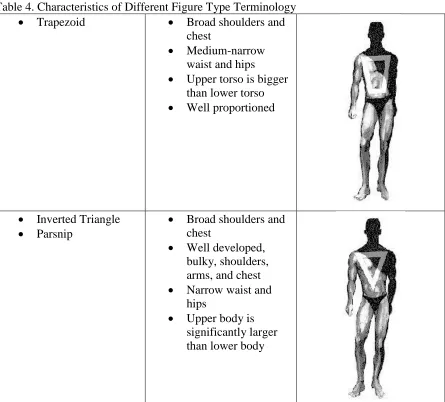
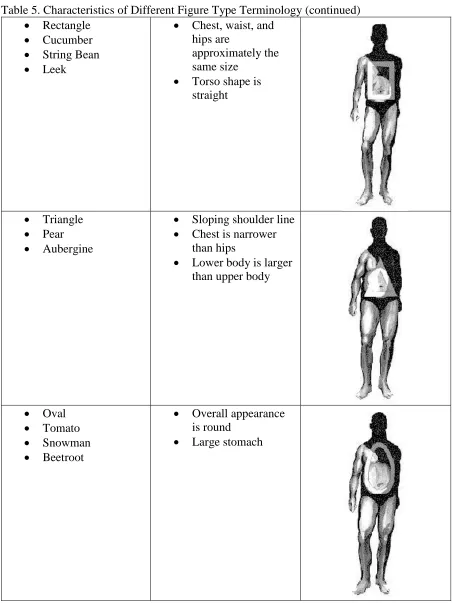
recently beginning to be explored for men. Identifying male shape categories could assist the apparel industry in developing clothing options better suited for the body size and shape of their target consumers. Communicating shape information along with size information would aid consumers in identifying apparel options best suited for their particular needs. Table 4 shows a comparison of male figure type terminology with illustrations.
Table 4. Characteristics of Different Figure Type Terminology
Trapezoid Broad shoulders and
chest
Medium-narrow waist and hips
Upper torso is bigger than lower torso
Well proportioned
Inverted Triangle
Parsnip
Broad shoulders and chest
Well developed, bulky, shoulders, arms, and chest
Narrow waist and hips
Upper body is significantly larger than lower body
20
Table 5. Characteristics of Different Figure Type Terminology (continued)
Rectangle
Cucumber
String Bean
Leek
Chest, waist, and hips are
approximately the same size
Torso shape is straight
Triangle
Pear
Aubergine
Sloping shoulder line
Chest is narrower than hips
Lower body is larger than upper body
Oval
Tomato
Snowman
Beetroot
Overall appearance is round
Large stomach
21
Table 6. Characteristics of Different Figure Type Terminology (continued)
Square
Brick
Broad all over
Note: Information and illustrations obtained from the following: (Hughes Jones, 2013; Hull, 2013; Rob-one, 2014; Style Makeover website, 2015)
Big, Tall, and Short
A trend in the apparel industry is to classify the male figure as big, tall, or short. A marketing research firm, NPD Group, providing consumer shopping trends and market research reports that “more than half of U.S. men self-identify as big, tall, or short, and they’re more willing to be marketed to as such” (Townsend, 2011, n.d.). A Bloomberg news article reported that one third of US men are obese (Townsend, 2011). These obese men are a key niche market that has been identified as the “Big & Tall” man. A variety of retailers from Walmart to Macy’s provide clothing specifically produced for the “Big & Tall” man. King Size and Destination XL are retailers that specialize in clothing for this niche market.
While many retailers provide apparel to the Big & Tall man, literature reveals that less attention is being paid to the short male consumer (Brock, 2013;
http://www.petermanningnyc.com/pages/about-us; http://www.originalshortees.com/about/).
22
male consumers 5’8” and under (http://www.petermanningnyc.com/pages/about-us;
http://www. original shortees.com/about/). Shortees focuses on providing t-shirts from small to XXL with lengths of either 25” or 26.5”. Peter Manning Five Eight New York has an array of apparel ranging from pants, shirts, and suits to active outerwear and accessories, all catering to the male consumer who is 5’8” and under.
Body Shape Evaluation Software
Literature suggests that there are a variety of software programs capable of evaluating somatotype variables. Aubry and Carter developed a computer program called
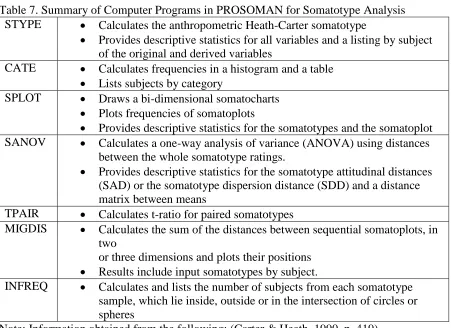
PROSOMAN. This program calculates somatotypes, descriptive and comparative statistics, and plotting somatocharts (Carter & Heath, 1990). Table 5 shows a summary of the
programs contained in PROSOMAN.
Table 7. Summary of Computer Programs in PROSOMAN for Somatotype Analysis STYPE Calculates the anthropometric Heath-Carter somatotype
Provides descriptive statistics for all variables and a listing by subject of the original and derived variables
CATE Calculates frequencies in a histogram and a table
Lists subjects by category
SPLOT Draws a bi-dimensional somatocharts
Plots frequencies of somatoplots
Provides descriptive statistics for the somatotypes and the somatoplot SANOV Calculates a one-way analysis of variance (ANOVA) using distances
between the whole somatotype ratings.
Provides descriptive statistics for the somatotype attitudinal distances (SAD) or the somatotype dispersion distance (SDD) and a distance matrix between means
TPAIR Calculates t-ratio for paired somatotypes
MIGDIS Calculates the sum of the distances between sequential somatoplots, in two
or three dimensions and plots their positions
Results include input somatotypes by subject.
INFREQ Calculates and lists the number of subjects from each somatotype sample, which lie inside, outside or in the intersection of circles or spheres
23
SOMATYPE is a basic somatotype calculating program compatible with personal computers. This program utilizes anthropometric data to perform somatotype calculations interactively (Simmons, 2002; Devarajan, 2003).
Additionally, SOMAMAN SAS is a program that was created on an IBM mainframe and is used to draw somatocharts and plot somatotype data (Simmons, 2002). This program has three components: One component places the data into SAS and prepares the data for plotting, a second component sets up the plot grid and creates the data set, and a third component plots the somatotype data (Simmons, 2002).
Body Shape, Age, and Fit Preference
Body shapes change with age. The human body is comprised primarily of bones, muscles, fat and water. People often gain weight as they age, which can alter body shape but even if weight is maintained with age, the relative proportion of weight that comes from each of the components that comprise the body can shift over time (Schewe, 1988; Smathers & Horridgem 1978-79; Kolata, 2016). The change in body shape that occurs due to age demonstrates the need for considering body shape in the production of apparel to achieve proper fit for all consumers in all age ranges.
In addition to shifts in body shape, age also affects consumer fit preferences
(Johnson, Ulrich, & Connell, 2008; Chattaraman, Simmons, & Ulrich, 2013). Consumers in younger adult age ranges often prefer more fitted clothing options and are more willing to adopt the most current trends while consumers in older adult age ranges tend to prefer looser fitting clothing options and are usually more concerned with comfort (Chattaraman,
24
This study focuses on male consumers between the ages on 26 and 35. This age range makes up 14% of the US male population with a median annual income of $57, 000, an approximate 5.6% increase in median income from 2014 to 2015 (http://census.gov/library/ publications/2016/demo/p60-256.html). This was the second highest percentage increase compared to the other age ranges. Reports from the Centers for Disease Control (2014) regarding aerobic activity and health status indicate this age range to be in prime health as compared to older age ranges
(http://ftp.cdc.gov/pub/Health_Statistics/NCHS/NHIS/SHS/2011-2014_AHB_Table_PA-3.pdf) (http://ftp.cdc.gov/pub/Health_Statistics/NCHS/NHIS/SHS/2014_SHS_Table_A-11.pdf).
Three Dimensional Scanning History
Three dimensional body scanning as we know it today evolved from scanning
technology developed in the 1960s. Early scanners were capable of capturing one side of the body at a time. The capability of scanners to surround the entire body was not realized until Magnant in 1985 (Simmons & Istook, 2003). The initial body scanners obtained data with the use of light, cameras, and projectors and were limited by the amount of labor and time required to operate. Throughout the mid to late eighties, further developments emerged with body scanned data being obtained by the use of white light, lasers, and shadowing.
25
design, manufacturing, and retail in addition to being used as a tool in research for sizing studies to develop more accurate size standards in the apparel industry (Deschamps, 2011; Lee, Istook, Nam, & Park, 2007; Shin, & Istook, 2007;
http://www.tc2.com/index_3dbodyscan.html). Current Applications
There are various scanning systems available globally. Four of the most commonly used technologies are laser, white light, millimeter wave, and Kinect or Infrared (Daanen & Ter Haar, 2013; Size Stream, 2015). In the current market, due to technological advances
there has been a reduction in costs and scanning technology is being applied in areas never seen before. It is becoming more common to see the use of this technology in the apparel, medical, health/fitness, security, and entertainment industries (Daanen & Ter Haar, 2013; Size Stream, 2013). Some lower cost scanning systems can also be used in hand held devices
that are intuitive enough to be used in consumer homes, require no additional extraction software, and output can be used to quickly produce avatars that could be used in virtual fashion applications (Daanen & Ter Haar, 2013; Size Stream, 2013).
26
points include its small footprint being similar in size to a normal retail environment dressing room, its safe and private, and can provide hundreds of automatic measurements in seconds. It also boasts that it can be utilized in body shape analysis, sizing surveys, and size
predictions, as well as assist in product development, mass customization, and virtual fashion applications (http://www.tc2.com/index_3dbodyscan.html). It is safe to assume this system is capable of all of its claims based on the fact that it utilizes Kinect technology, which research supports is capable of effectively providing accurate size and shape information while producing good resolution images.
Figure 5:Photograph of a subject with Endomorph somatotype. (Sheldon, 1954, p. 325)
27
Kunz, Fiore, & Campbell, 2002). A variety of research has shown that 3D body scanning is becoming a common tool used to obtain consistent and accurate body measurements that can assist in creating mass customized apparel (Ashdown & Choi, 2011; Carrere, Istook, Little, Hong, & Plumlee, 2002; Simmons, & Istook, 2003; Song, & Ashdown, 2010). Mass customization is a term that was first introduced in 1987 by Boston University Research Professor Stanley Davis and later refined and expanded on by Joseph Pine (Christy, 1993; Duray, Ward, Milligan, & Berry, 2000; Welborn, 2007). In Mass customization, businesses seek to produce a good or service that meets a specific customer’s need while maintaining the efficiency associated with mass production (Christy, 1993; Duray, Ward, Milligan, & Berry, 2000; Jiao & Tseng, 2001; Pine, B., Davis, & Pine II, B., 1999; Pine II, B., Victor, & Boynton, 1993). Research has indicated that combining 3D body scanning technology with computer aided design (CAD) technologies, industrial cutting machines, and unit production systems can be useful in assisting manufacturers with the ability to achieve automated custom fit (see Figure 6 and Figure 7)(Ashdown &Dunne,2006).
28
Figure 7: Example of virtual try-on solution. From http://www.hometrica.ch/en/technology.html#newsletter
Size Management. In the past, consumer clothing was hand crafted by dressmakers and/or tailors. Technological advances have shifted the production of apparel from custom clothing for the individual to the method of mass production and the use of standardized sizing systems (Bye, DeLong, & Labat, 2006). The problem with the current standardized sizing systems used in mass production is they do not accommodate every body size and shape that exists in the entire population (Ashdown, & Dunne, 2006; Chattaraman, Simmons, & Ulrich, 2013; Giovis, 2007). Sizing surveys conducted around the world utilizing 3D
scanning technology in addition to manual anthropometric measurements have provided industry professionals with more accurate information regarding the sizes and shapes of consumers in these populations (Deschamps, 2011; Shin, & Istook, 2007; Lee, Istook, Nam, & Park, 2007).
Retail. Retailers are now beginning to use 3D body scanners to give their customers a greater level of customer service and the opportunity to experience virtual fashion
29
customized to their own specific measurements and body shape that can be used to virtually try on clothing in a matter of seconds. Some software packages allow for avatars to be customized with hair, skin color, and facial features that resemble the customer scanned. Bodymetrics is a company that has introduced the idea of customers having the ability to convert their home TVs into a dressing room. They are exploring opportunities to integrate their PrimeSense 3D sensor solutions into future Smart TVs allowing customers the ability to capture 3D scan output in the comfort of their own homes (Bodymetrics, 2012).
Bloomingdale’s is an example of a retailer participating in the 3D body scan revolution by its implementation of a Bodymetrics 3D body scanner in their Stanford, CA location. The Bodymetrics scanner utilized by Bloomingdale’s uses Microsoft Kinect technology to produce scan output that gives women the ability to identify the brands of jeans that will work best for their particular size and shape (Christian, 2012).
Speedo is another example of a retailer utilizing 3D scan technology. They are now providing their customers at the Neal Street store in Covent Garden, London with the opportunity to utilize Size Stream body scanners to assist in size prediction (Size Stream, 2015).
Data Analysis Techniques Used in Previous Research
Literature reviewed indicates data analysis techniques used in research regarding body shape primarily has consisted of gathering data via questionnaire and sampling of a sample population. After data was collected it was then sorted and categorized based on measurements, proportions, and shape
30
present in the sample populations that were studied and a name was given to each body shape or type. Multivariate analysis has been used to assist in categorizing and validating results (Devarajan, 2003). Additional data analysis techniques used in previous research consists of the following:
Cluster Analysis to analyze shape sorting technique (Deverajan, 2003)
Factor Analysis to determine the important variables for grouping (Shin, Istook, & Lee, 2011)
Discriminant Analysis to determine if body measurement ratios accurately predict shapes better than random chance (Deverajan, 2003)
Multivariate Analysis to determine if there is a significant difference between defined shapes (Deverajan, 2003)
Principle Component Analysis to determine measurement variables important to identifying shapes and sizes (Xia, 2013)
Multivariate Regression to predict measurements based on Principle Component (Xia, 2013)
Summary
A comprehensive literature review has demonstrated there are issues regarding fit in the apparel industry. Outdated sizing standards based on young Caucasians in the 1940s do not take into account the varying body shapes that exist within the varying age ranges in the population in addition to other demographics factors that have occurred since the 1940s.
31
surrounding body size and shape classifications for women, however, research in these areas for men is lacking.
The research regarding body shape classifications for males primarily refers to or is based on three somatotype categories developed by American psychologist William Sheldon in the 1950s. In addition to the use of somatotyping, there is a trend in popular press to classify the male form by comparing body shapes to geometric shapes or comparing the body to fruits and vegetables.
32
CHAPTER 3: METHODOLOGY
The objective of this research was to determine male body shape classifications for men ages 26 to 35 utilizing 3D scan data. While there is research regarding female body shape classifications, research regarding men’s body shape classifications has been lacking. This research will assist in establishing a baseline for further studies in this area.
Specific research questions include:
1. Can SizeUSA data collected for men be used to identify the predominant shapes of male bodies in the US for men ages 26 to 35?
2. Based on literature review and the visual properties of the bodies within each shape, can a descriptive label be identified that would aid in an understanding of the shape differentiators?
3. Does the ASTM D6240 sizing system developed for males meet the measurement needs of the male subjects age 26 to 35 from the SizeUSA sizing survey?
SizeUSA Data Collection
Data from the SizeUSA National Sizing Survey was used in the research for this study. The SizeUSA National Sizing Survey was organized and conducted by [TC]2 from
33
18% = 46 to 55, 9% = 56 to 65, and 4% = 66+). The sampling strategy used modelled approximate height and weight distribution of a previously valid study by the National Health and Nutrition Examination Survey III. Prior to being scanned, subjects completed a questionnaire that identified their age, sex, ethnicity, zip code, annual household income, marital status, body structure, lifestyle, education, employment, preferred clothing sizes, preferred stores, and types of clothing worn ([TC]², 2004; Zernike, 2004). The reliability of the body scan data was validated by a comparison of scan measurements to manual
measurements ([TC]², 2004). Data Description
34
Figure 8: SizeUSA Demographics for male subjects ages 26 to 35– Current Employment. From [TC]². (2004).
Figure 9: SizeUSA Demographics for male subjects ages 26 to 35 – Education Level. From: [TC]². (2004).
35%
5% 15%
18% 13%
11%
1% 1% 0% Professional/Manager
Office/Clerical
Crafts/Labor/Farm
Service/Sales
Student
NotEmployed
Military
Homemaker
Retired
6%
24%
27% 30%
13% Less than high school
High School graduate
Some college or technical school
College Graduate
35
Figure 10: SizeUSA Demographics for male subjects ages 26 to 35 – Ethnicity. From: [TC]². (2004).
37%
20% 11%
13% 11%
8%
Non-Hispanic_White
Non-Hispanic_Black
Non-Mexican_Hispanic
Mexican_American
Asian
36
Figure 11: SizeUSA Demographics for male subjects ages 26 to 35 – Income. From: [TC]².
(2004).
Figure 12: SizeUSA Demogarphics for male subjects ages 26 to 35 – Lifestyle. From: [TC]². (2004).
40%
28% 19%
9% 4%
Under $25,00
$25,000 - $49,999
$50,000 - $74,999
$75,000 - $99,999
$100,000 or more
36%
14% 47%
3%
Very active
A Little less active
About as active as others
37
Figure 13: SizeUSA Demographics for male subjects ages 26 to 35 – Scan Location. From: [TC]². (2004).
Figure 14: SizeUSA Demographics for male subjects ages 26 to 35 – Marital Status. From: [TC]². (2004). 14% 11% 16% 1% 4% 6% 9% 5% 5% 9%
1% 7% 13%
Cary, NC
Columbia, MO
Dallas, TX
Miami, FL
New York, NY
Chattanooga, TN
Los Angeles, CA
San Francisco, CA
Portland, OR Lawrence, MA Winston-Salem, NC Buford, GA 44% 44% 1% 8% 5% Single Married Widowed
Single-Living with partner
38
Figure 15: SizeUSA Demographics for male subjects ages 26 to 35 – Size Perception. From: [TC]². (2004).
Figure 16: SizeUSA Demographics for male subjects ages 26 to 35 – Weight Perception. From: [TC]². (2004).
Data Analysis
For the purposes of this research, scan data obtained from SizeUSA for male subjects between the ages of 26 and 35 and the statistical and graphical functions of Microsoft Excel
4%
25%
31% 25%
11% 4%
Men Small
Men Medium
Men Large
MenXL
XXL/XXXL
MenBig/T
6%
50% 34%
10%
Underweight
About the right weight
A little overweight
39
and JPM statistical analysis software were used to answer three research questions. The following details the methodology used to approach each question:
Research Question 1
Can SizeUSA data collected for men be used to identify the predominant shapes of male bodies in the US for men ages 26 to 35?
To address this research question, male body shapes categories were identified based on SizeUSA scan data and using cluster analysis. SizeUSA measurement data collected from 788 male subjects age 26 to 35 was extracted from the total population of 3691 male subjects and was randomly divided into two groups each containing 394 subjects using Microsoft Excel. Group 1 was used as the training set and group 2 was used as the validation set.
A principle component analysis was ran on the whole data set of 788 males to
identify the important variables used in determining body shape. This analysis identified the chest (bust), waist, hip, and high hip measurements as the principle components that
40
stomach or abdomen measurements, therefore, for the purposes of this study, the chest (bust), waist, hip, and high hip measurements were used.
Step one. Using the training set, five drop values were calculated from the chest, waist, hip, and high hip measurements (see Table 6 and Figure 17). A drop value is the difference between two circumference measurements. Drop values are better indicators of body shape than are circumference values alone and are commonly used in the sizing for men’s tailored suits (Shin, Istook, Lee, 2011). These drop values were used to perform a cluster analysis to categorize male body shapes. The output from the cluster analysis was evaluated to determine if clusters were different. The training set was then divided by cluster. Point cloud images were randomly selected from each cluster. These point cloud images were visually evaluated to determine if the clusters identified were significantly different from each other and that the subjects in each cluster were similar. Input was given from individuals possessing knowledge of body shape, proportions, and the apparel industry.
Table 8. Drop Values
Variable Name Calculation
Drop 1 Chest – High Hip
Drop 2 Hip – High Hip
Drop 3 Waist – High Hip
Drop 4 Chest – Waist
41
Figure 17: Body measurement locations.
Step two. To validate findings, the five drop values calculated using the training set were calculated again using the validation set. These drop values were used to perform a second cluster analysis to categorize male body shapes for the validation set. The cluster means from this cluster analysis were compared to the cluster means derived from the training set. The validation set was then divided by cluster. Point cloud images were randomly selected from each of the validation clusters to allow visual evaluation of the male body shapes and comparison to the point cloud images from the training set.
42
use of this method for identifying shape clusters has been named, MSIT (Male Shape
Identification Technique) for Apparel. The Point cloud images were randomly selected from each cluster generated by MSIT. These point cloud images were visually evaluated and compared to the images grouped together by the cluster analysis.
Research Question 2
Based on literature review and the visual properties of the bodies within each shape, can a descriptive label be identified that would aid in an understanding of the shape
differentiators?
To address this question, a comprehensive look at literature revealed that in most cases, labels assigned to male body shape categories were the result of visual comparisons to geometric shapes, fruits and vegetables, and objects (Hawksley, 2014; Hughes Jones, 2013; http://www.style-makeover-hq.com/male-body-shape.html; Rob-one, 2014). This
information provided direction in identifying a descriptive label for the male body shapes represented in each cluster resulting from the analysis in research question 1.
For the purposes of this study, geometric shapes were used as the labels for the male shape clusters. Point cloud images from each cluster identified in the cluster analysis performed in research question 1 were compared to commonly known geometric shapes and were assigned a descriptive label that corresponds with the geometric shape they were most like.
43
Research Question 3
Does the ASTM D6240 sizing system developed for males meet the measurement needs of the male subjects age 26 to 35 from the SizeUSA sizing survey?
To address this question, the same five drop values calculated using the training and validation sets in research question 1 were calculated using ASTM D6240 measurement data. The minimum and maximum values in each ASTM drop were used to create a range for each drop. These ranges were used in a formula to determine whether or not any of the ASTM drops satisfy the measurement needs of all the male subjects age 26 to 35 in the SizeUSA data in each of the shape categories (See Appendix E). It is important to note that the current ASTM D6240 measurement data available is for males ages 35 and older. There are no ASTM standards currently available for adult males under the age of 35
(https://www.astm.org/Standards/D6240.htm).
CHAPTER 4: RESULTS
The primary objective of this research was to determine male body shape classifications for men ages 26 to 35 utilizing 3D scan data. This research will assist in establishing a baseline for further studies in this area. The following presents the analysis of the data used to address the research questions for this study.
Subject Information
For the purposes of this research, SizeUSA data for male subjects between the ages of 26 and 35 were used as a basis for the research in this paper. The number of subjects totaled 788.
44
with a range of 68.5 pounds to 383 pounds (see Figure 19). The average height of subjects was approximately 5’9” tall with a range of 4’11½” to 7’tall (see Figure 20).
Figure 18: Ethnicity frequencies for the 788 male subjects ages 26 to 35.
Figure 19: Weight frequencies for the 788 male subjects ages 26 to 35. 293
154
88 101 88
45
Figure 20: Height frequencies for the 788 male subjects ages 26 to 35.
Identifying Male Body Shape Categories Cluster Analysis
Training set. The first objective of this research was to use SizeUSA data to identify the predominant shapes of male bodies in the US for males age 26 to 35. SizeUSA data for 788 male subjects between the ages of 26 and 35 was randomly divided into two groups each containing 394 subjects using Microsoft Excel. Group 1 was used as the training set and group 2 was used as the validation set. Using the training set, the chest, waist, hip, and high hip measurements were used to calculate five drop values. These drop values were used as the variables in a cluster analysis. Based on the cluster analysis that was performed, it was determined that there were three distinct clusters of body shapes for males in this age range. Table 7 identifies the descriptive measurement data for the subjects that fell within each
0 100 200 300 400
<5' 5'-5'9" 5'9"-6' >6' 4
369
307
108
Nu
m
b
er
o
f
Su
b
jec
ts
46
cluster in the training set. These numbers demonstrate the collective difference between the subjects separated within each cluster. The Dendrogram in Figure 21 shows the grouping structure of the 3 clusters.
Table 9. Cluster Means (in inches) - Training Set
Drop 1 Drop 2 Drop 3 Drop 4 Drop 5
Cluster Count C-HH drop H-HH drop W-HH C-W H-W
1 221 3.099 1.501 -2.187 5.286 3.688
2 96 1.218 2.379 -4.193 5.411 6.573
47
48
Data for the training set was then run through a separate cluster analysis process. Point cloud images of specific subjects were randomly selected from each cluster and assembled together separately on three posters labelled Cluster 1, Cluster 2, and Cluster 3 (see Figure 22 through Figure 24). Each poster was approximately 35 inches in height and 60 inches in width. The three posters were hung side by side on a wall to be visually evaluated by a small team of individuals with expertise in the apparel industry, body shape, and body proportions. The small team consisted of two academics both possessing extensive apparel industry experience and the third a recent apparel design and merchandising college graduate possessing retail and showroom
Figure 22: Point Cloud Images - Cluster 1
49
Figure 24: Point Cloud Images - Cluster 3
experience. The small team was asked to enter the room where the three posters were hung and to visually evaluate each poster and determine if the subjects identified within each cluster were similar. The small team was also asked to visually evaluate the posters and determine if the three clusters were significantly different.
The small team determined that there were a group of similar shaped subjects within each cluster, however there were some that seemed to be identified incorrectly, but also did not necessarily fit within the shapes identified by the other clusters. Figures 25 through 27 show subjects circled in red that were determined by the small team to be identified
50
Figure 25: Subjects Incorrectly Identified as Cluster 1
51
Figure 27: Subjects Incorrectly Identified as Cluster 3
52
Figure 28: Grouping structure of clusters identified with the Validation Set.
53
shape categories to identify the predominant shapes of male bodies in the US within the specified age range.
Table 10. Cluster Means Comparison (in inches) – Cluster 1
Drop 1 Drop 2 Drop 3 Drop 4 Drop 5
Set Count C-HH drop H-HH drop W-HH C-W H-W
Training 221 3.099 1.501 -2.187 5.286 3.688
Validation 135 2.411 0.992 -1.849 4.260 2.841
Table 11. Cluster Means Comparison (in inches) – Cluster 2
Drop 1 Drop 2 Drop 3 Drop 4 Drop 5
Set Count C-HH drop H-HH drop W-HH C-W H-W
Training 96 1.218 2.379 -4.193 5.411 6.573
Validation 116 1.877 2.100 -3.996 5.873 6.096
Table 12. Cluster Means Comparison (in inches) – Cluster 3
Drop 1 Drop 2 Drop 3 Drop 4 Drop 5
Set Count C-HH drop H-HH drop W-HH C-W H-W
Training 77 5.207 3.295 -3.381 8.588 6.676
Validation 143 5.013 2.827 -3.071 8.084 5.898
54
variables that were vital when describing the different shapes that represented the 26-35 aged subjects within the SizeUSA dataset. An outcome of this process was the identification of an additional shape category that had not been identified by the cluster analysis processes (see Figure 29).
Figure 29: Point Cloud Images of Clusters Identified by MSIT for Apparel
Shape Descriptions
The second objective of this research was to identify a descriptive label for each shape category that would aid in an understanding of the shape differentiators. Literature reviewed provided direction in identifying a descriptive label for the male body shapes represented in each cluster or shape category for this research. For the purposes of this study, the male shape categories were assigned names based on geometric shapes (see Figure 30 and Figure 31).



![Bis[hydrotris(4 chloro 3,5 dimethylpyrazolyl)borato]nickel(II)](data:image/gif;base64,R0lGODlhAQABAIAAAP///wAAACH5BAEAAAAALAAAAAABAAEAAAICRAEAOw==)