EVALUATING STUDENTS’ PATTERN OF
INTERACTION IN ONLINE COURSES
Juhazren Junaidi and Zaidatun Tasir
INTRODUCTION
The primary focus in the research of online learning is interaction, which is central to an educational experience (Garrison & Cleveland-Innes, 2005). Although interaction alone does not represent
participation (Garrison, Anderson & Archer, 2000), however interaction could promote participation and engage students in learning (Hrastinski, 2009). Researchers have widely agreed that in an e-learning environment, students could learn better by participating (Hrastinski, 2009). As distinguished by Moore (1989) that there are three dimensions of interaction in an e-learning environment: learner-instructor, learner-content and learner-learner. It has been suggested that participation of a student can be measured by accumulating the interactions that occurred in an e-learning forum (Davies & Graff, 2005; Lipponen et al., 2003).
One of the key challenges in e-learning is to encourage participation (Bento & Schuster, 2003), which means that students need to be encouraged to interact online. By participating, students will find themselves taking part in the learning process. Vonderwell and Zachariah (2005) noted that through interactions, students will become interdependent, able to share learning goals and information, creating path towards effective learning. Previous research had indicated that participation when measured as interaction with peers and instructors, stimulated and encouraged perceived learning (Hrastinski, 2008).
ONLINE INTERACTION
There have been many research on interaction in online learning environments in promoting learning (e.g., Moore, 1989; Swan, 2002). In this age of communication and internet technologies, a lot of our daily routines involve online interactions. In education, interaction is essential. Previous research had shown that students’ interaction with instructors and peers could improve learning (e.g., Kearsley, 1995; Picciano, 2002; Wilson & Stacey, 2004). The more the students interact the more it could contribute to learning. In an online learning environment, students’ learning process could be triggered through sharing perspectives and information, seeking feedback and clarifying ideas through interaction with instructor and peers (Wilson & Stacey, 2004). Students and instructors today can take the advantage of continuous connectivity to the internet as a medium for interactivity as well as maintaining their engagement to the learning environment.
The work of Swan and Shih (2005) is in line with Garrison and Cleveland-Innes (2005) where it was argued that interaction by itself is not a guarantee that students are engaged cognitively in the learning through online environments. However, Garrison and Cleveland-Innes did mention that interaction is a crucial variable in online learning. In addition, by providing the students with proper structure and guidance through interaction, they will be able to maintain engagement and be responsible for their learning. Furthermore, the students themselves need to engage themselves with the discussions, reflecting and construct meaning to produce understanding, which can be achieve in online learning through interactions. Active interactions will allow the construction of new ideas and concepts thus enabling learning to occur (Wilson & Stacey, 2004).
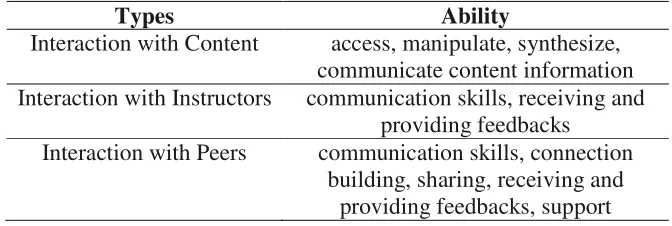
Table 1 Types of Interactivity in Online Learning (Moore, 1989)
Types Ability
Interaction with Content access, manipulate, synthesize, communicate content information Interaction with Instructors communication skills, receiving and
providing feedbacks Interaction with Peers communication skills, connection
building, sharing, receiving and providing feedbacks, support
INTERACTION WITH CONTENT
There are a significantly huge amount of information content that are available and can be obtained from the internet or World Wide Web. Students and instructors as well can benefit from these available contents. While computers are known to have the capability to assist learning (Taylor, 1980; Cummings, 1988: Kim & Baylor, 2006), the content for online learning needs to be managed and arranged
accordingly (Geisert & Futrell, 2000) to create a learning environment so that it would trigger
interactions towards achieving the learning outcomes (Taylor, 2003; Baharum, Tretiakov & Kinshuk, 2007; Baylari & Montazer, 2009). The design for online learning is known as being extrapolated from the field of Computer-Based Learning (CBL) and multimedia design (Swan, 2002).
INTERACTION WITH INSTRUCTORS
Learning requires students to interact with instructors. In online learning environment, the similar interaction is needed (Swan, 2002) although there is lacking in terms of social presence (Short et al., 1976; Picciano, 2002). It was mentioned that due to the distance and the delayed timing of asynchronous interaction has lead to the social presence gap. However, through online learning environment students are given the opportunity to grow their communication skills as well as receiving and providing
and modeling social presence factors to enhance and encourage meaningful interaction in online learning (Stacey, 2002). Clearly there are issues within the student-instructor interaction context that need
attention and created research opportunity in the field of online pedagogy.
INTERACTION WITH PEERS
Interaction with peers seems to be the most influential aspect of online learning (Swan, 2000). Students are found to be more comfortable interacting with peers and are able to communicate effectively even when online. The theory of social constructivism emphasizes that students will be able to learn and construct their own perspectives though interaction within a group of similar goals (Wilson & Stacey, 2004). Vonderwell and Zachariah (2005) noted that through interactions, students would become interdependent, able to share learning goals and information, creating path towards effective learning.
INCREASING THE AMOUNT OF INTERACTION
In their research, Davies and Graff (2005) found that there is a correlation between interaction rate and passing rate. They concluded their study by mentioning that students who failed in the course modules have less interaction than those students who achieved passing grades. It shows that when a student is more involved in the interaction or discussion, it is more likely that they will become engaged and their learning rate would increase. It is essential for students to actively communicate and providing feedback within an online learning environment (Sims, 2003).
Swan (2002) emphasized that in an e-learning environment, instructor interaction and student-student interaction are significantly important. As e-learning environments enables student-students and
instructors to interact asynchronously, the two important interactions can engage students in discussions related to the course by allowing them to view, observe and reflect upon other coursemates’
contributions before coming up with their own and post them. The more involved the students are, the more they will learn through this process. They will be able to comment, give suggestions as well as quote references related to the topic while contributing to others’ learning.
EVALUATING INTERACTION
In a particular e-learning environment, researchers will find various kinds of interaction exhibited by students. Among the common are such as sharing perspectives and information, seeking feedback and clarifying ideas, giving comments, quoting references and others. To measure these interactions much more accurately, a researcher will need a coding technique that could assist in understanding the
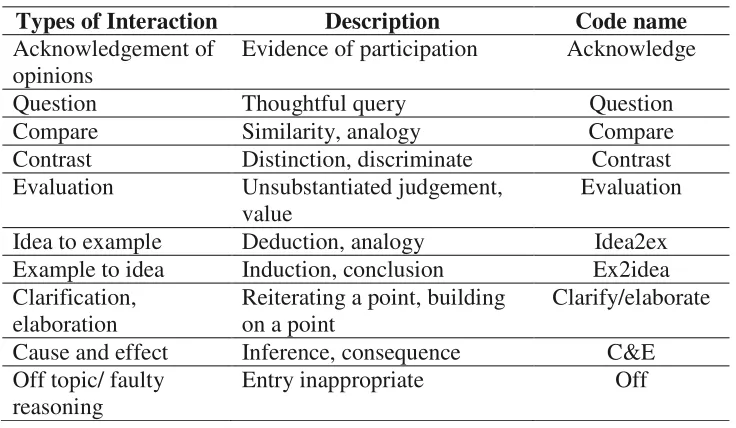
Table 2 Categorical Codes for Online Messages
Types of Interaction Description Code name Acknowledgement of
opinions
Evidence of participation Acknowledge
Question Thoughtful query Question
Compare Similarity, analogy Compare
Contrast Distinction, discriminate Contrast Evaluation Unsubstantiated judgement,
value
Evaluation
Idea to example Deduction, analogy Idea2ex Example to idea Induction, conclusion Ex2idea Clarification,
elaboration
Reiterating a point, building on a point
Clarify/elaborate
Cause and effect Inference, consequence C&E Off topic/ faulty
reasoning
Entry inappropriate Off
These 10 types of interaction by MacKinnon (2000) has been referenced by other scholar 54 times to date. Weltzer-Ward (2011) had performed analysis on 51 coding schemes that are commonly used in researching asynchronous online discussions, and MacKinnon’s categorical codes was one of the schemes that have been used.
It is also worth to note that for the categorical codes as described in Table 2, the code names can be altered by researchers to suit their own study. MacKinnon (2003) had stated that the categorical codes or ‘cognotes’ could be used to evaluate interactions as well as using the findings to improve interactions to promote better learning.
ONLINE PARTICIPATION
According to Wenger (1998) it has been argued that participation is an intrinsic part of learning. As in interaction, participating requires the students to be involved in the learning process. Hrastinski (2009) mentioned that in online education, enhacing participation is crucial and the importance was agreed by many researchers. He also quoted Saljo (2000, in Hrastinski, 2009) that participation and learning is an inseparable process which happen during students interaction with others. In his previous work,
Hrastinski (2008) noted that participation can be measured as interaction with peers and instructors. Other research such as Davies and Graff, (2005) and Lipponen et al. (2003) suggest that participation of a student can be measured by accumulating the interactions that occurred in an e-learning forum.
enable researchers to distinguish meaningful interactions from the rest to establish participation.
CONCEPTUALIZATION OF PARTICIPATION
Hrastinski (2009) had conceptualized the participation of online learners. There are four suggested characteristics of online learner participation: (1) Participation is a complex process of taking part and maintaining relations with others, (2) Participation is supported by physical and psychological tools, (3) Participation is not synonymous with talking or writing, and (4) Participation is supported by all kinds of engaging activities.
As a complex process of taking part and maintaining relations with others, Hrastinski referred to
Wenger’s (1998) definition of participation which partly referring to sense of community. Humans have the need to participate and feel attached to belong to a community. People who have a strong attachment to a group are more likely to participate and help others. Thus, when researching online learner
participation the importance of group attachment should not be forgotten. In terms of e-learners, they learn from each other and from the surrounding culture and environment.
In terms of support, participation needs physical and psychological tools to allow interaction and learning to occur. Physical tools such as computers and other peripherals supports the technical
requirements of an online interaction. Whereby psychological tools such as language or motivation helps students to communicate and interact in a manner that is acceptable by each discussion member. These physical and psychological tools has made it possible for students to communicate more frequently with peers and instructors, which in turn enables learners and teachers to share more experiences and
information, and engage in meaningful learning.
As important as the above mentioned, participation is not synonymous with talking or writing.
Participating is not necessary by talking or writing. Hrastinski noted that “we may participate socially even at times when we are not engaged in a conversation with someone”. Interacting through written messages can be considered as one aspect of online learner participation. What most important in achieving participation is the students give emphasis on understanding and perform reflective observation.
Participation is supported by all kinds of engaging activities. Hrastinski (2009) kept to the assumption that online learner participation drives learning. Learning online is not focused on individual but more of a a situation in which two or more people learn or attempt to learn something together through activities such asdoing, talking, thinking, feeling and belonging which contributes to participation.
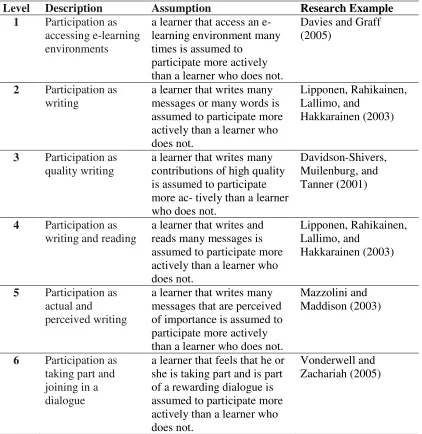
Table 3 Hrastinski’s (2008) Six Levels of Participation
Level Description Assumption Research Example
1 Participation as accessing e-learning environments
a learner that access an e-learning environment many times is assumed to
participate more actively than a learner who does not.
Davies and Graff (2005)
2 Participation as writing
a learner that writes many messages or many words is assumed to participate more actively than a learner who does not.
Lipponen, Rahikainen, Lallimo, and
Hakkarainen (2003)
3 Participation as quality writing
a learner that writes many contributions of high quality is assumed to participate more ac- tively than a learner who does not.
Davidson-Shivers, Muilenburg, and Tanner (2001)
4 Participation as writing and reading
a learner that writes and reads many messages is assumed to participate more actively than a learner who does not.
Lipponen, Rahikainen, Lallimo, and
Hakkarainen (2003)
5 Participation as actual and
perceived writing
a learner that writes many messages that are perceived of importance is assumed to participate more actively than a learner who does not.
Mazzolini and Maddison (2003)
6 Participation as taking part and joining in a dialogue
a learner that feels that he or she is taking part and is part of a rewarding dialogue is assumed to participate more actively than a learner who does not.
Vonderwell and Zachariah (2005)
APPROACHES FOR STUDYING ONLINE LEARNER PARTICIPATION
participation. Most studies reported the number of messages that are obtained from an e-learning forum. There are also research that divided the data from logs into sub-categories to objectively evaluate them in describing the degree of the students’ participation.
The second unit analyzes the message or unit quality, which is more of a qualitative nature. Previous research had commonly categorized each message or unit according to their own classification scheme which developed uniquely to every research (e.g., Lipponen et al., 2002).
The third is learner perceptions, which in most research utilized interview and survey as means of data collection. This unit analyzes both the students as participants and also the comments of the students from the e-learning forum.
Messages length is another unit that is measured in an online learning participation research. Hrastinski (2008) noted that previous research had reported this unit as word count or lines of information (e.g, Woods & Keeler, 2001; Masters & Oberprieler, 2004). It was also suggested that the analysis for this unit includes messages that were identified as productive and have substantive contributions.
The fifth unit is system accesses or logins where participation is measured by looking at how often students accessed the e-learning site and their activity logs.
Another unit of anlysis that was suggested is read messages. Students are considered participating if they login to the e-learning system and interact by reading messages and giving their responses to them. Next is time spent as a unit of analysis. This can be conducted by using surveys or log data to view the time spent interacting in the e-learning site. The time spent is then compared to the amount of activities the students are involved with such as posting comments, perceived reading and reflecting and viewing course content.
Concluding the review, Hrastinski (2008) identifed that research approaches for studying online participation can range from simple frequency counts to learner perceptions. The approach adopted by researchers depends on the researcher themselves as well as their research objectives. There are of course benefits and limitations associated with each of the identified conceptions and approaches. Participation in general can be defined as a complex phenomenon, where measuring participation could be much more difficult with the given conceptualizations. It is also at the same time possible to evaluate by measuring the suggested unit of analysis.
CONCLUSION
This paper examines MacKinnon’s (2000) Categorical Codes for Online Messages which contains 10 specific interaction that can assist in categorizing students messages online. Hrastinski’s (2009)
REFERENCES
Baharum, H.I., Tretiakov, A. and Kinshuk 2007. Teaching Business English to Adult Malay Learners: The Potential of Agent Technology. Australasian Society for Computers In Learning In Tertiary Education (ASCILITE, 2007)- Conference Proceeding.
Baylari, A. and Montazer, Gh.A. 2009. Design a Personalized E-Learning System Based on Item Response Theory and Artificial Neural Network Approach. Expert Systems with Application, 36, 8013-8021.
Bento, R. and Schuster, C. 2003. Participation: The online challenge. In A. Aggarwal (Ed.), Web-based education: Learning from experience (pp. 156-164). Hershey PA: idea Group Publishing. Cummings, R. 1988. Small-group Discussions and the Microcomputer. In Jones, A. and Scrimshaw, P.
(Eds.), Computers in Education. Philadelphia: Open University Press. 147-158.
Davies, J. and Graff, M. 2005. Performance in e-learning: online participation and student grades. British Journal of Educational Technology, 36(4): 657-663.
Garrison, D. R., Anderson, T. and Archer, W. 2000. Critical Inquiry in a Text-Based Environment: Computer Conferencing in Higher Education. The Internet and Higher Education, 2(2-3): 87-105.
Garrison, D. R. and Cleveland-Innes, M. 2005. Facilitating Cognitive Presence in Online Learning: Interaction Is Not Enough. The American Journal of Distance Education, 19(3: 133-148.) Geisert, P.G. and Futrell, M.K. 2000. Teachers, Computers and Curriculum: Microcomputers in the
Classroom, 3rd Edition. Allyn & Bacon.
Hrastinski, S. 2008. What is online learner participation? A literature review. Computers & Education, 51: 1755–1765.
Hrastinski, S. 2009. A theory of online learning as online participation. Computers & Education, 52: 78– 82.
Kearsley, G. 1995. The nature and value of interaction in distance learning. In Proceedings of the invitational research conference in distance education: Towards excellence in distance education: A research agenda. PA: The Center for the Study of Distance Education.
Kim, Y. and Baylor, A.L. 2006. A Social Cognitive Framework for Pedagogical Agents as Learning Companions. Educational Technology, Research and Development, 54(6), 569-596.
Lipponen, L., Rahikainen, M., Lallimo, J., and Hakkarainen, K. 2003. Patterns of Participation and Discourse in Elementary Students’ Computer-Supported Collaborative Learning. Learning and Instruction, 13(5): 487-509.
MacKinnon, G.R. 2000. The Dilemma of Evaluating Electronic Discussion Groups. Journal of Research on Computing in Education, 33(2):125-131.
MacKinnon, G.R. 2003. Inter-rater Reliability of an Electronic Discussion Coding System. Technology, Pedagogy and Education, 12(2): 219-230.
Masters, K. and Oberprieler, G. 2004. Encouraging Equitable Online Participation Through Curriculum Articulation. Computers and Education, 42(4): 319-332.
Moore, G. 1989. Three Types of Interaction. The American Journal of Distance Education, 3(2): 1-6. Picciano, A.G. 2002. Beyond Student Perceptions: Issues Of Interaction, Presence, And Performance In
An Online Course. Journal of Asynchronous Learning Networks, 6(1): 21-40.
for flexible and online learning. Distance Education, 24(1), 85-103.
Stacey, E. 2002. Social Presence Online: Networking Learners at a Distance. Education and Information technologies, 7(4): 287-294.
Swan, K. 2002. Building Learning Communities in Online Courses: the importance of interaction. Education, Communication & Information, 2(1), 23-49.
Swan, K. and Shih, L. F. 2005. On the nature and development of social presence in online course discussions. Journal of Asynchronous Learning Networks 9(3): 115-136.
Taylor, R.P. 2003. Reflections on The Computer in the School. Contemporary Issues in Technology and Teacher Education. 3(2), 253-274.
Vonderwell, S. and Zachariah, S. 2005. Factors That Influence Participation in Online Learning. Journal of Research on Technology in Education, 38(2): 213-230.
Weltzer-Ward, L. 2011. Content analysis coding schemes for online asynchronous discussion. Information Systems, 28 (1): 56-74.
Wenger, E. 1998. Communities of Practice: Learning, Meaning, and Identity. Cambridge, Cambridege University Press.
Wilson, G. and Stacey, E. 2004. Online interaction impacts on learning: teaching the teachers to teach online. Australasian Journal of Educational Technology, 20(1): 33-48.