SCHOOL-WIDE POSITIVE BEHAVIOR SUPPORT IMPLEMENTATION AS IT RELATES TO REFERRAL REDUCTION AMONG STUDENTS OF COLOR IN
AN IN-SCHOOL SUSPENSION PROGRAM: PERCEPTIONS OF KEY STAKEHOLDERS
A Record of Study by
ROBERT LEWIS LONG, III
Submitted to the Office of Graduate Studies of Texas A&M University
in partial fulfillment of the requirements for the degree of DOCTOR OF EDUCATION
May 2012
School-Wide Positive Behavior Support Implementation as it Relates to Referral Reduction among Students of Color in an In-School Suspension Program: Perceptions of
Key Stakeholders
SCHOOL-WIDE POSITIVE BEHAVIOR SUPPORT IMPLEMENTATION AS IT RELATES TO REFERRAL REDUCTION AMONG STUDENTS OF COLOR IN
AN IN-SCHOOL SUSPENSION PROGRAM: PERCEPTIONS OF KEY STAKEHOLDERS
A Record of Study by
ROBERT LEWIS LONG, III
Submitted to the Office of Graduate Studies of Texas A&M University
in partial fulfillment of the requirements for the degree of DOCTOR OF EDUCATION
Approved by:
Chair of Committee, Gwendolyn Webb-Johnson Committee Members, Norvella Carter
Virginia Collier Jim Scheurich Head of Department, Fred Nafukho
May 2012
ABSTRACT
School-Wide Positive Behavior Support Implementation as it Relates to Referral Reduction among Students of Color in an In-school Suspension Program: Perceptions of Key Stakeholders. (May 2012)
Robert Lewis Long, III, B.S.I.S., Stephen F. Austin State University; M.Ed., Sam Houston State University
Chair of Advisory Committee: Dr. Gwendolyn Webb-Johnson
The purpose of this qualitative study was to examine a problem of practice present in an actual school district. The study examined School-Wide Positive Behavior Support Implementation as it relates to the recidivism rates of students of color in the in-school suspension setting. Over the course of one school year, the perceptions of seven middle school teachers, three parents, and two administrators were explored in a suburban middle school in Southeast Texas.
Although In-school suspension programs exist in every American public school to some degree, little research has been done in regards to the academic outcomes associated with those who are frequently placed in this campus based disciplinary alternative educational placement. In many of these “placements” many of the students assigned are not afforded access to instructional materials, supplies, or a certified teacher. Since the enactment of the federal No Child Left Behind Act (2001), the
achievement gap has been discussed and studied. However, few studies have been done to understand how the current practices in in-school suspension contribute to the
achievement gap specifically among students of color.
This study examined key stakeholder’s perceptions of School-Wide Positive Behavior Supports, and In-school suspension as a vehicle for referral reduction and removal of middle school students from their academic setting. The participants were
“key-stakeholder” parents, teachers, and administrators who educate students at Caden Middle School. Findings from this problem of practice indicated that not only was the campus not imploring consistent practices and interventions related to and promoted by the SWPBS system in the in-school suspension setting, many of the staff members teachers and administrators alike did not adhere to the philosophical tenants of the SWPBS within the general classroom setting. The research presented in the record of study, identified gaps in both perceptions and understanding among key stakeholders in regards both in-school suspension and the school-wide positive behavior support systems at Caden Middle School. Results of this from this problem of practice found a severe disconnect in understanding the purpose and rationale of SWPBS among the administrators, teachers, and parents that participated in this study. Furthermore, the
variance in the “self-sense making” done by each of the stakeholder groups after campus leadership failed to communicate, support, and sustain district expectations for program implementation with fidelity. Initiatives implemented through the investigation of the questions related to this problem of practice assisted in providing relevant professional development to re-solicit teacher and staff buy-in, prioritization of organization goals,
and engaging teacher leadership to re-implement SWPBS to countermand system
DEDICATION
“For I know the plans I have for you, declares the Lord, plans for welfare and not for evil, to give you a future and a hope”… (Jeremiah 29:11).
This body of work is dedicated to my future, and my legacy…my family.
First to my son, Robert Kaden Long, IV, he is the fourth person with this name. He is the motivation for my self-efficacy. Son, you come from a proud family of educators. Remember, education is freedom. Always seek to know the why.
To the memory of my grandparents, Robert L. Long, Sr. & Janie Boykin Long, who cultivated generations of success despite the obstacles of the segregated South; To my mother, Florida Long-Harris, thank you for your high expectations, and hard-work ethic. It is my hope that I meet your expectations as a son;
To my wife, Kari Mosca Long; thank you for always loving me for the man that I hope to be, and sacrificing so much to help us get there. Your dedication as my wife and to our family is something that I never dreamed possible. Your love is my life.
ACKNOWLEDGEMENTS
“Iron sharpens iron, and one man sharpens another”.
(Proverbs 27:17)
What an adventure this doctoral experience has been. There are many supporters to whom I am thankful and appreciative for their guidance and support:
My committee chair, Dr. Gwendolyn Webb-Johnson, my ambassador of “Qwan” has
served as a mentor and my personal “Dumbledore,” coaching me and guiding me throughout this process. My first experience with this extraordinary professor of color was one that forced me to re-evaluate and challenge my cultural identity. The
knowledge, perspective, and general goodness of Dr. Jim Scheurich instantaneously made me respect and admire him as a man of great intellect. How blessed I am to have received instruction from him. Dr. Virginia Collier is who I call a “trail-blazer”, is awe-inspiring as one of the first female superintendents in the State of Texas. Her knowledge of the superintendency, as well as her effectiveness as a networker, politician, and
“access-grantor,” provided me with opportunities that assisted me in “closing the achievement gap”. To Dr. Norvella Carter, where can I begin…I have long admired
your work, as well as your commitment to students at both of the universities to which my experience has known of you. Your students, much like your research speaks for itself, I am honored to have experienced your wisdom, guidance, and support.
To the Executive Leadership Program, CoHort-I: I would like you to know that the man I am today is because each and every one of you supported and loved me to the best
of your ability and comfort level. Some, I know better than others, but it was my hope to continue to take advantage of the opportunity to connect with, and develop relationships with each of you, despite the inevitable cliques that form due to social reproduction, and personal ontological issues.
I want you to know that I love and support the following persons: Dr. Cheryl T. Henry, Dr. Jan Nell, Dr. Wanda Baker, Jim Russell, Mindy Peper, Sylinda Howard, Mary Ellen Edge, Karen Rodriguez, Karee Gregg, Patty Mooney and Robin McGlohn, Dwayne Ostrova McGary, and Kim Rhodes Monette. Thank you all for helping me learn and grow as a professional and a person.
To my “band of brothers”: I would like to take some time to acknowledge the people who were not born into my family, but they love me unconditionally, therefore
indoctrinating them into classification of family. These gentlemen have served as sounding boards for my stress, growing pains, frustration, and support for times that I considered giving up.
“A friend loves at all times, and a brother is born for adversity”.
(Proverbs 17:17)
Jason Michael Burdine 02’: You have served as my council and confidant, listening
while always uplifted me and my family with positivity, support, and honesty. You taught me the power of forgiveness, and what that means for life. I have always respected and admired your dedication to your family, and the effort and purpose that you place on making the most of every experience. It is in that spirit that I call you my brother.
Joshua Bryan Daniels 03’: An unlikely brotherhood at first, now you are family. I am honored to count you as an ally. Josh, you have taught me the importance and value of
loyalty and “giving your word”, and what that looks like when carried to fruition. Your dedication to my family and mutual respect for our friendship warrants this
acknowledgement. As I watch you daily, it makes me proud to be an Aggie as your actions exemplify what an Aggie should be. You do the Corp of Cadets proud. All I can say is, “BOOM” bubba.
Miguel Sebastian Perez, III: We led a school from a TEA rating of academically acceptable, to a recognized rating, the first time in the school’s history. The district gained national recognition for instructional initiatives to reduce the achievement gap, as we consumed many boxes of “Popeye’s” chicken. I am proud to now call you brother. Your life story is a truly the purpose of our great country. You are an inspiration and teach me daily. One of the most important lessons you have taught is the value and importance of never underestimating your self-worth, believing in yourself, and working to make yourself better with every opportunity.
Stephen Gray Allison: When I began this program we were neighbors. As I am completing this journey I have come to find that we are now brothers. Stephen, you have taught me the importance of sacrificing for the benefit of making your family better. Thank you for the occasional study break by taking in a concert or just meeting to talk. I appreciate your support and friendship.
Ostrova Dewayne McGary: Thank you for removing the “rose-colored” lens to which I
viewed the world prior to this doctoral program. I originally mistook your intentions as hostile when all the time, you were just working to get me to see that I was an obstacle to my own professional capacity. Sometimes brutal honesty can lead to a life-changing experience. I thank you for being the catalyst to that change. I am so glad that I was blessed to have befriended a brother as wise, experienced, and loyal as you have been to me.
“Her children rise up and call her blessed”
(Proverbs 31:2)
To my principals, all very strong and proud female instructional leaders of color, my
“Mothers of Education”: Linda Asberry, Wanda Cole-Walker, and Dr. Cheryl T. Henry. I appreciate each of you for your willingness to take me under your wings, while
allowing me to instruct, learn, and grow under each of your administrations. Each of you has provided me with the tools, and platform to continue to grow and prosper in the field of education administration. I am forever in debt to each of you for your dedication and service to me.
TABLE OF CONTENTS
Page
ABSTRACT ... iii
DEDICATION ...vi
ACKNOWLEDGEMENTS ... vii
TABLE OF CONTENTS ...xi
LIST OF FIGURES ... xv
LIST OF TABLES ...xvi
CHAPTER I INTRODUCTION………1
Scenario-Sentencing to In-School Suspension ... 1
Context of the Study ... 4
Caden Middle School ... 5
Statement of the Problem ... 8
Purpose of the Study ... 10
Significance of the Study ... 13
Zero Tolerance ... 14
In-School Suspension ... 16
State Data Regarding In-School Suspension ... 18
District Data Regarding In-School Suspension ... 20
PBIS: Positive Behavior Intervention and Support ... 20
Discipline of Students of Color ... 23
Methodology ... 24
Phenomenological Framework ... 25
Participants ... 27
Historical Data ... 28
Interview Process ... 29
Data Collection, Analysis and Coding ... 29
Research Questions ... 31
Role of the Researcher ... 32
Operational Definitions ... 34
Significance of the Study ... 38
CHAPTER Page
II REVIEW OF THE LITERATURE ... 41
Introduction ... 41
National Perspectives of Disparities in In-School Suspension ... 42
Mutua’s Black Masculinity ... 45
Educator Perceptions ... 47
Background and History Related to Educator Perceptions ... 48
Influential Factors ... 51
Special Education and In-School Suspension ... 52
Double Standard ... 55
Zero Tolerance ... 57
Historical Perspectives of In-School Suspension ... 59
Curriculum Perspective Regarding the Use of ISS ... 72
History of Approaches for Addressing Problem Behaviors ... 78
School-Wide Positive Behavior Support ... 80
Ripple Effects ... 87
Ripple Effects Research Background ... 87
Conclusion ... 89 III METHODOLOGY ... 91 Introduction ... 91 Method ... 95 Research Questions ... 95 Participants Involved ... 96 Procedures ... 99 Data Collection ... 101 Data Analysis ... 102 Triangulation ... 107
Data Analysis Procedures ... 107
Validity ... 108
Trustworthiness of the Study ... 109
Ethics ... 109
Summary ... 110
IV FINDINGS ... 111
Findings ... 111
Caden Middle School ... 113
Research Time Line ... 116
CHAPTER Page Parent Participants ... 120 Phelicity Phoversity ... 120 Rosa X ... 121 Felicia Acres-Mule ... 122 Teacher Participants ... 123 Matt Inewknow ... 123 Getrude Cash ... 123 Chadwick Freespeak ... 124 Condinono Rice ... 125 Tara Founder ... 125 Genny Switchboard ... 126 Nomo Tran-Ning ... 127 Administrator Participants ... 128 Kathleen Janeway ... 128 Alfred Buddy ... 129 Research Questions ... 130 Summary ... 139
V DISCUSSION AND CONCLUSIONS ... 141
Introduction ... 141
Relationship of this Study to the Research Literature ... 150
Educator Perceptions ... 150
Special Education and In-School Suspension ... 151
Middle School Philosophy ... 153
Zero Tolerance ... 153
In-School Suspension ... 154
Response to Intervention ... 155
School-Wide Positive Behavior Supports ... 157
Recommendations for Future Practice and Research ... 158
What I Learned from this Study ... 158
Conclusion ... 163
Implications for Future Research ... 163
REFERENCES ... 166
APPENDIX A ... 193
APPENDIX D ... 197
APPENDIX E ... 198
APPENDIX F ...199
APPENDIX G ... 200
LIST OF FIGURES
FIGURE Page
1 BTISD-Demographics 2010-2011 ... 4 2 Caden Demographics 2010-2011 ... 6 3 Texas Demographics 2009-2010 ... 10
LIST OF TABLES
TABLE Page
1 Parent Participants ... 96 2 Teacher Participants ... 96 3 Administrator Participants ... 97
CHAPTER I INTRODUCTION
Scenario-Sentencing to In-School Suspension
DiVonte is an eighth grader at Caden Middle School, who has expended more time receiving consequences for subjective behavior than participating in the technical core of instruction this school as a result of his behavioral infractions, he is often sentenced to ISS. As other administrators and teachers will testify, DiVonte is considered a disruptive element in the classroom. Like many African American male students in America, he is perceived as unmanageable and insolent. He objects to all authority, rejects the notion of following clear instructions, and “acts out” in class on a consistent basis. Subsequently, over the past eight months, DiVonte has served 70% or 123 total days of his instructional school days assigned to in-school suspension (ISS). He is allowed to come to school with his peers, nonetheless, because of his “objectionable”
classroom performance; he spends his days in ISS with other peers who have also been discharged from their classrooms. Even though he has not physically been in his
appropriate instructional setting for weeks, his yearly attendance record only shows two absences and no unexcused absences.
In the ISS or (DMC) classroom, DiVonte is provided with a folder each day that may or may not contain classroom assignments from his teachers. Although he can do
_____________________
class worksheets and math assignments, he is not allowed to partake in class activities, including workshop or laboratory assignments for his science and technology classes.
A full-time aide or (paraprofessional) is assigned to the school’s assistant
principal’s office to act in the role of the educator for the students in the ISS classroom.
The students interestingly enough refer to this adult as “The DMC Lady.” The
DMC Lady keeps the ISS students quiet, but for the most part, this aide is not qualified to answer fundamental questions the students may have about their assignments. When exams come around, DiVonte and the other students in ISS will take the same tests as their classmates. All students will be held to the same standard, and DiVonte is expected to do just as well as his classmates who were not in ISS. Understandably, the passing rate of students in ISS is much lower than that of their classmates. In the case of Divonte, he failed both the state assessment test in both the areas for Reading and Mathematics. Students who receive ISS discipline are typically perceived as rebellious children who defy authority at a minor level. They are the students who constantly interrupt the teacher, who use inappropriate language in class, and who choose not to
follow what teachers call “basic” instructions. To maintain authority in the classroom,
teachers duly remove these students from class. But because the students are not as dangerous or destructive as to warrant total removal from school, they are given the lighter sanction of in-school suspension for a day or two. In the case of a one-time offender, this punishment is often all that is required to reprimand a student and correct the misbehavior. But for the other students who display behaviors that are perceived as
Misbehaving students warrant intervention, but when this sanction is imposed repeatedly and for prolonged periods of time, those students suffer from the same imposed learning handicap as a student who spends a large segment of the school term sick at home. The difference is that in theory, students in ISS are receiving the same education as their classmates. They are expected to perform as well as their classmates, both behaviorally and academically, and are treated as though they have been in class and equitable. But in practice, these students appear to be only receiving a mere shadow of an equal education. They may be the students who need instruction the most. To the extent that students are repeatedly sentenced to ISS without interventions that can model and reinforce appropriate behavior that the school culture will embrace and to the extent that they do not receive substantive and meaningful instruction in their core classes during the “ISS sentence”, their right to a free and appropriate education is impacted. This sentence is too, too long. When a school has granted a fundamental right to a basic education, as many do, and then deprives a student of that right when less restrictive alternatives are available, the school has impermissibly infringed on the rights of that student to not only an appropriate education, but also to a culturally responsive and equitable education.
In chapter one, we will discuss briefly the history of Bring-Together ISD,
become familiar with the research site, Caden Middle School, introduce the statement of problem, discuss the overall purpose of this problem of practice, discuss discipline and the right to an education, and zero tolerance practices as it relates to the reduction of repeated placements in the in-school suspension program at Caden Middle School.
Figure 1. BTISD-Demograhics 2010-2011
Context of the Study
Out of the 84 total campuses, fifty-two campuses are school-wide positive behavior campuses (implementing what BTISD calls Positive Behavior Intervention and Support - PBIS), with systems in place to define and establish guiding principles for behavior within the school. These principles guide expected behaviors for all locations within the building, with specific focus on the classroom, common areas (cafeteria, commons, playgrounds, gym, etc.), hallways, and restrooms. Need a brief statement about the history and efficacy of PBIS. The district’s mission statement for PBIS is as follows: “To create and maintain an effective learning environment, establishing
behavioral supports and a social culture needed for all students in a school to achieve social, emotional, and academic success.”
Caden Middle School
Caden Middle School is a secondary school serving students at the sixth, seventh and eighth grade levels. The campus opened in 1978 as a predominately European American campus, which reflected the overall demographics of the Bring-Together Independent School District (BTISD). As demographics began to shift in BTISD, Caden Middle School became one of the first campuses in the district to experience the
clientele shift from being a predominately European American campus to a campus that most of the African American and Hispanic students in the district attended.
Today, Caden Middle School is a suburban middle school in a still suburban district with an urban population in regards to student population. According to the student demographic data from BTISD, Caden Middle School services a total of 1,226 students. The campus demographics are as follows: 538 Hispanics, 345 African Americans, 208 European Americans, 135 Asian Americans, and 30 multi-racial
students. According to the Texas Education Agency’s 2009–2010 Academic Excellence Indicator System School Report Card for Caden Middle School, the student
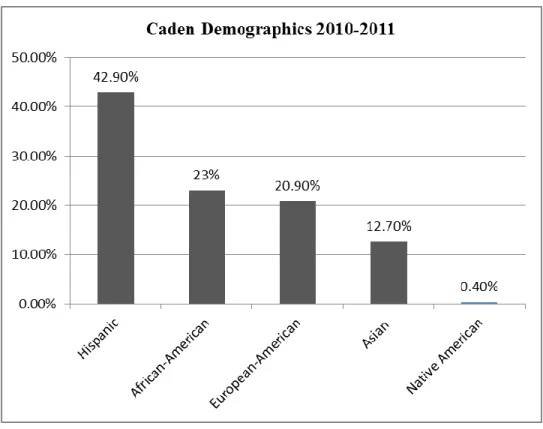
demographics broken down into percentages were as follows: 42.9% Latino or Hispanic, 23% African American, 20.9% European American, 12.7% Asian, and 0.4% Native Americans in the student population (see Figure 2).
Figure 2. Caden Demographics 2010-2011
The organizational health of the faculty and staff is currently in recovery, from what Martin Chemer (2007) regards as “organizational trauma.” The campus principal
since 2006—an African American male who was out of the building due to illness last year, the lack of his leadership and vision caused a disruption in leadership that impacted the organizational goals as well as hindered the continued implementation and
benchmarking of the school-wide positive behavioral support (SWPBS) initiative pushed by the district. The campus was placed in charge of a first-year African-American
administrator who was serving in her first year as Director of Instruction. It was quickly realized that she was not equipped to carry the behavioral, political, cultural, nor the academic demands of such a diverse campus. The organizational disruption was further
compounded when the district placed a female European American as interim principal. Although experienced, she focused her energies on school-wide discipline management through the means of carrying out consequences that reflected the ideals of zero
tolerance need reference policies.
According to conversations with members of the faculty and staff, this interim
principal focused on “locking down” the students through “tardy-sweeps”, “automatic suspension”, and mandatory DMC placements without consideration of preventive
systems. Another issue that created barriers and obstacles in regard to effective implementation and sustainment of the SWPBS system is that the building was
undergoing a massive construction re-model. This campus at twenty-eight years old had not been renovated or updated in sometime, therefore Caden was included in a district bond election to increase building capacity and update classrooms while making the campus aesthetically comparable to other BTISD schools.
In late August of 2010, the BTISD appointed an African American female to the post as principal for the 2010–2011 academic school year. The district charged her with several objectives—one of them being the complete integration of school-wide positive behavior support systems (SWPBS) into the established culture of the school and
district’s organizational climate. Shortly, after taking the helm of Caden Middle School, the newest principal had to start her first year as principal delivering sad news to her disconnected staff. The former principal, the African American male, lost his battle with his illness, sending ripples of intensified trauma throughout the organization.
At the conclusion of the 2010-2011 school years, Caden Middle School earned
the label as a campus that was “Academically Acceptable” due to both African American and Economically Disadvantaged students scoring below the 2011 state set standard which is 75% passing on the state-wide assessment in all sub-groups. This resulted in the federal government placing another label on Caden Middle School, making it a school that was not in compliance with federal regulations associated with Adequate Yearly Progress or (AYP).
Statement of the Problem
Caden Middle School is a school that is currently experiencing incomplete success as it relates to discipline referrals, specifically in the area of in-school suspensions. Campus data reflects a five year pattern is indicative of an over-representation of students of color, primarily for African American and Hispanic students of color, were placed in this alternative educational disciplinary placement. Furthermore, during the 2010-2011 school year Caden Middle School failed to meet adequate yearly progress (AYP) standards in mathematics among the subgroup of African-American students. In correlating the academic data along with discipline data the principal investigator found that some of the same students who were repeatedly placed in the in-school suspension setting were not successful on the state assessment which is what the federal government utilizes to determine AYP. Statewide, the raw data totals from the Texas Education Agency 2009–2010 show middle school students of color being over-represented in ISS placements (TEA, 2010). African American and
Hispanic or Latino students are receiving ISS as a consequence for subjective behavior at a higher rate according to the research (TEA, 2010).
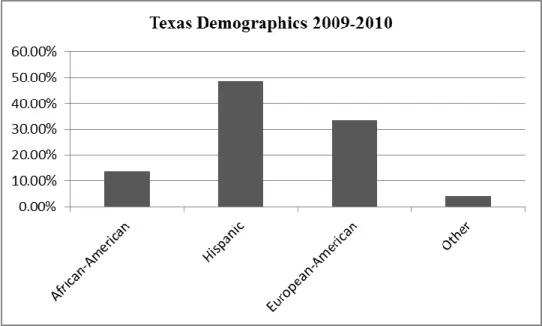
State data from the Texas Education Agency found that students of African-American students represent 14% of the population statewide, and district data indicates its students of color are being placed in an ISS setting twice more than their European American counterparts (see figure 3). ISS Caden Middle School data from 2010–2011 points out that African Americans account for approximately 45% of the in-school suspensions, yet they represent 23% of the total population at Caden Middle School.
Many students who are placed in ISS settings have faced repeated days in ISS settings (Lyons, 2003). We serving as culturally responsive agents see all the problems ISS creates, as well as some positive aspects of the implementation of school-wide positive behavior support (SWPBS) strategies in the ISS setting. However, we do not know what the perceptions of the ISS program are from those involved in the process, and furthermore, we do not understand the perceptions that positive behavioral support interventions will have on the reduction of referrals in regards to students of color in the ISS setting. In the fall of 2011, school leadership was attempting to reduce ISS rates without knowledge of the perceptions of those charged to implement or the perceptions
or the necessary knowledge of the interventions’ needed.
This study contributes to the aforementioned gap in regards to invention
programs in in-school suspension settings and how those interventions are perceived by allowing perceptions of key stakeholders to emerge. This paper gives the school
SWPBS system school. Appropriate use of these techniques can enhance the opportunity for disruptive students to exhibit pro-social behaviors and gain a successful school experience. The particular nature of this problem is the denial of access to a free and appropriate education based on often subjective behavior that is followed by repeated exclusion from the general classroom setting.
Figure 3. Texas Demographics 2009-2010
Purpose of the Study
The purpose of this problem of practice was to examine the perceptions of administrators, teachers, and parents in regards to the implementation of a school-wide positive behavior support (SWPBS) system and how it is implemented in-school suspension (ISS) as a reduction method for future ISS placements. Given the history of disproportionate exclusion of particular groups, and the severe negative academic
important to investigate how key stakeholders viewed the ISS process, program, and effectiveness of that program when utilizing SWPBS systems interventions. A goal of interviewing multiple key stakeholders was to gain a systems perspective rather than the perspective of a single stakeholder. Through in-depth interviews, the study investigated the ISS process and its outcomes as perceived by the teachers, administrators, and the parents of the students who had repeatedly served a consequence of an infraction not clear. . Additionally, middle school administrators and teachers who are responsible for identifying, diagnosing, and prescribing the misbehavior were interviewed.
The purpose of this exploratory study was to determine the key stakeholder’s
perceptions of the ISS process in redirecting a student’s behavior, while reducing their recidivism rate through the implementation of the SWPBS. ISS programs that assist in decreasing disruptive behaviors require constructive planning and implementation. A growing body of research offers school administrators some guiding principles in the development of effective ISS programs. Furthermore, the study will conduct this analysis through in-depth interviews to explore possible differences in perceptions between the parents of the students placed in the ISS program because of mis-behavior, and key education personnel involved in decisions that place these students of color in this setting repeatedly.
Data was collected from October 2010 until October 2011 and themes identified and coded to determine if the interventions evidenced in the SWPBS created a culture that reduces the referral rates of students of color. Further, as a problem of practice, the identified themes were embraced to develop suggestions for interventions that would
assist key-stakeholders in Caden Middle School better meeting the behavioral and academic needs of Caden Middle School students placed in ISS. Identifying the gaps in information between these three groups of key stakeholders who were interviewed may help school districts meet the needs of some of their most at-risk students. The purpose of this study was to would unmask stakeholder perceptions that might improve the balance communication and understanding between key stakeholders to better prescribe interventions to support change in student behavior to reflect reduce ISS referral and placement.
Gaining an understanding of the types of academic and behavioral interventions that parents feel are necessary for their children to continue while serving in the ISS setting will allow educators to consider new approaches and procedures that are aligned with the SWPBS philosophy and framework to eliminate practices that promote the achievement gap among students of color. The data collected helped to identify what district officials should provide to students and parents to allow them to make informed choices and to improve the primary key stakeholder understanding of the SWPBS and the ISS program. Finally, this problem of practice will support Caden Middle School’s compliance with IDEA’s disciplinary provisions while balancing these legal
requirements with individual student rights. Alignment with the SWPBS framework ensures that Caden Middle School is fostering an atmosphere for building effective and positive relationships for students and teachers to come to consensus and work together to improve academic rigor and relationships, for all CMS students and especially for African-American Caden Middle School Students.
Significance of the Study
This Problem of Practice is significant. At Caden Middle School, many of the same students who have not been successful on state assessments, have also been students who have served repeated placements in the in-school suspension program at Caden. Furthermore, these students often mis pertinent curriculum and instructional concepts due to their exclusion from the general classroom setting. Few studies have focused on alternative educational discipline placements at the campus level, and their contributions to promoting and sometimes widening the achievement gap (Chambers, 2010).
As humans in this modern day we are aware that perception is reality. Often
someone’s perception shapes not only our understanding but also our decision-making. Decisions made on a daily basis that involve the placement of students in in-school suspension (ISS) programs are based on stakeholder’s perception of that student. This study adds to the literature on ISS by analyzing the perceptions of key stakeholders at a major suburban, demographically diverse middle school. Never has a study researched school-wide positive behavior support (SWPBS) interventions’ impact on referral
reduction in a scholarly capacity. The present student extends the study of ISS programs as well as ads to the body of literature in regards to Positive Behavior Support and addressing what Chambers (2010) refers to as the “receivement gap.”
While maintaining a safe and secure learning environment is always the challenge in dealing with any discipline, it is important that educators preserve and protect the rights of all students to have access to a free and appropriate education in the
least-restrictive setting. The next section will establish the significance of appropriate discipline and the rights to an education.
Zero Tolerance
To place a perspective on how consequences for students of color can be administered in inequitable and inconsistent levels, it is important to understand the policy as well as the historical impact of zero tolerance policies.
In the fall of 2008, the National Center for Educational Statistics (NCES)
reported a record number of 49.8 million students enrolled in American’s public schools.
It is very difficult to track the number of students affected by zero tolerance policies because not all schools report these numbers or do so in a uniform fashion. There is no federal tracking system in place or enforcement mechanisms that require the schools to accurately track and report data. During the 2005–2006 school years, the NCES (2006) reports that serious disciplinary action was taken against 830,700 students. Of the disciplinary actions 74% consisted of suspensions for five days or more, 5% included removal of students from school, and 20% included transfers to specialize and
alternative schools. Blumenson and Nilson (2003) believed that schools no longer reserve suspensions and expulsions for serious offenses or repeat offenders. Their report
states that “the new zero tolerance policy imposes expulsions or suspension for a wide
range of other conduct that previously would have been dealt with through after-school detentions, withdrawals of privileges, counseling, mediation and other methods”
misbehavior, McCarthy and Hoge (1987) found that there are no substantial differences between the misbehaviors of black and white students.
Despite this finding, students of color, especially African- Americans, are disproportionately expelled and suspended at higher rates than whites. Data from the U.S. Department of Education (1998) show that although African- American students represent only 17% of national public school enrollment, they constituted 32% of out-of-school suspensions. A 1999 study by the Applied Research Center, which surveyed 12 cities across the United States, found that African -American students, as well as Latino and Native American students, were suspended or expelled in numbers disproportionate to their white peers in every district surveyed. In San Francisco, African American students were suspended or expelled at more than three times their proportion of the general student population (56% compared to 18%). This study also found that African -American children, especially African -American males, were disciplined more often and more severely than any other minority group.
Furthermore, a 1999 report from the National Center for Educational Statistics shows that zero tolerance policies were likely to exist in school districts with
predominately African American and Latino students. Nationally, those living in poverty are over-represented among expelled students. Data from the National Survey of
American Families compiled by the Urban Institute (1997/1999) found that while 11% of the general populations are living in poverty, 25% of expelled students consisted of those living in poverty. A 1997 study (Skiba, Peterson, & Williams, 1997) found that students who receive free lunch are at an increased risk for school suspensions.
In-School Suspension
In-school suspension (ISS) is a disciplinary procedure that involves the
temporary placement of a student into an alternative setting with limited access to peers and other sources of reinforcement. Students assigned to ISS are typically required to complete academic work provided by the classroom teacher. Socializing with peers is not permitted and, in some cases, students eat lunch and transition independently of others. ISS is part of a general approach to school discipline that continues to rely heavily on the use of exclusionary practices as consequences for student misconduct. It is typically used as the last intervention before out-of school suspension in a continuum of consequences most commonly administered in escalating fashion. Prior to being assigned to ISS, the offending student may have been previously exposed to consequences such as verbal warnings, parent contact, timeout, and previous suspensions.
Several features of ISS make it a favorable intervention when compared with more traditional approaches such as out-of-school suspension and detention. First, ISS affords the school a fine degree of control over the suspended student’s day. This degree
of control is impossible to achieve when suspending students from school where the student may spend much of his or her day in an unregulated, unsupervised environment.
Second, students assigned to ISS are required to complete work that may prevent the student from falling behind his or her peers academically. Third, ISS does not carry the stigma associated with out-of-school suspension and many schools may not report it as a suspension—a frequently used indicator of school climate. Fourth, ISS may
temporarily restore classroom order as it removes the disruptive student from the
classroom for a period of several days. Finally, ISS may be favored by teachers as it may require less response cost to assign a student to ISS, but the result is still the removal of the student from the classroom typically for several days.
In 1997, Congress passed an amended Individual with Disabilities Education Act (IDEA'97) that contained provisions for the discipline of special education students. The amendments prohibit schools from placing any student with a disability in an alternative educational placement for a period of time in excess of ten cumulative school days per year. The act further mandates the use of functional behavior assessments with these students. IDEA '97 legislation has created considerable problems for an education system that relies primarily on exclusionary practices such as ISS to manage student misconduct. Under the IDEA '97 provisions, the assignment of a student with disabilities to ISS for more than 10 days in a given year constitutes a change in educational
placement and is considered illegal.
Provided that students are typically assigned to ISS in 1–5 day increments (Costenbader & Markson, 1994; Knopf, 1991; Short, 1988), this considerably limits the
use of one of education’s most popular discipline procedures.
Unfortunately, this same protection is not provided to students without diagnosed or suspected disabilities—the result of which is reluctance on the part of many
administrators to have students evaluated for disabilities, because any such
determination may limit their disciplinary choices with the student. Although there are several reasons for its popularity, little attention has been given to the effects ISS has on
the suspended student’s behavior. This is, perhaps, best demonstrated by the wide-spread use of ISS for behaviors seemingly maintained by escape from the classroom, such as skipping and truancy (Costenbader & Markson, 1994; Edelman, Beck, & Smith, 1975; Rose, 1988). This suggests ISS is used with little regard for behavioral function, rather than being employed as a prescriptive consequence to punish student misconduct. This is an issue of special significance as the classroom orders temporarily achieved by
removing the offending student may be offset by the accidental reinforcement of escape maintained disruptive behavior. Under these circumstances, ISS may serve to reinforce student misconduct rather than punish it. In the absence of an empirical evaluation of its effectiveness, ISS is little more than a blunt instrument that may be creating little
meaningful behavior change at the expense of academic achievement and valuable school system resources.
Although ISS is one of the most widely used procedures to respond to student misconduct, little research exists to support its wide-spread use. The majority of published research on ISS contains descriptive accounts of student characteristics or descriptions of existing programs with little analysis or discussion of the effects the procedure has on student behavior. This finding is surprising, given the not-so-recent emphasis on evidence-based practices and functional treatments for student behavior problems.
State Data Regarding In-School Suspension
The Texas public school structure comprises of 1,227 school districts and
Caucasian (33%). Over half of the students in Texas are economically disadvantaged and 17% are limited English proficient (TEA, 2010). In Texas, school districts that positively and continually sentence students to in-school suspension (ISS) without significant classroom instruction, infringing on those students’ state-guaranteed rights to education. Texas schools assigned the equivalent of about 57% of the overall student population to ISS for discretionary offenses during the 2008–2009 school years (TEA, 2010). Texas schools made 1,745,572 referrals to ISS for a discretionary offense, out of a total enrollment of 4,711,206 students (TEA, 2010). ISS is especially disturbing because, unlike out-of-school suspension, which has a three-day limit per incident, there are no parameters on the number of days or class periods a student can serve in ISS. In addition, ISS programs largely do not encompass of any structured and consistent instructional time. Most ISS programs are run like a study hall, where students come in, sit, receive worksheets and work in isolation and silence, and are not be staffed by a certified teacher.
My examination of the data exposes several other alarming tendencies, including over-representation of African American and special education students, and vast range of overall referrals from district to district, and a disturbing number of referrals of very young children. This is correct for all of the disciplinary referral forms: Disciplinary Alternative Education Placement, ISS, and Out of School Suspension. Moreover, you will find similar themes in discussing the discipline data at the local level in regards to ISS usage.
District Data Regarding In-School Suspension
In Bring-Together ISD (BTISD), data regarding in-school suspension (ISS) programs mirrors both national and state data in regards to over-representation of students of color in both placement and recidivism rates. According to the 2009–2010 PEIMS discipline state data for Bring-Together ISD, out of the 90 mandatory “zero
-tolerance” placements, 55,827 of those placements were discretionary. Of those totals,
23,000 of the students were Hispanic or Latino, 19,000 were African American, with only 12,000 of the placements falling under the classification of European American. These numbers are disproportionate with the state total populations. In BTISD the ISS program is referred to as the discipline management classroom (DMC). The structures and design of DMC classrooms across the district are incongruent and not consistent in regards to the implementation of SWPBS systems in the district.
Professional development sessions are held and advertised, but no mandated or formal district evaluation system specifically related to DMC is currently in place in BTISD. In addition, many of the DMC classrooms are managed and maintained by a non-certified or highly- qualified staff member or paraprofessional.
PBIS: Positive Behavior Intervention and Support
To take this case in point, the school-wide positive intervention and support (PBIS) system is an example of evidence-based practice and emphasizes functional treatments or interventions working to build an appropriate and positive relationship with students. More than 9,000 schools coast to coast are trying to curb the zero tolerance problems by applying school-wide positive behavior support (SWPBS), an
proof-based, data-informed tactic proven to decrease disciplinary instances, upturn a
school’s sense of security, increase attendance rates, and support value-added academic outcomes.
Applying SWPBS enhances the school environment and helps keep students and teachers in safe and engaged, and dynamic classrooms. SWPBS is based on the idea that persistent teaching, modeling, distinguishing, and gratifying of positive student behavior will diminish needless discipline and endorse a climate of greater productivity, safety, and learning. SWPBS schools implement a multi-tiered tactic to proactive prevention, utilizing disciplinary data and principles of behavior to inform, and develop school-wide, targeted, and customized interventions and support to advance or recover the school climate.
SWPBS models are being used in school settings as a method of choice for reducing challenging behaviors and promoting pro-social behaviors. The SWPBS approach was originally developed as a substitute to aversive interventions for students exhibiting severe forms of aggression and self-injurious behaviors (Carr, 2007; Carr, 2002). SWPBS is now being used with an extensive variety of students across a variety of contexts. According to the district artifacts and documents, PBIS provides a positive structure wherein adults in the district emphasis on the use of approaches that are courteous toward BTISD students and their community.
The expectation of the application of this evidence‐based system is to increase academic performance, increase safety, decrease problem behaviors, while creating a positive school culture. PBIS uses a data‐based approach to determine the “why” of
behaviors and uses a team‐based approach to determine the best behavioral climate for a school. One purpose of PBIS is to establish a climate in which appropriate behavior is the norm. Each campus or organization is an assembly of beings who behave in an organized manner to achieve a common goal. BTISD’s goal is to provide a safe and
caring environment whereby its students can learn. With PBIS, it is the hope of BTISD to achieve this goal.
Through a collaborative effort, each campus within the district has designed a framework whereby students are provided with steady and stable behavioral
expectations in all school settings. Every staff member is expected interact with students using the same set of guidelines and vocabulary. The expectation is for adults to
concentrate their energies and resources on the students making appropriate and wise choices. PBIS uses proactive strategies for defining, teaching, and supporting
appropriate student behavior to create a positive, safe, and effective school environment. It is the belief of BTISD that focusing their attention on creating and sustaining this type of system will also help to improve lifestyle results (health, social, family, work) in their students and educators. PBIS affords the district the opportunity to provide their students with the type of safe and productive environment that enables learning opportunities for all. It provides a foundation for BTISD students to develop characteristics that will enable them to live meaningfully and successfully in society and in the workplace. In BT ISD, SWPBS is called PBIS, which is the school-wide
Discipline of Students of Color
According to Webb-Johnson, (2002), “as a nation, the U.S. is doing a poor job of meeting the educational needs of ‘all’ children, especially those children who are poor, of color, and live in urban areas, and demonstrate behavioral challenges.” This statement alone should serve as enough cause for public education organizations to stop and consider the application of school-wide positive behavior support (SWPBS) as a replacement to zero tolerance policies.
Nationally, African American schoolchildren are suspended at closely three times the rate and ousted at 3.5 times the rate of Caucasian students, according to the U.S. Department of Education's Office of Civil Rights. Latino students are almost 1.5 times as likely to be suspended, and almost twice as likely to be expelled, as their Caucasian peers. Caucasian students are sent to the principals’ office at a higher rate than students of color for offenses that are more objectively proven: smoking,
vandalism, leaving the classroom without permission, and obscene or profane language. In contrast, African -American and Latino students are sent to the principals’ office for discipline at a higher rate than their white peers for disrespect, extreme noise, and loitering behaviors that would give the impression to depend on more on subjective conclusions on the part of educators.
Discipline practices at Caden Middle School, mirror the aforementioned research. Students who are suspended and expelled are at a larger danger of dropping out. The consequences of these harsh disciplinary practices are devastating. Students who are repeatedly suspended, or who are expelled, are likely to fall behind their peers
academically, paving the way to their eventual dropout. The research correlates dropout to suspensions and expulsions. Nationally, studies would indicate that students of color are targeted for disciplinary action in greater numbers that their European American counterparts (Monroe, 2005). Among students of color, African American boys seem to be the most impacted. In fact, according to Carla Monroe in an article titled “Why Are ‘Bad Boys’ Always Black?” (2005), African American boys are two to five times more
likely to get suspended than any other group of students. There appears to be a cultural mismatch that creates conditions for students of color to fail based on educators’
perception of these races in society, which may be based on personal experience and media representation. The author believes that there are three conditions that contribute to this disparity.
Methodology
This qualitative problem of practice operates under the philosophical assumption
that “consists of a stance towards the nature of reality or ontology,” (Creswell, 2007).
What is the nature of the perceptions of the stakeholders in regards to both the in-school suspension (ISS) program and using strategies from school-wide positive behavior support (SWPBS) to reduce the placement rate of students of color? As an observer participant researcher I will embrace the idea of multiple realities.
Background information for addressing this problem of practice will be accessed from both the legal as well as political science fields of study. Acting as one of the five approaches to qualitative research and study, the bounded case study approach has been applied across many disciplines (Creswell, 2007). For this particular study we will
develop an in-depth description and analysis, while providing a deeper understanding of not only the ISS program, and SWPBS program at Caden Middle School, and also gain an understanding of the perceptions of those programs when they are implemented in concert. The unit of analysis is the ISS program itself and the perceptions of that program.
Phenomenological Framework
The purpose of my study is to understand the recidivism rate of students of color in an in-school suspension program as it relates to the implementation, and use of positive behavior support systems to reduce that rate among students of color. As this problem of practice will share, the students that are repeatedly placed in this setting are being excluded from pertinent instruction that is a constitutional right. In-depth
interviews from the perspective of the Key Stakeholders of the Bring-Together ISD community will determine if there is a common perception or if many perspectives exist that can be grouped into themes for further dialogue and analysis. The goal is to
formulate a critique of their dialogue from the framework of critical theory. The
qualitative method chosen is phenomenology. According to Webster dictionary (2006), it is defined as a study of phenomena, it is the philosophical examination and
explanation of cognizant experience in all its variations without mention to the inquiry of whether what is experienced is quantitatively real. It is safe to say the individual
involved will be speaking from his own worldview, experiences and subjective interpretations to the data presented. Creswell (1998) states a phenomenological study defines the connotation of the understandings of individuals that encounter a
phenomenon or concept under study. Digging deeper, phenomenology as a inquiry method needs to be set in a broader context of research and what Kuhn (1970) calls a paradigm shift.
Accordingly, looking at the achievement gap, there have been many shifts in the
world since the early 1970’s, when researchers began to look at this phenomenon.
Political and social dominance of one ethnic group over others has begun to shift
towards inclusion; economic supremacy has given way to global meltdowns for peoples around the globe; and political policies of global containment have shifted to more conciliatory policies. The spotlight on immigration policies and looking at the achievement levels of students of color could be interpreted as arising out of this paradigm shift.
Questioning individuals their perspectives on the PBIS and their perceptions of expectations of in-school suspension appeared to be an appropriate method for using phenomenology as a qualitative method. However, there are constraints within using this method. This method can be described as interpretative and poetic if comparing it to the scientific method; however, if working from an emancipator view, the role of the researcher is limited. My job is the gather the information, group it into themes and analyze it. My analysis will be based upon the themes gathered from this process to understand how the achievement gap is perceived and how district policies are
prescribed by those with power to make decisions. Using the phenomenology approach, data is collected in two ways: focusing on the participants’ experiences or the
2002). The phenomenological approach to data analysis involves four steps: description, extraction, transformation, and analysis.
The collected data will be analyzed and coded for specific themes. According to Creswell (2007), this study will implement a text analysis approach and the followed phases associated with the five analytic phases mentioned by Creswell (2007). The researcher will organize and analyze the collected data. Stake (1995) advocated four forms of data analysis and interpretation in case study research. These four forms—
direct interpretation, patterns, naturalistic generalizations, and description of the case—
will assist in interpreting the data and developing the themes for understanding the perceptions of the key stakeholders. Data analysis, transcription, and member-checking will assist in tracing events over time, capturing interviews with key stakeholders, and bringing together the emerging themes derived from the collected data (Pandit, 1996). In text analysis one does not begin with a theme, but rather, one begins with an area of study and what is relevant to that area is allowed to emerge (Creswell, 2007). Participants
Purposeful sampling (Creswell, 2007) will be used in this case study (Stake, 1995 as cited in Creswell, 2007). Administrators, parents of students who have served more than twice in the in-school suspension (ISS) setting, and the teachers of those students who referred the students to the administrator will be the participants in the study. Although the middle school studied is an actual campus, pseudonyms will be used for the school and district. The district shall be known as Bring-Together ISD and the school as Caden Middle School. The administrators and parents will be referred to by
title and teachers were assigned pseudonyms for research identification purposes. Identifying information and audiotapes will be stored in a locked filing cabinet at the home of the primary investigator.
The perceptions of parents, teachers, and administrators of students involved in the ISS program will be analyzed for themes. A qualitative design consisting of in-depth interviews with parents, teachers, administrators will be used to analyze this
phenomenon of overrepresentation of students of color and recidivism rates, as well as the impact that implementation of school-wide positive behavior support (SWPBS) systems may have on referral reduction. This qualitative study will examine parents, teachers, and administrators responses to a set of interview questions pertaining to the ISS program at Caden Middle School. Parents of identified students will be purposefully selected as participants for the study. The teachers and administrators involved in the process of issuing the consequence that places students of color in the ISS setting will also be purposefully selected.
Historical Data
Performance Excellence Indicator Measurement System or PEIMS data for the state and district data for the 2006–2011 school years on in-school suspension (ISS) data will be populated to set the stage for the need. Campus administrators will collect
discipline data and be asked to share notes from school-wide positive behavior support (SWPBS) committee meetings throughout the school year. These minutes will allow the researcher to determine the extent of professional development activities regarding the reduction of referrals to ISS.
Interview Process
Participants will be selected based on their involvement in the process of referring and or placing students to the in-school suspension (ISS) program at Caden Middle School. Three administrators, three teachers, and three parents will be asked to voluntarily participate in this problem of practice. Through purposeful sampling
interviews took place during the fall semester of 2011 during the months of September, and October. During the interviews, teachers, parents, and administrators were asked about their perceptions (what they think) about the positive behavior support
interventions that were put in place in the campus ISS program. In addition, during the interview process, teachers will be asked to record their feelings regarding professional and staff development activities designed to promote and sustain implementation
protocols for school-wide positive behavior support (SWPBS); how they used what they learned; and how they have been held accountable for implementing strategies presented during professional and staff development sessions. Questions will be developed based on the triangulation of academic and discipline data, collected field notes, and historical
data analysis. All interviews will take place in the teacher’s classroom, administrator
offices, and the conference room for parents who volunteer. Each interview will last approximately 20–30 minutes. All interviews will be audio taped and transcribed. Data Collection, Analysis and Coding
The data collection for this problem of practice will involve four types of data. Observations will be composed of field notes from the observer as a participant.
triangulation. Finally audiovisual materials will round out the data, in the form of
collected e-mails, meeting agendas, or historical artifacts. The key stakeholders involved in the study will be asked to review transcriptions. They will be encouraged to edit and provide feedback. This ongoing series of checks contributed to the study’s validity.
Despite these measures there might be those participants who, upon reading the final dissertation, might not be in agreement with some findings in the study. Consequently, I will inform all participants who would be willing to discuss the results at any time in the future.
Analysis of all collected data will begin in May and continue throughout the month of June. The coding process will consist of reviewing all historical documents, interviews, interventions, and observational records to develop patterns and themes. Participation by teachers, parents, and administrators is voluntary and they can opt out of participation in the study at any time. At the completion of this process, the results and discussion sections will be written in preparation for the anticipated defense in late December or late January of 2012. All collected data as well as the artifacts that hold such data, such as file folders, journals, portable hard drives, digital tape recorders, and the laptop itself, will be stored nightly in the office of the principal investigators’ office
Research Questions
The research questions include:
1. How do the primary key stakeholders (i.e. parents, teachers, administrators) experience the in-school suspension (ISS) process and placement of students at Caden Middle School experience the process?
a. What are the perceptions of parents? b. What are the perceptions of teachers? c. What are the perceptions of administrators?
2. What are the perceptions of key stakeholders in regards to the school-wide positive behavior support system (SWPBS) as an intervention for (ISS) referral reduction?
3. What are the perceptions of the key stakeholders in regards to academic curricular components necessary to include in an ISS program?
4. Do the perceptions of the (ISS) process and placement of students among different key stakeholders differ and if so, how?
For the purpose of the study the following limitations are noted: A purposeful sample of key stakeholders from one school and one school district in Texas may only produce findings and issues relevant to the individual participants in this study. The interview findings from the study are specific to the school used in the study and, to a degree, to other high schools or school districts with similar pupil demographic characteristics.
Role of the Researcher
The purpose of this section is to explain the both the resistance and challenges in the process and placement of students at Caden Middle School faced by me as principal investigator while acting as an leader at Caden Middle School campus serving in the role of Lead Assistant Principal.
The popular literature is replete with studies that continue to emphasize the negative stereotypes and images of African American men portrayed in the media as well as in the larger society (Cuyjet, 1997; Davis, 1999; DeSousa, 2001; Fleming, 1984; Fries-Britt & Turner, 2001; Green, 1991; Hopkins, 1997; Jones, 2001; Majors & Billson, 1992). Many academic studies on African American men are conceptualized using a deficit model and fail to adequately acknowledge African American men who succeed.
As the principal investigator in this problem of practice, I served as a
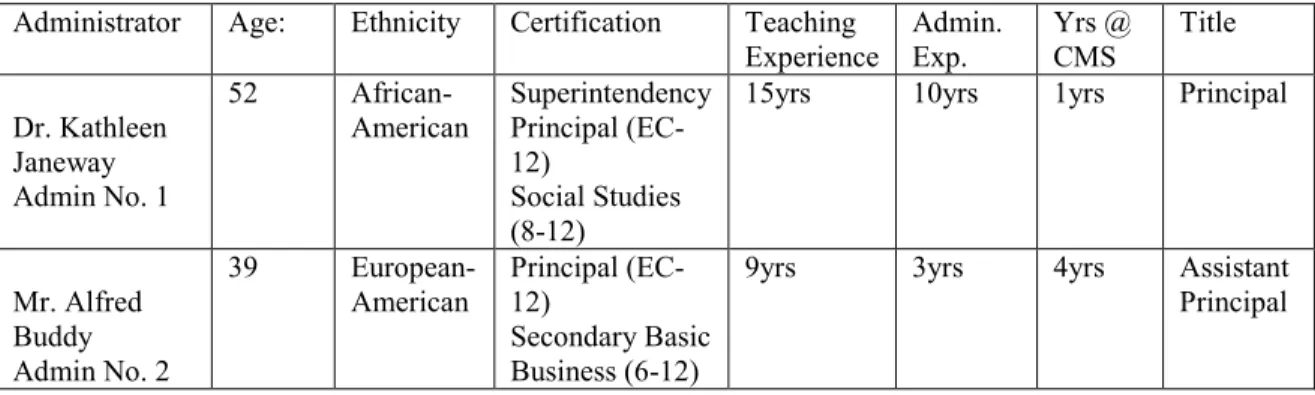
participant/observer, acting as both a researcher, and as the Lead Assistant Principal who is African-American descent. I was a relatively new addition to campus when this study first began, joining the Caden staff in October of 2010. This fact caused some instant resentment in regards to choice as several teachers within the building had interviewed for the position. Staff members expressed to me in the coming months, very openly and frankly that they did not feel like Dr. Janeway respected the teachers on campus due to
her “going outside” the district to hire her brother. This persistent thread of
conversations remained a consistent theme as, accusations of nepotism reached
believed that Dr. Janeway had in fact hired one of her family members as a member of the administrative team.
Throughout the duration of this problem of practice, the role of African American administrators became threatening at Caden Middle School. In order to
succeed, African American administrators must make extra efforts to adapt and learn the culture of the environment (Rolle, Davies, & Banning, 2000). These extra efforts were noted as I had 12 participants that willingly volunteered to assist in providing me with their perspective in regards to positive behavior supports and reduction referral in our in-school suspension settings.
Among other concerns raised by African American males administrators experiences were unfriendly and unwelcoming campus atmospheres, isolation, estrangement, ostracism, wage inequities, unworkable role beliefs, restricted
advancement prospects, feelings of ineffectiveness, tokenism, and the lack of mentoring and sponsorship (Holmes, 2004; Whetsel-Ribeau, 2007). At Caden Middle School the aforementioned research became reality for me as early as the artifact collection phase of
this research. Instances of these reactions were evident through “anonymous letters”, the
questioning my qualifications, slandering my morals and values, and discrediting my intentions for student success. On all occasions throughout this research I received anonymous notes all ending with a statement that is reminiscent of past warnings issued
to civil rights workers. With statements such as: “You don’t belong here”, andto “leave us alone, we don’t need you here”. Attention must be paid to the assumptions of how
African American males in public school administration. All of these factors dictate the types of positions African American administrators hold and the institutions they serve (Holmes, 2004). The realization of this notion, created a precarious maze in which I had to navigate with success in order to complete this record of study. This experience, upon reflection and research is similar to a research perspective provided by Athena D. Mutua. Operational Definitions
Achievement Gap – The disparity in achievement between African American and European American students.
Accountable Group – The number of students who actually “count” towards a campus‟
AEIS data set to determine the current year’s academic rating.
AEIS – Academic Excellence Indicator System: measures schools as academically unacceptable, academically acceptable, recognized, and exemplary.
Delinquency—This term covers a large range of poor behaviors that include: using profanities toward a teacher, defying or disrespecting a teacher, not doing homework, habitually coming to class tardy, writing graffiti, cheating on schoolwork and tests, bullying and harassing other students, fighting, stealing, using alcohol, having sex, using and/or distributing drugs, setting fires, committing rape and murder (D. Gottfredson, 2001).
Discipline problem—anytime the teacher must stop teaching and the rights of others to
learn are affected by a student’s defiant or disruptive behavior (Levin & Nolan, 2007).
Expulsion—this form of punishment applies to severe rule violations and federal offenses such as the possession of a dangerous weapon. Expelled students are removed
from the normal classroom for up to 365 calendar days. In Oregon, an expelled student still has access to two forms of alternative education: alternative school or a home tutor. Private schooling and home schooling are also options, but the public system does not include them in the options it presents to offenders.
Free Appropriate Public Education (FAPE)—Special education and related services that (a) have been provided at public expense, under public supervision and direction, and without charge; (b) meet the standards of the state education agency; (c) include an appropriate preschool, elementary, or secondary school education in the state involved; and (d) are provided in conformity with the IEP of a student with a disability. FAPE is available to all children ages 3 through 21 with disabilities, including those who have been expelled (Wright & Wright, 2000).
Functional Behavior Assessment (FBA)—“A systematic process for describing problem behavior, and identifying the environmental factors and surrounding events
associated with the problem behavior” (Office of Special Education Programs Center on
Positive Behavioral Interventions and Supports, 1999).
Incident: A specific criminal act or offense involving one or more victims and one or more offenders.
Individual Education Plan (IEP)—“The IEP constitutes a written statement of each
special education Functional Behavior Assessment (FBA): A systematic process for describing problem behavior, and identifying the environmental factors and surrounding events associated with the problem behavior” (Office of Special Education Programs