(IJSBAR)
ISSN 2307-4531
(Print & Online)
http://gssrr.org/index.php?journal=JournalOfBasicAndApplied
---
105
Developing Device of Learning Based on Virtual
Laboratory through Phet Simulation for Physics Lesson
with Sound Material
Tirtawaty Abdjul
a*, Nova Ntobuo
ba,bUniversitas Negeri Gorontalo, Jl. Jend. Sudirman No. 6, Kota Gorontalo 96128, Indonesia a
Email: [email protected], bEmail: [email protected]
Abstract
This research is aimed to develop learning device based on virtual laboratory through PheT simulation which is implemented in SMA Negeri 1 Limboto Barat for Physics lesson with sound material. This research is a type of development research that refers to the design of 4-D model according Thiagarajan, Semmel and Semmel (1974) which consists of 4 stages of define, design, develop and disseminate. The results of this study indicate that learning device based on virtual laboratory through PheT simulation: (1) Categorized valid and feasible according to the expert; (2) learning device are easy to use and to improve the response of learners in learning. In addition, the implementation of learning by using learning device based on virtual laboratory through PheT simulation is in very good criteria, (3) learning device based on virtual laboratory through PheT simulation is effective to use because based on the results obtained that the percentage average score of student activity during learning activities meeting of 1, 2, and 3 are at 87.5%; and student learning outcomes in process skills are categorized well with an average score of 78.5%. Based on this matter, it can be concluded that learning device based on virtual laboratory through PheT simulation for Physics lesson with sound material that has been developed is said to be valid, practical and effective so that it can be used in Physics learning process in SMA.
Keywords: Learning device; Phet; virtual laboratory; physics lesson.
--- * Corresponding author.
106
1.Introduction
Physics is one branch of science which learns about the nature and natural phenomena. Physicists observe natural phenomena and try to find patterns to connect this phenomenon. According to authors in [1], to study natural phenomena, physics uses the process starting from observation, measurement, analysis, and drawing conclusions that are often done in the laboratory. Laboratory activities are considered very important to support students' understanding of the concepts of Physics [2]. In addition, author in [3] states that through laboratory activities (experimenting) can train the scientific attitude of learners in understanding the concept of learning.
The laboratory has a very important role in Physics learning. The laboratory activities, such as observing, classifying, measuring, communicating, interpreting data, and making conclusions. Laboratory activities make Physics learning more interesting and fun [4]. However, in reality, the Physics learning process that has been going on is generally still dominated by conventional learning model. The main reason of teachers’ still use conventional learning model is because of the limitations of the Physics laboratory owned by the school. Low quality laboratory equipment gives less accurate measurement results so the result is not can be used to build the concept / theory as it should be.
According to author in [5], the use of virtual laboratories can overcome some of the problems encountered related to inadequate laboratory equipment and make a positive contribution in achieving the learning objectives. Virtual laboratory is a digital form of laboratory facilities and processes that can be digitally simulated. Learning of using a virtual laboratory involves more students even though practicum activities are not real [6]. Virtual lab has several advantages. These advantages, among others are able to explain the abstract concept that can not be explained through verbal delivery. Virtual labs can be places where experiments can not be performed in a conventional laboratory [7]. Based on the description above, it can be seen that the use of PHET virtual laboratory simulation can improve the activity and learning outcomes of students in the learning process, but in the learning process the use of learning media is still very less, whereas this program is available and can be downloaded for free through internet network. The results of interviews with teachers indicate that this is caused by the lack of knowledge of teachers in preparing and planning the learning by implementing a virtual laboratory simulation PHET. Then, through this research, we developed a PHET-based learning device for physics subjects on the material, which become teacher referrals in developing other PHET tools that can improve students' learning activities and outcomes.
2.Method
This research is a type of development research that is developing learning device based on virtual laboratory through PheT simulation conducted in SMA Negeri 1 Limboto Barat for Physics Lesson with sound material, in order to produce and test the effectiveness, practicality and feasibility of a certain product. Therefore, the product that we want to produce and test the feasibility of this research is learning device based on virtual laboratory through PheT simulation which is effective, practical and feasible to be used in Physics learning. In this study developed learning tools with reference to the design of 4-D model according authors in [10] which consists of 4 stages of define, design, develop and disseminate. Data analysis in this study as described as
107
follows:2.1.Validity Analysis
Expert validation results are analyzed by referring to the validation criteria shown in Table 1. [11]
Table 1: Validation criteria
Average Validation criteria 4,00 – 3,75 Very valid 3,75 – 3,00 Valid 3,00 – 2,25 Valid enough 2,25-1,50 Less Valid
Based on the table above, the learning device based on virtual laboratory through PheT simulation in learning can be used if it meets valid criteria or highly valid based on expert judgment.
2.2.Analysis of teachers and students response, as well as and the implementation of the learning process
Analysis of questionnaire instrument is used to test the practicality of the product, in this case by looking at student response. This instrument uses Likert scale. The categories of answers provided in the form of strongly agree (SST), agree (ST), disagree (TS), strongly disagree (STS). Questionnaire answer score are: 4,3,2,1 for positive statement and 1,2,3,4 for negative statement. The results of individual scores are stated by formula:
𝑃𝑃=𝑁𝑁𝑓𝑓𝑥𝑥100% Reference [12]
f is the frequency in percentage, N is the Number of cases (number of frequencies/number of individuals), and P is the percentage number. Assessment of the implementation of learning was conducted by matching the average result of the total score given with the following criteria:
Table 2: Lesson learned criteria
Range of value Interpretation 86% - 100% Very good 76% - 85% Good 66% - 75 % Enough 56% - 65% Less
108
0% - 55% Very lessReference [11]
2.3.Analysis of learning activities and learning outcomes
The criteria of activity assessment and learning outcomes of students are conducted based on the criteria contained in Table 2. Based on the data of minimum completeness criteria (KKM) found in SMA Negeri 1 Limboto Barat, it was found that the individual mastery, 80% and 85% for classical completeness.
3. Result and discussion
This research produces the product of learning device based on virtual laboratory through PheT simulation which is executed in SMA Negeri 1 Limboto Barat for Physics lesson with sound material. This development is carried out by stages referring to the Four-D development model as follows:
3.1. Definition Stage (Define)
At this stage, the needs analysis towards the results of interviews with teachers, which required the development of learning devices based on PHET simulation, especially for Physics subject with sound material.
3.2. Planning Stage (Design)
The planning stage (design) includes the preparation of the test, the selection of media in the form of Phet simulation and the selection of the format in accordance with the 2013 curriculum. Thus, it produces the initial design of instructional devices. In addition, a multimedia validation sheet, interview guides to obtain response data in the form of interest and motivation of learners, observation sheet of learning implementation, activity observation sheet of learners, and test of learning result were developed.
3.3. Development Stage (Develop)
Development stage (develop) done 3 stages that is expert validation, limited trial and advanced test. The initial design of learning device is assessed and reviewed by 2 valuators, using validation sheets. Validation results in the form of comments and input given are used as the basis of the revision, resulting in a revised learning device.
3.4. Product Trial
Furthermore, the learning device is conducted with limited trials to determine the eligible. This limited trial was conducted for 10 students and then revised to get the learning device draft III. This learning device, then conducted further test to 22 students that the result is an effective learning device.
109
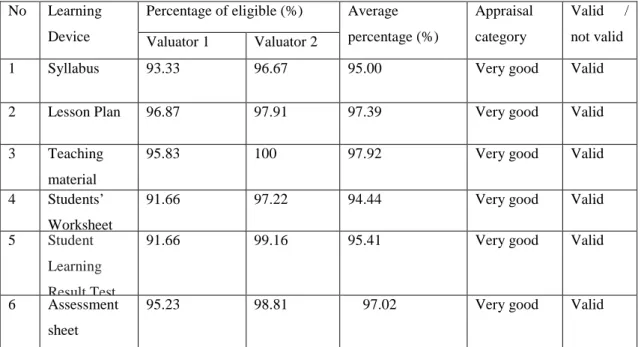
syllabus, lesson plan (RPP), Students’ worksheet (LKPD), Student Learning Result Test (THB), and assessment sheet. According to author in [13], the quality of instructional devices must meet three aspects, namely: validity, practicality, and effectiveness.
Table 3: Result of eligible validation of learning device
No Learning Device
Percentage of eligible (%) Average percentage (%) Appraisal category Valid / not valid Valuator 1 Valuator 2
1 Syllabus 93.33 96.67 95.00 Very good Valid
2 Lesson Plan 96.87 97.91 97.39 Very good Valid 3 Teaching
material
95.83 100 97.92 Very good Valid
4 Students’ Worksheet
91.66 97.22 94.44 Very good Valid 5 Student
Learning Result Test
91.66 99.16 95.41 Very good Valid
6 Assessment sheet
95.23 98.81 97.02 Very good Valid
Based on the table ablove it can be seen that the learning device based on virtual laboratory through pheT simulation is in valid category, so it is feasible to be used in learning process.
3.4.1. Validity
Table 3 shows that the average percentage of feasibility in the syllabus is 95%, 97.39% lesson plan, 97.92% teaching material, 94.41% for students’ worksheet. In this case 95.41% process skill test and an assessment sheet of 97.02.
The highest validation rating is in the lesson plan with about 97.92% feasibility percentage score. Based on the results of the percentage learning devices based on virtual laboratory through PheT simulation with sound material is categorized very good and feasible to use.
3.4.2. Practicality
The practicality of the learning device is seen from the student's response and the implementation of the PheT-based learning device.
110
3.4.2.1. Student Response QuestionnaireThe result of student response questionnaire to learn based on virtual laboratory through PheT simulation can be seen in Figure 1 below:
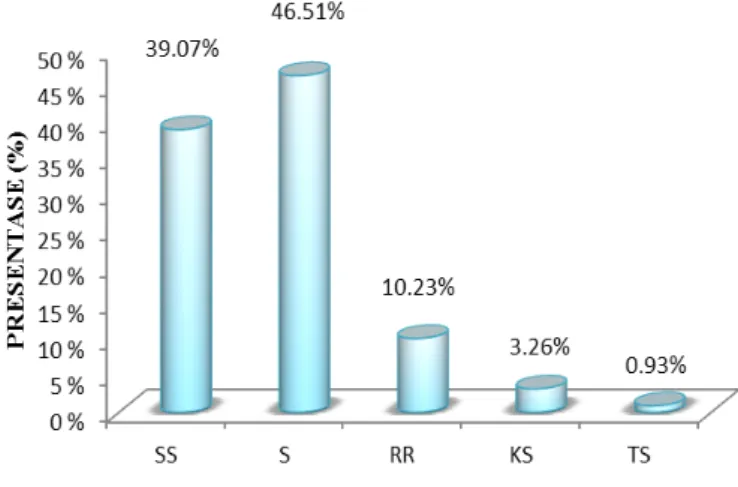
Figure 1: Student Positive Response toward PheT Based Learning
Based on Figure 1 above, it shows that students' positive response to virtual laboratory based learning through PheT simulation for statement strongly agree and agree reach 85.59%, hesitant statement 10.23%, less agree and disagree was 4.19%.
Based on authors in [14], virtual-Laboratory as a supporting factor to enrich the experience and learners’ interest to experiment interactively and develop experimental skill activities. Experimental activities can improve students' creative thinking skills and improve mastery of student Physics concepts and provide opportunities for students to practice scientific methods [15].
3.4.2.2. Learning Implementation
Percentage of learning activity based on Virtual Laboratory through PheT simulation is seen in Figure 2 below:
0 %
20 %
40 %
60 %
80 %
100 %
First Meeting Second Meeting
Per
cen
ta
ge (
%
)
111
Figure 2: Learning Implementation of Virtual Laboratory
Based on Figure 2 it can be seen that the implementation of virtual lab-based learning devices at meeting I was 90.9%; meeting II by 100%. So it can be concluded that the average score of meetings 1, and 2 of 95.45%. This indicates that the activities of teachers in applying PHET-based learning tools on sound material has been implemented in very good category.
This is suitable with previous research that has been done by authors in [16] states that "the learning of Physics using learning device that synergize with the media lab. virtual with PhET that has been developed as a whole can work well and effectively". Learning has been done is able to activate learners. Against the application of Lab-Virtual media in Physics lesson, learners have perception as an effective and efficient media in the use and development of learning media, students easily run the simulation contained in Lab-Virtual media, interested in the simulation display of learning media Lab-Virtual, enjoy learning with the help of Lab- Virtual media, and easily understand the subject matter using the Virtual Labaratory media [17]. Authors in [9] stated that the learning activity is working well according to the lesson plan, the experimental results of the experimental class 1 using PhET simulation and experiment class 2 using simple KIT can complete student learning outcomes, and students' responses to positive learning.
3.4.3. Effectiveness
The effectiveness of instructional tools viewed from student activities and student learning outcomes. Here is the data of student activity and student learning outcomes that applied learning based on Virtual Laboratory through Phet simulation.
3.4.3.4. Learners Activity
112
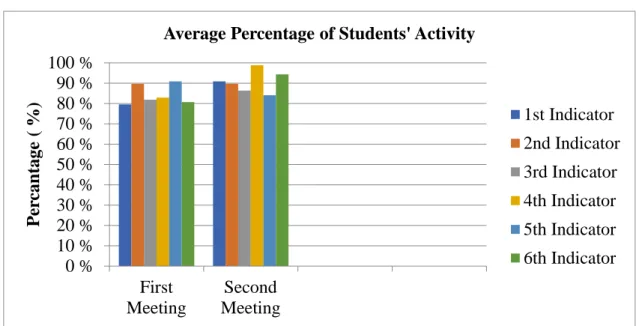
Figure 3: Average Percentage of Students’ Activity
Based on Figure 3, it can be seen that the results of observation of the activities of learners that for the first meeting include observing the phet simulation 79.5%, asking questions 89.8%, designing experiments 81.8%, analyzing data from the results of the discussion presented experimental results 90.9%, and listening explanation of the teacher with an average 80.7% and for the second meeting includes observing the phet simulation 90.9%, asking questions 86.4%, designing experiments 98.9%, analyzing data from the results of the discussion by presenting the experimental results 84.1%, and listening to the teacher's explanation at 94.3%. So it can be concluded that the average score of student activity during learning activities meetings 1, 2, and 3, is at 87.5% means that during the learning activities took place students are categorized very active in using phet-based learning tools.
Based on the results of research that has been done by authors in [18] that the activities of learners who applied virtual learning laboratory based PheT simulation above 80%, which means that the learning is done to enable learners.
3.4.3.5. Learning Outcomes (Skill Process)
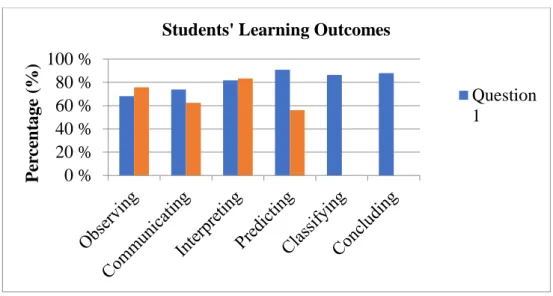
Student learning outcomes in process skills can be seen in the following Figure 4:
0 %
10 %
20 %
30 %
40 %
50 %
60 %
70 %
80 %
90 %
100 %
First
Meeting
Second
Meeting
P
er
ca
n
ta
g
e
( %
)
Average Percentage of Students' Activity
1st Indicator
2nd Indicator
3rd Indicator
4th Indicator
5th Indicator
6th Indicator
113
Figure 4: Percentage of Student Learning Outcomes for Process Skills
Based on Figure 4 it can be seen that student learning outcomes in this case a process skill test which includes observing an average 68.18%, communicating an average 71.96%, interpreting an average 82.57%, predicting an average 73.48% categorizing an average 86.36% and concluded an average 87.88%. So it can be concluded that the average score student learning outcomes in this case the basic science process science tests during the learning activities of meetings 1, 2, presented at an average 78.5% means student learning outcomes are numbered 22 students are categorized good. Authors in [15] states that learning using a virtual laboratory has several advantages, namely (a) improving the mastery of student concepts; (b) Improving the skills of creative thinking and problem solving scientifically. The results showed the effect of using virtual lab on students' problem solving ability on electrical concept [19]. According to author in [20], virtual labs allow students to experiment as if facing real laboratory equipment, so that the expected goal of Physics learning will be achieved with cheaper cost and shorter time.
4.Conclusions
Based on the results of research and discussion above, the conclusions in this study are: (1) learning device based on virtual laboratory through PheT simulation for Physics lesson with sound material is valid according to expert judgment, so feasible to be used in learning process, (2) learning device based on virtual laboratory through PheT simulation Physics with sound materials are practical used in the learning process, and can improve the response of learners in learning. In addition, the implementation of learning by using learning device based on virtual laboratory through pheT simulation. are on very good criteria, (3) learning device based on virtual laboratory through pheT simulation with sound material, effectively used in the learning process, which based on observations, percentage of student activity observation results obtained percentage average score of student activity during learning activities reached 87.5% and student learning outcomes obtained an average score of 78.5%. Based on this, it can be concluded that the learning device based on virtual laboratory through PheT simulation is valid, practical and effective.
0 %
20 %
40 %
60 %
80 %
100 %
P
er
cen
ta
g
e (
%
)
Students' Learning Outcomes
Question
1
114
References
[1] H.D. Young, R.A. Freedman. Sears and Zemansky's University Physics with Modern Physics Technology Update (edisi ke-13th). Pearson Education. ISBN 978-1-292-02063-1. 2014.
[2] P. Sarini. “Pengaruh Virtual Experiment Terhadap Hasil Belajar Fisika Ditinjau dari Motivasi Belajar Siswa SMA Negeri 1 Singaraja”. Jurnal Pendidikan IPA, 2(2), 2012.
[3] A. Samsudin, E. Suhendi, R. Efendi, and A. Suhandi. “Pengembangan “Cels” dalam Eksperimen Fisika Dasar untuk Mengembangkan Performance Skills dan Meningkatkan Motivasi Belajar Mahasiswa”. Jurnal Pendidikan Fisika Indonesia, 8 (1), pp 15-25, 2012.
[4] S. Sandi-Urena, M. Cooper, and R. Stevens. “Effect of Cooperative Problem-Based Lab Instruction on Metacognition and Problem-Solving Skills”. Journal of Chemical Education, 89(6), pp. 700–706, 2012.
[5] T. Cengiz. “The Effect of the Virtual Laboratory on Students’ Achievement and Attitude in Chemistry”. International Online Journal of Educational Sciences, 2 (1), pp. 37–53, 2010.
[6] D. Susanti. “Penggunaan Laboratorium Virtual Optik dalam Kegiatan Praktikum Inkuiri untuk Meningkatkan Penguasaan konsep dan Keterampilan Proses Sains Mahasiswa Calon Guru”. Magister Tesis. UPI Bandung. Bandung. 2009
[7] Niken Ariani, and Dany Haryanto. “Pembelajaran Multimedia di Sekolah”. Jakarta: Prestasi Pustaka Publisher. 2010.
[8] Mohammed Salameh Alrsa’i, Yahya Ahmed Aldhamit. “The Effect of Computer Simulation on Al-Hussein Bin Talal University Student’s Understanding of Electricity and Magnetism Concepts and Their Attitudes toward Physics Learning”. International Journal of Educational Research and Technology. Vol 5 (No 1), pp 54-60, 2014.
[9] S. Prihatiningtyas, T. Prastowo, and B. Jatmiko. “Implementasi Simulasi Phet dan KIT Sederhana untuk Mengajarkan Keterampilan Psikomotor Peserta didik pada Pokok Bahasan Alat Optik”. Jurnal Pendidikan IPA, 2(1), pp 18-22, 2013.
[10] S. Thiagarajan, D.S. Semmel, and M.J Sivasailam Sammel. Instructional Development for Training Teacher of Exceptional Children a Sourcebook. Minnepoli. Indiana University. 1974.
[11] Sukardi. Metodologi Penelitian Pendidikan. Jakarta: Bumi Aksara. (2013).
[12] Sudijono, Anas. (2008). Pengantar Statistik Pendidikan. PT Raja Grafindo Persada : Jakarta
[13] Nienke Nieveen. Design Approaches and Tools in Education and Training. Dordrecht: Kluwer Academic Publishers. (1999).
115
[14] Tatli and Ayas. “Virtual chemistry laboratory: Effect of Constructivist Learning Environment”. Turkish Online Journal of Distance Education-TOJDE, vol. 13, Jan. 2012.
[15] G. L. Hermansyah, and Herayanti. “Pengaruh Penggunaan Virtual Laboratorium terhadap Penguasaan Konsep dan Kemampuan Berpikir Kreatif Siswa pada Materi Getaran dan Gelombang”. Jurnal pendidikan Fisika dan Teknologi Mataram, vol. 1, 2015.
[16] N. H. Rochmah, and Madlazim. “Pengembangan Perangkat Pembelajaran Fisika yang Bersinergi dengan Media Lab Virtual Phet Pada Materi Sub Pokok Bahasan Fluida Bergerak Di MAN 2 Gresik”. Jurnal Inovasi Pendidikan Fisika, vol. 2, pp.162 – 166, 2013.
[17] Aisyah Azis, and Irfan Yusuf. “Aktivitas dan Persepsi Peserta Didik dalam Implementasi Laboratorium Virtual pada Materi Fisika Modern di SMA”. Jurnal Berkala Fisika Indonesia, vol. 5, pp. 37-42, 2013.
[18] I. Joseph, and Subaer. “Pengembangan Perangkat Pembelajaran Fisika Berbasis Media Laboratorium Virtual pada Materi Dualisme Gelombang Partikel di SMA Tut Wuri Handayani Makassar”. Jurnal Pendidikan IPA Indonesia, vol. 2, pp. 189-194, 2013.
[19] A. Harjono Gunawan, H. Sahidu1, L. Herayanti. “Virtual Laboratory to Improve Students’ Problem-Solving Skills on Electricity Concept”. Jurnal Pendidikan IPA Indonesia, vol. 6, pp 257-264, 2017.
[20] W. S. Epinur, and A. Sanova. “Penerapan Metode Pembelajaran Problem Based Learning (Pbl) Berbantuan Figure Vee terhadap Keterampilan Proses Sains pada Materi Termokimia Berbasis Virtual Laboratorium”. Jurnal pendidikan Jambi, vol. 16, pp. 15-22, 2014.