NAVAL
POSTGRADUATE
SCHOOL
MONTEREY, CALIFORNIA
THESIS
Approved for public release; distribution is unlimited THE SURFACE WARFARE COMMUNITY’S 360-DEGREE
FEEDBACK PILOT PROGRAM: A PRELIMINARY ANALYSIS AND EVALUATION PLAN
by
James M. Williams June 2005
Advisor: Susan Hocevar
i
REPORT DOCUMENTATION PAGE Form Approved OMB No. 0704-0188
Public reporting burden for this collection of information is estimated to average 1 hour per response, including the time for reviewing instruction, searching existing data sources, gathering and maintaining the data needed, and completing and reviewing the collection of information. Send comments regarding this burden estimate or any other aspect of this collection of information, including suggestions for reducing this burden, to Washington headquarters Services, Directorate for Information Operations and Reports, 1215 Jefferson Davis Highway, Suite 1204, Arlington, VA 22202-4302, and to the Office of Management and Budget, Paperwork Reduction Project (0704-0188) Washington DC 20503.
1. AGENCY USE ONLY (Leave blank) 2. REPORT DATE June 2005
3. REPORT TYPE AND DATES COVERED Master’s Thesis
4. TITLE AND SUBTITLE:
The Surface Warfare Community’s 360-Degree Feedback Pilot Program: A Preliminary Analysis and Evaluation Plan
6. AUTHOR(S) James M. Williams
5. FUNDING NUMBERS
7. PERFORMING ORGANIZATION NAME(S) AND ADDRESS(ES) Naval Postgraduate School
Monterey, CA 93943-5000
8. PERFORMING
ORGANIZATION REPORT NUMBER
9. SPONSORING /MONITORING AGENCY NAME(S) AND ADDRESS(ES) N/A
10. SPONSORING/MONITORING AGENCY REPORT NUMBER
11. SUPPLEMENTARY NOTES The views expressed in this thesis are those of the author and do not reflect the official policy or position of the Department of Defense or the U.S. Government.
12a. DISTRIBUTION / AVAILABILITY STATEMENT Approved for public release; distribution is unlimited
12b. DISTRIBUTION CODE A
13. ABSTRACT (maximum 200 words)
The system known as 360-degree feedback, also called multi-source or multi-rater feedback, is a development program that provides a recipient with feedback from supervisors, peers, and subordinates. There is currently no institutionalized, Navy-wide 360-degree feedback program for leadership development. Due to Navy-widespread civilian acceptance and to the success of the 360-degree program for the Navy’s flag officers, the 2004 Surface Warfare Commanders Conference recommended a pilot program for 360-degree feedback be tested on a portion of the Surface Warfare Officer community. Results of the pilot program will be used to inform decisions on implementation of a Navy-wide 360-degree feedback program. The objectives of this thesis were to review the research evidence in the literature on the effectiveness and best practices of 360-degree programs and to identify general program evaluation techniques. The thesis then presents a conceptual analysis of the Navy pilot program and makes recommendations for modifications to the program based on comparisons with empirical research evidence and identified best practices of 360-degree programs. The thesis concludes by developing some guidelines and recommendations for a program evaluation plan that can be used to assess or revise the pilot program during and after its implementation.
15. NUMBER OF PAGES 87
14. SUBJECT TERMS
360-Degree Feedback, Multi-Source Feedback, Multi-Rater Feedback, Program Evaluation
16. PRICE CODE 17. SECURITY CLASSIFICATION OF REPORT Unclassified 18. SECURITY CLASSIFICATION OF THIS PAGE Unclassified 19. SECURITY CLASSIFICATION OF ABSTRACT Unclassified 20. LIMITATION OF ABSTRACT UL
NSN 7540-01-280-5500 Standard Form 298 (Rev. 2-89) Prescribed by ANSI Std. 239-18
iii
Approved for public release; distribution is unlimited
THE SURFACE WARFARE COMMUNITY’S 360-DEGREE FEEDBACK PILOT PROGRAM: A PRELIMINARY ANALYSIS AND EVALUATION PLAN
James M. Williams
Lieutenant, United States Naval Reserve B.B.A., University of Memphis, 1999
Submitted in partial fulfillment of the requirements for the degree of
MASTER OF BUSINESS ADMINISTRATION
from the
NAVAL POSTGRADUATE SCHOOL June 2005
Author: James M. Williams
Approved by: Susan Hocevar Advisor
Alice Crawford Associate Advisor
Douglas Brook
v
ABSTRACT
The system known as 360-degree feedback, also called multi-source or multi-rater feedback, is a development program that provides a recipient with feedback from supervisors, peers, and subordinates. There is currently no institutionalized, Navy-wide 360-degree feedback program for leadership development. Due to widespread civilian acceptance and to the success of the 360-degree program for the Navy’s flag officers, the 2004 Surface Warfare Commanders Conference recommended a pilot program for 360-degree feedback be tested on a portion of the Surface Warfare Officer community. Results of the pilot program will be used to inform decisions on implementation of a Navy-wide 360-degree feedback program. The objectives of this thesis were to review the research evidence in the literature on the effectiveness and best practices of 360-degree programs and to identify general program evaluation techniques. The thesis then presents a conceptual analysis of the Navy pilot program and makes recommendations for modifications to the program based on comparisons with empirical research evidence and identified best practices of 360-degree programs. The thesis concludes by developing some guidelines and recommendations for a program evaluation plan that can be used to assess or revise the pilot program during and after its implementation.
vii
TABLE OF CONTENTS
I. INTRODUCTION...1 A. PURPOSE...1 B. BACKGROUND ...1 C. RESEARCH OBJECTIVES ...2D. SCOPE AND METHODOLOGY ...2
E. EXPECTED BENEFITS ...2
F. THESIS ORGANIZATION...3
II. 360-DEGREE FEEDBACK ...5
A. INTRODUCTION...5
B. DESCRIPTION OF 360-DEGREE FEEDBACK...5
C. HISTORY OF 360-DEGREE FEEDBACK ...8
D. EMPIRICAL DATA ON 360-DEGREE PROGRAMS ...9
1. Supportive Research...10
2. Contradictory Research ...13
E. CONCLUSION ...18
III. 360-DEGREE FEEDBACK BEST PRACTICES AND LESSONS LEARNED ...19
A. INTRODUCTION...19
B. CIVILIAN BEST PRACTICES TO IMPROVE PROGRAM EFFECTIVENESS...19
1. Executive Coaching and Feedback Workshops ...19
2. Anonymity and Confidentiality ...24
3. Training ...25
4. Use of Multiple Instruments ...25
5. 360-degree Feedback for Performance Appraisal ...26
C. MILITARY PROGRAMS ...27
1. Navy Flag/Senior Executive Service (SES) Program...27
2. Submarine Squadron Twenty...28
D. CONCLUSION ...29
IV. NAVY 360-DEGREE FEEDBACK PILOT PROGRAM ...31
A. INTRODUCTION...31
B. WHY 360-DEGREE FEEDBACK? ...31
1. Current Appraisal and Development Process...31
2. Supplementing Current Appraisal and Development Processes...32
C. 360-DEGREE FEEDBACK PILOT PROGRAM DESIGN ...32
1. Pilot Phases and Participating Units ...33
2. Survey Instrument ...34
3. Feedback Reports and Development Plans ...35
4. Business Rules for Pilot Administration ...36
1. The Survey Instrument...37
2. The Feedback Report and Development Plan...39
3. The Process ...40
E. CONCLUSION ...41
V. PROGRAM EVALUATION ...43
A. INTRODUCTION...43
B. HOW TO EVALUATE A PROGRAM ...43
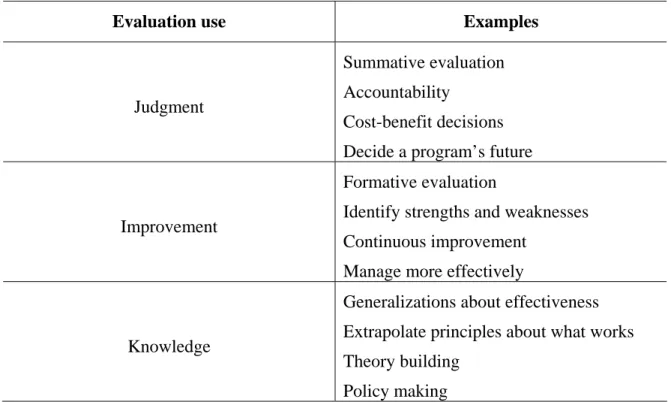
1. Use of Evaluation Findings ...43
2. Impact Assessment...44
3. Implementation Analysis...46
4. Efficiency Analysis ...48
C. PROPOSED PILOT PROGRAM EVALUATION PLAN ...51
1. Impact Assessment...52
2. Implementation Analysis...53
3. Cost-Effectiveness Analysis...55
D. CONCLUSION ...57
VI. CONCLUSIONS AND RECOMMENDATIONS...59
A. THESIS OVERVIEW ...59
B. CONCLUSIONS ...59
1. 360-degree Program Effectiveness ...59
2. 360-degree Program Best Practices...60
3. Surface Warfare Community 360-degree Pilot Program ...60
4. Program Evaluation...61
C. RECOMMENDATIONS...62
1. Pilot Program Design...62
2. Pilot Program Evaluation...64
D. RECOMMENDATIONS FOR FUTURE RESEARCH...66
APPENDIX PILOT PROGRAM SURVEY QUESTIONS ...69
LIST OF REFERENCES ...71
ix
LIST OF FIGURES
Figure 1. Types of Data Collected by 360-degree Feedback ...6
Figure 2. Performance Dimensions Likely to be Observed ...7
Figure 3. Phase 2 Participating Ships and Shore Commands...33
Figure 4. Navy Core Leadership Competencies and Associated Sub-Competencies ...34
Figure 5. Primary Uses of Evaluation Findings ...44
Figure 6. Sample Implementation Evaluation Questions...48
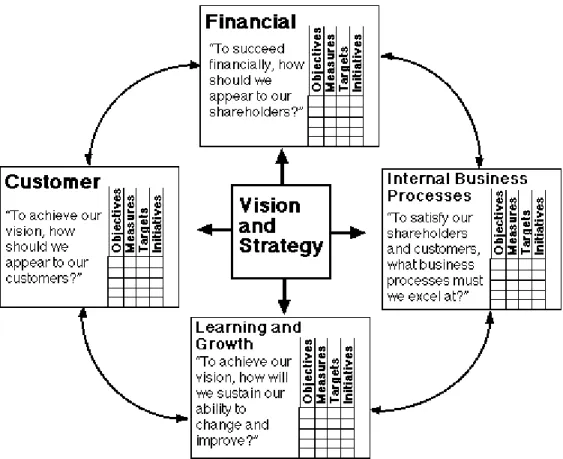
Figure 7. Balanced Scorecard...51
I. INTRODUCTION
A. PURPOSE
The purpose of this research is to examine the effectiveness and best practices of 360-degree feedback programs in both the civilian and military communities. The intent is to compare the current Navy pilot program with available research and best practices, identify discrepancies, make recommendations for improvement, and provide a guideline for pilot program evaluation.
B. BACKGROUND
The system known as 360-degree feedback, also called multi-source or multi-rater feedback, is a development program that provides a recipient with feedback from supervisors, peers, and subordinates. The underlying theory of a 360-degree program is that there is variation in the ratings of different groups, and that this dissimilarity presents the recipient with meaningful information from different perspectives within the organization (LeBreton, Burgess, Kaiser, Atchley, and James, 2003).
The use of 360-degree programs in corporate America substantially increased during the 1990s (Brutus and Derayeh, 2002). Today 360-degree programs have achieved near-universal acceptance as leadership development tools, especially in Fortune 500 companies (Ghorpade, 2000).
There is currently no institutionalized, Navy-wide 360-degree feedback program for leadership development. Although the Navy strongly encourages mentoring for personal development, the only formal feedback process used Navy-wide is the current Fitness Report and Evaluation system, which is designed primarily for performance appraisal and provides only “top down” feedback on performance.
The 2004 Surface Warfare Commanders Conference recommended a pilot program for 360-degree feedback be tested on a portion of the Surface Warfare Officer community. The pilot is to be a sustained, three-year trial of 360-degree feedback administered to approximately five percent of Surface Warfare Officers. The main purpose of the pilot program is to determine effectiveness and feasibility of further Navy-wide implementation.
C. RESEARCH OBJECTIVES
The primary research objectives are:
• To determine if 360-degree feedback programs are effective development tools.
• To identify best practices and lessons learned from civilian and military 360-degree feedback programs.
• To compare the Navy’s 360-degree feedback pilot program to identified best practices and lessons learned.
• To provide a program evaluation guideline to assist the Navy in properly evaluating the effectiveness of the pilot program.
D. SCOPE AND METHODOLOGY
The scope of this thesis is largely conceptual. The pilot program began in late 2004 and will continue through late 2007; therefore pilot data are not yet available for analysis. The thesis will present a conceptual analysis of the Navy pilot program as compared to empirical research and identified best practices and will also develop a framework for further program evaluation when pilot program empirical data are available.
The primary methodology for this research includes a literature review of empirical studies of both civilian and military 360-degree programs. Best practices, lessons learned, and program evaluation techniques are also identified through the literature review and personal interviews. Conclusions and recommendations for the Navy’s pilot program are determined by comparing the current program plan with the identified best practices and lessons learned from the literature as well as established program evaluation techniques.
E. EXPECTED BENEFITS
This thesis will provide the Navy with current knowledge regarding 360-degree program effectiveness, best practices, and overall program evaluation. This knowledge is
crucial for the Navy to properly analyze the design of the pilot program and accurately assess the costs and benefits of Navy-wide implementation of a 360-degree feedback program.
F. THESIS ORGANIZATION
This thesis is partitioned into six chapters: Chapter II presents a brief history of degree feedback use and a review of empirical data on the effectiveness of 360-degree programs as development tools. Chapter III presents a review of civilian and military program best practices and lessons learned in operating and enhancing the effectives of a 360-degree program. Chapter IV presents a thorough review of the Navy’s 360-degree pilot program. Chapter V discusses program evaluation techniques in general and provides an analysis of the planned pilot program evaluation methods. Chapter VI presents conclusions and offers recommendations for adjustments to the pilot program.
II. 360-DEGREE
FEEDBACK
A. INTRODUCTION
360-degree feedback, also called multi-source or multi-rater feedback, is a leadership performance evaluation and development program that uses assessments from superiors, peers, subordinates, and self to provide an individual a more thorough review of personal performance than is typically given in a traditional top-down assessment from a supervisor. The use of 360-degree programs in corporate America substantially increased in the 1990s to the point of near-universal acceptance in Fortune 500 companies (Ghorpade, 2000). This chapter presents a description and brief history of 360-degree program use and a detailed literature review of empirical studies that present contradictory findings on the effectiveness of 360-degree programs as development tools.
B. DESCRIPTION OF 360-DEGREE FEEDBACK
Lepsinger and Lucia (1997) describe 360-degree feedback as a process where supervisors, peers, subordinates, and even customers provide perceptions about a person’s behavior and the impact of that behavior as viewed from their various organizational perspectives. Downward feedback is provided by supervisors, upward feedback is provided by subordinates, and peer feedback is provided by individuals from the same organizational level as the feedback recipient (Brutus, Fleenor, and London, 1998). Self-assessments are also a common part of the process as these assessments provide a point of comparison with the other sources of feedback (Edwards and Ewen, 1996). The use and design of 360-degree programs varies by organization with some applying the process throughout the organization while others may only use it within a single department (London and Tornow, 1998). Most often, the process involves the various assessment groups completing survey questionnaires that provide feedback about the target individual. The surveys used for assessment may be internally generated questionnaires to address specific behaviors or competencies that the organization deems important. The surveys may also be standardized or customized assessments provided by outside organizations that address general leadership dimensions or managerial competencies (Lepsinger and Lucia, 1997).
Participation in a 360-degree program also varies with the needs of each organization. Many organizations reserve the process for upper- to middle-level managers and executives while others have implemented the program down to the level of individual contributors. Wide acceptance of 360-degree feedback within an organization is usually preceded by the acceptance of senior management; therefore most organizations begin the process at the senior management positions before administering to lower levels (Lepsinger and Lucia, 1997).
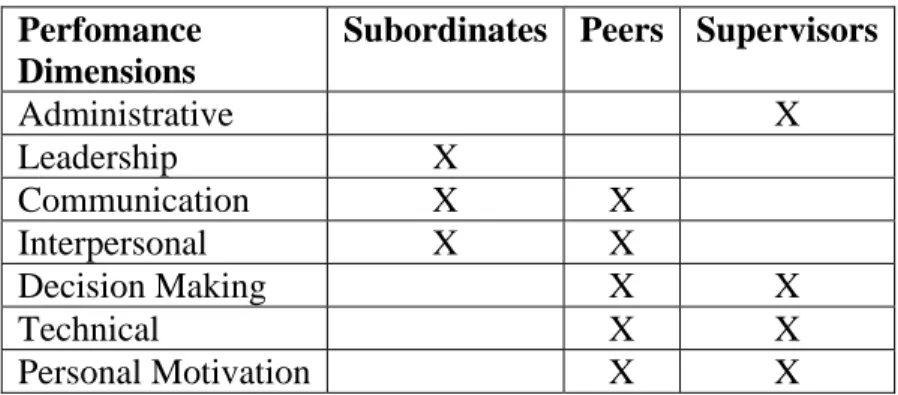
What a 360-degree program measures depends on the needs of each organization. Edwards and Ewen (1996) found that many organizations use 360-degree feedback to measure competencies that are relevant to the organization and that identify both high and low performance. Questionnaires usually contain items that assess a target manager’s behaviors, skills, or perspectives (Van Velsor, 1998). Lepsinger and Lucia (1997) suggest that the program can be used to measure an individual’s knowledge, skills, and style. Brutus et al. (1998) describe the program as one that measures individual items that may be grouped in broad performance dimensions such as administrative, communication, leadership, decision making, and personal motivation. Figure 1 further defines the knowledge, skills, and styles typically assessed by a 360-degree program as described by Lepsinger and Lucia (1997). Figure 2 lists the performance dimensions of Brutus et al. and indicates which rating sources are likely to observe those dimensions.
Figure 1. Types of Data Collected by 360-degree Feedback (After Lepsinger and Lucia, 1997)
Knowledge Familiarity with a subject or discipline (e.g., knowledge of a business or industry)
Skill Proficiency at performing a task; degree of mastery (e.g., ability to think strategically, communicate in writing, delegate work, influence, negotiate,
operate a machine)
Style Personal characteristics or ways of responding to the external environment (e.g., self-confidence, energy level, self-sufficiency, emotional stability)
Figure 2. Performance Dimensions Likely to be Observed By Different Rating Sources
(After Brutus et al. 1998)
Perfomance Dimensions
Subordinates Peers Supervisors
Administrative X Leadership X Communication X X Interpersonal X X Decision Making X X Technical X X Personal Motivation X X
The presentation of feedback data to the target individual is equally important as collecting the data. Van Velsor (1998) suggests that the design of the report format can affect how easily a manager interprets the data and can also affect motivation to act on the feedback data. She found that most feedback reports use either graphic displays, narratives, or a combination of the two. Graphic displays present charts, tables, or graphs that show actual scores; and narratives provide descriptions and interpretations of the results. Regardless of how the data are presented, she states that most reports will provide a breakout of mean scores for each rating group on each item of the survey. Additionally, the recipient may be provided a comparison to normative scores of all individuals who have taken the survey to show where the target recipient stands in relation to colleagues, or he or she may be presented an “ideal” or “target” score that the organization has determined to be desirable for a particular item or area.
Once scores are tabulated and the report is prepared, organizations typically present the report to the target individual in one of three ways: one-on-one delivery, group workshops, or individual self-study (Lepsinger and Lucia, 1997). One-on-one delivery involves a coach or facilitator meeting individually with the recipient to assist with analysis and interpretation of the data as well as with the formulation of a personal development plan. Workshops provide data analysis, interpretation, and assistance with personal development plans to a group of individuals, usually ten to twenty, from the same level within the organization. The self-study method provides the recipient the feedback report and a self-paced guide, via a workbook or electronic program, to assist
with analysis, interpretation, and development plans. Each method has advantages and disadvantages. Lepsinger and Lucia (1997) note that one-on-one delivery usually provides the most interaction with the facilitator, a deeper explanation of individual results, and greater confidentiality of data as it is shared only with the facilitator. However one-on-one delivery requires considerably more time investment to complete the process than the other methods. Group workshops are more efficient than the other methods at providing similar information to a larger number of individuals. The group setting can also provide a more supportive environment for receiving negative feedback, especially when individuals see that they are not the only ones receiving negative feedback. Workshops can make the process more difficult for an individual who may need significant individual assistance in analyzing and interpreting feedback results. Self-study requires the least amount of time investment by the organization and provides the recipient with the greatest amount of confidentiality in personal data, but the lack of an individual or group facilitator means progress and development is largely dependent on the individual’s motivation to act on the feedback data (Lepsinger and Lucia, 1997).
C. HISTORY OF 360-DEGREE FEEDBACK
Performance feedback has routinely been a part of the employer-employee relationship, yet this feedback normally was provided only by supervisors to subordinates. In the early 1950s the concept of management by objectives (MBO) emerged. Supervisors and subordinates worked together to identify objectives necessary to meet organizational goals and workers were provided more formal feedback targeted at their efforts toward achieving those objectives. Research found that employee productivity and job satisfaction improved when individuals were provided specific feedback on how well they met performance targets (Lepsinger and Lucia, 1997). As a result of this research, in the 1970s and 1980s companies began to use developmental feedback, in addition to performance appraisals and total quality management techniques, to improve individual and organizational performance (Edwards and Ewen, 1996).
In the 1990s many businesses began to adapt their organizational structure to meet the changing competitive environment by removing traditional hierarchical layers,
These flatter organizations needed a more robust feedback mechanism than that provided by the standard supervisor-oriented feedback, and multi-source feedback began to fill this void.
Hedge, Boorman, and Birkeland (2001) offer a thorough review of the development of 360-degree feedback from the rating scale research of the early 1900s, through the beginning of upward feedback in the late 1950s, to the full implementation of multi-source feedback in the early 1990s. Two organizations that had the most influence in multi-source feedback development were the Center for Creative Leadership (CCL) and TEAMS, Inc. (Lepsinger and Lucia, 1997; Edward and Ewen, 1996). TEAMS, Inc. selected and registered “360° feedback” as a trademark for its proprietary multi-source feedback process in the 1980s. But it was Wall Street Journal reports in 1993 that brought the “360-degree feedback” label into the business press. When Fortune quoted General Electric CEO Jack Welch as saying he used 360-degree feedback, the practice attracted even greater attention and the term “360-degree feedback” became even more rooted as standard business vernacular (Edwards and Ewen, 1996).
D. EMPIRICAL DATA ON 360-DEGREE PROGRAMS
While the increasingly competitive business environment was a factor in the development of 360-degree feedback, research that supported the effectiveness of this program as a development tool spurred the remarkable growth of acceptance and use within corporate America. Luthans and Peterson (2003) cite a recent survey that found nearly twenty percent of all American firms are using some type of 360-degree feedback program. The underlying theory of 360-degree feedback is that the ratings by different sources provide a target recipient with unique and meaningful feedback data on performance (LeBreton, et al., 2003). Most of the research of the 1990s supported this argument finding statistically significant differences across ratings provided by multiple sources. This research indicated that there was significant variation in ratings from supervisors, peers, and subordinates, and that this dissimilarity provided a feedback recipient with meaningful information from different perspectives within the
organization. Some recent research, however, questions the degree of uniqueness in multi-source ratings and also suggests that 360-degree programs may be less effective than originally believed.
1. Supportive Research
Support for the effectiveness of the 360-degree programs can be readily found in management, human resource, and psychological journals as well as the published works of subject matter experts of organizations in the leadership development industry. Brutus, Fleenor, and London (1998) argue that the multiple-rating sources are a main strength of 360-degree programs and that the multiple viewpoints have interesting differences. Based on their working experiences and the reviews of other studies, they conclude that feedback from multiple sources contributes to personal development and improved performance. Edwards and Ewen (1996) thoroughly discuss the potential of 360-degree feedback and suggest that outcomes can include improved employee satisfaction, behavior changes that are aligned with organizational objectives, and better team performance. They caution about the significant challenge of converting the potential of 360-degree feedback into a sustainable system; however they conclude that the program does have a measurable impact on the fairness of the assessment process, and that it is a useful development tool for an organization.
The study on upward feedback of student leaders and followers at the United States Naval Academy (USNA) is particularly pertinent to this thesis because of the military background of the participants (Atwater, Roush, and Fischthal, 1995). The subjects were 978 student leaders in their junior year and 1,232 student followers in their freshman year. The followers provided upward feedback to the leaders on performance in the area of general leadership behavior. The results suggested that leader behavior, as rated by followers, improved following upward feedback, and that leaders’ self evaluations tended to become more similar to follower evaluations after feedback. Using a rating scale of one to five with five being the highest, mean follower rating scores improved from 3.77 to 3.99 and this improvement was significant at the one-percent level. The most notable improvements were seen in the leaders who initially rated themselves higher than they were rated by their followers.
Walker and Smither (1999) conducted a five-year study of upward feedback provided annually to 252 managers at a large, regional bank. The feedback survey was developed within the organization and was designed to assess behaviors believed to be associated with effective leadership, productivity, and implementation of strategic business objectives. The results showed that manager performance did improve and, similar to the USNA study, that the managers who initially received lower ratings from subordinates showed the most improvement. On a rating scale of one to five with one being the highest, mean feedback scores improved from 2.10 to 1.95 and this improvement was statistically significant at the one-percent level. Another finding from this study was that managers who held feedback discussion sessions with their direct reports improved more than mangers who did not conduct these sessions. This finding led the authors to assert that what a manager does with feedback affects the level of improvement generated by the feedback. A further indication from this study, based on its five-year run, was that improvements from upward feedback could be sustained over time.
Hazucha, Hezlett, and Schneider (1993) also conducted a study of 360-degree feedback effects over time. Their study involved managers who received feedback using an initial feedback report followed by another feedback report two years later. The feedback was provided via a Management Skills Profile (MSP) that measured managerial proficiency in various job-related dimensions such as administration, communication, cognitive and interpersonal skills, and overall leadership behavior. Their findings showed improved performance ratings at the second feedback opportunity and greater self-other rating agreement. On a rating scale of one to five with five being the highest, mean feedback scores improved from 3.66 to 3.74 and the improvement was statistically significant at the ten-percent level. Managers showing the most improvement were those who followed through on development with coaching and goal setting. The authors concluded that 360-degree feedback was an effective development tool.
Another longitudinal study on upward feedback produced similar results of effectiveness (Reilly, Smither, and Vasilopoulos, 1996). The study followed 92 managers who received four feedback surveys over a two and one-half year period. The surveys were designed specifically to measure behaviors in a supervisor-subordinate
relationship. Managers who initially received low to moderate feedback ratings showed the largest improvement at the second feedback administration six months later. Over the course of the entire study, the authors found that managers’ improvements were independent of the number of times they received feedback, and that most of the performance improvement was observed between the first and second applications of the feedback. Using a rating scale of one to five with five being the highest, mean feedback scores improved from 3.75 to 3.92. Feedback scores for the lowest rated managers improved from 3.04 to 3.66. The mean improvement was statistically significant at the ten-percent level while the improvement for the lowest rated managers was significant at the one-percent level. The authors concluded that not only was the program effective, the improvement was not temporary and could be sustained over periods of time by periodically providing additional feedback.
The meta-analysis conducted by Kluger and DeNisi (1996) is an often cited work that both supports and contradicts the effectiveness of 360-degree feedback. Their work reviewed approximately 600 groups receiving feedback and the results showed that, on average, feedback could be associated with improved performance. The average effect, weighted by sample size, for all groups receiving feedback was 0.41 standard deviation units higher than groups not receiving feedback. This finding suggests that feedback has a moderately positive influence on performance. This finding is especially noteworthy because, unlike many studies that used only a pre-intervention and post-intervention comparison, Kluger and DeNisi compared groups receiving the intervention to groups not receiving the intervention. This comparison with control groups enables the results to be attributed directly to the intervention. Mitigating these results was the finding that, of those groups receiving feedback, about third showed improved performance, one-third showed little to no change, and one-one-third actually exhibited a decrease in their performance assessments. These findings appear to contradict the overall positive effect found for the entire study and may suggest that the 0.41 standard deviation unit improvement could have been caused by weighting the effects by sample size. Greater improvements may have been noted in larger group sizes and this would have introduced the positive skew in the overall results of the study.
Numerous other studies (Church and Bracken, 1997; Conway and Huffcutt, 1997; Greguras and Robie, 1998; Harris and Schaubroeck, 1998; Viswesvaran, Schmidt, and Ones, 2002) further support the effectiveness of 360-degree programs as performance development tools and the underlying theory of the unique and meaningful differences in ratings provided by multiple sources. These studies found that there is little similarity or correlation between the ratings assigned by different rating groups. Practitioners and researchers hold firm beliefs that multiple sources are superior to a single source when assessing behavior (Church and Bracken, 1997).
2. Contradictory Research
More recent studies have introduced contradictory evidence on the theories and effectiveness of 360-degree feedback programs. While prior research had concluded that multiple-source ratings had meaningful differences because there is little correlation in ratings between sources, LeBreton et al. (2003) suggest these differences in ratings may be due to a statistical artifact that they describe as a restriction in variance in job performance. Their restriction in variance hypothesis is based on the assumptions that organizational interventions such as recruitment, selection, training, and counseling have been at least marginally effective, and that these interventions select and develop managers who then engage in relatively consistent behaviors across various situations and time. This restriction in variance in job performance, the authors argue, has caused past research to overstate the magnitude of the uniqueness in ratings from multiple sources.
The authors offer two competing hypotheses that may explain why previous research has concluded that multiple sources provide dissimilar ratings on the same target -- the discrepancy hypothesis and the restriction in variance hypothesis. They describe the discrepancy hypothesis as one that assumes raters from different sources observe different behaviors in a target manager, that managers behave differently around the different sources of raters, and that raters of different sources attach varying levels of importance to the same observed behavior in the target manager. Under this hypothesis, even though a manager may engage in relatively stable behaviors, raters from different sources have different perceptions of this behavior and thus assign different ratings.
When measured with traditional correlation-based indices, variation in ratings between sources has been determined to be statistically unique.
Under the restriction in variance hypothesis, LeBreton et al. (2003) argue that the distribution of managerial performance ratings is negatively skewed with the variance in ratings being restricted to the higher performance end of rating scales. They further argue that traditional correlation-based indices, such as Pearson correlations and intra-class correlations, are susceptible to downward bias when there is little between-target variance in ratings. In essence they are suggesting that different managers exhibit relatively little variance in overall performance, that this restricted variance in performance then restricts the variance in assigned ratings of that performance, and that this restricted variance in performance ratings causes traditional measures of correlation, used to measure the similarity between rating sources, to find little similarity between different sources of ratings. Because of the susceptibility of traditional correlation-based indices to downward bias when target behavior is restricted in range, the authors suggest that a new statistic, one that is unaffected by the restriction in variance in performance, should be used to measure correlations between different rating sources. They suggest the rWG statistic, developed by James, Demaree, and Wolf (1984), as one that is
unaffected by the restricted range in performance.
To test their hypothesis, LeBreton et al. (2003), conducted a Monte Carlo simulation and two large field studies of 360-degree programs. The Monte Carlo simulation involved the generation of 50,000 targets evaluated by four raters. The targets were then rank ordered according to their average ratings. After rank ordering, targets were gradually removed to simulate the recruiting, selection, and training interventions that would occur in a normal organizational setting. The simulation results showed that traditional correlation measures were downwardly biased when the range in performance was restricted while the rWGmeasure was not affected by the range restriction. The Monte
Carlo simulation confirmed their hypothesis that traditional measurements used in previous research likely overestimated the magnitude of differences in ratings between sources because their correlation indices were affected by restriction in variance. Their
independent field studies of 360-degree programs also showed that, under the restriction in variance hypothesis, different sources of ratings displayed significantly more similarity than previously estimated.
The conclusion of this study is that multiple sources of ratings tend to have substantially more agreement than previously believed, and that between-source rating agreement (e.g., peer-subordinate, supervisor-subordinate) is comparable to within-source rating agreement (e.g., peer-peer, subordinate-subordinate). This conclusion questions the belief in the superiority of multiple sources of ratings provided by 360-degree programs and questions whether the time and cost of administering these programs is greater than the potential psychometric benefits. The authors do suggest that, while the psychometric benefits may be marginal, there may still be psychosocial benefits gained from a 360-degree program such as increased job satisfaction, trust, perceptions of justice, and organizational commitment.
Another study looked at the effects of a rater’s level in 360-degree ratings (Mount, Judge, Scullen, Sytsma, and Hezlett, 1998). Contrary to LeBreton et al. (2003), this study supports the theory of unique difference in ratings from multiple sources. However, the results of the study found that ratings by sources within the same level (e.g., two peers) were no more similar than ratings by sources from different levels (e.g., peer and subordinate). They suggest that rating differences among all raters are so unique that each rater should be viewed separately rather than aggregated by level. The authors argue that the current 360-degree practice of aggregating data by level is inappropriate and that this data averaging is mitigating valuable feedback information.
Scullen, Mount, and Goff (2000) studied the various factors that affect job performance ratings in a multi-source feedback setting. They developed a model that uses five factors they believe affect performance ratings in a multi-source assessment: ratee general job performance; ratee performance in a particular job dimension; rater idiosyncratic tendencies such as halo and leniency errors; rater organizational perspective (supervisor, peer, subordinate); and random measurement error. Using two data sets consisting of managers who received 360-degree ratings, the authors separated the variance in the ratings into three broad areas: the manager’s actual job performance
(general and dimensional performance), rater bias (idiosyncratic effects and organizational perspective), and random measurement error. The authors used a correlated uniqueness-confirmatory factor analysis (CU-CFA) method to separate the rating variance of each rater into the three factors. The CU-CFA method is described as a two-step process where the CU method first divides observed variance into performance related and unique variance components. The second step uses CFA to divide the unique variance into rater-related variance and random measurement error. Scullen et al. determined that only approximately twenty-five percent of the variance in assessments could be attributed to a manager’s actual performance while nearly fifty percent of the variance was due to rater bias effects. The authors concluded that, rather than being a true measure of manager performance, multi-source feedback largely measures the idiosyncrasies of individual raters. While this finding lends support to the underlying theory of using 360-degree feedback for developmental purposes, it suggests that multi-source feedback may introduce undesired bias in an administrative performance rating system.
Rather than examine rater effects on feedback, Greguras, Ford, and Brutus (2003) analyzed the level of attention that managers give to multi-source feedback ratings. An assumed benefit of 360-degree feedback is that multi-source ratings produce increased recipient self-awareness and improved performance (Mount et al., 1998). Greguras et al. (2003) suggest that an assumption of multi-source feedback programs is that recipients attend to the feedback information from each rating source. Their study was designed to test the hypothesis that feedback recipients attend to all sources of feedback in the same manner. They analyzed 213 managers in scenarios where multi-source ratings were varied across the different performance attributes of ability to lead others, administrative performance, building working relationships, and overall performance. The results indicated that feedback recipients did attend to all feedback ratings but not equally across all dimensions. Recipients attended to supervisor ratings more than peer ratings in all performance dimensions. Supervisor ratings were attended to more than subordinates’ in all dimensions except building working relationships. Peer ratings were attended to more than subordinates’ in the administrative performance dimension, and subordinate ratings
the theory that 360-degree feedback provides unique information from multiple sources and that recipients attend to the information from each source, but the results leave open the question of whether, as suggested by Figure 2, assessment tools should be tailored to the performance dimensions likely to be observed by particular rating groups.
Brett and Atwater (2001) tested the hypothesis that negative or discrepant feedback information motivates positive change in the recipient. Their study focused on recipient reactions to ratings and rating discrepancies across sources. The results indicated that less favorable feedback tended to produce negative feelings in the recipient and the belief that the feedback was less accurate. Further, if recipients viewed the feedback as less accurate, it was also viewed as less useful. Feedback that was viewed as less accurate and less useful did not consistently motivate positive change in the recipient. The meta-analysis of Kluger and DeNisi (1996) produced similar results when their analysis showed that feedback motivated positive change in only one-third of the recipients in the study.
Perhaps the most controversial finding links 360-degree feedback to a decrease in shareholder value (Pfau, Kay, Nowack, and Ghorpade, 2002). In their article the researchers discuss the Watson Wyatt 2001 Human Capital Index (HCI). This index is an ongoing study of how human capital practices relate to shareholder value in 750 publicly traded companies. The HCI scores were calculated in 1999 and again in 2001, and scores showed that companies using 360-degree feedback saw as much as a ten percent decrease in shareholder value. The controversy in this finding is whether shareholder value is a proper measure of human capital management effectiveness, especially in a time span of only three years (Chappelow, 2003). Chappleow argues that shareholder value is more often affected by other influences such as litigation, financial difficulties, and general market conditions. He cites work that suggests a better measure of the effects of human capital practices can be found in a combination of results such as revenues, earnings growth, and return on assets. Though the debate regarding this measure is certainly not resolved, the HCI findings suggest that organizations should thoroughly examine the expected costs and benefits of implementing a 360-degree feedback program.
London, Smither, and Adsit (1997) reviewed most of the pertinent literature on accountability in performance ratings and asserted that without accountability, 360-degree feedback would have little impact. Specifically they argue that raters should be held accountable for providing accurate feedback and that ratees should be held accountable for using the feedback. They also argue that the organization should be accountable for providing the resources to help support behavior change in feedback recipients. The researchers assert that, without accountability, 360-degree feedback can be inaccurate and easy to ignore. The authors concede that a dilemma exists between the accountability necessary for full realization of the benefits of 360-degree feedback and the expressed needs for anonymity of raters and confidentiality of the ratee’s feedback. A psychologically-safe environment of anonymity and confidentiality is necessary to induce candid feedback, yet without accountability for accuracy and use, the program may be adding costs and limiting benefits.
E. CONCLUSION
360-degree feedback is a development tool that presents a target recipient with performance assessments provided by self, supervisors, peers, and subordinates. The underlying theory of 360-degree feedback is that assessments from multiple sources provide unique and meaningful information to the recipient. The rapid growth in acceptance and use of 360-degree programs in corporate America was fueled by the need to adapt to the changing competitive environment and by numerous studies that supported the effectiveness of multi-source ratings. Although the majority of research supports the underlying theory of unique differences in multi-source ratings and the overall effectiveness of 360-degree feedback, recent research has raised questions about earlier findings and about the extent of benefits attributed to 360-degree feedback.
Results on the effectiveness of 360-degree programs are largely supportive but continued research is warranted. The current findings indicate that organizations should carefully consider the full range of expected costs and potential benefits when making decisions on implementing 360-degree programs for employee development.
III.
360-DEGREE FEEDBACK BEST PRACTICES AND LESSONS
LEARNED
A. INTRODUCTION
The phrase “360-degree feedback” is often used when describing organizational programs that use multi-source feedback surveys for personal development. For many organizations however, 360-degree feedback is only one part of a larger personal development program. This chapter examines studies of civilian organizations to identify best practices that enhance the benefits of using 360-degree feedback for personal development. A review of some current military 360-degree programs is also introduced to provide a more focused frame of reference for later comparison with the Surface Navy’s 360-degree pilot program.
B. CIVILIAN BEST PRACTICES TO IMPROVE PROGRAM EFFECTIVENESS
1. Executive Coaching and Feedback Workshops
The growth in popularity of executive coaching led Thach (2002) to study the quantitative impact on leadership effectiveness when using a 360-degree feedback process coupled with executive coaching. Her action research involved 281 executives and high-potential managers in a mid-sized, global telecommunications firm. The organization used an external consulting firm to help customize a 360-degree survey to assess competencies necessary for leadership success within this organization. The main focus of the survey was to assess competencies deemed necessary to achieve the organization’s five year business strategy. The study involved an initial 360-degree assessment followed by a training day that included an individual coaching session to debrief and analyze results. Members of the consulting firm served as executive coaches for the program and assisted the participants in preparing development plans to address no more than three areas identified for improvement and one area identified as a strength. Additional coaching sessions followed at one month, three months, and five months after
the initial session. The study concluded with the administration of mini 360-degree survey targeted at those areas identified for development during the initial coaching session.
The entire study was conducted in three separate phases. Phase one included development of the 360-degree survey and pilot testing the process on top executives including the CEO. Phase one data were not included in the program’s analysis. Phases two and three were full implementations of the program. The second phase had 168 participants and the third phase had 113 participants. The participants in both phases completed a post-participation survey to provide their views on the program. The second and third phases were identical with the exception of minor modifications to the training day in the third phase that were suggested by participants in the second phase.
The results of the study indicated that leadership effectiveness ratings, as perceived by others in the mini-360 survey, had increased by fifty-five percent for the first group of participants and by sixty percent for the second group. The average number of coaching sessions completed, across both groups, was 3.6 as opposed to the four recommended by the program. While all participants who attended coaching sessions showed improved mini-360 self-scores in leadership effectiveness, Thach found that completing three to five coaching sessions had a much larger impact on improving self-scores than completing only one to two coaching sessions. Thematic analysis of the responses provided by participants through the post participation surveys revealed that thirty-four percent rated the coaching as the most positive part of the process and twenty-five percent rated the 360-degree feedback as helpful.
Thach cautions that her study is limited by its design as the analysis was of the complete process and could not accurately separate the effects of the coaching from those of the 360-degree feedback. An additional criticism is the lack of a control group to measure true program effect. Despite the limitations, this study suggests that 360-degree feedback coupled with executive coaching can have a positive impact on leadership development.
Luthans and Peterson (2003) conducted a similar study on the impacts of self-awareness coaching used in conjunction with a 360-degree feedback program. Their
study involved all employees, twenty managers and sixty-seven workers, of a small, Midwestern manufacturing company. As the entire organization was used in the study, supervisor, peer, and subordinate roles were all represented. The analysis focused specifically on the impact that the feedback and coaching combination had on manager self-awareness, which they defined as the difference between self-ratings and other’s ratings, and on managers’ and workers’ attitudes. The authors developed a managerial feedback profile (MFP) to use for the 360-degree survey. The MFP assessed various behaviors in three broad areas: behavioral competence, interpersonal competence, and personal responsibility. Attitudes were assessed for all study participants through self-reports of job satisfaction, organizational commitment, and turnover intentions using other psychometrically accepted measurement instruments.
The study began with the initial administration of the MFP and attitude surveys. After completion of the surveys, the authors acted as feedback facilitators and coaches for the managers. The goals of the initial coaching session were to establish the manager’s awareness of the discrepancy in self and other’s ratings, to help managers determine why the ratings were different, and to help managers direct their increased self-awareness toward appropriate courses of action for improvement. No other coaching sessions were formally scheduled but the researchers did conduct random follow-up visits with each manager throughout the study period. The study was ended by re-administering the MFP and attitude measurement instruments to all participants three months after the initial assessment.
Study results showed that at initial assessment, manager’s self-ratings were higher than other’s ratings in all three factors. Scores on the follow-up MFP showed that the discrepancy between self and other’s ratings had disappeared leading the authors to conclude that feedback and coaching positively affected the managers’ self-awareness. Interestingly, the results also showed that the discrepancy reduction was not achieved by a lowering of self-ratings but by an increase in others’ ratings of the managers. Attitudes of all participants also improved following the feedback and coaching. Participants reported increased job satisfaction and organizational commitment and decreased turnover intentions.
Luthans and Peterson acknowledge that the lack of a control group is a limitation in attributing results solely to the feedback and coaching. The design of the study did allow for measurement of change in attitudes but the absence of a control group prevents a clear determination that the improvements were caused directly by the feedback and coaching. The authors did not address any concerns with the relatively short period of the study. In view of the limitations, the authors suggest that 360-degree feedback with systematic coaching can have a positive effect on work attitudes and can possibly improve work performance.
Seifert, Yukl, and McDonald (2003) completed an analysis of feedback alone and feedback with coaching that used a control group to help assess actual program effects. The objectives of their research were to determine the effectiveness of a multi-source feedback workshop in changing managerial behavior and to determine if a skilled, neutral facilitator could enhance feedback effectiveness. Their study included twenty-one managers who received feedback from supervisors, peers, and subordinates. The managers were from two similar, regional savings banks. The managers were divided into three groups of seven. The experimental group received feedback via a facilitator led workshop, the comparison group received the same feedback reports but not in a workshop, and the control group received no feedback. The experimental and control groups were from the same bank while the comparison group was from the other bank.
The feedback instrument was developed to assess the influence behaviors of the managers. The feedback provided was a measure of the manager’s use of influence tactics with others. The authors used previous research to identify four core tactics of managerial influence behavior: rational persuasion, inspirational appeals, consultation, and collaboration. A pre-measure survey was conducted for all twenty-one participants to provide a baseline assessment of the manager’s use of influence tactics. A post-measure survey was completed three months later following the feedback intervention. The effect of the intervention was evaluated by measuring the change in a manager’s use of influence tactics. Another survey was administered at the end of the workshop to assess manager’s perceptions of feedback accuracy, feedback utility, and the capacity to improve based on feedback. The same survey was given to the comparison group with
The feedback workshop was a seven-hour session held at the bank’s training facility and the authors served as workshop facilitators. The facilitators first explained various tactics used to exert influence and showed a video demonstrating these tactics. Next the managers were given their feedback reports and facilitators offered advice on interpretation. The workshop then shifted to scenario exercises where the managers were presented a scenario and then worked in groups to develop an influence strategy for each scenario. The workshop concluded with facilitators assisting managers in developing action plans for using their feedback to improve influence behaviors.
The results of the feedback intervention showed that the experimental group significantly increased its use of two of the four core influence tactics, consultation and collaboration, while the control and comparison groups showed no significant change in any influence behaviors. The intervention evaluation surveys indicated that the experimental group and comparison group perceived no difference in feedback accuracy but the experimental group had a significantly higher perception of feedback utility and its capacity to improve performance. Based on the results the authors concluded that a feedback workshop can have a positive effect on changing behavior and that using a competent facilitator can increase the perceived utility of the feedback.
Rogers, Rogers, and Metlay (2002) conducted a survey of 145 global organizations that used 360-degree feedback. Companies such as Aetna, Allstate, Anheuser-Busch, Ford, Home Depot, Raytheon, and USX, were among the forty-three organizations that responded to the survey. The purpose of their survey was to determine how and why organizations are using 360-degree feedback. They divided the organizations into three groups, higher benefit, moderate benefit, and lower benefit, based on the organization’s assessment of whether 360-degree feedback had been beneficial and if the 360-degree feedback process was worth the resources committed to the program. About twenty-one percent of the organizations considered 360-degree feedback to be of a high benefit, fifty-seven percent considered it of moderate benefit, and another twenty-one percent considered it to be of low benefit.
The survey results indicated that nearly ninety percent of the higher benefit organizations used coaching as part of their 360-degree feedback process. These
organizations reported investing significant time, resources, and control over the coaching process including selection and training of coaches. An interesting finding was that only twenty-five percent of the higher benefit companies used external coaches while fifty percent of the lower benefit companies used external coaches. The authors suggest this finding may be due to the expanded use of 360-degree feedback throughout the organization, which would make external coaching prohibitively expensive. Another possible explanation, though not suggested by the authors, is that internal coaches might have higher credibility with members of the organization than external coaches. The authors also state that, in a survey of 360-degree feedback participants, seventy percent reported that coaching helped them make better use of feedback results.
2. Anonymity and Confidentiality
Confidentiality refers to the way in which a target manager’s feedback data are shared, and anonymity refers to the protection of the identity of raters (Van Velsor, 1998). Absolute confidentiality and anonymity would be a situation where the feedback recipient is the only person who sees the data and the raters are completely unknown to the ratee. Van Velsor argues that confidentiality and anonymity are critical in the 360-degree process yet she concedes that limitations in the process preclude absolutes in either case. Edwards and Ewen (1996) also stress the need for both confidentiality and anonymity in the process. They recommend that feedback data be shared with a performance coach to enhance effectiveness but they caution against using the supervisor as the coach. Their argument is that the supervisor will face a dilemma of seeing feedback data that is to be used for development purposes only and then trying to forget these data when making performance appraisal decisions. A role conflict then occurs between the supervisor’s position as coach for development and as judge for performance appraisal (Tornow, 1998). When confidentially barriers are broken in a developmental feedback process, feedback scores become less accurate and are usually inflated (Eichinger and Lombardo, 2003).
Eichinger and Lombardo (2003) cite recent surveys that showed half of supervisors in a 360-degree program had access to full feedback reports on their subordinates. They argue that this is a flawed practice rife with unintended consequences. They cite Antonioni’s study (1994) that found non-anonymous direct
reports rated supervisors significantly higher than those whose ratings were anonymous as evidence of the problem with the practice. Citing their own studies, the authors found that average scores went up when raters were not anonymous and that forty-three of sixty-seven competency ratings increased significantly. Rogers et al. (2002) found that ninety-seven percent of the forty-three companies that responded reported that ensuring anonymity and confidentiality was a primary objective in their programs.
3. Training
Based on experiences with assisting in the implementation of 360-degree feedback programs, Edwards and Ewen (1996) argue that organizations that do not invest in training should not pursue 360-degree feedback. They suggest that training raters in how to properly provide feedback is equally important as training recipients in how to use the feedback. Rogers et al. (2002) found that companies reporting higher benefits from 360-degree programs were more likely to have invested in training for raters than lower benefit companies. Additionally, higher and moderate benefit companies were more likely to exert approval over the ratee’s selection of raters than lower benefit companies. Ghorpade (2000) suggests that rater training should include detection of rater biases. This detection can be shown in trial rating sessions of hypothetical candidates who display wide variations in behavior. Raters are shown their own scores and the average of the group’s of scores to reveal if they are habitually high or low graders. Ghorpade cites the work of Cascio (1997) as evidence that this “frame of reference” training can improve the accuracy of rater appraisals.
4. Use of Multiple Instruments
Martineau (1998) attempted to answer the question of how many times a particular instrument may be used for feedback. The heart of the question is whether a manager can learn anything new and meaningful from the same instrument used multiple times. She suggests that the flexibility of the instrument, such as the number of dimensions measured and variety of feedback provided, will determine how often it may be used. While offering no specific number, she does argue that saturation of any instrument for a particular individual will occur in time.
Using different instruments customized to the different ratee levels within an organization is another modification to the single instrument feedback program. Brutus
and Derayeh (2002), in their survey of Canadian organizations that use 360-degree feedback, found that approximately ten percent were using multiple instruments and these instruments were targeted to different segments within the organization. Rogers et al. (2002) found that higher benefit organizations used multiple instruments to measure the various sets of competencies expected at specific levels within the company. These organizations found that feedback targeted to specific job responsibility levels was more meaningful in employee development. Survey respondents reported that participants appreciated the targeted feedback instruments and that the customization helped individuals align their development goals with the larger goals of the organization.
5. 360-degree Feedback for Performance Appraisal
Dalton (1998) states that the practice of using 360-degree feedback for performance appraisal is controversial. She cautions against using 360-degree developmental feedback for appraisal because doing so violates the confidentiality of feedback data. She also suggests that use as a performance appraisal system ignores the research evidence that shows raters change their feedback scores if they are to be used for appraisal vice development only. Dalton does state that while some organizations have reported successful implementation of a 360-degree feedback performance appraisal system, a 1997 survey showed half of respondents that had used 360-degree feedback for appraisal had abandoned the practice for reasons such as negative employee reaction and inflated ratings. Scullen et. al. (2000) also urge caution as the results of their study suggest that, rather than measuring actual job performance, multi-source feedback systems largely measure the idiosyncrasies of the individual raters.
Ghorpade (2000) argues that the primary objective of 360-degree feedback is development rather than appraisal. He suggests that 360-degree programs should be used for development only but recognizes that, because of the costs of the program, many companies will desire to use them for appraisal purposes to increase return on investment in the program. In this instance, he suggests companies should use 360-degree feedback first as a development tool and only implement for appraisal after gaining wide acceptance within the organization. Lepsinger and Lucia (1998) also suggest a gradual approach. While leaning toward use for development only, they suggest that
organizations first begin with 360-degree feedback for development before proceeding to any use as a performance appraisal system.
Though they offer no empirical evidence, Eichinger and Lombardo (2003) suggest that use for performance appraisal can lead to rating coalitions where individuals agree to inflate each other’s ratings as a form of protection from the threat of multi-source appraisal. Rogers et al. (2002) found that the process of moving from development to appraisal had often failed within the forty-three organizations that responded to their survey. They found that most organizations were using 360-degree feedback for development only and that higher benefit organizations were more likely to use 360-degree feedback only for development than were lower benefit organizations.
C. MILITARY PROGRAMS
1. Navy Flag/Senior Executive Service (SES) Program
Information on the Flag/SES program was obtained by personal communications with Mr. Jeff Munks (Jan, 2005) of the Executive Learning Office at the Naval Postgraduate School, and Dr. Roger Conway (Jan, 2005) of the Center for Creative Leadership (CCL) in San Diego, California. Additional information on the various survey instruments was obtained from the CCL website (CCL, 2005).
The Navy Flag/SES program is a joint effort between the Executive Learning Office at the Naval Postgraduate School and CCL. Newly selected Flag/SES personnel attend the Navy Flag Officer Training Symposium (NFOTS) as an orientation for their new positions. Prior to attending NFOTS, the participants are administered a battery of survey instruments, which include both 360-degree assessments and personality type indicators, to help each individual better understand self and to see how others assess their leadership competencies.
The two 360-degree assessments used are Benchmarks and the Campbell Leadership Index. Benchmarks is a CCL developed survey that assesses leadership skills, provides rater breakout and normative comparisons, and helps detect potential
flaws that could lead to career derailment. The Campbell Leadership Index provides the recipient with assessments of orientations toward leadership such as energy, affability, dependability, and resilience.
The personality indicators used include the California Psychological Inventory (CPI), the Change Style Indicator, the Myers Briggs Type Indicator, and the Fundamental Interpersonal Relations Orientation Behavior (FIRO-B). The CPI provides an assessment of personal and professional styles of interaction. The Change Style Indicator measures the individual’s comfort level with change and approach to managing change. The Myers Briggs is the well known personality type indicator that measures four bipolar traits of personality: introvert-extrovert, sensing-intuition, thinking-feeling, and judging-perceiving. The FIRO-B instrument measures interpersonal effectiveness in the dimensions of inclusion, control, and affection.
During NFOTS the participants attend a coaching workshop where results of the various surveys are reviewed and interpreted. In addition to the coaching workshop, each participant meets one-on-one with an industrial psychologist for in-depth review of survey results and generation of personal development plans. After NFOTS, participants can request follow-on coaching sessions.
The combination of 360-degree assessments and personality type indicators provides participants with a well rounded view of self and with assessments by seniors, peers, and subordinates. The process is conducted only one time, during NFOTS attendance. The survey results are confidential, used only for personal development, and are not linked to any performance appraisal system. Based on feedback surveys, participants found the process to be beneficial and extremely valuable in helping them see self through the assessments of others.
2. Submarine Squadron Twenty
Submarine Squadron Twenty recently announced a 360-degree feedback pilot program, scheduled to begin in May of 2005, for the eight commanding officers in this unit (Spinner, 2005). The focus of the program is to provide participants a view of emotional and social leadership skills, to assess leadership competencies, and to highlight any behaviors that may be barriers to further advancement.