ScholarWorks
Walden Dissertations and Doctoral Studies Walden Dissertations and Doctoral StudiesCollection
2017
Creativity in Asynchronous Online Discussions
Timothy D. CorfmanWalden University
Follow this and additional works at:https://scholarworks.waldenu.edu/dissertations Part of theEducation Commons
This Dissertation is brought to you for free and open access by the Walden Dissertations and Doctoral Studies Collection at ScholarWorks. It has been accepted for inclusion in Walden Dissertations and Doctoral Studies by an authorized administrator of ScholarWorks. For more information, please [email protected].
Walden University
College of Education
This is to certify that the doctoral dissertation by
Timothy Corfman
has been found to be complete and satisfactory in all respects, and that any and all revisions required by
the review committee have been made.
Review Committee
Dr. Dennis Beck, Committee Chairperson, Education Faculty Dr. Jennifer Smolka, Committee Member, Education Faculty Dr. Shereeza Mohammed, University Reviewer, Education Faculty
Chief Academic Officer Eric Riedel, Ph.D.
Walden University 2017
Abstract
Creativity in Asynchronous Online Discussions by
Timothy Dwight Corfman
MEd, Abilene Christian University, 1991 BA, Abilene Christian University, 1988
Dissertation Submitted in Partial Fulfillment of the Requirements for the Degree of
Doctor of Philosophy Education
Walden University August 2017
Abstract
It is vital for online educators to know whether the strategies they use help students gain 21st-century skills. One skill that has been identified as important in the 21st century is creativity; however, a gap existed in the literature concerning whether online courses could help students to develop creativity. Thus, the purpose of this study was to determine whether participation in online courses can help students develop creativity using asynchronous online discussions, textbooks, and teacher developed materials. Amabile’s componential model of creativity formed the study’s conceptual framework. A case-study approach was used to examine the question of whether asynchronous online discussions and other materials used in online courses could help students develop
creativity. One professor, recognized by her peers for her expertise in online education, and three of her online graduate students who volunteered for the study, were interviewed using Zoom. Twenty-nine transcripts of asynchronous online discussions were analyzed using a sequential process of building an explanation, checking the explanation against the data, and repeating the process. Key results from the study indicated that project-based prompts, problem-project-based prompts, and heuristics used in asynchronous online discussions can help promote creativity. Recommendations for future research include conducting a similar case study with a more diverse group of participants and with a course in a different specialty. These findings may promote social change by helping online instructors use appropriate prompts for asynchronous online discussions that will help students refine their creative skills to ultimately use them in the 21st century workplace
Creativity in Asynchronous Online Discussions by
Timothy Dwight Corfman
MEd, Abilene Christian University, 1991 BA, Abilene Christian University, 1988
Dissertation Submitted in Partial Fulfillment of the Requirements for the Degree of
Doctor of Philosophy Education
Walden University July 2017
Dedication
I would like to dedicate this dissertation to my parents, John and Jimmie
Acknowledgments
I would like to thank Dr. Dennis Beck, who guided me through the dissertation process, and Dr. Jennifer Smolka, who gave me timely feedback as I wrote this
dissertation. I would also like to thank those who gave me materials that allowed me to conduct this study and those who allowed me to interview them.
i
Table of Contents
List of Tables ... vi
List of Figures ... vii
Chapter 1: Introduction to the Study ...1
Background ...1
Problem Statement ...5
Purpose of the Study ...7
Research Questions ...8
Conceptual Framework ...8
Nature of the Study ...11
Definitions...11
Assumptions ...14
Scope and Delimitations ...15
Limitations ...15
Significance...16
Summary ...17
Chapter 2: Literature Review ...18
Literature Search Strategy...19
Conceptual Framework ...20
Definition of Creativity ... 23
4 P’s of Creativity ... 24
ii
Elements of the Componential Model of Creativity ... 26
The Creative Process... 35
Literature Review Related to Key Concepts ...35
Asynchronous Online Discussions ... 35
Types of Online Classes... 36
Asynchronous Online Discussions ... 37
Community of Inquiry ... 38
Teaching Creativity ... 49
Summary ...59
Chapter 3: Research Method ...60
Research Design and Rationale ...60
Role of the Researcher ...62
Methodology ...62
Participant Selection Logic ... 63
Instrumentation ... 65
Procedures for Recruitment, Participation, and Data Collection ... 66
Data Analysis Plan ...67
Issues of Trustworthiness ...72
Credibility ... 72
Transferability ... 73
Dependability ... 73
iii Limitations ... 73 Ethical Procedures ... 74 Summary ...74 Chapter 4: Results ...76 Setting ...77 Demographics ...78
Student Interview Participants ... 78
Instructor Participant ... 79
Data Collection ...80
Student Interview Data ... 80
Instructor Interview Data ... 82
Data Analysis ...84
Stage 1 Cleaning Up the Data ... 84
Stage 2 Pattern Finding ... 89
Identification of Themes ...90 Heuristics ... 90 Openness/Suspending Judgement ... 91 Agreeing/Praise ... 91 Answering/ Critiquing ... 91 Evidence of Trustworthiness...91 Credibility ... 92 Transferability ... 92
iv Dependability ... 92 Confirmability ... 93 Limitations ... 93 Results 94 Research Question 1 ... 94 Research Question 1a ... 94 Research Question 1b ... 98 Research Question 1c ... 102 Research Question 2 ... 104 Discrepant Data ...107 Summary ...107
Chapter 5: Discussion, Conclusions, and Recommendations ...108
Interpretation of the Findings...109
Research Question 1 ... 109 Research Question 2 ... 115 Limitations of Study ...117 Forgotten Information ... 117 Verbalization ... 117 Zoom 118 Participants ... 118 Types of Courses... 119 Recommendations ...119
v Retaining Information ... 119 Diversity of Participants ... 119 In Person Interviews ... 120 Multiple Domains ... 120 Implications...120 Individual Level ... 120 Organizational Level ... 121 Societal Level... 121 Educational Practice... 122 Conclusions ...122 References ...124
Appendix A: Instructor Protocol ...144
vi List of Tables
Table 1. Alignment of Research Questions to Data Sources ...65
Table 2. Coding Matrix for Asynchronous Online Discussions ...68
Table 3. Alignment of Research Questions and Interview Questions ...69
Table 4. Alignment of Research Questions and Interview Questions for Student ...71
Table 5. Summary of Student Interview Data Collection ...82
Table 6. Coding Key ...85
Table 7. Example of Interview Coding ...85
Table 8. Examples of Coding Threads ...87
vii List of Figures
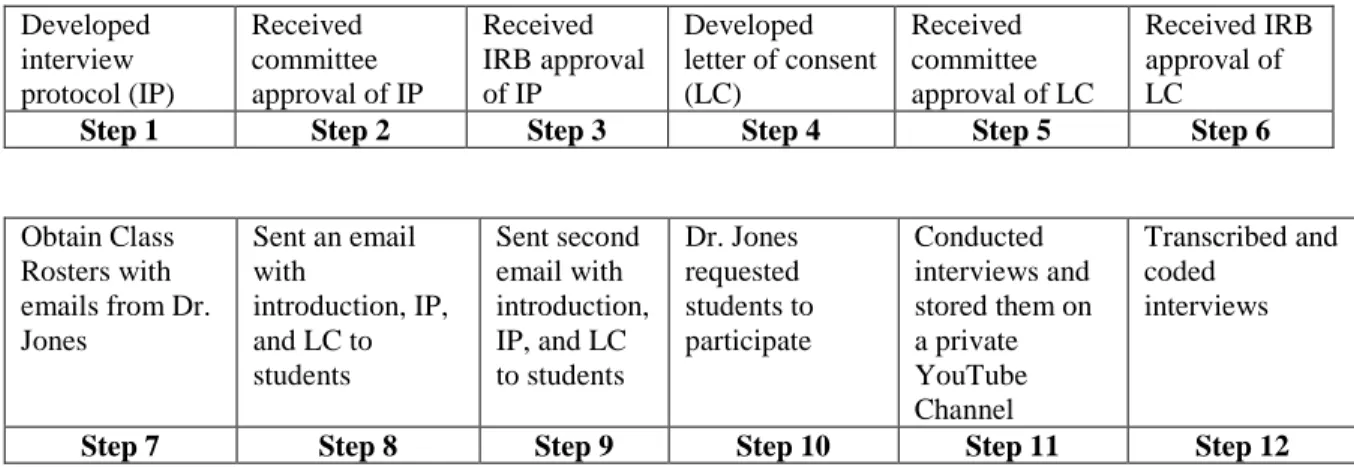
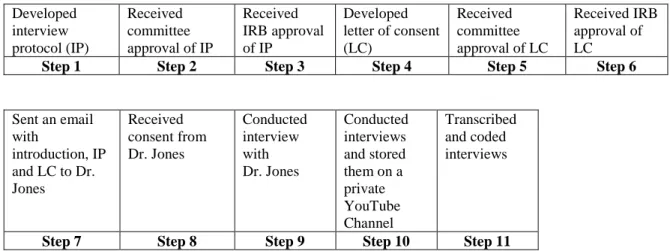
Figure 1. Student recruitment procedure for interviews ...81 Figure 2. Instructor recruitment procedure for interviews ...83 Figure 3. Yin’s (2014) explanation-building process ...90
Chapter 1: Introduction to the Study
In this study, I examined how creativity, as conceptualized in Amabile’s (1983, 1988; Amabile & Pillemer, 2012) componential model of creativity, is expressed in online classes during asynchronous online discussions. It was important to do this study because instructors in online courses frequently use asynchronous online discussions as an instructional strategy in online classes and because government officials, business leaders, and educators have identified creativity as a vital 21st-century skill (Colby & Ortman, 2015). Based on my review of the literature, not much research, however, has been conducted on the relationship between teaching students to be creative and using asynchronous online discussions as an instructional approach. In conducting my investigation, I sought to potentially improve instruction in online classes by explaining how asynchronous online discussions can be used by instructors to teach 21st-century skills.
Background
What teachers do to design, direct, and facilitate online courses plays an important part in the quality of instruction provided in their online classes (Garrison, Anderson, & Archer, 2010). Andresen (2009) defined asynchronous online discussions as online discussions that do not take place in real time. Andresen ascertained that teachers played a vital role in generating asynchronous online discussions that expanded the thinking of participants. Andresen discovered that asynchronous online discussions produced the same quality of learning that traditional educational strategies provide. Andresen noted, however, that restrictions existed as to what could be taught using asynchronous online
discussions. First, teaching students to solve problems (specifically in mathematics) proved more challenging in an asynchronous setting than it was in a traditional setting (Andresen, 2009). Second, learners in online classes did not believe that asynchronous online discussions were as meaningful as traditional classroom discussions (Andresen, 2009).
Several researchers have studied what makes asynchronous online discussions productive (Darabi, Arrastia, Nelson, Corille, & Liang, 2011; Gašević et al., 2015; Richardson & Ice, 2010; and Yeh, 2010). These researchers discovered that some types of asynchronous online discussions produced greater levels of learning than other types of asynchronous online discussions. Researchers have acknowledged that the
Community of Inquiry (CoI) model is a useful method for explaining what elements were necessary for a successful asynchronous online discussion (Garrison et al., 2010).
Additionally, many researchers who have examined the best practices of online interactive learning have used CoI as the core framework for their studies (Arbaugh, 2008). Per CoI framework, quality online instruction involved cognitive presence, social presence, and teacher presence (Garrison et al., 2001, 2010). Social presence consisted of the student’s ability to express his or her thoughts and emotions with the instructor and other students in an online environment. Cognitive presence involved the student engaging with the material presented in the course. Teacher presence included the
teacher’s role in designing the course, providing instruction, and interacting with students throughout the course (Garrison et al., 2001, 2010).
Creativity is among the skills and proficiencies identified by policy makers as necessary for employees and citizens in the 21st century to demonstrate because of the high correlation between creativity and the development of strong national economies (Kereluik, Mishra, Fahnoe, & Terry, 2013). Several researchers have examined the creative processes that 21st-century employees will need. For example, Mumford, Medieros, and Partlow (2012) identified the process that was required to solve problems creatively, and Friedman (2007) noted that globalization had changed the skills necessary for today’s students to be tomorrow’s successful employees. These new skills are often called 21st-century skills (Ananiadou & Claro 2009). Most of the new skills dealt with managing knowledge (Ananiadou & Claro 2009). Thus, it is important to identify these skills and for schools and colleges to incorporate them into their curricula (Ananiadou & Clark, 2009).
Kereluik et al. (2013) studied fifteen 21st-century knowledge frameworks and discovered that the skills listed in the frameworks fell into three categories: (a) foundational knowledge, (b) humanistic knowledge, and (c) meta-knowledge.
Foundational knowledge consisted of digital literacy, core-subject-matter knowledge, and cross-disciplinary knowledge. Humanistic knowledge included employment and
everyday living skills, ethical/emotional awareness, and cultural competence. Meta-knowledge involved creativity, critical thinking, and communication. While government leaders and business leaders began to recognize creativity essential 21st-century skill, schools at all levels began to offer more classes and degree programs online (Kereluik et
al. 2013). Thus, it was important to examine the quality of education that students receive in online courses.
Many researchers have studied how to improve creativity (Amabile, 1983, 1988; Amabile & Pillemer, 2012). Other researchers have studied how to improve
asynchronous online discussions (Cho & Tobias, 2016; Darabi et al., 2011; Gašević et al., 2015; Karakaya & Demirkan, 2015; Richardson & Ice, 2010; and Yeh 2010). Few researchers, however, have looked at the intersection of improving creativity in
asynchronous online courses. Karakaya and Demirkan (2015) studied how to increase creativity in blended online classes in which the goal is a creative product. However, Karakaya and Demirkan’s research did not explore how instructors could encourage creativity in classes that were fully online or that have both content knowledge and creative projects as objectives. Thus, a gap in the research still existed in research on courses that were fully online and that had both content knowledge and creative projects as goals. This study was necessary to see how teachers in fully online classes that have both content and products as objectives could help their students improve their creativity.
The purpose of this study is to examine how the students and instructor in two online courses expressed creativity in asynchronous online discussions according to Amabile’s (1983, 1988; Amabile & Pillemer, 2012) componential model of creativity. It was important to do this study since instructors of online courses frequently use
asynchronous online discussions are frequently. Government leaders, business leaders, and educators have identified creativity as a vital 21st-century skill (Greenstein, 2012). Little research, however, had been done on the relationship between teaching students to
be creative using asynchronous online discussions. This study could potentially improve instruction in online classes by explaining how asynchronous online discussions can be used to teach 21st-century skills.
Topics covered in this chapter include background, problem statement, research questions, conceptual framework, nature of the study, assumptions, scope and
delimitations, limitations, and significance.
Problem Statement
Because of the connection between 21st-century learning and the skills required by workers in a globalized economic system, it is imperative for online educators to know whether the strategies they are using are helping students to gain these 21st skills (Akyol & Garrison, 2011; Ananiadou & Clark, 2009). Dixson (2012) provided two reasons why it is important to study the teaching strategies used by instructors in online interactive classes. First, colleges will continue to offer online courses (Dixson, 2012). Second, student engagement is an important characteristic of online interactive learning (Dixson, 2012). Based on my review of the literature, however, researchers have scantily examined how asynchronous online discussions are being used to help students become more creative when compared to other areas of research related to creativity. In this study, I examined the intersection between teaching students to be creative and using asynchronous online discussions as an instructional strategy. According to Cho and Tobias (2016), a third reason for studying creativity enhancement through asynchronous online discussions is that instructors frequently use this tactic in online classes.
A faster and more pervasive Internet changed the lives of people in the 21st century. The advances in the Internet have been a disruptive force in the economies of many nations (Friedman, 2007). Thus, policymakers in many countries have begun to examine their countries’ future competitiveness in a globalized world. Education is one area that legislators believed needed to be improved to secure a sound economic future for their citizens (Kereluik et al., 2013). Strategic thinkers in these countries during the first decade of this century began to look at how students were being prepared to live and work in the 21st century (Kereluik et al., 2013). These strategic thinkers identified skills and proficiencies that 21st-century students should possess. Creativity was among those skills and proficiencies identified by policymakers as necessary for employees and citizens in the 21st century because of the high correlation between creativity and the development of strong national economies (Kereluik et al., 2013). In other words, countries with creative individuals were more likely to have strong national economies.
The enhancements made on the Internet have allowed universities to increase the number of online classes offered; nevertheless, many college presidents remain cautious about the ability of online courses, when compared to traditional courses, to prepare students to be successful (Parker, Lenhart, & Moore, 2011). Showing, through research, that online education can prepare students to succeed as well as traditional courses do might be one way to allay the fears of college presidents about online courses.
Online instructors routinely use asynchronous online discussion as an
instructional strategy (Andresen, 2009; Gao, Zhang, & Franklin, 2013; Kim & Bonk, 2006). Before an asynchronous online discussion can be successful, participants must
overcome several barriers, however. Gao et al. (2013) documented four challenges that affect students’ engagement in online discussions. First, some students lose focus during the conversation. Second, some students have difficulty participating in the dialog. Third, some students have difficulty integrating the comments in the discussion. Finally, some students have difficulty communicating effectively because of the lack emotional cues and timely feedback.
It is necessary to study how asynchronous online discussions can be used to promote creativity for three reasons. First, creativity is an essential 21st-century skill (Greenstein, 2012). Second, many students are taking online classes online involving the use of asynchronous online discussions (Boling, Hough, Krinsky, Saleem, & Stevens, 2012; Dixson, 2012). Third, those involved in asynchronous online discussions must overcome many communication obstacles before asynchronous online discussions are an effective instructional method (Barret, 2002),
Purpose of the Study
The purpose of this study was to examine how creativity, as conceptualized in Amabile’s (1983, 1988; Amabile & Pillemer, 2012) componential model of creativity, is expressed in online classes during asynchronous online discussions. Specifically, I examined whether the interactions between instructors and students and between students and other students in asynchronous online discussions demonstrate domain-relevant skills, creativity-relevant processes, and task motivation. I believe that it was important to complete this study for three reasons. First, more students globally are taking online courses than in the past (Boling et al., 2012; Dixson, 2012). Second, online discussion is
a frequently used instructional study in online courses (Cho & Tobias, 2016). Third, creativity is an important skill needed for businesses to remain competitive (Amabile, 1983, 1988). Fourth, many individuals doubt the effectiveness of online courses (Parker, Lenhart, & Moore, 2011).
Research Questions
In this study, I sought to answer the following questions:
RQ1 How do asynchronous online discussions reflect Amabile’s (1983, 1988; Amabile & Pillemer, 2012) componential model of creativity?
How do instructor prompts reflect Amabile's (1983, 1988; Amabile & Pillemer, 2012) componential model of creativity?
How does student-to-instructor interaction reflect the different components of Amabile’s (1983, 1988; Amabile & Pillemer, 2012) componential model of creativity?
How does student-to-student interaction reflect the different components of Amabile’s (1983, 1988; Amabile & Pillemer, 2012) componential model of creativity?
RQ2 How do the materials used in asynchronous online courses promote creativity per Amabile’s componential model of creativity?
Conceptual Framework
The conceptual framework for this study was the componential model of creativity (Amabile, 1983, 1988; Amabile & Pillemer, 2012). I chose the componential model of creativity because Amabile explained how the environment influences creativity
(1983, 1988; Amabile & Pillemer, 2012). In this study, the environment that I studied was a virtual one (specifically, an asynchronous online discussion forum). I sought to answer whether an asynchronous online discussion could provide an environment that has the components of Amabile’s componential model (1983, 1988; Amabile & Pillemer, 2012). Per Amabile, individuals have control over three components of creativity
(domain-relevant skills, creativity-relevant processes, and task motivation) and the environment in which a person works either encourages or discourages innovation.
A person must have knowledge about a field before he or she can be creative in that specialty. The creative person needs domain-relevant skills to know whether his or her ideas are original and practical (Amabile, 1983, 1988; Amabile & Pillemer, 2012). The creative person must also have creativity-relevant processes, such as the willingness to take a risk and consider new perspectives to problem-solving and the abilities to generate ideas and evaluate ideas (Amabile, 1983, 1988; Amabile & Pillemer, 2012). Finally, the creative person must also want to use his or her skills to solve the problem (Amabile, 1983, 1988; Amabile & Pillemer, 2012). The componential model of creativity (Amabile, 1983, 1988; Amabile & Pillemer, 2012) is useful because it gives online instructors a method for describing what an online environment that promotes creativity might look like and how this environment might influence curriculum development.
Some settings stimulate creativity, and others inhibit creativity. Settings that foster creativity are freedom, good project management, appropriate resources,
encouragement, various organization mechanisms, recognition, adequate time, challenge, and pressure (Amabile 1983, 1988; Amabile & Pillemer, 2012).
I used the componential model of creativity (Amabile 1983, 1988; Amabile & Pillemer, 2012) to generate research questions. I designed Research Question 1 to determine whether the discussion prompts could be used by instructors to teach students domain-relevant skills and creativity-relevant processes. I also intended Research Question 1 to reveal whether the interactions between students and students and their instructor might help students not only develop domain-relevant skills and creativity-relevant processes but also sustain task motivation and engender an environment that was conducive to creativity. I designed Research Question 2 to find out whether the other material used in classes with asynchronous online discussions help students develop domain-relevant skills and creativity-relevant processes. I used the componential model of creativity (Amabile 1983, 1988; Amabile & Pillemer, 2012) to develop interview protocols. The focus of one question in the student interview protocol was on whether the prompts helped students develop domain-relevant skills. The focus of another question in the student interview protocol was on the influence instructor to student interaction had on task motivation. The intention of one question in the instructor protocol was on how the instructor developed prompts to help students develop domain-relevant skills. The focus of another question in the instructor interview protocol was on the role the other materials used in the class played in helping students to maintain task motivation.
Nature of the Study
A case study design was used to study creative problem-solving in asynchronous online discussions. Doctors, psychologists, political scientists, lawyers, and educators recognize this design as a valid method for conducting research (Yin, 2014). Researchers use a case study approach in order to investigate a real event or examine an issue within a definite time or established location (Yin, 2009; Creswell, 2012). I believe that a case study method was more suited to this study than either a grounded theory study approach or an ethnographical approach. Unlike researchers using a grounded theory study to develop a theory to explain a process (Yin, 2014), in this study I sought to explore an issue. Unlike researchers using an ethnographical study to describe a culture (Yin, 2014), I focused on one aspect of an online course. The students and the instructor of two graduate-level courses at the University of CS (pseudonym) provided the data collected for this study. I followed a two-stage process in analyzing the data. In Stage 1, I
separated the discussions into prompts and threads that I then coded using a code system that I created for coding these documents. In Stage 2, I looked for patterns in the data. I completed interviews. I used an inductive method to analyze interview data. First, I transcribed the interviews. Second, I read the transcription looking for patterns. Third, after I identified patterns, I assigned them codes. Finally, I coded the interviews using a different code system that I created for coding the interviews.
Definitions
Asynchronous: Asynchronous learning happens when a time lag exists between the presentation of instructional material and student responses to that material (Means, B., Toyama, Y., Murphy, R., Bakia, M., & Jones, K., 2009).
Cognitive presence: Cognitive presence occurs when students examine, construct, resolve, and validate their understanding of a problem through collaboration and
reflection within a community of inquiry (Garrison, 2007).
Community of inquiry (CoI): The community of inquiry framework (CoI) is the intentional development of online learning communities by emphasizing the processes of instructional conversations that are expected to cause epistemic engagement (Shea & Bidjerano, 2009).
Creativity: Creativity “requires both originality and effectiveness” (Couger, 1995, p. 92).
Creativity-relevant processes: “Creativity-relevant processes include appropriate cognitive skills, implicit or explicit knowledge of heuristics for generation of novel ideas, and conducive work style” (Amabile, 1983, p. 362)
Critical thinking: Critical thinking is a process as well a product. Critical thinking is the fruit of an insightful understanding of a situation and the content-specific critical inquiry abilities and dispositions needed to solve problems. It is the teacher’s
responsibility to determine the quality of a student’s critical thinking. Teachers who examine student thinking are the best method for evaluating critical thinking (Garrison et al., 2001).
Domain-relevant skills: Domain-relevant skills consist of the individual’s data set that he or she will use to determine the possible responses to a problem and the criteria that he or she will use to evaluate those possibilities (Amabile, 1983).
Exploration: The second phase of the process (refer to Practical Inquiry definition) is exploration. In this phase, students move on from their own, reflective world to an examination the ideas of others (Garrison et al., 2001).
Expository learning: Expository learning occurs when “digital devices transmit knowledge” (Means et al., 2009, p. 4).
Heuristic: A heuristic is any plan that aids in reducing the average time it takes to search for a solution (Newell, et al., 1962)
Integration: The third phase of PI is composed of meaning making from the ideas that are produced in the exploratory phase (Garrison et al., 2001).
Interactive learning: Interactive learning is learning that occurs when the student constructs knowledge through inquiry-based collaboration with other learners; teachers turn into co-learners and act as helpers (Means et al., 2009).
Motivation: Motivation explains why people or groups behave as they do (Harris, Graham, Urdan, McCormick, Sinatra, & Sweller, 2012).
Practical inquiry (PI): The practical inquiry model explains the process of critical and how cognitive presence is developed (Garrison et al., 2001).
Resolution: The fourth phase of PI is a resolution of the problem using direct intervention (Garrison & Archer 2000).
Social presence: Social presence is the ability to develop personal and purposeful relationships online (Garrison, 2007).
Task motivation: Task motivation is the person’s attitudes about the assignment and understanding of his or her understanding of what is making him or her work on the task (Amabile, 1983).
Teaching presence: Teaching presence is designing, facilitating, and directing of cognitive and social processes for the reason of establishing personally meaningful and educationally worthwhile learning outcomes (Anderson, Liam, Garrison, & Archer, 2001).
Triggering event: The triggering event is the first phase of PI and involves providing students with an issue or problem to consider. Teachers will often explicitly state the triggering event in an educational setting Garrison et al., 2001).
User generalization: Reader or user generalization occurs when the relevance of the research is left for the user to determine (Merriam, 1998, location 2534).
Assumptions
I made three assumptions while conducting my study. First, instructors would respond honestly to the questions asked during interviews. Second, students would respond honestly to the questions asked during the interviews. Third, instructors and students would have the necessary skills needed to participate in asynchronous online discussions. Each of these assumptions was important because they would affect the validity of the conclusions that I would reach when I completed my study.
Scope and Delimitations
The focus of this study was two online courses taught at the University of CS. The University of CS is a public, state university located in the Northwest United States. I considered other courses before deciding to focus on these courses at the University of CS. First, I considered a Walden University class. I discarded this option because I could not gain access to the course. Second, I considered a Coursera class. I eliminated the Coursera class because the instructor relied on expository instruction rather than interactive learning. While the Coursera course had some asynchronous online
discussions, participation in the discussions was not mandatory, and the instructor was not involved in the discussions either as a creator of questions or as a participant. I chose the courses offered by the University of CS for three reasons. First, the instructor’s peers recognized her as an excellent instructor. Second, the instructor required students to participate in asynchronous online discussions. Finally, the instructor required students to use other materials, such as textbooks and teacher-made videos.
Limitations
I acknowledge the following limitations of this study. First, interviews provide filtered information (Merriam, 1998). Second, the questions I asked might have biased participants’ responses (see Merriam, 1998). Third, interviewees might not have been equally articulate in their interview responses (Merriam, 1998). Fourth, some of the information contained in the asynchronous online discussion might have been private in nature (Merriam, 1998). Fifth, the interviews were conducted using Zoom, an application for conducting video phone calls and meetings. Sixth, I had a tough time getting students
to participate in the study. Seventh, I was unfamiliar with the domain taught in the course I examined.
I dealt with these limitations in the following ways. First, I analyzed the transcripts of the asynchronous online interviews against the recorded interviews. Second, I developed interview protocols to ensure that all instructors and learner interviewees received appropriate questions. Third, I rotated the questions on the protocol so that the order of questions would not bias responses. Finally, I analyzed transcripts of asynchronous online discussions, interviews with instructors, and interviews with students to make sure that information came from multiple sources.
Significance
While many universities have increased the number of online classes that they offer, many college presidents and many community members still have reservations about the ability of online classes, in comparison to traditional ones, to prepare students for living in the 21st century (Parker et al.,2011). One feasible way to reassure the public that online courses produce equal or better results than traditionally taught courses might be to conduct research to determine which online teaching strategies are most effective at producing students who possess 21st-century skills. Creativity, a 21st-century skill, is crucial for businesses that wish to prosper in a global economy (Cachia, Ferrari, Ala-Mutka, & Punie, 2010; Kaufman, 2009). Most business leaders now recognize the strong connection between creativity on the part of employees and future business success (Baer, 2012). Because more students are taking classes online and because creativity is an essential 21st-century skill, it is important to enhance the understanding of how creativity
is expressed and developed through instructional strategies, like asynchronous online discussions, used in online courses. With this study, I extended the research done by Garrison et al. (2001, 2010) on best practices in teaching online classes and added to the research done on creativity by Amabile (1983, 1988; Amabile & Pillemer, 2012).
Study findings may result in positive social changes at the individual,
organizational, and societal levels as well as in educational practice. This study could show that online courses that use asynchronous online discussions can provide a place for individuals to express themselves creatively. Findings from this study could show that asynchronous online discussions create a virtual environment can be used to promote the 21st-century skill of creativity as measured by the componential model of creativity (Amabile 1983, 1988; Amabile & Pillemer, 2012). This study may show that online courses that use asynchronous online discussions can provide supportive environments that will help society meet its need for producing creative yield. Use of this type of online education may also bring forth more creative individuals across a range of range of occupations, leading to more innovation.
Summary
The focus of this chapter was on the gap that exists between knowledge of creative environments and the knowledge of best strategies for teaching online classes. The componential model of creativity (Amabile 1983, 1988; Amabile & Pillemer, 2012) was the conceptual framework for this study and was briefly described in this chapter and will be further discussed in Chapter 2.
Chapter 2: Literature Review
Two significant social changes have transformed the way that many people view education. First, globalization has led many proprietors, educators, and policymakers to reconsider the curriculum that schools use in the 21st century (Friedman, 2007). This reconsideration of the curriculum has focused on what employees must know to help their companies thrive. Globalization has increased the amount of competition that businesses face. For a corporation to flourish in the 21st century, it must have innovative employees. Thus, educators, business leaders, and government leaders have recognized that creativity is an important a 21st-century skill (Greenstein, 2012, Kereluik et al., 2013). Second, the speed and quality of the Internet have improved so much so that students can now take college classes without leaving their homes (Friedman, 2007). Thus, the number of students taking classes online in the United States has increased each year from 2002 to 2012 (Digest of National Statistics, 2016).
Many current managers expect that the graduates they hire have a vast storehouse of content knowledge. However, many employers recognize that knowledge alone will not be enough to keep a business competitive in the 21st century. Thus, graduates must also possess skills, such as creativity, to be successful in the 21st-century workplace. Most lists of 21st-century skills include creativity. For instance, Kereluik et al. (2013), who reviewed fifteen 21st-century knowledge frameworks, stated that creativity was the skill that most often appeared in 21st-century skill frameworks. Greenstein (2012) examined eight lists of 21st-century skills and found creativity listed as a skill in five of those lists. These studies indicate that schools must prepare their students for the 21st
century by developing curricula that will help their students to become more creative problem solvers. Officials in the European Union (EU) declared 2009 as European Creativity Year, passed several initiatives in which creativity played a crucial role, and made creativity one of its four objectives for educating its students by 2020 (Cachia et al., 2010).
In 2014, researchers from the National Center for Educational Statistics studied undergraduate enrollment in distance/online education and degree programs in the United States. They found that 32% of undergraduates take at least one online course and that 6% of undergraduates enroll in a degree program that conducted online. Because creativity and creative problem-solving are essential 21st-century skills (Enrollment in Distance Education Courses, by State: Fall 2012, 2014), it is vital for educators to understand which online learning strategies are most effective in helping students to develop creativity. Also, because the number of students taking online classes is increasing (Enrollment in Distance Education Courses, by State: Fall 2012, 2014), it is vital for educators to understand which online learning strategies are most effective.
Literature Search Strategy
The purpose of this literature review was to identify peer-reviewed articles associated with the teaching of creativity using asynchronous online discussions as an instructional strategy. My search plan involved exploring online databases, which I accessed using Walden University Library resources. These databases included ERIC, Educational Research Complete, PsychARTICLES, SocINDEX with Complete Text, and Google Scholar. I used both search phrases and search terms. Examples of search phrases
included best practices in online teaching, creativity in online discussions, teaching creative problem solving, and using question prompts to enhance student creativity and creative problem-solving. Examples of search terms used included creativity, creative problem solving, creative cognition, online discussions, social presence, cognitive presence, teacher presence, and asynchronous online discussions. I evaluated the articles to determine their relevance. I read over 100 articles. In addition to finding articles using search terms, I found articles using the names of individuals who had developed
significant theories relating to creativity. The names of prominent researchers included Kaufman, Sternberg, Runco, and Amabile. The following questions were used to guide the search:
1. What are the best practices in online interactive learning?
2. What types of asynchronous online discussions are most effective?
3. What type of interactions between students and instructors and among students and other students in an asynchronous online discussion promote creative problem-solving?
4. What is the history of research that has been done on creativity and creative problem-solving?
5. What type of environment is most conducive to fostering creativity?
Conceptual Framework
The conceptual framework for this study was the componential model of creativity (Amabile, 1983, 1988; Amabile & Pillemer, 2012). I chose the componential model of creativity because Amabile developed it in order to determine what types of
environments are most favorable for helping individuals be creative (Amabile & Pillemer, 2012). In this study, I examined a virtual environment (specifically, an asynchronous online discussion forum). I sought to answer whether this type of setting would display the components of Amabile’s model. Per Amabile, creativity results from three components found within individuals (domain-relevant skills, creativity-relevant processes, and task motivation) and one component found externally (the societal environment in which the person works). A person must have knowledge about a field before he or she can be creative in that area. The creative person needs domain-relevant skills to know whether his or her ideas are original and practical (Amabile, 1983, 1988; Amabile & Pillemer, 2012). The creative person must also have creativity-relevant processes, such as the willingness to take a risk and consider new perspectives to problem-solving and the abilities to generate ideas and evaluate ideas (Amabile, 1983, 1988; Amabile & Pillemer, 2012). Finally, the creative person must also want to use his or her skills to solve the problem (Amabile, 1983, 1988; Amabile & Pillemer, 2012). The componential model of creativity (Amabile, 1983, 1988; Amabile & Pillemer, 2012) is useful because it gives online instructors a method for describing what an online environment that promotes creativity might look like and how this environment might influence curriculum development.
Some settings encourage creativity, and others inhibit creativity. Settings that foster creativity are freedom, good project management, appropriate resources,
encouragement, various organization mechanisms, recognition, adequate time, challenge, and pressure (Amabile 1983, 1988; Amabile & Pillemer, 2012). Freedom refers to
having autonomy in choosing how to complete the project. Good project management is demonstrated by managers who are role models, enthusiastic, had effective
communication skills, and protected the project from outside distractions. Sufficient resources mean access to the tools and facilities needed to complete the project. Various organization mechanisms include methods for cooperation and collaboration.
Recognition means providing informative feedback. Sufficient time means giving enough instances to explore different ideas. Challenge involved providing an intriguing concept to the team. Pressure means creating a sense of urgency. An environment that inhibited creativity has various organizational practices that reward the wrong things, constrain autonomy, lack organizational support, demonstrate poor management, give evaluation that was not fair or equitable, give insufficient time, overemphasize status, and encourage competition (Amabile 1983, 1988; Amabile & Pillemer, 2012). I used the componential model of creativity (Amabile 1983, 1988; Amabile & Pillemer, 2012) to generate research questions. I designed Research Question 1 to determine whether the discussion prompts could be used by instructors to teach students domain-relevant skills and creativity-relevant processes. I also developed Research Question 1 to determine whether the interactions between students and students and their instructor might help students not only improve domain-relevant skills and creativity-relevant processes but also assist them to maintain task motivation and engender an environment that was conducive to creativity. I designed Research Question 2 to find out whether the other material used in classes with asynchronous online discussions help students develop domain-relevant skills and creativity-relevant processes. I used the componential model
of creativity (Amabile 1983, 1988; Amabile & Pillemer, 2012) to develop interview protocols. The focus of one question in the student interview protocol was on whether the prompts helped students develop domain-relevant skills. The focus of another question in the student interview protocol was on the influence instructor to student interaction had on task motivation. The focus of one question in the instructor protocol was on how the instructor developed prompts to help students develop domain-relevant skills. The focus of another question in the instructor interview protocol was on the role the other materials used in the class played in helping students to maintain task
motivation.
Definition of Creativity
Corraza (2016)) and Kaufman (2009) provided a standard definition of creativity that is widely accepted. For an idea or outcome to be considered creative, it must be both novel and capable of being used (Corraza, 2016; Kaufman, 2009)). Corraza and
Kaufman’s definition debunked the notion that originality equals creativity. For example, a writer cannot compose a series of words that do not follow syntactical or semantic rules and say that he or she is creative. His or her words may be original, but they are not creative because they are not capable of being used. Corraza and Kaufman’s definition also debunked the notion that creativity is essential only in the arts. People can display creativity in any subject where original and useful ideas or products are found or needed. This definition also showed that there was a cultural dimension to creativity: A group of people ultimately determines what is useful (Peppler & Solomou, 2011). While the definition provided by Corraza and Kaufman is accepted, some view creativity and
innovation as two parts of a process (Hong, Jeong, Kalay, Jung, & Lee, 2016). Hong et al. define creativity as the generation of novel and useful ideas and innovation as the implementation of those ideas. Others add dimensions to the standard definition provided by Corraza and Kaufman. For instance, Runco (2014) added authenticity and effectiveness to the standard definition.
4 P’s of Creativity
Theories about creativity usually explain one or more of what are called the four P’s of creativity: (a) person, (b) product, (c) process, and (d) press/place (Kozbelt, Beghetto, & Runco, 2010). Theories that look at creative people attempt to explain what makes creative people different from ordinary citizens. Theories that consider a product try to explain what makes an innovative product different from a regular product. Theories that look at process seek to account for the process that creative people use to solve problems. Theories that look at press/place try to explain how setting shapes creativity (Kozbelt et al., 2010). Glăveanu (2013) noted that one problem with the 4 P’s model is that it allows each of the 4 P’s to be studied in isolation. Thus, Glăveanu suggested that the 4 P’s of creativity be changed to the 5 A’s of creativity. Person would become actor. Product would become artifact. Process would become action. Press would become audience and affordances.
Levels of Creativity
There are various levels of creativity (Merrotsy, 2013). One common way of describing the various levels of creativity is the 4-c model of creativity. Per this model, creativity can be labeled as Big-C and little-c (Merrotsy, 2013). Big-C creativity results
in paradigm shifts while little-c creativity is every day, ordinary creativity that people daily display as they go about their lives (Merrotsy, 2013). Creativity can also be labeled as Pro-c and mini-c. Pro-c is the type of creativity that an expert in a discipline displays while working on a problem (Merrotsy, 2013). Mini-c is the type creativity displayed when an individual is just beginning his or her study in a domain (Merrotsy, 2013).
Runco (2014) suggested that the concept of Big-C and little-c is a false dichotomy for two reasons. First, the concept required that the individual displaying Big-C
creativity gain fame, imminence, and reputation because of his or her accomplishments. Second, the idea implied that there is a difference between the process used to achieve Big-C creativity and little-c creativity. However, there is no evidence that the processes used for Big-C creativity and little-c creativity are different.
Propulsion Theory of Creative Contribution
The Propulsion Theory of Creative Contributions is another way to look at the various levels of creativity. Per this theory, creativity can be divided into the following levels: (a) replication, (b) redefinition, (c) forward incrementation, (d) advanced forward incrementation, (e) redirection, (f) reconstruction/redirection, and (g) reinitiation
(Sternberg & Kaufman, 2012). Replication is an attempt to show that a discipline is in the right place (Sternberg & Kaufman, 2012). Redefinition is an attempt to view the field from a different perspective (Sternberg & Kaufman, 2012). Forward incrementation is an attempt to move a field forward in the direction that it is already going (Sternberg & Kaufman, 2012). Advanced forward incrementation is an attempt to move a field forward beyond where others are willing to go (Sternberg & Kaufman, 2012).
Redirection is an attempt to move the field in a different direction (Sternberg & Kaufman, 2012). Reconstruction/redirection is an attempt to move the field back to a previous starting point (Sternberg & Kaufman, 2012). Reinitiation is an attempt to move a field to a new starting point and then move on from there (Sternberg & Kaufman, 2012).
Elements of the Componential Model of Creativity
Creativity results from three components within the person: (a) domain-relevant skills, (b) creativity-relevant processes, and (c) task motivation; and one component outside of an individual: the social environment in which the person is working
(Amabile, 1983, 1988; Amabile & Pillemer, 2012). In other words, a person must have knowledge about a domain before he or she can be creative in that field. The creative person needs this information to know if his or her ideas are new and usefulThe creative person must also have creativity-relevant processes, such as risk taking, taking new perspectives on a problem, and the ability to generate ideas, that will enable him or her to produce and evaluate ideas. Finally, the creative person must also want to use his or her skills on a problem. The componential model of creativity (Amabile, 1983, 1988; Amabile & Pillemer, 2012) is helpful because it can give online instructors an idea of what a curriculum designed to promote creative people might contain.
Domain-relevant skills. Domain-relevant skills refer to domain expertise and factual knowledge (Amabile, 1983, 1988; Amabile & Pillemer, 2012). Regarding domain-relevant skills, an important question is whether creativity is domain specific or domain general (Baer, 2012; Simonton, 2012). If creativity is domain general, general
creativity skills should transfer from one subject to another (Baer, 2012). On the other hand, if creativity is domain specific, very little transfer should occur (Baer, 2012). Research using the consensual assessment technique (CAT) has shown that little transfer occurs from one domain to another domain (Baer, 2012). Thus, creativity appears to be domain specific. Some researchers, however, have noted that some individuals have shown creativity in more than one area (Baer, 2012). These researchers argued that since some people are creative in more than one area that creativity must be domain general (Baer, 2012). Amabile (1983, 1988; Amabile & Pillemer, 2012) took a middle ground on the debate between domain-relevant and domain-general skills by concluding that both were required for creativity to happen. Amabile labeled domain-general skills as domain-relevant skills.
The threshold theory of creativity states that when IQ is below a threshold,
general intelligence and creativity are associated; however, when IQ is above a threshold, general intelligence and creativity are not correlated (Kozbelt et al., 2010). Research by Karwowski et al. (2016) has determined that the threshold is an IQ of 121. Research by Avitia and Kaufman (2014) on the relationship of general intelligence to general
creativity has shown the importance of domain-relevant skills. Silvia, Wigert, Reiter-Palmon, and Kaufman (2012) suggested that the following domains could exist: (a) visual arts, (b) music, (d) dance, (e) architectural, (f) writing, (g) humor, (h) inventions, (i) scientific discovery, (j) theatrical and film, and (k) culinary arts.
Another important question regarding domain-relevant skills focuses on how creativity increases as domain-relevant skills increase. Research done by Fuller, Matzler,
Hutter, and Hautz (2012) indicated that domain-relevant skills could reach a point where they no longer increase creativity. In other words, domain-relevant skills will only cause creativity to increase up to a point. Once a certain amount of domain-relevant skills is reached creativity plateaus.
Creativity-relevant processes. Creativity-relevant processes are general cognitive skills that promote the generation of ideas (Amabile, 1983, 1988; Amabile & Pillemer, 2012). Creativity-relevant processes included a cognitive style conducive to creativity (Amabile, 1983, 1988; Amabile & Pillemer, 2012). Per Amabile (1988) the following characteristics described a cognitive style that is conducive to creativity: (a) exploring new cognitive pathways, (b) keeping response options open for as long as possible, (c) suspending judgement, (e) using broad categories to store information, and (f) and breaking out of performance patterns. Thus, online teachers stressing creativity should encourage their students to keep their response options open for as long as possible, suspend judgement, use broad categories to store information, and explore new cognitive pathways. Creativity-relevant processes also included knowledge of heuristics for solving problems and coming up with ideas. Many heuristics exist. One study conducted by Yilmaz, Daly, Seifert, and Gonzalez (2016) found as many as seventy-seven heuristics for design modification. Finally, creativity related skills included a work style that was conducive to creativity (Amabile, 1988, Mumford 2012). A work style conducive to creativity consisted of the ability to stay focused on a task for an extended period and selective forgetting. Thus, online teachers stressing creativity should help
students develop heuristics for solving problems and develop techniques for staying focused on problems.
Bass, Roskes, Sligy, Najstad, and De Dreu (2013) studied the personality traits that were conducive to creativity. Bass et al. concluded that the following personality traits had a positive effect on creativity: (a) openness to experience, (b) extraversion (c) positive affectivity, and (d) power-motivation. Bass et al. concluded that the following personality traits hindered creativity: (a) negative affectivity and (b) neuroticism. Karwowski (2012) studied the role that curiosity played in creativity. Karwowski concluded that there was a positive association between curiosity and creativity. Karwowski, Lebuda, Wisniewska, and Gralewski (2013) studied the role the big five personality traits play in creativity in women. Karwowski et al. discovered that of the big five openness to experience had the greatest positive association to creativity and
neuroticism had the most significant negative relationship with creativity.
Task motivation. The earliest scientific studies of motivation developed what has come to be called drive theories of motivation (Harris et al., 2012). Drive theories were the most important theories of creativity from about 1930 to 1955 (Harris et al., 2012). These early studies were based on experiments done animals. For example, rats deprived of food and water moved faster to food and water than did rats who had received enough food water. Researchers also noted in these studies that once the need for food and water had been met the previously hungry and thirsty rats no longer moved faster than the rats that had always had plenty to eat and drink. The term drive was
created to describe why hungry and thirsty rats moved so quickly to the food and water (Harris et al., 2012).
The next set of scientific studies developed what has come to be known as expectancy-value theories (Harris et al., 2012). The basic idea behind these theories is that people choose to do something based on how much they value the reward and how likely they think they are to get the reward (Harris et al., 2012). One problem with this theory is that animals which at first failed in achieving the reward tried even harder to obtain the reward (Harris et al., 2012). However, the same cannot always be said of human motivation. Students who fail to achieve the desired grade may or may not try harder to make that grade (Harris et al., 2012). Those proposing expectancy-value
theories think that the difference between animal and human motivation occurred because people reflect on why they did not achieve the goal while animals do not (Harris et al., 2012).
Modern theorists believe that people ask themselves several questions before engaging in an activity, while doing an activity, and after completing an activity. They ask themselves if they can do it. They ask themselves if they want to do it. They ask themselves why they are doing it (Harris et al., 2012). One way to answer these
questions is with the ideas of extrinsic and intrinsic motivation. First, people may do an activity to get some external reward. Researchers call this extrinsic motivation (Harris et al., 2012). Second, they may do an activity to fulfill some internal need. This type of motivation is called intrinsic motivation (Harris et al., 2012). A third way to answer these questions is with the concept of achievement goals (Harris et al., 2012). Theorists
divide achievement goals two types: (a) mastery or (b) performance goals. Persons who have mastery goals seek to complete an activity to achieve expertise while persons who have performance goals seek public approval (Harris et al., 2012). (Harris et al., 2012). The fourth way of answering these question is with the concept of self-regulation. Individuals self-assess how well they are doing and what they can do to have better success (Harris et al., 2012). The fifth way of answering these questions is by examining how an individual explains success or failure. (Harris et al., 2012). Some people ascribe success or failure to luck while others ascribe it to challenging work (Harris et al., 2012).
Individuals who are intrinsically motivated are more likely to be creative (Amabile 1983, 1988; Amabile & Pillemer, 2012). Intrinsic motivation comes from a person’s perception that the task itself has value (Amabile & Pillemer, 2012). The research on the relationships between intrinsic motivation and creativity has produced mixed results. Sometimes the association between intrinsic motivation and extrinsic motivation is strong and sometimes it is not (de Jesus, Rus, Lens, & Imaginário, 2013; Grant & Berry, 2011; Liu, Chen, & Yao, 2011; Mueller & Kamdar 2011; Stanko-Kaczmarek, 2012). Individual’s with a strong self-autonomy disposition were more likely to be motivated intrinsically while individuals with a weak self-autonomy disposition were more likely to be motivated extrinsically. Additionally, Liu et al.
concluded that before a person can become intrinsically motivated, he or she must receive some an external reward.
In addition to the important questions concerning whether creative people are motivated extrinsically or intrinsically, some researchers have examined the role that
passion plays in creativity (Liu et al., 2011). Per Liu et al., the type of motivation is not what causes people to act creatively—what causes a person to act creatively is the role that the endeavor plays one’s self-identity. Thus, an activity that is central to a person’s self-identity is more likely to be engaged in than is an activity that is less central to person’s self-identity. Byron and Khazanchi (2012) analyzed sixty-nine studies to determine the role that rewards play in creativity. Byron and Khazanchi discovered three factors that have increased the chances that rewards will increase creativity. First,
workers recognize that rewards come from creative performance, not routine
performance (Byron & Khazanchi, 2012). Second, management provides autonomy (Byron & Khazanchi, 2012). Third, the setting allows creativity (Byron & Khazanchi, 2012).
Karakaya and Demirkan (2015) used the componential model of creativity to examine how collaboration in blended, online courses enhanced the design process. The participants in Karakaya and Demirkan’s study were twenty-seven undergraduate
students enrolled in course called Visionary Future Environments. The course met for eight weeks. Students working in groups of three used Google SketchUp to design a space hotel for six space tourists. In the first five weeks of the class, the teams designed their hotel using the resources of Google SketchUp. In the fifth week, students received feedback on their design from two other students. In the final week, students presented a final design for their space hotel to two other students and the instructor. After the course was over, Karakaya and Demirkan used the componential model of creativity to code the give-and-take that took place between student designers and student judges. Karakaya
and Demirkan’s study showed that higher levels of critique from the jurors resulted in the generation of more ideas.
Sue-Chan and Hempel (2015) asked a slightly different question about the role of reward in creativity. Sue-Chan and Hempel wanted to know if various kinds of rewards produced diverse types of creativity. Sue-Chan and Hempel discovered that rewarding creativity causes people to focus on originality, not practicality.
Social environment. Karakaya and Demirkan (2015) studied what type of digital environment was conducive to creativity. The first characteristic of digital environments that was conducive to creativity was that they had a place where ideas could be generated (Karakaya & Demirkan, 2015). The second characteristic of digital environments that was conducive to creativity was equal participation (Karakaya & Demirkan, 2015). This meant that each group member carried his or her weight and participated in the creative process. The third characteristic of digital environments that were conducive to creativity was rhythm (Karakaya & Demirkan, 2015). This meant that members of the group responded to each other in a timely fashion. The fourth characteristic of digital
environments that were conducive to creativity was reactivity to proposals (Karakaya & Demirkan, 2015). This meant that participants give constructive feedback on the
proposals of other group members. Thus, online teachers stressing creativity must ensure that students have a place to generate and evaluate ideas collaboratively.
Byron, Khazanchi, and Nazarian (2010) analyzed eighty-one studies on the effects that a stressful environment played on creativity. Based on their analysis, Byron et al. suggested that managers could increase creativity by removing stressors that make
workers feel that they are not in control, by placing less emphasis on evaluation, and by avoiding a one-size-fits-all approach to management. Dong, Hui, and Loi (2012) studied the effects of abusive leadership styles on creativity. Dong et al. found that the following administrative moves hindered creativity: (a) public criticisms, (b) disparaging
comments, (c) loud and abusive tantrums, d) rudeness, (e) inconsiderate actions, and (f) coercion. Černe, Nerstad, Dysvik, and Škerlavaj (2014) examined the role that
knowledge hiding played on creativity. Černe et al. discovered that knowledge hiding lessens the likelihood that a work environment will produce innovation. Thus, online teachers stressing creativity should avoid giving criticism publicly and treat students respectfully.
Research done in the hospitality industry has uncovered four characteristics of environments that promote creativity (Tsai, Horng, Liu, and Hu, 2015). The first characteristic was knowledge sharing. Conditions that promote creativity provide many opportunities for the exchange of information. The second feature was procedural justice. Environments that inspire creativity have mechanisms that allow for the
explanation of why decisions occur. The third characteristic was encouraging innovation. Conditions that promote creativity support the generation of novel ideas. The fourth component was promotion. In environments that encourages creativity people that display creativity advance.
Epstein, Kaminaka, Phan, and Uda, (2013) examined the competencies that managers need to foster a creative environment in the workplace. Epstein et al. discovered that of these competencies providing resources was the most important;
managing the surroundings was second in importance; providing feedback was third in importance; modeling skills was fourth in importance; challenging subordinates was fifth in importance; and encouraging broadening, reinforcing capturing, and managing teams tied for sixth in importance.
The Creative Process
In the componential model of creativity, innovation follows a five-stage process (Amabile, 2016). The first stage is finding a problem. The second stage is preparation. The third stage is idea generation. The fourth stage is idea validation. The fifth stage is outcome assessment. The first stage of the process uses the component of task
motivation. The second stage of the processes requires all three components. The third stage requires task motivation and creativity-relevant processes. The fourth stage requires all three components. The fifth stage requires domain-relevant skill.
Literature Review Related to Key Concepts
Several key concepts are important in the study of creativity and asynchronous online discussions.
Asynchronous Online Discussions
Advances in the Internet have allowed universities to increase the number of online classes they offered; nevertheless, many college presidents and many people outside of college remained cautious about the capability of online courses to prepare students to be as effective traditional courses (Parker, Lenhart, & Moore, 2011). To secure public backing for online courses, educators must show that online education can teach students to succeed as well as traditional courses do. Asynchronous online
discussion is a common strategy used in online classes (Andresen, 2009; Gao, Zhang, & Franklin, 2013; Kim & Bonk, 2006). Before an asynchronous online discussion can be effective, it must overcome several hurdles. Gao et al. (2013) documented four obstacles that might affect students’ engagement in online discussions. First, some students lose focus on the discussion. Second, some students have trouble participating in the discussion. Third, some students have difficulty integrating the comments in the discussion. Finally, some students have trouble communicating effectively because of the absence of emotional cues and timely responses.
Types of Online Classes
Means et al. (2009) described three distinct kinds of online courses. These three types of courses could be further divided into two categories. The first type of online course was expository. Expository online classes transmit knowledge using lecture and video. The second kind of online course was active. Active courses provided students with problems to solve or activities to complete. Usually, these activities were completed individually although students sometimes communicated with experts. Interactive
courses could have all the elements of expository and active courses, but they also required students to work with each other and the professor in some kind collaboration. All three types of courses could be synchronous or asynchronous. Synchronous courses involved everyone logging onto the class website at the same time. Asynchronous online courses allowed students and professors to access course materials. Since this study will focus on online interactive instruction, the descriptions of best practices will relate solely to those types of courses.
Asynchronous Online Discussions
Researchers have studied how asynchronous online discussions can be structured (Gao et al., 2013; Pena-Shaff & Altman, 2016). Gao et al., (2013) identified four distinct types of asynchronous online discussions: (a) constrained environments, (b) visualized environments, (c) anchored environments, and (d) combined environments. The first type was a constrained environment. In a constrained environment, students are given
sentence starters or frames. Constrained environments work well when the instructor wishes to have students engage in debate and with students who are not overly assertive or curious (Gao et al., 2013). These starters are used to start new threads and to make comments on other students ‘responses (Gao et al., 2013). The second type was
visualized environments. In visualized environments, students work collaboratively with online software that allows them to make their discussions into concept maps (Gao et al., 2013). Visualized environments help students externalize the problem-solving process (Gao et al., 2013). The third type was anchored environments. In anchored
environments, students make comments next to a portion of text that has been provided in the discussion form (Gao et al., 2013). Anchored environments help students stay
focused on content materials (Gao et al., 2013). The fourth type was combined environment. Combined environments combine two more of the other environments (Gao et al., 2013).
The number of times students post during an asynchronous online discussion affects learning. Frequent posting improves learning (Pena-Shaff & Altman, 2016). Thus, they suggested that online instructors should set a minimum requirement for