Calhoun: The NPS Institutional Archive
Theses and Dissertations Thesis Collection
2014-12
By, with, and through: the theory and
practice of special operations capacity-building
Heisler, Anthony F.
Monterey, California: Naval Postgraduate School
NAVAL
POSTGRADUATE
SCHOOL
MONTEREY, CALIFORNIA
THESIS
Approved for public release; distribution is unlimited BY, WITH, AND THROUGH: THE THEORY AND PRACTICE OF SPECIAL OPERATIONS
CAPACITY-BUILDING
by
Anthony F. Heisler
December 2014
Thesis Advisor: William P. Fox
REPORT DOCUMENTATION PAGE Form Approved OMB No. 0704–0188
Public reporting burden for this collection of information is estimated to average 1 hour per response, including the time for reviewing instruction, searching existing data sources, gathering and maintaining the data needed, and completing and reviewing the collection of information. Send comments regarding this burden estimate or any other aspect of this collection of information, including suggestions for reducing this burden, to Washington headquarters Services, Directorate for Information Operations and Reports, 1215 Jefferson Davis Highway, Suite 1204, Arlington, VA 22202-4302, and to the Office of Management and Budget, Paperwork Reduction Project (0704-0188) Washington, DC 20503.
1. AGENCY USE ONLY (Leave blank) 2. REPORT DATE December 2014
3. REPORT TYPE AND DATES COVERED Master’s Thesis
4. TITLE AND SUBTITLE
BY, WITH, AND THROUGH: THE THEORY AND PRACTICE OF SPECIAL OPERATIONS CAPACITY-BUILDING
5. FUNDING NUMBERS
6. AUTHOR(S) Anthony F. Heisler
7. PERFORMING ORGANIZATION NAME(S) AND ADDRESS(ES) Naval Postgraduate School
Monterey, CA 93943-5000
8. PERFORMING ORGANIZATION REPORT NUMBER
9. SPONSORING /MONITORING AGENCY NAME(S) AND ADDRESS(ES) N/A
10. SPONSORING/MONITORING AGENCY REPORT NUMBER
11. SUPPLEMENTARY NOTES The views expressed in this thesis are those of the author and do not reflect the official policy or position of the Department of Defense or the U.S. Government. IRB Protocol number ____N/A____.
12a. DISTRIBUTION / AVAILABILITY STATEMENT Approved for public release; distribution is unlimited
12b. DISTRIBUTION CODE
13. ABSTRACT (maximum 200 words)
This thesis presents a theory of how U.S. special operations forces (USSOF) build partner capacity. Building partner capacity (BPC) is a cornerstone of America’s post-9/11 security strategy and a signature mission of USSOF. However, USSOF lacks a theory that articulates how capacity is built or the keys to its success.
This thesis explores BPC from the top down, through national security documents, doctrine, and case studies. It identifies that BPC is not a single act, but rather a series of tactical, operational, and strategic engagements carried out over an extended period of time in a dynamic and unpredictable partnership environment. The partnership environment is the aggregate of factors and conditions that influence the partnership and ultimately bound capacity-building potential.
Given these antecedent conditions, USSOF requires a BPC enterprise to provide the continuous synchronization, vertically from the policy level to the tactical level and horizontally with the partner nation, to ensure the right skills and equipment arrive in the right place, at the right time, for the duration necessary to achieve the capacity-building objective. This thesis constructs and examines the BPC enterprise, the actors that can bring it to life, and offers seven principles likely to be associated with capacity-building success.
14. SUBJECT TERMS
Special Operations, SOF, USSOF, building partner capacity, BPC, capacity building, Theater Special Operations Command, TSOC, SOCSOUTH, SOCEUR, USSOCOM, Colombia, Paraguay, SOF operational planning, persistent engagement,
15. NUMBER OF PAGES 193 16. PRICE CODE 17. SECURITY CLASSIFICATION OF REPORT Unclassified 18. SECURITY CLASSIFICATION OF THIS PAGE Unclassified 19. SECURITY CLASSIFICATION OF ABSTRACT Unclassified 20. LIMITATION OF ABSTRACT UU
NSN 7540–01-280-5500 Standard Form 298 (Rev. 2–89)
Approved for public release; distribution is unlimited
BY, WITH, AND THROUGH: THE THEORY AND PRACTICE OF SPECIAL OPERATIONS CAPACITY-BUILDING
Anthony F. Heisler Major, United States Army
B.A., The George Washington University, 2004
Submitted in partial fulfillment of the requirements for the degree of
MASTER OF SCIENCE IN DEFENSE ANALYSIS
from the
NAVAL POSTGRADUATE SCHOOL December 2014
Author: Anthony F. Heisler
Approved by: William P. Fox Thesis Advisor
Heather S. Gregg Second Reader
John Arquilla
ABSTRACT
This thesis presents a theory of how U.S. special operations forces (USSOF) build partner capacity. Building partner capacity (BPC) is a cornerstone of America’s post-9/11 security strategy and a signature mission of USSOF. However, USSOF lacks a theory that articulates how capacity is built or the keys to its success.
This thesis explores BPC from the top down, through national security documents, doctrine, and case studies. It identifies that BPC is not a single act, but rather a series of tactical, operational, and strategic engagements carried out over an extended period of time in a dynamic and unpredictable partnership environment. The partnership environment is the aggregate of factors and conditions that influence the partnership and ultimately bound capacity-building potential.
Given these antecedent conditions, USSOF requires a BPC enterprise to provide the continuous synchronization, vertically from the policy level to the tactical level and horizontally with the partner nation, to ensure the right skills and equipment arrive in the right place, at the right time, for the duration necessary to achieve the capacity-building objective. This thesis constructs and examines the BPC enterprise, the actors that can bring it to life, and offers seven principles likely to be associated with capacity-building success.
TABLE OF CONTENTS
I. INTRODUCTION...1
A. LOOKING FORWARD FROM AFGHANISTAN ...1
1. The Challenge: The Threat and the Operating Environment ...1
2. The Strategy: Building Partner Capacity ...3
3. The Void: Theory and Doctrine...6
B. PURPOSE ...7 C. SCOPE ...7 D. RESEARCH QUESTIONS ...8 E. APPROACH ...8 F. AUDIENCE ...9 G. SUMMARY OF FINDINGS ...10 H. THESIS ORGANIZATION ...11
II. BACKGROUND: U.S. CAPACITY BUILDING ...13
A. INTRODUCTION...13
B. SECTION I—PARTNERSHIPS ...14
1. National Interests ...14
2. “The Sweet Spot” ...16
3. The Dynamics of National Interests ...18
4. Politics: Always in Play ...19
C. SECTION II—BUILDING PARTNER CAPACITY ...21
1. A Whole-of-Government Approach ...21
2. DOD’s Definition of Building Partner Capacity ...22
3. DOD’s Approach to BPC ...25
4. DOD’s BPC Objective ...26
5. History to Date ...26
a. A Shift over Time ...27
b. The Impact of Iraq and Afghanistan ...28
c. BPC Policy: Slow to Change ...29
6. Key Components and Terminology ...32
a. The “A” Words: Authorities, Approvals, and Appropriations ...33
b. The “S” Words: Security Assistance, Security Cooperation, and Security Force Assistance ...38
D. THE CAPACITY-BUILDING ENTERPRISE ...49
E. SUMMARY ...50
III. THE SOF BPC ENTERPRISE ...53
A. INTRODUCTION...53
B. SOF AND BPC: A DENSE HISTORY ...53
C. SOF MISSIONS WITH BPC COMPONENTS ...58
D. THE TOOLS OF SOF CAPACITY BUILDING ...62
a. Joint Combined Training Exercises (JCET) ...63
b. Combined Exercises ...64
c. Operations ...65
d. Key Leader Engagements ...66
e. Single SOF Advisors ...67
2. Key SOF BPC Programs ...68
a. Education ...68
b. Equipment ...69
c. Funding Programs ...70
d. Global Train and Equip ...70
E. THE CHAIN OF ACTORS...72
1. The Tyranny of Time ...72
2. The Arranging Chain ...72
3. The Actors...73
4. Position on the Chain Matters ...75
a. Qualities ...75
b. Skillsets ...77
5. Influence: The Tie that Binds ...78
6. Why the Arranging Chain Matters to SOF BPC ...79
F. SUMMARY: THE SOF BPC ENTERPRISE ...80
IV. CASE STUDY: SOCSOUTH IN COLOMBIA AND PARAGUAY (2001– 2010) ...83
A. INTRODUCTION...83
B. BACKGROUND ...85
1. U.S. Objectives in South America (2001–2010) ...85
2. U.S. Southern Command (USSOUTHCOM) ...86
3. SOCSOUTH ...88
a. Layered Defense ...88
b. Four Integrated Ideas ...89
c. The SOC-Forward...89
C. SOCSOUTH IN COLOMBIA ...90
1. U.S. Interests and Relations with Colombia ...90
2. Colombia: A Domestic Perspective ...91
a. Plan Colombia, Plan Patriota, and the National Consolidation Plan ...92
b. President Álvaro Uribe (2002 – 2010) ...93
c. The Colombian Military...94
3. SOCSOUTH ON THE GROUND IN COLOMBIA ...95
a. Overview ...95
b. SOCFWD-Colombia ...96
c. Operation Willing Spirit...98
d. Results...100
D. SOCSOUTH IN PARAGUAY ...102
1. U.S. Interests and Relations with Paraguay ...102
a. Paraguay’s National Security Strategy ...103
b. Paraguay’s Domestic Politics ...105
c. Paraguay’s Military ...106
3. SOCSOUTH ON THE GROUND IN PARAGUAY ...107
a. Overview ...107 b. Partner Unit ...108 c. SOCFWD-Paraguay ...108 d. Political Tension ...109 e. Results...110 E. SUMMARY ...111
V. ANALYSIS OF SOCSOUTH’S CAPACITY BUILDING ENTERPRISES ...113
A. INTRODUCTION...113
B. NATURE OF THE PARTNERSHIPS ...113
1. Colombia and the United States ...113
a. Plan Colombia ...114
b. 9/11 ...114
c. Operation Willing Spirit...115
2. Paraguay and the United States...115
a. 9/11 ...115
b. Paraguay’s Domestic Political Situation ...117
3. Partnership Assessment...117
a. The “Sweet Spot” ...118
b. The Level of Political Cooperation ...119
c. Analysis...121
C. THE RULES AND TOOLS ...122
1. The Tools...122
2. The Rules ...124
3. Analysis ...125
D. THE CHAIN OF ACTORS...126
1. Colombia ...127 2. Paraguay ...128 3. Analysis ...128 E. SUMMARY ...129 VI. CONCLUSIONS ...133 A. INTRODUCTION...133 B. CONCLUSIONS ...133
1. Building Partner Capacity ...133
a. Defining BPC ...133
b. The Partnership Environment ...135
c. The BPC Enterprise ...136
d. The Seven Principles of Capacity Building ...137
2. USSOF: The United States Capacity-Building Force of Choice ..138
a. The Arranging Chain...140
b. Operational and Strategic Capacity-Building Shortfalls ....140
D. COMMON THEMES ...142
1. BPC is Rife with Frustration. ...142
2. Transparency is the Best Cure for Frustration. ...143
3. The Most Important Vote is the Partner’s. ...143
4. The Principles of BPC Apply to Persistent Engagement ...143
E. A RECOMMENDED APPROACH TO PLANNING AND DESIGNING A SOF BPC ENTERPRISE ...144
1. Conduct an Assessment of the Partnership Environment ...145
2. Define the BPC Objective ...148
3. Identify the Rules and Tools Available ...148
4. Construct the Chain of Actors ...149
5. Continue to Reassess and Communicate ...153
F. IMPLICATIONS ...153
G. RECOMMENDATIONS ...154
H. AREAS FOR FURTHER STUDY ...154
I. CLOSING REMARKS ...155
APPENDIX. BUILDING PARTNER CAPACITY PROGRAMS ...157
LIST OF REFERENCES ...161
LIST OF FIGURES
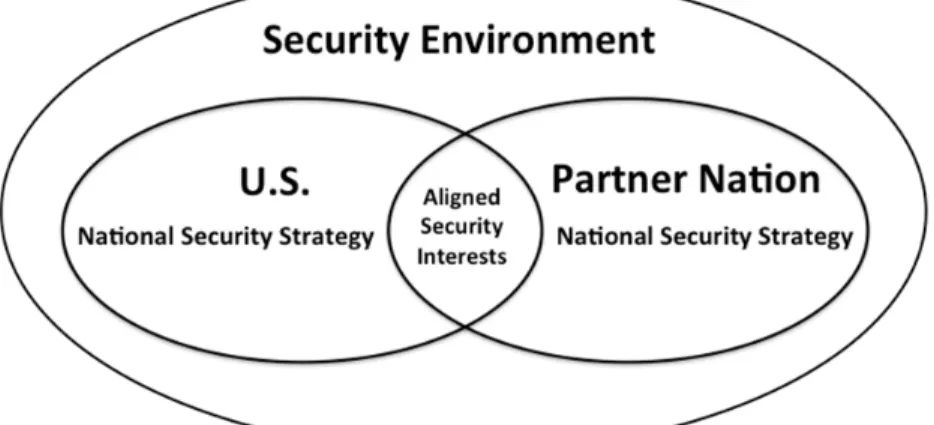
Figure 1. Aligning Common Interests ...17
Figure 2. National Interests of ISAF-A Partners ...18
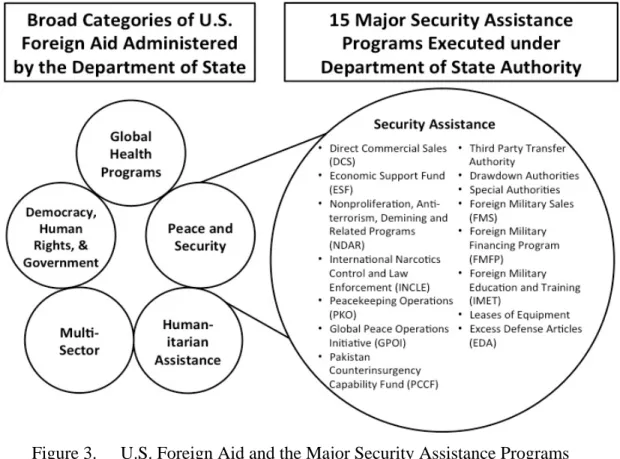
Figure 3. U.S. Foreign Aid and the Major Security Assistance Programs through Fiscal Year 2014 ...40
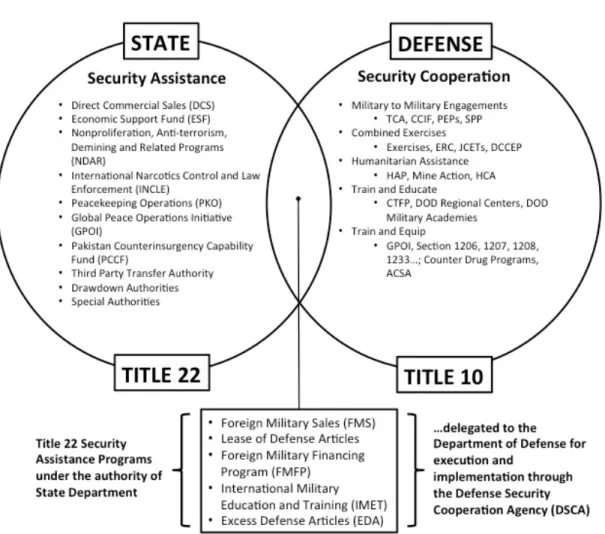
Figure 4. The Relationship between Security Assistance and Security Cooperation ...41
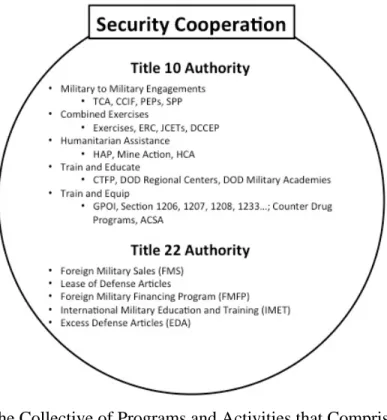
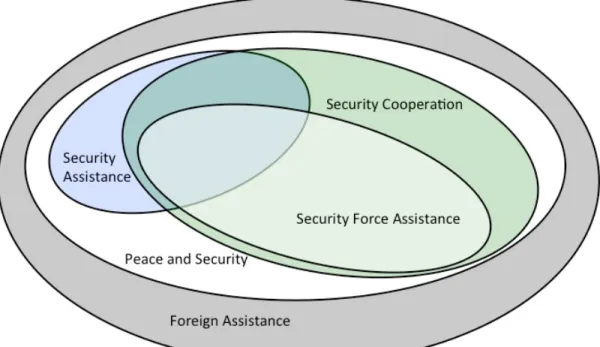
Figure 5. The Collective of Programs and Activities that Comprise Security Cooperation ...43
Figure 6. The Relationships between the “S” Words ...48
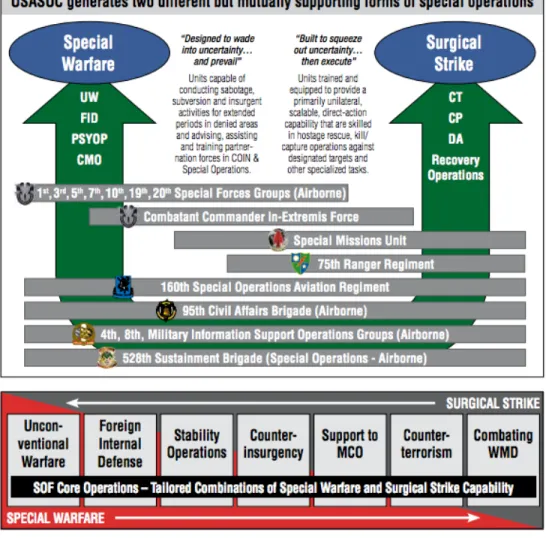
Figure 7. “Foundation Concepts for ARSOF 2022” ...61
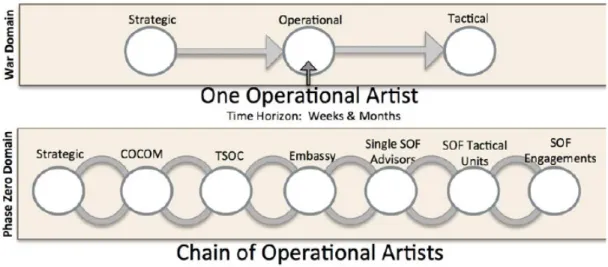
Figure 8. The Chain of Operational Artists ...74
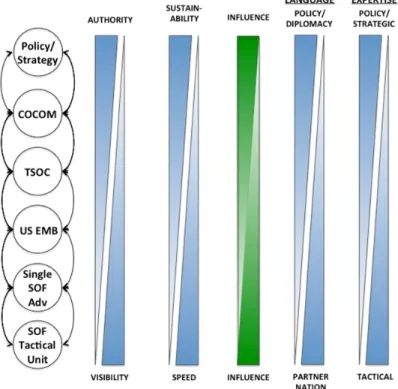
Figure 9. The Modified Arranging Chain ...76
Figure 10. The Actors of the SOF BPC Enterprise ...80
Figure 11. Overlapping Security Interests between the United States and Colombia and Paraguay, respectively...118
Figure 12. Side-by-side Comparison of the Chain of Actors in Colombia and Paraguay ...127
Figure 13. Overlapping Security Interests between the United States and Colombia and Paraguay, respectively...129
Figure 14. Side-by-side Comparison of Chain of Actors in Colombia and Paraguay ....130
Figure 15. The Partnership Environment ...136
Figure 16. The Seven Principles of Capacity Building ...138
Figure 17. TSOC Level of Control over the Seven Principles of Capacity Building ...145
Figure 18. Aligning Common Interests ...146
Figure 19. The Actors of the SOF BPC Enterprise ...150
LIST OF TABLES
Table 1. Side-by-Side Comparison of the Tools Employed by SOCSOUTH in Colombia and Paraguay ...123 Table 2. Side-by-Side Comparison of the Rules Employed by SOCSOUTH in
LIST OF ACRONYMS AND ABBREVIATIONS
AECA Arms Export Control Act of 1976
AOR area of responsibility
AR Andean Ridge
ARSOF U.S. Army special operations forces
AUC United Self-Defense Forces of Colombia (Autodefensas Unidas de
Colombia)
BCFE Paraguayan Joint Special Forces Battalion (Batallon Conjunto de
Fuerzas Especiales)
BPC building partner capacity
BRCNA Conternarcotics Brigade (Brigade Contra el Narcotrafica)
CAO civil affairs operations
CCOPE Colombian Joint Special Operations Command (Comando
Conjunto de Operaciones Especiales)
CERTE Colombian Army Tactical Retraining Center
CF Conventional forces
CMO civil-military operations
CMSE civil-military support element
CNP Colombian National Police
CNT counter-narcoterrorism
COCOM Combatant command
COCOM combatant command
COESE Colombian Army Special Operations Command (Comando de
Operaciones Especiales-Ejercito)
COIN counterinsurgency
CRS Congressional Research Service
CSOTF-10 Combined Special Operations Task Force-10 CT counterterrorism
DA direct action
DAO Defense Attaché Officer
DOD Department of Defense
DOS Department of State
ELN National Liberation Army (Ejercito de Liberacion)
EPP Paraguayan People’s Army (Ejército del Pueblo Paraguayo)
FAA Foreign Assistance Act of 1961
FARC Revolutionary Armed Forces of Colombia (Fuerzas Armandas
Revolucionares de Colombia)
FHA foreign humanitarian assistance
FID foreign internal defense
FSF foreign security forces
GAO Government Accountability Office
GCC geographic combatant command
HN host nation
ISAF International Security Assistance Force
ISAF SOF International Security Assistance Force Special Operations Forces
JCET joint combined exchange training
JCISFA Joint Center for International Security Force Assistance
KLE key leader engagement
MERCOSUR The Southern Common Market
NDAA National Defense Authorization Act
NSWG naval special warfare group
OPE Operational preparation of the environment
OSS Office of Strategic Services
OTERA organize, train, educate, rebuild (build), advise
OWS Operation Willing Spirit
PDP partnership development program
PEP Personnel Exchange Program
PN partner nation
PSYOP psychological operations
RWOT Regional war on terror
S/FOAA State/Foreign Operations and Related Programs Appropriations Act
SA security assistance
SC security cooperation
SC Southern Cone
SCO Security Cooperation Officer
SFA security force assistance
SOCEUR Special Operations Command Europe
SOCFWD special operations command-forward
SOCPAC Special Operations Command Pacific
SOCSOUTH Special Operations Command South
SOE Special Operations Executive
SOF special operations forces
SOFREP special operations forces representative
SR special reconnaissance
U.S.C. United States Code
USASOC United States Army Special Operations Command
USG United States Government
USSOCOM United States Special Operations Command
USSOF United States special operations forces
USSOUTHCOM United States Southern Command
ACKNOWLEDGMENTS
First and foremost, I would like to acknowledge and thank my advisors, Dr. William P. Fox and Dr. Heather S. Gregg, for their insight, patience, flexibility, and understanding. Your clarity of mind and astonishingly fast turnaround times served as excellent complements to my disorganization and astoundingly slow production. All I can offer in repayment is the shortest thing I have written through this entire process: thank you.
Second, I would like to offer a special thank you to Colonel (retired) Greg Wilson. Sir, your class and lectures were fundamental in giving form to a nebulous idea I had been holding in my head for a long time, and your interview was essential to the completion of this thesis. Thank you for your time, and for your continued service to the special operations community.
To my capacity-building mentors (in order of appearance): Master Sergeant (retired) Al Flores, Sergeant Major Bobby J. York, Captain Tibor K. Sonkoly (Hungarian Army), Captain Khalid, (Afghan National Police), Major General (retired) Michael S. Repass, and Command Sergeant Major (retired) Charles M. Sekelsky. By carrot or stick you kept me in the right place, at the right time, and in the right uniform. In the process, you taught me more about building partner capacity, from top to bottom and everything in between, than I can ever articulate. This work is every bit as much yours as it is mine.
On a final note, this research has led me to recognize that family is the ultimate capacity-building enterprise—individuals coming together, over the span of an entire lifetime, relying on each other’s strengths to compensate for each other’s weaknesses for the mutual benefit of the entire unit. To my family, thank you for compensating for my weaknesses. To my wife, Stacey, every day you demonstrate the true “pay-off potential of partnership.” To my daughter, Ella, you and your infectious smile are a constant reminder of what is really important in this world. To you both, thank you, I love you, and… I am finally finished.
I.
INTRODUCTION
A. LOOKING FORWARD FROM AFGHANISTAN
The close of major American involvement in the war in Afghanistan leaves the United States in a precarious situation but also with some unique opportunities. Looking forward, it is important to take stock of the threats and challenges the United States faces today, the method it has chosen to address them, and the potential points of failure.
1. The Challenge: The Threat and the Operating Environment
The United States faces a wide array of threats that are geographically and ideologically dispersed. A majority of these threats are from non-state actors that capitalize on ungoverned or under-governed spaces to establish safe havens from which they can launch terrorist attacks aimed at weak states, U.S. interests, or potentially the U.S. homeland. Civil strife can also exacerbate fragile stability, resulting in a number of second- and third-order effects that pose a threat to security interests. A dramatic example would be the rise of the Islamic State group that seized on the chaos of Syrian civil war and the deep societal rifts in a fragile Iraq to capture large swaths of land that straddles both countries in 2014. Similar turmoil with the very real potential to cause the same hazardous results is present elsewhere in the world—most notably in Africa. Take, for example, ongoing coalition operations in the Horn of Africa, and France’s 2013 intervention in Mali to beat back the expansion of Islamist fundamentalists that were threatening to capture the entirety of the country.1
Despite all the public attention on non-state actors and terrorists since 9/11, the United States still has to concern itself with traditional threats from state actors. Although, these threats may not pose a clear and present or existential threat to the U.S. homeland, they certainly pose a very real threat to U.S. national security interests abroad,
1 Special Warfare, “Q&A Colonel John Deedrick, Commander, 10th Special Forces Group
(Airborne)” Special Warfare 26, no. 1 (2013): 22. http://www.dvidshub.net/publication/issues/11420; Hugh Schofield, “France Confirms Mali Intervention.” BBC News. January 11, 2013.
and to the partners and allies who share those interests. Russia’s 2014 incursion and subsequent annexation of Crimea clearly illustrates the state threats the United States must still address as a global superpower. Although not directly affecting the United States, this action certainly gave visible credence to the concerns of the Baltic States, and put NATO and the defense of its members back on the security agenda. Russia is only one state actor on the radar, Iran, North Korea, and China all present their own unique challenges that require their due diligence of thought, resources, and decisions.
Compounding these physical threats are the realities of the modern age. Conflict in the information age is defined by the Information, Communication, and Technology (ICT) Revolution. Affordable and commercially available technologies, social media and instantaneous communication have not only diffused a noticeable degree of power from the state to the individual, but these advancements have also increased the number and nature of threats that states must face.2 Additionally, as the ICT Revolution shrinks aspects of space and time, nefarious interests have become more intertwined. For example, the lines between nacrotrafficking, human trafficking, and terrorism have become more and more blurred in recent years.3
Some scholars and analysts suggest the most dangerous potential threat the United States, its allies, and partners may have to face is one that coalesces asymmetric tactics and actors, organized crime, and state sponsorship into a coherent functioning threat, a hybrid threat.4 These threats would be able to leverage the elements of national power that a state can bring to bear in conjunction with the asymmetric advantage that is the strength of a non-state actor. Such a threat would pose a significant challenge to any state, requiring the country or coalition to counter simultaneous assaults across the spectrum of conflict and along all elements of national power.5
2 Joseph S. Nye Jr., The Future of Power (New York: PublicAffairs, 2011), 113–122.
3 Angel Rabasa et al., Beyond Al-Qaeda: Part 2, The Outer Rings of the Terrorist Universe (Santa Monica, CA: Rand Corporation, 2006) 101–160,
http://www.rand.org/content/dam/rand/pubs/monographs/2006/RAND_MG430.pdf.
4 Frank G. Hoffman, “Hybrid Warfare and Challenges.” Joint Forces Quarterly 52, no. 1 (2009): 34– 39. http://ndupress.ndu.edu/portals/68/Documents/jfq/jfq-52.pdf.
Finally, after over more than a decade of combat, the United States and many of its allies and partners are faced with substantial economic challenges and war-weary populations. As a result, the United States and many of its staunchest military allies are drastically reducing their defense budgets, while others like Russia and China increase theirs.6 The most sobering fact, however, is that even though major U.S. and allied involvement in Afghanistan is ending, the long war against Al Qaida and its affiliates is far from over. Global and transnational threats still remain—still threatening the United States, its interests, allies, and partners.7
2. The Strategy: Building Partner Capacity
Combined, these challenges will inform the United States’ security concerns in the coming decade and shape how the military is able to address them. These challenges are broad, complex, and exceed the ability of the United States to solve alone. To meet these challenges and their global scope, the United States has made it clear that it will have to rely on partners, and on building capacity in those partners.8
Building partner capacity (BPC) as a term is relatively new in the U.S. military lexicon, although the concept is anything but new.9 A remarkable example of U.S. led BPC is the Marshall Plan implemented by the United States in Europe after World War II. The effects of the war left Europe devastated and in great need of assistance. As a
6 Angelo Young, “Which Countries Are Spending More On Defense?,” International Business Times, February 6, 2014, http://www.ibtimes.com/global-defense-budget-seen-climbing-2014-first-total-increase-2009-russia-surpasses-britain-saudi; Leon E. Panetta, “Building Partnership in the 21st Century” (speech, Dean Acheson Lecture, U.S. Institute of Peace, Washington, DC, June 28, 2012),
http://www.defense.gov/utility/printitem.aspx?print=http://www.defense.gov/Speeches/Speech.aspx?Speec hID=1691.
7 Rabasa et al., Beyond Al-Qaeda, 164; National Intelligence Council. Global Trends 2030: Alternative Worlds (Washington, DC: National Intelligence Council, 2012), viii–ix.
http://www.dni.gov/index.php/about/organization/national-intelligence-council-global-trends; Panetta, “Building Partnership in the 21st Century.”
8 The White House, The National Security Strategy of the United States of America (Washington, DC: The White House, 2010); Department of Defense, Quadrennial Defense Review Report. Washington, DC: Department of Defense, 2014; Rabasa et al., Beyond Al-Qaeda, xxix.
9 Catherine Dale, In Brief: Clarifying the Concept of “Partnership” in National Security (CRS Report No. R42516) (Washington, DC: Congressional Research Service, May 4, 2012), 1,
result of the Marshall Plan “from 1948 through 1952 European economies grew at an unprecedented rate. Trade relations led to the formation of the North Atlantic alliance. Economic prosperity led by coal and steel industries helped to shape what we know now as the European Union.”10 This whole-of-government approach helped to rebuild Europe and was, in a very real sense, a capacity-building effort, although the term BPC was not used in Marshall’s day.
In the wake of 9/11, BPC has become a buzzword to define the broad, and sometimes vague, American enterprise to build stronger partners with the ultimate objective of achieving shared and U.S. national security interests. The effort has run continuously in the background of the wars in Iraq and Afghanistan receiving much funding, but little public attention.11 United States Special Operations Command (USSOCOM) has played a major role in this effort; which is not surprising given the command’s charter.
As then-USSOCOM commander, Admiral William H. McRaven, highlighted to the House Armed Services Committee in 2013: “SOF focuses intently on building partner capacity and security force assistance so that local and regional threats do not become global and thus more costly—both in blood and treasure.”12 U.S. special operations forces’ (USSOF) connection with BPC is not a post-9/11 development; USSOF has a long history of building partner capacity. Over the past seven decades, by design and by chance, USSOF has found itself building partner capacity all over the world and across the range of military operations. As a result, they have become the American capacity-building force of choice. The results of some of USSOF’s more recent capacity-capacity-building efforts can be easily seen in Afghanistan.
10 “The Marshall Plan,” The George C. Marshall Foundation, accessed November 27, 2014, http://marshallfoundation.org/marshall/the-marshall-plan/history-marshall-plan/.
11 Catherine Dale, In Brief: Clarifying the Concept of “Partnership” in National Security, 1.. 12 Posture Statement of Admiral William H. McRaven, United States Special Operations Command: Hearing Before the Committee on Armed Services, House of Representatives. 113th Cong. 4 (2013) (statement of William H. McRaven, Commander of United States Special Operations Command), http://docs.house.gov/meetings/AS/AS00/20130306/100394/HHRG-113-AS00-Wstate-McRavenUSNA-20130306.pdf.
As of 2013, 17 NATO nations contributed special operations forces (SOF) to train and advise a high-end Afghan police force as part of International Security Assistance Force Special Operations Forces (ISAF SOF).13 Additionally, United Arab Emirate and Jordanian SOF have trained other Afghan forces alongside American and allied partners.14 These countries’ participation in this conflict not only demonstrate a willingness to work with the United States on operational missions, but also reflect the amount of capacity USSOCOM was able to build in some of these partners over the years.
Afghanistan provides a tangible output of SOF BPC, but it only illuminates one aspect of the USSOF capacity building enterprise. On any given day, USSOF elements are working in approximately 75 countries around the world.15 This trend is expected to continue as USSOCOM has made it clear that it will conduct and resource long-term persistent engagement with its partners around the globe in support of the Global SOF Network.16 Most of these missions, if not all of them, have a capacity-building component. Examples include persistent engagements in Columbia, El Salvador, Estonia, the Philippines, Uganda, and Romania, just to name a few.
Every one of these missions presents a unique set of challenges. Such endeavors are normally characterized as having numerous stakeholders, extremely long time horizons, and are easily frustrated by personalities and organizational differences—in short, they are not easy. But the fact remains; the capacities these engagements build represent a capacity in being—a capacity to achieve both partner nation and U.S. national security objectives. Therefore, the degree to which USSOF is able to build capacity efficiently and comprehensively directly impacts the United States’ national defense.
13 Brigadier Mark Smethurst, “ISAF SOF” (briefing, Special Operations Low Intensity Conflict Symposium, Washington, DC, January 29, 2013), http://www.dtic.mil/ndia/2013SOLIC/Smethurst.pdf.
14 Logan Tuttle, “Commandos Train for Afghanistan’s Future” (ISAF Joint Command Public Affairs, January, 2010), http://www.isaf.nato.int/article/isaf-releases/commandos-train-for-afghanistans-future.html.
15 U.S. Special Operations Command, “SOCOM 2020: Forging the Tip of the Spear.” (MacDill Air Force Base, FL: U. S. Special Operations Command, May 2013), 5.
http://insidedefense.com/iwpfile.html?file=pdf13%2F05302013_socom.pdf. 16 Ibid.
3. The Void: Theory and Doctrine
Despite the United States’ strategic focus on building partner capacity, USSOF’s long history with the task, and the fact that BPC is something that SOCOM “focuses very intently on,” no theory or doctrine exists that examines or explains how USSOF actually builds partner capacity. USSOCOM has be criticized lately, most notably by long-time SOF chronicler, Linda Robinson, for USSOCOM’s lack of articulation when it comes to explaining and educating outsiders on how USSOF carries-out, manages, and gauges its non-kinetic, indirect approaches, to include building partner capacity.17
Other literature, both doctrinal and professional, seems to indicate that USSOF insiders—commanders, planners, and operators—may not have the full picture either. Doctrine approaches different aspects of capacity building in various volumes, but does not address the topic in its entirety; JP 1–02 Department of Defense Dictionary of Military and Associated Terms does not even define the term “building partner capacity.” Contemporary professional works like Going Big By Getting Small by career Special Forces officer Colonel Brian S. Petit indicate that undertakings such as BPC “requires competencies that are beyond standard professional military education and training…a challenge that requires tremendous knowledge outside of one’s professional domain knowledge.”18 Discussions with other senior USSOF leaders echo the sentiment that there is a lot of on the job training at the operational level when it comes to capacity building in environments short of war.19 As the United States’ reliance on this indirect approach increases and available resources to conduct them decreases, USSOF will not only need to better articulate how it carries out these missions, but also better prepare and resource its formations to conduct them more efficiently and effectively.
17 Linda Robinson, The Future of U.S. Special Operations Forces, Special Report (Washington, DC: Council on Foreign Relations, April 2013), 13–15.
18 Brian S. Petit, Going Big by Getting Small: The Application of Operational Art by Special Operations in Phase Zero (Denver, CO: Outskirts Press, 2013), 108–109.
B. PURPOSE
The purpose of this research is to help fill this gap, and advance a more comprehensive understanding of how USSOF actually builds partner capacity, and how USSOF’s BPC efforts fit into the larger U.S. national security strategy. Given the observations above, BPC will remain a critical component of U.S. national defense for the foreseeable future, and USSOF will likely remain the force of choice to achieve those ends. Therefore, it stands that a greater, more holistic understanding of SOF capacity building is necessary to ensure that USSOCOM and its formations are meeting the nation’s defense needs as effectively and efficiently as possible, especially in an increasingly resource constrained environment. To extend the usefulness of this research, this work will also advance an adaptive planning model that will assist Theater Special Operations Command (TSOC) commanders and staffs when considering and designing a BPC enterprise in order to best apply scarce BPC resources within their areas of reasonability (AOR).
C. SCOPE
This thesis will focus on the challenges and tensions of building partner capacity as they apply to special operations forces in environments short of war; a domain increasingly referred to as Phase Zero.20 It will analyze two case studies from Special Operations Command South’s (SOCSOUTH) AOR: Colombia, and Paraguay. These two cases were selected because they both represent a classic bilateral partnership between USSOF and a partner nation (PN) over an extended period of time, and because the same operational headquarters managed them. Despite these similar characteristics, these two cases produced very different results. Subsequently, they provide an opportunity to determine what makes this type of partnership tick, and to identify the potential pitfalls and operational opportunities of such partnerships. This thesis will also draw on doctrinal, historical, and contemporary sources to develop a comprehensive picture of
20 “Phase Zero” is a non-doctrinal term advanced by Colonel Brian S. Petit in Going Big By Getting Small: The Application of Operational Art by Special Operations in Phase Zero. The term defines, “both the actions taken and the environment involved in maintaining US access and influence through foreign engagements with means and methods below the threshold of war.” (p. 53)
capacity building writ-large as a tool of U.S. national security, and how SOF fits into the picture. This analysis will identify key trends and components of capacity building as they pertain to USSOF, and provide a roadmap for a more comprehensive approach to its application. This work will be primarily directed at the operational level, but any discussion of capacity building would be incomplete without also mentioning certain policy and tactical level aspects of the topic.
D. RESEARCH QUESTIONS
This research will seek to answer the question: how does USSOF build partner capacity? In support of that question, three additional supporting research questions are:
1. What is building partner capacity, and how is it intended to achieve U.S. national security objectives?
2. What are the guiding principles and governing factors of capacity building?
3. How does USSOF fit into the larger U.S. BPC context, and what differentiates USSOF BPC efforts from other Department of Defense efforts to build partner capacity?
E. APPROACH
USSOF BPC will be explored through an examination of existing national strategic guidance and doctrine, historical and contemporary literature, and through the analysis of two case studies. The examination will begin by establishing what exactly BPC is and how it fits into the larger national security framework. The intent is to provide meaning, context and identify the principles of U.S. BPC and the factors that influence these efforts. The focus will then turn to USSOF’s role in capacity building. This examination will include USSOF’s history with capacity building, and the unique skills, qualities, and tools that inform USSOF’s approach to BPC. Analysis of the two USSOF capacity building case studies of will illuminate how these factors coalesce to create a partnership environment, and how USSOF operates within these environments to actually build partner capacity.
F. AUDIENCE
This work was written with several audiences in mind. First and foremost, this thesis was written for planners and principals at the Theater Special Operations Commands (TSOC), particularly those that have just transitioned from the tactical to the operational level. The TSOCs are the action arms of USSCOCOM, and are truly where the rubber meets the road when it comes to initiating, synchronizing, and sustaining USSOF capacity-building efforts. To that end, if such an endeavor is to be successful, it has to be successful there first. The BPC planning model presented at the end of this document is specifically intended to assist TSOC planners in identifying the most suitbale partners, approaches, and methods to best apply the TSOC’s limited capacity building resources.
This work is also intended for international SOF partners. As our world grows smaller, our national interests more closely aligned, and common threats more widely dispersed, we will all find ourselves working together to solve increasingly complicated and urgent challenges. These challenges are, and will continue to be, too large and too costly for anyone one nation to adequately address alone. We are each other’s best options. This thesis identifies that frank and candid discussion and communication between partners increases the effectiveness of a partnership. Transparency and understanding decreases frustration and distrust—the cancers of partnership—while simultaneously increasing potential and efficiency. To that end, this thesis is intended as a step towards a more open and frank discussion. The rules and policies that govern U.S. military partnerships and capacity building are complex and confusing, but they are, nevertheless, the rules the U.S. military and USSOF are required to abide. Identifying and recognizing these factors, both on the part of USSOF and our partners, will go a long way to better understanding each other, where we are coming from, and how we can best achieve our common goals.
Finally, this work may be of use to those interested in wading through the muddied waters of U.S. BPC efforts. Given the vast literature, disparate components, and somewhat intangible nature of BPC, developing a comprehensive understanding of what BPC is and how it works. This thesis was also written with these readers in mind, and in a
manner that attempts to provide a comprehensive, yet still navigable, picture of capacity building and its components as they apply to U.S. national security. This research may also be of interest to those seeking to gain a better understanding of the unique challenges that beset USSOF in capacity building endeavors and how they go about handling them.
G. SUMMARY OF FINDINGS
Building partner capacity is a complete government approach employed by the United States to achieve national security objectives. At the macro level of policy and strategy BPC is a concept; it refers to and describes the act of helping others—partners— to get better at something. Who the partners are, and what they are getting better at vary greatly, but they are all linked by the common theme of using one partner’s strengths to compensate for the other’s weakness in an effort to achieve a mutual security benefit. BPC requires a complete government approach because the challenge that contemporary threats pose requires solutions that are beyond the ability of any one U.S. agency or department.
While a neat and tidy concept at the macro level, BPC is anything but neat and tidy at the micro level. The military does not build partner capacity as a singular act; it actually builds partner capacity through various disaggregated operational tasks, programs, and activities. The military carries these tasks out under various national authorities and with the approval of various, and often numerous, decision makers. As a result military capacity-building efforts are complicated to resource, plan, and execute.
Further complicating matters is the nature of a partnerships itself. An international partnership is dynamic. Primarily, the partner states’ national interests drive these partnerships, but they are greatly influenced by world events and other phenomena that may cause those interests to change instantly, and without warning. The aggregate of factors and conditions that influence the partnership comprise the partnership environment. Ultimately, any BPC endeavor is bound by the limits of the partnership environment.
USSOF has built partner capacity since the inception of its oldest formations, and capacity building remains an integral component of the majority of USSOF’s core
activities today. USSOF’s unique capabilities allow them to employ specialized tactics and techniques to achieve their capacity building ends. Additionally, USSOF’s nimble force structure allows them to create a noticeable degree of resiliency to better operate in the fluid and unpredictable partnership environment. Collectively, these factors allow USSOF to achieve capacity building success in situations where conventional DOD formations cannot; making USSOF the United States’ capacity building force of choice.
To overcome the points of friction induced by legal and programmatic hurdles, the dynamics of the partnership environment, and the challenges imposed by the long time horizons of BPC, USSOF requires the use of an entire enterprise to build partner capacity. The SOF BPC Enterprise is a system of actors, activities, and programs that capitalizes on the unique techniques and procedures of USSOF to achieve BPC objectives under conditions that conventional BPC efforts would find untenable. The enterprise serves to provide the continuous synchronization vertically from the policy level to the tactical level, and horizontally with the partner nation necessary to ensure the right skills and equipment arrive in the right place at the right time for the duration necessary to build the requisite capacity.
Despite SOF’s inherent, almost subconscious, ability to build partner capacity at the tactical and personal level, there are significant institutional shortfalls with regards to SOF BPC. These theoretical, doctrinal, and educational gaps pertain to the dynamics of partnerships and capacity building at the operational, strategic, and policy levels. This lack of common understanding has left TSOCs reliant on creativity and adaptable actors to find capacity-building solutions on the fly. It has also left USSOF and USSOCOM flatfooted when it comes to articulating, justifying, and resourcing their BPC efforts and approach. As the demands on TSOCs increase and available resources decrease, developing a coherent understanding of how capacity is built, and imparting their formations with that understanding will become of increasing importance in order to best meet the security requirements of the nation.
H. THESIS ORGANIZATION
Chapter II presents a comprehensive picture of U.S. capacity building and the factors that influence the Department of Defense’s efforts to build capacity. This chapter examines the dynamics of international partnerships, defines BPC as a term, reviews the lexicon of terms associated with capacity building, and introduces the concept of the BPC enterprise.
Chapter III is focused solely on USSOF and its relationship to BPC. An overview of USSOF’s capacity building history is provided before identifying where capacity building can be found in present-day USSOF core activities and operational approaches. This chapter also offers some of the most common authorities and resources USSOF applies in support of capacity building, and introduces the chain of actors that bring USSOF BPC enterprises to life.
Chapter IV presents two case studies of SOCSOUTH’s BPC efforts in Colombia and Paraguay from 2001 through 2010.
Chapter V analyzes these two cases studies to identify key factors and trends about USSOF BPC enterprises and USSOF’s operational approaches to BPC.
Finally, Chapter VI concludes the work by presenting findings, to include seven principles of capacity building that are requisite components of any successful capacity-building endeavor. This chapter also presents an adaptive planning model for designing BPC enterprises, identifies the implication of these findings, and offers recommendations and potential areas for further research.
II.
BACKGROUND: U.S. CAPACITY BUILDING
A. INTRODUCTION
The 2010 National Security Strategy clearly states the reason and purpose the United States builds partner capacity:
Where governments are incapable of meeting their citizens’ basic needs and fulfilling their responsibilities to provide security within their borders, the consequences are often global and may directly threaten the American people. To advance our common security, we must address the underlying political and economic deficits that foster instability, enable radicalization and extremism, and ultimately undermine the ability of governments to manage threats within their borders and to be our partners in addressing common challenges.21
The document, however, offers little guidance or explanation as to how the United States goes about building partner capacity or the dynamics at play; this chapter is dedicated to exploring just that topic.
The United States’ capacity-building efforts could easily be characterized as nebulous, unwieldy, and largely un- or under-defined—and often are by policymakers and even by some in the military.22 Without question these efforts are confusing, complicated, and complex in nature, but it must also be understood that they are also directly reflective of the confusing, complicated, and complex security challenges facing the United States today. Deeper analysis of how and why the United States employs capacity building as a means of achieving security objectives provides some understanding why the United States’ BPC is so intricate.
This chapter is devoted to analyzing the nature and key components of U.S. capacity building with a particular focus on the Department of Defense. This examination will begin with an exploration of international partnerships as they pertain to the military
21 The White House, The National Security Strategy of the United States of America, (2010) 26. 22 Dale, In Brief: Clarifying the Concept of “Partnership” in National Security; Sharon, Pickup, Security Force Assistance: Additional Actions Needed to Guide Geographic Combatant Command and Service Efforts. (GAO-12–556) (Washington, DC: U.S. Government Accountability Office, 2012). http://www.gao.gov/assets/600/590768.pdf.
before turning to an analysis of BPC as both a concept and as a term, in addition to a review of key terms that are relevant to capacity building. The chapter will conclude by defining the concept of a BPC enterprise.
B. SECTION I—PARTNERSHIPS
Partnerships are tricky. They are intangible, constantly evolving, and dangerously susceptible to any number of internal and external factors. At the international level tensions can escalate quickly as issues regarding national sovereignty, national pride, and domestic political approval tend to raise the stakes for the heads of state and their subordinates charged with managing these relationships. The focus of this section is on how these tensions manifest themselves and impact military partnerships, ultimately bounding any capacity-building effort.
1. National Interests
In 1948, then-Chief of Staff of the Army Dwight D. Eisenhower, delivered a lecture to the Army War College on the “Problems of Combined Command.” The first “problem” the former Supreme Allied Commander chose to address was the fact that there is “no charter that can be written for an allied commander and made to stick. As long as nations are sovereign they always have the right to reverse a prior decision, get out of any situation they think they can when they can cut their losses.”23 This clearly presents a significant challenge to anyone charged with working in or with a military partnership, but clearly, given the outcome of World War II, Eisenhower figured something out. So the question then becomes, what drives a partner nation to implore their sovereign right to change course, and what is there to do about it?
The answer to the first part of that question is national interests. Joseph Nye, the noted scholar of international relations, has referred to national interests as “a slippery
23 Dwight D. Eisenhower, “Problems of Combined Command” (lecture, National War College, Washington, DC, June 18, 1948), 5.
concept, used to describe as well as prescribe foreign policy.”24 Sometimes referred to as raison d’état, national interests represent what national leaders put forward as being in the state’s best interests.25 “In a democracy,” noted Nye, “the national interest is simply the set of shared priorities regarding relations with the rest of the world. It is broader than strategic interests, though they are part of it.”26 As the “fundamental building blocks in any discussion of foreign policy,” national interests play a critical role in understanding how international partnerships form and function.27
States form partnerships for different reasons and in the pursuit of different interests. Ultimately, argues Larry M. Wortzel of The Heritage Foundation, “We form partnerships to combine our strength with the strength of like-minded nations in the preservation and advancement of core values.”28 By matching strengths with like-minded partners, states gain the advantage of numbers and size; increasing their potential for success beyond what they would have been able to accomplish alone.
There are also different types of partnerships; for example, the United States pursues relationships to further security, economic, and diplomatic interests.29 This does not imply, however, that all of these interests reside in the same partner. Take for example England, Wortzel observes the United States “may have no closer ally than England in political and security relationships, but when it comes to agricultural policy or arms sales, there may be stiff competition between the two nations over economic issues.”30 Likewise, security and diplomacy competitors may make for good bedfellows
24 Joseph S. Nye, “Redefining the National Interest,” Foreign Affairs 78, no. 4 (1999): 22, doi:10.2307/20049361.
25 Kevin Dooley, Why Politics Matters: An Introduction to Political Science (Stamford, CT: Cengage Learning, 2014), 288.
26 Nye, “Redefining the National Interest,” 23.
27 The Commission on America’s National Interests, America’s National Interests (Cambridge, MA, July 2000), 13.
28 Larry M. Wortzel, “Change Partners: Who Are America’s Military and Economic Allies in the 21st Century?,” The Heritage Foundation, June 6, 2005, http://www.heritage.org/research/lecture/change-partners-who-are-americas-military-and-economic-allies-in-the-21st-century.
29 Ibid. 30 Ibid.
in other areas. China, for example, is clearly a security competitor and often at odds diplomatically with the United States. Yet China was the United States’ number two trading partner in 2013 indicating the strong economic interests the two states share.31
As these examples suggest, the alignment of national interests along one line of national power may inhibit the alignment of interests along another. It is a rare occurrence, if ever, that states’ national interests along any line would overlap one hundred percent. As a result, friction is going to occur. But as historian Forrest Pogue notes, this type of friction is okay, reminding readers, “It is important to remember that different nations, although Allies, have divergent interests, and that they are not being unfriendly if they pursue those interest.”32 Pogue’s statement indicates that these points of friction between partners are just hurdles that need to be overcome in order to attain the true pay-off potential of the partnership.
2. “The Sweet Spot”
The Security Force Assistance Handbook uses the illustration in Figure 1 to depict the area where two partners’ security interests overlap. It is within this area of overlap that partners work best; this area is sometimes referred to as “the sweet spot.”33 With the emergence and growth of NATO and the increasing overlap of the national interests of states around the world, the number of members in coalitions has grown significantly since Eisenhower’s time.
31 U. S. Census Bureau, “U.S. Top Trading Partners-November 2013.” Foreign Trade, accessed August 13, 2014, http://www.census.gov/foreigntrade/statistics/highlights/top/top1311yr.html.
32 Forrest C. Pogue, The Supreme Command: The European Theater of Operations; United States Army in World War II. (Washington D.C.: Office of the Chief of Military History, Department of the Army, 1954), xii.
33 Ed McFarland, “Security Cooperation Planning: Are You a Planner?,” DISAM Online Journal and News Source, July 17, 2013, http://www.disamjournal.org/articles/security-cooperation-planning-are-you-a-planner-997.
Figure 1. Aligning Common Interests34
Since the end of the Cold War, multinational operations have gradually become the norm over bilateral and unilateral operations. For example, the multinational headquarters in Iraq and Afghanistan saw troops from 37 and 48 countries respectively, each one with their own national interests and reasons for being there.35 Collectively these interests dictate how much risk the nations, and their troops on the ground, are willing to assume. This issue inherently increases the tensions of military leaders caught between the mission at hand and the politics at play. As Figure 2 suggests, as the number of stakeholders increase, the size of the “sweet spot” tends to decrease, as divergent interest, however slight, decrease the common ground between partners. As the coalition becomes larger it is also increasingly more difficult to attain the level of political unity necessary for effective military cooperation.
34 Joint Center for International Security Force Assistance, Security Force Assistance Handbook (Washington, DC: Joint Center for International Security Force Assistance, 2012.), II-2,
https://jcisfa.jcs.mil.
35 Stephen A. Carney, Allied Participation in Operation Iraqi Freedom (Washington, DC: Center of Military History, United States Army, 2011), 1, http://www.history.army.mil/html/books/059/59–3-1/CMH_59–3-1.pdf; “Troop Numbers and Contributions,” International Security Assistance Force Afghanistan, accessed September 27, 2014.
Figure 2. National Interests of ISAF-A Partners36
3. The Dynamics of National Interests
National interests are influenced by an innumerable list of tangible and intangible factors—even the weather. For example, as Scott Borgerson observes, “Global warming has given birth to a new scramble for territory and resources among the five Arctic powers.”37 The Arctic was not really on the American security agenda during the 1990s and certainly not after 9/11, but this change in climate prompted the White House to publish a National Strategy for the Arctic Region in 2013, and a subsequent implementation plan for that strategy in January 2014.
These observations indicate that national interests are dynamic, not static. They are constantly in motion influenced heavily by world events and natural phenomena. Therefore, as these interests shift over time, facts change and occasionally may cause a partner to “reverse a prior decision” as Eisenhower observed. As a result, the “sweet spot” of national interest is actually a moving target. As far as the military planner is
36 Note: this is a random sampling of the 37 members of ISAF-Afghanistan and the relation of national interests depicted here are purely notional for illustrative purposes.
37 Scott G. Borgerson, “Arctic Meltdown: The Economic and Security Implications of Global Warming,” Foreign Affairs 87, no. 2 (March 1, 2008): 63.
concerned these factors greatly increase the complexity of long-range planning and resource forecasting for military partnerships.
The dynamism of national interests can wreak havoc on military planning. For example, the United States planned on basing 62,000 troops in Turkey as a temporary staging base for the ground invasion of northern Iraq in March 2003.38 However, after war plans were already drawn, and just days before the invasion, the government of Turkey changed its mind. As a result the northern invasion of Iraq was scrapped, setting-off a subsequent chain of events both militarily and politically. There are several reasons why Turkey reversed their decision, all of which Turkey assessed as being better options than allowing the United States—a partner and fellow member of NATO—to stage part of their attack from Turkish soil.39 For planners and commanders, however, the reason why Turkey changed its mind was a moot point. The only thing that mattered at that point was that the truth had changed; what was a yes yesterday, had become a no overnight, and now it was on them to come up with a new plan. The level of flux induced by the legitimate right of a state to change its mind is a constant source of frustration—a frustration that must be overcome. Because it is on these shifting sands that all military partnerships must build their foundations.
4. Politics: Always in Play
Any student of conflict is familiar with Carl von Clausewitz’s axiom that war is “the continuation of policy by other means,” but applying this notion to military partnerships goes a long way to understanding how and why these partnerships function the way they do.40 “We see, therefore,” Clausewitz said, “that war is not merely an act of policy but a true political instrument, a continuation of political intercourse, carried on with other means.”41 It is essential to understand that as a military activity conducted
38 Sharon Otterman, “Iraq: U.S.-Turkey Relations,” Council on Foreign Relations, March 2003, http://www.cfr.org/iraq/iraq-us-turkey-relations/p7795.
39 Ibid.
40 Carl von Clausewitz, On War, trans. and ed. Michael Howard and Peter Paret (Princeton: Princeton University Press, 1984), 87.
across the range of military operations, BPC abides by the same aphorism. Therefore, it follows that partnerships required by the military to fight wars or build capacity are subject to politics and policy. This point is implied in a number of DOD publications, such as this excerpt from the Security Force Assistance Handbook, which informs readers: “Planners must remember that the decisive effect of security force activities is political and linked to U.S. national security objectives.”42
Ultimately, all military actions are subordinate to political decisions. As Clausewitz instructs his readers “war should never be thought of as something autonomous but always as an instrument of policy; otherwise the entire history of war would contradict us.”43 As a result, military partnerships are bound by the political relationship that joins the two nations. It follows, therefore, that a military relationship may fall short of, but cannot exceed the level of cooperation reached at the political level.
As noted above, states form partnerships along various lines of national power in order to achieve diplomatic, economic, and security objectives; cumulatively the overall product of these efforts result in political cooperation. Expressed as a function, this relationship can be understood as follows:
where the overall level of political cooperation is expressed as . , , , which represents the levels of diplomatic, military and economic cooperation, respectively, and serves as a catch-all, for the sake of this argument, to represent the various other types of cooperation that states pursue.
This expression denotes that military cooperation may be equal to, but never exceed the level of political cooperation, because cannot be greater than . It also indicates the stronger the political relationship, the greater potential for the military relationship. Equally, it holds that the lower the political relationship, the lesser the potential for the military relationship.
42 Joint Center for International Security Force Assistance, Security Force Assistance Handbook, II-6. 43 Clausewitz, On War, 88.
As a result, it is true that a positive military relationship can serve as a catalyst to increase the overall level of political cooperation between two states, but it is equally true that it can serve as a detractor to political cooperation. Such an occurrence would impinge on the levels of cooperation along diplomatic ( ), economic ( ) and other lines of cooperation ( ). This is a point that the U.S. Department of State is very sensitive to, as will be addressed in the following section, and causes some of the friction between the Departments of State and Defense over cooperative military efforts such as BPC.
C. SECTION II—BUILDING PARTNER CAPACITY 1. A Whole-of-Government Approach
Although this work focuses on SOF capacity building, it is important to note that BPC is not singularly a DOD task. It is a “whole of government approach and a central tenet of national policy and strategic guidance.”44 To that end, the United States Government primarily leverages the Department of State, Defense, and the U.S. Agency for International Development (USAID) to promote and protect U.S. interests abroad and to build partner capacity.45 It is important to note DOD has clearly staked its claim as the U.S. lead on BPC. In 2008, Secretary Gates stated to Congress, “In my view, building partner capacity is a vital and enduring military requirement, irrespective of the capacity of other departments, and its authorities and funding mechanisms should reflect that reality.”46
Despite DOD’s clear claim on BPC, Gates recognized that BPC efforts “must be implemented in close coordination and partnership with the Department of State.” Although this statement is in line with the whole-of-government approach, it is particularly true because “most [threats] will emerge from within countries with which we are not at war;” in other words, in environments where the State Department will be the lead agency for day-to-day activities and operations in a particular country—not the
44 Joint Center for International Security Force Assistance, Security Force Assistance Handbook, II-1. 45 Ibid.
46 Building Partnership Capacity and Development of the Interagency Process: Hearing Before the Committee on Armed Services, House of Representatives, 110th Cong., 6 (2008), 6.
Department of Defense.47 This reality presents its own set of challenges for the military and USSOF that will be addressed later.
For now, recognizing that BPC is a complete government approach is sufficient to highlight that DOD’s efforts are only a part of a much larger endeavor by the United States. This broad approach allows the United States to address a wider range of interconnected challenges, but it is not without its tradeoffs. The broad approach requires the coordination of various U.S. BPC efforts in time and space, a task that requires constant attention. It also creates confusion for policymakers and planners, as all agencies involved are using similar, but different terminology to describe their BPC efforts, often within the same country. As the following section will highlight, the DOD has enough trouble keeping its own BPC terms straight. Moving forward this work will focus solely on DOD BPC efforts, terminology, and approaches.
2. DOD’s Definition of Building Partner Capacity
In its simplest form, former Secretary of Defense Robert M. Gates stated in 2010 that building partner capacity means “helping other countries defend themselves or, if necessary, fight alongside U.S. forces by providing them with equipment, training, or other forms of security assistance.”48 Although the premise is simple enough, government authorities, appropriations, and politics all play a part in accomplishing this seemingly simply notion. This point lends validity to the adage “words matter.” This section will focus on analyzing those words, how they came to be, and what they mean.
BPC is a neither a doctrinal term nor a task within the military. Although military leaders regularly refer to BPC as a goal, a mission, and a task it is not officially codified in U.S. military canon.49 The Department of Defense first printed a definition for Building Partnership Capacity in the 2006 QDR Execution Roadmap Building Partnership Capacity. The document states building partnership capacity consists of
47 Ibid.
48 Robert M. Gates, “Helping Others Defend Themselves: The Future of U.S. Security Assistance,” Foreign Affairs 89, no. 3 (May 1, 2010): 2.
49 Charles W. Hooper, “Going Farther by Going Together: Building Partner Capacity in Africa” Joint Forces Quarterly 67, no. 4 (2012): 8–9, http://www.dtic.mil/doctrine/jfq/jfq-67.pdf.