INTEGRATED ERP SYSTEM FOR IMPROVING THE
FUNCTIONAL EFFICIENCY OF THE ORGANIZATION BY
CUSTOMIZED ARCHITECTURE
Dr. Suryakant B. Patil 1, Prof.Vijay S. Suryawanshi 2 ,Prof. Dipali V. Suryawanshi3, Dr. Preeti Patil4
1Professor, Head & PG Coordinator, JSPM’s Imperial College of Engg. & Research, Pune, MH, India 2Asst. Professor, JSPM’s Imperial College of Engg. & Research, Pune, MH, India
3Asst. Professor, JSPM’s Bhivrabai Sawant Institute of Technology & Research, Pune, MH, India 4Dean (SA), Head & Professor, KIT College of Engineering, Kolhapur, India
ABSTRACT:
An ERP is a kind of package which consist front end and backend as DBMS like a collection of DBMSs. You can create DBMS to manage one aspect of your business. For example, a publishing house has a database of books that keeps information about books such as Author Name, Title, Translator Name, etc. But this database app only helps enter books' data and search them. It doesn't help them, for example, sell books. They get or develop another DBMS database that has all the Books data plus prices, discount formulas, names of common clients, etc. Now they connect the Books database to Sales database and maybe also the inventory database. Now it’s DBMS slowly turning into an ERP. They may add payroll database and connect it to this ERP. They may develop sales staff and commissions’ database and connect it to this ERP and so on. In the traditional Database management system the different databases are used for the various Campuses of the JSPM Group of Education like Wagholi Campus, Tathwade Campus, Narhe Campus, Hadpsar Campuses, Bhavdhan Campus as well as Corporate office at Katraj of same organization so it is not possible to keep different databases for the same so in this paper proposed the use of Integrated Database for the Entire organization using ERP system. The Proposed ERP system applied on the existing Architecture of the JSPM Group; the marginal difference observed in the Databases need to be accessed to generate the same number of Reports when use the Traditional DBMS which end up with improvement in the Functional efficiency of Organizational Architecture.
Keywords: ERP, MIS, CRM, BIS, DBMS, Functional Efficiency,
Customized Architecture.
[1] INTRODUCTION
Hidden ERP it is nothing but the Enterprise Resource Planning, and it is a Integrated Software for the Organizations, for example we have one Organization at Mumbai and various sub branches at all over India and also in abroad, at that time it is not possible to use various application for the various branches, so we use one Integrated Software i.e. ERP for the organization to run the Business functional operations [4,5].
ERP it is a solution designed for all the functional operations of the organization across all the locations for improving the efficiency of entire Organization [12,13].
Under ERP different modules are there as follows-o Finance & Accounting
o Production Planning o Administration o HR & Payroll o Plant Maintenance o Sales & Distribution o Supply Chain Management
o Customer Relationship Management o Business Intelligence
o Inventory Control o Assets Management
o Supply Chain Management
[2] EXPERIMENTATION AND RESULTS
Figure: 1. Software phases from Requirement to Post Implementation (Courtesy – PC soft ERP Solutions)
In the market various ERP packages are there which are SAP, Oracle Apps, Baan, People Soft, When we install the ERP Package at organization require the Infrastructure [11].
Figure 1 shows various phases of ERP Life cycle from Requirement Gathering to Post Implementation phase. The Requirement Gathering phase includes Dialogue with End users; Get the proper requirements from End Users, Check with the standard information for the fulfillment of Information. Use this information for making the Data flow Diagrams depends upon the environment and Nodes select the Architecture [6, 7].
Figure: 2 Categories of ERP
Master - It is original information of the respected department or Module which are used for storing the data for doing the Routine Transaction. According to the Requirement Engineering the Phases need to be gathered as the Requirement for doing the Routine Transaction.
Transaction –
It is a Routine or Daily work which is depending upon the Master data; we follow this for the routine Transactions.
Reports –
We use the Report for generating MIS reporting or any Crystal Report and these reports are useful for the management to take a decision.
Figure: 3 ERP SDLC Phases
Requirement Gathering to Post Implementation phases are used to build any ERP application as well as Customized ERP Package as shown in figure 3.
Phases used in the Requirement Gathering
-Master
Transaction Reports ERP Design
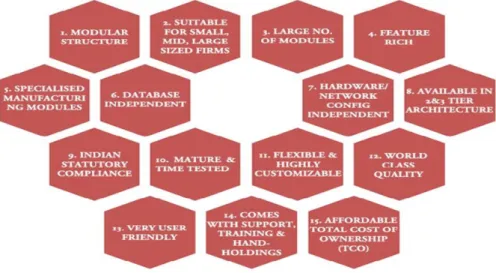
Figure 4 shows the Requirement Engineering phases follow when we will work on the Requirement of any Software [8].
Figure: 5 Analysis of DB Size for same No. of Report Generated
Figure 5 focuses on the Database Size need to be accessed to create the same number of reports as a final end results in the DBMS as well as in Proposed ERP.
The fundamental advantage of ERP is that integrating myriad businesses processes saves time and expense. Management can make decisions faster and with fewer errors. Data becomes visible across the organization. Tasks that benefit from this integration include:
• Sales forecasting, this allows inventory optimization.
• Order tracking, from acceptance through fulfillment
• Matching purchase orders (what was ordered), inventory receipts (what arrived), and costing .
Figure: 6 Access Time Reduced in Proposed ERP
Figure 6 shows the reduced access time which need to be required to access databases by the DBMS as well as in Proposed ERP.
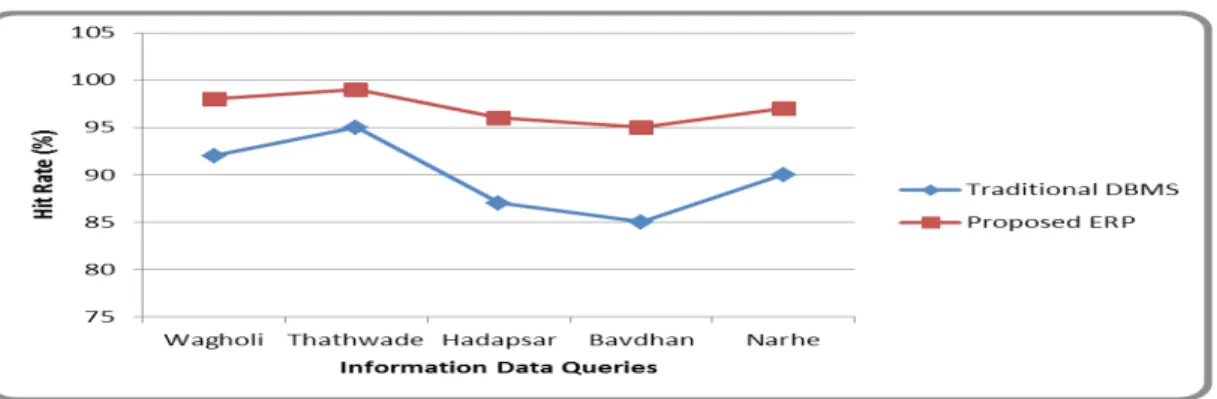
Figure: 7 Improvement in the Hit Ratio to access DB by Proposed ERP
Figure 7 shows the improvement in the Hit Ratio % to access Database the DBMS as well as in Proposed ERP.
ERP provides increased opportunities for collaboration. Data takes many forms in the modern enterprise. Documents, files, forms, audio and video, emails. Often, each data medium has its own mechanism for allowing collaboration. ERP provides a collaborative platform that lets employees spend more time collaborating on content rather than mastering the learning curve of communicating in various formats across distributed systems. ERP supports upper level management, providing critical decision making information. This decision support lets upper management make managerial choices that enhance the business.
DBMS/ER P Traditional DBMS Proposed ERP Function al Modules DB Size (Mb) Access time (sec) Hit Rate % DB Size (Mb) Access time (sec) Hit Rate %
Wagholi 120 0.59 92 34 0.45 98 Thathwad e 155 0.6 95 54 0.46 99 Hadapsar 115 0.54 87 27 0.35 96 Bavdhan 85 0.32 85 27 0.21 95 Narhe 95 0.39 90 25 0.27 97
Table 1: Cumulative Analysis of DBMS Vs Proposed ERP
The Cumulative Analysis of traditional DBMS Vs Proposed ERP for various functional modules at the campuses shown in Table 1.
Figure: 8 Traditional DBMS and Proposed ERP Cumulative Analysis
Figure 8 reflects the Traditional DBMS and Proposed ERP Cumulative Analysis where traditional Database management system the different databases are used for the various Campuses of the JSPM Group of Education like Wagholi Campus, Tathwade Campus, Narhe Campus, Hadpsar Campuses, Bhavdhan Campus as well as Corporate office at Katraj of same organization so it is not possible to keep different databases for the same so in this paper proposed the use of Integrated Database for the Entire organization using ERP system.
The experimentation performed with the various set of databases and simulation wherever necessary with some real time assumptions where Proposed ERP system applied on the existing Architecture of the JSPM Group; the marginal difference observed in the Databases need to be accessed to generate the same number of Reports when use the Traditional DBMS which end up with improvement in the Functional efficiency of Organizational Efficiency.
[3] CONCLUSION
In this paper the real time case methodology of the JSPM Group of Education refereed and the experimentation performed with the set of Databases in traditional Database Management System as well as the proposed Architecture of the ERP System. The sample Database transactions and processes on the various sub modules were observed to measure the Performance difference between the Traditional DBMS and Proposed ERP System. The Set of
several queries fired between the various Campuses of the JSPM Group of Education like Wagholi Campus, Tathwade Campus, Narhe Campus, Hadpsar Campuses, Bhavdhan Campus as well as Corporate office at Katraj of same organization to access the decentralized and Centralized Databases in the Traditional DBMS and proposed ERP System respectively. With this experimentation we have proved that the required access times as well as the Centralized Database size both are reduced. Further we have proved that the Data access Hit Rate increased by 85% to 95% as the proposed ERP system enhance the Integrity along with the improved design where the Database is Divided in to the Logical Unit Numbers (LUN)
REFERENCES
[1] Abdulova, V., and Aybay, I. (2006) Handoff Prioritizing Schemes in Cellular Wireless Networks. IEEE Computer Networks Symposiums.16 (18), pp 1-6.
[2] Bidgoli, Hossein, (2004). The Internet Encyclopedia, Volume 1, John Wiley & Sons, Inc. p. 707.
[3]
Rubina Adam, Paula Kotze, Alta van der Merwe. 2011. Acceptance of enterprise resource planning systems by small manufacturing Enterprises. In: In: Proceedings of the 1tth International Conference on Enterprise Information Systems, Vol.1, edited by Runtong Zhang, José Cordeiro, Xuewei Li, Zhenji Zhang and Juliang Zhang, SciTePress. , p. 229 – 238[4]
Srikantha Rao, S B Patil, Preeti Patil; “Building of a Secure Data Warehouse by Enhancing the ETL Processes for Data Leakage”. International Journal of Computer Applications (IJCA2012); Volume- II, March, 2012 ISBN: 973-93-80864-48-5 Foundation of Computer Science, New York, USA. Pages: 18-23, (Journal Impact Factor: 0.835)[5]
Srikantha Rao, S B Patil, Preeti Patil; “High Quality Design and Methodology Aspects To Enhance Large Scale Web Services”, International Journal of Advances in Engineering & Technology (IJAET-2012), ISSN: 2231-1963, March 2012, Volume3, Issue1, Pages175-185. (Journal Impact Factor: 1.96)[6]
Srikantha Rao, S B Patil, Preeti Patil; “High Quality Design To Enhance and Improve Performance Of Large Scale Web Applications”, International Journal of Computer Engineering &Technology (IJCET), ISSN 0976 – 6375 , Volume 3, Issue 1, 2012, Pages: 198-205. (Journal Impact Factor: 1.0425)[7]
Srikantha Rao, S B Patil, Preeti Patil; “Agile Principles as a leadership value System in the Software Development: Are we ready to be unleashed?”, Proceedings of the ICWET '11, Published by ACM New York, NY, USA ©2011, ISBN: 978-1-4503-0449-8, Page(s): 765-768[8]
Srikantha Rao, S B Patil, Preeti Patil; “Data integration problem of structural and semantic heterogeneity: data warehousing framework models for the optimization of the ETL processes”, Proceedings of the ICWET '11, Published by ACM New York, NY, USA ©2011, ISBN: 978-1-4503-0449-8, Page(s): 500-504[9]
Srikantha Rao, S B Patil, Preeti Patil; “OO Software Engineering Paradigm: A Seamless Interface in Software Development Life Cycle”, ACM (ICAC-2008), Published in the Digital Library of the International Journal on Computer Science and Applications (IJCSA), Feb 2008.[10]
Srikantha Rao, S B Patil, Preeti Patil; “Customized Approach for Efficient Data Storing and Retrieving from University Database Using Repetitive Frequency Indexing”, IEEE INTERNATIONAL CONFERENCE PUBLICATIONS, RAIT 2012, ISM Dhanbad, Jahrkhand, March 15–17, 2012 (Available on IEEEXplore) Print ISBN: 978-1-4577-0694-3, Digital Object Identifier : 10.1109/RAIT.2012.6194612 Page(s): 511 – 514[11]
Srikantha Rao, S B Patil, Preeti Patil; “Enhanced Software Development Strategy implying High Quality Design for Large Scale Database Projects”, International Conference and Workshop on Emerging Trends in Technology ICWET 2012, ISBN: 978-0-615-58717-2, TCET Mumbai, February 22–25, 2012, Pages: 508-513[12]
Suryakant B Patil, Sonal Deshmukh, Anuja Bharate, Preeti Patil; “Web Server Optimization by Enhancing the Data Retrieval and Storage Management with Classification Analysis at Various Network Traffic to Minimize Bandwidth Utilization”, International Journal Of Advanced Research In Engineering & Technology (IJARET), ISSN 0976-6499 , Volume 5, Issue 4, April 2014, Pages: 198-204.(Journal Impact Factor: 7.8273)[13]
Suryakant B Patil, Ms. Ashlesha Sawant, Preeti Patil; “Improvement In The Efficiency Of Web Based Search Engines By Increasing Page Rank Based on referring factors”, International Journal Of Information Technology And Management Information Systems(IJITMIS), ISSN : 0976 - 6413, Volume 5, Issue 1, April 2014, Pages: 198-204. (Journal Impact Factor: 6.2217)[14] Shaul, l. And tauber, d. 2012. CSFs along ERP life-cycle in SMEs: a field study. Industrial Management & Data Systems, 112(3), 360-384.
[15] Chang, SI; Guy Gable; Errol Smythe; Greg Timbrell (2000). "A Delphi examination of public sector ERP implementation issues". International Conference on Information Systems. Atlanta: Association for Information Systems. pp. 494–500. Retrieved September 9, 2008.
[16]
Kovacs, G. L., & Paganelli, P. (2003). "A planning and management infrastructure for large,complex, distributed projects - beyond ERP and SCM." Computers in Industry, 51(2), 165-165.
[17] Monk, Ellen and Wagner, Brett."Concepts in Enterprise Resource Planning" 3rd.ed.Course Technology Cengage Learning.Boston, Massachusetts.2009
[18]
Turban et al. (2008). Information Technology for Management, Transforming Organizations in the Digital Economy. Massachusetts: John Wiley & Sons, Inc., pp. 300–343. ISBN 978-0-471-78712-9[19]
Yusuf, Y., A. Gunasekaran, and M. Abthorpe, "Enterprise Information Systems Project Implementation: A Case Study of ERP in Rolls-Royce," International Journal of Production Economics, 87(3), February 2004.[20]
Kraemmerand, P.; et al. (2003). "ERP implementation: an integrated process of radical change and continuous learning". Production Planning & Control14 (4): 228–248.[21]
Vilpola, Inka Heidi (2008). "A method for improving ERP implementation success by the principles and process of user-centred design". Enterprise Information Systems2 (1): 47–76.[22]
Yakovlev, I.V. (2002). "An ERP implementation and business process reengineering at aSmall University". Educause Quarterly2: 52–57.
[23]
Fryling, Meg (2010). Total Cost of Ownership, System Acceptance and Perceived Success of Enterprise Resource Planning Software: Simulating a Dynamic Feedback Perspective ofERP in the Higher Education Environment. ProQuest Dissertations and Theses database. p. 403. ISBN 978-1-109-74428-6.
[24]
Fryling, Meg (2010). "Estimating the impact of enterprise resource planning project management decisions on post-implementation maintenance costs: a case study using simulation modelling". Enterprise Information Systems4 (4): 391–421.Author[s] brief Introduction
Dr. Suryakant B PatilPhD Computer Engg., M.E. CSE, B.E. CSE – 16 Years Teaching Experience Professor & Head, JSPM’s Imperial College of Engineering & Research, Pune, MH Publications/ Papers: 71 IPR: 4 (Provisional)
Editorial Board/ Reviewer: 27
Prof.Vijay S. Suryawanshi
M.Tech. CSE, B.E. IT Asst. Professor
JSPM’s Imperial College of Engineering & Research, Pune, MH
Prof. Dipali V. Suryawanshi
M.Tech. CSE, B.E. CE Asst. Professor
JSPM’s Bhivrabai Sawant Institute of Technology & Research, Wagholi, Pune, MH, India
Dr. Preeti Patil
PhD Computer Engg., M.E. CSE, B.E. CSE, DCS – 12 Years Teaching Experience Dean (SA), Professor & Head – Computer Engg. Department
KIT’s College of Engineering, Kolhapur, MH Publications/ Papers: 64 IPR: 3 (Provisional) Editorial Board/ Reviewer: 22
Corresponding Address-
JSPM’s Imperial College of Engineering & Research, Wagholi, Pune, MH Gat No: 720/2, Nagar Road, Pin: 412207 Mobile: 0 840 804 5555
![Figure 4 shows the Requirement Engineering phases follow when we will work on the Requirement of any Software [8].](https://thumb-us.123doks.com/thumbv2/123dok_us/10138998.2915099/4.892.135.752.599.890/figure-shows-requirement-engineering-phases-follow-requirement-software.webp)