The Effect of Embedded Lies on the Verbal
Quality of Statements and Implications for
Credibility Assessment
Brianna L. Verigin
This thesis is submitted in partial fulfillment of the requirements for the award of the degree of Doctor of Philosophy of The University of Portsmouth
ii Supervisors:
Prof. dr. Aldert Vrij University of Portsmouth, United Kingdom
Dr. Ewout H. Meijer Maastricht University, the Netherlands
Prof. dr. H.L.G.J. Merckelbach Maastricht University, the Netherlands
Co-Supervisors:
Dr. Sharon Leal University of Portsmouth, United Kingdom
Dr. Zarah Vernham University of Portsmouth, United Kingdom
Assessment Committee:
Dr. Lucy Akehurst University of Portsmouth, United Kingdom
Prof. dr. Dave Walsh De Montfort University, United Kingdom
This research was supported by a fellowship awarded from the Erasmus Mundus Joint Doctorate Program: The House of Legal Psychology (EMJD-LP) with Framework Partnership Agreement (FPA) 2013-0036 and Specific Grant Agreement (SGA) 2016-1339 to Brianna L. Verigin.
iii General Abstract
Embedded lies, the topic of investigation in this thesis, have been under researched within the deception detection literature. The overarching aim of this research was to examine how interviewees’ strategic inclusion of both truths and lies within a single account may affect statement quality, and the subsequent implications for verbal lie detection.
Across three experimental studies and one exploratory survey, I (i) explored the deception strategies reported by people who claim to be good liars (Chapter 2), (ii) examined how the combination of truths and lies within a single account affects the verbal quality of statements (Chapters 3 and 4), and (iii) tested if embedded lies can be exploited to facilitate within-statement lie detection (Chapter 5). Chapter 2 (n = 194) explored deception by investigating how laypeople’s self-reported ability to deceive was associated with their lie frequency, characteristics, and deception strategies. Of particular interest was whether the strategic inclusion of truthful details into lies corresponded to higher perceptions of deception ability. Results showed that self-reported good liars reported embedding lies as their most common strategy for deceiving successfully. Chapter 3 (n = 144), experimentally tested how interviewees strategically regulate the information they provide when their accounts contain both truthful and deceptive information. Results showed that interviewees calibrated the richness of detail provided in the first element of their statement to be consistent with the veracity of the second element, such that elements followed by a lie were less detailed than elements followed by a truth. Further examination revealed that participants also calibrated their lies according to both the preceding and the following element, with lies becoming more detailed when they were flanked by truthful information compared to when they were flanked by other lies. In light of these results,
iv Chapter 4 (n = 111) examined whether embedded lies differed qualitatively from full fabrications. The results showed that the two types of lies did not differ on a number of content-based cues (e.g., detail richness), but that lies embedded in otherwise truthful statements could be distinguished from truths embedded in truthful statements on the basis of detail richness and statement quality (i.e., clarity and plausibility). Finally, Chapter 5 (n = 148) tested whether lie detection accuracy could be improved by using embedded lies as a within-statement baseline comparison. Contrary to the hypothesis, results showed that instructing participants to make a within-statement baseline comparison did not increase the accuracy of their veracity assessments. Taking the results of these studies together, it could be concluded that liars aim to strategically maintain consistency regarding the quality of information provided between truths and lies within their statements; however, content-based methods of verbal credibility assessment based on the cues measured in this research appear to be robust against this strategy. The results of this thesis emphasise that lie detectors should exploit liars’ attempts at maintaining consistency by utilising methods of verbal baselining that control for both the individual and the situation.
v Table of Contents
Declaration……….viii
Abbreviations………...ix
List of figures and tables………...x
Acknowledgements………..xi
Dissemination………xiii
Chapter 1: Introduction to the thesis………1
1.1Introduction……….2
1.1.1 Importance of studying deception……....………..2
1.1.2 Verbal lie detection………3
1.1.2.1Memory-based cues………..4
1.1.2.2 Strategy-based cues………...5
1.1.3 Liars’ and truth-tellers’ strategies………..6
1.1.3.1 Embedded lies………...6
1.1.4 New research directions………...7
1.1.4.1 Good liars………..9
1.1.4.2 Embedded lies and the effect on statement quality…………...9
1.1.4.3 Within-statement lie detection………12
1.2The current thesis ……….13
Chapter 2: Lie prevalence, lie characteristics, and strategies of self-reported good liars (Study I)………17
2.1Abstract……….18 2.2Introduction………...19 2.3Method………..22 2.3.1 Participants………...22 2.3.2 Procedure……….23 2.4Results………...25
2.4.1 Lie prevalence and characteristics ………..25
2.4.2 Deception strategies of self-reported good liars………..28
2.5Discussion……….34
2.5.1 Limitations and future research ………..37
2.5.2 Conclusion………...38
Chapter 3: The interaction of truthful and deceptive information (Study II)....39
3.1Abstract………....…….40 3.2Introduction………...….……….……..41 3.3Method………...……….……..45 3.3.1 Participants………...……….…...45 3.3.2 Design…...……….…………..45 3.3.3 Procedure………...45 3.3.4 Analysis...………...50
vi 3.4Results……….………..51 3.4.1 Richness of detail……….56 3.4.1.1 Confirmatory analysis……….56 3.4.1.2Exploratory analysis………....58 3.4.2 Interviewees’ strategies………59 3.5Discussion……….62 3.5.1 Conclusion ………..67
Chapter 4: Embedding lies into truthful stories (Study III)……….68
4.1Abstract……….69
4.2Introduction……….………..70
4.3Method………..75
4.3.1 Participants………...75
4.3.2 Procedure……….75
4.3.3 Deviations from preregistration………...79
4.4Results……….………..79
4.4.1 Truthfulness measures………..80
4.4.2 Statement characteristics………..81
4.4.2.1Confirmatory hypothesis testing……….81
4.4.2.2 Exploratory hypothesis testing………83
4.5Discussion……….86
4.5.1 Limitations and future research………...89
4.5.2 Conclusion………...91
Chapter 5: A within-statement baseline comparison (Study IV)...92
5.1Abstract……….93
5.2Introduction……….………..94
5.2.1 The present study……….96
5.3Method………..97 5.3.1 Participants………...97 5.3.2 Statements………...97 5.3.3 Design………...98 5.3.4 Procedure……….99 5.4Results……….………101
5.4.1 Motivation, realism and detection ability………..101
5.4.2 Accuracy of deception judgements………101
5.5Discussion………...104
5.5.1 Limitations and future research………..106
5.5.2 Conclusion……….107
Chapter 6: General discussion………...108
6.1General discussion………..109
6.1.1 Summary of findings……….….109
6.1.2 Insights for detecting deception……….111
vii
6.1.2.2An extension to the consistency framework………..…115
6.1.2.3Exploiting embedded lies to facilitate deception detection...117
6.1.3 Practical implications……….119
6.1.4 Methodological considerations………..120
6.1.5 Overview of future research………...123
6.1.6 Conclusion……….126
References………127
Appendices………...149
Appendix A: Supplementary materials (Chapter 2)………..151
Appendix B: Supplementary materials (Chapter 3)………..154
Appendix C: Supplementary materials (Chapter 4)………..159
Appendix D: Supplementary materials (Chapter 5)………..167
Appendix E: Favorable ethical opinion for research line……….178
viii Declaration
Whilst registered as a candidate for the above degree, I have not been registered for any other research award. The results and conclusions embodied in this thesis are the work of the named candidate and have not been submitted for any other academic award.
_______________________ Brianna L. Verigin
ix Abbreviations MS………...Model Statement RM………...………...……….Reality Monitoring ANOVA……….Analysis of variance VA………..Verifiability Approach OSF………Open Science Framework mTurk………Amazon Mechanical Turk CBCA………..Criteria-Based Content Analysis ICC………...Intra-class Correlation Coefficient
BF01………...Bayes factor, expressed as evidence in support of null hypothesis
x List of Figures and Tables
Figures
Figure 2.1 Scatterplot of participants’ self-reported lie-telling frequency………….26
Figure 2.2 Bar charts displaying the frequency of deception characteristics……….27
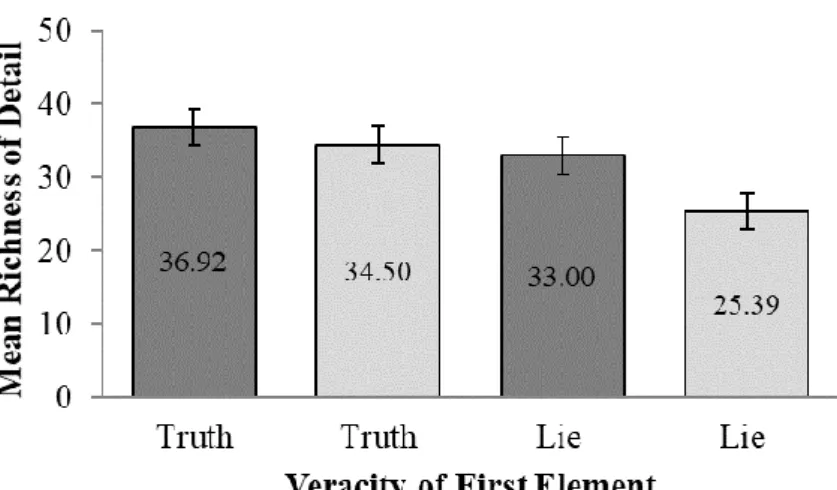
Figure 3.1 Richness of details in element two as a function of veracity condition….57 Figure 3.2 Richness of details in element one as a function of veracity condition….58 Tables Table 2.1 General qualitative deception strategies and descriptive statistics……….29
Table 2.2 Predetermined deception strategies and descriptive statistics...32
Table 3.1 Frequency and percentage of preparation techniques………53
Table 3.2 Crosstabulation of clarity score and condition for element one………….54
Table 3.3 Crosstabulation of clarity score and condition for element two………….55
Table 3.4 Frequency and percentage of overall interview strategies……….60
Table 3.5 Verbal strategy endorsement for element one and two………..61
Table 4.1 The content cues of liars’ and truth-tellers’ statements………....74
xi Acknowledgments
Undertaking this PhD has been a truly life-changing experience for me and it would not have been possible without the support and inspiration that I received from many people.
I would first like to thank my supervisor, Ewout. Without your valuable feedback, this PhD would not have been achievable. Thank you for taking a chance on me and for providing the freedom for me to grow into an independent researcher. I have learnt a great deal from you, both about science and integrity. My sincere thanks also goes out to my second supervisor, Aldert, whose expertise and (quick!) feedback always improved my work. Besides my supervisors, I would also like to thank my thesis examiners, Dr. Lucy Akehurst and Prof. Dave Walsh, for their insightful comments and stimulating questions.
I gratefully acknowledge the funding received for my doctoral studies from the Erasmus Mundus House of Legal Psychology programme. My experience in the programme exceeded my expectations in every possible way. Thank you to all of my fellow Erasmus colleagues, you have made this journey a pleasure. I am especially grateful to Ale, Sergii, the ‘older siblings’ here in Maastricht (Nina and Irena), Renan and the Portsmouth crew – through the trials of this thesis you have all been a source of motivation and support. I am in continued awe of your brilliance.
I am ever grateful to my best friends who have become family to me. Kathy, you have been by my side throughout this PhD, in both the moments of deep anxiety (read: imposter syndrome) and of big excitement. Thank you for your endless support, for always keeping me laughing, and for being the best travel buddy. There are no proper words to convey my deep gratitude and appreciation for our friendship. Michelle, you have never ceased to inspire me, even from across the world. Thank you
xii for teaching me to balance work and life. Without you, I would not have had the courage to embark on this journey in the first place.
I would also like to thank Caleb, who has been a constant source of joy and inspiration for me. Thank you for celebrating my small victories and for helping me back on my feet during the tough times. Most of all, thank you for your love and for all of the adventures. Meeting you has been the highlight of my time abroad and I am so grateful to call this our beginning.
Finally, this thesis is dedicated to my parents, Sharel and Lorne, without whom this never would have been possible. Your love and encouragement has been unwavering despite the long distance between us. Thank you for teaching me the virtues of courage, perseverance, and above all kindness. I also dedicate this thesis to my sister Whitney, who convinced me to take this leap of faith and who has always been my biggest inspiration and supporter.
xiii Dissemination
Publications
Verigin, B. L., Meijer, E. H., Vrij, A., & Zauzig, L. (2019). The interaction of truthful and deceptive information. Psychology, Crime and Law.
doi: 10.1080/1068316X.2019.1669596
Verigin, B. L., Meijer, E. H., & Vrij, A. (2019). Embedding lies into truthful stories does not affect their quality. Revisions submitted to Applied Cognitive Psychology.
Verigin, B. L., Meijer, E. H., & Vrij, A. (2019). A within-statement baseline comparison for detecting lies. Manuscript submitted for publication.
Verigin, B. L., Meijer, E. H., Bogaard, G., & Vrij, A. (2019). Lie prevalence, lie characteristics and strategies of self-reported good liars. PLoS ONE, 14,
e0225566, doi: 10.1371/journal.pone.0225566 Conference Presentations
Verigin, B. L., Meijer, E. H., & Vrij, A. (July 2019). A within-statement baseline comparison for detecting lies. Presented orally at the European Association of Legal Psychology conference (EAPL), Santiago de Compostela, Spain. Verigin, B. L., Meijer, E. H., & Vrij, A. (March 2019). Embedding lies into truthful
stories does not affect their quality. Presented orally at the Conference of the American Psychology-Law Society (APLS), Portland, Oregon.
Verigin, B. L., Meijer, E. H., & Vrij, A. (June 2018). The interaction of truths and lies within statements. Presented orally at the European Association of Legal Psychology conference (EAPL), Turku, Finland.
Verigin, B. L., Meijer, E. H., Vrij, A., & Merckelbach, H. (May 2017). Where the truth lies: Within-statement verbal lie detection. Presented orally at the European Association of Legal Psychology conference (EAPL), Mechelen, Belgium.
1
Chapter 1:
2 1.1Introduction
The main focus of this doctoral thesis was to investigate how the strategic embedding of lies influences the verbal behaviours of liars. In this chapter, I will broadly introduce the importance of studying deception detection for investigative purposes. Subsequently, I will discuss the theoretical foundations of verbal deception detection, emphasising the memory-based and strategy-based origins of several prominent verbal cues to deception. My discussion will also extend to the strategies of lying and truth-telling interviewees wherein I will highlight the strategy of embedding lies, an often-neglected aspect of deception research. From here, I will put forward the aims of the present research: (i) to explore the deception strategies of good liars, (ii) to examine the extent to which truthful and deceptive information interact to influence verbal quality, and (iii) to test whether embedded lies can be exploited to facilitate within-statement lie detection. Finally, the research conducted to address these aims will be described.
1.1.1 Importance of Studying Deception
Determining the credibility of an interviewee, be it a suspect, victim or witness, is a fundamental component of the investigative process. It is therefore not surprising that the scientific study of deception has already spanned over a century (Münsterberg, 1908). Indeed, several hundred studies have measured people’s ability to distinguish between truthful and deceptive accounts. The most robust finding in this literature is that humans are poor lie detectors, accurately detecting lies at rates barely exceeding chance level (e.g., Bond & DePaulo, 2006; Levine, 2010; Vrij, 2008a). This finding also holds true for professionals whose job it is to make judgements of credibility, such as police officers (e.g., Bond & DePaulo, 2006; Hartwig, Granhag, Strömwall, & Vrij, 2004; Luke et al., 2016).
3 One of the explanations for the poor lie detection performance is an overreliance on behavioural cues. No single behaviour, nor group of behaviours, is systematically and reliably indicative of deception (DePaulo et al., 2003; Hartwig & Bond, 2011; Wright & Wheatcroft, 2017), yet people continue to base their judgements on stereotypical nonverbal cues such as gaze aversion (Bogaard, Meijer, Vrij, & Merckelbach, 2016; Strömwall, Granhag, & Hartwig, 2004).
1.1.2 Verbal Lie Detection
The most diagnostic information is found in the content of liars’ speech. The accuracy of credibility assessments improves when judgements are based only on the verbal content of a statement (52% correct lie-truth classifications) versus through visual mediums (63% correct classifications; Bond & DePaulo, 2006). In fact, a review of over thirty studies showed that when observers’ judgements were guided by statement analysis, their accuracy rates increased to 72% (Vrij, 2005). Additionally, good lie detectors report a higher reliance on verbal cues when making credibility judgments, whereas poor lie detectors tend to rely primarily on non-verbal cues (Mann, Vrij, & Bull, 2004). It has therefore been advocated that for lie detection purposes, both in research and practice, it is more valuable to listen carefully to what interviewees say than to observe their nonverbal behaviour (Vrij, 2008b).
One of the most consistent findings in the verbal lie detection literature is that liars’ statements are typically less richly detailed than those of their truth-telling counterparts (e.g., Amado, Arce, Fariña, & Vilarino, 2016; DePaulo et al., 2003; Luke, 2019). In fact, the estimated effect size of quantity of details is d = 0.55 (Amado et al., 2016), which is remarkably high for the social sciences (Funder & Ozer, 2019; Richard, Bond, & Stokes-Zoota, 2003). Additionally, meta-analytical findings support the usefulness of temporal, visual, and auditory details for differentiating truthful from false accounts
4 (Masip, Sporer, Garrido, & Herrero, 2005). Based on these types of variables, the accuracy rate of classifying truth-tellers and liars extends well beyond chance level (Masip et al., 2005; Vrij, Fisher, & Blank, 2017).
1.1.2.1 Memory-based cues to deception. The use of content-based details as cues to deception stems from memory research. In particular, two commonly used methods of verbal credibility assessment have their foundations in theories of memory. Reality Monitoring (RM; Johnson & Raye, 1981) posits that memories derived from real experiences differ in quality from memories based on imagination, due to differences in the cognitive processes involved in externally versus internally generated memories. RM suggests that memories of real events are acquired through perceptual processes and therefore are more likely to contain details relating to sensory, spatial, temporal, and affective information, and to be generally more clear, sharp and vivid, compared to imagined events. Similarly, Criteria-Based Content Analysis (CBCA; Steller & Köhnken, 1989) is based on the hypothesis that memories of personally experienced events differ in both quality (e.g., the logical structure or plausibility) and content (e.g., unexpected complications) to memories of fabricated or imagined accounts (Undeutsch, 1967, 1989). These tools, in particular CBCA, are extensively used in forensic practice (e.g., Amado et al., 2016). Moreover, research supports these theoretical rationales within lie detection contexts: Liars lack the memory traces truth-tellers have, leaving them unable to provide as many rich details as honest individuals (Masip et al., 2005; Oberlader et al., 2016; Vrij, 2008). Though not without criticism, (see Masip et al., 2005; Vrij, 2005), CBCA and RM are favourable tools as, with appropriate training, evaluators’ accuracy rates increase from chance level to 65% - 80% (Vrij, 2008a).
5 1.1.2.2 Strategy-based cues to deception. More recently, scholars have developed deception detection techniques that aim to exploit interviewees’ strategies for appearing credible. One example is the Verifiability Approach (VA; Nahari, Vrij, & Fisher, 2014a, 2014b). The VA works on the assumption that liars, on the one hand, are inclined to provide detailed statements to be perceived as cooperative and credible, but, on the other hand, want to minimise the chances that investigators can falsify their statement (Masip & Herrero, 2013; Nahari et al., 2014a). A strategy that meets these contradictory aims is to provide information that cannot be verified.
Another example of a deception detection measure that is sensitive to the verbal strategies of liars and truth-tellers relates to common knowledge details (i.e., strongly invoked stereotypical information about events; Vrij, Leal, Mann et al., 2017). Whereas truth-tellers have personal, unique experiences of an event (DePaulo, Kashy, Kirkendol, Wyer, & Epstein, 1996), liars typically lack such information and their reports tend to be characterised by more general, impersonal knowledge (Sporer, 2016). Liars also tend to report fewer complications – occurrences that make a situation more difficult than necessary, often characterised by disrupted activity or failing efforts (e.g., missing the bus; Steller & Köhnken, 1989; Vrij, Leal, Jupe, & Harvey, 2018) – compared to truth-tellers. This makes sense given liars’ preference for simple stories (Hartwig et al., 2007). An additional strategy-based measure relates to self-handicapping strategies (i.e., justifications as to why someone is unable to provide certain information; Vrij, Leal, Mann et al., 2017). Liars are motivated to keep their stories simple; however, they also realise that admitting a lack of knowledge and/or memory may generate suspicion from investigators (Ruby & Brigham, 1998). A strategic solution then is to provide a justification for the failure to provide information. Taking these three cues together, investigators can calculate the
6 proportion of complications (complications / complications + common knowledge details + self-handicapping strategies), which represents the proportion of cues to truthfulness. This proportion score has theoretical advantages given that it is a within-subjects comparison that is also sensitive to the different verbal strategies used by liars and truth-tellers (Vrij, Leal, Jupe, & Harvey, 2018).
1.1.3 Liars’ and Truth-Tellers’ Strategies
Strategy-based deception detection techniques derive from a larger body of research on interviewees’ counter-interrogation strategies. This work is premised on the idea that it may be possible to identify more reliable deception cues, and potentially improve lie-detectors’ ability to discriminate between liars and truth-tellers, by improving our understanding of how liars and truth-tellers try to tell a convincing story (e.g., Clemens, 2013). The fact that individuals, guilty or innocent, adopt particular strategies in their attempts to appear credible can be explained by the theory of self-regulation: A social cognitive framework for understanding how people control their behaviour to move away from undesired outcomes and to reach desired goals (Carver & Scheier, 2012; Clemens, Granhag, & Strömwall, 2013; Fiske & Taylor, 2008; Hartwig, Granhag, & Luke, 2014). In legal contexts, this translates to a common goal among liars and truth-tellers, who both aim to convince the interviewer of their credibility. Importantly, the information management strategies by which they attempt to reach this goal will differ, largely due to differences in the mental state of liars and truth-tellers (Hartwig, Granhag, Strömwall, & Doering, 2010).
1.1.3.1 Embedded lies. One strategy that may contribute to liars’ success is the embedding of lies into truthful information. Embedded lies can be defined as fragments of deceptive information integrated into truthful stories designed to mislead an investigator. When given the opportunity, liars will incorporate such embedded lies
7 into their accounts. Evidence for the prevalence of embedded lies comes from Leins, Fisher, and Ross (2013). In two studies, these authors found that the majority of liars – 67% in the first study and 86% in the second – chose to formulate their deceptive account based on a previously experienced event. Additionally, in their study evaluating the verifiability approach, Nahari et al. (2014b) found that of their 44 mock criminals who were instructed to provide deceptive statements, more than half indicated that over 20% of their statement was truthful. Further evidence comes from Hartwig and colleagues’ (2007) examination of guilty and innocent suspects’ strategies, which revealed that one of liars’ most endorsed strategies was to avoid lying by telling the truth as much as possible. In fact, liars will generally provide as much experienced or truthful information as possible, to the extent that they do not incriminate themselves (Nahari & Vrij, 2015). The use of embedded lies has been observed across various populations, such as research participants (Bell & DePaulo, 1996; Leins, Zimmerman, & Polander, 2017), non-criminals engaging in deception (DePaulo et al., 2003), and even criminal suspects (Strömwall & Willén, 2011). It has been speculated that this strategy can enhance one’s credibility because lies of this type may be easier to deliver and more difficult for interviewers to detect, as compared to outright lies (Vrij, 2008a).
1.1.4 New Research Directions
Nearly all research to date treats deception as dichotomous. That is, statements are classified as either truthful or deceptive, and participants as either liars or truth-tellers. This division is reflected in hypotheses, designs and experimental procedures (e.g., McCornack, Morrison, Paik, Wisner, & Zhu, 2014). Indeed, some researchers have acknowledged that liars prefer to embed lies into otherwise truthful statements (e.g., Leins et al., 2013; Nahari 2018a; Nahari & Vrij, 2015; Vrij, 2008a; Vrij,
8 Granhag, & Porter, 2010), though this has mostly been in the form of disclaimers within discussion sections. Few have explicitly acknowledged, nor systematically manipulated, the inclusion of both truthful and deceptive information within statements. Doing so would more accurately reflect real-world conditions in which suspects interweave truths and lies (e.g., Leins et al., 2017; Strömwall & Willén, 2011; Vrij, 2008a).
There is variation in the extent to which deceptive information can be integrated into truthful stories. For instance, an arsonist who denies having set a fire yesterday can instead claim that he visited the gym. He can then describe an entirely truthful recollection of a previous visit to the gym, lying only about the day and time at which the visit occurred. It is also possible that liars embed more elaborate descriptions of deceptive events into their statements. For example, when providing an alibi statement, a burglar could report the majority of his day truthfully, but could lie about his activities during the window of time during which he committed the burglary. This latter type of embedded lie, whereby liars integrate descriptions of deceptive events into otherwise truthful stories, is the focus of the current dissertation. As it stands, we are largely unaware how such embedded lies may affect the verbal content of statements and subsequently, what implications this may have for verbal lie detection tools. This thesis aimed to address these gaps. My objectives were threefold. First, I aimed to advance our understanding of liars’ deception strategies, particularly those that help self-reported good liars evade detection. Second, I aimed to narrow in on how the strategic embedding of lies may affect statement quality. Third, I aimed to work towards a within-statement method for exploiting embedded lies to improve deception detection ability. These lines of inquiry are both highly warranted and long overdue, and will provide critical insights for credibility assessors
9 in both research and practice. What follows is a list of topics directly related to the scope of this thesis that warrant further investigation.
1.1.4.1 Good liars. An interesting feature of the empirical literature on lie detection is that most studies have focused either on strategies and cues designed to improve discriminatory accuracy, or individual differences in lie detection ability (Vrij & Granhag, 2012). A growing body of evidence, however, indicates that the accuracy of detecting deception depends more on the skill or characteristics of the deceiver and less on the judges’ lie detection ability (Bond & DePaulo, 2008; Bond, Kahler, & Paolicelli, 1985; Law et al., 2018; Levine, 2016; Levine et al., 2011). Even so, only a handful of studies have attempted to determine individual differences in the ability to lie credibly (e.g., DePaulo & Rosenthal, 1979; Riggio, Tucker, & Throckmorton, 1987; Vrij, Granhag, & Mann, 2010; Wright, Berry & Bird, 2012, 2013). Little is known about what constitutes good liars, or what causes the variation in detectability. Some research, for example, has shown that sender demeanor explained up to 98% of the variance in detection accuracy (Levine et al., 2011). Other researchers have speculated that good liars use effective strategies to conduct their behaviour, by attempting to act in line with people’s beliefs about how truth-tellers behave while avoiding behaviour associated with liars (Vrij, Granhag, & Mann, 2010). Still, this field is in its infancy and additional research on what characterises those who escape detection (i.e., good liars) would be highly beneficial in investigative settings. In particular, digging deeper into good liars’ strategies could aid in the development of strategy-based interventions targeted at these individuals, who may be more likely to avoid detection.
1.1.4.2 Embedded lies and the effect on statement quality. Research on beliefs about cues to deception and liars’ strategies suggests that the embedding of lies could affect their quality. Laypeople and legal professionals alike believe that
10 inconsistency is symptomatic of deception (Blair, Reimer, & Levine, 2018; Vredeveldt, van Koppen, & Granhag, 2014; Strömwall & Granhag, 2003). Accordingly, one of the main concerns of liars – and one of their most frequently reported strategies – is to maintain consistency (Deeb, Vrij, Hope, Mann, Granhag, & Lancaster, 2017; Hartwig, Granhag, Strömwall, & Doering, 2010). Moreover, liars tend to be more concerned with reducing the amount of within-statement inconsistency (i.e., inconsistencies between details within a single statement) than any other type of inconsistency, such as between-statement inconsistency (i.e., the level of consistency between different statements made by the same suspect) or statement-evidence inconsistency (i.e., the level of consistency between the suspect’s statement and the other evidence; Deeb et al., 2017, 2018). In one of the only studies to include statements that purposefully contained both truths and lies, Deeb et al. (2017) instructed liars to provide a statement containing reports about two events, one deceptive and the other truthful, during two interviews. When asked about their strategies for appearing credible, 45% of liars mentioned maintaining consistency for both events between statements. Moreover, many liars reported that they did so by strategically lowering their “baseline consistency” by including fewer repetitions when they reported truthfully to match the number of repetitions provided during their deceptive report. A plausible explanation is that liars do not want the deceptive component of their story to stand out from the remainder of their statement, as that would draw attention to their lies. Thus, if interviewees embed their lies in an otherwise truthful statement, their efforts to maintain consistency may also extend to the quality of details provided between the truthful and deceptive parts of their statement.
11 If liars are able to successfully maintain consistency regarding the quality of details provided between the lies and truths of their statement, it could mean that lies become, for example, more richly detailed when surrounded by truths. Embedded lies that are characterised by high-quality contextual and perceptual details could jeopardise the diagnostic accuracy and utility of verbal credibility assessment tools such as CBCA and RM, that are premised upon differences in the content of accounts based on experienced versus non-experienced events (e.g., Masip et al., 2005; Vrij, 2005; Vrij, Granhag, & Porter, 2010). This could be particularly problematic in investigative contexts given that guilty suspects who strategically embed their lies may go undetected by these tools.
Despite concerns, little research has addressed how lies that are embedded into truthful accounts may differ from lies that are completely fabricated. One study that included comparisons between partially deceptive and truthful mock suspects found that partially deceptive statements had fewer details and were less coherent than truthful statements (Porter & Yuille, 1996). The authors speculated that the act of lying affected the quality and quantity of information provided, as opposed to the memories themselves. In fact, even when liars and truth-tellers carry out the same activities (but for either malevolent or benevolent reasons), verbal differences still occur with liars reporting their activities in less detail than truth-tellers (Vrij, Mann, Jundi, Hillman, & Hope, 2014). Additionally, research by Palena and colleagues (2018) required interviewees to tell the truth about one theme (event) but to lie about another, during one interview. Their results showed that truth-tellers reported the same amount of information about both themes, whereas liars reported fewer details for the theme they lied about compared to the theme they reported truthfully.
12 Few previous studies have also examined how lies differ when they are invented or based on past experiences, and to what extent this influences verbal lie detection tools. For instance, one previous study found that the content of liars’ and truth-tellers’ statements differed on RM criteria even when past experiences were used, but that RM was most effective when liars invented their stories rather than using previous experiences (Gnisci, Caso & Vrij, 2010). Similar results were also found in unpublished work by Valois and colleagues (2019). These authors examined whether CBCA and RM techniques could differentiate both fully and partially deceptive accounts from truthful accounts, finding that both tools were still effective even when interviewees incorporated truthful events into fabricated accounts. Given the scarcity of work on this topic, further research is warranted to understand the effects of embedded lies on statement quality and the subsequent consequences for the reliability of verbal credibility assessment tools. Such research could inform both researchers and practitioners whether or not the commonly used methods of credibility assessment (e.g., CBCA and RM) are robust against the embedding of deceptive events into otherwise truthful stories.
1.1.4.3 Within-statement lie detection. On the one hand, embedded lies may pose a risk to the reliability of verbal credibility assessment tools, but on the other hand, lie detectors may be able to exploit these lies to benefit deception detection. One way to do so is by using the baseline technique. Baselining refers to the practice in which interviewers evaluate the veracity of a critical component of a statement relative to a baseline, or neutral, component of the interview (see Vrij, 2016 for an overview), and is reportedly used by some police in practice (Ewens, Vrij, Jang, & Jo, 2014; Frank, Yarbrough, & Ekman, 2006; Inbau et al., 2013; U.S. Department of the Army, 2006). Previous research on baselining shows that to enhance diagnostic accuracy, the
13 baseline statement must be equivalent to the statement of interest in terms of content, time-frame, stakes, cognitive and emotional involvement, and questioning context (i.e., a comparable truth baseline; Caso, Palena, Vrij, & Gnisci, 2019; Ewens et al., 2014; Palena, Vrij, Caso, & Orthey, 2018). Moreover, a comparable truth baseline can enhance truth-lie discrimination accuracy (e.g., Caso et al., 2019). It is also possible that, if portions of an interviewee’s statement can be verified as truthful, embedded lies could provide an opportunity for a within-statement baseline comparison. Investigators could theoretically derive a baseline statement from parts of an interviewee’s statement to successfully increase deception accuracy. This would have important implications for practitioners who may be inclined to draw such comparisons between corroborated and uncorroborated portions of an interviewee’s account. Within-statement comparisons also facilitate veracity decisions at the individual level, thereby overcoming common criticisms of deception research relating to generalisations of group-derived estimates to individual cases (e.g., Fisher, Medaglia, & Jeronimus, 2018). It is therefore unsurprising that researchers and practitioners alike have called for more research of this type (e.g., Vrij, 2016). 1.2The Current Thesis
This PhD thesis provides an empirical examination of embedded lies, with the aim of answering three central questions: (i) which strategies do people who claim to be good liars report using to successfully evade detection, (ii) to what extent do embedded lies affect the verbal quality of statements, and (iii) can embedded lies be exploited to facilitate lie detection? To answer these questions, a mixed-methodological approach was taken. Chapter 2 reports survey research examining the deception strategies of good liars, whereas Chapters 3, 4 and 5 contain experimental research testing the impact of embedded lies on the verbal quality of statements and
14 the potential for exploiting embedded lies using a within-statement lie detection approach. Additionally, in the general discussion (Chapter 6), an overview of the key findings is presented, followed by the theoretical and practical implications of my results for credibility assessments in academic and applied contexts. The studies are summarised in further detail below.
Chapter 2 (Study I). Surveying liars as a source of insight into real-world deception remains an underdeveloped research avenue (e.g., Nahari et al., 2019). I conducted an international survey to explore the association between laypeople’s self-reported ability to deceive and their lie frequency, characteristics, and deception strategies in daily life. I replicated the previous finding that a minority of individuals account for the majority of lies, and I found evidence that these prolific liars also consider themselves good liars. Additionally, my results showed that self-reported good liars attempt to strategically manipulate their verbal behaviour to embed lies within truthful information and to tell plausible, simple, and clear stories. This study highlights the importance of developing strategy-based interventions that account for the strategic embedding of lies, particularly by skilled liars.
Chapter 3 (Study II). Although it has been acknowledged that liars prefer to embed lies into otherwise truthful statements, there is a scarcity of research on how truthful and deceptive information may interact within statements. I experimentally tested how interviewees strategically regulate the information they provide when their accounts contain both truths and lies. The findings of this study suggest that interviewees calibrate the richness of detail provided in the first element of their statement based on the veracity of the following element, with elements followed by a lie being less detailed than elements followed by a truth. I also found that lies become more detailed when they are flanked by truthful information compared to when they are
15 flanked by other lies, meaning that participants also calibrated their lies according to both the preceding and the following element. Liars’ strategic calibration of the detail richness of the truthful and deceptive components of their statements provides reason to believe that embedded lies could threaten the reliability of verbal credibility assessment tools.
Chapter 4 (Study III). The extent to which embedded lies hinder the effectiveness of verbal credibility tools is largely unknown. In this study, I extended my paradigm to incorporate lies that were embedded into truthful information, to examine whether lies that were embedded into truthful stories were qualitatively different than lies that were part of entirely fabricated statements. Results showed that embedded lies did not differ from full fabrications in terms of, for example, detail richness and the verifiability of information, but that embedded lies could be distinguished from truthful statements based on detail richness and statement quality (i.e., clarity and plausibility). Based on the findings of this study, verbal credibility assessment tools based on the verbal content measured in this study appear to be robust against the embedding of lies.
Chapter 5 (Study IV). Finally, I tested whether embedded lies could be exploited as a within-statement baseline comparison to facilitate lie detection. Participants read a mock suspect’s alibi statement and provided a veracity judgement regarding a critical two-hour period within the statement. This critical element was either deceptive or truthful and was embedded into an otherwise truthful story. Half of the participants received additional instructions to use to the surrounding truthful elements of the statement as a baseline. Contrary to my prediction, I found that instructing participants to make a within-statement baseline comparison did not
16 improve the accuracy of deception detection. These results have applied relevance given police officers’ potential reliance on similar techniques during investigations.
17
Chapter 2: Lie prevalence, lie
characteristics and strategies of
self-reported good liars
This chapter draws from the following manuscript:
Verigin, B. L., Meijer, E. H., Bogaard, G., & Vrij, A. (2019). Lie prevalence, lie characteristics and strategies of self-reported good liars. PLoS ONE, 14,
18 2.1 Abstract
Meta-analytic findings indicate that the success of unmasking a deceptive interaction relies more on the performance of the liar than on that of the lie detector. Despite this finding, the lie characteristics and strategies of deception that enable good liars to evade detection are largely unknown. I conducted a survey (n = 194) to explore the association between laypeople’s self-reported ability to deceive on the one hand, and their lie prevalence, characteristics, and deception strategies in daily life on the other. Higher self-reported ratings of deception ability were positively correlated with self-reports of telling more lies per day, telling inconsequential lies, lying to colleagues and friends, and communicating lies via face-to-face interactions. Results also showed that self-reported good liars highly relied on verbal strategies of deception and they most commonly reported to i) embed their lies into truthful information, ii) keep the statement clear and simple, and iii) provide a plausible account. This study provides a starting point for future research exploring the meta-cognitions and patterns of skilled liars who may be more likely to evade detection.
19 2.2 Introduction
Despite the importance of being able to detect deception, research has consistently found that people are unable to do so. In fact, the accuracy rates vary around chance level (e.g., Bond & DePaulo, 2006; Vrij, 2008). Lacking good lie detectors, a growing body of evidence indicates that the accuracy of detecting deception depends more on the characteristics of the deceiver and less on the lie detection ability of the judge (Bond & DePaulo, 2008; Bond, Kahler, & Paolicelli, 1985; Law et al., 2018; Levine, 2016; Levine et al., 2011). The meta-analysis of Bond and DePaulo (2008) provided robust evidence that liars vary in their detectability. Their analysis showed that differences in detectability from sender to sender are more reliable than differences in credulity from judge to judge, with reliability coefficients of .58 and .30, respectively. This pattern of results was replicated by Law et al. (2018), lending support to the proposition that liar characteristics exert a powerful influence on lie detection outcomes. Moreover, Levine et al. (2011) showed that sender demeanour explained up to 98% of the variance in detection accuracy.
Despite the above, only a handful of studies have attempted to determine individual differences in the ability to lie credibly (e.g., DePaulo & Rosenthal, 1979; Riggio, Tucker, & Throckmorton, 1987; Vrij, Granhag, & Mann, 2010; Wright, Berry & Bird, 2012, 2013). Research on what characterises those who escape detection (i.e., good liars) would be highly beneficial in investigative settings. Thus, a focus on the liar, in particular the skilled liar, was the aim of this study. Specifically, the present chapter reports an exploratory study addressing how self-reported deception ability is associated with lie prevalence and lie characteristics, and how self-reported good liars utilise strategies for deceiving.
20 First, the relationship between liars’ reported lie-telling frequency and self-reported deception ability was investigated. The most widely cited research on deception prevalence estimates the frequency at an average of once or twice per day (DePaulo, Kashy, Kirkendol, Wyer, & Epstein, 1996; see also George & Robb, 2008). More recent research, however, shows that the distribution of lies per day is considerably skewed. The majority of lies are told by only a handful of prolific liars (Serota & Levine, 2015; Serota, Levine, & Boster, 2010; Halevy, Shalvi, & Verschuere, 2014). Specifically, Serota and Levine (2015) showed that in almost 3,000 participants, 5% of people accounted for over 50% of all the lies reported within the past 24 hours, whereas the majority of subjects reported telling no lies at all. Several additional studies, as well as a reanalysis of the DePaulo et al.’s (1996) diary study, have validated that the majority of lies are told by a minority of people (e.g., George & Robb, 2008; Serota et al., 2010). These few prolific liars tend to tell more serious lies that carry significant consequences if detected (Serota & Levine, 2015). Also, people who self-reported to lie more often were more prone to cheating in laboratory tasks for personal profit (Halevy et al., 2014). It is possible that these prolific liars also perceive themselves as more skilled at deceiving and tell more lies that they think will stay undetected, either because they believe the target will not try to find out or they believe they are good enough to fool the target.
Second, this investigation examined whether characteristics of lies differ as a function of self-reported deception ability. The first of these characteristics is the type of lie. This can refer to the severity; at one end are white lies, which are relatively common (Feldman, Forrest, & Happ, 2002) and often used to ease social interactions (e.g., telling your mother-in-law that her baking is delicious when you actually dislike sweets; Vrij, 2007), while at the other end are bold-faced fabrications, which are less
21 common and typically serve to protect the liar (e.g., denying having had an affair; Craig, 2003). The latter type of lies are also encountered more by the legal system (Vrij, Edward, Roberts, & Bull, 2000). Other variations of lies also exist, for example lies of omission or lies embedded into the truth; however, research has yet to explore how the types of lies could differ as a function of deception ability. Is it that, for example, good liars tend to utilise a certain type of lie which facilitates their success? The second characteristic is the receiver of the lie. Lies can be communicated to a variety of individuals ranging from family, romantic partners, and friends to strangers, colleagues, or authority figures. Previous research has shown that people lie less frequently in close relationships than in casual relationships (DePaulo & Kashy, 1998). A third characteristic of interest is the medium of deception, as this can also influence the success of one’s lie. Some liars, for instance, prefer online communication (Van Swol, Braun, & Kolb, 2015). This would fit the liars’ (erroneous) belief that their deception will leak out via behavioural cues (Vrij, Granhag, & Porter, 2010). It is unknown, however, if or how good liars concentrate their lies to specific individuals or communicate via certain mediums.
Finally, I examined the strategies that self-reported good liars utilise for successfully deceiving. The idea that liars adopt strategies to enhance the likelihood of successfully deceiving stems from research on impression and information management. Both forms of regulation relate to the idea that much of social behaviour is controlled for the purpose of interpersonal presentation (DePaulo, 1992; DePaulo et al., 2003). In legal contexts, both liars and truth-tellers are motivated to achieve a favourable impression and attempt to do so by regulating their speech and behaviour, albeit liars more so than truth-tellers (e.g., Hartwig, Granhag, & Strömwall, 2007). The topic of deceivers’ strategies has received some empirical attention (e.g., Colwell,
22 Hiscock-Anisman, Memon, Woods, & Michlik, 2006; Hartwig et al., 2007; Hartwig, Granhag, Strömwall, & Doering, 2010; Strömwall, Hartwig, & Granhag, 2006). For example, it was found that among the principal strategies of criminal offenders were “Staying close to the truth,” and “Not giving away information” (Strömwall, & Willén, 2011). Researchers have also capitalised on this increased awareness of liars’ and truth-tellers’ strategies by developing strategy-based lie detection tools. For instance, the Verifiability Approach (VA; Nahari, Vrij, & Fisher, 2014a, 2014b) exploits liars’ strategy of providing detailed statements that are embellished with unverifiable information. Still, surveying expert liars as a source of insight into real-world deception remains a highly underdeveloped research avenue (e.g., Nahari et al., 2019).
The purpose of this survey was to shed light on the association between self-reported deception ability and lie prevalence and lie characteristics. Given the exploratory nature of this research objective, a-priori hypotheses were not specified.
2.3 Method 2.3.1 Participants
The sample consisted of 194 participants (97 females; 95 males; 2 preferred not to say; Mage = 39.12 years, SDage = 11.43) recruited via Amazon Mechanical Turk (mTurk). Most participants reported being U.S. citizens (n = 175), whereas the remainder (n = 19) reported Indian citizenship. Participants who completed the study were paid 1.75 USD. Participants could participate in the study if they reported to be able to understand and write English at an advanced level. To ensure data quality, participants were required to have the mTurk Masters Qualification that is awarded to those who have demonstrated continual excellence across a wide range of mTurk projects. An additional 133 participants began the questionnaire but did not complete it, therefore their data were discarded. Data from nine participants were also removed
23 because of insufficient responses. The sample size (n = 194) was reached after these exclusions. The study was approved by the standing ethical committee.
2.3.2 Procedure
The online questionnaire was created on Qualtrics online platform. After providing informed consent, participants were provided definitions of lying and deception modelled from previous research (DePaulo et al., 1996; Vrij, 2008a; see Appendix A). Participants were asked to read these definitions carefully and to consider them while making responses throughout the questionnaire. In the first part of the questionnaire, participants reported their experience with telling lies in daily life. Participants reported the estimated number of lies told during the past 24 hours. Participants then responded to multiple-response questions about i) the types of lies told during the past 24 hours (options: white lies, exaggerations, lies of omission/concealment, lies of commission/fabrications, embedded lies; see Appendix A for the definitions provided to participants); ii) the receivers of their deception (options: family, friend, employer, colleague, authority figure, or other); and iii) the mediums of their deception (options: face-to-face, over the phone, social media, text message, email, or other). Participants also rated on a 10-point Likert scale (1 – very poor to 10 – excellent) “How good are you at successfully deceiving others (i.e., getting away with lies)?”
The second part of the questionnaire probed the deceivers’ strategies. Participants provided an open-ended response to explain “In general, what strategy or strategies do you use when telling lies?” They were then asked to rate on a 10-point Likert scale (1 – not important to 10 – very important) how important they consider verbal strategies of deception and nonverbal strategies of deception to be for getting away with lies (for the definitions provided to participants, see Appendix A). Finally,
24 participants indicated which verbal strategies they use when telling lies in general from a predetermined set (options: reporting from previous experience, providing details the person cannot check [i.e., unverifiable details], telling a plausible story, etcetera). The options included in this list were drawn from empirical findings regarding liars’ strategies and cues to deception (e.g., DePaulo et al., 2003; Leins, Fisher, & Ross, 2013; Nahari et al., 2014a)1. After rating the predetermined set of strategies, participants were unable to modify their previous open-ended responses. Participants then provided demographic information regarding their age, sex, citizenship, ethnicity and education.2
Qualitative analysis. To code the participants’ self-reported strategies into data-driven categories, the Principal Investigator performed a content analysis on the open-ended responses to the question probing their use of strategies. First, each participant’s strategy or strategies was identified, then all overlapping responses were combined, and these strategies were condensed into several dominant categories with theoretical similarities (i.e., relating to behavioural control or verbal control, etcetera). The Principal Investigator completed each stage of this process and the other members of the research team verified the final decisions by confirming the conceptual basis for each category. Seven categories emerged from this coding method, for example omitting certain information, relating to truthful information, or controlling behaviour (see Table 2.1).
To establish inter-rater reliability, the Principal Investigator, who has expertise with qualitative coding, extensively trained a Research Assistant. Both individuals then
1 Given the theme of this doctoral research, I was particularly interested in how liars might maintain
consistency in their statements if they chose to interweave lies and truths. To tease apart how
individuals could manipulate their statements to maintain consistency, I included two categories related to the strategic matching of the type and amount of details between lies and truths within statements.
2 An additional section of the questionnaire probed laypeople’s opinions on the types of lies and
strategies used by guilty and innocent suspects in an investigative context. Given the conceptual differences, this section was retained for use in a separate manuscript beyond this thesis.
25 coded a randomly selected 20% of the participants’ open-ended responses into the appropriate categories. A two-way mixed effects model measuring consistency (e.g., Koo & Li, 2016) showed that coders were highly consistent across all categories (Single Measures ICCs ranged from .79 to 1.00). After confirming that the coders were consistent, the Principal Investigator completed the remaining sample of participant responses and only these scores were used in the analysis.
2.4 Results
This survey sought to i) replicate previous findings regarding the distribution skewness of lie-telling frequency; ii) isolate lie characteristics as a function of deception ability; and iii) explore the strategies of deception used by self-reported good liars. 2.4.1 Lie Prevalence and Characteristics
First, I investigated how laypeople lie in daily life by examining the frequency of lies, types of lies, receivers and mediums of deception within the past 24 hours. Overall, participants indicated telling a mean of 1.61 lies during the last 24 hours (SD
= 2.75; range: 0-20 lies), but the distribution was non-normally distributed, with a skewness of 3.90 (SE = 0.18) and a kurtosis of 18.44 (SE = 0.35). The six most prolific liars, less than 1% of the participants, accounted for 38.5% of the lies told. Thirty-nine percent of the participants reported telling no lies. Figure 2.1 displays participants’ lie-telling prevalence.
26
Figure 2.1.
Scatterplot of participants’ self-reported lie-telling frequency during the past 24 hours. The distribution curve represents the mean and standard deviation of the total sample. Error bars represent 95% confidence intervals.
I also explored participants’ endorsement of the type, recipient, and medium of their lies (see Figure 2.2). Participants mostly reported telling white lies, to family members, and via face-to-face interactions. All lie characteristics displayed non-normal distributions.
27
Figure 2.2. Bar charts displaying the frequency of the types, receivers, and mediums of deception endorsed by participants for their reported lies during the past 24 hours. Error bars represent 95% confidence intervals. For deception recipients, “other” refers to individuals such as intimate partners or strangers; for deception mediums, “other” refers to online platforms not included in the provided list.
Lie prevalence and characteristics as a function of deception ability. Next, correlational analyses were conducted to examine the association of participants’ lie frequency and characteristics with their self-reported deception ability. An increase in
28 self-reported ability to deceive was positively correlated to a greater frequency of lies told per day, r(192) = .22, p = .002, and with higher endorsement of telling white lies and exaggerations within the last 24 hours (r(192) = .16, p = .023 and r(192) = .16, p = .027, respectively). There were no significant associations between self-reported deception ability and reported use of embedded lies, r(192) = .14, p = .051; lies of omission, r(192) = .10, p = .171; or lies of commission, r(192) = .10, p = .161. Higher self-reported deception ability was significantly associated with telling lies to colleagues, r(192) = .27, p < .001, friends, r(192) = .16, p = .026, and “other” receivers of deception, r(192) = .16, p = .031; however, there were no significant associations between self-reported ability to lie and telling lies to family, employers, or authority figures (r(192) = .08, p = .243; r(192) = .04, p = .558; and r(192) = .11, p = .133, respectively). Finally, higher values for self-reported deception ability were positively correlated to telling lies via face-to-face interactions, r(192) = .26, p < .001. All other mediums of communicating the deception were not associated with a higher reported ability, as follows: Via phone conversations, text messaging, social media, email, or “other” sources (r(192) = .13, p = .075; r(192) = .13, p = .083; r(192) = .03, p = .664;
r(192) = .05, p = .484; r(192) = .10, p = .153, respectively). 2.4.2 Deception Strategies of Self-Reported Good Liars3
I was also interested in exploring the strategies of deception, particularly those of good liars. To test this, categories representing participants’ self-reported deception ability were created, using their scores from the question asking about their ability to deceive successfully, as follows: Scores of three and below were combined into the category of “Poor liars” (n = 51); scores of 4, 5, 6, and 7 were combined into the
3 Please note that the deception ability of liars was analysed in two ways, first as a continuous score to
allow for more statistically powerful (correlational) analyses, and second as a categorical variable to allow for analysis of variance (ANOVA) testing.
29 category of “Neutral liars” (n = 75); and scores of eight and above were combined into the category of “Good liars” (n = 68).
Table 2.1 provides an overview of the exact values regarding the endorsement of each deception strategy that emerged from the qualitative coding. To examine whether there were associations between the reported strategies and varying deception abilities, a series of chi square tests of independence were conducted on participants’ coded responses to the question regarding their general strategies for deceiving. No statistically significant associations were observed between self-reported deception ability and the endorsement of any strategy categories (see Table 2.1), apart from one exception. There was a significant association between Poor, Neutral and Good liars and the endorsement of using “No strategy”. Pairwise comparisons were performed using Dunn’s (1964) procedure with a corrected alpha level of .025 for multiple tests. This analysis revealed a significant difference in endorsing “No strategy” onlybetween the Good and Poor liars, p = .004. However, the assumption of all expected cell frequencies being equal to or greater than five was not met and as such these data may be skewed. Based on Cohen’s (1988) guidelines, all associations were small to moderate (all Cramer’s Vs < .206).
Table 2.1
Endorsement of general qualitative deception strategies and descriptive statisticsas a function of deception ability
Interview Strategies N M SD X2 Omitting certain information 76 0.39 0.49 χ2(2) = 3.00, p = .223, V = .124 Poor liars 25 0.49 0.51 Neutral liars 28 0.37 0.49 Good liars 23 0.34 0.48 Providing certain information 49 0.25 0.44 χ2(2) = 5.49, p = .064, V = .168 Poor liars 7 0.14 0.35 Neutral liars 20 0.27 0.45
30 Good liars 22 0.32 0.47 Relating to truthful information 49 0.25 0.44 χ2(2) = 5.02, p = .081, V = .161 Poor liars 7 0.14 0.35 Neutral liars 23 0.31 0.46 Good liars 19 0.28 0.45 Behavioural control 39 0.20 0.40 χ2(2) = 2.69, p = .260, V = .118 Poor liars 9 0.18 0.39 Neutral liars 12 0.16 0.37 Good liars 18 0.26 0.44 Miscellaneous strategies 44 0.23 0.42 χ2(2) = 1.29, p = .524, V = .082 Poor liars 9 0.18 0.39 Neutral liars 17 0.23 0.42 Good liars 18 0.26 0.44 No strategy 10 0.05 0.22 χ2(2) = 8.26, p = .016, V = .206 Poor liars 6 0.12 0.33 Neutral liars 4 0.05 0.23 Good liars 0 0 0 Not Applicable 15 0.08 0.27 χ2(2) = 1.23, p = .540, V = .080 Poor liars 4 0.08 0.27 Neutral liars 4 0.05 0.23 Good liars 7 0.10 0.31
Note. The N column represents the number of participants who endorsed each strategy, both in the total sample and for Poor, Neutral and Good liars, respectively. The total number of endorsed strategies surpasses the sample size of 194 because each participant could report multiple strategies that may have fallen into more than one category. Higher mean values indicate a more frequent endorsement of the respective strategy, whereas lower mean values indicate a less frequent
endorsement of the respective strategy. The bolded numbers represent the group with the highest endorsement of each strategy.
Verbal and nonverbal strategies. To investigate whether participants differed in their endorsement of the importance of verbal versus nonverbal strategies based on their self-reported deception ability, two between-subjects ANOVAs were conducted with deception ability (Poor, Neutral, Good) on participants’ Likert scale ratings of the general importance of verbal and nonverbal strategies. Additionally, the data were
31 examined by calculating Bayesian ANOVAs with default prior scales, using JASP software. The Bayesian factors (BF; for interpretation, see Jarosz & Wiley, 2014; Lee & Wagenmakers, 2013) are reported in line with the guidelines by Jarosz and Wiley (2014), adjusted from Jeffreys (1961). For ease of interpretation, BF10 is used to indicate the Bayes factor as evidence in favour of the alternative hypothesis, whereas
BF01 is used to indicate the Bayes factor as evidence in favour of the null hypothesis. First, there was a significant effect of self-reported deception ability on participants’ endorsement of the importance of verbal strategies, F(2, 191) = 5.62, p = .004, ηP2 = .056; BF
10 = 7.11. Post hoc comparisons indicated that Good liars rated verbal strategies as significantly more important than Neutral liars (Mdiff = -0.82, 95% CI [-1.47, -0.18], p = .009), and Poor liars (Mdiff = -0.83, 95% CI [-1.54, -0.11], p = .018). Participants across deception ability groups did not differ with respect to their endorsement of the importance of nonverbal strategies, F(2, 191) = .003, p = .997, ηP2
< .001; BF01= 18.55.
Next, the specific verbal strategies participants reported to use when lying were examined. Participants were asked to indicate, from a list of ten options, which strategies they use. Table 2.2 provides an overview of the strategies endorsed by Poor, Neutral, and Good liars. Across all groups, the most frequently reported strategies were “Keeping the statement clear and simple” (endorsed by 17.6% of participants), “Telling a plausible story” (15.1% of participants), “Using avoidance/being vague about
details” (13.2% of participants) and “Embedding the lie into an otherwise truthful
story” (13.1% of participants). To examine differences in the endorsement of each of the predetermined verbal strategies across Poor, Neutral, and Good liars, a series of one-way between-subjects ANOVAs were conducted. Significant differences emerged for eight of the strategies, as follows: “Embedding the lie,”F(2, 191) = 11.97, p < .001,