Digital Commons @ Gardner-Webb University
Digital Commons @ Gardner-Webb University
Nursing Theses and Capstone Projects Hunt School of Nursing
2018
Journey to the Bedside: A Quality Improvement Project to
Journey to the Bedside: A Quality Improvement Project to
Implement Bedside Report Utilizing Watson's Theory of Human
Implement Bedside Report Utilizing Watson's Theory of Human
Caring
Caring
Rhonda JonesFollow this and additional works at: https://digitalcommons.gardner-webb.edu/nursing_etd Part of the Nursing Commons
Journey to the Bedside: A Quality Improvement Project to Implement Bedside Report Utilizing Watson's Theory of Human Caring
by
Rhonda Jones
A capstone project submitted to the faculty of Gardner-Webb University Hunt School of Nursing in partial fulfillment of the requirements for the degree of
Doctorate of Nursing Practice
Boiling Springs, NC
2018
Submitted by: Approved by:
______________________________ _______________________________
Rhonda Jones, MSN, RN Gayle Casterline, PhD, RN, AHN-BC
______________________________ _______________________________
ii
This capstone project has been approved by the following committee members:
Approved by:
_____________________________ __________________________
Tammy Trivette, MSN, RN Date
Committee Member
______________________________ __________________________
Candice Rome, DNP, RN Date
Chair, Digital Learning Programs
iii
A 134 bed hospital in a rural community had a continuous struggle to meet defined goals
on the hospital consumer assessment of healthcare providers and systems survey (HCAHPS). The hospital’s medical unit consistently performed lower in the communication with nurses HCAHPS domain than other nursing departments in the
organizations. Between 2015 and 2017 the overall communication with nurse’s score in
the HCAHPS domain of the medical unit ranged between 74-79%. Nursing staff were
task oriented, focusing on the next task to be done instead of the current moment and
interaction with the patient. A literature review revealed that consistent themes involving
patient communication, nurse satisfaction, intensity of patient illnesses, and hospital
marketability all have an impact on HCAHPS. Patient perceptions of care and
interactions with nurses emerged as the most dominant theme found in the evidence
demonstrating this as an important focus of the intervention to address the indicated
problem. Many best practices were recognized in the literature as having a positive
impact on patient satisfaction, however bedside reporting addressed all of the critical
elements of the nurse patient relationship. An analysis of the literature review showed
supportive evidence that bedside reporting would have a positive impact on the
communication with nurse’s domain in HCAHPS. A bedside report intervention
implemented utilizing the participatory model and guided by caring science produced key
findings which demonstrated positive outcomes for patients, staff, and the organization.
The participatory model allowed the bedside report process to be designed based on
frontline staff members’ knowledge of the actual unit workflow. The early identification
iv
Communication with Nurses domain in HCAHPS indicated an overall positive increase from 70.9% to 89.0% of patient indicating the top score of “always”. Data from the key question within the Communication with Nurses Domain in HCAHPS Nurses listened carefully to you indicated an increase from 68.3% to 85% of patients indicating the top score of “always” and data from the question Nurses explained things in ways you understand indicated an increase from 63.9% to 81.3% of patients selecting the top score of “always” According to the Watson Caritas Patient Survey Tool results, patients perceived that staff always met their needs with caring kindness over 90% of the time (n=103). A Staff Perception of Bedside Report survey (n=60) designed by the project leader indicated that staff perceived the bedside report process created a caring encounter between nursing and improved communication between staff and patients. Managing interruptions and patient needs during the bedside report were found to be important for successful implementation and workflow. The use of participatory model and a caring science concepts and a structured timeline allowed for staff collaboration, staff
preparation, successful implementation, staff engagement, and plans for sustainability.
v
Completing this project has been a collaborative effort that was only possible
through the time and devotion of many family, friends, and colleagues. Thank you to my
family for the understanding and sacrifices over the past two years. Your patience and
encouragement has sustained me throughout this journey. To the members of the bedside
report team and my project partner, your efforts and dedication to this project
demonstrated a professional commitment to both patients and peers. Thank you for the
ideas and support in reaching this project goal. I share this achievement with each of
you. My deep appreciation is extended to Dr. Gayle Casterline. Without her promotion,
encouragement, and guidance throughout this process the success and completion of this
project would not have been possible. Lastly, thank you to the staff and graduate faculty
at Gardner-Webb University Hunt School of Nursing. Through the DNP curriculum, you
have instilled a strong foundation for both leadership and practice for the DNP role and
vi
© Rhonda Jones 2018 All Rights Reserved
vii SECTION I: INTRODUCTION
Introduction ...1
Background and Implication of Problem ...1
Background ...2
Organizational Impact ...2
Staff Impact ...3
Patient Impact ...4
Evidence of the Problem ...5
Problem Setting ...5
Overall HCAHPS Data ...5
Communication with Nurses Data ...6
Refining the Problem ...7
SECTION II: LITERATURE REVIEW Literature Review...10 Organizational Impact ...10 Patient Impact ...12 Nursing Impact ...13 Summary of Evidence ...21 Problem Statement ...21
Expanded Literature Review for Best Practice ...21
Evidence Search Strategy ...22
viii
Impact on Patient Satisfaction and Change Management...26
Summary of the Evidence Bedside Reporting ...30
SECTION III: THEORETICAL FRAMEWORK Theoretical Framework ...31
The Theory of Human Caring ...31
Assumptions of the Theory of Human Caring ...31
Carative Processes and Their Connection to Bedside Reporting ...32
Connection to the Bedside Report Project ...34
SECTION IV: PROJECT MISSION AND GOALS Project Mission and Goals ...37
Bedside Report Project Mission...37
Bedside Report Project Goals ...38
SECTION V: NEEDS ASSESSMENT PICOT Question...40
Desired Outcomes for the Bedside Report Project ...41
Organizational Readiness for Change Assessment and Gap Analysis ...42
Environmental Challenges and Readiness ...42
Gap Analysis ...44
SWOT Analysis ...44
Barriers/Facilitators/Strategies ...45
Strategies to Address Barriers and Facilitators ...45
ix
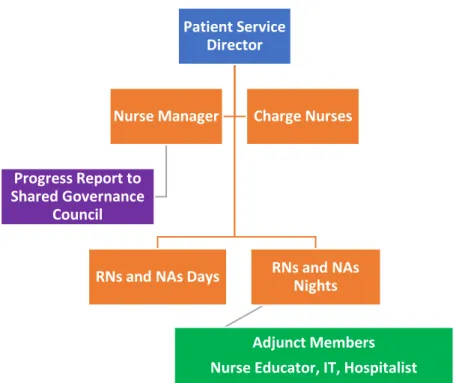
Project Team Members ...47
Reason for Membership ...48
Key Stakeholders of Project...49
Summary of Intervention Plan ...51
Phase One ...51 Phase Two ...51 Phase Three ...52 Phase Four ...52 Phase Five ...52 Phase Six ...53
Cost Benefit Analysis of Project ...53
SECTION VI: EVALUATION PLANNING Project Proposal, Implementation Plan, Evaluation Plan ...55
Participatory Model for Project ...55
Bedside Report Team ...56
Implementation Work Plan ...58
Project Evaluation Plan ...60
SECTION VII: PROJECT IMPLEMENTATION Project Outcomes ...63
Project Team Building ...63
Staff Education Implementation ...65
x
Bedside Report Process...69
Identified vs Actual Barriers ...70
Adjustments to Project ...71
SECTION VIII: PROJECT RESULTS Outcomes for Patient and Staff Surveys ...73
Data Outcomes HCAHPS Survey ...77
SECTION IX: INTERPRETATION OF FINDINGS Interpretation of Findings ...80
Summary Review of Problem ...80
Key Findings ...81
Sustainability ...83
Implications for Practice/Future Recommendations ...84
Lessons Learned ...87
Limitations ...87
Plans for Dissemination ...88
Conclusions ...88
REFERENCES ...90
APPENDICES A: SWOT Analysis Matrix ...98
B: Timeline Phases 1 & 2 ...99
C: Timeline Phases 3 & 4 ...100
xi
Figure 1: Overall Communication with Nurses ...6
Figure 2: Cascade of Patient Perceptions on HCAHPS ...8
Figure 3: Opposing Forces Nursing Workflow and Patient Communication ...9
Figure 4: Chain of Components for Patient Satisfaction ...16
Figure 5: Watson’s Theory of Human Caring Nursing Metaparadigm ...34
Figure 6: Desired Outcomes in Each Category for the Bedside Report Project ...41
Figure 7: Bedside Report Project Team Members ...48
Figure 8: Cost Benefit Analysis for Bedside Report Project ...54
Figure 9: Caring Science Interventions Designed through Staff Collaboration ...64
Figure 10: Identified vs Actual Barriers ...71
Figure 11: Communication with Nurses ...77
Figure 12: Nurses Listened Carefully ...78
xii
Table 1: Communication with Nurses Question Percentage Scores ...7
Table 2: Literature Review for Supportive Evidence for Problem ...17
Table 3: Literature Review for Supportive Evidence for Evidence-Based Intervention ...28
Table 4: Theory of Human Caring Carative Process Connection ...33
Table 5: PICOT Question Components ...40
Table 6: Organizational Readiness Assessment ...43
Table 7: Gap Analysis of the Practice Change Recommendations ...44
Table 8: Watson Caritas Patient Score Outcomes ...74
Table 9: Staff Perception of Bedside Report Outcomes ...76
Table 10: Expected vs Actual Findings Based on Evidence...82
SECTION I INTRODUCTION
To remain successful in today’s health care market, nursing leadership within an organization must promote a culture that has a positive impact on the patient experience.
The hospital consumer assessment of healthcare providers and systems survey
(HCAHPS) provides feedback to hospitals to gauge the positive or negative impact on
overall patient satisfaction. The purpose of the project will focus on the HCAHPS scores
of a 42-bed medical unit in a rural hospital setting, which have been a consistent
challenge at both the organizational and departmental level. The consistent poor
performance on HCAHPS has created a task-oriented work environment and lack of
connection to the patient care. The utilization of an evidence-based practice implemented
through caring science to impact nurse and patient communication and caring encounters
will be applied to the problem with results and outcomes discussed.
Background and Implication of Problem
HCAHPS is a national standardized survey, conducted on behalf of the Center for Medicare and Medicaid Services (CMS), which publicly reports patient’s perspectives of care received during hospitalizations. For the first time in the history of healthcare,
patients are given a voice as to their “patient experience”. The overall goal of the HCAHPS survey was to provide consumers with information that might be helpful in
choosing a hospital. The survey questions include the following areas: Communication
with doctors, communication with nurses, responsiveness of hospital staff, pain control, communication about medications, cleanliness of hospital environment, quietness of
hospital environment, discharge information, overall hospital rating, and likelihood to recommend.
Background
With the implementation of the Affordable Care Act and value-based purchasing,
hospitals must meet certain scores on the HCAHPS patient survey to obtain top level
reimbursement. The patient experience is a complex domain impacted by elements such
as outcomes, trust, and communication. Negative impacts to the patient experience could
result in financial losses for health care organizations totaling in the millions. The quality
of care provided to patients and families is now being measured as patient satisfaction.
Essentially the patient’s experience is tied directly to the financial viability of the health care organization (Wolosin, Ayala, & Fulton, 2012). The empowerment of the patient
experience and feeling cared for results in a major impact to hospitals due to a potential
reduction in revenue. This may lead to job losses for the community, a reduction in
budget spending for needed equipment, and possibly the closing of the facility creating an
access to healthcare problem for the community. This can particularly impact rural
hospitals who already have limited financial resources (Kavanagh, Abusalern, & Coty,
2013). Positive outcomes in patient care are connected to hospital financial viability
through the need for accessible continued services to local populations.
Organizational Impact
The current organization setting for the problem is a rural 134 bed hospital which
is part of a larger health system located in North Carolina. Each facility within the
system has HCAHPS goals. Weekly HCAHPS data is compared both within and outside
nurse perceptions of a punitive and reactive environment. Perceptions of care on the
medical unit are driven by the weekly changes in the HCAHPS scores. These perceptions
are communicated to the management team of the medical unit on a daily basis from both
nursing staff and hospital administration. This has resulted in a non-focused approach to
problem solving, which changes based on weekly HCAHPS data. The search for quick
fixes for HCAHPS scores on the medical unit has led to organizational frustration. This
has resulted in continued attempts to implement solutions that do not allow for an
appropriate timeline for the change process, leader, or staff engagement to the
intervention.
An example of this is hourly rounding which was mandated over two years ago
but has not been incorporated into staff workflow, is seen by staff has a “task”, has not
been sustained, and thus has had little impact on HCAHPS scores for the medical unit.
This has impacted both the stress and morale of the nursing staff. In the overall picture of
the organization, the struggle to connect and meet expectations of patients admitted with
acute and/or chronic medical illnesses is presenting a challenge which impacts a large
population of the patients and staff who are key stakeholders in the organization.
Staff Impact
One nurse on the medical unit described the ongoing battle to improve HCAHPS scores as “constantly taking two steps forward and three steps back, only to find yourself right back where you started.” Each week as new scores come in the staff anxiously
reviews the board. A mix of excitement, anger, and frustration is usually the result as the
scores show no predictable consistency. Staff on the medical unit verbalize many
communication, nurse to patient ratios, patient turnover, and ability to spend time in
patient rooms. Due to the high patient volumes and turnover, the nursing staff are task
oriented, focusing on the next task to be done instead of the current moment, and
interaction with the patient. The consistent pressure from administration regarding the
low HCAHPS scores for the department has resulted in additional stress and turnover for
the department. Many nursing staff are leaving or transferring to areas where HCAHPS
is not a determining factor that is utilized to judge the overall care. Most of the nursing
staff feel the scores are unfair and do not truly reflect the patient care. These ongoing
problems have resulted in a disconnect and lack of engagement to interventions such as
hourly rounding with nurses citing that due to interruptions it is hard to consistently
incorporate and structure into the workflow of the shift. This disconnect is evident
through observation of the nursing routine, handoff, and staff/patient interactions
throughout the shift. The interactions are polite, superficial and appear reactionary to a
patient request, or routine care task.
Patient Impact
The patient’s voice speaks volumes on the HCAHPS scores for the medical unit. As the data shows, key areas such as listening, explaining things in ways the patient can
understand, and communication about medications greatly underperforms when
compared to the surgical population. Is there a greater expectation from the medical
patient population related to these key issues? A review of patient comments from
HCAHPS data, variance reports, and service issues reveal a consistent problem with
handoff communication and providing updates to the patient and families related to the
and the patient need for focused attention, listening, explanation, and communication is a
distinct barrier to improving HCAHPS scores. Comorbidities of patients admitted to the
medical service create an increased complexity of care related to treatment plans and
acuity. Upon admission, patients are faced with changes to their routine medications
regimes along with multiple questions, tests, and treatments. This creates an atmosphere
for potential patient dissatisfaction. The current nursing workflow does not allow for
structured interactions that consistently address the communication needs required by the
medical patient population.
Evidence of the Problem Problem Setting
The setting for the defined problem is a 42-bed medical unit located within a
134-bed rural hospital in the Southeastern United States. The medical unit is the largest of the
nursing units with a 95% adult population and a 5% pediatric population. The patient
population served on the medical unit is experiencing acute symptoms of medical
illnesses requiring admission to the hospital.
Overall HCAHPS Data
The overall likelihood to recommend score for the organization has not reached
over 72% from 2015 to 2017 with the goal being 85% (Press Ganey, 2017). The two
largest inpatient populations are admitted to the medical unit and the surgical inpatient
unit. The surgical inpatient unit is a 16-bed unit significantly smaller than the medical
telemetry unit. The likelihood to recommend score for the surgical unit from 2015-2017
has ranged from 65% to 75%, while the likelihood to recommend score for the medical
HCAHPS return rates of approximately 200 surveys for 2015 and 2016. The return rate
for the surgical unit was over 70% of the total population, with the medical unit having a
significantly lower return rate of just 30%. The HCAHPS scores of the medical unit
resulted in a decline of the overall HCAHPS ranking for the organization in 2015 and
2016(Press Ganey, 2017).
Communication with Nurses Data
The overall communication with nurses domain scores from 2015-2017 show
differences between the medical telemetry unit and the surgical inpatient unit. The
overall scores for the medical unit were consistently lower. This is shown in Figure 1.
Figure 1. Overall Communication with Nurses. Compares HCAHPS Communication with Nurses Scores between the Medical and Surgical Units.
2015 2016 2017 Surgical 90 90 91 Medical 74 79 78 0 10 20 30 40 50 60 70 80 90 100 Perc en tile ra n kin g
Overall Communication With Nurses
Percentile data for the two key questions within the communications with nurses
HCAHPS domain nurses listened carefully to you, and nurses explained in ways you
understand for the medical and surgical units are demonstrated below in Table 1. The medical unit consistently performed lower in both key areas.
Table 1
Communication with Nurses Question Percentage Scores for Surgical and Medical Units
Question Surgical Unit Medical Unit
Nurses listen carefully to you? Nurses explained in ways you understand?
2015 94% 2015 69%
2016 94% 2016 74%
2017 90% 2017 68%
Note. Based on HCAHPS survey data received 2015, 2016, and Jan-May 2017. Percentage indicates “top box” rankings.
Refining the Problem
Of the adult population admitted to the medical unit, organizational statistics
show that 77% of this population has at least one diagnosed chronic disease in addition to
the admitting diagnosis for the inpatient stay. The medical unit serves an overall older
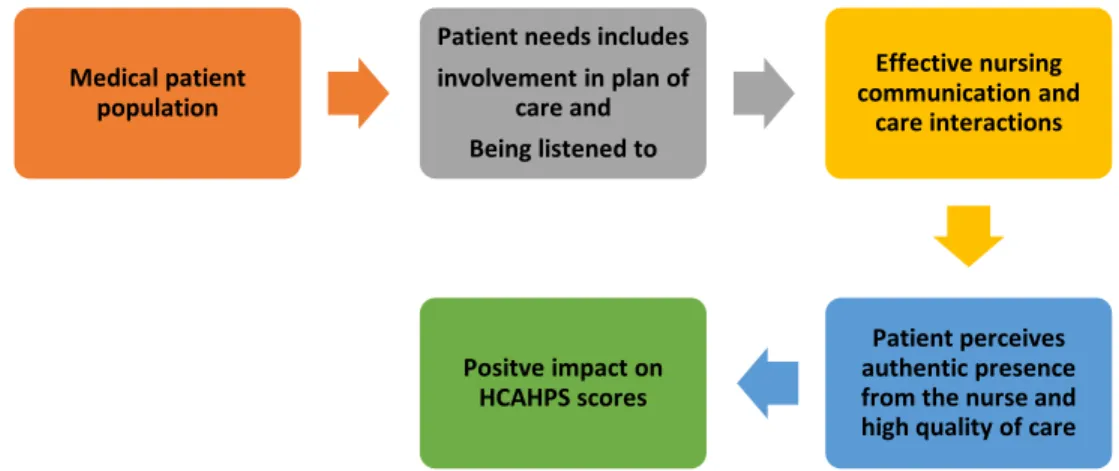
population with an average age of 72 who have at least one chronic disease. Evidence
has shown that patients with chronic disease have an increased need for involvement in
their plan of care and a strong desire to be listened to by their providers (Griscti, Aston,
Misener, Mcleod, & Warner, 2016). The perception of care is strongly connected to
effective communication and care interactions between the patient and nurse (McClelland
& Vogus, 2014). This equates to how the patient views the quality of care, which
impacts nursing HCAHPS domain scores and the overall HCAHPS scores for the
Figure 2. Cascade of Patient Perceptions on HCAHPS. Shows How High Patient Perception of Quality of Care Cascades to a Positive Impact on HCAHPS Scores.
Direct observation and staff interviews have shown that patient acuity, census,
high patient turnover, and nurse to patient ratios in the medical telemetry unit have
resulted in a nursing workflow that task-oriented. Instead of being focused on the current
patient interaction or moment of care, the nurses are focused on the next task to be
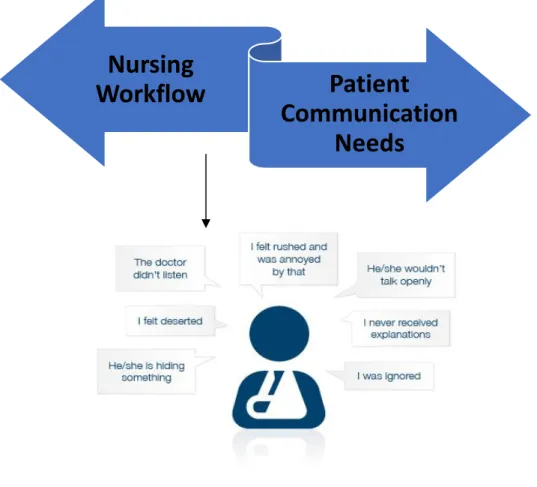
completed. The task-oriented nursing workflow is in direct conflict with the
communication needs of the medical patient population and can result in negative
perceptions by the patient as illustrated in Figure 3.
Medical patient population
Patient needs includes involvement in plan of care and Being listened to Effective nursing communication and care interactions Patient perceives authentic presence from the nurse and high quality of care Positve impact on
Figure 3. Opposing Forces Nursing Workflow and Patient Communication. Shows the Opposing Forces of the Nursing Workflow on the Medical Unit and Communication Needs of the Medical Population and Resulting Negative Patient Perceptions.
Nursing
Workflow
Patient
Communication
Needs
SECTION II LITERATURE REVIEW
A literature review was conducted for the purpose of exploring the identified
problem between nursing workflow and the communication needs of the patient. The
literature review evidence is presented below including the search methods, and
relevance to the organizational, patient, and nursing components. Key search terms
included HCAHPS, patient satisfaction, chronic illness, hospitalization, nursing
engagement, perceptions of hospital care, and comorbidities related to patient
satisfaction. Literature support is presented in three categories: organizational impact,
patient impact and nursing impact.
Organizational Impact
For today’s hospitals, patient satisfaction can bring big rewards and recognitions, or big penalties and financial instability. Although hospitals have always been in the
business of care, the measurement of successful patient care delivery has been redefined
with a shift to focus on the patient experience (Kavanagh et al., 2013). The
organizational implications for hospitals are significant in the marketability of services.
Hubbertz and Carlson (2010) reported a direct link between HCAHPS scores and
profitability and indicated that from 3,035 US acute care hospitals, the top 25 that scored
the highest on HCAHPS were also the most profitable. Key to the profitability of
hospitals is marketability. In a quantitative random sampling of patients of a large
university health system Hubbertz AND Carlson (2010) found that consumer information
regarding HCAHPS scores greatly impacted consumer choice. Patients sampled were
patients sampled indicated they based their decisions on word-of-mouth opinions from
other individuals. An interesting note on this study was that less than 20% of the patients
sampled stated they actually looked at satisfaction scores on the HCAHPS website but
instead went by opinions of others who had indicated the influence of word-of-mouth
marketing.
Organizational support to optimize the patient experience is another key
component of higher HCAHPS scores. A correlation between higher HCAHPS scores
and administrative support for the nursing work environment was reported by Wolosin et
al. (2012). In a logistical regression analysis of random sampling of HCAHPS survey
scores, hospitals were compared based on HCAHPS performance, and nurse engagement
scores from a sampling of over 300 nurses employed by three different hospitals within a
single health system. The hospitals that performed the highest on the nurse engagement
survey also performed the highest on HCAHPS scores. Findings indicated that a positive
nursing work environment resulted in higher patient satisfaction and higher HCAHPS
scores. This was further supported in the literature by Berkowitz (2016). In a collective
review of studies related to measurement of patient satisfaction, findings supported that
care collaboration, communication, and patient/staff interaction greatly impact how
patient satisfaction is scored. The literature review which consisted of nine different
studies also showed that hospital leadership supporting collaboration of care within the
organization results in increased levels of patient satisfaction (Berkowitz, 2016).
Collectively, the findings indicated that organizational support of evidence-based practice
is necessary to achieve the important mandates of staff collaboration, communication,
Patient Impact
HCAHPS measures the perception of the patient’s hospital experience. Perceptions are unique to individuals driven by emotion, personality, and stressors
(Kavanagh et al., 2013). Understanding what drives these perceptions is necessary in
improving HCAHPS scores. Patients who have chronic health problems have unique and
special needs that must be incorporated into effective evidence-based practice
interventions for the nursing workflow. Otani, Waterman, Dunagan, and Ehinger (2012)
found that the severity of illness of a patient, determined by overall length of stay and
level of care, resulted in significantly overall lower HCAHPS scores. In a case controlled
study using a mathematical non-compensatory model, patient satisfaction scores were
compared based on whether the patient had experienced critical care during their stay.
Over 300 patient satisfaction scores of a five hospital rural system were correlated to the
patient’s severity of illness. Findings indicated that the more severe the patient illness, the lower the patient scores specifically in areas of communication and responsiveness.
These findings were further substantiated with a study by Wennberg, Bronner, Skibner,
Fisher, and Goodman (2009) who correlated patient satisfaction scores to the number of
co-morbidities listed in the patient diagnosis. Using a survey methodology of HCAHPS
data on 700 patients of a large hospital system the study found that patients with two or
more co-morbidities consistently ranked HCAHPS scores lower in the key domains of
communication and likelihood to recommend.
In identifying what is important to patients during a hospital stay researchers
found that personal interaction, listening, and respect were important to the patient for
approach of in-depth interviews of over 87 patient and nurse participants, key terms were
identified as being important to the patient experience including listening, bonding, and
respect. A key finding of this study was that these terms were similar in both patient and
nurse interviews. Communication was also found to be significant in a study by Lamas et
al. (2017). The study aimed to explore the expectations of care goals for the chronically
ill patient. Although limited to a sample size of 23 participating patients, the study found
that communication was the top priority of patients who had chronic illnesses that
required frequent use of the healthcare system. Lamas et al. (2017) demonstrated that
chronically ill patients felt that treatment plan updates and expected prognosis were
important factors in patient satisfaction. How patients perceived caring behavior was
examined by Ashish, Orav, and Epstein (2008). Utilizing the HCAHPS scores and a
quality assurance questionnaire, over 100 patients were asked to reflect on their hospital
stay and what influenced their patient satisfaction scores. Results indicated that caring
behaviors most impacted how the patient perceived their hospital stay which were
reflected in HCAHPS scores (Ashish et al., 2008). Collectively, these studies indicated a
very specific need for caring, collaborative behavior, and communication from staff
involving and informing the patient on the plan of care.
Nursing Impact
Nursing is at the center of the patient experience revolution. Studies have
indicated that engagement of nursing staff results in over 50% higher HCAHPS scores
(Wolosin et al., 2012). For most patients, nursing embodies the concept of caring, which
sets the overall standard for the patient’s hospital stay. Through this perception, nursing obtains a level of power and influence over HCAHPS scores that seemed to be far above
any other discipline within the health care organization ("The Rising Tide Measure,"
2013). The literature supports nursing’s impact on patient satisfaction. In a
cross-sectional study, McClelland and Vogus (2014) specifically looked at how compassionate
care practices of nursing staff impacted HCAHPS rankings related to likelihood to
recommend. Prior to discharge from various nursing units across the system, over 200 patients were sampled as to the level of compassion they perceived during their hospital
stay. This was later correlated to the patient’s HCAHPS scoring of the same hospital stay. There was a discrepancy as to the number of patient surveys obtained prior to
discharge, and the number who actually responded to the HCAHPS survey by over 40%.
However findings did indicate that compassionate practices by nurses greatly influenced the patient’s perception of the quality of care and the likelihood to recommend ranking of the hospital. Personal touch, communication and scripting were explored by Seeber
(2012) as to how these human expressions impacted patient satisfaction. In a quantitative
study using an experimental model of care, Seeber (2012) utilized med-surg units of a
three hospital system to implement nurse scripting, compassionate touch, and
communication interventions during purposeful rounding by the nursing staff. Patient
satisfaction scores were then reviewed pre and post implementation. Findings indicated a
positive impact on patient satisfaction scores by over 37% after a three month
time-frame.
The connection to the nursing work environment to patient satisfaction was
explored by Kieft, De Bouwer, Francke, and Deinoij (2014) which showed the positive
correlation between positive work environments to higher patient satisfaction scores.
that autonomous nursing practice, adequate staffing and managerial support contributed
to nurses’ view of positive patient interactions, communication, and overall experience. Lee et al. (2009) explored the positive and negative influences of nurse staffing to patient
satisfaction. Using cross-sectional data from three sources including HCAHPS, nursing
survey, and an American Hospital Survey (AHA), the study explored in detail the
relationship between the nursing work environment, staffing levels, and HCAHPS.
Although sample size was undisclosed, findings were reported that indicate hospitals
must address the issues of nursing work environment and staffing levels to achieve
positive HCAHPS scores. The growing impact of nursing on overall HCAHPS scores
was supported by a survey conducted by Press Ganey. In the article The Rising Tide,
Press Ganey detailed a hierarchical variable clustering analysis of over 2,000 patient
surveys and found that performance in the communication with nurses domain strongly
influenced four other HCAHPS domains ("The Rising Tide Measure," 2013).
O’nan, Jackson, Morgan, and Adams (2014) demonstrated how delivery of care
models based on theoretical frameworks of caring positively impacted patient satisfaction outcomes. Duffy’s Quality Caring Model was implemented in three separate
med/surg/telemetry units in a large academic medical center. Using an evaluation design
the patient perception of caring was compared pre and post implementation of the caring
model. Findings indicated that the model was effective in positively impacting the
perception of the nurse/patient interaction and the patient’s perception of caring (O’nan et al., 2014). Overall the evidence indicates that nursing is the dominating force behind
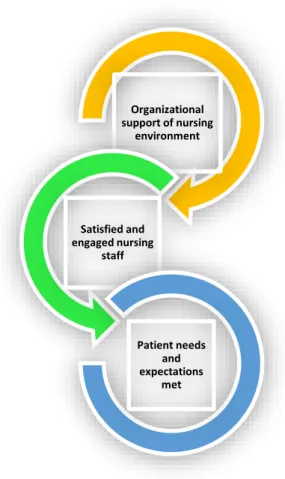
Overall the evidence points to a chain of components that must be linked together
to achieve patient satisfaction demonstrated below in Figure 4.
Figure 4. Chain of Components for Patient Satisfaction. Shows the Chain of Components Necessary for Patient Satisfaction.
Organizational support of nursing environment Satisfied and engaged nursing staff Patient needs and expectations met
Organizational support for the nursing environment, which leads to engaged and
satisfied nursing staff, which leads to meeting patient needs and expectations was all
found in the literature review. The summary of evidence is presented in the literature
matrix in Table 2.
Table 2
Literature Review of Supportive Evidence for Problem Citation Research Design
and Method Conceptual Framework Conclusions Implications to Practice Study Limitations (Otani, Watermann, Dunagan, & Ehinger, 2012) Case controlled study using a mathematical non-compensatory model How do seriously ill patients differ from less seriously ill patients when answering a patient satisfaction survey, and does this impact the patient experience and likelihood to recommend?
The results revealed that the severity of illness measure is a significant factor for patients when Responding to a survey The results demonstrated practical implications for healthcare staff and management by showing what influential factors impacted patient satisfaction with severely and chronically ill patients Study same limitations to geographical region, did not account for other variables of respondents (Hubbertz & Carlon, 2010) Quantitative with random sampling To investigate the impact of the HCAHPS report of patient experience and word-of-mouth narratives on consumer’s hospital choices Findings indicate that available consumer information impacts hospital choice Practice implications include the importance of consumer information and marketing related to market share and competitiveness for hospitals. Limited sample geographical region, lack of participation of rural hospitals (Wolosin, Ayala, & Fulton, 2012) Logistical regression analysis of random sampling of HCAHPS survey scores The study objective was to investigate how domains of patient satisfaction in hospitals predict HCAHPS scores and reimbursement changes
The findings how that hospitals focusing on HCAHPS overall satisfaction would likely see the greatest impact by engaging in improvements to nursing care
Study shows the actual impact of nursing on the top box ranking of HCAHPS scores. This indicates financial impact on organization of nursing care Limited sample size and geographical location
Citation Research Design and Method Conceptual Framework Conclusions Implications to Practice Study Limitations (McClelland & Vogus, 2014) Cross-sectional study The study objective is to examine the benefits of compassion practices on two indicators of the HCAHPS survey including hospital ranking and likelihood to recommend.
The study finds that patient perceptions of care quality are associated with a set of concrete organizational practices that foster a compassionate care environment and culture by nursing Practice implications show the effective use of compassion practices for both staff and patients to positively impact HCAHPS scores.
Sample size and limited study settings
(Seeber, 2012) Quantitative study using an experimental model of care Would a model of care based on consistent nurse scripting, communication and physical touch impact patient satisfaction and reduce call lights?
Findings support the positive impact of the “kind peace of mind culture” model of care Practice application shows interventions such as personal touch, nurse scripting, and communication are effective tools for improving patient satisfaction Study setting limitations to 3 hospitals in geographical location
(Berkowitz, 2016) Collective review of studies related to measurement of patient satisfaction How to effectively measure and understand the complexity of the patient experience Findings of all studies support that care collaboration, communication, and patient/staff interaction greatly impact how patient satisfaction is scored
Guides the design of interaction that incorporate collaboration, communication, and patient interaction to positively impact HCAHPS scores Individual studies each limited to single hospital settings No specific explanation on staff interventions on communication (Kieft, De Bouwer, Francke, & Deinoij, 2014) Descriptive qualitative research design with focused groups To comprehend the views of nurses on how their work and work environment contributed to positive patient experiences The research found that autonomous nursing practice, adequate staffing and managerial support contributed to nurse’s view of positive patient interaction, communication, and overall experience
The results of the study validate the importance of shared governance, and transformational leadership methods to optimal patient and staff experience outcomes Limited to only four focus groups Indicated only nurses views no patient views
Citation Research Design and Method Conceptual Framework Conclusions Implications to Practice Study Limitations
(Lee et al., 2009) Utilized cross-sectional data from three sources HCAHPS, nurse survey, and AHA survey The study explores in detail the relationship between the nursing work environment, staffing levels, and HCAHPS
The study found that nursing work environment and staffing levels significantly impacted the key domains of communication with nurses and the likelihood to recommend the hospital
Hospitals must address the issues of nursing work environment and staffing levels to show positive outcomes on HCAHPS. This gives data to nursing leaders to address these issues Cross-sectional design does not inform causation Sample size limited to hospitals who voluntarily submitted HCAHPS
("The rising tide," 2013)
Hierarchical variable clustering analysis
The study goal was to further demonstrate the importance of the nurse role in transforming the health care system and impacting HCAHPS domains
The study found that performance in the communication of nurse’s domain strongly influences four other HCAHPS domains including likelihood to recommend and overall hospital rating Bedside nursing care and overall communication has the power to impact financial viability of health care organizations through the patient experience Limited to one hospital system consisting of 5 individual hospitals No specific information as to type and size of nursing units for study locations (Wennberg, Bronner, Skibner, Fisher, & Goodman, 2009) Survey methodology through utilization of HCAHPS data, and patient diagnosis data and focused group interviews
The study aimed to evaluate and compare the HCAHPS rating of key domains in communication and likelihood to recommend against the number of patient co-morbidities and intensity of patient illness
The study found that patients who has 2 or more comorbidities and a higher intensity of illness consistently ranked HCAHPS scores lower in the key domains of communication and likelihood to recommend.
This study shows a definite correlation between chronic illness and intensity of illness and low HCAHPS. This implies the need for additional or different interventions to achieve patient satisfaction with this patient type
Possible bias due to non-reporting and non-responding hospitals Limited reflection of disease severity of respondents (Lamas et al., 2017) Semi-structured interview methodology with analysis
The study aimed to explore the expectations of care goals for the chronically ill patient
The study found that
communication was the top priority of this population especially related to discharge disposition, treatment plan, and expected prognosis Validates the importance of communication and updates utilizing interventions such as AIDET (Acknowledge, Introduce, Duration, Expectation, and Thank You) No specific indication as to patient population demographics or illness type
Citation Research Design and Method Conceptual Framework Conclusions Implications to Practice Study Limitations (Griscti, Aston, Misener, Mcleod, & Warner, 2016) Theoretical and methodological approaches of in-depth interviews
The aim of this study was to examine the experiences of the chronically ill patient and registered nurses as they negotiated care in the hospital setting
The study found that personal interaction, “bonding”, listening, and respect were key elements in the effective negotiation of care in the hospital Patient involvement, communication, and listening are key to patient satisfaction of the chronically ill Limited to single hospital system (O’nan, Jackson, Morgan, & Adams, 2014) Used an evaluation design with multiple data collection points To measure the impact of implementing Duffy’s quality caring model on patient’s perception of caring on medical/surgical/t elemetry units
The study found the model was effective in impacting the nurse/patient interaction and the patient perception of caring especially with patient satisfaction scores related to listening Caring models and theories such as Duffy’s are effective frameworks to design workflow and models of care around the patient centered relationship. The concept of caring greatly impacts patient satisfaction Limited to one hospital system consisting of 3 individual hospitals (Ashish et al., 2008) Correlation of HCAHPS survey and Hospital Quality Assurance program survey, chi square and t-test
The study sought to examine the perceptions of care for acute hospitalized patients and how these perceptions impacted HCAHPS scores
The study found when completing the HCAHPS survey, patient reflect on their hospital stay and are influenced by the caring relationships encountered throughout their hospital experience The study reinforces the importance of caring behaviors being incorporated into nursing interaction and workflow with patients Limited to HCAHPS participating hospitals
Note. Presents evidence to support the identified problem related to communication with nurses, the medical population and HCAHPS.
Summary of the Evidence
Overall consistent themes involving patient communication, nurse satisfaction,
intensity of patient illnesses and hospital marketability were all impacted by hospital
performance on HCAHPS. Patient perceptions of care and interactions with nurses
emerged as the most dominant theme found in the evidence demonstrating this as an
important focus of the intervention to address the indicated problem.
Problem Statement
After a careful review of the literature and the organizational data, the problem
statement has been refined as the following:
The current task-oriented nursing workflow dies bit allow for structured caring
encounters which are in direct conflict with the communication needs of the medical
patient population and can result in negative perceptions by the patient.
Expanded Literature Review for Best Practice
The analysis of the literature review on the issue of low HCAHPS scores indicates
the need for interventions that are based on improved communication, caring encounter
between the patient and nurse and increased patient family involvement in the plan of
care. The intervention must also support listening, feeling cared for, and the
establishment of trust. Another critical element to the success of the project is the ability
to structure the intervention into the workflow process of the medical unit. History
indicates previous interventions such as hourly rounding has not been successful due to
lack of staff engagement. Key terms used in the literature review included nurse
communication, evidenced based interventions, HCAHPS, patient centered care, and
Evidence Search Strategy
To begin the search strategy for evidence key questions were formulated to guide
the literature review these questions included:
What are the effects of bedside reporting on patient satisfaction? Does involving the patient in the bedside reporting help with
communication?
What is the impact of staff and physician engagement to bedside reporting?
What is the nurse leader’s role in the patient experience? What is the nurse leader’s role in staff engagement?
What improves HCAHPS and the patient experience for the medical
patient population?
Does nurse scripting improve the patient’s perception of care, communication, and teamwork?
How can transformational management assist with staff engagement,
hardwiring, and change the culture and readiness for purposeful rounding? How can bedside reporting be individualized for improved success?
What nursing theory best guides the development of improved
Interventions That Impact Patient Satisfaction
In 2013 Press Ganey conducted an analysis of HCAHPS scores from 3,000 acute
care hospitals in the United States. The results indicated that in addition to the
communication with nurses domains, nursing had a significant impact on four other HCAHPS domains including:
Responsiveness of staff
Communication about medicines
Pain management
Overall rating of the hospital
Through the analysis of over 200 patient interviews, Berkowitz (2016) found that
the nurse-patient relationship is a fundamental aspect of professional nursing care from
the patient’s perspective and had the most significant impact on the patient expressing a high level of patient satisfaction during a hospital stay. Important elements and
prerequisites to the development of this relationship was the patient’s level of trust. According to Berkowitz (2016), there were three key components important to the
formation of trust which included the expression of genuine caring, demonstration of
competent skills, and the communication of professional wisdom. Interventions
implemented to increase patient satisfaction must address these key components of trust.
Another important factor in patient satisfaction was the concept of caring. A literature
review focused on caring behaviors of nursing indicated that caring by nurses can
contribute to the satisfaction and well-being of patients, and when caring is not present
dissatisfaction where the patient feels like an “object” can occur (Pajnkihar, Stiglic, &
practice interventions for patient satisfaction (Pajnkihar et al., 2017). Many best
practices were recognized in the literature as having a positive impact on patient
satisfaction including hourly rounding, acceptance introduction duration expectation and
thank you (AIDET), leader rounding, and follow-up discharge phone calls, however one
particular intervention became apparent that addressed all of the critical elements of the
nurse/patient relationship, and the establishment of patient trust. This intervention was
bedside shift report. The complex dynamic of the nurse/patient relationship and the need
to incorporate the expression of a caring encounter with the patient requires an
intervention structured to accomplish this. Bedside shift report emerged as the best
intervention to meet this mandate. Further evidence to combining bedside shift report
and caring science was illustrated in a comprehensive search of the literature from
2001-2013 which found that bedside reporting can become a venue to the expression of caring
utilizing Watson’s carative factors (Kusain, 2015).
Evidence for Bedside Report
One interesting fact that emerged from the evidence was how nursing attitudes
were positively impacted by the implementation of bedside reporting along with
nursing’s perception of nursing accountability. Sand-Jecklin and Sherman, (2014) performed a quasi-experimental study on seven medical-surgical units across a large
acute car health system that observed nursing attitudes pre and post implementation of a
bedside report model. Approximately 70% of full time registered nurses were surveyed
pre and post bedside report implementation utilizing a designed questionnaire to measure
nursing attitudes. They found that nursing strongly felt bedside reporting fostered a
Guido, (2014) went further to define through a literature review how the management of
the change process was an essential element to the implementation of bedside report.
They looked at studies utilizing techniques involving both nursing interviews and survey
questionnaires. A common trend emerged among the literature reviewed which listed
nursing participation in the bedside report designed, involvement in the change process,
and clear consistent communication as being top priorities among frontline staff
indicating the importance of staff participation in the project design.
Nursing communication between shifts and peer building between shifts was
another positive impact on nursing attitudes (Small & Fitzpatrick, 2017), however the
effective handling of patient interruptions greatly influenced nurse’s frustration and
perception of the bedside report process. Utilizing a survey methodology Small and
Fitzpatrick, (2017) measured nurse’s perception of bedside reporting, and found evidence
that the successful implementation and nursing engagement to bedside shift report was
contingent upon how well the process was structured to provide for communication
between nurses outside of the patient’s rooms and the management of patient needs and interruptions during the bedside report. With the appropriate intervention structure, the
evidence illustrated that bedside reporting changed practice but in addition bedside
reporting also changed the overall nursing culture. The utilization of caring science use
to establish a communication rapport with the patient was outlined in a study by Herbst,
Friesen, and Speroni (2013). The study design restructured the bedside reporting process
on five different med-surg units across a hospital system to include a scripted dialogue
with the patient that also incorporated the patient plan for that shift. Nursing staff were
and prompting the patient to be involved in the bedside report. The study aim was to
determine the impact of building the nurse/patient relationship through caring
interventions. Results were obtained through a survey methodology that measured nurse’s feelings and perceptions of improved communication, time-spent with the patient, and the overall quality of the time spent with the patient. Results indicated that
interaction between the patient and nurse through bedside reporting changed the focus
from performing task to true patient centered relationships (Herbst et al., 2013).
Nursing engagement and overall trust of the bedside reporting process was also
positively influenced by the culture of safety established with the use of bedside reporting
(Groves, Manges, & Scott-Cawiezell, 2016). Through a grounded theory methodology
utilizing questionnaires, researchers looked at safety outcomes on a large med-surg unit
related to fall prevention pre and post bedside report. Nursing staff were surveyed pre
and post bedside report regarding their perceptions of patient safety related to nursing
staff knowledge of patient fall risk and interventions obtained through shift report.
Results indicated an increased level of safety and trust related to knowledge of this
information post bed-side report implementation. Outcomes also indicated an overall
decrease in fall rates on the unit by over 25%. The researchers felt this evidence validated
the link between nursing communication and patient safety.
Impact on Patient Satisfaction and Change Management
At the center of the evidence for bedside reporting’s positive impact on patient
satisfaction is the building of the nurse-patient relationship. Kullberg, Sharp, Johansson,
Brandberg, and Bergnmer, (2017) found that the patient’s perception of nurse caring and
cross-sectional study comparing two nursing units, one utilizing bedside report, and one
utilizing a nurse to nurse verbal report process, patient satisfaction scores on the unit
utilizing a bedside report were increased by an average of 40%. The study examined both
patient satisfaction score results and patient perception using a questionnaire
incorporating communication and feelings of being cared for. The evidence also
indicated the need for appropriate change management and engagement of staff to
successfully implement and sustain bedside reporting.
Wakefield, Ragan, Brandt, and Tregnago, (2012) recommended at least a
six-month period to allow for appropriate change management. Using a pilot methodology,
the study aimed to examine whether the implementation and education design of the
bedside report intervention had an impact on staff engagement and the sustainability of
bedside shift report. Bedside report was rolled out to one nursing unit using a two-week
in-service method, while the pilot unit received a six-month structured education and
implementation utilizing change management interventions. Nursing and patient
questionnaires along with patient satisfaction scores were utilized to measure nurse
participation in bedside shift report and the level of patient satisfaction related to nurse
communication. Results indicated increased patient satisfaction and bedside report
sustainability on the pilot unit. Staff engagement is paramount to the success of the
project as staff can be champions of bedside reporting or a significant barrier to success.
(Anderson, Malone, Shanahan, & Manning, 2016). Strict sequential steps are necessary
when implanting bedside reporting to allow for change management, and frontline staff
literature review matrix for the best practice intervention of bedside reporting is presented
in Table 3.
Table 3
Literature Review of Supportive Evidence for Evidence-Based Intervention for Problem Citation Research Design and
Method Conceptual Framework Conclusions Implications to Practice (Sand-Jecklin & Sherman, 2014) Quasi experimental pre-and post-implementation design on 7 medical-surgical units in a large university hospital to quantify outcomes of a practice, change to a blended form of bedside nursing report Several positive outcomes were resulted including time of shift report, nursing attitudes, and patient safety events
If properly
implemented bedside reporting can result in Improved nursing perceptions related to shift report, nurse accountability, and safety of the unit
(Vines, Dupler, Von Son, & Guido, 2014)
Literature review To evaluate bedside reporting to determine if evidence supports its use as an essential shift handover process
Evidence repeatedly supports the positive impact of Bedside reporting on HCAHPS and nursing satisfaction, but only if utilized with appropriate change management strategies Supports patient-centered approach to nursing workflow (Wakefield, Ragan, Brandt, & Tregnago, 2012)
Pilot study To assess long-term results of the transition to bedside reporting on patient satisfaction, nurse satisfaction and sustainability,
For the unit where, bedside reporting was sustained there were significant sustained increases in six nurse specific patient satisfaction scores
The roll out of bedside reporting in the pilot unit was done over a six-month period, which allows for appropriate change management (Anderson, Malone, Shanahan, & Manning, 2016)
Literature review To review evidence for bedside clinical handover practices and the impact of appropriate implementation
It was identified that implementation structure played a key role in the sustainability of the bedside report handover process Nursing engagement to the bedside handover process is tied to an appropriate structured implementation process (Groves, Manges, &
Scott-Cawiezell, 2016)
Grounded Theory Method
Describe how nurses can use nursing bedside shift report to keep patient safe
Describe how bedside nurses can use nursing bedside shift report to keep patient safe
Describe how bedside nurses can use nursing bedside shift report to keep patient safe
Citation Research Design and Method Conceptual Framework Conclusions Implications to Practice (Kullberg, Sharp, Johansson, Brandberg, & Bergnmer, 2017)
Cross-sectional study To compare a bedside reporting process to a verbal report process to see the impact of patient perceptions
The unit performing bedside reporting saw an increase of over 40% in patient satisfaction scores related to caring and listening
Bedside reporting positively impacts patient perceptions of nurse caring and listening
(Small & Fitzpatrick, 2017)
Survey methodology Aim of the study was to measure nurse’s perceptions of bedside reporting
Identified that patient safety, patient centered care, and operational workflow. Changes recommended were a time period for nurse to nurse
communication outside of the patient room and decreased interruptions. BSR was more stressful due to having patient involvement
Nurse to nurse communication remains a priority for nursing staff. The structured process for bedside reporting must have minimal interruptions
(Herbst, Friesen, & Speroni, 2013)
Survey methodology Described how a multihospital system utilized bedside reporting using a caring science perspective By bringing shift report to the bedside, the nursing staff utilized ISHAPED (introduction, story, history, assessment, plan, error prevention, and dialogue as a reporting structure By integrating caring into the bedside report, patient centered care became a cultural change for the nursing units engaged in this project. The article focused on the prior culture of task orientation of the workflow ("AHRQ," 2013) Best practice
implementation tool
AHRQ Nurses bedside shift report implementation handbook
Emphasized the steps for implementation of bedside reporting, and the evidenced based outcomes of patient safety and quality, patient experience, nursing satisfaction, and time management
Nursing will be greatest barrier; thus, implementation must include a team of frontline staff to develop the process
Note. Presents evidence to support the identified intervention of bedside report for the identified problem related to communication with nurses, the medical population and HCAHPS
Summary of the Evidence Bedside Reporting
As part of the literature review, one specific intervention emerged which
addressed the critical needs of both the nursing staff and the patient population of the
medical unit. This intervention was bedside reporting (McAllen, Stephens,
Swanson-Biearman, Kerr, & Whiteman, 2018). The evidence also indicated that bedside reporting
supports positive changes in the culture of safety, and peer relationships. Common
themes within the evidence validated bedside reporting as an intervention to address
patient satisfaction, nurse satisfaction, and patient safety. As the evidence shows, bedside
reporting addresses all of the essential components for patient satisfaction, nurse
satisfaction, and patient safety. However, another emerging theme was emphasized by
AHRQ (2013) and Anderson et al., (2016) which emphasized the importance of the
implementation structure and the staff engagement to bedside reporting. Herbst et al.
(2013) indicated the connection between the concept of caring and the nursing culture
which positively impacted the nursing workflow change away from being task-oriented.
Essentially bedside reporting is a clinical expression of engaging patients and families as
essential partners in the health care team (Herbst et al., 2013). Bedside reporting goes
further than this definition by giving the patient the ability to be involved in their care and
SECTION III
THEORETICAL FRAMEWORK
Watson’s Theory of Human Caring (Watson, 2008) forms the theoretical
underpinnings of the bedside report project. At the center of the bedside report process is
the relationship between the nurse and patient. The link to patient satisfaction through bedside reporting is the impact on the communication with nurse’s domain specifically through improved listening and explaining things in ways the patient can understand. To
achieve this, a connection between the nurse and patient must be present through a caring
moment (Kusain, 2015).
The Theory of Human Caring
The theory of caring science has evolved along with the nursing profession
(Kusain, 2015). Through this evolution the merger of caring and science has formed the
humanistic roots of nursing practice (Brewer & Watson, 2015). As patient satisfaction
and the importance of the patient perception of feeling cared for takes center stage in
modern health care, nursing practice applying caring concepts is utilizing caring as a way
to establish the important connection between the nurse and the patient (Kusain, 2015).
Although multiple theories of caring exist, Watson’s Theory of Human Caring is unique in that the caritas processes guide behaviors necessary to build a caring relationship
between the nurse and patient (Morrow, 2014).
Assumptions of the Theory of Human Caring
Assumptions of Watson’s Theory of Human Caring include:
Caring can be demonstrated and practiced effectively only through interpersonal relationships
Human Caring and nursing have existed in every society where there has always been someone who has cared for another person
The expression of caring can include the word that is spoken, the eye that sees leading to action, the gaze, the word, or a gesture framed in a voice or
intonation. It is the expression of what is said, how it is said and can be
welcoming, receiving, or affirming.
The interpersonal process affects both the nurse and the patient (Jean Watson’s Theory of Human Caring, 2017).
The expression of caring correlates directly with the bedside report process where
intentionality, authentic presence, and spoken and unspoken communication between the
patient and nurse influence the experience of a caring moment (Watson, 2008).
Carative Processes and Their Connection to Bedside Reporting
Watson has 10 carative factors that have been redefined into caritas processes for
incorporation into nursing practice. The caritas processes of Watson’s Theory of Human
Caring reflect nursing behaviors which may help to achieve desired outcomes of the
bedside report project that will positively impact the communication with nurse’s domain as shown in Table 4.
Table 4
Theory of Human Caring Carative Processes Connection to Bedside Shift Report
Carative Process Connection to Bedside Report
Practicing loving-kindness and equanimity within context of caring consciousness
Demonstrating respect of self and others Listening to others
Being authentically present and enabling and
sustaining the deep belief system of self and one being cared for
Promoting intentional human connection with others Paying attention to others
Utilizing appropriate eye contact and touch Calls other by the preferred name
Developing and sustaining a helping-trusting authentic caring relationship
Demonstrates sensitivity and openness to others Practices non-judgmental attitudes
Being present to, and supportive of the expression of positive and negative feelings as a connection with deeper spirit of self and the one-being-cared for
Actively listens
Encourages reflection of feelings and experiences
Creatively using self and all ways of knowing as part of the caring processes: engaging in artistry of caring-healing practices
Uses self to create healing environment utilizing touch, voice, authentic presence eye contact, gesturing Encourages others to ask questions
Engaging in genuine teaching-learning experiences that attend to unity of being and meaning attempting to stay in another’s frame of reference
Speaks calmly, quietly and respectively to others giving them full attention to the moment Seeks first to learn from others
Provides information and tools to meet others needs Ask others what they know about their illness/health Helps others to formulate and give voice to questions and concerns
Creating healing environment at all levels (physical, non-physical, subtle environment of energy and consciousness), whereby wholeness, beauty, comfort, dignity, and peace are potentiated
Creating a healing environment, attending to light, noise, cleanliness, nutrition, safety, hand washing, comfort measures
Reverently and respectfully assisting with basic needs, with an intentional caring consciousness, administering “human care essentials”, which potentiates alignment of mind-body-spirit, wholeness and unity of being in all aspects of care.
Make others as comfortable as possible Help others feel less worried
Be responsiveness to others’ family, significant others, and loved ones
Involves family/significant others Opening and attending to spiritual-mysterious, and
unknown existential dimensions of one’s own life-death-suffering: soul care for self, and the one being cared for; “allowing for a miracle”
Nurtures/support hope
Shares and participates in human caring moments as appropriate