Media Accountability Goes Online
A transnational study on emerging practices and innovations
Heikki Heikkilä, David Domingo, Judith Pies,
Michal Glowacki, Michal Kus & Olivier Baisnée
MediaAcT Working Paper series on ‘Media Accountability Practices on the Internet’
MediaAcT Working Paper 14/2012 Editors: Heikki Heikkilä & David Domingo
Journalism Research and Development Centre, University of Tampere, Finland 2011
This comparative report is part of a study on media accountability practices on the Internet. You can find further country reports as well as a general introduction to the methodology and concepts of those reports at: http://www.mediaact.eu/online.html
The research leading to these results has received funding from the European Union Seventh Framework Programme (FP7/2007-2013) under grant agreement n° 244147. The information in this document is the outcome of the EU project Media Accountability and Transparency in Europe (MediaAcT). The research reflects only the authors’ views and the European Union is not liable for any use that may be made of the information contained therein. The user thereof uses the information at their sole risk and liability.
Heikki Heikkilä, David Domingo, Judith Pies, Michal Glowacki, Michal Kus & Olivier Baisnée
Summary
The Internet is both a challenge and an opportunity for media accountability. Newsrooms and citizens are adapting existing practices and developing new ones on news websites, weblogs and social media. This report offers the first comparative study on how these practices are being developed and perceived in thirteen countries in Europe (Bulgaria, Finland, France, Germany, the Netherlands, Poland, Serbia, United Kingdom), the Arab world (Jordan, Lebanon, Syria, Tunisia) and North America (USA). Through the analysis of data on the media systems and in-depth interviews with journalists, experts and activists, the study maps the initiatives performed by media organizations and explores media criticism projects promoted from outside the newsrooms. The concept of journalistic fields proposed by Bourdieu provides the contextual analysis of the diversity of countries. It articulates the relationships between the media and the political and economic fields to explain how they shape media accountability developments on the Internet. The role of media self-regulation institutions and the active user culture enabled by the Internet are other actors considered in the description of the tensions surrounding media accountability in the journalistic fields. In this context, the study suggests that media accountability online is being enacted in practices that vary from country to country depending on the perceptions of journalists and newsrooms about it, the interplay of accountability aims with economic and political goals of the media, and their positions in the dynamic struggle for credibility within the journalistic field.
Few media accountability practices are widespread in the countries analyzed, and the actual developments are very uneven in terms of motivations, technical tools and workflows. The analysis shows that those countries where there are more active online practices (USA, UK) are some of those with lower trust of the public in the media. In other contexts, such as the Arab countries, the efforts towards media accountability are mainly led by those citizens and journalists that also struggle to democratize society. The challenges in Europe seem to be maintaining the autonomy of the journalistic field, and while practices within and outside media organizations are scarce and often not systematic and institutionalized, the study has found cases that highlight how the Internet can be an effective tool to promote ethical journalism by fostering transparency and responsiveness.
Table of Contents
Chapter 1: Introduction ... 5
1.1 A theoretical framework ... 5
1.2 Research design for the empirical study ... 14
Chapter 2: In the journalistic fields: The dynamics of developing media accountability inside news organizations ... 17
2.1 Journalistic fields and the political field ... 19
2.2 The influences from the economic field ... 24
2.3 Institutions for self-regulation and journalistic fields ... 31
2.4 Journalistic fields and the Internet user cultures ... 38
Chapter 3: Accountability practices online: Contributions of the newsrooms ... 42
3.1 Practices for actor transparency ... 43
3.2 Production transparency ... 50
3.3 Responsiveness ... 55
3.4 Social media use by journalists ... 59
Chapter 4: Accountability practices online: Contributions from outside the newsrooms ... 61
4.1 Media activism ... 61 4.2 Media bloggers ... 63 4.3 Social networks ... 65 Chapter 5: Conclusion ... 69 Sources ... 71 The authors... 75
Chapter 1: Introduction
This interim report discusses the development of media accountability on the Internet. Our analysis aims to shed light on how transparency of media production and the responsiveness of those who produce them is facilitated by media organizations and/or called for by Internet users. Our empirical study is comparative by design. It encompasses thirteen countries: eight of them are in Europe, four of them represent Arab countries in the Middle East and North Africa, and one North America (the United States).
Our intention is to identify the scope and volume of specifically Internet-based media accountability practices. But, instead of proposing that these practices are universal or similarly adopted in any part of the world, we assume that their existence, functionality and lifespans are culturally dependent. We anticipate finding some common trends but also some sharp discrepancies in the development of media accountability online, with diversity not only among countries but also within actors in different positions in the media ecosystem.
This paper aims to elaborate on the conceptual and methodological background of the study. In chapters 1 and 2, the emphasis is put on the concept of media accountability on the one hand, and on the premises of studying media accountability in a comparative setting on the other. The empirical part of the report focuses on two sets of developments of media accountability practices: those initiated by media organizations (chapter 3) and those deriving from outside media organizations (chapter 4). Both elements of the report will be elaborated in a book that is due to be published in 2012.
This report is part of the project Media Accountability and Transparency in Europe (MediaAcT) funded by the European Union. The project as a whole analyzes the development
and impact of established media accountability systems (e.g. press councils, codes of ethics) as well as new media accountability systems emerging in the Internet (e.g. media criticism in blogs). The project is a joint interdisciplinary effort of a team of twelve partners from Eastern and Western Europe as well as from the Arab world.
1.1 A theoretical framework
Media accountability
In general terms, media accountability denotes “voluntary or involuntary processes by which the media answer directly or indirectly to their society for the quality and/or consequences of publication” (McQuail, 2005: 207). This definition presumes that holding media accountable is normatively justified as a part of social responsibility of the media (McQuail, 2003). While this
definition spells out the normative principle, it leaves open what is ‘the society’ to which the media should be answerable to and how the media are supposed to draw public legitimacy.
Echoing the classic Weberian sociology, Bardoel and d'Haenens (2004) note that the media is held accountable, on the one hand, to the systemic powers of the state and the market. On the other hand,the influence of these systemic forces is filtered through a set of practices initiated by the media themselves. In any political system, the media are submitted to the rule of law (constitution, public and criminal law). This general principle ascribed to any individual member or institution in the polity may be coupled with more specific duties imposed to the media by the state (see, figure 1 below).
In Western societies, for instance, public service broadcasters are compelled to provide information to ethnic minorities, facilitate crisis communication in the times of emergency etc. In more autocratic systems, means of holding media accountable to the state can be much stronger and overarching than that. In the eyes of autocrats, even censorship or molesting journalists may be regarded an instrument of accountability imposed by the state.
Figure 1: Modes of media accountability, developed from Bardoel & d’Haenens (2004)
While all news media operate in a market, the media is also held accountable to their owners and customers. The configurations of ownership and the level of competition in the market, of course, vary from one media system to another. In any case, with regard to owners, the media organizations are expected to meet with the economic objectives set by their CEOs and boards, and maintain a cooperative relationship with regard to audiences and advertisers through providing these with ‘good service’ in the name of ‘customer satisfaction’. Sometimes media proprietors and managers argue that the operations of the market and the court room are the only appropriate form of holding the media accountable (Groenhart, 2011).
In Arab countries different modes of media accountability may merge depending on ownership structures in the country. In Syria, for example, where most of the media outlets maintain to belong to the ruling Baath party, market accountability is subsumed in state accountability. Consequently, economic objectives become mostly identical with political objectives.
Accountability to the market (2)
Professional accountability (3)
Public accountability (4) Accountability to the state (1)
In addition to direct influence from the state and market, the explicit and implicit expectations towards the media are partly filtered through a pair of other modes of accountability: professional and public accountability. Both of these assume a space of relative autonomy for journalism with regard to the systemic powers of the state or market. The scope of the autonomy and its effects, again, vary a great deal from one place or situation to another.
Professional accountability stems from the attempts of media practitioners to establish themselves ethical and quality standards that would render their work useful and viable for the society. Professional accountability is intimately connected to principles and practices of self-regulation (ethical guidelines, in-house ethical rules of conduct etc.). These, in turn, are expected to inform individual journalists in their daily work fostering public trust in what journalists do. This is actually in their self-interest to maintain their autonomy and credibility.
A fourth mode of media accountability in Bardoel’s & d'Haenens’ typology is public accountability, whereby media organizations aim at drawing a more direct relationship to their users and recipients (as consumers, citizens etc.). Public accountability may be sought for through a number of ‘instruments’ that are not easily distinguishable from those of self-regulation or the market strategies of media outlets. These may pertain to, for instance, ways of managing audience feedback: receiving complaints and managing them, conducting audience research etc. New digital technologies enabled by the Internet may significantly enhance the range of attempts enhancing public accountability through online interaction with users.
Our focus in this study is predominantly in professional and public accountability for two reasons. Firstly, most of the actual practices aimed at rendering media transparent and responsive stem from this relatively autonomous space, albeit they may not be totally independent from the state or the market. Nonetheless, it is within this framework that news organizations solve, for instance, how they correct errors, or how they facilitate and utilize user feedback and comments. Secondly, professional and public accountability constitute a central discursive space for social actors such as journalists, media managers, bloggers, ‘ordinary Internet users’, and representatives of state and market, to engage in public communication about the functions of the media and their performance.
This discursive place is hardly akin to a Habermasian idealtype of public sphere where everyone would be heard and all arguments are submitted to the rule of rational deliberation. Instead, public debates on media accountability constitute a messy exchange of arguments in a number of forums: newsrooms and seminar rooms, online discussion boards etc. and not all them will be equally taken into account.
Bertrand (2003) argues that the fundamental means for media accountability are evaluation, feedback and discussion. This means that holding media accountable presumes communication between media producers and users or recipients of media. As any act of communication, media
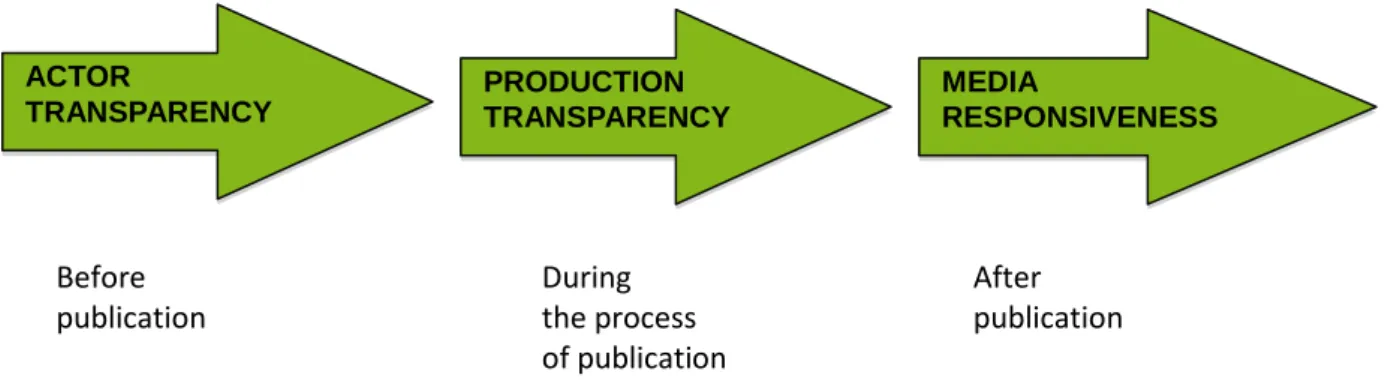
accountability, too, needs to be understood as a process. Theoretically, this implies that the accountability process starts only when members of the public actually call the media to account. In order to keep the process going, these arguments need to be responded or elaborated by other stakeholders. Accountability processes are not actually clear-cut and linear, but circular. Nonetheless, their analysis may benefit from distinguishing three phases in the media accountability process. In this distinction we may separately look into how accountability is pursued (1) before the act of publication (addressing norms and expectations of public communication), (2) during the production (access, selection, and presentation of media products) and (3) after the production (answerability and responsiveness). (Evers & Groenhart, 2010.)
The questions derived from these analytical categories may be formulated as follows: What sort of instruments and practices are available before, during and after the media production? How are these instruments and practices being used by various actors? What seems to be their influence to media accountability practices or to the performance of the news media more in general?
Media systems and journalistic fields
Even if accountability is central to normative understanding of the media almost everywhere, it has invoked varying cultural and institutional reconfigurations in national news and media cultures. Hallin and Mancini (2004) demonstrate that historically, four general variables have tended to be crucial determinants of media systems: the size and reach of news market, parallelism between political parties and newspapers, the degree of professionalism among journalists, and the role of state intervention in media policies. Based on their analysis of eighteen countries in Europe and North America, Hallin and Mancini induced three types of media systems: The Liberal Model (represented by the US, UK, Canada and Ireland), the Polarized Pluralist Model (including France, Italy, Spain, Portugal and Greece) and the Democratic Corporatist Model (including Germany, the Netherlands and the Nordic countries).
Even if their focus is not particularly on media accountability, Hallin and Mancini point out that in each model media accountability has been enacted in a different manner. This suggests that the actual practices through which media accountability is pursued and the cultures whereby its objectives are understood are to a great extent culturally sensitive.
At the end of their book, Hallin and Mancini (ibid. 300) note that since the 1970s, a number of tendencies – mainly related to commercialization and the growth of critical professionalism – have blurred distinctions between the analyzed models. This points out to two opposite but simultaneous trends within the media systems. On the one hand, national media systems are reportedly diverging internally, due to differentiation of media outlets and profiles of journalists.
Historically, this trend has resulted, for instance, in the separation and polarization of quality newspapers and popular press, most notably in countries such as Great Britain, Germany and Austria.
Other patterns of divergence may lack such institutional features but may prove to salient all the same. One of such developments may refer to increasing division of labor among journalists resulting in specialization, which adds to complexity within journalistic production. Divergence may also be triggered by generational differences among journalists. A notion of generation gap is often associated with how journalists relate to digital technologies. This distinction tends to be influential, for instance, in France where online journalism was introduced a bit later than in many other countries.
On the other hand, Hallin and Mancini argue that there is a tendency towards convergence of media systems as many national news cultures and media systems – both in Southern and Northern Europe – are said to gravitate towards the Liberal Model as a result of increasing commercialization in the media. This is indeed a controversial argument, which has become further complicated by the developments in Central and Eastern Europe after the collapse of media systems under Communism (see, Dobek-Ostrowska et al. eds., 2008).
Interestingly, in his keynote to the MediaAcT conference held in Wroclaw in February 2011, Daniel Hallin suggested that the direction of convergence may have changed. He pondered, whether the dynamics is flowing away from the Liberal Model rather than towards it. The main empirical reference for this argument is obviously the USA, where the media system is becoming more politically polarized due to the growing importance of political partisanship within the media as highlighted by the conservative Fox News and liberal Huffington Post.
Particularly with regard to non-Western media systems, the convergence hypothesis has to be reconsidered. In the contexts of Arab countries, where different historical developments such as colonialism or constant violent conflicts1 have shaped media systems to a notable degree, a
distinct development towards any of the outlined models is nearly impossible. In Lebanon for example, a liberal media market as an indicator for the Liberal Model co-exists with strong political parallelism distinctive for the Polarized Pluralist Model. Reform initiatives in Jordan’s state television allow us to presume that the Democratic Corporatist Model guides parts of the media development in Jordan while other aspects of the media system point towards the Liberal and the Polarized Pluralist Model. Quite recently, the uprisings in the Arab world have challenged the convergence hypothesis even more severely.
1 Hallin mentioned these special factors in his speech held at the University of Erfurt, 29 October 2011,
Another important factor generating change within and across media systems is obviously the Internet. As a still relatively new technology, the Web and new platforms of social media introduce professional news organizations new channels for publishing contents and interacting with their users. Equally important is that the Internet provides new means for audiences to seek information for their needs, to voice their criticism towards the news media, and if necessary, becoming their own journalists, as the famous slogan of CNN suggested. These observations point out to the potential of new technologies but these incentives do not determine the outcomes of how these instruments are actually adopted and put into use.
While Hallin and Mancini’s seminal work on media systems still provides an appropriate point of entry for comparative journalism research, it calls for a number of qualifications. One way to deal with them is to conceive neither news media nor media accountability as systems of orderly arrangements (Oxford English Dictionary) but to understand them as fields whereby practitioners and users negotiate their relationship to external (state and market) and internal forces (other practitioners) (Bourdieu, 2005; Benson, 2006).
According to the Bourdieuan view, positions in the field are not merely manifold but they are also to some extent structural. The positions given actors hold in the journalistic field depend on their level of autonomy and their possibilities to exert influence on other actors in the field. It is hardly possible to conflate news professionals into any coherent category. Instead many of them hold different positions, for instance, with regard to how their media outlets are situated in the news market (elite vs. popular), to their organizations statuses (editors vs. rank and file journalists) or to their specific job assignment in the desk system (online vs. offline, business news vs. international news). All these relationships and structures are at play, as media organizations or groups of journalists reflect upon their objectives, problems and solutions.
At the backdrop of media organizations and journalists, the field theory helps acknowledging, for instance, that not all journalists within the same media system have same attitudes towards media accountability, nor that they would have equal chances to introduce or dismiss new practices. Field theory is also useful for situating other actors than professional journalists in the analysis of media accountability practices and understanding how media blogging, posting online comments or uploading news parodies to YouTube may strive for recognition in the journalistic field and aim at influencing practices of professional journalism. Given that they are initially outsiders to professional journalists may either enhance or impede their influence depending on the situation in the field.
Rather than overblowing the importance of regular Internet users and occasional contributors to public communication, field theory helps taking into account that there may be structural restraints in that influence (Vos et al., 2011). Obvious structural forces are always
somehow geared into other actors displayed in the model of media accountability above: the state, market, professionalism and the public (audience).
Innovations in media accountability: From instruments to practices
Technological innovations tend to generate passionate reactions in society. That is definitely the case with the Internet, but before the Web it was equally assumed that the telegraph, radio and other communication technologies would revolutionize social structures and redefine relationships, activities and habits (Mosco, 2004; Curran, 2011). In order to take a necessary analytical distance to the social adoption of technologies, we need to understand that innovation is a social process that involves social actors making decisions about how to incorporate technologies into their everyday practices. It is a process locally situated and historically embedded (Boczkowski, 2004).
In the case of media accountability, there can be a temptation of focusing on the technology as a set of instruments readily available to anyone who can afford to acquire them. This use of wording may lead us to think that what the improvement of media accountability calls for is a ‘technological fix’ and assuming that the introduction of instruments such as blogs, Twitter and the like, would solve problems of accountability in their own right. In addition, the notion of instrument echoes more than a fair amount of universalism implying that when put into use, these instruments would bring about similar consequences wherever applied.
Instead of systems, mechanisms, and instruments online media accountability is understood here in terms of practices (Pritchard, 2000). By practices we mean generally accessible and sustained modes of social and public agency designated by institutions or groups of publicly active people. With regard to media accountability, the main actors initiating such practices are media organizations (the online newsrooms of traditional media and net-native news projects) on the one hand, and online content providers from civil society (bloggers, grassroots movements etc.) on the other.
Inside media organizations, De Haan & Bardoel’s (2010) ethnographic case study on the appropriation of accountability practices at the Dutch public broadcaster (NOS) demonstrates that the process of harnessing news technologies and working methods in the newsroom is far from straightforward. At the first step – analytically speaking – any given instrument, such as a newsroom blog, is implemented when the management decides to develop it. Then, this instruments needs to be incorporated intodaily routines of some of the journalists working in the newsroom. Then, the idea of functionality of applying the instruments needs to be understood and gradually shared among journalists and finally internalized as a necessary and useful part of their professional remit. We could add that some practices end up being consolidated when they are performed over time regardless of the specific individuals assuming
them. At that point, the implemented practices have become part of the principles and habits of the newsroom.
These four steps seem to constitute a path dependency whereby the progress from one step to the next adds the likelihood of transforming an instrument into practice. What makes this process undetermined is the fact that a social context in the process is also extended in each step. Decisions made in news organizations about the implementation may be taken among a small group of editors convened in the same meeting room. Incorporation takes place in the newsroom that is informed by a set of cultural conventions; some of them are explicit, other may be implicit or even not articulated at all. Internalization stipulates a positive feedback not merely from the news organization and media managers but also from users outside the media organization. Thus, any implementation of an instrument is inherently a social experiment that may or may not result in a consolidated practice.
Establishing media accountability practices from outside media organizations would appear at least equally complicated given that the initiative to implement a particular online instrument and ensuring its internalization and consolidation would not be supported by full-time and fully-paid resources as is usually the case with media-driven development projects. Nonetheless, there is empirical evidence that even individual actors more or less unaware of each other have been able to create new cultural practices while harnessing digital technologies. Charles Leadbeater (2008: 14) reminds us that two weeks after its inception in January 2001, Wikipedia provided no more than 31 dictionary entries. Five years later, the amount of entries reached almost one million. The case of Wikipedia is illustrative not merely of its unprecedented expansion but also of its uniqueness. Even if the technologies were widely available, parallel and equally enticing success stories are much more difficult to find.
New online applications, such as Facebook or Twitter, provide one potential path to media accountability practices. Recent studies on digital activism (see, Joyce, 2010) suggest that new types of public agency may stem from opportunities opened by separate incidents or cases. It was in the middle of popular demonstrations in Iran, Moldova and Belarus – and later in Tunisia, Egypt and Syria – that individual protesters learnt to use Twitter in mobilizing new demonstrations and enabling people in other parts of the world to witness these events even in the absence of international news correspondents.
In the same vein, whatever incidental events may become cases whereby new approaches, instruments and practices may be proposed and experimented with. Rather than being triggered by technological possibilities and communication devices in their own right, media accountability may arise from citizens' and journalists' efforts to deal with topical problems related to news coverage and addressing criticism ensuing these situations. Thus, contrary to what was earlier said about the difficulties in developing practices with new instruments, it may
be that these may sometimes emerge somewhat accidentally; as unintended consequences to attempts to solve problems at hand.
The dynamics of cases with problems and solutions adds another feature in our comparative analysis. In order to understand distinct cultural developments of media accountability in Europe, USA and Arab countries, it is not sufficient to look merely into current practices as they are, but also to cases from which new questions related to media accountability are issued and possibly, where new practices may emerge from. This holds particularly well to the developments emerging outside media organizations.
In this report, therefore, we are interested in the innovations in practices related to media accountability, rather than in the technical tools that enable them. Technological innovations – such as Twitter – trigger changes in the way newsrooms relate to their publics and vice versa, but it is only in the ways practices are performed that make any possible change an actual and significant evolution. Empirical evidence shows that online newsrooms tend to reproduce the values of traditional media, neutralizing most of the radical potential of Internet features (Paterson & Domingo, 2008).
It is emphasized in our framework that social institutions, such as journalism, and practices aimed at (self-)regulating the conduct of media organizations, are shaped by culturally-sensitive dynamics. This type of relativism does not provide fixed criteria for judging, which practices are innovative and which are not. Nonetheless, our study is set out to identify online innovations for media accountability. Our strategy for dealing with innovations borrows support from Peter Golding’s distinction between Technology One and Technology Two. Mutandis mundi: These may be rephrased as Innovation One and Innovation Two as follows: “Innovation One allows existing social action and process to take place more speedily, efficiently or more conveniently. Innovation Two, on the other hand, enables wholly new forms of activity previously impracticable or simply inconceivable” (Golding, 2000: 171).
Following this idea, online media accountability practices may be regarded innovative, if they entail at least a possibility of transformation: an innovation that enables social action in a qualitatively new way. Innovation may be revolutionary but as far as social practices are concerned, they rarely are. Or more precisely, they are rarely revolutionary by design. This does not mean that they were not socially meaningful. Thus, in order to measure out the innovativeness of any online media accountability practice, it needs to be evaluated against its cultural background.
1.2 Research design for the empirical study
The first objective in grasping the framework described above empirically was to determine the object of the study. For doing this an initial exploration was carried out between August and October 2010, in twenty countries in order to grasp a variety of online media accountability practices initiated either by media organizations or developed outside of them.
The countries submitted to the first exploration were the following: Austria, Bulgaria, Estonia, Finland, France, Germany, Jordan, Italy, Lebanon, Netherlands, Norway, Poland, Romania, Spain, Sweden, Switzerland, Syria, Tunisia, United Kingdom and USA. With regard to each country, researchers involved in the MediaAcT project consulted national experts on online journalism and media ethics about what sort of online media accountability practices initiated by media organizations or developed outside media organizations they are aware of. In addition, experts were asked about topical cases whereby issues related to media accountability had been addressed and discussed publicly recently.
At the same time, data were gathered about relevant contextual factors shaping conditions for media accountability practices in respective countries. These include: surveys measuring media legitimacy, performance of existing media accountability institutions, statistics on Internet usage, and analyses on the development of online journalism. These contextual factors are important for this study for two reasons. Firstly, online media accountability practices – and any practices in the Internet, for that matter – depend on the infrastructure available. Should such infrastructure be faltering, this would effectively hinder the development. Secondly, the emergence of new social practices is always connected to presumed social problems resulting from the relationship between media and society. Should there be public awareness that the legitimacy of the news media is low among citizens, this would be a clear incentive to conceive new means for holding the media accountable.
The data-gathering process was made accessible to experts consulted in the desk study by establishing collaborative documents using an Etherpad web platform, which enabled researchers and experts to share and update the information. This data was updated at the second phase of the empirical study that included more detailed interviews with a sample of 98 experts: journalists, ombudsmen, representatives of press councils, bloggers and civic activists.2
In the interviewing phase between October and December 2010, the scope of countries for the analysis was scaled down to thirteen. The countries selected for in-depth analysis were: Bulgaria, Finland, Germany, Great Britain, France, Jordan, Lebanon, the Netherlands, Poland,
2 In the MediaAcT project, interviews were also conducted in Austria, Spain and Switzerland based on the
Serbia, Syria, Tunisia, and the United States. In these countries about hundred interviews were conducted. The national samples of interviewees are described in the tables 1–4 below:
Table 1: Interviewees from Central and Eastern Europe
Journalists MA
institutions Activists Academics Total
Bulgaria 4 2 1 1 8
Poland 3 – 1 2 6
Serbia 2 3 – 1 6
Table 2: Interviewees from Northern and Western Europe
Journalists MA
institutions Activists Academics Total
Finland 6 2 – 1 9
Germany 1 3 2 2 8
Netherlands 4 1 – 2 7
Great Britain – – 5 – 5
Table 3: Interviewees from Southern Europe
Journalists MA
institutions Activists Academics Total
France 5 – – 1 6
Table 4: Interviewees outside Europe
Journalists MA
institutions Activists Academics Total
Jordan 5 – 4 – 9
Lebanon 2 – 3 1 6
Syria 2 – 2 1 5
Tunisia3 6
USA 1 4 2 4 11
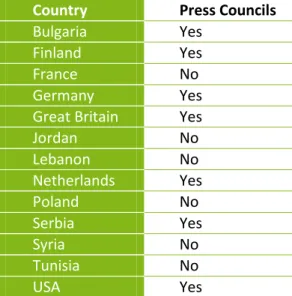
The variety of interviewees aims to reflect the specific features of national media systems and journalism cultures, when possible. Should there be no press councils in a given country explains that media accountability institutions are not represented in the interviews (such as France, Jordan, Lebanon and Syria). In the same vein, the fact that media activists are not interviewed in Finland is due to the fact that the number of media bloggers or journalism critics is very limited. Due to a lack of institutionalized media research in the Arab world, only two academic experts in Lebanon and Syria were consulted.
Nonetheless, not all selections correspond to cultural characteristics of a given media system. Most notable exceptions are Great Britain and France wherein the list of interviewees
3 The interviewees in Tunisia were granted anonymity due to the political situation at the time of
falls short in terms of quantity and representativity due to the limited resources allocated for the study. For instance, in order to include Great Britain in our empirical study, it was agreed that a number of bloggers would be interviewed during the one day seminar What’s the Blogging Story held in Bristol in October 2010. This choice left out a number of experts from the interview data but this shortcoming was compensated by other means of investigation (desk study).
As a result of explorative desk studies and expert interviews, a total of thirteen country reports describing national developments were produced. These reports are published as stand-alone reports through open access at: http://www.mediaact.eu/online.html. On top of that, country reports constitute the main empirical reference to comparative analysis that will be reported in the subsequent chapters.
Given that no systematic empirical evidence on the characteristics and dynamics of online media accountability practices – at least not applicable for the purposes of a comparative study – was readily available, this study is exploratory by character. Due to the vastness of geographical scope, this exploration would not have been possible without extensive cooperation of researchers from different countries.
The authors of this comparative report would like to warmly thank all participants in the research project for their invaluable contributions. In addition to the authors of the country reports, we are indebted to thank all those who assisted in collecting the empirical data, arranging, conducting and transcribing interviews and providing their insights to empirical analysis. Finally, we appreciate the collaboration of our interviewees who shared with us their insights and interest in the matters of media accountability, online journalism and the Internet.
Chapter 2: In the journalistic fields: The dynamics of developing media accountability inside news organizations
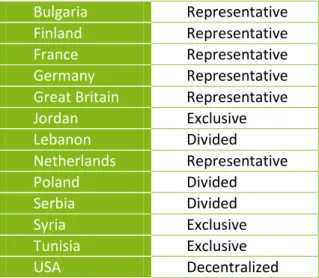
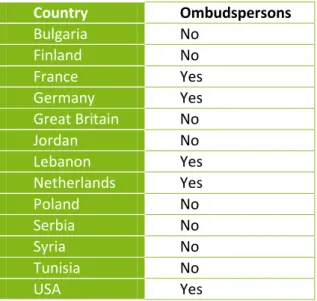
Idealtypically media accountability is a bottom-up process; depending on vigilant users keeping an eye on the performance of news journalism and challenging journalists into a dialogue, when necessary. Nonetheless, it has to be noted that journalism and established news organizations are not merely objects of calls for accountability. They also proactively facilitate media accountability processes by submitting themselves for scrutiny either with readers and viewers directly, or through intermediaries such as press councils or ombudspersons.
The ways how news organizations open themselves to media accountability practices to a great extent depend on the attitudes of editors and journalists. Attitudes, on their part, are shaped by a complex set of external and internal relations pertaining to media organizations and journalists. From the perspective of journalists, external relations refer, for instance, to the state and policy-makers, advertisers, and audiences as consumers or producers. Internal relations correspondingly, pertain to ways how media organizations regard each other as competitors over leading market positions and professional excellence, and to cultural struggles within media organizations about the direction of in-house news policies and allocation of human resources within newsrooms.
Given that in the recent years, the news media have been suffering several intense and inter-related crises: in technology, audiences, economics, and workforce (Barnhurst, 2011: 575), many things are being thoroughly re-assessed by journalists and news organizations across the world. It seems feasible to analyze the varying combinations of relationships against the concept of field (Bourdieu, 1996). In the line with Bourdieu, we understand journalistic fields as weakly autonomous and independent ‘social universes’, whereby journalists struggle among themselves to impose a working definition for the legitimate journalism (Bourdieu, 2005: 40). Characteristic to the actors of any field, according to Bourdieu, is that consensus over the vision not necessarily exceeds the presupposition that the autonomy of the field should be protected. Thus, journalists may agree in that journalism should be co-opted neither by state, market nor audiences but disagree on what counts for co-optation and how to prevent journalism from it within and across journalistic fields.
In general, journalistic fields are built on a set of tensions imposed by heteronomous forces derived from other fields, such as the economy and politics (market logics, political pressures) on the one hand, and autonomous forces (self-regulation, varying – and often self-contradicting – standards of quality in news production) on the other. Thus, the rules of the field and the ways how journalism is practiced in a given cultural context are shaped by how these forces relate to each other.
The interplay between heteronomous and autonomous forces introduce a dualism between structures and change. On the one hand, the ways heteronomous and autonomous forces face each other yield to the process of structuration, whereby the relationship between journalism and the other fields becomes fixed up to a degree. On the other hand, fields also prove to be dynamic due to external and internal factors. The conditions within the journalistic field may change externally if, for instance, a repressive regime is ousted from the political power, or if big multinational business corporations make successful acquisitions in a previously closed market. Journalistic fields may also change internally. The actors within the field may adopt varying strategies for responding to circumstances at hand. For instance, if journalism is regarded more as business than ‘public calling’, the actors in the field may either adjust to this discourse and make the best out of it, or they may choose to resist it by subscribing to other values for journalism. The outcomes of these strategies would depend on actors’ capacities (or social and cultural capitals) to impose their views to other actors in the field (Kunelius & Ruusunoksa, 2008: 663–664).
Field theory helps going deeper in analyzing the negotiations with regard to structures and change by acknowledging that actors draw their understandings from their distinct positions and the ways they inhabit them according to their set of dispositions (habituses) and functions in the field. This helps us to understand, for instance, that editors in online news desk – given their specific responsibilities in the news production – may have different attitudes towards online discussion boards from those of their colleagues working in other departments of a news organization.
The structures and dynamics within journalistic fields vary from one place to another and – perhaps to a slightly lesser extent – from one moment to another. Based on what we have learnt from a bulk of media and politics studies focusing on distinct countries or regions, we can assume that, for instance, in Western Europe and the USA the degree of autonomy within the journalistic field is more strongly impinged by the economic field and market forces than state policies. From the outset, this situation clearly differs from the circumstances in many Arab countries, whereby the major tensions take place between the journalistic field and the political field (or more broadly the field of power). The Southern and Central Eastern Europe represent yet slightly different cases, albeit they are not entirely identical with each other either.
Particularly in regard to the relationship between the states and the media, journalistic fields are often conflated into national media systems. The models proposed by Hallin & Mancini (2004) provide a fruitful framework for comparative research of national journalistic fields, but this strategy may at some point run a risk of over-emphasizing the cohesive forces embedded within a particular type of media system on the one hand, and differences across media systems on the other. In order to avoid this problem we take in this chapter a cross-national look into
how the structures and attitudes, as important constituents of distinct journalistic fields, are formed in relation to a set of institutions and group actors. Our analysis of the fields does not aim to be overarching, as its main objective is to provide a framework for empirical analysis aimed at mapping out the emergence of online media accountability practices initiated by news organizations (chapter 4), or actors from outside of professional media (chapter 5).
We proceed in outlining the framework for the comparative analysis of journalistic fields by describing the relationships of news organizations to four groups of actors or institutions: (1) the state and policy-makers, (2) media market, (3) self-regulatory institutions, and (4) Internet users and their user cultures. All sets of relationships are empirically described and compared in the light of the country reports focusing on eight countries in Europe, four Arab countries, and the USA.
2.1 Journalistic fields and the political field
States and policy-makers impinge on the conditions for media accountability through formal and informal interventions. Formal interventions are imposed through legislation, regulation, and media policies. Correspondingly, informal interventions on journalists’ autonomy may be carried out through a set of routines, whereby political actors and journalists meet and exchange information with each other.
In conjuction to the Bordieuan concepts introduced above, state interventions may either foster or control the autonomous forces within journalistic fields. On the one hand, laws and institutional frameworks may be designed for protecting journalists’ access to information and their rights for publishing their work. In addition, media policies may proactively guard the autonomy of journalism from excessive effects from the economic field in order to foster pluralism and competition in the media field. As a token of this, online news media in France were just recently entitled a right to apply for press subsidies. On the other hand, state interventions may also impose restraints to media organizations and journalists by defining more specific rules of conduct for public communication. One of the most effectively – and oftentimes arbitrarily – applied stipulation for press freedom and journalists’ autonomy is to sanction acts of publishing that are said to risk ‘national security’.
Actors within journalistic fields may have different opinions about the objectives and effects of formal state interventions. The debates over the role of the public service broadcasting are an appropriate example of how state interventions can trigger opposite arguments. From one viewpoint, regulation and public financing for public broadcasting may be regarded essential for the autonomy of the journalistic field as public funding is said to ensure public broadcasters to meet with their public remit. From the other perspective, state interventions are regarded
harmful as they seem to manipulate the free market and thus constraining journalists operating within privately-owned media organizations. These debates are currently extended to what would be a fair and sustainable way to finance the online media production, which entails significant economic risks to media organizations, whether they be publicly or privately owned.
While regulation and media policies encompass state interventions that are generally explicit and transparent, informal interventions are more implicit and opaque by nature. Thus, the meanings of these informal encounters and their impact on respective journalistic fields are obviously open to multiple interpretations. Precisely due to their ambiguity, the informal interventions of the political field introduce an essential element in how actors in journalistic fields perceive themselves and their autonomy.
A general reference for evaluating the effects of state intervention to journalistic fields can be found in the World Press Freedom Index (WPFI) compiled by the Reporters without Borders. Despite its methodological deficiencies, WPFI is useful in this context, as it tries to infer the effects of both formal and informal interventions to press freedom.
In its latest report, Reporters without Borders (2010) finds two out of thirteen countries of our sample at the top of their list (Finland and the Netherlands). Their positions (together with Iceland, Norway, Sweden and Switzerland) are credited by evidence of that the current media laws and political procedures enable journalists to work without threats to their security and restrictions for their freedom of speech.
An appropriate example for how the states impose their influence to journalistic fields at the top of the rank can be found from the Netherlands wherein the state allocates financial support for media organizations in order to stimulate research and development aimed at press innovations. The Press Stimulation Fund (Stimuleringsfond voor de Pers), established in 2009, has directed some of its funding to enhance media criticism and professional self-reflexivity among journalists (Groenhart, 2011). In this policy intervention, however, the Dutch state remains merely in the facilitative role.
Table 5: World Press Freedom Index 2010: The rankings Country Rank Finland #1 Netherlands #1 Germany #17 Great Britain #19 USA #20 Poland #32 France #44 Bulgaria #70 Lebanon #78 Serbia #85 Jordan #120 Tunisia #164 Syria #173
WPFI does not specify why Germany (17th place) is separated from other Northern European
countries associated with the so called Democratic Corporatist Model (Hallin & Mancini, 2004: 143–145). Part of the blame may probably result from the prominent role of German politicians within the European political institutions, who are said to have “gained notoriety for their increasingly systematic use of proceedings against the news media and their journalists” (WPFI, 2010: 3). Apart from that the relationship between political field and journalistic field does not seem to be that different in, say, the Netherlands and Germany.
In terms of press freedom Great Britain (19th) and the USA (20th), are grouped next to
Germany, albeit their media systems are situated in the North-Atlantic or Liberal Model (Hallin & Mancini, 2004: 198–199). In Britain, the formal state interventions in the form of media policies and regulatory bodies tend to be much more prominent than in the US. This is well illustrated by the role of Ofcom, which is the statutory regulator in the TV and radio, fixed line telecoms and mobiles. Granted with the right to file sanctions by the Communications Act 2003, Ofcom is said to impose “light regulatory touch” on media organizations (Jempson & Powell, 2011: 195). According to our interviewees, these formal interventions are perceived to have positive impact on the autonomy of the journalistic field, as these tend to mitigate the effects imposed by the market. As a matter of fact, some interviewees in Great Britain criticized Ofcom for not operating more actively as public authority and separating itself more clearly from the corporate interests of media organizations (Evers et al., 2011).
In the USA, formal state interventions to journalistic fields are generally very limited. On the other hand, the informal influences have been submitted to a set of self-regulatory practices. This means that particularly at the level of federal politics in Washington, all stakeholders engaging in exchanges of information with each other (politicians, lobbyists and journalists) are
expected to be bounded by the internal rules set by the professionals themselves. Despite the high level of professionalization – or precisely due to that – the relationship between politicians and journalists are regarded tense (Hallin, 2006). This is partly triggered by the polarization of politics strengthened during the 2000s, which is said to have enhanced partisanship within the journalistic field, and in effect, curtailed the autonomy of journalists (Domingo, 2011).
The relatively low status of press freedom in France (44th) – and also in Italy (49th) – is
explained in WPFI by the documented events of violation of the protection of journalists’ sources, and “displays of contempt and impatience on the part of government officials towards journalists and their work” (WPFI, 2010: 1). This testimony is compatible with the notion of instrumentalization with which Hallin & Mancini (2004: 92–106) describe the patterns of state-media relations within the Mediterranean state-media systems.
Instrumentalization denotes close interaction between politicians and journalists allowing politicians and media owners to expect news organizations to tally with their interests. This practice, in turn, draws from the historical affinities between politicians and journalists as professions, and political parties and newspapers as institutions. This sort of political parallelism has been characteristic to the Mediterranean countries but similar traits have been found in Central Eastern Europe and Lebanon as well. This cultural background clearly informs WPFI in ranking Bulgaria at the 70th place and Serbia as low as at the 85th place.
In Bulgaria, political communication is described as a closed-shop culture, wherein it is not uncommon that somebody from the government calls the media organizations and tells them to change the order of the news (Głowacki, 2011). In Serbia, it is reported that the professional associations of journalists maintain to be caught by the political division between pro-Miloševic and anti-Miloševic coalitions inherited by the protracted political transition (Głowacki & Kuś, 2011). This division of journalistic field is caused by political forces in the country and underscores the fact that journalism has difficulties in claiming independence and autonomy as social institution.
A similar situation can be observed in Lebanon. Despite being a constitutional democracy, Lebanon’s political field is shaped by sectarianism. This reflects directly not merely to the political field but also to the media, which are to a great extent owned and managed by the politically organized ethnic or religious groups (Nötzold, 2009). While political parallelism is more or less institutionalized in Lebanon, it may be gradually waning is some parts of the Southern and Central Eastern Europe. Against the evaluation of WPFI, this seems plausible, for instance, in Poland (32nd), which ranks much higher than Serbia and Bulgaria. Nonetheless,
journalists’ attitudes towards political parallelism may vary. Kuś (2011) notes that the older generations of Polish journalists find themselves more autonomous in the face of informal
interventions from the political field than against those from the economic field, as they have learnt how to cope with the former.
From the perspective of journalistic fields, the explicit role of the state obviously merits most attention in countries where the conditions for media freedom appear the most limited. In this respect, Jordan is found at the lower half of rank (120th), whereas Syria – together with Tunisia
as evaluated before ousting the autocrat regime of Zine el Abidine Ben Ali – are placed near the bottom of the rank (Tunisia 164th and Syria 173rd, respectively). In the case of Syria, Reporters
without Borders refer to evidence of that arbitrary detentions of reporters are still routine, as is the use of torture.
In Syria, in particular, until the advent of first initiatives of online news websites it seemed as if the state not merely owned and controlled the major media organizations in the country but it also had a strong hold of the journalists; at least those who were affiliated to the Syrian Journalists Syndicate (SJS). Kraidy (2006) provides an appropriate example to illustrate the scope and precision of the explicit state regulation in Syria.
In March (2006), the six thousand employees of the Syrian Radio and Television Commission received a memorandum detailing ‘international criteria’ for the physical appearance of television anchors, hosts and presenters. Besides banning strong makeup for women, the guidelines stipulated that a television anchors’ weight could not exceed the last two numbers of their height, so, that a 160 centimeters tall newscaster could not weigh more than 60 kilograms (quoted in Pies & Madanat, 2011a.).
In Jordan, the effects of the state interventions for press freedom have been less uniform. Online journalists have only recently become subjects of the general press legislation in the country. In this process, the government broke a ‘silent deal’ with some online activists, which resulted in a slight relaxation of the constraints to the online media from what had been originally intended (Hawatmeh & Pies, 2011). Given that some actors in the journalistic field had argued for a stricter control towards the allegedly ‘unprofessional and irresponsible’ behavior of online journalists suggests that the state-media-relations are a source of tension within the Jordanian journalistic field. As a token of this tension, some actors regularly refer to the Press Freedom Index to voice their calls for greater autonomy, while some others tend to ignore it.
Also in Tunisia, journalists and anonymous interviewees draw a distinction between the offline and online media with regard to degree of freedom of expression. They argue that in the Internet, and more particularly in the social media, Tunisian journalists have greater space for expression and means to communicate. This may be partly endowed by the fact that the state authorities (before the demonstrations in 2011) did not impose as deep routed control – in terms of ownership or personnel politics – over the Internet as they did with regard to offline media (Ferjani, 2011). Nonetheless, this did not prevent Reporters without Borders to label Tunisia an “enemy of the internet”.
In our brief comparative look into the state-media-relations in thirteen countries broadly three different configurations were disclosed. Firstly, in autocratic – or to put it more optimistically – gradually post-autocratic systems, the political fields tend to impose strong and preventive influences on journalistic fields. This mode of relationship is found in Syria, Jordan and Tunisia (at least, prior to 2010). Secondly, in the cultures with traditions of political parallelism, journalistic fields are most likely to be submitted to attempts of instrumentalization by the political fields. These conventions tend to be relatively strong in Lebanon, Bulgaria, and Serbia. Even if the practice of instrumentalization was initially coined to describe the state-media-relations in the Mediterranean countries, it is debatable, whether France can be placed in the Mediterranean Model at all. It can be argued that historically the French press has been less politicized than that of Italy. Thus, also the patterns of instrumentalization tend to be less effective in France.
The third configuration of the state-media-relations is characterized by limited formal interventions and more or less regulated informal interactions between the political field and journalistic fields. This variation seems to be a predominant one in the established liberal and corporatist democracies of the USA and Western Europe.
2.2 The influences from the economic field
A second heteronomous force shaping journalistic fields is the market forces. Alike with interventions from the political fields, the economic fields can be seen to be either fostering or undermining the autonomy of the journalistic fields, depending on the contexts and the frames of interpretation.
Given that news and other media contents are commodities to be sold in the market to users and/or advertisers, the impact of the market to journalistic fields is immensely important and complicated. In what follows, we mainly pay attention to three things: a set of structural features of the markets in general, varying anticipations about the future developments of media markets, and cultural consequences of the market competition within the journalistic fields. In the latter our focus will be in the differentiation and hierarchies of professional habituses among media professionals.
Economies are under the process of globalization. Nonetheless, as far as we discuss the media or news, their markets tend to be predominantly national by character. From this follows that their basic features stem from rather crude features, such as the size of the population and the aggregated purchase power of national populations. This gives us the first statistical parameter to compare economic circumstances in the countries under our analysis.
By combining census data to gross national income (GNI) per capita, we can roughly distinguish markets with regard to their size (small/mid/big).4
High accounts5 on both parameters equal to big markets. This holds, most notably to the
USA, Germany, Great Britain, and France. Correspondingly, low accounts on both parameters denote that the national markets are small. This criteria applies to all four Arab countries (Jordan, Lebanon, Tunisia and Syria), and two countries from Central and Eastern Europe: Bulgaria and Serbia. The countries between these poles can be roughly labeled as mid-size markets. In this comparison, the sizes of the market in the Netherlands and Poland seem similar enough, due to the fact that two variables compensate each other: a lower gross national income in Poland is balanced out by the fact that its population is more two times bigger than that of the Netherlands. Conversely, the market in Finland designated to be small rather than mid-size due to the small population; regardless of the fact that the GNI in Finland compares to those of France, Germany, and Great Britain.
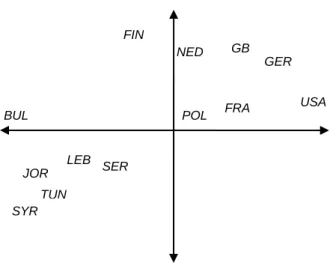
The second general variable for measuring the market condition in general is the level of competition in the respective media markets (low/high). This variable is much more difficult to measure and compare given that market dynamics vary from one context to another and consistent data on all aspects of media markets are difficult to obtain. Our comparison rests on the data on total circulation of newspapers, which is evaluated against the size of the national populations. This gives an idea to what extent media markets are full or saturated. The higher the saturation per cent is, the more media organizations need to compete with each other to attain audiences and advertisers. Correspondingly, the lower the saturation per cent is, the bigger is the size of potential audiences that media organizations may pursue to attain. A rough illustration based on statistical data on both variables is provided in the figure 2 below:
4 The census data are drawn from US Census Bureau http://www.census.gov/population/international/,
Gross National Income data from World Bank http://data.worldbank.org/indicator/NY.GNP.PCAP.PP.CD, and total circulation of newspapers from national media statistics.
5 The equation used is the following: Size of the market = Population (million) x Gross National Income Per
Capita (1000 $). The threshold for big markets is > 1 000 000; the margins for mid-size market are from 500 000 to 999 999; the threshold for small market is < 499 999.
Figure 2: Illustration of the structures of media markets
The size of the market (illustrated in the horizontal axis of the diagram) is elemental to the journalistic field, as it prescribes to a certain degree the ecology for media organizations and how these can pursue positions in the given journalistic field. Idealtypically, bigger markets provide better incentives for media organizations than smaller ones because of their greater potential in attracting audiences and advertising revenues. In the affluent and abundant markets media organizations also have it relatively easier to acquire capital to be invested on content production than the ones in smaller markets. In addition, the dynamics of big markets is more likely to result in differentiation within the news and media industry. Groups of actors in the media economy field may try attract either large audiences nationally or regionally, or alternatively attempt finding distinct niches for their potential clients. Conversely, in smaller markets less alternative business opportunities exist, and adhering to those tend to pose bigger economic risks for media organizations.
On the other hand, economic dynamics in big markets also tends to prompt in centralization of media ownership and management, which is said to aim at reaping huge synergies and financial benefits from the media production, journalism and news included (Picard, 2010: 369). Due to economic imperatives imposed on the media, journalistic fields are at risk of becoming subsumed to economic interests. This would lend support to a line of thought that regards journalism merely as business. Conversely, in smaller markets it is likely that less intensive pressures for making and increasing profits are imposed on media organizations. This may help considering journalism more separate from the economy, and thus foster the autonomy of the journalistic field.
NED GB
Small
market market Big
High level of competition Low level of competition JOR LEB USA GER POL BUL TUN FIN SER FRA SYR
The level of competition within the media markets (illustrated in the vertical axis) tends to depend on the cultural legacy of newspaper readership as well as the infrastructure and policy designs for the electronic mass media (Hallin and Mancini, 2004: 22–25). The media competition seems more severe in the countries with a long record of high readership of newspapers and well-developed systems for duopolic broadcasting6 (for instance, the Netherlands and Finland).
More recently, these media markets have witnessed a gradual – rather than abrupt – introduction and expansion of online communications platforms. One notable exception to this is France, wherein the level of media competition is regarded high, even if the history of the press as well as the pattern of the emergence of the Internet are different from others (ibid. 90; Balland & Baisnée, 2011).
Correspondingly, media markets of lower level of competition are marked by weaker traditions of mass readership of newspapers, less established systems of broadcasting as well as more inchoate forms for online communication and Internet user cultures. Nonetheless, this background suggests that the most radical changes in the economic contexts may be taking place in these media markets, most notably in the Arab countries.
Contrary to media economies in Europe and the USA, the media organizations in Jordan, Lebanon, Tunisia, and Syria have not been submitted to a serious economic crisis within the last decades. This is due to the fact that Arab media markets have been running through profound transitions for several years, which underscores their governments’ cautious opening of the economy. This has resulted in the rapid growth in advertising expenditure especially from the bank, telecommunications and real estate sector. Prior to the tide of demonstrations sweeping across the Arab world, the analysts presumed that the advertising revenues would continue to grow in the coming two years (Dubai Media Club, 2009).
Along with this general trend of liberalizing their economies, regimes across the region opened their media markets for private media enterprises especially in the broadcasting and entertainment sector. The other factor, particularly important for the online media market, is the ongoing efforts by regimes to improve ICT infrastructures and thus enlarge the number of potential Internet users (cf. UN, 2009a, 2009b, 2009c). Though Internet advertising is still low compared to other media, it is expected to grow around 50 per cent in Jordan, Lebanon and Syria and 24 per cent in Tunisia until 2013 (Dubai Media Club, 2009). These expectations, of course, have been called into question by the recent political developments. It seems plausible that in Tunisia the development will be even faster, whereas in Syria the media markets are likely to move in the opposite direction.
6 Duopoly refers here to coexistence of public and private broadcasting and relatively stable relationships
between these two in terms of their market positions and attitudes towards media policies (Jauert, 2003: 189).
Market transformations have had some groundbreaking implications for the journalistic fields in Jordan, Syria and Tunisia, as they have opened new lines of competition among the actors in the field. The most notable divide has emerged between private and state-owned media organizations. While the latter’s financial basis is (partly) guaranteed by state financing, the former have to rely primarily on advertising and thus they need to follow a more economically driven logic. This is most visible in Jordan where both developments culminated in an online news outlet boom. No less than eighteen net-native online news outlets face competition with another six online versions of daily newspapers over the market of no more than million potential daily Internet users. This competition has resulted in an overlap of two different competitive patterns: an economic divide between the financially well-situated daily newspaper websites and newcomers in the news business on the one hand, and an institutional divide between online-only vs. online-legacy media on the other.
Another particularity of the Arab countries is the huge market of Pan-Arab media such as al-Jazeera or Al-Arabiya for the TV, Al-Quds Al-Arabiya or Al-Hayat for the newspapers and Al-Bawaba or Elaph for online news. These media outlets have tremendously contributed to an increase in competition, foremost on national television markets and international news section, traditionally a very important feature in Arab journalism (Mellor, 2007). The media competition ranging from outside national journalistic fields has often resulted in a unification of local media against Pan-Arab media. This yields in a professional contest over local and national news (Nötzold & Pies, 2010).
While changes in the economic fields and how they are reflected in journalists fields tend to re-energize journalistic fields in Arab countries, the dynamics in Central and Eastern Europe appear to be more ambiguous. Given that the size of the media markets in Bulgaria and Serbia are rather small, many media organizations find themselves struggling for their economic survival. Even if the Polish media market have a greater potential for expansion, particularly the online development is halted by technological bottlenecks and seemingly entertainment-driven audience demand (Kuś, 2011). This triggers news organizations to optimize their short-term economic rewards by maximizing Internet traffic through celebrity news and limiting their costs of production.
A number of interviewees, particularly in Central and Eastern Europe but also Great Britain, described a negative scenario that assumed that under the current economic environment online publishing enables news production in its cheapest and easiest mode. This argument suggests that a great deal of news published online is mainly or partially constructed from second-hand material, provided by news agencies and public relations. Davies (2007) estimated that about eighty per cent of daily news production in Great Britain fit to that category. The same