Original Research Article
Outbreak investigation of viral exanthem in Jharkhand, India: an eye
opener for surveillance managers and vaccine policy makers
Sahir Pall
1, Dewesh Kumar
2*
INTRODUCTION
The causes of cases of fever with rash may be varied with little differences in their presentation and clinically they may be diagnosed but laboratory tests are necessary for their confirmation. Based on the clinical and epidemiological experiences, chicken pox is one of the most common cause of exanthematous fever in India. Varicella or commonly known as chicken pox is a highly contagious disease caused by Varicella zoster virus (VZV) which belongs to Herpesviridae. This acute disease is usually benign in nature in immunocompetent children but can be life-threatening in adults and immune-compromised individuals.1 Humans are
considered to be the only known hosts for this virus, whose only one recognized serotype exists.2 Airborne route is the major route of transmission however transmission also occurs through aerosols and direct contact with the skin lesions. The incubation period of the disease is usually 14-16 days ranging between 7-23 days. The contagious period starts 1-2 days before the appearance of the exanthema and lasts till all the vesicles have crusted, usually within 5-7 days.3,4 The patients usually presents with fever and exanthematous rash but complications such as pneumonia, hemorrhages, encephalitis, Reye’s syndrome may also occur in normal children and adults. Generally the infection is self-ABSTRACT
Background: Chicken pox outbreaks are frequent in tribal state of Jharkhand but rarely they are reported and investigated. Based on the preliminary information from field about the spurt of fever with rash cases in the inmates of a residential school, an outbreak investigation was undertaken to establish the disease outbreak and take appropriate steps of control and prevention of further transmission.
Methods: The outbreak investigation using shoe-leather epidemiology was carried out in the month of March 2016 accordingly the standard steps of investigation in Chakulia block of Jharkhand, India and a fixed number of blood samples were sent to the apex medical institute of Jharkhand for its confirmation by laboratory tests. Concurrently control and preventive steps were taken to check further transmission of the viral exanthem.
Results: A total of 79 cases satisfying the case definition occurred in the present outbreak and serum samples were collected from 7 patients for detection of VZV IgM antibodies by ELISA. Out of the total samples tested, five samples showed positive serology for VZV IgM. This confirmed the outbreak of Chickenpox in the KGBV, Chakulia.
Conclusions: There is a desperate need of strengthening surveillance mechanism and field workers should be motivated for reporting cases timely so that the transmission of any viral exanthem may be checked at the earliest by application of control measures.
Keywords: Varicella, Outbreak, Chicken pox, Surveillance
1District Surveillance Officer, State Health East Singhbum, Jharkhand, India
2Department of Preventive and Social Medicine, Rajendra Institute of Medical Sciences (RIMS), Ranchi, Jharkhand,
India
Received: 30 December 2017
Accepted: 16 August 2018
*Correspondence:
Dr. Dewesh Kumar,
E-mail: [email protected]
Copyright: © the author(s), publisher and licensee Medip Academy. This is an open-access article distributed under the terms of the Creative Commons Attribution Non-Commercial License, which permits unrestricted non-commercial use, distribution, and reproduction in any medium, provided the original work is properly cited.
limiting and provides lifelong immunity to the individuals.
The disease is distributed worldwide but may be more common in underdeveloped countries for obvious reasons of more communicability and unimmunized population. The incidence rate in temperate countries is 13-16 cases per 1000 per year and children aged 1-9 year old are mostly affected but in tropical countries like India, the incidence is higher amongst the adults.5-8 And the reason is the self-limiting nature of the disease in children which is rarely reported considering it to be “Mata” or God’s curse by families and communities. Whereas the severity of the disease in adults is more evident and seek treatment in health facilities resulting in more reporting of cases. But undoubtedly with the advent of vaccination against varicella and people going for its vaccination may have shifted the incidence to higher age groups as the young adult cohort may be unvaccinated and didn’t develop the immunity due to absence of infection in childhood.
Although the mortality is uncommon in young patients and second episode of chicken pox is a rare entity but considering its secondary attack rate which is more than 85%, routine immunization against varicella is recommended. In 1998, World Health Organization (WHO) has recommended varicella immunization in countries where the disease is an important public health problem and the nation can afford the vaccine for its citizens along with the fact that high and sustained vaccine coverage is ensured. The varicella vaccine is available since 1995 in United States and may provide protection against 85% cases of chicken pox and 95% cases of severe secondary sequalae.9 However, the introduction of varicella vaccination in many countries such as Japan, Korea and United States of America has led to dramatic reduction of the disease and its complications.10-13 In India, chicken pox is a notifiable disease in Integrated Disease Surveillance Project (IDSP) since 2005 but still the published data on epidemiology of chicken pox is scarce in India. This may be attributed to far less reporting of cases than actual cases as per anecdotal notes.14 The problem of reporting cases is the ignorance, lack of motivation amongst the field workers and the fear of punitive action.
During the first week of February 2016, a case of fever and rash occurred followed by subsequent more cases in a girls’ residential school Kasturba Gandhi Balika Vidyalaya (KGBV), Chakulia block of East Singhbum district, Jharkhand (India). But it came to the notice on 8th March 2016 because of no reporting of these cases in weekly forms of subcentre(S form) and Community Health Centre (P forms), Chakulia during February 2016. During a meeting, an ASHA worker from field informally reported about it in a meeting with medical officer. When it was brought to the notice of district officials, it was decided to undertake an outbreak investigation by District Rapid Response team of East
Singhbum, Jharkhand. Chakulia block is a tribal block in East Singhbum located in southern part of Jharkhand and girls studying in KGBV belongs to this block having lower socio-economic status. Since it’s a residential school, so girls reside in the campus dormitories which is having bare minimum amenities to survive. Auxillary nurse midwife (ANM) from the health system is expected to visit KGBV every week to manage health related events. In India, through the surveillance mechanism of Integrated Disease Surveillance Project (IDSP), all the health facilities have to provide the data regarding 20 odd notifiable diseases in S, P or L forms on weekly basis to Central Surveillance Unit for further analysis and action on the disease trends and seasonality of diseases. The three specified reporting formats, namely “S” (suspected cases), “P” (presumptive cases) and “L” (laboratory confirmed cases) is to be filled by health workers, clinicians and laboratory staff respectively.15
The present study reports an outbreak of exanthematous fever which occurred in Kasturba Gandhi Balika Vidyalaya (KGBV), Chakulia block of East Singhbum district, Jharkhand, India. The aim of the investigation was to study the epidemiological characteristics of the outbreak, determine the potential risk factors for the disease outbreak and refine the public health interventions to control and prevent further transmission of the disease.
METHODS
The outbreak investigation was carried out in KGBV school and its adjoining areas of Chakulia block by District Rapid Response Team (DRRT). The investigation was initiated on 8th March 2016 by investigation team which included district surveillance officer, medical officer, laboratory personnels, nurse and other support staff. All the standard steps of outbreak investigation under shoe-leather epidemiology were strictly followed according to national guidelines. After confirming the outbreak, an active surveillance was carried out on 9th March 2016 based on our case definition for the outbreak and blood samples were collected from seven affected individuals from the campus. The case definition for outbreak followed was “a person of any age suffering from fever with maculo-papular rash in last one and half months from the day of investigation in the residents of KGBV Chakulia and its adjoining areas”. A confirmed case of Chicken Pox was defined as any case having clinical symptoms suggestive of chicken pox confirmed either by serology or nucleic detection or by both.16 The active case search was done and detailed history was recorded on a designed epidemiological case sheet to collect relevant information. The other ecological factors were also evaluated to undertake appropriate measures to prevent further transmission.
informed assent from the cases and consent from the caretaker of the KGBV. The venous blood samples were transported in proper cold chain to the virology laboratory of the Department of Microbiology, Rajendra Institute of Medical Institute (RIMS), Ranchi, Jharkhand, India for viral serological test. Until the samples were tested, the sera were separated and stored in aliquots at -20oC. The sera was tested for Varicella zoster virus (VZV) IgM (@NovaTec, Immunodiagnostica, GmbH, Dietzenbach Germany) by Enzyme-linked immune sorbent assay (ELISA) as per the manufacturer’s instructions. The kit measures the titer of the plasma VZV IgM. An aliquot of serum diluted to a fixed ratio and incubated for 45 minutes at 37°C. Then, it was washed 4 times with phosphate-buffered saline for 30 seconds in ELISA plate washer (@Lisawash 3000, Tulip Diagnostics Ltd., India) following guidelines of the manufacturer. Within 30 minutes of adding 100 μL of stop solution, the absorbance was measured using an ELISA plate reader (@Lisaquant 3000, Tulip Diagnostics Ltd., India). For every test, absorbance ratio was calculated comparing negative and positive reference materials for each sample. When the absorbance ratio was more than the positive reference, the result was determined to be positive. When the absorbance ratio was below the positive reference, it was labeled negative.
The data collected was compiled in Microsoft excel 2007 and was analyzed for the epidemiological parameters. Along with it, key interviews and desk review was done for getting the other information related to population at risk for further analysis.
RESULTS
Demographic characteristics
A total of 79 cases satisfying the outbreak case definition was found in KGBV, Chakulia. All of them were girls in adolescent age group. The median age is 14 years and range is 11-19 years. Out of them 62 (78.4%) belonged to 11-15 years age group and remaining 17 (21.6%) fell in 16-20 years age group. Majority of the cases belonged to Hindu (96%) religion and schedule castes and tribes constitute around 77.2%. The overall attack rate was 30.38 per thousand considering the fact that all students were from nearby villages catered by sub-centre whose population was approximately 2600 whereas the attack rate in KGBV school was 22.5 per hundred school residents.
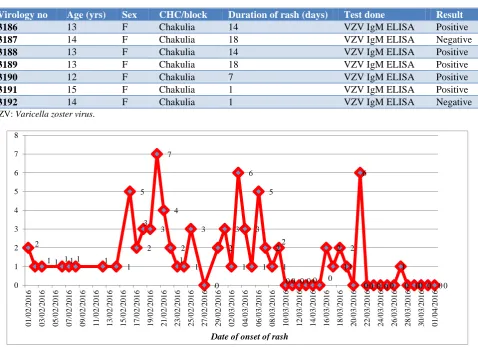
Table 1: Details of the samples tested at virology laboratory.
Virology no Age (yrs) Sex CHC/block Duration of rash (days) Test done Result
3186 13 F Chakulia 14 VZV IgM ELISA Positive
3187 14 F Chakulia 18 VZV IgM ELISA Negative
3188 13 F Chakulia 14 VZV IgM ELISA Positive
3189 13 F Chakulia 18 VZV IgM ELISA Positive
3190 12 F Chakulia 7 VZV IgM ELISA Positive
3191 15 F Chakulia 1 VZV IgM ELISA Positive
3192 14 F Chakulia 1 VZV IgM ELISA Negative VZV: Varicella zoster virus.
Figure 1: Epidemic curve of chicken pox at KGBV, Chakulia in February-March 2016.
2
1 1 1 1 1 1 1 5 2 3 3 7 4 2 1 1 3 0 2 3 1 6 3 1 5 2 1 2
0 0 0 0 0 0 2 1 2 1 0 6
0 0 0 0 0 1
0 0 0 0 0 0 1 2 3 4 5 6 7 8 0 1 /0 2 /2 0 1 6 0 3 /0 2 /2 0 1 6 0 5 /0 2 /2 0 1 6 0 7 /0 2 /2 0 1 6 0 9 /0 2 /2 0 1 6 1 1 /0 2 /2 0 1 6 1 3 /0 2 /2 0 1 6 1 5 /0 2 /2 0 1 6 1 7 /0 2 /2 0 1 6 1 9 /0 2 /2 0 1 6 2 1 /0 2 /2 0 1 6 2 3 /0 2 /2 0 1 6 2 5 /0 2 /2 0 1 6 2 7 /0 2 /2 0 1 6 2 9 /0 2 /2 0 1 6 0 2 /0 3 /2 0 1 6 0 4 /0 3 /2 0 1 6 0 6 /0 3 /2 0 1 6 0 8 /0 3 /2 0 1 6 1 0 /0 3 /2 0 1 6 1 2 /0 3 /2 0 1 6 1 4 /0 3 /2 0 1 6 1 6 /0 3 /2 0 1 6 1 8 /0 3 /2 0 1 6 2 0 /0 3 /2 0 1 6 2 2 /0 3 /2 0 1 6 2 4 /0 3 /2 0 1 6 2 6 /0 3 /2 0 1 6 2 8 /0 3 /2 0 1 6 3 0 /0 3 /2 0 1 6 0 1 /0 4 /2 0 1 6
Clinical features and laboratory findings
All the cases had a history of fever and vesicular eruptions. The rash was generalized and trunk was the first affected site in majority of cases. Since all the cases belonged to the same school so they had a history of contact with a case of chickenpox. The index case was notified on 8th March 2016 but the primary case could not be traced as on detailed history also, two cases reported the same initial date of onset of the disease symptoms. Despite none of the cases gave history of vaccination against VZV, rather some of them had no history of primary immunization in their childhood. All the cases recovered spontaneously without any major complications. The epidemic curve of Chicken pox outbreak at KGBV is illustrated in Figure 1. Out of the seven blood samples collected and tested, five of them tested positive for VZV IgM ELISA, confirming the cases to be of chicken pox (Table 1).
DISCUSSION
The present study describes a focal outbreak of chicken pox that occurred in KSBV school, Chakulia (East Singhbum, Jharkhand), India. The Chakulia block is inhabited primarily by tribal population belonging to low socio-economic status. The girls of the area study in KGBV School and also reside in the hostel within premises where overcrowding is present. A perfect setting for spread of chicken pox infection was present in the form of ambient temperature of late winters and unvaccinated adolescent girls living in close proximity which lead to rapid transmission of the virus. The Chakulia Community Health Centre (CHC) caters to the medical needs of the mentioned school and ANM is expected to visit the school every week but lately these visits were not made which lead to non-reporting of cases. These cases also didn’t seek any medical help except the cases were sent to their home by the caretaker of the hostel as isolation couldn’t be observed in already congested hostel. As per traditional practices, people do not go for medicines and prefer to rely on traditional remedies only.17 Similar outbreaks have been reported in institutional set-ups despite vaccination in some incidents owing to close proximity of the individuals.18-20
A total of five cases tested positive by VZV IgM ELISA but two cases turned to be negative. This may be due to the fact that false negative results of commercially available VZV IgM assay are not uncommon.21 It has been noted that IgM titer appears 2-5 days after the lesions and reaches to maximum level at 6-10 days and decreases subsequently with lowest levels after 10 weeks.22 Nevertheless, a positive IgM ELISA result from a person with a generalized rash is usually interpreted as laboratory confirmation of varicella.21 Although polymerase chain reaction (PCR) testing of skin lesions is more sensitive than IgM serology but due to its readily availability, lower cost and faster test results in cases of no skin lesions, IgM can be a diagnostic test of choice.
There are other laboratory tests available for diagnosis of VZV such as Tzanck smear, virus culture, immune-fluroscence methods, serological methods and PCR.22 All the cases in the outbreak were unvaccinated against varicella zoster as vaccine against chicken pox is not included in National Immunization schedule of India. However Indian Academy of Pediatrics (IAP) recommends administration of this vaccine in children aged 15 months or older.20 Since the vaccine is not given in universal immunization programme (UIP), so the cohort of children receiving vaccine is negligible leading to frequent outbreaks of chicken pox in the country.5,9 Few authors have reported a coverage of 2.8% in Under five children and majority of them being immunized in private sector.23 To establish herd immunity against chicken pox, there should be at least 85% coverage considering its efficacy.24 It is also established that if varicella vaccine is used as post exposure prophylaxis in children within 5 days of exposure, the chance of developing the disease reduces significantly. Most people who get adequate doses of chicken pox at appropriate age will not get the disease but if it occurs it is very mild in nature and is known as break through varicella.25 Though authors advocate strongly to include chicken pox in UIP to prevent such outbreaks but in a developing country like India, vaccine hesitancy and cost benefit analysis must be taken in consideration before implementing any such policy.5,26
The time gap of first notification of index case and the occurrence of primary case shows the slackness in surveillance system. From the study, it is clear that despite existence of robust surveillance mechanism it took more than a month to get a case notified from the field. This shows the failure of surveillance system where the field workers are either complacent or ignorant or fear of punitive action against them. Had it been notified on right time, the actions would have been taken to curtail the outbreak and thus decreasing the morbidity rate. This is one of the example where such outbreaks are investigated otherwise many outbreaks doesn’t come in radar of surveillance system as the severe morbidity and mortality due to this disease is less. So there is a need of continuous reinforcement about disease notification which can be easily done through regular training programs. In India, due to poor reporting of varicella cases and its outbreaks, we don’t have the exact disease burden of it so the policy regarding its prevention cannot be formulated. For evidence generation, a strong surveillance system should be in place on the lines of polio surveillance and mandatory reporting laws may be an important step toward implementation.27
CONCLUSION
to prevent the probable outbreak with collaboration of all governments and non-governments’ agencies.
ACKNOWLEDGEMENTS
We acknowledge the medical officer, field workers, laboratory technicians and support staff of CHC Chakulia for their assistance in carrying out the investigation.
Funding: No funding sources Conflict of interest: None declared
Ethical approval: The study was approved by the Institutional Ethics Committeeof State Heath, Jharkhand
REFERENCES
1. Balfour HH. Varicella zoster virus infections in immunocompromised hosts. A review of the natural history and management. Am J Med. 1988;85:68-73.
2. Tunbridge AJ, Breuer J, Jeffery KJM. Chickenpox in adults - Clinical management. J Infection. 2008;57:95-102.
3. Seward JF, Watson BM, Peterson CL, Mascola L, Pelosi JW, Zhang JX, et al. Varicella disease after introduction of varicella vaccine in the United States, 1995-2000. JAMA. 2002;287(5):606-11. 4. Arvin AM. Varicella-Zoster Virus. Clin Microbiol
Rev. 1996;9(3):361-81.
5. Verma R, Bairwa M, Chawla S, Prinja S, Rajput M. Should the chickenpox vaccine be included in the National Immunization Schedule in India? Hum Vaccin. 2011;7:874-7
6. Sinha DP. Chickenpox – A disease predominantly affecting adults in rural West Bengal, India. Int J Epidemiol. 1976;5:367-74.
7. Balraj V, John TJ. An epidemic of varicella in rural southern India. J Trop Med Hyg. 1994;97:113-6. 8. Singh MP, Singh G, Kumar A, Singh A, Ratho RK.
Epidemiologic lessons: Chickenpox outbreak investigation in a rural community around Chandigarh, North India. Indian J Pathol Microbiol. 2011;54(4):772-4.
9. Singh M P, Chandran C, Sarwa A, Kumar A, Gupta M, Raj A, Ratho RK. Outbreak of chickenpox in a Union Territory of North India. Indian J Med Microbiol 2015;33:524-7.
10. Vázquez M, LaRussa PS, Gershon AA, Steinberg SP, Freudigman K, Shapiro ED. The effectiveness of the varicella vaccine in clinical practice. N Engl J Med. 2001;344:955-60.
11. Centers for Disease Control and Prevention (CDC). Decline in annual incidence of varicella – selected states, 1990-2001. MMWR Morb Mortal Wkly Rep. 2003;52:884-5.
12. Sadzot-Delvaux C, Rentier B, Wutzler P, Asano Y, Suga S, Yoshikawa T, et al. Varicella vaccination in Japan, South Korea, and Europe. J Infect Dis. 2008;197(2):185-90.
13. Marin M, Güris D, Chaves SS, Schmid S, Seward JF; Advisory Committee on Immunization Practices, Centers for Disease Control and Prevention (CDC). Prevention of varicella: Recommendations of the Advisory Committee on Immunization Practices (ACIP). MMWR Recomm Rep. 2007;56:1-40. 14. Balraj V, John TJ. An epidemic of varicella in rural
southern India. J Trop Med Hyg. 1994;97:113-6. 15. NCDC. Integrated Disease Surveillance Project.
DGHS, GOI. Available at: http://idsp.nic.in/ index4.php?lang=1&level=0&linkid=313&lid=1592 . Accessed on 5 August 2017.
16. CDC, Chickenpox (Varicella). Varicella Reporting: Case Definition. Available at: http://www.cdc.gov/ chickenpox/hcp/conducting-surveillance.html. Accessed on 5 August 2017.
17. Chakraborty S, Gogoi M. A study on superstitious beliefs of the secondary school students of Dibrugarh district of Assam. Am Res Thoughts. 2016;2(5):3697-712.
18. Lai CC, Chen SC, Jiang DD. An outbreak of varicella among schoolchildren in Taipei. BMC Public Health. 2011;11:226.
19. Lee BR, Feaver SL, Miller CA, Hedberg CW, Ehresmann KR. An elementary school outbreak of varicella attributed to vaccine failure:policy implications. J Infect Dis. 2004;190(3):477–83. 20. Sood S. Occupationally related outbreak of
chickenpox in hospital staff:A learning experience. J Clin Diagn Res. 2013;7:2294-5.
21. CDC. Interpreting Laboratory tests. Available from:https://www.cdc.gov/chickenpox/hcp/lab-tests.html. Accessed on 3 August 2017.
22. Min SW, Kim YS, Nahm FS, Yoo da H, Choi E, Lee PB, et al. The positive duration of varicella zoster immunoglobulin M antibody test in herpes zoster. Medicine (Baltimore). 2016;95(33):e4616. 23. Puri S, Bhatia V, Singh A, Swami HM, Kaur A.
Uptake of newer vaccines in Chandigarh. Indian J Pediatr. 2007;74:47-50.
24. Plans-Rubió P. Evaluation of the establishment of herd immunity in the population by means of serological surveys and vaccination coverage. Hum Vaccin Immunother. 2012;8:184-8.
25. CDC. Chickenpox vaccine. Available from:https://www.cdc.gov/vaccines/hcp/vis/vis-statements/varicella.html. Accessed on 3 August 2017.
26. Kumar D, Chandra R, Mathur M, Samdariya S, Kapoor K. Vaccine hesitancy: understanding better to address better. Isr J Health Pol Res. 2016;5:2. 27. Kumar D, Kapoor N. Learning Lessons for public
health from Polio eradication in India. Int J Med Sci Public Health 2014;3:384-6.
Cite this article as: Pall S, Kumar D. Outbreak