Smart Voting Machine
Trupti Shripad Tagare Palak Sighal
Assistant Professor UG Student
Department of Electronics & Communication Engineering Department of Electronics & Communication Engineering Dayananda Sagar College of Engineering, Bengaluru, India Dayananda Sagar College of Engineering, Bengaluru, India
Rashmi D Patil Samit Kumar
UG Student UG Student
Department of Electronics & Communication Engineering Department of Electronics & Communication Engineering Dayananda Sagar College of Engineering, Bengaluru, India Dayananda Sagar College of Engineering, Bengaluru, India
Saurabh Kumar UG Student
Department of Electronics & Communication Engineering Dayananda Sagar College of Engineering, Bengaluru, India
Abstract
This paper describes a smart voting system that ensures effective voting procedure and voting count. It implements the voting system using fingerprint and unique key which prevents the illegal acts against the voting system and provides the voter authentication in an effective manner. The field of bio-metrics was formed and has expanded on to many types of physical identification. Still, the human fingerprint remains a very common identifier. The proposed system has two methods to double check on security as it uses the unique key and fingerprint as ID instead of voter ID card. The system also ensures that the total count is sent to the mobile via SMS. In real time, instead of using one digit unique key, the entire 12 digit Aadhar card number can be used ensuring more effectiveness. Also the Aadhar card database can be used as the database for the fingerprints. This paper entirely changes the state of election process and ensures the integrity of electoral system. The primary idea is to make the voters trust in election system at the same time reduce the work of the election committee.
Keywords: Aadhar Card, Fingerprint, GSM Module, Unique Key, Vote
________________________________________________________________________________________________________
I. INTRODUCTION
IN democratic INDIA, the objective of election process is to allow voters to exercise their right to express their choices regarding specific issues, pieces of legislation, citizen initiatives, constitutional amendments, recalls and/or to choose their government and political representatives.
To allow the exercise of this right, steps are: voter identification and authentication voting and recording of votes cast vote counting
publication of election results
Voter identification is required during two phases of the electoral process, first for voter registration in order to establish the right to vote and afterwards, at voting time, to allow a citizen to exercise their right to vote by verifying if the person satisfies all the requirements needed to vote (authentication). This paper prevents the illegal act against the voting system and provides the voter authentication in an effective manner.
II. CONVENTIONAL METHODS
Paper Ballet Voting System
It was first used in Rome in 139 BC, in ancient India around 920 AD. In the simplest elections, a ballot may be a simple scrap of paper on which each voter writes in the name of a candidate, but governmental elections use pre-printed to protect the secrecy of the votes. The voter casts his/her ballot in a box at a polling station. Election officials manually count the ballots after the polls close and may be recounted in the event of a dispute.
Electronic Voting Machines
Machine has mainly two units, one for control by the polling officers and the other for the uses of voters to cast their vote. The ballot unit requires voters to press the button next to the candidate's name and symbol and the control unit registered the vote. A light next to the button glow and a short beep sound follows indicate the vote has been registered. The two units are joined by a five-meter cable. The Control Unit is with the Presiding Officer or a Polling Officer and the Balloting Unit is placed inside the voting compartment. The polling personal then take necessary step to enable the next voter to cast their vote.
Issues with the conventional Methods: Chances of malpractice and illegal activity.. Printing of ballot papers is costly.
Speed - Delay of declaration of result Requires more manual work
Election Commission cannot get the voting counts at his place. No proper check on process thus leading to Re-election.
Security problems - One can change the program installed in the EVM and tamper the results after the polling.
Illegal Voting (Rigging) - One candidate casts the votes of all the members or few amounts of members in the electoral list illegally. This results in the loss of votes for the other candidates participating and also increases the number votes to the candidate who performs this action.
III. LITERATURE SURVEY
The paper “Fundamentals of Biometric authentication technologies”, J. L. Wayman, was previously published in part in the IEEE Security Privacy Magazine and the Handbook of Fingerprint Recognition. A. K. Jain is with the Department of Computer Science and Engineering, Michigan State University, East Lansing, A.Ross is with the Lane Department of Computer Science and Electrical Engineering, their study started with Biometrics later on extended to fingerprint applications. Alphonse Bertillon developed the idea of using a number of body measurements to identify criminals in the mid-19th century. Although Biometrics emerged from its extensive use in law enforcement to identify criminals, but now it has applications in ID cards, bank cards etc. Biometric system may operate either in verification mode or identification mode. In the verification mode, the system validates a person’s identity by comparing the captured Biometric data with her own Biometric template(s) stored in the system database. In such a system, an individual who desires to be recognized claims an identity, usually via a personal identification number (PIN), a user name, or a smart card [1]. Thus we extend the above idea of storing the data previously and comparing that with given data, and Aadhar card can be used as a smart card in the system.
A study of Biometric voting machine[4] based on the project “Biometric voting machine” implemented by MSRIT students-Bangalore, May 2011 was an voting based project but it had a drawback of security and the display of count of votes to election commissioner was not present. In our paper, we make modifications to improve the security and make it more reliable. For security, we have used verification of one digit unique key. External memory can be provided for storing the finger print image, which can be later accessed for comparison. Also Smart Card (Aadhar card) can be introduced with the existing module so that 12 digit number can be used for further security.
Asbourn,J, L Alyea and Wayman studied the field of Biometrics-2000, and published a paper entitled “Advanced identity verification” springer-verlag, Accordingly Biometrics can be used to verify the identity of an individual, and include fingerprint verification and signature verification[2].Biometric authentication is considered the automatic identification of an individual using either a biological feature they possess biological characteristic like a fingerprint[3] or physiological characteristic like signature.
Recognition techniques are accomplished by any one of three
Something you possess: basic tokens are manual and automated. Example of manual tokens are paper ID documents and passports. On the other hand, automated tokens are memory cards, smart cards [2].
Something you know: the knowledge should not be commonly held, but secret. Ex: passwords, pin numbers.
Something you are: recognizing an entity through what “they are” requires measuring Biological features like fingerprints[2,3] Thus we use above theory and develop a system to combine both “something you possess” and “something you are” to ensure complete identification to allow a person to poll his vote.
IV. MODERN TECHNOLOGY PROPOSED
V. BLOCK DIAGRAM
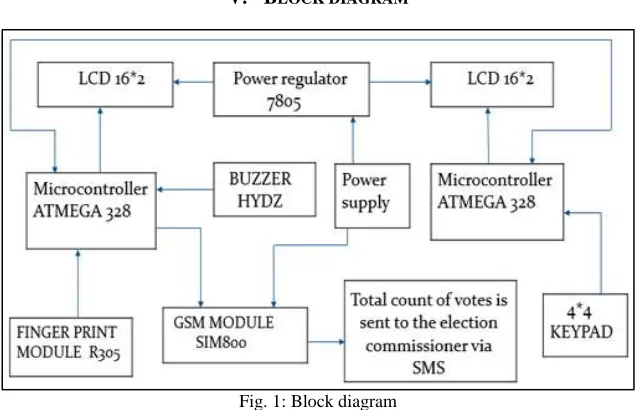
Fig. 1: Block diagram VI. HARDWARE TOOLS USED
Arduino board with Microcontroller ATmega328
It is used for the processing. It has 32KBytes of In-System Self-Programmable Flash program Memory, 1KBytes EEPROM, 2KBytes Internal SRAM, 32 x 8 General Purpose Working Registers.
Keypad
Functions as input to press the unique key and to select the party to which he votes. It is a set of buttons arranged in a block which usually bear digits and set of alphabetical letters. If it mostly contains numbers then it can also be called a numeric keypad. It has features like Ultra-thin design, Adhesive backing, excellent price/performance ratio and Easy interface to any Microcontroller and applications like Security systems, Menu selection, and Data entry for embedded systems.
16*2 LCD display
Displays results whether the user is valid or not valid to vote. It also display the name of party to which user has voted.
Fingerprint module
It is an input device that consist of flash, fingerprint sensor and processor used for finger print processing which includes two parts fingerprint enrolment and fingerprint matching when enrolling, user needs to enter the finger two times.
Power supply 7805 regulator
Used to produce 5v.
GSM modem
Used to send the total count of votes to the mobile via the SMS. GSM (Global System for Mobile) /GPRS (General Packet Radio Service) TTL -Modem is SIM900 Quad-band GSM / GPRS device, works on frequencies 850 MHz, 900 MHz, 1800 MHz and 1900MHz.
Buzzer
VII. FLOW CHART
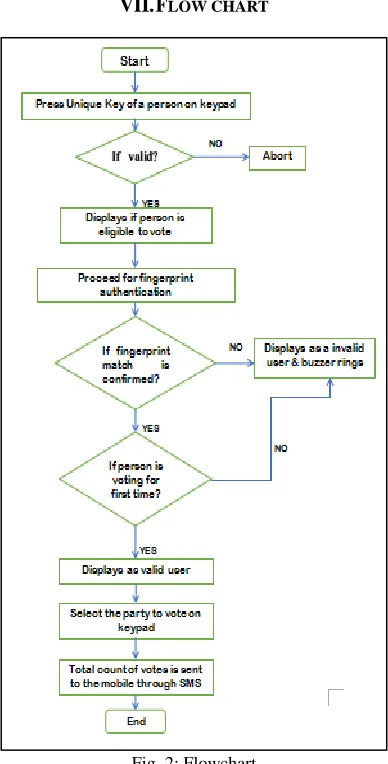
Fig. 2: Flowchart VIII. POSSIBLE OUTCOMES
Percentage of voting increases.
Complete security as there is a check on unique key along with the fingerprint recognition
Results can be announced soon as compared to present process, since election commissioner has a account of number of votes given by people to different parties.
Fig. 4: The picture describes that the first person who has voted is the valid user.
Fig. 5: This picture describes that the first person has voted for BJP X. CONCLUSION
With a government elected by its citizens and that effects every aspect of our lives from schools to health care to homeland security, voting is an important right in our society. And this paper focuses on the voting technology that provides assurance to the people who really have right to vote in the constitution and ensures secured voting method of fingerprinting as it provides double security (fingerprint authentication and unique key verification), at the same time the Election Commissioner can get first-hand information about the voting status of all the voting booths for his perusal. We are sure that above system will create revolution among the people in electoral voting system.
REFERENCES
[1] J. L. Wayman, “Fundamentals of Biometric authentication technologies” Int. J. Image Graphics, vol. 1, no. 1, pp. 93–113, 2001. [2] Ashbourn, J., Biometrics, “Advanced identity verification” springer-verlag, London, 2000.
[3] L.Alyea and Wayman, J.L., picking the Best Biometric for your applications,in national Biometric Test Center. 2000 .National Biometric Test Center: San Jose. P.269-275
[4] A paper on “Biometric voting machine”, MSRIT-Bangalore, May 2011. http://www.engineersgarage.com/contribution/Biometric- voting-machine [5] A paper on “Fingerprint based electronic voting machine”, JNTUA CE, pulivendula. Available at
http://www.scribd.com/doc/55329647/Finger-Print-Based-Electronic-Voting-Machine