R E V I E W
Open Access
The trisomy 18 syndrome
Anna Cereda
1and John C Carey
2*Abstract
The trisomy 18 syndrome, also known as Edwards syndrome, is a common chromosomal disorder due to the presence of an extra chromosome 18, either full, mosaic trisomy, or partial trisomy 18q. The condition is the second most common autosomal trisomy syndrome after trisomy 21. The live born prevalence is estimated as 1/6,000-1/8,000, but the overall prevalence is higher (1/2500-1/2600) due to the high frequency of fetal loss and pregnancy termination after prenatal diagnosis. The prevalence of trisomy 18 rises with the increasing maternal age. The recurrence risk for a family with a child with full trisomy 18 is about 1%.
Currently most cases of trisomy 18 are prenatally diagnosed, based on screening by maternal age, maternal serum marker screening, or detection of sonographic abnormalities (e.g., increased nuchal translucency thickness, growth retardation, choroid plexus cyst, overlapping of fingers, and congenital heart defects ). The recognizable syndrome pattern consists of major and minor anomalies, prenatal and postnatal growth deficiency, an increased risk of neonatal and infant mortality, and marked psychomotor and cognitive disability. Typical minor anomalies include characteristic craniofacial features, clenched fist with overriding fingers, small fingernails, underdeveloped thumbs, and short sternum. The presence of major malformations is common, and the most frequent are heart and kidney anomalies. Feeding problems occur consistently and may require enteral nutrition.
Despite the well known infant mortality, approximately 50% of babies with trisomy 18 live longer than 1 week and about 5-10% of children beyond the first year. The major causes of death include central apnea, cardiac failure due to cardiac malformations, respiratory insufficiency due to hypoventilation, aspiration, or upper airway obstruction and, likely, the combination of these and other factors (including decisions regarding aggressive care). Upper airway obstruction is likely more common than previously realized and should be investigated when full care is opted by the family and medical team.
The complexity and the severity of the clinical presentation at birth and the high neonatal and infant mortality make the perinatal and neonatal management of babies with trisomy 18 particularly challenging, controversial, and unique among multiple congenital anomaly syndromes. Health supervision should be diligent, especially in the first 12 months of life, and can require multiple pediatric and specialist evaluations.
Disease names and synonyms Trisomy 18, Edwards syndrome
Definition
The trisomy 18 syndrome, also known as Edwards syn-drome, is a common autosomal chromosomal disorder due to the presence of an extra chromosome 18. The first reported infants were described in 1960 by Edwards et al. and Smith et al. [1,2]. The syndrome pattern comprises a recognizable pattern of major and minor
anomalies, an increased risk of neonatal and infant mor-tality, and significant psychomotor and cognitive disabil-ity. The main clinical features represent the clues for the diagnosis in the perinatal period and include prenatal growth deficiency, characteristic craniofacial features, distinctive hand posture (overriding fingers, see Figure 1), nail hypoplasia, short hallux, short sternum, and major malformations (particularly involving the heart). The demonstration of an extra chromosome 18, or less com-monly a partial trisomy of the long arm of chromosome 18, on the standard G-banded karyotype allows for con-firmation of the clinical diagnosis. A small portion of patients (less than 5% in population studies cited below) have mosaicism of trisomy 18; they show an extremely variable phenotype.
* Correspondence:[email protected]
2
Division of Medical Genetics, Department of Pediatrics, University of Utah, 419 Wakara Way Suite 213, Salt Lake City, UT 84108, USA
Full list of author information is available at the end of the article
Epidemiology
Trisomy 18 is the second most common autosomal tri-somy syndrome after tritri-somy 21.
Several population studies have been performed in different countries including Australia, Europe and North America that estimate the prevalence of trisomy 18 [3-9]. On the basis of these investigations the live birth prevalence of trisomy 18 ranges from 1/3600 to 1/10,000 with the best overall estimate in liveborns as 1 in 6,000 [3,6].
It is well known that trisomy 18 pregnancies have a high risk of fetal loss and stillbirth [10,11]; furthermore, currently most diagnoses are made in the prenatal period based on screening by maternal age or maternal serum marker screening and amniocentesis, followed by pregnancy termination in a significant percentage of cases [9]. Because of this, the overall prevalence (consid-ering stillborn infants, terminated pregnancies, and live-born infants) of trisomy 18 would be expected to be higher than live birth prevalence. A seminal population study in the United Kingdom in 1996 reported an overall prevalence of 1/4272 and a liveborn prevalence of 1/8333 [4]; the overall frequency detected in Hawaii from a similar study was 1/2123 with a liveborn fre-quency of 1/7900 [5]. Recent investigations showed an increase of the overall prevalence of trisomy 18 over the last 20 years due to increased maternal age [9]; how-ever, a decrease of liveborn frequency was observed because of the increased use of prenatal diagnosis and the high rate of pregnancy termination after the prenatal diagnosis [7,9]. In these more recent studies overall prevalence was estimated as 1/2500 in United States [7] and as 1/2600 in United Kingdom [9]; liveborn preva-lence was estimated as 1/8600 in United States [7] and as 1/10,000 in United Kingdom [9].
The prevalence at birth is higher in females compared to males (F:M %, 60.4), but this discordance is not present if the sex ratio is calculated among fetuses elec-tively terminated (F:M % 48:51.) [7]. Moreover the fre-quency of fetal loss is higher for males compared to females [10,11]. Furthermore, liveborn females showed better survival compared to males [4,6].
Etiology and pathogenesis
The trisomy 18 (or Edwards syndrome) phenotype results from full, mosaic, or partial trisomy 18q [4,12-15]. Complete or full trisomy 18 is the most common form (about 94% of cases); in this situation every cell contains three entire copies of chromosome 18.
Most authorities have suggested that the extra chromosome is present because of nondisjunction. In parent-of-origin analyses the extra chromosome is most often of maternal origin, the result of an error during the segregation of chromosomes in meiosis or postzygo-tic mitosis. About 50% of the nondisjunctional errors in oogenesis occur in meiosis II, unlike other human trisomies where the malsegregation is more frequent in meiosis I [16-19]. In the minority of cases in which the extra chromosome has a paternal origin, the error is the result of a postzygotic error. The cause of non-disjunction is unknown. Recently a higher prevalence of methylene tetrahydrofolate reductase gene (MTHFR) polymorphisms in mothers of trisomy 18 fetuses com-pared with other groups was reported [20] but this result has not been replicated.
As in the other common autosomal trisomies, the fre-quency of nondisjunctional errors increases with advan-cing maternal age. Savva et al., studied the maternal age specific live birth prevalence of trisomy 18: the fre-quency is constant until age 30, then increases exponen-tially before beginning to become constant again at age 45 [21]. The observed increased overall prevalence of tri-somy 18 in the last years is likely due to changes in the maternal age distribution during this time period [9,21]. A small positive association of paternal age with trisomy 18, similar to that observed in Down syndrome, has also been observed [22].
In individuals carrying mosaic trisomy 18 (less than 5% of cases), both a complete trisomy 18 and a normal cell line exist. The phenotype is extremely variable, ran-ging from complete trisomy 18 phenotype with early mortality to apparently phenotypically normal adults, in which the mosaicism is detected after the diagnosis of complete trisomy 18 in a child [23-27]. There is no correlation between the percentage of trisomy 18 cells in either blood cells or skin fibroblasts and the severity of clinical manifestations and intellectual disabilities [24]. Tucker et al., [24] provided a comprehensive review of Figure 1A boy with full trisomy 18 in early infancy and at
all published cases of trisomy 18 mosaicism in their re-cent paper and reported on 3 new cases.
In the partial trisomy form only a segment of the chromosome 18 long arm is present in triplicate, often resulting from a balanced translocation or inversion car-ried by one parent. This type of trisomy accounts for ap-proximately 2% of cases presenting with the Edwards phenotype. The location and the extent of the triplicated segment and the possible associated deletion of genomic material due to unbalanced translocation can explain the variable phenotype associated with partial trisomy [12].
The region of long arm of chromosome 18 extending from q11.2 has been proposed as the critical region for trisomy 18 phenotype, but some controversial data have been reported [28,29]. Boghosian-Sell et al. hypothesized the presence of two critical regions along the long arm of chromosome 18: one proximal region lying within 18q12.1-18q21.2 and another one more distal lying within 18q22.33-18qter [29]. The same authors reported two patients with trisomy of 18q11.2 to terminus not showing the complete pattern of trisomy 18; the patients had better survival and growth. Therefore, some role for genes on the short arm or 18q11.1 region in the expres-sion of full phenotype cannot be excluded.
Antenatal diagnosis
Currently in the North America and Europe most cases of trisomy 18 are prenatally diagnosed, based on screen-ing by maternal age, maternal serum marker screenscreen-ing, or detection of sonographic abnormalities during the second and third trimester [9,30]. The prenatal diagnosis of trisomy 18 leads to the decision of pregnancy termin-ation in 86% of cases [9]. Knowledge of the survival where termination is not chosen is important as well, because the parents will seek this information and this knowledge can influence the management at the time of delivery and in the neonatal period [12].
First trimester non invasive screening based on mater-nal age, serum markers and sonographic “soft markers” demonstrated high sensitivity for diagnosis of trisomy 18 [31-33], and it is now being applied routinely. The levels of human chorionic gonadotropin, unconjugated estriol, and alpha-fetoprotein are significantly lower in pregnan-cies with trisomy 18 compared to normal pregnancy [31]. The most common soft sonographic markers detected in the late first/early second trimester are the increased nuchal translucency thickness and the absence or hypoplasia of the nasal bone [34-36]; the screening by assessment of nuchal fold and nasal bone identifies 66.7% of cases with trisomy 18 (and 13) [36]. By includ-ing the evaluation of reversed flow in the ductus venosus and the tricuspid valve regurgitation, the detection rate increases to 83.3% [36]. Furthermore, some structural anomalies can be detected by ultrasound screening
during the first trimester; the most common are om-phalocele (21%), abnormal posturing of the hands (6%), megacystis (4%) and abnormal four-chamber view of the heart (4%) [35]. Early-onset fetal growth retardation can be detected in 26% of cases [36], but becomes more evi-dent in the second trimester [30,37]. The detection rate of combined late first trimester screening (nuchal translucency, pregnancy-associated plasma protein and free beta-hCG) and second trimester quadruple screen-ing (serum alpha-fetoprotein, total hCG, unconjugated estriol and inhibin A) is at least 78% sensitive [32,33].
Many studies have been published in the last 15 years regarding the prenatal pattern of ultrasound findings in trisomy 18 fetuses in the second and third trimester [30,35-39]. One or more sonographic anomalies are detected in over 90% of fetuses; two or more abnormal-ities are present in 55% of cases [38]. The prenatal sono-graphic pattern of trisomy 18 is characterized by growth retardation, polyhydramnios, “strawberry-shaped” cra-nium (brachycephaly and narrow frontal cracra-nium), chor-oid plexus cyst, overlapping of hands fingers (second and fifth on third and fourth respectively), congenital heart defects, omphalocele, and single umbilical artery [30,35-39]. The prevalence of growth retardation and polyhydramnios increases with gestational age: 28% and 29% in the second trimester and 87% and 62% in the third trimester, respectively [37]. More than 30% of fetuses show hands abnormalities [39], and one third of cases have a single umbilical artery [37]. Furthermore, the mothers often noted a decrease in fetal movement compared to their normal pregnancies [37]. Choroid plexus cyst (CPC) is detected in about 50% of trisomy 18 fetuses [39]; in the most of cases (80-90%) it is asso-ciated with other sonographic anomalies [37,39], but in a small percentage of pregnancies (11% according to Cho et al. 2010) carrying trisomy 18 fetus, CPC can be the only abnormality detected at ultrasound screening. Choroid plexus cyst can be also a transitory finding in normal fetuses; it has been reported that, among fetuses that show CPC at second trimester sonographic screen-ing, only about 5% have trisomy 18 [37,40,41]. Because of these reasons, there is not a clear consensus in the medical literature on whether to offer amniocentesis after the discovery of choroid cyst, particularly when it is an isolated finding [37,42-46].
frequency of miscarriage or stillbirth is higher (up to twofold according to Niedrist et al., [47]) for males com-pared to females [10,47].
Genetic counseling
When prenatal or neonatal diagnosis of trisomy 18 is made, the counseling of the family should be realistic, but not desolate. The parents can find it difficult to accept the lack of certainty of the newborn situation, but they have to be prepared for both the probability of death and the possibility of living [48]. Because the parents have to make practical decisions concerning resuscitation, surgery and life support, all options for newborn management should be explained. The com-plex issues regarding perinatal management are covered in more detail below.
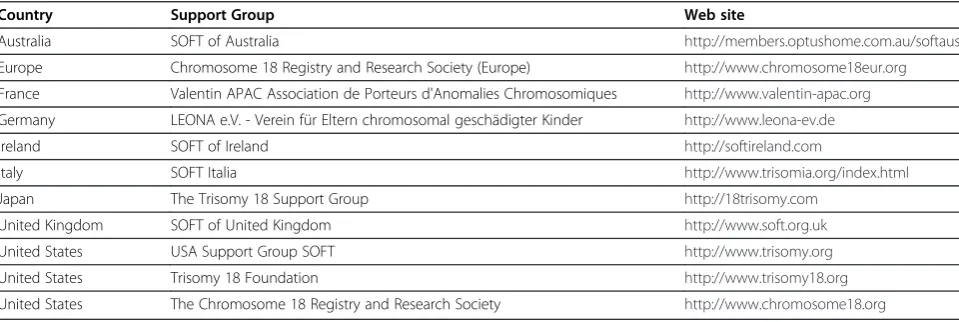
Facilitating the family getting in touch with family sup-port groups can be helpful: they can share experiences, thoughts and concerns regarding health problems of their children, and daily situations that they are coping with. Table 1 shows the known support groups in North America, Europe, Japan, and Australia.
The recurrence risk, for a family with a child with complete trisomy 18 is usually stated as 1% [12]. Paren-tal mosaicism has been reported in a few cases [24-27]. Furthermore, recurrence of different trisomies in the same family has been reported [49]. Empirically calcu-lated risks suggest that the recurrence risk seems to be less than 1%, but higher than the age-specific back-ground risk [50,51]. The recurrence risk in families with partial trisomy 18 could be higher compared with full trisomy 18, depending on the presence of a genomic rearrangement (translocation or inversion) in one of the parents.
Clinical description
The clinical pattern of trisomy 18 is characterized by prenatal growth deficiency, specific craniofacial features
and other minor anomalies, major malformations, and marked psychomotor and cognitive developmental delay. The growth delay starts in prenatal period and con-tinues after the birth, and most of the time is asso-ciated with feeding problems that may require enteral nutrition. Specific growth charts for trisomy 18 are available [49] and are published on the SOFT US and UK web pages (see Table 1) for printing and placement in the child’s chart. Postnatal onset microcephaly is usu-ally present.
Typical craniofacial features include dolichocephaly, short palpebral fissures, micrognathia, (see Figure 1) external anomalies of the ears, and redundant skin at the back of the neck.
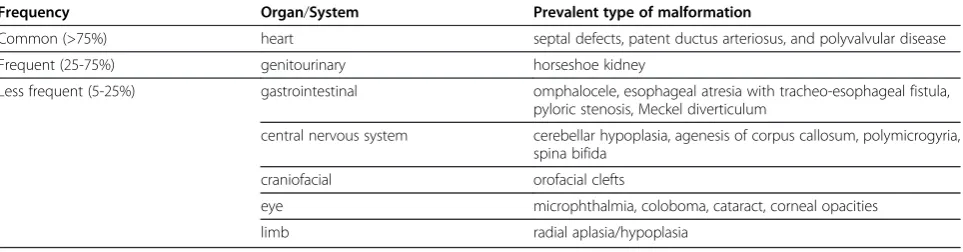
Other characteristic clinical findings are the clenched fist with overriding fingers (index finger overlapping the third and 5th finger overlapping the 4th–see Figure 1), which is particularly distinctive, small fingernails, under-developed thumbs, short sternum, and club feet. Pres-ence of major malformations is common, and any organ and system can be affected. Structural heart defects occur in over 90% of infants. Table 2 summarizes the most common major (medically significant) malforma-tions detected in trisomy18 from various sources.
Differential diagnosis
The clinical pattern of trisomy 18 is quite well-defined, and it is rarely misdiagnosed [12]. There are some over-lapping features with Pena-Shokeir syndrome type 1 or syndromes with fetal akinesia sequence (because of poly-hydramnios and joint contractures including overriding fingers), with distal arthrogryposis type 1 (because of the similar finger positioning) and with CHARGE syn-drome (because of the overlapping of major malfor-mations). The not well characterized and co-called condition known as pseudotrisomy 18 syndrome [53] probably belongs to the group of disorders with fetal akinesia sequence.
Table 1 International parent support groups for trisomy 18
Country Support Group Web site
Australia SOFT of Australia http://members.optushome.com.au/softaus
Europe Chromosome 18 Registry and Research Society (Europe) http://www.chromosome18eur.org
France Valentin APAC Association de Porteurs d'Anomalies Chromosomiques http://www.valentin-apac.org
Germany LEONA e.V. - Verein für Eltern chromosomal geschädigter Kinder http://www.leona-ev.de
Ireland SOFT of Ireland http://softireland.com
Italy SOFT Italia http://www.trisomia.org/index.html
Japan The Trisomy 18 Support Group http://18trisomy.com
United Kingdom SOFT of United Kingdom http://www.soft.org.uk
United States USA Support Group SOFT http://www.trisomy.org
United States Trisomy 18 Foundation http://www.trisomy18.org
Natural history/prognosis
Survival after birth and neonatal management
Perinatal and neonatal management of fetuses and new-born diagnosed with trisomy 18 is multifaceted issue for a variety of reasons: the complexity and, most of the time, the severity of the clinical presentation at birth; the need of parents and care providers to urgently make decisions in care of the baby; the inevitable ethical impli-cations due to the well known high neonatal and infant mortality, and the significant developmental disability in the surviving children that characterize this unique (together with trisomy 13) condition.
There is a high percentage of fetuses dying during labor (38.5%), and the preterm frequency (35%) is higher compared to general population [30]. An increased inci-dence of cesareans has been reported [4,54], even if in the previous obstetric literature avoidance of delivery by cesarean was recommended [55,56].
The first study about postnatal survival of children with trisomy 18 was published in 1967: Weber reported a mean survival of 70 days [57]. Most of the ensuing population studies showed a shorter survival, likely be-cause, with prenatal and neonatal diagnosis, it is now possible to diagnose many cases, which would have died prior to detection in the past [3].
Most recent studies report a median survival of 3-14.5 days, a percentage of survival at 24 hours of 60%-75%, at 1 week of 40%-60%, at 1 month of 22%-44%, at 6 months of 9%-18%, and after 1 year of 5%-10% [3,4,6,12,13,15,49,54,58-62]. To summarize, approximately 50% of babies with trisomy 18 live longer than 1 week, and 5-10% of children survive beyond the first year. Because these figures document that 1 in 10 to 1 in 20 babies live to their first birthday, the commonly used term, “lethal abnormality”, is inaccurate, misleading, and inappropriate [12].
The major causes of death are sudden death due to central apnea, cardiac failure due to cardiac mal-forxmations and respiratory insufficiency due to hypoventilation, aspiration, upper airway obstruction or, likely, the combination of these and other factors
[4,12,13,15,49,54,58,59,63-65]. A recent study reported a >100 times higher risk of mortality in neonatal period and in the first years of life for children with trisomy 18 compared to infants born without birth defects [8].
Upper airway obstruction is likely more common than previously realized and should be investigated when full care is opted by the family and medical team. The factors underlying the potential of survival are not known; the presence of heart defects does not seem to affect long-term survival [6]. However a recent trend toward consideration of performing cardiac surgery may alter that premise as surgery may play a role in pre-venting pulmonary hypertension, a point not investi-gated in determining the notion that heart defects do not affect survival [6]. A longer survival for females compared to males has been reported, as in the prenatal period [4,6].
Because of the elevated risk of mortality in the first month of life and the presence of significant develop-mental disability in the surviving children, historically there has been a consensus among care providers that trisomy 18 be considered a condition for which non intervention in the newborn was indicated [65,66]. Nevertheless, the most recent American Academy of Pediatrics neonatal resuscitation guidelines omit trisomy 18 from the list of examples of conditions for which resuscitation is not indicated [67]. A recent survey of the opinion of American neonatologists on newborn care of trisomy 18 infants reported that 44% would intervene mostly because of parental wishes to support the baby [68].
A recent Japanese study documented the survival rate in a group of trisomy 18 newborn to which intensive care were offered: the median survival time (152.5 days) and survival rate at 12 months [25%] were higher com-pared to those reported in the previous studies, but the survival over 2 years (4%) was similar to the 5-10% usu-ally reported as 1-year survival rate [54]. To our know-ledge this is the only study that addresses the question of infant survival if full intervention (short of cardiac surgery) is offered.
Table 2 Common major structural malformations in the trisomy 18 syndrome
Frequency Organ/System Prevalent type of malformation
Common (>75%) heart septal defects, patent ductus arteriosus, and polyvalvular disease
Frequent (25-75%) genitourinary horseshoe kidney
Less frequent (5-25%) gastrointestinal omphalocele, esophageal atresia with tracheo-esophageal fistula, pyloric stenosis, Meckel diverticulum
central nervous system cerebellar hypoplasia, agenesis of corpus callosum, polymicrogyria, spina bifida
craniofacial orofacial clefts
eye microphthalmia, coloboma, cataract, corneal opacities
limb radial aplasia/hypoplasia
In this study the authors also investigated the patho-physiology to death in patients who had intensive treat-ment; they distinguish between underlying factors associated with death and final modes of death. The common underlying factors associated with death were congenital heart defects and heart failure, and pul-monary hypertension. On the other hand, the final modes of death were sudden cardiac or cardiopulmonary arrest and events related to progressive pulmonary hypertension [54]. From these observations, it becomes clear that apnea and withdrawal of treatment could be considered the major cause of death when a patient with trisomy 18 was managed with purely comfort care. When a patient with trisomy 18 has intensive treatment, the common causes of death are altered, and survival does increase.
The senior author had pointed out in an Editorial [69] in 2006 that there existed a dire need to have a dialogue regarding the ethical issues surrounding the manage-ment and care of infants and children with trisomy 18. Such a dialogue seems to be occurring in recent years: the publication of the McGraw and Perlman paper [68] mentioned above and the Ethics Rounds, a Special Art-icle in Pediatrics in 2011 [70], both discuss the key themes and controversies that needed current discus-sion. The former paper indicated that the majority of neonatologists polled in the study would not resuscitate a newborn in the delivery room who had trisomy 18 and a heart defect. The authors stated a concern about a trend away from the“best interest of the child”standard and towards parental opinion. In the more recent Special Article two neonatologists and a parent discuss their views on the management of a baby with trisomy 18 and a heart defect surrounding the decision to have cardiac surgery [70]. While the doctors and the parent disagreed on many points, one of the doctors and the Editor state that “deference to the parents” is generally the best course (unless the child is “suffering” from the ongoing treatment) in situations of unclear outcome. These papers and the published responses to them in Pediatricssuggest that a dialogue is in fact now occurring. Another recently published paper by Wilfond and Carey [71], a case-based discussion of the issues and themes involved in the management of trisomy 18 (and related conditions), also illustrates this point of an emerging dia-logue. The reader is referred to these papers for further discussion of the relevant issues.
One of the key themes at the center of the controversy is the question of so-called “quality of life” of children and their families when a child has trisomy 18. We will discuss this issue in the Unresolved Questions section below as little data exist in the scientific literature on this topic.
Growth and feeding
Prenatal growth retardation is one of the most frequent prenatal finding in trisomy 18 [30,35-39]; the mean birth weight is 1700-1800 g at a mean gestational age of 37 weeks [4,54]. Weight and height continue to be below the third centile in the postnatal period; growth charts specific for the condition has been published [49] and are available on the SOFT web pages for the both the US and UK support groups (see Table 1). Head circum-ference also tends to be below the third centile [12].
Most of the children have feeding difficulties that often require tube feeding in the neonatal period or placement of gastrostomy in the older children (at average age of 8 months) [49]. Both sucking and swallowing problems can be present. Usually the skill of oral feeding if achieved is achieved in infancy, and not later [12,49]. If it is unclear if an infant can or cannot protect her airway, a swallow study can be performed to determine the safety of oral feedings.
Gastroesophageal reflux is a significant medical prob-lem because of both its high prevalence and its potential consequences, like irritability, recurrent pneu-monia and aspiration [12]. Aspiration due to gastroeso-phageal reflux or during feeding is included among the causes of early death [4,12,13,49,54,58,59,61-63].
Gastrointestinal malformations, such as esophageal atresia with tracheo-esophageal fistula, occur with increased frequency but are not a common feature in tri-somy 18; pyloric stenosis has been reported and should be considered in the older infant with vomiting [12]. Oc-casionally the newborn with trisomy 18 can have orofa-cial clefts that may contribute to feeding problems [12].
Cardiovascular
Larger series of infants with the syndrome show that 80%-100% of patients with trisomy 18 have congenital structural heart defects; the most common cardiac anomalies are ventricular and atrial septal defects, patent ductus arteriosus and polyvalvular disease [12,72-74].
The majority of the malformations are unlikely to pro-duce neonatal death; this is one of the reasons why the cardiac defect is usually regarded as not causing the early infant mortality. A more complex malformation (double-outlet right ventricle, endocardial cushion de-fect, or left-sided obstructive lesion) is present in about 10% of cases [12], and then the cardiac defect could play a role in early mortality.
considered not likely to improve the survival of trisomy 18 children. However, in other studies heart failure and early development of pulmonary hypertension induced by heart defects were found to play a significant role in early death [69,74-76].
Traditionally, heart defects in trisomy 18 patients have been managed conservatively. Recent studies, however, showed that most patients (82-91%) with trisomy 18 can survive palliative and corrective heart surgeries, suggest-ing that heart surgery can be considered even in patients with trisomy 18 [76-79] (see “Health supervision and management of medical problems”for more details).
Respiratory
Respiratory problems are one of the most common causes of death in trisomy 18 [4,12,49,54,58,59,61,62]. Pure respiratory problems, such as upper airway ob-struction (in some case due to a laryngomalacia or tra-cheobronchomalacia) and central apnea, can act together with other problems of different origin, like early–onset pulmonary hypertension, feeding difficulties, recurrent aspirations and gastroesophageal reflux, lead-ing to a severe respiratory symptoms [3,4]. Obstructive sleep apnea may be a more common finding in older infants [12] than realized.
Ophthalmologic
Many ocular findings have been reported in patients with trisomy 18, although major ocular defects are present in a small group of children (less than 10%) [80]. Occasionally, children with trisomy 18 can show anom-alies such as a cataract or corneal opacities [81,82]. Short palpebral fissures, visual acuity abnormalities, and photophobia are common findings and underscore the need for ophthalmology assessment in older infants [12]. Photophobia is very common in children with trisomy 18 and requires sunglasses when going outside the home; it likely represents one reason why older infants experience unexplained irritability.
Ears and hearing
Structural ear anomalies, such as meatal atresia and microtia, are occasionally present. The features of exter-nal ear are characteristic: the ear is small with a small lobule, the helix is unfolded, simple and sometimes attached to the scalp (cryptotia) [12]. The ear canal is usually small making audiology screening sometimes challenging. A wide spectrum of middle and internal ear abnormalities has been described. Moderate to severe sensorineural hearing loss can also be present [12].
Musculoskeletal
Major malformations of limb occur in 5-10% of patients, including radial aplasia and other preaxial limb defects.
About 50% of babies show positional foot deformities, both talipes equinovarus and calcaneovalgus. In addition, contractures of other joints can be present explaining why trisomy 18 is sometimes the basis for a neonate la-beled artrogryposis. Overriding fingers (second and fifth on third and fourth respectively-see Figure 1) represent one of the important diagnostic clues, often detected sonographically in the prenatal period. Scoliosis is com-mon in older children; usually it is not related to verte-bral structural abnormalities and may progress between 5 and 10 years of age [12].
Genitourinary
Horseshoe kidney is common finding in trisomy 18 (about two-thirds of patients). An increased frequency of urinary tract infections has been observed, perhaps due to structural defects [31]. Otherwise, renal failure is uncommon [12].
Neoplasia
Trisomy 18 patients have an increased risk to develop some neoplasia, including Wilms tumor and hepatoblas-toma [83]. At least 8 cases of Wilms tumor in trisomy 18 children have been reported in the medical literature [83-89]. Nephroblastomatosis, the presence of multiple embryonic rests of tissue within the kidney that may give rise to Wilms tumor, has been detected at autopsy in infants with trisomy 18 who did not die from a Wilms tumor [88-90].
Despite this biological origin, the average age of tumor development is 5 years, ranging from 12 months to 13 years, later than it occurs in general population, suggest-ing a different biological basis for the tumor in trisomy 18 children [12]. The prognosis is variable.
A child with trisomy 18 has an estimated risk to develop Wilms tumor of about 1% [86]. Because of this high risk, periodic screening with abdominal ultrasound is recommended [48] (see “Health supervision and management of medical problems”for more details).
Seven cases of association between trisomy 18 and hepatoblastoma have been reported [91-97]. The age of diagnosis ranged from 4 months to 3 years. The prog-nosis was variable: surgical treatment was performed in three patients, two of them were alive without evidence of recurrence at 3 and 4 years of age [93-95], the other died from progression of the tumor [94]. Among the untreated patients, two died of cardiac failure (in one of these hepatoblastoma was an incidental finding at the autopsy) [92-96] and two from progression of the tumor [93,96].
Neurologic
common are cerebellar hypoplasia, agenesis of corpus callosum, microgyria, hydrocephalus and myelomenin-gocele, present in about 5% of infants [12,75]. Functional neurologic features include hypotonia in infancy, hyper-tonia in older children, central apnea and seizures, occurring in 25-50% of children but usually easy to con-trol with pharmacological therapy [12]. Central apnea is one of the principal causes of early death [3,4]. A recent paper described an infant with trisomy 18 and apneic episodes representing complex partial seizures success-fully treated with zonisamide [98].
Developmental and behavior
In older children with trisomy 18 significant develop-mental delay is always present ranging from a marked to profound degree of psychomotor and intellectual disabil-ity. There is not a regression, but a stable status with slow gaining of some skills. In the most cases expressive language and independently walk are not achieved, but some older children can use a walker [99]. There is also one report of a 4-year-old child with full trisomy 18 who could walk independently [100]. While developmental age in older children is 6-8 months overall, most have some skills of older children, including sleeping inde-pendently, self-feeding, imitating, using a sign board, fol-lowing simple command, and understanding cause and effect [99]. All children acquire abilities such as recog-nizing their family and smiling appropriately [99]. (See Figures 2 and 3). Recognizing the significant delays, Baty et al., state in their article describing developmental skills in older children with trisomy 18 (and 13)“ Older children could use a walker, understand words and phrases, use a few words or signs, crawl, follow simple commands, recognize and interact with others and play independently” [99]. Thus children with trisomy 18, while showing marked developmental and cognitive dis-ability have many more abilities than usually perceived in the stereotype and prior portrayals of the condition (Figures 2 and 3).
As mentioned above (see“Etiology and Pathogenesis”) among patients with mosaic trisomy 18 the phenotype is extremely variable, and there is no correlation between the percentage of trisomy 18 cells in either blood cells or skin fibroblasts and the severity of intellectual disabil-ities [24].
Health supervision and management
After the discharge from the hospital, follow-up visits for health supervision should be regular and often in the first weeks and months of life; referral to the appropriate pediatric subspecialists can occur. In the long-survival children, the frequency of health supervision visits may decrease as they advance, depending on the specific needs of each child.
Generally, children with trisomy 18 should receive the same routine care, e.g., anticipatory guidance and immu-nizations that all children receive. In regards to adminis-tering immunizations, the weight and overall status of an infant, in particular the presence of a seizure disorder, should be taken into consideration. Decisions surround-ing the treatment of specific problems should be decided upon with the parents and medical team according to the degree of the involvement and what is in the best interest of the child [49].
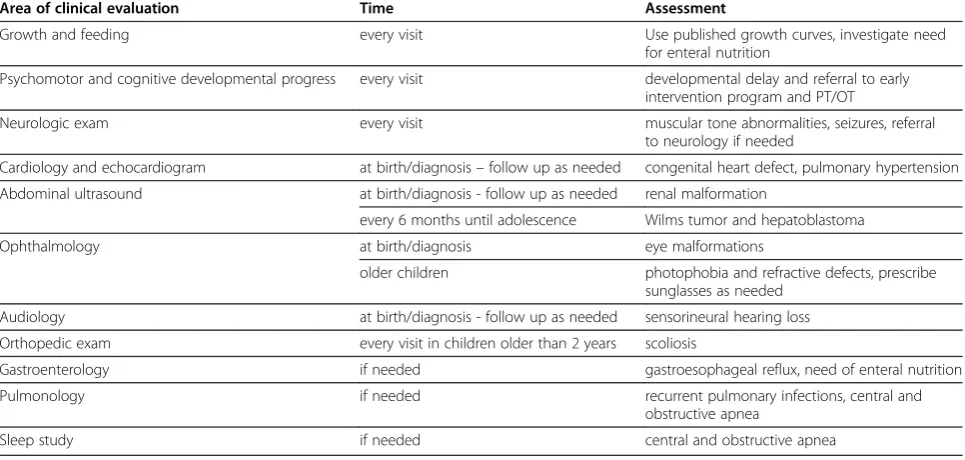
Table 3 summarizes the schedule of clinical and laboratory/referrals at the time of birth or diagnosis and during the follow up periods. These are modeled after other recent guidelines for the routine care of children with rare diseases.
Growth and feeding
Growth parameters (weight, length and head circumfer-ence) should be checked during each evaluation, more frequently in the first weeks and months of life, and plotted on the specific growth charts [49].
Figure 2A young lady with full trisomy 18 in early childhood and in adolescence; she lived to 19 years of age and achieved multiple milestones, including sitting and walking in a walker.
Assessment of the sucking or swallowing problems with a radiographic swallow study can be useful if needed to consider the ability of the child to protect the airway; use of feeding tube in neonatal period or placement of gastrostomy can be considered to assure appropriate and safe feeding. Referral to a feeding or dysphagia team is an option.
Gastroesophageal reflux should be considered as a potential factor in feeding problems. If needed, standard medical therapy may be started. If medical treatment is not successful, surgery can be considered [12].
Cardiovascular
At the time of diagnosis or in the newborn period car-diac evaluation including echocardiogram should be performed. Traditionally, heart defects in trisomy 18 patients have been managed conservatively. Since 1990s few reports of cardiac surgery in this population has been published [49,58], but recently four studies on larger series of patients appeared in the medical litera-ture [76-79]. These investigations showed that most patients (82-91%) with trisomy 18 can survive palliative and corrective heart surgeries and can be discharged from the hospital [76,77]. In one study from Japan the median postoperative survival reported was 179 days, and the median survival for this group of patients was 324 days [76]. In the same study, the most frequent cause of death was infections; otherwise heart failure was the cause of death in only one patient, suggesting that cardiac surgery is effective in preventing congenital heart defect-related death [76]. Therefore, the authors
concluded that intensive care, including optional cardiac surgery, in selected patients with trisomy 18 is ethically acceptable [79].
In a recent investigation Yamagishi et al., [78] suggests that surgery should be considered in trisomy 18 infants because it may improve life expectancy, facilitate dis-charge from the hospital, and improve quality of life of both patient and family. The author qualifies the recom-mendation in stating that the risk of surgery in patients with trisomy 18 is higher than in patients without tri-somy 18 or in patients with tritri-somy 21, and acknowl-edges that it is still unknown whether the cardiac surgery improves the long-term prognosis of trisomy 18 children.
Recently Maeda et al. reported the results of a nation-wide questionnaire-based study made by the Japanese Society of Pediatric Cardiology and Cardiovascular Sur-gery [79]. They collected and evaluated clinical data from 134 patients with trisomy 18: 94% of patients had congenital heart defects, the most frequent one was ventricular septal defect (59%) and 52% of patients developed pulmonary hypertension. Twenty-five percent of patients with congenital heart defects underwent cardiac surgery, and 56% of these patients have survived beyond postoperative period. In most patients pallia-tive surgery was performed, but 19% of children under-went intracardiac repair for ventricular septal defect. Operated patients survived longer than those who did not have surgery.
The severity of cardiac defect and the indications for pharmacological or surgical treatment differ among Table 3 Guidelines for routine evaluation in children with trisomy 18 at time of diagnosis and during follow up
Area of clinical evaluation Time Assessment
Growth and feeding every visit Use published growth curves, investigate need
for enteral nutrition
Psychomotor and cognitive developmental progress every visit developmental delay and referral to early intervention program and PT/OT
Neurologic exam every visit muscular tone abnormalities, seizures, referral
to neurology if needed
Cardiology and echocardiogram at birth/diagnosis–follow up as needed congenital heart defect, pulmonary hypertension Abdominal ultrasound at birth/diagnosis - follow up as needed renal malformation
every 6 months until adolescence Wilms tumor and hepatoblastoma
Ophthalmology at birth/diagnosis eye malformations
older children photophobia and refractive defects, prescribe sunglasses as needed
Audiology at birth/diagnosis - follow up as needed sensorineural hearing loss
Orthopedic exam every visit in children older than 2 years scoliosis
Gastroenterology if needed gastroesophageal reflux, need of enteral nutrition
Pulmonology if needed recurrent pulmonary infections, central and
obstructive apnea
Sleep study if needed central and obstructive apnea
patients with trisomy 18. Therefore, individual evalu-ation considering the overall health state of the infant is needed to determine optimal treatment [78].
These above stated approaches and views that lead to the option of cardiac surgery are controversial as reflected in the paper cited above by Janvier et al. [70] and in the more recently comprehensive review of the topic by Merritt et al. [101]. In this latter article the authors summarize much of the previous literature on the ethical and legal aspects of care and recommend a palliative care model in the care of infants with trisomy 18 (and trisomy 13). We will discuss this theme more below in the section on Unresolved Questions.
Respiratory
Evaluation by a pulmonologist can be performed if respiratory problems become important, especially in the infant where it is difficult to sort out the various fac-tors that might be playing a role, i.e., upper airway obstruction, pulmonary hypertension and central apnea. Evaluations do not differ from those in other children with similar symptoms. Sleep study can be useful to detect the severity of sleep apnea problems. Decisions about home monitoring and oxygen therapy should be made with parents on an individual basis [12].
In recent years there appears to be an increase in therapeutic procedures including tracheostomy place-ment in children with trisomy 18 [102] (see Figure 1). Also of note the web page of the Support Organization of Trisomy 18, 13, and Related Disorders, maintains and updates a registry of surgical procedures (including heart and tracheostomies) documented in children with tri-somy 18 (www.tritri-somy.org). As in all decision-making in the care of infants with trisomy 18, parents and physi-cians make these choices when the intervention is in the best interest of the child.
Administration of palivizumab for the prevention of RSV lower respiratory tract disease should be considered in infants with trisomy 18 even those without congenital heart defects.
Ophthalmologic
Ophthalmologic evaluation is recommended to detect common structural abnormalities and, in older children, visual acuity defects [12]. When needed, treatment of eye defects is the same as in other children. In older infants with photophobia sunglasses are usually helpful.
Ears and hearing
Audiological evaluation is recommended in all infants; if sensorineural hearing loss is detected, the use of hearing aids can be offered and attempted [12].
Musculoskeletal
In children older than 2 years, clinical evaluation of the spine should be performed at each health supervision visit, followed by spine X-ray and specialist evaluation if scoliosis is clinically suspected. Sometimes, in older chil-dren, surgery for severe scoliosis should be considered because of consequent restrictive lung disease.
The decision about treatment of clubfoot in infants (with cast or surgery) is complex, because only a small percentage of children with trisomy 18 can walk assisted or independently.
Genitourinary
Abdominal ultrasound screening is recommended in children with trisomy 18.
If renal abnormalities are detected, follow up for urinary infection and renal failure by periodic blood and urine analysis should be performed. The treatment of urinary infections does not differ from that in any other child.
Neoplasia
The high incidence of intra-abdominal tumors, particu-larly Wilms tumor and hepatoblastoma, in trisomy 18 children justifies the recommendation of abdominal sonographic screening in these patients. There is no established timing for the screening, but it may be started after 6 months of life with a screening every 6 months and continued into adolescence because one of the cases of Wilms tumor reported developed in a 13-year-old female [12,87].
Neurologic
Neurological evaluation is recommended in all trisomy 18 patients. Usually they need physical therapy for tone muscle abnormalities. Management of epilepsy is similar to that in other children; seizures are generally well con-trolled by standard pharmacological therapy.
Developmental and behavior
At each health supervision visits assessment of develop-mental progression through standard developdevelop-mental evaluation is mandatory, and early referral to interven-tion programs and physical therapy is recommended.
Overall care and ongoing support
the Medical Home for the children. Additionally referral to a palliative care team can aid in the needed on-going support and be a good resource for the family and clinician.
Unresolved questions
As mentioned above the most clearly unresolved issue is the controversy surrounding the option of aggressive respiratory or surgical treatment of infants with trisomy 18. In this concluding section we will try to provide some perspective on this highly complex topic.
Because of the high neonatal and infant mortality and because of the issue usually described as the quality of life in children with the syndrome, many practitioners in the US and Europe have argued for a noninterventionist approach with accompanying comfort care (sometimes called custodial) and currently with the guidance of a palliative care team [101]. This view was articulated by Bos et al and Paris et al. [65,66] and discussed in detail most recently by Janvier et al. [70] and Merritt et al. [101] as mentioned above. The conventional view at least among US neonatologists is reflected in the survey study by McGraw and and Perlman where 55% of the physicians polled stated that they would not resuscitate a newborn in the delivery room known to have trisomy 18 and a ventricular septal defect [68]. The Ethics Rounds paper by Janvier et al. [70] comprehensively summarizes all of the themes that emerge in any discus-sion of care in a baby with trisomy 18. These themes include the following: the best interest of the child standard, parent autonomy, allocation of resources, qual-ity of life of children with trisomy 18, and the potential pain and suffering experienced if treatment occurs for the child. In the recent paper by Merritt et al. [101], the authors provide an even more referenced review of the important themes of the topic. These authors present a list of questions to consider in the setting of a prenatal and postnatal diagnosis of trisomy 18 (and 13). They close their paper with a poignant assertion, “We assert that transforming hope for cure to hope for the child and the family to be relieved from suffering, and to experience love and care in their infant’s lifetime, should be the primary goal.” The authors could not agree more. However, Merritt et al. consistently use the descriptor “lethal” throughout the paper. They, like the authors of many of their cited papers, perceive trisomy 18 as“ le-thal”when in fact at least 1 in 20 infants survive the first year of life even with modern day approaches, which tend to be comfort care and non-intervention [71].
In an Invited Comment Kosho [103] reflected on the varied views in Japan on the care of infants with trisomy 18. This author summarized a series of guidelines for parents and providers in determining choices around the medical care of serious newborn conditions of which
trisomy 18 represents the prototype. These guidelines along with the tables published in the Merritt et al. paper [101] go a long way in initiating needed dialogue and guidelines on this theme.
What is missing in both the Janvier et al. Ethics Rounds [70] and in the Merritt et al. treatise [101] are two themes: 1. clarification of 5-8% infant survival, (which is clearly documented in the figures from mul-tiple population studies cited in the this paper), and 2. the complete picture of quality of life, which is known only from perusal of the parents support group websites [see Table 2, SOFT US and UK], the papers by Baty et al., [49,101], and the recent article by Janvier et al. where the authors report parents’positive experiences in rearing a child with trisomy 18 (and 13) [104].
Let us reiterate these themes: 1. As indicated 5-8% of infants with trisomy 18 without special care live to their first birthday; thus as pointed out by Wilfond and the se-nior author (JCC),“lethal”is a misplaced and misleading description [70]; 2. Parents and families of children with trisomy 18 cope well, appreciate a unique quality of life in their children, value their children deeply, and want to be a part of the decisions made around care. In a study of a web-based survey Janvier et al. documented this experience in over 300 families coping with the challenges of parenting children with trisomy 18 inter-nationally [105]. Fenton [105] also related his experience as a palliative care specialist and expanded the tradition-ally narrowed view of quality of life in children and their parents with trisomy 18 (and 13). Bruns [106] articulated these themes in a recent article that reports on parent-reported data.
There is no simple solution to this dilemma and con-troversy. Certainly more qualitative and quantitative data on the experience of families are needed. Their voice while reflecting one aspect of the whole portrait -is crucial and vital. Secondly, international consensus on guidelines for care that includes all of the specialties involved in the care of fetuses, newborns, and older chil-dren with trisomy 18 is required. (The authors are cur-rently organizing such a consensus group). Thirdly, as suggested by Wilfond and Carey [73], avoidance of the use of the term “lethal.” Continuation of the now ongoing dialogue on this topic by pediatricians, geneti-cists, bioethigeneti-cists, families, and the appropriate care spe-cialists is mandatory and welcomed. In a recent opinion piece one of us (JCC) reviewed this emerging dialogue surrounding treatment issues in trisomy 18 (and 13); the reader is referred to that paper for additional discussion of the themes and controversies [107].
Competing interest
Authors' contributions
The authors contributed equally to the preparation of this paper. Both authors read and approved the final manuscript.
Acknowledgments
We are very grateful to all members but especially the parents of the USA Support Group SOFT for their irreplaceable support and to the Mariani Foundation for supporting the activity of the Ambulatorio Genetica Clinica, Clinica Pediatrica, Università di Milano Bicocca, Fondazione MBBM, A.O. S. Gerardo, Monza, Italy.
Written informed consent was obtained from the patients’parents for publication of these reports and any accompanying images.
Author details
1Ambulatorio Genetica Clinica Pediatrica, Clinica Pediatrica Universita Milano
Bicocca, Fondazione MBBM A.O, S, Gerardo Monza, Italy.2Division of Medical Genetics, Department of Pediatrics, University of Utah, 419 Wakara Way Suite 213, Salt Lake City, UT 84108, USA.
Received: 4 April 2012 Accepted: 4 September 2012 Published: 23 October 2012
References
1. Edwards JH, Harnden DG, Cameron AH, Crosse VM, Wolff OH:A new trisomic syndrome.Lancet1960,1:787–789.
2. Smith DW, Patau K, Therman E, Inhorn SL:A new autosomal trisomy syndrome: multiple congenital anomalies caused by an extra chromosome.J Pediatr1960,57:338–345.
3. Root S, Carey JC:Survival in trisomy 18.Am J Med Genet1994,49:170–174. 4. Embleton ND, Wyllie JP, Wright MJ, Burn J, Hunter S:Natural history of
trisomy 18.Arch Dis Child1996,75:38–41.
5. Forrester MB, Merz RD:Trisomies 13 and 18: prenatal diagnosis and epidemiologic studies in Hawaii, 1986-1997.Genet Test1999,3:335–340. 6. Rasmussen SA, Wong L, Yang Q, May K, Friedman JM:Population-based
analyses of mortality in trisomy 13 and trisomy 18.Pediatrics2003, 111:777–784.
7. Crider KS, Olney RS, Cragan JD:Trisomies 13 and 18: population prevalences, characteristics, and prenatal diagnosis, metropolitan Atlanta, 1994-2003.Am J Med Genet2008,146A:820–826.
8. Parker SE, Mai CT, Canfield MA, Rickard R, Wang Y, Meyer RE, Anderson P, Mason CA, Collins JS, Kirby RS, Correa A:National birth defects prevention network. Updated national birth prevalence estimates for selected birth defects in the United States, 2004-2006.Birth Defects Res A Clin Mol Teratol
2010,88:1008–1016.
9. Irving C, Richmond S, Wren C, Longster C, Embleton ND:Changes in fetal prevalence and outcome for trisomies 13 and 18: a population-based study over 23 years.J Matern Fetal Neonatal Med2011,24:137–141. 10. Morris JK, Savva GM:The risk of fetal loss following a prenatal diagnosis
of trisomy 13 or trisomy 18.Am J Med Genet2008,146A:827–832. 11. Won RH, Currier RJ, Lorey F, Towner DR:The timing of demise in fetuses
with trisomy 21 and trisomy 18.Prenat Diagn2005,25:608–611. 12. Carey JC:Trisomy 18 and trisomy 13 syndromes. InManagement of
genetic syndromes. 3rd edition. Edited by Cassidy SB, Allanson JE. New York: John Wiley & Sons; 2010:807–823.
13. Carter PE, Pearn JH, Bell J, Martin N, Anderson NG:Survival in trisomy 18.
Clin Genet1985,27:59–61.
14. Young ID, Cook JP, Mehta L:Changing demography of trisomy 18.Arch Dis Child1986,61:1035–1936.
15. Goldstein H, Nielsen KG:Rates and survival of individuals with trisomy 18 and 13.Clin Genet1988,34:366–372.
16. Kupke KG, Mueller U:Parental origin of the extra chromosome in trisomy 18.Am J Hum Genet1989,45:599–605.
17. Fisher JM, Harvey JF, Morton NE, Jacobs PA:Trisomy 18: studies of the parent and cell division of origin and the effect of aberrant recombination on nondisjunction.Am J Hum Genet1995, 56:669–675.
18. Eggermann T, Nothem MM, Eiben B, Hofmann JD, Hinkel K, Fimmers R, Schwanitz G:Trisomy of human chromosome 18: molecular studies on parental origin and cell stage of nondisjunction.Hum Genet1996, 97:218–223.
19. Bugge M, Collins A, Petersen MB, Fisher J, Brandt C, Hertz JM, Tranebjaerg L, DeLozier-Blanchet C, Nicolaides P, Brondum-Nielsen K, Morton N, Mikkelsen M:Non-disjunction of chromosome 18.Hum Mol Genet1998, 7:661–669.
20. Hassold TJ, Burrage LC, Chan ER, Judis LM, Schwartz S, James SJ, Jacobs PA, Thomas NS:Maternal folate polymorphisms and the etiology of human nondisjunction.Am J Hum Genet2001,69:434–439.
21. Savva GM, Walker K, Morris JK:The maternal age-specific live birth prevalence of trisomies 13 and 18 compared to trisomy 21 (down syndrome).Prenat Diagn2010,30:57–64.
22. De Souza E, Morris JK, EUROCAT Working Group:Case–control analysis of paternal age and trisomic anomalies.Arch Dis Child2010,95:893–897. 23. Bettio D, Levi Setti P, Bianchi P, Grazioli V:Trisomy 18 mosaicism in a
woman with normal intelligence.Am J Med Genet2003,120A:303–304. 24. Tucker ME, Garringer HJ, Weaver DD:Phenotypic spectrum of mosaic
trisomy 18: two new patients, review of the literature and counseling issues.Am J Med Genet2007,143A:505–517.
25. Beratis NG, Hsu LY, Kutinsky E, Hirschhorn K:Stability of trisomic [47, 18þ] cells in long-term mosaic skin fibroblast culture.Can J Genet Cytol1972, 15:869–870.
26. Gersdorf E, Utermann B, Utermann G:Trisomy 18 mosaicism in an adult woman with normal intelligence and history of miscarriage.Hum Genet
1990,84:298–299.
27. Ukita M, Hasegawa M, Nakahori T:Trisomy 18 mosaicism in a woman with normal intelligence, pigmentary dysplasia, and an 18 trisomic daughter.
Am J Med Genet1997,68:240–241.
28. Wilson GN:Karyotype/phenotype correlation: prospects and problems illustrated by trisomy 18. InThe Phenotypic Mapping of Down Syndrome and Other Aneuploid Conditions. New York: Wiley-Liss; 1993:157–173. 29. Boghosian-Sell L, Mewar R, Harrison W, Shapiro RM, Zackai EH, Carey JC,
David L, Keppen L, Hudgins L, Overhauser J:Molecular mapping of the Edwards syndrome phenotype to two noncontiguous regions on chromosome 18.Am J Hum Genet1994,55:476–483.
30. Yamanaka M, Setoyama T, Igarashi Y, Kurosawa K, Itani Y, Hashimoto S, Saitoh K, Takei M, Hirabuki T:Pregnancy outcome of fetuses with trisomy 18 identified by prenatal sonography and chromosomal analysis in a perinatal center.Am J Med Genet2006,140:1177–1182.
31. Staples AJ, Robertson EF, Ranieri E, Ryall RG, Haan EA:A maternal serum screen for trisomy 18: an extension of maternal serum screening for down syndrome.Am J Hum Genet1991,49:1025–1033.
32. Perni SC, Predanic M, Kalish RB, Chervenak FA, Chasen ST:Clinical use of first-trimester aneuploidy screening in a United States population can replicate data from clinical trials.Am J Obstet Gynecol2006, 194:127–130.
33. Breathnach FM, Malone FD, Lambert-Messerlian G, Cuckle HS, Porter TF, Nyberg DA, Comstock CH, Saade GR, Berkowitz RL, Klugman S, Dugoff L, Craigo SD, Timor-Tritsch IE, Carr SR, Wolfe HM, Tripp T, Bianchi DW, D’Alton ME:First, second trimester evaluation of risk (FASTER) research consortium: first- and second-trimester screening: detection of aneuploidies other than down syndrome.Obstet Gynecol2007, 110:651–657.
34. Sherod C, Sebire NJ, Soares W, Snijders RJ, Nicolaides KH:Prenatal diagnosis of trisomy 18 at the 10-14-week ultrasound scan.Ultrasound Obstet Gynecol1997,10:387–390.
35. Sepulveda W, Wong AE, Dezerega V:First-trimester sonographic findings in trisomy 18: a review of 53 cases.Prenat Diagn2010,30:256–259. 36. Geipel A, Willruth A, Vieten J, Gembruch U, Berg C:Nuchal fold thickness,
nasal bone absence or hypoplasia, ductus venosus reversed flow and tricuspid valve regurgitation in screening for trisomies 21, 18 and 13 in the early second trimester.Ultrasound Obstet Gynecol2010,35:535–539. 37. Hill LM:The sonographic detection of trisomies 13, 18, and 21.Clin Obstet
Gynecol1996,39:831–850.
38. Viora E, Zamboni C, Mortara G, Stillavato S, Bastonero S, Errante G, Sciarrone A, Campogrande M:Trisomy 18: fetal ultrasound findings at different gestational ages.Am J Med Genet2007,143A:553–557.
39. Cho RC, Chu P, Smith-Bindman R:Second trimester prenatal ultrasound for the detection of pregnancies at increased risk of Trisomy 18 based on serum screening.Prenat Diagn2009,29:129–139.
41. Twinning P, Zuccollo J, Clewes J, Swallow J:Fetal choroid plexus cysts: a prospective study and review of the literature.Br J Radiol1991, 64:98–102.
42. Gross SJ, Shulman LP, Tolley EA, Emerson DS, Felker RE, Simpson JL, Elias S: Isolated fetal choroid plexus cysts and trisomy 18: a review and meta-analysis.Am J Obstet Gynecol1995,172:83–87.
43. Shields LE, Uhrich SB, Easterling TR, Cyr DR, Mack LA:Isolated fetal choroid plexus cysts and karyotype analysis: is it necessary?J Ultrasound Med
1996,15:389–394.
44. Reinsch RC:Choroid plexus cysts-association with trisomy: prospective review of 16,059 patients.Am J Obstet Gynecol1997,176:1381–1383. 45. Demasio K, Canterino J, Ananth C, Fernandez C, Smulian J, Vintzileos A:
Isolated choroid plexus cysts in low-risk women less than 35 years old.
Am J Obstet Gynecol2002,187:1246–1249.
46. Beke A, Barakonyi E, Belics Z, Joo JG, Csaba A, Papp C, Toth-Pal E, Papp Z: Risk of chromosome abnormalities in the presence of bilateral or unilateral choroids plexus cysts.Fetal Diagn Ther2008,23:185–191. 47. Niedrist D, Riegel M, Achermann J, Rousson V, Schinzel A:Trisomy 18:
changes in sex ratio during intrauterine life.Am J Med Genet2006, 140A:2365–2367.
48. Carey JC:Health supervision and anticipatory guidance for children with genetic disorders (including specific recommendations for trisomy 21, trisomy 18, and neurofibromatosis I).Pediatr Clin N Am1992,39:40–43. 49. Baty BJ, Blackburn BL, Carey JC:Natural history of trisomy 18 and trisomy
13. I. Growth, physical assessment, medical histories, survival, and recurrence risk.Am J Med Genet1994,49:175–188.
50. Uehara S, Yaegashi N, Maeda T, Hoshi N, Fujimoto S, Fujimori K, Yanagida K, Yamanaka M, Hirahara F, Yajima A:Risk of recurrence of fetal
chromosomal aberrations: analysis of trisomy 21, trisomy 18, trisomy 13, and 45, X in 1,076 Japanese mothers.J Obstet Gynaecol Res1999, 25:373–379.
51. De Souza E, Halliday J, Chan A, Bower C, Morris JK:Recurrence risks for trisomies 13, 18, and 21.Am J Med Genet2009,149A:2716–2722. 52. Jones KL:Smith’s Recognizable Patterns of Malformation. 6th edition.
Philadelphia: WB Saunders/Elsevier; 2008.
53. Simpson JL, German J:Developmental anomaly resembling the trisomy 18 syndrome.Ann Genet1969,12:107–110.
54. Kosho T, Nakamura T, Kawame H, Baba A, Tamura M, Fukushima Y: Neonatal management of trisomy 18: clinical details of 24 patients receiving intensive treatment.Am J Med Genet2006,140A:937–944. 55. Schneider AS, Mennuti MT, Zackai EH:High cesarean section rate in
trisomy 18 births: a potential indication for late prenatal diagnosis.Am J Obstet Gynecol1981,140:367–370.
56. Rochelson BL, Trunca C, Monheit AG, Baker DA:The use of a rapid in situ technique for third-trimester diagnosis of trisomy 18.Am J Obstet Gynecol
1986,155:835–836.
57. Weber WW:Survival and the sex ratio in trisomy 17-18.Am J Hum Genet
1967,19:369–377.
58. Van Dyke DC, Allen M:Clinical management considerations in long-term survivors with trisomy 18.Pediatrics1990,85:753–759.
59. Niedrist D, Riegel M, Achermann J, Schinzel A:Survival with trisomy 18–data from Switzerland.Am J Med Genet2006,140A:952–959. 60. Imataka G, Nitta A, Suzumura H, Watanabe H, Yamanouchi H, Arisaka O:
Survival of trisomy 18 cases in Japan.Genet Couns2007,18:303–308. 61. Vendola C, Canfield M, Daiger SP, Gambello M, Hashmi SS, King T, Noblin SJ,
Waller DK, Hecht JT:Survival of Texas infants born with trisomies 21, 18, and 13.Am J Med Genet2010,152A:360–366.
62. Chen CP, Su YN, Hsu CY, Ling PY, Tsai FJ, Chern SR, Wu PC, Chen HE, Wang W:Second-trimester molecular prenatal diagnosis of sporadic apert syndrome following sonographic findings of mild
ventriculomegaly and clenched hands mimicking trisomy 18.Taiwan J Obstet Gynecol2010,49:129–132.
63. Matthews AL:Chromosomal abnormalities: Trisomy 18, trisomy 13, deletions, and microdeletions.J Perinat Neonatal Nurs1999,13:59–75. 64. Yang Q, Chen H, Correa A, Devine O, Mathews TJ, Honein MA:Racial
differences in infant mortality attributable to birth defects in the United States, 1989–2002.Birth Defects Res A Clin Mol Teratol2006, 76:706–713.
65. Paris JJ, Weiss AH, Soifer S:Ethical issues in the use of life-prolonging interventions for an infant with trisomy 18.J Perinatol1992,12:366–368.
66. Bos AP, Broers CJM, Hazebroek FWJ, Van Hemel JO, Tibboel D, Swaay EW, Molenaar JC:Avoidance of emergency surgery in newborn infants with trisomy 18.Lancet1992,339:913–917.
67. American Heart Association:2005 American heart association (AHA) guidelines for cardiopulmonary resuscitation (CPR) and emergency cardiovascular care (ECC) of pediatric and neonatal patients: pediatric advanced life support.Pediatrics2006,117:e1005–e1028.
68. McGraw MP, Perlman JM:Attitudes of neonatologists toward delivery room management of confirmed trisomy 18: potential factors influencing a changing dynamic.Pediatrics2008,121:1106–1110. 69. Carey JC:Introductory comments on special section: trisomy 18.Amer J
Med Genet2006,140A:935–936.
70. Janvier A, Okah F, Farlow B, Lantos JD:Ethics rounds: an infant with trisomy 18 and a ventricular septal defect.Pediatrics2011,127:754–759. 71. Wilfond BS, Carey JC:Parental requests for interventions in children with
lethal conditions. InClinical Ethics in Pediatrics: A Case-Based Textbook. Edited by Diekema D, Mercurio MR, Adam MB. Cambridge: Cambridge University Press Cambridge; 2011:174–180.
72. Van Praagh S, Trumen T, Firpo A, Bano-Rogriga A, Freid R, McManus B, Engle MA, Van Praagh R:Cardiac malformations in trisomy-18: a study of 41 postmortem cases.J Am Coll Cardiol1989,13:1586–1597.
73. Balderston SN, Schaffer EN, Washington RL, Sondheimer HM:Congenital polyvalvular disease in trisomy 18: echocardiographic diagnosis.Pediatr Cardiol1990,11:138–142.
74. Musewe NN, Alexander DJ, Teshima I, Smalhorn JF, Freedom RM: Echocardiographic evaluation of the spectral cardiac anomalies associated with trisomy 18 and 13.J Am Coll Cardiol1990,15:673–677. 75. Kinoshita M, Nakamura Y, Nakano R, Fukuda S:Thirty-one autopsy cases of
trisomy 18: clinical features and pathological findings.Pediatr Pathol
1989,9:445–457.
76. Kaneko Y, Kobayashi J, Yamamoto Y, Yoda H, Kanetaka Y, Nakajima Y, Endo D, Tsuchiya K, Sato H, Kawakami T:Intensive cardiac management in patients with trisomy 13 or trisomy 18.Am J Med Genet2008, 146A:1372–1380.
77. Graham EM, Bradley SM, Shirali GS, Hills CB, Atz A, Pediatric Cardiac Care Consortium:Effectiveness of cardiac surgery in trisomies 13 and 18 (from the pediatric cardiac care consortium).Am J Cardiol2004,93:801–803. 78. Yamagishi H:Cardiovascular surgery for congenital heart disease
associated with trisomy 18.Gen Thorac Cardiovasc Surg2010,58:217–219. 79. Maeda J, Yamagishi H, Furutani Y, Kamisago M, Waragai T, Oana S, Kajino H,
Matsuura H, Mori K, Matsuoka R, Nakanishi T:The impact of cardiac surgery in patients with trisomy 18 and trisomy 13 in Japan.Am J Med Genet A
2011,155A:2641–2646.
80. Geiser SC, Carey JC, Apple DJ:Human chromosomal disorders and the eye.InGoldberg’s Genetic and Metabolic Eye Disease. Boston: Little, Brown; 1986.
81. Calderone JP, Chess J, Borodic G, Albert DM:Intraocular pathology of trisomy 18 (Edwards syndrome): report of a case and review of the literature.Br J Ophthalmol1983,67:162–169.
82. Geiser CF, Schindler AM:Long term survival in a male with 18- trisomy and Wilms’tumor.Pediatrics1969,44:111–116.
83. Karayalcin G, Shanske A, Honigman R:Wilms’tumor in a 13-year old girl with trisomy 18.Am J Dis Child1981,135:665–666.
84. Wang-Wuu S, Soukup S, Bove K, Gotwals B, Lampkin B:Chromosome analysis of 31 Wilms’tumors.Cancer Res1990,50:2786–2793. 85. Faucette KJ, Carey JC:Trisomy 18 and Wilms’tumor—is there an
association?Clin Res1991,39:96A.
86. Carey JC, Faucette KJ, Schimke RN:Increased risk of Wilms tumor in children with trisomy 18: the evidence and recommendations for a surveillance protocol.Proc Greenwood Genet Cent2002,21:74.
87. Anderson CE, Punnett HH, Huff V, de Chadarevian JP:Characterization of a Wilms tumor in a 9-year-old with trisomy 18.Am J Med Genet2003, 121A:52–55.
88. Bove KE, Koffler H, McAdams AJ:Nodular renal blastema, definition, and possible significance.Cancer1969,24:323–332.
89. Shanklin DR, Sotello-Avilla C:In situ tumors in fetuses, newborns, and infants.Biol Neonate1969,14:286–316.
91. Dasouki M, Barr MJ:Trisomy 18 and hepatic neoplasia.Am J Med Genet
1987,27:203–205.
92. Mamlok V, Nichols M, Lockhart L, Mamlok R:Trisomy 18 and hepatoblastoma.Am J Med Genet1989,33:125–126.
93. Tanaka K, Uemoto S, Asonuma K, Katayama T, Utsunomiya H, Akiyama Y, Sasaki MS, Ozawa K:Hepatoblastoma in a 2-year-old girl with trisomy 18.
Eur J Pediatr Surg1992,2:298–300.
94. Bove KE, Soukup S, Ballard ET, Rychman F:Hepatoblastoma in a child with trisomy 18: cytogenetics, liver anomalies, and literature review.Pediatr Pathol Lab Med1996,16:253–262.
95. Teraguchi M, Nogi S, Ikemoto Y, Ogino H, Kohdera U:Multiple
hepatoblastomas associated with trisomy 18 in a 3- year-old girl.Pediatr Hematol Oncol1997,14:463–467.
96. Maruyama K, Ikeda H, Koizumi T:Hepatoblastoma associated with trisomy 18 syndrome: a case report and a review of the literature.Pediatr Int
2001,43:302–305.
97. Kitanovski L, Ovcak Z, Jazbec J:Multifocal hepatoblastoma in a 6-month-old girl with trisomy 18: a case report.J Med Case Reports2009,3:8319. 98. Kumada T, Nishii R, Higashi T, Oda N, Fujii T:Epileptic apnea in a trisomy
18 infant.Pediatr Neurol2010,42:61–64.
99. Baty BJ, Blackburn BL, Carey JC:Natural history of trisomy 18 and trisomy 13. II. Psychomotor development.Am J Med Genet1994,49:189–194. 100. Ray S, Ries MD, Bowen JR:Arthrokatadysis in trisomy 18.Pediatr Orthop
1986,6:100–101.
101. Merritt DA, Catlin A, Wool C, Paverini R, Goldstein M, Oshiro B:Trisomy 18 and trisomy 13: treatment and management decisions.NeoReviews2012, 3:E40–E48.
102. Nelson KE, Hexem KR, Feudtner C:Inpatient hospital care of children with trisomy 3 and trisomy 18 in the United States.Pediatrics2012, 129:869–876.
103. Kosho T:Invited comment: care of children wit trisomy 18 in Japan.Am J Med Genet Part A2008,146A:1369–1371.
104. Janvier A, Farlow B, Wilfond B:The experience of families with children with trisomy 3 and 18 in social networks.Pediatrics2012,130:293–298. 105. Fenton LJ:Trisomy 18 and 13: quality of life: treading“softly”.Am J Med
Genet A2011,155:1527–1528.
106. Bruns DA:Neonatal experiences of newborns with full trisomy 18.Adv Neonatal Care2010,10:25–31.
107. Carey JC:Perspectives on the care and management of infants with trisomy 18 and trisomy 13: striving for balance.Curr Opin Pediatr2012, in press.
doi:10.1186/1750-1172-7-81
Cite this article as:Cereda and Carey:The trisomy 18 syndrome. Orphanet Journal of Rare Diseases20127:81.
Submit your next manuscript to BioMed Central and take full advantage of:
• Convenient online submission
• Thorough peer review
• No space constraints or color figure charges
• Immediate publication on acceptance
• Inclusion in PubMed, CAS, Scopus and Google Scholar
• Research which is freely available for redistribution