http://www.sciencepublishinggroup.com/j/ajns doi: 10.11648/j.ajns.20180706.17
ISSN: 2328-5745 (Print); ISSN: 2328-5753 (Online)
Effect of Designed Wound Care Guidelines for Pediatric
Nurses on Occurrence of Surgical Site Complications
Hanaa Diab Khalafallha, Soheir Abd-Rabou Mohammed, Nesreen Sayed Mohamed Bahnsawy
Pediatric Nursing Department, Faculty of Nursing, Cairo University, Egypt, Cairo
Email address:
To cite this article:
Hanaa Diab Khalafallha, Soheir Abd-Rabou Mohammed, Nesreen Sayed Mohamed Bahnsawy. Effect of Designed Wound Care Guidelines for Pediatric Nurses on Occurrence of Surgical Site Complications. American Journal of Nursing Science. Vol. 7, No. 6, 2018, pp. 239-249. doi: 10.11648/j.ajns.20180706.17
Received: October 17, 2018; Accepted: November 2, 2018; Published: November 14, 2018
Abstract:
Surgical site complications are the commonest nosocomial infections and responsible for considerable morbidity and mortality as well as increased hospitalizations and treatment cost related to surgical operations, wound care guidelines proved to avoid occurrence of wound complications. The aim of the current study: was to evaluate the effect of designed wound care guidelines for pediatric nurses on occurrence of surgical site complications. Design: pre-posttest quasi-experimental research design was utilized to fit the aim of the current study. Setting: the study was conducted in the Intermediate Surgical Intensive Care Unit (ISICU) at Cairo University Specialized Pediatric Hospital (CUSPH). Sample: A convenient sample of 30 nurses and 60 children in the postoperative period after abdominal surgeries were participated in the current study; children were divided into two equal groups: 30 as a control group and 30 as a study group and nurses were the same for the study and control group of children. Data collection tools: data were collected using the following tools: structured interview sheet, pre/posttest sheet and observation checklists to evaluate nurse's knowledge and practice as well as postoperative recording sheet. Results: the results revealed that, there was statistically significant difference between the total mean score of nurses’ knowledge and practice before and after implementation of wound care guidelines. Children in the study group exposed to less wound complications than children in the control group. Conclusion: the study concluded that children who cared by nurses receiving wound care guidelines sessions were exposed to less surgical site complications than those in the control group.Keywords: Wound Care Guidelines, Pediatric Nurses, Wound Complication, Children
1. Background
Currently only a limited number of published clinical guidelines for the evaluation and management of wounds in the neonatal and pediatric populations [1]. Guidelines were developed to provide suitable practical options for wound care to promote more consistency, effectiveness, and quality in the care of children after surgery. Guidelines development started in January 2012. The final guidelines were authorized by all contributing professional societies in November 2013 [2].
Surgical wounds are common in the pediatric population undergoing surgical interventions. However, there are no clear guidelines for routine postoperative management. Wound complications include wound dehiscence and infection, which are predictors of poor wound healing and
other complications. Surgical site infections (SSIs) occur in 2.5–6.7% of postoperative wounds and are more common in contaminated and infected surgical sites [3].
A common strategy for dealing with issues in children is to treat as little adults. The types of wounds in children are much different than the common distal extremity wound. In pediatric wound care, the variety of wounds encountered include more soft tissue infections, pressure ulcers, ostomy and gastrostomy, congenital skin diseases, congenital malformations, and traumatic injuries that can encompass large areas of the body [4].
oxygenation, infection, age, stress, obesity and nutrition [5]. Surgical wounds heal by primary closure or healing by secondary closure. The definitive evidence for use wound guidelines to improve wound care [6, 7].
Sterile technique and dressings have been recommended for postoperative management of wounds for 24-48 hours [8]. The concern is that SSIs occur in up to 30% of all surgical procedures [9]. Surgical site infection is a common problem worldwide, which is a burden on both children and health care systems. Nurses‟ knowledge and practice is a vital part in child care. Knowledge and practices play a significant role to control wound infection [10].
Management of wounds and techniques that have been passed down over time. This issue reviews evidence-based for wound care guidelines [11]. Prevention of surgical site complication based on nurses' knowledge of the related evidence to provide high-quality nursing care. SSIs remain a significant cause of children morbidity and mortality [9]. Increasing complexity of surgical care provided to children has significant risk of wound complications and wound care practices for neonates and children, including the choice of specific dressings [12].
A variety of products are available for managing complex wounds and a range of healthcare professionals are involved in wound care, there is a lack of good evidence to guide practice and the services [13]. More virulent bacteria observed in intensive care units. This lead to a new clinical wound care problem in children [14]. Increasing complexity of surgical care provided to children has significant risk of wound complications and wound care practices for neonates and children, including the choice of specific dressings [12].
1.1. Significance of the Study
The current clinical surgical environment is rapidly changing over the past 20 years. There is a growing epidemic type of diseases in children, which can lead to a challenging community microbial profile that lead to more wound infections. It was estimated that 3% wound infection occurs in neonates compared to an overall rate of 1.8% in the general pediatric surgery population [15]. There is a lack of high quality research evidence regarding whether of wound dressing effects on rate of surgical site complications in children [16].
In Egypt, there are scarce studies conducted pertinent to nursing care of surgical, pediatric patients and development of wound care guidelines. Hence, the current study was undertaken to evaluate the effect of designed wound care guidelines for pediatric nurses on the occurrence of surgical site complications. Hopefully, the results will set a standard care that can be followed to improve the knowledge and performance of pediatric surgical nurses and achieve less wound complications among children after surgical interventions. Moreover, providing guidance and recommendations that should be reflected in pediatric nursing education and providing evidence based data that can develop nursing practice and research in the field of pediatric surgery nursing.
1.2. Operational Definition
Surgical site complications:
Surgical site complications in the current study is the occurrence of certain complications such as wound swelling, oozing blood, separation of wound suture, local wound redness, presence of purulent exudate, poor wound healing process, local pain, fever as well as tachycardia among children after abdominal surgeries.
1.3. Aim of the Study
The aim of the current study was to evaluate effect of designed wound care guidelines for pediatric nurses on occurrence of surgical site complications.
1.4. Research Hypotheses
(1)Pediatric nurses who receive the wound care guidelines will have higher mean scores of knowledge and practice than before.
(2)Children who cared by nurses after receiving the wound care guidelines will have less surgical site complications than those in the control group.
2. Subject and Methods
2.1. Research Design
A pre-posttest quasi experimental research design was utilized to achieve the aim of the current study.
2.2. Setting
Nurses and children were selected from the Intermediate Surgical Intensive Care Unit (ISICU) in the pediatric surgical ward on the fourth floor at Cairo University Specialized Pediatric Hospital (CUSPH).
2.3. Sample
All available pediatric nurses who working in ISICU (30) and accept to participate in the current study were included regardless their age, qualification, gender, and years of experience. A convenient sample of 60 children in the postoperative period after abdominal surgery was participated in the study. The first 30 children were considered as a control group and received the routine wound care in the hospital. The second 30 children were subjected to the wound care guidelines.
Inclusion criteria:
(1)Children in the postoperative period after abdominal surgeries (acquired or congenital surgical disorders). (2)Children up to 5 years old.
Exclusion criteria:
Children who are on immunosuppressive drugs as corticosteroids…etc.
2.4. Ethical Considerations
verbal explanations about the nature of the study; voluntary participation; what study involvement would entail; anonymity and confidentiality issues; and, the right to withdraw from the study at any time without any effect on their child’s care. For research ethical consideration data was collected firstly from the control group then the study group.
2.5. Data Collection Tools
The required data was collected through the following tools:
Structured Interview Sheet: - It Developed by the Researchers After Reviewing the Related Literature. It Includes 14 Questions Classified Under Two Parts:
Part I: -It involved seven questions about the characteristics of the children, such as (age, diagnosis, gender, previous surgery……. etc.).
Part II: - It involved seven questions related to personal and professional data of the pediatric nurses such as (age, gender, qualification, certifications and years of experience …… etc.).
Pre-Posttest:- It Involved Sixteen Questions Developed by the Researchers to Assess Pediatric Nurses’ Knowledge Regarding wound Care for Instance (Definition, Types, Healing Process, Factor Effecting Healing Process and Wound Infections…etc.).
Observational Checklists: to Assess Pediatric Nurses’ Practice Regarding the Provided Care For Children Using Standardized Checklists for wound Assessment (6 Items) and wound Care (18 Items). It's Adapted From [17].
Postoperative Wound Complications Recording Sheet: - it was Developed by the Researchers for Follow Up of All Children (Study and Control Group). To Assess Signs of wound Complications. It Includes Ten Elements such as (Fever, Swelling, Purulent Discharge, Redness…..etc.).
Scoring System
For nurses’ knowledge; each correct and complete response took “2” scores, the incomplete response took “1” score and wrong response took zero. The total score was 32 and it was converted to 100%, and then categorized as follows:
(1)Excellent (85% to 100%) (2)Very good (75% to < 85%) (3)Good (65% to < 75%) (4)Pass (60% to <65%) (5)Fail < 60%
As regards nurses’ practice, each item was scored as the following: performed complete/correct took “2” scores, performed incomplete/incorrectly took “1” score and did not perform /missed took “0”score. The total score was 48 and the total score was converted to 100%, and then categorized as follows:
(1)The total score less than 75% was considered as the unsatisfactory level of practice.
(2)The total score of 75% and more was considered as the satisfactory level of practice.
2.6. Validity and Reliability
Data collection tools were submitted to five experts (three from the pediatric nursing field and two pediatric surgeons) to test the content validity. Modifications of the tools were done according to the experts’ judgment on clarity of sentences, appropriateness of content and sequence of items. The experts’ agreed on the content of the wound care guidelines, but recommended minor language changes that would make the information clearer and more precise. The suggested changes were made. Regarding reliability, the reliability coefficients’ alpha between questions was 73 %.
2.7. Data Collection Procedures
Before conducting the study an official permission was obtained from the directors of CUSPH, and permission from the head of ISICU also was obtained after explaining the nature of the study. The researchers introduced self to the pediatric nurses. Acceptance was obtained from caregivers of children in both study and control groups according to the inclusion criteria. Clear and simple explanations about the aim and nature of the study were discussed by the researchers with nurses, then nurses filled structured interview sheet. The pretest was performed to assess the nurse's level of knowledge about care of wound and assessed nurse's level of practice by using observational checklists about assessment of wound and wound care on individual bases. Data from children in the control group was collected before the study group of children and received routine wound care in ISICU. The postoperative recording sheet was filled by the researchers for children in the control group on the third day postoperative to assess wound condition and indicators of wound complications.
The theoretical part of the wound care guidelines consist of one educational session containing knowledge about surgical wounds and its process of healing and signs of wound complications were provided for pediatric nurses on an individual bases and sometimes for a group of five nurses it depends on the work schedule. The session was taken about 1 hour and then immediate posttest was done to assess knowledge of nurses.
2.8. Pilot Study
A pilot study was conducted on 10% (3 nurses) and 6 children having abdominal surgeries to assess the feasibility, objectivity, applicability, clarity, adequacy, and content validity of the study tools and time required to fulfill it and to determine possible problems in the methodological approach or instrument. The results of the pilot study were used to test the proposed statistical and data analysis methods. The tools were completed without difficulty, adding support to the validity of the instrument. Pediatric nurses and children involved in the pilot study were included in the main study sample.
2.9. Statistical Analysis
The collected data tabulated, and summarized. A statistical package for social studies (SPSS) version 20 was used for statistical analysis of data. Data was computerized and analyzed using appropriate descriptive and inferential statistical tests. Qualitative data were expressed as frequency and percentage. A comparison between qualitative variables carried out by using the Chi square test. Comparison of means was performed using paired-sample t-test. Correlation among variables was done using Pearson correlation coefficient. The level of significance at p<0.05 and p < 0.01were used as the cut of value for statistical significance. For statistical purposes, a determination of the normal range of body temperature and heart rate of children based on Nelson Textbook of Pediatrics [17] 20th edition, which is a standardized pediatric reference.
3. Results
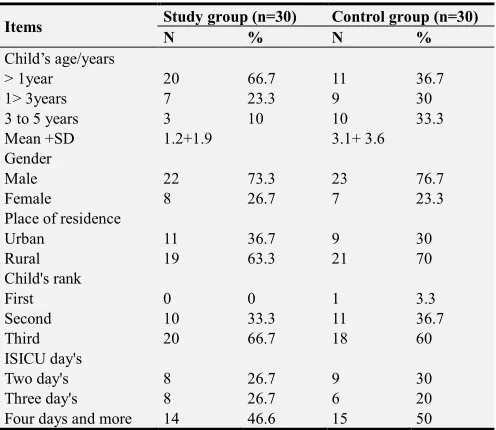
Table 1 revealed that two thirds (66.7%) of children having abdominal surgeries and participated in the current study and 36.7% of children in the control group their age was less than 1 year. The mean age was 1.± 1.9 year for children in the study group and 3.1± 3.6 year for them in the control group. Nearly three quarters (73.3%) of the studied children and more than three quarters (76.7%) of the control group were males. It was found that, 63.3% and 70%, respectively of
children in the study and control groups live in rural areas. The same table reflected that 66.7% and 60%, in order of children in the both groups were ranked as the third child within the family. The current study result indicated that 46.7% of children in the study group and half (50%) of them in the control staying four day's and more in ISICU.
Table 1. Percentage Distribution of Characteristics of Children Having Abdominal Surgeries in the Study and Control Group.
Items Study group (n=30) Control group (n=30)
N % N %
Child’s age/years
> 1year 20 66.7 11 36.7
1> 3years 7 23.3 9 30
3 to 5 years 3 10 10 33.3
Mean +SD 1.2+1.9 3.1+ 3.6
Gender
Male 22 73.3 23 76.7
Female 8 26.7 7 23.3
Place of residence
Urban 11 36.7 9 30
Rural 19 63.3 21 70
Child's rank
First 0 0 1 3.3
Second 10 33.3 11 36.7
Third 20 66.7 18 60
ISICU day's
Two day's 8 26.7 9 30
Three day's 8 26.7 6 20
Four days and more 14 46.6 15 50
Figure 1 demonstrated that, more than one third (36.7%) of children in the study group had intussusception followed by 23% of them had Hirschsprung disease (HSD). Thirteen point six percent of children in the control group had extrahepatic biliary atresia (EHBA) keep track of 16.7% of them complained of appendicitis and fewer of them had Mickles and congenital hypertrophic pyloric stenosis (CHPS). For children in the control group the same figure illustrated that equal percentage (30%) of them were having HSD and EHBA followed by intussusception (20%), appendicitis (10%) CHPS) 5%) and the minority had Mickles (3%).
Figure 1. Percentage Distribution of Child’s Diagnosis in the Study and Control Group.
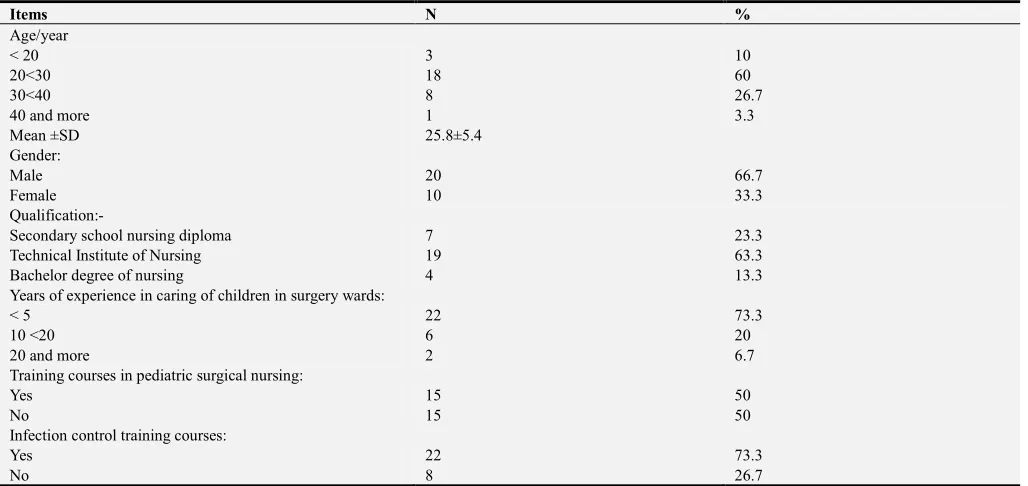
Table 2 clarified that less two thirds of nurses their age ranged from 20 to less than 30 years with the mean age
5.4 ±
25.8 years and two thirds of them were males. Regarding
in the care of children with surgical health problems, it was found that, nearly three quarters (73.3%) of nurses had less than 5years experience. Half (50%) of nurses attended
training courses in pediatric surgical nursing and less than three quarters (73.3%) of them attended infection control courses.
Table 2. Percentage Distribution of Nurses’ Personal Data in the Current Study (n= 30).
Items N %
Age/year
< 20 3 10
20<30 18 60
30<40 8 26.7
40 and more 1 3.3
Mean ±SD 25.8±5.4
Gender:
Male 20 66.7
Female 10 33.3
Qualification:-
Secondary school nursing diploma 7 23.3
Technical Institute of Nursing 19 63.3
Bachelor degree of nursing 4 13.3
Years of experience in caring of children in surgery wards:
< 5 22 73.3
10 <20 6 20
20 and more 2 6.7
Training courses in pediatric surgical nursing:
Yes 15 50
No 15 50
Infection control training courses:
Yes 22 73.3
No 8 26.7
It was clear from table 3: that the highest percentages of the pediatric nurses who participated in the current study had incomplete knowledge before implementation of the designed wound care guidelines as regards definition, types of wounds, factors affecting wound healing, types of drains, signs of wound infections as wells as management of wound complications and home care. Whereas, after the implementation of the designed wound care guidelines, it was found that the majority of nurses had complete knowledge about the previous mentioned knowledge elements.
Table 3. Percentage Distribution of Nurses’ Knowledge about Wound Care in the Current Study (n= 30).
Items
Before implementation of wound care guidelines After implementation of wound care guidelines
Complete Incomplete Wrong Complete Incomplete Wrong
N % N % N % N % N % N %
Definition of wound 15 50 10 33.3 5 16.6 30 100 0 0 0 0
Types of wounds 10 33.3 18 60 2 6.7 30 100 0 0 0 0
Factors affecting wound healing 0 0 27 90 3 10 20 66.7 8 26.7 2 6.7
Wound healing signs 2 6.7 25 83.3 3 10 26 86.6 2 6.7 2 6.7
Aim of wound care 0 0 26 86.7 4 13.3 24 80 6 20 0 0
Types of drains 7 23.3 20 66.7 3 10 19 63.3 9 30 2 6.7
Wound care 14 46.7 14 46.7 2 6.7 27 90 3 10 0 0
Steps of sterile techniques 5 16.7 22 73.3 3 10 27 90 3 10 0 0
Signs of wound complications 2 6.7 24 80 4 13.3 25 83.3 2 6.7 3 10
Signs of wound infection 2 6.7 27 90 1 3.3 28 93.3 2 6.7 0 0
Investigation done for wound infection 0 0 25 83.3 5 16.7 21 70 6 20 3 10
Treatment of wound complications 1 3.3 27 90 2 6.7 22 73.3 7 23.3 1 3.3
Normal range of body temperature 4 13.3 19 63.3 7 23.3 25 83.3 4 13.3 1 3.3
Follow up of temperature 3 10 26 86.7 1 3.3 22 66.7 8 26.7 0 0
Apply cold compresses 8 26.7 20 73.3 2 6.7 30 100 0 0 0 0
Home care for wound. 3 10 23 76.7 4 13.3 30 100 0 0 0 0
Table 4. Nurses’ Knowledge Level before and after Wound Guidelines in the Current Study (n= 30).
Items Before After X2 P
N % N %
Excellent 4 13.3 18 60
9.84 < 0.05
Very good 3 10 5 16.7
Good 3 10 3 10
Pass 15 50 4 13.3
Fail 5 16.7 0 0
* Significant at p < 0.05
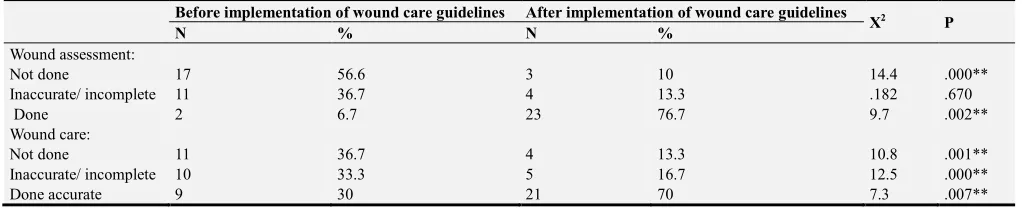
Table 5 highlighted that, more than half of nurse's didn’t perform wound assessment for children having abdominal surgery before application of the wound care guidelines compared to 76.7% of them perform the assessment after getting the guidelines. There were statistically significant differences before and after implementation of wound care guidelines for wound assessment (X2=14.4, P=.000, X2= 9.7, P=.002. in order). In relation to nurses’ practice regarding
wound care, the same table illustrated that 36.7% of the nurses didn’t perform wound care using aseptic techniques before receiving the designed guidelines even though, 70% of them perform accurate wound care after application of the guidelines. There were statistically significant differences before and after implementation of wound guidelines for wound care (X2=10.8, P=.001, X2= 12.5, P=.000, X2= 7.3, P=.007. in order).
Table 5. Distribution of Nurses’ Observational Checklists about Wound Assessment and Wound Care in the Current Study (n=30).
Before implementation of wound care guidelines After implementation of wound care guidelines
X2 P
N % N %
Wound assessment:
Not done 17 56.6 3 10 14.4 .000**
Inaccurate/ incomplete 11 36.7 4 13.3 .182 .670
Done 2 6.7 23 76.7 9.7 .002**
Wound care:
Not done 11 36.7 4 13.3 10.8 .001**
Inaccurate/ incomplete 10 33.3 5 16.7 12.5 .000**
Done accurate 9 30 21 70 7.3 .007**
**Significant at p < 0.01
Table 6 revealed that the mean of the total score of nurses’ knowledge before implementation of wound care guidelines was 13.1± 3.2 increased to 31.2± 2.09 after applications of the guidelines. There was statistically significance difference between the total mean score of nurses’ knowledge before and after implementation of wound care guidelines (t= - 26.0,
p=.000). The mean of the total score of nurses’ practices before application of wound care guidelines was 17.9± 4.3 compared to 40.6± 3 after getting the guidelines. There was statistically significance difference between the total mean score of nurses’ practice before and after implementation of wound care guidelines (t= - 21.2, p=.000).
Table 6. Comparison between Total Mean Score of Pediatric Nurses’ Knowledge and Practices before and after Implementation of Wound Guidelines (n=30).
Items Nurses’ Knowledge t p
Before implementation of wound care guidelines After implementation of wound care guidelines
Minimum 7 26
- 26.0 .000**
Maximum 18 34
Mean ± SD 13.1± 3.2 31.2±2.09
Nurses’ practices
Minimum 11 35
- 21.2 .000**
Maximum 37 47
Mean ± SD 17.9 ± 4.3 40.6± 3
**Significant at p < 0.01
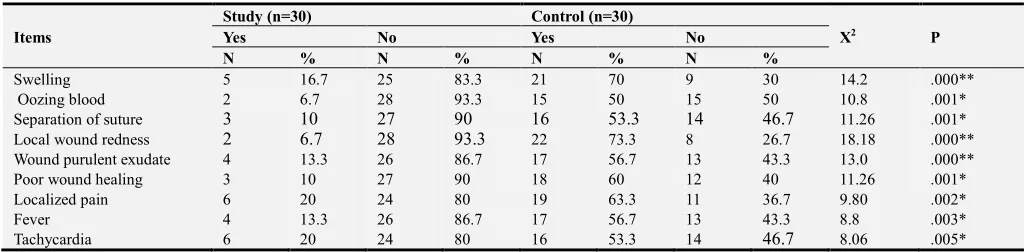
Table 7 highlighted that the majority (83.3%, 93.3% & 90% correspondingly) of children in the study group didn’t had wound swelling, oozing blood or separation of wound suture compared to 70%, 50% and 53.3% respectively of them in the control group exposed to the previously mentioned wound complications. It was found that 93.3%, 86.7% and 90% respectively of children in the study group didn’t exposed to local wound redness, wound purulent exudate or poor wound healing, while, 73.3%, 56.7% and
was evident from the current study results that there was statistically significant correlation between children’ gender and occurrence of surgical wound complications. While,
there were no statistically significant correlations between children’s age, place of residence and diagnosis and surgical wound complications.
Table 7. Distribution of Surgical Site Complications among Children after Abdominal Surgery in the Study and Control Group (n=30).
* Significant at P < 0.05 ** Significant at P<0.01
4. Discussion
Concerning the personal data, it was evident from the current study’s results that, nearly two thirds of the children in the study group and more than one third of children in the control group their age were less than 1 year. The same result was founded to this study finding, who studied 56 children undergoing abdominal surgery and concluded that, children age was 12 months [18].
The current study revealed that two thirds of the children in the study group and three quarters of the control group were males. This result also similar to study, who studied 267 children to explore the variations and patterns of distribution of congenital anomalies among children [19]. The study results revealed that more than half of the children were males. On the same context of this study found, when they studied the effect of race and gender on pediatric surgical outcomes performed in the United States and concluded that, nearly two thirds of studied children were male [20].
The results of the current study were in accordance with the study, who assured that, all the anomalies were more common in males and were found in children belonging to rural communities [21]. Regarding the child’s diagnosis, the highest percentage in both study and control groups had HSD followed by less than one quarter had appendicitis and fewer of the children had CHPS. These results were contrasted with study finding, they found that the highest percentage of children had gastrointestinal tract malformations as HSD, pyloric stenosis and imperforated anus [22]. This finding also congruent with the study, when they studied 76 children in Nigeria and concluded that more than half of pediatric surgery emergency is appendicitis [23].
Furthermore, the results showed that, nearly half of the children in both groups staying more than four days in ISICU. The results in agreement to this finding that studied the treatment of infections in a surgical ICU and emphasized that, abdominal infections more in particular occurrence and associated with a long ICU stay [24]. In addition, this finding match with the study, who studied risk factors for abdominal
wound dehiscence in children and reported that hospital stay was significantly longer (p < 0.001) for children with abdominal wound [25].
In relation to nurses’ age, according to the current study results it was found that less than two thirds of nurses their age ranged from 20 >30 years. In a qualitative study on 24 pediatric nurses to study their perception of factors associated with caring self-efficacy, the results assured that their age range of 27- 49 years. Two thirds of nurses who participated in the current study were males. This result representing the positive involvement of male nurses in caring of children in the surgical units [26].
Regarding to nurses qualifications, nearly two thirds of them were graduated from a technical institute of nursing and fewer of nurses were had bachelor degree in nursing. This result needs deep insight from the nursing authorities in Egypt. This result was contradicted with the study finding, who assess nurses’ knowledge and practices regarding wound vacuum assisted closure therapy and found that the highest percentage of participated nurses held a bachelor degree [27]. On the same line, the study result, who conduct a study in Bangladesh, stated that the nurse's knowledge is significantly affected by their qualification and educational level [28].
Concerning nurses’ years of experience, nearly three quarters of nurses had been less than 5years experience in caring for children in surgical units. In this context, the study found the majority of nurse's participants had job experience less than 5 years, which can affect knowledge of nurses [29]. As well as, who studied that the nurse's burnout among intensive care unit and stated that a higher level of burnout was significantly associated with younger age of nurse's, lower education level and less work experience years [30].
The current study's results reported that half of the nurses attended training courses in the field of pediatric surgery. These findings were in agreement with this study, who found that surgical nursing requires both depth and breadth of knowledge through training courses that make this a Items
Study (n=30) Control (n=30)
X2 P
Yes No Yes No
N % N % N % N %
Swelling 5 16.7 25 83.3 21 70 9 30 14.2 .000**
Oozing blood 2 6.7 28 93.3 15 50 15 50 10.8 .001*
Separation of suture 3 10 27 90 16 53.3 14 46.7 11.26 .001*
Local wound redness 2 6.7 28 93.3 22 73.3 8 26.7 18.18 .000**
Wound purulent exudate 4 13.3 26 86.7 17 56.7 13 43.3 13.0 .000**
Poor wound healing 3 10 27 90 18 60 12 40 11.26 .001*
Localized pain 6 20 24 80 19 63.3 11 36.7 9.80 .002*
Fever 4 13.3 26 86.7 17 56.7 13 43.3 8.8 .003*
particularly challenging field. Furthermore, the results of the current study showed that, nearly three quarters of nurses attended infection control courses [31]. Also, found that more than half of nurses attended an infection control course and attending nursing education courses [32]. In addition, stated that all nurses should take infection control course activities, it would be important to have maintained an infection control measure [33].
In relation to pediatric nurses’ knowledge as regards all aspects of wounds care, such as, types of wounds, aim of wound care, signs of wound healing, steps of sterile technique as well as surgical site complications, the current study documented that the majority of nurses had incomplete knowledge before implementation of wound care guidelines. Also, the highest percentage of the nurses had insufficient practice as regards wound assessment and wound care. These results require rapid intervention and the application of training programs and courses to upgrade pediatric surgical nurses’ knowledge is mandatory. This explanation was consistent with this finding, who studied knowledge and practice of nurses in the care of wounds and found that the majority of nurses present levels of knowledge lower than desired in relation to wound care [34]. Similarly, studied nurses' practice in preventing postoperative wound infections and concluded that over one third of nurses observed didn’t properly use sterile gloves [35]. In the context, found the same results and mentioned that the majority of nurses showed a poor level of knowledge towards the prevention of surgical site infection [36].
Regarding to home care for a wound, it was found that the highest percentage of the nurses had incomplete knowledge about teaching of home care for surgical wound before application of guidelines sessions. These findings were consistent with this study, when they studied thirty seven of surgical nurses and found that more than half of surgical nurses didn’t educate mothers about the discharge plan for wound care [37].
On the other hands, the knowledge and practice of nurses in the current study regarding wound care were significantly improved after implementation of the designed wound care guidelines which indicating the positive effect of these guidelines on enhancing nurses’ knowledge and practice. These results corresponding with finding, who studied the influence of a wound care service on nursing practice and reported that a significant improvement in wound healing after the nurses observe and aware of signs for wound healing [38]. Besides, found that less than half of nurse performed wound care daily after the training course for wound dressing when they studied sixty nine of nurses in Nigeria [39].
The current result proved that there was a statistically significant difference between the total mean score of nurses’ knowledge before and after receiving the designed wound care guidelines. This result congruent with this study, who found an increase of educational programs regarding wound care will increase the educational level for nurses and increased their knowledge mean score (P <. 05). On the same
line, a statistically significant difference between the total score of nurses’ practices was detected before and after receiving the designed wound care guidelines [40]. This explanation was in the same line with study, they studied the role of the wound care nurse in Australia and reported that significant educational and qualifications required to practice as a wound care for the nurse to improved healing times and decreased prevalence of wound infection [41].
As regards surgical site complications among children who participated in the current study, it was found that the majority of children in the study group didn’t had wound swelling, oozing blood or separation of wound suture compared to high percentages of them in the control group exposed to the previously mentioned wound complications. This result was contradictory with this study, who concluded that the highest incidence of postoperative wound infection can occur damaging of vessels or hemorrhage at the operation site [42].
In relation to purulent exudate the majority of children in the study group hadn’t purulent exudate. While, more than half of children in the control group had such complication. In a recent research that studied abdominal drainage after laparoscopic appendectomy among 192 child and reported that there were no statistically significant differences among in the rate of intra-abdominal abscess, wound infection, and bowel obstruction, an increased rate of intra-abdominal abscess and wound infection with wound discharge [43].
The majority of children in the study hadn’t complained from poor wound healing and lethargy. However, the highest percentages of children in the control group complain from the previously mentioned wound complications. The result was in agreement with this study, that studied common postoperative complications in children and documented that uncontrolled, SSI may progress to life-threatening complications [44].
It was found from the current study that the majority of children in the study group were not complaining of fever. On the other hand, more than half in control group complained it. In this context, held study of 56 child (35 boys and 21 girls), aged 11 months to 13 years to assess the Outcome of primary closure of abdominal wounds following laparotomy for peritonitis. The study results summarized that 34 children had wound complications and 16 of children complain of fever and wound infection. Regarding to tachycardia, it was found that the majority of children in study group didn't complain from tachycardia compared to more than half of them in the control group had it [35]. This result was contrasted with this study, who concluded that life-threatening condition like malignant hyperthermia after wound infection lead to tachycardia [46].
designed wound care guidelines in decreasing the occurrence of surgical site complications among children after abdominal surgeries.
It was evident from the current study results that there was a statistically significant correlation between children’ gender and occurrence of surgical wound complications. While, there were no statistically significant correlations between children's age, place of residence and diagnosis and surgical wound complications. Documented that with this result, the severity of surgical site complications depends in large part on the infecting pathogen, the site of infection, the nature of the surgery, and the underlying host factors [44]. Also, this finding Studied 121 were male and 71 were female child with a mean age of 7.77 ± 3.4 years. There were not statistically significant differences between the groups in gender in the occurrence of wound infection (p = 0.82) [47].
5. Conclusion and Recommendations
5.1. Conclusion
The current study results concluded that pediatric nurses who receive the wound care guidelines had higher mean scores of knowledge and practice regarding wound care than before. Children who cared by nurses after receiving the wound care guidelines exposed to less surgical site complications than those in the control group. The study assured that the designed wound care guidelines were effective in enhancing pediatric nurse’ knowledge and improve their practical skills while caring for children’ surgical wound after abdominal surgeries. The also concluded that the designed wound care guidelines were effective in decreeing the occurrence of surgical site complications among children after abdominal surgeries.
5.2. Recommendations
(1)Integration of the designed wound care guidelines for nurses in pediatric surgical ICU and other pediatric surgical units is essential.
(2)An educational programs and in-service training courses for pediatric nurses to enhancing quality of postoperative care for children and its benefits on occurrence of wound complications is crucial.
(3)Longitudinal study is necessary to monitor the late postoperative wound complications and long term outcomes among children after abdominal surgeries.
Acknowledgements
The authors are thankful for the great help, significant effort and cooperation received from pediatric nurses, pediatric surgeons and children with their mothers who participated in the current study.
References
[1] Stellar, J. Hutchins. L, Brodecki, D. and Davis, K. (2013). Hospital-acquired skin injury in children: Nurse-led interventions to improve outcomes. J Wound Ostomy Continence Nursing: Volume 44 - Issue - p S1–S72 https://journals.lww.com/ jwocnonline /Fulltext/.
[2] Ubbink, D. Brolmann, F. Peter, M. Vermeulen, H. (2015). Evidence-Based Care of Acute Wounds: A Perspective. 1; 4(5): 286–294. https://www.ncbi.nlm.nih.gov/ pmc /articles /.
[3] Jaryszak EM, Shah RK, Amling J, and Pena MT: Pediatric tracheotomy wound complications: incidence and significance. Arch Otolaryngology Head Neck Surgery 2011; 137: 363.
[4] Visscher M, King A, Nie AM, Schaffer P, Taylor T, Pruitt D, Giaccone MJ, Ashby M, Keswani S Pediatrics. 2013 Jun; 131(6):e1950-60. A quality-improvement collaborative project to reduce pressure ulcers in PICUs.
[5] Mercandetti, M. (2017). Wound Healing and Repair. Updated:
May 19, 2017. Avaliable at
https://emedicine.medscape.com/article/.
[6] Whitney JD. Surgical wounds and incision care. In: Bryant R, Nix D, eds. Acute & Chronic Wounds: Current Management Concepts. 4th ed. St. Louis, MO: Elsevier Mosby; 2012:469–475.
[7] Wound Ostomy & Continence Nursing society (2012). Clean vs. Sterile Dressing Techniques for Management of Chronic Wounds: A Fact Sheet Journal of Wound, Ostomy and Continence Nursing: Volume 39 -Issue 2S-pS30–S34 https://journals. lww.com/jwocnonline/fulltext/.
[8] Massachusetts Department of Public Health. Prevention of surgical site infections. In: Prevention and control of healthcare-associated infections in Massachusetts, (2015). http://www.guidelines.gov/.
[9] Gillespie, B. Kang, E. Roberts, S. Lin, F. Morley, N. Finigan, T. Homer, A. and Chaboyer, W. (2015). Reducing the risk of surgical site infection using a multidisciplinary approach: an integrative review. Journals multidisciplinary health care; 8: 473–487. https://www.ncbi.nlm.nih.gov/pmc/articles/PMC.
[10] Rolstad, B. Bryant, R. Nix, D. (2012). Topical management. In: Bryant R, Nix D, eds. Acute & Chronic Wounds: Current management Concepts. 4th ed. St. Louis, MO: Elsevier Mosby; 2012:289–307.
[11] Sanders, J.K and Pade, K, H (2017). Pediatric wound care and management in the emergency department Oct 23;14. https://www.ncbi.nlm.nih.gov/pubmed/.
[12] King, A. Stellar, J. Blevins, A. Shah, K. (2014). Dressings and Products in Pediatric Wound Care. 1; 3(4): 324–334. https://www.ncbi.nlm.nih. gov/pmc/ articles/.
[13] Maxson, S. Lopez, E. Yoo, D. Danilkovitch-Miagkova, A. Leroux, M. (2012) role of mesenchymal stem cells in wound repair. 1(2):142-9. https://www.ncbi.nlm. nih.gov/pmc/articles/.
[15] Keswani, S, G. (2015). Second Annual Meeting of the International Society of Pediatric Wound Care. 1;4(10): 583– 586.https://www. ncbi.nlm. nih.gov/pmc/.
[16] Dumville, J. Gray, T. Walter, C. Sharp, C. Page, T. (2015). Dressings for the prevention of surgical site infection (Review) 81. Published by John Wiley & Sons, Ltd. Cochrane Database of Systematic Reviews, pub3. www.cochranelibrary.com.
[17] Kliegman, R., Stanton, B., Schor, N., Geme, J. & Behrman, R. (2015). Nelson Textbook of Pediatrics, 20th ed. London: Elsevier - Health Sciences Division.
[18] Kache, S. Mshelbwala, P. and Ameh, E. (2016) Outcome of primary closure of abdominal wounds following laparotomy for peritonitis in children, Afr J Paediatric Surg. 2016 Oct-Dec; 13(4): 185–188 https://www.ncbi nlm.nih.gov/ p mc/articles
[19] Bari, C. (2014) Spectrum of Congenital Anomalies among Children Attending the Pediatric Departments of Dhaka Medical College Hospital. (2014). IOSR Journal of Dental and Medical Sciences. Volume 13, Issue 2, PP 20-46 www.iosrjournals.org
[20] Matthew, L. Damien, J. Bartholomew J. Sara, K. Eugene D and Bradley M. (2013). The Effect of Race and Gender on Pediatric Surgical Outcomes within the United States, J Pediatr Surg. https://www.ncbi.nlm. nih.gov/pmc /articles/
[21] Jangra1, B. Singh, M., Rattan, K. Kadian, Y. Kaur, A. Congenital anomalies in pediatric surgery in North India (2014). Volume: 11, Issue: 1, Page: 39-43 http:// www. Afrjpae dsurg.org/
[22] Mohammed, A. Mohammed, S. Abdul Fatah, A. (2013). Congenital Anomalies among Children: Knowledge and Attitude of Egyptian and Saudi Mothers, Journal of Biology, Agriculture and Healthcare. Vol.3, No.20, http://www.iiste.org/.
[23] Ademuyiwa, A. Bode, C. Adesanya, O.and. Elebute, O. (2012) Non-trauma related pediatric abdominal surgical emergencies in Lagos, Nigeria: Epidemiology and indicators of survival Niger Med J. Apr-Jun; 53(2): 76: 79 https://ww.ncbi.nih. gov/pmc/articles/.
[24] Waele, J. and De Bus, L. (2014). How to treat infections in a surgical intensive care unit. BMC Infect Dis. 2014; 14: 193.https: //www.ncbi.nlm. nih.gov/pmc/.
[25] Ramshorst,G. Salu, N. Bax, N. Hop, W. Heurn, E., Aronson, D., and Lange, G (2015) Risk Factors for Abdominal Wound Dehiscence in Children: 33(7):1509-1513 https://www.ncbi.nlm.nih.gov/pmc/.
[26] Alavi, A. Bahrami, M. Boroujeni, A and Yousefy. A. (2015) Pediatric nurses’ perception of factors associated with caring self-efficacy: A qualitative content analysis Iran J Nurs Midwifery Res 20(2): 232–238 https://www. ncbi.nlm. nih.gov/ PMC/.
[27] Sabur, A. Elgamil, A. Elhadi, M. (2017) Assessment of Nurses’ Knowledge and Practices Regarding Wound Vacuum Assisted Closure Therapy p- ISSN: 2320–1940 Volume 6, Issue 5 PP 27-32 www.iosrjournals.org.
[28] Sickder, H. K., Sae-Sia, W., & Petpichetchian, W. (2014). Nurses‟ Knowledge and Practice Regarding Prevention of Surgical Site Infection in Bangladesh. http://kb.psu.ac.th/psukb/bitstream/2010/7819/1/325897.pdf.
[29] Sadia, H. kousar, R. Azhar, M. Waqas, Gilani, S. Assessment of Nurses’ Knowledge and Practices Regarding Prevention of Surgical Site Infection. Sci.; Vol-3, Iss-6B (Jun, 2017):585-595. Available Online: http://scholarsmepub.com/sjmps/.
[30] Kim, H. and Yeom, H. (2018). The association between spiritual well-being and burnout in intensive care unit nurses: A descriptive study, https://www.ncbi.nlm. nih.gov /pub med/ 29625870.
[31] Bratton, B. (2017). The Depth and Breadth of Pediatric Surgical Nursing. Journal of Pediatric Surgical Nursing Volume 6. Issue 4. American Pediatric Surgical Nursing Association, https://journals.lww.com/journalofpediatric surgical nursing/.
[32] Ebied, E. (2011). Impact of blood-borne diseases prevention program on compliance with infection control standard precautions among nurses in family health centers, El Fayoum Governorate, Egypt.
[33] Rasslan O. (2011). Infection Prevention and Control Education in Egypt: Professional Diploma in Infection Control (PDIC). Int J Infect Control 2011.
[34] Faria, G. Prado, T. Lima, E. Rogenski, N. Borghardt, A. Massaroni, L. (2016). Knowledge And Practice Of Nurses On The Care Of Wounds. English/Portuguese J Nurs UFPE on line., Recife, 10(12):4532-8, Dec., 2016.
[35] Ding. S, Lin. F, Marshall. A, Gillespie. B. (2017). Nurses' practice in preventing postoperative wound infections: an observational study. J Wound Care. Jan 2; 26(1):28-37.https:// www.ncbi.nlm.nih.gov/pubmed/.
[36] Mahmoud N and Issa M. (2017). Nurses’ Knowledge of Preventing Surgical Site Infections in Acute Care Settings, Open Journal of Nursing. Department of Adults Health Nursing, Jordan University of Science and Technology, Irbid, Jordan. https://file.scirp.org/pdf/OJN_2017052516043995.pdf.
[37] Ding, S. Lin, F, Marshall, A. Gillespie, B. (2017). Nurses' practice in preventing postoperative wound infections: an observational study. J Wound Care. 2017 Jan 2;26 (1):28-37. https://www.ncbi.nlm.nih.gov/pubmed/28103161.
[38] Gagnon, M. Breton, E. Courcy, F. Quirion, S. Côté, J. and Paré, G. (2014). The Influence of a Wound Care Teleassistance Service on Nursing Practice: A Case Study in Quebec. 38. Lemed J E Health. 2014 Jun 1; 20(6): 593–600. https://www.ncbi.nlm.nih.gov/pmc/articles/PMC4038993/.
[39] Adejumo, P. Ilesanmi, R. (2016) Issues in Contemporary Wound Management: Evaluation of Knowledge and Practices among Nurses in Two Municipalities in Osun State, Nigeria. Ann Nurs Pract 3(6): 1065.
[40] SürmeMSc, Y. TekinsoyKartın, P. NihalÇürük, G. (2017) Knowledge and Practices of Nurses Regarding Wound Healing, Journal of PeriAnesthesia Nursing https://doi. org/10. 1016/j.jopan.04.143.
[41] Dutton, M. Chiarella, M. Curtis, K. (2014). The role of the wound care nurse: an integrative review, Faculty of Medicine,
University of NSW, Australia
https://doi.org/10.12968/bjcn.19.Sup3.S39.
[43] Castro, A. Cano1, A. García1, P. Yuste, E. Ferrero, A. (2018). Abdominal drainage after laparoscopic appendectomy in children: an endless controversy. Scandinavian Journal of Surgery. Journals.sagepub.com/home/.
[44] Abdulrasheed, A. Nasir, C. Ameh, E (2012). Surgical Site Infection chapter 16 in Common post-operative complications in children by Pawar, D. Indian J Anaesth. 56(5): 496–501. https://www.ncbi.nlm.nih.gov/pmc/articles /.
[45] Kache, S. Mshelbwala, B and Ameh, E. (2016). Outcome of primary closure of abdominal wounds following laparotomy for peritonitis in children, Afr J Paediatr Surg. 2016 Oct-Dec; 13(4): 185–188. https://www.ncbi.nlm.nih.gov/pmc/articles/.
[46] Pawar, D. (2012) Common post-operative complications in children. Indian J Anaesth; 56(5): 496–501. https://www.ncbi.nlm.nih.gov/pmc/articles/.