Use of Temporary Names for Newborns
and Associated Risks
Jason Adelman, MD, MSa,b, Judy Aschner, MDb,c, Clyde Schechter, MDa,d, Robert Angert, MDb,c, Jeffrey Weiss, MDa,b, Amisha Rai, PA-C, MHSb, Matthew Berger, MDa,b, Stan Reissman, MSWb, Vibin Parakkattue, Bejoy Chackob, Andrew Racine, MD, PhDb,c, William Southern, MD, MSa,b
abstract
BACKGROUND:Because there can be no delay in providing identification wristbands to newborns,
some hospitals assign newborns temporaryfirst names such as Babyboy or Babygirl. These nondistinct naming conventions result in a large number of patients with similar identifiers in NICUs. To determine the level of risk associated with nondistinct naming conventions, we performed an intervention study to evaluate if assigning distinctfirst names at birth would result in a reduction in wrong-patient errors.
METHODS:We conducted a 2-year before/after implementation study to examine the effect of
a distinct naming convention that incorporates the mother’sfirst name into the newborn’sfirst name (eg, Wendysgirl) on the incidence of wrong-patient errors. We used the Retract-and-Reorder (RAR) tool, an established, automated tool for detecting the outcome of wrong-patient electronic orders. The RAR tool identifies orders placed on a patient that are retracted within 10 minutes and then placed by the same clinician on a different patient within the next 10 minutes.
RESULTS:The reduction in RAR events post- versus preintervention was 36.3%. After accounting for clusters of orders within order sessions, the odds ratio of an RAR event post- versus preintervention was 0.64 (95% confidence interval: 0.42–0.97).
CONCLUSIONS:The study results suggest that nondistinct naming conventions are associated with
an increased risk of wrong-patient errors and that this risk can be mitigated by changing to a more distinct naming convention.
WHAT’S KNOWN ON THIS SUBJECT:Because there can be no delay in providing newborns with identification wristbands, some hospitals assign newborns temporaryfirst names such as Babyboy or Babygirl. These nondistinct naming conventions result in a large number of patients with similar identifiers in NICUs.
WHAT THIS STUDY ADDS:We performed an intervention study to determine if assigning distinct first names at birth would result in a reduction in wrong-patient errors. We used the Retract-and-Reorder tool, an established, automated tool to detect the outcome measure of wrong-patient electronic orders.
a
Albert Einstein College of Medicine, Bronx, New York;bMontefiore Medical Center, Bronx, New York;cDepartment of Pediatrics, Children’s Hospital at Montefiore/Albert Einstein College of Medicine, Bronx, New York;dDepartment of Family Medicine, Albert Einstein College of Medicine, Bronx, New York; andeDepartment of Biomedical Engineering, University of Michigan, Ann Arbor, Michigan
Drs Adelman, Racine, Angert, Southern, Aschner, and Weiss, together with Ms Rai and
Mr Parakkattu, collaborated on conceptualizing, designing, and implementing the intervention study and reviewed and revised the manuscript; Dr Berger, Mr Reissman, and Mr Chacko designed the data collection tool, coordinated and supervised the data collection for the intervention study, and reviewed and revised the manuscript; Dr Schechter assisted Dr Southern in the analyses of the intervention study and reviewed and revised the manuscript; and all authors approved thefinal manuscript as submitted.
www.pediatrics.org/cgi/doi/10.1542/peds.2015-0007
DOI:10.1542/peds.2015-0007 Accepted for publication May 4, 2015
Address correspondence to Jason Adelman, MD, MS, Patient Safety Officer, Montefiore Medical Center, 111 East 210th St, Bronx, NY 10467. E-mail: jadelman@montefiore.org
PEDIATRICS (ISSN Numbers: Print, 0031-4005; Online, 1098-4275).
In 2012 there were 4 million infants born in US hospitals, with∼12% being admitted to NICUs.1,2The
Eunice Kennedy ShriverNational Institute of Child Health and Human Development identified wrong-patient errors in NICUs as 1 of 5 domains of errors in neonatology that require further research.3
Because there can be no delay in registering newborns and giving them identification wristbands, some hospitals assign newborns temporaryfirst names, such as Babyboy or Babygirl. One theory why NICUs are prone to wrong-patient errors is the use of these nondistinctfirst names; however, no studies have provided direct evidence to support this hypothesis, nor have any demonstrated if transitioning to a naming convention that better
distinguishes neonates from one another would prevent wrong-patient errors.
A 2004 study by Suresh et al4found
that of the 1230 medical errors reported by 54 NICUs in the Vermont Oxford Network, 136 (11.1%) were categorized as patient misidentification errors. In a subsequent study, Gray et al5
found that just over half of the average daily census in the NICU had similar identifiers to each other. The researchers hypothesized that the high
proportion of patients in the NICU with similar identifiers increased the risk of misidentification, but they did not measure wrong-patient errors.
The Distinct Naming Convention Trial (DISTINCT) aimed to test the hypothesis that temporary,
nondistinct names for newborns such as Babyboy or Babygirl increase the frequency of wrong-patient errors and that using a uniquefirst name at birth would be associated with a decrease in wrong-patient errors in the NICU.
METHODS
Overview of the DISTINCT Study
The main hypothesis of the DISTINCT study is that nondistinct temporary
first names (eg, Babygirl) do not convey the added discrimination typically provided by uniquefirst names, increasing the risk of orders being place on the wrong-patient in an NICU. As shown in Fig 1, the DISTINCT study incorporated the mother’sfirst name into the newborn’s temporary first name (eg, Wendysgirl) to provide an added level of distinction normally rendered by a uniquefirst name and then examined the wrong-patient error rates in the NICU before and after implementing this new naming convention.
Settings
The DISTINCT study was conducted at Montefiore Medical Center, an academic health system in Bronx, New York, affiliated with the Albert Einstein College of Medicine and which includes 3 general hospitals, 1 children’s hospital, and 2 NICUs (a level IV NICU with 35 beds and a level III NICU with 15 beds). Both NICUs use the same computerized provider order entry (CPOE) system. The level IV NICU is an academic environment staffed by residents, fellows, and attending neonatologists and is the regional perinatal center and referral hospital that provides care for the most complex and critically ill neonates. The level III NICU is staffed
by attending neonatologists, nurse practitioners, and physician assistants, without house staff. The intervention study was approved by the institutional review board at the Albert Einstein College of Medicine.
Intervention
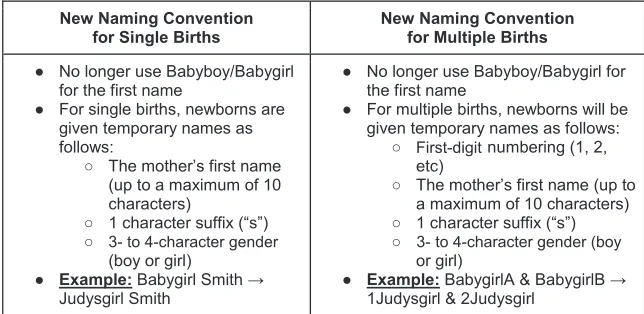
On July 1, 2013, a new distinct naming convention that incorporates the mother’sfirst name was
implemented for all children born at Montefiore Medical Center (Fig 2), replacing the previous nondistinct naming convention of Babyboy/ Babygirl. The new distinct naming convention for newborn infants included the mother’sfirst name, followed by the letter“s”, and then the gender of the infant (eg, Wendysgirl). For multiple births, a number was added to the front of thefirst name (1, 2, etc) to distinguish siblings from each other (eg, 1Judysgirl, 2Judysgirl). Clerical staff in the hospitals’
admitting departments were trained to use the new naming convention when creating an account for a newborn. This study was performed within Montefiore’s GE Centricity CPOE system (GE Healthcare, Milwaukee, WI).
Outcome Measure
To measure wrong-patient errors, we used the Retract-and-Reorder (RAR) tool, a validated and reliable method for identifying wrong-patient errors.6
The RAR tool identifies orders placed on a patient that are retracted within 10 minutes and then placed by the
FIGURE 1
same clinician on a different patient within the next 10 minutes. Previous research suggested that 76.2% of RAR events represent wrong-patient errors.6
RAR events are near-miss errors, self-caught by the clinician before they reach the patient. TheEunice Kennedy ShriverNational Institute of Child Health and Human Development defines near-miss errors as“those errors that do not result in patient harm due to chance or timely interventions.”7The use of near-miss
errors to test safety improvements in health care is encouraged by major patient safety organizations because near-miss errors have been shown by industrial safety experts to have the same causal pathway as errors that cause harm.8–12
Statistical Analysis
To determine the duration of the study, we performed a sample size calculation. Assuming a baseline error rate of 60 RAR events per 100 000 orders,13and assuming an estimated
effect size that was based on previous wrong-patient error research,6our
study duration of 1 year of control data collection and 1 year of
intervention data collection provided
.90% power to detect a 40% reduction in the odds of an RAR event. The effect size (ie, 40% reduction in RAR events) that we used for this calculation is taken from
the results of a randomized controlled trial that evaluated the efficacy of an improved patient identification system for preventing wrong-patient
electronic orders.6Data were analyzed
by using Stata version 13.1IC (StataCorp, College Station, TX).
The RAR order rates in the study NICUs were measured for 1 year before (July 1, 2012 to June 30, 2013) and after (July 1, 2013 to June 30, 2014) the implementation of the distinct naming intervention. The RAR order rate is defined as the number of RAR events divided by the number of orders. All NICU orders during the control and intervention periods, including medications, blood tests, imaging, and general care orders, were entered by using the CPOE system and were included in the analysis. All order data and RAR events were extracted from
Montefiore’s electronic medical records.
Because orders are clustered within order sessions in which a provider places multiple orders on a single patient, we used general estimating equations to estimate the odds ratio (OR) of an RAR event using the distinct naming convention versus the nondistinct naming convention with cluster-robust SEs. As an exploratory analysis to determine if the benefit of the distinct naming convention was similar across different types of providers and
patients, we constructed separate generalized estimating equation models for patient subgroups (gender, ages, racial/ethnic categories, and insurance) and provider subgroups (attending physician, house staff, nurse practitioners, and physician assistants). Subgroups with,2000 orders per year in total were included as“other.”In addition, subgroups with no RAR events in either the intervention or control periods were excluded from the exploratory analysis.
RESULTS
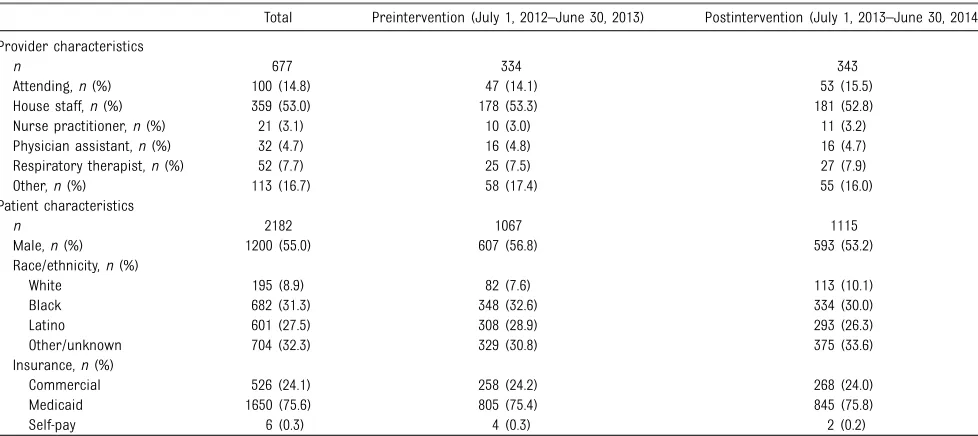
Patient demographic characteristics, including gender, race/ethnicity, and insurance, as well as provider characteristics are shown in Table 1. During the preintervention period there were 157 857 total orders placed for 1115 neonates; during the postintervention period there were 142 437 orders placed for 1067 neonates. A breakdown of RAR events by patient type, provider type, and order type is provided in Table 2.
There was a large and significant reduction in RAR events after the adoption of the distinct naming convention. The RAR error rate decreased from 59.5 per 100 000 orders preintervention to 37.9 per 100 000 orders postintervention, a 36.3% reduction. The OR of an RAR event post- versus preintervention was 0.64 (95% confidence interval [CI]: 0.42–0.97).
The benefits of the distinct naming convention were seen in most subgroups examined (Fig 3). The distinct naming convention had a particularly strong effect in reducing RAR events in orders placed by house staff (OR: 0.48; 95% CI: 0.24–0.93) and in orders placed on male patients (OR: 0.39; 95% CI: 0.19–0.83). ORs were not calculable for respiratory therapists and“other” providers because the respiratory therapists had no RAR events postintervention and the“other”
FIGURE 2
providers group had no RAR events pre- or postintervention.
DISCUSSION
The implementation of a distinct naming convention for neonates
requiring NICU admission resulted in a 36.3% reduction in RAR events, demonstrating that nondistinct naming conventions are associated with an increased risk of wrong-patient errors and that this risk can
be reduced significantly by changing to a distinct naming convention. Our results support the hypothesis that the simple intervention of changing from a nondistinct naming
convention (eg, Babygirl) to
TABLE 1 Demographic Characteristics for the DISTINCT Study
Total Preintervention (July 1, 2012–June 30, 2013) Postintervention (July 1, 2013–June 30, 2014)
Provider characteristics
n 677 334 343
Attending,n(%) 100 (14.8) 47 (14.1) 53 (15.5)
House staff,n(%) 359 (53.0) 178 (53.3) 181 (52.8)
Nurse practitioner,n(%) 21 (3.1) 10 (3.0) 11 (3.2) Physician assistant,n(%) 32 (4.7) 16 (4.8) 16 (4.7) Respiratory therapist,n(%) 52 (7.7) 25 (7.5) 27 (7.9)
Other,n(%) 113 (16.7) 58 (17.4) 55 (16.0)
Patient characteristics
n 2182 1067 1115
Male,n(%) 1200 (55.0) 607 (56.8) 593 (53.2)
Race/ethnicity,n(%)
White 195 (8.9) 82 (7.6) 113 (10.1)
Black 682 (31.3) 348 (32.6) 334 (30.0)
Latino 601 (27.5) 308 (28.9) 293 (26.3)
Other/unknown 704 (32.3) 329 (30.8) 375 (33.6)
Insurance,n(%)
Commercial 526 (24.1) 258 (24.2) 268 (24.0)
Medicaid 1650 (75.6) 805 (75.4) 845 (75.8)
Self-pay 6 (0.3) 4 (0.3) 2 (0.2)
TABLE 2 Breakdown of RAR Events by Subgroup
Preintervention (July 1, 2012–June 30, 2013) Postintervention (July 1, 2013–June 30, 2014)
Total Orders
RAR Events
RAR Events per 100 000 Orders
Wrong-Patient Orders per 100 000 Ordersa
Total Orders
RAR Events
RAR Events per 100 000 Orders
Wrong-Patient Orders per 100 000 Ordersa
Total 157 857 94 60 45 142 437 54 38 29
By provider type
House staff 58 193 40 69 52 55 465 15 27 21
Nurse practitioner 44 035 30 68 52 34 009 24 71 54
Physician assistant 22 978 17 74 56 20 262 8 39 30
Attending 16 448 6 36 28 18 810 7 37 28
Respiratory therapist
13 700 1 7 6 12 634 0 0 0
Other 2503 0 0 0 1257 0 0 0
By patient type
Male 96 070 59 61 47 75 695 23 30 23
Female 61 787 35 57 43 66 742 31 46 35
Age
,1 day 29 530 7 24 18 34 688 7 20 15
1–3 days 30 570 12 39 30 31 669 10 32 24
4–30 days 59 904 49 82 62 47 004 21 45 34
.30 days 37 853 26 69 52 29 076 16 55 42
Race/ethnicity
White 11 287 6 53 41 14 984 6 40 31
Black 55 998 27 48 37 45 624 12 26 20
Latino 44 392 37 83 64 26 897 15 56 42
Other/unknown 46 180 24 52 40 54 932 21 38 29
Insurance
Commercial 36 700 24 65 50 33 275 8 24 18
Medicaid 120 954 70 58 44 109 068 46 42 32
Self-pay 203 0 0 0 94 0 0 0
a distinct naming convention (eg, Wendysgirl) can result in a meaningful reduction in wrong-patient errors in NICUs.
A national survey conducted through the American Academy of Pediatrics Section on Perinatal Pediatrics found that 81.7% of the 339 responding NICUs reported using a nondistinct naming convention such as Babyboy or Babygirl, demonstrating the wide use of these hazardous naming conventions.14Changing to a more
distinct naming convention has the potential to prevent wrong-patient errors in the large number of NICUs that use nondistinct naming
conventions.
This study is consistent with previous work that suggests that neonates are at increased risk of errors. In a 2012 study by Levin et al,15a case-control
experiment was conducted in a children’s hospital to evaluate if certain patient characteristics are associated with an increased risk of wrong-patient errors. The
researchers found the risk ratio for newborns to be 3.57 (95%
CI: 1.93–6.59) relative to patients of other ages.
Although the intervention was designed to measure wrong-patient electronic orders, there are other types of misidentification errors in NICUs that may result from the use of nondistinctfirst names, such as reading imaging tests or pathology specimens for the wrong patient or administering blood products to the wrong patient.16–18One particularly
concerning wrong-patient error unique to NICUs and hospital nurseries is feeding a mother’s expressed breast milk to the wrong infant.19The use of distinct patient
names printed on breast milk bottles may also decrease the risk of a nurse removing the wrong bottle from a nursery refrigerator. Removing the hazard of similar names has the potential to reduce many types of wrong-patient errors in the NICU.
It is worth noting that the distinct naming convention was specifically designed for the NICU, as opposed to other nonspecific interventions developed for general patient
populations that may be less effective in the NICU. For example, a 2012 study by Hyman et al20showed that
patient photographs embedded in a CPOE system is a promising strategy for reducing wrong-patient orders; however, the authors acknowledged the limitation of this intervention for newborns whose physical appearance contributes little to distinguish one infant from another. Additional strategies aimed at preventing wrong-patient orders include using electronic decision support to verify patient
identification before placing orders or alerting providers when orders are not consistent with the diseases listed in the problem list.6,21,22However,
these interventions can be costly, dependent on the type of CPOE system, and their effectiveness may diminish over time due to alert fatigue.23Replacing a nondistinct
naming convention with one that uses distinct names is a simple and effective intervention that is not costly, labor intensive, or dependent on new technology and may be easily implemented in most NICUs.
To accelerate the adoption of distinct naming conventions, regulatory bodies such as the Joint Commission might consider prohibiting the use of nondistinct naming conventions such as Babyboy or Babygirl. In an analogous initiative, the Joint Commission required that QD (once daily), which was sometimes
confused with QID (4 times per day), be replaced with DAILY to prevent errors.24,25Replacing nondistinct
names such as Babygirl with discrete names such as Wendysgirl is a similar type of intervention.
The DISTINCT study used an established, automated tool to capture the primary outcome of RAR events. The RAR tool was developed for studying the effect of
interventions on wrong-patient electronic orders. In a validation study conducted in a hospital setting that included, but was not limited to,
FIGURE 3
the NICU, the RAR tool was found to have a positive predictive value for wrong patient errors of 76.2%.6The
RAR tool, therefore, slightly over-identifies wrong-patient errors by including some false-positives. For example, a false-positive RAR event might occur during total parenteral nutrition (TPN) rounds in the NICU, when a provider cancels a TPN order for a reason other than a wrong-patient error and then writes a parenteral nutrition order for the next patient in need of TPN.
The benefits of the distinct naming convention were particularly pronounced in orders placed by house staff and in orders placed on male patients (Fig 3). A larger study that allows for precise subanalysis may determine if certain provider types and patients are more or less impacted by this intervention.
In NICUs with nondiscrete naming conventions, multiples may have an increased risk of wrong-patient errors as a result of the near identical names of siblings (eg, BabyboyA Smith and BabyboyB Smith).
However, we were not able to test this hypothesis or evaluate the
effectiveness of the DISTINCT intervention specifically in multiples for 2 reasons: (1) we were unable to differentiate unrelated singletons with the same last name from multiples in our preintervention data set and (2) we did not have sufficient power to detect differences between
subgroups. Further research is needed to determine if multiples have higher wrong-patient error rates compared with singletons and to assess the effect of the DISTINCT intervention on preventing wrong-patient errors in this subgroup of patients.
An alternate approach for replacing nondistinct naming conventions is to change newborns’temporary names to their given names as soon as they are available. We explored
implementing this solution but were deterred by the technical obstacle of reconciling 2 different names for 1 patient in the middle of an admission. This solution warrants further exploration.
This study has several limitations. First, the intervention study used historical controls and a secular trend might confound the results. Second, it was not possible to blind the ordering providers to the naming convention change, and thus providers may have improved their behavior in response to their awareness of being observed (ie, the Hawthorne effect). A longer study is needed to assess if the Hawthorne effect confounded our results. Third, the positive predictive value of 76.2% for the RAR tool was determined by using patients from a hospital setting across multiple units and was not specific to the NICU. Additional research validating the RAR tool specifically in the NICU is warranted. Finally, the study was
not powered for subanalyses to identify high-risk subgroups, nor to evaluate the effect of the DISTINCT intervention on any identified high-risk subgroups.
CONCLUSIONS
Ourfindings suggest that the use of nondistinct, temporaryfirst names for newborns is hazardous and that replacing a nondistinct, temporary naming convention with one that is more distinct may significantly reduce wrong-patient errors in the NICU.
ACKNOWLEDGMENTS
We thank the Montefiore NICU staff, Admitting Department staff, Health Information Management staff, and the Registration Committee for their support of this project, as well as the Health Services Research Affinity Group for their valuable feedback on the analysis and draft of the
manuscript.
ABBREVIATIONS
CI: confidence interval CPOE: computerized provider
order entry
DISTINCT: Distinct Naming Convention Trial OR: odds ratio
RAR: Retract-and-Reorder TPN: total parenteral nutrition
FINANCIAL DISCLOSURE:The authors have indicated they have nofinancial relationships relevant to this article to disclose.
FUNDING:Supported by institutional funds from Montefiore Medical Center.
POTENTIAL CONFLICT OF INTEREST:The authors have indicated they have no potential conflicts of interest to disclose.
REFERENCES
1. Martin JA, Hamilton BE, Osterman MJ, Curtin SC, Mathews TJ. Births:final data
for 2012.Natl Vital Stat Rep. 2013;62(9):2–3
2. US Department of Health and Human
Services; Health Resources and Services Administration; Maternal and Child
Health Bureau.Child Health USA 2013.
Rockville, MD: US Department of Health and Human Services; 2013
3. Raju TN, Suresh G, Higgins RD. Patient
safety in the context of neonatal
intensive care: research and educational opportunities.Pediatr Res. 2011;70(1):
109–115
4. Suresh G, Horbar JD, Plsek P, et al. Voluntary anonymous reporting of
medical errors for neonatal intensive
care.Pediatrics. 2004;113(6):1609–1618
5. Gray JE, Suresh G, Ursprung R, et al. Patient misidentification in the neonatal
Pediatrics. 2006;117(1). Available at: www.pediatrics.org/cgi/content/full/117/ 1/e43
6. Adelman JS, Kalkut GE, Schechter CB, et al. Understanding and preventing wrong-patient electronic orders: a randomized controlled trial.J Am Med Inform Assoc. 2013;20(2):305–310
7. Raju T. NIH funding opportunity: patient safety research during neonatal care (2011). Available at: http://grants.nih. gov/grants/guide/pa-files/PAR-11-225. html. Accessed December 1 2014
8. Agency for Healthcare Research and Quality. Doing what counts for patient safety: federal actions to reduce medical errors and their impact—report of the Quality Interagency Coordination Task Force (QuIC) to the president. February 2000. Available at: http://archive.ahrq. gov/quic/Report/errors6.pdf. Accessed December 28, 2014
9. Leape L, Abookire S.WHO Draft Guidelines for Adverse Event Reporting and Learning Systems: From Information to Action. Geneva, Switzerland: World Health Organization; 2005. Available at: www.who.int/patientsafety/events/05/ Reporting_Guidelines.pdf. Accessed December 28, 2014
10. Institute for Healthcare Improvement. Create a reporting system. April 2011. Available at: www.ihi.org/knowledge/ Pages/Changes/CreateaReportingSystem. aspx. Accessed December 28, 2014
11. Institute of Medicine.Patient Safety: Achieving a New Standard for Care. Washington, DC: National Academies Press; 2004
12. Van der Schaaf T.Near Miss Reporting in the Chemical Process Industry. Eindhoven, The Netherlands: Technische Universiteit Eindhoven; 1992
13. Adelman JS, Southern W, Schechter C, et al. Reducing wrong-patient errors in the NICU through an electronic medical record identification re-entry function. Presented at: American Academy of Pediatrics National Conference and Exhibition; October 2014; San Diego, CA. Available at: https://aap.confex.com/aap/ 2014/webprogrampress/Paper26569. html. Accessed March 16, 2015
14. Adelman JS, Schechter C, Aschner J, et al. The“babyboy/babygirl”problem: evaluating the risk of non-distinct, temporaryfirst names for newborns and measuring the effect of changing the paradigm to reduce wrong patient orders. Presented at: Vermont Oxford Network Conference; November 2014; Chicago, IL. Available at: www.vtoxford. org/meetings/AMQC/Handouts2014/ LearningFair/Montefiore_
BabyBoyBabyGirlIntheNICU.pdf. Accessed March 16, 2015
15. Levin HI, Levin JE, Docimo SG.“I meant that med for Baylee not Bailey!”: a mixed method study to identify incidence and risk factors for CPOE patient
misidentification.AMIA Annu Symp Proc. 2012;1294–1301. Available at: www.ncbi. nlm.nih.gov/pubmed/23304408. Accessed March 16, 2015
16. Nuttall GA, Abenstein JP, Stubbs J, et al. Computerized bar code-based blood identification systems and near-miss transfusion episodes and transfusion errors.Mayo Clin Proc. 2013;88(4): 354–359
17. Valenstein PN, Sirota RL. Identification errors in pathology and laboratory medicine.Clin Lab Med. 2004;24(4): 979–996, vii
18. Kuzmak PM, Dayhoff RE. Minimizing digital imaging and communications in medicine (DICOM) modality worklist
patient/study selection errors.J Digit Imaging. 2001;14(2 suppl 1):153–157
19. Zeilhofer UB, Frey B, Zandee J, Bernet V. The role of critical incident monitoring in detection and prevention of human breast milk confusions.Eur J Pediatr. 2009;168(10):1277–1279
20. Hyman D, Laire M, Redmond D, Kaplan DW. The use of patient pictures and verification screens to reduce
computerized provider order entry errors. Pediatrics. 2012;130(1). Available at: www. pediatrics.org/cgi/content/full/130/e211
21. Green RA, Hripcsak G, Salmasian H, et al. Intercepting wrong-patient orders in a computerized provider order entry system [published online ahead of print].Ann Emerg Med. doi: 10.1016/j. annemergmed.2014.11.017
22. Galanter W, Falck S, Burns M, Laragh M, Lambert BL. Indication-based
prescribing prevents wrong-patient medication errors in computerized provider order entry (CPOE).J Am Med Inform Assoc. 2013;20(3):477–481
23. Ash JS, Sittig DF, Campbell E, Guappone K, Dykstra R. An unintended consequence of CPOE implementation: shifts in power, control, and autonomy.AMIA Annu Symp Proc. 2006;11–15. Available at: www.ncbi. nlm.nih.gov/pmc/articles/PMC1839304. Accessed March 16, 2015
24. The Joint Commission. Sentinel event alert: medication errors related to potentially dangerous abbreviations. 2001. Available at: www.jointcommission. org/assets/1/18/SEA_23.pdf. Accessed July 23, 2014
DOI: 10.1542/peds.2015-0007 originally published online July 13, 2015;
2015;136;327
Pediatrics
Andrew Racine and William Southern
Amisha Rai, Matthew Berger, Stan Reissman, Vibin Parakkattu, Bejoy Chacko,
Jason Adelman, Judy Aschner, Clyde Schechter, Robert Angert, Jeffrey Weiss,
Use of Temporary Names for Newborns and Associated Risks
Services
Updated Information &
http://pediatrics.aappublications.org/content/136/2/327 including high resolution figures, can be found at:
References
http://pediatrics.aappublications.org/content/136/2/327#BIBL This article cites 10 articles, 3 of which you can access for free at:
Subspecialty Collections
http://www.aappublications.org/cgi/collection/neonatology_sub
Neonatology
sub
http://www.aappublications.org/cgi/collection/fetus:newborn_infant_
Fetus/Newborn Infant
http://www.aappublications.org/cgi/collection/safety_sub
Safety
e_management_sub
http://www.aappublications.org/cgi/collection/administration:practic
Administration/Practice Management
following collection(s):
This article, along with others on similar topics, appears in the
Permissions & Licensing
http://www.aappublications.org/site/misc/Permissions.xhtml in its entirety can be found online at:
Information about reproducing this article in parts (figures, tables) or
Reprints
DOI: 10.1542/peds.2015-0007 originally published online July 13, 2015;
2015;136;327
Pediatrics
Andrew Racine and William Southern
Amisha Rai, Matthew Berger, Stan Reissman, Vibin Parakkattu, Bejoy Chacko,
Jason Adelman, Judy Aschner, Clyde Schechter, Robert Angert, Jeffrey Weiss,
Use of Temporary Names for Newborns and Associated Risks
http://pediatrics.aappublications.org/content/136/2/327
located on the World Wide Web at:
The online version of this article, along with updated information and services, is
by the American Academy of Pediatrics. All rights reserved. Print ISSN: 1073-0397.