© 2018 IJSRST | Volume 4 | Issue 7 | Print ISSN: 2395-6011 | Online ISSN: 2395-602X Themed Section: Science and Technology
A Novel Approach in MANETS for Random Linear Network Coding and
Broadcasting
Bellam Venkatesh
1, P. S. Naveen Kumar
21
P G Student, Dept of MCA, St.Ann’s college of engineering & technology, Chirala, Andhra Pradesh,
India
2
Assistant Professor, Dept of MCA, St. Ann’s college of engineering & technology, Chirala, Andhra
Pradesh, India
ABSTRACT
Broadcast operation, which spreads data arrange wide, is imperative in multi-jump remote systems. Because of the broadcast idea of remote media, not all hubs need to transmit all together for the message to achieve each hub. Past work on broadcast support can be named probabilistic (every hub rebroadcasts a bundle with a given likelihood) or deterministic methodologies (hubs pre-select a couple of neighbors for rebroadcasting). In this project, i demonstrate how organize coding can be connected to a deterministic broadcast approaches, bringing about noteworthy decreases in the quantity of transmissions in the system. I propose two calculations, that depend just on neighborhood two-jump topology data and makes broad utilization of deft tuning in to decrease the quantity of transmissions: 1) a basic XOR-based coding calculation that gives up to 45% additions contrasted with a non-coding methodology and 2) a Reed-Solomon based coding calculation that decides the ideal coding increase achievable for a coding calculation that depends just on nearby data, with picks up to 61% in my reenactments. I likewise demonstrate that my coding-based deterministic approach outflanks the coding-based probabilistic approach exhibited in [1].
Keywords : MANETS, Linear Network Coding and Broadcasting, Broadcast Operation, Multi-Jump Remote Systems
I.
INTRODUCTION
Mobile ad hoc networks (MANETs) are a vital innovation for mission basic military interchanges. They empower correspondence between a gathering of hubs to shape a system without foundation parts, for example, base stations and power sources. The hubs themselves are regularly versatile radios in trooper's knapsacks, in battle vehicles, and so on where measure, light, vitality effectiveness, and the capacity to keep up dependable openness are of the utmost importance imperatives. The applications that utilization these systems frequently require nonstop "gathering correspondence". For instance, warriors in a group persistently trading voice messages, or an arrangement of front line tanks trading shared
circumstance mindfulness data, for example, their areas or their objectives. Besides, even on account of unicast directing in portable impromptu systems, flooding or broadcast is habitually used to find unicast courses between a source and a goal. Accordingly, effective help for assemble broadcast semantics, where information is sent to all or the vast majority of the hubs, is basic for these systems.
tune the sending likelihood: keeping it as low as workable for greatest productivity while keeping up it sufficiently high, so every one of the hubs can get the broadcast bundles. Deterministic methodologies then again foreordain and select the neighboring hubs that forward the broadcast parcel. On the off chance that the entire topology is utilized (practical for static impromptu systems), a great estimation calculation [3] for developing a little associated ruling set-based approach will yield not very many transmissions to achieve all hubs; generally, pruning-construct arrangements based with respect to maybe a couple bounce topology data must be received [4], [5].
Independently, organize coding [6], i.e. enabling middle of the road hubs to join parcels before sending, has been appeared to essentially enhance transmission productivity in wired systems. As of late, arrange coding has been adjusted to help unicast and multicast applications in remote systems [7], [8], [1], [9]. The nearest related work to my own is [1], where arrange coding is adjusted to a probabilistic approach for supporting broadcast in versatile impromptu systems. In any case, this approach has a few disadvantages. As specified before, adjusting the sending likelihood in probabilistic methodologies is a difficult issue - so as to guarantee that most hubs get the broadcast, one ordinarily picks a higher sending likelihood, that outcomes in wasteful aspects contrasted with a deterministic approach. Likewise, the approach in [1] needs to amass bundles transmitted from different sources into all inclusive interesting sets called ages - unraveling this in an appropriated way is a difficult issue and points of confinement coding picks up. Moreover, the utilization of an internationally one of a kind arrangement of coded bundles infers that disentangling deferral can be large.
In this project, i demonstrate how arrange coding can give huge additions when connected to a deterministic broadcasting approach. I apply coding to the incomplete predominant pruning (PDP)- based
deterministic approach displayed in [5] for showing my calculations however since my calculation executes locally at every hub, it can be straightforwardly connected to other confined deterministic methodologies for broadcasting, for example, those proposed in [4], [5] and so on. The calculation depends just on nearby two-jump topology data and makes broad utilization of shrewd tuning in to diminish the quantity of transmissions. I propose two calculations: 1) a basic XOR-based coding calculation that gives up to 45% additions contrasted with a non-coding methodology and 2) a Reed-Solomon based coding calculation that decides the ideal coding increase achievable for a coding calculation that depends just on neighborhood data, with coding picks up to 60% in my reenactments. In both these calculations, the arrangements of bundles that are assembled together to accomplish coding picks up is neighborhood to every hub and along these lines i keep away from the age administration and deciphering defer issues of [1]. I likewise demonstrate utilizing reproductions that the coding-based deterministic approach beats the coding-based probabilistic approach displayed in [1].
Whatever is left of the paper is organized as takes after. In Section II, i show related work. In Section III, i exhibit some foundation on PDP and my inspiration for a coding-based deterministic broadcasting approach. In Section IV, i introduce a review of my approach and in Section V i exhibit the points of interest of my restricted coding calculations.
II.
RELATED WORK
Under deterministic methodologies, if finish topology data is known, an associated ruling set-based approach [3] will yield ideal outcomes. In any case, for versatile impromptu systems, the accessibility of finish topology data, that remaining parts current for sensible spans, is doubtful. Hence, calculations that depend just on neighborhood topology data ire created [4], [5]. In [4], creators propose two calculations called self pruning and predominant pruning that depend on 1-bounce and 2-jump neighborhood data resp., to decrease repetitive broadcasts when contrasted with a flooding based approach. In [5], the creators propose add up to overwhelming pruning and incomplete prevailing pruning (PDP), that depend on 3-jump and 2-bounce neighborhood data resp., to enhance the proposition by [4]. I portray the PDP calculation in Section III, which i use to feature my coding calculations in this project.
As of late, there has been a considerable measure of enthusiasm for the utilization of system coding to enhance transmission proficiency in systems [6], [8], [7], [1], [9]. The fundamental work in [6] demonstrated systems that enable transitional hubs to consolidate data before sending brings about critical throughput increases over systems with moderate hubs that lone forward data. Support for multicast and broadcast in remote systems with organize coding can likewise be handled either utilizing deterministic or probabilistic methodologies. Under probabilistic methodologies, creators in [1] demonstrate that down to earth coding-based probabilistic plans altogether beat non-coding based probabilistic plans. Under deterministic methodologies, creators in [7], [8] consider hypothetical arrangements in view of tackling direct projects that accept information of the whole system topology and show huge picks up as far as proficiency and computational overhead finished methodologies that don't utilize organize coding. Functional and deterministic coding-based plans for help of unicast movement in remote systems have
been examined in [9]. In this project i consider down to earth and deterministic coding-based plans that utilization just nearby topology data for productive help of broadcast and demonstrate that my approach performs superior to anything both probabilistic coding-based plans and useful and deterministic non coding-based plans.
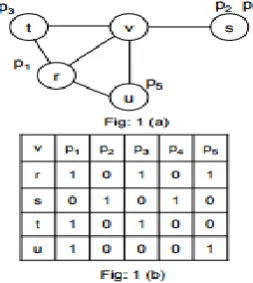
Fig. 1: Example to illustrate coding gains
III.
BACKGROUND AND MOTIVATION
In this area, i initially depict the partial dominant pruning (PDP) calculation displayed in [5]. I at that point spur, through a case, the increases that can be accomplished by adding my coding calculations, to a deterministic broadcast approach, for example, PDP. Give us a chance to consider a 5 hub arrange appeared in Figure 1(a). There are four source hubs, $ with parcel % and, ' with bundles %) (%+*, with bundle %¬-, and with parcel %¬. At the point when each of these hubs executes the PDP calculation, they would confirm that hub is the sending hub that would
cover each of their individual two-bounce
derive that hubs, and, which are neighbors of $ likewise get the bundle.
Given this neighbor gathering table, in the fundamental PDP calculation, hub needs to broadcast each of the parcels %& through %). as no less than one of its neighbors is feeling the loss of this parcel. These outcomes in an aggregate of 0 transmissions for sending. Presently consider a basic XOR-based coding approach. Assume hub broadcasts recuperate % (by basically doing % 1 %&; hub ' recoups %& by essentially doing % 1 %). Therefore, in one transmission, both %& and %( are conveyed to the neighbors of hub. Be that as it may, parcels %-%* %. Should be transmitted exclusively as XOR does not help for this situation. In this manner, an aggregate of 3 transmissions are adequate when a XOR-based coding calculation is utilized. As i talk about later, the issue of registering the arrangement of parcels 4 to XOR with the end goal that the most extreme number of neighbors in and will unravel a missing bundle in one transmission while the rest has become all parcels in 4 is NP-hard. I utilize an avaricious heuristic for my XOR-based coding calculation.
Gives now a chance to consider parcels % and through %¬. Once more, however in a broader setting. Hubs $, each are absent at most 5 parcels. I have to send a fittingly coded blend of parcels %& through %. With the end goal that each of these hubs recuperates their individual missing parcels. So as to think of such a coded blend, consider forward mistake amendment (FEC) codes, particularly Reed-Solomon codes utilized between a sender and a beneficiary, that ensures the property that by sending 6798 bits, the recipient can recoup from deletions in any 8 bits. Presently, in my case, if hub sends 5 bundles utilizing Reed-Solomon codes as a broadcast, each of the hubs $ can freely recuperate up to any 5 missing bundles out of the 0 parcels. Note that, not at all like the XOR based
approach, this requires some clumping.
Notwithstanding, bunches are nearby to a hub and its neighbors, dissimilar to the ages in [1] that are
worldwide in scope. As i appear in detail later, a Reed-Solomon code-based calculation can be utilized to make the coded parcels for broadcasting, bringing about the ideal (least) number of transmissions. Along these lines, in this case, i can diminish the quantity of transmissions for the sending hub, from five to three broadcasts, consequently expanding the broadcast effectiveness of the system.
IV.
CODEB OVERVIEW
I introduce CODEB, a new coding-based broadcast protocol for ad-hoc networks. Similar to COPE [9], it inserts a coding layer between the IP and MAC layer which detects coding opportunities and exploits them to reduce the number of transmissions needed.
CODEB incorporates three main techniques:
Opportunistic listening: Like COPE, hubs in CODEB work in wanton mode furnished with omni-directional radio wires. Hubs snoop all interchanges over the remote medium and store the caught parcels for a constrained period. Hubs likewise intermittently broadcasts the arrangement of hubs it can hear (i.e., its one-bounce neighbors) to all its one-jump neighbors. This enables every hub to construct a two-bounce neighbor chart; given this and the past jump of a parcel %, hub can infer2 that the neighbors of has gotten %. On the off chance that % is a coded parcel different derivations are conceivable as talked about later. In view of this, every hub makes a neighbor gathering table as appeared in Figure 1(b). In the event that another parcel cannot discover any coding openings, the bundle can either be sent to the interface line straightforwardly, or be cushioned in the coding layer for quite a while. For defer tolerant applications, buffering can build coding openings. Note that, i don't broadcast "gathering report"— the arrangement of parcels a hub has gotten.
[5] to choose forwarders and keep up forwarder determination autonomous of coding, along these lines enabling my plan to be utilized with other forwarder choice calculations. The forwarder set is stamped in the bundle header and a hub just rebroadcasts a parcel when it is picked as a forwarder. Note that, because of entrepreneurial tuning in, regardless of whether a hub is a forwarder of a given bundle, it doesn't really need to send it on the off chance that it verifies that every one of its neighbors have gotten the given packet.
Opportunistic coding: By opportunistic coding, i imply that every hub looks at its arrangement of to-be-sent parcels and its present neighbor table acquired through opportunistic tuning in, and powerfully decides whether it can misuse coding chances to send coded packet(s), instead of sending local (non-encoded) packet(s). As talked about some time recently, i exhibit two calculations for coding parcels: 1) a straightforward XOR-based calculation that tries to XOR various bundles in the cushion to empower the most extreme number of hubs to disentangle another parcel and 2) an ideal coding plan that influences utilization of Reed Solomon to code as the coefficients for directly consolidating local parcels. Note that, opportunistic coding for broadcast is altogether different from coding for unicast, for example, COPE [9]. In unicast, just the planned next jump needs to get a given parcel. Be that as it may, for broadcast, every one of the neighbors must get the given bundle. To income the contrast amongst COPE and CODEB, for the XOR based calculation, to locate the ideal number of bundles to XOR, the two issues are NP-hard. Be that as it may, on account of COPE, it is the same as finding a greatest free set, and the issue is difficult to surmise inside a steady factor (decrease excluded for absence of room). On account of CODEB, it is really the same as finding a most extreme hyper diagram coordinating which is likewise difficult to inexact inside a steady factor (see Section V). For the straight code-based arrangement, there exist ideal and
productive polynomial calculations for CODEB. A similar calculation isn't ideal for COPE.
V.
CONCLUSION
Broadcast operation is frequently utilized both to disperse data to all hubs and for discovering unicast smises in military ad-hoc networks. In this way, broadcast effectiveness is imperative. Because of the conceivably powerful nature of ad hoc networks, limited calculations are substantially more hearty and viable with less upkeep overhead. In this project, i demonstrate to consolidate organize coding into a non-coding based confined calculation called PDP for enhancing broadcast effectiveness. While i delineate my approach with regards to PDP, my CODEB coding calculation can conceivably be connected to other non-coding based plans. The calculation tries to improve the coding increases given an arrangement of local bundles and the subset of parcels each neighbor gets. I plan two coding calculations: a XOR-based basic coding calculation that empowers unraveling without sitting tight for more coded parcels to arrive and a Reed-Solomon-based coding calculation that is ideal hover requires a hub to hold up until the point when it gets the fitting number of coded bundles. The principal issue is NP-hard. I diagram a basic avaricious calculation. The second can be understood effectively and ideally utilizing Reed-Solomon codes. My broad recreation demonstrates that non-coding based plan sends as much as 60% more bundles with lessened parcel conveyance proportion. For future work, i mean to investigate more on the unwavering quality issue and execute CODEB in a genuine 802.11-based mobile ad hoc test bed with a specific end goal to completely assess its efficacy.
VI.
REFERENCES
broadcasting: from theory to practice,” in Proceedings of IEEE INFOCOM, Apr 2006. [2]. Z. Haas, J. Halpern, and L. Li, “Gossip-based ad
hoc routing,” in Proceedings of IEEE INFOCOM, June 2002.
[3]. K. M. Alzoubi, P. J. Wan, and O. Frieder, “New distributed algorithm for connected dominating set in wireless ad hoc networks,” in Proceedings of HICSS, 2002.
[4]. H. Lim and C. Kim, “Flooding in wireless ad hoc networks,” Computer Communications Jmynal, 2001.
[5]. W. Lou and J. Wu, “On reducing broadcast redundancy in ad hoc wireless networks,” IEEE Transactions on Mobile Computing, 2002. [6]. R. Ahlside, N. Cai, S. Li, and R. Yeung,
“Network information flow,” IEEE Transactions on Information Theory, 2000.
[7]. e. a. D.S. Lun, “Achieving minimum-cost multicast: A decentralized approach based on network coding,” in Proceedings of IEEE INFOCOM, Mar 2005.
[8]. Y. Wu, P. Chou, and S.-Y. Kung, “Minimum-energy multicast in mobile ad hoc networks using network coding,” IEEE Transactions on communications, 2005.
[9]. S. Katti, D. Katabi, W. Hu, H. Rahul, and M.
Medard, “The importance of being
opportunistic: Practical network coding for wireless environments,” in Proceedings of ACM SIGCOMM, Sep 2006.
[10]. P.S.Naveen Kumar1, Dr P.Harini2 “Scalable Reliable Multicasting in Delay Tolerant Networks with Erasure Correction”.
[11]. S. Ni, Y. Tseng, Y. Chen, and J. Sheu, “The
broadcast storm problem in a mobile ad hoc network,” in Proceedings of ACM MOBICOM, 1999.