International Research Journal of Pharmaceutical and Biosciences(IRJPBS) 3 (2) 01- 07
RESEARCH ARTICLE
International Research Journal of Pharmaceutical and Biosciences
Pri
-
ISSN: 2394 - 5826http://www.irjpbs.com e-ISSN: 2394 - 5834
A Comprehensive Study on Acute Diarrheal Disease and
Bacillary Dysentery Cases in Lakhimpur, Assam.
Jitendra Sharma1 and Dhrubajyoti Gogoi2
1District Epidemiologist, Office of the Joint Director of Health Services, Lakhimpur, Assam. 2Research Associate, Centre for Studies in Biotechnology, Dibrugarh University, Assam.
Article info Abstract
Article history: Received 23 JAN 2016 Accepted 31 JAN 2016
*Corresponding author:
Copyright 2016 irjpbs
A comprehensive study was done to know the prevalence of acute diarrheal disease and bacillary dysentery cases in Lakhimpur district of Assam. The study was undertaken for a period of 36 months to fulfil the above objective. During the study period, 24109 acute diarrheal disease and 9334 bacillary dysentery cases were reported from different areas in Lakhimpur, Assam. However, both disease has shown decreasing trend year after year. A significant numbers of acute diarrheal disease and bacillary dysentery cases were reported from Boginodi and Bihpuria. However, the incidence rate for both the diseases was found maximum in Ghilamora area. From the observation of graphical data, it has been seen that numbers of acute diarrheal disease and bacillary dysentery cases abruptly increased during the month of May, 2013. Beside this, the cases of acute diarrheal disease and bacillary dysentery have crossed the threshold mark in many times. Poor hygiene and sanitary condition was found in the affected areas. Many places in Lakhimpur district are badly affected with flood during rainy season. For this reason, the people are affected with water borne diseases like acute diarrheal disease, bacillary dysentery etc. Active surveillance, continuous awareness and timely treatment can help to reduce the morbidity and mortality of acute diarrheal disease and bacillary dysentery cases.
Key words: Acute diarrheal disease, Bacillary dysentery, Incidence, Lakhimpur, Prevalence.
INTRODUCTION
International Research Journal of Pharmaceutical and Biosciences(IRJPBS) 3 (2) 01- 07
visible blood in the stool. From the analysis of previous studies, it was observed that the people of Lakhimpur district are mostly vulnerable for water borne diseases like acute diarrheal disease and bacillary dysentery cases. This is because; Lakhimpur is a flood prone district in Assam [1]. During the monsoon season, most of the areas are badly affected with flood and in the same time the cases of acute diarrheal disease and bacillary dysentery are increases simultaneously. So that, an in depth study on prevalence of acute diarrheal disease and bacillary dysentery cases are important in Lakhimpur district of Assam. This study provides valuable information on prevalence of acute diarrheal disease and bacillary dysentery cases in terms of different time interval. This study also provides information on high risk areas of acute diarrheal disease and bacillary dysentery cases in Lakhimpur, Assam.
MATERIALS AND METHODS
The study was conducted over a period of 36 months and it starts from 2013 during the month of January and ended in December, 2015. The study covered all government as well as private health institutions in Lakhimpur, Assam. Numbers of acute diarrheal disease and bacillary dysentery cases reported from all health institutions were compiled and analyzed on monthly basis. Apart from this, time and place analysis was done for both the diseases separately. The incidence rate of acute diarrheal disease and bacillary dysentery cases were also calculated on monthly basis in terms of every block public health centres (BPHC). However, for private hospitals and district civil hospital, the incidence rate was not calculated as the population size is not constant for such health institutions. The following statistical formal was used for calculation of incidence rate in terms of BPHCs.
Incidence rate (In terms of 1000 population) = Numbers of cases in a month of specific health institution/Total population under heath institutions and the equal values are multiplied by 1000.
RESULTS AND DISCUSSION
International Research Journal of Pharmaceutical and Biosciences(IRJPBS) 3 (2) 01- 07
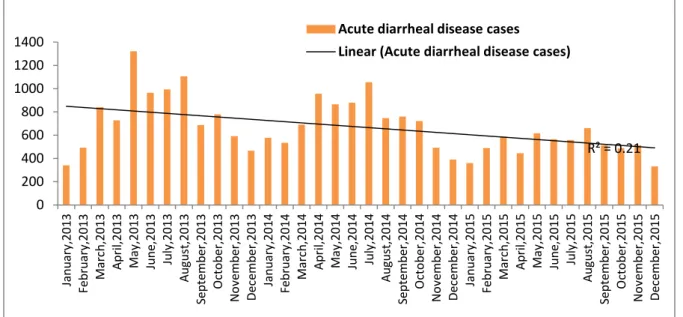
Figure 1: Month wise cases of acute diarrheal disease from 2013 to 2015
From the above graphical representation (Figure 1), it was observed that the numbers of acute diarrheal disease cases crossed the threshold mark at 13 times. Also, an epidemic like situation occurred during the month of May, 2013. It was found that, the cases of acute diarrheal disease increases from March onwards, reached peak during May to August and continued upto year end. The above graph has shown that the overall trend of acute diarrheal disease cases decreased from November, 2014 onwards (Figure 1).
Figure 2: Area wise acute diarrheal disease cases from 2013 to 2015 (In terms of month)
R² = 0.21
0 200 400 600 800 1000 1200 1400 Jan uar y, 20 13 Fe br ua ry, 2013 M ar ch ,2013 Ap ril ,2013 M ay, 2013 Ju ne ,2013 Ju ly, 2013 Aug us t,2 01 3 Se pt em be r,2 01 3 O ct ob er ,2013 N ov em be r,2013 De ce m be r,2 01 3 Jan uar y, 20 14 Fe br ua ry, 2014 M ar ch ,2014 Ap ril ,2014 M ay, 2014 Ju ne ,2014 Ju ly, 2014 Aug us t,2 01 4 Se pt em be r,2 01 4 O ct ob er ,2014 N ov em be r,2014 De ce m be r,2 01 4 Jan uar y, 20 15 Fe br ua ry, 2015 M ar ch ,2015 Ap ril ,2015 M ay, 2015 Ju ne ,2015 Ju ly, 2015 Aug us t,2 01 5 Se pt em be r,2 01 5 O ct ob er ,2015 N ov em be r,2015 De ce m be r,2 01 5
Acute diarrheal disease cases
Linear (Acute diarrheal disease cases)
0 100 200 300 400 500 600 Jan uar y, 20 13 Fe br ua ry, 2013 M ar ch ,2013 Ap ril ,2013 M ay, 2013 Ju ne ,2013 Ju ly, 2013 Aug us t,2 01 3 Se pt em be r,2 01 3 O ct ob er ,2013 N ov em be r,2013 De ce m be r,2 01 3 Jan uar y, 20 14 Fe br ua ry, 2014 M ar ch ,2014 Ap ril ,2014 M ay, 2014 Ju ne ,2014 Ju ly, 2014 Aug us t,2 01 4 Se pt em be r,2 01 4 O ct ob er ,2014 N ov em be r,2014 De ce m be r,2 01 4 Jan uar y, 20 15 Fe br ua ry, 2015 M ar ch ,2015 Ap ril ,2015 M ay, 2015 Ju ne ,2015 Ju ly, 2015 Aug us t,2 01 5 Se pt em be r,2 01 5 O ct ob er ,2015 N ov em be r,2015 De ce m be r,2 01 5
Dhalpur BPHC Bihpuria BPHC Nowboicha BPHC Boginodi BPHC
Ghilamora BPHC Dhakuakhana BPHC NLCH Happy Nursing Home
Dr Das Hospital DM Hospital Saumorpith Hospital Mid Town Hospital
International Research Journal of Pharmaceutical and Biosciences(IRJPBS) 3 (2) 01- 07
Most of the acute diarrheal disease cases were reported from Boginodi area. Out of total 24109 acute diarrheal disease cases, Boginodi area has shared 30.77% (7419/24109) and Bihpuria block contributed 25.34% (6110/24109) cases. A total of 519 acute diarrheal disease cases were observed from Boginodi area during the month of May, 2013 (Figure 2). Beside this, the cases of acute diarrheal disease were found higher in Boginodi block area than other areas in most of the times (monthly basis) of a year (Figure 2). However, the incidence rate of acute diarrheal disease cases was high in Ghilamora area instead of Boginodi BPHC (Figure 3). The mostly vulnerable places for acute diarrheal disease infection are Narayanpur area under Dhalpur and Chauldhuwa and Seajuli area under Boginodi.
Figure 3: Incidence rate of acute diarrheal disease cases from 2013 to 2015
Figure 4: Month wise cases of bacillary dysentery from 2013 to 2015
0 1 2 3 4 5 6 7 8 Jan uar y, 20 13 Fe br ua ry, 2013 M ar ch ,2013 Ap ril ,2013 M ay, 2013 Ju ne ,2013 Ju ly, 2013 Aug us t,2 01 3 Se pt em be r,2 01 3 O ct ob er ,2013 N ov em be r,2013 De ce m be r,2 01 3 Jan uar y, 20 14 Fe br ua ry, 2014 M ar ch ,2014 Ap ril ,2014 M ay, 2014 Ju ne ,2014 Ju ly, 2014 Aug us t,2 01 4 Se pt em be r,2 01 4 O ct ob er ,2014 N ov em be r,2014 De ce m be r,2 01 4 Jan uar y, 20 15 Fe br ua ry, 2015 M ar ch ,2015 Ap ril ,2015 M ay, 2015 Ju ne ,2015 Ju ly, 2015 Aug us t,2 01 5 Se pt em be r,2 01 5 O ct ob er ,2015 N ov em be r,2015 De ce m be r,2 01 5
Dhakuakhana BPHC Ghilamora BPHC Boginodi BPHC
Nowboica BPHC Bihpuria BPHC Dhapur BPHC
R² = 0.1698 R² = 0.1698
0 100 200 300 400 500 600 700 Jan uar y, 20 13 Fe br ua ry, 2013 M ar ch ,2013 Ap ril ,2013 M ay, 2013 Ju ne ,2013 Ju ly, 2013 Aug us t,2 01 3 Se pt em be r,2 01 3 O ct ob er ,2013 N ov em be r,2013 De ce m be r,2 01 3 Jan uar y, 20 14 Fe br ua ry, 2014 M ar ch ,2014 Ap ril ,2014 M ay, 2014 Ju ne ,2014 Ju ly, 2014 Aug us t,2 01 4 Se pt em be r,2 01 4 O ct ob er ,2014 N ov em be r,2014 De ce m be r,2 01 4 Jan uar y, 20 15 Fe br ua ry, 2015 M ar ch ,2015 Ap ril ,2015 M ay, 2015 Ju ne ,2015 Ju ly, 2015 Aug us t,2 01 5 Se pt em be r,2 01 5 O ct ob er ,2015 N ov em be r,2015 De ce m be r,2 01 5
International Research Journal of Pharmaceutical and Biosciences(IRJPBS) 3 (2) 01- 07
From January 2013 to December 2015, 9334 bacillary dysentery cases were reported of which, 41.35% (3860/9334), 29.93% (2794/9334) and 28.71% (2680/9334) cases were observed in 2013, 2014 and 2015 respectively. In 2013, during the month of May-June, cases of bacillary dysentery increased abruptly in Lakhimpur, Assam (Figure 4). After 2013, the incidence of bacillary dysentery comes to a normal trend (Figure 4). Out of 36 months study, the numbers of bacillary dysentery cases crossed the threshold level in 14 months (Figure 4). Like acute diarrheal diseases, the numbers of bacillary dysentery cases also increased form March and reached at peak level during May to August and continued upto year round (Figure 4). So far as bacillary dysentery cases are concerned, again Boginodi areas have shared a major proportion (2403/9334) of it (Figure 5). Apart from Boginodi, a significant numbers (1921/9334) of bacillary dysentery cases were reported from Bihpuria also (Figure 5). The incidence rate of bacillary dysentery cases was found maximum in Ghilamora and Boginodi areas during the year 2013 and afterwards from 2014 to 2015 the incidence rate for the same was found higher in Ghilamora and Bihpuria (Figure 6).
Figure 5: Area wise bacillary dysentery cases from 2013 to 2015 (In terms of month)
Figure 6: Incidence rate of bacillary dysentery cases from 2013 to 2015
0 50 100 150 200 250 300 Jan uar y, 20 13 Fe br ua ry, 2013 M ar ch ,2013 Ap ril ,2013 M ay, 2013 Ju ne ,2013 Ju ly, 2013 Aug us t,2 01 3 Se pt em be r,2 01 3 O ct ob er ,2013 N ov em be r,2013 De ce m be r,2 01 3 Jan uar y, 20 14 Fe br ua ry, 2014 M ar ch ,2014 Ap ril ,2014 M ay, 2014 Ju ne ,2014 Ju ly, 2014 Aug us t,2 01 4 Se pt em be r,2 01 4 O ct ob er ,2014 N ov em be r,2014 De ce m be r,2 01 4 Jan uar y, 20 15 Fe br ua ry, 2015 M ar ch ,2015 Ap ril ,2015 M ay, 2015 Ju ne ,2015 Ju ly, 2015 Aug us t,2 01 5 Se pt em be r,2 01 5 O ct ob er ,2015 N ov em be r,2015 De ce m be r,2 01 5
Dhalpur BPHC Bihpuria BPHC Nowboicha BPHC Boginodi BPHC
Ghilamora BPHC Dhakuakhana BPHC NLCH Happy Nursing Home
Dr Das Hospital DM Hospital Saumorpith Hospital Mid Town Hospital
Bacillary dysentery cases
0 0.5 1 1.5 2 2.5 3 3.5 Jan uar y, 20 13 Fe br ua ry, 2013 M ar ch ,2013 Ap ril ,2013 M ay, 2013 Ju ne ,2013 Ju ly, 2013 Aug us t,2 01 3 Se pt em be r,2 01 3 O ct ob er ,2013 N ov em be r,2013 De ce m be r,2 01 3 Jan uar y, 20 14 Fe br ua ry, 2014 M ar ch ,2014 Ap ril ,2014 M ay, 2014 Ju ne ,2014 Ju ly, 2014 Aug us t,2 01 4 Se pt em be r,2 01 4 O ct ob er ,2014 N ov em be r,2014 De ce m be r,2 01 4 Jan uar y, 20 15 Fe br ua ry, 2015 M ar ch ,2015 Ap ril ,2015 M ay, 2015 Ju ne ,2015 Ju ly, 2015 Aug us t,2 01 5 Se pt em be r,2 01 5 O ct ob er ,2015 N ov em be r,2015 De ce m be r,2 01 5
Dhakuakhana BPHC Ghilamora BPHC Boginodi BPHC
International Research Journal of Pharmaceutical and Biosciences(IRJPBS) 3 (2) 01- 07
In comparison with bacillary dysentery, acute diarrheal disease cases are more prevalent in Lakhimpur (Figure 7). Most of the acute diarrheal disease as well as bacillary dysentery cases were reported from Boginodi and Bihpuria (Figure 2 & 5). However, the incidence rate for both the diseases was found maximum in Ghilamora area. There are several reasons for high incidence of acute diarrheal disease and bacillary dysentery cases in such areas of Lakhimpur district. This is because of the presence of many tea gardens in Boginodi area as well lack of proper hygiene and sanitation among the affected people. Tea garden labours are highly vulnerable for getting diarrheal infection due to poor hygiene. Beside this, few places in Boginodi and most of the places in Ghilamora area are highly affected by flood in every year. So that, the chances of getting diarrheal infection is more in Ghilamora and Boginodi as compared to other areas. According to previous records, major outbreaks of cholera have been taken place in two times from Boginodi area [2,3]. Therefore, special focus should be given on Boginodi area. Beside this, many outbreaks of acute diarrheal disease cases have been reported from different areas in Lakhimpur. In 2013, a major outbreak of acute diarrheal disease caseshas been taken place in Kherajkhat area under Dhalpur block. During that outbreak, a total of 31 acute diarrheal disease cases were recorded with 1 death [4]. For
prevention of such diseases, mass awareness camp is necessary in affected areas regarding proper hygiene and sanitation and such awareness programme should be done in a continuous manner.
Figure 7: Month wise comparison of acute diarrheal disease and bacillary dysentery cases from 2013 to 2015.
CONCLUSION
Acute diarrheal disease and bacillary dysentery cases are mostly prevalent in Ghilamora, Boginodi and Bihpuria areas of Lakhimpur, Assam. Door to door surveillance through active engagement of health workers as well as timely treatment is necessary to reduce the burden.
0 200 400 600 800 1000 1200 1400
Jan
uar
y,
20
13
Fe
br
ua
ry,
2013
M
ar
ch
,2013
Ap
ril
,2013
M
ay,
2013
Ju
ne
,2013
Ju
ly,
2013
Aug
us
t,2
01
3
Se
pt
em
be
r,2
01
3
O
ct
ob
er
,2013
N
ov
em
be
r,2013
De
ce
m
be
r,2
01
3
Jan
uar
y,
20
14
Fe
br
ua
ry,
2014
M
ar
ch
,2014
Ap
ril
,2014
M
ay,
2014
Ju
ne
,2014
Ju
ly,
2014
Aug
us
t,2
01
4
Se
pt
em
be
r,2
01
4
O
ct
ob
er
,2014
N
ov
em
be
r,2014
De
ce
m
be
r,2
01
4
Jan
uar
y,
20
15
Fe
br
ua
ry,
2015
M
ar
ch
,2015
Ap
ril
,2015
M
ay,
2015
Ju
ne
,2015
Ju
ly,
2015
Aug
us
t,2
01
5
Se
pt
em
be
r,2
01
5
O
ct
ob
er
,2015
N
ov
em
be
r,2015
De
ce
m
be
r,2
01
5
International Research Journal of Pharmaceutical and Biosciences(IRJPBS) 3 (2) 01- 07
ACKNOWLEDGEMENT
The authors are thankful to “Dr Abdul Sattar” the Joint Director of Health Services and “Dr Arpana Dutta” the District Surveillance Officer, Lakhimpur for providing the opportunity to carry out the research work.
REFERENCES
[1] Flood hazard zonation of Assam–An atlas by National Remote Sensing Centre. Available
at:http://www.indiawaterportal.org/articles/flood-hazard-zonation-assam-atlas-national-remote-sensing-centre. [Last accessed on 18th December, 2015]
[2] Sharma, J and Gupta, S. 2015. Re-emergence of Cholera in Lakhimpur district of Assam. AJDDT., 2(1):9-15.
[3] Sharma, J., Malakar, M., Soni, M and Pathak, A. 2013. Outbreak of Cholera in some villages of Boginodi area in Lakhimpur district of Assam. Int. J. Pharm. Biol. Sci., 3 (3): 450-454.