SYNTHESIS AND ANTIOXIDANT ACTIVITIES OF 6-
ARYL-3,4-
DIHYDRO-1-(TETRAHYDRO-3,4-DIHYDROXY-5-
(HYDROXYMETHYL)-FURAN-2-YL)-4-PHENYLPYRIMIDINE-2(1H)-THIONE DERIVATIVES
Rupesh Dudhe,
[a,b]Pramod K. Sharma,
[b]Anshu C. Dudhe,
[c]and Prabhakar K. Verma
[d]Keywords: Thiones; synthesis; antioxidant activity index;
A new series of 6-(aryl)-3,4-dihydro-1-(tetrahydro-3,4-dihydroxy-5-(hydroxymethyl)furan-2-yl)-4-phenylpyrimidine-2(1H)-thione derivative (5A-5J) have been synthesized from 6-(substituted aldehyde)-4-phenylpyrimidine-2(1H)-thione derivative (4A-4J) by the Claisen-Schmidt cyclization and Satos fusion. The structures of the synthesized compounds were elucidated by IR, 1H NMR, elemental analysis and mass spectroscopic techniques. The synthesized compounds were screened for in-vitro antioxidant activity using the DPPH(2,2 diphenyl 1-picrylhydrazyl) assay. The activity summarized by antioxidant activity unit (AAU) and antioxidant activity index (AAI). The antioxidant strength of compounds was compared against ascorbic acid.Among them, compounds 5A, 5D, 5E, 5F exhibited significant antioxidant activity.
*Corresponding Authors Tel: 91-9958834215
*E-mail: [email protected]
[a] Uttarakhand Technical University, Dehradun- 284007, Uttarakhand, India.
[b] Department of Pharmacy, Galgotias University, Greater Noida - 201306, Uttar Pradesh, India.
[c] Vishveshwarya institute of medical science, Greater Noida- 203207, Uttar Pradesh, India.
[d] Faculty of Pharmacy, M. D. University, Rohtak- 124001, Haryana. India.
Introduction
Free radicals are well known for playing a dual role in our body, deleterious as well as beneficial. It includes metabolic pathway for its generation.1 It mainly explores the formation and the scavenging of free radicals, as well as the damage caused by free radicals in biological system. Oxidative stress in our body occurs due to excessive generation of free radical and reduced level of antioxidant but at low concentration these radicals performs normal physiological functions of body. Scientific evidence suggests that antioxidants reduce the risk for chronic diseases including cancer and heart disease.2
Free radical may be defined as the atoms, molecules or ions with unpaired electrons in an open shell configuration. Some time free radicals may contain positive, negative or zero charge.3 Free radicals play an important role in combustion, atmospheric chemistry, polymerization, plasma chemistry and many other chemical processes4.
The large generation of free radicals particularly reactive oxygen species and their high activity plays an important role in the progression of great number of pathological disturbances such as inflammation,5 atherosclerosis,6 cancer,7 parkinsonism8 and alzheimer’s disease.9
Figure 1. Effect of free radical in specific body parts
Inflammation is mostly caused through excessive generation of free radical in body. Pyrimidine is a six member heterocyclic compound that contains two nitrogen atoms at the position 1 and 3. Pyrimidines, being an integral part of DNA and RNA impart to diverse pharmacological properties as effective bactericide & fungicides.10 Nitrogen containing heterocyclic ring such as pyrimidine is a promising structural moiety for drug designing. Pyrimidine derivatives form a component in a number of useful drugs and are associated with many biological and therapeutically activities.11 Condensed pyrimidine derivatives have been reported as antioxidant, anti-microbial,12 analgesic,13 anti-viral,14 anti-inflammatory,15 anti-HIV,16 anti-tubercular,17 anti-tumor,18 anti-neoplastic,19 and anti-malarial.20
Experimental
uncorrected. IR spectra (KBr) were recorded on FTIR spectrophotometer (Shimadzu FTIR 8400s, 4000-400 cm -1). The elemental analysis was carried out using Heraus
CHN rapid analyzer. 1HNMR spectra were recorded on a JEOL AL300 FTNMR 300 MHz spectrometer in DMSO using TMS as an internal standard, with 1H resonance frequency of 300 MHz chemical shift values are expressed in ppm. The purity of compounds synthesized, commercial reagents used and monitor of reaction was done by thin layer chromatography (TLC) plates (Silica gel G). Two solvent systems: Toluene: Ethyl acetate: Formic acid (5:4:1) and Ethyl acetate: n-Hexane (3:7) were used to run TLC. The spots were located under iodine vapors and UV light. The activity was performed on instrument UV Visible Spectrophotometer UV-1700 Pharmaspec Shimadzu.
Synthesis of compounds (3A-J):
Equimolar portions of the appropriately substituted aromatic aldehyde (10 mmol, 1 eq.) and acetophenone (10 mmol, 1 eq.) were dissolved in approximately in 15 ml of ethanol. The mixture was allowed to stir for several minutes at 5-10 °C. Then 10ml of 40% aq. NaOH solution was added drop wise to the reaction mixture in the conical flask. The reaction mixture then allowed stirring at room temperature for 4 h on stirrer and precipitate is allowed to stand overnight in refrigerator. Precipitate is formed which is collect by filtration and repeatedly washed with distilled water and finally recrystallized in ethanol. The solvent system was used for the TLC ethyl acetate: n-Hexane (3:7).
Synthesis of 3-(2-methoxyphenyl)-1-phenylprop-2-en-1-one (3A): It was obtained by reaction of acetophenone with 2-methoxy benzaldehyde. Molecular formula: C16H14O2; Molecular weight: 238; m. p.: 52-54°C; Rf. value (Ethyl acetate: n-Hexane; 3: 7): 0.72; IR (KBr, cm -1): 1670.44 (conj. C=C), 1602.74 (Ar. C=C), 1249.79 (Ar.
C-O), 692.40 (Ar. C-H bend).
Synthesis of 3-(4-methoxyphenyl)-1-phenylprop-2-en-1-one (3B): It was obtained by reaction of acetophenone with 4-methoxy benzaldehyde. Molecular formula: C16H14O2; Molecular weight: 238; m. p.: 72-74°C; Rf. value (Ethyl acetate: n-Hexane; 3: 7): 0.76; IR (KBr, cm -1): 1656.74 (conj. C=C), 1600.81 ( Ar. C=C), 1213.14
(Ar. C-O), 688.54 (Ar. C-H bend).
Synthesis of 3-(2-chlorophenyl)-1-phenylprop-2-en-1-one (3C): It was obtained by reaction of acetophenone with 2-chloro benzaldehyde. Molecular formula: C15H11ClO; Molecular weight: 242; m. p.: 55-57°C; Rf. value (Ethyl acetate: n-Hexane; 3: 7): 0.78; IR (KBr, cm -1): 1660.60 (conj. C=C), 1577.66 (Ar. C=C), 1249.79 (Ar.
C-O), 692.40 (Ar. C-H bend), 752.19 (C-Cl).
Synthesis of 3-(4-chlorophenyl)-1-phenylprop-2-en-1-one (3D): It was obtained by reaction of acetophenone with 4-chloro benzaldehyde. Molecular formula: C15H11ClO; Molecular weight: 242; m. p.: 80-84°C; Rf. value (Ethyl acetate: n-Hexane; 3: 7): 0.75; IR (KBr, cm -1): 1658.67 (conj. C=C), 1604.66 (Ar. C=C), 1244.36 (Ar.
C-O), 688.54 (Ar. C-H bend), 710.46 (C-Cl).
Synthesis of 3-(2,4-dichlorophenyl)-1-phenylprop-2-en-1-one (3E): It was obtained by reaction of acetophenone with 2,4-dichlorobenzaldehyde. Molecular formula: C15H10Cl2O; Molecular weight: 277; m. p.: 70-72°C; Rf. value (Ethyl acetate: n-Hexane; 3: 7): 0.72; IR (KBr, cm-1): 1662.52 (conj. C=C), 1608.52 (Ar. C=C), 1286.36 (Ar. C-O), 684.68 (Ar. C-H bend), 713.61 (C-Cl).
Synthesis of 3-(2,6-dichlorophenyl)-1-phenylprop-2-en-1-one (3F): It was obtained by reaction of acetophenone with 2,6-dichlorobenzaldehyde. Molecular formula: C15H10Cl2O; Molecular weight: 277; m. p.: 76-78°C; Rf. value (Ethyl acetate: n-Hexane; 3: 7): 0.74; IR (KBr, cm-1): 1660.60 (conj. C=C), 1612.38 (Ar. C=C), 1265.22 (Ar. C-O), 696.25 (Ar. C-H bend), 719.40 (C-Cl).
Synthesis of 3-(2-fluorophenyl)-1-phenylprop-2-en-1-one (3G): It was obtained by reaction of acetophenone with 2- fluorobenzaldehyde. Molecular formula: C15H11FO; Molecular weight: 226; m. p.: 38-40°C; Rf. value (Ethyl acetate: n-Hexane; 3: 7): 0.78; IR (KBr, cm -1): 1641.31 (conj. C=C), 1612.38 (Ar. C=C), 1244.36 (Ar.
C-O), 686.61 (Ar. C-H bend), 1384.79 (C-F).
Synthesis of 3-(4-fluorophenyl)-1-phenylprop-2-en-1-one (3H): It was obtained by reaction of acetophenone with 2- flurobenzaldehyde. Molecular formula: C15H11FO; Molecular weight: 226; m. p.: 40-42°C; Rf. value (Ethyl acetate: n-Hexane; 3: 7): 0.80; IR (KBr, cm -1): 1696.60 (conj. C=C), 1609.59 (Ar. C=C), 1213.14 (Ar.
C-O), 688.54 (Ar. C-H bend), 1382.87 (C-F).
Synthesis of 3-(4-bromophenyl)-1-phenylprop-2-en-1-one (3I): It was obtained by reaction of acetophenone with 4- bromobenzaldehyde. Molecular formula: C15H11BrO; Molecular weight: 287; m. p.: 112-114°C; Rf. value (Ethyl acetate: n-Hexane; 3: 7): 0.72; IR (KBr, cm -1): 1658.67 (conj. C=C), 1608.52 (Ar. C=C), 1332.72 (Ar.
C-O), 688.54 (Ar. C-H bend), 532.32(C-Br).
Synthesis of 3-(3-nitrophenyl)-1-phenylprop-2-en-1-one (3J): It was obtained by reaction of acetophenone with 3- nitrobenzaldehyde. Molecular formula: C15H11NO3; Molecular weight: 253; m. p.: 68-70°C; Rf. value (Ethyl acetate: n-Hexane; 3: 7): 0.66; IR (KBr, cm -1): 1662.52 (conj. C=C), 1608.52 (Ar. C=C), 1218.93 (Ar.
C-O), 655.75 (Ar. C-H bend), 1529.45 (Ar-NO2), 1352.01 (Ar-NO2).
Synthesis of compounds (4A-J): General procedure:
A mixture of compound i.e. substituted chalcone (0.01 M) (3A-J), add 0.01 M of NaOH and thiourea (0.01 M) was refluxed in ethanol for 8-10 h. The content was concentrated and pours into cold water. The product so obtained was washed with water repeatedly and recrystallized in ethanol.
acid:-5:4:1): 0.74; IR (KBr, cm-1): 3463(N-H), 1645.71(C=O), 3018.39(Ar C-H), 1596.95(C=C), 838.98(C-H Bending), 1132.14(C-O-C).
Synthesis of 3,4-dihydro-4-(4-methoxyphenyl)-6-phenylpyrimidine-2(1H)-thione (4B): It was obtained by reaction of compound 3-(4-methoxyphenyl)-1-phenylprop-2-en-1-one (0.01 M), add 0.01 M of NaOH and thiourea (0.01 M) was refluxed in ethanol. Molecular formula: C17H16N2OS; Molecular weight: 296.39; m. p.:65-67°C; Rf. value (Toluene: Ethyl acetate: Formic acid:-5:4:1):0.68; IR (KBr, cm-1): 3460.06 (N-H), 3099.39 (Ar C-H), 1647.10 (C=O), 1575.73 (C=C), 1132.14 (C-O-C), 865.98 (C-H bending).
Synthesis of 4-(2-chlorophenyl)-3,4-dihydro-6-phenylpyrimidine-2(1H)-thione (4C): It was obtained by reaction of compound 3-(2-chlorophenyl)-1-phenylprop-2-en-1-one (0.01 M), add 0.01 M of NaOH and thiourea (0.01 M) was refluxed in ethanol. Molecular formula: C16H13ClN2S; Molecular weight: 300; m. p.: 60-62°C; Rf. value (Toluene: Ethyl acetate: Formic acid:-5:4:1): 0.74; IR (KBr, cm-1): 1556.45 (NH bend), 1384.79 (C=S str.), 754.12 (C-Cl), 694.33 (Ar. C-H bend).
Synthesis of 4-(4-chlorophenyl)-3,4-dihydro-6-phenylpyrimidine-2(1H)-thione (4D): It was obtained by reaction of compound 3-(4-chlorophenyl)-1-phenylprop-2-en-1-one (0.01 M), add 0.01 M of NaOH and thiourea (0.01 M) was refluxed in ethanol. Molecular formula: C16H13ClN2S; Molecular weight: 300; m. p.: 62-64°C; Rf. value (Toluene: Ethyl acetate: Formic acid:-5:4:1): 0.78; IR (KBr, cm-1): 1558.38 (NH bend), 1384.79 (C=S str.), 764.83 (C-Cl), 696.44 (Ar. C-H bend).
Synthesis of 4-(2,4-dichlorophenyl)-3,4-dihydro-6-phenylpyrimidine-2(1H)-thione (4E): It was obtained by reaction of compound 3-(2,4-dichlorophenyl)-1-phenylprop-2-en-1-one (0.01 M), add 0.01 M of NaOH and thiourea (0.01 M) was refluxed in ethanol. Molecular formula: C16H12Cl2N2S; Molecular weight: 335.25; m. p.: 80-82°C; Rf. value: 0.76 (Toluene: Ethyl acetate: Formic acid:-5:4:1): 0.78; IR (KBr, cm-1): 1598.88 (NH bend), 1384.79 (C=S str.), 761.83 (C-Cl), 690.47 (Ar. C-H bend).
Synthesis of 4-(2,6-dichlorophenyl)-3,4-dihydro-6-phenyl-pyrimidine-2(1H)-thione (4F): It was obtained by reaction of compound 3-(2,6-dichlorophenyl)-1-phenylprop-2-en-1-one (0.01 M), add 0.01 M of NaOH and thiourea (0.01 M) was refluxed in ethanol. Molecular formula: C16H12Cl2N2S; Molecular weight: 335.25; m. p.: 54-56°C; Rf. value: 0.74 (Toluene: Ethyl acetate: Formic acid:-5:4:1): 0.78; IR (KBr, cm-1): 1556.45 (NH bend), 1350.66 (C=S str.), 775.33 (C-Cl), 696.25 (Ar. C-H bend).
Synthesis of 4-(2-fluorophenyl)-3,4-dihydro-6-phenyl-pyrimidine-2(1H)-thione (4G): It was obtained by reaction of compound 3-(2-fluorophenyl)-1-phenylprop-2-en-1-one (0.01 M), add 0.01 M of NaOH and thiourea (0.01 M) was refluxed in ethanol. Molecular formula: C16H13FN2S; Molecular weight: 284.35; Rf. value: (Toluene: Ethyl acetate: Formic acid:-5:4:1): 0.78.
Synthesis of 4-(4-fluorophenyl)-3,4-dihydro-6-phenyl pyrimidine-2(1H)-thione (4H): It was obtained by
reaction of compound 3-(4-fluorophenyl)-1-phenylprop-2-en-1-one (0.01 M), add 0.01 M of NaOH and thiourea (0.01 M) was refluxed in ethanol. Molecular formula: C16H13FN2S; Molecular weight: 284.35; m. p: 54-560C.; Rf. value: 0.75, (Toluene: Ethyl acetate: Formic acid:-5:4:1): 0.78; IR (KBr, cm-1): 1650.44 (Ar. C=C), 1506.30 (NH bend), 1382.87 (C=S str.), 1222.79 (C-F).
Synthesis of 4-(4-bromophenyl)-3,4-dihydro-6-phenyl-pyrimidine-2(1H)-thione (4I): It was obtained by reaction of compound 3-(4-bromophenyl)-1-phenylprop-2-en-1-one (0.01 M), add 0.01 M of NaOH and thiourea (0.01 M) was refluxed in ethanol. Molecular formula: C16H13BrN2S; Molecular weight: 345.26; m. p:77-79°C; Rf. value:0.73 (Toluene: Ethyl acetate: Formic acid:-5:4:1):; I.R. value: 1598.88(Ar. C=C),1576.70(NH bend), 1384.79(C=S str.), 1300.90 (C-Br).
Synthesis of 3,4-dihydro-4-(3-nitrophenyl)-6-phenyl-pyrimidine-2(1H)-thione (4J): It was obtained by reaction of compound 3-(3-nitrophenyl)-1-phenylprop-2-en-1-one (3J) (0.01 M), add 0.01 M of NaOH and thiourea (0.01 M) was refluxed in ethanol. Molecular formula: C16H13N3O2S; Molecular weight: 311.36; m. p: 71-73°C.; Rf. value: 0.66, (Toluene: Ethyl acetate: Formic acid:-5:4:1); I.R. value: 3448.49 (N-H), 3024.18 (C-H, Ar), 1596.95 (C=C), 1384.79 (NO2), 1640.10 (C=O).
Synthesis of compounds (5A-J): General procedure
To a solution of 4 (0.01mol) in ethanol, β-D-ribofuranose-1, 2, 3, 5 tetra, o-acetate (0.01 mol) was added in presence of TsOH and the content were refluxed under vacuum with stirring at 155-160°C for 15-30 min. The vacuum was removed and the reaction mixture was protected from moisture by fitting a guard tube. Stirring was further continued for 10 h and vacuum was applied for 10 min. at every h. The viscous mass thus obtained was dissolve in sodium containing methanol and boiled for 10 min then left for stirring over night at room temperature. The reaction mixture was filtered and the filtrate was evaporated to dryness. The viscous residue, thus obtained was dissolved in ether, filtered, concentrated and kept in refrigerator overnight to get crystalline product.
Synthesis of 3,4-dihydro-1-(tetrahydro-3,4-dihydroxy- 5-(hydroxymethyl)furan-2-yl)-6-(2-methoxyphenyl)-4-phenyl-pyrimidine-2(1H)-thione(5A): It was obtained from the reaction of 3,4-dihydro-4-(2-methoxyphenyl)-6-phenyl-pyrimidine-2(1H)-thione (0.01mol) in ethanol, β-D-ribofuranose-1,2,3,5 tetra-O-acetate (0.01 mol) was added in presence of TsOH. Molecular formula: C22H24N2O5S; Molecular weight: 428.5; m. p.: 55-57°C; Rf. value (Toluene: Ethyl acetate: Formic acid:-5:4:1): 0.92; IR (KBr, cm-1): 3487.06 (N-H Str), 3392.55 (O-H str), 3083.96 (C-H, Ar.), 1558.38 (C=C), 1384.79 (C=S), 1081.99 (C-O-C), 894.91(C-H, bend.); 1HNMR (CDCl
Synthesis of 3,4-dihydro-1-(tetrahydro-3,4-dihydroxy- 5-(hydroxymethyl)furan-2-yl)-6-(4-methoxyphenyl)-4-phenyl-pyrimidine-2(1H)-thione (5B): It was obtained from the reaction of 3,4-dihydro-4-(4-methoxyphenyl)-6-phenyl-pyrimidine-2(1H)-thione (0.01mol) in ethanol, β-D-ribofuranose-1, 2, 3, 5 tetra, o-acetate (0.01 mol) was added in presence of TsOH.Molecular formula: C22H24N2O5S; Molecular weight: 428.5; m. p.: 92-94°C; Rf. value (Toluene: Ethyl acetate: Formic acid:-5:4:1): 0.78; IR (KBr, cm-1):3417.63 (N-H str), 3353.98 (O-H str), 3060.82 (C-H Ar.), 1595.02 (C=C), 1128.28 (C-O-C), 1382.87 (C=S), 815.83 (C-H bend.).; 1HNMR (CDCl3-d, δ, ppm): 1.112-1.290(d, 1H, CH), 2.778(s, 1H, NH), 3.657(s, 3H, OH), 3.671-3.900(d, 2H, CH2), 4.013(s, 3H, OCH3), 4.680(m, 4H, CH), 5.290(d, 1H, CH), 6.903-7.824(m, 9H, Ar-CH). m/e: 428.14, 417.00, 389.1, 372.11, 368.1(100%), 337.1, 327.00, 191.1, 151.00. Elemental analysis calculated/ Found: C, 61.67/61.66; H, 5.65/5.61; N, 6.54/6.50
Synthesis of 6-(2-chlorophenyl)-3,4-dihydro-1- (tetrahydro-3,4-dihydroxy-5-(hydroxymethyl)furan-2-yl)-4-phenylpyrimidine-2(1H)-thione (5C) It was obtained from the reaction of 4-(2-chlorophenyl)-3,4-dihydro-6-phenylpyrimidine-2(1H)-thione (0.01mol) in ethanol, β-D-ribofuranose-1, 2, 3, 5 tetra, o-acetate (0.01 mol) was added in presence of TsOH. Molecular formula: C21H21ClN2O4S; Molecular weight: 432.09; m. p.:96-98°C; Rf. Value:0.89.(Toluene: Ethyl acetate: Formic acid: 5:4:1); IR (KBr, cm-1): 3400.27(N-H str), 3357.84(O-H str), 3155.33(C-H Ar), 1593.09(C=C), 1382.87(C=S), 1132.14(C-O-C), 885.27(C-H bend), 756.04(C-Cl).; 1HNMR (CDCl
3-d, δ, ppm): 1.138(d, 1H, CH), 3.583(s, 1H, NH), 3.764(s, 3H, OH), 3.586(d, 2H, CH2), 5.290(m, 5H, CH), 6.980-8.101(m, 9H, Ar-CH). m/e: 433.0, 415.0, 411.0, 381.1, 309.1, 313.1, 297.1, 279.1, 267.1, 243.1, 239.1(100%), 121.1, 105.1.; Elemental analysis calculated/ Found: C, 58.26/58.22; H, 4.89/4.81; N, 6.47/6.49.
Synthesis of 6-(4-chlorophenyl)-3,4-dihydro-1- (tetrahydro-3,4-dihydroxy-5-(hydroxymethyl)furan-2-yl)-4-phenylpyrimidine-2(1H)-thione (5D) It was obtained from the reaction of 4-(4-chlorophenyl)-3,4-dihydro-6-phenylpyrimidine-2(1H)-thione (0.01mol) in ethanol, β-D-ribofuranose-1, 2, 3, 5 tetra, o-acetate (0.01 mol) was added in presence of TsOH. Molecular formula: C21H21ClN2O4S; Molecular weight: 432.92; m. p. 86-88°C; Rf. value 0.64. (Toluene: Ethyl acetate: Formic acid:-5:4:1); IR (KBr cm-1): 3413.77(N-H), 3371.34(O-H str) ,3070.46(C-H, Ar.), 1568.02(C=C), 1380.94(C=S), 1157.21(C-O-C), 817.76(C-H bend.), 723.26 (C-Cl).; 1HNMR (CDCl
3-d, δ, ppm): 1.124-1.360(d, 2H, CH), 3.331(s, 1H, NH), 3.353-3.663(s, 3H, OH), 3.665-3.707(d, 2H, CH2), 3.707-4.548(m, 4H, CH), 5.290(m, 9H, Ar-CH).; m/e: 434.1, 426.2, 414.1, 386.1, 380.2, 362.2, 316.1, 306.1, 304.1, 294.1, 266.2, 244.00, 239.00, 217.1 (100%), 130.2, 114.0, 110.1.; Elemental analysis calculated/Found : C, 61.40/61.45; H, 5.98/5.99; N, 5.73/5.69.
Synthesis of 6-(2,4-dichlorophenyl)-3,4-dihydro-1- (tetrahydro-3,4-dihydroxy-5-(hydroxymethyl)furan-2-yl)-4-phenylpyrimidine-2(1H)-thione (5E)It was obtained from the reaction of 4-(2,4-dichlorophenyl)-3,4-dihydro-6-phenyl-pyrimidine-2(1H)-thione (0.01mol) in ethanol,
β-D-ribofuranose-1, 2, 3, 5 tetra, o-acetate (0.01 mol) was added in presence of TsOH. Molecular formula: C21H20F2N2O4S; Molecular weight: 434.46; m. p.: 72-74C; Rf. value 0.67. (Toluene: Ethyl acetate: Formic acid:-5:4:1); IR (KBr cm-1): 3452.34(N-H), 3377.12(O-H, str), 3062.75(C-H, Ar), 1562.23(C=C), 1369.37(C=S), 1153.35(C-O-C), 865.98(C-H bend), 759.90(C-Cl). 1 H-NMR (CDCl3-d, δ, ppm): 1.117-1.295(d, 1H, CH), 2.800(s, 1H, NH), 3.323-3.402(s, 3H, OH), 3.562-3.662(d, 2H, CH2), 3.677-4.685(m, 4H, CH), 5.290(d, 1H, CH), 6.910-7.645(m, 8H, Ar-CH); m/e: 433.0, 423.0, 378.0, 363.0, 345.0, 342.0, 308.1, 301.0, 263.0 (100%), 243.1, 242.1, 208.2, 165.0,105.0.; Elemental analysis calculated: C, 58.06; H, 4.64; N, 6.45.
Synthesis of 6-(2,6-dichlorophenyl)-3,4-dihydro-1- (tetrahydro-3,4-dihydroxy-5-(hydroxymethyl)furan-2-yl)-4-phenylpyrimidine-2(1H)-thione (5F): It was obtained from the reaction of 4-(2,6-dichlorophenyl)-3,4-dihydro-6-phenylpyrimidine-2(1H)-thione (0.01mol) in ethanol, β-D-ribofuranose-1, 2, 3, 5 tetra, o-acetate (0.01 mol) was added in presence of TsOH. Molecular formula: C21H20Cl2N2O4S; Molecular weight: 467.37; m. p.: 105-107C; Rf. value 0.91. (Toluene: Ethyl acetate: Formic acid:-5:4:1); IR (KBr cm-1) 3421.48(N-H), 3338.55(0-H, str), 3049.25(C-H, Ar.), 1596.95(C=C), 1132.14(C-O-C), 1384.79(C=S), 817.60(C-H bend.), 761.83(C-Cl). 1 H-NMR (CDCl3-d, δ, ppm): 1.117-1.295(d, 1H, CH), 2.800(s, 1H, NH), 3.323-3.402(s, 3H, OH), 3.562-3.662(d, 2H, CH2), 3.677-4.685(m, 4H, CH), 5.290(d, 1H, CH), 6.910-7.645(m Ar-CH).; m/e: 467.05, 396.1, 391.1, 370.0, 352.1, 332.1, 326.1 (100%), 308.1, 295.1, 285.0, 267.1, 149.1, 135.2, 131.1. Elemental analysis calculated: C, 53.97; H, 4.31; N, 5.99
Synthesis of 6-(2-fluorophenyl)-3,4-dihydro-1-(tetrahydro -3,4-dihydroxy-5-(hydroxymethyl)furan-2-yl)-4-phenyl-pyrimidine-2(1H)-thione (5G) It was obtained from the reaction of 4-(2-fluorophenyl)-3,4-dihydro-6-phenyl-pyrimidine-2(1H)-thione (0.01mol) in ethanol, β-D-ribofuranose-1, 2, 3, 5 tetra, o-acetate (0.01 mol) was added in presence of TsOH. Molecular formula: C21H21FN2O4S; Molecular weight: 416.47; Rf. value 0.91. (Toluene: Ethyl acetate: Formic acid:-5:4:1); IR (KBr, cm-1): 3425.34(N-H), 3317.34(O-H Str), 3060.82(C-H, Aromatic), 1598.88(C=C), 1384.79(C=S), 1126.35(C-O-C), 815.83(C-H bending), 1217.00(C-F).; 1H-NMR (CDCl3-d, δ, ppm): 1.06484(d, 1H, CH), 2.50791(s, 1H, NH), 2.54789(s, 3H, OH), 3.42824(d, 2H, CH2), 4.45649(m, 4H, CH), 6.54012(d, 1H, CH), 6.58801-7.182530(m, 9H, Ar-CH). m/e: 414.8, 280.3, 237.0 (100%), 225.1, 215.3. Elemental analysis calculated: C, 60.56; H, 5.08; N, 6.73;
H-NMR (CDCl3-d, δ, ppm): 2.009-2.370(d, 1H, CH), 2.520(s, 1H, NH), 2.632-2.752(d, 2H, CH2), 3.460(s, 3H, OH), 3.564(m, 4H, CH), 5.290(d, 1H, CH), 7.090-7.773(m, 9H, Ar-CH). m/e: 415.02, 347.0, 342.0, 340.0, 336.9 , 324.0, 239.0, 236.9 (100%), 208.0, 132.2, 116.1.; Elemental analysis: C, 60.56; H, 5.08; N, 6.73.
Synthesis of 3,4-dihydro-1-(tetrahydro-3,4-dihydroxy- 5-(hydroxymethyl)furan-2-yl)-6-(3-nitrophenyl)-4-phenyl-pyrimidine-2(1H)-thione (5I): It was obtained from the reaction of 3,4-dihydro-4-(3-nitrophenyl)-6-phenyl-pyrimidine-2(1H)-thione (0.01mol) in ethanol, β-D-ribofuranose-1, 2, 3, 5 tetra, o-acetate (0.01 mol) was added in presence of TsOH. Molecular formula: C21H21N3O6S; Molecular weight: 443.47; m. p.:112-114°C; Rf. value 0.87. (Toluene: Ethyl acetate: Formic acid:-5:4:1); IR (KBr cm-1): 3409.91(N-H), 3332.76(O-H str), 3039.60(C-H, Ar.), 1602.74(C=C), 1384.79(C=S), 1126.35(C-O-C), 815.83(C-H bend.), 1521.73(Ar-NO2).; 1H-NMR (CDCl
3-d, δ, ppm): 1.254(d, 1H, CH), 2.420(s, 1H, NH), 2.905(s, 3H, OH), 3.896(d, 2H, CH2), 4.295(m, 5H, CH), 6.499-7.259(m, 9H, Ar-CH). m/e: 444.7, 426.9, 334.9 , 332.9 (100%), 295.9, 222.9,186.9. Elemental analysis calculated: C, 56.87; H, 4.77; N, 9.48.
Synthesis of 3,4-dihydro-1-(tetrahydro-3,4-dihydroxy- 5-(hydroxymethyl)furan-2-yl)-6-(3-nitrophenyl)-4-phenyl-pyrimidine-2(1H)-thione (5J): It was obtained from the reaction of 3,4-dihydro-4-(3-nitrophenyl)-6-phenyl-pyrimidine-2(1H)-thione thione (0.01mol) in ethanol, β-D-ribofuranose-1, 2, 3, 5 tetra, o-acetate (0.01 mol) was added in presence of TsOH. Molecular formula: C21H21N3O6S; Molecular weight: 443.47; m. p.:105-107°C; Rf. value 0.87. (Toluene: Ethyl acetate: Formic acid:-5:4:1); IR (KBr cm-1): 3409.91(N-H), 3332.76(O-H str), 3039.60(C-H, Ar.), 1602.74(C=C), 1384.79(C=S), 1126.35(C-O-C), 815.83(C-H bend.), 1521.73(Ar-NO2).; 1H-NMR (CDCl
3-d, δ, ppm): 1.254(d, 1H, CH), 2.420(s, 1H, NH), 2.905(s, 3H, OH), 3.896(d, 2H, CH2), 4.295(m, 5H, CH), 6.499-7.259(m, 9H, Ar-CH). m/e: 444.7, 426.9, 334.9 , 332.9 (100%), 295.9, 222.9,186.9. Elemental analysis calculated: C, 56.87; H, 4.77; N, 9.48.
Pharmacological screening
Free radical scavenging method by DPPH(2,2 diphenyl 1-picrylhydrazyl) Assay
Various concentrations of test compound 10-200 µg ml -1 were prepared in the methanol and 1ml of each
concentration was added to 1ml of 0.1mM solution of DPPH. The mixture was shaken vigorously and allowed to stand for 30 minutes in dark place, absorbance at 517 nm was determined by UV spectrometer and the percentage scavenging activity was calculated. A blank solution of DPPH was prepared and Ascorbic acid was used as reference compound. All the compounds were tested and analyzed by their absorbance. The equation used to measure free radical scavenging is:
where
Ac – absorbance of control
At – absorbance of test compound
A lower value of mean inhibitory concentration shows a higher free radical scavenging activity (S, in %).
Scheme 1. Reaction Scheme of compounds 5A-J.
AAU equation
The free radical scavenging fitting curve equation (y = BX + D) when combined with theoretical value of DPPH concentration and absorbance (y = KX) to assume the index antioxidant activity unit (AAU), it is defined as “one mole of DPPH free radical was completely scavenged to consume amount (mole number) of the scavenger”. Lower the value of AAU, stronger the antioxidant ability of compound.
where
R - solution volume ratio of sample to solution volume of DPPH for each sample
B - slope of fitting equation of free radical scavenging ratio.
C - initial concentration of DPPH solution observed M - molecular weight of sample.
Result and discussion
The scavenging effects of the synthesized compounds
5A-5J on the DPPH radical was evaluated according to the Leong and Shui et al. Various concentrations (10, 25, 50, 75, 100 and 200 µg/ml) of the test compounds in methanol were added to a 0.1mM solution of DPPH radical in methanol. All the tests and analysis were undertaken on three replicates and the results averaged. Ar CHO Ar - CH = CH - CO - C6H5
Actophenone
aq. NaOH
Thiourea
H N
NH
Ar S
Fusion, TsOH Cat
H N
N
Ar S
O OH
HO OH MeoNa/MeOH
(1)
(2) (3A-J)
(4A-J)
(5A-J) 1,2,3,5-Tetra o-acetyl beta D- ribofuranose
Ar=2-OCH3
4-OCH3
2-Cl 4-Cl 2,4-di Cl 2,6-di Cl 2-F 4-F 4-Br 3-NO2
Under Reflux
Under Reflux
100 (1)
Ac At S
Ac
394.32 R (2)
AAU
B C M
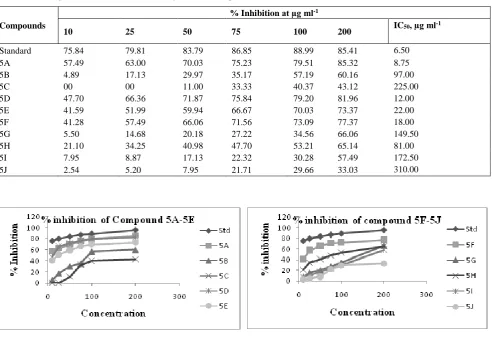
Table 1. Percentage inhibition and IC50 value of synthesized compounds 5A-5J.
Compounds
% Inhibition at µg ml-1
10 25 50 75 100 200 IC50, µg ml
-1
Standard 75.84 79.81 83.79 86.85 88.99 85.41 6.50
5A 57.49 63.00 70.03 75.23 79.51 85.32 8.75
5B 4.89 17.13 29.97 35.17 57.19 60.16 97.00
5C 00 00 11.00 33.33 40.37 43.12 225.00
5D 47.70 66.36 71.87 75.84 79.20 81.96 12.00 5E 41.59 51.99 59.94 66.67 70.03 73.37 22.00 5F 41.28 57.49 66.06 71.56 73.09 77.37 18.00
5G 5.50 14.68 20.18 27.22 34.56 66.06 149.50
5H 21.10 34.25 40.98 47.70 53.21 65.14 81.00
5I 7.95 8.87 17.13 22.32 30.28 57.49 172.50
5J 2.54 5.20 7.95 21.71 29.66 33.03 310.00
Figure 2. % inhibition compounds 5A-5J at a concentration of 10-200 µg ml-1 incubated for 30 minute with DPPH (0.1mM) at 517 nm as compared to standard ascorbic acid.
Figure 3. % inhibition compounds 5A-5J at a concentration of 10-200 µg/ml incubated for 30 minute with DPPH (0.1mM) at 517 nm as compared to standard ascorbic acid.
Table 2. AAU data of synthesized compound 5A-J
No. Compound Slop r2 AAU 1 5A 0.2799 0.6729 8.35 2 5B 0.3118 0.9091 7.49 3 5C 0.2554 0.8854 9.07 4 5D 0.2773 0.6612 8.30 5 5E 0.2619 0.7121 8.80 6 5F 0.2753 0.6989 7.78 7 5G 0.3175 0.9956 7.57 8 5H 0.2725 0.8694 8.81 9 5I 0.2725 0.9965 7.60 10 5J 0.1810 0.9192 12.47
The antioxidant activity of tested compounds revealed that the reaction with DPPH is a time dependent fashion and higher the concentration of the tested compounds showed higher the radical scavenging activity as well as % inhibition and AAU. However, Compounds 5A, 5D, 5E, 5F exhibited potent activity compared by AAU and IC50 value. The profiles of the scavenging effect of synthesized compounds are comparable to that of ascorbic acid as reference compound. Introduction of chloro, methoxy, dichloro (at 2, 4 and 2, 6 positions) group showed almost equivalent antioxidant activity as that of ascorbic acid.
Based on the structure activity relationships, it can be concluded that the presence of halogen group and methoxy group at position 2nd, 4th and 6th exhibited potent activity.
Figure 4. Comparison of AAU and IC50 value of synthesized compounds.
Conclusion
References
1Gupta, J. K., Sharma, P. K., Dudhe, R., Chaudhary, A., Singh, A., Verma, P. K., Mondal, S. C.,Yadav, R. K. and Kashyap, S.,
Med. Chem. Res., 2012, 21, 1625.
2Sharma, R. N., Xavier, F. P., Vasu, K. K., Chaturvedi, S. C. and Pancholi, S. S., J. Enz. Inhib. Med. Chem., 2009, 24, 890. 3Jaen, J. C., Wise, L. D., Caprathe, B. W., Tecle, H., Bergmeier, S.,
Humblet, C.C., J Med Chem.,1990, 33, 311.
4Chaudhary, A., Sharma, P. K., Verma, P. K., Kumar, N. and Dudhe, R., Med. Chem. res., 2012, 21,3629
5Bell, F. W., Cantrell, A. S., Hogberg, M., Jaskunas, S. R., Johansson, N. G. and Jordon, C. L., J. Med..Chem., 1995, 38, 4929.
6Ergenc, N., Capan, G., Gunay, N. S., Ozkirimli, S., Gungor, M., Ozbey, S. and Kendi, E. Arch. Pharm. Med. Chem., 1999, 332.
7Hargrave, K. D., Hess, F. K. and Oliver, J. T., J. Med. Chem., 1983,26,1158.
8Carter, J. S., Kramer, S., Talley, J. J., Penning, T., Collins, P. and Graneto, M.J. Bioorg Med. Chem. Lett. ,1999, 9, 1171. 9Badorc, A., Bordes, M.F., Decointet, P., Savi, P., Bernat, A. and
Lale, A., J. Med. Chem.,1997, 40, 3393.
10Rudolph, J., Theis, H., Hanke, R., Endermann, R., Johannsen, L. and Geschke, F. U., J. Med. Chem.,2001, 44, 619.
11Gursoy, E. and Guzeldemirci, N. U. Eur. J. Med. Chem.,2007,
42, 320.
12Desai, K., Patel, R. and Chikhalia, K., J. Ind. Chem., 2006, 45, 773.
13Amr, A. E., Nermien, M. S. and Abdulla, M. M., Monatsh. Chem. 2007,138, 699.
14Fujiwara, N., Nakajima, T., Ueda, Y., Fujita, H. and Kawakami, H., Bioorg. Med. Chem.,2008,16, 9804.
15Ballell, L., Field, R.A., Chung, G.A.C., and Young, R.J. Bioorg.
Med. Chem. Lett. 2007, 17, 1736.
16Wagner, E., Al-Kadasi, K., Zimecki, M., and Sawka, D. W. Eur J
Med Chem., 2008,43, 677.
17Cordeu, L., Cubedo, E., Bandres, E., Rebollo, A., Saenz, X., and Chozas, H. Bio. or.g Med. Chem.,2007, 15, 1659.
18Gupta,J. K., Sharma,P.K., Dudhe,R., Mondal,S.C., Chaudhary, A., and Verma,P.K., Acta Poloniae Pharmaceutica and Drug Research, 2011,68(5) 785.
19Ukrainets, I.V., Tugaibei, I.A., Bereznykova, N.L., Karvechenko, V.N., Turov, A.V. Chem. Heterocycl. Compd, 2008, 5, 565. 20Kurono, M., Hayashi, M., Miura, K., Isogawa, Y., Sawai, K.,
Chem Abstr, 1988,109, 37832.