mission with supporting goals, objectives and values.
a. A clear and concise mission statement for the program as a whole.
The mission of the CSULB Health Science MPH Program is to provide the best graduate education and training in a multiethnic and urban environment to develop highly competent professionals and leaders in community health education and public health. The program strives to afford excellence in teaching, conduct research, and provide service to local, regional, national, and international populations living within the surrounding communities, while making a significant contribution toward increasing health equity for underserved populations.
b. A statement of values that guides the program.
Related to the missions of the University, College, and Department, the program espouses the following four values, which are announced to students upon admission and reinforced through course work, internship experiences, published materials, and public statements. The values that guide the program represent the consensus of stakeholders, including faculty, students, and community members.
• Collaboration: Forming collaborative partnerships is imperative to effectively addressing public health issues. The value of networking to form and maintain
collaborations is fostered through the program’s education and training activities that promote effective communication and teamwork. Through collaborative activities, among faculty, students, and community engagement, public health services will be improved. • Equity: The program promotes and maintains an opportunity structure that fosters
respect for others, treating all people as individuals, valuing each person’s points of view, and giving due regard for the feelings, wishes, rights, and traditions of others. Welcoming ethnic, social, cultural, and socio-economic diversity among the students and faculty, and appreciating how diversity enriches public health work. The program focuses educational and research activities on achieving health equity through influencing health care quality and delivery, policy, prevention efforts, dissemination of health promotion information, and supporting individual self-empowerment to make sound health decisions.
• Excellence: Among the most important values for the department is the creation of an excellent educational experience and continuously assessing performance. The criterion of an excellent education is one that covers a full range of up-to-date competencies that are essential to the effective practice of public health education. High quality instruction is provided by instructors who are well-qualified in their disciplines and who maintain currency in public health activities.
• Leadership: The program seeks to develop leadership skills for addressing crucial public health challenges. This value is demonstrated by the program’s faculty members, guest lecturers, and specific didactic content of the curriculum. Professional instruction in learning negotiation, team building, motivation and goal setting skills are also provided.
c. One or more goal statements for each major function through which the program intends to attain its mission, including at a minimum instruction research and service.
1.1. Mission
The MPH graduate program goals are to:
A. Achieve excellence in teaching and learning to bolster competency in the fields of health education and public health in a multiethnic and urban environment to develop diverse professionals and leaders.
B. Foster research and intervention programs that tend to the health needs of underserved populations in our community.
C. C. Engage in service activities across various sectors of public health practice, addressing the needs of the profession, university, and the community.
d. A set of measurable objectives with quantifiable indicators related to each goal statement as provided in Criterion 1.1.c. In some cases, qualitative indicators may be used as appropriate.
Goals & Objectives:
Goal Measurable Objective
A. Achieve excellence in teaching and learning to bolster competency in the fields of health education and public health in a multiethnic and urban environment to develop diverse professionals and leaders.
A1. All graduate program faculty members will maintain student evaluation averages above 4.00, annually.
A2a. Every four years, course content will be assessed by the department curriculum committee to ensure relevant program competencies are being met across the curriculum.
A2b. Development of at least one new course will occur, as warranted based on results of curriculum review. A3. Technology use is infused into all courses, at all times. A4. All students will maintain an average GPA of at least 3.0,
annually.
A5. At least 90% of students will pass the comprehensive exam upon first attempt, annually.
A6. 80% of students will report being satisfied or very satisfied with instruction on exit surveys, by program end.
A7. 80% of students will report that they agree or strongly agree that academic advising was helpful, by program end.
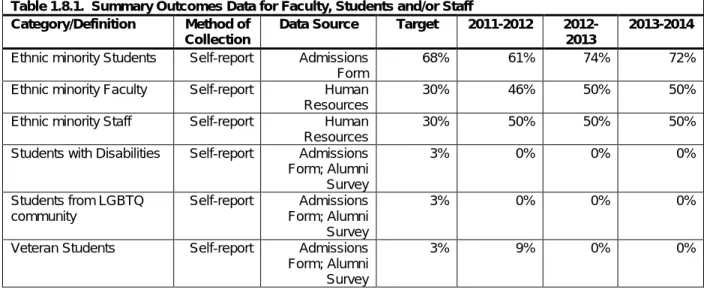
A8. To ensure diverse instructor role models, every three years, the program faculty members’ ethnic make-up will better match that of the program’s student population by 2% in at least one group.
A9. To support training of diverse professionals, every three years, the program’s student body ethnic make-up will better match that of the surrounding community by 2% in at least one group. B. Foster research and intervention programs that tend to the health needs of underserved populations in our community.
B1a. A department average of at least one grant proposal per faculty member will be submitted for funding, annually. B1b. At least 50% of these annually submitted grant proposals will
focus on research related to underserved populations.
B2a. A department average of at least one conference presentation per faculty member will be completed, annually.
B2b. 50% of these annual conference presentations will address health issues of underserved populations.
B3. All faculty members will publish at least one scholarly publication every two years.
B4a. 75% of students will work with faculty on a research or intervention project by program end.
B4b. By program end, at least 50% of those faculty projects that
Goal Measurable Objective
students worked on will have been relevant to underserved populations.
B5. By program end, all students will have gained experience in writing a complete research grant proposal.
B6. By program end, 80% of students will have a scholarly paper or presentation included in an e-portfolio.
C. Engage in service activities across various sectors of public health practice, addressing the needs of the profession, university, and the community.
C1a. Every two years, all faculty members will have participated in at least one significant service activity that benefited the public health profession.
C1b. Within a four-year period, 50% of service activities will be performed in community organizations that target underserved populations.
C2. Annually, 80% of program faculty members will maintain at least one active collaborative relationship that addresses health disparities in the community.
C3. All faculty members will serve on departmental, college, or university committees, annually.
C4a. By program end, 100% of graduates will have provided service to the community and the profession.
C4b. By program end, 50% of these service activities will relate to underserved populations.
e. Description of the manner through which the mission, values, goals and objectives were developed, including a description of how various specific stakeholder groups were involved in their development.
The current version of the program’s mission, values, goals, and objectives (MGOs) were developed as a result of input from program stakeholders, including: graduate students, the program’s Community Advisory Board, and the department faculty. These groups were presented with the MGOs and asked to provide input. Faculty members reviewed and
revised MGOs between September and October 2014 during faculty meetings and via email. Active participation of graduate students was solicited through feedback from those
students serving on the program’s Community Advisory Board. Lunch meetings were convened in July and September 2014 with small groups of the program’s Community Advisory Board members, and they were asked to provide their thoughts on how well these MGOs matched their vision of public health MGOs (see Resource File (RF) Meeting Minutes, Community Advisory Board). No specific corrections or edits to the MGOS were advised by the Community Advisory Board members.
f. Description of how the mission, values, goals and objectives are made available to the program’s constituent groups, including the general public, and how they are routinely reviewed and revised to ensure relevance.
The MGOs are disseminated using a variety of venues to make them available to the public and stakeholder groups. They are distributed via the graduate program website
(http://www.csulb.edu/colleges/chhs/departments/health-science/graduate-program/), the graduate student handbook, posted on BeachBoard, and a bulletin located outside the program Director/Coordinator’s office. During orientation for new students, these program elements are specifically reviewed with all students (via PowerPoint presentation since Spring 2014).
1.1. Mission
Prior to this 2014 accreditation process, MGOs had been reviewed from time to time, without any systematic cycle. The MGOs have not been reviewed in the past 3 years due to constant leadership turnover (two Department Chair changes from 2011-2012 and three changes in the Program Director from 2011-2013). In summer 2014, revision commenced, and included review and solicitation of feedback on general content and relevance to the field by the department faculty members and the Community Advisory Board members (see RF Meeting Minutes). This process will be implemented every three years to continually ensure the program’s MGOs are in line with current public health practice and demands.
g. Assessment of the extent to which this criterion is met and an analysis of the program’s strengths, weaknesses and plans relating to this criterion.
This criterion is met with commentary. Strengths
The primary program strength is that the mission, values, goals, and objectives are in line with that of CEPH, the Institution, College, and Department. The program has a clear mission statement, supporting goals and objectives. Further, they have been reviewed and approved by all relevant stakeholders. The mission, goals, and objectives of the Health Science MPH Program reflect the program’s commitment to the development of proficient and skilled public health practitioners as well as master’s level researchers.
Weaknesses
The major weakness is that consistent monitoring and revision of MGOs has not occurred on a continuous or regular basis.
Plans to Improve
The graduate program will maintain an ongoing and comprehensive strategic planning process to ensure programmatic quality and responsiveness to the needs of its graduate students and stakeholders. MGOs will be reviewed and revised by faculty and the
Community Advisory Board members every three years. This will ensure that the program remains responsive to the needs of its multiple constituents while providing a strong educational foundation in public health.
1.2. Evaluation. The program shall have an explicit process for monitoring and evaluating its overall efforts against its mission, goals and objectives; for assessing the program’s effectiveness in serving its various
constituencies; and for using evaluation results in ongoing planning and decision making to achieve its mission. As part of the evaluation process, the program must conduct an analytical self-study that analyzes
performance against the accreditation criteria defined in this document. a. Description of the evaluation processes used to monitor progress against
objectives defined in Criterion 1.1.d, including identification of the data systems and responsible parties associated with each objective and with the evaluation process as a whole. If these are common across all objectives, they need be described only once. If systems and responsible parties vary by objective or topic area, sufficient information must be provided to identify the systems and responsible party for each.
There has been a gap in regular explicit assessment of program objectives. Thus, some objectives developed in 2014 may not have been assessed in recent years; when possible, some objectives were proxy measured by existing tools (these have been noted in 1.2.c; during future regularly scheduled MGO revisions, adjustments to assessments will be made immediately to ensure data is collected for proper evaluation). As part of the development of a new strategic planning process, assessments are now monitored regularly by the Accreditation Committee (see RF Timeline). The Accreditation Committee is a standing committee that will ensure all activities related to accreditation are completed according to timeline. The Program Director/Coordinator is a responsible party associated with each objective and with the evaluation process as a whole; additional responsible parties are identified below (if no responsible party is listed below, the Program Director / Coordinator is the responsible party).
Assessment & Description Procedures
Course Assessments
Evaluation of student performance on Program Competencies and course-level Student Learning Objectives
Student performance on assessments such as projects, exams, papers, and final course grades are evaluated by course instructors.
Student Perceptions of Teaching (SPOT)
evaluation utilizes standardized forms to
evaluation instructors. All instructors are required to evaluate at least twocourses.
Evaluation occurs during the last two weeks of instruction, every semester. A student
volunteer administers and returns the
evaluations directly to the department office. Faculty Affairs compiles the data and provides a summary report to the department. For the outcome evaluation for CEPH accreditation, one item is anonymously entered into an electronic database for all graduate courses. The department coordinator sets up this process, then provides the data to the accreditation committee member working on the self-study.
Survey Assessments
Exit Survey, administered to all
students completing the program (at the end of the graduating semester),
assesses program-end objectives,
Paper surveys are administered by the Program Director/Coordinator, who also
enters and maintains the data electronically as well as compiles data to report for program
1.2. Evaluation
Assessment & Description Procedures
including student evaluation of curriculum and instruction, faculty-research collaborations, grant writing, and scholarly work.
outcomes. Data are reported to the
Accreditation Committee Chairperson or the Program Director/Coordinator inserts the summary directly into reports.
Alumni Survey collects information regarding employment (within one year of graduation and current), activities while in the program, assessment of the utility of competencies, and program satisfaction. This survey will now be administered every 2 years, in the Fall semester
The surveys are maintained by the Program Director/Coordinator and Accreditation Committee Chairperson. Surveys are administered via Qualtrics online software, allowing for export of all data into SPSS databases. The Alumni Survey is administered by the University’s Alumni Records office, while the Faculty Survey is sent to faculty by the Department Coordinator. The
Accreditation Committee Chairperson runs analyses to report on data needed for program outcomes.
Faculty Accreditation Survey,
completed annually (in August, reporting for the previous academic year) by all department full-time faculty, collects data on grant proposal submissions, conference presentations, scholarly publications, service activities, collaborative relationships, and committee membership. Committee Assessments
Curriculum Committee undertakes evaluation of curriculum every four years (timeline allows for development,
university approval, and implementation of any new courses). Standardized rating systems provide quantitative data while committee minutes will provide
qualitative data results. Responsible parties include the curriculum committee chair as well as program faculty.
Assessment includes systematic review of standard course outlines (and syllabi) and matrices of program competencies and technology use covered across courses. The Accreditation Committee compiles matrices of courses and program competencies for the review process.
Qualitative feedback from community advisory board members will also be obtained
(collected by Accreditation Committee). RTP Committees use data from course
evaluations and RTP review of non-tenured faculty for evaluation of faculty members’ teaching, research and
service. Faculty are evaluated at 2 years, 3 years, 6 years, and every 5 years thereafter (prior to 2012-2013, reviews occurred annually).
Department Coordinator ensures all
evaluations are collected and submitted, and that reports are provided to the Chair and faculty. Academic Affairs maintains these data and provides reports to the department.
University Records Assessments Human Resource records maintained in the department will be accessed to assess faculty ethnic make-up.
Department Coordinator and Accreditation Committee Chairperson work together to identify data needed to request data from Academic Affairs. Academic Affairs provides data, Accreditation Committee Chairperson analyzes data for reporting.
Admissions files are consulted to obtain data regarding MPH student diversity (Long Beach City statistics are gleaned
The Program Director/Coordinator accesses appropriate files and compiles all data and
Assessment & Description Procedures for comparison to student ethnic
breakdown) sends to the Accreditation Committee Chairperson for reporting. CMS Active Student Report (to obtain
student GPA) and Program Files (for comprehensive exam passing rates) are used to report on student performance.
Evaluation is conducted via summative measures in line with the nature of program
objectives. Although there are no formal mid-program assessments, feedback obtained from student improvement panels and meetings with the Community Advisory Board provide in-time input on methods to improve the program. When these findings are shared at faculty meetings, plans to address issues and implement change are developed.
b. Description of how the results of the evaluation processes described in
Criterion 1.2.a are monitored, analyzed, communicated and regularly used by managers responsible for enhancing the quality of programs and activities. At the beginning of the Spring semester of each academic year, the Accreditation
Committee will provide a summary of the assessments that should be conducted and data that needs to be gathered for program assessment to the Program Director/Coordinator. Together, they will identify who will be responsible for each assessment and data mining (e.g., committee assessments and university data) to ensure assessment data is collected. Student Exit Survey data will be compiled and analyzed in September on an annual basis; these results will be reported at the faculty meeting prior to the Fall Community Advisory Board meeting as well as at the Fall Community Advisory Board meeting.
Monitoring: As part of the development of a new strategic planning process, results of the evaluation process are now monitored regularly by the Accreditation Committee (see RF Timeline). At the conclusion of each semester of each academic year, the Accreditation Committee will meet with the Program Director/Coordinator to check-in regarding data that has been collected and discuss results as well as identify which results are still forthcoming and troubleshoot any issues or related problems to ensure successful collection of all relevant data.
Analysis: During the annual Spring semester meeting noted above in “Monitoring,” the Accreditation Committee and Program Director/Coordinator will co-develop an analysis plan, also identifying who will be responsible for analysis of data for each assessment. Analysis will involve both quantitative and qualitative procedures.
Communication and Use: The Accreditation Committee and Program Director/Coordinator will jointly develop summaries of the results of outcomes to create an MPH Program Annual Report. The annual report will be shared with the Graduate Committee and the department faculty at the faculty meeting prior to the Community Advisory Board meeting every Fall semester. It will also be presented to the Community Advisory Board and Student Improvement Panel during the Fall meetings. The primary purpose of sharing the report with these constituent groups is to elicit feedback and suggestions on how to improve deficient outcomes and maintain positive outcomes. This input will be used as the basis on which to guide program changes for improvements. The Graduate Committee will
summarize responses to prioritize issues and develop an action plan accordingly. At the conclusion of each academic year, a summary of changes and next steps will be compiled in
1.2. Evaluation
a report shared with all constituent groups (Spring Community Advisory Board meeting and May faculty meeting).
c. Data regarding the program’s performance on each measurable objective described in Criterion 1.1.d must be provided for each of the last three years. To the extent that these data duplicate those required under other criteria (eg, 1.6, 2.7, 3.1, 3.2, 3.3, 4.1, 4.3, or 4.4), the program should
parenthetically identify the criteria where the data also appear. See CEPH Outcome Measures Template.
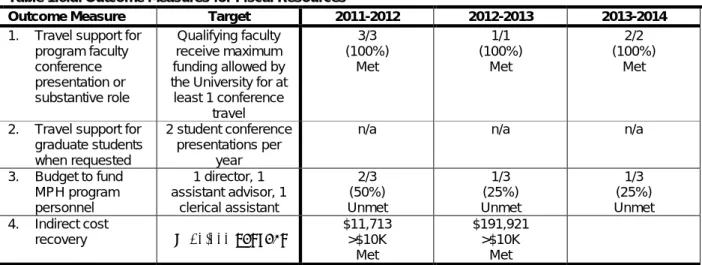
Summary of effectiveness of meeting objectives is provided below in Table 1.2.c.
Table 1.2.c. Outcome Measures for Program Objectives
Outcome Measure Target 2011-2012 2012-2013 2013-2014 A1. Student evaluation averages 100% above 4.00, annually. Lowest: 3.27* Met Lowest: 3.21 Not met Lowest: 1.94 Not met
A2a. Course content assessed by the department
curriculum committee
Every four years, 100% course content assessed
n/a n/a n/a
A2b. Development of new course
At least 1 course, as warranted
n/a n/a n/a
A3. Technology use in courses
Infusion into 100% of courses, at all times
12/12 (100%) Met 13/13 (100%) Met 14/14 (100%) Met A4. Student GPA 100% students average ≥3.0 GPA, annually Lowest: 3.4 Met Lowest: 3.0 Met Lowest: 3.0 Met A5. Comprehensive exam At least 90% passing on first attempt, annually 24/25 (96%) Met 16/20 (80%) Unmet 11/12 (92%) Met A6. Satisfied or very satisfied with instruction 80% of students, by program end 60%* Unmet 72%* Unmet 46% Unmet A7. Agree or strongly agree that academic advising was helpful
80% of students, by program end 56% Unmet 86%* Met 46% Unmet A8. Program faculty members’ ethnic make-up
Faculty ethnic make-up better match program students’ by
2% in ≥1 group, every 3 years
n/a n/a No change in
faculty Unmet
A9. Program’s student body ethnic make-up Program student ethnic make-up better match community’s by 2% in ≥1 group, every 3 years
n/a n/a Student Latino: 43% Long Beach Latino:
40% Met
B1a. Grant proposals submitted
Department average 1 grant proposal per
faculty member, annually. 3.22 Met 3.00 Met 3.00 Met B1b. Grant proposals with underserved populations focus 50% of grant proposals 89% Met 100% Met 100% Met B2a. Conference presentations Department average 1 conference presentation per 3.89 Met 5.00 Met 4.78 Met 3-23-15 8
Table 1.2.c. Outcome Measures for Program Objectives
Outcome Measure Target 2011-2012 2012-2013 2013-2014
faculty member, annually. B2b. Conference presentations with underserved populations focus 50% of conference presentations 99% Met 87% Met 92% Met B3. All faculty members will publish at least one scholarly publication every two years. 1 scholarly publication by 100% faculty, every 2 years 7/8 (88%) Unmet 9/9 (100%) Met 7/9 (78%) Unmet
B4a. Students work with faculty on research / intervention project* 75% of students by program end 6/10* (60%) Unmet 4/7* (57%) Unmet 4/8* (50%) Unmet B4b. Student-faculty projects have underserved population focus* By program end, 50% of projects 83%* Met 43%* Unmet 38%* Unmet B5. Students write complete research grant proposal* By program end, 100% students 10/11* (91%) Unmet 5/7* (71%) Unmet 6/8* (75%) Unmet B6. Students have scholarly paper or presentation included in an e-portfolio* By program end, 80% of students 4/5* (80%) Met 3/4* (75%) Unmet 4/4* (100%) Met C1a. Faculty participation in public health profession service activity Every 2 years, 100% faculty members 8/8 (100%) Met 9/9 (100%) Met 9/9 (100%) Met C1b. Service activities in community organizations targeting underserved populations Within a four-year period, 50% of service activities 51% Met 53% Met 62% Met C2. Active faculty collaborative relationship addressing health disparities in the community Annually, 80% program faculty 6/8 (75%) Unmet 9/9 (100%) Met 9/9 (100%) Met C3. Serve on departmental, college, or university committees 100% faculty members, annually 7/7 (100%) Met 8/8 (100%) Met 8/8 (100%) Met C4a. Students provided service to the community and the profession* By program end, 100% of graduates 9/10* (90%) Unmet 6/7* (86%) Unmet 5/8* (63%) Unmet C4b. Service activities related to underserved populations* By program end, 50% of service activities 100%* Met 80%* Met 86%* Met
* Please see summary of outcomes below for further explanation
The Accreditation Committee is charged with overseeing evaluation. As part of these duties, following annual reports, objective targets will be evaluated against outcomes. When
1.2. Evaluation
outcomes are consistently falling significantly below the target or far exceeding the target, the Accreditation Committee will discuss targets with the faculty to assess whether targets need to be adjusted.
Data was not collected from all faculty for all items (missing data in database), thus the denominator varies across outcomes. Items marked with an asterisk are objectives for which current evaluation instruments (Student Exit Survey) did not include assessments that would provide this information. To try to capture data, items were added to the Alumni Survey to provide proxy assessments for these outcomes. Although 43 alumni completed the survey, not all of them graduated during the reporting periods (2011-12: n=11; 2012-13: n=7, 2013-14: n=8; the remaining respondents graduated in previous years), therefore sample sizes for each reporting year are small.
A1. As a result of California Faculty Association union contract, faculty are only required to have two classes per semester evaluated, thus, some graduate classes are not
consistently evaluated. Averages are based on the item from student evaluations that is used in the RTP process: “The instructor was effective at teaching the subject matter in the course”. The possible rating ranges have changed during the reporting period. In 2011-2012, the response options were from 1-5; thereafter, the response options range from 1-6. Thus, the criterion used to evaluate the 2011-2012 student evaluation s is ≥3.0 (representing agreement with the statement). The criterion of ≥4.00 is based the new ranges and represents “agreement” with the statement, and is used for the 2012-13 and 2013-14 outcomes. Ranges (and averages) across instructors for each time period are as follows: 3.27-5.00 (4.36), 3.21-5.92 (4.82), and 1.94-5.88 (4.84). The lowest value in 2012-13 (3.21) represents the average of two courses in one semester. The lowest value in 2013-14 represents evaluation of one class in one semester. Course evaluations for Fall 2014 are now available; the highest score was score was 5.77, lowest was 5.05, with an average of 5.34.
A2a. This objective is meaningful as it ensures that the graduate curriculum is covering relevant public health issues as well as supporting achievement of competencies. Curriculum review is presently being conducted in the 2014-2015 academic year (covering the 4-year period from 2011-12 through 2014-15). The matrices of
competencies covered across courses are the starting point for the curriculum review. Curriculum review will be ongoing in Spring 2015, with a goal to complete review in Fall 2015 (currently, the department’s undergraduate curriculum is being reviewed, therefore limiting ability to undertake graduate curriculum review).
A2b. If new classes are not warranted, this suggests that the curriculum is in good standing related to public health issues and coverage of competencies. If courses are not
developed when warranted, the Chair will involve the College Associate Dean and Dean of Graduate Studies to ensure the process. Curriculum review has not been conducted to determine if development of new courses is warranted at this time. Of note,
HSC507 Health Disparities was added to the curriculum and implemented in Fall 2011. Since then, at least one new course for the Graduate Certificate in Latino Health and Nutrition Studies has also been offered each year.
A3. All courses require students to use the BeachBoard, CSULB’s course interface for students, but use of technology extends beyond this. Students are also required to access videos available online, use library electronic resources for research and project development, and utilize statistical software for statistics courses, running data
analysis and data processing.
A4. Target is met for all years. Student GPAs also reached a maximum of 4.0, with
averages being 3.74 in 2011-12, 3.65 for 2012-13, and 3.67 for 2013-14. Data for Fall 2014 students had an average GPA of 3.68 with the minimum GPA being 3.0 and maximum being 4.0.
A5. Target was met for 2011-12 and 2013-14. Although target was not met for 2012-13, by the second attempt, all students passed the exam.
A6. The Exit Survey administered in 2011-12 did not include an item regarding satisfaction with instruction and data for 2012-13 are missing, therefore data from the Alumni Survey served as a proxy measure. The target was unmet for all reporting periods. There has been significant instructor turnover in the past seven years—this has impacted consistency of instruction, and likely the quality of instruction.
A7. Data for 2012-13 are missing, program staff searching for data, thus Alumni Survey data were used as a proxy for this time point; the target was met for 2012-13. Targets were not met for 2011-12 and 2013-14. The Program Director/Coordinator is the only student advisor, but has full responsibility to run and maintain the graduate program as well as teach a full course load, thus limiting time to provide advising to students. A8. Ethnic breakdown for faculty remained consistent across the reporting period with
Asian/PI: 25%, White: 44%, Latino: 25%, 6% Middle Eastern, and no African American or Native Americans. For students, percentages are as follows for the
reporting period years: Asian/PI: 26, 23, 28%; White: 33, 24. 26%, Latino: 26%, 41, 38%; Other/Middle Eastern 7, 2, 2%, African American: 9, 10, 6%, and Native
Americans: 0%. Since there were no changes in faculty across this time, any matching of demographics as due to student changes rather than faculty changes. It should be noted that faculty and student ethnicity percentages are close for Asian/PI and Middle Eastern groups.
A9. Data from the Long Beach community database of the American Community Survey reports the 2008-2012 ethnic breakdowns for the city of Long Beach is: 13.4% African American, 13.8% Asian/PI, and 40.8% Latino. In 2011-12 and 2012-13 the student Latino percentage better matched that of the city of Long Beach.
B1a. Department average for grant proposal submission exceeds the target. Of note, in 2014, Rios-Ellis and Nguyen-Rodriguez participated in writing a proposal that brought $27 million to CSULB that will support graduate teaching assistants and diversity training for faculty.
B1b. Targets are exceeded, supporting the program mission and goals for research among underserved populations.
B2a. Department averages for conference presentations exceeds the target. Many presentations include program students as lead and co-authors as well as focus on ameliorating health disparities among diverse populations.
B2b. Targets are exceeded, supporting the program mission and goals for research among underserved populations.
B3. The target was reached only for 2012-2013. Publication data was not collected for 2010-2011, thus outcomes for the first reporting period only includes a period of one year (instead of two). Faculty no longer undergoing RTP evaluation may have lower research productivity. Further, due to the poor economy, the program has been operating with a low number of faculty, thus increasing teaching responsibilities that decrease scholarly productivity.
B4a. Alumni Survey data used as proxy assessment; targets not met. The small number of faculty reduce the opportunities for students to be involved in research projects., B4b. Targets met for 2011-12, but not for 2012-13 and 2013-14. Limited faculty limits the
breadth of research projects available for students to engage in disparities-related research.
B5. Alumni Survey data used as proxy assessment; target is unmet for all years. It is unclear why targets are unmet, as multiple courses require students to write a
complete grant proposal, perhaps students were unaware or did not remember writing the grant proposal in class.
1.2. Evaluation
B6. Alumni Survey data used as proxy assessment; target is met for 2011-12 and 2012-13; just under target for 2012-13, due to small numbers completing an e-portfolio, the percentage is easily affected.
C1a. The targets were reached for all time periods. Service data was not collected for 2010-2011, thus outcomes for the first reporting period only includes a period of one year. Faculty no longer undergoing RTP evaluation may have fewer service activities.
C1b. Targets are met for all reporting periods, supporting the program mission and goals for service to underserved populations.
C2. Target for 2011-12 is slightly under, and is met for the remaining years. Since the nature of research and service varies by faculty member, collaborations may not always focus on underserved populations.
C3. Target is met for all years. Total faculty in the denominator changes from year to year, as calculations only include those faculty that are required to serve on committees (faculty in the early retirement program continue to contribute to the program, but are no longer required to serve on department, College, or University committees).
C4a. Alumni Survey data used as proxy assessment; targets are unmet—these findings are unclear, as students engage in service through internship, and all students must complete internship. Perhaps students assumed the question asked about volunteer community service beyond internship hours.
C4b. Alumni Survey data used as proxy assessment; targets were met, indicating student service to underserved populations.
d. Description of the manner in which the self-study document was developed, including effective opportunities for input by important program constituents, including institutional officers, administrative staff, faculty, students, alumni and representatives of the public health community.
Development of the Self-Study Document
The self-study document was developed using a mixed approach. In Fall 2013, one faculty member, Dr. Selena Nguyen-Rodriguez, was identified as the Person in Charge (PIC), whose duties were to identify what was needed for the document, request information and
feedback from all program constituents for each section, and ensure the document was progressing and finalized. At that time, the PIC began to request input and feedback from the faculty on specific sections of the self-study (e.g., competencies). Throughout the process, the MPH Program Director/Coordinator, Ms. Toni Espinoza-Ferrel, and the Department Coordinator, Ms. Karen Miyahara, worked closely with the PIC to gather necessary information and complete sections of the self-study document, as well as took lead in compiling the Resource File. An Accreditation Committee was convened at the May 2014 Faculty Meeting (see RF Meeting Minutes). This committee included the PIC, MPH Program Director/Coordinator, the Department Chair, Dr. Gail Farmer, the Department Coordinator, and the former PHP Director, Dr. Mohammed Forouzesh. The committee met approximately every two months (see RF Meeting Minutes, Accreditation Committee), and was responsible for providing shared guidance in moving the self-study document forward in terms of general content, formatting, and making decisions that required integration of various views; logistics and other accreditation-related activities were also discussed during these meetings. Students were also asked for assistance with creating charts, formatting the document, sending out letters, gathering documents, and other administrative activities. For the preliminary draft of the self-study, program constituents (e.g., community advisory board members, faculty, students) were consulted to help develop specific areas.
Community Advisory Board members provided feedback on MGOs and program
competencies. Students were asked to provide feedback on results of exit surveys and
comprehensive exam formatting. Faculty members were asked to review outcomes, specific faculty provided feedback on sections within their expertise, and interactively participated in revision and finalizing MGOs and competencies. Prior to submitting the final version of the self-study document to CEPH, the Department Chair, Program Director/Coordinator, and program faculty were asked to review and provide final feedback in order to finalize the document. All faculty were asked to review section 1 in its entirety, then sections 2-4 were reviewed by three faculty members. An ad-hoc faculty meeting was held in March 2015 to review the entire document after making changes based on CEPH reviews of the preliminary self-study and to discuss reviews from the sections assigned to faculty. All feedback was integrated by the PIC. The self-study document was then sent to a copy editor to review grammar, correct typos, and ensure consistency across the document.
In March 2015 (after the ad-hoc faculty meeting) the draft of the self-study document was posted on the PHP’s website, and an email was sent to all constituents to alert them to the availability of the draft of the self-study document (see RF Notifications). Stakeholders were asked to review and to submit any questions, comments, and suggestions to the PIC. Emails were sent to current students, Alumni, preceptors, and members of the Community Advisory Board.
Opportunity To Submit Third-Party Comments
Notification of the opportunity to submit third-party comments to all stakeholders was completed through various avenues (see RF Notifications). The College of Health and Human Services distributed it to its staff and faculty. The Department Chair sent notice to members of upper administration, internship preceptors, and the Community Advisory Board. The Department Coordinator sent notification to all department faculty and staff. The Program Director/Coordinator sent it to all current students. The Office of Alumni Records sent the notice to program alumni. Electronic copies of the memorandum were posted on the MPH program website. Hard copies were posted around campus, especially those places where MPH students frequent (e.g., buildings where they take courses, the department office, etc).
e. Assessment of the extent to which this criterion is met, and an analysis of the program’s strengths, weaknesses and plans relating to this criterion.
This criterion is partially met. Strengths
Objectives are measureable and a appropriate assessment tools to evaluate outcomes related to objectives are available. Outcomes of assessments are used to guide program changes for improvement.
Weaknesses
• Evaluation and assessment has not occurred continuously. Data systems to monitor all outcomes need to be further developed and improved as well as continuously tracked and updated.
• Not all objectives were met. Instruction and advising must be improved. Shortcomings for research and service may be due to mix of faculty and lecturers included in
evaluation. Although faculty and lecturers contribute to instruction, research and service activities are likely only engaged in consistently by primary program faculty, especially considering secondary lecturers maintain other full-time jobs. Although the Program Director/Coordinator is considered primary faculty, her responsibilities do not allow her to engage in research and service activities.
1.2. Evaluation Plans to Improve
• A strategic and dynamic evaluation process has been developed, with clear assignments to committee members, systematic tracking of all data, which will occur on an ongoing basis, including annual planning meetings every Spring, and reporting to constituents every Fall semester. This process will help ensure that consistent and regular
assessment of student outcomes will constantly occur, including Exit Surveys (consistent with evaluation needs) at completion of program and Alumni Surveys every 2 years. Faculty will complete survey to collect data on program objectives every August. • Instruction ratings will be discussed with program improvement panel to obtain
subjective feedback on which to base planning for improvement. Limitations of advising are likely largely due to insufficient staff to provide advising. The program is looking for means by which to obtain funding to support an assistant advisor and administrative staff to allow for more time to provide advising.
1.3. Institutional Environment. The program shall be an integral part of an accredited institution of higher education.
a. A brief description of the institution in which the program is located, and the names of accrediting bodies (other than CEPH) to which the institution responds.
The graduate program is located at California State University, Long Beach (CSULB) within the College of Health and Human Services and the Department of Health Science. As one of 23 California State University (CSU) campuses, CSULB along with other CSUs, is governed by the CSU Board of Trustees, which appoints the CSU Chancellor and University President as the chief executives for the CSU campuses. CSULB, a commuter school, is the largest campus in the California State University system and is one of the largest public universities in the nation. The university is located in one of the most ethnically diverse cities in the nation, Long Beach, which is the fifth largest city in California and the second largest in Los Angeles County. The Long Beach campus was founded in 1949. Its mission is high quality education leading toward a broad range of baccalaureate and graduate degrees spanning the liberal arts and sciences and many applied and professional fields. Although CSULB is located in Long Beach, the student population served comes from all over California with the majority residing in Los Angeles and Orange Counties. The 322 acre campus’ current
enrollment is over 35,000 students. CSULB is designated as a Hispanic Serving Institution and an Asian, Native American, and Pacific Islander Serving Institution by the U.S.
Department of Education. The student body is quite diverse, where graduate students are 26% Latino, 27% White, 16% Asian/Pacific Islander, 5% African American, 1% Native American/Alaskan, 7% Unknown, and 4% Multiracial (Beach Facts Fall 2014,CSULB Institutional Research & Assessment), with a slight majority of students being female Because of its strategic location, cultural diversity, and health departments, Long Beach is an ideal field laboratory in which multicultural curricula are designed, implemented, evaluated and fully integrated into existing undergraduate and graduate programs at CSULB.
The university comprises four divisions: academic affairs, administration and finance,
student services, and university relations and development. Each division is administered by a vice president. The division of academic affairs consists of seven colleges, including the College of Health and Human Services (CHHS). The chief academic administrator of each college is a dean. Figure 1.3.b1. presents the university’s organizational chart, showing the four organizational divisions that comprise CSULB. Within the Division of Academic Affairs the university is organized into the following Colleges: Arts, Business Administration, Education, Engineering, Health and Human Services, Liberal Arts, and Natural Sciences and Mathematics. Other affiliated units include the Center for International Education, the Library and Learning Resources, and the University Extension Services.
CHHS works directly to fulfill the University’s expanding public mission, supporting
community-based efforts, and the CSULB mission to be “an outstanding teaching-intensive, research-driven university that emphasizes student engagement, scholarly and creative achievement, and global perspectives.” The school's dual commitments to education and to the public have proved pivotal in its continuing success in community research.
The California State Board of Education and the Western Association of Schools and Colleges (WASC), a regional accrediting body, both accredit CSULB. The last WASC review occurred in October 2010, and in February 2011 CSULB’s accreditation was re-confirmed until 2021. The American Association of University Women lists CSULB as an approved institution.
1.3. Institutional Environment
The following is an all-inclusive list of accrediting bodies that CSULB responds to across its various programs:
Program Accrediting Body
American Language Institute, CCPE
Commission on English Language Program Accreditation Art National Association of Schools of Art and Design (NASAD)
Business Administration ACSB International – The Association to Advance Collegiate Schools of Business (AACSB)
Chemistry (undergraduate) American Chemical Society, Committee on Professional Training Communicative Disorders
(graduate)
American Speech-Language-Hearing Association, ASHA) Council on Academic Accreditation in Audiology, and Speech-Language Pathology
Dance National Association of Schools of Dance (NASD)
Design National Association of Schools of Art and Design (NASAD) Dietetics (didactic program) Accreditation for Dietetics Education (CADE-ADA)
Education National Council for Accreditation of Teacher Education (NCATE) Engineering
(undergraduate: Aerospace, Chemical, Civil, Computer, Electrical, Engineering Technology, Mechanical)
Accreditation Board for Engineering and Technology, Inc. (ABET)
Family and Consumer Sciences
American Association of Family and Consumer Sciences (AAFCS), Council for Accreditation (CFA)
Health Care Administration Association of University Programs in Health Administration (AUPHA); Commission on Collegiate Nursing Education (CCNE)
Health Science (graduate) Council on Education for Public Health (CEPH)
Kinesiotherapy Commission on Accreditation on Allied Health Education Programs Music National Association of Schools of Music (NASM)
Nursing Commission on Accreditation of Healthcare Management Education (CAHME); Commission on Collegiate Nursing Education (CCNE)
Physical Therapy American Physical Therapy Association (APTA), Commission on Accreditation in Physical Therapy, Education (CAPTE)
Public Policy and Administration
National Association of Schools of Public Affairs and Administration (NASPAA), Commission on Peer Review and Accreditation (COPRA)
Recreation and Leisure Studies
National Recreation and Park Association/American, Association for Physical Activity and Recreation, (NRPA/AAPAR) Council on Accreditation
Social Work Council on Social Work Education (CSWE) Theatre Arts National Association of Schools of Theatre (NAST) University Art Museum American Association of Museums
b. One or more organizational charts of the university indicating the program’s relationship to the other components of the institution, including reporting lines and clearly depicting how the program reports to or is supervised by other components of the institution.
The following organizational charts illustrate the program’s relationships to the other components of the institution. Figure 1.3.b1 describes the structure for the University. As the College of Health and Human Services (CHHS), houses the Health Science MPH Program Figure 1.3.b2 is an organizational chart illustrating the structure of CHHS. This illustration provides detail of how the program is related to the larger university, within the Division of Academic Affairs. Several centers that are coordinated with CHHS include Career Studies, Health Equity Research, Child Welfare Training, Criminal Justice, OCHER Lifelong Learning Institute, Successful Aging, and Latino Community Health. These Centers provide resources and training activities for the CSULB MPH program. The graduate program is located in the Department of Health Science, which is one of the 11 departments of the CHHS.
Figure 1.3.b1. Organization Chart of California State University, Long Beach
1.3. Institutional Environment
Figure 1.3.b2. Organizational Chart of the College of Health and Human Services
Figure 1.3.b3. Organization Chart of the Department of Health Science
Reporting Lines and Supervision
The Interim Dean of the CHHS, James Koval, is an officer of the university and serves at the pleasure of the president or his/her designee. The dean reports to the Provost. The dean has the responsibility, in consultation with the faculty, for the management of resources for academic and fiscal planning, for personnel policies applicable to the college, and for
coordination of various departments within the college.
The department chairperson, elected by the faculty every three years, is responsible for the overall administration of the department. Since Fall 2012, Dr. Gail Farmer has served as Chair of the Department of Health Science. The Chair supervises the operation of the graduate program, the undergraduate program and department office, prepares required reports, administers personnel matters within the department as assigned, prepares job descriptions, oversees faculty and staff recruitment, obtains supplies and services, and performs other duties that the College Dean may assign. The chair consults with the faculty in all matters of concern regarding the welfare of the students, the department, the
academic programs, and the faculty. The graduate and undergraduate program
director/coordinator is appointed by the chair and oversees the graduate program; the directors/coordinators consult regularly with program committees and faculty for all program activities.
c. Description of the program’s involvement and role in the following:
– budgeting and resource allocation, including budget negotiations, indirect cost recoveries, distribution of tuition and fees and support for fund-raising
– personnel recruitment, selection and advancement, including faculty and staff
– academic standards and policies, including establishment and oversight of curricula
Budget
1.3. Institutional Environment
Resource Allocation and Budget Negotiations
The MPH Program Director/Coordinator submits a list of budget necessities for the program in July of each year. The Department Chair then submits this request to the CHHS Dean. The Dean provides a budget to the Chair who then may engage in negotiating budget for the MPH program. A final budget is provided to the Department Chair by the start of the Fall semester. Indirect Cost Recovery Portions of indirect costs produced by each grant are rebated to the program faculty member as well as the individual’s home department and college.
Distribution of Tuition and Fees
All tuition and fees collected by each campus are sent to the system, which then distributes them to campuses through the budget negotiation process at the system-wide level, without program input.
Support for Fund-Raising / Development Activities
The Division of University Relations and Development is one of the four divisions of the university. The division is led by a president; development personnel report to the vice-president. Each college has a development officer who reports to the college dean as well as to the development division. Colleges are assigned a development (fund-raising) target to be achieved each fiscal year. College developmental officers are available to assist individual departments with their raising programs. Department chairs receive training in fund-raising methods.
Personnel
Recruitment and Selection
To recruit new or replacement faculty, the department requests that the College Dean approve a search for a new faculty member. After a position has been allocated, the department elects a search committee from its tenured and tenure track faculty, including MPH program faculty. After an extensive selection process and review of faculty feedback, the search committee makes a recommendation to the Dean. The search committee ranks one or more candidates in order of preference, and proposes an academic rank. The department chair has authority to make an independent recommendation.
Faculty Advancement
Regarding faculty advancement, the department elects annually a Retention, Tenure, and Promotion (RTP) Committee, which is comprised of tenured faculty members, including MPH program faculty, who conduct reviews of faculty peers eligible for personnel actions. The department chair forwards the review to the college RTP Committee, which makes a
recommendation to the Dean. The departmental RTP committee also conducts a post-tenure review of tenured faculty on a five-year cycle.
Academic Standards and Policies Standards and Policies
When MPH program faculty serve on the University policies committees, the program has a direct link to the University processes for governing course structure, general grading and evaluation requirements, and minimum standards for courses and programs. The
department may, in some cases, establish standards beyond the university minimum. MPH program faculty are able to take part in the development of any departmental standards and policies.
Some academic standards, such as admissions criteria and the comprehensive exam format, for the graduate program in community health education are proposed at the department level. These standards may be subject to approval by faculty bodies: College Graduate Advisers Committee, University Graduate Council, Financial Affairs Council, and Academic Senate. The college’s Associate Dean acts in an administrative capacity to uphold college and university level standards for both the graduate and undergraduate curricula.
Other policies such as program admissions standards may evolve entirely at the department level. However, the process for enforcing and maintaining academic standards in the
department remains with the Department Chair, Graduate Program Director/Coordinator, and the Graduate Committee. Each faculty member has responsibility for establishing and maintaining academic standards for individual courses taught.
Program faculty members review academic standards and reevaluate these matters routinely in committees, faculty meetings, and on an individual basis. Health Science Department faculty members strive to establish and maintain high academic standards for graduate students; faculty members are encouraged to find appropriate methods to develop and implement these standards. When individual students request exceptions to established policies, the Chair, Graduate Committee members, and the graduate advisor review such matters and occasionally make recommendations to the faculty for action as appropriate. The graduate committee solicits student input into policy during faculty meetings.
Establishment and Oversight of Curricula
The responsibility for curriculum content rests primarily at the departmental level, headed by the Curriculum Committee, which is comprised by program faculty. This locus is
appropriate as individual departments are most familiar with their own academic disciplines. For students to graduate with a graduate degree, the curriculum must satisfy the broad general requirements such as completion of courses within a seven-year period. New graduate curricula and course modifications are developed by the Curriculum Committee, with review and approval from the department’s faculty. Subsequently, curriculum proposals are reviewed by the college curriculum committee. Finally, curriculum changes are reviewed by the university curriculum committee and approved by the academic senate. After review at these various levels, new curricula and curriculum changes can be implemented.
d. If a collaborative program, descriptions of all participating institutions and delineation of their relationships to the program.
Not Applicable
e. If a collaborative program, a copy of the formal written agreement that establishes the rights and obligations of the participating universities in regard to the program’s operation.
Not Applicable
f. Assessment of the extent to which this criterion is met and an analysis of the program’s strengths, weaknesses and plans relating to this criterion.
This criterion is met. Strengths
The graduate program is an integral part of an accredited university. The university structure recognizes the Department of Health Sciences’ graduate program as an
1.3. Institutional Environment
autonomous organizational unit. The program is a part of the university’s system of governance with policies in place for budgeting and resource allocation, personnel recruitment, selection and advancement, and establishment of academic standards and policies.
Weaknesses
No weaknesses identified. Plans to Improve
No plans needed at this time.
1.4. Organization and Administration. The program shall provide an
organizational setting conducive to public health learning, research and service. The organizational setting shall facilitate interdisciplinary communication, cooperation and collaboration that contribute to achieving the program’s public health mission. The organizational
structure shall effectively support the work of the program’s constituents. a. One or more organizational charts delineating the administrative
organization of the program, indicating relationships among its internal components.
Components of MPH Program Organization Figure 1.4.a. Graduate Program Organization
Department Chair
As noted previously, the department chair—the elected academic leader of the department faculty—maintains executive responsibility for developing, planning, and administering all of the department’s academic programs. The chair delegates administrative authority for departmental programs. For example, the department chair appoints the graduate advisor who is administratively responsible to the chair.
Graduate Program Director/Coordinator and Advisor
Ms. Toni Espinoza-Ferrel is the current graduate Program Director/Coordinator. In this position, she maintains program oversight, as well as primary responsibility for advising graduate students. Other responsibilities include graduate student recruitment, reviewing,
1.4. Organization and Administration
evaluating and decisions on applications for admission, advancing students to candidacy, and conducting the MPH comprehensive examination.
Graduate Committee
A departmental graduate committee and all graduate faculty members assist the Director/ Coordinator in the program’s operation. The graduate committee, which is comprised of three or more graduate faculty, provides input to the graduate advisor regarding such matters as admission policies, planning for program changes, and conduct of the MPH comprehensive examination.
b. Description of the manner in which interdisciplinary coordination, cooperation and collaboration occur and support public health learning, research and service.
Support for Interdisciplinary Coordination and Collaboration The Center for Health Equity Research
The center, housed within CHHS, provides a forum for faculty members from CSULB and other institutions to conduct and share their research activities. The interdisciplinary center draws upon the expertise of faculty from various departments in the CHHS, e.g., Family and Consumer Sciences, Criminal Justice, and Recreation and Leisure Studies. The center
involves program graduate students in research, internship projects, and presentations at conferences. Each year, several graduate students participate as center staff and thereby receive vital job experience. Current active projects include the NIMHD-funded Research Infrastructure in Minority Institutions (RIMI) program and evaluation of the local Building Healthy Communities site funded by The California Endowment. Proposals for additional projects are also in preparation. All of these activities involve faculty from more than one department.
The Center for Latino Community Health, Evaluation and Leadership Training This unit is under the co-direction of Dr. Britt Rios-Ellis, and Dr. Nguyen-Rodriguez serves as a faculty research associate. The center, in collaboration with the National Council of La Raza, administers grants for service, training, evaluation, and research on Latino Health issues. Program graduate students participate in the activities of the Center. The Center has routinely secured training grants to provide essential research and service skills to graduate students. Currently, the center is running four training grants, funded by the U.S.
Department of Agriculture, National Institute on Minority Health and Health Disparities, the Substance Abuse and Mental Health Association, and U.S. Department of Education.
Programs involve students from various disciplines, including Health Science, Social Work, Nutrition, and STEM fields. These programs support development of professional skills by providing training workshops, engaging students in community health education and mentoring.
University Programs
The Center for International Education provides both faculty and student opportunities. It supports study abroad programs whose collaborations can be very beneficial to participants. The MPH program has had six students working within this program. The University also offers an Interdisciplinary Studies degree program. In this program, students are able to develop a cross-disciplinary major using CSULB courses, unified around an area of
concentration. The program offers a unique student opportunity to engage in training that can support public health learning, research and service across disciplines. The Office of Research and Sponsored programs also has a Multidisciplinary Award, which was received
by Dr. Veronica Acosta-Deprez and a colleague in the Department of Health Care Administration.
Faculty Joint Appointments and Assignments in Other Units
Dr. Veronica Acosta-Deprez has taught the Project Thesis courses in the department of health care administration’s Masters in Health Care Administration Accelerated Program. Since 2008, she has also taught the Project courses for the department of Health Care Administration. Additionally, she has recently taught a Special Sessions Community Health Education course for international students from Taiwan. Claire Garrido-Ortega holds a joint appointment in the Department of Women’s, Gender & Sexuality Studies. Dr. Sarath
Gunatilake is adjunct professor at Ross University Medical School and American University of the Caribbean Medical School, where he coordinates the teaching of psychiatry to medical students. MPH program students are able to benefit from the diverse perspectives that these instructors bring from these other fields to broaden their understanding of the collaborative nature and multiple-disciplines involved in public health work. Further, Dr. Acosta-Deprez and Dr. Mohammed Forouzesh serve on the University’s Institutional Review Board, which allows them to transmit important ethical considerations in performing public research with human subjects. Ms. Toni Espinoza-Ferrel also has an assignment
coordinating the Graduate Certificate in Latino Health and Nutrition, which provides students with training in health disparities and nutrition issues as they apply to major contemporary public health concerns.
Other interdisciplinary work includes Dr. Bavarian’s work as a contributing scientist for the Positive Action program evaluation team. This includes an interdisciplinary team of
psychologists, sociologists, statisticians, human development, and public health-trained scientists based in Chicago, Oregon, and California. She also collaborates with a team of scientists at the Pacific Institute for Research and Evaluation and health promotion experts at UC Berkeley on issues related to substance use. The NIH-funded BUILD training program granted to CSULB also supports interdisciplinary collaborations among faculty within and outside of CSULB.
c. Assessment of the extent to which this criterion is met and an analysis of the program’s strengths, weaknesses and plans relating to this criterion.
This criterion is met. Strengths
The program provides an organizational setting that is conducive to learning, research, and service as evidenced by the composition of the program’s faculty, intra-campus
collaboration, and community relations. The graduate program, through its functioning and organizational structure, has been able to maintain and strengthen its relationship with the community and engage in many collaborative activities. These collaborative efforts have given the graduate program opportunities to enrich its mission and to benefit the faculty and students.
Weaknesses
No weaknesses identified. Plans to Improve
No plans needed at this time.
1.5. Governance
1.5. Governance. The program administration and faculty shall have clearly defined rights and responsibilities concerning program governance and academic policies. Students shall, where appropriate, have participatory roles in the conduct of program evaluation procedures, policy setting and decision making.
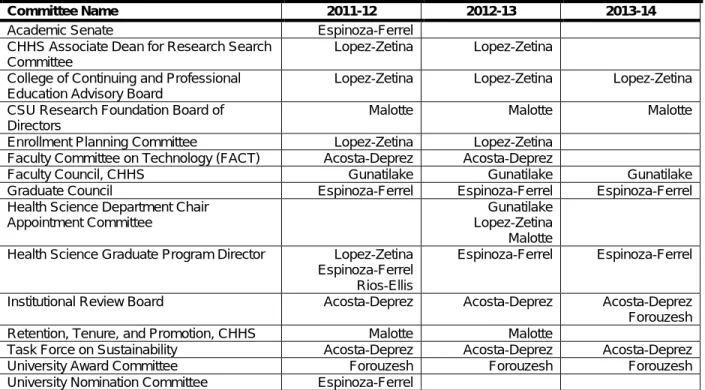
a. A list of standing and important ad hoc committees, with a statement of charge, composition and current membership for each.
See RF Committees, Membership Lists for persons serving on each committee described below.
Graduate Committee
The Graduate Committee is a standing committee, charged with supporting ongoing
program operation. It is comprised of department full-time faculty members (majority) and program lecturers that consistently teach in the graduate program. While significant
program changes based on evaluation and assessment are discussed and planned with all department faculty during faculty meetings, the Graduate Committee’s duties are to organize planning of implementation of programmatic changes. For example, as a result of student feedback on the comprehensive exam, the faculty agreed that student input should be elicited for all program elements. Governance policies were thus revised to re-implement a student representative at faculty meetings; in addition, student meetings are to be held each semester to obtain program improvement feedback to be addressed by the Graduate Committee. This committee may hold outside meetings primarily to review admissions applications, and to develop and grade the comprehensive exam. In 2013-14, the Graduate Committee met monthly (Aug-Dec, Feb-May) during faculty meetings (check-in/updates as needed) with two ad-hoc meetings to discuss admissions and comprehensive exam results. In 2014-15, this committee has met monthly from August through December and Feb-March, they will also meet in April and May for faculty meetings, and hold any necessary ad-hoc meetings to discuss admissions applications and comprehensive exam results.
All members of the Graduate Committee and department full-time faculty review admissions applications. During the review process, the graduate committee may meet outside of faculty meetings as needed to discuss applications that require full committee review. Admissions evaluations entail reviewing and scoring student applications for admission. The Graduate Committee discusses logistics and content for the comprehensive exam
approximately twice per academic year, prior to the exam date in each semester. Discussion of exam questions usually commences in the fourth week of the semester. Faculty members are asked to create new exam questions (which are then finalized by the graduate
committee), be available for student questions during the exam, and grading the exams. Members of this committee include faculty and instructors of the program’s core courses that create and grade exam questions.
Accreditation Committee
The Accreditation is a standing committee that oversees all departmental processes relevant to the accreditation process. As such, assessment and evaluation, program revision
processes, and development of the self-study are major responsibilities of this committee. This committee is responsible for ensuring that all processes related to accreditation (e.g., planning community advisory board meetings, administering the alumni survey) are conducted as scheduled and completed on time. This committee, created in Spring 2014, held five meetings in 2014-15 (May 2014, July 2014, October 2014, February 2015, and March 2015).