ATTITUDES, SOCIAL CONTEXT, AND ENVIRONMENTAL BEHAVIOR: ESSAYS EXPLAINING VOLUNTARY HOUSEHOLD ENERGY CONSERVATION
Evan Johnson
A dissertation submitted to the faculty of the University of North Carolina at Chapel Hill in partial fulfillment of the requirements for the degree of Doctor of Philosophy in the
Department of Public Policy.
Chapel Hill 2016
Approved by:
ABSTRACT
Evan Johnson: Attitudes, Social Context, and Environmental Behavior: Essays Explaining Voluntary Household Energy Conservation
(Under the direction of Richard N.L. Andrews)
Voluntary behavioral initiatives to promote energy efficiency, green energy, and usage curtailment behavior among households are important components of national and international efforts to meet greenhouse gas emissions targets and to conserve valuable energy resources. The current policy literature, however, is in need of further empirical explanations for why such strategies are effective in some cases but not in others.
This dissertation examines the determinants of energy-saving decisions and activities at the household level. Its three empirical essays focus on the attitudinal and social structural
characteristics of residential energy users and their influences on multiple types of energy-related behavior.
The first essay focuses on the ways in which households assign value to different attributes of their electric utility service. Results show that renters, middle-income, and highly educated respondents demand higher levels of environmental protection and renewable energy options from their electric utility relative to competing service attributes such as affordability and comfort. The study also finds that issue-specific environmental attitudes (such as concern about climate change) and those that invoke a sense of duty toward future generations are more predictive of green service preferences than behavior-specific beliefs.
an indirect rather than a direct cause of energy behavior and that this result depends on the type of behavior under study: The relationship between these general attitudes and behavior is mediated, in some cases, by more specific cognitions such as norms, which reflect the individual’s sense of what individuals and societies ought to do about energy use and related environmental problems.
ACKNOWLEDGEMENTS
Looking back over the past few years, I am at a loss as to how to possibly credit all those who have made this work possible. I am simply unable to recognize each person and institution responsible for supporting me during my years as a doctoral student, much less those who have empowered me to pursue a career in research and to stay the course during difficult periods.
I was the fortunate recipient of generous financial support for this research through fellowships from Duke Energy Progress, UNC’s Odum Institute, the UNC Weiss Urban Livability Program, and the UNC Graduate School’s Dissertation Completion and Summer Research Awards. My home department of Public Policy also granted me several semesters of financial support as I conducted this research. I must also thank Rosemary Russo at the Odum Institute for her sharing her time and statistical expertise.
My advisor, Pete Andrews, merits special distinction. Simply put, I chose to study at UNC because of him. He has demonstrated an exceptional degree of compassion, support, and rigorous attention to my work, all of which have enhanced this dissertation far beyond what I could have managed on my own. More than that, he is the best example I know of how to integrate principles of humanity into an academic career, striking a balance that is exceedingly difficult to achieve and challenging me to seek the same standard.
beyond the boundaries of my field of study; John Scott for his patient support of my progress and creative encouragement to expand my thinking about my data and results; and, on a very
distinguished note, Jeremy Moulton for elevating my confidence as a researcher, for his
selflessness and generosity, and for his unparalleled commitment to helping me and many others succeed.
Several important mentors and colleagues deserve special recognition for supporting me in conducting this research. First, I owe special thanks to Erin Hiatt for helping me to secure the data that made this dissertation possible. David Fruend was of immeasurable help throughout this process, sharing not only his valuable experience and technical assistance but also his support and mentorship at regular intervals over the past four years. I am also grateful to John Mills for providing additional technical expertise and insight. Sanya Carley has provided extensive encouragement over the past four-plus years and I owe her my deepest gratitude for taking an interest in helping me and for providing such an inspiring example of how to approach scholarship with enthusiasm, rigor, and compassion. On a very important note, I am very
thankful to George Daher, for providing a swift kick at the crucial moment, for his guidance, and for generously sharing his time and experience with me throughout this process.
being. Megan Roberts has commiserated with me over countless plates of Chinese food, and I look forward to many more fortune cookies to come. Garima Bhalla has provided boundless support as a friend and ally, and I am exceedingly grateful to have such a wonderful example of how live life with passion and integrity.
Several other key players warrant special acknowledgement: Mike Constantine, my best friend and my muse; Sarah Linwick, who initiated my ambitions as a scholar but who probably won’t take credit for it; Kyana Young, who has supported and encouraged me as if I were family; Steve Perlman for his guidance, friendship, and example of how to be of service; Michael Iauch, Tim Shea, Gary Lambert, Jamie Wright, and Eric Manturuk, for helping me to grow spiritually; and Adam Higgins and the PB esquires, who have showed great diligence in reminding me of the proper ordering of my priorities. I am very grateful to Dan Gitterman, Christine Piette Durrance, Mary Leigh Creedon, and Mary Edwards for numerous forms of support throughout this process. I must also pay special thanks to Tom Eggert and Viccy Salazar for nurturing and guiding my early interests in field of environmental policy research. My deepest gratitude goes to Lisa Spees, who provided friendship, moral support, and shelter at critical periods in the home stretch. Without her generosity, I simply could not have completed this work.
My brothers, Nick and Mitch Johnson, are, without question, my principal companions. Their presence in my life has inspired me more than they will ever know and they have
supported me throughout this process in ways no one else can.
At the root of my development as both a researcher and human being are, of course, my parents. I could not be more grateful to Joan Johnson, who has always been there to listen and who has embraced me unconditionally when I needed it most. Throughout my life, my mother, Lisa Ray Johnson, surrounded me with an eternal love that fuels my own heart and mind in all that I do. Her tireless commitment to her sons, her intensity, and her superhuman capacity for compassion are the bases of my own spiritual and moral character.
Finally, and most importantly, I am grateful for the opportunity to recognize and thank my father, Scott Johnson, who has been my greatest role model, supporter, and source of strength even when I was convinced there was none to be found. His presence in my life cannot be
TABLE OF CONTENTS
LIST OF TABLES ... xiii
LIST OF FIGURES ... xiv
LIST OF ABBREVIATIONS ... xv
CHAPTER 1. INTRODUCTION ... 1
Overview ... 1
Theoretical and Policy Relevance ... 3
Survey and Electric Utility Metering Data ... 7
Summaries of Empirical Chapters ... 9
REFERENCES ... 12
CHAPTER 2. HOW DO SOCIAL AND ATTITUDINAL FACTORS INFLUENCE HOUSEHOLD TRADEOFFS AMONG COMPETING ATTRIBUTES OF ELECTRICITY SERVICE? ... 14
Introduction ... 14
Relation to Existing Literature ... 16
Conceptual Model ... 20
Data ... 24
Methods... 29
Results ... 31
Discussion ... 37
Limitations and Viable Extensions ... 40
Policy Implications ... 42
CHAPTER 3. THE ROLE OF ENERGY CONCERN IN SHAPING CONSERVATION INTENTIONS AND BEHAVIORS AMONG
U.S. HOUSEHOLDS ... 48
Introduction ... 48
Review of Existing Literature ... 52
A Note on the Environmental Attitude-Behavior Gap ... 52
Beliefs About the Future of Energy ... 52
Personal and Social Norms ... 54
Different Types of Energy Behaviors ... 55
Roots in VBN and TPB ... 58
Conceptual Model ... 59
Data and Method ... 63
Survey and Participants ... 63
Measures ... 65
Concern About Energy Future ... 68
Personal Energy Norms ... 68
Social Energy Norms ... 68
Support for Energy Conservation Actions ... 69
Actual Consumption Behavior ... 70
Social and Demographic Control Variables ... 70
Analytic Strategy ... 70
Results ... 74
Measurement Model and Confirmatory Factor Analysis ... 74
Structural Relationships ... 77
REFERENCES ... 88
CHAPTER 4: CHARACTERIZING HOUSEHOLD PARTICIPANTS IN UTILITY-SPONSORED ENERGY CONSERVATION PROGRAMS: ARE HEAVY USERS OF ELECTRICITY MORE LIKELY TO ENROLL? ... 94
Introduction ... 94
Literature Review ... 98
Conceptual Framework ... 106
Data Collection and Preparation ... 110
DSM Program Participation ... 113
Empirical Analysis ... 115
Results ... 119
Concluding Remarks and Discussion of Policy Implications ... 122
REFERENCES ... 125
CHAPTER 5. CONCLUSIONS, POLICY IMPLICATIONS AND RECOMMENDATIONS FOR FURTHER RESEARCH ... 130
Residential Electric Service Preferences ... 131
Recommendations ... 132
Energy Concern, Conservation Norms, and Behavior ... 133
Recommendations ... 133
Participation in Utility-Sponsored Conservation Programs ... 134
Recommendations ... 134
Limitations ... 135
Research Extensions ... 137
LIST OF TABLES
Table 2.1. Summary Statistics on Basic Demographic and Structural Characteristics ... 26
Table 2.2. Means and Standard Deviations for Electric Service Preferences and Attitudinal Predictor Variables (n = 2840) ... 28
Table 2.3. Sticker Allocation to Public and Private Benefits Across Income Levels ... 32
Table 2.4. Summary Statistics with T-Tests by Electoral Outcome ... 34
Table 3.1. Summary Statistics for Behavioral and Demographic Variables ... 64
Table 3.2. Summary Statistics for Behavioral Antecedents ... 67
Table 3.3. Results of CFA Measurement Models for Five Latent Variables ... 75
Table 3.4. Bivariate Correlations of Latent Constructs (N = 5109) ... 77
Table 3.5. Results of the Structural Models ... 79
Table 3.6. Mediation Results—Indirect Effects of Energy Concern on Behavior ... 81
Table 3.7. Summary of Hypotheses ... 82
Table 4.1. Utility Spending on Demand-Side Management Programs (2012 U.S. Thousands $) ... 101
Table 4.2. Summary Statistics of Independent Variables ... 112
Table 4.3. Summary Statistics for Dependent Variables (DSM Program Participation Rates) ... 115
LIST OF FIGURES
Figure 2.1. Hypothesized relationships among social, attitudinal,
and behavioral variables. ... 23
Figure 3.1. Conceptual model. ... 62
Figure 3.2. Structural model for energy consumption behavior. ... 79
LIST OF ABBREVIATIONS
CFA Confirmatory factor analysis CPP Critical peak pricing
DSM Demand-side management
EIA Energy Information Administration MLE Maximum likelihood estimation NEP New Ecological Paradigm NB Negative binomial
CHAPTER 1. INTRODUCTION
Overview
U.S. energy consumption accounts for 21% of the atmospheric concentrations of heat-trapping gases that cause global climate change. Over 20% of those emissions are directly attributable to the residential sector (Energy Information Administration (EIA) 2015). When accounting for emissions resulting from all household energy decisions rather than just those that result from residential technologies, that figure is conservatively estimated at closer to 30% (Vandenbergh et al., 2010). The expansion of energy efficiency and renewable energy markets has helped spur trends in decarbonization of the global energy economy. Despite these
improvements, however, there remain large opportunities for additional reductions in energy-related emissions by changing energy consumption behavior at the household level. One reason policy has yet to fully capitalize on these opportunities is that efforts to approach consumers are often misdirected or inadequately framed to suit the preferences, attitudes, and even the social and demographic characteristics of target populations. These characteristics vary substantially across residential energy consumers. Households exhibit differing behavioral patterns, social structural constraints, norms, attitudes, and beliefs. It is critically important for policy research to address these differences by analyzing the ways in which household characteristics determine energy-saving behavior and participation in programs designed to encourage it.
A widely cited report of the Proceedings of the National Academy of Sciences
implementation of non-regulatory behavioral interventions (Dietz, Gardner, Gilligan, Stern, & Vandenbergh, 2009). Although the potential effectiveness of behavioral energy policies is well documented, scholars have struggled to explain the sources of variation in energy behavior across a diverse population of consumers. We still lack conclusive evidence for why some consumers are more receptive to behavioral interventions than others. What are the conditions under which voluntary energy-saving policy measures are effective? And what are the
characteristics of those who adopt (and sustain) pro-environmental energy behavior? Underlying this persistent knowledge gap is the general need to determine how much of the necessary behavior change will be internally driven (i.e., by attitudes, beliefs, personal norms, and values) and how much will be due to external forces (price and non-price signals, legal and regulatory frameworks, information access, resource availability, and social networks.)
This dissertation approaches these challenges with three essays on the attitudinal and contextual antecedents of energy-related behavior and electric utility service priorities at the household level. These three empirical essays employ a uniquely rich data set provided by a major electric utility in the southeastern United States. These data combine an extensive suite of attitudinal and demographic survey items with multiple objective measures of energy behavior for a large sample of residential electricity customers. The empirical chapters that follow aim to inform a deeper scientific understanding of consumer behavior and how energy efficiency and renewable energy policies can better accommodate the diversity of residential energy users.
second uncovers the common constructs, or factors, underlying multiple sets of beliefs, attitudes, norms, and behaviors relevant to energy consumption and investment. It examines their direct and indirect effects on both stated and actual behaviors such as compact fluorescent light bulb (CFL) purchases and electricity use. The third explains the determinants of participation in utility-sponsored voluntary energy-saving programs by examining the relationship between household electricity consumption levels and their decisions to enroll in demand-side management (DSM) programs.
This introductory chapter discusses the theoretical considerations that shape the
dissertation and explains why its findings are relevant to public policy. It then describes the data sets chosen for analysis and the types of variables used. Finally, it briefly summarizes the empirical essays and previews key findings.
Theoretical and Policy Relevance
The primary motivation for this dissertation is the persistent uncertainty surrounding patterns of American household energy consumption and the barriers that obstruct policy efforts to change those patterns. It aims to determine empirically some of the key factors underlying residential energy behavior to help policymakers promote conservation and energy efficiency investment among residential consumers. One of the core assumptions of this work is that effective policy-relevant analysis of energy behavior requires researchers to observe the distinction between what Paul Stern has referred to as “internal and external barriers to
are more difficult to measure and manipulate. Policy attempts to encourage pro-environmental behavior need to consider both types of behavioral influences as well as the ways in which they interact. As such, the research contained in this dissertation is rooted in theoretical models that point to relationships among internal and external behavioral antecedents and the processes by which they determine household energy activity.
The three empirical essays that follow make use of prominent theories of environmental decision-making and attitude-behavior linkages. In so doing, they inform our understanding of the different types of internal behavioral antecedents that shape and constrain numerous types of energy-related behavior. This dissertation places particular emphasis on the values-beliefs-norms (VBN) theory of environmentally significant behavior to guide analyses of rich attitudinal and behavioral data. One of the roots of this theory is S.H. Schwartz’s theory of personal norm activation, which holds that pro-environmental behavior occurs in response to personal moral norms regarding the behavior in question and that these norms are most influential in those individuals who are concerned about surrounding environmental conditions (Heberlein, 1977; Schwartz, 1973). Applications of the VBN theory have shown that such personal norms have powerful effects on environmental behavior in the absence of certain contextual constraints (Stern, 2005). This model has seen numerous applications to different behavioral policy questions that seek to discover the role of personal norms and values in shaping a sense of obligation and responsibility to act in ways that benefit others and the natural environment (Stern, Dietz, Abel, Guagnano, & Kalof, 1999).
environmental beliefs, pro-environmental norms, social structural variables such as income and education, and stated willingness or intention to engage in energy-saving activities. VBN-based studies have shown that higher order environmental beliefs and social structural constraints affect behavior both directly and indirectly through mediating cognitive elements such as personal and social norms (Hansla, Gamble, Juliusson, & Gärling, 2008). As such, this dissertation applies VBN-based theoretical models to examine both direct and indirect forces shaping households’ energy-saving behavior.
Chapters 2 and 3 also test hypotheses that are based on Ajzen’s Theory of Planned Behavior (TPB). This theory proposes that behavior is the result of intentions, which are influenced by attitudes, norms, and perceived behavioral control (Ajzen, 1991). Empirical evaluations of this model have found that the TPB’s three core cognitive constructs mediate the causal relationship between more broadly defined beliefs, such as concern about the
environment, and behavior (Bamberg, 2003; Chen & Knight, 2014). Essay 2 tests this theory by examining the ways in which energy concern interacts with norms and social structural
constraints to shape behavior and behavioral intentions.
Additional motivation for this dissertation is rooted in theories of the voluntary private provision of environmental public goods.1 Many pro-environmental behaviors, such as the purchase of green products or utility-sponsored carbon offsets, frequently entail considerable private costs in exchange for public benefits that are seemingly diffuse and insubstantial to the consumer. Economic models tend to predict that such goods will be provided below socially optimal levels in the absence of regulation and price-based policy instruments, and persistent energy-related environmental damages show that this is often the case. However, a growing
literature has begun to merge the tools of economics with considerations drawn from environmental behavior and moral psychology to explain those cases in which
pro-environmental behavior seems to contradict economic predictions. This literature has produced several useful theoretical insights such as the “warm glow” hypothesis, which suggests that the apparently altruistic provision of public goods is really due to the fact that such behaviors make people feel good about themselves (Andreoni, 1990). Environmental public good provision has also been linked to differences in the structure of programs offered by utilities as well as consumer guilt related to knowledge of their own high consumption levels and corresponding environmental footprints (Jacobsen, Kotchen, & Vandenbergh, 2012; Kotchen & Moore, 2007). A key goal for policy, then, is to capitalize on these insights to encourage public good provision by designing voluntary initiatives that are attractive to consumers. I address this objective specifically in Chapter 4, which aims to build on existing evidence for why households contribute to environmental public goods provision through participation in utility-sponsored green energy programs.
The policy relevance of this dissertation inheres primarily in its ability to inform efforts to induce behavioral change. It does this by grounding its analytical approach in the theories referenced above to explain the diversity in consumer attitudes, beliefs, and contextual barriers surrounding their energy decisions and activities.
to contribute new insight to a burgeoning line of scholarship that tests and builds on the theories discussed.
Survey and Electric Utility Metering Data
This dissertation capitalizes on a rare opportunity to combine a rich suite of attitudinal and demographic survey items with objective measures of electric utility metering and billing data. The primary data set used for empirical analysis consists of survey responses and
behavioral measurements for a representative cross-section of residential electricity consumers in two U.S. states. All three chapters analyze electric utility billing and conservation program participation data that are linked to customer survey measures on over sixty items, including social structural, attitudinal, and behavioral questions.The utility billing data capture electricity usage, payment details, and demand-side management (DSM) program participation.
Attitudinal questions appear in two distinct forms in the survey. The first type of question reflects agreement with statements such as “Everyone should make a real effort to conserve energy” and “Climate change is real and it is important that we take actions to minimize it.” The first question offers an example of a possible latent social norm of shared responsibility for collective energy outcomes. The second type of ordinal response variable measures likely
differences in awareness of the consequences of energy-related behavior as well as general belief in the importance of environmental issues. Questions similar to these have seen application in studies seeking causal understanding of the social and psychological underpinnings of
environmentally significant behavior (Abrahamse & Steg, 2011; T. Dietz, Stern, & Guagnano, 1998; Stern et al., 1999).
Behavioral variables consist of several self-reported measures of “green” behavior as well as actual energy consumption and efficiency behavior data recorded by the utility. Key examples include replacing incandescent light bulbs with compact fluorescent ones (CFLs), having “taken steps” to reduce home energy use, participation in home energy audits, thermostat adjustment, and annual electricity usage. Additional questions asked respondents about their intentions to perform energy-saving behaviors such as purchasing green power and allowing utilities to increase thermostat settings for load control purposes during periods of peak demand.
of these data as well as summary statistics for all variables used in analyses are available in the empirical chapters that follow and in the appendices.
Summaries of Empirical Chapters
Each of the three chapters aims to clarify relationships between consumer characteristics and energy behavior through robust analytic research designs. Chapter 2 employs both ordinary least squares and maximum likelihood estimation procedures to model the levels of importance that consumers place on competing energy service priorities such as affordability, reliability, and environmental protection. It examines the influence of both general and specific environmental attitudes as well as social and technological context on “green” energy priorities. Models test theoretical relationships between general environmental attitudes, specific degree of concern about environmental problems, and social structural variables such as income and education on the precise extent to which consumers “budget” importance among competing utility service attributes using a survey-based sticker allocation system.
Chief among its findings is that consumer utility preferences are highly dependent on social and demographic context and, to a lesser extent, on environmental attitudes. The strength of attitudinal influences on stated preferences for pro-environmental services versus
non-environmental ones depends heavily on the types of attitudes expressed. Issue-specific
Chapter 3 applies a different research design to a similar body of questions. Where Chapter 2 examines the contextual and psychological determinants of stated electric service priorities, Chapter 3 looks holistically at the antecedents of a wide array of environmental behaviors, including self-reported activities such as recycling, as well as actual electricity consumption behavior. It groups attitudinal and behavioral responses into several factors, measuring the general constructs underlying the cognitive influences surrounding
pro-environmental energy behavior. It then looks to see whether those constructs predict consumers’ actual energy behavior as demonstrated through expressed support for conservation activity as well as through objective behavioral measures such as electricity consumption, light bulb replacement, and participation in utility-sponsored energy-saving programs.
Results suggest that attitudes of concern about energy issues affect different behaviors in different ways. In some cases, additional cognitive forces such as personal norms that reflect a sense of responsibility for conservation outcomes mediate the relationships between these attitudes and behavior. This is true for energy consumption behavior but not for stated support for conservation activities. Older respondents also appear more likely to emphasize personal rather than social senses of responsibility for energy conservation and related environmental impacts, a finding with useful implications for policy and energy program marketing. This result suggests that efforts to promote conservation that invoke a sense of commitment on behalf of key communities and reference groups may be better suited to younger consumers.
This theory suggests that heavy energy users opt in to conservation programs to relieve
themselves of a sense of guilt resulting from the knowledge of their relatively high consumption levels and related environmental impacts.
REFERENCES
Abrahamse, W., and Steg, L. (2011). Factors related to household energy use and intention to reduce it: The role of psychological and socio-demographic variables. Human Ecology Review, 18(1), 30–40.
Ajzen, I. (1991). The Theory of Planned Behavior. Organizational Behavior and Human Decision Processes, 50, 179–211.
Andreoni, J. (1990). Impure altruism and donations to public goods: A theory of warm-glow giving. The Economic Journal, 100(401), 464–477.
Bamberg, S. (2003). How does environmental concern influence specific environmentally related behaviors? A new answer to an old question. Journal of Environmental Psychology, 23(1), 21–32.
Chen, C., and Knight, K. (2014). Energy at work: Social psychological factors affecting energy conservation intentions within Chinese electric power companies. Energy Research & Social Science, 4, 23–31.
Dietz, T., Gardner, G. T., Gilligan, J., Stern, P. C., and Vandenbergh, M. P. (2009). Household actions can provide a behavioral wedge to rapidly reduce US carbon emissions.
Proceedings of the National Academy of Sciences, 106(44), 18452–18456.
Dietz, T., Stern, P. C., and Guagnano, G. A. (1998). Social Structural and Social Psychological Bases of Environmental Concern. Environment and Behavior, 30(4), 450–471.
http://doi.org/10.1177/001391659803000402
Energy Information Administration. (EIA). (2015). Monthly Energy Review: Electricity. EIA. Retrieved from https://www.eia.gov/tools/faqs/faq.cfm?id=427&t=3
Gardner, G. T., and Stern, P. C. (2002). Environmental problems and human behavior. Retrieved from http://library.wur.nl/WebQuery/clc/1765177
Hansla, A., Gamble, A., Juliusson, A., and Gärling, T. (2008). Psychological determinants of attitude towards and willingness to pay for green electricity. Energy Policy, 36(2), 768– 774. http://doi.org/10.1016/j.enpol.2007.10.027
Heberlein, T. A. (1977). Norm activation and environmental action: A rejoinder to RE Dunlap and KD Van Liere. Journal of Social Issues, 33(3), 207–211.
Jacobsen, G. D., Kotchen, M. J., and Vandenbergh, M. P. (2012). The behavioral response to voluntary provision of an environmental public good: Evidence from residential electricity demand. European Economic Review, 56(5), 946–960.
Kotchen, M. J., and Moore, M. R. (2007). Private provision of environmental public goods: Household participation in green-electricity programs. Journal of Environmental Economics and Management, 53(1), 1–16.
Schwartz, S. H. (1973). Normative explanations of helping behavior: A critique, proposal, and empirical test. Journal of Experimental Social Psychology, 9(4), 349–364.
Stern, P. C. (2005). Understanding individuals’ environmentally significant behavior. Environmental Law Reporter News and Analysis, 35(11), 10785.
Stern, P. C., Dietz, T., Abel, T., Guagnano, G. A., and Kalof, L. (1999). A value-belief-norm theory of support for social movements: The case of environmentalism. Human Ecology Review, 6(2), 81–98.
Vandenbergh, M. P., Stern, P. C., Gardner, G. T., Dietz, T., & Gilligan, J. M. (2010).
CHAPTER 2. HOW DO SOCIAL AND ATTITUDINAL FACTORS INFLUENCE HOUSEHOLD TRADEOFFS AMONG COMPETING ATTRIBUTES OF
ELECTRICITY SERVICE?
Introduction
One explanation for the modest pace of policy efforts to curb household energy consumption is that such strategies are often misdirected or inadequately framed to suit the attitudinal and social structural make-up of their target populations. Energy consumers exhibit substantial variation in their preferences and attitudes toward pro-environmental and energy-saving behavior. Much of this variation also results from the structural components of households’ social and physical environments (Abrahamse & Steg, 2011; Dietz, Stern, & Guagnano, 1998). This study aims to sharpen our understanding of the social contextual and attitudinal predictors of energy utility service priorities.
Energy behavior and related policy research on this topic falls into two broad categories: external (market forces, income, technological constraints) and internal (norms, beliefs, attitudes) barriers to action (Gardner & Stern, 2002). External behavioral drivers tend to receive the most attention among policy scholars. But policy should also seek to identify, measure, and influence internal motivating forces to foster effective environmental decision making in an era of rapid social and environmental change. For instance, social capital—the resources that emanate from social networks, norms, and loyalty—have received significant scholarly attention as drivers of cooperation in collective action dilemmas (Ostrom, 1990; Stern, 1986). There is a strong
(Allcott, 2011; Kuntz et al., 2012). Also important are the ways in which these internal and external drivers interact. The following analysis provides a step toward uncovering such interaction by characterizing the attitudinal and social structural2 influences on the tradeoffs consumers make among competing attributes of electric utility service.
Motivation for this project stems from widespread uncertainty regarding what drives patterns in American energy use and how policymakers can best promote energy conservation among consumers. Energy consumption in the United States accounts for 21% of the
atmospheric concentrations of heat-trapping gases that cause global climate change, and over 20% of the energy consumed in the United States is devoted to residential energy use (U.S. Energy Information Administration (EIA), 20113). Further, 67% of U.S. residential electricity in 2014 was generated from fossil fuels such as coal and natural gas, which are chiefly responsible for environmental problems like air pollution and global climate change (EIA, 2015). This
study’s evaluation of the relationships between consumers’ social contextual characteristics, their environmental attitudes, and their electric service priorities illuminates opportunities for energy conservation and corresponding emissions reduction in the U.S. residential electricity sector.
Models provide estimates of consumer demand for competing electric utility service features as a function of a number of descriptive covariates. Renters, middle-income, and highly educated respondents display greater propensities to trade comfort, reliability, and cost savings for environmental protection and renewable energy options. Issue-specific environmental attitudes (such as concern about climate change) and those that invoke a sense of duty toward
2 I use the term “social structural” here and throughout this paper to refer to those characteristics that shape an
individual’s social, demographic, and structural context. These attributes include income level, age cohort, education, and use of information and technological resources.
3 The EIA also reports that this percentage is projected to decrease to 15.8% by 2035 as the result of the 2008–2009
future generations are more predictive of green service preferences than behavior-specific beliefs about the importance of recycling and conserving electricity. These findings clarify the
relationships between different attitudinal constructs and an understudied measure of household energy behavioral intention: the expression of electric service priorities. Policy implications emanate from clearer distinctions among residential electricity consumers and a better sense of how to reassure consumers about the costs of pro-environmental action based on an enhanced understanding of how they make hypothetical tradeoffs among competing benefits of electric utility service. I close the chapter with a deeper discussion of these implications.
Relation to Existing Literature
Variation in energy consumption is in part the result of different patterns of behavior, habits, routines, and awareness that shape the interactions between consumers and their buildings and appliances. Brandon and Lewis (1999), for example, found a significant negative effect of environmental awareness on household electricity consumption. Variation in household energy consumption also emerges from the diversity of psychological needs and dispositions associated with different generations and social groups (He, Greenberg, & Huang, 2010)4. Discrepancies in energy behavior also derive from the fact that energy use carries different meanings for different consumers based on cultural, socioeconomic, and attitudinal characteristics. Attitudes toward energy use and the environment also hinge on the information delivery systems to which a consumer is already “anchored” (Wilson & Dowlatabadi, 2007). For instance, pro-environmental behavior and beliefs have been found to emanate from an anchoring of consumer energy decision processes within large and interconnected networks of peers (Hoot & Friedman, 2011). Recent
4 This more recent trend in energy behavior research is rooted in studies conducted roughly two decades earlier after the
energy crises of the 1970s sparked an interest in energy efficiency and policies designed to encourage conservation of limited energy resources. Such studies include evaluations of the behavioral impacts of energy efficiency programs (Dietz & Vine, 1982), analysis of the attitudinal and positional determinants of consumer perceptions of energy savings
mixed-methods research on college students has shown that access to multiple media pathways and information sources engenders higher levels of energy conservation and pro-environmental attitudes (Senbel, Ngo, & Blair, 2014). This research suggests that both contextual and
psychological factors are at play in shaping energy behavior and that these two sets of forces are also related to each other.
Paul Stern characterizes the two primary sorts of influences on environmental behavior as internal (attitudinal factors such as values, beliefs, and norms or value-belief-norm (VBN)) and external (socioeconomic and regulatory constraints as well as technological and political context) (Stern, 2005). This study employs both sets of factors in explaining variation in the placement of priority stickers on pro-environmental electric service options relative to those geared solely toward private gain. VBN theory is among the most powerful tools for understanding the causal patterns underlying environmental behavior and its antecedents. One feature of this theory is its proposition that environmental attitudes result from the activation of norms and values within the constraints of contextual features such as socioeconomic status, resources, technologies, and social interactions (Stern, 2000). A full understanding of behavior, therefore, must incorporate more than just attitudes by examining the interplay between internal motivating forces and contextual constraints.
Based on these theoretical considerations, I include social and contextual constraints such as education, income level, and access to Web-based social networking resources as key
elements shaping the prioritization of pro-environmental attributes of electric utility service. This inclusion reflects my assumption that the high levels of information access, technological
economic security.5 Recent empirical work has found some support for this suggestion, with one study finding higher levels of climate change knowledge among those who use social networking web sites (Robelia, Greenhow, & Burton, 2011). Another study found that online networking pathways promoted social mobilization toward reducing energy use to stave off climate change (Senbel et al., 2014). This suggests a basis for examining the effects of online activity level on the willingness to prioritize environmental protection and renewable energy among competing alternative priorities.
Ajzen’s (1991) Theory of Planned Behavior (TPB) is also relevant in its derivation of specific attitudes from more general values (e.g., altruism versus self-interest) and beliefs (e.g., awareness of consequences of environmental problems such as climate change). The key
outcome of interest in this study, placement of priority stickers across a list of competing electric service priorities, may be considered an intention to adopt a behavior rather than behavior itself. The TPB suggests that behavioral intentions are positively related to perceived behavioral control (PBC). Survey-based approaches measure PBC as a function of Likert-scale agreement with specific statements reflecting the degree to which a respondent feels capable or empowered to change behavior (Chen & Knight, 2014). The present study, instead, follows Hansla et al. (2008) in defining PBC more broadly as a function of social structural constraints such as income, education, and access to online sources of information.
Finally, political context has been shown to play a significant role in the formation of environmental attitudes that affect behavior. Early research of the 1960s and 1970s indicated that support for the issues of the environmental movement transcended traditional political party
5 It is important to note that high levels of Web-based social network activity could signify the opposite of my stated
assumption. In other words, higher Web use may reflect tendencies toward greater levels of energy consumption overall. I am currently extending the analysis to include models that account for this contingency by adding controls for
affiliations (McConnell, 1970). Later work challenged this conclusion, illustrating a strong correlation between political liberalism (i.e., preferences for welfare state authority over
corporate activity) and environmental concern (Buttel & Flinn, 1978). However, the same study also found that this correlation did not necessarily translate to a clear alignment between political party identification and environmental attitudes. Other survey-based studies have found only weak relationships between political ideology and pro-environmental attitudes, with political liberals more likely to agree with pro-environmental statements such as those enumerated in Dunlap and Van Liere’s (1978) new environmental paradigm (NEP) scale (Scott and Willits, 1994). Recent and more detailed research on this question has revealed even greater complexity in the relationships between political ideology and environmental concern. Different types of renewable energy technologies and related values associated with those technologies generate varying degrees of support from right- and left-leaning constituents. For instance, liberal political affiliations were found to be positively related to support for wind and solar energy, whereas hydro and natural gas with carbon storage were positively related to right-leaning ideology (Karlstrøm & Ryghaug, 2014). This raises the question of whether similar patterns of support can be found for electric utility service offerings that emphasize renewables and related
environmental improvements.
This chapter appeals to these insights in proposing a model to explain how American households differ in their expression of pro-environmental electric service priorities.
need as well as how to position that information once they have a clearer sense of their
customers’ true preferences for different energy service features. This sharpened perspective on residential energy service priorities will also enable managers to target receptive demographics more accurately and to develop effective technological solutions in designing energy policy. It will inform new efforts to create technologies, educational campaigns, and adaptations to
existing utility systems that lead to lower levels of primary residential energy consumption in the United States. Finally, it will illuminate any possible gaps between different types of
environmental attitudes, both issue- and behavior-specific, and a consumer’s actual expression of intent to perform pro-environmental behavior such as purchasing electricity from renewable sources.
Conceptual Model
This study builds on some of the insights above by modeling households’ stated level of importance of pro-environmental attributes of their electricity service. Specifically, the
contextual, attitudinal, and behavioral variables. Further, studies examining the mediating effects of behavior-specific attitudes on the relationships between social context, general environmental concern, and behavior have shown that full mediation is rarely the case (Dietz et al., 1998). Social structural variables such as income and age/cohort, for instance, are typically found to have direct effects on environmental behavior, as well as indirect effects through social-psychological variables such as pro-environmental attitudes (Hansla et al., 2008).
Based on the theoretical and empirical considerations described, I evaluate the following hypotheses regarding the social contextual underpinnings of pro-environmental electric service priorities:
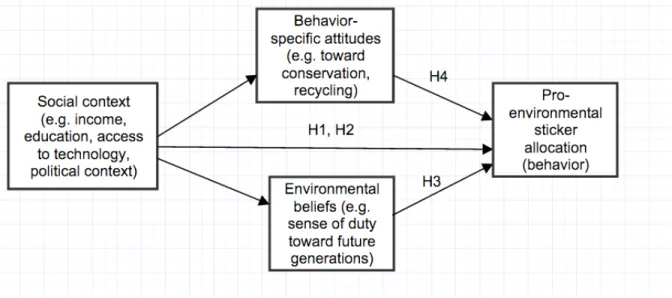
H1: Higher income consumers will place higher degrees of importance on utility provision of pro-environmental services.
H2: Customers from areas with higher levels of support for pro-environmental political candidates will place higher degrees of importance on utility provision of
pro-environmental services.
The theoretical foundation for explanations of the relationships between attitudes, beliefs and behavior is well documented (Ajzen, 2012; Stern, 2000). This study employs a basic
general environmental beliefs, such as those associated with the New Ecological Paradigm (Dunlap & Van Liere, 1978), to environmental behavior (Stern, Kalof, Dietz, & Guagnano, 1995).
Previous work has also shown that pro-environmental attitudes and beliefs are good predictors of pro-environmental behaviors that are “low cost,” or do not compete with significant life priorities such as comfort and economic security (Guagnano, Stern, & Dietz, 1995;
Abrahamse & Steg, 2011) . The survey instrument employed in this study affords measurement of environmental attitudes on a 1–10 scale. I use five attitudinal survey items as predictors of the expression of pro-environmental service priorities relative to competing priorities through a budgeted point allocation exercise. The consumer’s level of pro-environmental prioritization thus constitutes a tradeoff involving a simulation of the relative costs of pro-environmental action versus preserving non-environmental service attributes, such as reliability and comfort, which affect private consumption only. Given the “costs” associated with expression of
pro-environmental priorities in this context, it may be reasonable to expect that pro-pro-environmental attitudes (measured in Likert-scale terms) will be poor predictors of actual allocation of points to pro-environmental electric service priorities. However, given the hypothetical nature of the point allocation exercise and the corresponding low stakes of stating relative priorities rather than actually buying into pro-environmental activities, I expect that environmental attitudes will positively predict sticker placement on “green” service priorities.
green electricity explained the intention to participate in green electricity programs. I expect that these specific attitudinal measures will bear strong positive influence on a household’s desire for utility provision of opportunities to purchase green electricity and to better conserve energy in the home. The preceding discussion suggests the following attitudinal hypotheses:
H3: Customers who express pro-environmental attitudes that reflect a sense of duty toward future generations will place higher degrees of importance on utility provision of pro-environmental services.
H4: Customers who express behavior-specific pro-environmental attitudes will place higher degrees of importance on utility provision of pro-environmental services.
Each hypothesis is depicted in Figure 2.1, which illustrates the direct and indirect relationships among variables implied by the theory.
Data
This study makes use of data collected as part of a residential energy customer segmentation study. In April 2010, a major southeastern energy utility mailed a 10-page questionnaire to 16,500 residential customers in two states. The utility mailed reminder post cards to non-respondents in May and ultimately received 6,217 responses by the June 2010 deadline. The survey contained 68 questions, covering the areas of housing characteristics, home appliance use, heating, cooling, internet and social networking habits, income, education,
demographics, attitudes, and energy practices. The survey also included eight detailed statements of various attributes of customers’ electric utility service, asking respondents to allocate 20 stickers across rows of ten boxes for each statement.6 These value statements assess the customers’ perceptions of the relative importance of priorities such as energy security,
environmental protection, energy costs, reliability, and personal comfort. The utility’s goal in conducting this survey was to segment their consumer base according to different attitudes and behavior surrounding energy and technology use. It is important to note that the survey
instrument, like many household surveys, retrieves a mix of characteristics of the household and of the individual respondent. Income, for instance, is reported at the household level while education and age cohort refer to the individual completing the survey.
I augment the electric utility survey data with county-level data from the U.S. Geological Survey on outcomes from the 2012 U.S. presidential election to capture county-level variation in political orientation and examine its impact on preferences for pro-environmental electricity service attributes. This allows the present study to examine possible effects of the political
6 Although it was expected that customers would see this box structure as a 10-sticker maximum, some particularly
makeup of households’ surrounding communities on the tradeoff between pro-environmental and pro-individual electric service priorities. In so doing, the present study builds on previous work that aims to determine the effect of political ideology on the likelihood and extent of pro-environmental behavior (Costa & Kahn, 2013; Jacobsen, Kotchen, & Vandenbergh, 2012; Sánchez, López-Mosquera, & Lera-López, 2015).
Not all respondents provided answers to every question contained in the segmentation survey. Missing responses to demographic and attitudinal questions are scattered across the sample, leaving a sample size of 4,119. Missing data are assumed to be missing at random (MAR) given that the utility confirmed a balanced sample across dimensions of region, income and dwelling size. It also would have been preferable to have data from the 2008 election, which
precedes the date of collection of the electric utility survey data (2010). However, the USGS files made publicly available at DATA.GOV were missing several counties for that year, leaving the resulting analysis vulnerable to bias and low statistical power. The 2012 election results serve as a proxy for political context prior to the survey, though future analysis should test the results against those using prior electoral data when they become available. After adding these electoral data and removing any observations for which some of the survey items were unanswered, the final sample includes 2,840 observations across which all models are applied.
A full summary of demographic characteristics is provided in Table 2.1. Income and age are measured in ordinal brackets from 1–7 and education from 1–6.7 The bulk of the sample (~54%) reported incomes between the $20k–$50k and $50k–$75k ranges. Around 43% of respondents were between 25 and 54 years old with 18–24 year-olds making up only 1% of
responses. Nearly 40% of the sample had at least a college education and 61% were male. The averages for number of children and size of household were .43 and 2.4.
Table 2.1. Summary Statistics on Basic Demographic and Structural Characteristics
Variable8 Range Obs Mean/pct. Std. Dev.
Male (n=2,462 non-missing) 1502 0.61 0.49
Age (n=2,560 non-missing) 18-23 26 0.01
25-34 256 0.10
35-44 486 0.19
45-54 463 0.18
55-64 541 0.22
65-74 427 0.17
75+ 306 0.12
Education grade school 53 0.02
some high school 137 0.05
high school
547 0.19
some college 908 0.32
college 812 0.29
graduate school 383 0.13
Income
< 20,000 483 0.17
20-49,000 972 0.34
49-75,000 569 0.20
75-100,000 381 0.13
100-150,000 299 0.11
150,000+ 136 0.05
Number of rooms 2840 7.9 3.33
Household members 2840 2.36 1.21
Number of children 2840 0.43 0.82
Own residence? 2840 0.85 0.36
Age of AC (years) 2840 8.41 6.71
8 Summary statistics are reported for non-missing values only. Initial empirical models included variables for gender and
Table 2.2. Means and Standard Deviations for Electric Service Preferences and Attitudinal Predictor Variables (n = 2840)
Variable
Dependent Variables - Pro-environmental Service Attributes (20 total stickers with 10 max. per service attribute)
Protecting the environment from climate change and global warming, even if it means
committing my time and money, mean (sd) 1.42 (1.45)
Having option of buying a significant share of my electricity from wind and solar sources, even if it costs more, mean (sd)
1.38 (1.55)
Dependent Variables - Service Attributes for Private Benefits to Households (20 total stickers with 10 max. per service attribute)
Adequate supply of affordable power, five years from now and beyond, mean, (sd) 3.12 (2.06)
My electric company suggesting ways I can lower my bill, mean (sd) 1.80 (1.62)
Maintaining my comfort and lifestyle in my home – even if it means using more electricity, mean (sd)
1.74 (1.86)
Cost of my electricity, mean (sd) 3.88 (2.47)
Reliability of my electric service, mean (sd) 3.18 (2.20)
Dependent Variables - Service Attributes for Energy Efficiency (Private and Public Benefits) (20 total stickers with 10 max. per service attribute)
My electric company offering option of EE and Conservation programs, mean (sd) 2.14 (1.72)
Attitudinal Independent Variables (1-10 Likert scale measures)
“Climate change is real and it’s important we take actions to minimize it”, mean (sd) 7.08 (3.08)
“I am willing to make changes in my lifestyle and habits to protect the environment for
future generations”, mean (sd) 7.24 (2.33)
“My household is conscientious about recycling things like bottles, cans, and paper”, mean (sd)
7.63 (2.76)
“I believe reducing household energy consumption is important in protecting the environment”, mean (sd)
8.06 (2.27)
“Everyone should make a real effort to conserve energy, even if they don’t have to worry about cost”, mean (sd)
8.60 (1.95)
bottles, cans, and paper” (7.63); 4) “I believe reducing my household energy use is important in protecting the environment” (8.06); and 5) “Everyone should make a real effort to conserve energy, even if they don’t have to worry about the cost” (8.6), where 10 reflected total
agreement. Including these variables allows models to estimate whether and how much Likert-scale pro-environmental attitudes correspond to the allocation of a limited budget of points. Full summaries of these attitudinal variables are presented in Table 2.2.
Methods
Respondents were given eight alternative service priorities across which to allocate their 20 stickers. Five of these eight priorities reflect opportunities for private gain only (e.g., cheaper electricity, enhanced reliability and greater levels of comfort in the home); two reflect a desire to improve the environment, whether generally or through greater use of wind and solar energy; and one represented both types of goods, gauging the level of consumer interest in programs designed to increase energy efficiency and reduce energy use in the home. To test the hypotheses above, I employ several alternative models that predict variation in the levels of importance consumers place on different attributes of their electricity service.
sum of the raw number of stickers allocated to the following two service attributes: 1) “Having the option to buy a significant share of my electricity from non-polluting sources, such as wind power and solar power- even if it costs more;” and 2) “Protecting the environment from climate change and global warming—even if it means committing my time and money.” The “energy efficiency programs” attribute was not included in the dependent measure since it appeals to interests in both public and private goods.
The primary model specification considers a system of seemingly unrelated regressions. Preference for this model reflects the fact that there are likely unobserved variables that jointly explain variation in sticker placement for all eight of the proposed service attributes. In other words, autocorrelated errors are likely a problem in this analysis given the strong conceptual relationship between the dependent variables, which consist of numbers of stickers allocated to the service priorities: 1) “having the option of buying a significant share of my electricity from renewable sources;” and 2) “protecting the environment from climate change even if it means committing my time and money.” Seemingly unrelated regression (SUR) models have been shown to yield more efficient estimators in such cases as modeling demand for multiple goods and services within a single household (Moon & Perron, 2006). To account for this potential autocorrelation in the disturbance terms and to potentially gain efficiency in estimation by combining equations, I begin the present analysis with a seemingly unrelated regression (SUR) and then compare it to other specifications to see if the direction and size of effects differs significantly from ordinary least squares (OLS) and negative binomial (NB) regression.
attitudinal questions constitutes a form of independent behavioral event that lends itself to maximum likelihood estimation (MLE). Examination of the distribution of residuals generated from the key models reveals that OLS’s normality assumption is not likely violated, but I include a negative binomial regression model for robustness. It is possible that the latter model may do a better job of predicting variation in sticker allocations because OLS often predicts negative and out-of-range values that are nonsensical, a common problem with using OLS with categorical or ordered outcomes.
The nature of the outcome variable is such that it is unclear whether continuous, count, or ordered models are most appropriate. Given this relative uncertainty and the novelty of the sticker budgeting exercise contained in the survey, it is prudent to test several alternative model specifications and to explore any substantial differences in results. It is reasonable to expect the dependent variables, or the numbers of stickers allocated out of 20 possible, to behave like any other continuous measure. As mentioned previously, however, count models may be more appropriate given the tendency of linear models to generate out-of-range predictions. Further, outcomes with a small number of values or for which the distance between categories/rankings is not equivalent may be more amenable to an ordered model. For this reason, I include OLS, NB regression and ordered logit specifications as additional robustness checks against the results of the SUR models. NB regression is preferred over Poisson given that the data were found to violate Poisson’s assumption of equidispersion,. In other words, the variances of key variables were found to be greater than their means.
Results
stickers allocated to the two pro-environmental public goods is roughly constant across income levels. The ratio of pro-environmental to non-environmental service stickers is highest among upper-middle income earners making $75,000–$99,000 per year, lending some support for Hypothesis 1. The same group also exhibits the strongest preferences for more energy efficiency program offerings from their utility, with 2.35 stickers allocated to that service attribute. Table 2.3b shows that both the mean number of pro-environmental stickers and the ratio of pro- to non-environmental stickers increase with education. Those with some kind of post-graduate degree allocate, on average, 3.41 stickers to pro-environmental service attributes, which is almost one sticker more than the mean for the entire sample. The pro- to non-environmental sticker ratio for this group is 0.4, or twice that of the lowest educational stratum.
Table 2.3. Sticker Allocation to Public and Private Benefits Across Income Levels
Income level Obs.
Mean number of env. public benefit stickers (20 max.)
Mean number of private benefit stickers (20 max.)
Mean
public/private ratio
Mean energy conservation stickers (10 max.)
Below $20,000 719 2.69 13.35 0.26 2.18
$20,000-$49,999 1207 2.8 13.74 0.27 2.11
$50,000 - $74,999 669 2.89 13.84 0.27 2.1
$75,000-$99,999 428 2.88 13.55 0.32 2.35
$100,000-$149,000 342 2.8 13.7 0.25 1.99
Table 2.3b Sticker Allocation to Public and Private Benefits Across Education Levels
Education level Obs.
Mean number of env. Public good stickers (20 max.)
Mean number of private good stickers (20 max.)
Mean
public/private ratio
Mean energy conservation stickers (10 max.)
Grade school 85 2.58 13.65 0.2 1.95
Some high school 204 2.64 13.64 0.22 1.96
High school graduate 709 2.49 13.85 0.2 2.19
Some college or vocational
1112 2.75 13.92 0.24 2.12
College graduate 935 2.9 13.56 0.31 2.13
Post-graduate degree 454 3.41 12.72 0.4 2.14
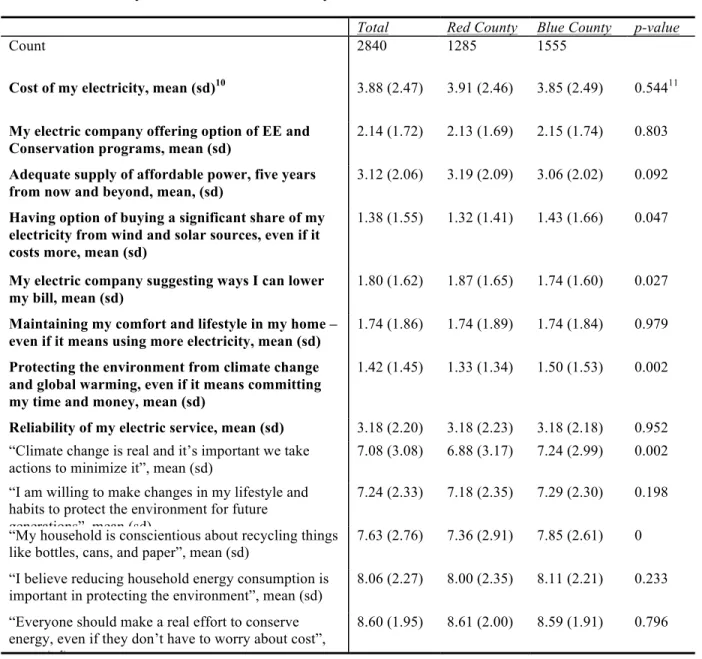
Table 2.4. Summary Statistics with T-Tests by Electoral Outcome
Total Red County Blue County p-value
Count 2840 1285 1555
Cost of my electricity, mean (sd)10 3.88 (2.47) 3.91 (2.46) 3.85 (2.49) 0.54411 My electric company offering option of EE and
Conservation programs, mean (sd)
2.14 (1.72) 2.13 (1.69) 2.15 (1.74) 0.803 Adequate supply of affordable power, five years
from now and beyond, mean, (sd)
3.12 (2.06) 3.19 (2.09) 3.06 (2.02) 0.092 Having option of buying a significant share of my
electricity from wind and solar sources, even if it costs more, mean (sd)
1.38 (1.55) 1.32 (1.41) 1.43 (1.66) 0.047
My electric company suggesting ways I can lower my bill, mean (sd)
1.80 (1.62) 1.87 (1.65) 1.74 (1.60) 0.027 Maintaining my comfort and lifestyle in my home –
even if it means using more electricity, mean (sd)
1.74 (1.86) 1.74 (1.89) 1.74 (1.84) 0.979 Protecting the environment from climate change
and global warming, even if it means committing my time and money, mean (sd)
1.42 (1.45) 1.33 (1.34) 1.50 (1.53) 0.002
Reliability of my electric service, mean (sd) 3.18 (2.20) 3.18 (2.23) 3.18 (2.18) 0.952 “Climate change is real and it’s important we take
actions to minimize it”, mean (sd)
7.08 (3.08) 6.88 (3.17) 7.24 (2.99) 0.002 “I am willing to make changes in my lifestyle and
habits to protect the environment for future generations”, mean (sd)
7.24 (2.33) 7.18 (2.35) 7.29 (2.30) 0.198 “My household is conscientious about recycling things
like bottles, cans, and paper”, mean (sd)
7.63 (2.76) 7.36 (2.91) 7.85 (2.61) 0 “I believe reducing household energy consumption is
important in protecting the environment”, mean (sd)
8.06 (2.27) 8.00 (2.35) 8.11 (2.21) 0.233 “Everyone should make a real effort to conserve
energy, even if they don’t have to worry about cost”, mean (sd)
8.60 (1.95) 8.61 (2.00) 8.59 (1.91) 0.796
The seemingly unrelated regressions model tests the four key hypotheses stated above, taking into account variation in all eight electric service priorities including those like cost savings, comfort, and reliability that speak to a sense of private gain only rather than to the
10 Variables in bold represent dependent variables, or counts of stickers allocated to eight different electric utility service
priorities.
preservation of environmental public goods. I interpret the effects of the covariates on each of the pro-environmental service priorities (renewable energy and environmental protection) separately. The full results of the SUR model are presented in Tables 2.5a–2.5c in the appendix.
Income and home ownership have the strongest effects among the social contextual regressors. Households in the $100,000–$149,999 income bracket allocate 0.22 additional points to the renewable energy service attribute relative to low income respondents. The effects of being in the $50,000–$74,999 and $75,000–$99,999 brackets are roughly equal at around 0.2– 0.25 additional stickers on average relative to the lowest income bracket, and these results hold for both the environmental protection and renewable energy priorities. Additionally, those with some post-graduate education allocate an additional 0.38 points to the renewable energy priority than their uneducated counterparts.
sticker placement, but a one percentage point increase in percentage cast for neither produced a 0.23 sticker increase for both the environmental protection and renewable energy service attributes.
Several of the attitudinal items produce interesting results. The coefficient on the
statement, “Climate change is real and it’s important that we take actions to minimize it” is twice as large for the environmental protection priority (0.15) as it is for the renewable energy priority (0.08). In other words, climate change believers place higher demands on their utilities for environmental protection than they do for renewable energy. All of the attitudinal coefficients and marginal effects are significant and all have positive signs except for agreement with the “everyone should conserve” statement. In fact, a one-point increase in agreement with the “everyone should conserve” perspective is associated with 0.03 and 0.04 fewer stickers placed under the environmental protection and renewable energy service attributes, respectively. This result suggests that preferences for energy conservation do not entail preferences for renewable energy and environmental protection. Interestingly, agreement with a very similar statement, “I believe reducing my household energy consumption is important in protecting the environment,” produced the opposite effect with one full Likert-scale point corresponding to average pro-environmental sticker increases of 0.03 and 0.04 for pro-environmental protection and renewable energy, respectively. Although both statements appeal to beliefs in the importance of
In general the effects of the attitudinal covariates on pro-environmental point allocation are modest. The exception seems to be the statement “Climate change is real and it’s important that we take actions to minimize it.” A one-point increase in agreement with this statement corresponds to a 0.15 and 0.08 sticker increases in stated preferences for the two
pro-environmental service priorities. A one-point increase in agreement with the statement “I am willing to make significant changes in my lifestyle and habits to protect the environment for future generation” corresponded to 0.05 pro-environmental sticker increases for both priorities. These two statements invoked a sense of commitment to future generations, which may partially explain why they had the strongest positive impacts of any of the attitudinal items12’13.
Discussion
This study reveals positive impacts of income and education on preferences for green electric service attributes. Although not all income and education coefficients are significant in every model specification, middle-income earners are consistently more apt to place high levels of importance on renewable energy and environmental protection in their electric utility service preferences. Further, the SUR model shows that the most highly educated consumers place more stickers on the renewable energy service attribute than their less well-educated counterparts.
Political context is also relevant. Basic comparisons show that blue counties tend to generate more support for green service priorities, which aligns with previous findings of a
12 Three alternative models were examined to determine whether the effects of the social structural and attitudinal
variables were robust across different econometric specifications. OLS, NB regression and ordered logit specifications examine variation in the combined measure of both pro-environmental service preferences. These robustness checks reflect the previously mentioned ambiguity in the outcome variable, and correspondingly, how best to model variation in that outcome. I forgo detailed discussion of these results because none of them differ from the SUR model. Complete results for the negative binomial regression models can be found alongside the OLS results in Table 2.6 and the ordered logit results appear in Table 2.7. Both tables are presented in the attached appendix.
13 Given the large number of zero counts for pro-environmental stickers, a two-part model was also examined that