Survey Research
Edited by
Mandy Sha and Tim Gabel
publication when the content is quoted. No part of this publication may be reproduced in any form by any electronic or mechanical means without permission in writing from the publisher. RTI International is a registered trademark and a trade name of Research Triangle Institute. The RTI logo is a registered trademark of Research Triangle Institute.
A free digital download of this book is available under a CC-BY-NC-ND license from rti.org/rti-press.
Library of Congress Control Number: 2020935779
ISBN 978-1-934831-23-6 (refers to print version)
RTI Press publication No. BK-0023-2004 https://doi.org/10.3768/rtipress.bk.0023.2004 www.rti.org/rtipress
Cover design: Dayle Johnson
tools, and technical expertise to a national and international audience. RTI Press publications are peer-reviewed by at least two independent substantive experts and one or more Press editors.
RTI International is an independent, nonprofit research institute dedicated to improving the human condition. We combine scientific rigor and technical expertise in social and laboratory sciences, engineering, and international development to deliver solutions to the critical needs of clients worldwide.
This publication is part of the RTI Press Book series. RTI International
3040 East Cornwallis Road, PO Box 12194 Research Triangle Park, NC 27709-2194, USA
List of Figures and Tables vii
Acknowledgments xi
Foreword xiii
Co-editors’ Preface xv
Part I Language Influences on Survey Responses and Data Quality 1. The Effect of Language of Survey Administration on the Response
Formation Process 3
Emilia Peytcheva
2. Seeking Clarifications for Problematic Questions: Effects of Interview
Language and Respondent Acculturation 23
Evgenia Kapousouz, Timothy P. Johnson, and Allyson L. Holbrook
3. A Longitudinal Perspective on the Effects of Household Language on Data Quality in the American Community Survey 47 Heather Kitada Smalley
4. Quantitative Evaluation of Response Scale Translation Through a Randomized Experiment of Interview Language With Bilingual
English- and Spanish-Speaking Latino Respondents 75 Sunghee Lee, Mengyao Hu, Mingnan Liu, and Jennifer Kelley
5. Language Differences Between Interviewers and Respondents in
African Surveys 101
Charles Q. Lau, Stephanie Eckman, Luis Sevilla Kreysa, and Benjamin Piper
6. Void of the Voiceless: An Analysis of Residents With a Language
Barrier in Germany, France, and the United Kingdom 117 Nicholas Heck-Grossek and Sonila Dardha
Part II Survey Questionnaire Development and Implementation
7. Pretesting Methods in Cross-Cultural Research 129 Eva Aizpurua
9. Hmong and Chinese Qualitative Research Interview Questions: Assumptions and Implications of Applying the Survey
Back Translation Method 181
Maichou Lor and Chenchen Gao
10. Sociocultural Issues in Adapting Spanish Health Survey Translation: The Case of the Quality of Well-Being Scale (QWB-SA) 203 Nereida Congost-Maestre and Maichou Lor
11. Nura Knows You Better: Redesigning Conversations With
Artificial Intelligence 221
Arundati Dandapani
12. Scaling the Smileys: A Multicountry Investigation 231 Aaron Sedley, Yongwei Yang, and Joseph M. Paxton
Afterword: Future Directions in Multinational, Multiregional,
and Multicultural (3MC) Survey Research 243
Julie de Jong, Kristen Cibelli Hibben, Jennifer Kelley, and Dorothée Behr
About the Authors 257
Figures
Figure 1-1. Effect of language on survey response formation processes 4
Figure 2-1. Distribution of the index of all problematic questions,
by race 36
Figure 3-1. A reproduction of the language questions from the 2017
American Community Survey 55
Figure 3-2. Segment of R code specifying a survey design object using
the survey package 58
Figure 3-3. Trends in language diversity and prevalence and distribution
of non-English speakers across the country, 2006–2017 59
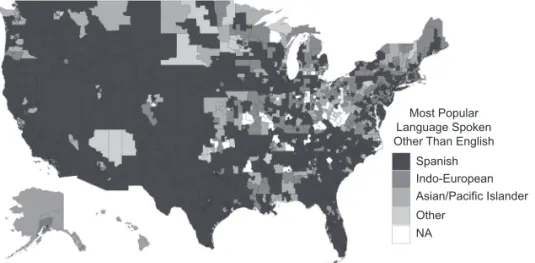
Figure 3-4. Choropleth map of Public Use Microdata Areas colored by the most popular language group other than English,
using 2017 Public Use Microdata Sample data 60
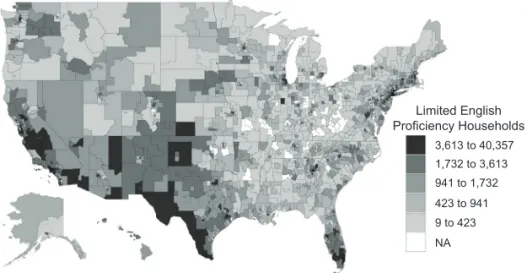
Figure 3-5. Choropleth map of Public Use Microdata Areas shaded by the number of limited English proficiency households,
using 2017 Public Use Microdata Sample data 61
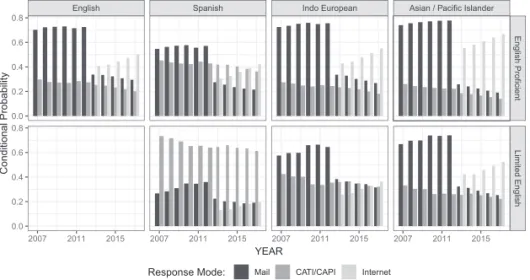
Figure 3-6. Conditional distributions for response mode across each
language group and year have significant differences 61
Figure 3-7. Conditional distributions on both household language and English proficiency exhibit significantly different
modes of response distributions 62
Figure 3-8. Average allocation rates across household language groups split by mode of response and level of English
proficiency with bands for 95 percent confidence intervals 63
Figure 4-1. Distribution of Spanish and English proficiency on
speaking, reading, and writing, by interview language 83
Figure 4-2. Percentage relative difference for items with frequency and quantity scales between Spanish and English
interviews, by Spanish translation version 86
Figure 5-1. Taxonomy of language choice, by Afrobarometer country 106
Figure 5-2. Coefficients from multilevel logistic regression models
Figure 8-1. Percentages of linguistic features across the languages:
Interaction direction and speech 164
Figure 8-2. Percentages of linguistic features across the
languages: Types of answers and back channeling 166
Figure 9-1. Back translation process 183
Figure 11-1. A chatbot screen (mock-up by the author) where Nura, a chatbot, is enticing the user with its friendly tone to engage in some product research for audio short stories
at Generation1.ca 222
Figure 11-2. Chatbot Wizu initiates a conversation with a guest
about a customer experience hotel stay survey 226
Figure 11-3. When prompted by AI chatbot Wizu, a customer
reports on the hotel stay service experience candidly 226
Figure 12-1. Smartphone screenshot example of emoji-based
answer scales 232
Figure 12-2. Smiley faces used for 5-point satisfaction scale 233
Figure 12-3. Smartphone screenshots of meaning interpretation
questions 235
Figure 12-4. Smartphone screenshots of numeric value questions,
by condition 236
Figure 12-5. Words and phrases associated with the happiest face 238
Figure 12-6. Words and phrases associated with the unhappiest face 238
Figure 12-7. Median numeric values assigned to faces 239
Tables
Table 2-1. Explanation of verbal behavior codes 34
Table 2-2. Explanation of independent variables 35
Table 2-3. Descriptive statistics of continuous independent
variables 36
Table 2-4. Distribution of dichotomous independent variables 36
Table 2-5. Distribution of the factor variable “education” 36
Table 2-6. Logistic hierarchical and hierarchical linear models examining requests for clarifications to problematic
questions 38
Table 3-1. American Community Survey modes of survey
Table 3-2. Coefficient estimates for main effects and interactions of household languages and response modes both treated as
factors from 2006 through 2012 64
Table 3-3. Coefficient estimates for main effects and interactions of household languages and response modes both treated
as factors from 2013 through 2017 65
Table 4-1. Proportion of “strongly agree” for family cohesion
questions, by interview language 85
Table 5-1. Language taxonomy 105
Table 5-2. Survey language in Kenya, Mozambique, and Cameroon,
by language taxonomy 108
Table 6-1. Cross-tabulations of units with and without a language
barrier and their dwelling or area characteristics 121
Table 7-1. Frequently used probes 132
Table 7-2. Examples of behavior codes 140
Table 8-1. Focus group composition 159
Table 8-2. Coding scheme definitions and objectives 160
Table 8-3. Coding scheme examples 161
Table 8-4. Percentage agreement between coders in each language 163
Table 8-5. Pairwise differences across the five languages and
linguistic features 167
Table 8-6. English-language focus group interaction 169
Table 8-7. Chinese-language focus group interaction
(Chinese transcript followed by its meaning in English) 171
Table 8-8. Vietnamese-language focus group discussion
(Vietnamese transcript followed by its meaning in English) 172
Table 8-9. Korean-language focus group interaction
(Korean transcript followed by its meaning in English) 173
Table 10-1. Example 1 209
Table 10-2. Example 2 209
Table 10-3. Example 3 210
Table 10-4. Example 4 and Example 5 211
Table 10-5. Example 6 212
Table 10-6. Example 7 212
Table 10-7. Example 8 213
One year is an ambitious timeline to publish any book. Thanks to the power of collaboration among our 28 contributors, we were propelled to complete this book project within that time frame.
We would like to acknowledge the American Association for Public Opinion Research (AAPOR) for providing a platform in the form of an annual conference where we cultivate ideas, foster collaborations, and champion each other’s efforts. The AAPOR conference short course by Daphna Oyserman and Norbert Schwarz ignited our passion for writing this book to share with a broad audience survey research theories, practices, and outlook in cross-cultural contexts. The incredible support from the leadership at RTI International’s Social, Statistical and Environmental Sciences (SSES) Group made the publishing idea viable.
We owe RTI Press a deep debt of gratitude for the thoughtful and rigorous editing, guidance, and trust during the past year and for making the book open access. We thank Editor-in-Chief Jenny Wiley, Senior Manager Anna Wetterberg, and Publishing Editor Annie Gering. We thank the anonymous reviewers for their review of the manuscript. We also thank Senior Editors Sharon Barrell, Merrie Aiken, and Marceline Murawski at RTI’s Multimedia Communication Services. Melinda Welch facilitated many aspects of the process and we appreciate her help. We acknowledge Lisa Thalji, Douglas Currivan, Murrey Olmsted, Marjorie Hinsdale-Shouse, Rachel Caspar, and Craig Hill.
Daphna Oyserman and Norbert Schwarz University of Southern California
Asking and answering questions are the core elements of survey research. Nevertheless, the field has long been characterized by a science of sampling on the one hand and an “art of asking questions” on the other hand. Aiming to turn that art into a science, psychologists and survey methodologists brought theories of language comprehension, communication, memory, and judgment to bear on the survey response process, resulting in an
interdisciplinary research area that became known as CASM—cognitive aspects of survey measurement. This work illuminated the interplay between semantic and pragmatic aspects of asking and answering questions and showed that even apparently “clear” and “simple” questions can dramatically change in meaning depending on who asks whom and in which context. These complexities at the interface of semantics, pragmatics, and social context are compounded when researchers and respondents do not share the same cultural background, use different languages, or both.
from administering the survey in the temporary context of culturally
significant holidays or commemorations of sacred events. Such differences are particularly difficult to notice when research teams collect data within their own culture without being exposed to the issues arising during data collection in other cultures.
This book provides ample illustrations of these and related complexities and identifies ways to address them. The contributions range from integrative reviews to reports of novel findings and solutions. They highlight the
Mandy Sha and Tim Gabel
This book discusses the role of language in survey research when
comparisons across groups, cultures, and countries are of interest. Language use in surveys is dynamic, including words, symbols (e.g., arrows), and even emojis. Language users, such as survey respondents and interviewers, must speak the same language literally and figuratively to interact with each other. As diversity grows in the United States and globally, interviewers and respondents may speak a different language or speak the same language differently in a way that reflects their own cultural norms of communication.
The entire survey life cycle is carried out through language. Researchers write or translate questions and instructions that will address research questions and then pretest them using various techniques, including qualitative inquiry that focuses on context beyond just “the numbers.” Human or virtual data collectors use persuasive messages to communicate with survey respondents and encourage their survey participation. Respondents must comprehend and interpret survey questions and
instructions to provide a response. All of these survey processes and products contribute to data quality, and the role of language is essential.
Organization of the Book
We have divided the book into two parts. The first six chapters in Part I focus on language influences on survey responses and data quality, and the next six chapters in Part II discuss sociolinguistic factors that inform survey design and implementation, including qualitative and innovative methods. We organized the book this way to acknowledge that language functions within social and cultural contexts. To reach the target populations, we must understand the underlying theories and current practices surrounding language influences on survey responses and data quality (Part I) before advancing existing or innovative methods to design and implement surveys (Part II). The book is structured to help the reader develop this understanding, consider the relevant quantitative and
the end of the book, the afterword relates each chapter to the survey life cycle through the multinational, multiregional, and multicultural (3MC) framework.
We begin each of the two parts with a chapter focused on theory and/or prior published literature. The remainder of the chapters demonstrate a comparative perspective or challenge, as well as the strategies that were undertaken to address them. Some of the literature is reviewed in more than one chapter to establish a connection between the theories and the specific topic under study.
Part I. Language Influences on Survey Responses and Data Quality
In Chapter 1, Emilia Peytcheva applies the existing response formation model to a cross-cultural and multilingual context. Her chapter combines theories from psycholinguistics and survey methodology and can serve as a primer for readers who are new to cross-cultural surveys or survey research in general. In Chapter 2, Evgenia Kapousouz, Tim Johnson, and Allyson Holbrook examine behavior coded survey interviews conducted in English, Spanish, and Korean to see whether characteristics of the interviewer (e.g., same sex as respondent) and factors related to the respondent (e.g., demographics, acculturation, language of the interview) predict whether respondents request clarifications regarding deliberately problematic questions. Overall, only language was predictive, such that respondents who were interviewed in Korean or Spanish were more likely to ask for clarifications. But few respondents in any language asked for clarifications of problematic survey questions. Thus, they encourage researchers to carefully design
questionnaires and pretest them with each of the cultural groups that will be surveyed.
Chapters 4, 5, and 6 examine interview language from different perspectives. In Chapter 4, Sunghee Lee and colleagues illustrate an assessment of measurement equivalence between English and Spanish response scale translation by randomizing interview language with bilingual English- and Spanish-speaking Latino American respondents. They conclude that overall there was a language effect when bilingual Latinos were
interviewed in English as opposed to in Spanish. Chapter 5, by Charles Q. Lau, Stephanie Eckman, Luis Sevilla-Kreysa, and Benjamin Piper, also examines issues surrounding interview language in Africa. Many Africans are multilingual. This means respondents and interviewers may not share the same home (native) language. Although the respondent and interviewer may speak a common language for the interview, that language may not be the native language for either of them. By describing patterns of survey language use in 36 African countries that participated in Afrobarometer Round 6, Charles and his coauthors have deepened our knowledge about language choice in African survey research and methodological considerations on data quality. Chapter 6 is a research brief by Nicholas Heck-Grossek and Sonila Dardha, who study interview language from the angle of language barriers. In large-scale comparative surveys in Europe, one of the criteria to be an eligible household is the ability to speak the official language(s) of the country. Nicholas and Sonila find that migrant communities with language barriers are “hidden segments” in the three largest European countries. For example, in Germany, France, and the United Kingdom, sampling units with a language barrier tend to have poor living conditions. These migrants might differ significantly from the general population on demographic, attitudinal, or behavioral traits, but inferences cannot be reliably made until the “void of the voiceless” is addressed in study design.
Part II. Survey Questionnaire Development and Implementation
Chapters 8, 9, and 10 fill this gap. In Chapter 8, Mandy Sha, Hyunjoo Park, Yuling Pan, and Jennifer Kim demonstrate that focus groups can be used as a credible research method, despite notable cross-cultural differences in focus group interactions they have identified. Using a coding scheme based on sociolinguistic theory, they analyze the linguistic behavior of speakers of five languages (English, Chinese, Korean, Spanish, and Vietnamese) and those speakers’ participatory patterns in a focus group discussion about survey data collection materials. Chapters 9 and 10 introduce the reader to translation evaluations prior to data collection and advocate for the expert review model. Chapter 9 is a collaboration between scholars in the United States and China. Led by Maichou Lor, the authors explore the assumptions and implications of using “back translation,” a common procedure of translating a document
from the source language (e.g., English) into the target language (e.g., Hmong)
and back to the source language. The purpose of back translation is to identify
discrepancies between the source and the back translation to assess the translation quality in the target language. However, using examples from Hmong and Chinese, they find that back translation is inappropriate as a quality assessment tool. Instead, they recommend that the international research community follow modern survey translation methodology that inherently includes translation expert review. Chapter 10 is a collaboration between scholars from Spain and the United States. Led by Nereida Congost-Maestre, the authors question the applicability of a previously developed Spanish translation in the United States to other Spanish-speaking countries in which it is now used. Specifically, evaluation of the Spanish translation of the internationally recognized Quality of Well-Being
Scale–Self-Administered (QWB-SA) through an expert review demonstrates that the QWB-SA cannot be readily adopted for use in Spain. The chapter provides many poignant examples, from the perspective of the reviewer in Spain, showing translation issues at both linguistic and sociocultural levels in the QWB-SA.
through the telephone.” The innovative use of AI-powered chatbots opens up new possibilities to survey specific populations and to collect qualitative insights. The final chapter is a research brief written by a team of UX researchers and designers led by Aaron Sedley. Instead of presenting a satisfaction scale that uses translated labels or is numerical, Aaron and his colleagues at Google use smiley faces (emojis) and examine their performance across six cultural and language settings: United States (English), Germany (German), Spain (Spanish), Brazil (Portuguese), India (English), and Japan (Japanese).
The Effect of Language of Survey Administration
on the Response Formation Process
Emilia Peytcheva
Introduction
With the increasing number of people of multiple cultural backgrounds in modern societies, surveys of ethnic minorities and immigrants are becoming more common. One obvious source of measurement differences is the necessary use of different languages when intending to measure the same phenomena in multiple ethnocultural groups. Typically, surveys allow respondents to answer in the language of their choice, possibly introducing self-selection bias to the extent to which those who choose their mother tongue differ in background characteristics (e.g., level of acculturation, education), substantive answers, and response patterns (e.g., “don’t know” responses) from those who choose the mainstream language. However, although self-selection certainly plays a role in differences observed across the different language versions of a survey, it is premature to consider it the sole source of all observed differences.
There is a known link between language and cognition (e.g., Whorf, 1956). To study language influences on the response formation process in surveys, we need to assert that the various language versions of a survey are free of translation problems and convey the same constructs. Thus, any observed differences between responses provided by the same respondent in different languages can be attributed to language priming a particular mind frame and influencing the thought processes.
completeness and relevance of the memories (formatting), and editing the response before mapping to the provided response categories (editing). These tasks are not necessarily sequential or independent but are presented as such for simplicity. The left-hand side of Figure 1-1 represents the mechanisms related to language influences that are most likely to be present at each stage of the response formation process. We limit our discussion only to
mechanisms well known to yield reporting differences, namely, cultural frame switching, language-dependent recall, language codability, and spatial frames of reference inherent in each language. We acknowledge that other language influences might be at play, but as of now, they remain
undiscovered.
The language influences presented in the model can only be apparent among bilingual respondents, so we discuss them within the context of more than one language being available to communicate with respondents. We describe each of these mechanisms and examine their possible effects at each step of the response formation model by reviewing the existing literature from relevant fields and deriving conclusions about consequences for surveys.
Comprehension
Survey data are meaningless if respondents do not understand the survey questions as intended by the researchers. Question comprehension involves processing the syntactic structure and understanding the semantic (literal) Figure 1-1. Effect of language on the survey response formation process
Comprehension
Language
Retrieval and judgment
Formatting Codability
Language-dependent recall
Spatial frames of reference Cultural frame switching
and pragmatic (intended) meaning. In cross-cultural surveys, in addition to the direct impact of translation, comprehension problems may occur as a result of differences related to cognition. Because language is a tool for information exchange among people of the same culture, it reflects the meaning system of the culture. Thus, word meaning and sentence meaning in language comprehension depend on preexisting background knowledge about not only the grammatical norms associated with the language, but also the cultural norms and practices related to it. Furthermore, lexical ambiguity is inherent in languages, and recall of the lexical meaning of words is often context dependent. Languages differ in their contextual dependency, and this difference is reflected in the conversational norms across cultures. For example, many words in Chinese acquire meaning only in the conversational context and cannot be translated word for word; this is related to the practice of East Asian cultures to read between the lines (for an overview, see Nisbett [2003]). Thus, the same question presented in Chinese or English to a bilingual respondent may convey a different meaning depending on how much contextual information is incorporated from previous questions.
Cultural Frame Switching
Differential context dependency can have consequences for question interpretation when partially redundant information is presented (e.g., Haberstroh, Oyserman, Schwarz, & Kühnen , 2002). In bilingual respondents, such context sensitivity is likely to depend on which cultural frame is primed by the survey question. Research on acculturation has demonstrated that individuals can possess more than one cultural identity (e.g., Berry & Sam, 1996; Hong, Morris, Chiu, & Benet-Martinez, 2000) and move between different cultural meaning systems, depending on situational cues and requirements. This phenomenon, known as “cultural frame switching” (Briley, Morris, & Simonson, 2005; Hong et al., 2000), is likely to have a strong effect on survey responding because each cultural meaning system serves as an interpretive frame that affects an individual’s cognition, emotion, and behavior (Geertz, 1993; Hong, Chiu, & Kung, 1997; Kashima, 2000; Mendoza-Denton, Shoda, Ayduk, & Mischel, 2000).
assigned language (e.g., Peytcheva, 2019; Ross, Xun, & Wilson, 2002; Trafimow, Silverman, Fan, & Law, 1997). Such studies provide evidence that language is a powerful cue for the interpretive frame bilingual respondents adopt when answering survey questions.
Codability
Language codability is the ease with which a concept can be expressed in a language. Not surprisingly, the most highly codable concepts are presented by the most frequently used words, which are short and easy to write and pronounce (see Whitney, 1998). Codability affects cognitive processes such as retrieval (Lucy, 1992; Lucy & Shweder, 1979; Lucy & Wertsch, 1987) and comparative judgment (Kay & Kempton, 1984). However, codability may also influence question comprehension in surveys; the question target may be very different depending on whether a specific word exists in the language for a given attitude or behavior or whether several less specific terms are used to describe it. For example, in Chinese, there are separate terms for family members that have only one English equivalent—different words describe whether your “uncle” is your mother’s brother or father’s brother and whether he is a younger or older brother. Thus, it can be hypothesized that when asked in Chinese about two or more related people who can be labeled differently, respondents may think of them differently relative to when questions are asked in English when a common label is used. This difference may lead to inclusion errors when respondents are asked in English because of the failure to draw a lexical distinction across referents. Such interpretational differences across two languages may affect various respondent tasks in surveys (for example, household roster construction).
Spatial Frames of Reference
Languages have inherent frames of reference for describing relationships among objects. Psycholinguists distinguish between relative and absolute languages (also known as egocentric and allocentric). Relative languages, such as most Western languages, use a viewer-centered perspective, giving rise to descriptions such as “in front of me” and “to the left.” Absolute languages use external reference frames, such as cardinal directions or an up–down axis; for example, speakers of Arrernte (Australia) will say “the fork is to the north of the spoon” (Majid, Bowerman, Kita, Haun, & Levinson, 2004).
reference because these reference frames have been found to determine many aspects of cognition (see Levinson [2003]). Experiments by Pederson et al. (1998) demonstrate that the domination of a linguistic frame of reference in a language reliably correlates with the way its users conceptualize in
nonlinguistic domains. For example, speakers of Mopan (Mayan) and Kilivila (Austronesian) cannot distinguish between two photographs of a man facing a tree when the position of the man and the tree are left–right mirror images of one another because such a relationship between the objects in both photographs is described as “tree at man’s chest.”
For survey practitioners, such findings suggest that speakers of languages that use different frames of reference may interpret survey visual images and response scales differently. For example, the orientation of a scale (vertical or horizontal) may influence how similar or distinct response categories are perceived, depending on the language used and its inherent frame of reference. However, such effects are likely to occur only in cases where the dominant frames of reference used in two languages are not functional equivalents of one another (as in the example with Mopan speakers where there were no functional equivalents of “left” and “right” in the described mirror-image photographs); thus, their impact on the survey response processes may be very limited. However, the relationship between dominant frames of reference and cultural orientation (individualistic vs. collectivistic; for reviews on documented social and cognitive differences, see Oyserman, Coon, and Kemmelmeier (2002) and Oyserman and Lee (2007)) remains unknown. To the extent to which ego-centered frames of reference are related to individualistic identities across cultures that use such languages and vice versa, the language of administration will be an important factor influencing survey responses. Similar to cultural frame switching, a speaker of languages that use different frames of reference would endorse more individualistic or collectivistic responses depending on the cultural identity evoked by the egocentric or allocentric frame of reference inherent to the language of survey administration. Such possibility deserves further investigation.
Retrieval and Judgment in Behavioral Reports
Behavioral questions often ask about past events that took place in a respondent’s life. When such events have low frequency of occurrence or are of particular importance to the respondent, they may be directly accessible in memory (for reviews of issues related to asking behavioral questions, see Bradburn, Rips, and Shevell, 1987; Schwarz, 1990; and Strube, 1987). However, respondents often need to recall relevant information and count instances of occurrence (enumeration) or compute a judgment (rate-based estimation). The success of retrieving the information and its accuracy depend on time on task (e.g., Williams & Hollan, 1981), the elapsed time since event (Cannell, Miller, & Oksenberg, 1981; Loftus, Smith, Klinger, & Fiedler, 1992; Means, Nigam, Zarrow, Loftus, & Donaldson, 1989; Smith & Jobe, 1994), the availability and adequacy of retrieval cues (for a review, see Strube, 1987), and the match between the encoding and recall contexts (Tulving & Thompson, 1973). The context may vary from physical context (Godden & Baddeley, 1975; Smith, 1988) to mental and emotional states (Bower, 1981; Bower, Monteiro, & Gilligan, 1978; Eich, Weingartner, Stillman, & Gillin, 1975). Several studies have demonstrated that the language in which mental activity is carried out during information encoding creates an internal context analogous to a mental state and can serve as a retrieval cue during information recall; similarly, the language spoken aloud during an event creates an external context analogous to a physical context and can serve as a situational cue during event recall (Marian & Neisser, 2000; Schrauf & Rubin, 1998, 2000). Thus, a match between language of encoding and language of recall in surveys should yield more accurate responses among bilingual respondents.
Language-Dependent Recall
between language-dependent recall and other forms of context dependency” (Marian & Neisser, 2000, p. 366).
The implication of such findings for surveys that involve immigrant and ethnic minority populations is that the choice of language of survey administration affects both the quality and quantity of recall. Specifically, first-language cues tap into first-culture memories, while second-language cues likely activate more recent memories. This suggests that language of survey administration in bilingual respondents may be switched throughout the survey, depending on life periods for which researchers are interested in collecting data. Additionally, bilingual immigrants or ethnic minorities are likely to use different languages in different life domains, for example, at work and at home. We can expect that the match between language spoken at home and language of survey administration will yield the most accurate
information regarding home events, the highest number of such reported events, and the lowest response latencies for home-related questions, and vice versa. Such hypotheses, if supported, would further argue for a language switch across domains in surveys of bilinguals.
Codability
Often, there is no direct correspondence across languages with respect to terms that describe the same phenomenon; thus, using phrases or multiple words to describe the concept of interest is necessary during translation. Research related to language codability would predict difficulty in recall with difficult-to-code words because easily coded words (and, therefore, events associated with them) are remembered more easily (Lucy, 1992; Lucy & Wertsch, 1987). However, analogous to question decomposition, multiple words may provide more contextual cues that can ease recall and eventually improve report accuracy. To date, it remains unknown how such processes operate for users of two languages with different levels of specificity for the same concept.
Spatial Frames of Reference
various memory and spatial reasoning tasks, the nonlinguistic frames of reference used to carry out these tasks match the dominant frames of reference of the languages (see Levinson, 2003; Pederson et al., 1998; Wassmann & Dasen, 1998). Specifically, speakers of languages that use absolute frames of reference (e.g., Balinese, Indonesia; Belhare, Nepal; Arrernte, Australia) preserved the absolute coordinates of objects when performing tasks such as memorizing order and direction of objects within an array, while speakers of relative languages, such as Dutch, Japanese, and Yukatek (Mexico), preserved the relative coordinates of objects (Levinson, 1996; Pederson et al., 1998).
The cognitive consequences of being bilingual in languages that use different frames of reference remain unclear. One possibility is differential perceptual tuning due to the use of different frames of reference because languages have been found to affect perception such that individuals become more or less attuned to certain features of the environment (Goldstone, 1998; Sloutsky, 2003). For survey practitioners, this may mean that what is reported during recall tasks may be related to what language is used during initial information encoding and later, during the survey interview. In an extreme example, certain information
may not be encoded because of the language spoken during an event that
predetermines on what speakers focus their attention. Furthermore, similar to language-dependent recall, it can be expected that a match between language frames of reference during encoding and retrieval could facilitate remembering.
Retrieval and Judgment in Attitudes
Attitude questions often require respondents to form an opinion on the spot in the specific context of a survey (Sudman et al., 1996). To do so, they need to form a mental representation of the question target based on the most accessible relevant information. Preceding questions, visual aids, and interviewer characteristics can make certain information more accessible; language of survey administration can also determine what information is accessible at any given time by activating the cognitive–affective cultural framework associated with it. By using a particular language, a “language-specific self” is activated, who acts like a filter through which information is both encoded and retrieved (Schrauf, 2000).
Cultural Frame Switching
Greece showed that the correlation between the same attitudinal questions administered in English and in Greek was low for domains in which the Greek and American norms differed in what was considered socially desirable and high for domains in which the cultural values converged (Triandis, Davis, Vassiliou, & Nassiakou, 1965). Similar results were reported for English– Spanish bilinguals by Marín, Triandis, Kashima, and Betancourt (1983).
Another aspect of cultural frame switching relates to differences in how Westerners and East Asians organize the world: Westerners show preference for grouping objects based on taxonomy or common category membership, while East Asians prefer groupings based on relationships (Chiu, 1972; Ji, Schwarz, & Nisbett, 2000). Such grouping preferences can be manipulated by the language used during the cognitive task; for example, Ji, Zhang and Nisbett (2004) found that relationship-based grouping shifted to categorical when Chinese speakers from Mainland China and Taiwan were asked questions in English. Recent studies in psycholinguistics have also demonstrated that language can affect comparisons (Bowerman & Choi, 2003; Gentner, 2003), and to the extent to which languages classify according to different criteria, the extracted similarities also differ (Boroditsky, 2001; Boroditsky, Schmidt, & Phillips, 2003; Lucy & Gaskins, 2001).
These findings have several implications for surveys of bilingual
respondents. First, the information that is accessible to form an opinion will vary depending on the language of survey administration. Hence, to achieve maximum equivalence of different language versions, open-ended questions should be avoided. Second, the same question can be perceived to have different affective characteristics depending on the language and cultural norms it activates; thus, more or less socially desirable opinions will be expressed, depending on language. Knowing in advance how cultures differ in terms of a question’s affective characteristics may better inform questionnaire design, and various techniques can be used to reduce social desirability or sensitivity across language versions. Third, judgments can be language dependent because comparisons are based on culture-approved practices and how language systems are organized. Such hypotheses necessitate systematic investigation of language effects and the underlying dynamics across question types.
Codability
Indian language that does not have separate words for blue and green) differentiated among color chips on the blue–green color continuum based on their physical characteristics—namely, wavelength of reflected light. In contrast, English speakers differentiated among the same color chips based on labels, such as “shade of green” and “shade of blue.” Thus, English speakers evaluated colors in terms of categories in which they were easily coded, while Tarahumara speakers, lacking such codability of colors, based their evaluations on physical characteristics. Similarly, Hoffman, Lau, and Johnson (1986) examined the extent to which the codability of personality description (existence of stereotypes) in a language influenced the
impression about a person. The study found that terms that were readily available in the language led to stereotyped impressions, and participants were more likely to elaborate on the described person’s characteristics using terms consistent with the stereotype than when a verbal label was not available.
Such findings may have implications for the use of scales in surveys of bilingual respondents. For example, scales may be judged differently depending on whether scale labels are easily codable in both languages. If label equivalents are not easily codable in one language, respondents may be more likely to consider solely the numeric values of the scale when making judgments, resulting in response differences across language versions.
Response Formatting
The ability to differentiate among response options may be influenced by language codability, and the stimuli used to anchor the points of a rating scale may be affected by the cultural meaning system primed by language.
Cultural Frame Switching
are an artifact of self-presentation as a result of language priming culture or true differences in perception, independent of language. Moreover, the extent to which respondents use the range of a presented frequency scale as a frame of reference when answering survey questions is also culture dependent. A study by Ji, Schwarz, and Nisbett (2000) demonstrated that Chinese students were influenced by the range of frequency scales only when asked to report private, unobservable behaviors (e.g., having nightmares, borrowing books from the library). However, no scale effects were found for public behaviors (e.g., being late for class), possibly reflecting the importance of “fitting in” in Asian cultures related to monitoring (and thus having better memory representation of) one’s and others’ public behaviors. In contrast, consistent with previous research on scale effects (for a review, see Schwarz [1996]), American students relied on the presented response scale frequency range to estimate both private and public
behaviors. For surveys of bilingual respondents, such findings suggest that, depending on the cultural identity primed by the language of interview, different estimation strategies may be employed.
Codability
Similar to the effect of language codability on retrieval and judgement, response formatting may also be affected by the availability of a label for a given concept. For example, scales may be used differently by speakers of different languages as a result of different scale label codability; thus, the meaning of the same number on a labeled scale may be affected by what language is used. Taken to an extreme, there are cultures whose languages have terms only for one, two and many (Greenberg, 1978), which further limits the ability of their speakers to make comparisons (Hunt and Agnoli, 1991). At this point, little is known how this may affect the cognitive processes in bilinguals whose other language allows for utilization of the whole numeric scale. It can be speculated, that the ability to make comparisons may remain language dependent.
Response Editing
see DeMaio, 1984). Recent work in cross-cultural research suggests that culture influences social desirability through interpretation based on cultural experiences, and response editing depends on the need to conform with particular social norms (Fu, Lee, Cameron, & Xu, 2001; Lee, Xu, Fu, Cameron & Chen, 2001).
Cultural Frame Switching
The same survey question may be perceived to have different levels of socially desirable content depending on the respondent’s cultural identity. For example, maintaining harmony and face-saving are more socially desirable traits in Asian cultures than in the Western world (Triandis, 1995). Similarly, mental health is stigmatized in Arab and Hispanic societies (Bazzoui & Al-Issa, 1966; Chaleby, 1987; Okasha & Lotalif, 1979; Silva de Crane & Spielberger, 1981) to a greater extent than in the United States. For bilingual respondents, this means that, depending on the language of the survey interview and the cultural frame primed by it, such questions might be perceived to have different affective characteristics, and respondents would be likely to edit their answers to match the values of the culture associated with the language. The studies by Triandis et al. (1965) and Marín et al. (1983) presented earlier illustrate this effect. For survey practitioners, such language effects would require thorough advance knowledge of where cultural differences related to questions’ affective characteristics are to be expected to determine the language assignment of bilingual respondents or to employ questionnaire design techniques that reduce differentially perceived social desirability or sensitivity across language versions.
Summary
A substantial body of literature in psycholinguistics and cross-cultural psychology suggests that language used in survey interviews can affect every stage of the response formation process, and different mechanisms may simultaneously play a role at each step. As our discussion indicates, depending on language, respondents may answer the same question differently as a result of different question interpretation, different mental representations of the question target, a mismatch between the language of encoding and language of recall, different accessible information at the time of the survey request, differential anchoring of response scales, and
Two shortcomings of the presented theoretical framework relate to its application. It is desirable to directly connect the outlined model to published survey research and possibly reinterpret puzzling results in light of the proposed language influences, but the existing cross-cultural survey data do not offer such an opportunity. Thus, the proposed framework remains largely speculative. Next, some of the presented mechanisms are demonstrated through research in settings, tasks, and languages that are very different from common survey tasks and languages in which surveys are typically conducted. At this stage, it is unclear to what extent the outlined mechanisms would be detectable in survey responses collected in mainstream (rather than indigenous) languages or whether they are task and language specific. We believe the merits of this theoretical model are to present possibilities for language influences and to stimulate further discussion and action related to these issues.
References
Bazzoui, W., & Al-Issa, I. (1966). Psychiatry in Iraq. The British Journal of
Psychiatry, 112, 827–832.
Berry, J., & Sam, D. (1996). Acculturation and adaptation. In J. Berry, M.
Segall, & C. Kagitcibasi (Eds.), Handbook of cross-cultural psychology,
volume 3: Social behavior and applications (pp. 291–325). Boston, MA: Allyn & Bacon.
Boroditsky, L. (2001). Does language shape thought?: Mandarin and English
speakers’ conception of time. Cognitive Psychology, 43, 1–22.
Boroditsky, L., Schmidt, L., & Phillips, W. (2003). Sex, syntax and semantics.
In D. Gentner & S. Goldin-Meadow (Eds.), Language in mind (pp. 61–79).
Cambridge, MA: MIT Press.
Bower, G. H. (1981). Mood and memory. The American Psychologist, 36,
129–148.
Bower, G. H., Monteiro, K. P., & Gilligan, S. G. (1978). Emotional mood as a
context for learning and recall. Journal of Verbal Learning and Verbal
Behavior, 17, 573–585.
Bowerman, M., & Choi, S. (2003). Space under construction: Language-specific spatial categorization in first language acquisition. In D. Gentner
& S. Goldin-Meadow (Eds.), Language in mind: Advances in studies of
Bradburn, N. M., Rips, L. J., & Shevell, S. K. (1987). Answering
autobiographical questions: The impact of memory and inference on
surveys. Science, 236, 157–161.
Briley, D., Morris, M., & Simonson, I. (2005). Cultural chameleons:
Biculturals, conformity motives, and decision making. Journal of
Consumer Psychology, 15(4), 351–62.
Bugelski, B. R. (1977). Imagery and verbal behavior. Journal of Mental
Imagery, 1, 39–52.
Cannell, C., Miller, P., & Oksenberg, L. (1981). Research on interviewing
techniques. Sociological Methodology, 12, 389–437.
Chaleby, K. (1987). Women in polygamous marriages in out-patient
psychiatric services in Kuwait. International Journal of Family Psychiatry,
8(1), 25–34.
Chen, C., Lee, S., & Stevenson, H. W. (1995). Response style and cross-cultural comparisons of rating scales among East Asian and North
American students. Psychological Science, 6, 170–175.
Chiu, L. H. (1972). A cross-cultural comparison of cognitive styles in Chinese
and American children. International Journal of Psychology, 7, 235–242.
Chun, K. T., & Campbell, J. B. (1974). Extreme response styles in
cross-cultural research: A reminder. Journal of Cross-Cultural Psychology, 5,
465–480.
DeMaio, T. J. (1984). Social desirability and survey measurement: A review. In
C. F. Turner & E. Martin (Eds.), Surveying subjective phenomena (p. 2).
New York, NY: Russell Sage Foundation.
Eich, J. E., Weingartner, H., Stillman, R. C., & Gillin, J. C. (1975). State-dependent accessibility of retrieval cues in the retention of a categorized
list. Journal of Verbal Learning and Verbal Behavior, 14, 408–417.
Fu, G., Lee, K., Cameron, C. A., & Xu, F. (2001). Chinese and Canadian adults’ categorization and evaluation of lie and truthtelling about prosocial
and antisocial behaviors. Journal of Cross-Cultural Psychology, 32, 720–727.
Geertz, C. (1993). The interpretation of cultures. New York, NY: Basic Books.
Gentner, D. (2003). Why we’re so smart. In D. Gentner & S. Goldin-Meadow
Godden, D. R., & Baddeley, A. D. (1975). Context-dependent memory in two
natural environments: On land and under water. British Journal of
Psychology, 66, 325–331.
Goldstone, R. L. (1998). Perceptual learning. Annual Review of Psychology, 49,
585–612.
Greenberg, J. H. (1978). Generalization about numeral systems. Universals of
human language. Word structure. Stanford, CA: Academic Press. Haberstroh, S., Oyserman, D., Schwarz, N., & Kühnen, U. (2002). Is the
interdependent self more sensitive to question context than the independent self? Self-construal and the observation of conversational
norms. Journal of Experimental Social Psychology, 38, 323–329.
Hayashi, E. (1992). Belief systems, the way of thinking, and sentiments of five
nations. Behaviormetrika, 19, 127–170.
Hoffman, C., Lau, I., & Johnson, D. R. (1986). The linguistic relativity of
person cognition: An English–Chinese comparison. Journal of Personality
and Social Psychology, 51, 1097–1105.
Hong, Y. Y., Chiu, C. Y., & Kung, T. M. (1997). Bringing culture out in front: Effects of cultural meaning system activation on social cognition. In K.
Leung, Y. Kashima, U. Kim, & S. Yamaguchi (Eds.), Progress in Asian
social psychology (pp. 135–146). Singapore: Wiley.
Hong, Y., Morris, M., Chiu, C. Y., & Benet-Martinez, V. (2000). Multicultural minds: A dynamic constructivist approach to culture and cognition. American Psychologist, 55(7), 709–720.
Hunt, E., & Agnoli, F. (1991). The Whorfian hypothesis: A cognitive
psychology perspective. Psychological Review, 98, 377–389.
Ji, L., Schwarz, N., & Nisbett, R. E. (2000). Culture, autobiographical memory, and behavioral frequency reports: Measurement issues in cross-cultural
studies. Personality and Social Psychology Bulletin, 26, 586–594.
Ji, L., Zhang, Z., & Nisbett, R. E. (2004). Is it culture or is it language? Examination of language effects in cross-cultural research on
categorization. Journal of Personality and Social Psychology, 87(1), 57–65.
Kay, P., & Kempton, W. (1984). What is the Sapir-Whorf hypothesis? American Anthropologist, 86, 65–79.
Lee, K., Xu, F., Fu, G., Cameron, C. C., & Chen, S. (2001). Taiwan and Mainland Chinese and Canadian children’s categorization and evaluation
of lie- and truth-telling: A modesty effect. British Journal of Developmental
Psychology, 19, 525–542.
Levinson, S. (1996). Frames of reference and Molyneux’s question: Cross-linguistic evidence. In P. Bloom, M. Peterson, L. Nadel, & M. Garrett
(Eds.), Language and space. Cambridge, MA: MIT Press.
Levinson, S. (2003). Space in language and cognition: Explorations of cognitive
diversity. Cambridge, UK: Cambridge University Press.
Loftus, E. F., Smith, K. D., Klinger, M. R., & Fiedler, J. (1992). Memory and
mismemory for health events. In J. M. Tanur (Ed.). Questions about
questions: Inquiries into the cognitive basis of surveys (pp. 102–137). New York, NY: Russell Sage Foundation.
Lucy, J. A. (1992). Language diversity and thought: A reformulation of
the linguistic relativity hypothesis. Cambridge, UK: Cambridge University Press.
Lucy, J. A., & Gaskins, S. (2001). Grammatical categories and the development of classification preferences: A comparative approach. In M. Bowerman &
S. Levinson (Eds.), Language acquisition and conceptual development
(pp. 257–283). Cambridge, UK: Cambridge University Press.
Lucy, J. A., & Shweder, R. A. (1979). Whorf and his critics: Linguistic and
nonlinguistic influences on color memory. American Anthropologist,
81, 581–615.
Lucy, J. A., & Wertsch, J. V. (Eds.), (1987). Vygotsky and Whorf: A comparative
analysis. Social and functional approaches to language and thought. Orlando, FL: Academic Press.
Majid, A., Bowerman, M., Kita, S., Haun, D. B. M., & Levinson, S. C. (2004).
Can language restructure cognition? The case for space. Trends in
Cognitive Sciences, 8(3), 108–114.
Marian, V., & Neisser, U. (2000). Language-dependent recall of
autobiographical memories. Journal of Experimental Psychology General,
Marín, G., Triandis, H. C., Kashima, Y., & Betancourt, H. (1983). Ethnic affirmation versus social desirability: Explaining discrepancies in
bilinguals’ responses to a questionnaire. Journal of Cross-Cultural
Psychology, 14(2), 173–186.
Means, B., Nigam, A., Zarrow, M., Loftus, E. F., & Donaldson, M. S.
(1989). Autobiographical memory for health-related events. Vital
and health statistics. Washington, DC: National Center for Health Statistics.
Mendoza-Denton, R., Shoda, Y., Ayduk, O. N., & Mischel, W. (2000). Applying cognitive-affective processing system (CAPS) theory to cultural differences in social behavior. In D. L. Dinne, D. K. Forgays, S. A. Hayes, &
W. J. Lonner (Eds.), Merging past, present, and future in cross-cultural
psychology (pp. 205–217). Lisse, Netherlands: Swetz and Zeitlinger.
Nisbett, R. (2003). The geography of thought. How Asians and Westerners
think differently… and why. New York, NY: Free Press. Okasha, A., & Lotalif, F. (1979). Attempted suicide: An Egyptian
investigation. Acta Psychiatrica Scandinavica, 60, 69–75.
Oyserman, D., Coon, H., & Kemmelmeier, M. (2002). Rethinking
individualism and collectivism: Evaluation of theoretical assumptions and
meta-analyses. Psychological Bulletin, 128(1), 3–72.
Oyserman, D., & Lee, S. W. (2007). Priming “culture”: Culture as a situated
cognition. In S. Kitayama & D. Cohen (Eds.), Handbook of cultural
psychology. New York, NY: Guilford Press.
Pederson, E., E. Danziger, Wilkins, D., Levinson, S., Kita, S., & Senft, G.
(1998). Semantic typology and spatial conceptualization. Language in
Society, 74, 557–589.
Peytcheva, E. (2019). Can the language of a survey interview influence respondent answers? In T. P. Johnson, B.-E. Pennell, I. A. L. Stoop, & B.
Dorer (Eds.), Advances in comparative survey methods: Multinational,
multiregional, and multicultural contexts (3MC) (pp. 325–337). Hoboken, NJ: John Wiley & Sons.
Ross, M., Xun, W. Q. E., & Wilson, A. E. (2002). Language and
the bicultural self. Personality and Social Psychology Bulletin, 28(8),
Schrauf, R. W. (2000). Bilingual autobiographical memory: Experimental
studies and clinical cases. Culture and Psychology, 6(4), 387–417.
Schrauf, R. W., & Rubin, D. C. (1998). Bilingual autobiographical memory in older adult immigrants: A test of cognitive explanations of the
reminiscence bump and the linguistic encoding of memories. Journal of
Memory and Language, 39, 437–457.
Schrauf, R. W., & Rubin, D. C. (2000). Internal languages of retrieval:
The bilingual encoding of memories for the personal past. Memory &
Cognition, 28, 616–623.
Schwarz, N. (1990). Assessing frequency reports of mundane behaviors: Contributions of cognitive psychology to questionnaire construction. In
C. Hendrick & M. S. Clark (Eds.), Research methods in personality and
social psychology (pp. 98–119). Newbury Park, CA: Sage.
Schwarz, N. (1996). Cognition and communication: Judgmental biases,
research methods, and the logic of conversation. Hillsdale, NJ: Erlbaum. Silva de Crane, R., & Spielberger, C. D. (1981). Attitudes of Hispanic, Black,
and Caucasian university students toward mental illness. Hispanic Journal
of Behavioral Sciences, 3, 241–255.
Sloutsky, V. M. (2003). The role of similarity in the development of
categorization. Trends in Cognitive Sciences, 7, 246–251.
Smith, A. F., & Jobe, J. B. (1994). Validity of reports of long-term dietary memories: Data and a model. In N. Schwarz & S. Sudman (Eds.), Autobiographical memory and the validity of retrospective reports (pp. 121–140). Berlin: Springer-Verlag.
Smith, S. M. (1988). Environmental context-dependent memory. In G. M.
Davies & D. M. Thomson (Eds.), Memory in context: Context in memory
(pp. 13–34). Chichester, England: Wiley.
Stening, B. W., & Everett, J. E. (1984). Response styles in cross-cultural
managerial study. The Journal of Social Psychology, 122, 151–156.
Strube, G. (1987). Answering survey questions: The role of memory. In H. J.
Hippler, N. Schwarz, & S. Sudman (Eds.), Social information processing
and survey methodology (pp. 86–101). New York, NY: Springer-Verlag.
Sudman, S., Bradburn, N., & Schwarz, N. (1996). Thinking about answers: The
Tourangeau, R., Rips, L. J., & Rasinski, K. (2000). The psychology of survey response. Cambridge, UK: Cambridge University Press.
Trafimow, D., Silverman, E. S., Fan, R. M.-T., & Law, J. S. F. (1997). The effect of language and priming on the relative accessibility of the private
self and the collective self. Journal of Cross-Cultural Psychology, 28,
107–123.
Triandis, H. C. (1995). Individualism and collectivism. Boulder, CO: Westview
Press.
Triandis, H. C., Davis, E. E., Vassiliou, V., & Nassiakou, M. (1965). Some
methodological problems concerning research on negotiations between monolinguals. Urbana, IL: University of Illinois Urbana Group Effectiveness Research Lab.
Tulving, E., & Thompson, D. (1973). Encoding specificity and retrieval
processes in episodic memory. Psychological Review, 80, 352–373.
Wassmann, J., & Dasen, P. R. (1998). Balinese spatial orientation: Some
empirical evidence of moderate linguistic relativity. Journal of the Royal
Anthropological Institute, 4, 689–711.
Whitney, P. (1998). The psychology of language. Boston, MA: Houghton
Mifflin.
Whorf, B. L. (1956). Language, thought, and reality: Selected writings of
Benjamin Lee Whorf. New York, NY: Wiley.
Williams, M. D., & Hollan, J. D. (1981). The process of retrieval from very
long-term memory. Cognitive Science, 5, 87–119.
Zax, M., & Takahashi, S. (1967). Cultural influences on response style:
Comparison of Japanese and American college students. The Journal of
Seeking Clarifications for Problematic Questions:
Effects of Interview Language and
Respondent Acculturation
Evgenia Kapousouz, Timothy P. Johnson, and Allyson L. Holbrook
Introduction
For scholars in various fields of inquiry, surveys are a critical and widely used tool for the systematic collection of information from respondents, using standardized instruments. The cognitive process by which respondents answer survey questions is generally believed to be a four-stage process. A question is administered to a respondent, and the respondent has to (1) comprehend the question and understand what it is asking him or her to do, (2) retrieve relevant information from memory, (3) form a judgment based on the information retrieved, and then (4) provide an answer using the response format provided (Tourangeau, Rips, & Rasinski, 2009). Error can be
introduced into survey estimates through various mechanisms at each stage of this process. Ongena and Dijkstra (2006) suggested that the interview, its structure, and administration may represent underlying determinants of both good and poor survey responses. Consequently, errors associated with survey design, survey questions, interviewers, and respondents must all be
considered when evaluating and addressing the quality of survey data. In the following, we review how error can be introduced by each of these sources and examine how survey respondents behave when error is introduced by asking deliberately bad survey questions.
Survey Design as a Source of Error
(Fowler & Cannell, 1996; Lepkowski, Siu, & Fisher, 2000). However, because they involve people, survey interviews also operate as social and conversational interactions (Tourangeau et al., 2009). The form and quality of the interaction between respondent and interviewer can significantly affect the quality of answers provided by respondents during the interview process. In particular, the relationship of interviewers and respondents must be established very quickly and in an environment that is welcoming and nonthreatening for respondents to feel at ease. Interviewers also need to inspire respondent trust, especially when the interview includes sensitive questions (Fowler & Mangione, 1990).
Standardized interviewing is considered one of the keys to minimizing the measurement error that may be attributed to interviewers (Fowler &
Mangione, 1990; Groves, 2004). All respondents should have as similar an experience as possible during an interview to ensure that any differences in the data collected are not due to the interview process, but rather to true differences in survey responses (Fowler & Mangione, 1990). Standardized interviews are expected to follow an established script. Accordingly, when respondents are unsure of the meaning of a question, interviewers can only provide standardized, nondirectional information, such as “Please, answer according to your understanding of the term” (Bell, Fahmy, & Gordon, 2016). Although standardization is preferred, it may at times limit the interaction between the interviewer and respondent in ways that can actually damage data quality (Bell et al., 2016; Fowler & Mangione, 1990).
Supporters of conversational interviewing underscore the belief that unscripted conversation during the interview process may significantly improve data quality. Specifically, Conrad and Schober (1999) reported that conversational interviewing—in which interviewers are trained to deviate from scripted question wording when necessary to achieve survey
objectives—prevents possible comprehension problems by establishing shared meaning, particularly for questions concerned with objective phenomena (e.g., number of rooms in living quarters). On the other hand, Ong, Hu, West, and Kirlin (2018) reported that such interaction during the interview may increase interviewer error.
The Question as a Source of Error
compared with a survey context (Schober, 1999). The questions may suffer from various issues such as poor grammar and syntax and semantic issues; being double barreled; using words with ambiguous or vague meaning; using terms or words that respondents are not familiar with; or being worded in such a way as to lead respondents to the “right” answer, while lengthy questions may cause respondents to forget the actual question (Tourangeau et al., 2009). As a result, respondents may in some cases be uncertain of the true meaning of the questions being posed to them.
One strategy researchers have used to examine question-based
measurement error is to examine behaviors and responses to questions that deliberately introduce a source of error. For example, some surveys have used questions with unclear terms. Oksenberg, Cannell, and Kalton (1991) reported that this kind of problem in questions can significantly affect responses. Numerous unanticipated differences in question interpretation may also be introduced when respondents speak a different first language and are interviewed in their second language. In addition, respondents from different cultural backgrounds may vary in the likelihood that they will misinterpret any given question (Warnecke et al., 1997).
Differences in respondent culture, often operationalized using race or ethnicity, may lead to variability in understanding of survey questions or increased confusion about them. Researchers sometimes mistakenly assume that measurement is similar between different cultural groups. Perales, Baffour, and Mitrou (2015) asserted that “indigenous cultural imperatives may result in understanding of survey questions and response categories that can be different from other sectors” (p. 3). They suggested that, to improve the quality of survey data, the survey questions should adapt to the needs and culture of respondents. Research has shown ethnic background can
affect survey quality because respondents’ cultural background may affect the response patterns and interpretation of the questions (Dolnicar &
Grün, 2007).
The Interviewer as a Source of Error
empirical evidence suggests that slight deviations in question wording do not necessarily affect accuracy negatively (Dykema, Lepkowski, & Blixt, 1997). Interviewer error may vary depending on the question (West, Conrad, Kreuter, & Mittereder, 2017). Experienced interviewers in particular may be better able to manage the interaction with respondents and, in doing so, minimize measurement error (Garbarski et al., 2016).
Researchers have tried to reduce measurement error by matching interviewers with respondents. Webster (1996) reported that matching interviewer and respondent ethnicity increases the response rate and the item response effort. Similarly, Davis and Silver (2003) reported that in telephone surveys, matching the respondents’ race with the interviewer’s leads to better reporting results and less item nonresponse to sensitive questions; however, answers may not necessarily be improved. Firstly, some respondents may prefer interviewers from a different cultural background (Davis et al., 2013), and ethnicity matching may have a negative effect because respondents are more likely to produce answers acceptable to that cultural group (Fowler & Mangione, 1990). Similarly, Groves (2004) and Weisberg (2005) noted that matching may increase error because respondents tend to report more extreme answers to questions about culture. Research also has shown
conflicting results regarding interviewer gender: Fowler and Mangione (1990) reported that gender matching leads to better data quality, whereas Groves and Magilavy (1986) underscored that there is no effect of interviewer gender. Matching respondents and interviewers on gender may have a significant effect only in some countries (Sahgal & Horowitz, 2011) and with certain questions where social desirability may be an issue (Lipps & Lutz, 2017). Although research suggests gender matching may lead to more accurate responses, men appear to be affected more by interviewer gender for some question topics (Catania et al., 1996). Early research has shown that poorly educated respondents are also more likely to respond differently based on interviewer gender (Cannell, Oksenberg, & Converse, 1977; Schuman & Presser, 1977).