ARTICLE
Clinical Sequencing Exploratory Research Consortium:
Accelerating Evidence-Based Practice of Genomic Medicine
Robert C. Green,1,2,3,4,* Katrina A.B. Goddard,5 Gail P. Jarvik,6,7,8 Laura M. Amendola,7,8 Paul S. Appelbaum,9 Jonathan S. Berg,10 Barbara A. Bernhardt,11 Leslie G. Biesecker,12
Sawona Biswas,11,13 Carrie L. Blout,1 Kevin M. Bowling,14 Kyle B. Brothers,15 Wylie Burke,7,8,16 Charlisse F. Caga-anan,17 Arul M. Chinnaiyan,18,19,20,21 Wendy K. Chung,22,23 Ellen W. Clayton,24 Gregory M. Cooper,14 Kelly East,14 James P. Evans,10 Stephanie M. Fullerton,16 Levi A. Garraway,2,25,26 Jeremy R. Garrett,27,28 Stacy W. Gray,3,29 Gail E. Henderson,30 Lucia A. Hindorff,31 Ingrid A. Holm,3,32 Michelle Huckaby Lewis,33 Carolyn M. Hutter,31 Pasi A. Janne,3,29 Steven Joffe,34 David Kaufman,35
(Author list continued on next page)
Despite rapid technical progress and demonstrable effectiveness for some types of diagnosis and therapy, much remains to be learned about clinical genome and exome sequencing (CGES) and its role within the practice of medicine. The Clinical Sequencing Exploratory Research (CSER) consortium includes 18 extramural research projects, one National Human Genome Research Institute (NHGRI) intra-mural project, and a coordinating center funded by the NHGRI and National Cancer Institute. The consortium is exploring analytic and clinical validity and utility, as well as the ethical, legal, and social implications of sequencing via multidisciplinary approaches; it has thus far recruited 5,577 participants across a spectrum of symptomatic and healthy children and adults by utilizing both germline and cancer sequencing. The CSER consortium is analyzing data and creating publically available procedures and tools related to participant preferences and consent, variant classification, disclosure and management of primary and secondary findings, health outcomes, and integration with electronic health records. Future research directions will refine measures of clinical utility of CGES in both germline and somatic testing, evaluate the use of CGES for screening in healthy individuals, explore the penetrance of pathogenic variants through extensive phenotyping, reduce discordances in public databases of genes and variants, examine social and ethnic dis-parities in the provision of genomics services, explore regulatory issues, and estimate the value and downstream costs of sequencing. The CSER consortium has established a shared community of research sites by using diverse approaches to pursue the evidence-based devel-opment of best practices in genomic medicine.
Introduction
With the rapid advances in sequencing technology and variant interpretation, the era of genomic medicine by clinical genome and exome sequencing (CGES) is
under-way,1–3 but there are substantial knowledge gaps in its application. In 2010 and 2012, the National Human Genome Research Institute (NHGRI) issued a request for applications (RFA) for a Clinical Sequencing Exploratory Research (CSER) program focused on identifying and
1Division of Genetics, Department of Medicine, Brigham and Women’s Hospital, Boston, MA 02115, USA;2Broad Institute of MIT and Harvard, Cambridge, MA 02142, USA;3Harvard Medical School, Boston, MA 02115, USA;4Partners Personalized Medicine, Boston, MA 02139, USA;5Center for Health Research, Kaiser Permanente Northwest, Portland, OR 97227, USA;6Department of Genome Sciences, University of Washington, Seattle, WA 98195, USA;7Division of Medical Genetics, Department of Medicine, University of Washington, Seattle, WA 98195, USA;8Clinical Sequencing Exploratory Research Coordinating Center, University of Washington, Seattle, WA 98195, USA;9Department of Psychiatry, Columbia University Medical Center and New York State Psychiatric Institute, New York, NY 10032, USA;10Department of Genetics, University of North Carolina at Chapel Hill, Chapel Hill, NC 27599, USA;11Division of Translational Medicine and Human Genetics, Department of Medicine, Perelman School of Medicine, University of Pennsylvania, Philadelphia, PA 19104, USA;12Medical Genomics and Metabolic Genetics Branch, National Human Genome Research Institute, NIH, Bethesda, MD 20892, USA; 13Department of Pediatrics, Children’s Hospital of Philadelphia, Philadelphia, PA 19104, USA;14HudsonAlpha Institute for Biotechnology, Huntsville, AL 35806, USA;15Department of Pediatrics, University of Louisville, Louisville, KY 40202, USA;16Department of Bioethics and Humanities, Department of Medicine, University of Washington, Seattle, WA 98195, USA;17National Cancer Institute, NIH, Bethesda, MD 20892, USA;18Michigan Center for Trans-lational Pathology, Ann Arbor, MI 48109, USA;19Comprehensive Cancer Center, University of Michigan, Ann Arbor, MI 48109, USA;20Departments of Pathology and Urology, University of Michigan, Ann Arbor, MI 48109, USA;21Howard Hughes Medical Institute, Ann Arbor, MI 48109, USA;22Department of Pediatrics, Columbia University, New York, NY 10029, USA;23Department of Medicine, Columbia University Medical Center, New York, NY 10032, USA; 24Center for Biomedical Ethics and Society, Vanderbilt University, Nashville, TN 37203, USA;25Department of Medical Oncology and Center for Cancer Precision Medicine, Dana-Farber Cancer Institute, Boston, MA 02115, USA;26Department of Medicine, Brigham and Women’s Hospital, Boston, MA 02115, USA;27Children’s Mercy Bioethics Center, Children’s Mercy Hospital, Kansas City, MO 64108, USA;28Departments of Pediatrics and Philosophy, University of Missouri – Kansas City, Kansas City, MO 64110, USA;29Dana-Farber Cancer Institute, Boston, MA 02115, USA;30Department of Social Med-icine, School of MedMed-icine, University of North Carolina at Chapel Hill, Chapel Hill, NC 27599, USA;31Division of Genomic Medicine, National Human Genome Research Institute, NIH, Bethesda, MD 20892, USA;32Division of Genetics and Genomics and the Manton Center for Orphan Diseases Research, Boston Children’s Hospital, Boston, MA 02115, USA;33Berman Institute of Bioethics, Johns Hopkins, Baltimore, MD 21205, USA;34Department of Medical Ethics & Health Policy, University of Pennsylvania School of Medicine, Philadelphia, PA 19104, USA;35Division of Genomics and Society, National Human Genome Research Institute, NIH, Bethesda, MD 20892, USA;36Centre of Genomics and Policy, Faculty of Medicine, Department of Human Genetics, McGill University, Montreal, QC H3A 1B1, Canada;37Institute for Health and Aging, University of California, San Francisco, San Francisco, CA 94118,
(Affiliations continued on next page)
generating evidence to address key challenges in applying sequencing to the clinical care of individuals.4,5 These challenges span a range of issues surrounding the genera-tion, analysis, and interpretation of CGES data, as well as the translation of these data for the referring physician, communication to the participant and families, and exam-ination of the clinical utility and broader ethical, legal, and social implications (ELSIs) of utilizing genomic data in the clinic.
Grant applications in response to this RFA employed a three-project structure. Project 1 addressed ‘‘one or more areas of medical investigation (i.e., disease or therapeutic approach) or a specific approach to the use of genotype-phenotype data within a clinical context (e.g., risk predic-tion modeling or cancer mutapredic-tion profiling).’’ Project 2 addressed ‘‘the development of methods to analyze genomic sequence data for clinically actionable variants, as well as parsing these data into manageable components to translate the findings into formats that eased interpreta-tion of the findings by the clinician.’’ Project 3 ‘‘in-vestigated how patients understand, react to, and use individual genomic results when they are offered and re-turned.[and] investigate[d] the experiences of clinicians regarding the return of results.’’ Nine sites were funded by the NIH cooperative agreement or U-award mechanism. In addition, the NHGRI intramural ClinSeq study joined the CSER consortium as a tenth site in 2013. These sites, including ClinSeq, are collectively described as the U-award sites for convenience throughout the rest of this paper.
In 2013, the CSER consortium was expanded to incor-porate a pre-existing consortium (formerly known as the ELSI Return of Results Consortium) that included nine previously awarded projects relating to the return of research results and management of secondary findings (also called incidental findings) in both research and clin-ical settings. These projects (some initiated by
investiga-tors and some funded under RFAs)6,7used the NIH regular research grant or R-award mechanism and are collec-tively termed R-award sites in this paper. The consolida-tion of these projects under the CSER consortium umbrella has fostered intensive interactions among a diverse collection of clinicians, genomic researchers, so-cial scientists, biomedical informaticians, bioethicists, and legal scholars. A CSER coordinating center8 was funded in 2013 to facilitate collaborative efforts among the CSER investigators and to broadly disseminate infor-mation from the CSER consortium to the biomedical research community. Consortium investigators have collaborated to explore distinct but complementary ap-proaches to utilizing CGES data in the practice of medi-cine. This report provides a high-level overview of the consortium, its accomplishments to date, and the com-munity resources that have been generated. This report summarizes major steps that the CSER consortium has taken to improve the future of health care by beginning to develop clinical sequencing best practices and deter-mining the effect of this technology on participants, pro-viders, and the global health-care system. It also reviews steps that can be taken to further improve the clinical im-plementation of this developing technology and guide future health-care policies.
Overview of the CSER Consortium
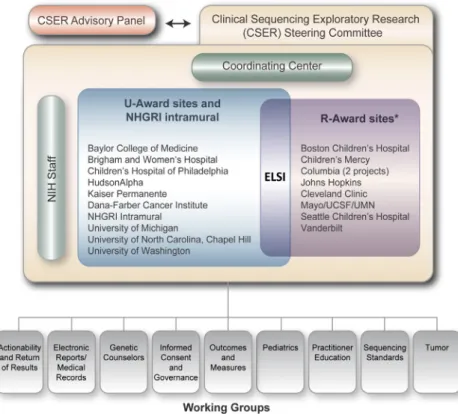
The organization of the consortium and description of the sites are depicted inFigure 1andTable 1. Four of the pro-jects are focused solely on participants diagnosed with can-cer or at an increased risk of cancan-cer, whereas the remainder focus on participants with other medical conditions or self-reported healthy participants seen in primary care. Across the projects, there are adult and/or pediatric participant cohorts, and the centers provide exome and/or genome
USA;38Center for Medical Ethics and Health Policy, Baylor College of Medicine, Houston, TX 77030, USA;39Human Genome Sequencing Center, Baylor College of Medicine, Houston, TX 77030, USA;40Baylor College of Medicine and Texas Children’s Cancer Center, Houston, TX 77030, USA;41Department of Health Sciences Research, Mayo Clinic College of Medicine, Rochester, MN 55905, USA;42Laboratory for Molecular Medicine, Partners HealthCare, Cam-bridge, MA 02139, USA;43Department of Health Behavior & Health Education, University of Michigan School of Public Health, Ann Arbor, MI 48109, USA; 44Department of Pediatrics, Baylor College of Medicine, Houston, TX 77030, USA;45Biomedical Ethics Research Program, Mayo Clinic College of Medicine, Rochester, MN 55905, USA;46Department of Laboratory Medicine, University of Washington, Seattle, WA 98195, USA;47Department of Pathology and Laboratory Medicine, Children’s Hospital of Philadelphia, Philadelphia, PA 19104, USA;48Department of Pediatrics and Seattle Children’s Research Insti-tute, University of Washington, Seattle, WA, USA;49University of Washington, Seattle, WA 98105, USA;50Department of Pharmacy, University of Wash-ington, Seattle, WA 98195, USA;51Department of Pathology and Laboratory Medicine, University of North Carolina at Chapel Hill, NC 27599, USA;52Law School, Medical School, and Consortium on Law and Values in Health, Environment, & the Life Sciences, Minneapolis, University of Minnesota, MN 55455, USA;53Department of Pediatrics, University of Washington, Seattle, WA 98195, USA
*Correspondence:[email protected]. http://dx.doi.org/10.1016/j.ajhg.2016.04.011.
Bartha M. Knoppers,36Barbara A. Koenig,37Ian D. Krantz,11,13Teri A. Manolio,31Laurence McCullough,38 Jean McEwen,35Amy McGuire,38Donna Muzny,39Richard M. Myers,14Deborah A. Nickerson,6,8
Jeffrey Ou,7,8Donald W. Parsons,40Gloria M. Petersen,41Sharon E. Plon,40Heidi L. Rehm,2,3,4,42
J. Scott Roberts,43Dan Robinson,18Joseph S. Salama,7,8Sarah Scollon,44Richard R. Sharp,45Brian Shirts,46 Nancy B. Spinner,11,47Holly K. Tabor,48Peter Tarczy-Hornoch,7,49David L. Veenstra,50Nikhil Wagle,2,25,26 Karen Weck,10,51Benjamin S. Wilfond,48Kirk Wilhelmsen,10Susan M. Wolf,52Julia Wynn,22Joon-Ho Yu,53 and the CSER Consortium
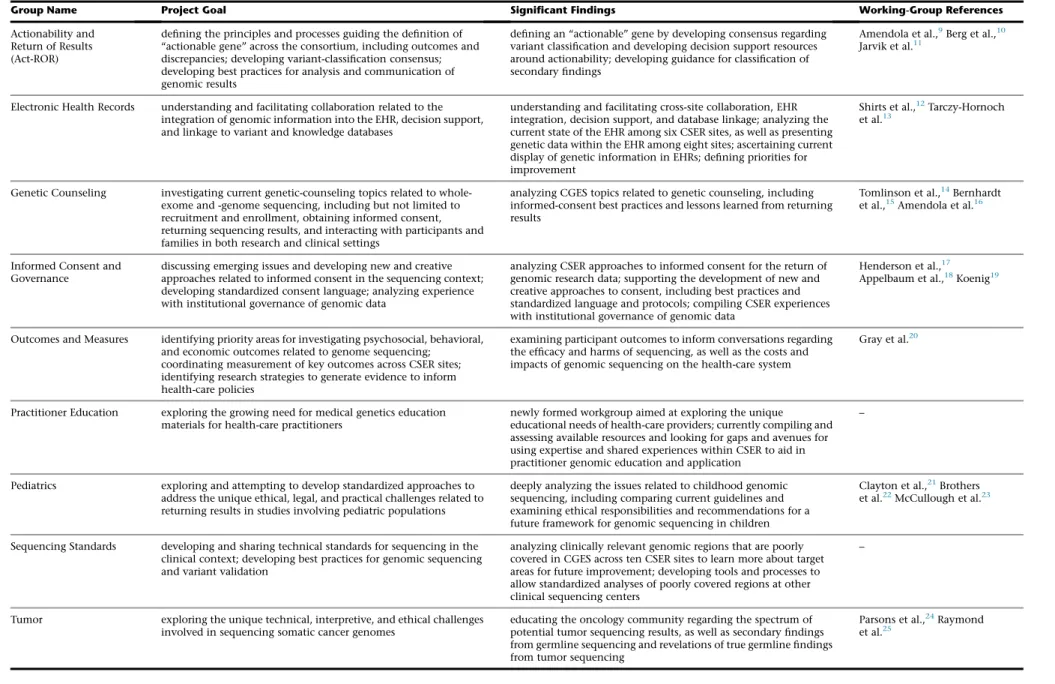
sequencing (Table 1). The R-awards have considerable syn-ergy with the ELSI components (project 3) of the U-award (Table 2). The ELSI projects utilize quantitative and qualita-tive empirical approaches, along with normaqualita-tive and legal analyses, in most cases by employing multiple methods. There are also nine cross-project, collaborative working groups (Table 3). Details of the U-award, the R-award, the consortium-wide working groups, and additional pub-lished and preliminary data are provided in the Supple-mental Data.
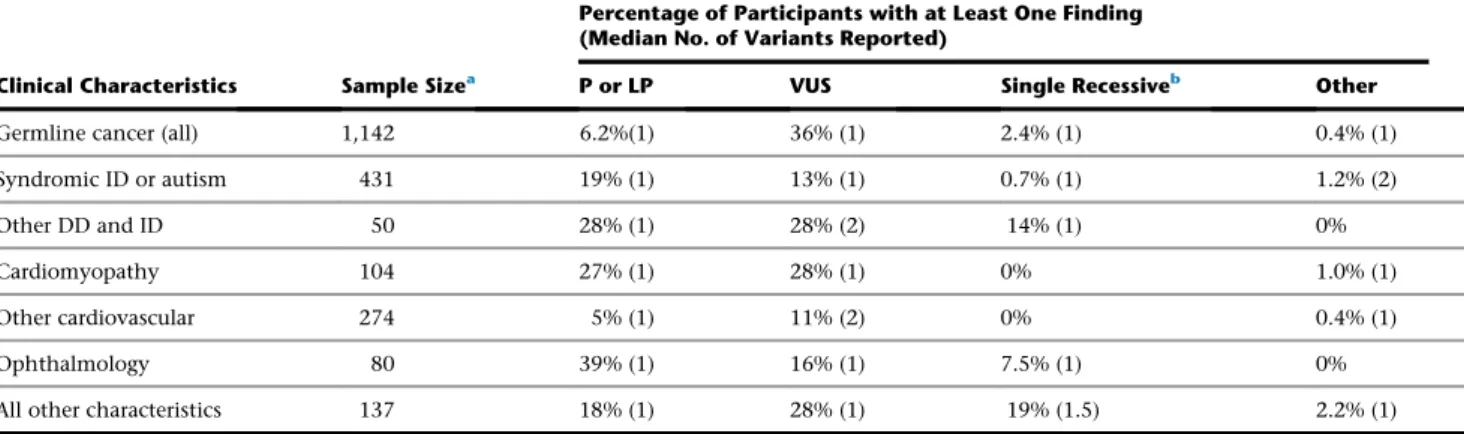
As shown in Figure 2, the U-award sites collectively have thus far recruited 5,577 participants to date (4,429 adults and 1,148 children) and anticipate the eventual recruitment of approximately 7,101 participants, 6,210 of whom are subjects undergoing CGES, when enrollment at each of the sites is completed.Table 4shows a further breakdown of the indications for sequencing and the diag-nostic yields obtained.
Whereas each U-award project conforms to the tripar-tite requirements of the original RFA, the clinical studies include observational or interventional designs (including randomized trials). Some projects sequence only pro-bands, whereas others sequence parent-child trios. In addition to performing exome and genome sequencing, one cancer project performs tumor RNA sequencing. Whereas some projects return results only from a list of known disease-associated genes, others return variants from any gene that has a potentially valid association. This variation in approach has resulted in differences among the studies in the diagnostic yield, defined as the percentage of participants with at least one plausible
diag-Figure 1. Schematic of the Structure of the CSER Consortium
Grants funded under RFA-HG-11-003 and RFA- HG-11-004 have ended, but the inves-tigators on those grants continue to partic-ipate in consortium activities. Along with ELSI investigators on the U-awards, they meet regularly to discuss ELSI issues rele-vant to CSER. Note: this figure was updated for the purposes of this publication and is reproduced with permission from the CSER consortium; it is now available on the CSER website (seeWeb Resources).
nostic genetic finding (Table 4). This variation also empowers creative analysis at the individual sites, en-riches data available to the working groups, and provides opportunities to move toward increasingly evi-dence-based best practices for CGES. The goal of the various CSER working groups (Table 3) is to collaborate on common issues that arise in different ways across the sites to make collec-tive recommendations. Many of the recommendations produced by these working groups will ultimately influence issues that will affect the clinical diagnostic yield of GCES. Although many of the individ-ual studies have not yet completed their analyses, initial results from individual studies and cross-cutting collabo-rations are emerging, as highlighted below.
Sequencing Specifications and Variant Classification
Table 1. CSER Consortium U-Awards
Project Name Institutionsa Project Goal Population Tissue Type Technique Disease Status Discloser of Results
BASIC3: Baylor Advancing Sequencing into Childhood Cancer Care
Baylor College of Medicine* incorporating CLIA-certified tumor and blood exome sequencing
pediatric germline and solid tumors
exome sequencing
known disease oncologist with a genetic counselor present for consult if needed
CanSeq: The Use of Whole-Exome Sequencing to Guide the Care of Cancer Patients
Dana-Farber Cancer Institute,* Broad Institute of MIT and Harvard
improving cancer outcomes by identifying biologically
consequential tumor alterations with existing or emerging technologies
adult germline and solid tumors
exome sequencing
known disease oncologist with a referral to genetic counseling if needed
ClinSeq: A Large-Scale Sequencing Clinical Research Pilot Study
National Human Genome Research Institute*
comparing identified genetic variants with individual and family-history information
adult germline exome sequencing
seemingly healthy genetic counselor and/or medical geneticist
HudsonAlpha: Genomic Diagnosis for Children with Developmental Delay
HudsonAlpha Institute for Biotechnology,* University of Louisville
identifying genetic variations causing developmental delay, intellectual disability, and related phenotypes, as well as medically relevant secondary findings
adult and pediatric
germline exome and genome sequencing
known disease medical geneticist and genetic counselor
MedSeq: Integration of Whole Genome Sequencing into Clinical Medicine
Brigham and Women’s Hospital,* Baylor College of Medicine, Broad Institute of MIT and Harvard, Duke University
integrating whole-genome sequencing into clinical medicine in healthy adults and adults with cardiomyopathy
adult germline genome sequencing
seemingly healthy and known disease
primary-care physician or cardiologist
MI-ONCOSEQ: Michigan Oncology Sequencing Center
University of Michigan,* Johns Hopkins University
implementing clinical sequencing for sarcomas and other rare cancers
adult and pediatric germline and solid tumors genome sequencing
known disease oncologist with a referral to genetic counseling
NCGENES: North Carolina Clinical Genomic Evaluation by Next-Generation Exome Sequencing
University of North Carolina at Chapel Hill*
investigating the use of whole-exome sequencing in individuals with hereditary cancer susceptibility, genetic heart disorders, neurogenetic disorders, and congenital
malformations
adult and pediatric
germline exome sequencing
known disease medical geneticist and genetic counselor
NEXT Medicine: Clinical Sequencing in Cancer: Clinical, Ethical, and Technological Studies
University of Washington* studying the clinical implementation of whole-exome sequencing in participants with colorectal cancer or polyposis
adult germline and tumor
exome sequencing
known disease genetic counselor and/or medical geneticist
NextGen: Understanding the Impact of Genome Sequencing For Reproductive Decisions
Kaiser Permanente,* Oregon Health & Sciences University, Seattle Children’s Hospital, University of Washington
integrating whole-genome sequencing for preconception carrier status and secondary findings into clinical care
adult germline genome sequencing
seemingly healthy genetic counselor
PediSeq: Applying Genomic Sequencing in Pediatrics
Children’s Hospital of Philadelphia,* University of Pennsylvania
examining the use of whole-exome and whole-genome sequencing in five heterogeneous disease cohorts: bilateral sensorineural hearing loss, intellectual disability, nuclear-encoded mitochondrial respiratory-chain disorders, platelet-function disorders, and sudden cardiac arrest and/or death
adult and pediatric
germline exome and genome sequencing
known disease genetic counselor and/or medical geneticist, cardiologist,
hematologist, neurologist
aAsterisks denote lead institutions.
The CSER consortium has worked to improve partici-pant care by exploring variant assessment26,27 and by comparing approaches across the sites. Early efforts in CSER sites9 helped to inform the working group of the American College of Medical Genetics and Genomics (ACMG) and Association for Molecular Pathology (AMP) in developing current annotation guidelines.28To
eval-uate whether the published ACMG-AMP guidelines improve the consistency of variant classification across sites, a second exercise has focused on intra- and inter-laboratory differences by applying inter-laboratory-specific and ACMG-AMP variant-classification criteria for 99 germline variants. Variant classification based on the ACMG-AMP guidelines was concordant with each site’s prior laboratory-specific variant classifications 79% of the time (intra-laboratory comparison); however, only 34% of the variant classifications were concordant in in-ter-laboratory classifications (see Amendola et al.29in this issue of theAmerican Journal of Human Genetics). For the inter-laboratory comparison, it made no difference whether the laboratories used their own prior criteria or the ACMG-AMP guidelines, suggesting subjectivity in the application of the ACMG-AMP guidelines; however, the guidelines were useful in providing a common frame-work for facilitating resolution of differences between sites. After consensus efforts, 70% concordance was achieved, and only 5% of variants had differences that
might affect clinical care. These findings will contribute to future iterations in current ACMG-AMP guidelines and improve and standardize the classification of variant pathogenicity.
Comparison of sequenced variants classified as patho-genic and likely pathopatho-genic by the different U-award sites is instructive, especially in light of the different sets of genes and variant-classification levels that each site selected in reporting their secondary findings. For example, some sites used only small and focused sets of genes that met actionability criteria in advance of sequencing, whereas other sites started with broader lists of thousands of genes and then reviewed the gene-level information alongside the variant-level information when a potentially pathogenic variant or novel loss-of-function variant was identified in the gene. As a result, among participants sequenced across the CSER con-sortium, comparisons of the rate of secondary findings at each site are difficult.10 Similarly, the decision to
return any pharmacogenomic information or recessive carrier status also varied across sites by design (e.g., one site focused exclusively on the latter). As of the latest re-ported individual-level data, 3,296 participants have been sequenced and have received their sequencing results. Among sites disclosing any pharmacogenomic in-formation (n ¼ 4), 32.3%–100% of sequenced partici-pants received information about one or more variant(s)
Table 2. CSER Consortium R-Awards
Project Name Institutionsa Project Goal
Challenges of Informed Consent in Return of Data From Genomic Research
Columbia University* developing a menu of approaches to deal with the challenges of informed consent for genomic research
Disclosing Genomic Incidental Findings in a Cancer BioBank: An ELSI Experiment
Mayo Clinic,* University of Minnesota, University of California, San Francisco
determining how to manage return of results and secondary findings to family members, including after the death of the research participant
Impact of Return of Incidental Genetic Test Results to Research Participants in the Genomic Era
Columbia University* investigating preferences of participants enrolled in genomic research about the disclosure of incidental genetic test results and the psychosocial and behavioral impact of these disclosures
Innovative Approaches to Returning Results in Exome and Genome Sequencing Studies
Seattle Children’s Hospital* comparing traditional results-disclosure sessions (with a genetic counselor and over the phone) with an innovative web-based tool
Presenting Diagnostic Results from Large-Scale Clinical Mutation Testing
Cleveland Clinic,* Mayo Clinic examining participant and professional understandings of diagnostic results from large-scale clinical mutation testing and attitudes toward testing
Return of Research Results From Samples Obtained for Newborn Screening
Johns Hopkins University* evaluating current existing state policies regarding the storage of dried blood spots after newborn screening and associated research use to develop policy recommendations
Returning Research Results in Children: Parental Preferences and Expert Oversight
Boston Children’s Hospital* exploring research-participant preferences in the return of individual genomic research results and how this might be incorporated into registry and/or biobank research structure
Returning Research Results of Pediatric Genomic Research to Participants
Vanderbilt University,* McGill University, Baylor College of Medicine, University of Chicago
exploring legal issues raised by the return of genomic research results in minors
The Presumptive Case Again Returning Individuals Results in BioBanking Research
Children’s Mercy Hospital* analyzing claims that the return of bio-repository results is morally obligatory or permissible in genomic research
Table 3. Cross-Consortium Collaborative Working Groups
Group Name Project Goal Significant Findings Working-Group References
Actionability and Return of Results (Act-ROR)
defining the principles and processes guiding the definition of ‘‘actionable gene’’ across the consortium, including outcomes and discrepancies; developing variant-classification consensus; developing best practices for analysis and communication of genomic results
defining an ‘‘actionable’’ gene by developing consensus regarding variant classification and developing decision support resources around actionability; developing guidance for classification of secondary findings
Amendola et al.,9Berg et al.,10 Jarvik et al.11
Electronic Health Records understanding and facilitating collaboration related to the integration of genomic information into the EHR, decision support, and linkage to variant and knowledge databases
understanding and facilitating cross-site collaboration, EHR integration, decision support, and database linkage; analyzing the current state of the EHR among six CSER sites, as well as presenting genetic data within the EHR among eight sites; ascertaining current display of genetic information in EHRs; defining priorities for improvement
Shirts et al.,12Tarczy-Hornoch
et al.13
Genetic Counseling investigating current genetic-counseling topics related to whole-exome and -genome sequencing, including but not limited to recruitment and enrollment, obtaining informed consent, returning sequencing results, and interacting with participants and families in both research and clinical settings
analyzing CGES topics related to genetic counseling, including informed-consent best practices and lessons learned from returning results
Tomlinson et al.,14Bernhardt et al.,15Amendola et al.16
Informed Consent and Governance
discussing emerging issues and developing new and creative approaches related to informed consent in the sequencing context; developing standardized consent language; analyzing experience with institutional governance of genomic data
analyzing CSER approaches to informed consent for the return of genomic research data; supporting the development of new and creative approaches to consent, including best practices and standardized language and protocols; compiling CSER experiences with institutional governance of genomic data
Henderson et al.,17
Appelbaum et al.,18Koenig19
Outcomes and Measures identifying priority areas for investigating psychosocial, behavioral, and economic outcomes related to genome sequencing;
coordinating measurement of key outcomes across CSER sites; identifying research strategies to generate evidence to inform health-care policies
examining participant outcomes to inform conversations regarding the efficacy and harms of sequencing, as well as the costs and impacts of genomic sequencing on the health-care system
Gray et al.20
Practitioner Education exploring the growing need for medical genetics education materials for health-care practitioners
newly formed workgroup aimed at exploring the unique educational needs of health-care providers; currently compiling and assessing available resources and looking for gaps and avenues for using expertise and shared experiences within CSER to aid in practitioner genomic education and application
–
Pediatrics exploring and attempting to develop standardized approaches to address the unique ethical, legal, and practical challenges related to returning results in studies involving pediatric populations
deeply analyzing the issues related to childhood genomic sequencing, including comparing current guidelines and examining ethical responsibilities and recommendations for a future framework for genomic sequencing in children
Clayton et al.,21Brothers
et al.22McCullough et al.23
Sequencing Standards developing and sharing technical standards for sequencing in the clinical context; developing best practices for genomic sequencing and variant validation
analyzing clinically relevant genomic regions that are poorly covered in CGES across ten CSER sites to learn more about target areas for future improvement; developing tools and processes to allow standardized analyses of poorly covered regions at other clinical sequencing centers
–
Tumor exploring the unique technical, interpretive, and ethical challenges involved in sequencing somatic cancer genomes
educating the oncology community regarding the spectrum of potential tumor sequencing results, as well as secondary findings from germline sequencing and revelations of true germline findings from tumor sequencing
Parsons et al.,24Raymond
et al.25
1056
The
American
Journal
of
Human
Genetics
98
,
1051–106
6,
June
2,
related to pharmacogenomic response. 2%–92% of par-ticipants have received information about recessive car-rier variants, and this wide range is due to differences in the number of genes considered for return at each site. When just the genes recommended by the ACMG for secondary result return were examined,30 68 of the
3,296 (2.1%) CSER research participants were reported to have a pathogenic or likely pathogenic variant in at least one of these genes unrelated to the primary test indication; site-specific percentages varied from 0.28% to 6.52%. This variation can be attributed to a variety of factors, including differences in variant-classification methods,29small sample sizes at many of the sites, and the fact that some sites report only pathogenic findings, whereas others report pathogenic and likely pathogenic findings and even variants of uncertain significance. Also, some sites report only on a subset of the 56 ACMG genes, such as genes associated with cancer predisposition.
The variant-interpretation project described above is now helping to bring more consistency to the variant-clas-sification process across sites. In addition, the CSER con-sortium is working with sites to submit all of their classified variants to ClinVar to improve variant-classification com-parisons with other submitters and identify differences that can be resolved. As of the latest reporting, over 2,795 classified variants have been submitted to ClinVar by the CSER sites, making CSER one of the top 20 submit-ters to ClinVar. Additionally, individual-level datasets containing genotypes and phenotypes from over 2,401 in-dividual-level datasets have been submitted to dbGaP.
Implementation of Clinical Sequencing in the CSER Consortium
Among the four CSER sites conducting sequencing in cancer participants, the BASIC3 trial has presented prelim-inary data showing that nearly 40% of pediatric partici-pants with solid tumors have potentially actionable mutations when the results of tumor and germline exome sequencing are combined.31 CanSeq has focused on
enrolling participants with advanced colorectal and lung cancer, of whom 88.4% were found to have actionable or potentially actionable somatic genome alterations, whereas the Michigan Oncology Sequencing Center (MI-ONCOSEQ) has identified clinically relevant results from tumor sequencing in 60% of adult and pediatric cancer participants.32 Both the CanSeq and MI-ONCOSEQ projects have implemented production-scale exome sequencing from archival tissue samples, and the latter program is pioneering an exome-capture transcriptome protocol that improves performance on degraded RNA.33 The NEXT Medicine study has incorporated exome germ-line sequencing through a randomized trial to examine care outcomes in participants with hereditary colorectal cancer and/or polyps.34
CGES has also been utilized in the diagnosis of numerous suspected genetic conditions. For six disease co-horts that have undergone exome sequencing in PediSeq, the diagnostic rates have varied from 6% in platelet disor-ders to 20% in sudden cardiac death to 50% in intellectual disability.35PediSeq has also created phenotype and pedi-gree capture technologies, including the use of phenotypes
Figure 2. Cumulative Enrollment and Sequencing of Participants in the CSER U-Awards
to prioritize gene interpretation36and the pedigree-draw-ing program Proband, an app with over 1,700 downloads to date. NCGENES and the HudsonAlpha sites both enroll children with intellectual disabilities and have both observed similar variations in diagnostic rates. NCGENES includes participants with a broad range of diseases; diag-nostic rates range from 21% in familial cancer to 39% in children with dysmorphic features to 58% among indi-viduals with retinopathy.37 The MedSeq project, one of three randomized trials within the CSER consortium, is exploring the potential advantages of whole-genome sequencing (WGS) in participants with cardiomyopathy and has found that WGS robustly confirms diagnoses pre-viously made by next-generation cardiomyopathy panels and occasionally identifies previously undetected etiologic candidates in participants who were not diagnosed by panel testing.38
In an attempt to quantify the importance of secondary findings, the NCGENES site created a semiquantitative ‘‘binning’’ metric39,40 (versions of which have been
broadly adapted by other efforts).41,42 NCGENES reports the frequency of discovering a medically actionable sec-ondary finding to be 3.4%. NEXT Medicine, in conjunc-tion with the Acconjunc-tionability and Return of Results working group,10defined a large list of genes for medically action-able conditions and estimated that 0.8% of individuals of European ancestry and 0.5% of individuals of African-American ancestry would be expected to have a patho-genic variant returned as an incidental finding from exome sequencing.9PediSeq reviews variants in a list of nearly 3,000 genes and returns secondary findings for risk of Mendelian disease in 10%–15% of participants and carrier findings in nearly 90% of participants. The MedSeq project worked collaboratively with Clinical Genome Resource (ClinGen)26,41to apply a method for gene-disease validity
classification to evaluate which of the approximately 4,500 disease-associated genes analyzed to date have sufficiently strong evidence for returning variants. The BASIC3 study utilizes the ACMG list of 56 genes plus additional
action-able genes evaluated by the project 2 team and has an over-all secondary-findings rate of 4.8%.2
Although secondary findings in the context of diag-nostic sequencing represent a kind of ‘‘opportunistic screening,’’3,43,44 several sites have explored the use of
sequencing in persons without a suspected genetic condi-tion, a model closer to actual population screening. ClinSeq, the NHGRI intramural program, has treated non-diagnostic sequencing as a hypothesis-generating methodology to report on the implications of secondary findings associated with heart disease,45malignant hyper-thermia,46 diabetes,47 a form of arrhythmia,48 and the discovery of a late-onset neurometabolic disorder.49After identifying loss-of-function variants in genes for which haploinsufficiency is associated with disease, ClinSeq in-vestigators followed up with in-depth phenotyping to reveal that roughly half of the population carrying such variants had subtle phenotypes of underlying genetic dis-ease but were unaware of this.50 Similarly, the MedSeq
project has returned pathogenic variants, likely patho-genic variants, and even suspicious variants of uncertain significance in healthy middle-aged adult volunteers to their primary-care physicians and cardiologists by using a single-page summary of whole-genome results.26,51 This report categorizes risk variants for monogenic diseases (in genes associated with dominant disease or in genes associ-ated with autosomal recessive disease and in which bial-lelic pathogenic and likely pathogenic variants have been identified), recessive carrier variants, pharmacogenomic variants, SNP-based risk scores for common cardiovascular conditions, and variants that characterize red blood cell and platelet antigens.26,38,51–53 BASIC3 and CanSeq are
enrolling large teams of pediatric and adult oncologists who receive exome sequencing results and disclose them to families of pediatric cancer participants and adult cancer participants. The primary-care physicians in MedSeq and the oncologists in CanSeq do not have formal genetics training, but in the case of MedSeq, they have been given a brief training module to assist them in interpreting and
Table 4. Yield of Variants Related to Phenotypes in Sequenced Symptomatic U-Award Participants
Clinical Characteristics Sample Sizea
Percentage of Participants with at Least One Finding (Median No. of Variants Reported)
P or LP VUS Single Recessiveb Other
Germline cancer (all) 1,142 6.2%(1) 36% (1) 2.4% (1) 0.4% (1)
Syndromic ID or autism 431 19% (1) 13% (1) 0.7% (1) 1.2% (2)
Other DD and ID 50 28% (1) 28% (2) 14% (1) 0%
Cardiomyopathy 104 27% (1) 28% (1) 0% 1.0% (1)
Other cardiovascular 274 5% (1) 11% (2) 0% 0.4% (1)
Ophthalmology 80 39% (1) 16% (1) 7.5% (1) 0%
All other characteristics 137 18% (1) 28% (1) 19% (1.5) 2.2% (1)
Abbreviations are as follows: DD, developmental delay; ID, intellectual disability; P, pathogenic; LP, likely pathogenic; and VUS, variant of uncertain significance. aThis table does not account for 1,863 healthy individuals within CSER.
bIndividuals with a single recessive mutation in a gene related to the described phenotype.
acting on the genome reports.38,51In MedSeq, both pro-viders and sequenced participants (along with control in-dividuals who are not sequenced) are studied through surveys, interviews, and close monitoring of electronic health records (EHRs), yielding insights about physician preparedness for CGES.54–57
Several U-award sites are returning carrier status in addition to monogenic secondary findings. For example, both the MedSeq project and the NCGENES study include carrier results as additional findings in adult participants. The NextGen study is a randomized trial directly investigating the implementation of carrier screening to aid reproductive decision making in adults not known to be a carrier of genetic disease. Focus groups exploring participant and clinician perspectives have shown that potential participants have differing degrees of interest in learning their carrier status,58and of those enrolled so far, 71% have at least one carrier result, and 89% of participants are choosing to receive results in one of four optional categories (serious, moder-ate, adult-onset, and unpredictable). The ClinSeq study is also conducting a randomized trial comparing the re-turn of carrier results through standard-of-care coun-seling and that through a web site to assess the impact of counseling approach on the cost of genomic health care.
Outcomes and ELSI Issues in Clinical Sequencing
The main results from many of the projects have not yet been analyzed or published because enrollment is still ongoing for some of the projects. However, the CSER con-sortium is already providing insights into medical, behav-ioral, psychosocial, and economic outcomes related to the growing use of genomic data in the clinic.20,59,60The
con-sortium’s Outcomes and Measures working group has iden-tified common research priorities, developed instruments to facilitate data harmonization, and initiated cross-site aggregate and comparative analyses.20The inclusion of in-vestigators with expertise in normative and legal ELSI ana-lyses provides additional assurance that best practices based upon CSER data will not only be based on evidence but also be ethically and legally sound.
A major focus to date has been the disclosure of second-ary genomic findings to participants. Early findings, based on qualitative, quantitative, and mixed-methods research, suggest that participants and research participants queried during the informed-consent process are usually receptive to learning such findings but that preferences are influ-enced by the precise nature of the findings, how the offer is made, and a number of individual participant attri-butes.59,61–67 For example, in the NCGENES study, adult
participants are randomized to either a ‘‘control’’ group or a ‘‘decision’’ group, participants in the latter of which are asked to decide whether they wish to receive any of the six categories of non-actionable secondary findings.
Whereas the majority in the ‘‘decision’’ group initially stated an intention to request all secondary findings, fewer than one-third actually requested one or more, demon-strating a difference between hypothetical and real-world actions.
The CSER consortium’s empirical studies of clinicians’ and genomic researchers’ attitudes about disclosing second-ary genomic findings show that although few have signifi-cant experience in returning such findings, most report that they are motivated to do so in at least some circum-stances.55,68–70 At the same time, CSER studies highlight the many complexities, both normative and practical, that invariably enter into decisions about whether, when, and how such findings should be made available.43,69,71–77 The CSER consortium has also addressed the challenges involved in obtaining informed consent for clinical sequencing, including tailoring approaches that are best suited to specific clinical contexts. The consortium has published an empirical analysis of the consent forms used at six U-award sites and three R-award sites, along with recommendations for ways in which consent forms can be improved.17CSER investigators have defined four
models of consent for the disclosure of secondary find-ings,18 identified seven discrete challenges representing
gaps in genome sequencing knowledge and faced by ge-netic counselors,78and provided illustrative case examples of practical issues involved in consent and disclosure decisions,79,80all suggesting an expanded future role for genetic counselors.14–16,81,82
Through its Pediatrics working group, CSER has focused considerable attention on genomic sequencing in chil-dren.21–23Several site-specific publications have addressed the appropriate role of children in decision making,83–85 preferences of genetic professionals regarding the disclo-sure of findings in pediatrics,68,70,86limitations in parents’
understanding of choices regarding receipt of their chil-dren’s findings,87and certain unique features of informed
consent in pediatric oncology.79
CSER investigators have also conducted important legal and regulatory analyses relevant to clinical sequencing, including the legal liability for disclosure or non-disclosure of findings to patients, research participants, and family members.88–91Other topics include the legal implications of incorporating genomic data into EHRs,92,93the limita-tions of current laws and the potential impact of recent changes to federal privacy and laboratory regulations on access to one’s genetic data,94,95and a comparison of US law and policy and that of other countries on family access to a proband’s genomic findings.96
Finally, early research has assessed the economic value and cost-effectiveness of returning secondary find-ings,97,98and additional efforts are underway. CSER
downstream impacts on the utilization of health services, both positive and negative, providing strategies for maxi-mizing positive uses of genomic information.99,100
Additional Dissemination and Outreach Activities
The CSER consortium has established a shared, real-time community of research sites pursuing common goals in related yet distinct settings. Thus, the value of the con-sortium goes beyond the individual publications mentioned above. When CSER was initially funded in 2011, each site was challenged to implement clinical sequencing, stan-dardize variant interpretation, reduce sequencing turn-around time, and develop reliable bioinformatics pipelines. Addressing these common challenges among sites has yielded insights that, when synthesized, are becoming rele-vant to the broader scientific community. For example, sites have adopted different approaches to the analysis of clinical sequencing data, best exemplified by the ‘‘diagnostic-gene-list’’ approach employed by some sites and the ‘‘variant-first’’ approach adopted by others. An ability to compare such analytical approaches continues to inform the entire field in its ongoing efforts to optimize interpretation. More gener-ally, there have been vibrant discussions and sharing of ap-proaches to informed consent, educational materials, and disclosure methods across many CSER sites. More recently, working groups have been exploring approaches to improve sequencing standards, coverage of clinically relevant genes, and variant annotation by using existing and newly adopted ACMG variant-classification guidelines. Looking ahead, CSER will continue to address questions that are best answered across multiple sites and in multiple settings. For example, projects related to the return of carrier status, re-interpretation of results, management of secondary findings, ethical approaches to combining research with clinical care, and downstream costs of genomic testing are underway.
CSER-related interactions often expand to related genome sequencing efforts. For example, CSER investiga-tors are interacting or collaborating with other consortia in the areas of EHR-based phenotyping, genotyping, and integration of results into the EHR (Electronic Medical Re-cords and Genomics [eMERGE]);101–103community-based curation of genes and variants (ClinGen);41undiagnosed diseases (Undiagnosed Disease Network [UDN]); imple-mentation of genomic testing in diverse settings (Imple-menting Genomics in Practice [IGNITE]); newborn sequencing (Newborn Sequencing in Genomic Medicine and Public Health [NSIGHT]); ethics (Centers for Excel-lence in ELSI Research [CEERs]); prostate cancer (Stand Up 2 Cancer [SU2C] and Prostate Cancer Foundation [PCF] international dream team); trials of prospective pre-cision medicine in cancer (National Cancer Institute and Children’s Oncology Group Pediatric MATCH study);104 and the evolving role of the clinical geneticist (Clinical Ge-netics Think Tank). These inter-consortium interactions
vary in nature from informal consultations to resource sharing to joint meetings and publications.11,12,22,105 CSER is also informing the development of professional guidelines28,30,106,107by sharing resources (e.g., gene lists) and serving as a ‘‘sandbox’’ in which early implementation can be assessed. Other dissemination activities include the release of open-source software,108deposition of data into
ClinVar and dbGaP, and being a part of high-profile ses-sions at national medical and bioethics meetings. Study-specific resources such as consent forms, study protocols, educational materials, and sample reports are made pub-licly available at the CSER Coordinating Center’s website (seeWeb Resourcesfor links to these groups).
Efforts to facilitate outreach to individuals and commu-nities outside academic medical centers have also been im-plemented. By initiating collaborations with rural and underserved populations, some sites are establishing broader availability of genome sequencing, extending its clinical reach outside of academia and facilitating robust participation by underserved minority groups. Sites inter-acting with state government agencies that serve families of special-needs children or comprising integrated delivery systems are using their CSER experience as a platform to educate the public and stakeholders who make coverage decisions.
Future Directions for the CSER Consortium
Through its combination of individual scientific enter-prise, practitioner participation, and collective synergy, the CSER consortium is uniquely poised to fill some of the most important evidence gaps in the implementation of genomic medicine. Looking toward a future with widespread evidence-based and equitable availability of genomic medicine, there are critical challenges in terms of implementing technical refinements, including accessi-bility to individuals of diverse ethnic and socioeconomic backgrounds and the attainment and demonstration of desired medical outcomes. In particular, CSER sites can be expected to further advance analyses of observed differ-ences in variant interpretation in concert with ClinGen41 and to identify new approaches for calling structural vari-ation from next-genervari-ation sequencing data. Finally, the genomics regulatory arena is very dynamic with evolving FDA oversight109,110 and proposed changes to the Com-mon Rule. The CSER consortium has and will continue to play an important role in evaluating and communi-cating the impact of this rapidly evolving area in topics such as consent and disclosure.
The CSER consortium, along with all genomics investi-gators, must also consider whether and how genomic medicine might exacerbate disparities in health and health-services utilization to ensure that the intended benefits of genomic medicine are justly distributed.111 There are several reasons why poor, rural, and racial and ethnic minority populations might be less likely to realize
tangible health-related benefits as genomic medicine be-comes more commonplace. Existing databases of dis-ease-associated genes and variants are overwhelmingly drawn from individuals of European ancestry, and popula-tions of non-European ancestry have patterns of genetic variation that are not yet well characterized in control populations. This lack of data complicates the interpreta-tion of novel and rare variants. Also, historical and continuing social disparities in health-care access, health-insurance coverage, and community engagement and trust are heightened by issues raised in genomics. Without concerted intervention, these converging forces threaten to perpetuate and expand current health dispar-ities in ways that might disadvantage members of racially and ethnically diverse communities for decades. A num-ber of sites within the CSER consortium have begun ex-panding their enrollment of minority ethnicities to begin addressing these inequalities and will continue to identify relevant opportunities.
More formal studies in comparative effectiveness and cost-effectiveness are necessary for answering questions about whether and under what circumstances sequencing should be applied and for guiding third-party payment for clinically helpful genomic services. The degree to which the identification of secondary findings and the sequencing of asymptomatic individuals might lead to downstream health benefits and incur or offset downstream costs will be critical. Deeper phenotyping of apparently pathogenic variants in participants who do not show symptoms of an associated genetic condition will be required and will pro-vide key information on the classification of variant patho-genicity, penetrance estimation, and the identification of modifying or protective factors that could provide impor-tant insights into future treatment of rare or even common conditions. But with iterative and more in-depth phenotyp-ing and the use of tools rangphenotyp-ing from wearable monitorphenotyp-ing devices to microscopic processes in cell culture, there is an opportunity to define disease and diminished function in entirely new ways. As medicine enters an era where sequencing and other -omics can be applied routinely, the CSER consortium is helping to accelerate the realization of preventive and precision medicine.
Supplemental Data
Supplemental Data include three Supplemental Notes and can be found with this article online athttp://dx.doi.org/10.1016/j.ajhg. 2016.04.011.
Consortia
CSER Consortium investigators include Michelle Amaral, Laura Amendola, Paul S. Appelbaum, Samuel J. Aronson, Shubhangi Ar-ora, Danielle R. Azzariti, Greg S. Barsh, E.M. Bebin, Barbara B. Bie-secker, Leslie G. BieBie-secker, Sawona Biswas, Carrie L. Blout, Kevin M. Bowling, Kyle B. Brothers, Brian L. Brown, Amber A. Burt, Peter H. Byers, Charlisse F. Caga-anan, Muge G. Calikoglu, Sara J. Carl-son, Nizar Chahin, Arul M. Chinnaiyan, Kurt D. Christensen,
Wendy Chung, Allison L. Cirino, Ellen Clayton, Laura K. Conlin, Greg M. Cooper, David R. Crosslin, James V. Davis, Kelly Davis, Matthew A. Deardorff, Batsal Devkota, Raymond De Vries, Pamela Diamond, Michael O. Dorschner, Noreen P. Dugan, Dmitry Du-khovny, Matthew C. Dulik, Kelly M. East, Edgar A. Rivera-Munoz, Barbara Evans, Barbara, James P. Evans, Jessica Everett, Nicole Exe, Zheng Fan, Lindsay Z. Feuerman, Kelly Filipski, Candice R. Finnila, Kristen Fishler, Stephanie M. Fullerton, Bob Ghrundmeier, Karen Giles, Marian J. Gilmore, Zahra S. Girnary, Katrina Goddard, Ste-ven Gonsalves, Adam S. Gordon, Michele C. Gornick, William M. Grady, David E. Gray, Stacy W. Gray, Robert Green, Robert S. Greenwood, Amanda M. Gutierrez, Paul Han, Ragan Hart, Patrick Heagerty, Gail E. Henderson, Naomi Hensman, Susan M. Hiatt, Patricia Himes, Lucia A. Hindorff, Fuki M. Hisama, Carolyn Y. Ho, Lily B. Hoffman-Andrews, Ingrid A. Holm, Celine Hong, Martha J. Horike-Pyne, Sara Hull, Carolyn M. Hutter, Seema Jamal, Gail P. Jarvik, Brian C. Jensen, Steve Joffe, Jennifer Johnston, Dean Karavite, Tia L. Kauffman, Dave Kaufman, Whitley Kelley, Jerry H. Kim, Christine Kirby, William Klein, Bartha Knoppers, Barbara A. Koenig, Sek Won Kong, Ian Krantz, Joel B. Krier, Neil E. Lamb, Mi-chele P. Lambert, Lan Q. Le, Matthew S. Lebo, Alexander Lee, Kait-lyn B. Lee, Niall Lennon, Michael C. Leo, Kathleen A. Leppig, Katie Lewis, Michelle Lewis, Neal I. Lindeman, Nicole Lockhart, Bob Lo-nigro, Edward J. Lose, Philip J. Lupo, Laura Lyman Rodriguez, Frances Lynch, Kalotina Machini, Calum MacRae, Teri A. Manolio, Daniel S. Marchuk, Josue N. Martinez, Aaron Masino, Laurence McCullough, Jean McEwen, Amy McGuire, Heather M. McLaugh-lin, Carmit McMullen, Piotr A. Mieczkowski, Jeff Miller, Victoria A. Miller, Rajen Mody, Sean D. Mooney, Elizabeth G. Moore, Elissa Morris, Michael Murray, Donna Muzny, Richard M. Myers, David Ng, Deborah A. Nickerson, Nelly M. Oliver, Jeffrey Ou, Will Par-sons, Donald L. Patrick, Jeffrey Pennington, Denise L. Perry, Gloria Petersen, Sharon Plon, Katie Porter, Bradford C. Powell, Sumit Punj, Carmen Radecki Breitkopf, Robin A. Raesz-Martinez, Wendy H. Raskind, Heidi L. Rehm, Dean A. Reigar, Jacob A. Reiss, Carla A. Rich, Carolyn Sue Richards, Christine Rini, Scott Roberts, Peggy D. Robertson, Dan Robinson, Jill O. Robinson, Marguerite E. Robin-son, Myra I. Roche, Edward J. Romasko, Elisabeth A. Rosenthal, Jo-seph Salama, Maria I. Scarano, Jennifer Schneider, Sarah Scollon, Christine E. Seidman, Bryce A. Seifert, Richard R. Sharp, Brian H. Shirts, Lynette M. Sholl, Javed Siddiqui, Elian Silverman, Shirley Simmons, Janae V. Simons, Debra Skinner, Nancy B. Spinner, Elena Stoffel, Natasha T. Strande, Shamil Sunyaev, Virginia P. Syb-ert, Jennifer Taber, Holly K. Tabor, Peter Tarczy-Hornoch, Deanne M. Taylor, Christine R. Tilley, Ashley Tomlinson, Susan Trinidad, Ellen Tsai, Peter Ubel, Eliezer M. Van Allen, Jason L. Vassy, Pankaj-Vats, David L. Veenstra, Victoria L. Vetter, Raymond D. Vries, Nikhil Wagle, Sarah A. Walser, Rebecca C. Walsh, Karen Weck, Al-lison Werner-Lin, Jana Whittle, Ben Wilfond, Kirk C. Wilhelmsen, Susan M. Wolf, Julia Wynn, Yaping Yang, Carol Young, Joon-Ho Yu, and Brian J. Zikmund-Fisher.
Conflicts of Interest
research support from Novartis. D.M. and S.E.P. are employees of Baylor College of Medicine (BCM). BCM and Miraca Holdings Inc. have formed a joint venture, Baylor Miraca Genetics Labora-tories, with shared ownership and governance of the clinical ge-netics diagnostic laboratories. S.E.P. is on the scientific advisory board of Baylor Miraca Genetics Laboratories. N.W. is a share-holder of Foundation Medicine.
Acknowledgments
The authors thank Julia Fekecs of the National Human Genome Research Institute (NHGRI) for her technical assistance with Figure 1. The authors would like to thank all of the Clinical Sequencing Exploratory Research (CSER) participants for their involvement in this research. The authors also thank the members of their CSER advisory panel: Katrina Armstrong, MD; Rex L. Chisholm, PhD; Mildred K. Cho, PhD; Chanita H. Halbert, PhD; Elaine Lyon, PhD; Kenneth Offit, MD; Dan Roden, MD; Pamela Sankar, PhD; and Alan Williamson, PhD. The research described
in this report was funded by grants U01HG0006546,
U01HG006485, U01HG006500, U01HG006492, UM1HG007301,
UM1HG007292, UM1HG006508, U01HG006487,
U01HG006507, U01HG007307, U01HG006379, U41HG006834, U54HG003273, R21HG006596, P20HG007243, R01HG006600, P50HG007257, R01HG006600, R01HG004500, R01CA154517, R01HG006618, R21HG006594, R01HG006615, R21HG006612,
5R21HG006613, R01HG007063, HG008685, UL1TR000423,
UA01AG047109, and K99HG007076. ClinSeq is supported by the NHGRI Intramural Research Program. C.F.C.-A., L.A.H., C.M.H., D.K., T.A.M., and J.M. are members of the NIH CSER staff team, responsible for management of the CSER program.
Received: December 24, 2015 Accepted: April 14, 2016 Published: May 12, 2016
Web Resources
Centers for Excellence in ELSI Research (CEERs), http://www. genome.gov/27561666
Clinical Sequencing Exploratory Research (CSER) consortium, https://cser-consortium.org
CSER organizational chart, https://cser-consortium.org/system/ files/attachments/cser_organizational_chart.pdf
CSER research materials, https://cser-consortium.org/cser-research-materials
Implementing Genomics in Practice (IGNITE) Network,http:// www.ignite-genomics.org
Newborn Sequencing in Genomic Medicine and Public Health (NSIGHT),http://www.genome.gov/27558493
Stand Up 2 Cancer (SU2C) and Prostate Cancer Foundation (PCF) international dream team, https://www.standup2cancer.org/ dream_teams/view/precision_therapy_for_advanced_prostate_ cancer
Proband,http://probandapp.com
Undiagnosed Disease Network (UDN),http://www.genome.gov/ 27550959
References
1. Manolio, T.A., Chisholm, R.L., Ozenberger, B., Roden, D.M., Williams, M.S., Wilson, R., Bick, D., Bottinger, E.P., Brilliant,
M.H., Eng, C., et al. (2013). Implementing genomic medi-cine in the clinic: the future is here. Genet. Med. 15, 258–267.
2. Yang, Y., Muzny, D.M., Xia, F., Niu, Z., Person, R., Ding, Y., Ward, P., Braxton, A., Wang, M., Buhay, C., et al. (2014). Mo-lecular findings among patients referred for clinical whole-exome sequencing. JAMA312, 1870–1879.
3. Biesecker, L.G., and Green, R.C. (2014). Diagnostic clinical genome and exome sequencing. N. Engl. J. Med. 370, 2418–2425.
4. National Institutes of Health (2011). Clinical Sequencing Exploratory Research (U01). Funding Opportunity Guide, Department of Health and Human Services,http://grants. nih.gov/grants/guide/rfa-files/RFA-HG-10-017.html. 5. National Institutes of Health (2012). Clinical Sequencing
Exploratory Research (UM1). Funding Opportunity Guide, Department of Health and Human Services,http://grants. nih.gov/grants/guide/rfa-files/RFA-HG-12-009.html. 6. National Institutes of Health (2011). Development of a
pliminary evidence base to inform decision-making about re-turning research results to participants in genomic studies (R01). Funding Opportunity Guide, Department of Health and Human Services, http://grants.nih.gov/grants/guide/ rfa-files/RFA-HG-11-003.html.
7. National Institutes of Health (2011). Ethical, legal, and so-cial implications of returning research results to genomic research participants (R21). Funding Opportunity Guide, Department of Health and Human Services,http://grants. nih.gov/grants/guide/rfa-files/RFA-HG-11-004.html. 8. National Institutes of Health (2012). Clinical Sequencing
Exploratory Research coordinating center (U01). Funding Opportunity Guide, Department of Health and Human Ser-vices, http://grants.nih.gov/grants/guide/rfa-files/RFA-HG-12-008.html.
9. Amendola, L.M., Dorschner, M.O., Robertson, P.D., Salama, J.S., Hart, R., Shirts, B.H., Murray, M.L., Tokita, M.J., Gallego, C.J., Kim, D.S., et al. (2015). Actionable exomic incidental findings in 6503 participants: challenges of variant classifi-cation. Genome Res.25, 305–315.
10. Berg, J.S., Amendola, L.M., Eng, C., Van Allen, E., Gray, S.W., Wagle, N., Rehm, H.L., DeChene, E.T., Dulik, M.C., Hisama, F.M., et al.; Members of the CSER Actionability and Return of Results Working Group (2013). Processes and preliminary outputs for identification of actionable genes as incidental findings in genomic sequence data in the Clinical Sequencing Exploratory Research Consortium. Genet. Med.
15, 860–867.
11. Jarvik, G.P., Amendola, L.M., Berg, J.S., Brothers, K., Clayton, E.W., Chung, W., Evans, B.J., Evans, J.P., Fullerton, S.M., Gal-lego, C.J., et al.; eMERGE Act-ROR Committee and CERC Committee; CSER Act-ROR Working Group (2014). Return of genomic results to research participants: the floor, the ceiling, and the choices in between. Am. J. Hum. Genet.
94, 818–826.
12. Shirts, B.H., Salama, J.S., Aronson, S.J., Chung, W.K., Gray, S.W., Hindorff, L.A., Jarvik, G.P., Plon, S.E., Stoffel, E.M., Tarczy-Hornoch, P.Z., et al. (2015). CSER and eMERGE: cur-rent and potential state of the display of genetic information in the electronic health record. J. Am. Med. Inform. Assoc.
22, 1231–1242.
13. Tarczy-Hornoch, P., Amendola, L., Aronson, S.J., Garraway, L., Gray, S., Grundmeier, R.W., Hindorff, L.A., Jarvik, G.,
Karavite, D., Lebo, M., et al. (2013). A survey of informatics approaches to whole-exome and whole-genome clinical re-porting in the electronic health record. Genet. Med. 15, 824–832.
14. Tomlinson, A.N., Skinner, D., Perry, D.L., Scollon, S.R., Roche, M.I., and Bernhardt, B.A. (2016). ‘‘Not tied up neatly with a bow’’: professionals’ challenging cases in informed consent for genomic sequencing. J. Genet. Couns.
25, 62–72.
15. Bernhardt, B.A., Roche, M.I., Perry, D.L., Scollon, S.R., Tom-linson, A.N., and Skinner, D. (2015). Experiences with ob-taining informed consent for genomic sequencing. Am. J. Med. Genet. A.167A, 2635–2646.
16. Amendola, L.M., Lautenbach, D., Scollon, S., Bernhardt, B., Biswas, S., East, K., Everett, J., Gilmore, M.J., Himes, P., Ray-mond, V.M., et al.; CSER Genetic Counseling Working Group (2015). Illustrative case studies in the return of exome and genome sequencing results. Per. Med.12, 283–295. 17. Henderson, G.E., Wolf, S.M., Kuczynski, K.J., Joffe, S., Sharp,
R.R., Parsons, D.W., Knoppers, B.M., Yu, J.H., and Appel-baum, P.S. (2014). The challenge of informed consent and re-turn of results in translational genomics: empirical analysis and recommendations. J. Law Med. Ethics42, 344–355. 18. Appelbaum, P.S., Parens, E., Waldman, C.R., Klitzman, R.,
Fyer, A., Martinez, J., Price, W.N., 2nd, and Chung, W.K. (2014). Models of consent to return of incidental findings in genomic research. Hastings Cent. Rep.44, 22–32. 19. Koenig, B.A. (2014). Have we asked too much of consent?
Hastings Cent. Rep.44, 33–34.
20. Gray, S.W., Martins, Y., Feuerman, L.Z., Bernhardt, B.A., Bie-secker, B.B., Christensen, K.D., Joffe, S., Rini, C., Veenstra, D., and McGuire, A.L.; CSER Consortium Outcomes and Measures Working Group (2014). Social and behavioral research in genomic sequencing: approaches from the Clinical Sequencing Exploratory Research Consortium Out-comes and Measures Working Group. Genet. Med. 16, 727–735.
21. Clayton, E.W., McCullough, L.B., Biesecker, L.G., Joffe, S., Ross, L.F., and Wolf, S.M.; Clinical Sequencing Exploratory Research (CSER) Consortium Pediatrics Working Group (2014). Addressing the ethical challenges in genetic testing and sequencing of children. Am. J. Bioeth.14, 3–9. 22. Brothers, K.B., Lynch, J.A., Aufox, S.A., Connolly, J.J., Gelb,
B.D., Holm, I.A., Sanderson, S.C., McCormick, J.B., Williams, J.L., Wolf, W.A., et al. (2014). Practical guidance on informed consent for pediatric participants in a biorepository. Mayo Clin. Proc.89, 1471–1480.
23. McCullough, L.B., Brothers, K.B., Chung, W.K., Joffe, S., Koe-nig, B.A., Wilfond, B., and Yu, J.H.; Clinical Sequencing Exploratory Research (CSER) Consortium Pediatrics Working Group (2015). Professionally responsible disclosure of genomic sequencing results in pediatric practice. Pediatrics
136, e974–e982.
24. Parsons, D.W., Roy, A., Plon, S.E., Roychowdhury, S., and Chinnaiyan, A.M. (2014). Clinical tumor sequencing: an incidental casualty of the American College of Medical Ge-netics and Genomics recommendations for reporting of inci-dental findings. J. Clin. Oncol.32, 2203–2205.
25. Raymond, V.M., Gray, S.W., Roychowdhury, S., Joffe, S., Chinnaiyan, A.M., Parsons, D.W., and Plon, S.E.; Clinical Sequencing Exploratory Research Consortium Tumor Working Group (2016). Germline findings in tumor-only
sequencing: points to consider for clinicians and labora-tories. J. Natl. Cancer Inst.108, djv351.
26. McLaughlin, H.M., Ceyhan-Birsoy, O., Christensen, K.D., Kohane, I.S., Krier, J., Lane, W.J., Lautenbach, D., Lebo, M.S., Machini, K., MacRae, C.A., et al.; MedSeq Project (2014). A systematic approach to the reporting of medically relevant findings from whole genome sequencing. BMC Med. Genet.15, 134.
27. Lee, I.H., Lee, K., Hsing, M., Choe, Y., Park, J.H., Kim, S.H., Bohn, J.M., Neu, M.B., Hwang, K.B., Green, R.C., et al. (2014). Prioritizing disease-linked variants, genes, and path-ways with an interactive whole-genome analysis pipeline. Hum. Mutat.35, 537–547.
28. Richards, S., Aziz, N., Bale, S., Bick, D., Das, S., Gastier-Fos-ter, J., Grody, W.W., Hegde, M., Lyon, E., Spector, E., et al.; ACMG Laboratory Quality Assurance Committee (2015). Standards and guidelines for the interpretation of sequence variants: a joint consensus recommendation of the American College of Medical Genetics and Genomics and the Association for Molecular Pathology. Genet. Med. 17, 405–424.
29. Amendola, L.M., Jarvik, G.P., Leo, M.C., McLaughlin, H.L., Akkari, Y., Amaral, M.D., Berg, J.S., Biswas, S., Bowling, K.M., Conlin, L.K., et al. (2016). Performance of ACMG-AMP variant-interpretation guidelines among nine labora-tories in the Clinical Sequencing Exploratory Research con-sortium. Am. J. Hum. Genet.98, this issue, 1067–1076. 30. Green, R.C., Berg, J.S., Grody, W.W., Kalia, S.S., Korf, B.R.,
Martin, C.L., McGuire, A.L., Nussbaum, R.L., O’Daniel, J.M., Ormond, K.E., et al.; American College of Medical Ge-netics and Genomics (2013). ACMG recommendations for reporting of incidental findings in clinical exome and genome sequencing. Genet. Med.15, 565–574.
31. Parsons, D.W., Roy, A., Yang, Y., Wang, T., Scollon, S., Berg-strom, K., Kerstein, R.A., Gutierrez, S., Petersen, A.K., Bavle, A., et al. (2016). Diagnostic Yield of Clinical Tumor and Germline Whole-Exome Sequencing for Children With Solid Tumors. JAMA Oncol. Published online January 28, 2016. http://dx.doi.org/10.1001/jamaoncol.2015.5699.
32. Mody, R.J., Wu, Y.M., Lonigro, R.J., Cao, X., Roychowdhury, S., Vats, P., Frank, K.M., Prensner, J.R., Asangani, I., Palanis-amy, N., et al. (2015). Integrative clinical sequencing in the management of refractory or relapsed cancer in youth. JAMA314, 913–925.
33. Cieslik, M., Chugh, R., Wu, Y.M., Wu, M., Brennan, C., Loni-gro, R., Su, F., Wang, R., Siddiqui, J., Mehra, R., et al. (2015). The use of exome capture RNA-seq for highly degraded RNA with application to clinical cancer sequencing. Genome Res.
25, 1372–1381.
34. Gallego, C.J., Bennette, C.S., Heagerty, P., Comstock, B., Ho-rike-Pyne, M., Hisama, F., Amendola, L.M., Bennett, R.L., Dorschner, M.O., Tarczy-Hornoch, P., et al. (2014). Compar-ative effectiveness of next generation genomic sequencing for disease diagnosis: design of a randomized controlled trial in patients with colorectal cancer/polyposis syndromes. Contemp. Clin. Trials39, 1–8.